7 May 2026  Buses and places

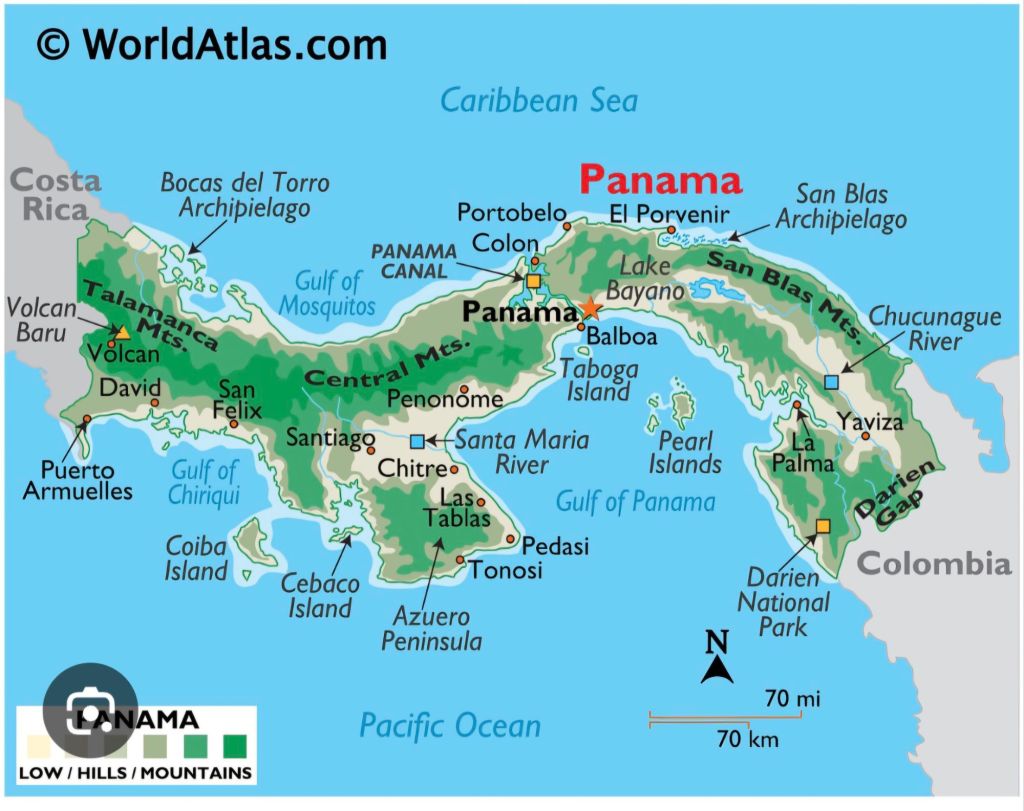
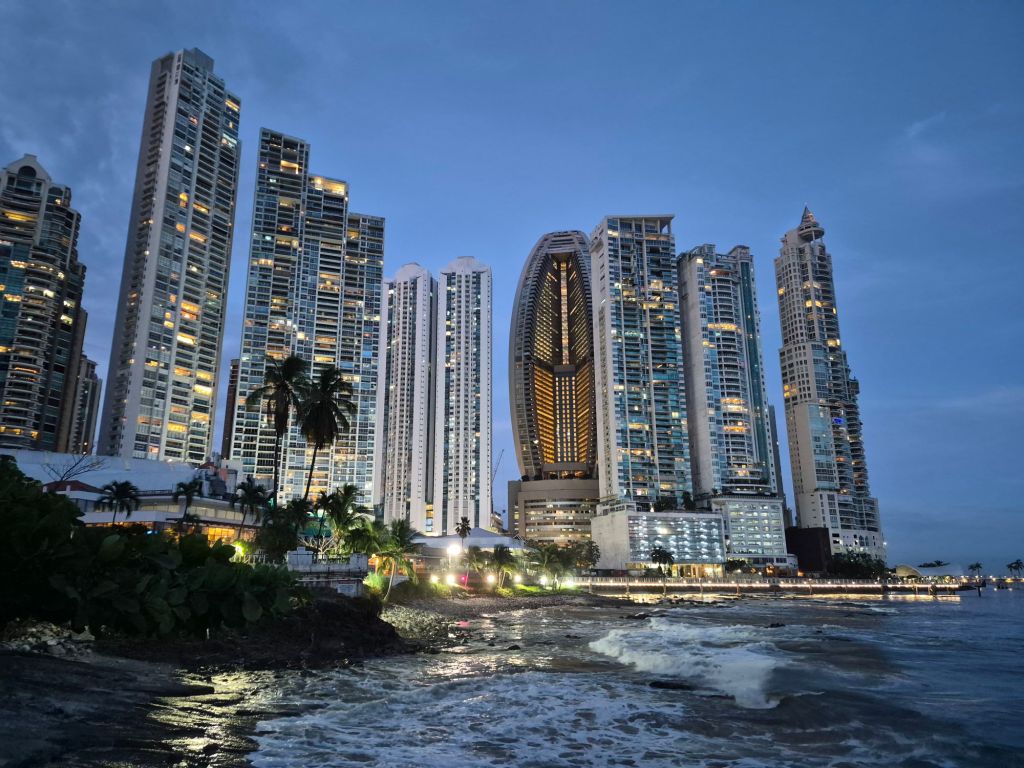
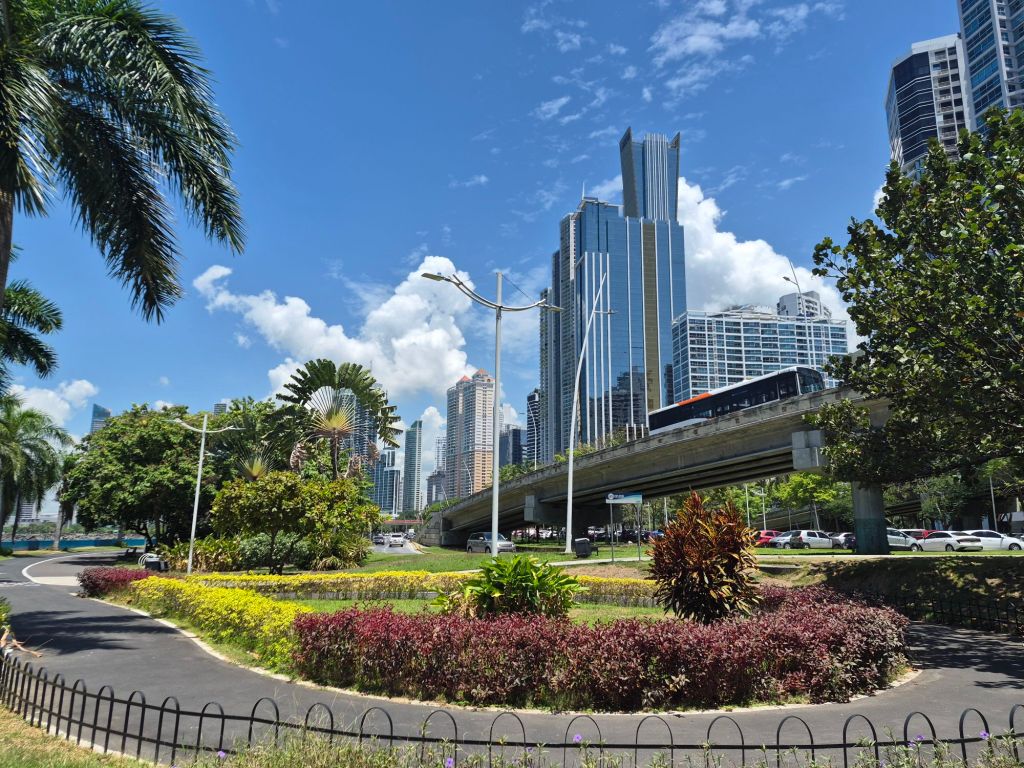
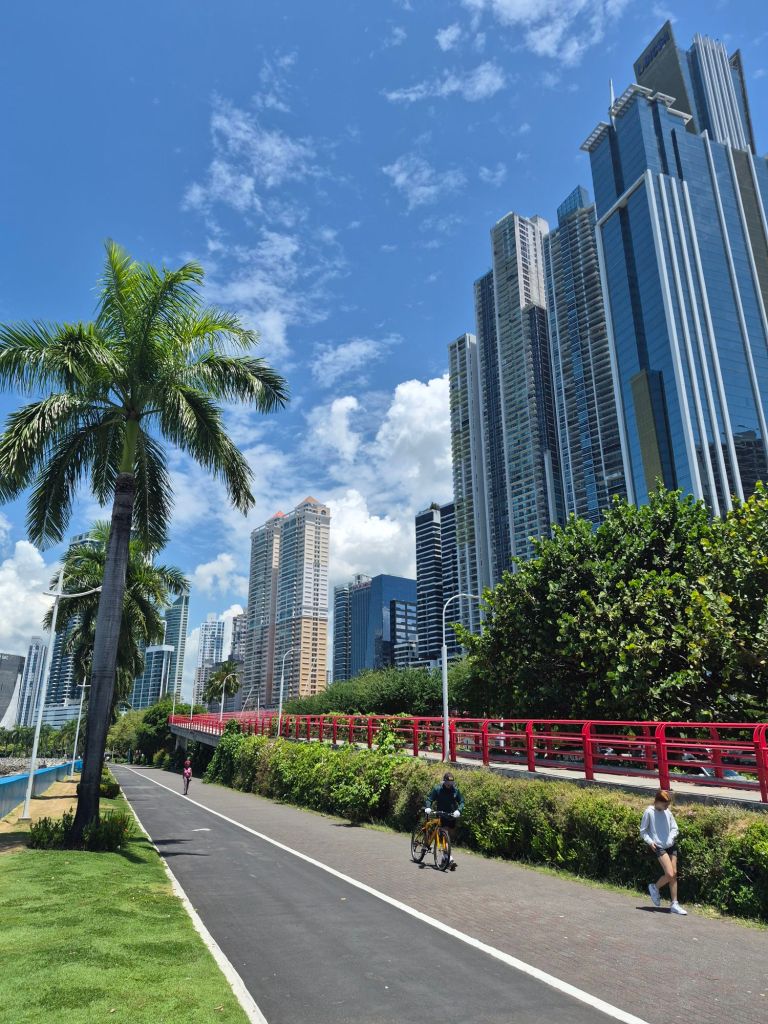
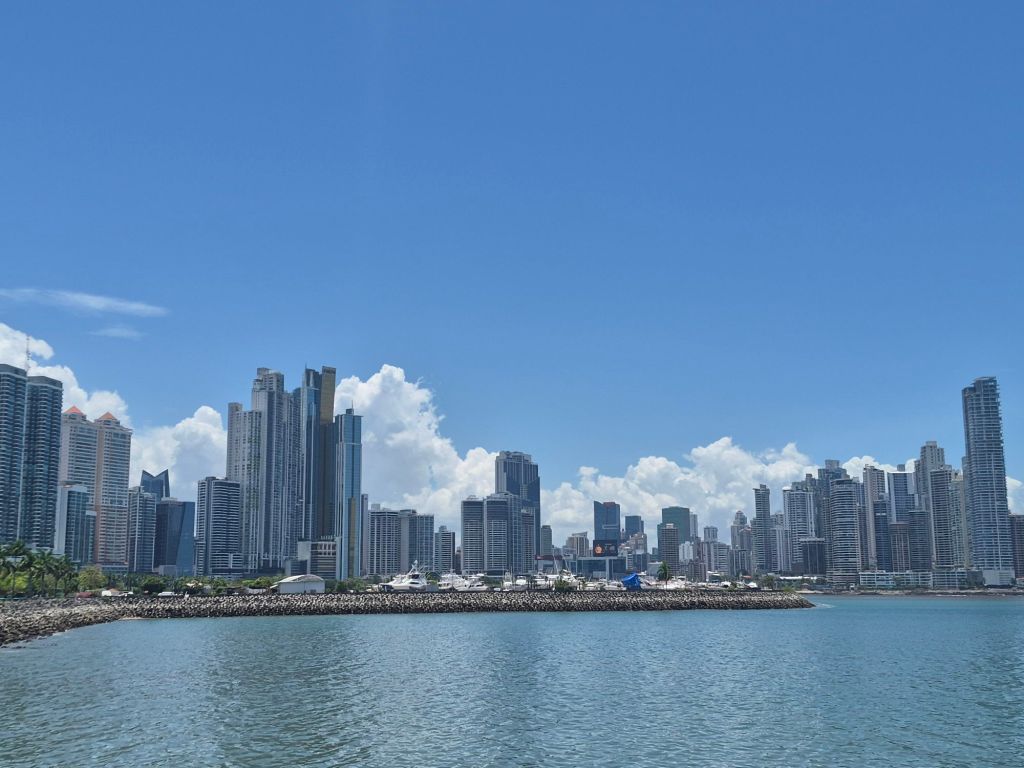
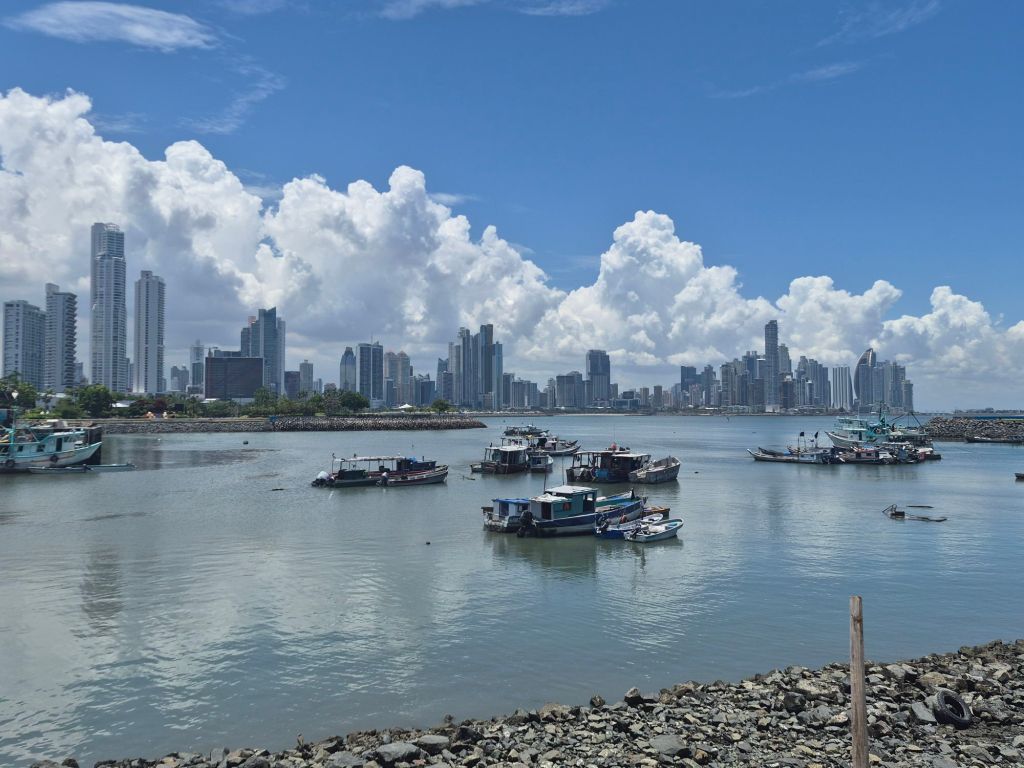
When we flew into Panama from Bogotá, approaching from the Pacific Ocean, I was surprised to see we were heading northeast past Panama City and within minutes ended up almost over the Caribbean – Panama is a very narrow ‘bridge’ between South and North America.  The eastern part we were flying over was mostly forests, called the Parque Nacional Chagres, and there is only one road running east to the south of the national park, thus mostly uninhabited.  Panama City, on the other hand, is rapidly growing and in 2023 had a population of almost 2 million in the broader metropolitan area.  The skyline is impressive, impossible to get it all into one photo.  Very modern, with a metro-line that is being extended to La Chorrera, west of Panama City. 
I bought a sim card at the airport, and when I tried to change dollars to balboa (Panamanian currency), I was told that they use USA dollars here (1 USD = 1 PAB) which suits me fine.  I asked the man at the cambio (money change place) about taxi’s, and he pointed me to the counter across the way, which was unmanned.  I was looking around when I heard him shout “Taxi!” – he had come out of his booth and was shouting to the man in charge of the taxi booth. 

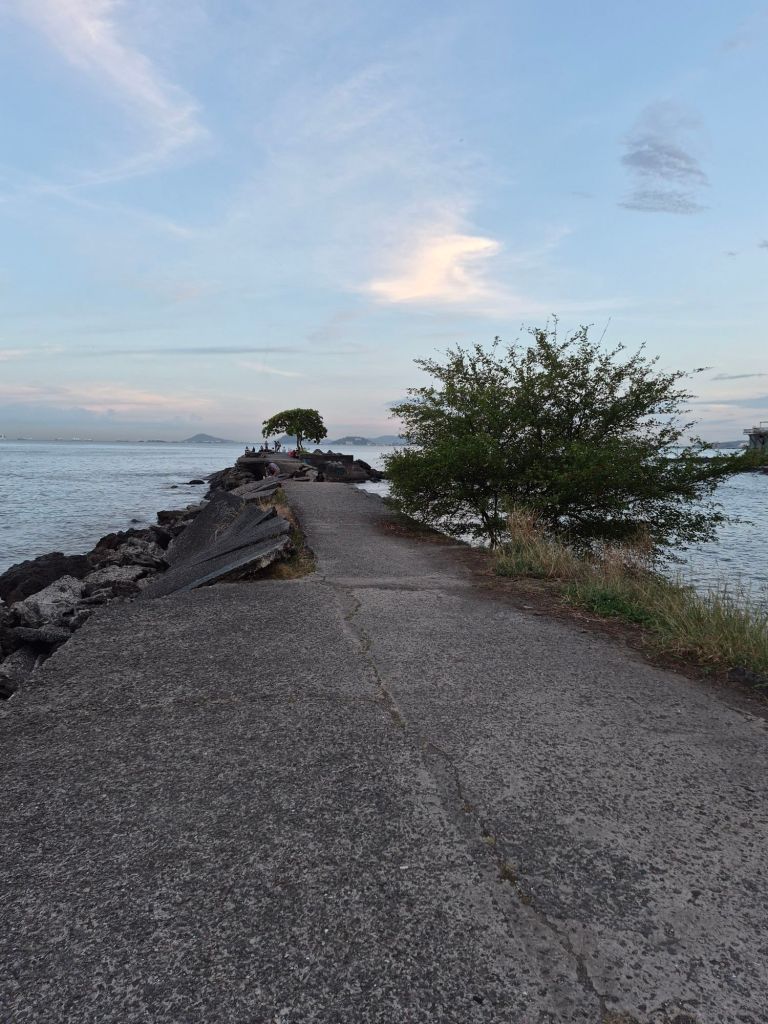
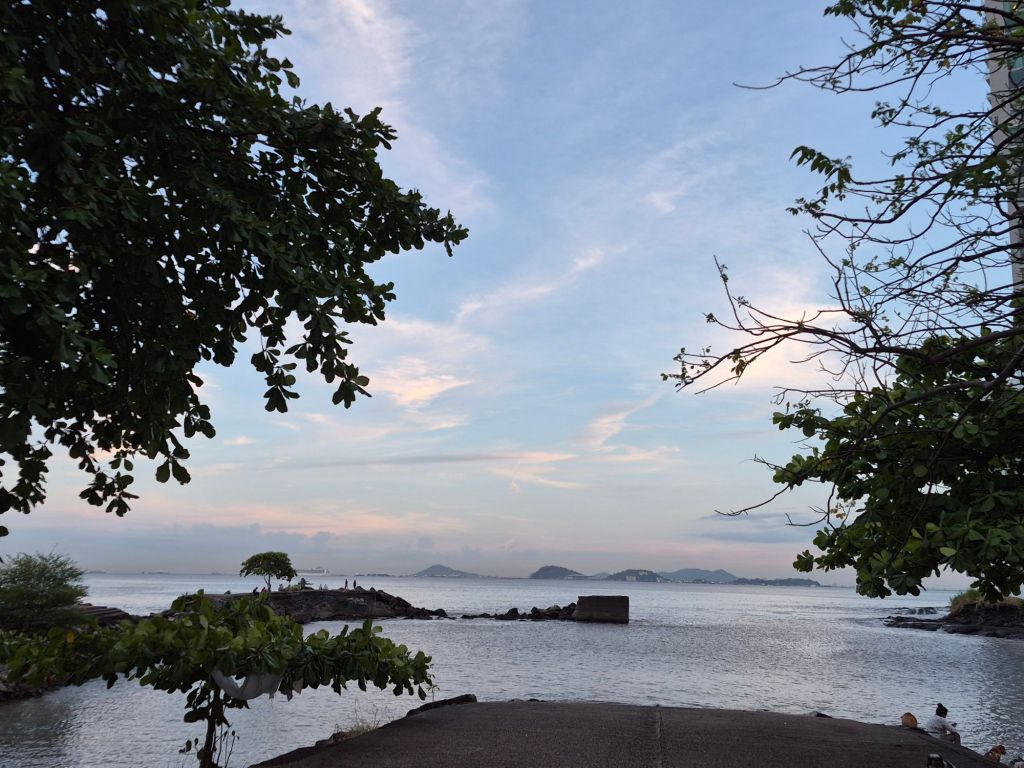
The hostel, Casa Areka, where I had booked at, is in a small area that has no immediate high-rise buildings in the vicinity.  Maurice, the manager, was super friendly and helpful, excepting that I had to lug Suerte up a narrow flight of stairs to the 6-bed dorm with an en-suite bathroom.  I was starving, so headed straight to the huge store in the mall behind the hostel, bought a beer, a ready-made tuna and pasta salad, as well as a green salad, devouring it all the minute I got back.  I headed out to explore, finding a park with a dilapidated jetty and small beach within two blocks from the hostel.  I walked to the point of the jetty, clambering over the broken parts, to watch the sunset and take some pictures of the buildings opposite the jetty. 
The following day I walked the 5km along the coastline to the Casco Viejo district (literally translated means ‘old shell’), the colonial quarter of Panama City.  It was an interesting walk, but humid and hot!
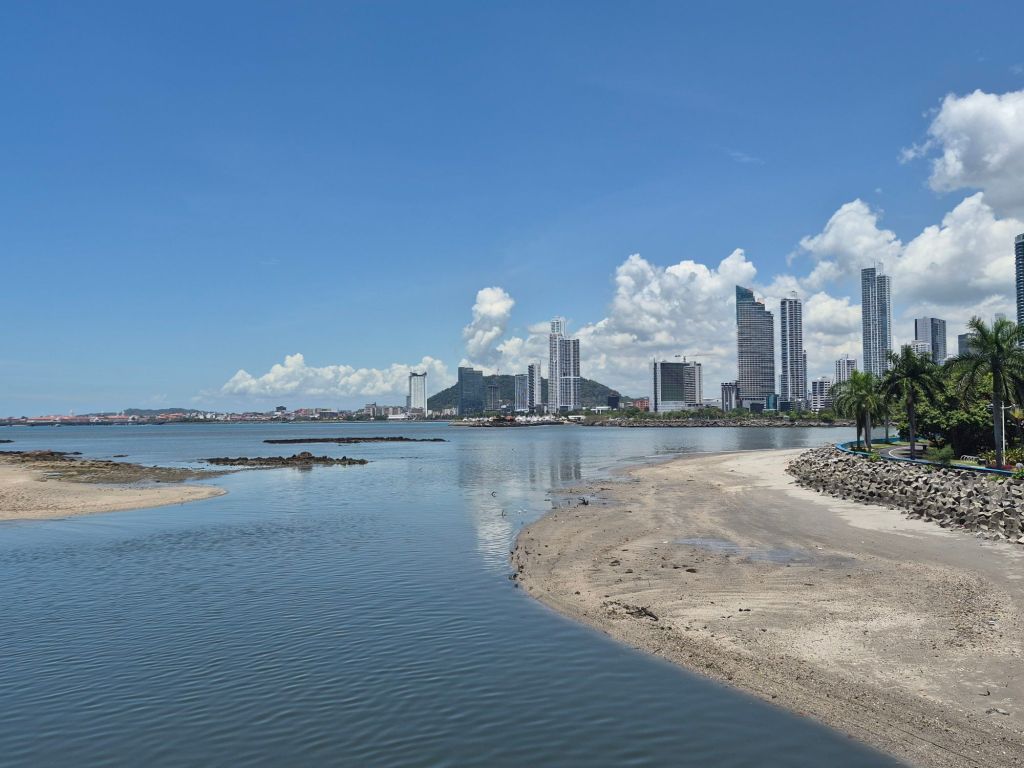
A very polluted and bad-smelling stream flowing into the sea here,  which causes it to be brown in this area
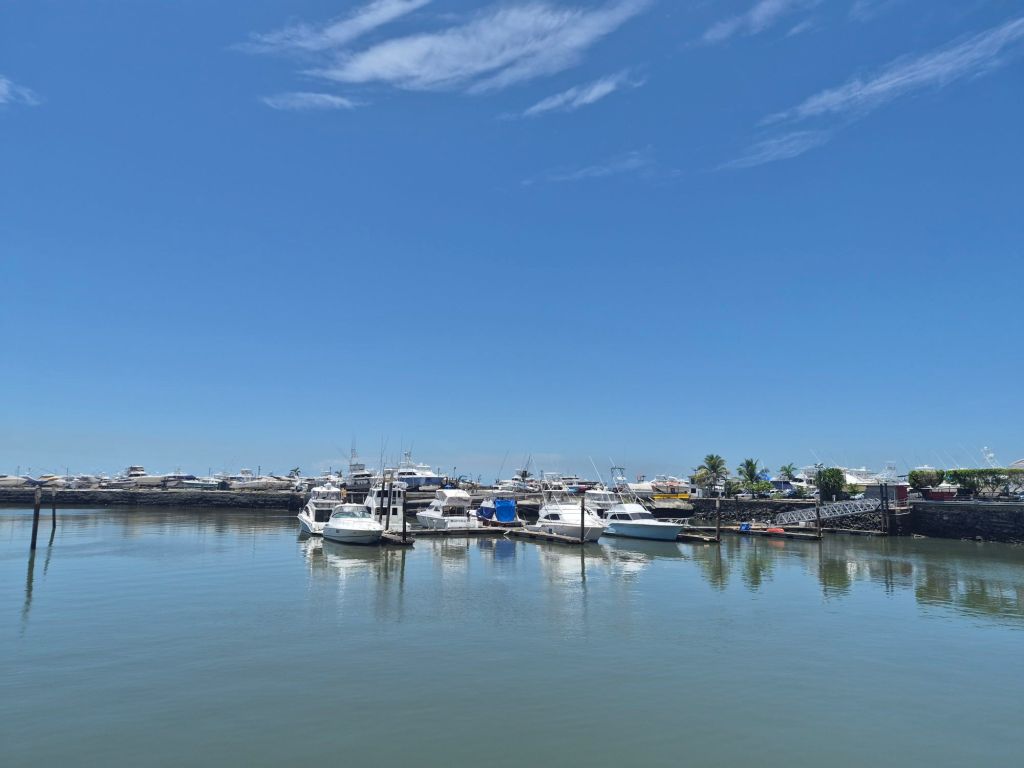
Yacht harbor in the background, with some yachts lying in front
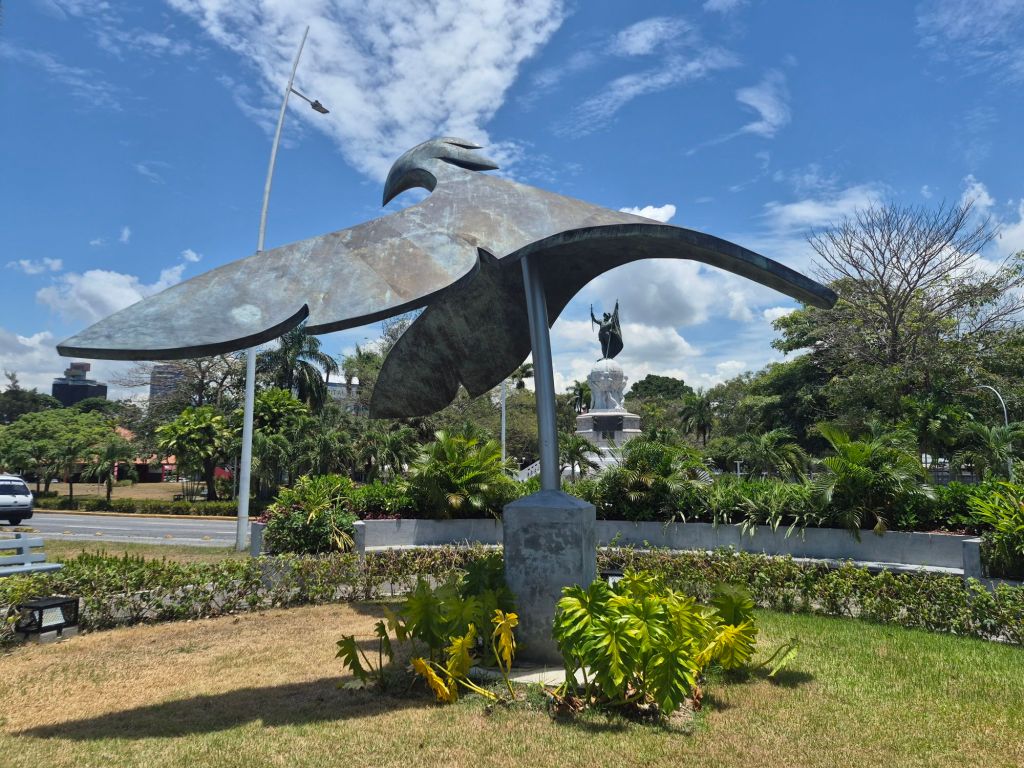
A sculpture of the Harpy Eagle, the official national bird of Panama
Looking back towards the city
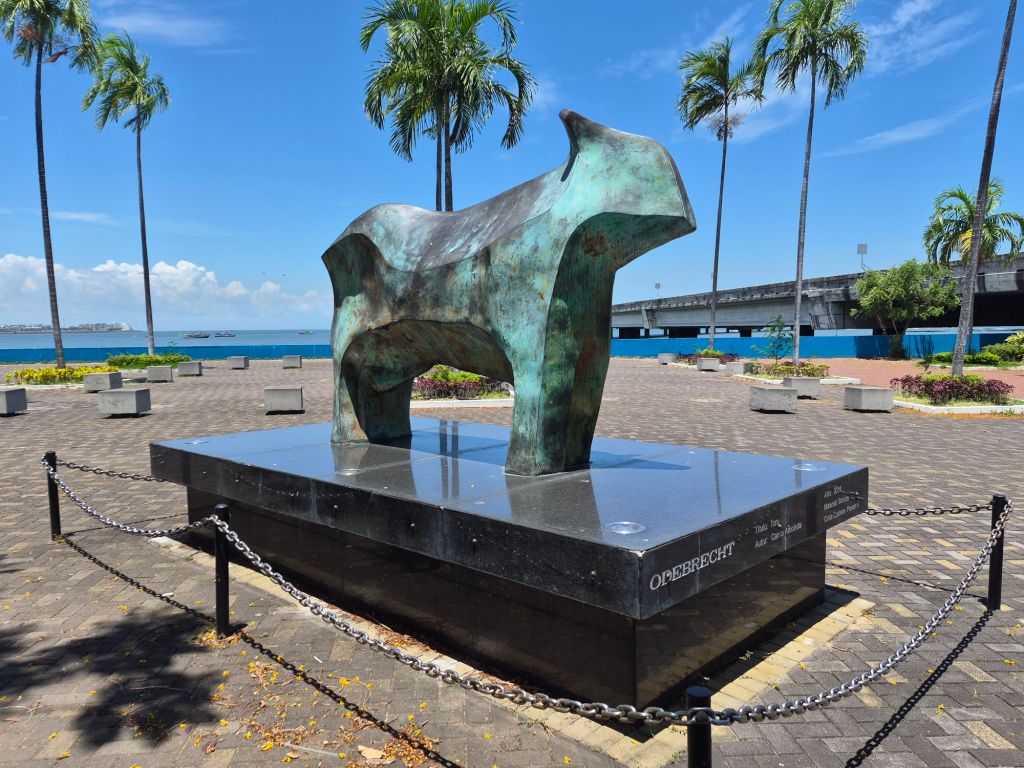
The bronze bull sculpture, symbol of strength, resilience and prosperity, a  well-known landmark of Panama City.
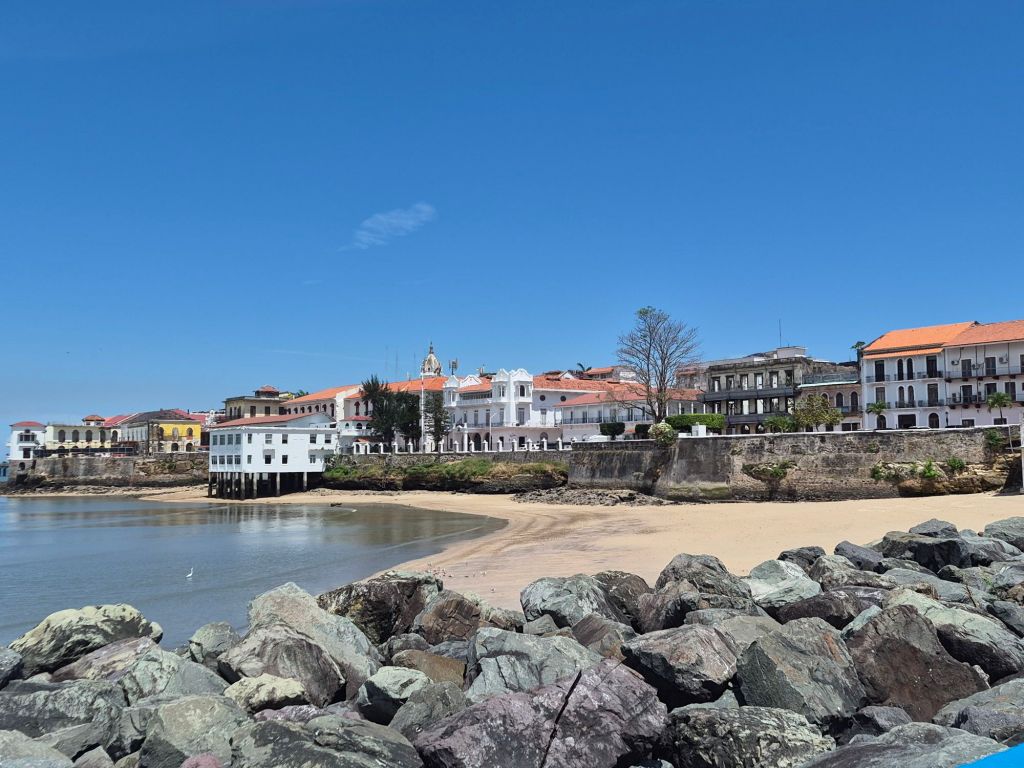
Approaching the Casco Viejo district

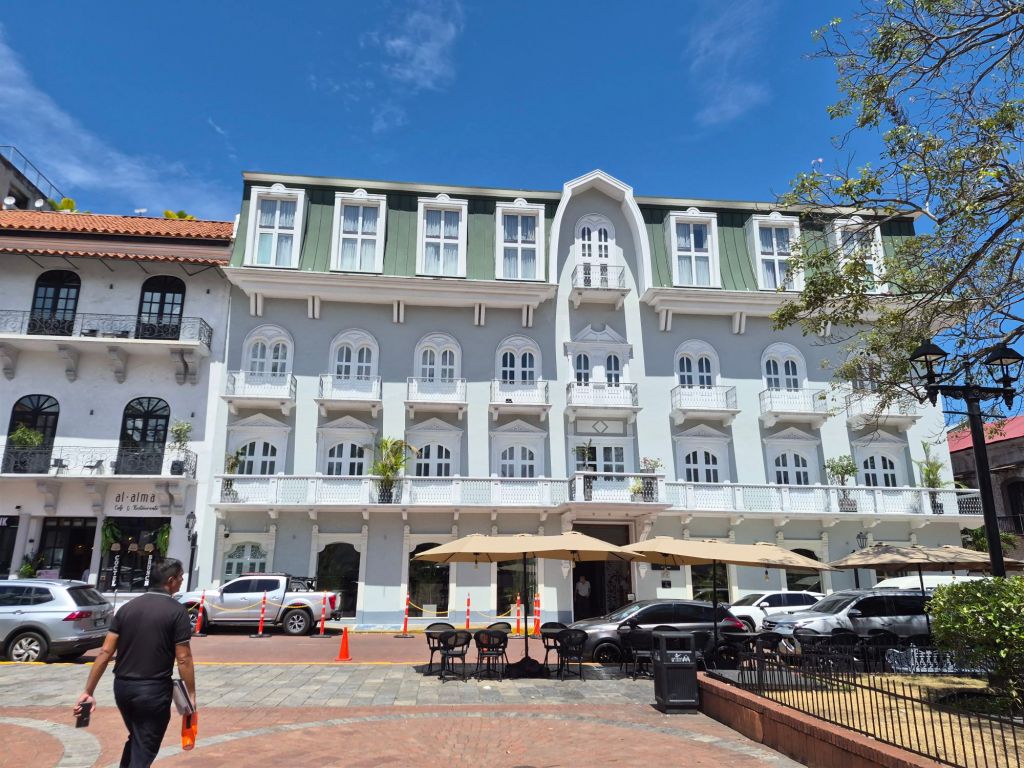
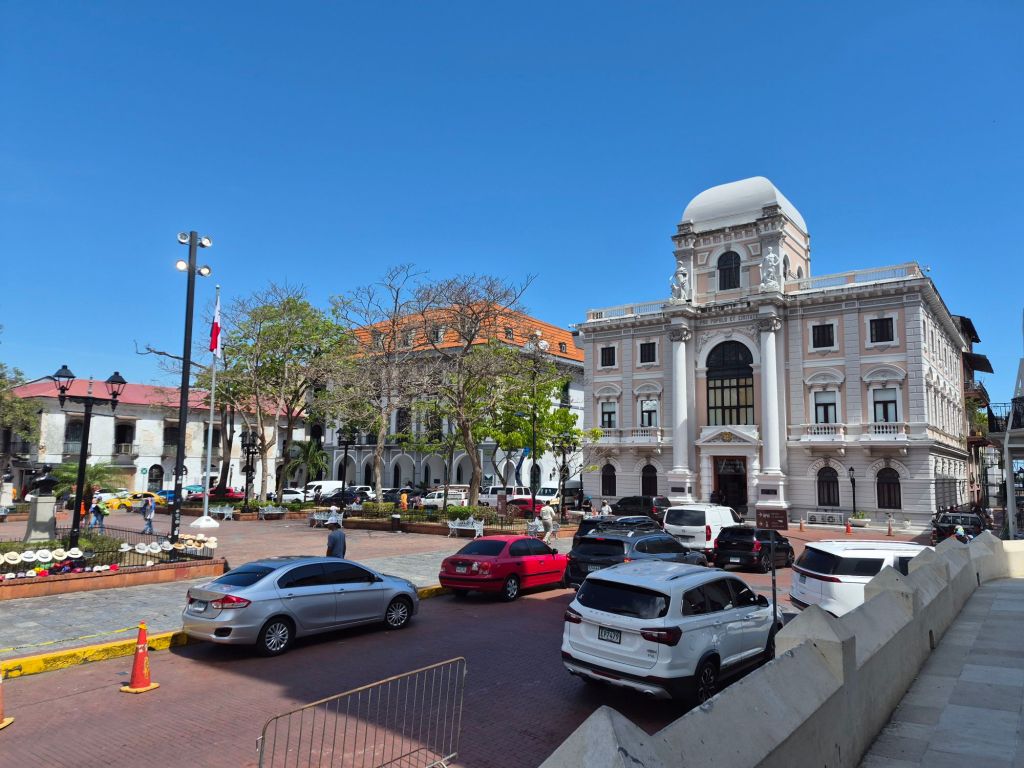
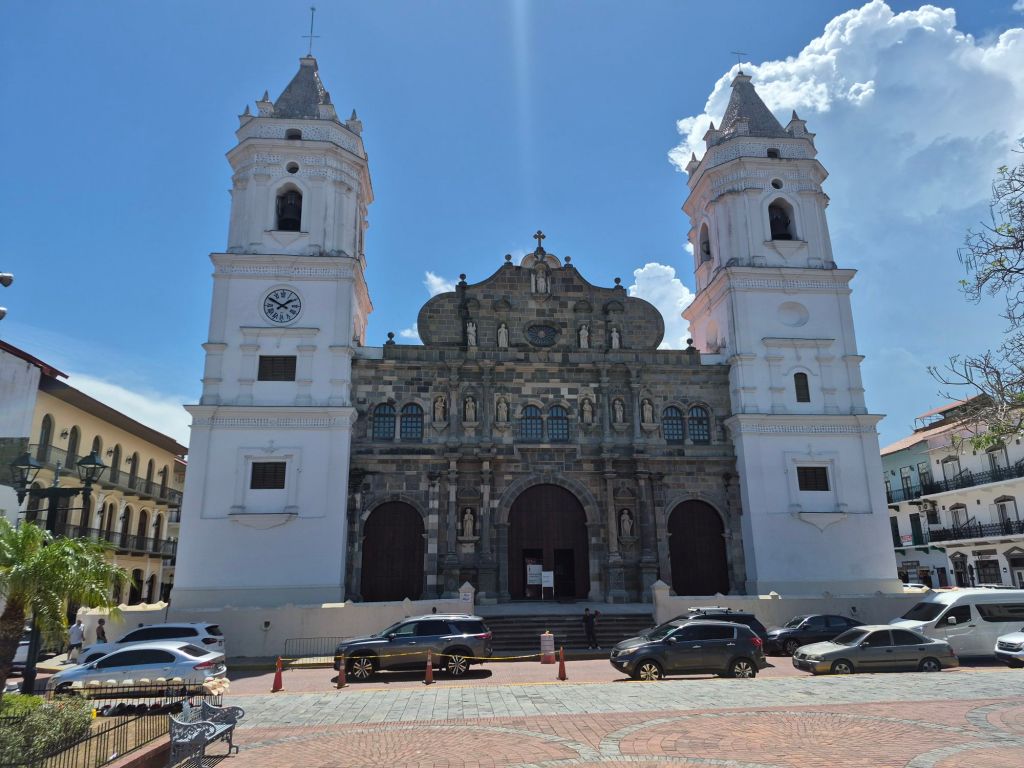
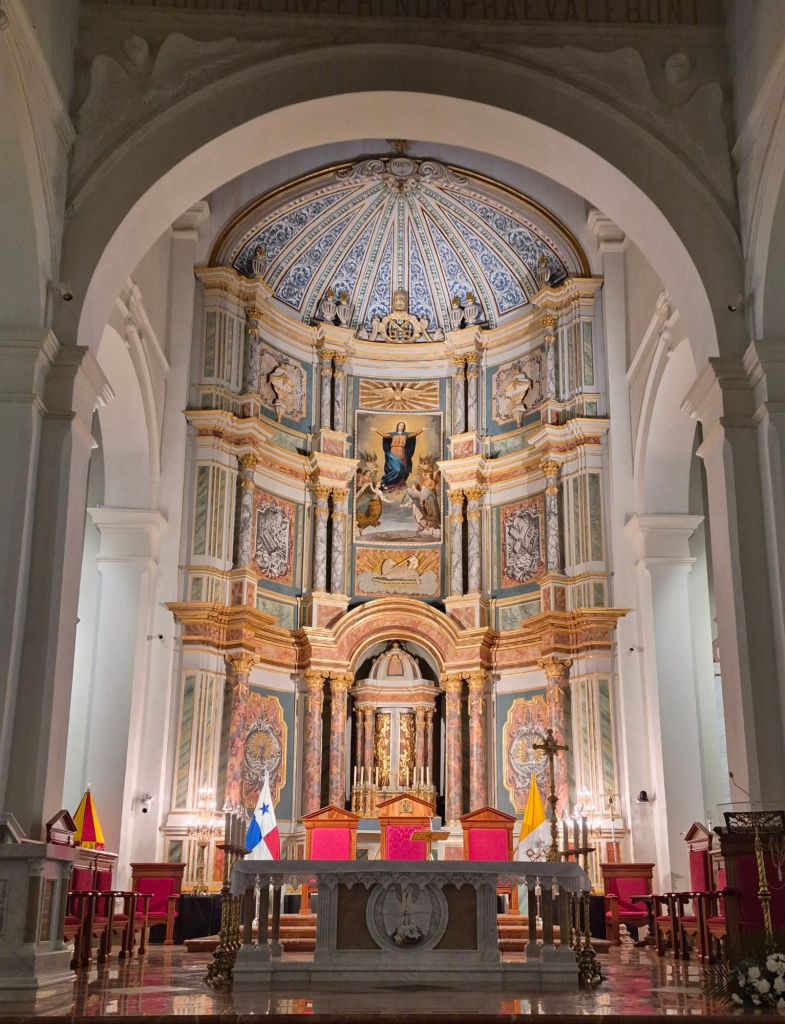
I ended up in the Plaza de la Independencia (Independence Square), which was where Panama declared its independence from Colombia on 3 November 1903.  I was quite surprised when I had to pay to go into the Metropolitan Cathedral, also known as the Catedral Basílica Santa María la Antigua since 2014, when it became a basilica. It is one of the oldest cathedrals in the Americas – construction was started in 1688, and it was completed in 1796. 
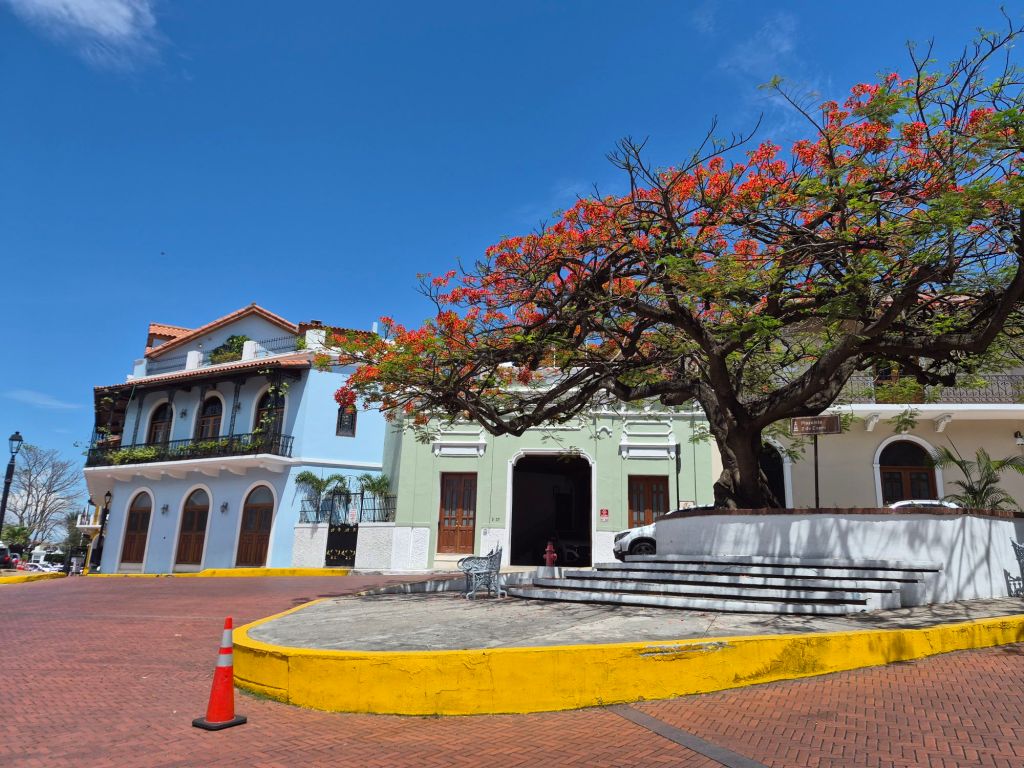
Independence Square
Metropolitan Cathedral with its two plastered  towers
Beautiful music was playing when I entered, and when it stopped, I realised the basilica is so big, there was a service being held behind that altar. 
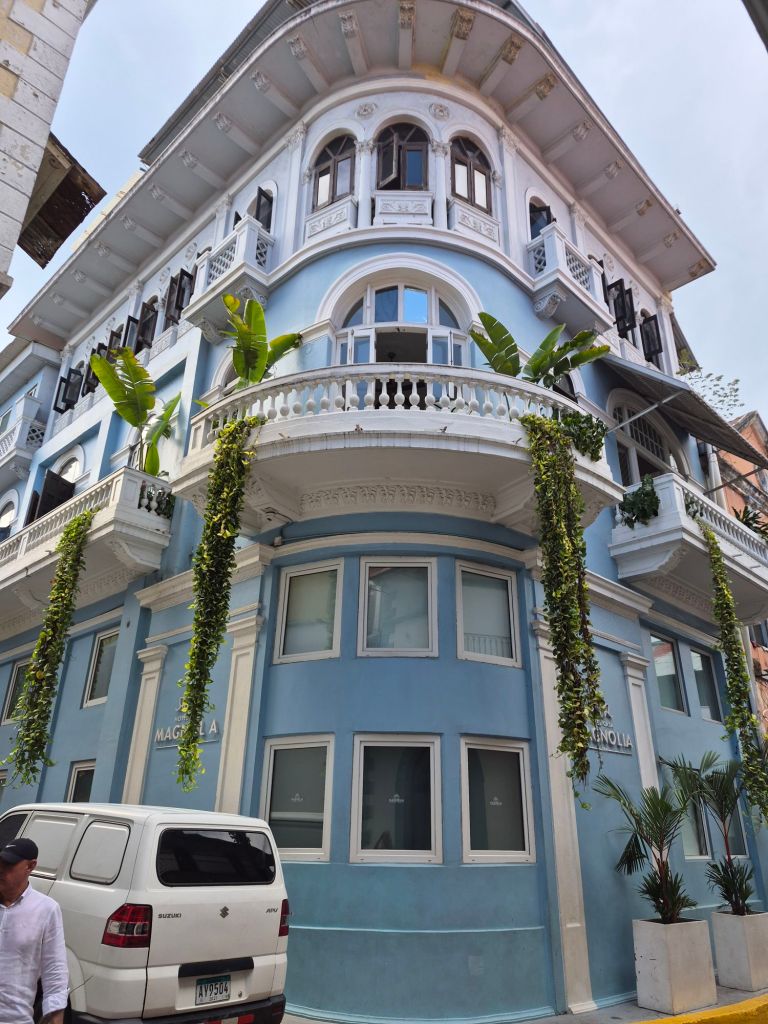
A beautifully restored building
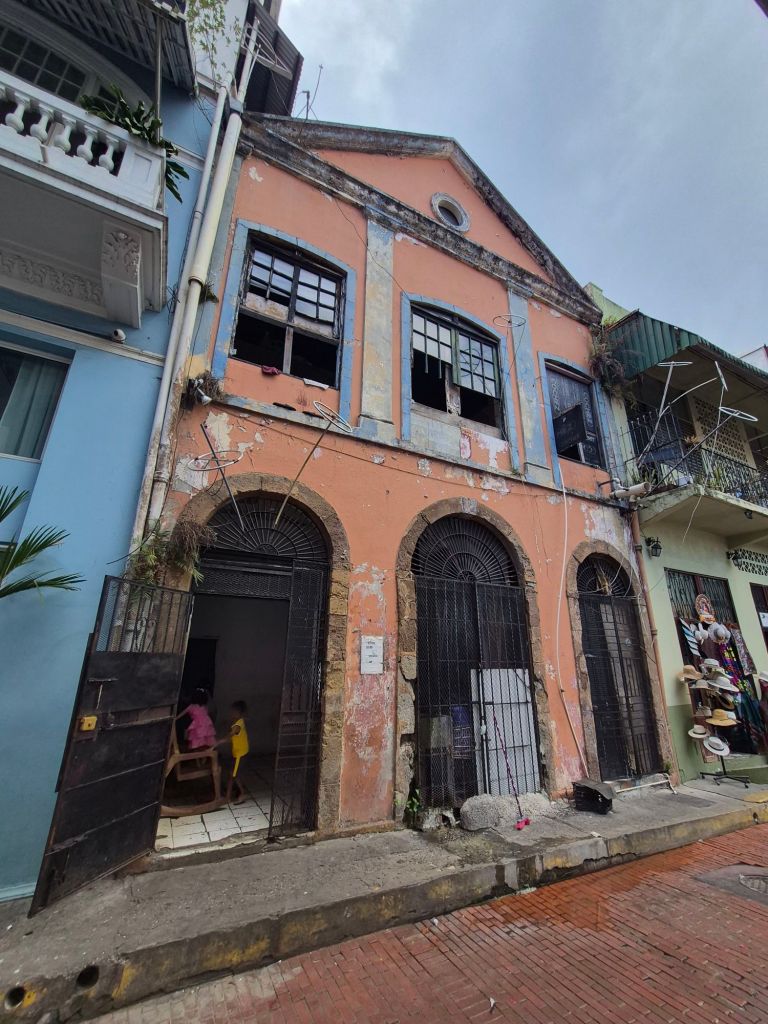
And the one right next to it, ready for restoration. 
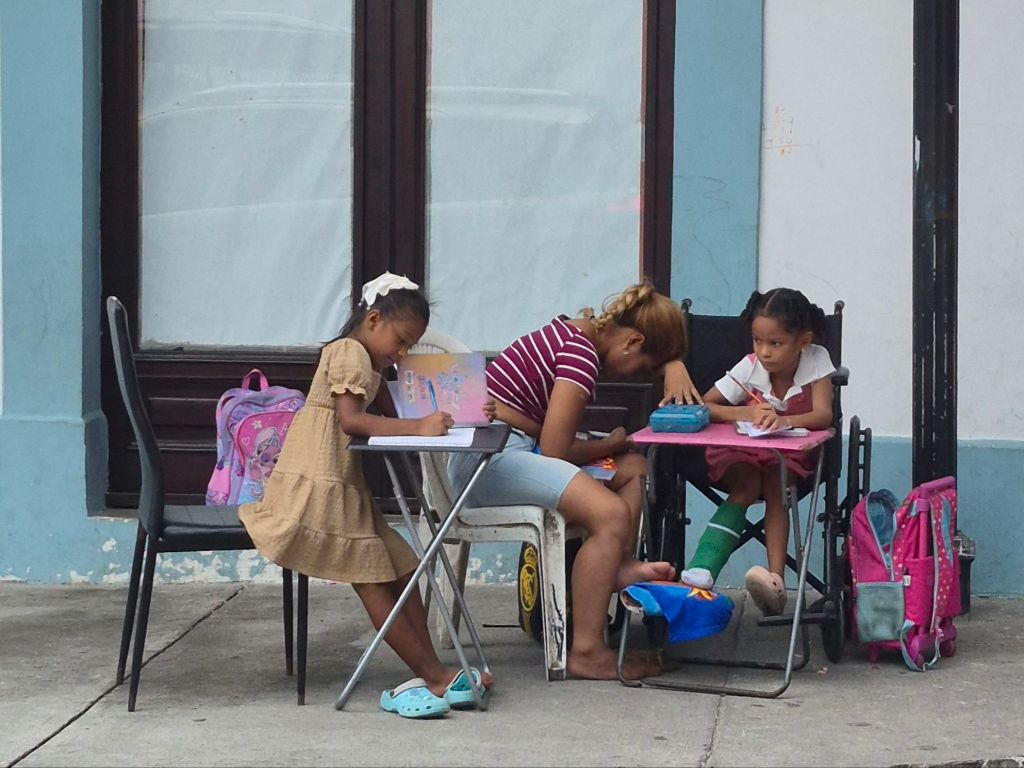
Opposite the old building a mother was doing home-schooling with her children on the pavement.  A man called out to her from inside the building, but she didn’t even look up from her phone.  See how the little girl is looking at her mother. 
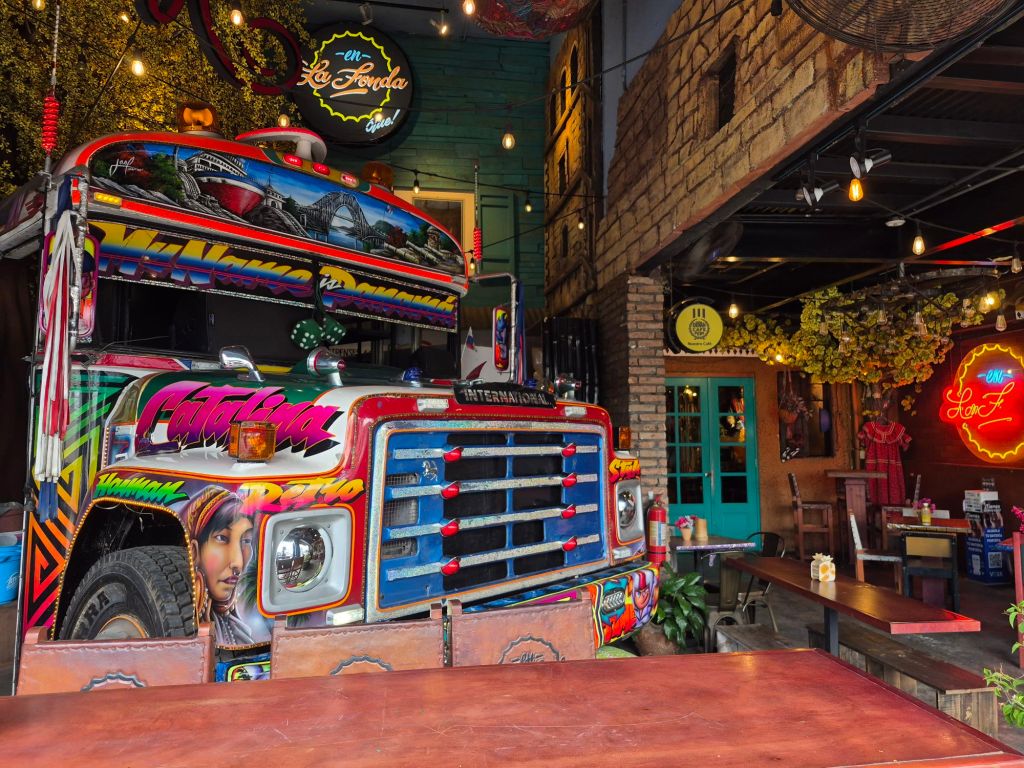
A jolly bar
With two jolly ladies
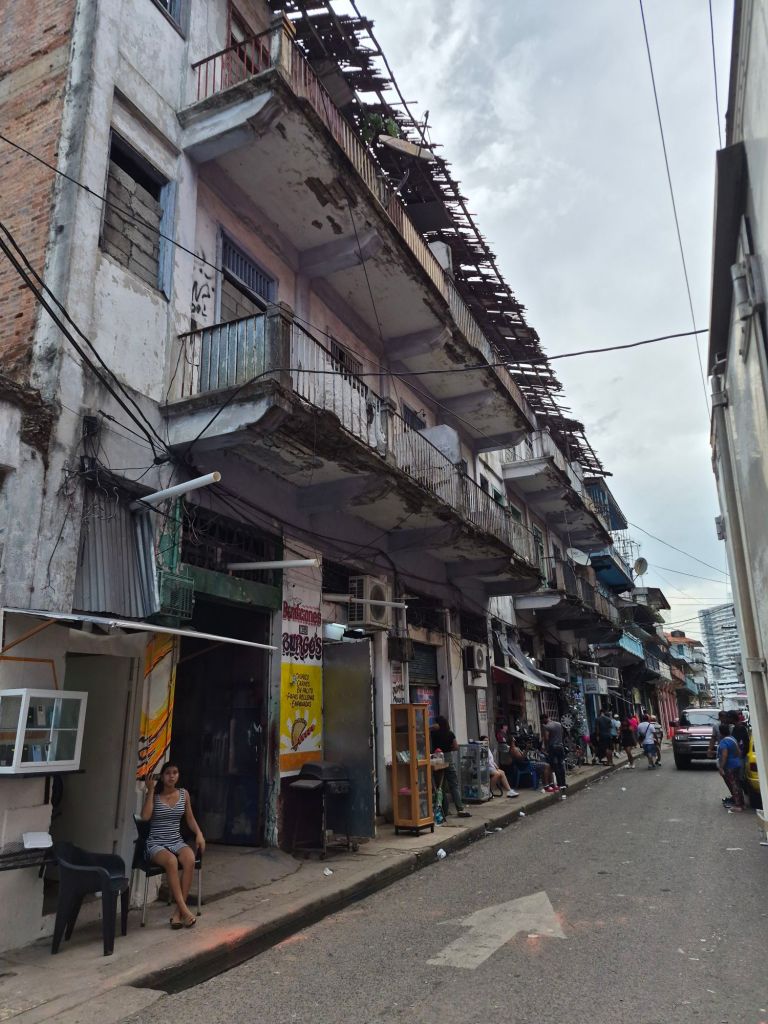
And then Maps.Me took me back through this street, adjoining the Old Town – a slum area, quite an experience to walk through. To me, this was where the real people lived, going about their daily tasks. 

I was so hot and bothered when I walked back, and thinking about it, I had a great inspiration:  I was going to cut my hair.   Back at the hostel I had a shower, put on a dress and googled a hairdresser – there was one right next door!  I had a lot of trouble explaining to them that I wanted a no 2 razor cut.  Even Google Translate was to no avail.  It was only when I said “a razor like a man’s” that they understood and asked a male hairdresser to shave off my hair.  What bliss, I should have done it long ago.  
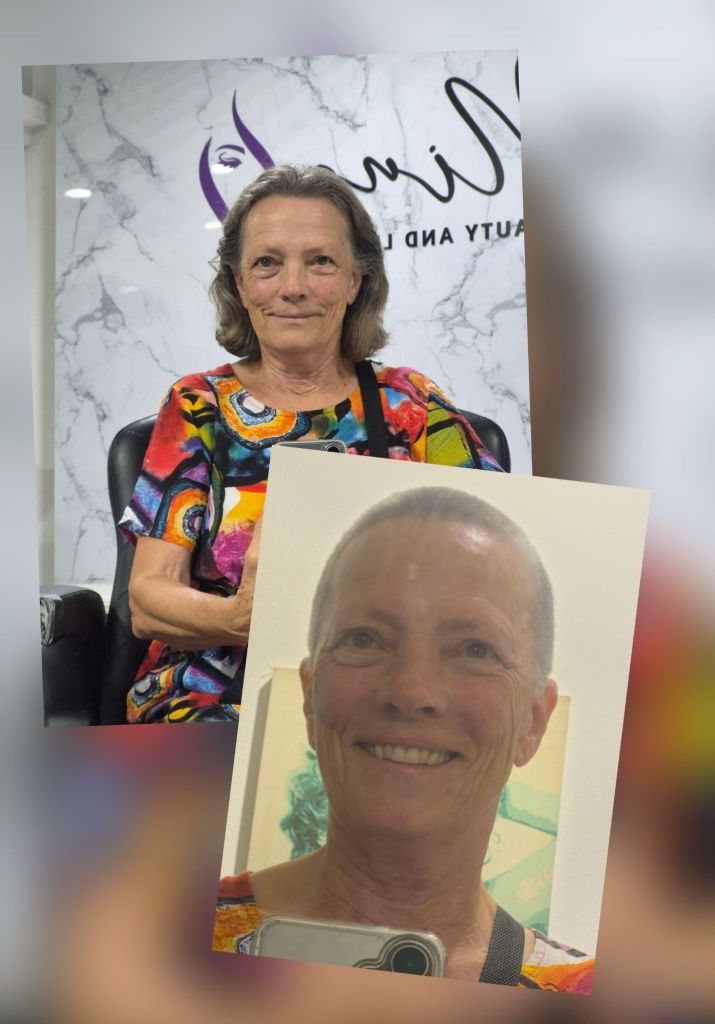
Before and after

I met some really nice people at the hostel, and one of them, Hannah, was very excited about my haircut, as we chatted at the pool before I went.  The funny thing was, she didn’t recognize me in the kitchen later when everyone was making supper.  I said: “Hannah, what do you think?”, and she exploded with a “Oh my goodness, I didn’t recognize you at all!  I love it!”  Some other people also asked me whether they had seen me beforehand, as they didn’t recognize me. 

Most of the people there had done a boat trip to the San Blas Islands, or had been, or was going to Santa Catalina – those seemed to be the popular things for the young crowd and the surfers.  I had other plans though, as I had heard about the Pipeline Trail near Gamboa, which was where I was heading to.  I took an Uber to Albrook, the bus terminal in Panama City, where I had a gruelling and challenging experience of catching the local bus to Gamboa, a 45-min trip to the  northwest.  In short:  every counter I approached to buy a ticket, told me “further down”.  I finally found an information counter with an English-speaking lady, who explained that I had to buy a Metro Card, as it is used for local buses.  The machine swallowed my money without producing a card;  I had to wait in a long queue at the claims counter, to be told I had to wait for the supervisor;  45 min later I was told the claim would pay out in 3 days’ time;  I bought another card for US$3, couldn’t find the departure platform, and eventually the information counter lady escorted me outside and made inquiries;  found the right place, waited another 30 min and eventually boarded – but then my card wouldn’t work, it was not loaded with dinero (money)!!  A very kind woman on the bus came to the front and swiped her card so that I could enter.  The total cost for the trip was US$1 (all that effort for $1) – but one can’t pay cash.  Was I happy to sit down, after strapping Suerta down with a safety belt that is in an open area on the bus. 

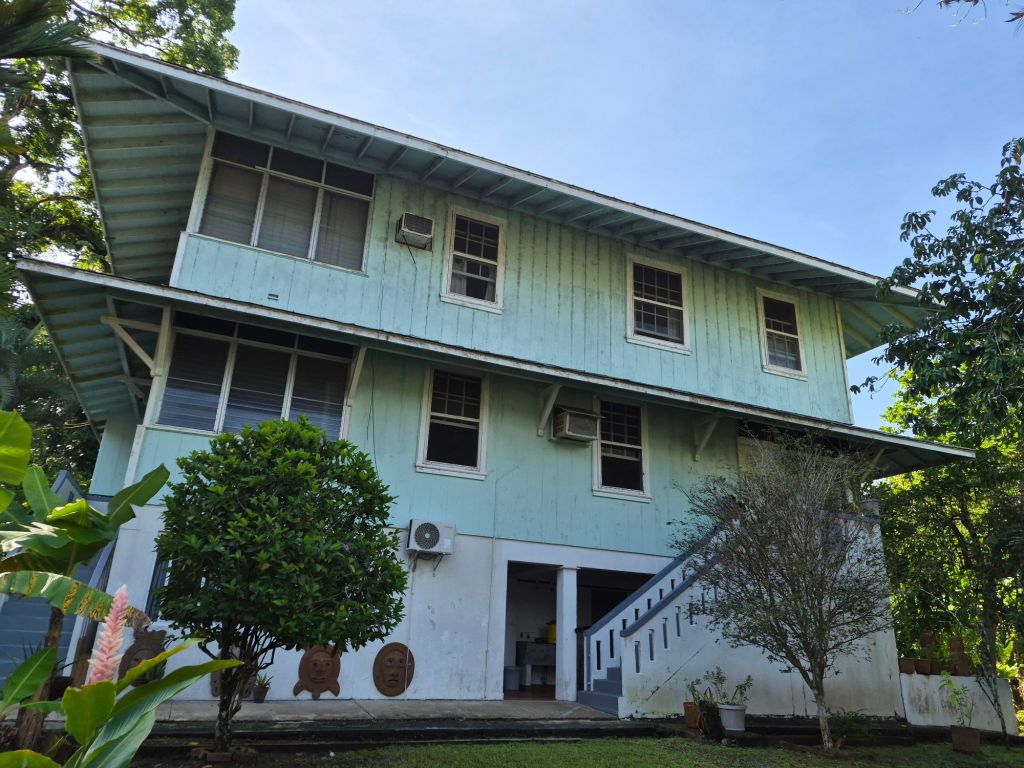
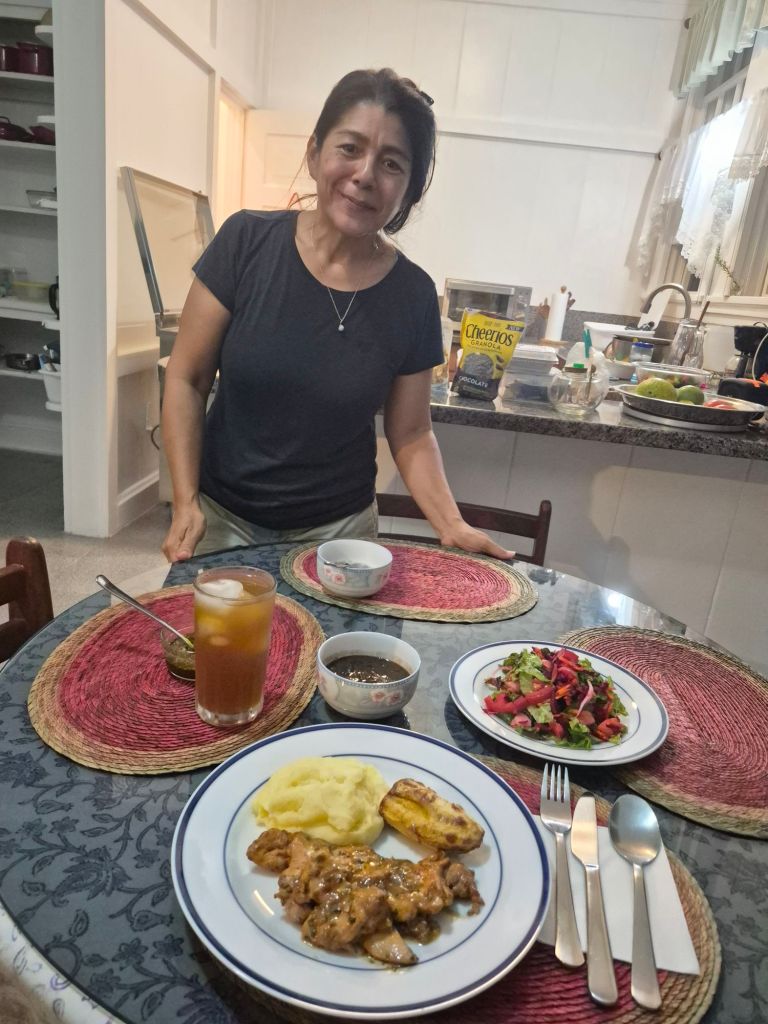
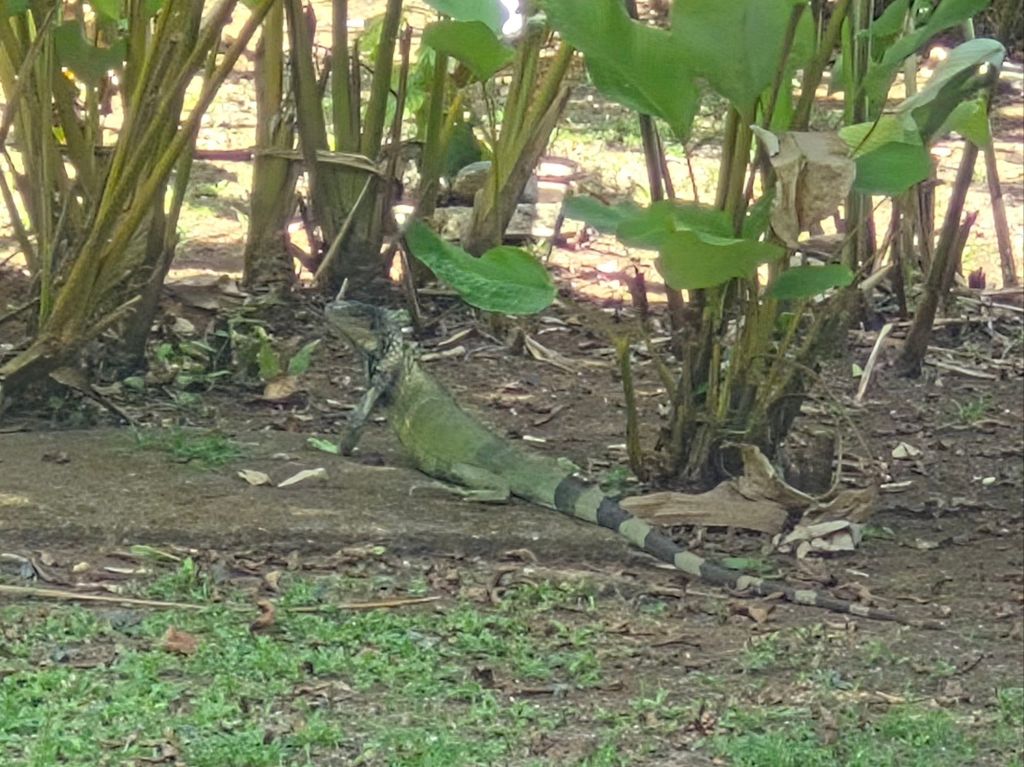
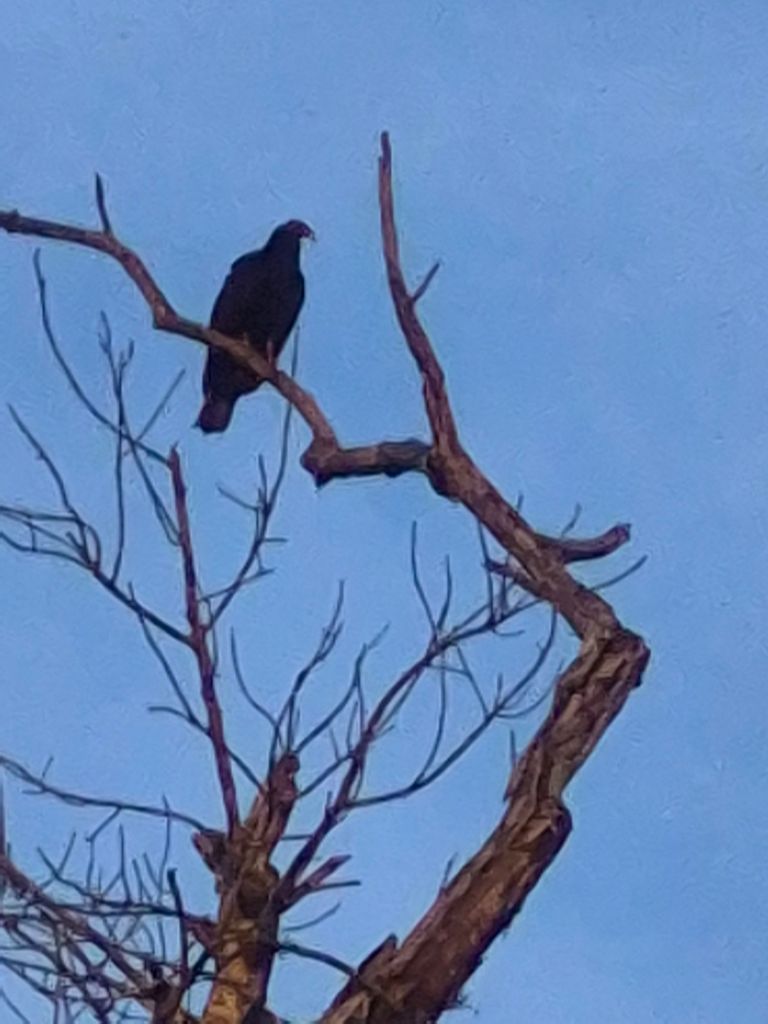
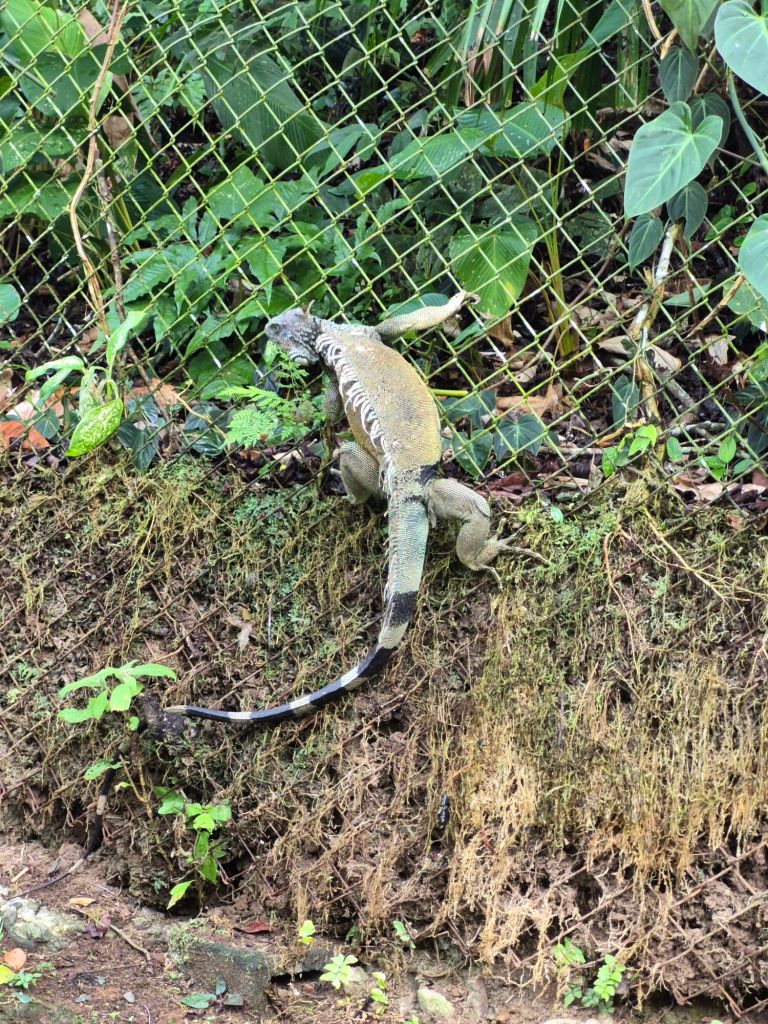
I had booked 3 nights through Airbnb, and had a lovely room with a fan and an aircon with Migdalia, who couldn’t speak English, but was most accommodating and helpful regarding information and suggestions for things to do.  Her house, in the middle of the town, was spotless and uncluttered, and one had to take off your shoes when entering.  There are many huge trees in the area, with houses scattered far apart.  I had downloaded the Merlin app for identifying birds, and on the first morning I stood on the stairs outside her kitchen for 30 min, then walked around the block for an hour, and in that time Merlin had identified 48 different species of birds!  I was flabbergasted.  And then there were 3 agutis (agouti in English) in her yard, that ate from her hand.  And black vultures, and even 3 iguanas the following day – a complete menagerie. 
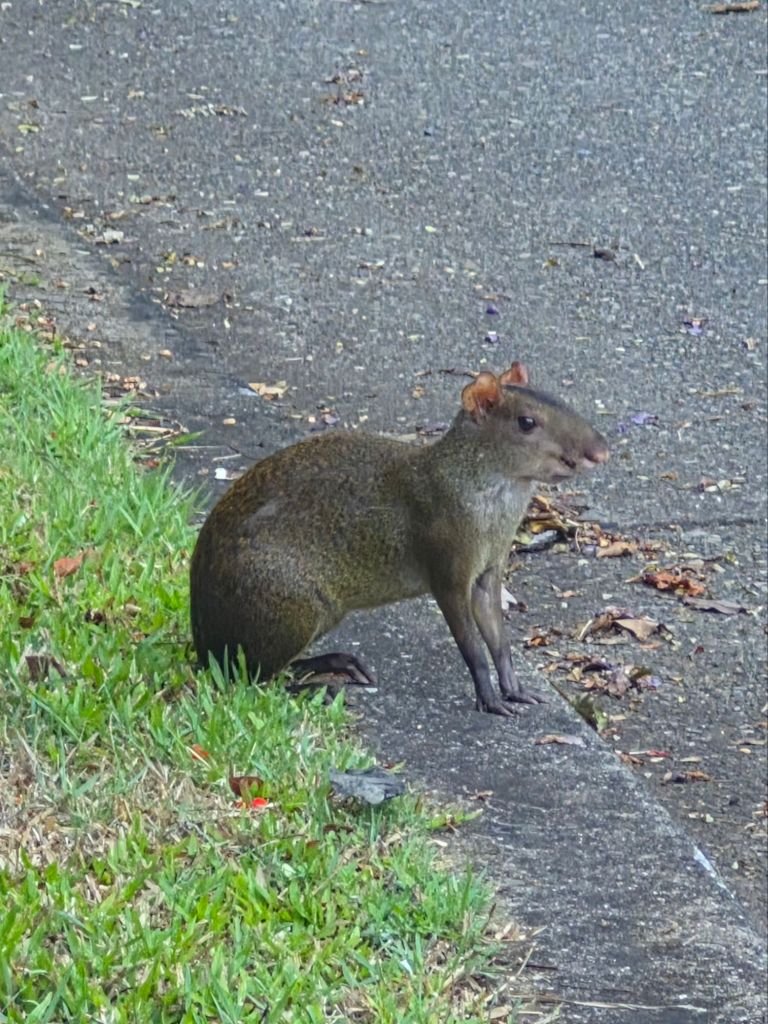
Aguti – Gamboa is well-known for them
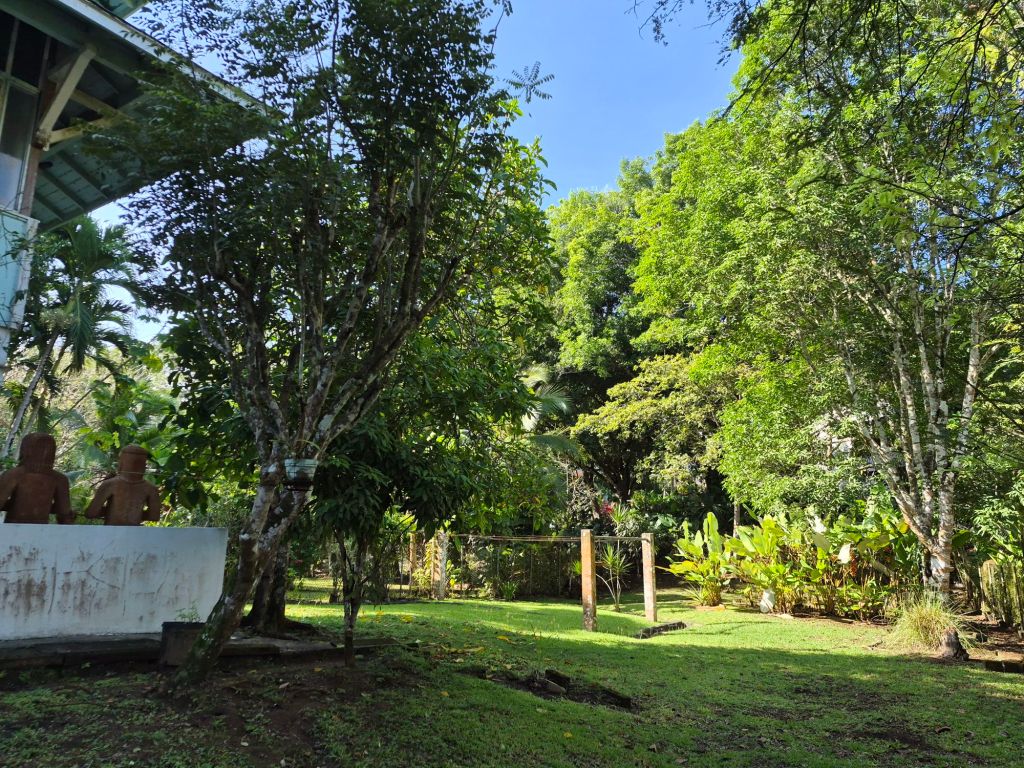
Migdalia’s house
Migdalia also cooks – lovely meal.  Next to the mash is half a fried plantain (cooking banana, grown in her garden)
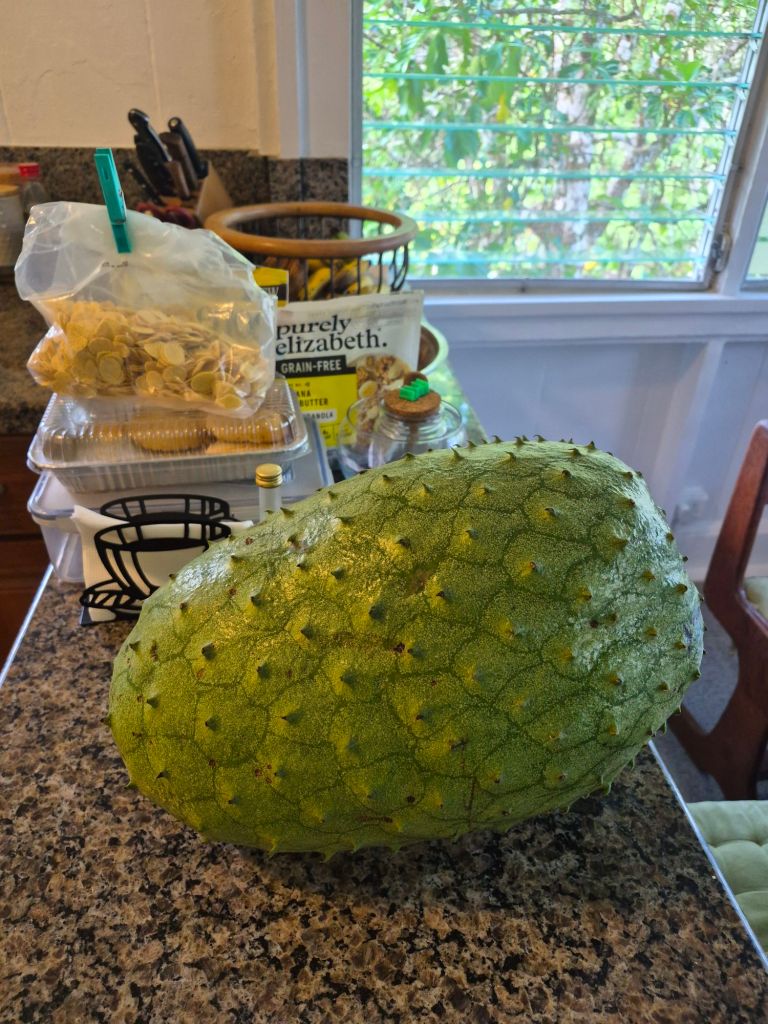
She also has a Guanábana (soursop) tree and picked this one the day before I left.  One picks them green, and they have to ripen before they are used.  This one was exceptionally big.
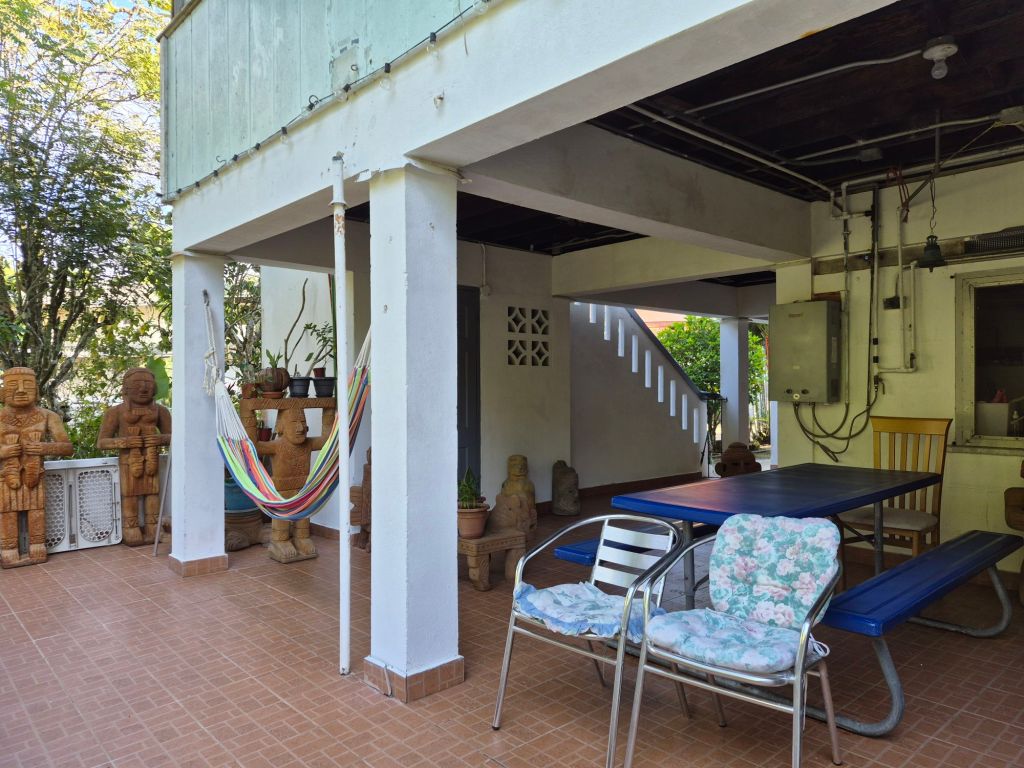
Downstairs – I loved the hammock
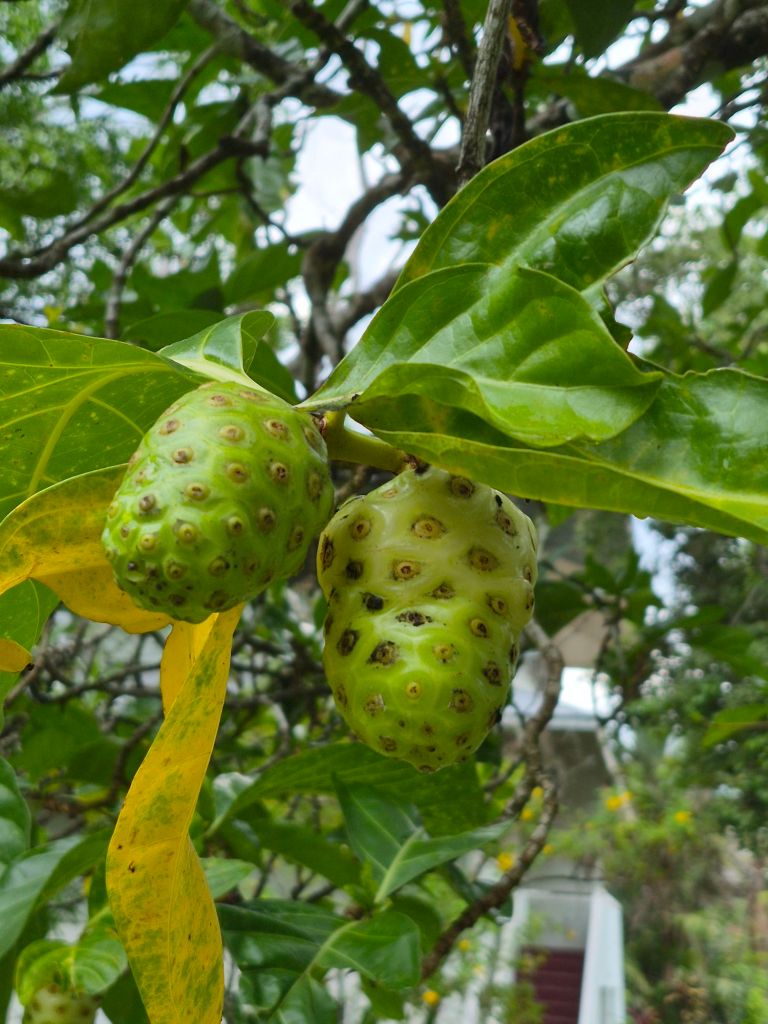
The fruit of a Noni tree (Morinda citrifolia), growing in the garden.  It is traditionally used to boost immunity, reduce inflammation, and ease pain.
The garden – one could just sit there and see many birds
A green iguana
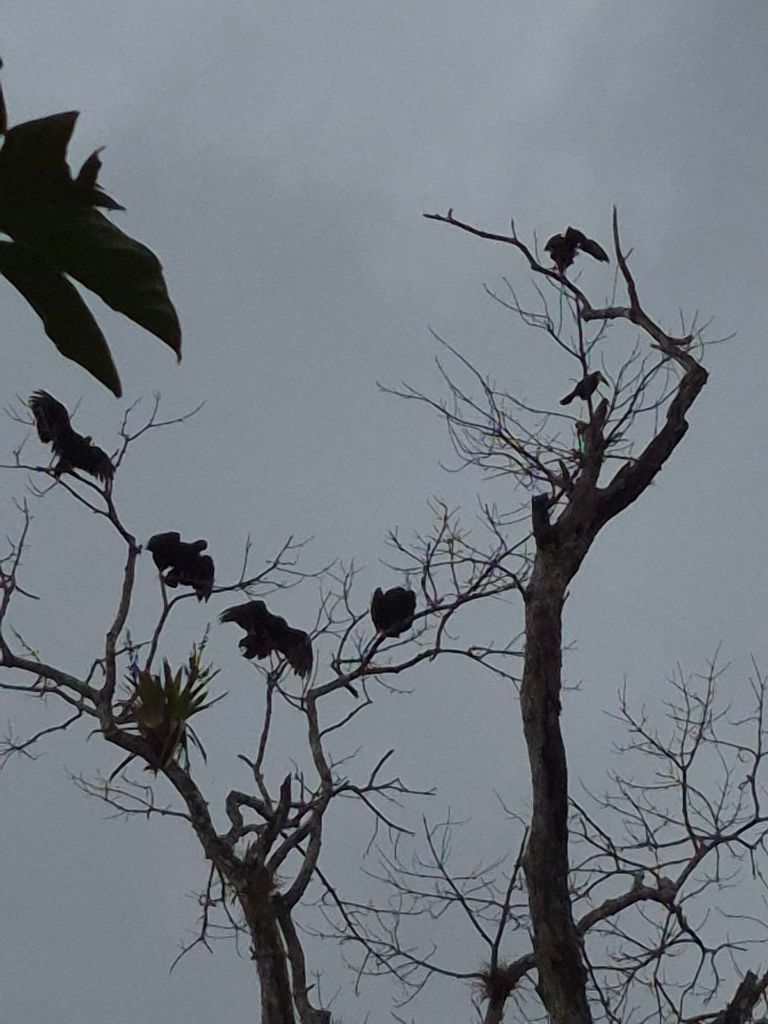
These vultures were fanning their wings after a heavy downpour of rain.
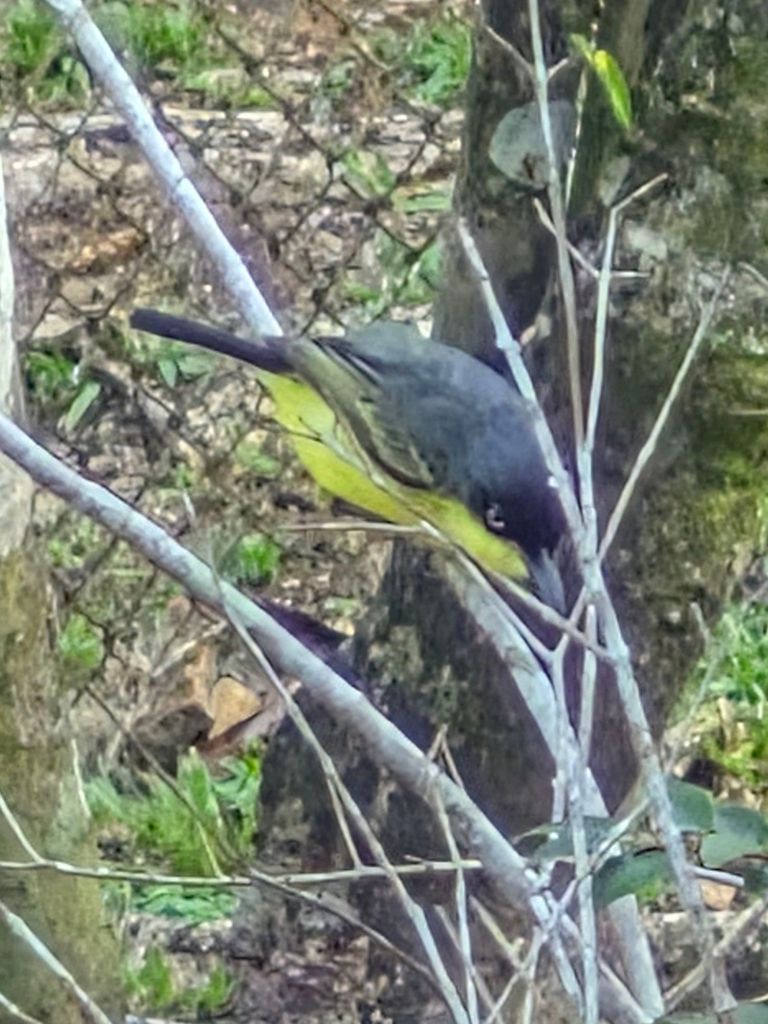
Common Tody-Flycatcher (Todirostrum cinerium)*
Black vulture (Coragyps atratus)
These two iquanus came running into the yard and were fighting.  Migdalia said they were two males.  The one who was trying to get away was eventually badly bitten, didn’t think he was going to make it. 
The aggressor then climbed up the fence
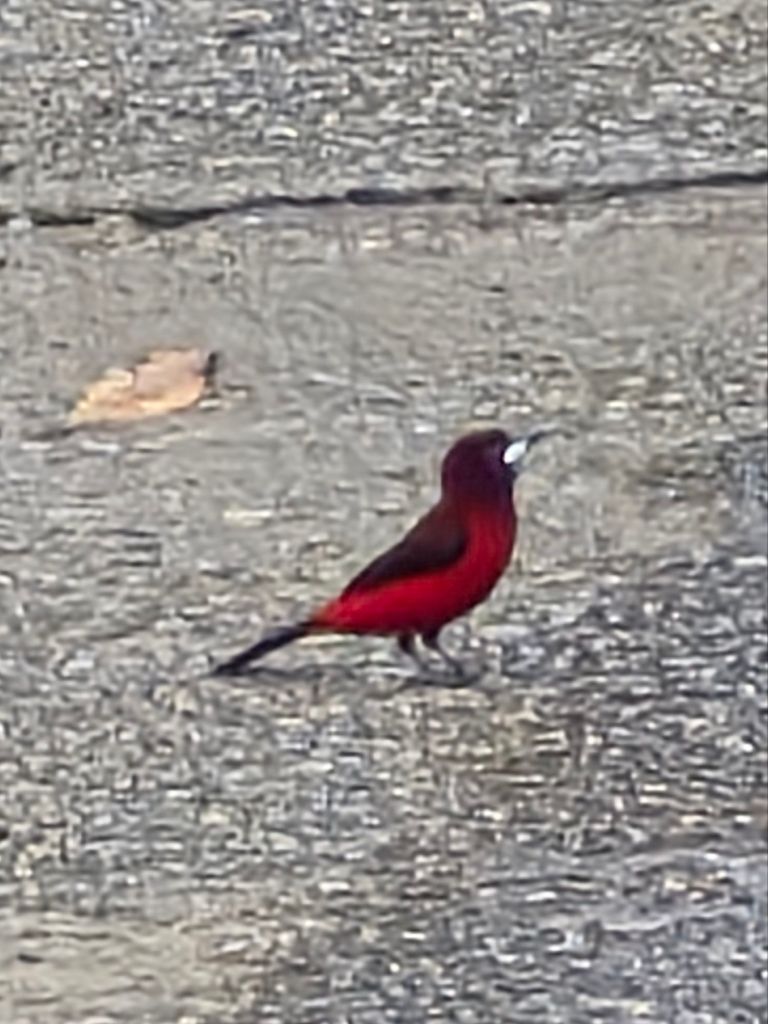
Crimson-backed Tanager (Ramphocelus dimidiatus)*

There is a sloth sanctuary about 2km from the house, and as they are difficult to spot in the wild, I thought it well worth a visit.  One buys a ticket for the tour at a very grand hotel, which includes a visit to the big frog- and butterfly-breeding cages.  On the way we passed an orchid nursery, but very few were flowering. 
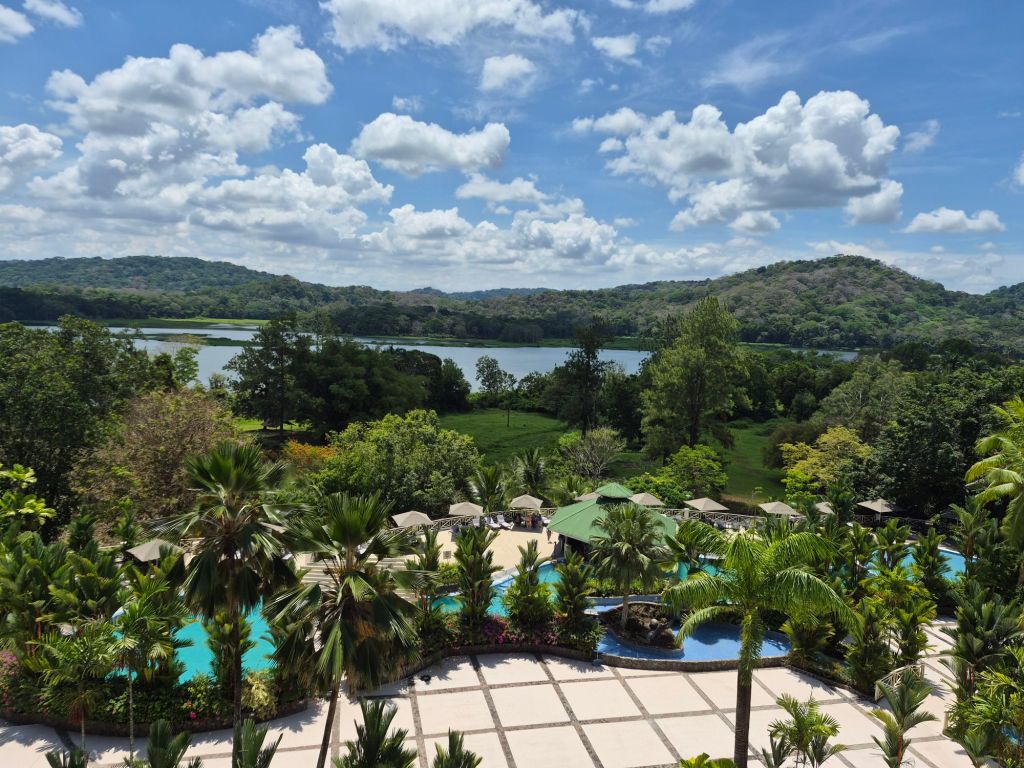
View down into the garden of the hotel, with the Chagres river in the background.
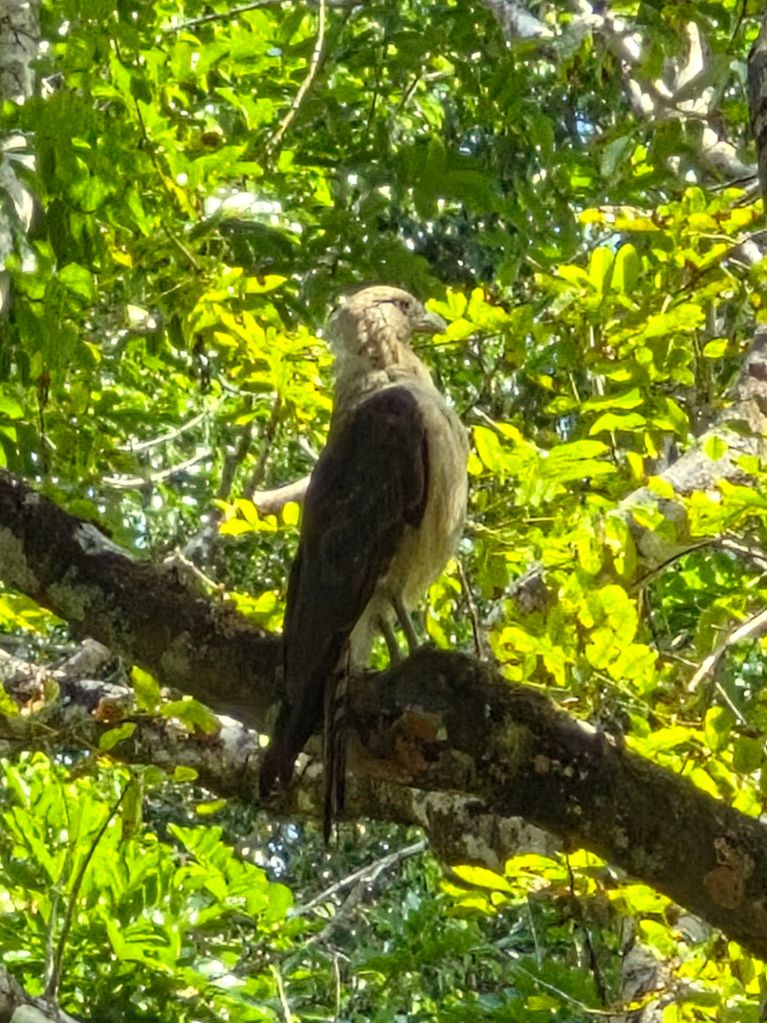
Yellow-headed Caracara
(Dabtrius chimachima) *, in the garden of the hotel.
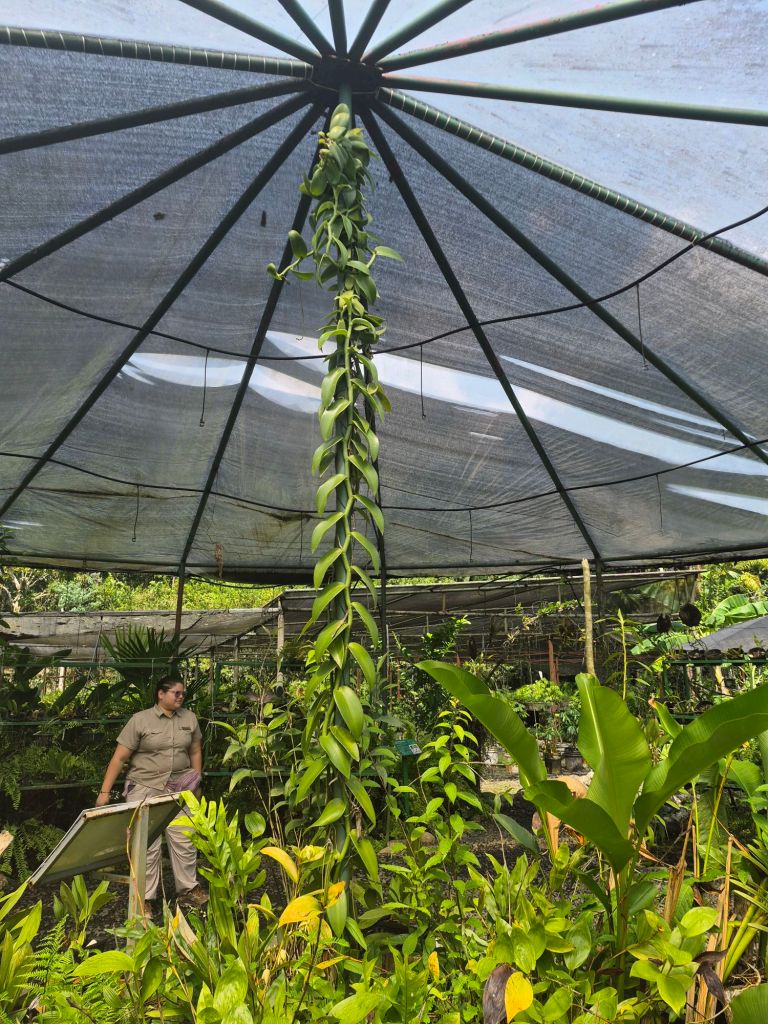
A vanilla orchid (without flowers)
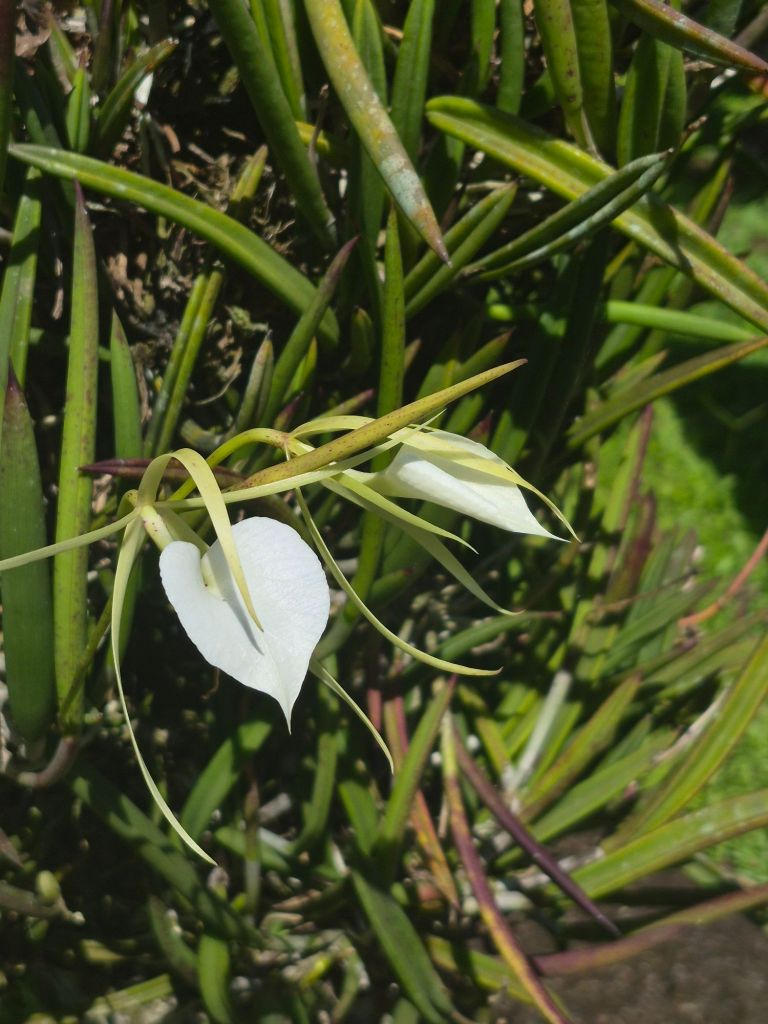
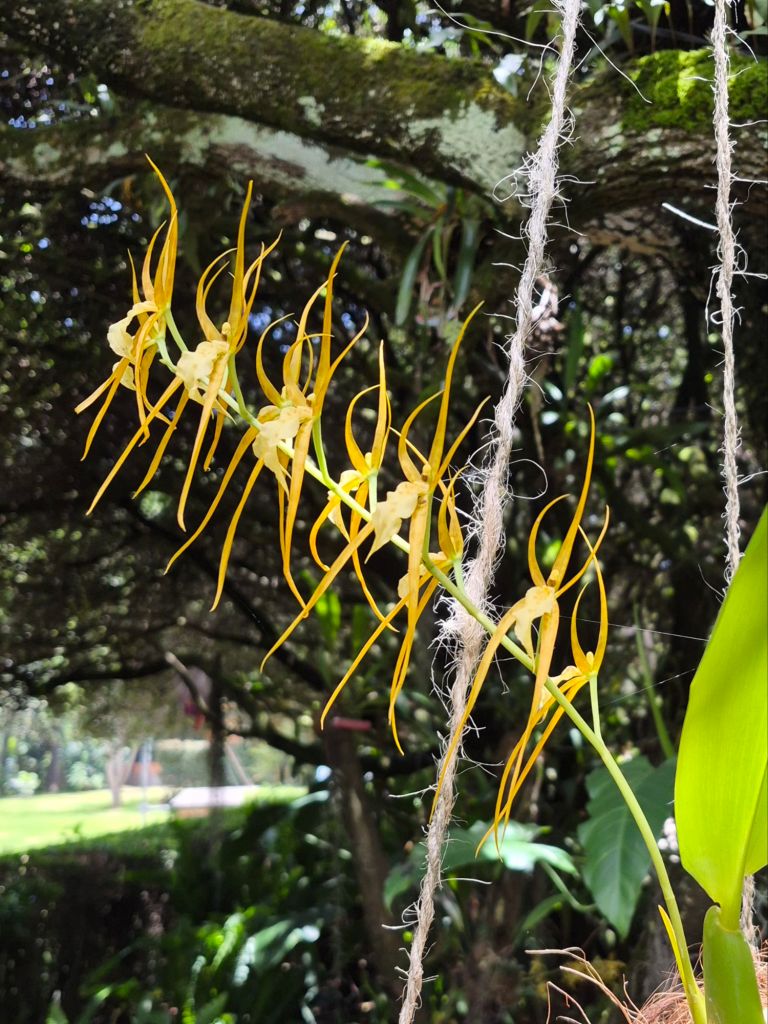
Lady of the night orchid (Brassavola nodosa), named so because of the scent it gives off early evening
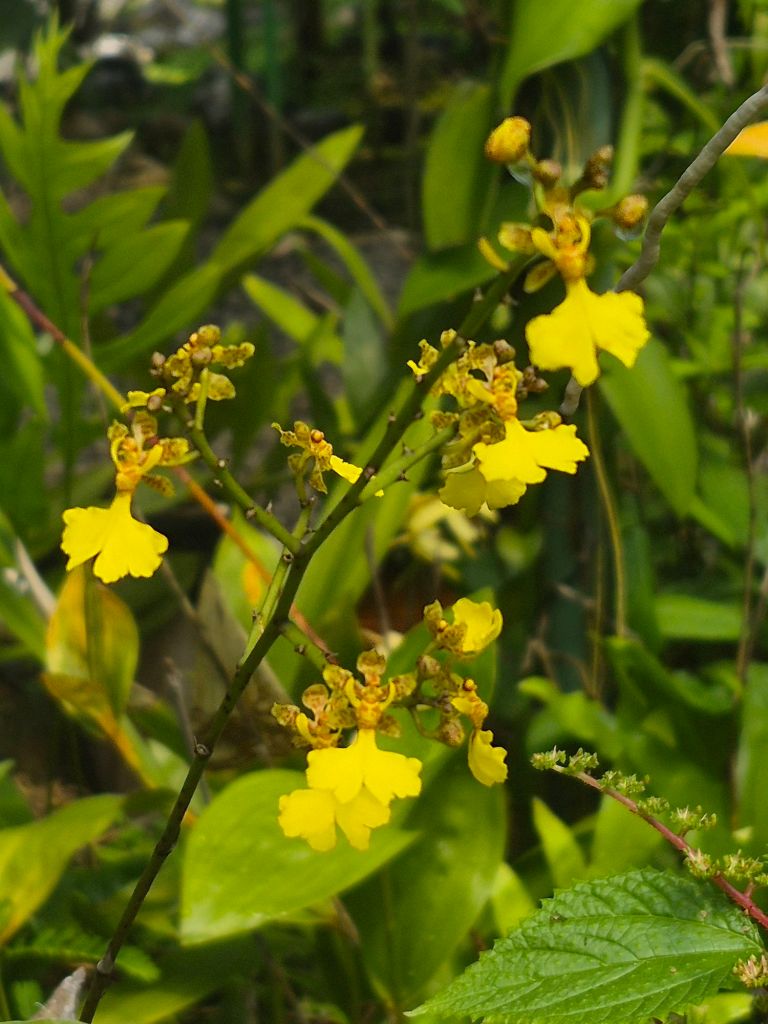
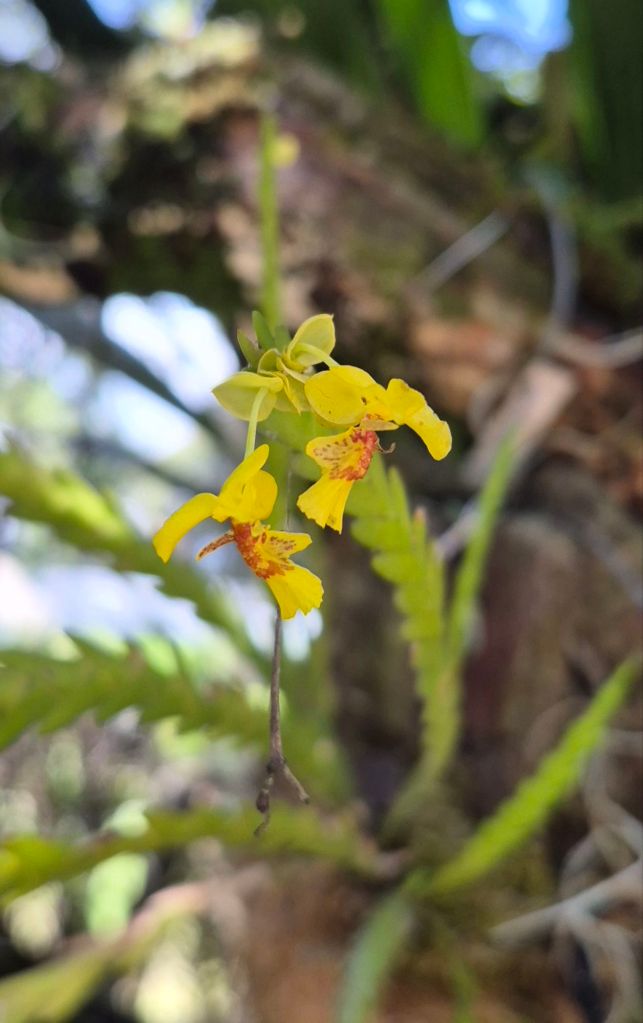
Dancing doll (or lady) – yellow oncidium
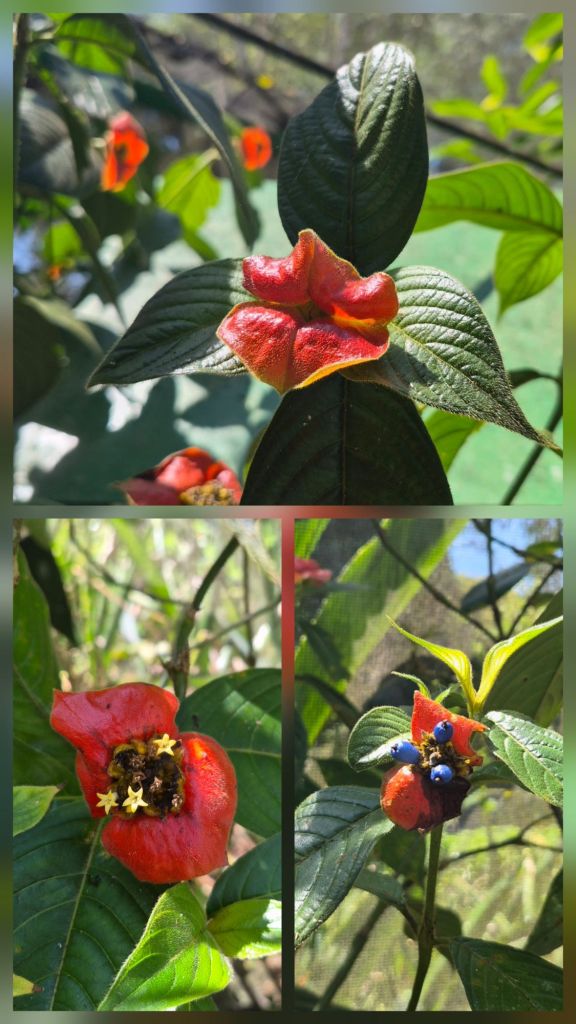
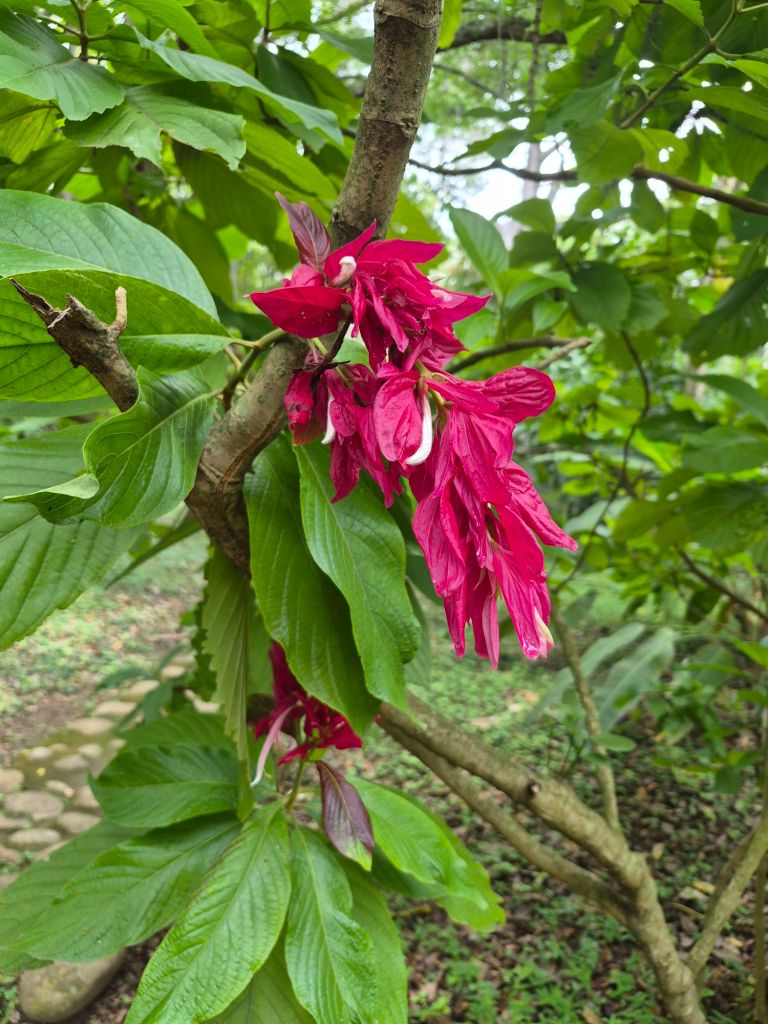
Hot Lips plant (Psychotria elata), The kiss-shaped bracts are not flowers, but leaves, and are used to attract hummingbirds and butterflies.   The flowers appear later, and turn into edible berries.
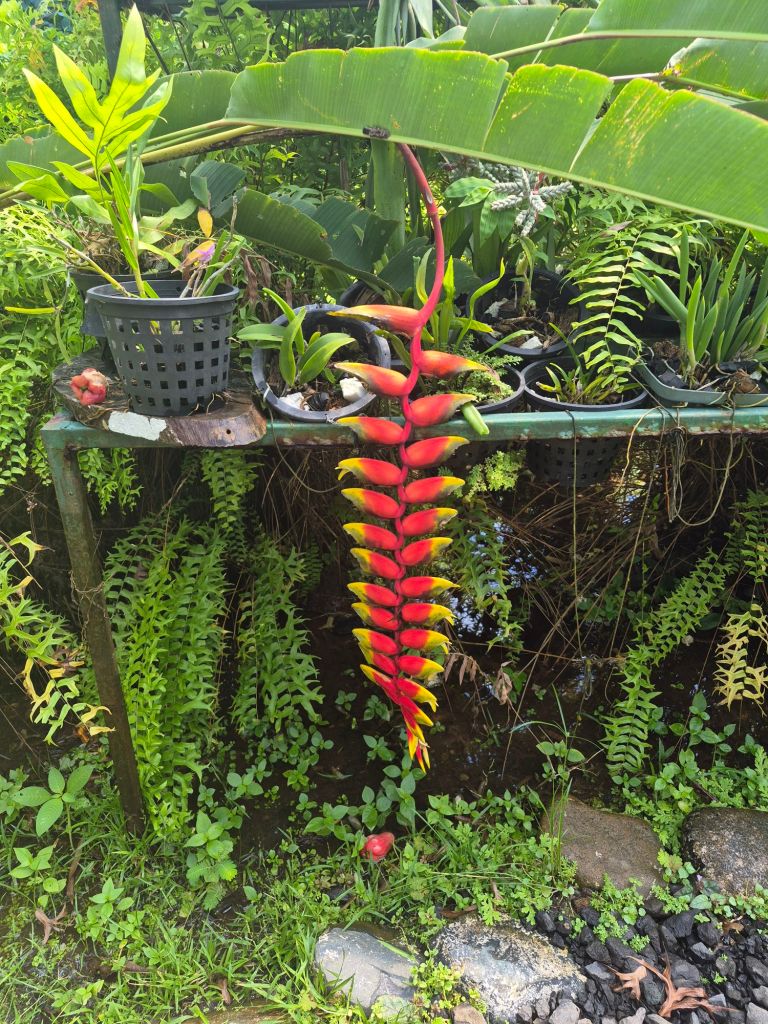
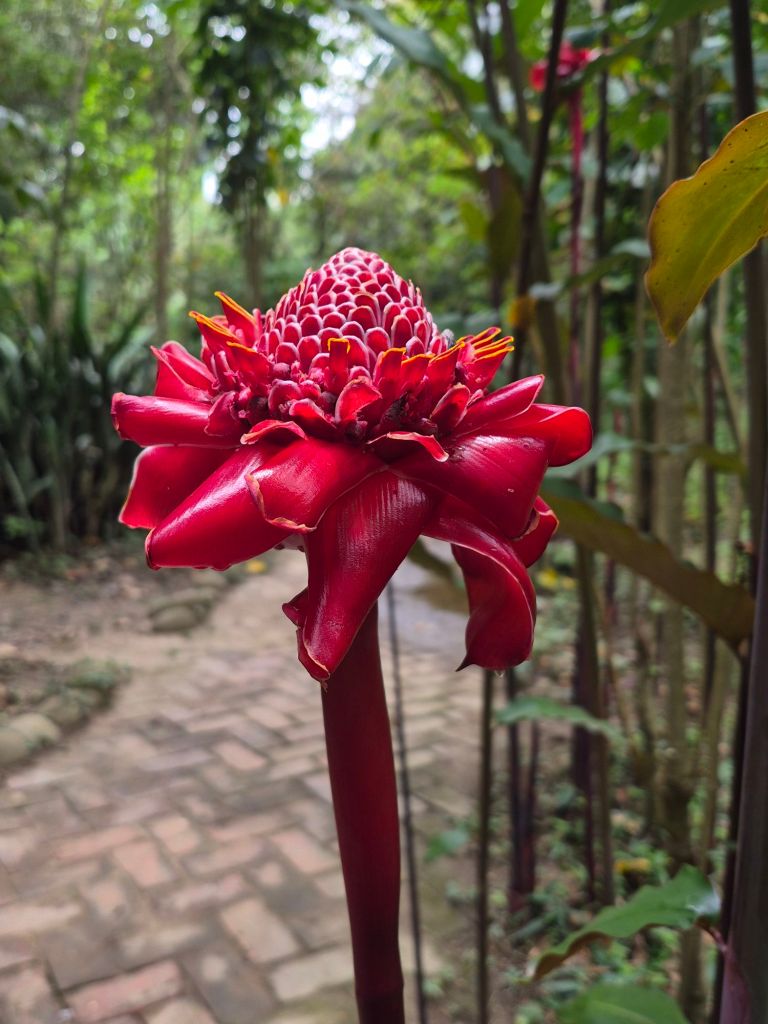
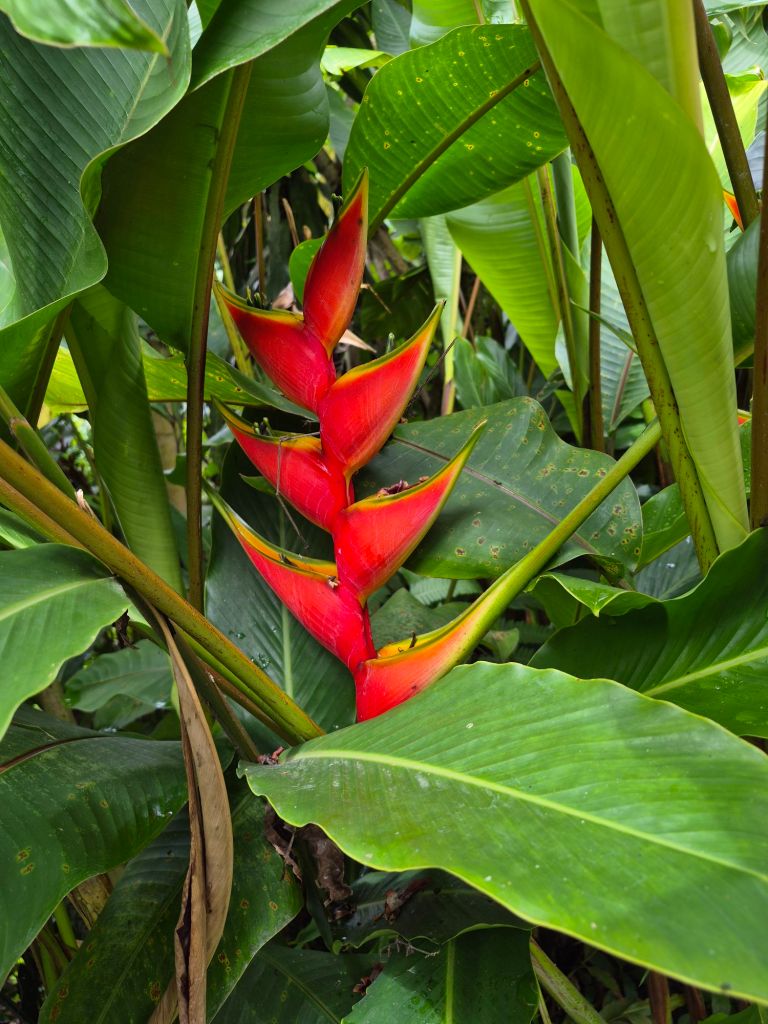
Hanging Lobster Claw (Heliconia rostrata)
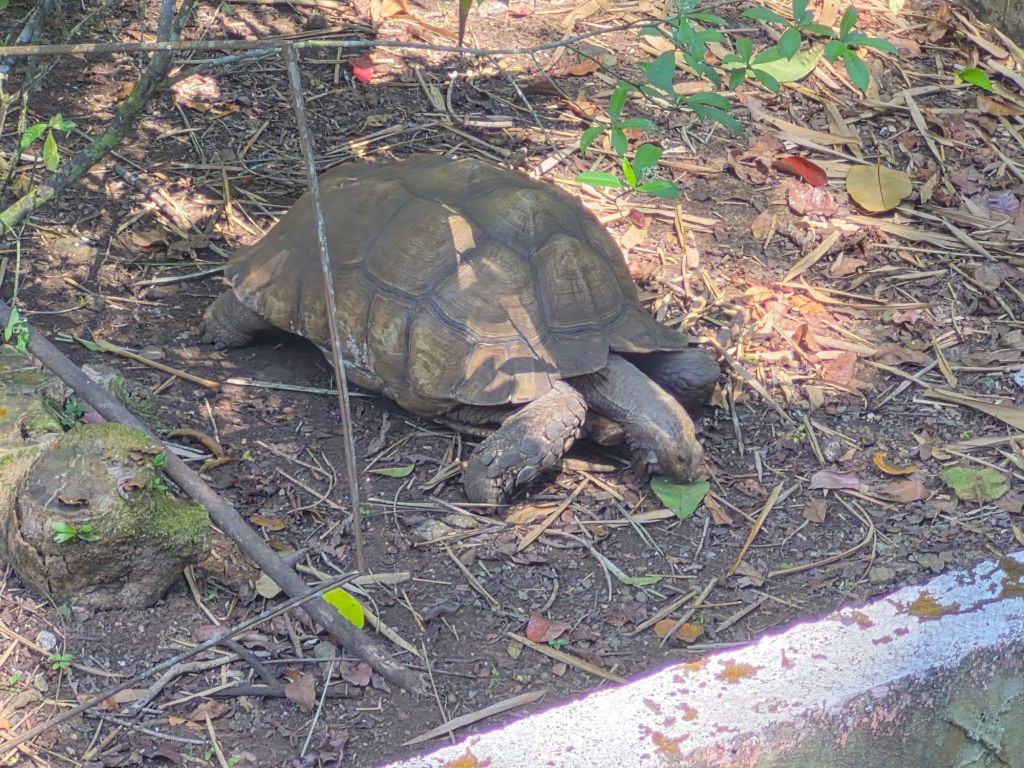
An African tortoise (bergskilpad) – I told them it needs a pond to swim in, they like doing that.  My mother had a license to keep them, she wrote a book. 
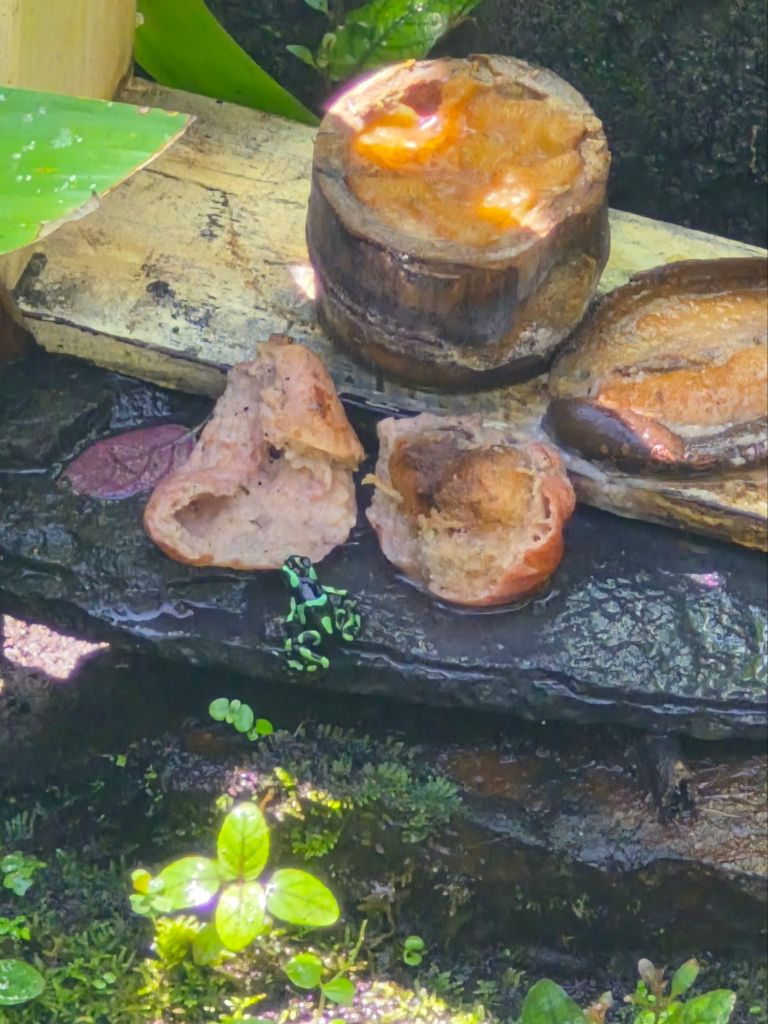
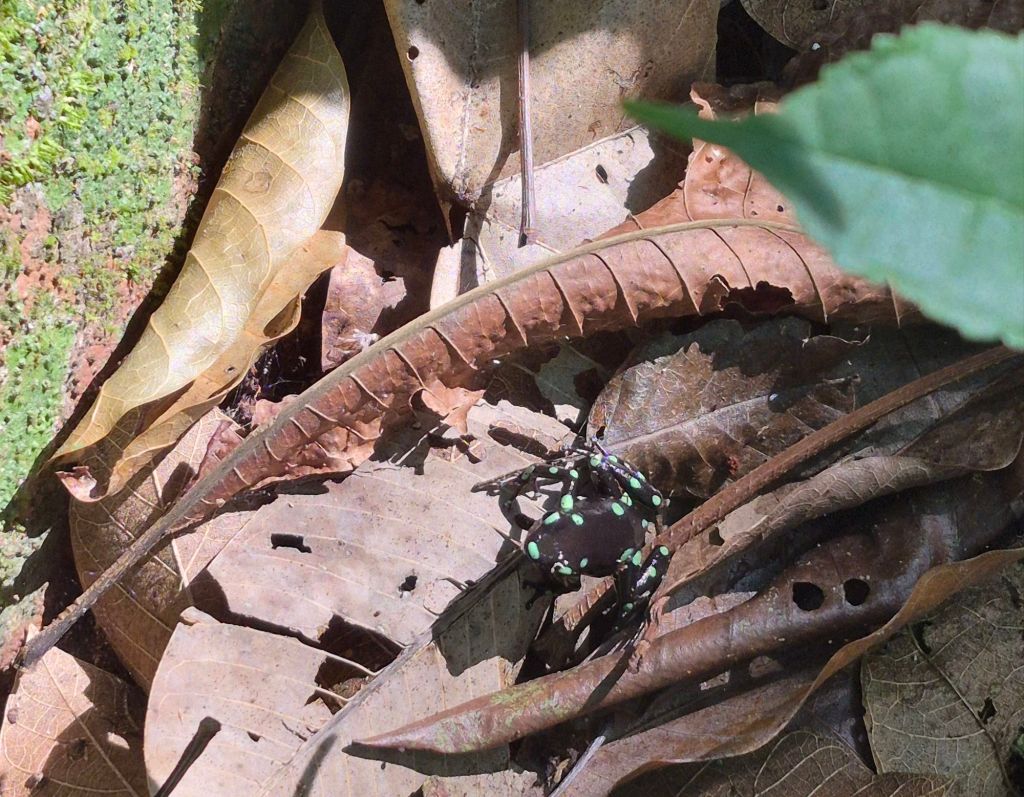
Green and Black Poison Dart Frog (Dendrobates auratus), very small (2–4 cm)
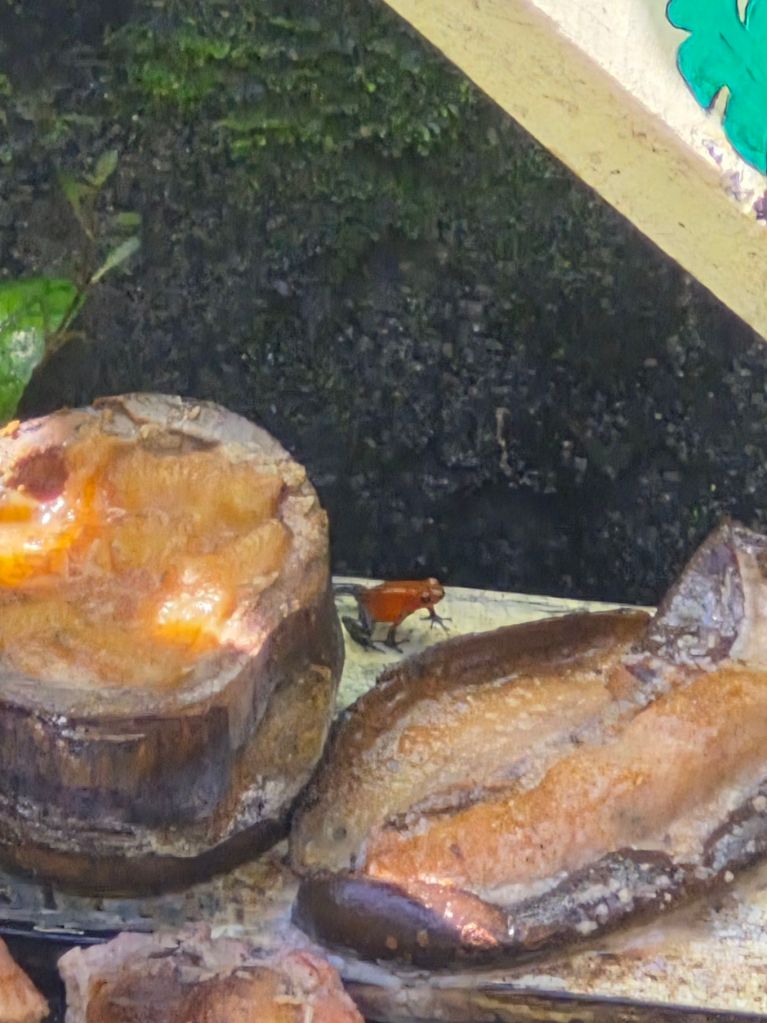
And even smaller Strawberry Poison-Dart Frog (Oophaga pumilio), poisonous to predators and although non-lethal to humans, it can cause severe irritation when touched.
The blue butterfly, Blue Morpho (Morpho menelaus), very difficult to photograph.  I saw quite a few of them in the rainforest the following day.
The one sloth – there were 5 that had been rescued

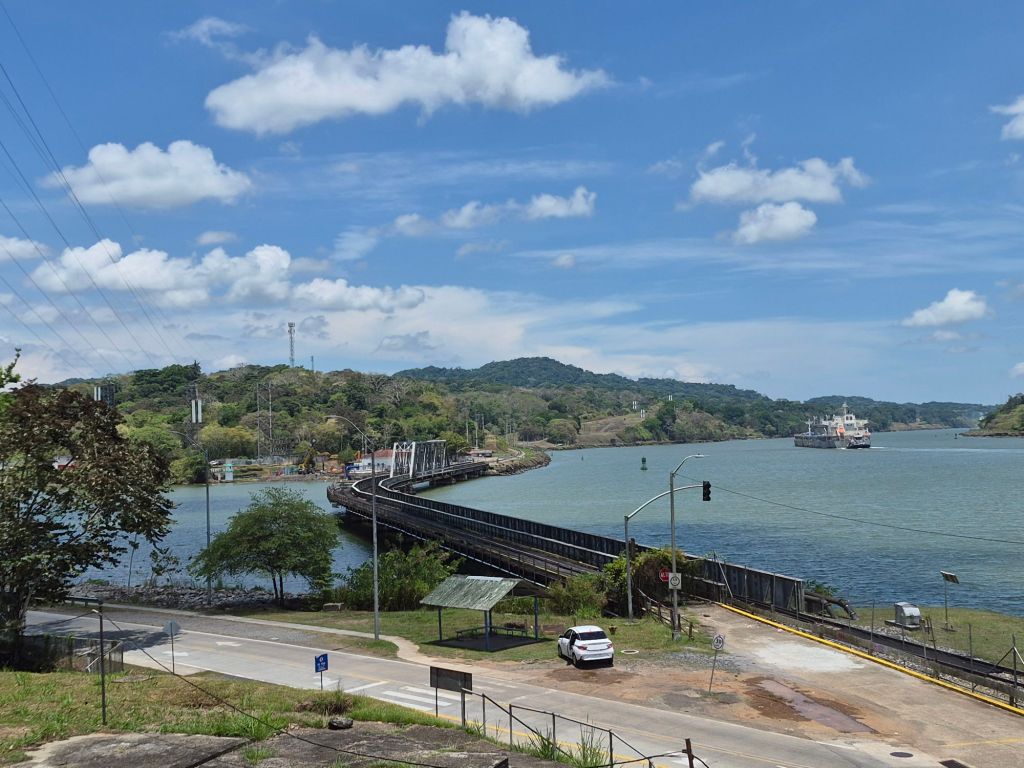
Gamboa is on the Panama canal, and when I walked back via a lovely trail, I came out at the place where the Chagres river runs into the canal, and I sat and watched the huge freighters pass.  A train came past twice as well, loaded with crates. 
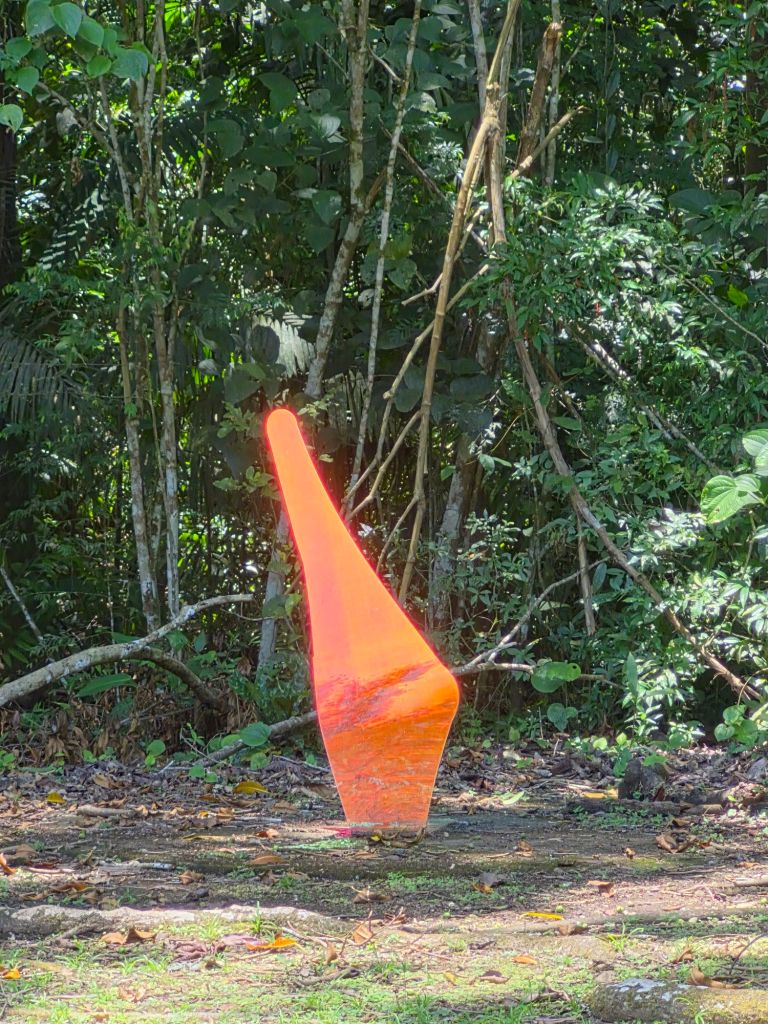
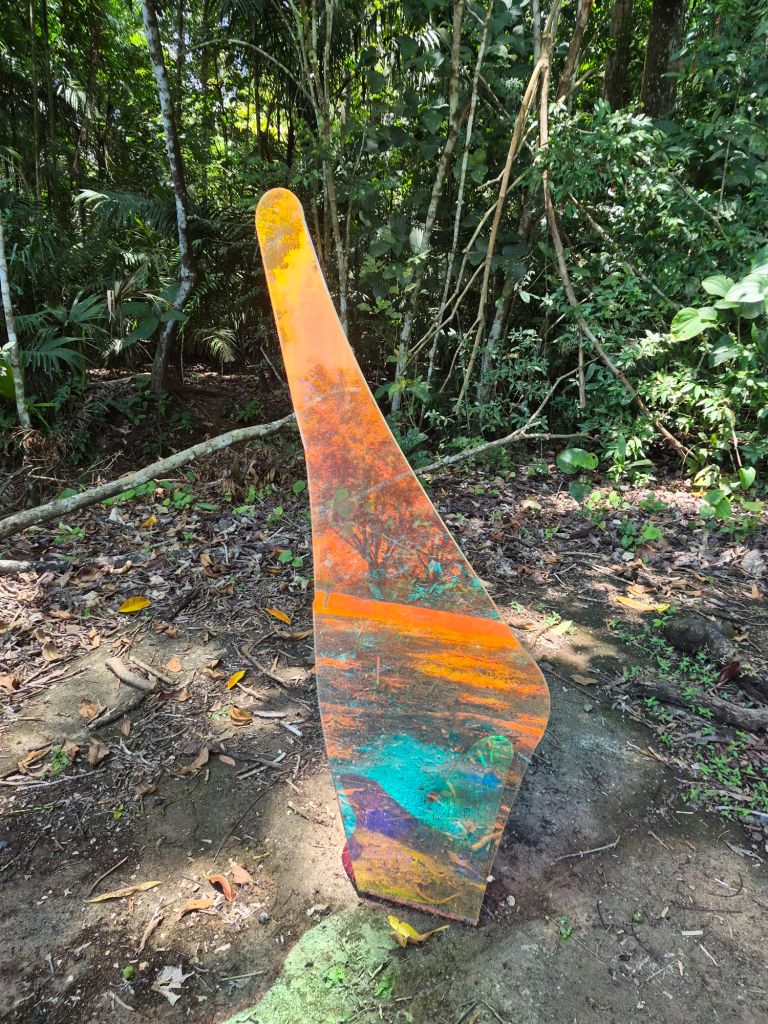
This ‘shining’ object at the beginning of the trail fascinated me
Closer inspection revealed it to be a perspex shape, reflecting light
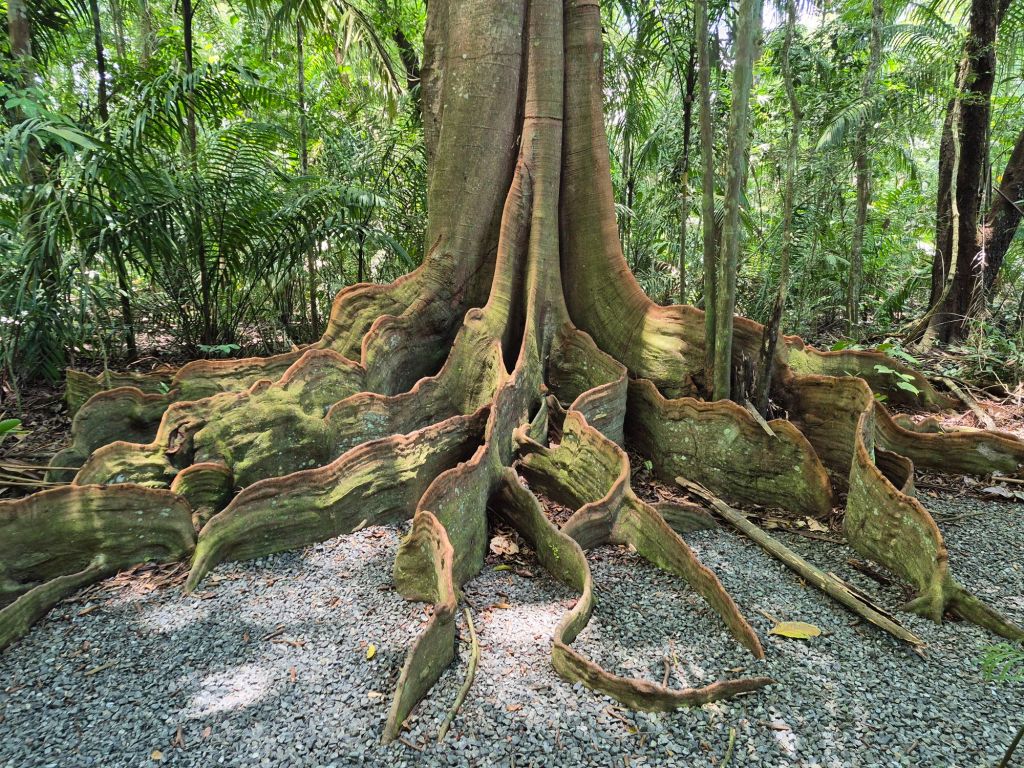
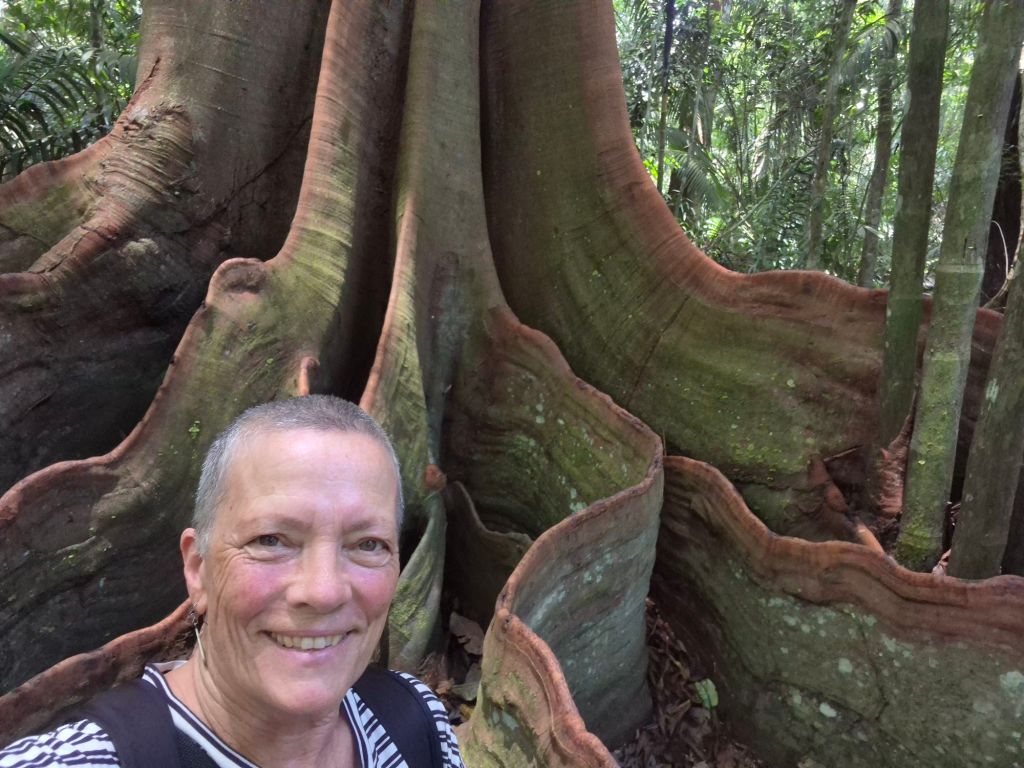
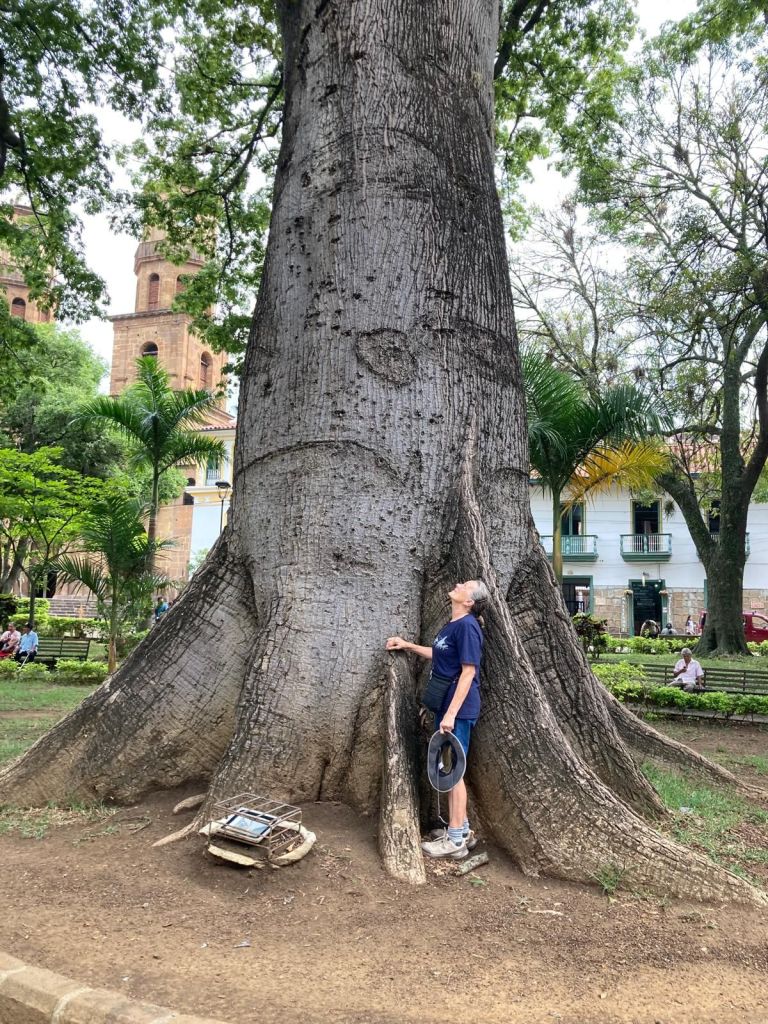
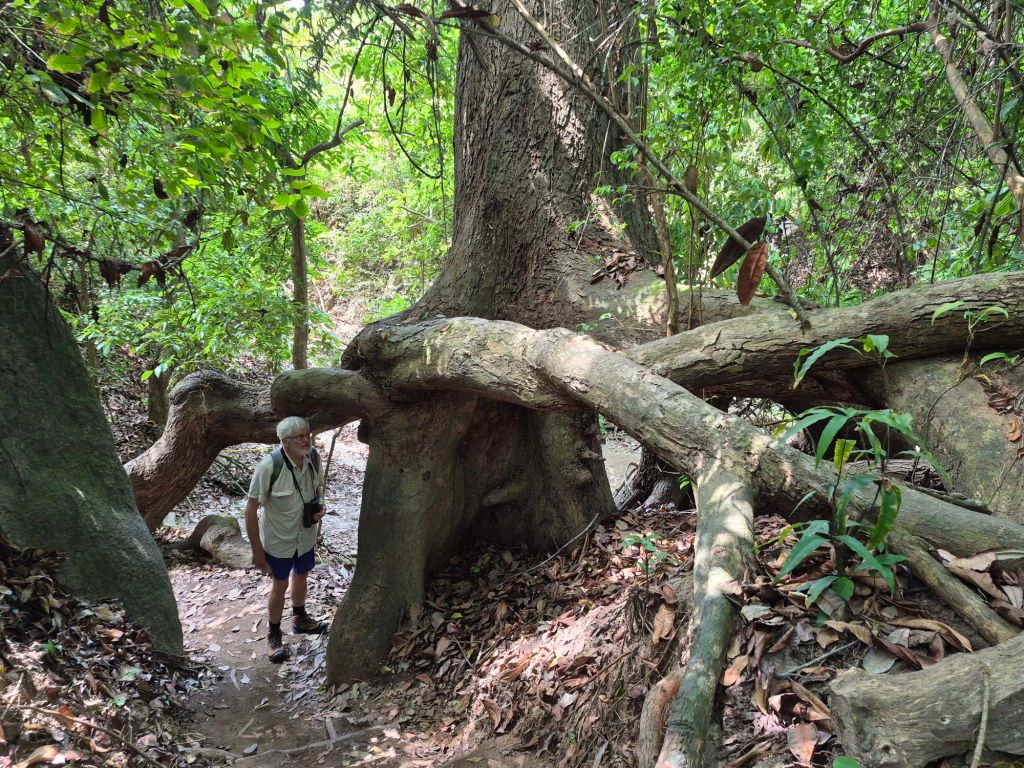
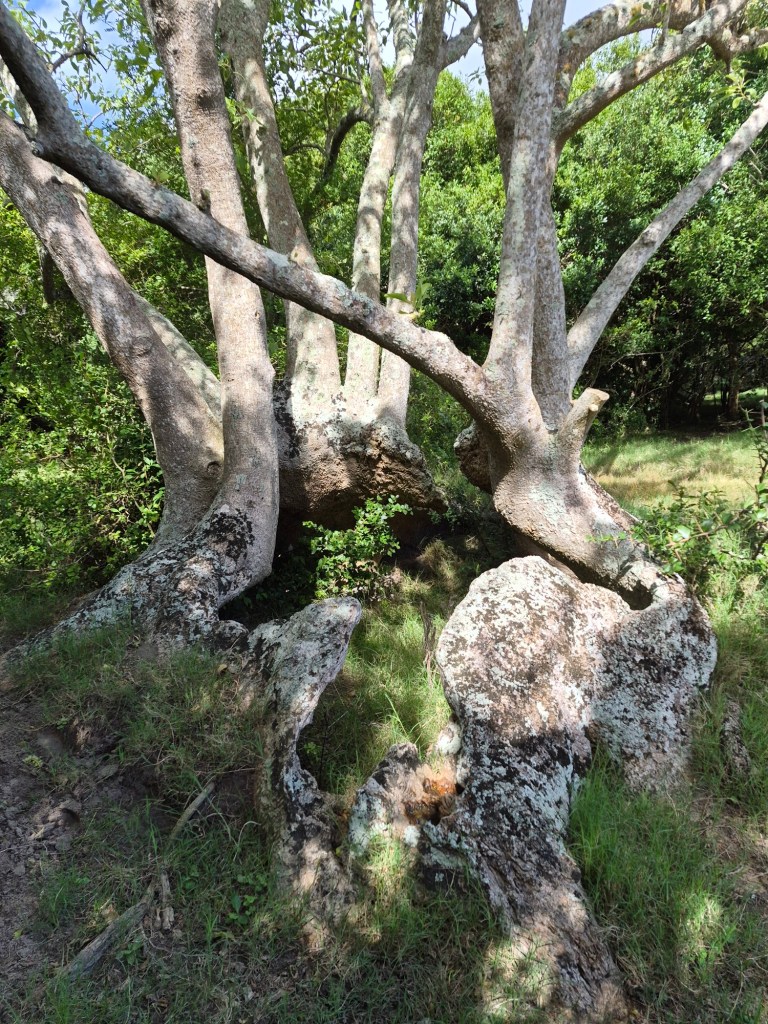
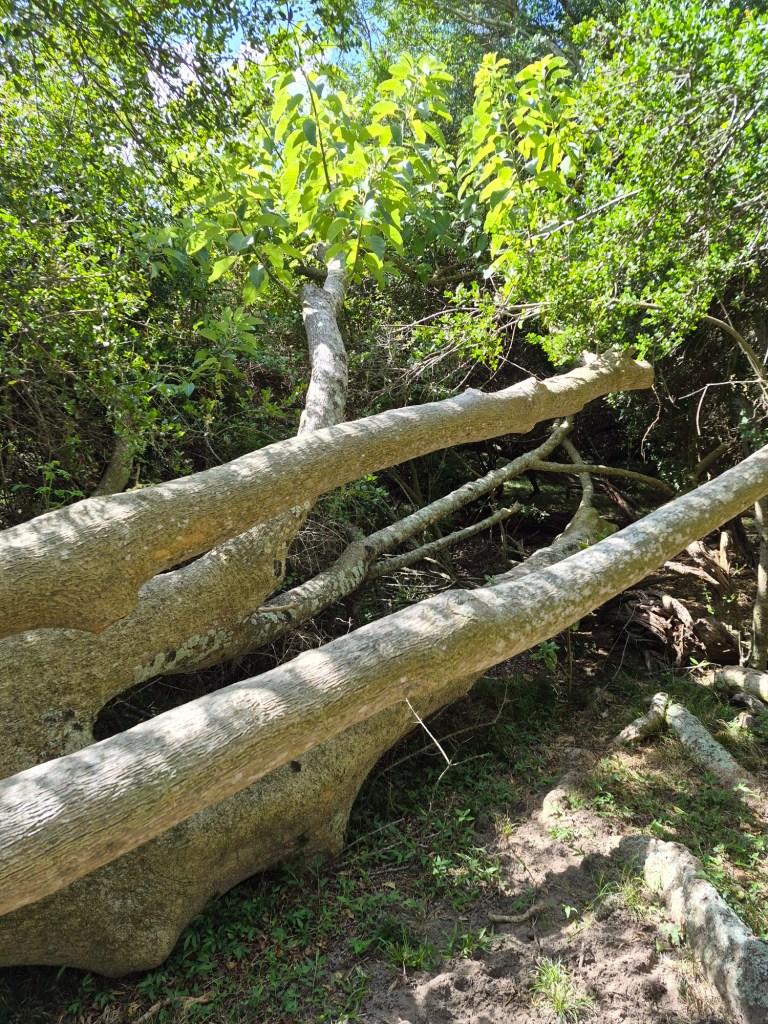
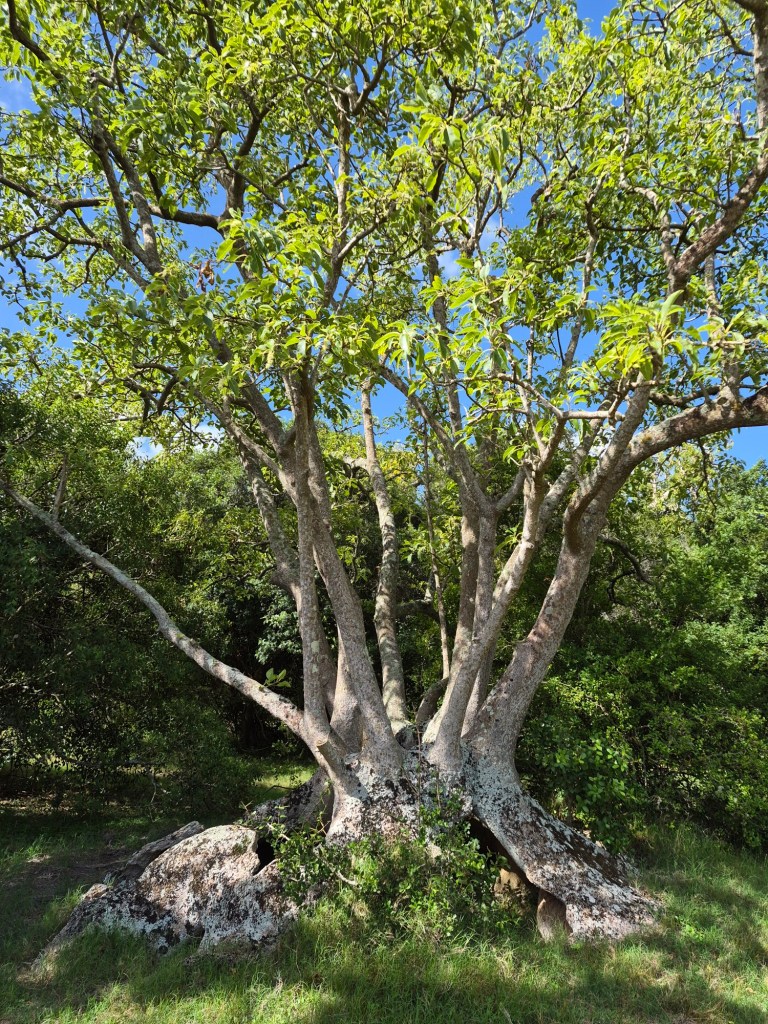
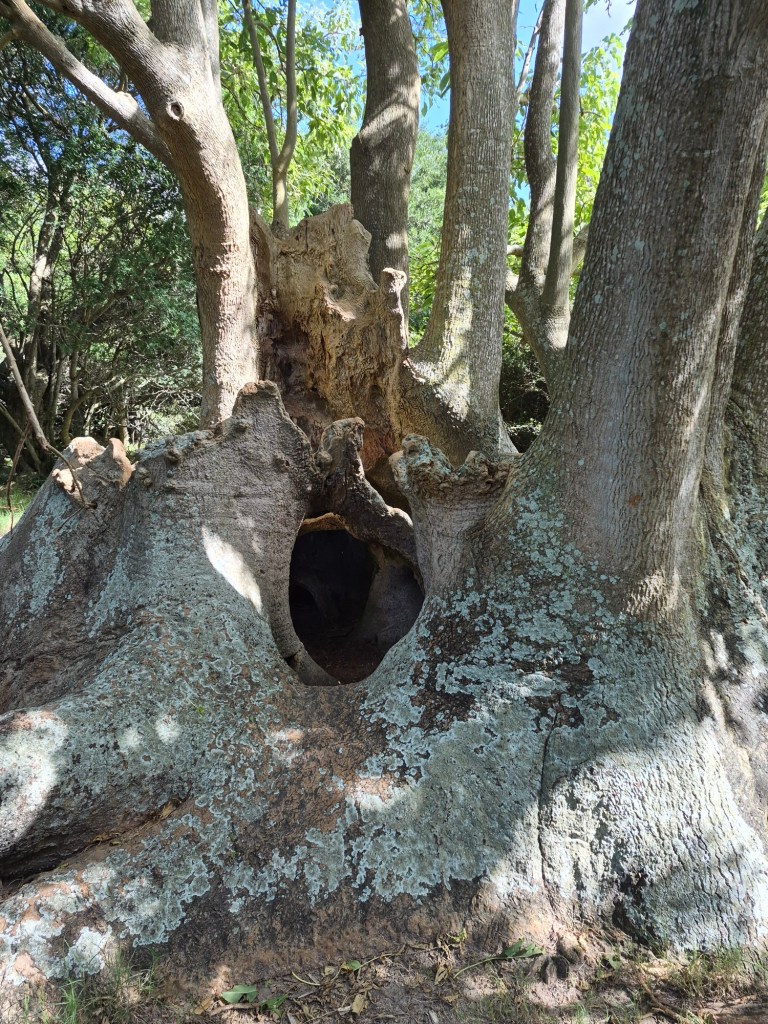
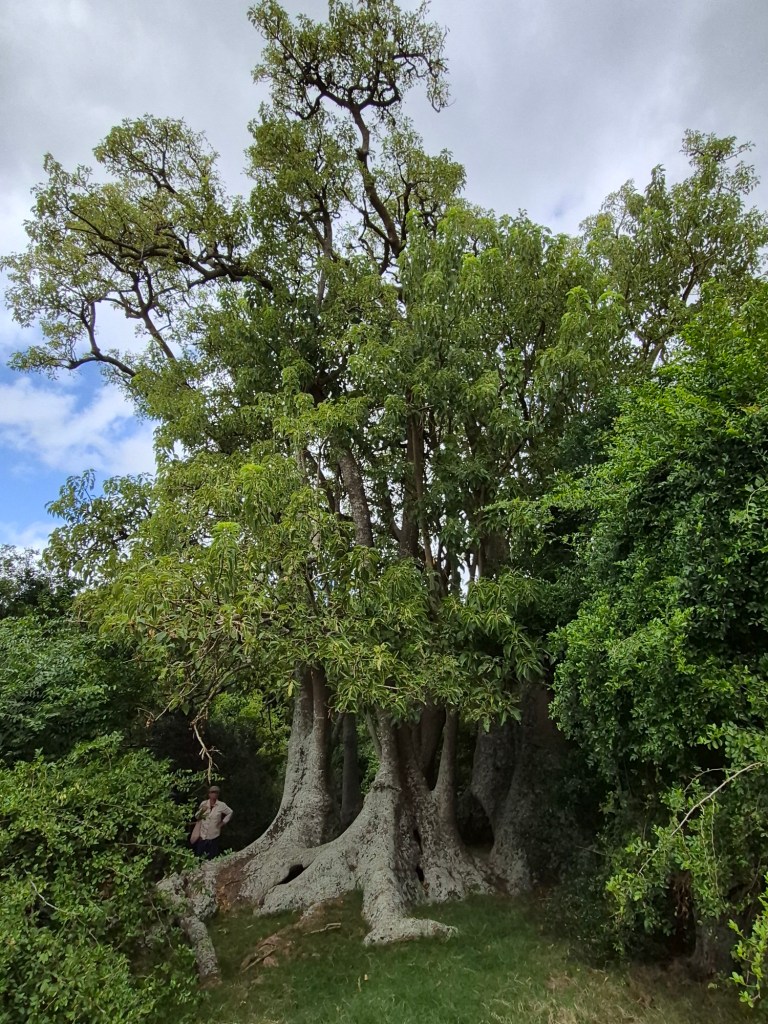
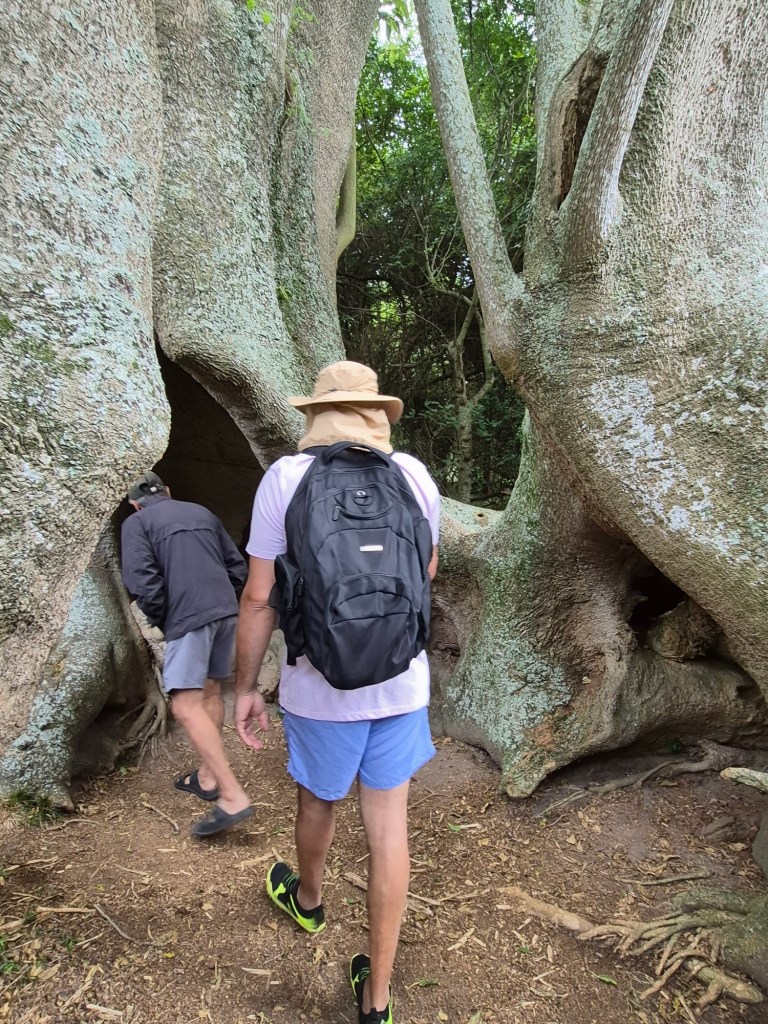
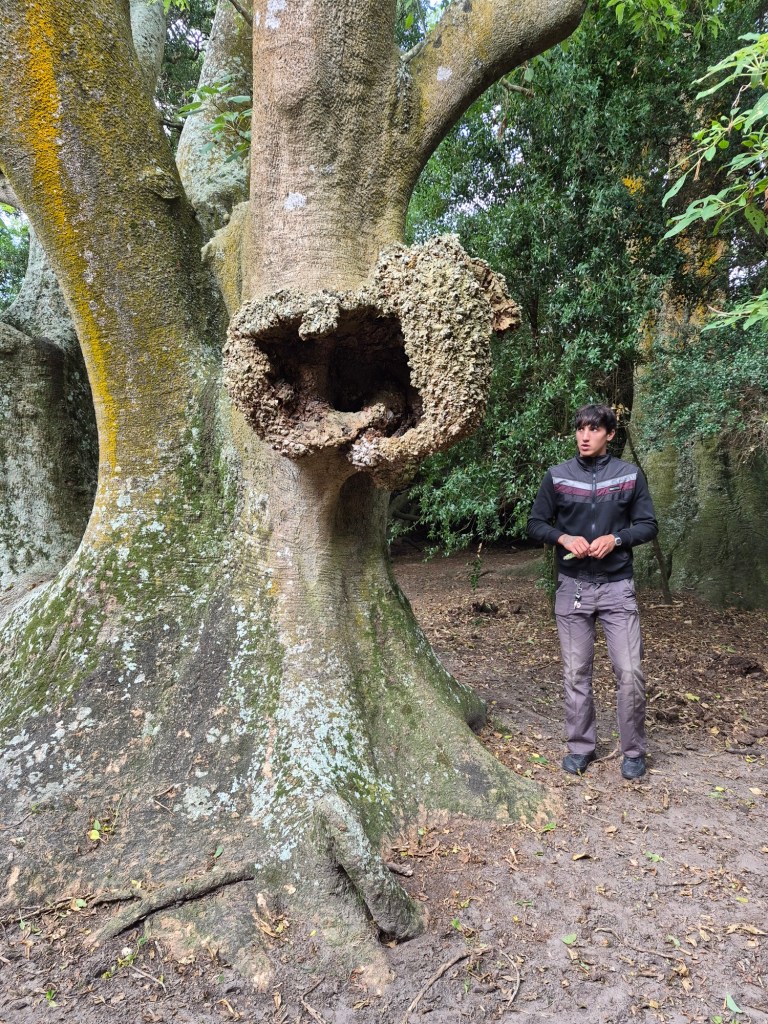
A giant ceibo tree with these amazing roots
The Chagres river coming in on the left, the Panama canal from the right.  There is a man-made lake, Gatun, that allows water into the canal.  The water does not flow either way, the ships are regulated at each end of the canal (Panama City and Colon) with locks. 
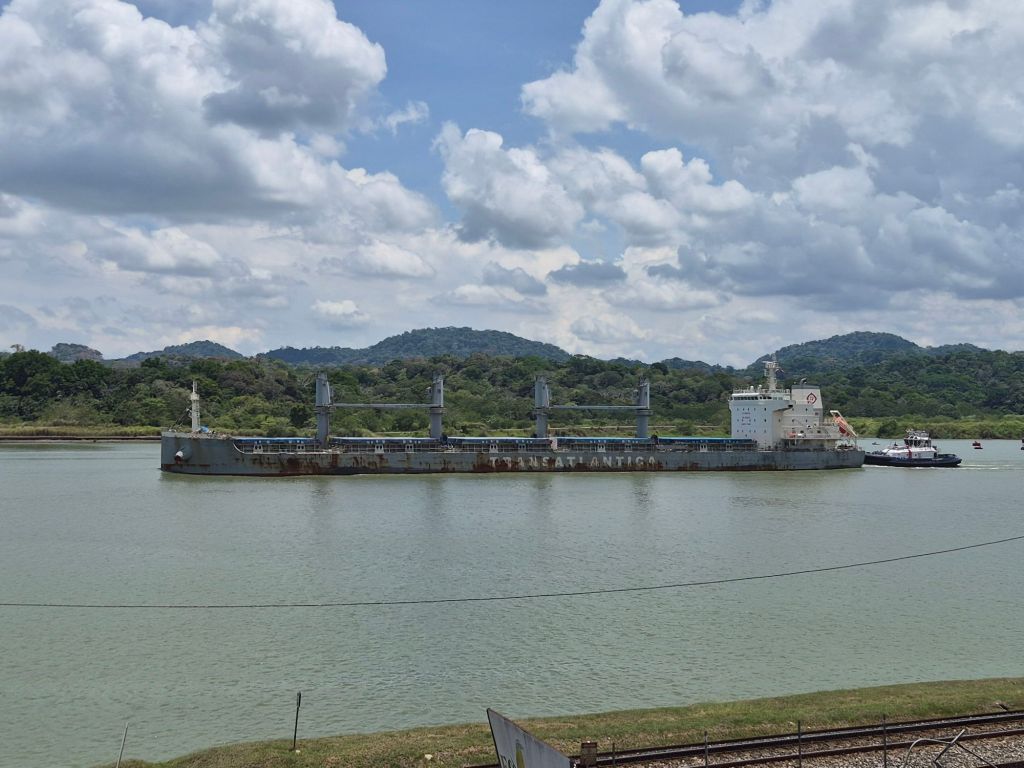
I watched this weird freighter from afar
Which eventually looked like this, massive. It was Chinese. 
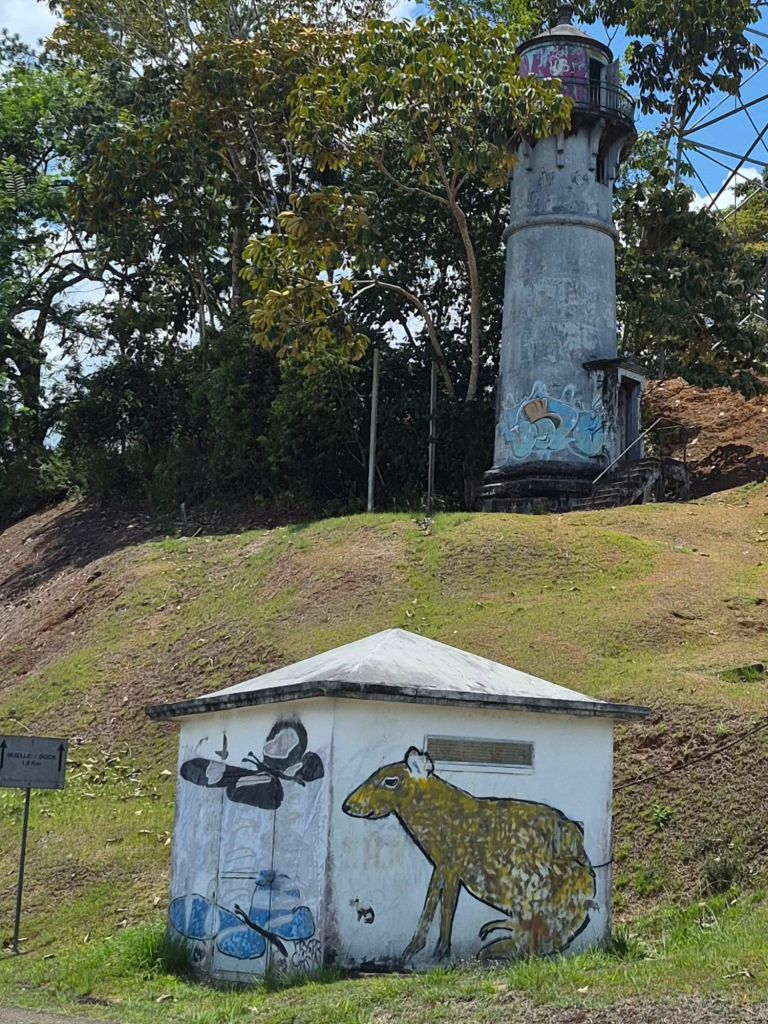
Behind me was this abandoned lighthouse, and the agouni and butterflies painted on the structure depict Gamboa – the original road into Gamboa came along here. 

When I got back to the house, a German traveller, Sarah, had arrived.  She had walked the Pipeline Trail that afternoon and was not impressed, but I decided to go the next day anyway.  It was good to have English company, and we shared our travel stories.  She also mentioned that the local restaurant next to the only shop in town, sold very tasty meals for much cheaper than I had paid for mine the previous evening.  I had bought some bread, peanut butter, jam (for sandwiches) and oats (for porridge every morning), so was okay for food, but I did have a hamburger and chips at the restaurant the next day.

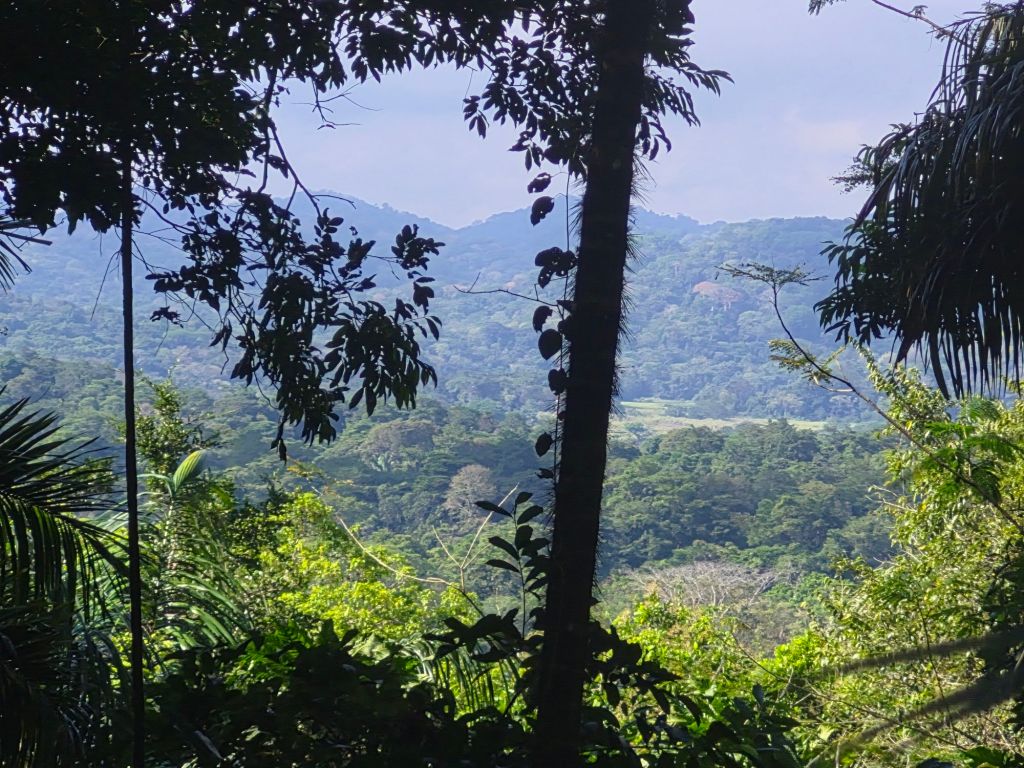
The Pipeline Trail in the Soberania National Park is known for its diversity of bird and other animal life, and is a popular destination for birders and nature lovers.  It stretches for almost 30km to Gatun Lake, the manmade lake that feeds the Panama Canal.  Most people walk for an hour or two – I walked 5km before turning back, quite enough in the humidity and heat.  I met a few groups who were walking with a guide, but I like to do things on my own, saving money in the process, so obviously I saw very few birds, no sloths and only a few white-fronted Capuchin monkeys.  I did hear the terrifying call of the Howler monkeys, but never saw them.  The trail got its name in the 1940s when the Allies dug this route for a pipeline that was never completed, and although there is an embankment on one side, it is totally overgrown and one is not aware of a pipe.  The trail follows a road though, so invariably there were vehicles coming and going.  I found a trail veering off to the left, and walked a good kilometer or more uphill to a place called Radio Hill, in the hope of finding a view.  There was only an old water tank, and a tiny viewpoint, but I did see one of the green frogs at the base of a tree. 
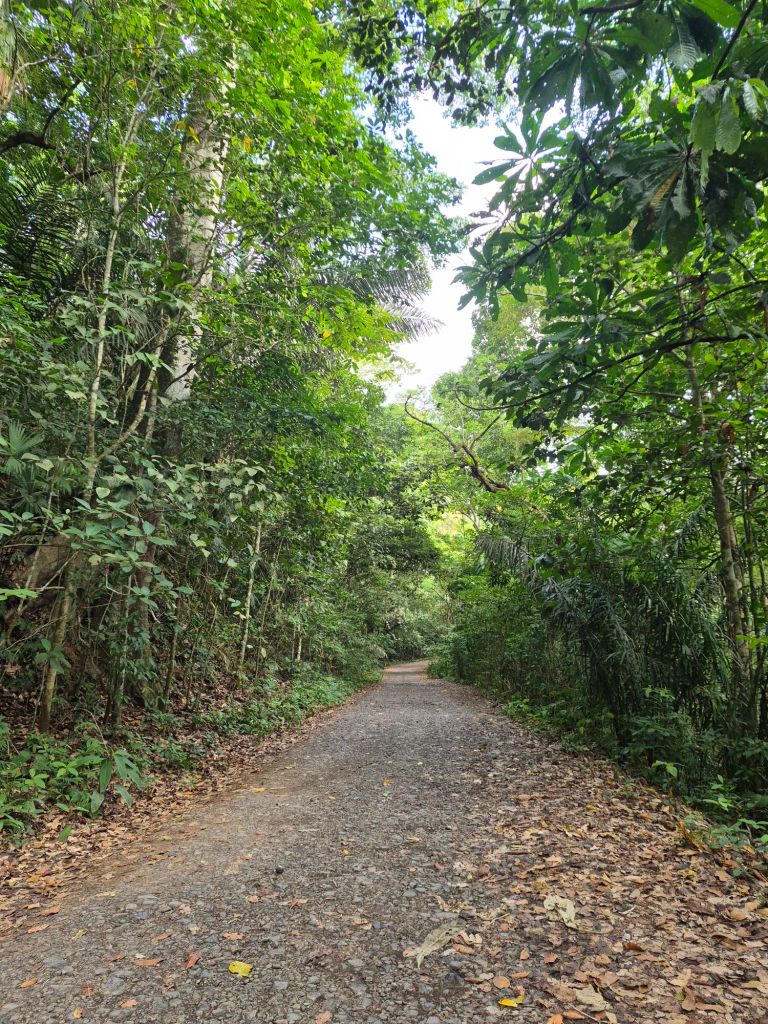
The view (much enlarged)
The female frog lays 6 – 10 eggs, which the male guards and keeps moist until they hatch, about 2 weeks.  He then carries the tadpoles on his back and deposits them in a small secluded pool of water, like a bromeliad plant or nook of a tree trunk, often high up in a tree, where they grow to maturity.  Once adults, they return to land.
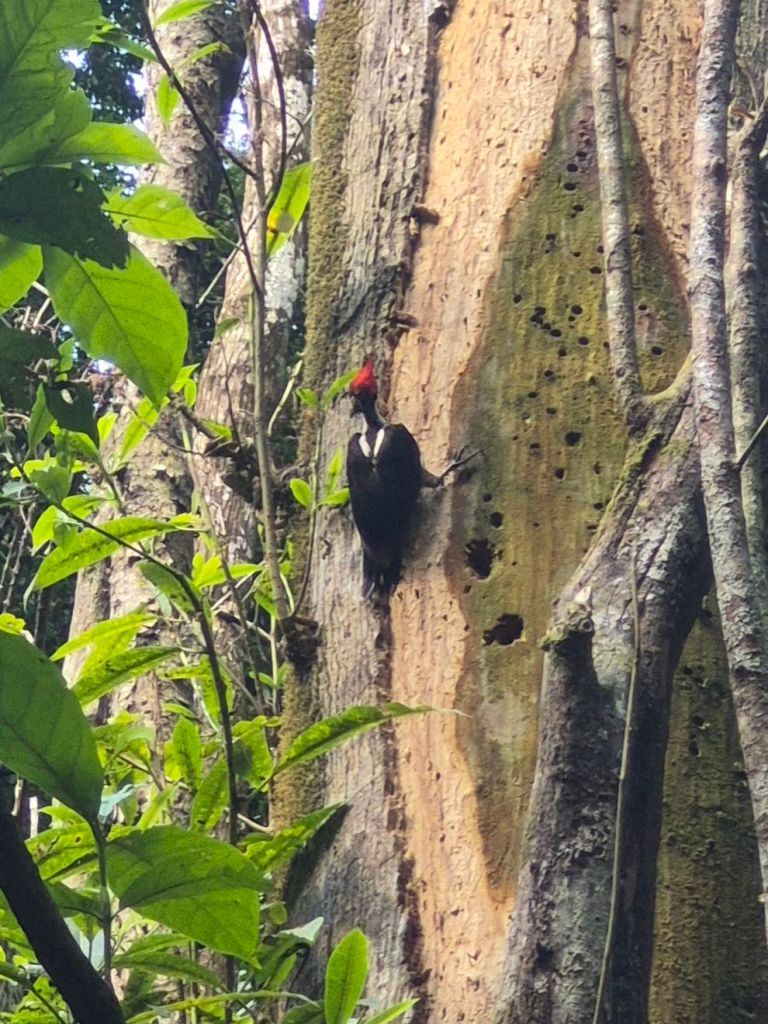
There were two of these Pileated Woodpeckers (Dryocopus pileatus) and I watched them for a long time.  They were just feeding, up and down the tree. 

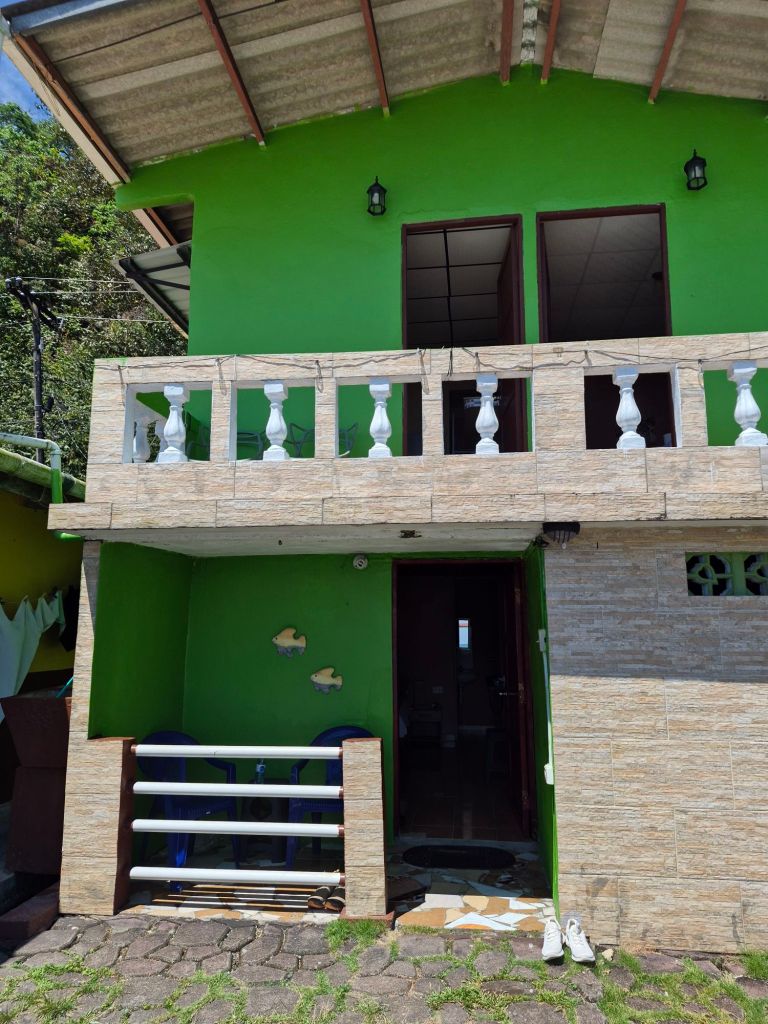
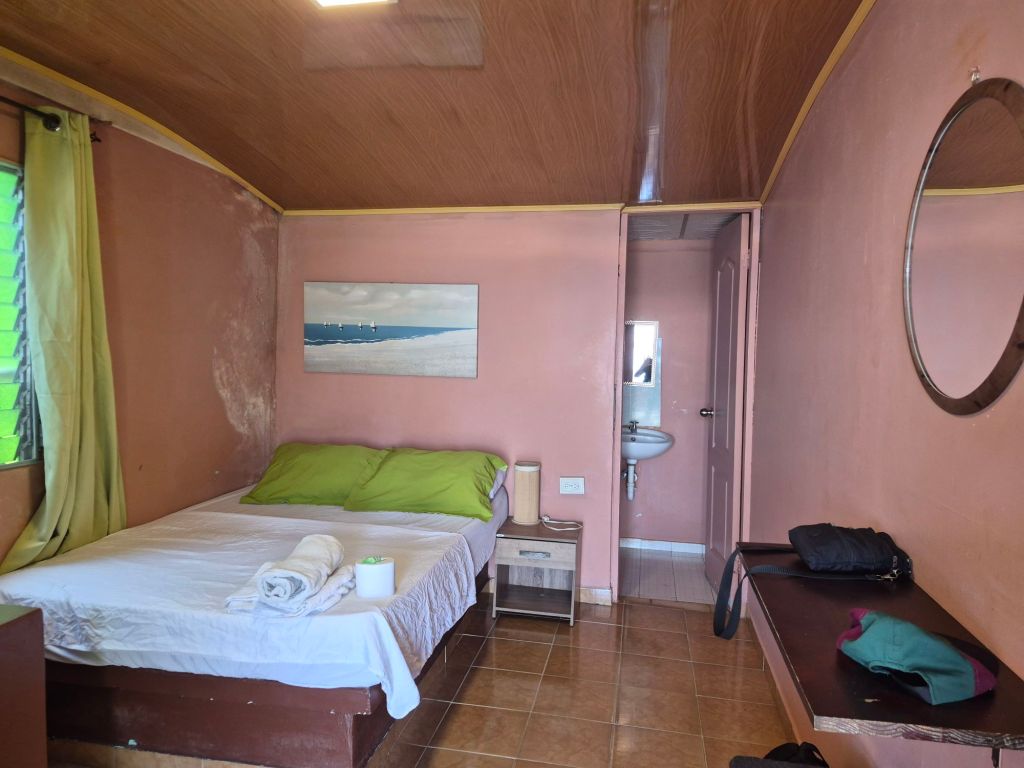
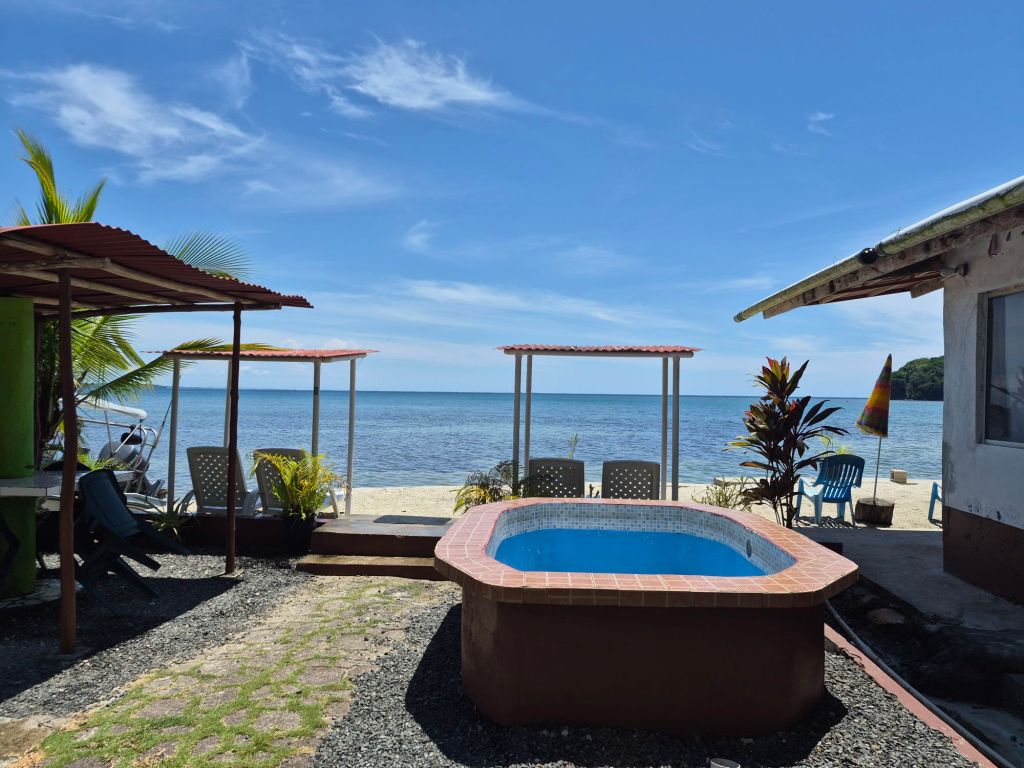
I was unable to recharge my Metro-card in Gamboa, so offered money to the bus driver, but he just waived me (and Suerte) in.  I had to go back to Panama City to catch a bus to Colon, on the Caribbean coast, from where I was going to a hostel a few kilometers from Portobello – I seriously needed to swim.  The description of Hostal Ofiuras said:  “Private room with en-suite bathroom, sea-view”.  They did not mention that the hostel is on the side of the narrow main road that runs between the mountains and the coast, and that the shallow sea had sea grass, and that I was the only guest.  My apprehension soon turned to perfect relaxation and enjoyment, as I went into Portobelo to buy groceries, had a clean and functional kitchen all to myself, and could lounge on the deck-chairs or swim in the little pool right in front of my covered patio (which was great, I could even sit there when it rained). 
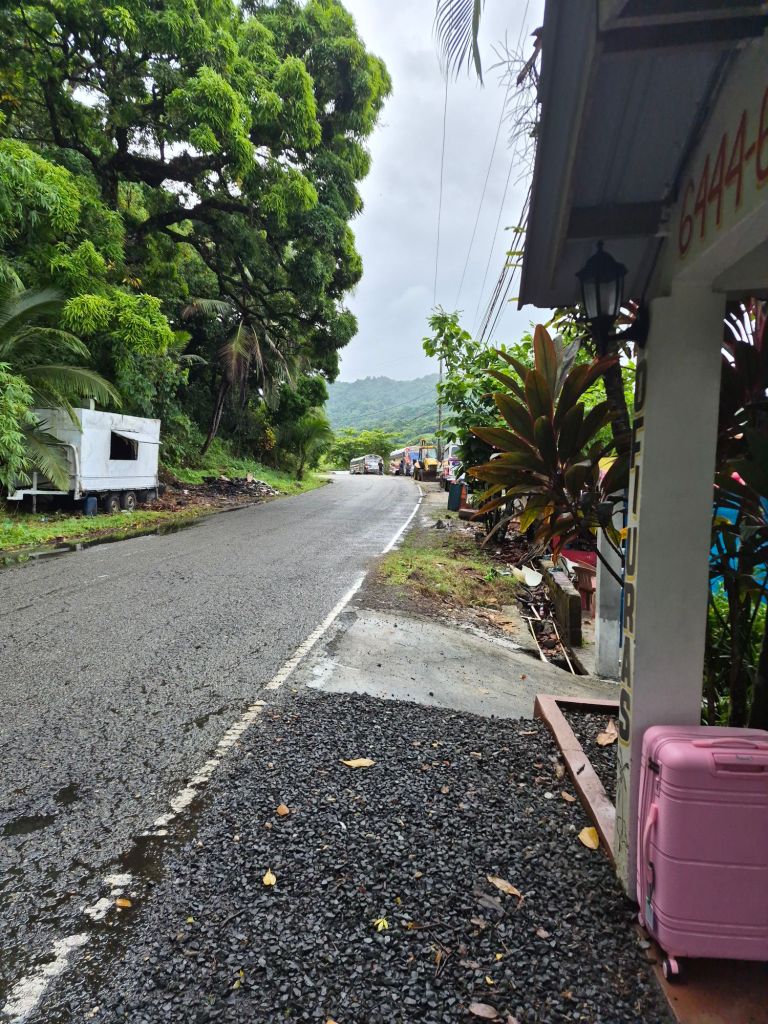
Arriving at the hostel,  right on the street
Fortunately my room was at the back, overlooking the sea – the downstairs one with little stoep
There was a fan that I kept running permanently
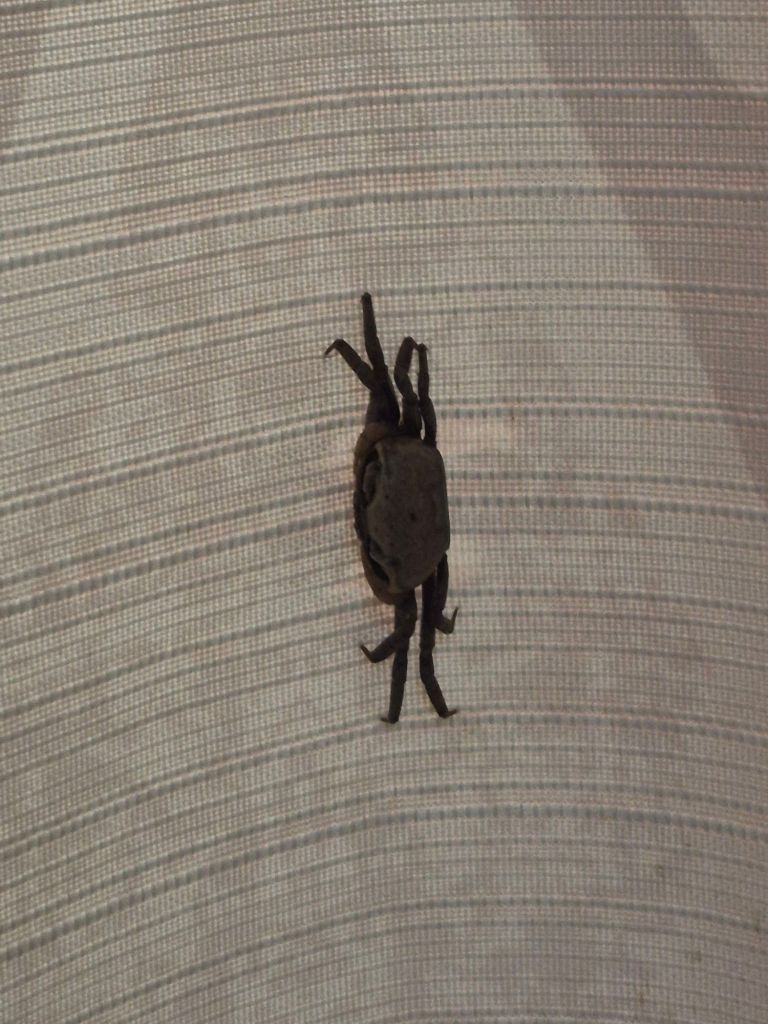
First time in my life I had to cope with a small crab on the shower curtain
Beautiful sunset the first night

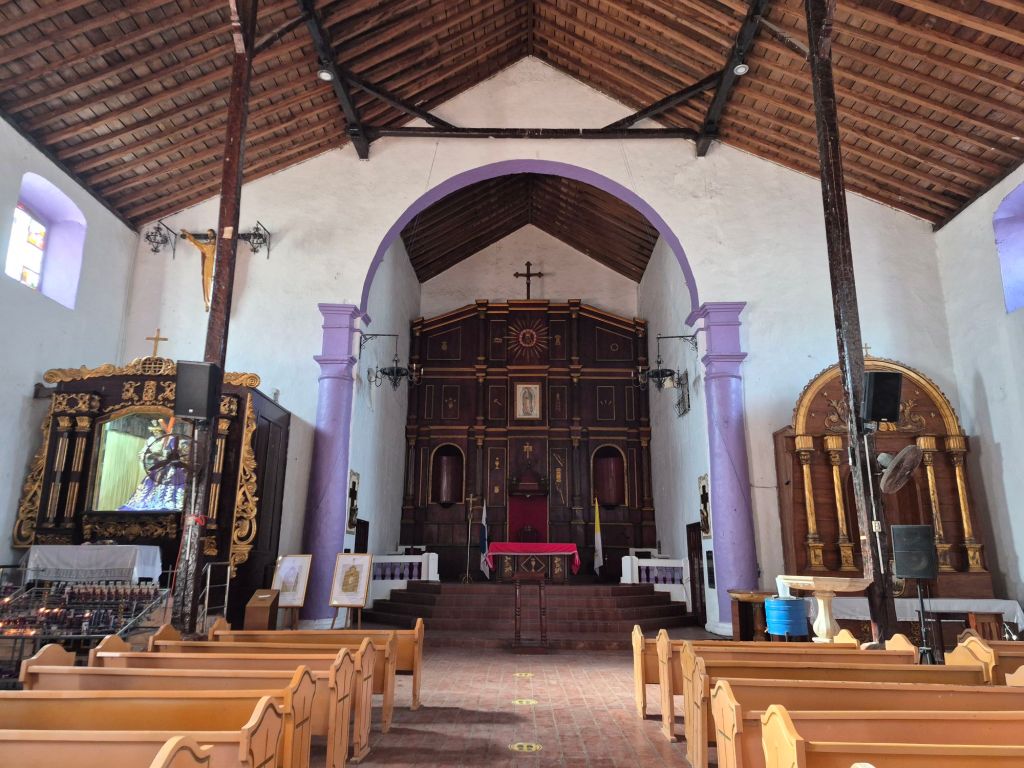
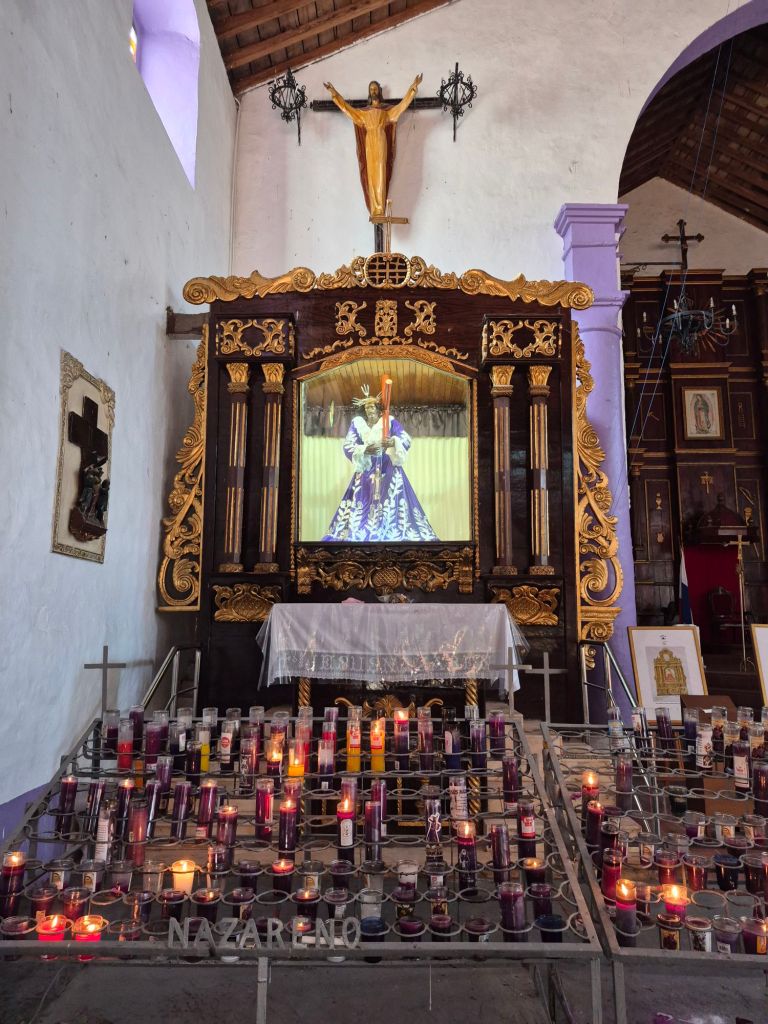
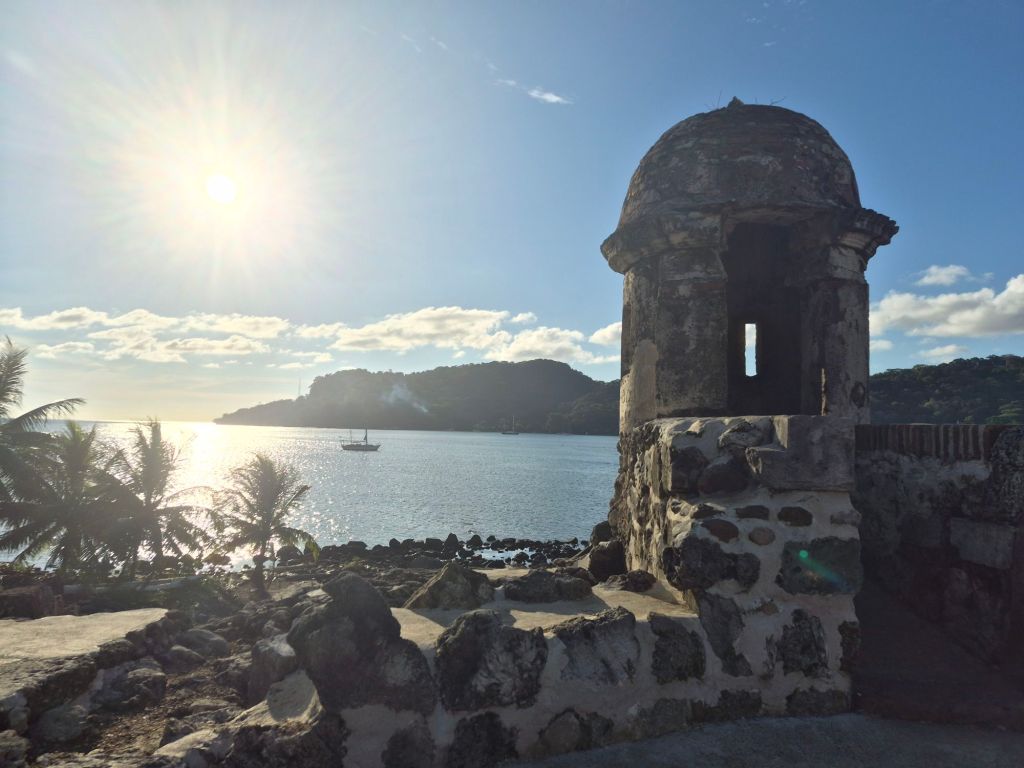
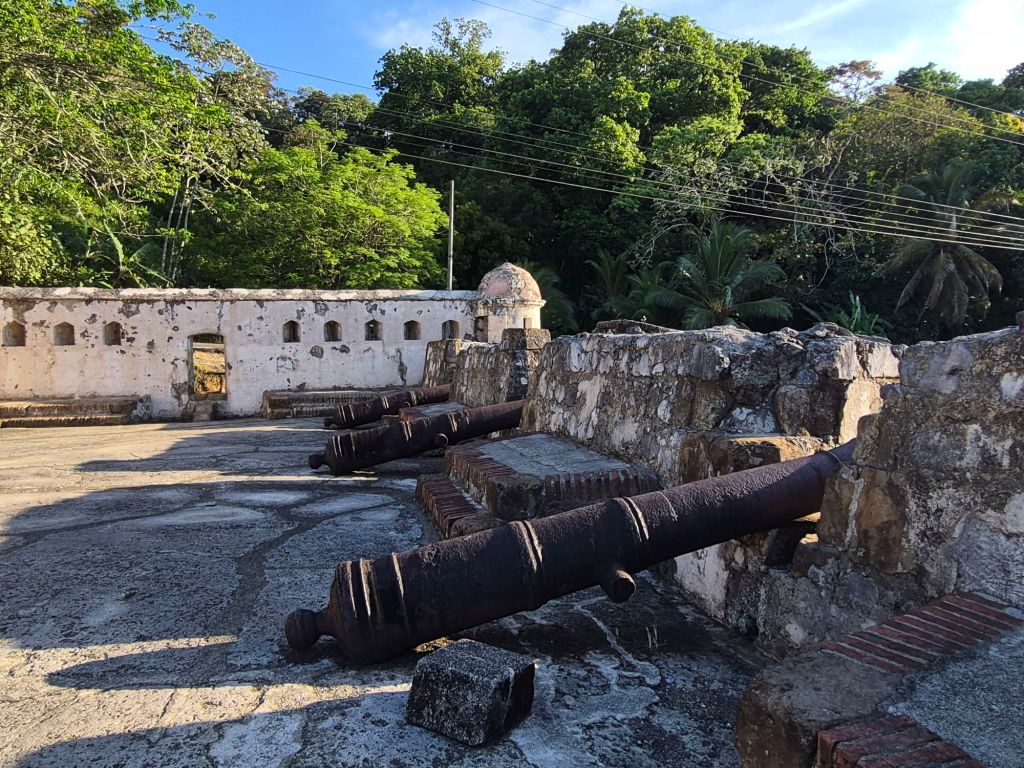
Portobelo on the Caribbean coast has an interesting history.  It was established in 1597 as a port that the Spanish used to export Peruvian silver from South America.  Legend has it that Columbus named it Puerto Bello (Beautiful Port) in 1502.  Through the early years it was repeatedly attacked by privateers and pirates, the most well-known being Francis Drake, who died there of dysentery and was given a sea-burial.  There is a little island close by called Drake Island.  There are remnants of an old fort, which is now a UNESCO heritage site, but although it was mentioned as one of the best tourist towns, it is not well-kept.  I went into the church, which is being restored, and saw a black Christ figure- afterwards I read that it is also known for its black Christ. 
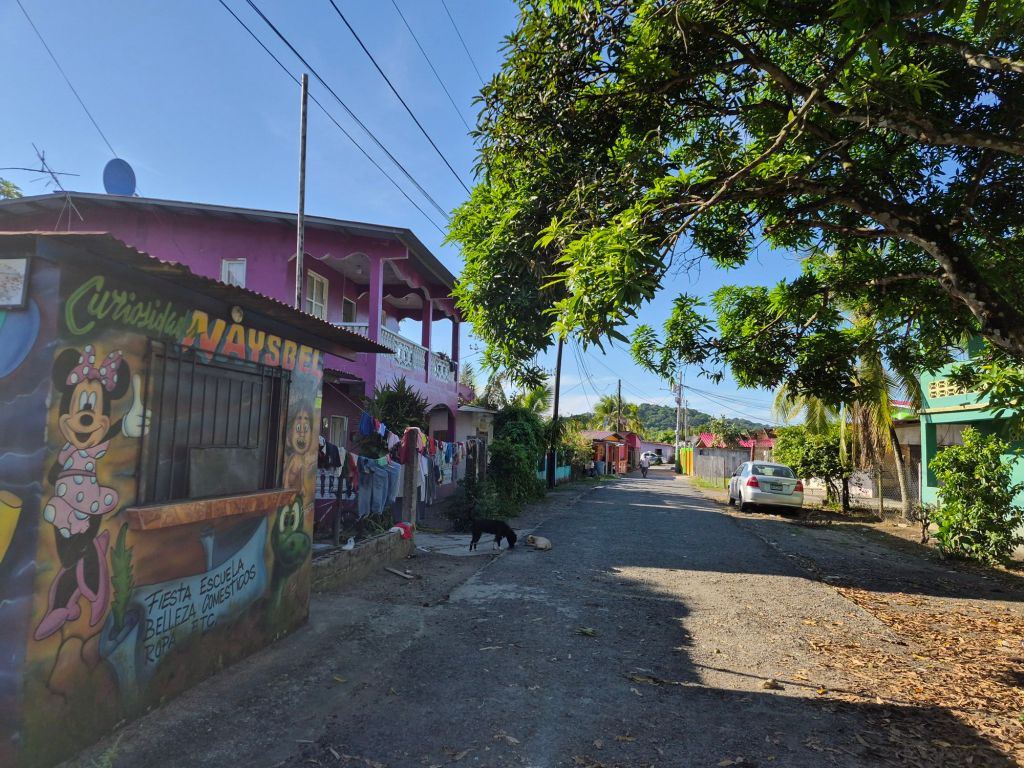
Portobelo
The harbour at Portobelo
The black Christ figure behind glass
Remnants of the fort

I saw some people snorkelling deeper into the sea in front of my room, so went looking for equipment to join them.  I was told next door, and again next door, and eventually found someone where I could rent frog feet, goggles and a snorkel.  When he heard what I was planning, he suggested that I rather take a boat to playa Huerta (beach that could only be reached by boat, $50), as the snorkelling was much better there.  Good decision, as Maps.Me had shown a trail through the forest that I had thought of taking, but turned out to not be one at all.  The rainy season had started, so luckily there were not many people.  I bumped into a woman who recognized me from the bus station when I was waiting for my Uber to take me to my hostel.  I had offered her a ride, but she preferred getting on to the very crowded local bus.  We chatted for a bit, and when I was picked up again after 3 hours of snorkelling, swimming, lying in the sun and chilling under the trees, she waved frantically from where she was snorkelling – instant friends. 
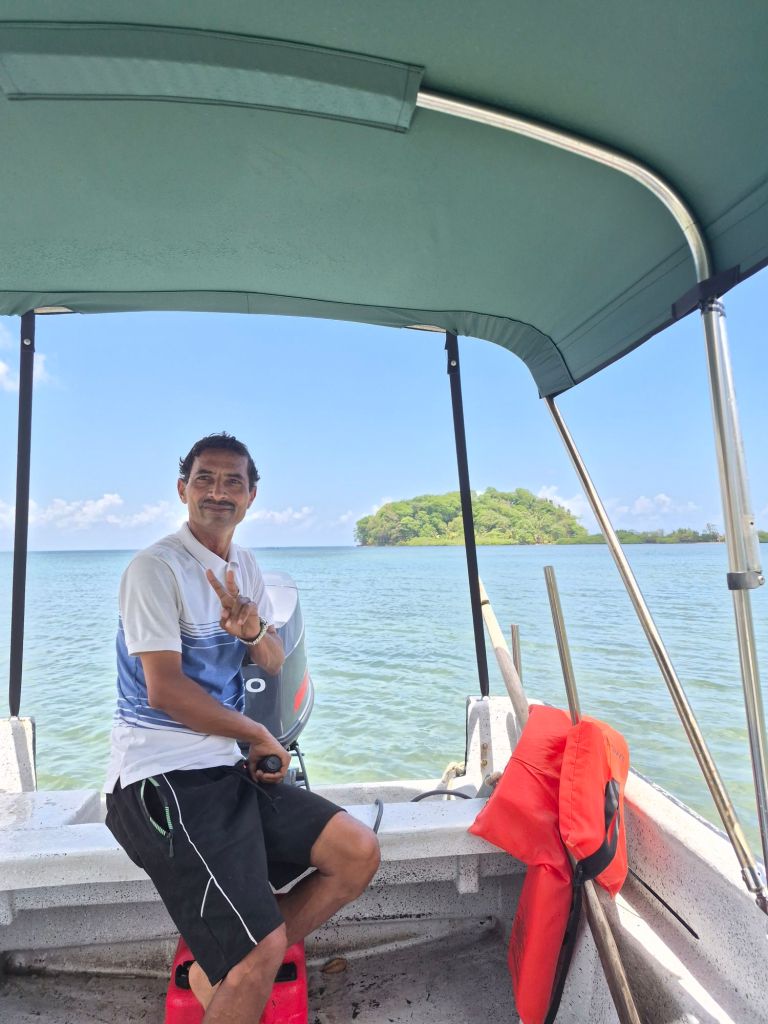
Giovanni, my friendly captain, (the best, according to him).
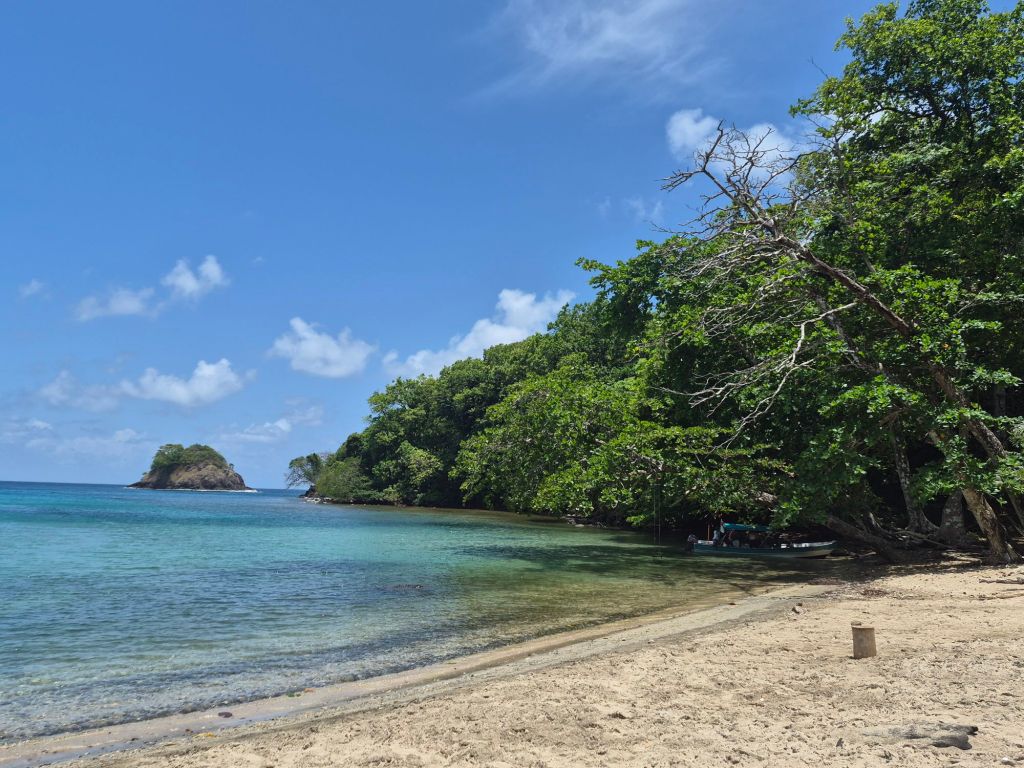
Huerta beach,  Drake Island on the left
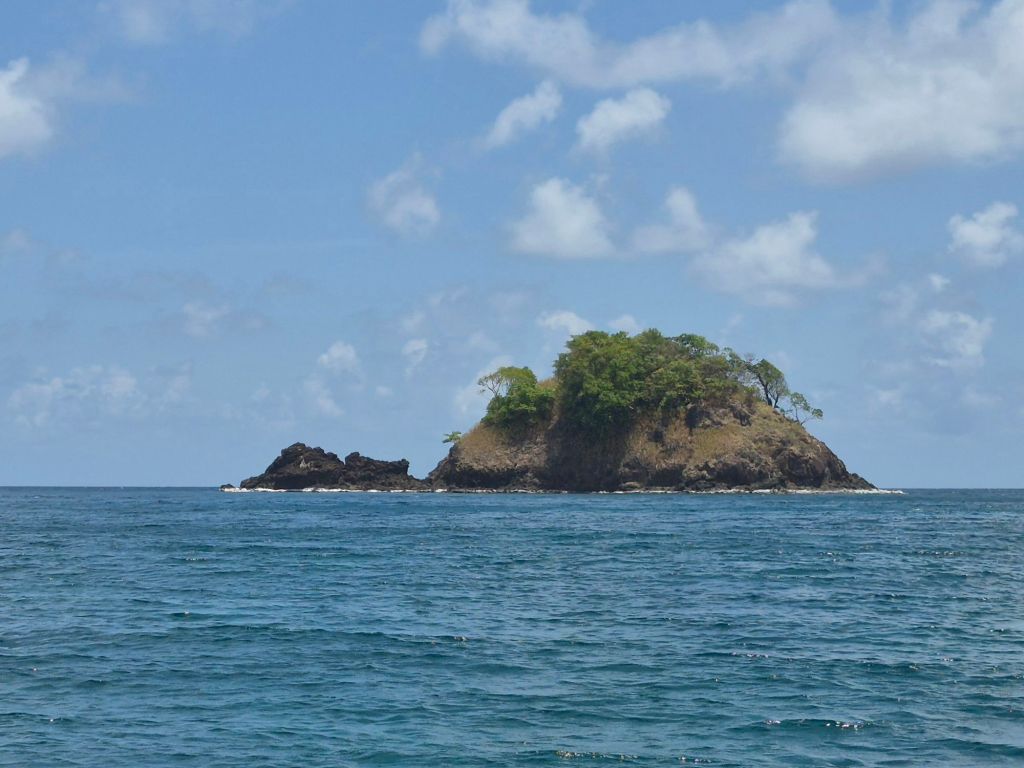
Drake Island
There were 3 locals under the dry tree, where there was a swing, and they were in the water for the 3 hours that I was there, only getting out for 20min to eat lunch.  Without hats – I cannot understand how people can tolerate so much sun.  I wore a T-shirt while snorkelling, and put a lot of sunblock on my short hair!

The next day I took the local bus to another beach, Playa Langosta, that looked like it had sand and was swimmable – which it was, but a stupid guy came and parked his car, opened his boot with massive speakers and proceeded to play the loudest boom-boom music which made the earth tremble.  He was immune to any approach from people to turn down the volume.  I tolerated it for a while, then moved further away to sit under some trees, but there was so much filth lying around, and other people were playing music too, that I just had another swim (at least the sea was clean) and fled home to my little pool and peace and quiet.  It rained later anyway, so it was just as well I had gone home. 
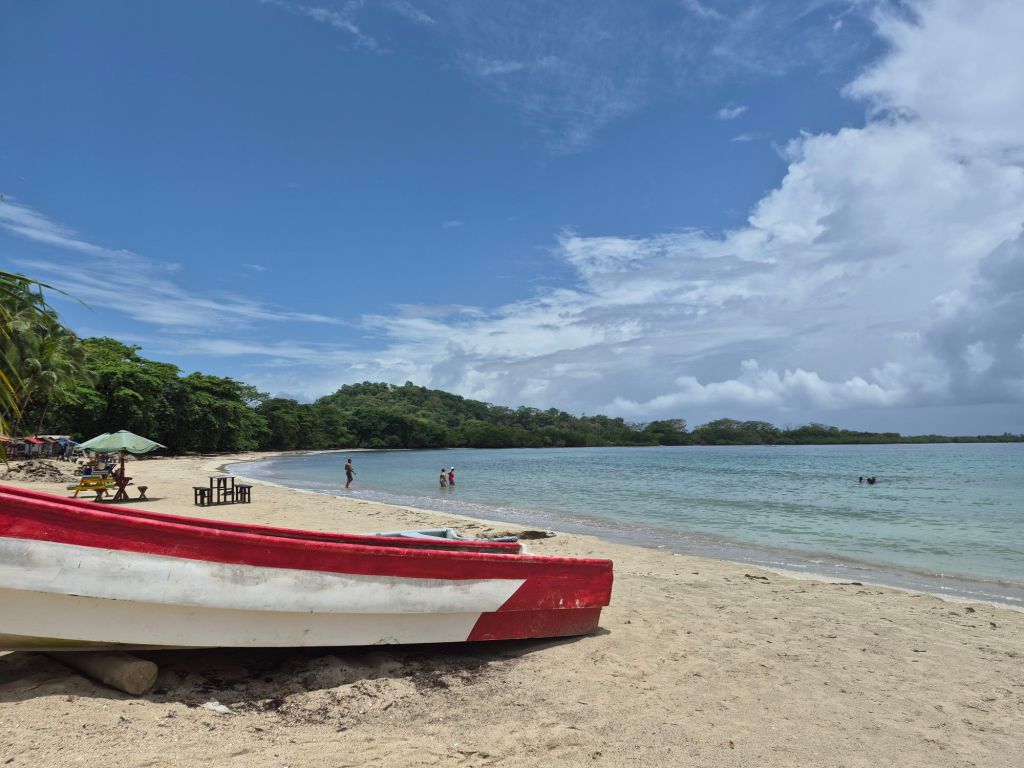
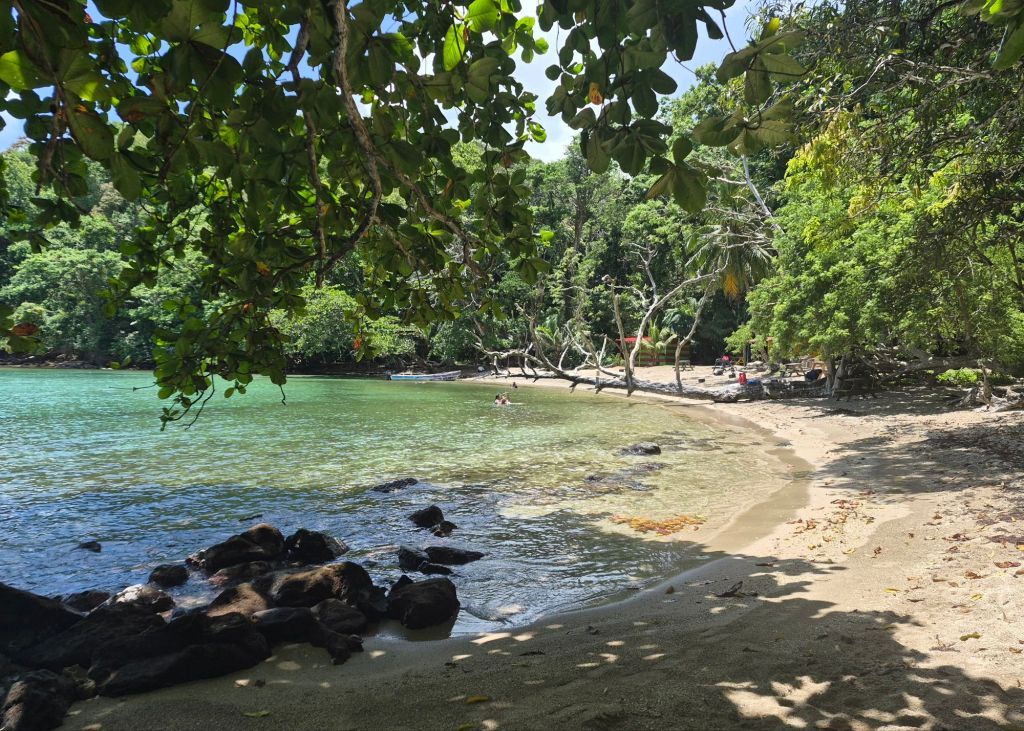
Angosta Beach
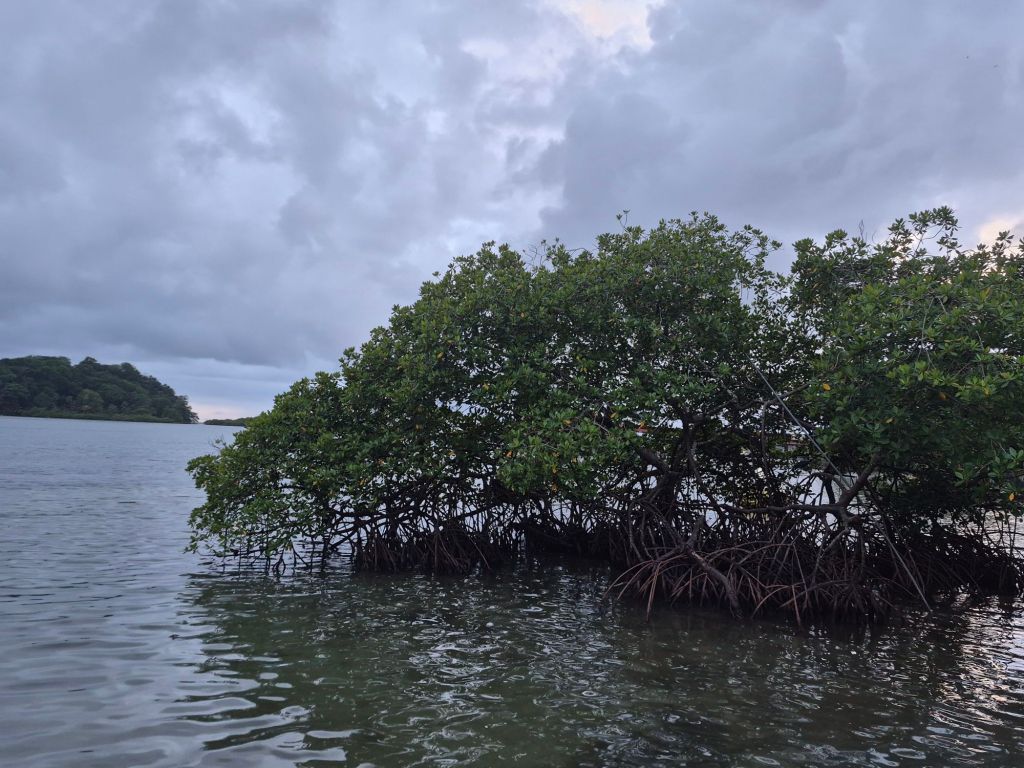
Mangroves, right next to my little beach.  I read of their ecological importance as breeding ground for marine species, and how they are deteriorating as a result of agriculture and shrimp farming.
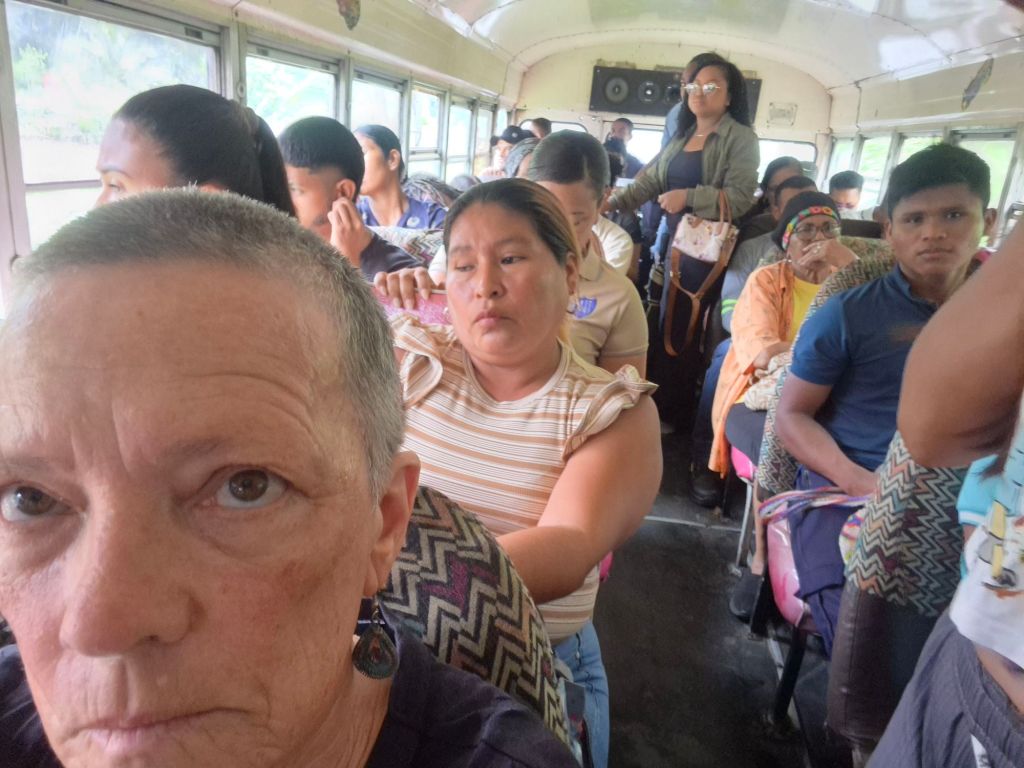
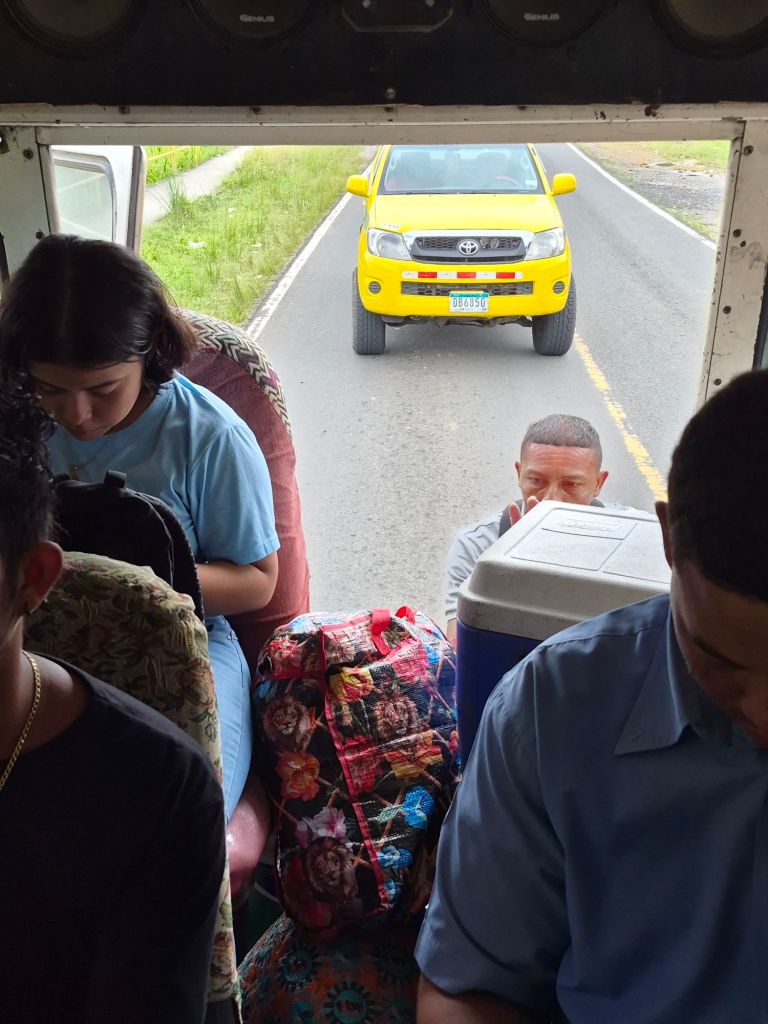
The local buses, often quite full, no aircon, but at least the windows are kept open
On my way back to Colon, to catch another bus to Panama City.  As the bus filled up even more, I gave up my seat to a young girl who was holding her toddler, and I had to hang onto the rails for the next 30 min, rucksack on my back, sweat pouring down my face. 
They open the bus at the back for storage, where that day they removed many bunches of bananas

When I arrived in Colon, I was asking around where to catch the bus to Albrook (bus station in Panama City) when a kind lady pointed out to where I thought I should go, but then she indicated to me to follow her.  Through the crowds along the street, broken pavements, vendor’s everywhere, I just kept on following her, pulling Suerte most of the way, picking her up at times, until she said we had to cross the traffic-filled street using the pedestrian overpass.  My heart sank – all those stairs, and Suerte weighing a ton (19kg actually, I checked at the airport).   I managed as best I could, the lady glancing over her shoulder all the time, encouraging me with a sympathetic look.  Halfway across the overpass, she pointed to a bus (a big one, not a local one), asking them to wait for us, and I bravely struggled on.  When I got to the bus, I realised she was not coming, had just done me the favour of taking me there, such kindness.  The conductor grabbed Suerte, put her in the baggage compartment and forcefully squashed me onto the front stairs, as the bus was so full.  There I stood, one foot on a lower step, barely able to find a place to hold on, wedged in between a garrulous conductor, two men behind me, and three more women, all on the stairs of the bus.  One woman was sitting right next to the driver, who kept up a monologue for the duration of the trip.  After about an hour some people started disembarking, so that I eventually had a seat for the last 30 minutes, otherwise I would not have made it.  The irony was that I was in no hurry, and would gladly have waited for the next bus, even for an hour or more.  But one is carried along by the momentum of the moment, and one does not think clearly. 
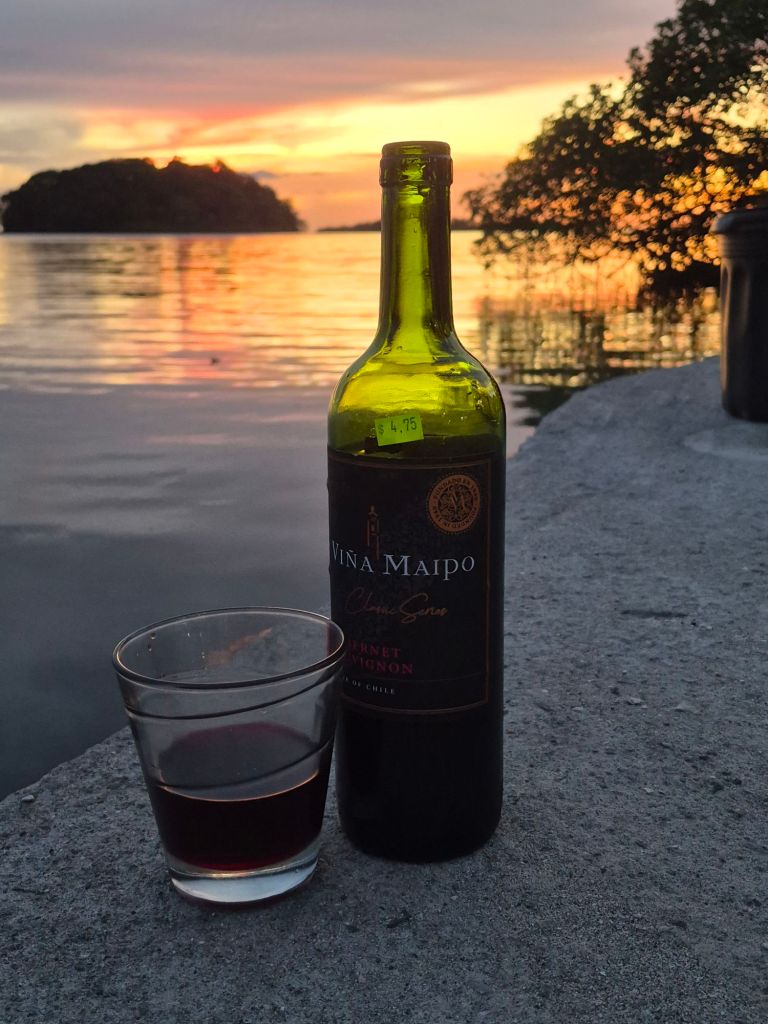
I bought my first bottle of wine in Portobelo,  as I was staying three nights – fantastic to have a glass of good Chillean Cabarnet Sauvignon at sunset on my little beach. 

26 April 2026  Glorious Cultivarte

Two weeks of living in the most beautiful environment,  doing volunteer work on a farm called Cultivarte, 20min by local colectivo from Anapoima, Colombia. 

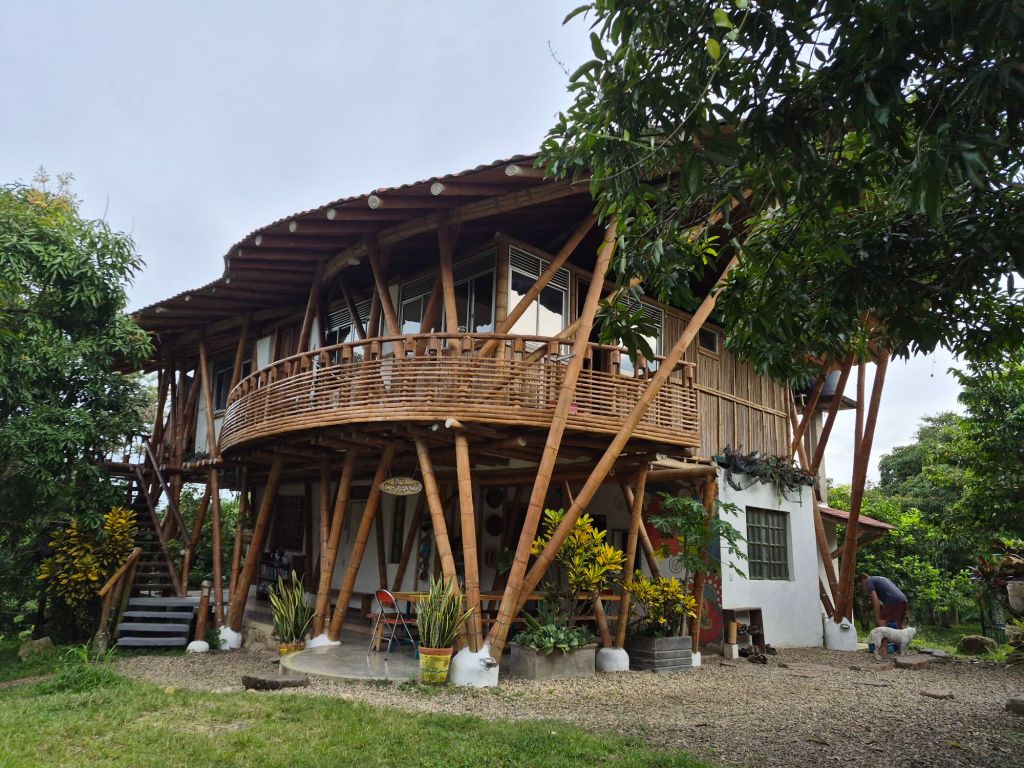
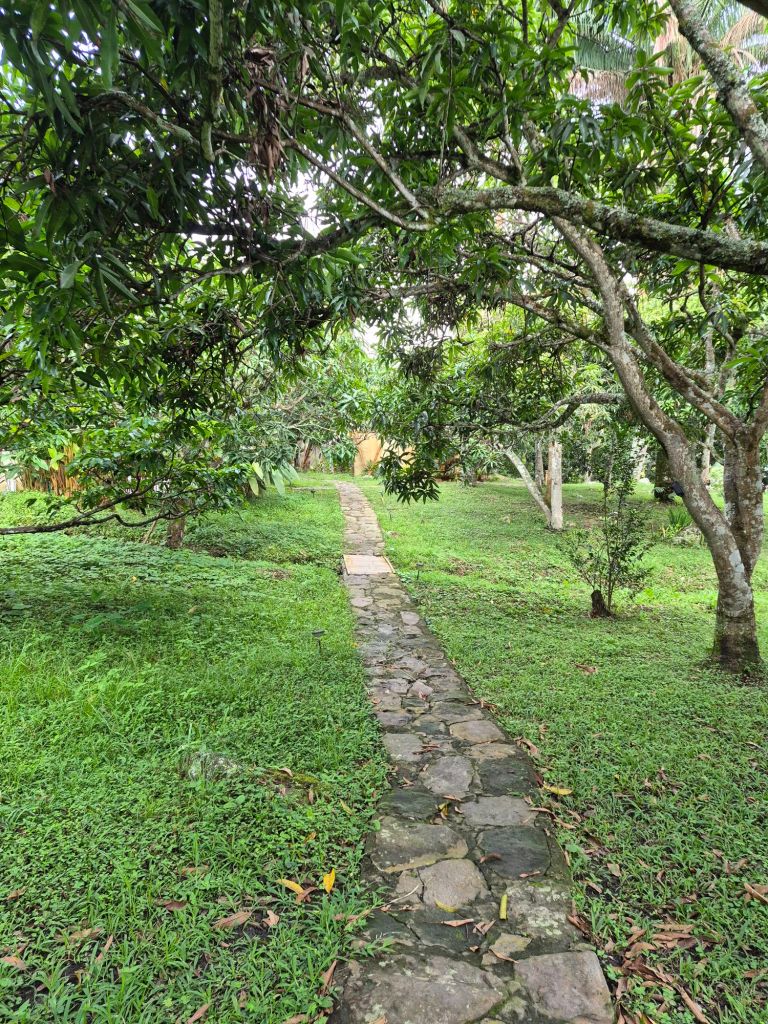
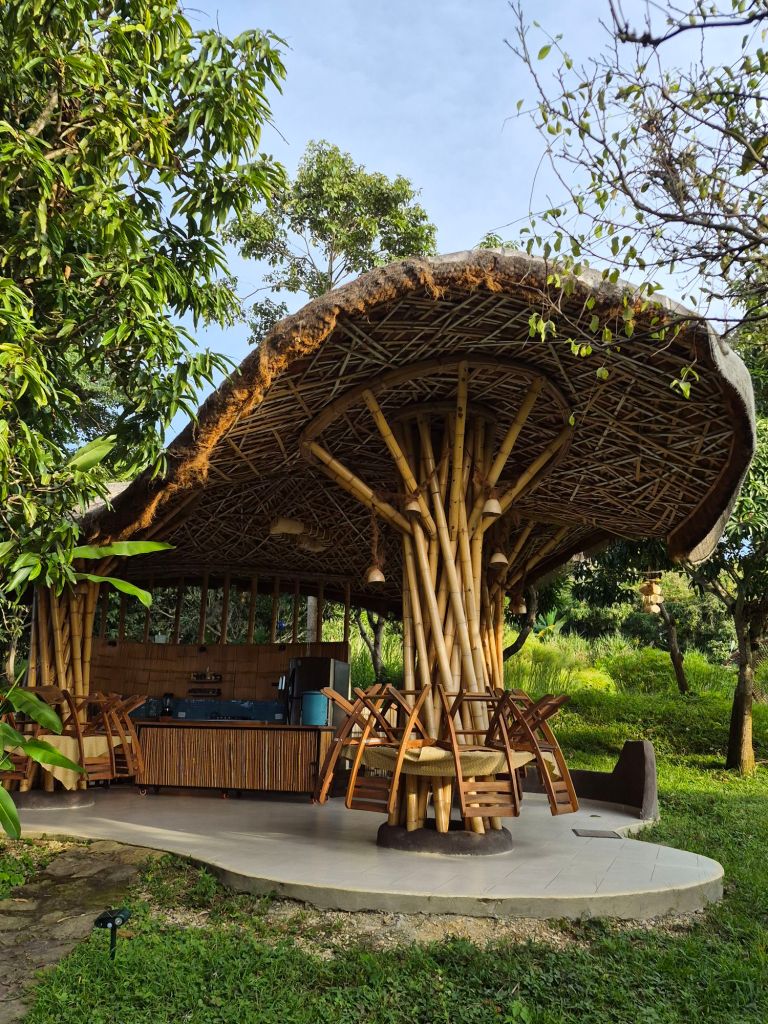
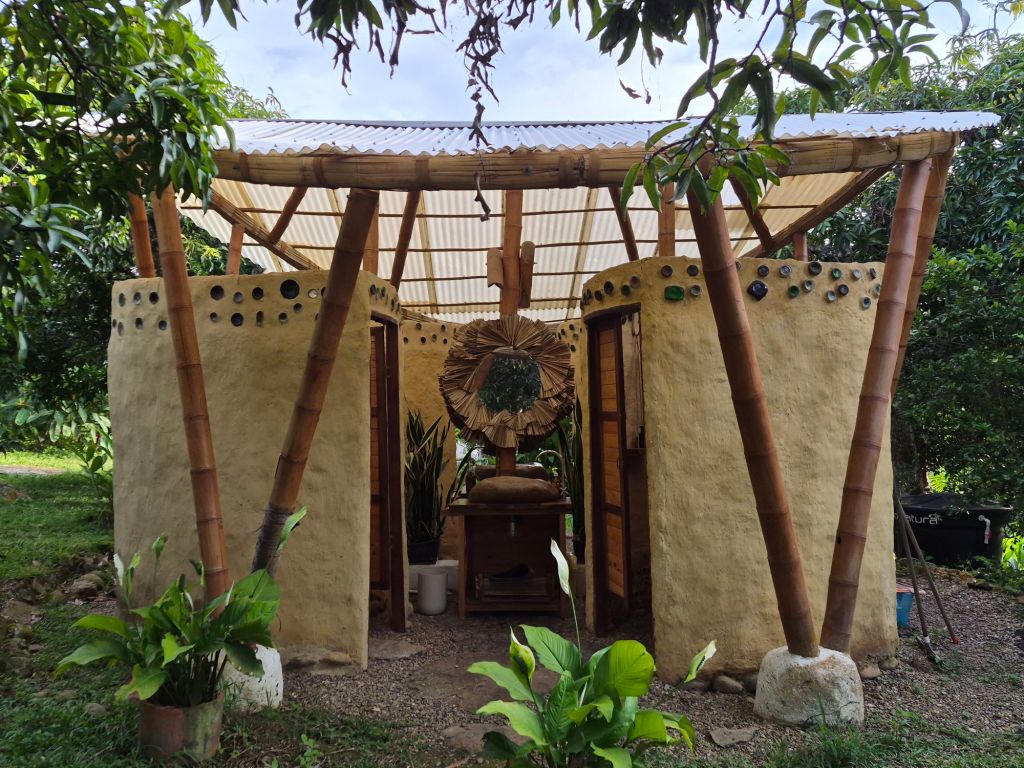
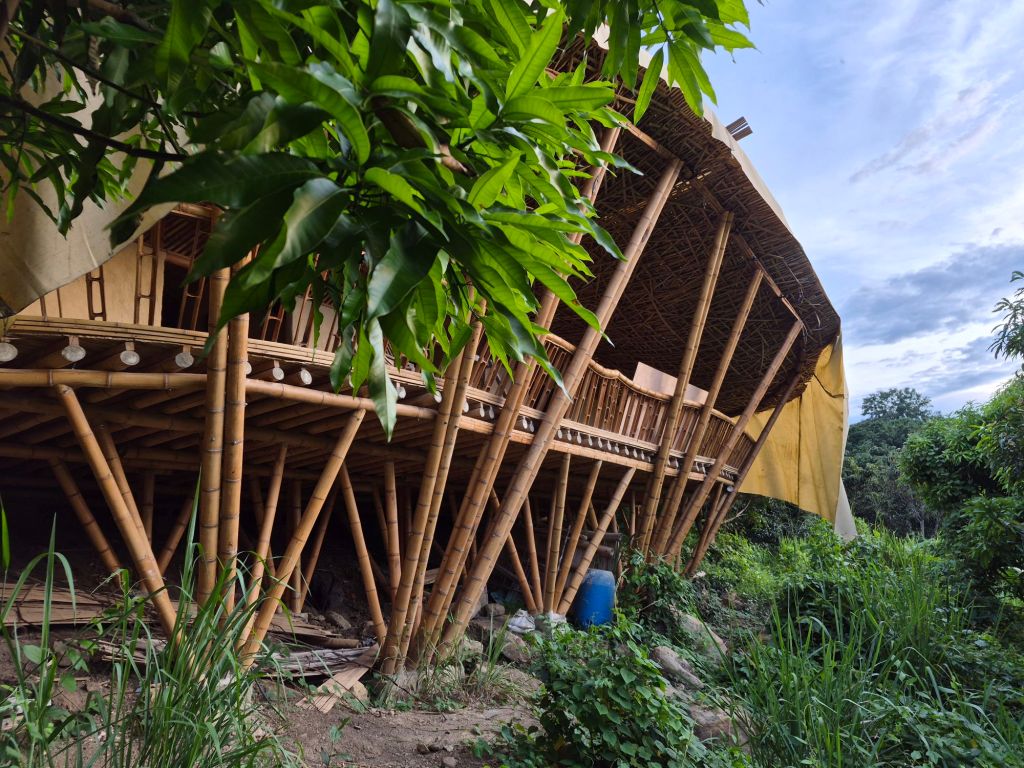
Eyal and Natalia have spent about 15 years planning, and 10 years implementing and fulfilling their dream of creating a space where they can live and propagate their healthy, natural and structured lifestyle.  Their house and all the structures they have built, are from bamboo, and the grounds surrounding them are cultivated, but natural, with pathways connecting the various areas.  There are more than 800 mango trees on the property.   They run yoga and meditation retreats on weekends, or anybody can book and run their own retreats or workshops.  They are also involved in teaching English at the local school.

The main house.  Eyal & Natalia live upstairs, with the volunteers, kitchen & dining area downstairs
The pathways
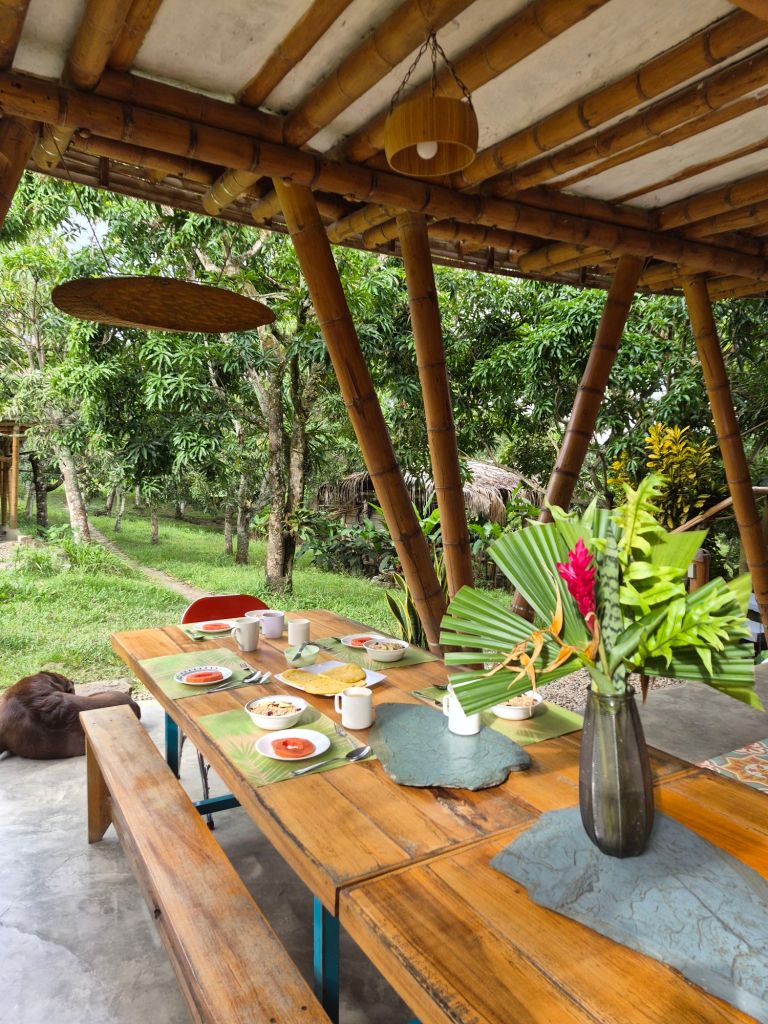
Kitchen & dining area for the retreats
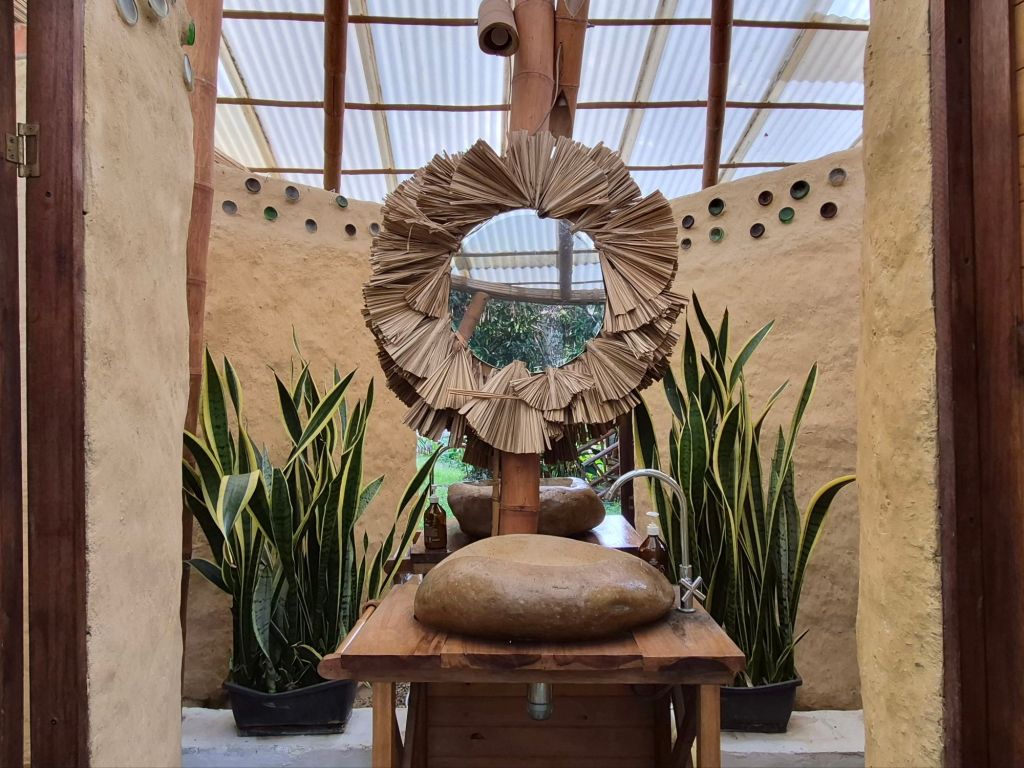
One of the bathrooms for the participants of retreats
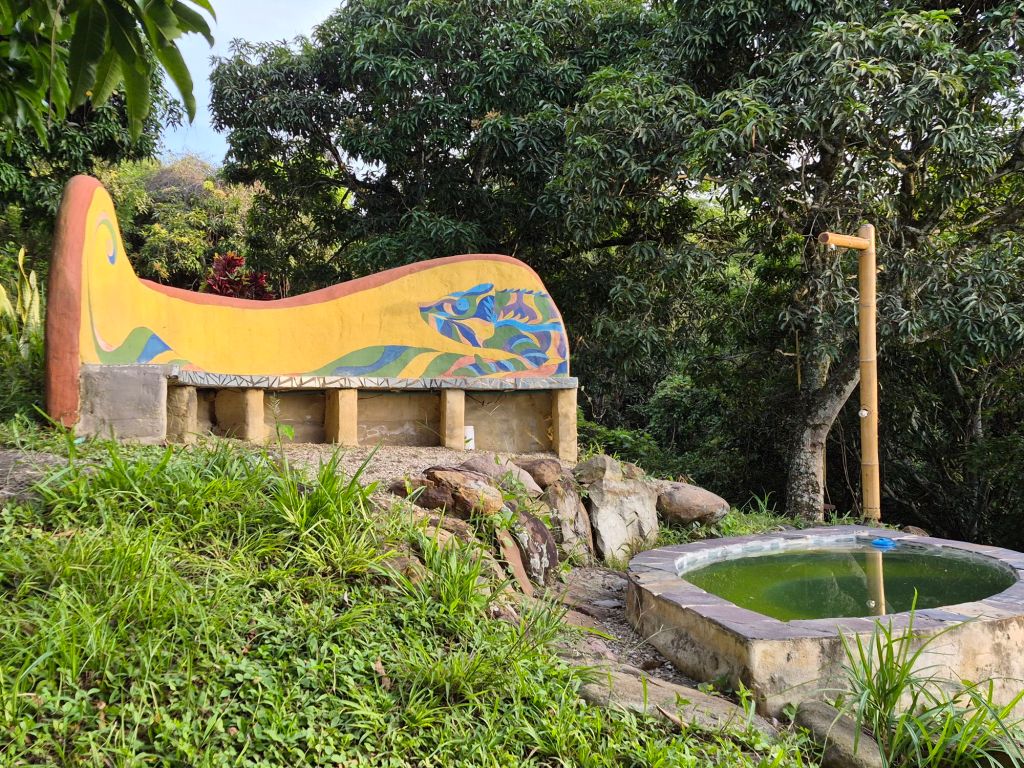
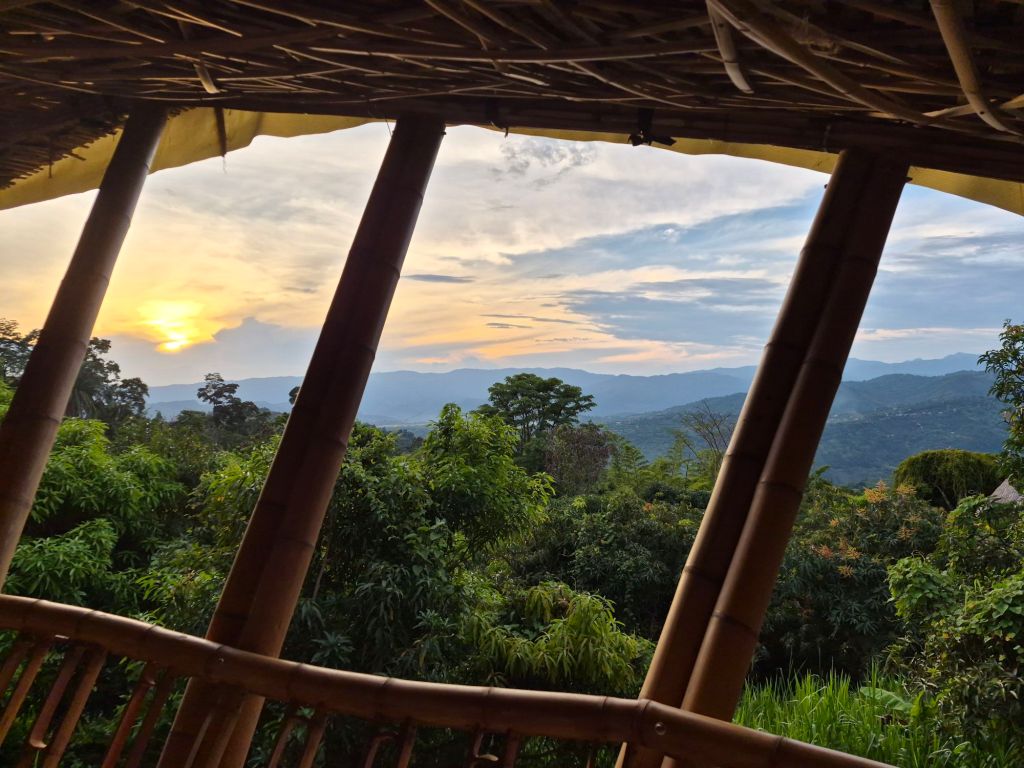
A bench with a view – my favourite spot after work
The view
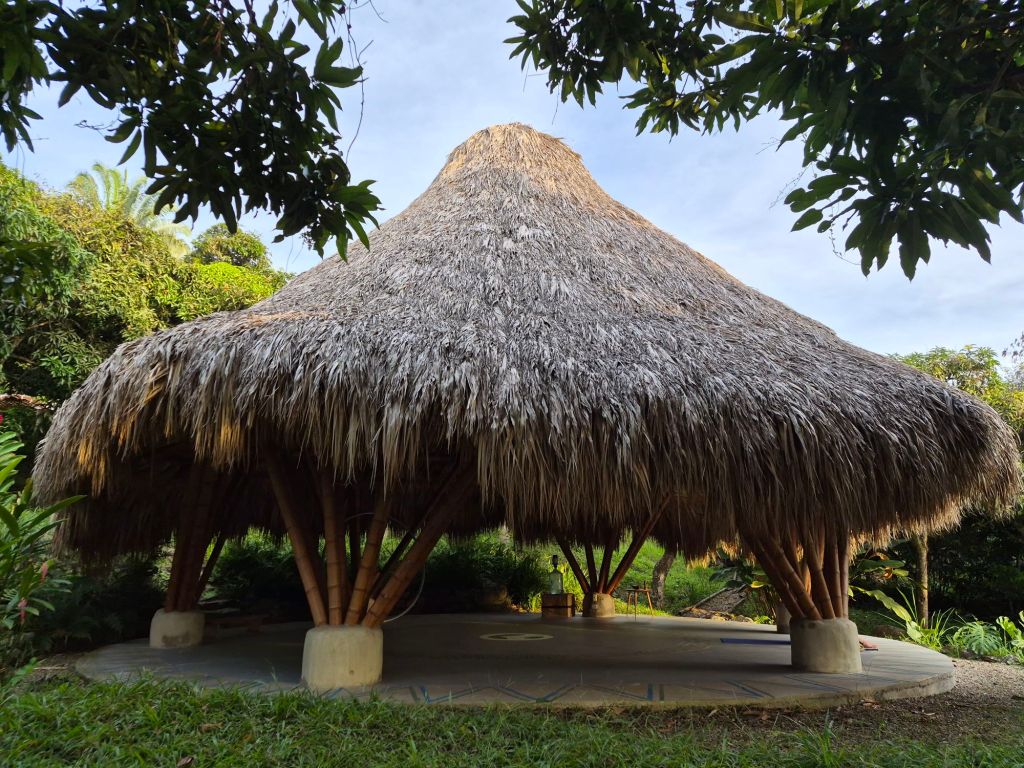
The Maloka (place for sharing), where yoga is done
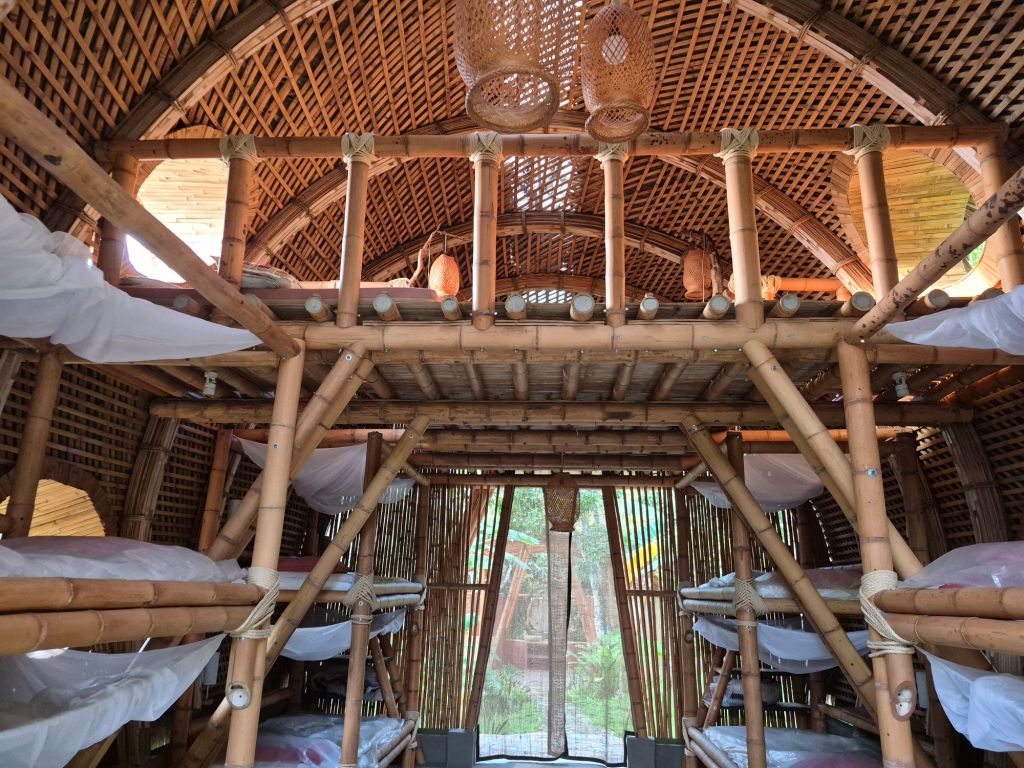
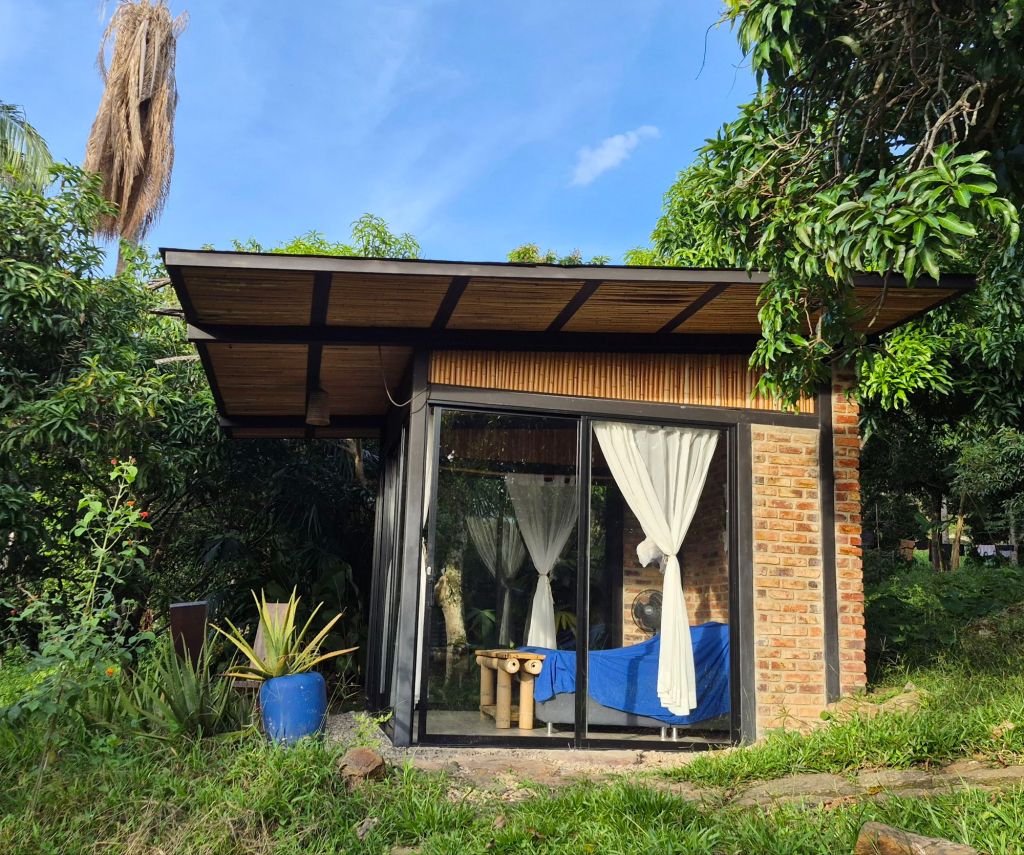
One of the houses for the participants
Their bathroom
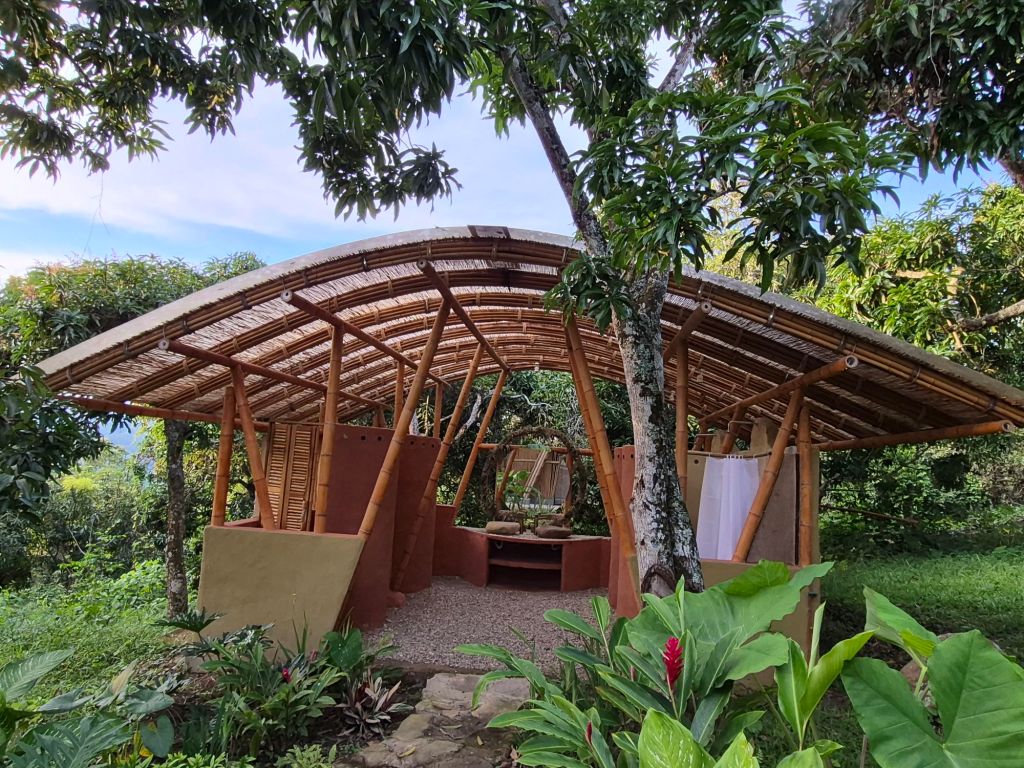
A single bungalow for participants
Detail of a bathroom

We were 4 volunteers – myself, Emil and Emma from Denmark and Boaz from Australia.  From Monday to Friday we had a structured programme, with either Eyal or Natalia explaining every morning what the work would entail for that day.  On weekends we were free.  We started at 7am with small chores, yoga at 07h20, breakfast at 08h30, work from 09h00 – 12h00, lunch at 12h00, siesta, and then work again from 14h00 – 16h00.  After that we were free to do our own thing.  Supper was at 19h15 – three scrumptious vegetarian meals made by their trusted chef and helper, Sara. 

Breakfast
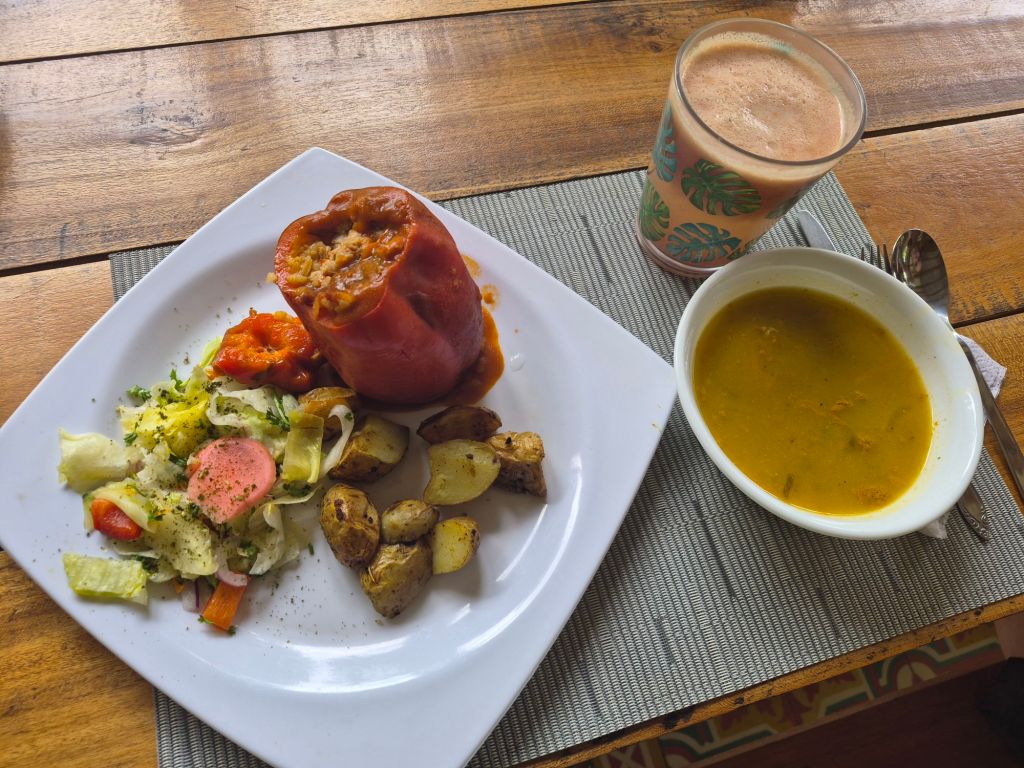
One of our lunches
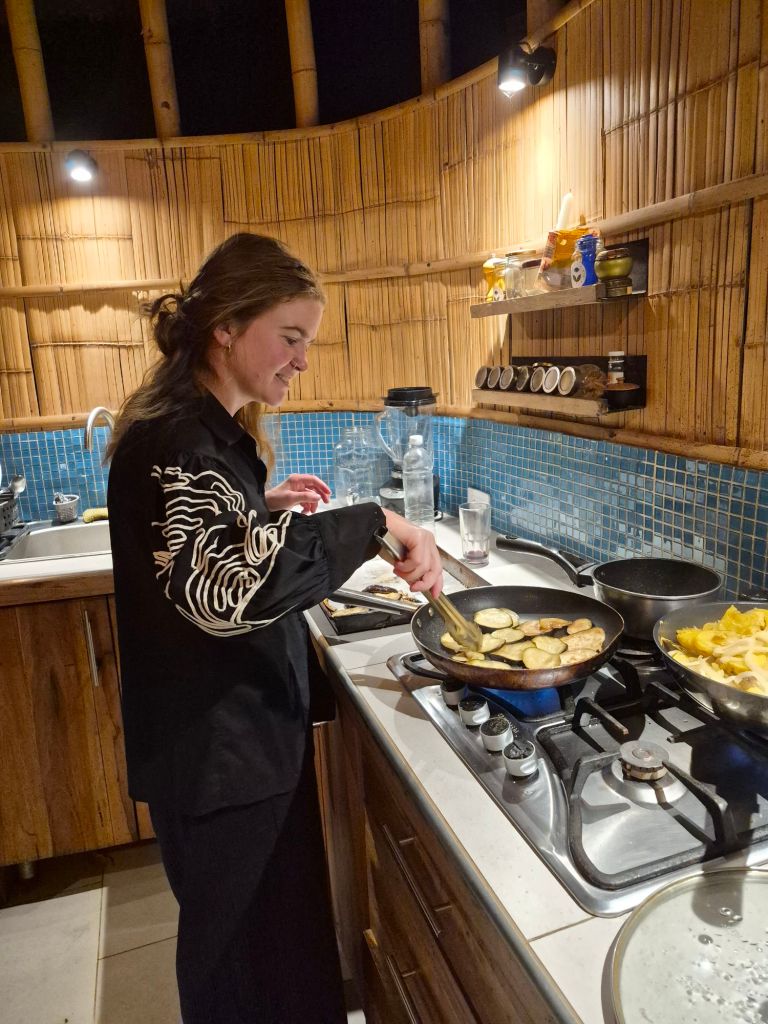
Pizza night – Eyal making the bases
Emma frying the potatoes and onions
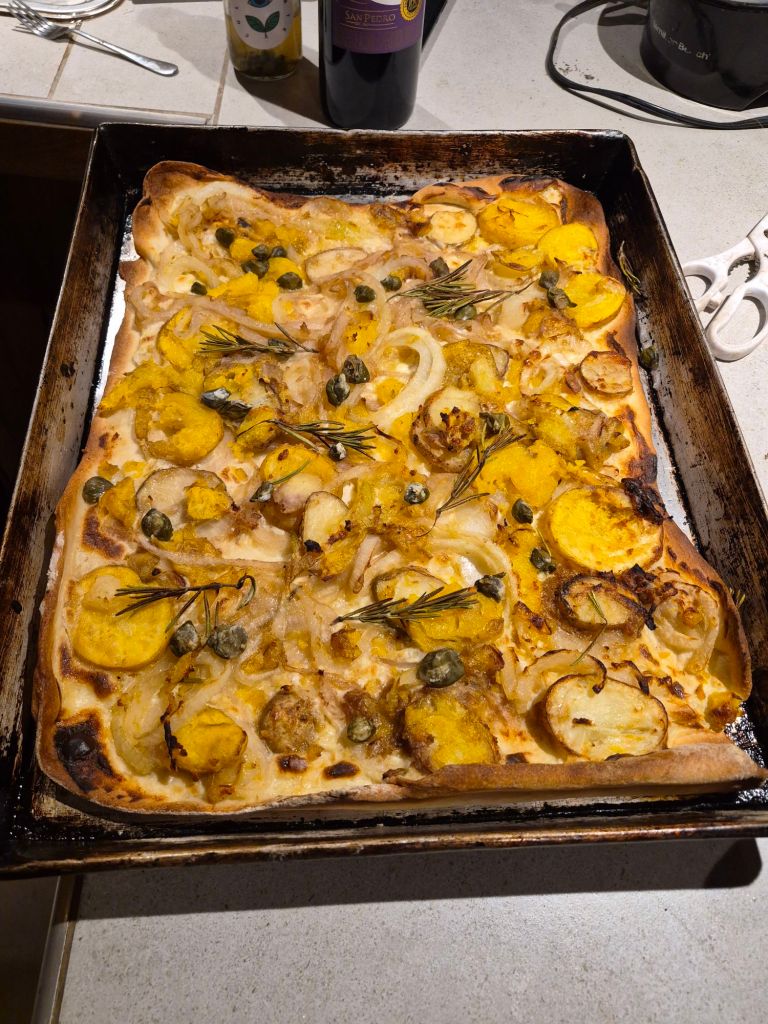
A potato & onion pizza – new one for me, delicious!

On Saturday I went to Anapoima to buy slip-slops as my Crocs had broken, and to have lunch, preferably meat (which turned out to be a very tough steak, again!).  I was standing in the doorway of the restaurant looking at the menu, when I heard a voice behind me:  “Can I buy you some coffee?”  Amazed at the English,  I turned around, and it was Eyal who was in town to have his car washed.  He not only bought me coffee, but cheesecake as well, very kind of him. 

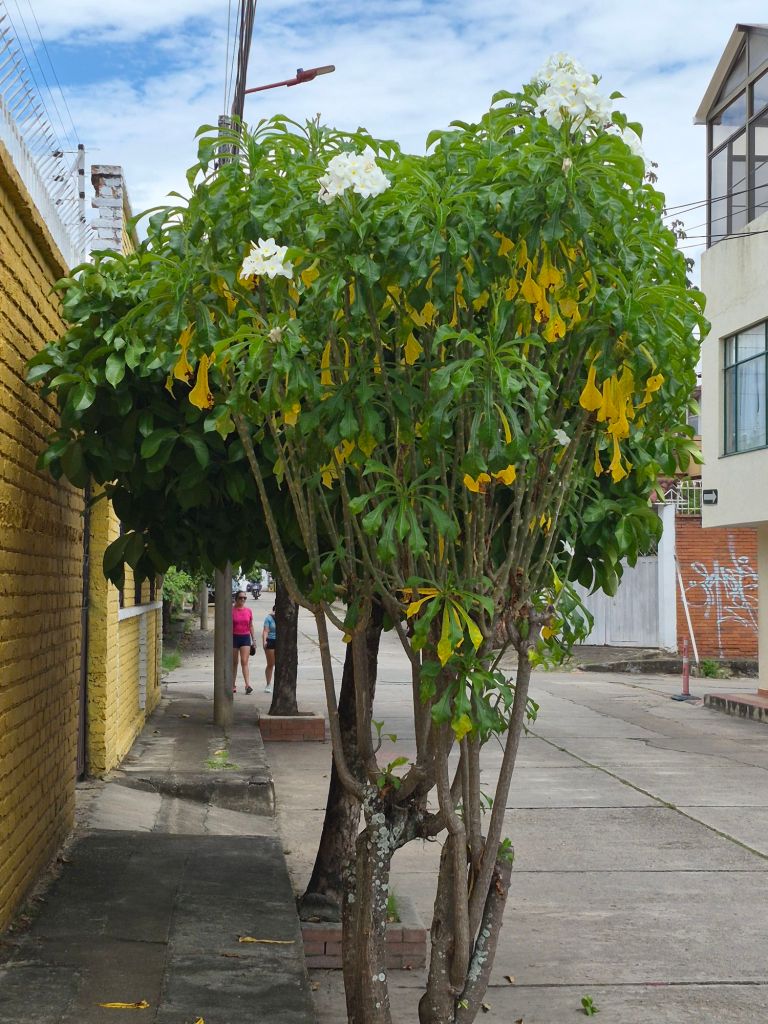
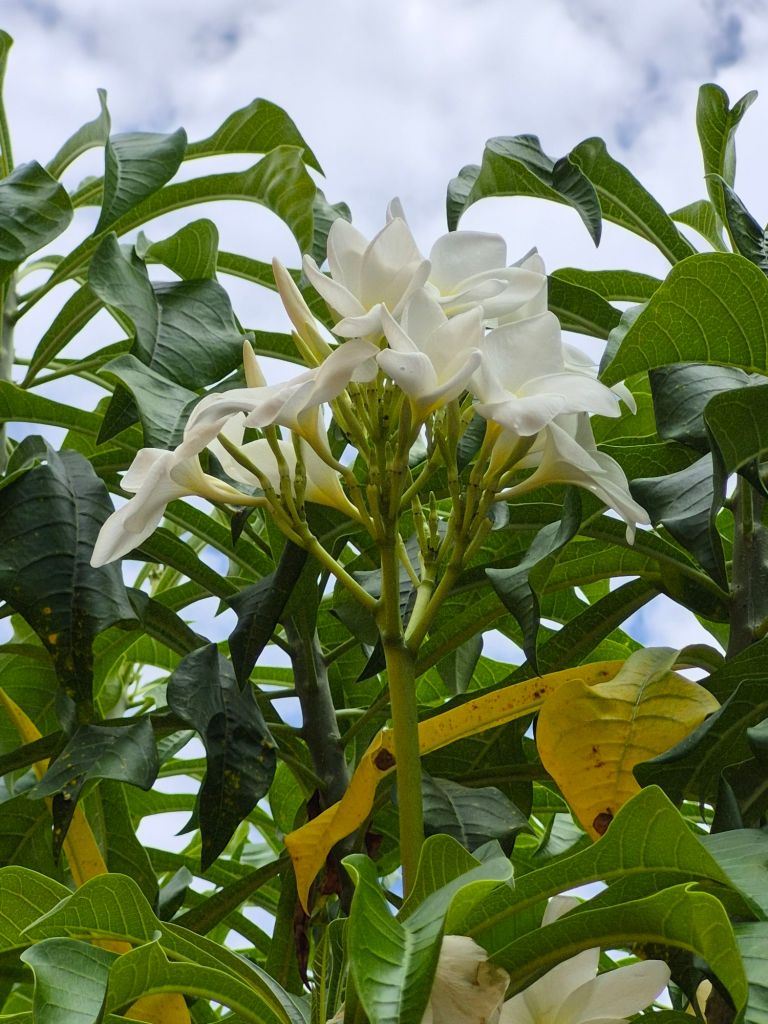
In Anapoima, clumps of white flowers on these trees, very weird.  The yellow ones are dead leaves. 

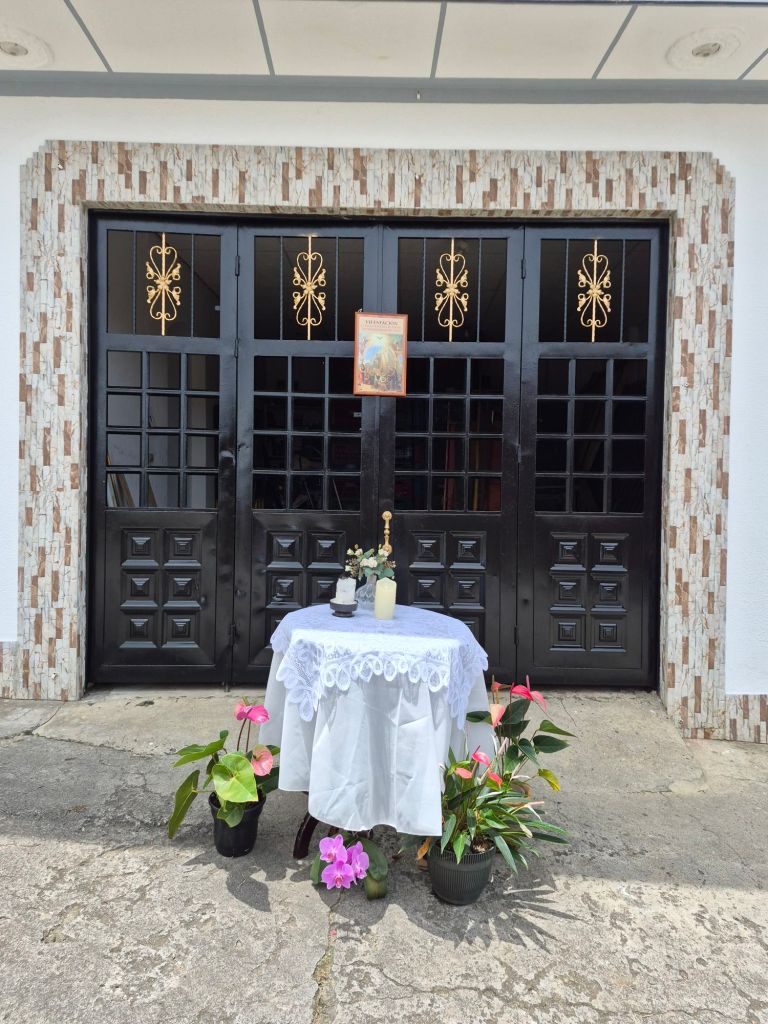
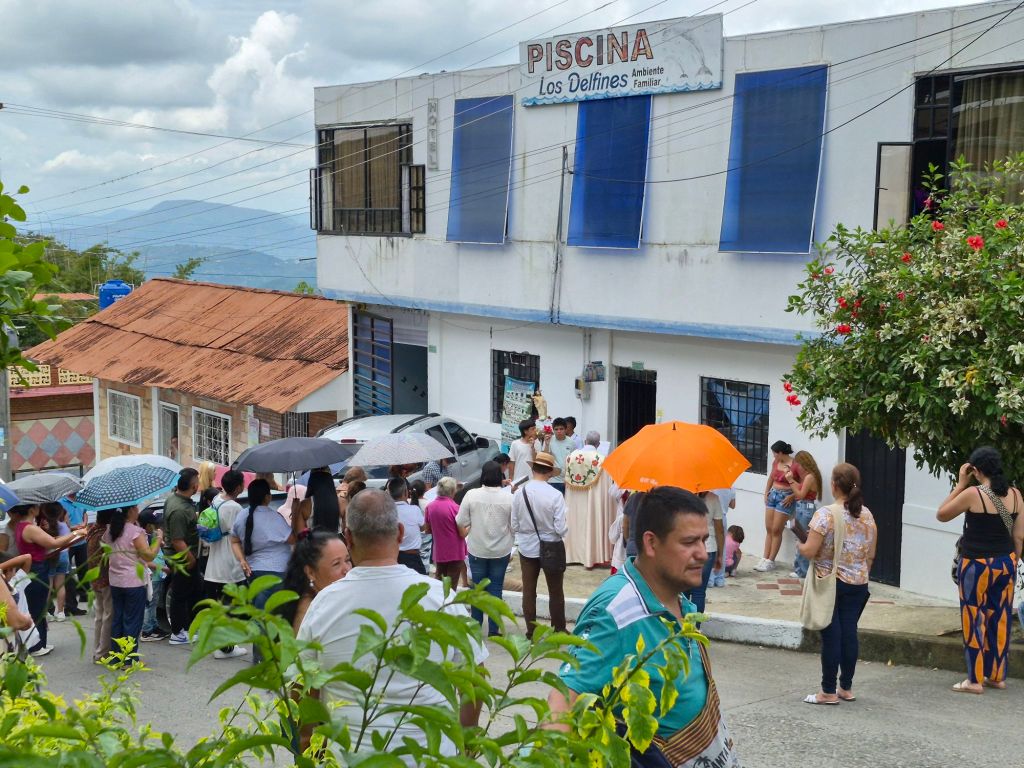
On Sunday I walked to a nearby village , El Triunfo, mostly uphill and the last 800m very steep, arriving hot and sweaty.  I bought a cooldrink at a street cafe, and was calling all my children, when a church procession, led by a priest, came past in the street, stopping at different houses to bless them.  I couldn’t understand how the priest decided which houses to bless, until I saw that there was a table with some decorations outside certain houses, and that is where he stopped.   The priest was chanting all the way, it being broadcast by a car that was following the procession, and I had to laugh, as he became short of breath when he was walking uphill to the church, commenting on it!

El Truinfo – which felt more like a ‘triumfo’ when I’d walked up the hill!
The table in front of a house
The priest blessing a house

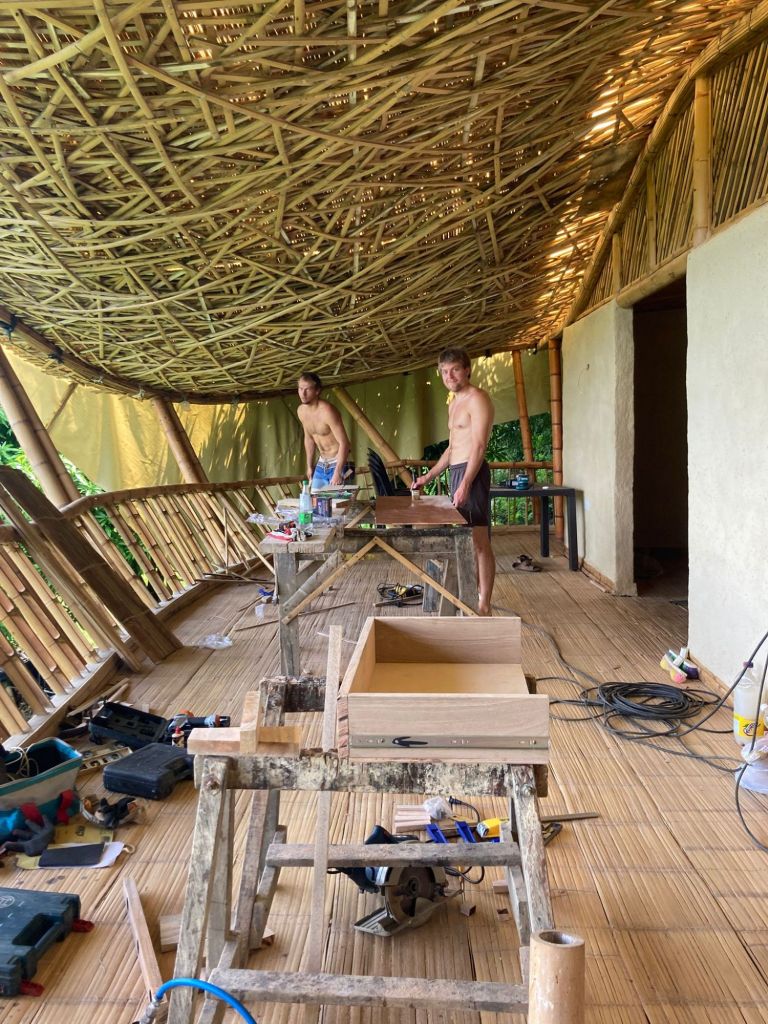
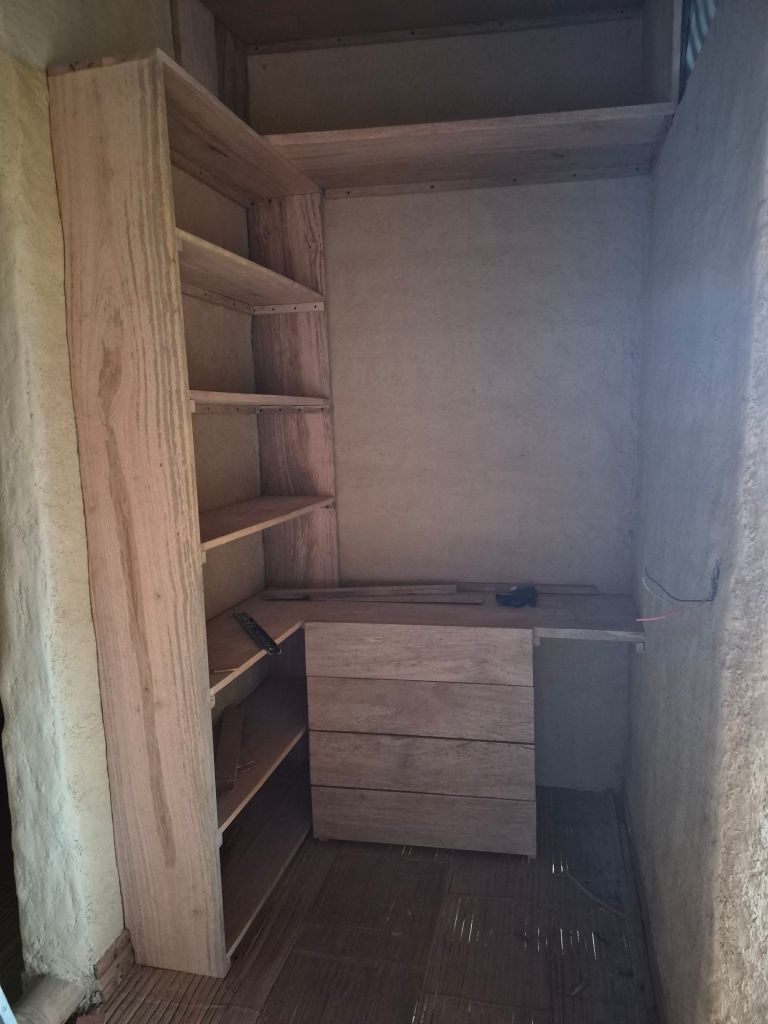
My work was mostly weeding the vegetable garden and some flowerbeds, but Natalia challenged me to help with the construction work too, which I happily did.  Emma and I made four drawers for a wardrobe for the new house Eyal was building, and after the first day, she said she had learned a new word, “skew”, as I had used it so often.  Boaz, who is a carpenter by trade, was very patient with us, although at the end he admitted that the work we had done in 3 days, would have taken a skilled person a few hours.  And the drawers would have been the same size, and not as ‘skew’ as ours. 

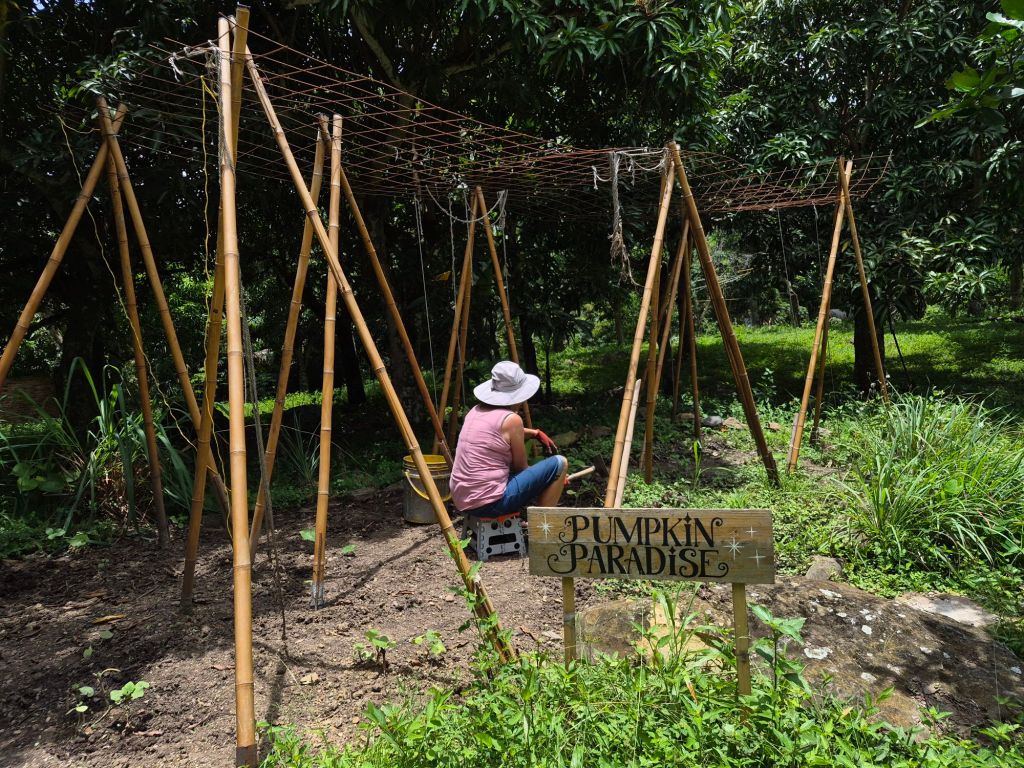
Weeding the pumpkin patch
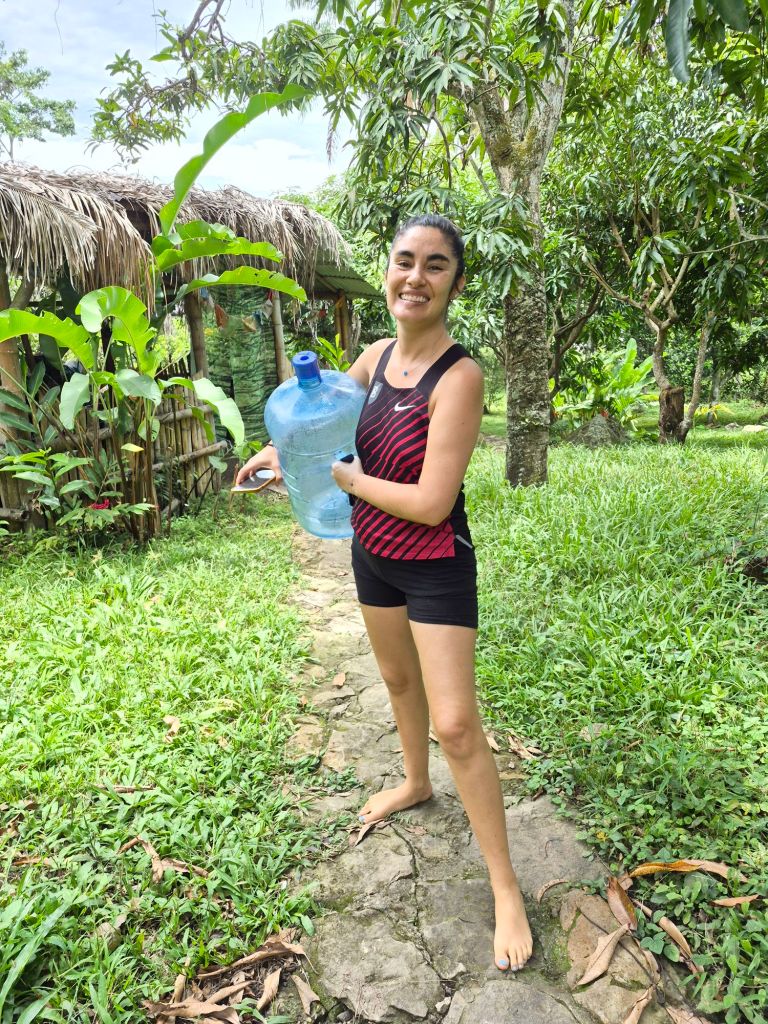
Natalia – always barefeet, dressed in shorts when working
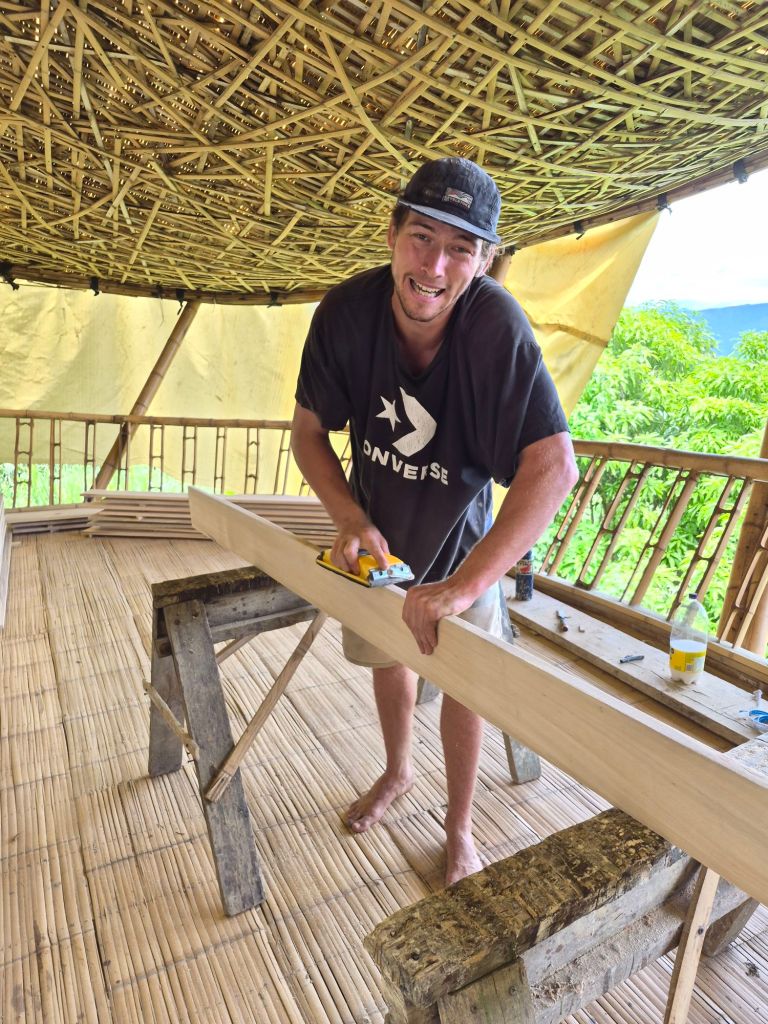
Boaz, the carpenter
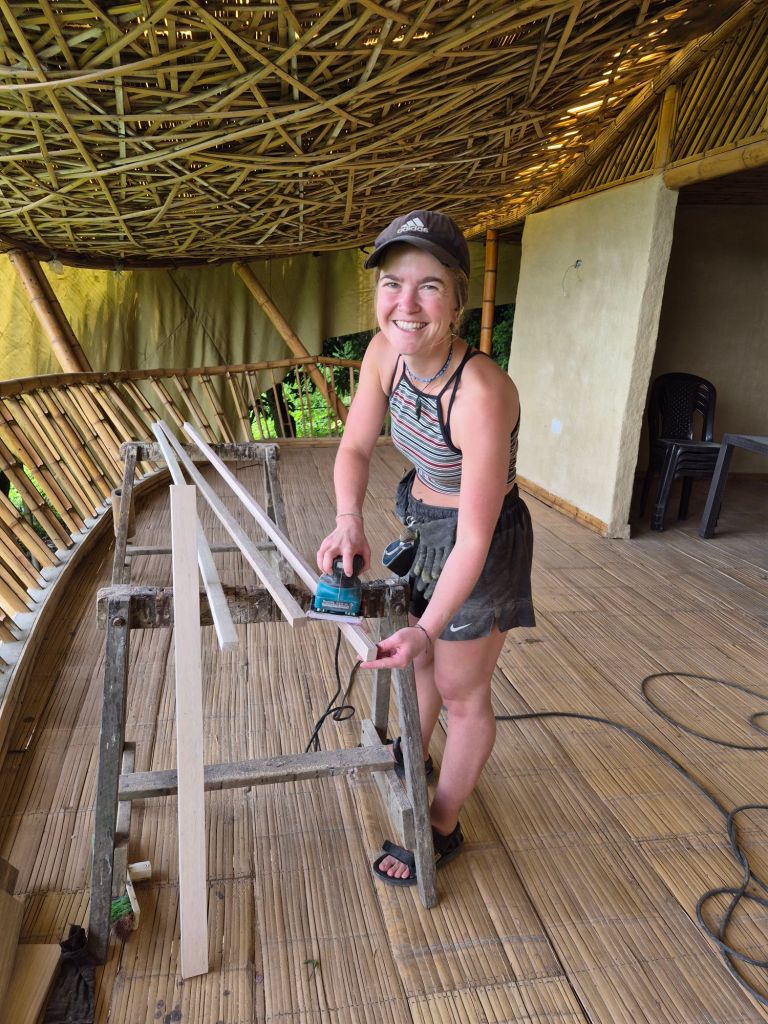
Emma sanding some wood
Sara, the chef
One of the drawers in the foreground
The finished product, although I think the drawers were not working properly, Boaz had to  make some adjustments. 
The new house, almost complete
Sunset from the deck of the new house

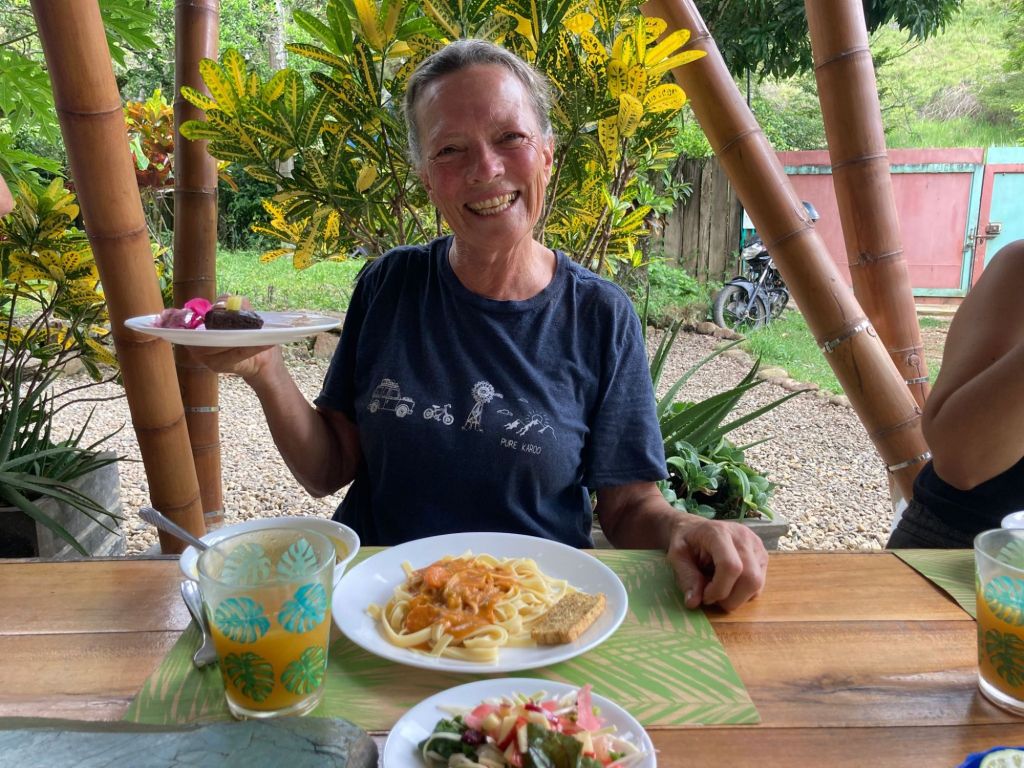
The young people accepted me wholeheartedly,  and we had a lot of fun, playing cards at night, with much humor and laughter.  I had told them it was my birthday on the 20th, and before my last lunch, Natalia surprised me with a brownie with a candle, all of them singing happy birthday – the best gift to end off an exceptional 2 weeks.

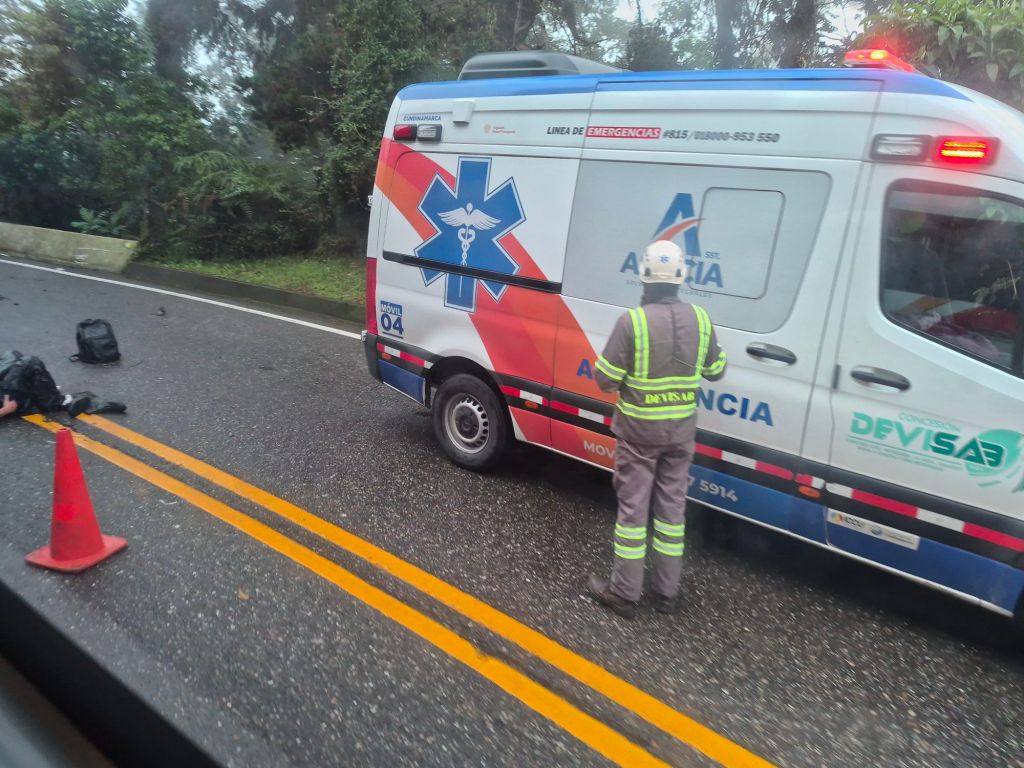
There was an motorbike accident on the way back to Bogotá, a man was still lying in the road and I assume another had been put in the ambulance, as there were people around it.  Our busdriver was a bit of a cowboy, so I was reminded how easily things can go wrong and was grateful when we arrived safely in Bogotá through very heavy traffic, the busdriver weaving in and out of traffic.

Alan’s plane was leaving late on the 18th, so we met that morning and walked around in the botanical garden and a nearby park with a big lake.  Both these places were well-kept, beautiful and clean, and the botanical garden had some interesting cultural and educational aspects as well.  There was even a section where South African plants were growing, which made me nostalgic. 

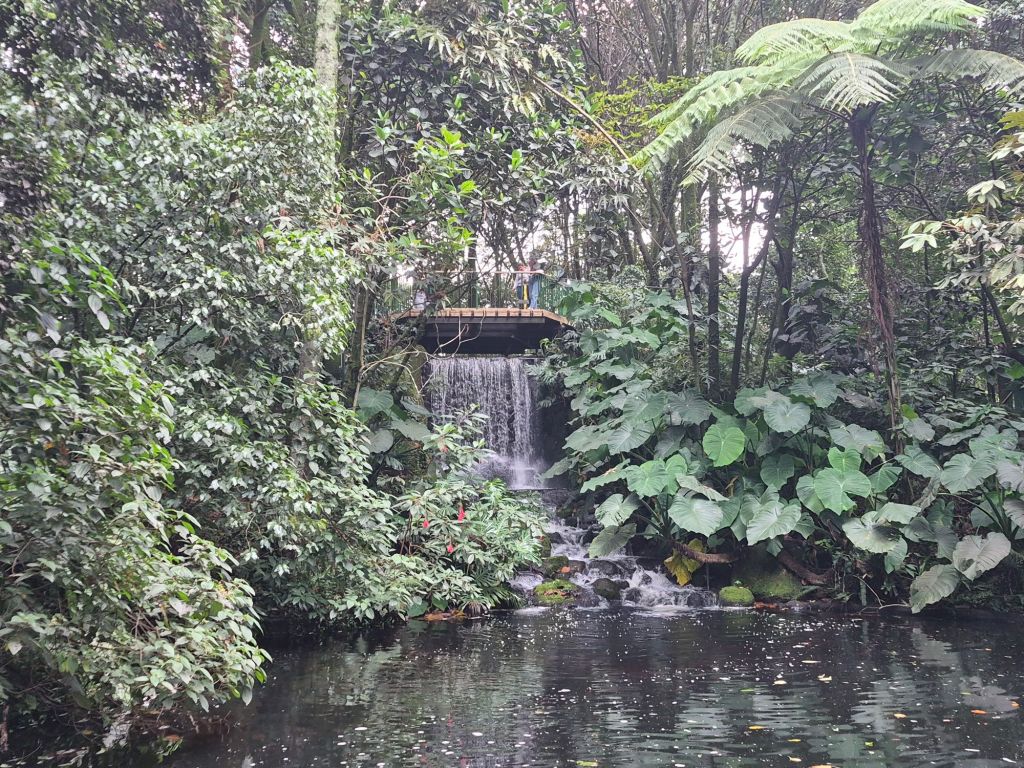
A man-made waterfall
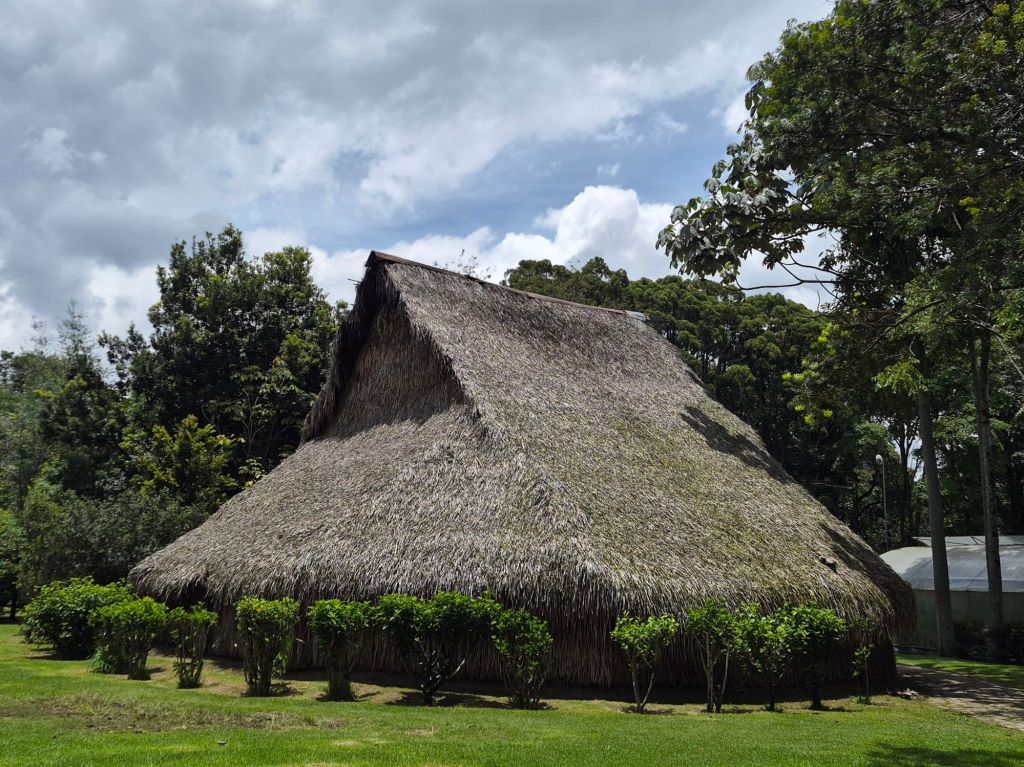
A Maloka in the botanical garden
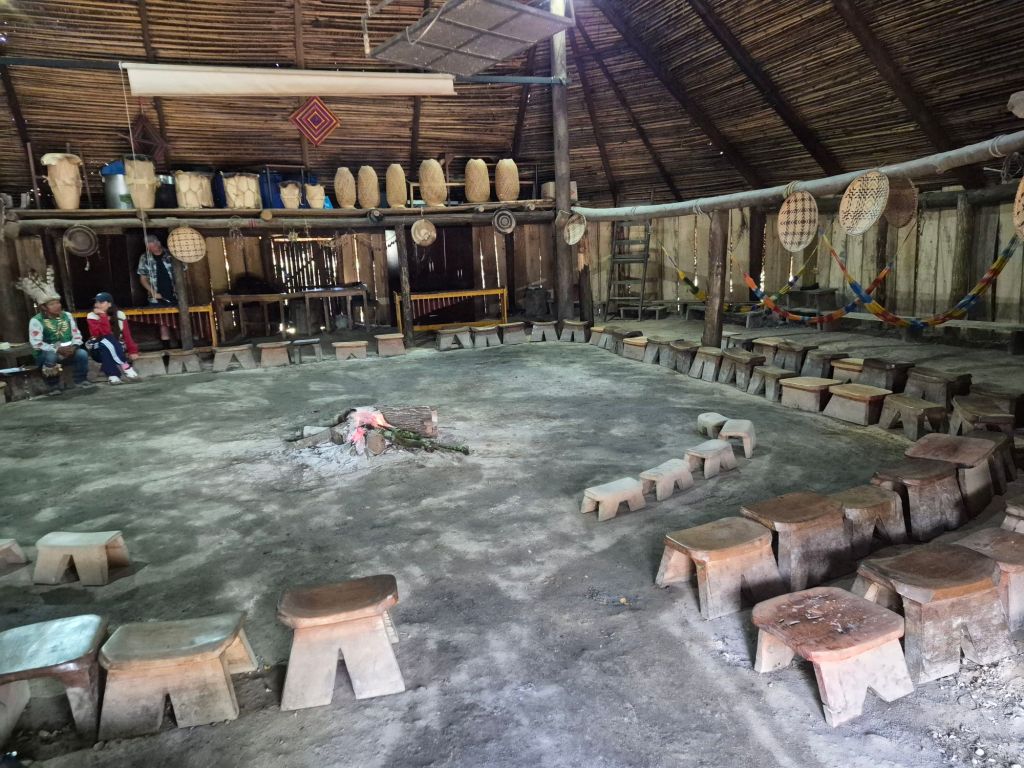
The inside – a fire burning in the middle, hammocks on the side and a shaman ready to engage one in conversation
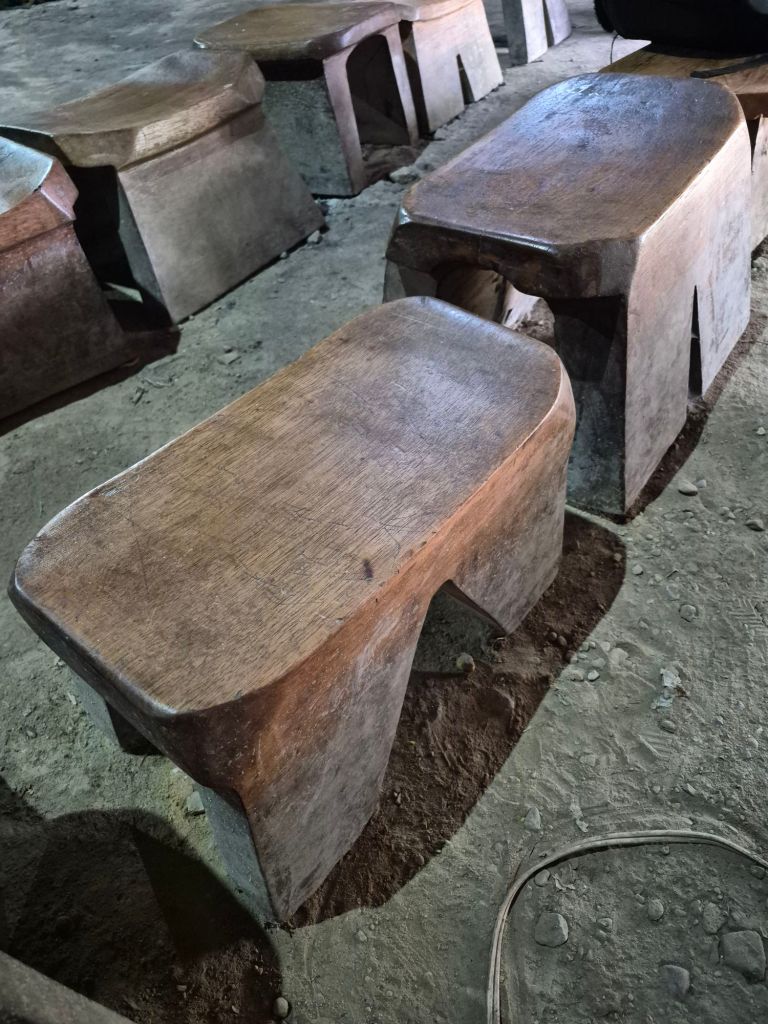
These little stools were each made out of a solid piece of wood
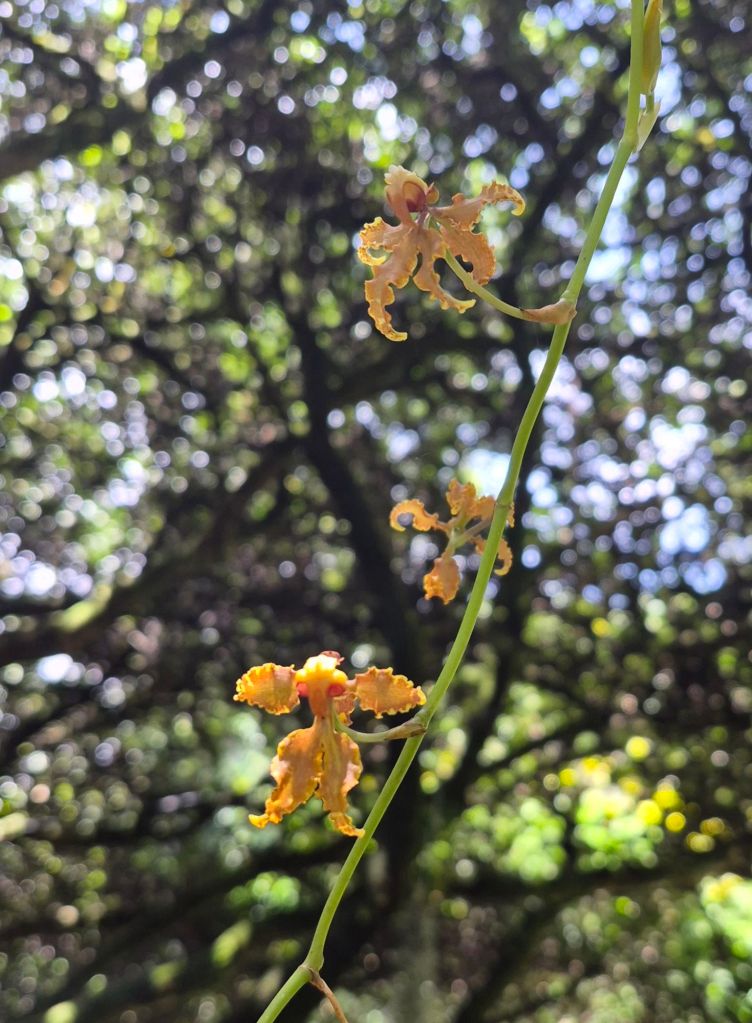
Very dainty orchid, small as my finger nail
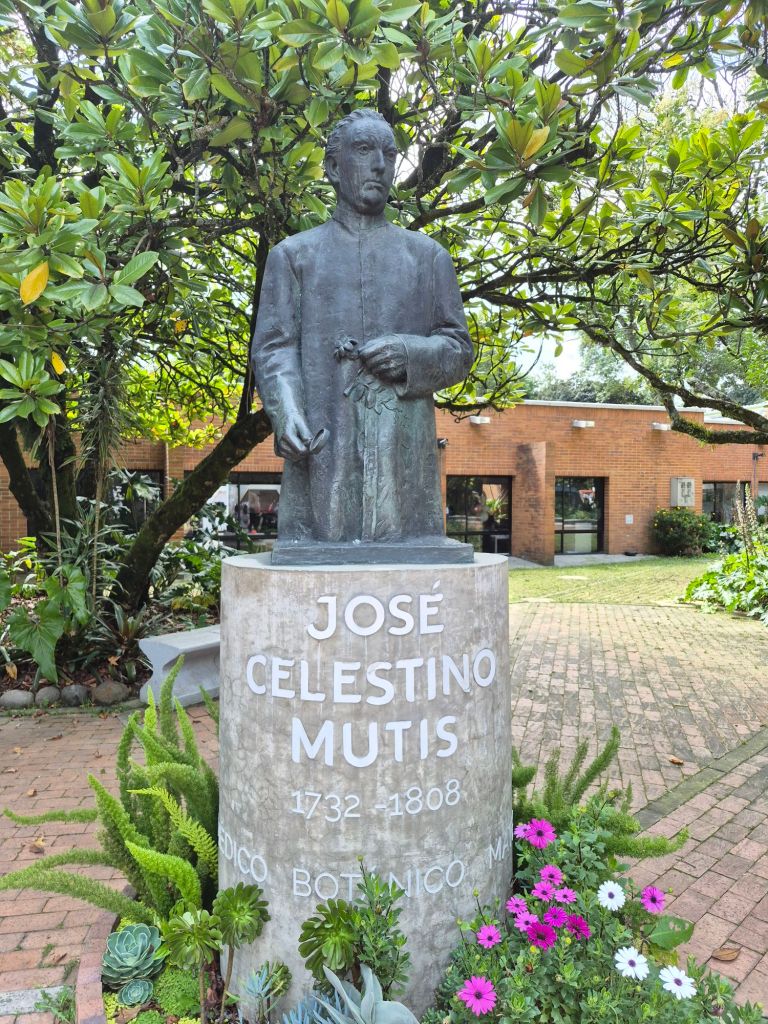
The botanical garden was founded in 1955 and named in honour of the botanist and astronomer José Celestino Mutis, who headed an expedition in the 18th century where over 6,600 new species of flaura and fauna were discovered.    
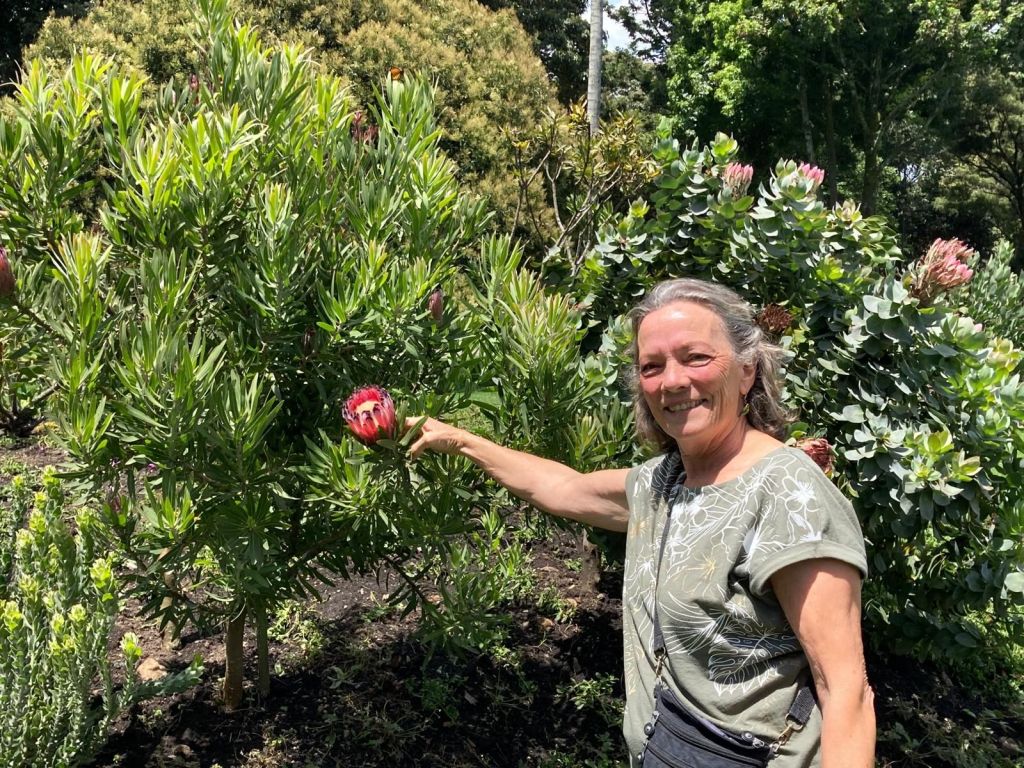
A protea!

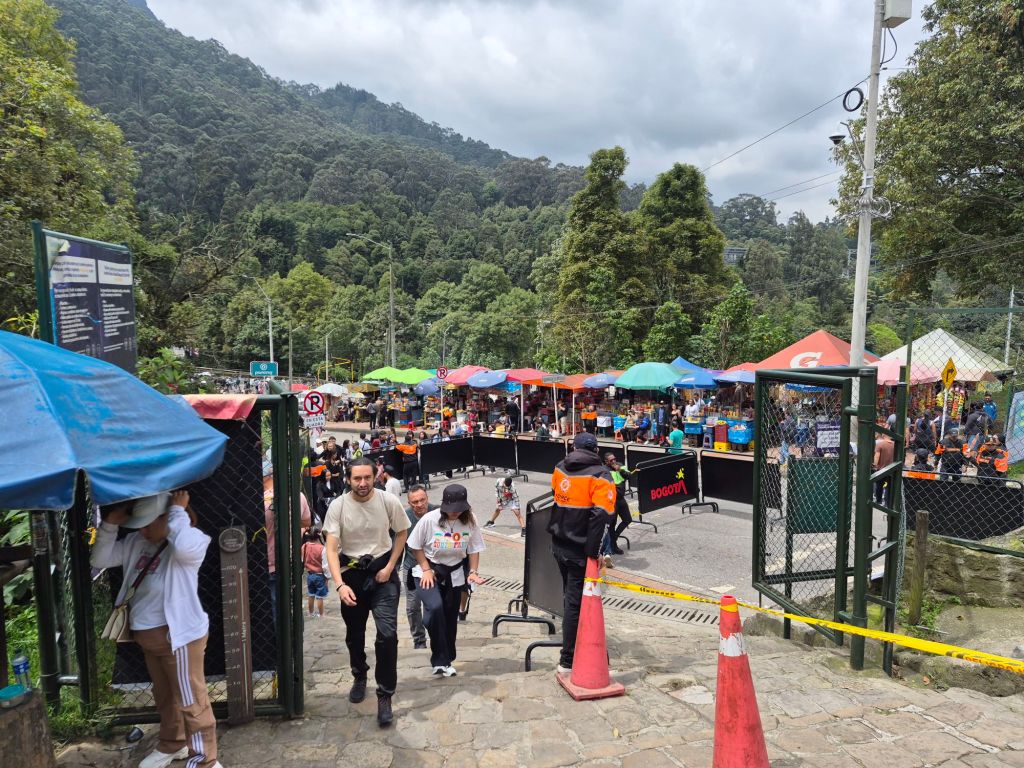
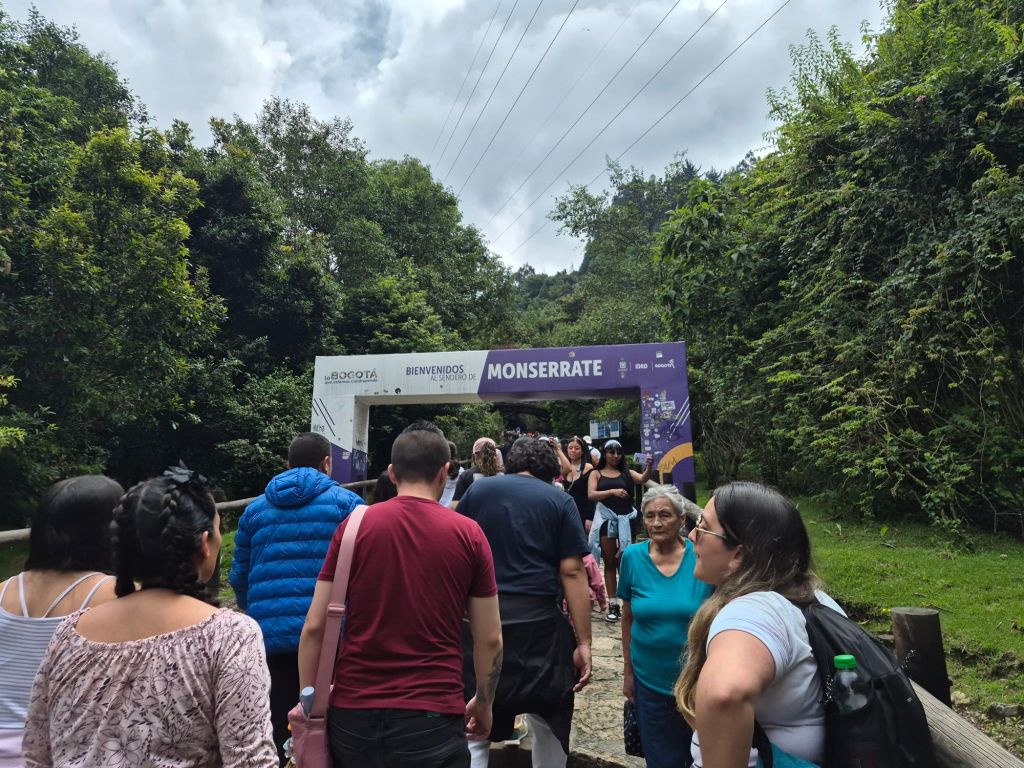
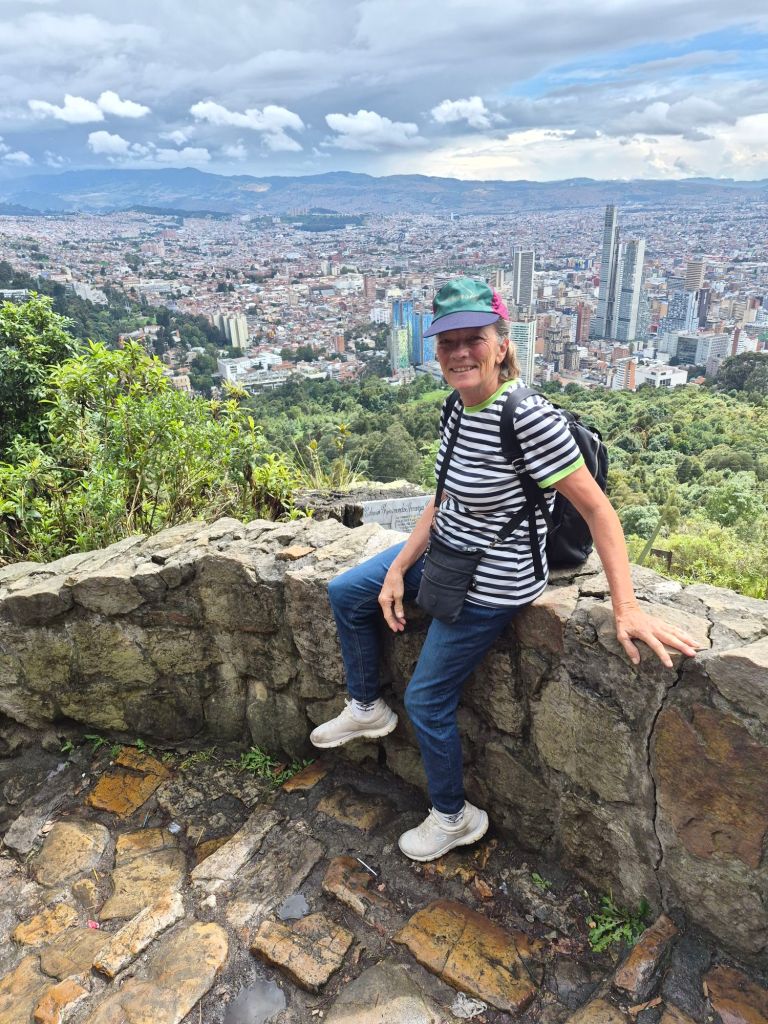
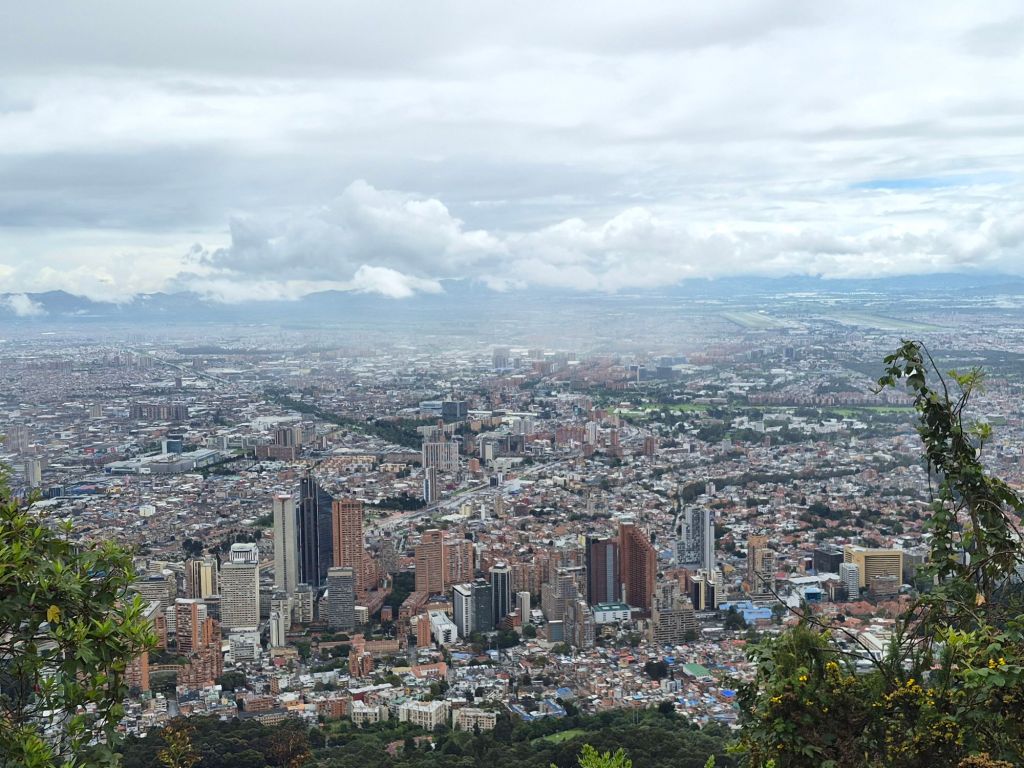
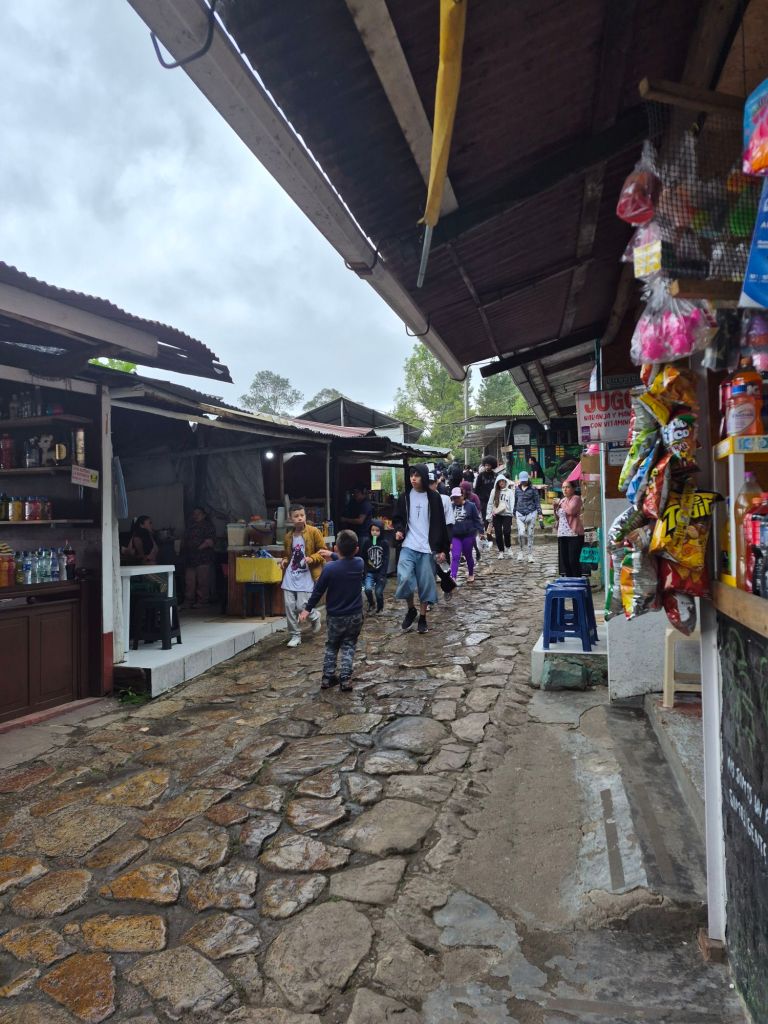
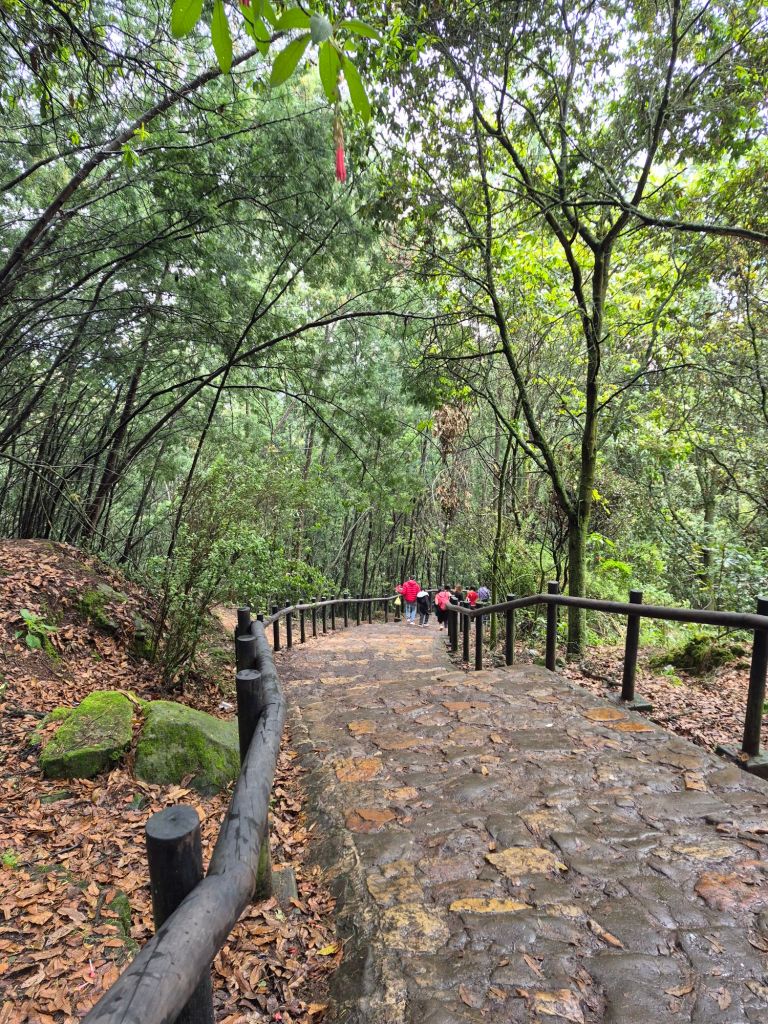
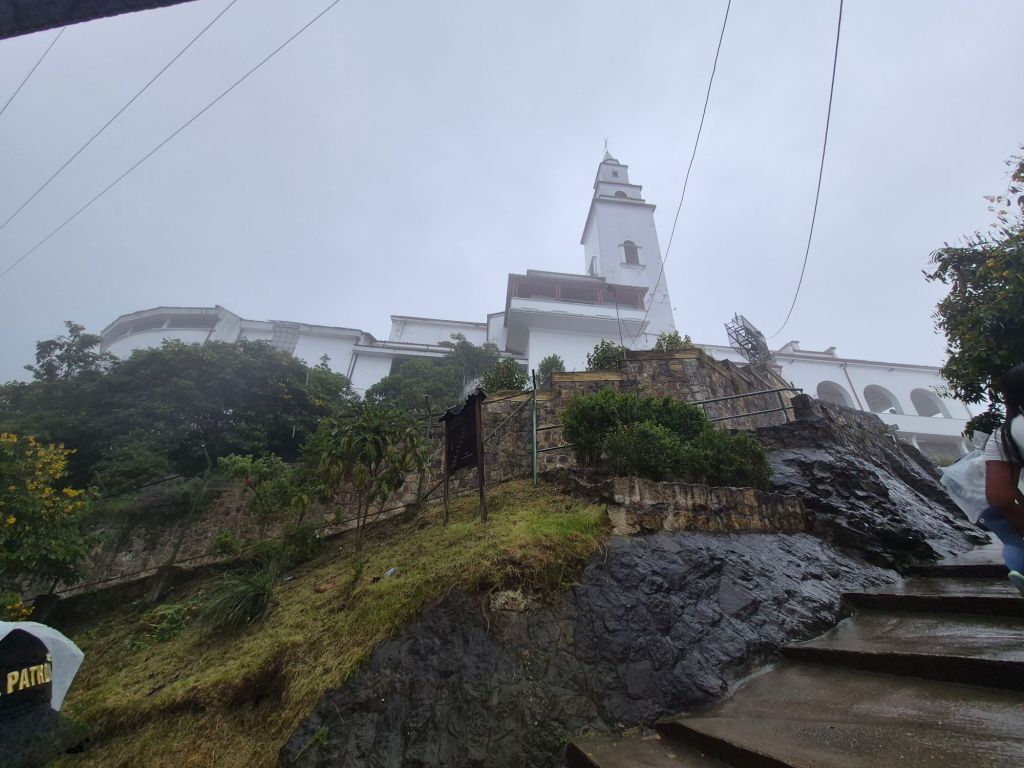
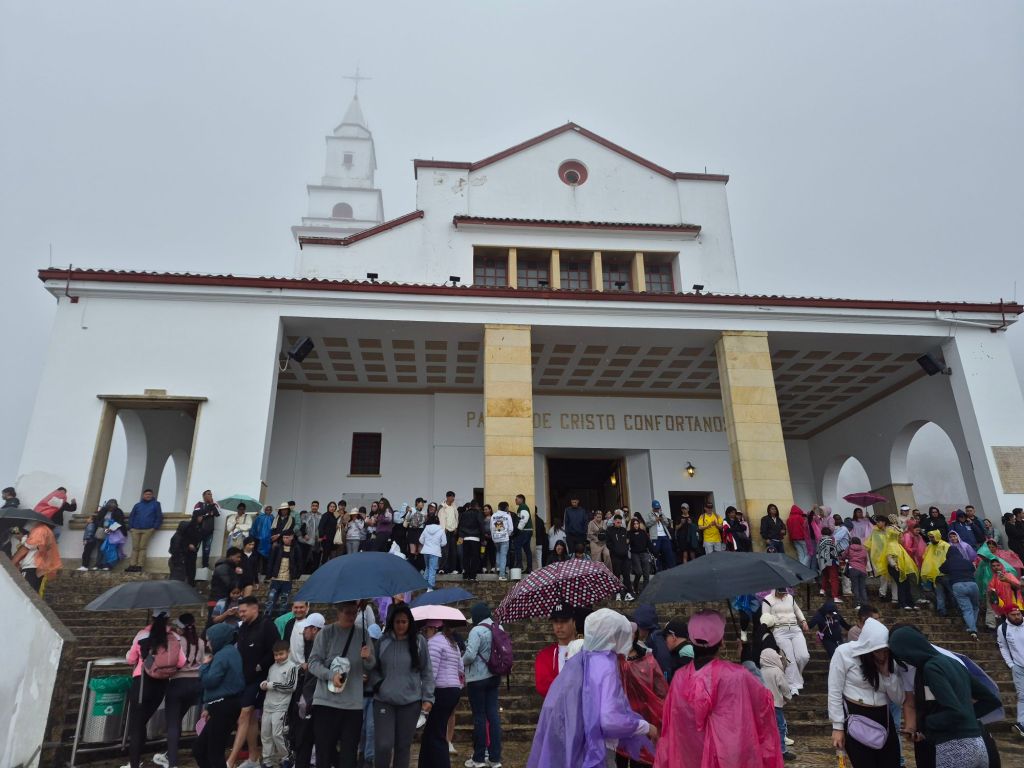
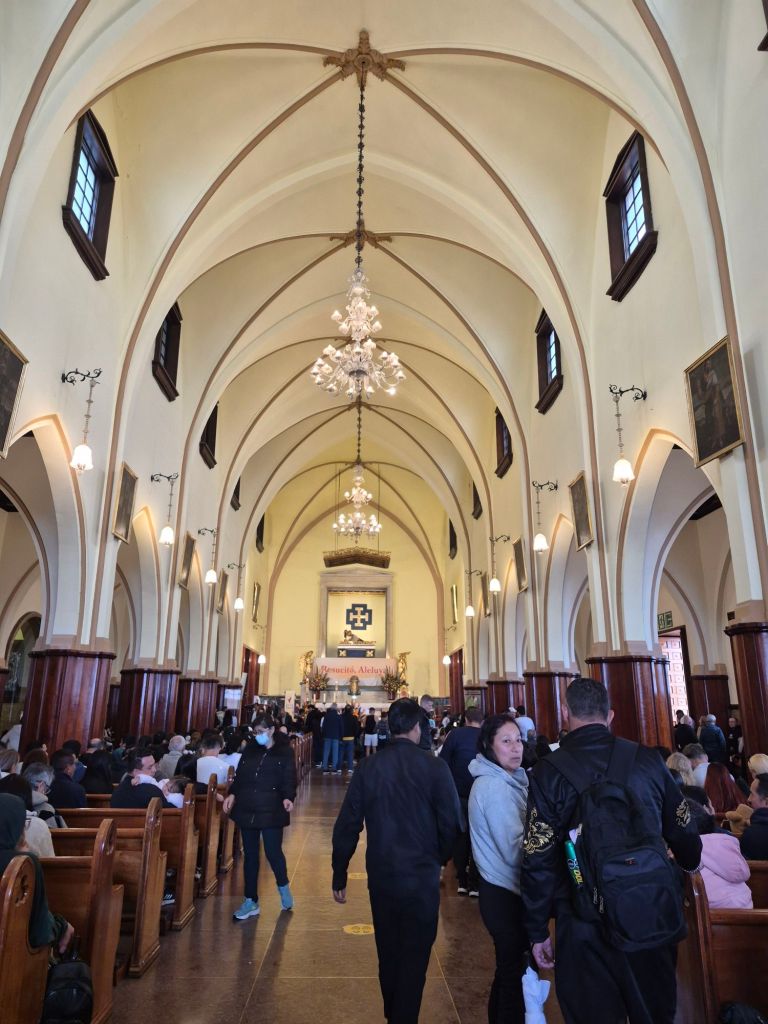
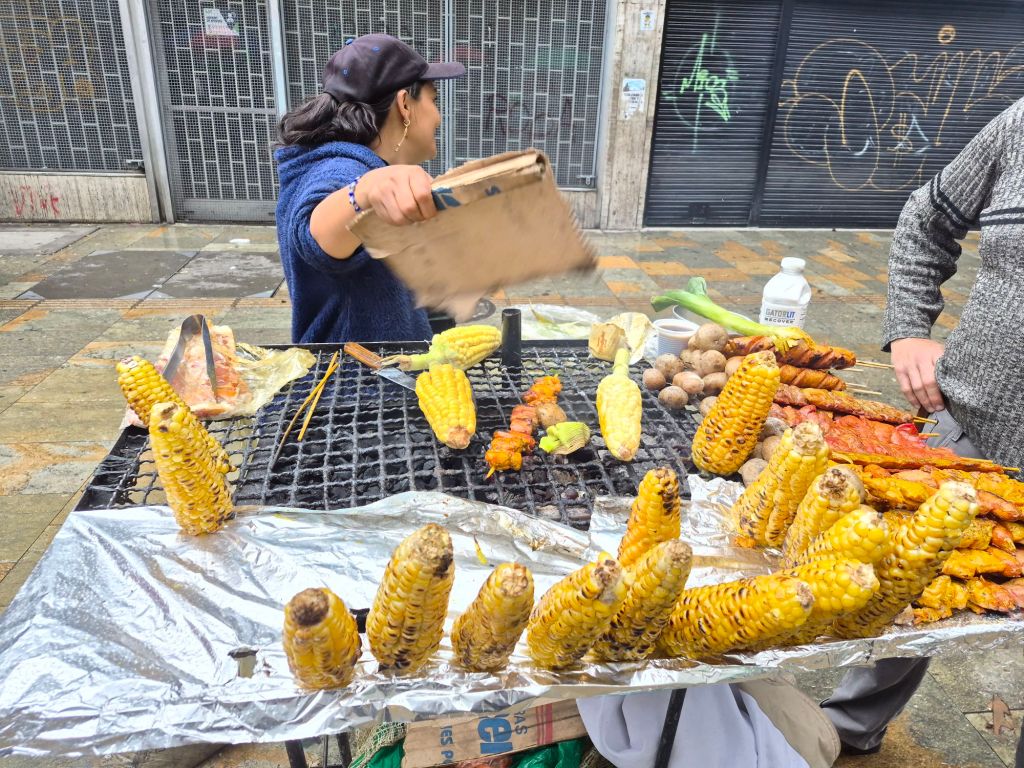
I had four more days in Bogotá before flying to Panama, and on Sunday I decided to climb the 1,605 steps to Monserrate, a viewpoint in the west Andes behind the city.  It is 3,152m above sea-level, and the modern day basilica there, called the Basilica of the Fallen Lord (Señor Caído), was completed in 1920.   The original was built in 1640 as a place of worship and pilgrimage site for the Spaniards.  Climbing up to the basilica is very popular with the locals, and it being Sunday, about half of Bogotá were either going up or going down.  I had not slept well the previous night, and was tired even before I started, so I stopped for a rest after every 20 steps.  Initially the steps were far apart, but as the trail got steeper, they were closer together and I could manage 50 at a time, and even 100.  I did not feel alone – many people often stopped to rest.  It took me 2,5 hours to climb, and it rained the last hour, which meant I didn’t see the view from the top, but I had taken photos lower down.  A service was starting as I entered the basilica, and I was surprised when they started playing a jolly religious song with everyone clapping.  I didn’t stay long, but I understood a little in the beginning when the priest commended people for undertaking the pilgrimage,  especially in bad weather, so it felt special.    It was quite a cultural experience, as there were stalls along the way, selling all the local street foods, as well as artisan products, and just being part of that throng of people was worth the effort. 

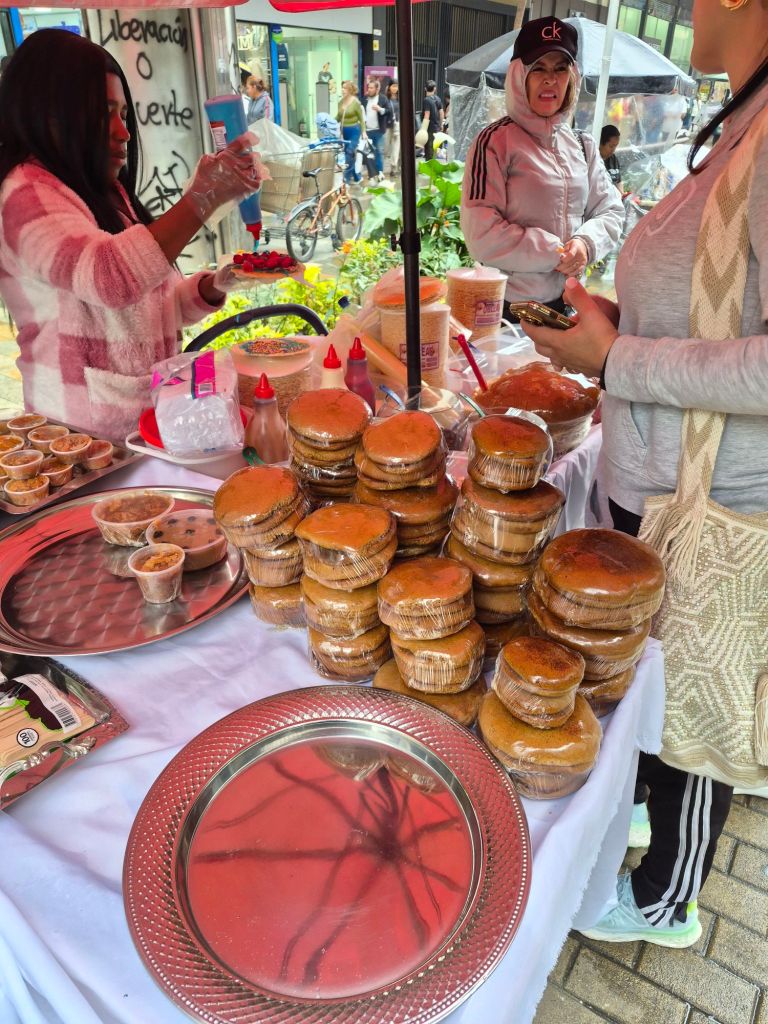
Halfway up there are all these stalls, like a little town. 
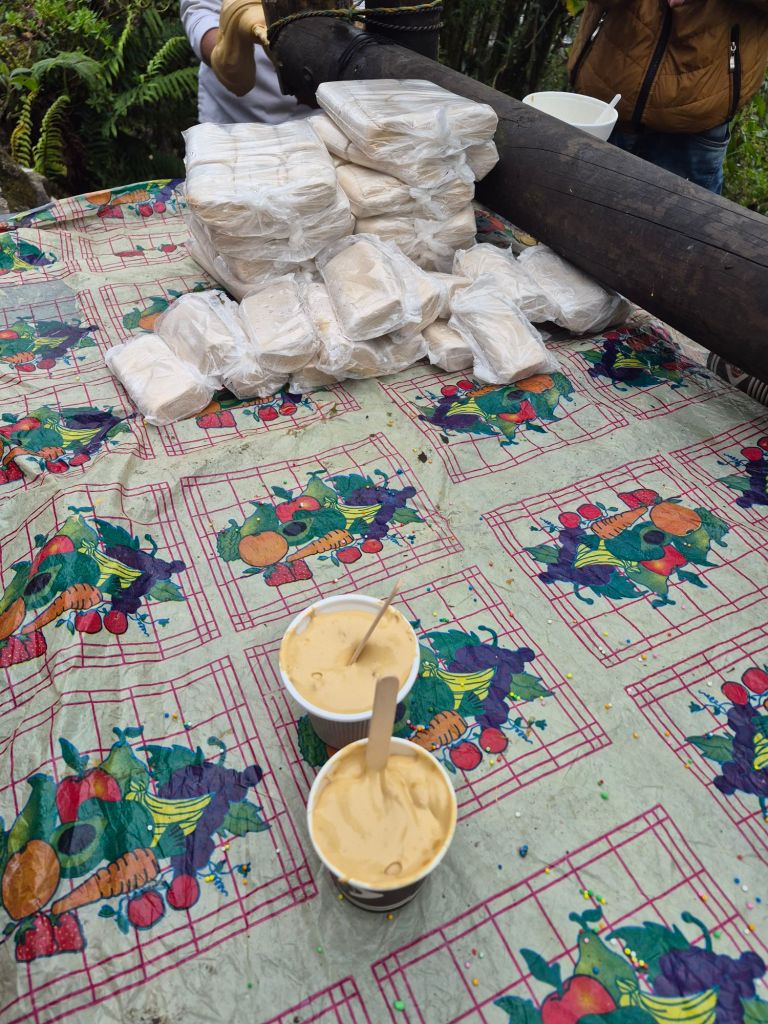
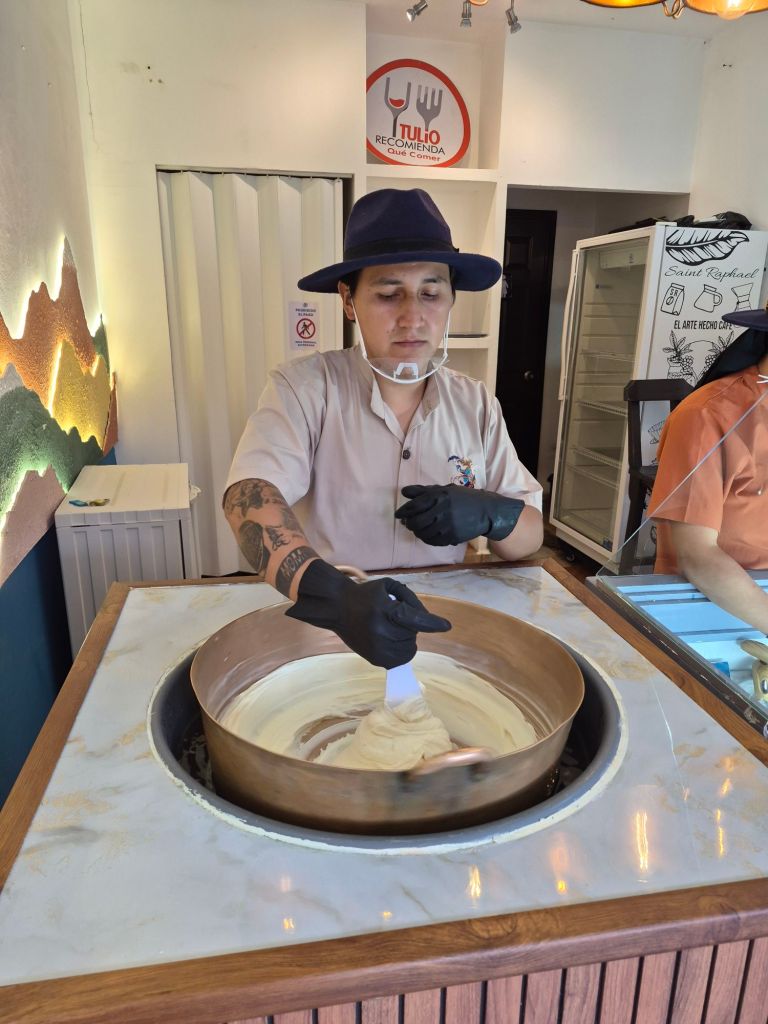
These are marshmallow-like desserts, or so I thought, until I read that Gelatina de pata (cow’s foot jelly) is a traditional Colombian sweet treat made by boiling cattle legs to extract collagen, which is stretched to get a spongy texture and then flavoured with sugar cane syrup or vanilla.   Some people buy the wrapped packages in the back, which has not been ‘fluffed’.
Still making it the traditional way.  In the city they have machines stretching the mixture
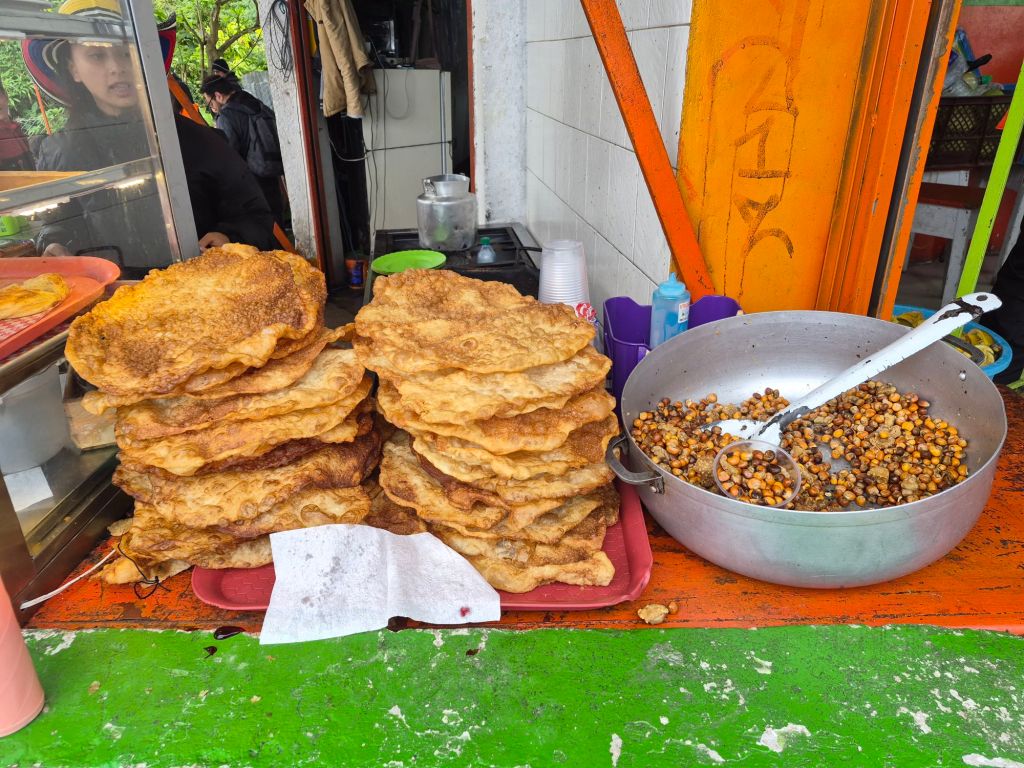
These are hojaldras (deep-fried puff pastry)

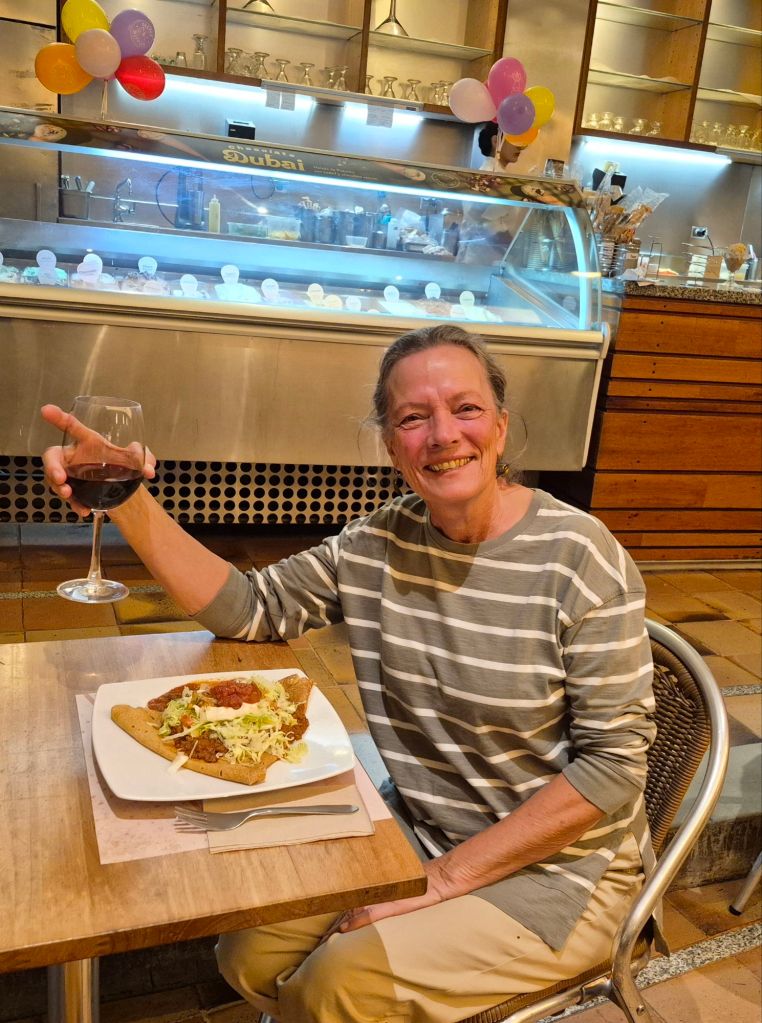
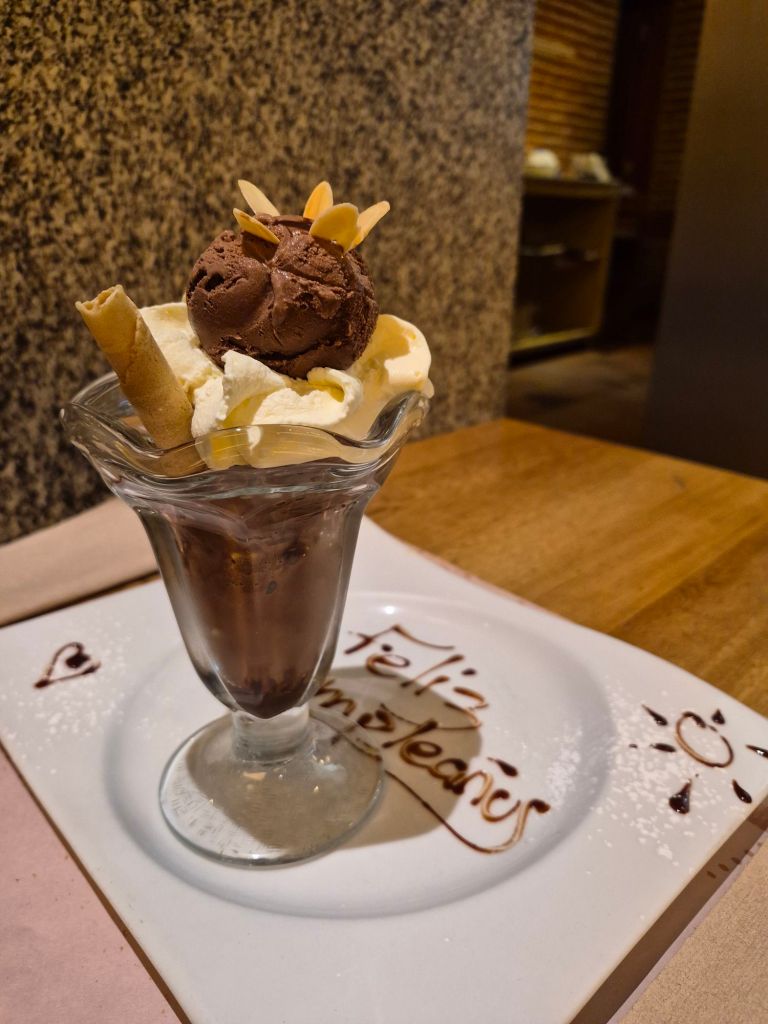
Monday was my birthday and I spent the whole morning reading and answering messages and taking phone calls, fantastic.   I treated myself to a meal at the popular Crepes & Waffles, a restaurant started by two women and where only women work, and where the food is divine.  I told them it was my birthday, and they surprised me with a Feliz Compleaños written on my dessert.  

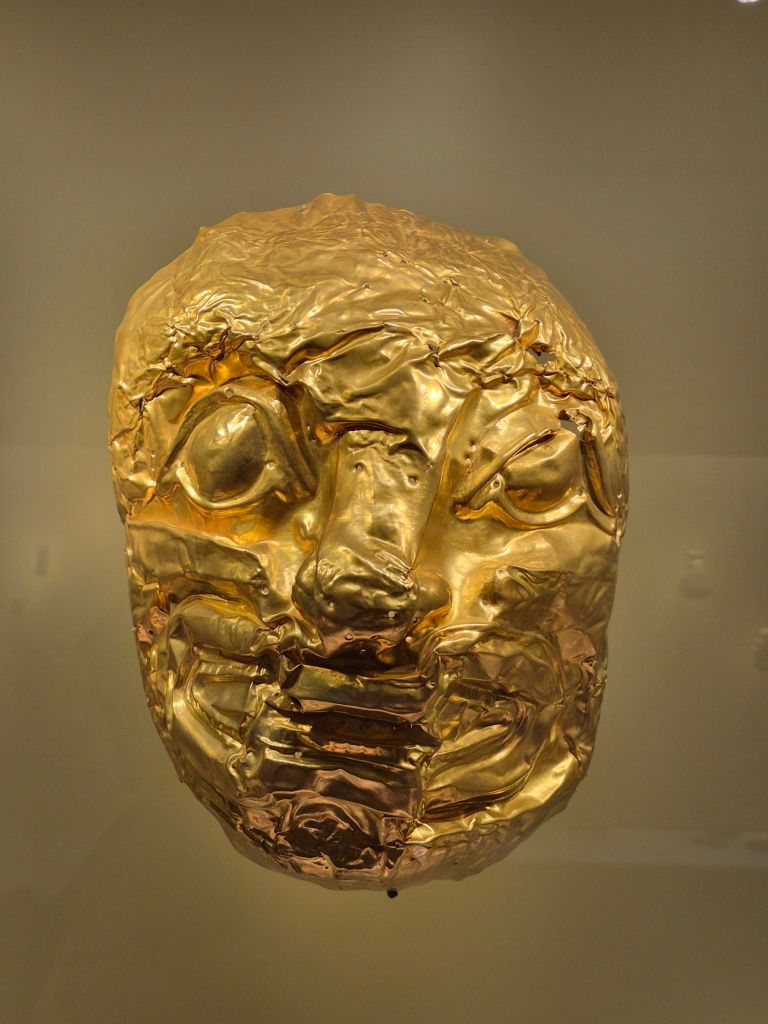
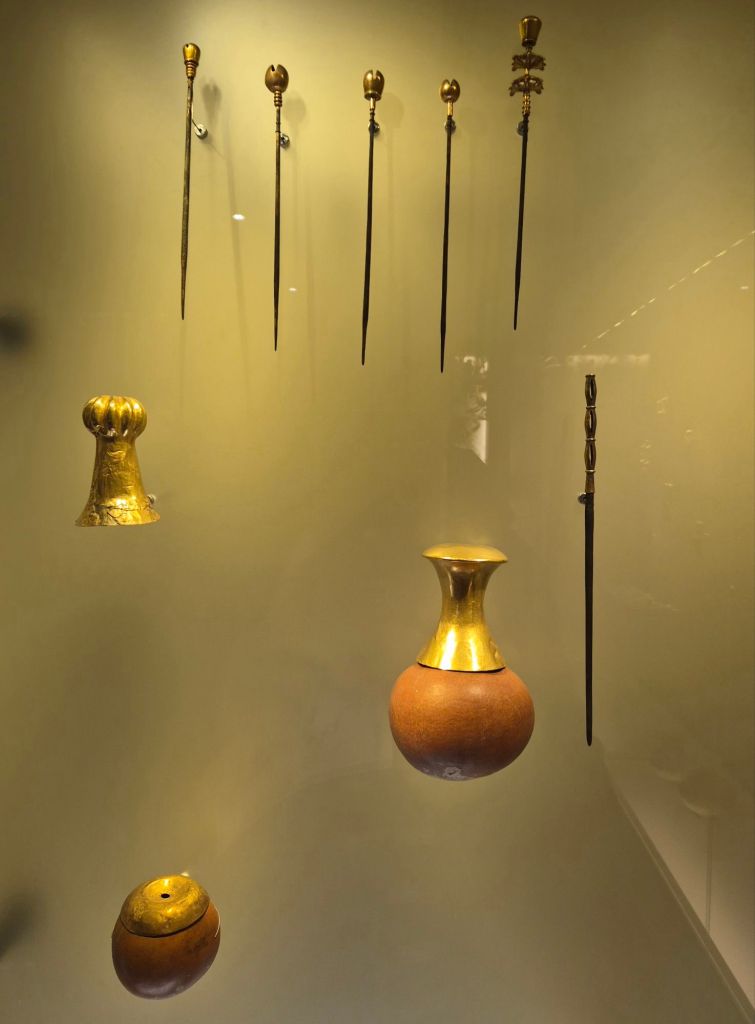
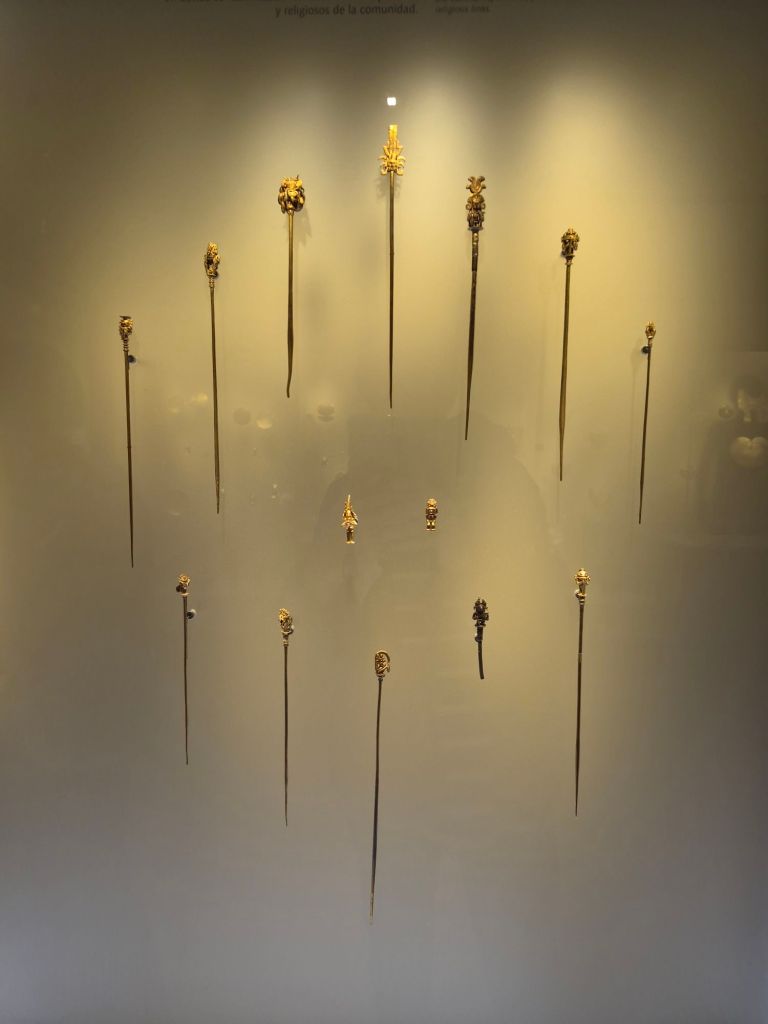
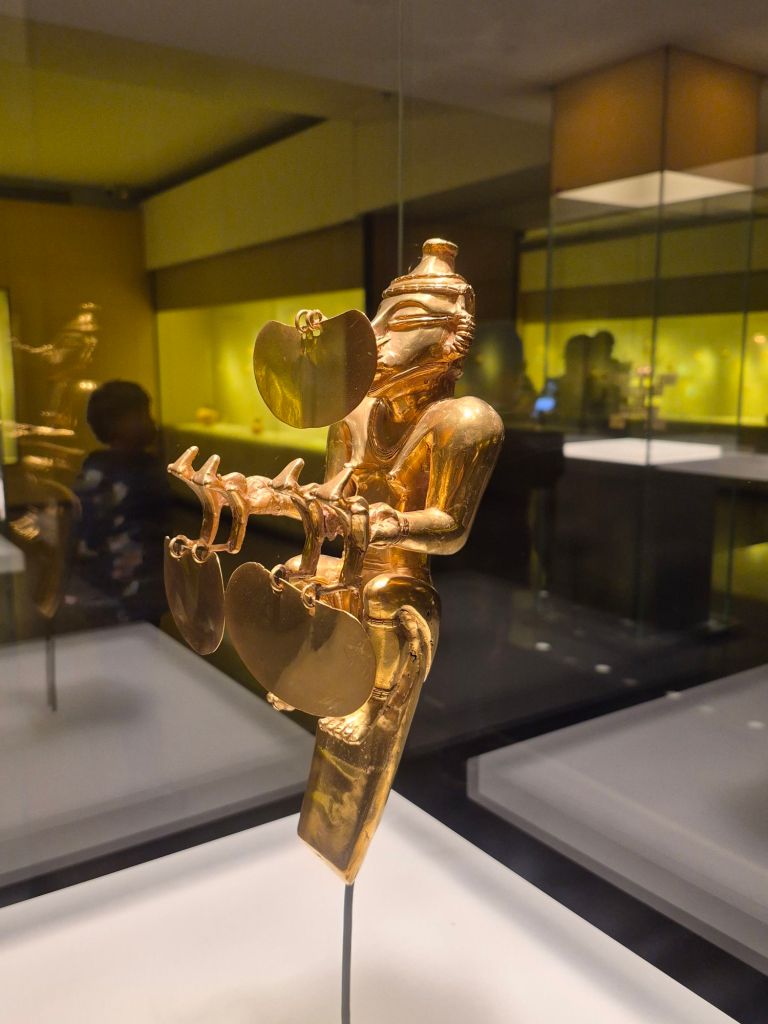
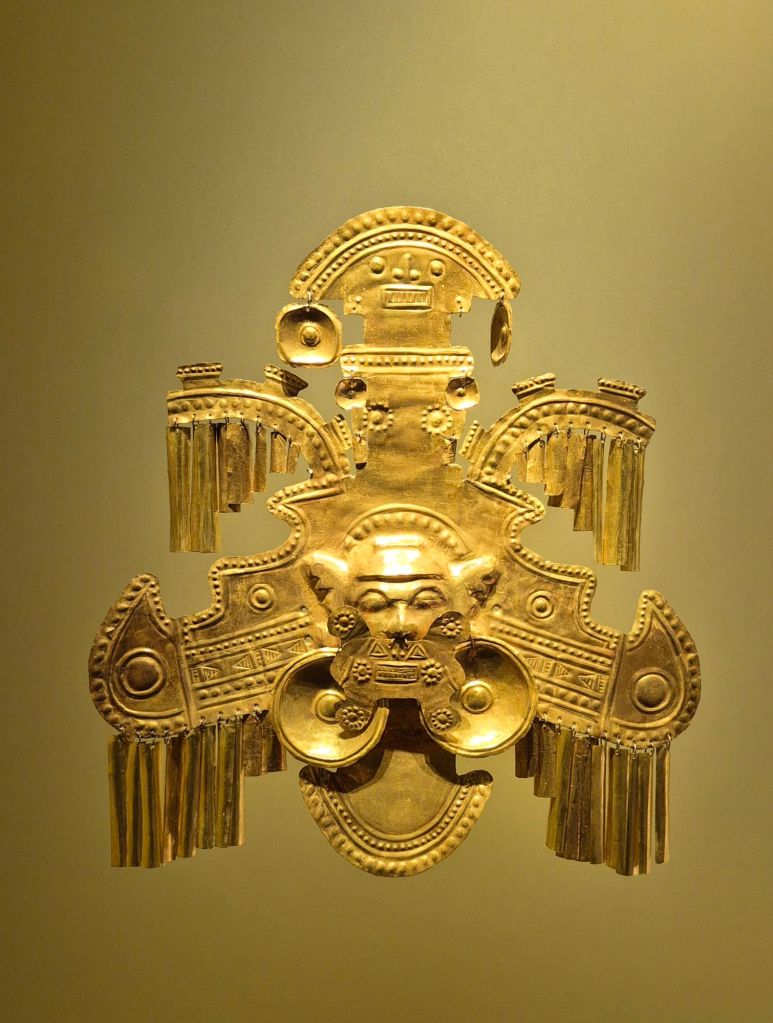
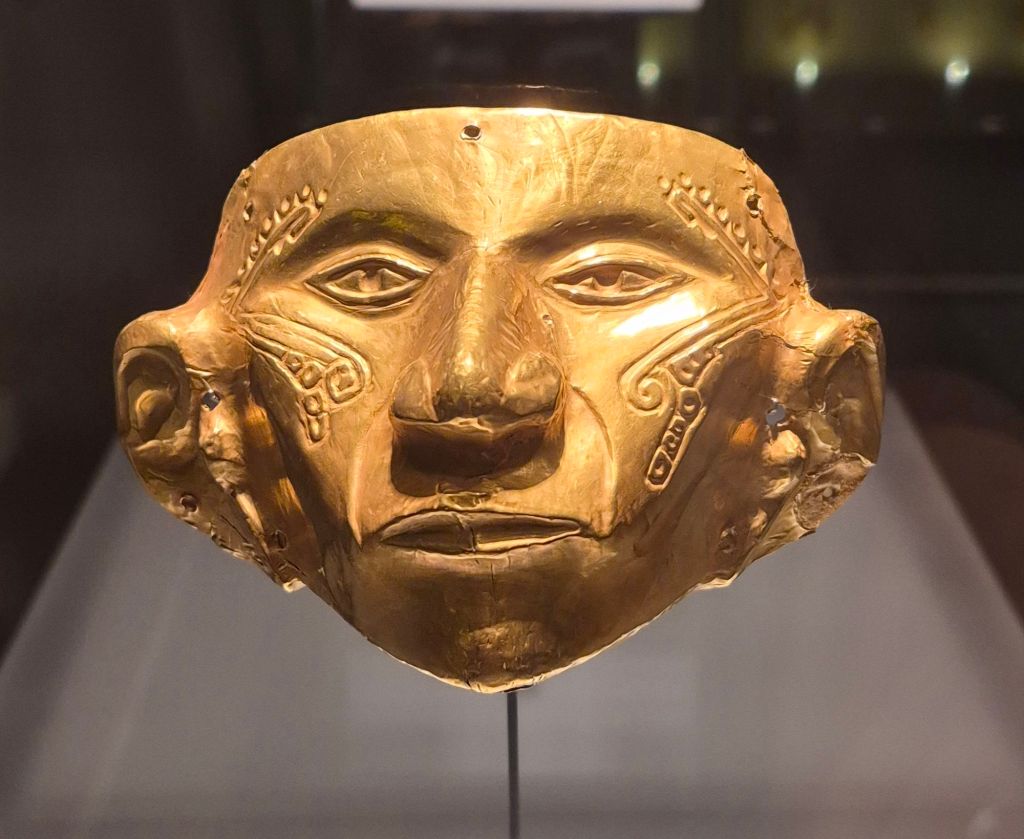
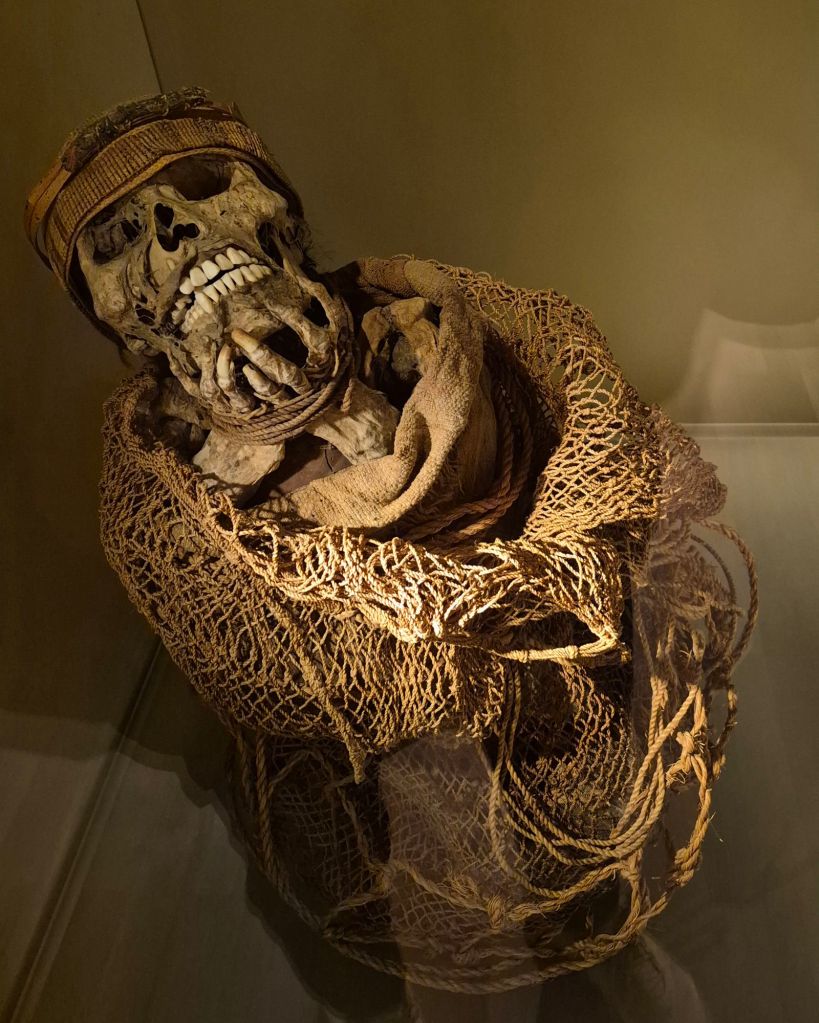
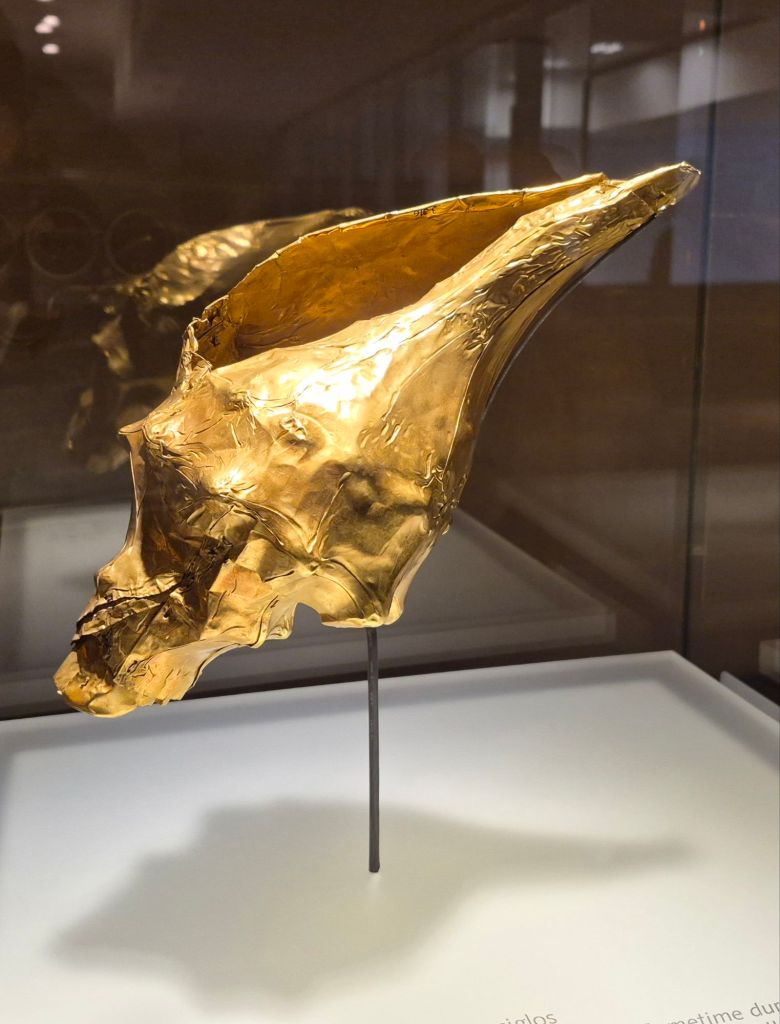
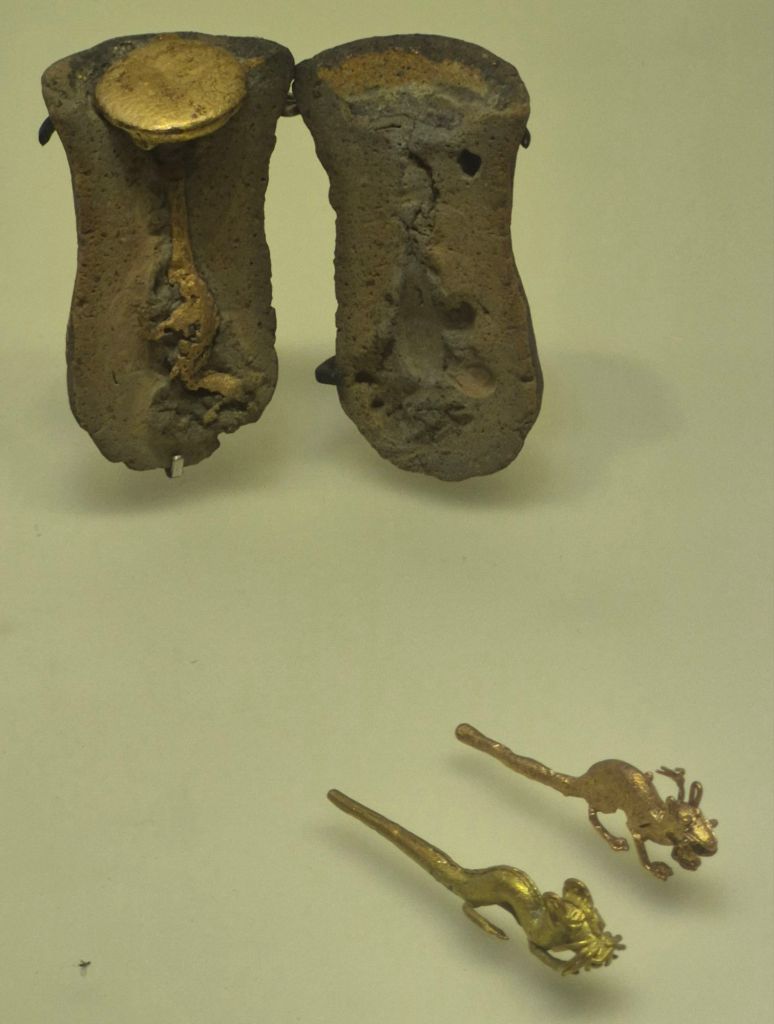
The gold museum in Bogotá has been rated as one of the best museums in the world, and it definitely is worth a visit.  I spent my last day in Colombia there, and was struck by the depth of culture that the Colombians have, going back thousands of years.  The history of gold is narrated with artifacts and descriptions, and the explanations of rituals and meanings attached to them adds a dimension that is both humbling and thought-provoking.  Something that stood out, was the absence of weapons – no violence, only deeply spiritual, creative and skilled people.  As was described in the museum:  “Metal objects that were created by man, were returned to the earth as gifts to the gods.  Imbued with profound religious meaning, they are offered up in lakes and caves, in order to restore the balance in the world.  The metal cycle is thus completed; manipulated by man, it is used by him to manage the universe.”  I left the museum filled with awe, very grateful for the opportunity to have been able to travel in Colombia, at the same time wishing I could stay longer. 

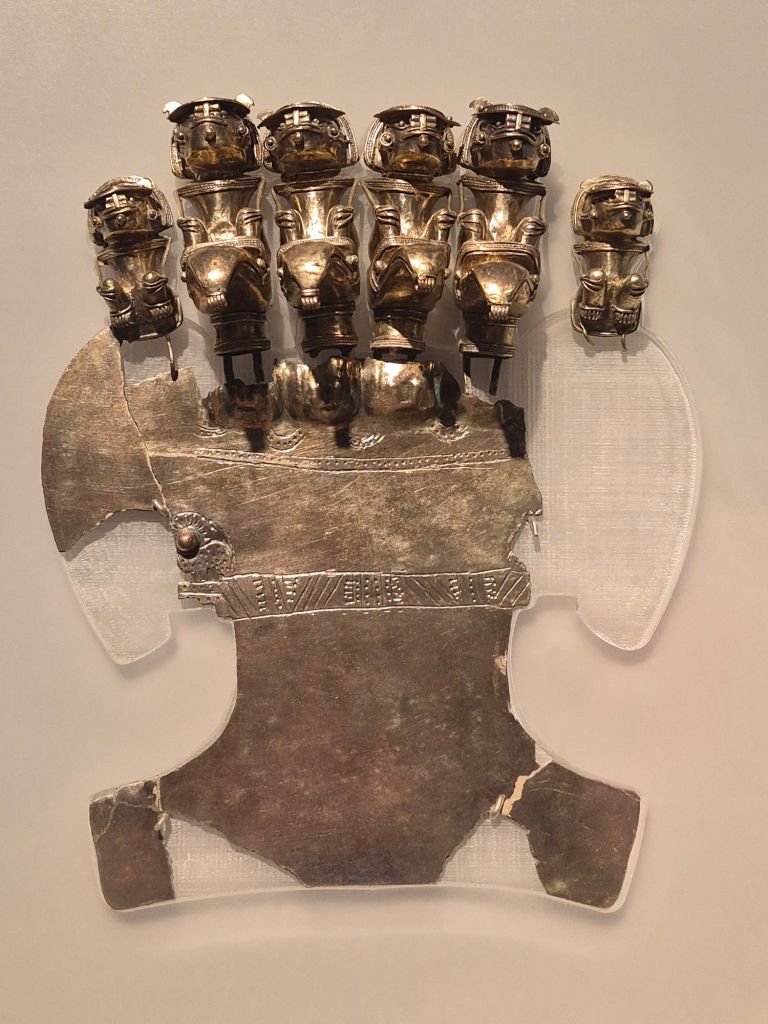
The long sticks were used to remove lime from the poporos (containers that were used to store lime, made from ground sea shells).  The lime was chewed with coca leaves in a sacred ritual called mambeo.  The masked figures on top of the sticks (next picture) represent dancers in a ritual that restated the political, social and religious links within the community. 
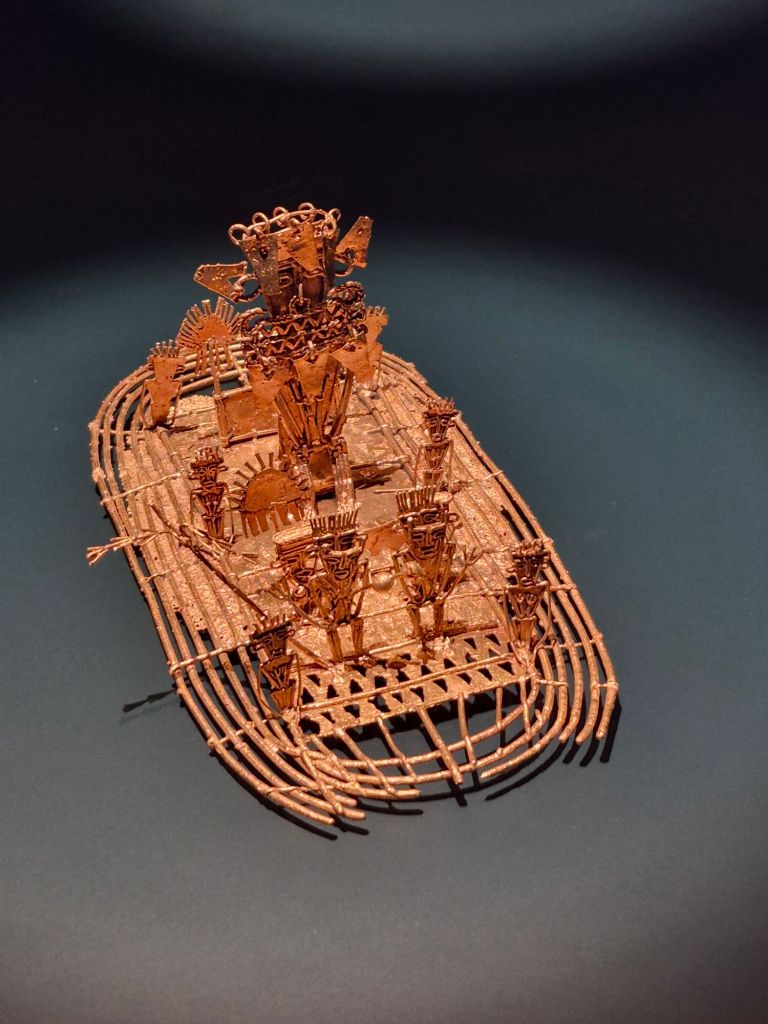
The Muisca raft (one of the Andean tribes), depicting a ceremony.  This was made by a Muiscan metalsmith in the 14th or 15th century, using an alloy of gold, silver and copper.  It was found in a cave in 1969, and has become a national emblem for Colombians.
The bodies of important persons were preserved for the afterlife and also to maintain their presence within the community.   Deceased chiefs were mumified, kept in their residences and brought out for ceremonies.
This was a shell that was covered with 7 thin sheets of gold – the shell has disappeared, yet the gold kept its shape. 
The Andean metalsmiths were known for their use of the lost wax method.  They were experts at shaping objects in wax, casting them, removing the wax and pouring gold or other metals into the cask. 

Just a few more pictures of Bogotá – I was very sad to leave. 

A protest march by traditional people, about property rights and customs, I think.  Very peaceful, nobody spoke, but it was about a kilometer long, everybody dressed in traditional clothes
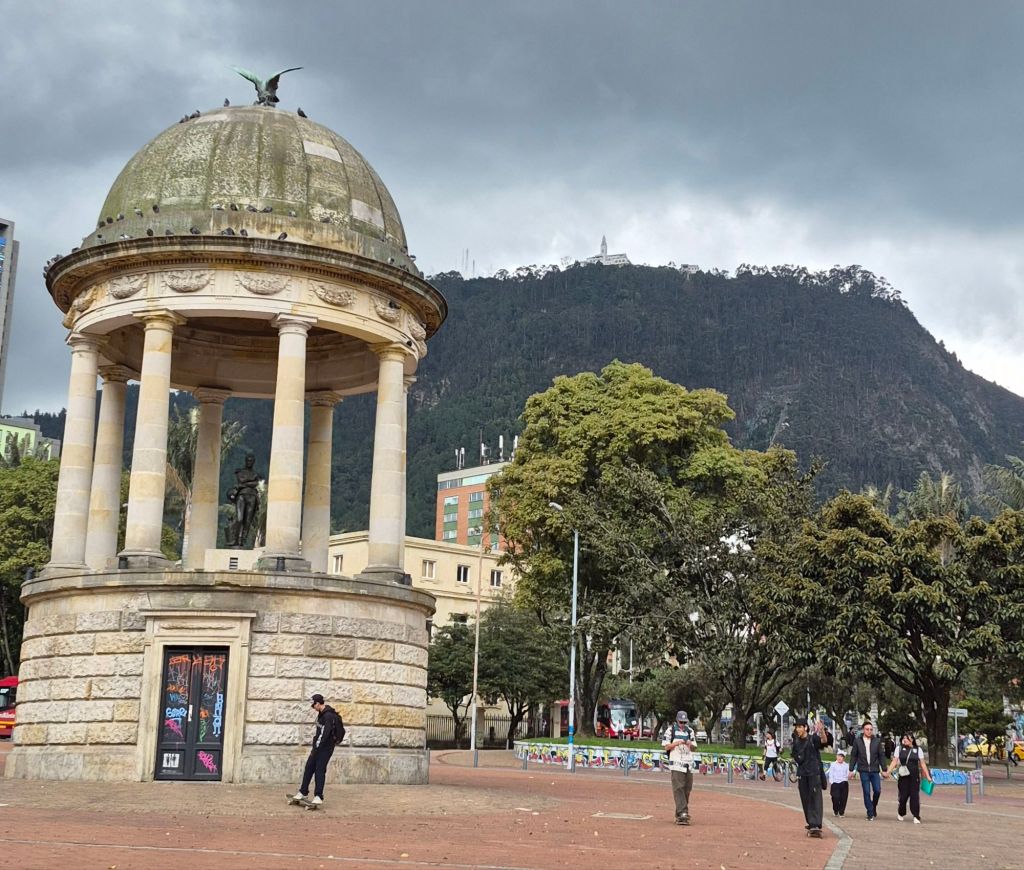
Simón Bolivar temple on Jounalists’ Park, named for journalists like Gabriel Garcia Márquez.  Monseratte in the background.
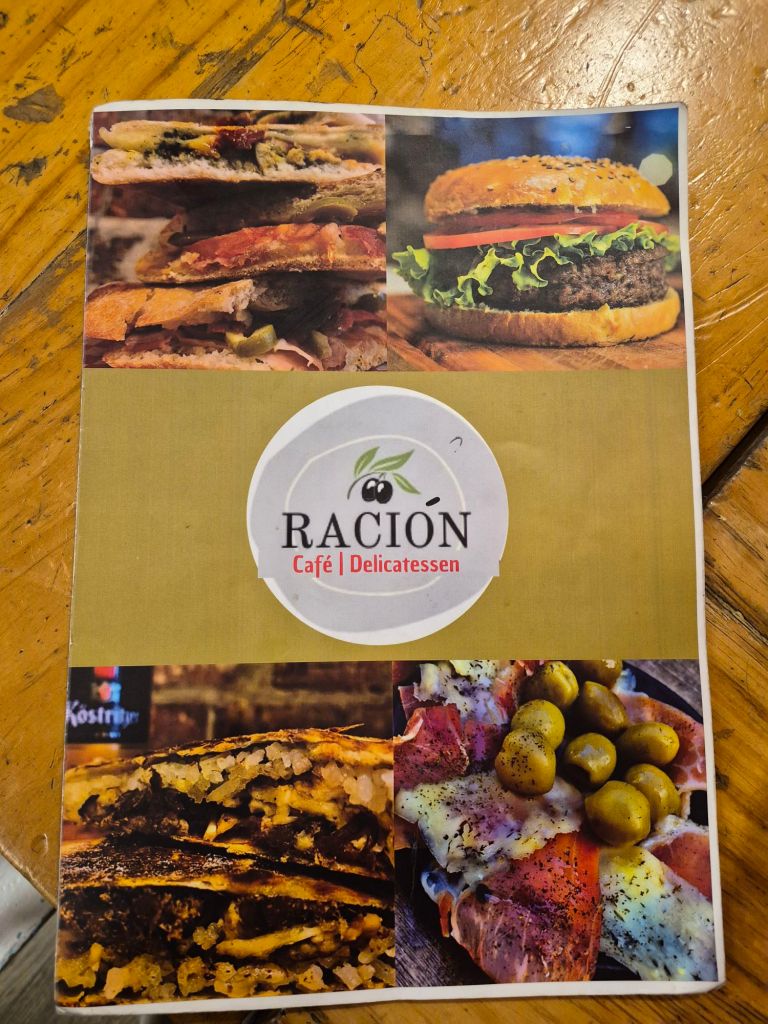
I had several meals at this charming restaurant, called Racion 19, just around the corner from my hotel, Artistico.
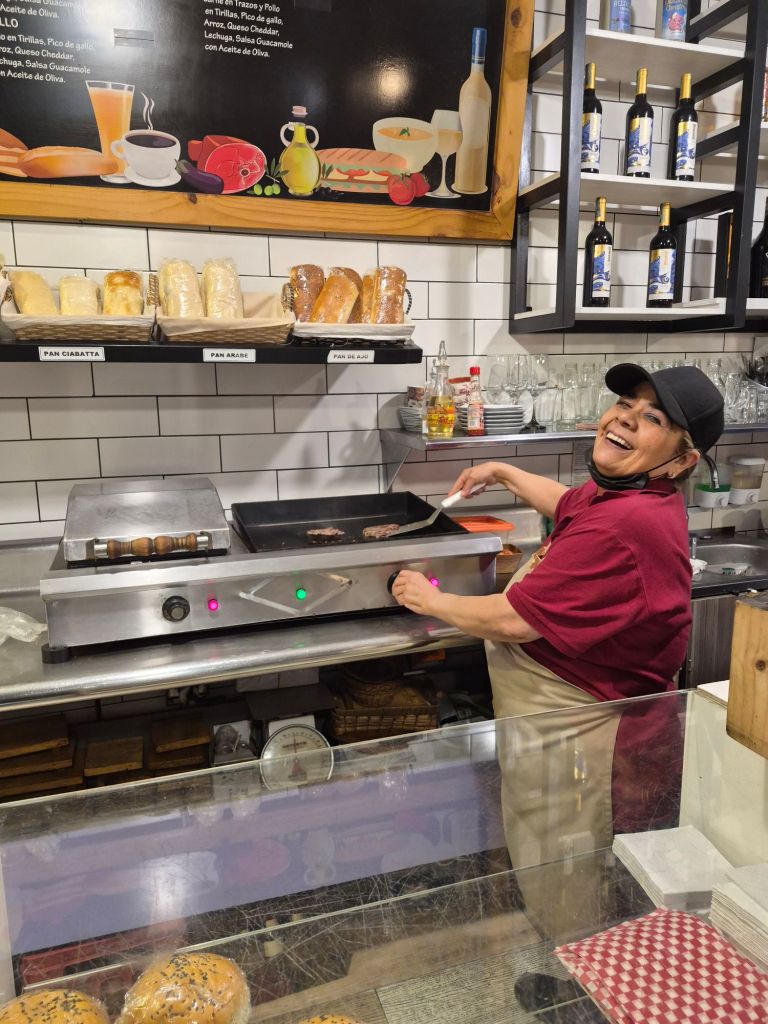
I bought breakfast here every morning, just below my first floor window – arepa (mealie bread) with egg, ham and cheese. 
Goodbye Bogotá and Colombia

15 April 2026  Pests and perks

Gnats have been having a field day on me here in Colombia – the welts keep itching long after, and every new bite causes the old ones to itch again.  I’m slowly becoming immune, and have bought some ointment which helps for a few hours.  Other than that, I am surprisingly healthy, strong and fit, for which I am very grateful.

Meeting up with my cousin Alan, almost 4 weeks ago in Bogotá, opened a whole new world to me.  He is an ornithologist and naturalist and an avid birdwatcher, with binoculars, camera with huge lenses and the necessary apps on his phone.  Colombia has the highest number of bird species in the world, with over 1900 recorded, more than 80 of them endemic to the region.  Alan came to Colombia to do a birding trip, but arrived a week earlier so that we could travel together for a while – wonderful for me to have company, and an expert guide to go with it. 

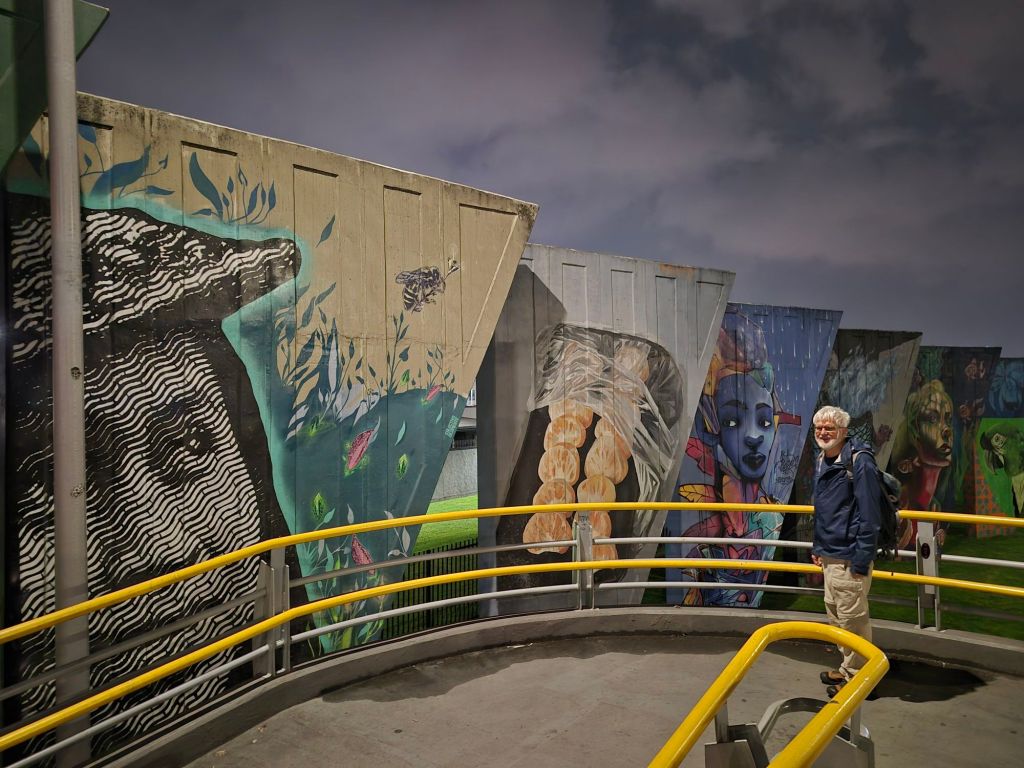
The busy roads in Bogotá have these yellow-railed pedestrian crossings, and these murals were on the side of one

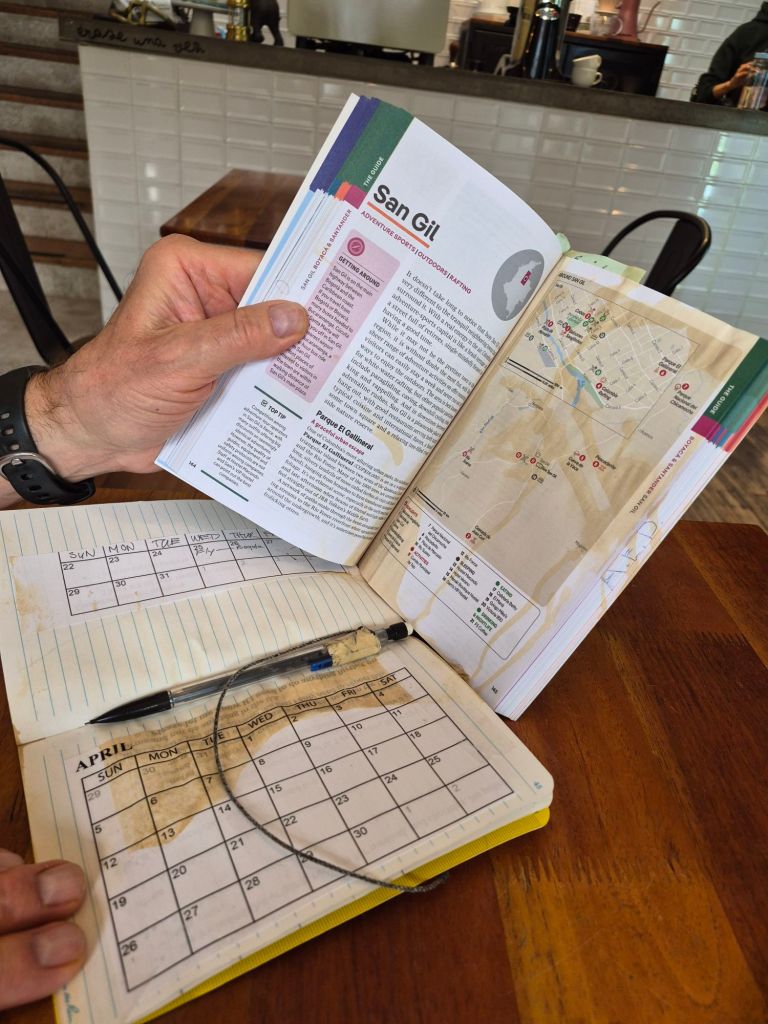
We decided to meet for coffee to discuss our plans for the next couple of days, and were served a very good cortado, which Alan proceeded to knock over before even having had his first sip of Columbian coffee.  A proper mess, with his brand new Lonely Planet book on Colombia, and his birdwatching notebook with calender, covered in coffee stains.  Undeterred, we carried on planning and within 10 min had an itinerary (sort of) worked out and our first 3 days booked in San Gil, a 6-hour bus trip north of Bogotá.  “You’re good at this”, Alan commented.  “I’ve had lots of practice,” was my reply. 
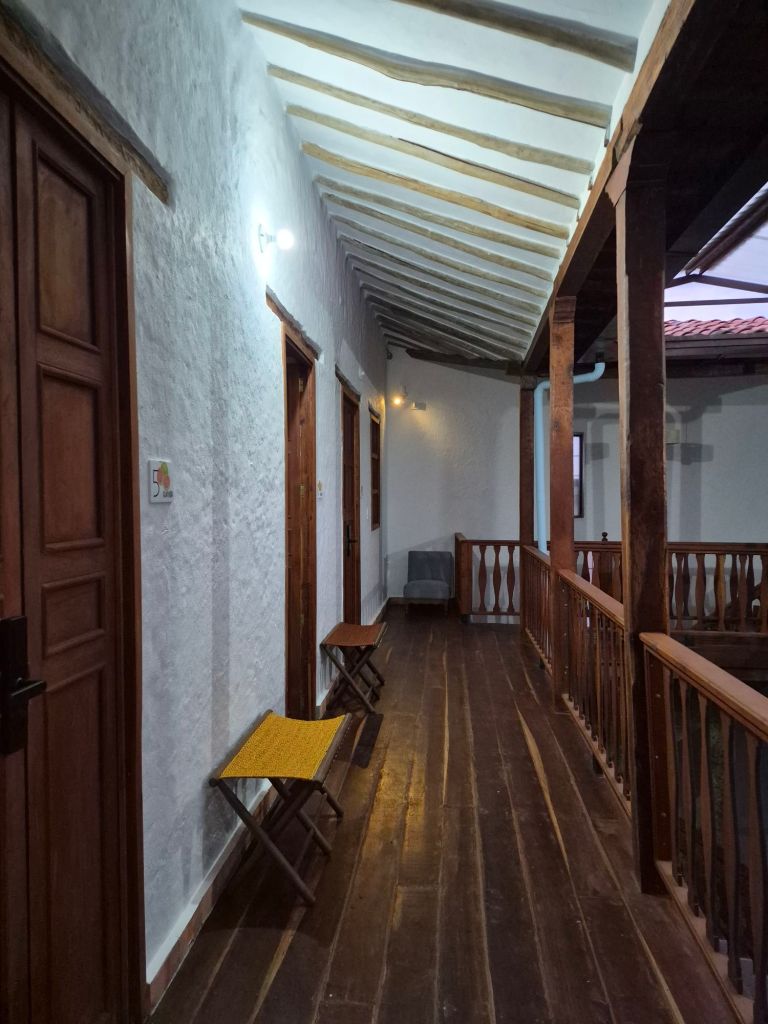
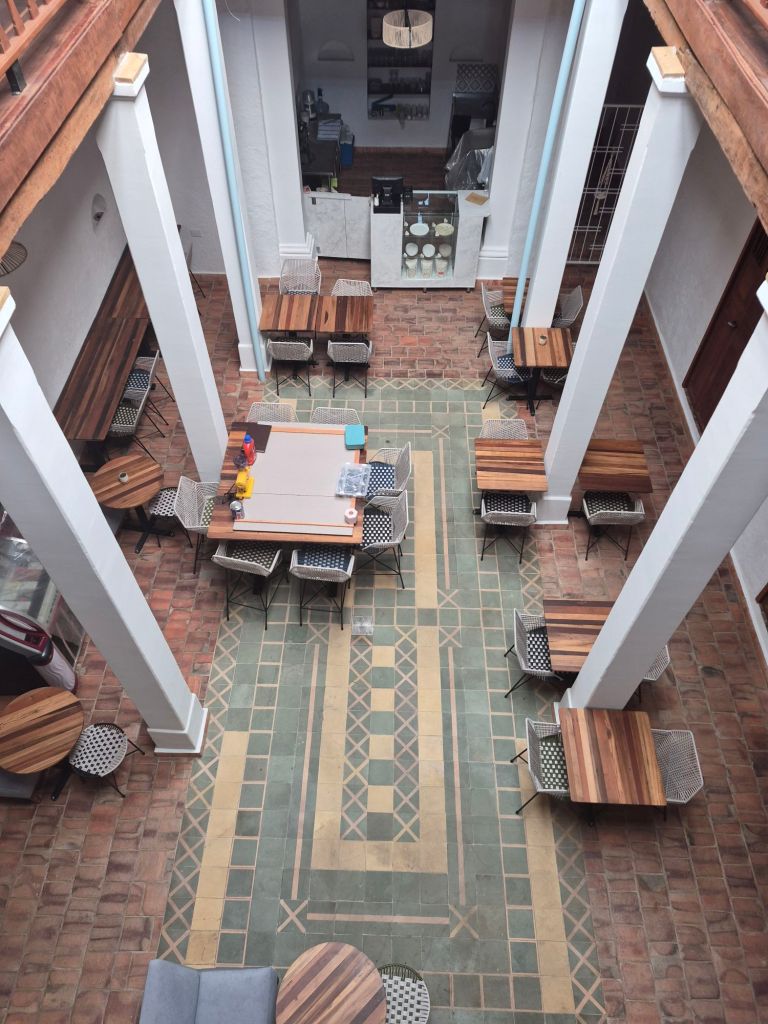
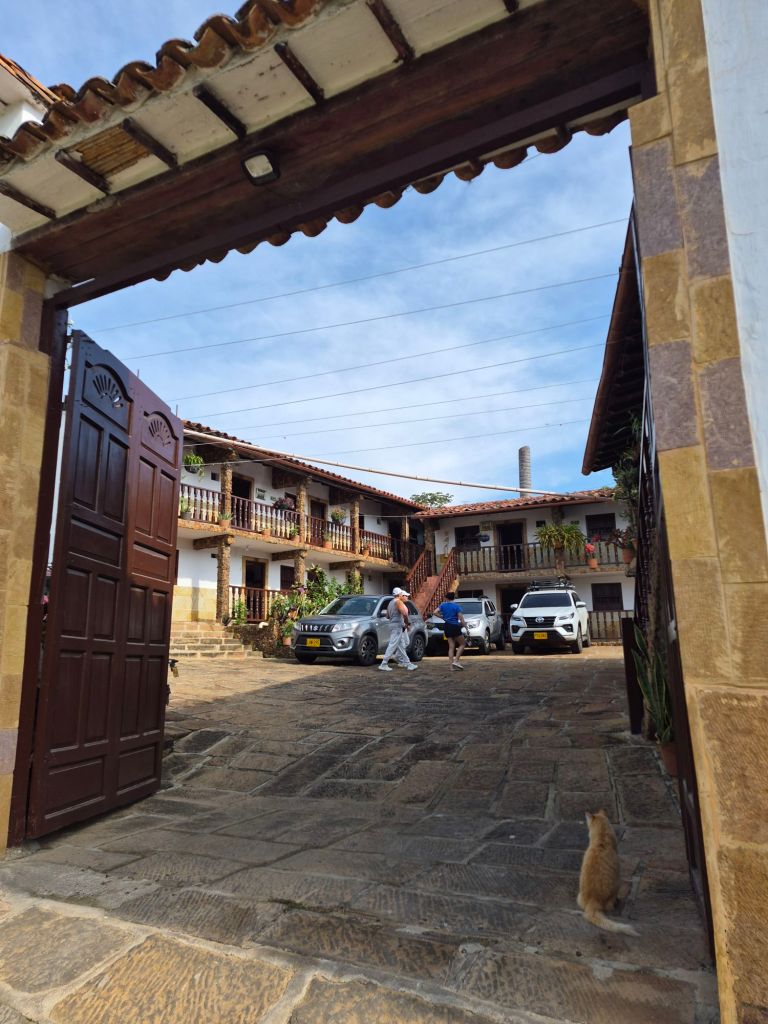
We caught the bus to San Gil at 10am, thinking it would be a 6-hour trip, which then turned out to be 11 hours, so we arrived after dark.  We had been sitting in the bus for so long, we decided to walk the 2 km to the hostel, fortunately downhill, as we were carrying our luggage – I had a smaller bag, Suerte was left at my hotel in Bogotá.  We arrived at the address, but there was no sign of a hostel, and the area looked a bit dodgy.  The owner, Manuela, arrived within a few minutes and unlocked a door – what a surprise awaited us!  She and her sister had restored a 100-year old building, which had originally been the first hotel in San Gil.  It is a double storey building, around a covered courtyard, with high ceilings downstairs as the horses were brought indoors in the past.  They had kept a lot of the old woodwork, but replaced the floors, using the floorboards to build the coffee tables.  The kitchen and bathrooms have been newly built, all very tastefully done.  Their aim is to open a coffee shop downstairs, which would probably happen soon.   
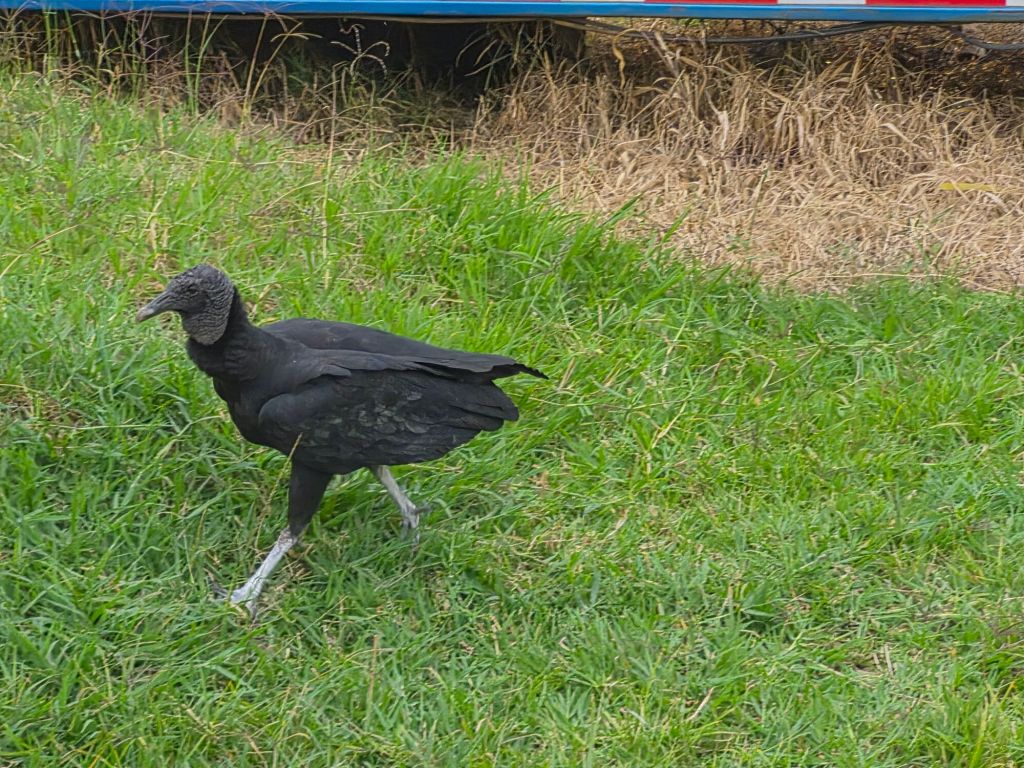
A black vulture – there were a lot of them at the place the bus stopped for lunch
The hostel, called Casona El Nacional
Downstairs, where the coffee shop will be

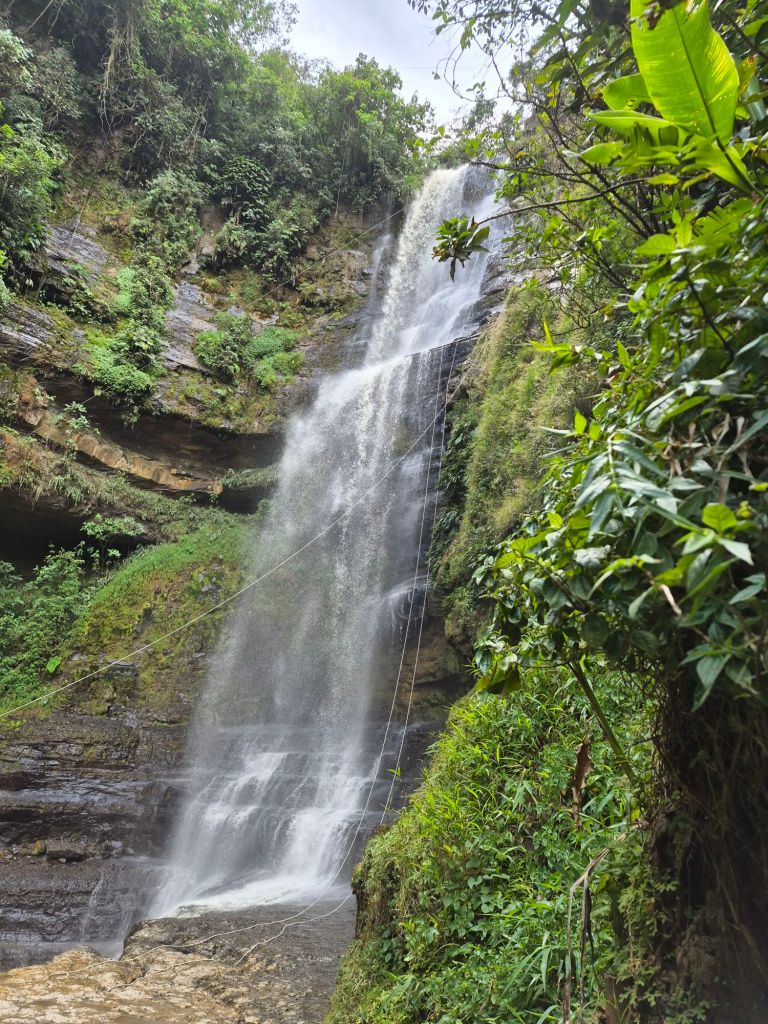
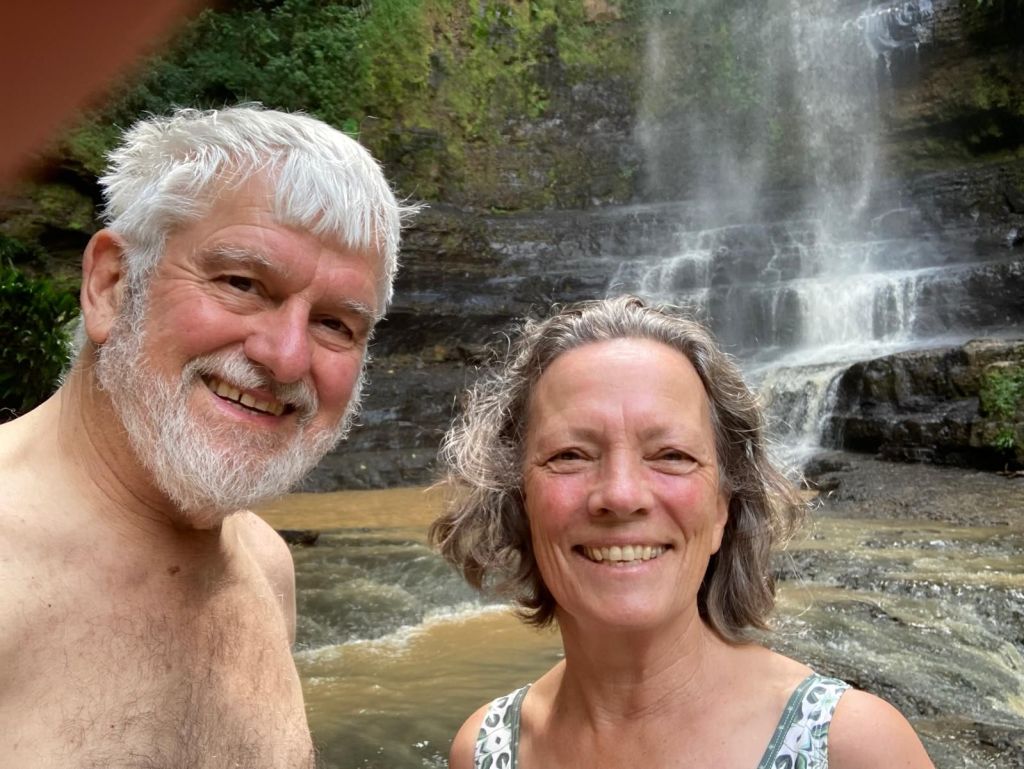
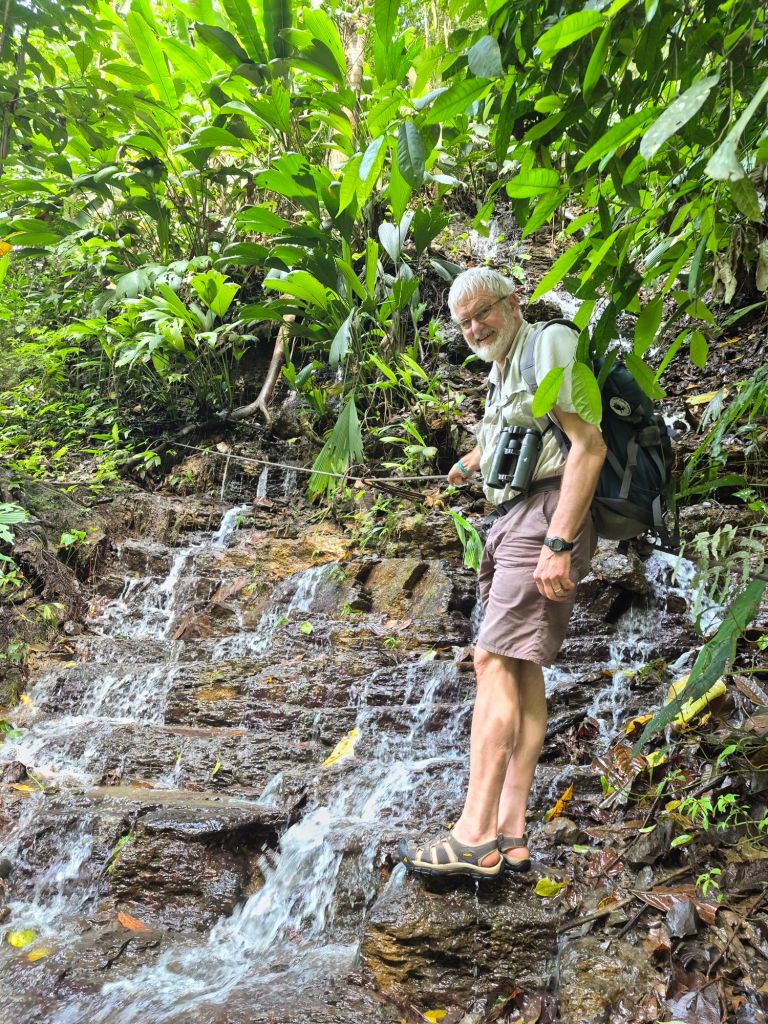
San Gil is not a very exciting town, but there are many trails in the area, and the first day we went to the Cascadas de Juan Curi Parque Ecológico, where there is a beautiful waterfall with a pool that we could swim in (I think this is where the gnats got to me the first time).  There is an app, Merlin, that identifies bird calls, showing pictures of the specific bird, so our progress was slow and comfortable up to the waterfall as we stopped often to identify the bird calls.  Alan identified more than 20 species every day, and recorded them on EBirds at night, a website that contributes globally to bird sightings. 

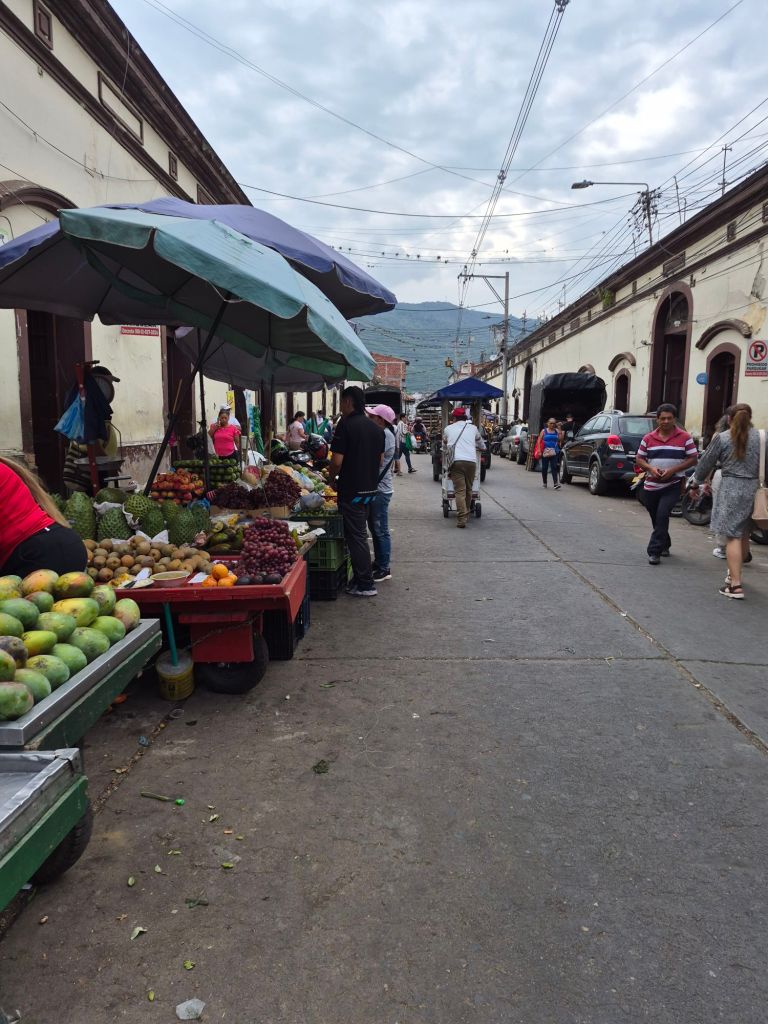
Market street in San Gil
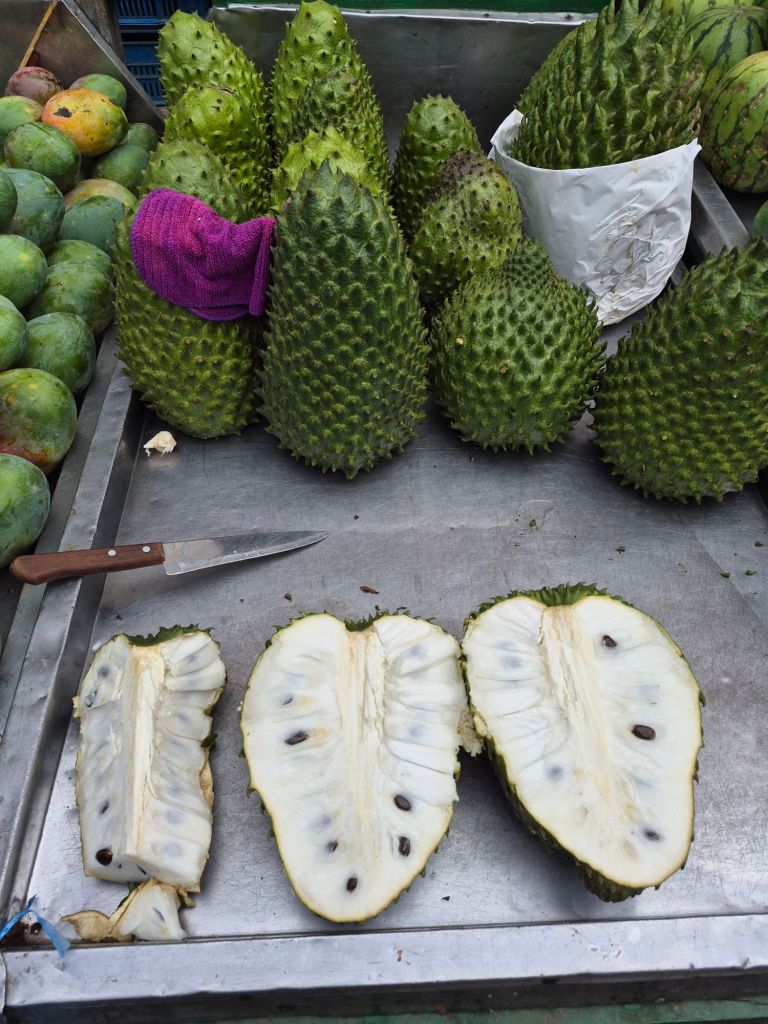
Guanabana or soursop, the fruit of Annona muricata, an evergreen tree.  They make delicious drinks from it. 
Entrance to the park
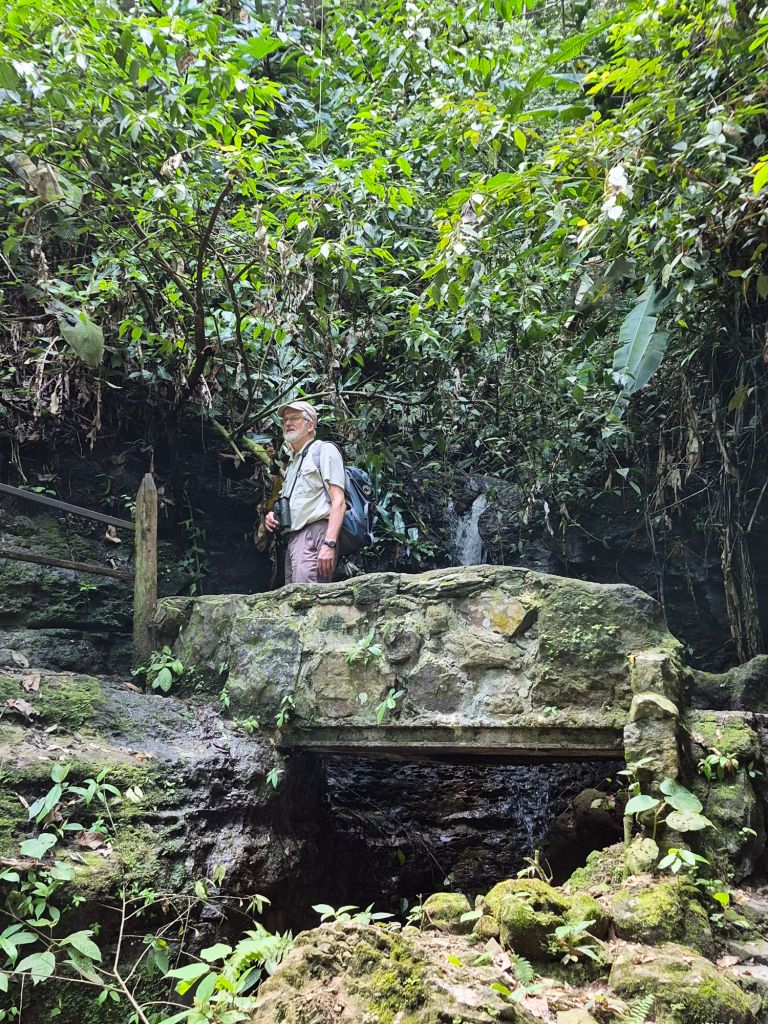
It was a lovely walk through the forest, with smaller waterfalls coming in from the side
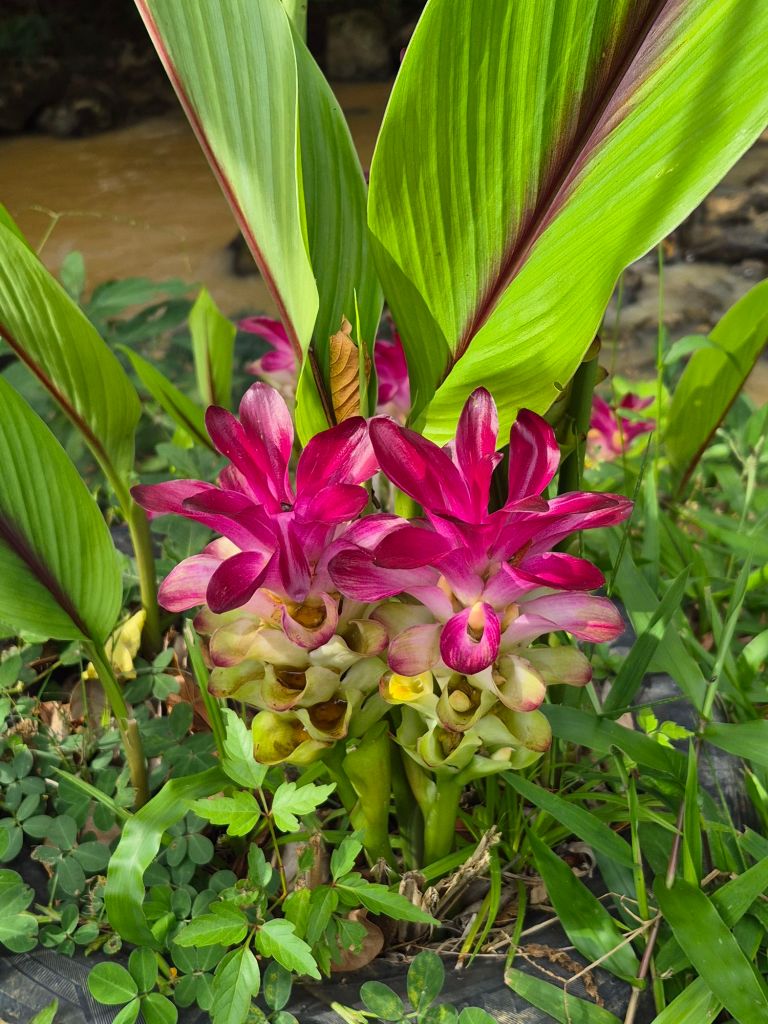
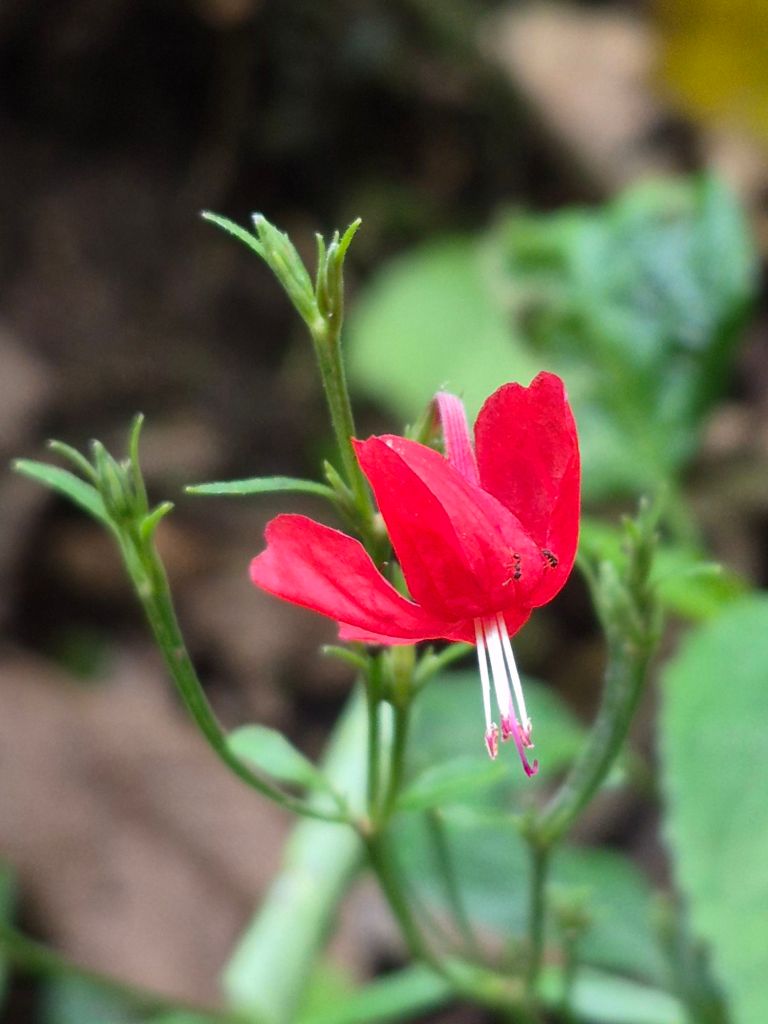
Exquisite flowers
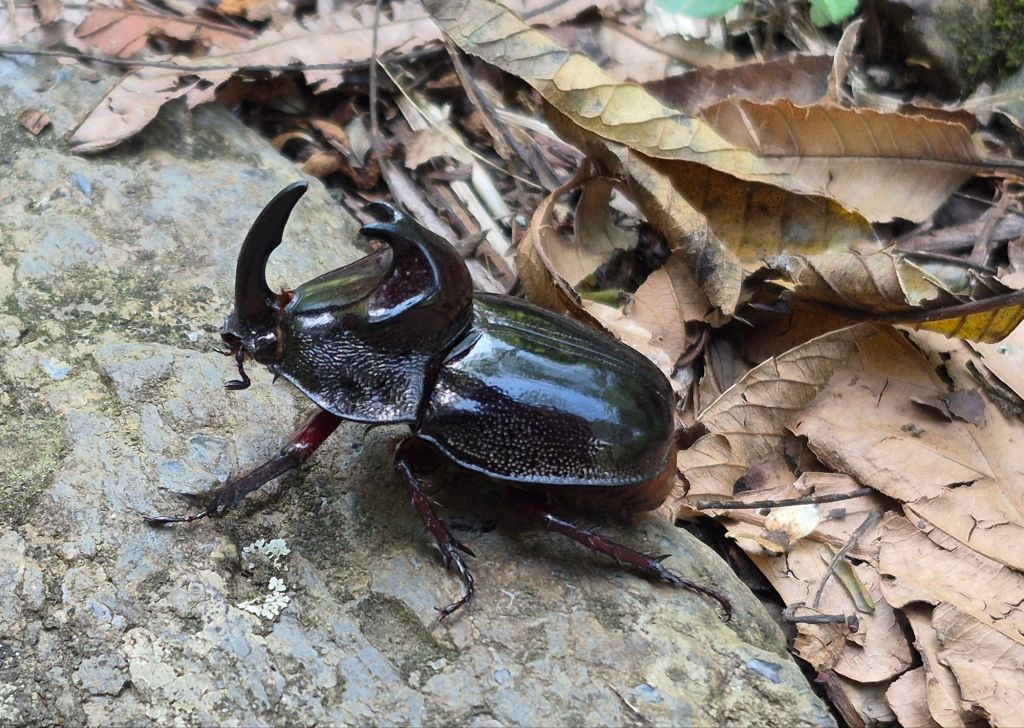
A rhinoceros beetle

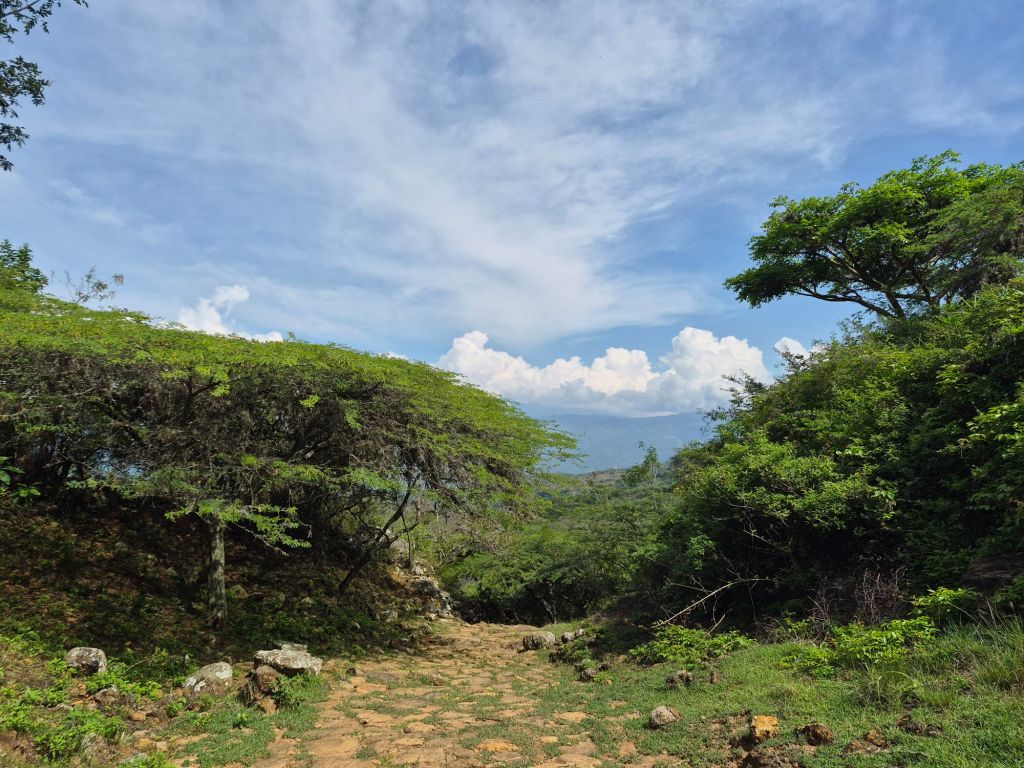
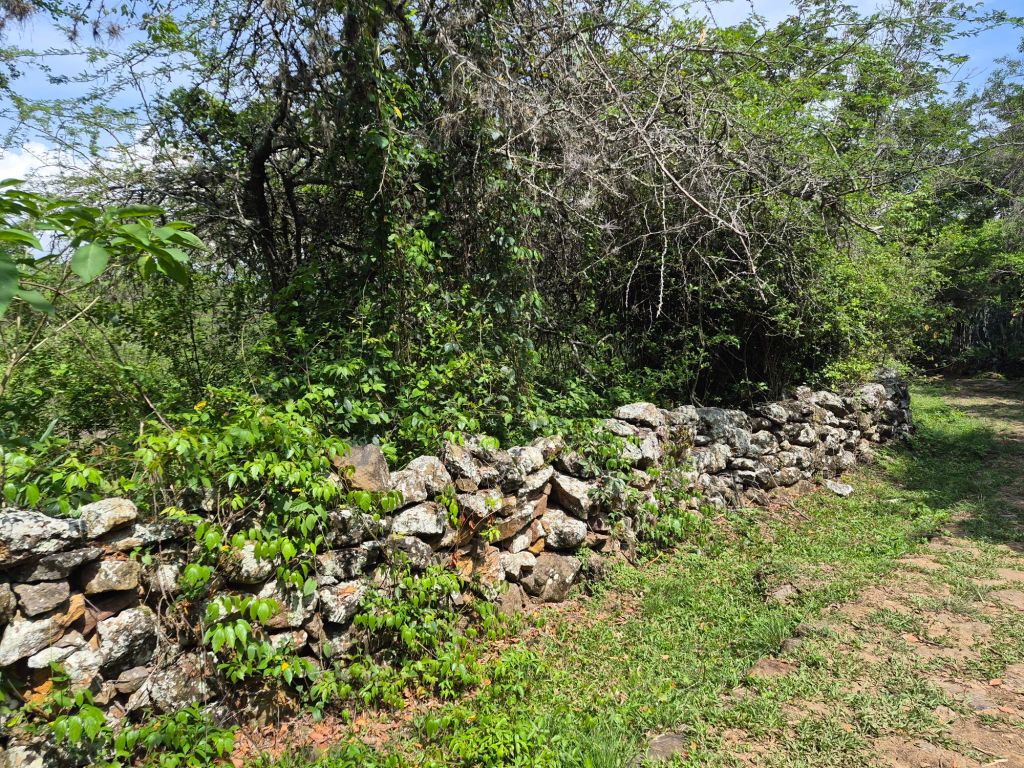
The following day we took a colectivo (local bus) to a nearby town, Barichara, and walked 6km of the Camino Real to Guane, a small old town where time seems to have stood still.  The part of the Camino that we walked, was a broad stone-paved path with stonewalls on either side, quite impressive.  It was a Sunday, and many people were walking, some with blaring music from radios they were carrying, some overweight and very hot, some wearing strappy tops and tight fitting shorts – all very Colombian.  It took us 4hrs to do the 6km, because we stopped so often. 

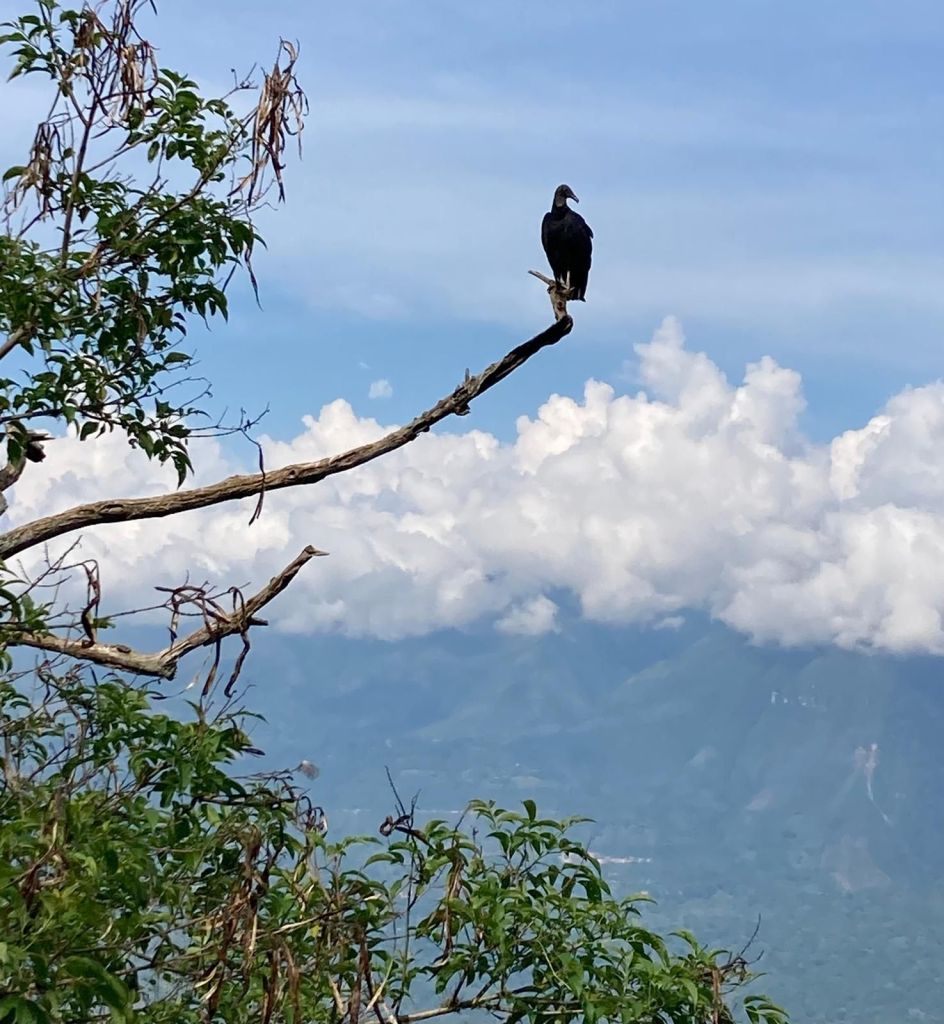
A black vulture (Alan took this picture)
The stone-paved path
Stone walls on the sides
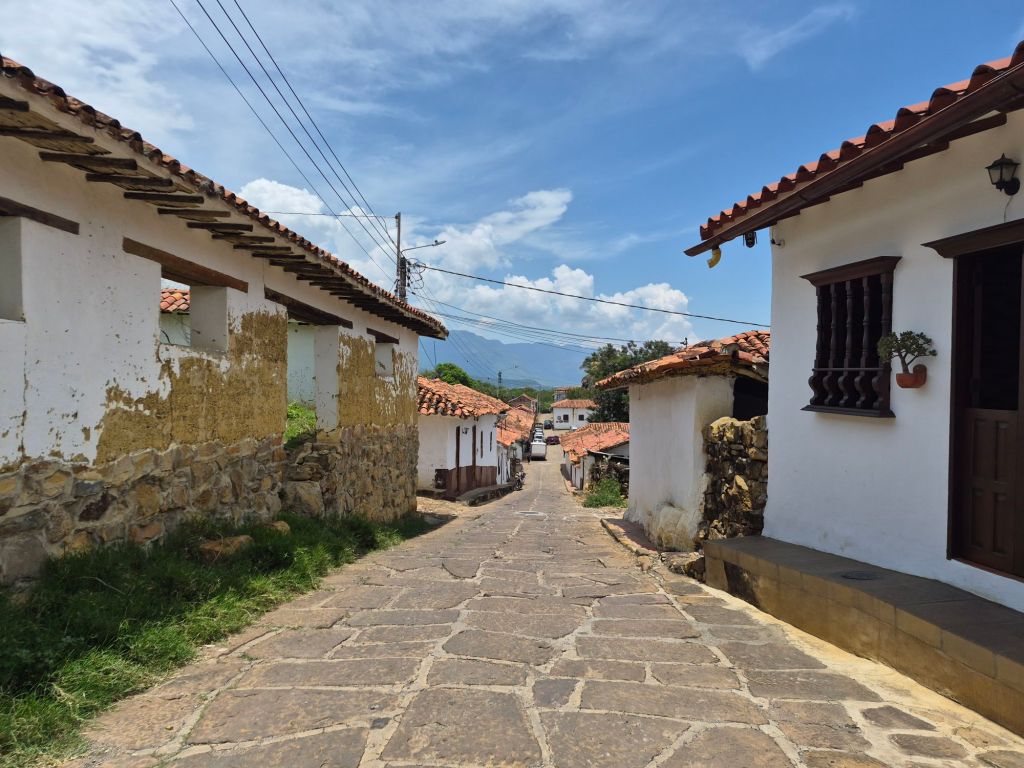
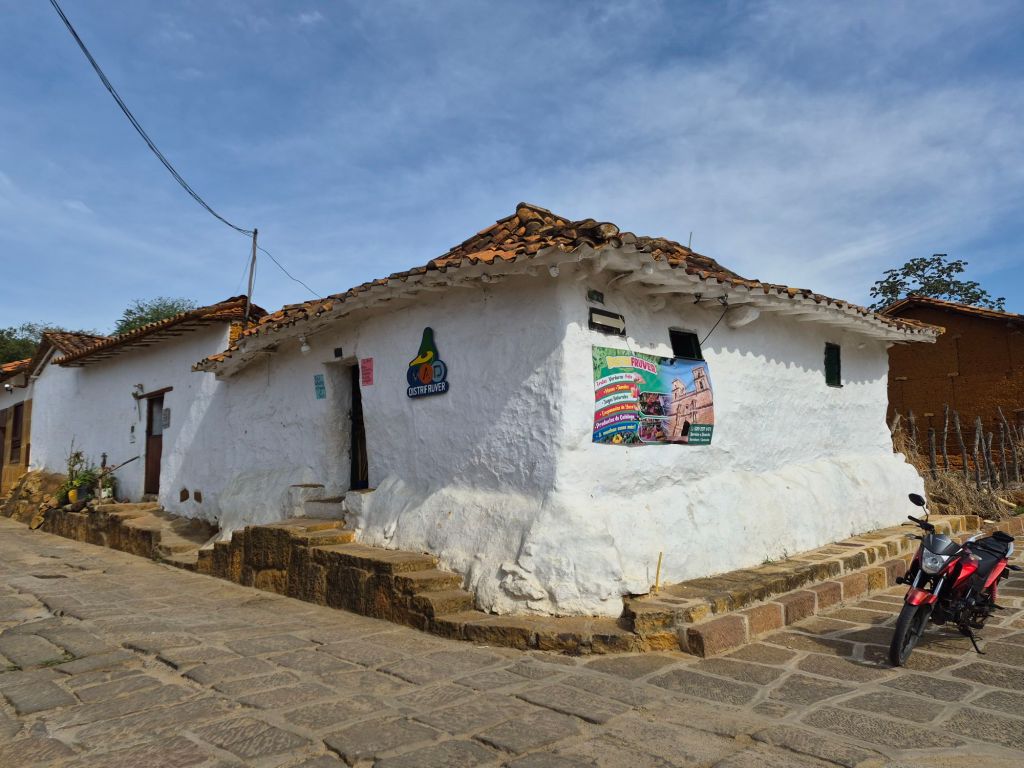
Guane
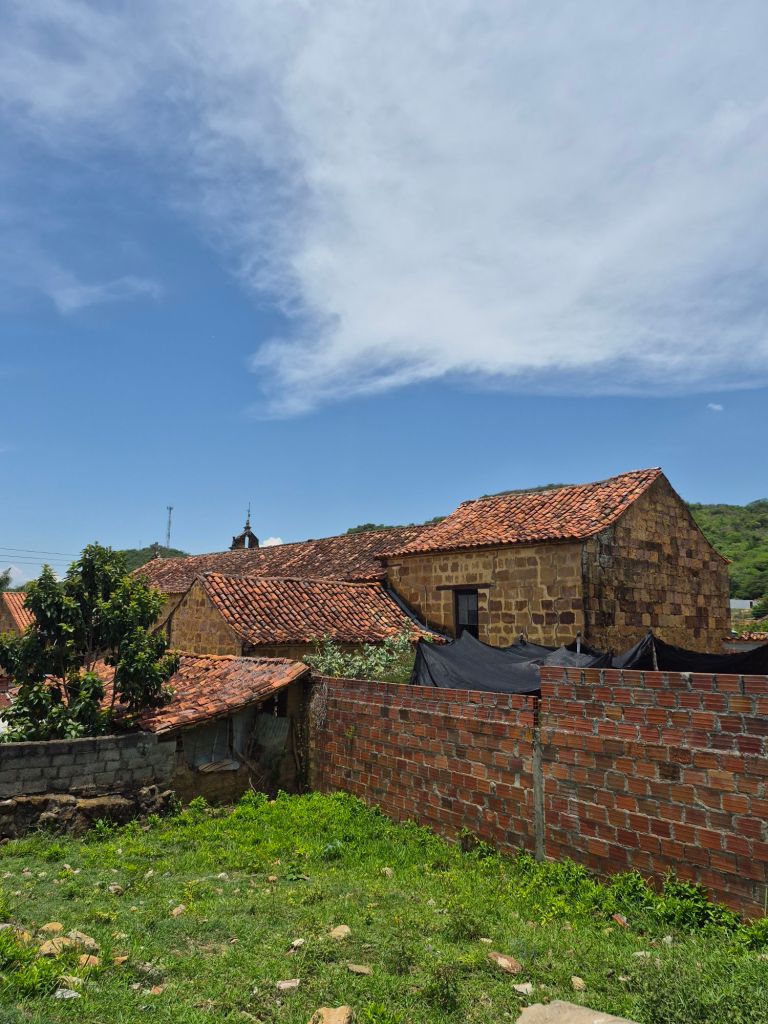
Tha back of the church in Guane
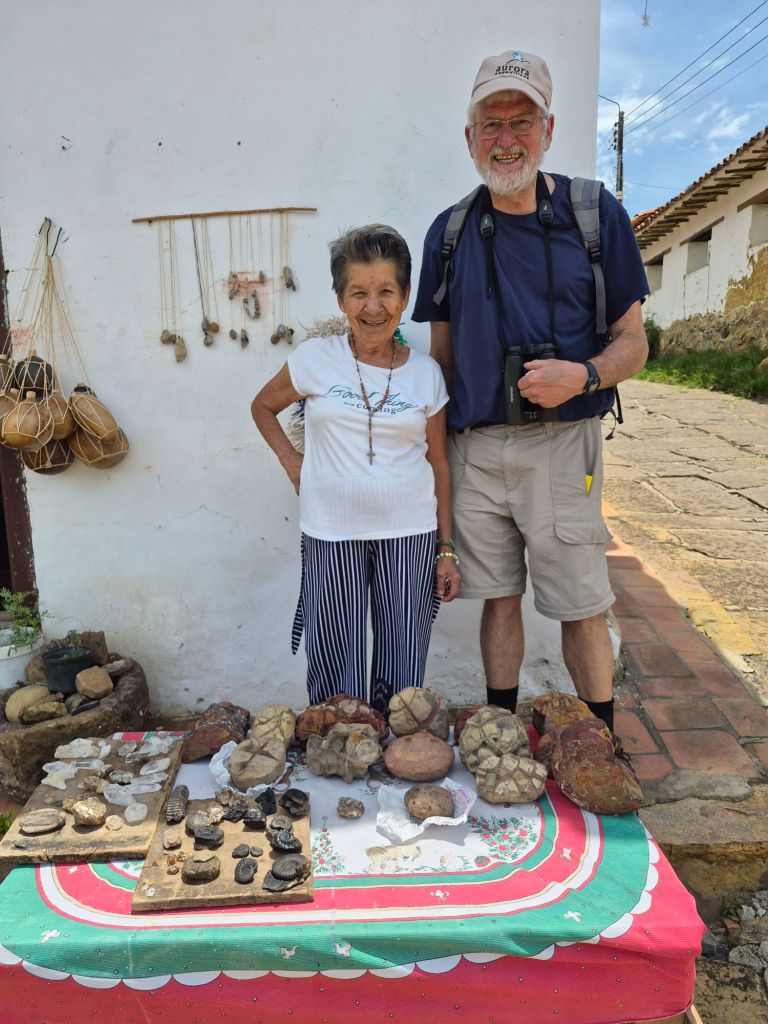
There are many fossils that the people collect way down in the valley and sell on the streets.    Alan bought a small one from this sweet old lady, who then proceeded to give us each a small piece of quartz
The church in Guane.  There was a service on when we arrived, and it was packed, people even standing outside in the hot sun.
Eating our lunch on the square at Guane
View down into the valley
Traditional dancers on the street in Barichara
House in Barichara
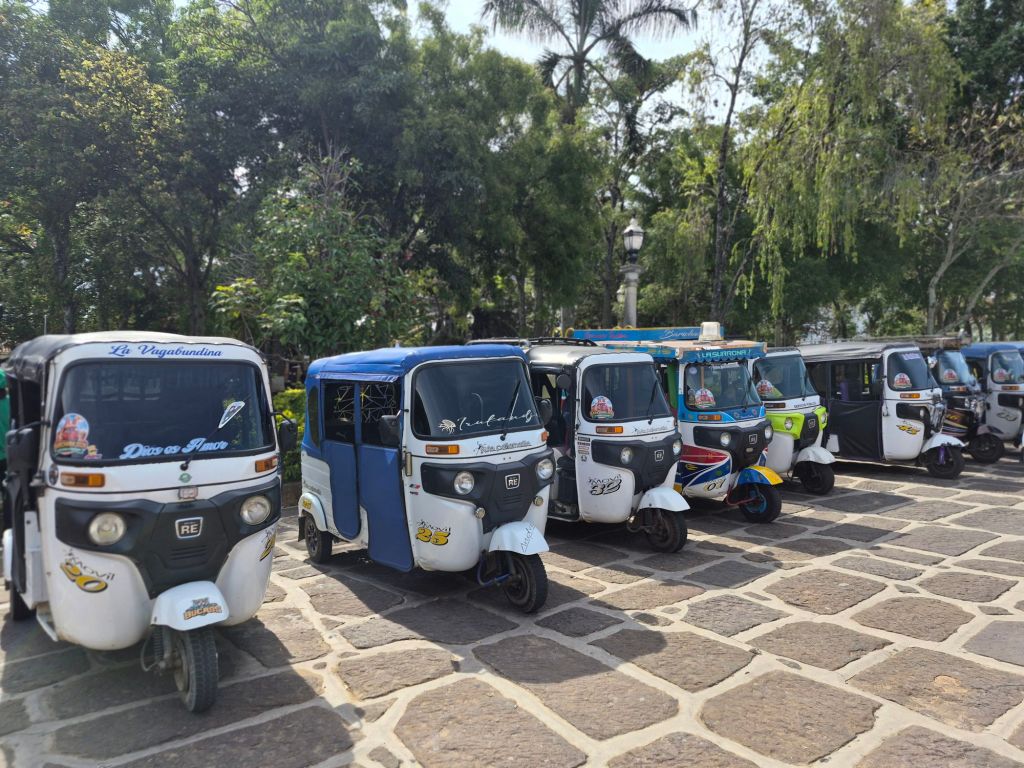
And little tuc-tucs that I love so much

We were taking the night bus to Santa Marta the following day, so had time to go to the Parque Natural El Gallineral in San Gil, close to the hostel.  It had been raining during the night, and the park was closed (parks close when it rains, as I discovered in Buenos Aires), but luckily it opened just before eleven.  We spent a few hours exploring, seeing iguanas, birds, river rafters, flowers and huge trees.  We sat next to a stream and had the sandwiches we had made, Alan trying hard to find a specific bird, without any luck.  A light drizzle started as we left, which soon became a total downpour.  We had an umbrella and a rain cape between us, but we soon realised it was insufficient and ran for cover under a vendor’s awning.  When the rain eventually stopped, the streets had been turned into small rivers, and we were drenched by the time we got back to the hostel, having had to trudge through water that was running accross the sidewalks.   Luckily Manuela had said we could use the kitchen and bathroom until we had to leave, so hot showers sorted us out and the wet clothes and shoes were stuffed into plastic bags. 

An iguana high up in the bamboo next to the river
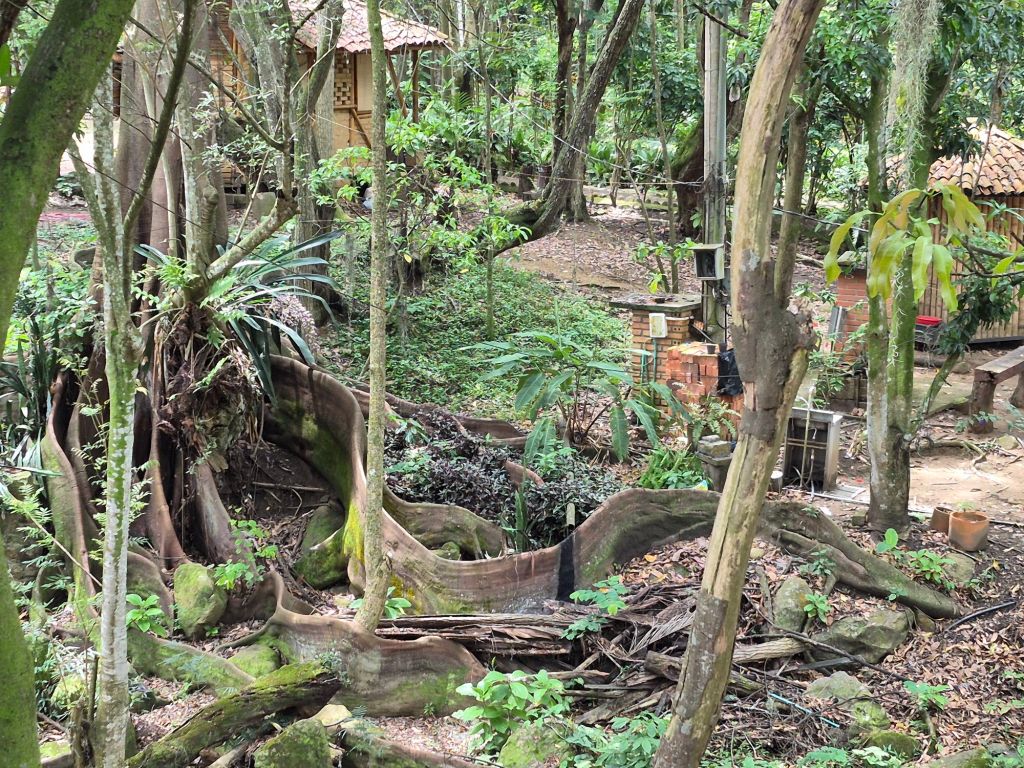
Interesting roots of the tree
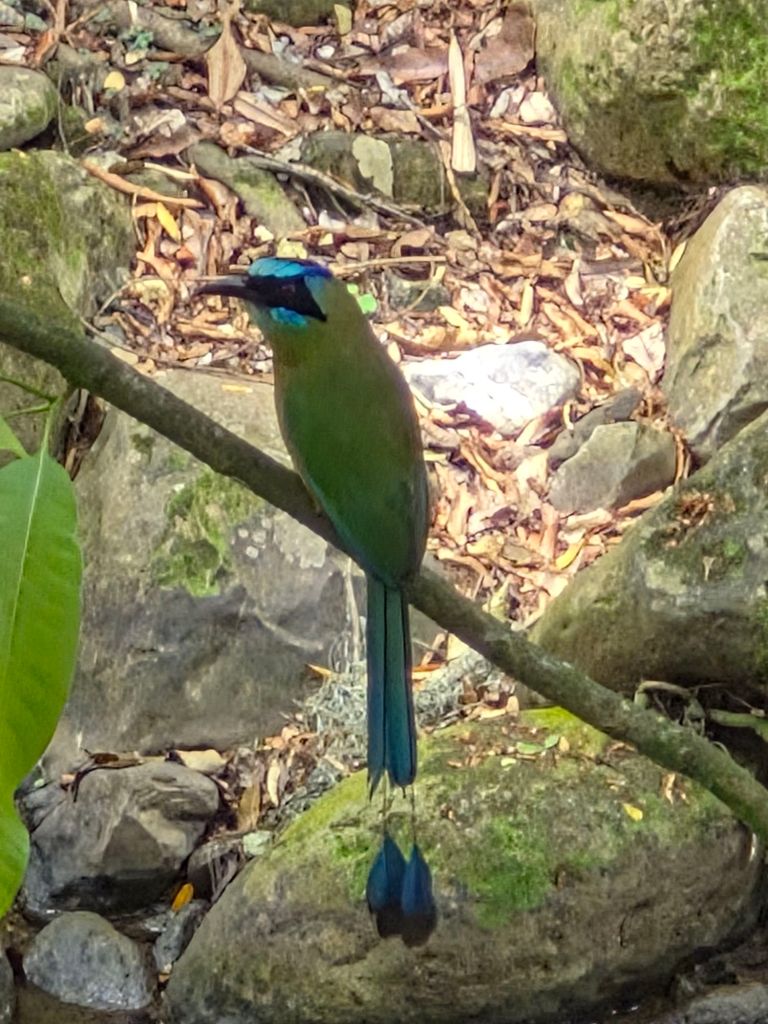
A Whooping mot-mot
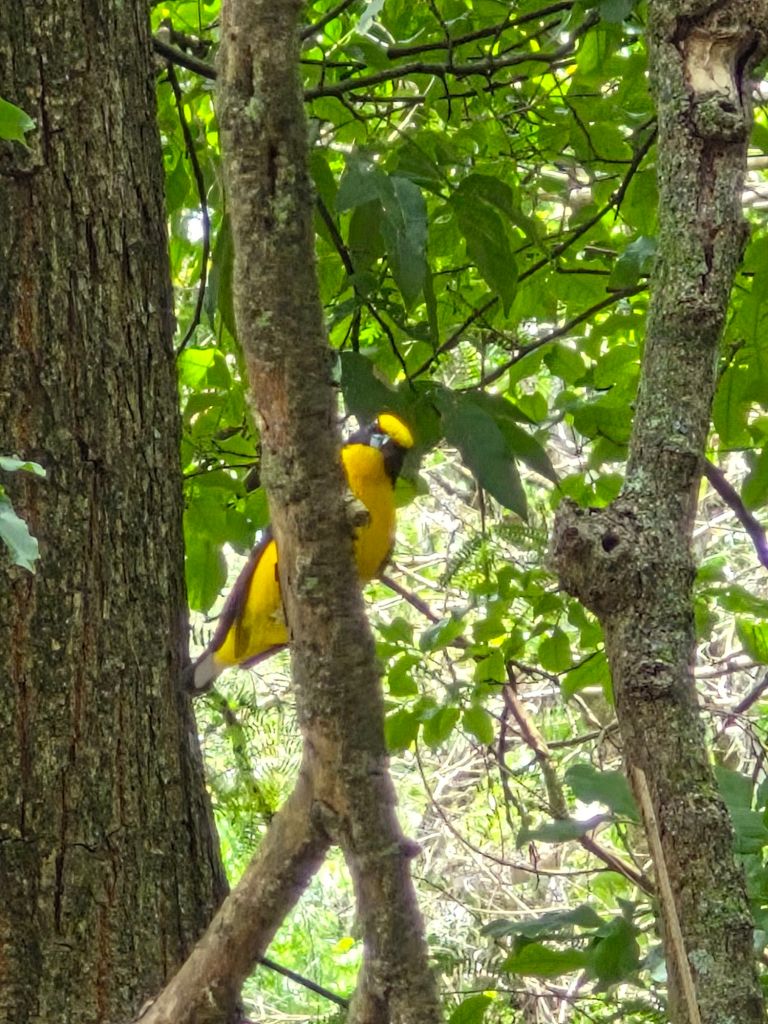
Thick-billed euphonia
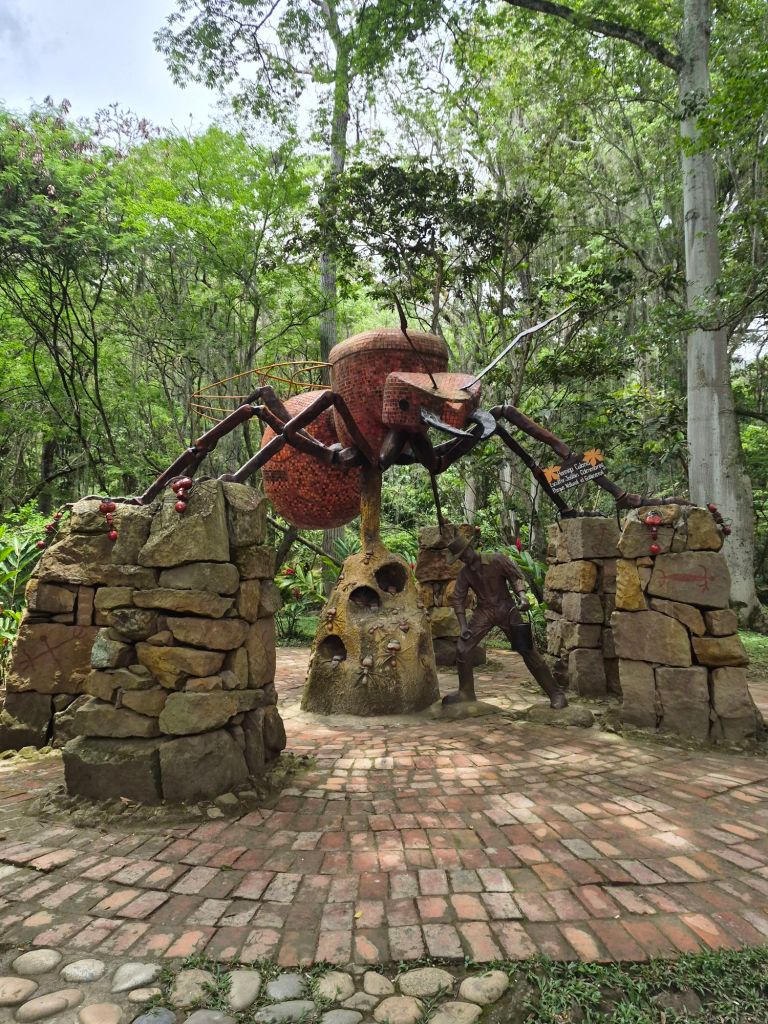
In the park
Alan looking for his bird
The river rafters
After the rain

Meryl thinks she is clever in chosing good hostels – until she chose a party hostel in Santa Marta!  Fantastic place, delicious breakfasts included, with a small swimming pool in the courtyard, very friendly and helpful staff – but the very loud, thumping music carried on until 3am, or even 4am.  It was supposed to stop at 2am, but it being Easter holidays, it carried on later than usual.  If in Santa Marta, avoid the La Brisa Loca (which, by the way, means The Crazy Breeze). 

Great breakfast
Crazy place, very colourful

Santa Marta is on the Caribbean coast, a popular holiday city for Colombians to visit, and there were many there as it was school holidays.  We stored our luggage until it was time to check in, and walked the few blocks to the sea, where the water was not very ‘Caribbean’, as it was the harbour area. It was very hot, so we decided to go and swim at the hostel instead.  On the way we went into the gold museum, and I was amazed at the intricate designs that had been made by the indigenous people.  The history of gold in Colombia is quite interesting.  For the indigenous people, it held spiritual and political meaning rather than monetary value, and they used it in their rituals.  The legend of El Dorado originated as result of the Muisca tradition of covering their chief in gold dust before pushing him into the lake at Guatavita, and throwing gold objects into the lake as well. 

Santa Marta
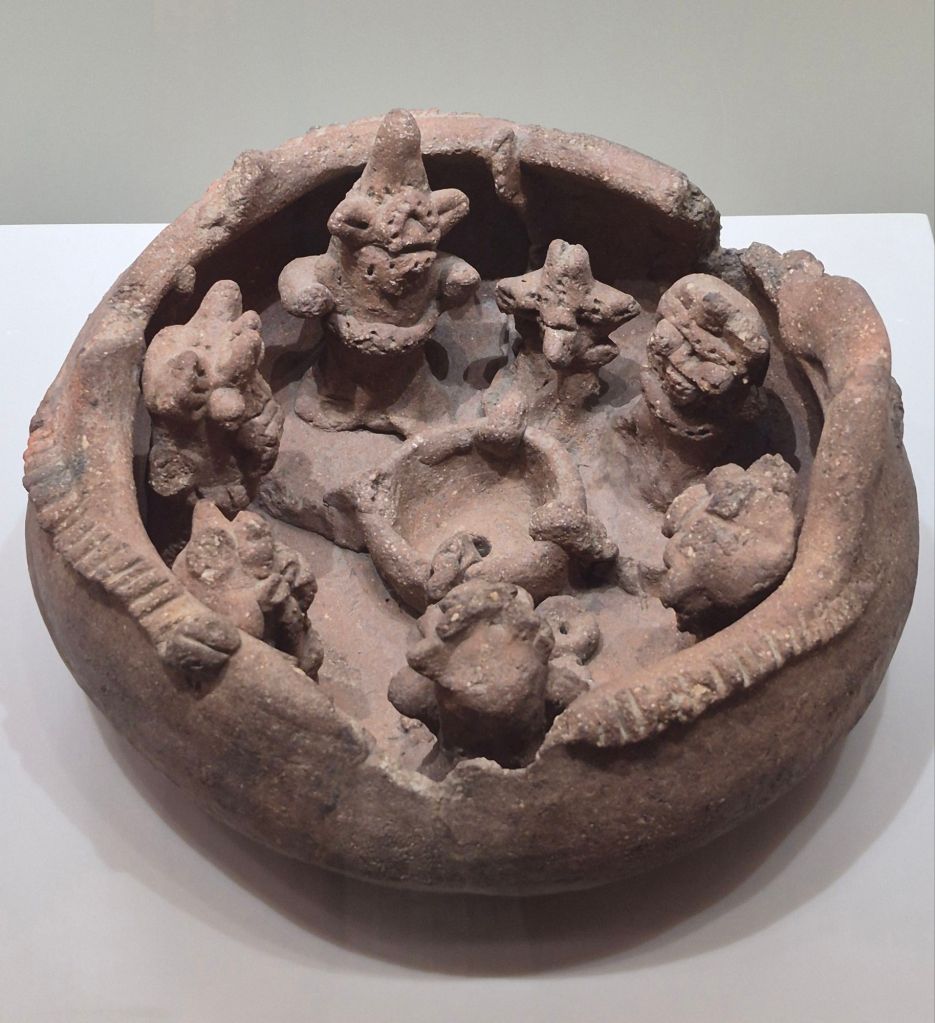
Depiction of a ritual gathering in a sacred enclosed area, masked figures surrounding a child or an animal.  Musical instruments reproduced the sound of the mythical stories recreated in the ritual.
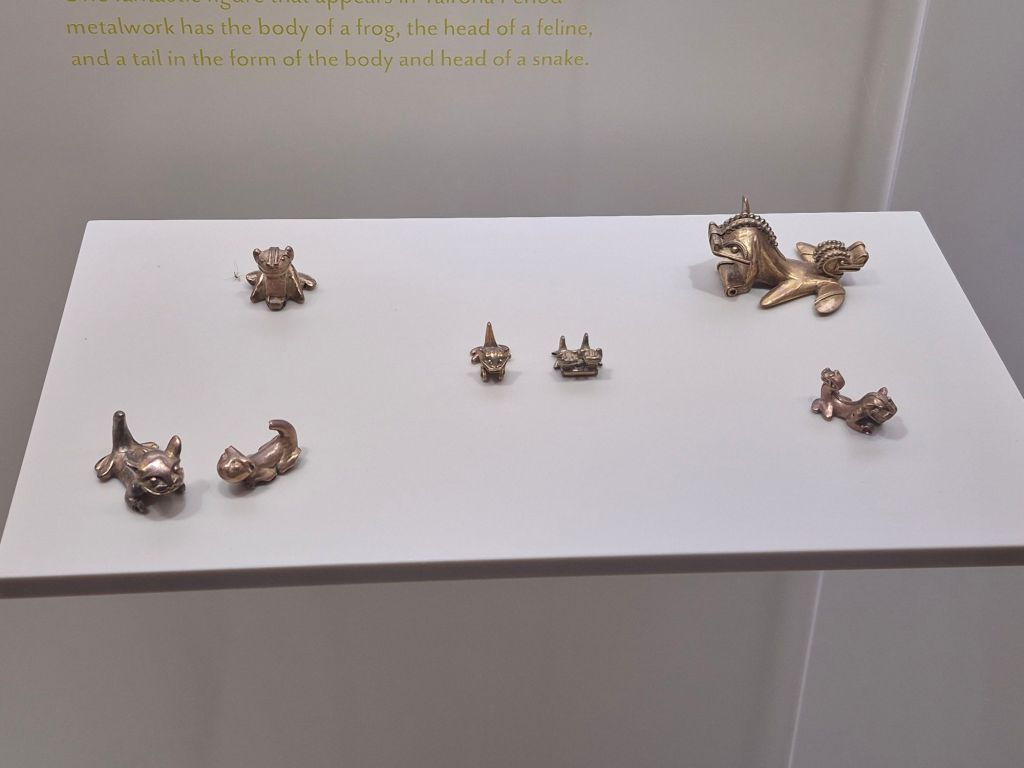
Small intricate gold designs

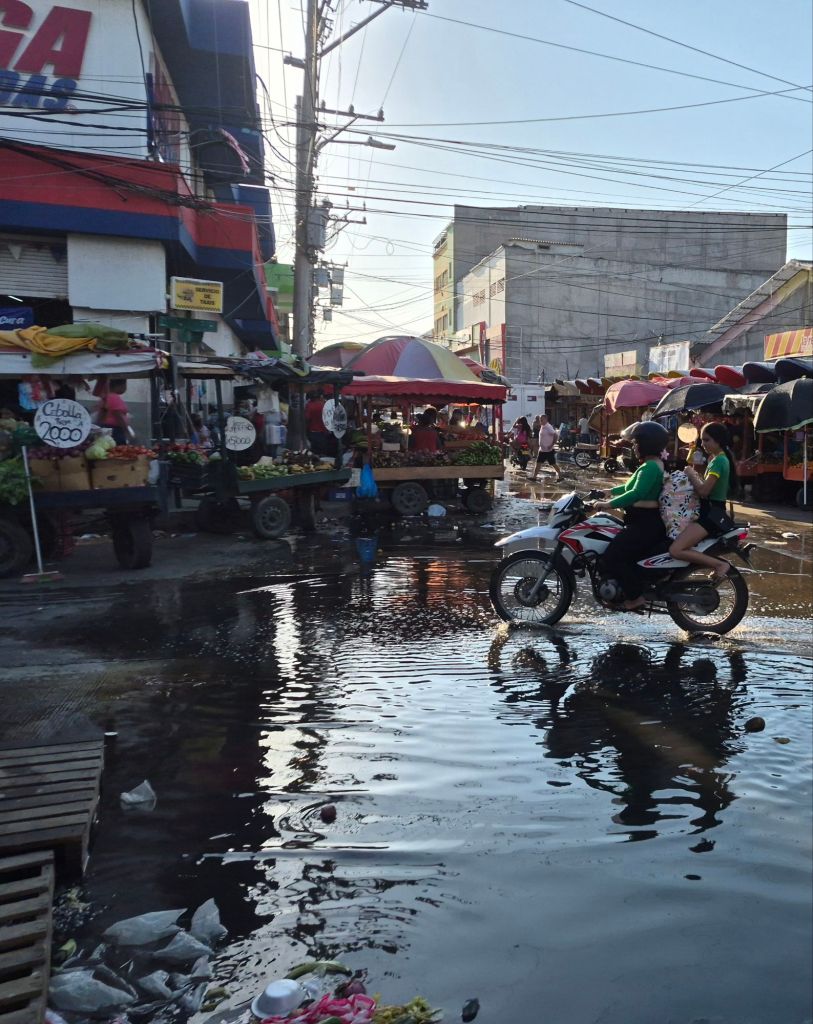
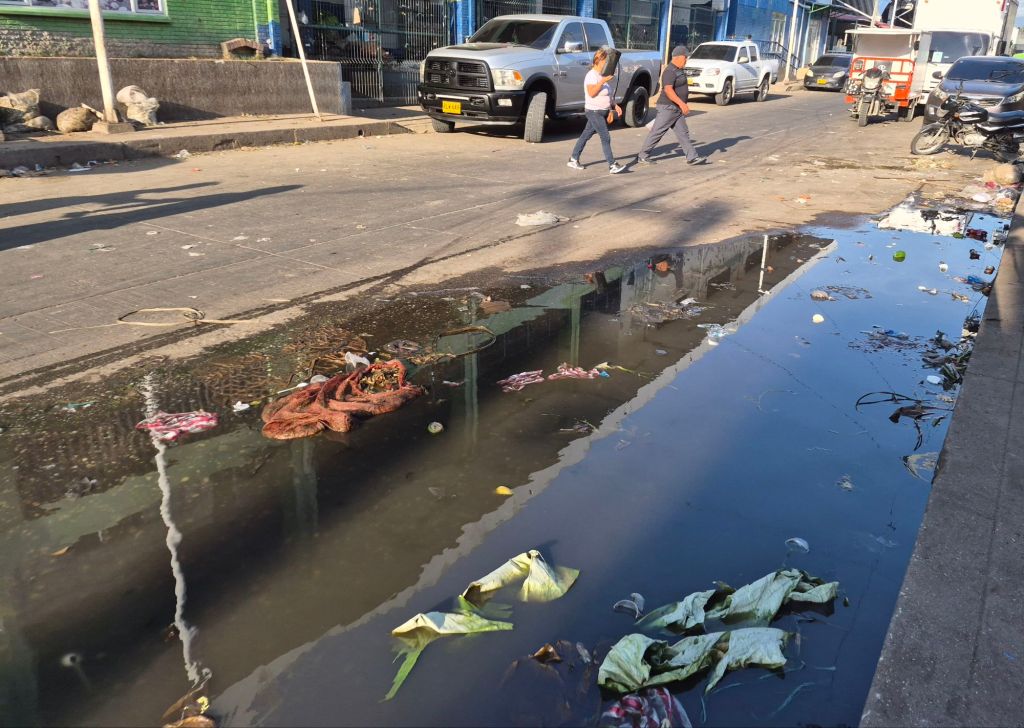
Finding the place from which to take the local bus to Parque Nacional Natural Tayrona the next day, was quite a challenge.   It was in the market area of Santa Marta, a crowded, chaotic and noisy set-up with dirt everywhere in the streets.  

This stall at least was clean.

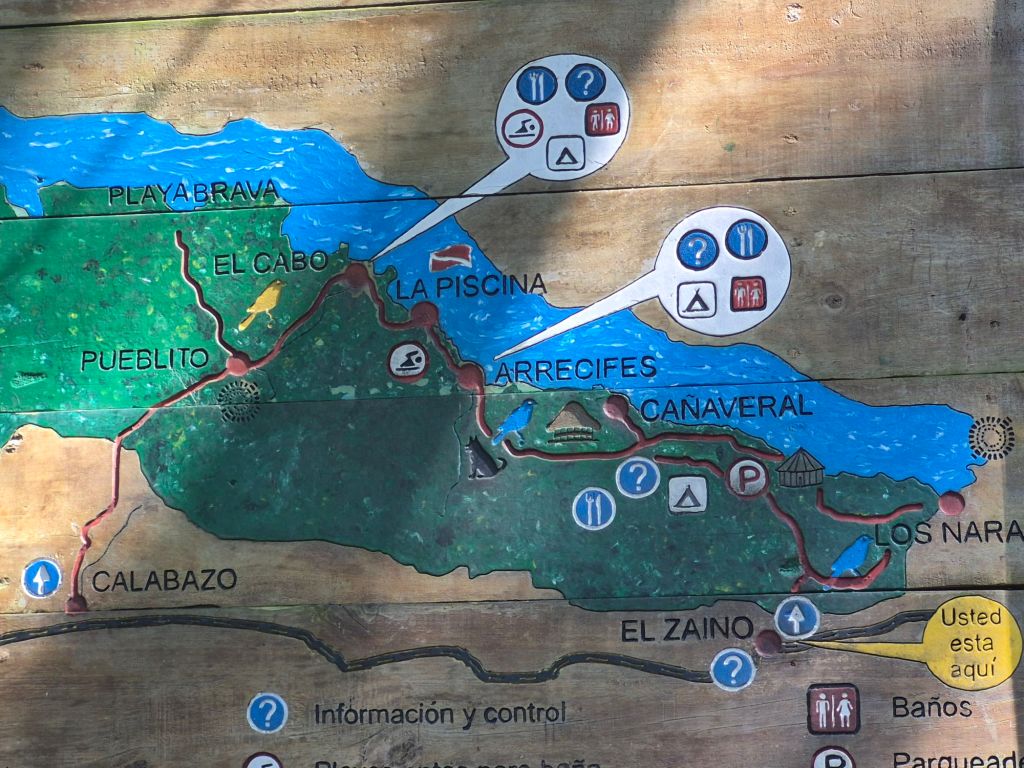
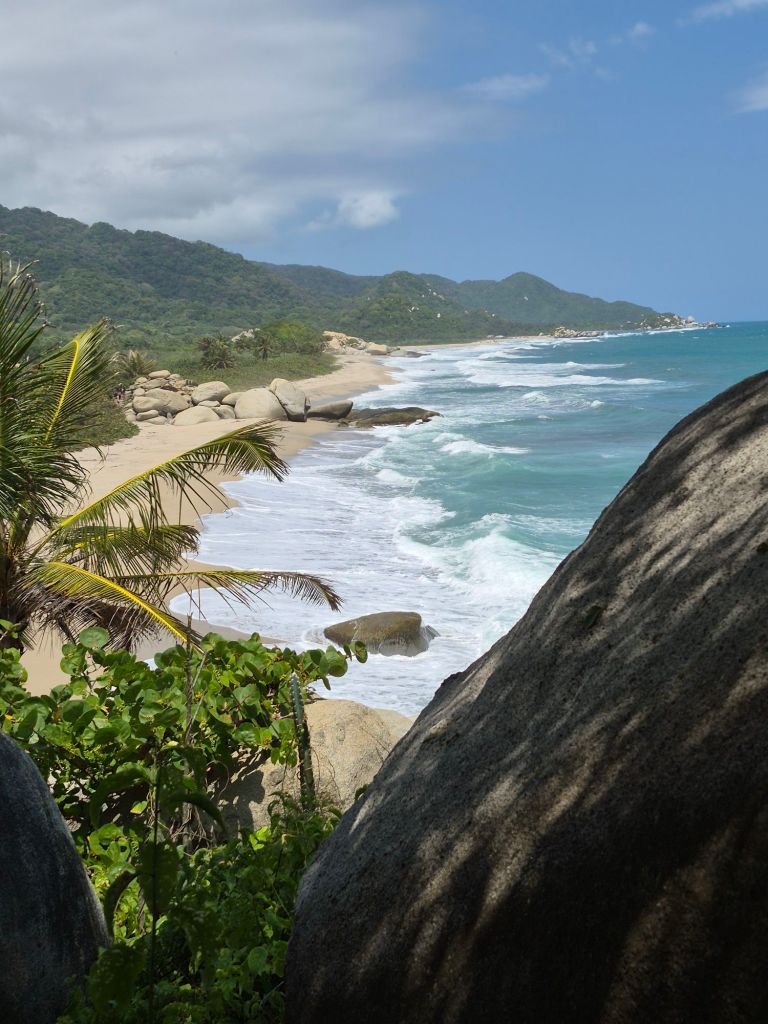
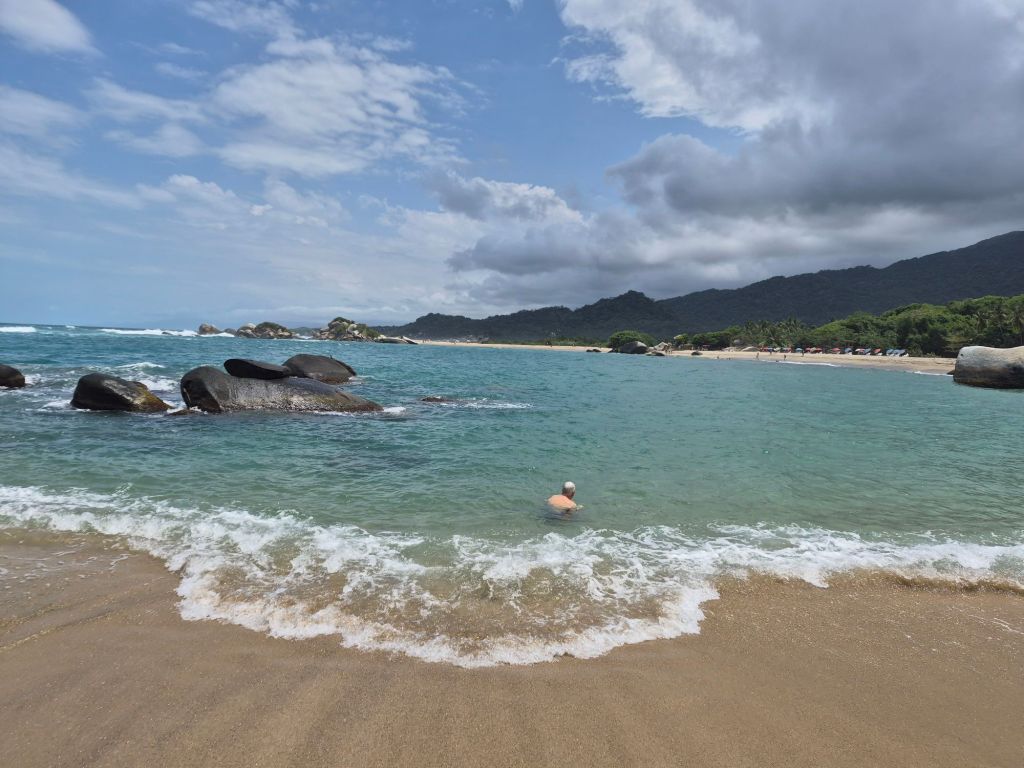
We did eventually find the colectivo and spent the day hiking in the park.  The walk from the entrance to the coast is through indigenous forests, but I was rather disappointed when we reached the sea, as it was quite a commercialised area, and crowded.  There are several beaches, and we managed to find a quiet spot to eat our lunch and have a swim.  We had planned to walk out through a different gate, but when we asked some rangers about the possibility of doing that, they told us it would take 8 hours, as one has to cross a mountain.  I didn’t feel like walking back the same way that we had come in, and we chose to take the ferry back to Santa Marta, an option that got us drenched once again, as was everyone on the ferry.  The sea was choppy, the boat was fast and the spray from the boat deliciously refreshing, but heavy.  

The park, we started on the right, walked to El Cabo, then took the ferry
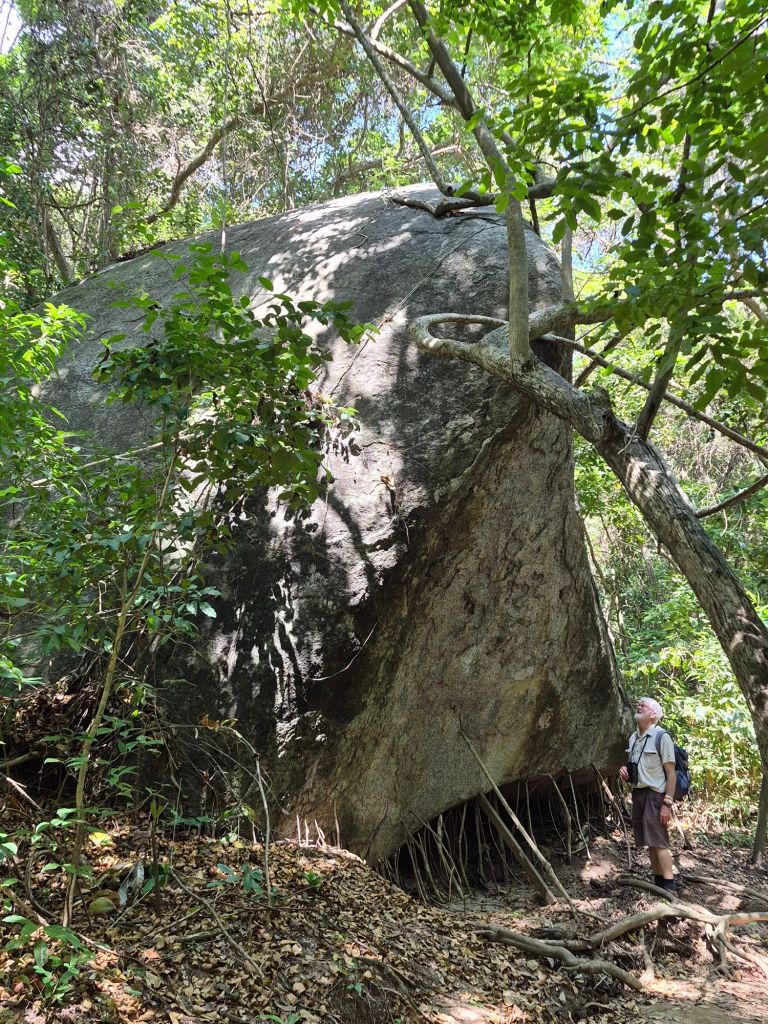
Huge granite rocks everywhere – people put sticks underneath, seems to be a thing there
First view of the Caribbean
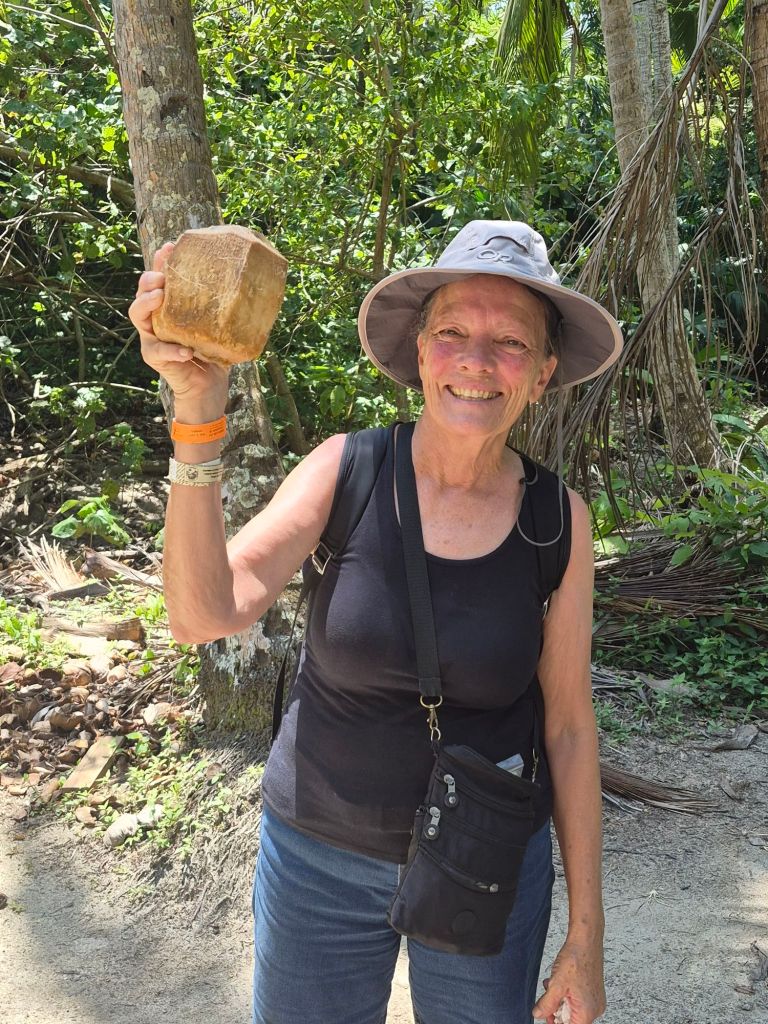
Drinking coconut milk, very refreshing (I was hot!!).  Then they chop it open, and you can eat the coconut.
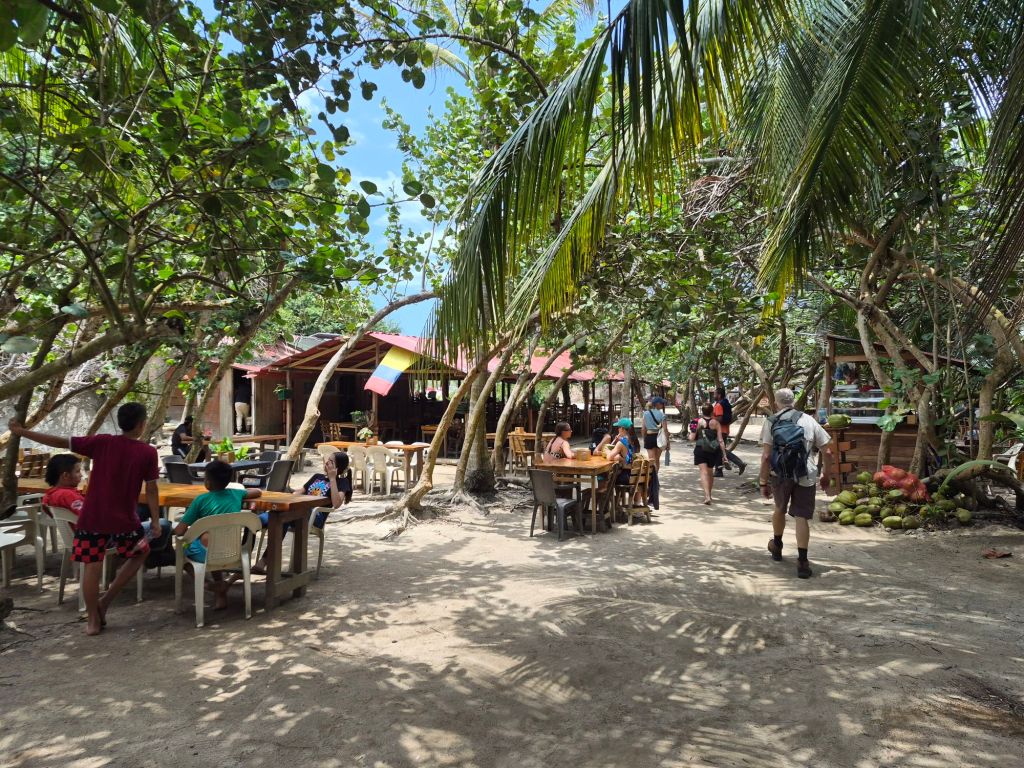
One of the camping/eating places along the way
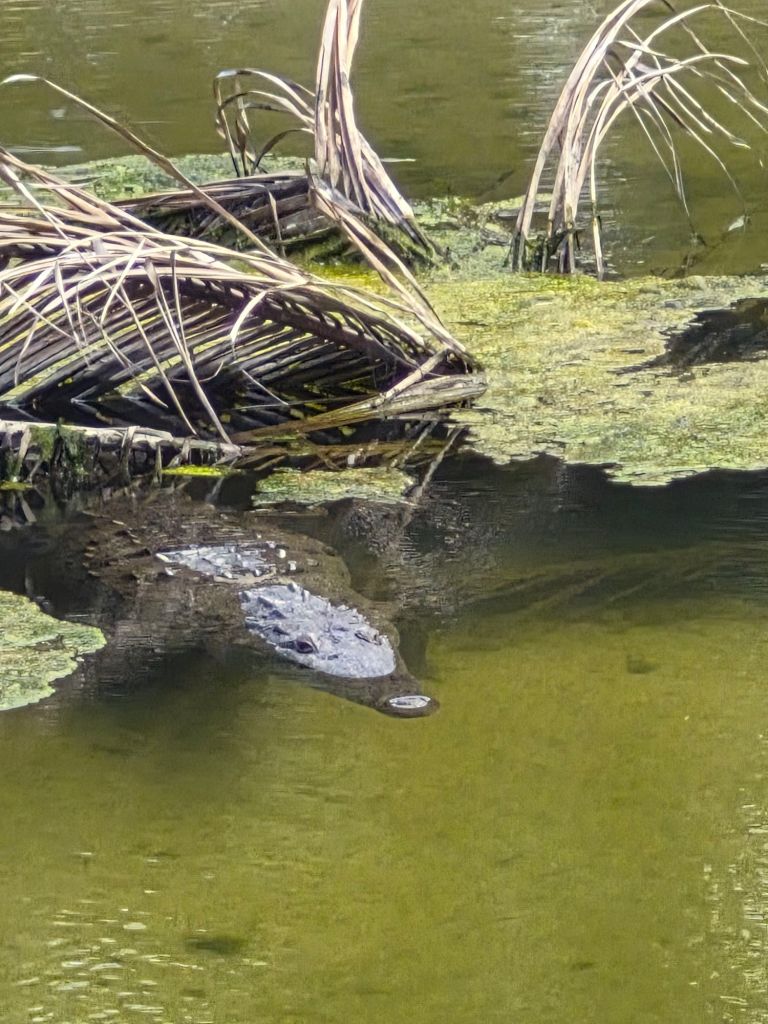
There was a sign at Playa Del Cabo, warning there might be crocodiles, and we saw this one in a shallow pool next to the beach
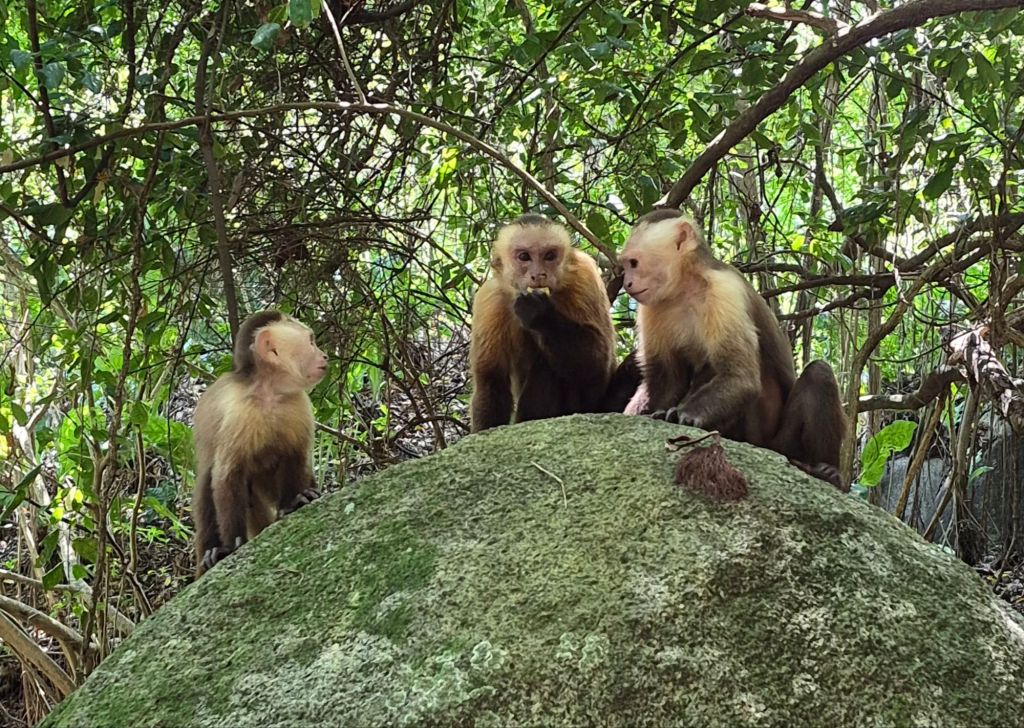
White-fronted Capuchin monkeys
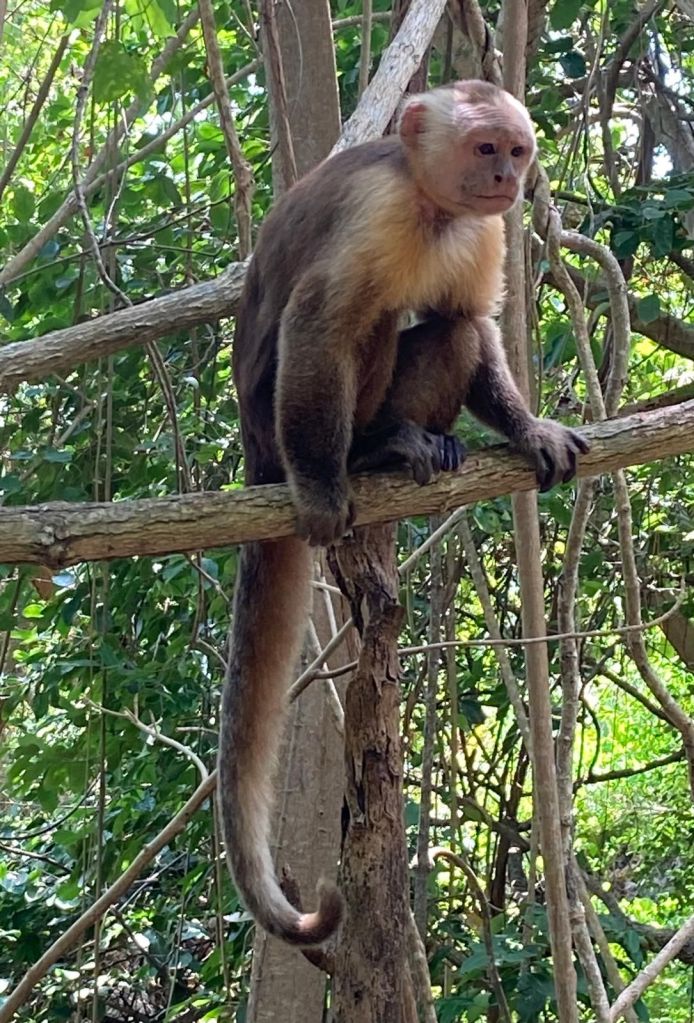
They can hang by their long tails
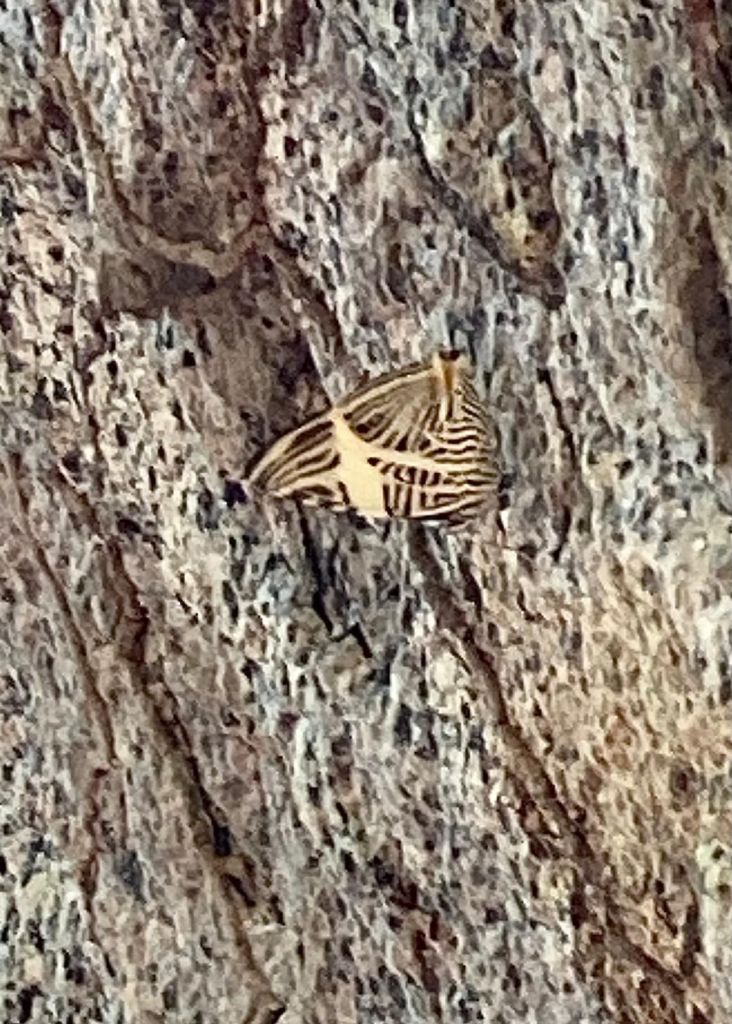
A well-camouflaged butterfly on a rock
Playa Del Cabo
One of the ferries
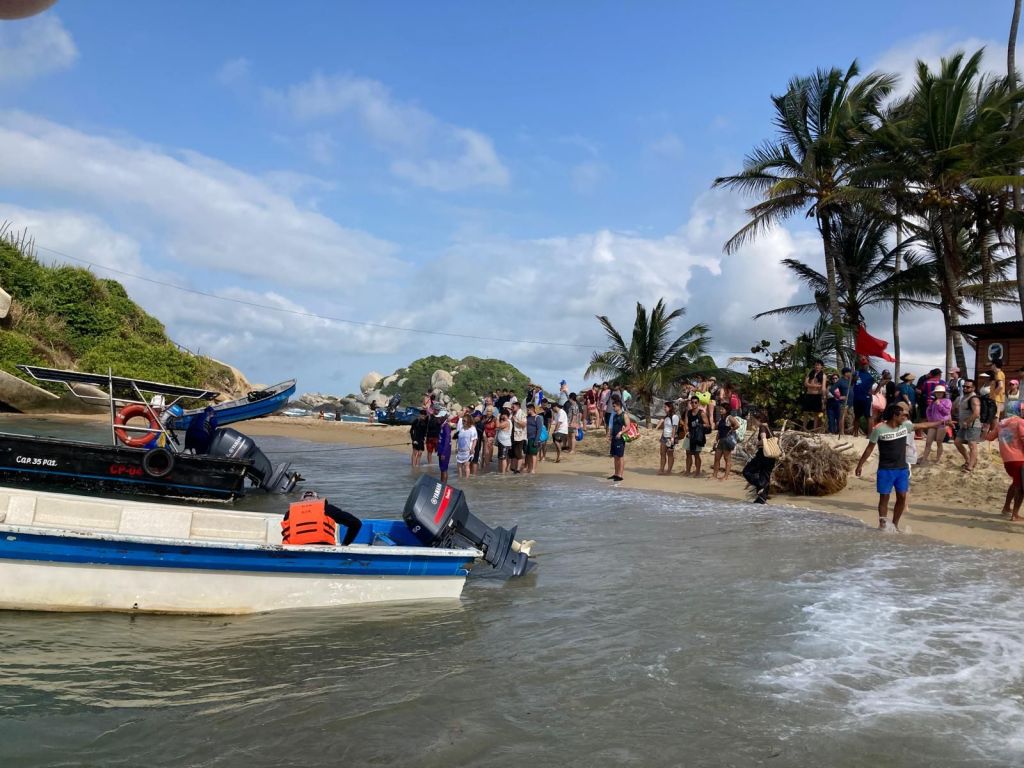
People waiting for the ferries – it was chaotic, one had to go into the water, step on the knee of a guy holding the boat, and jump on.  We went back to the beach four times to pick up more people before we eventually left. 

The next day we again had to find the collectivo that would take us to Minka, a small town in the Sierra Nevada mountains close to Santa Marta – it happened to be in the same messy market area.  Minka is high up in the mountains, and again there were several hikes in the area.  We only stayed one night, and spent a few hours doing a long uphill hike along a road to a waterfall.  We didn’t even see it, as one had to pay an entrance fee, and by then we were fed-up with all the people, motorbikes, 4×4 vehicles and cars travelling up to the waterfall, completely overcrowded.  So we went back, swam in the pool at our hostel and Alan treated me to a wonderful meal in a restaurant on the bank of the little river that runs through Minka. 

A funny house on the way to the waterfall
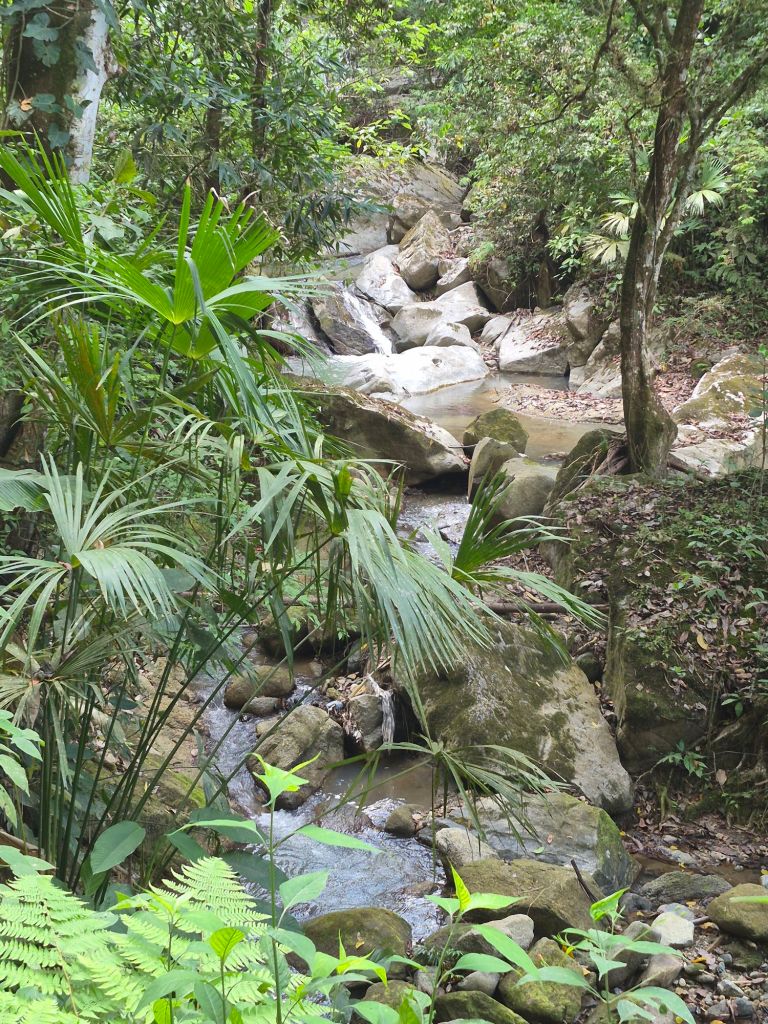
Part of the way is next to this lovely river
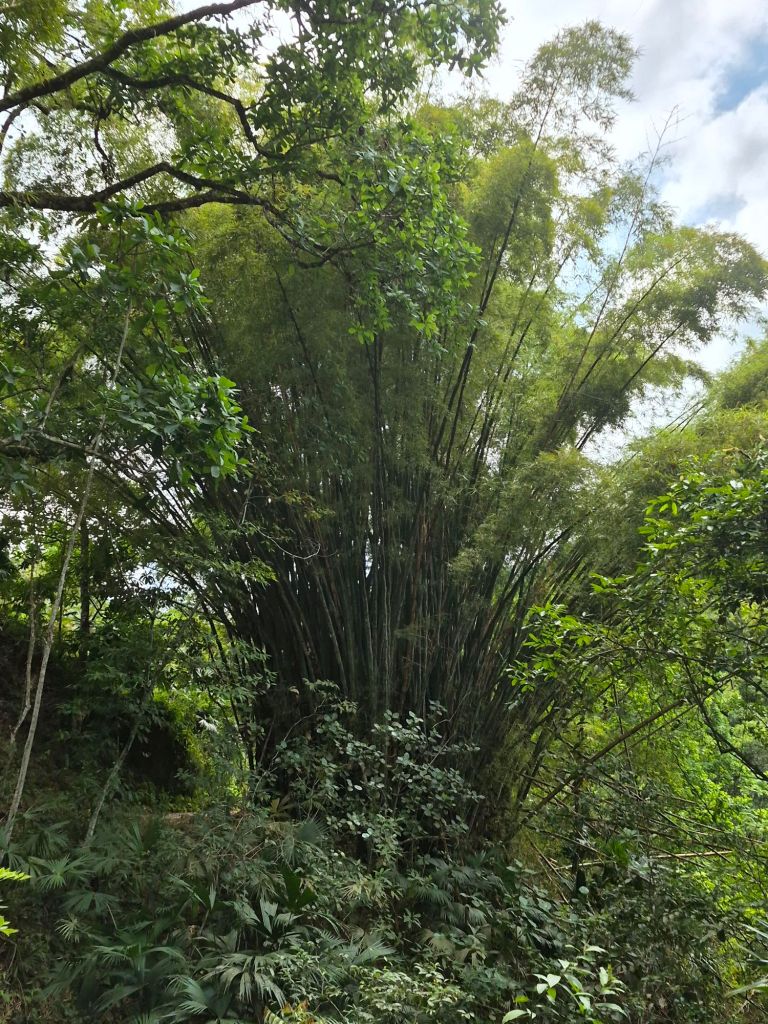
Huge clumps of bamboos along the way
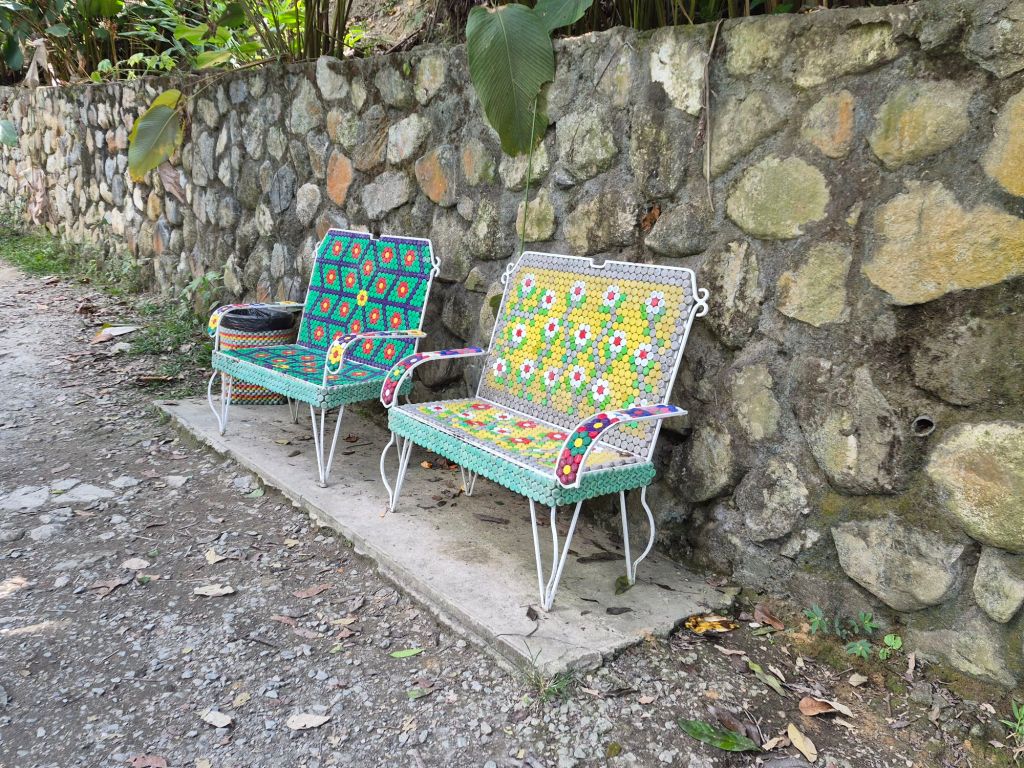
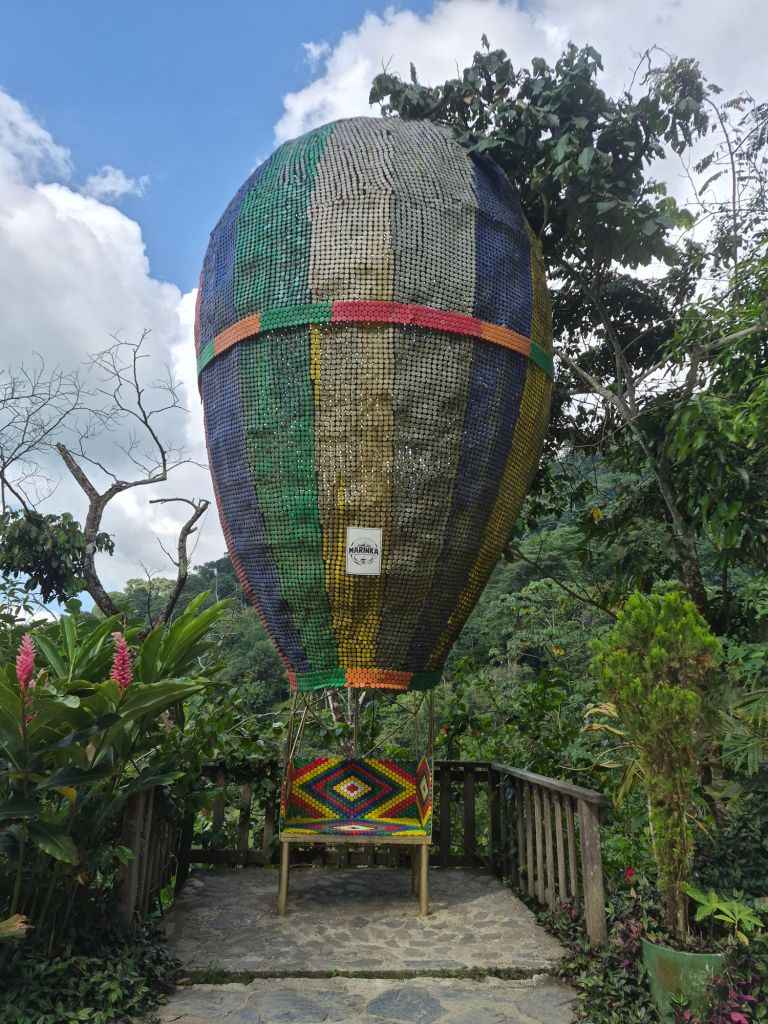
These benches and the hot-air balloon below, were all made out of plastic lids of bottles
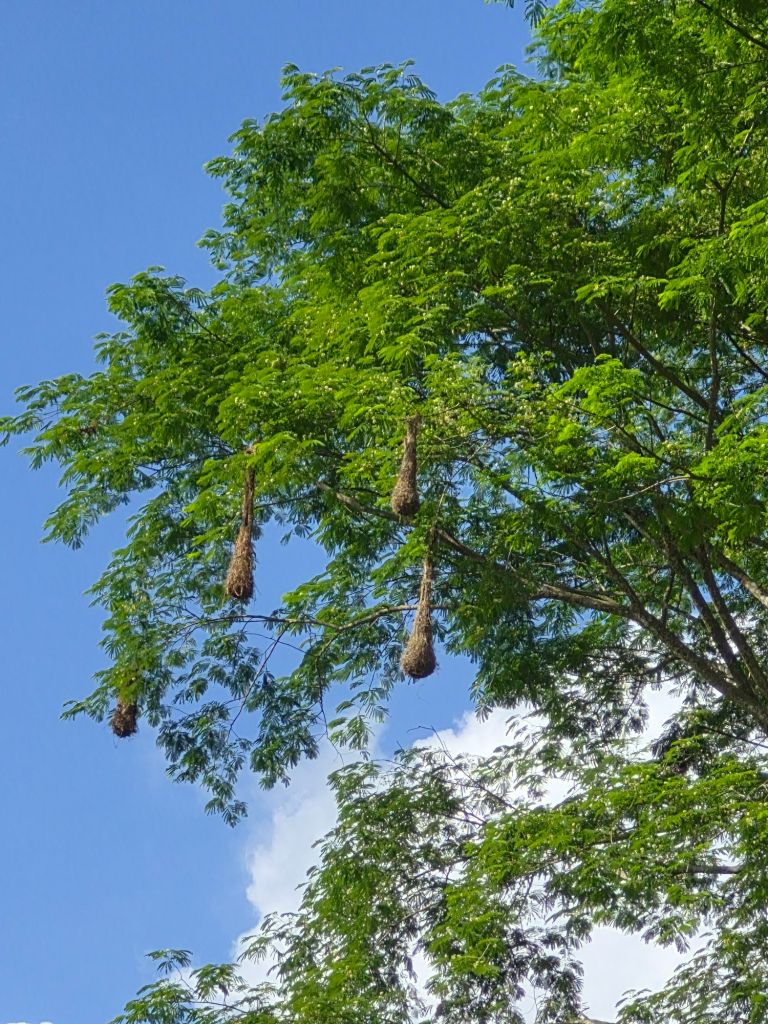
Bird nests in the trees
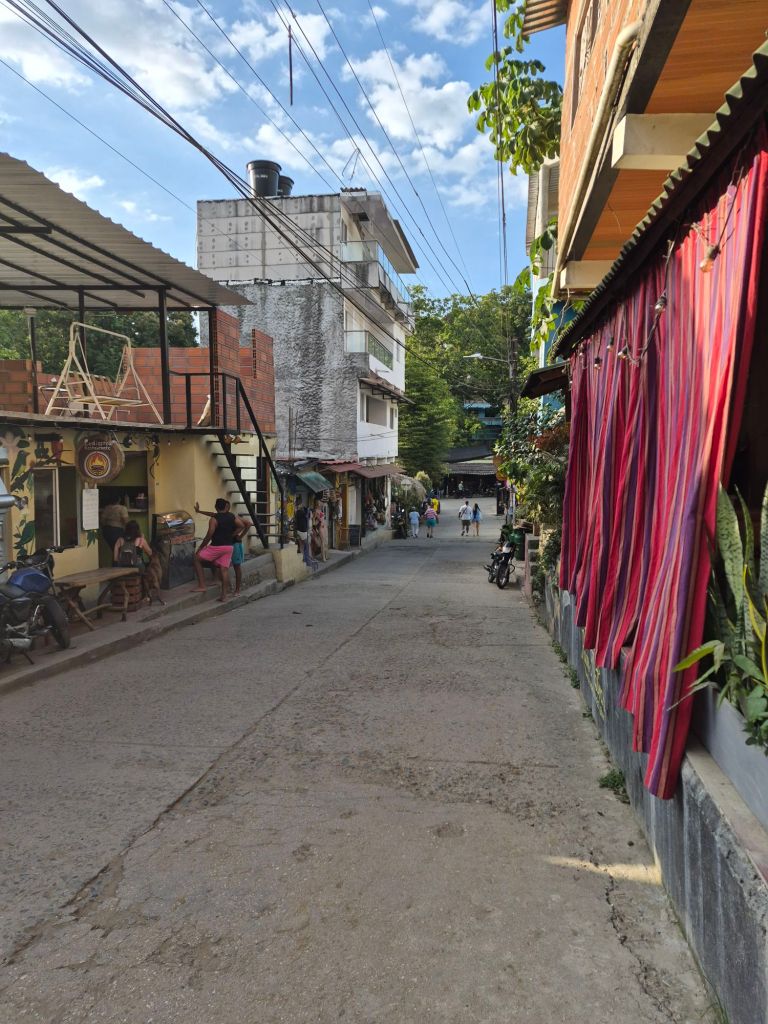
Minka
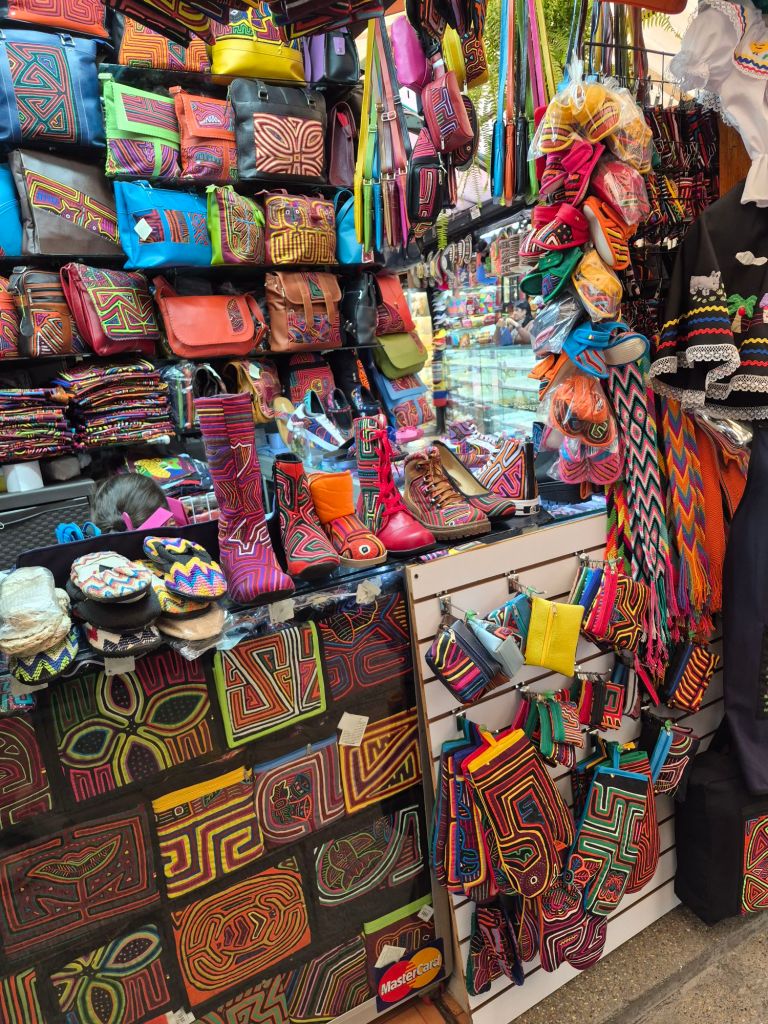
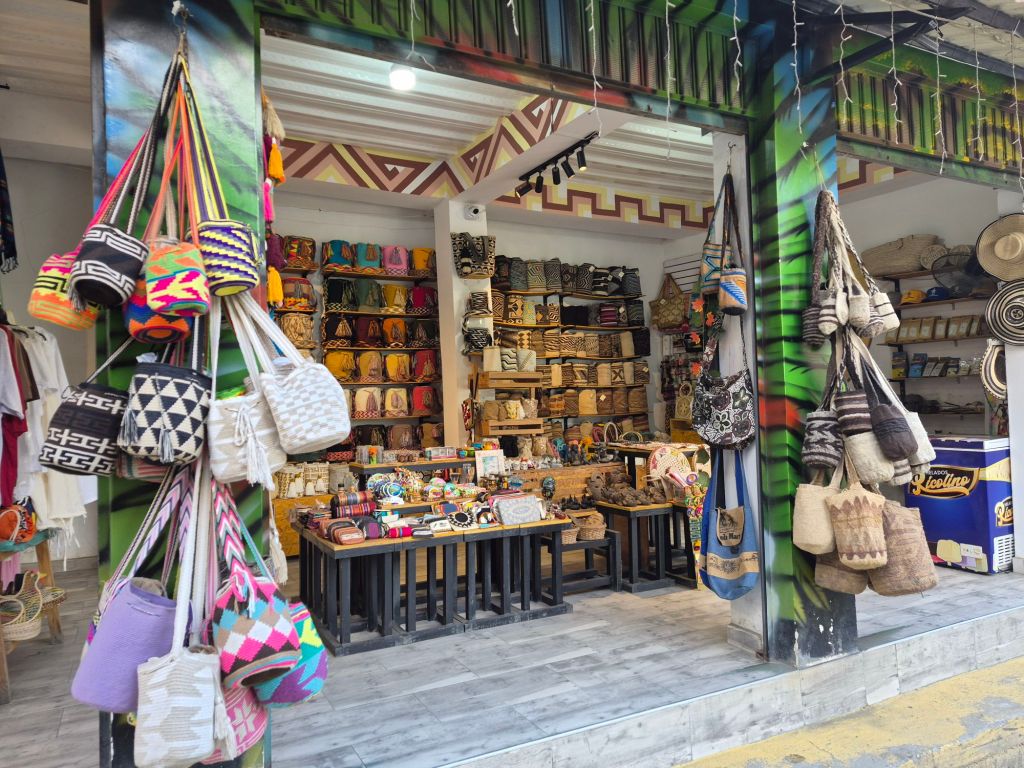
These artisan bags are everywhere, very beautiful
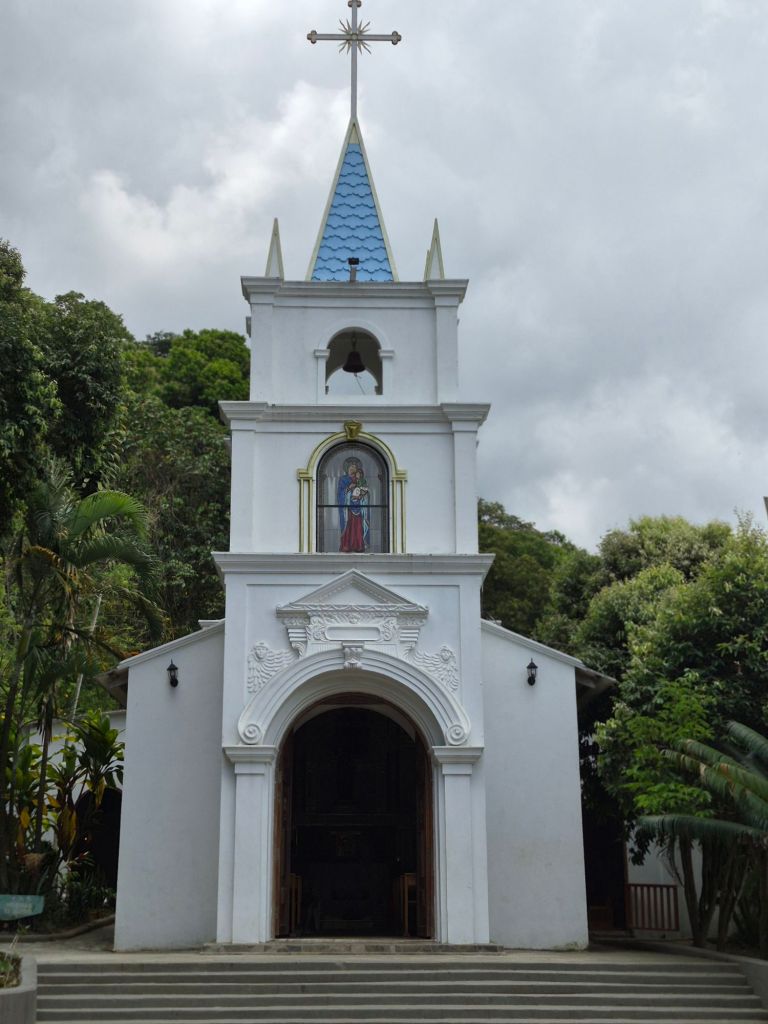
Church on the square in Minka
The pool at our hostel
The sitting area at the hostel
Where we had our dinner

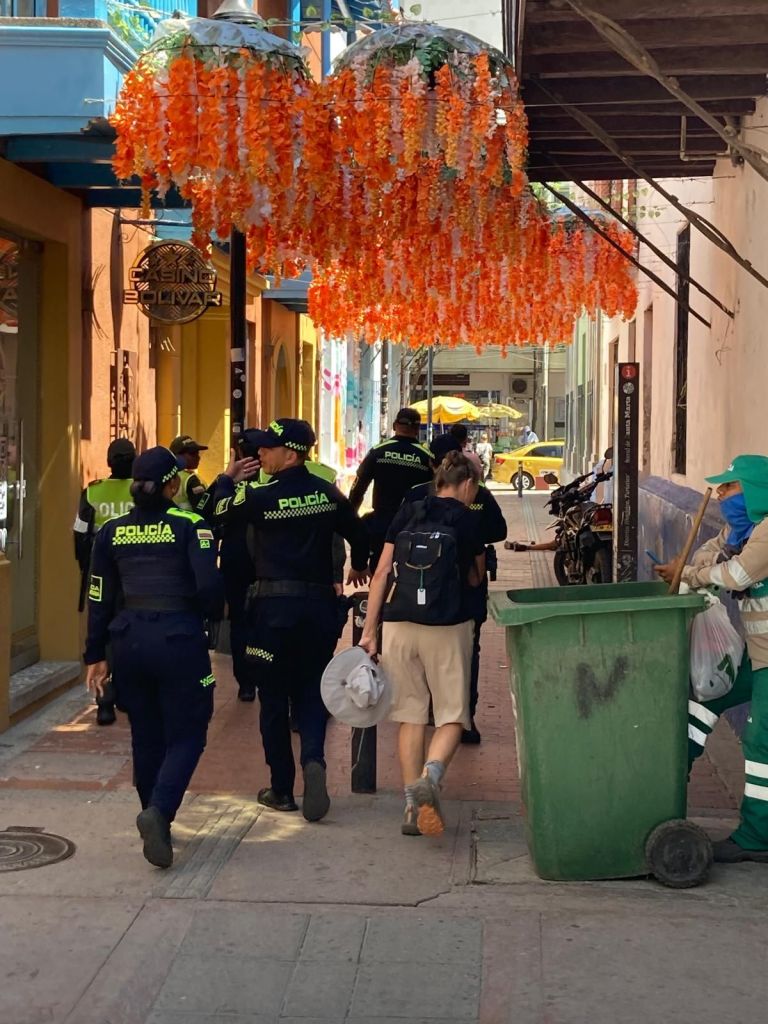
Back in Santa Marta, I had to find a place to change money, and when I asked a group of police officers where I could find one, they escorted me to one which was just one block away – quite weird, but very friendly.  We also ran into a religious procession, and it was funny how the people from the street just joined in.  
The police escort
The band accompanying the procession.

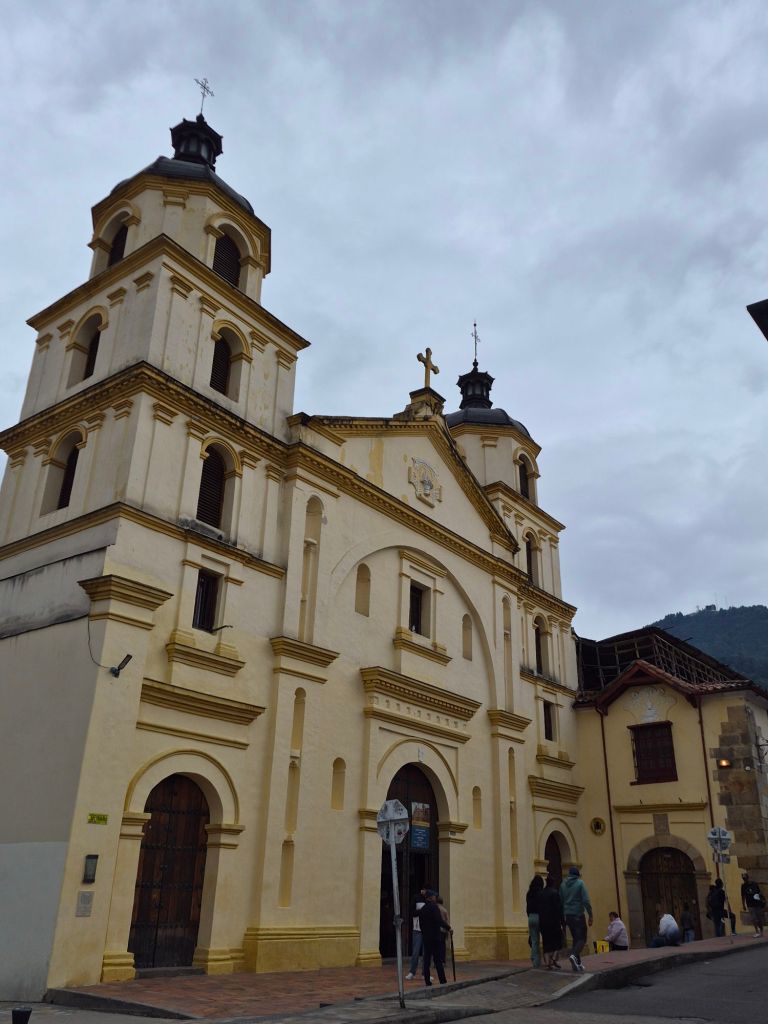
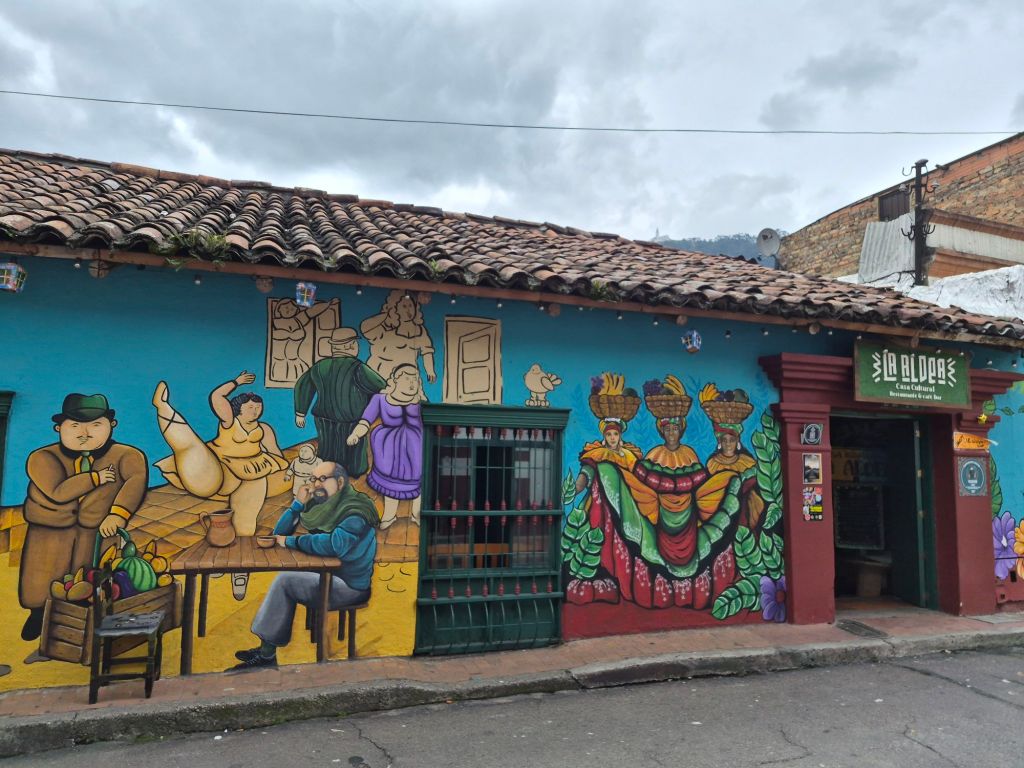
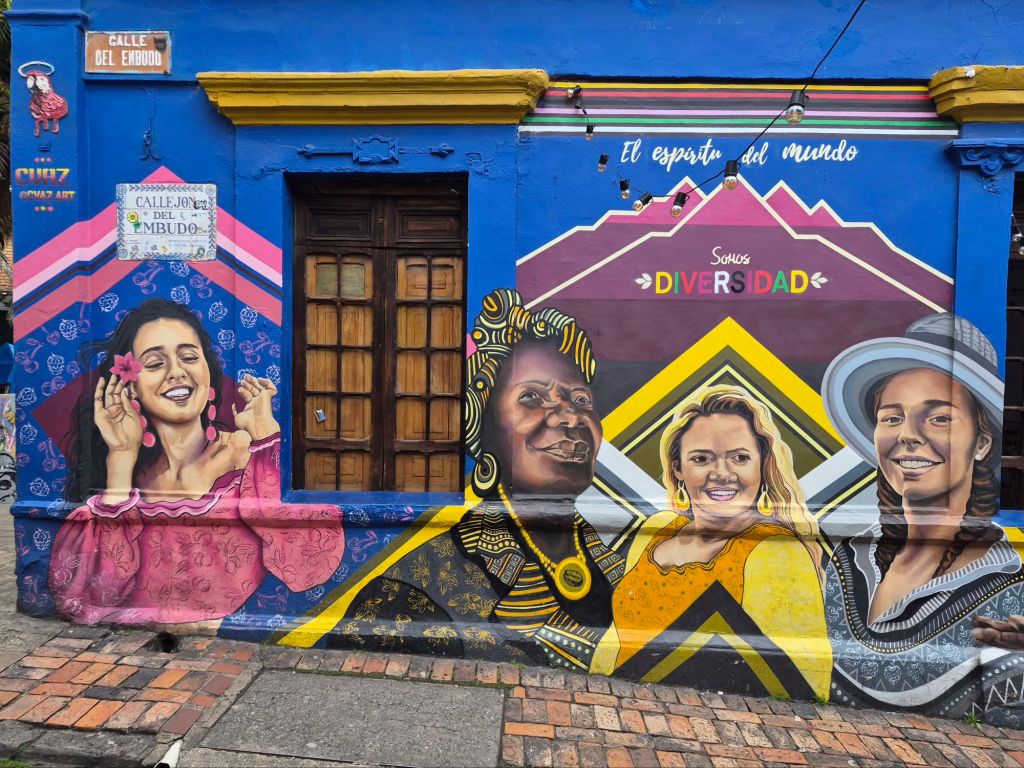
We flew back to Bogotá as Alan had to join his birding trip group, but he had time till 5pm, so I could show him the historical part of Bogotá, called La Candelaria.  (I posted some pics of this area in the previous blog, will just add a few more.)

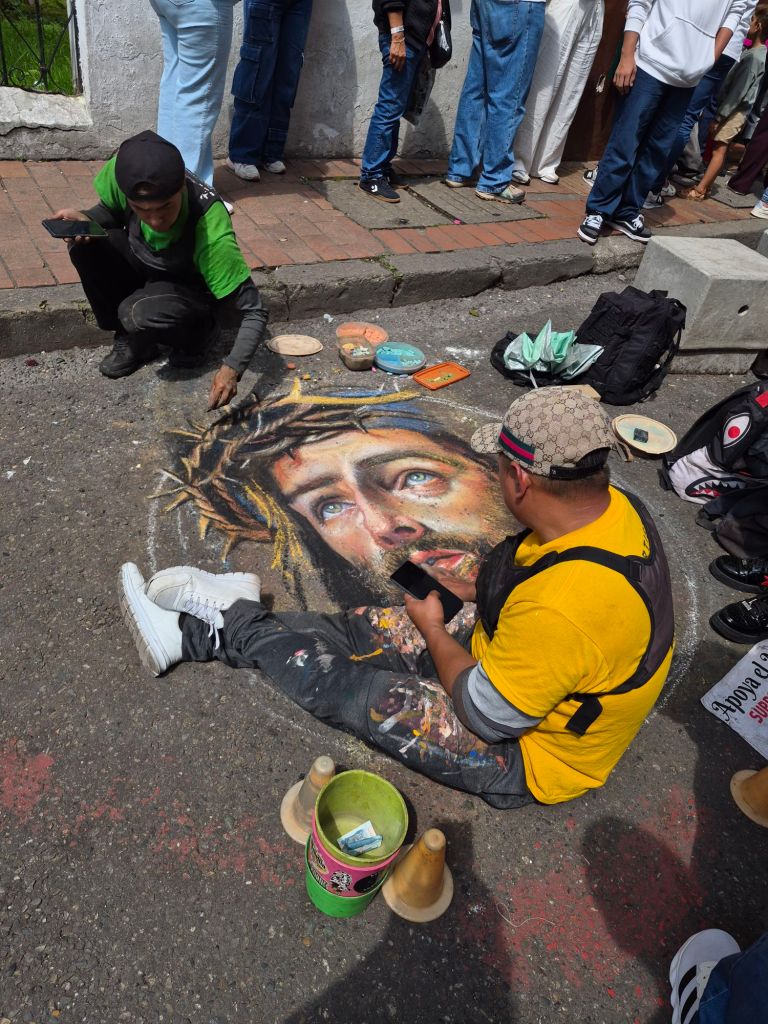
Artists drawing on the street

6 April 2026  A bump in the road

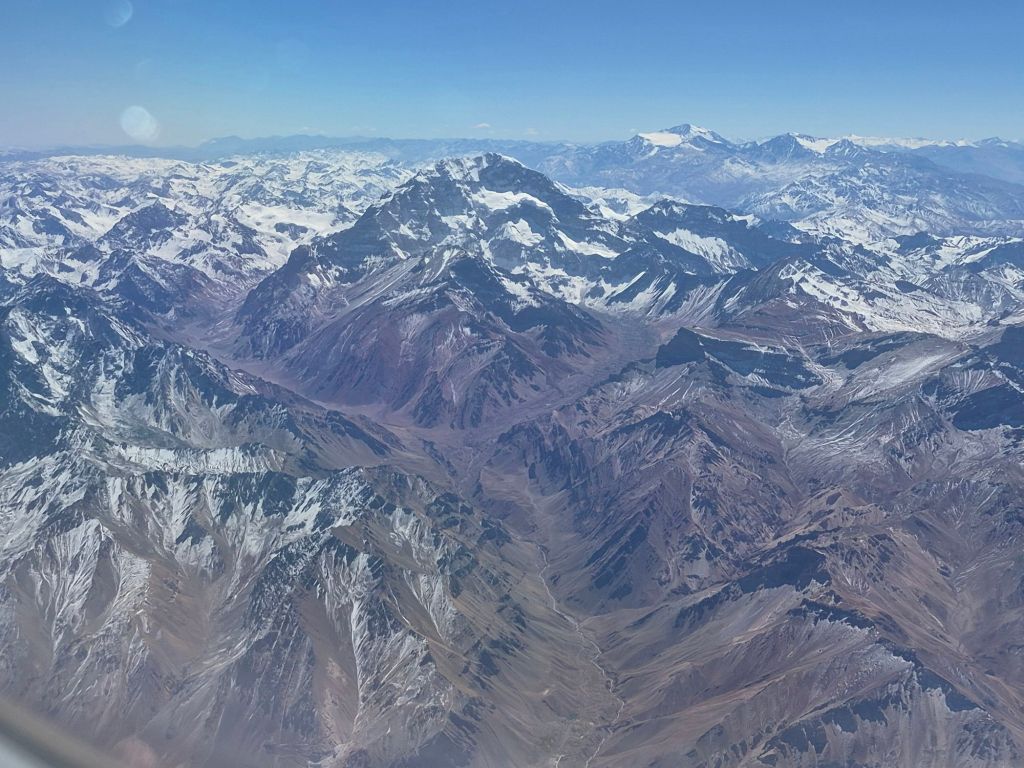
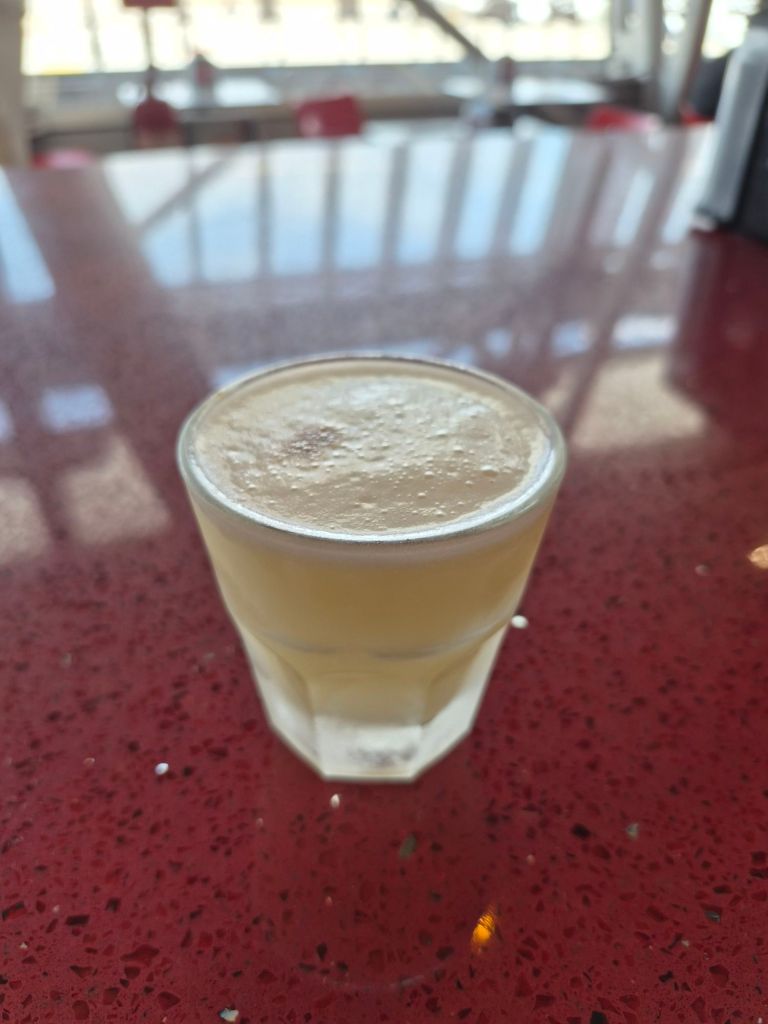
The flight to Colombia was via Santiago, and crossing the Andes in daylight was spectacular, even though it was summer.  Being in Chile filled me with nostalgia, and I promptly ordered a pisco sour at one of the bars and sent a WApp to a family I had stayed with in Cochran, Chile, 6 years ago.  

In Santiago airport
My pisco sour

I arrived in Bogotá after 9pm, and waited for a very long time for my luggage, which I was afraid had gone missing.  It was eventually spewed out by the conveyor belt, thank goodness, and after a very warm welcome by the passport control guy, as well as the baggage control one, I logged into the airport WiFi, only to discover that my hotel booking had been cancelled and I had been referred to another hotel.  There was supposed to be a hotel transfer vehicle, but after a frantic search, I realised there was none.  A kind man outside at the transfer area helped me find transport to the new hotel, where the person on duty unfortunately knew nothing about my booking.  After 30 minutes of Google Translate-communication, I was shown to a room with no windows, but an en-suite bathroom, which was a comfort.  I sat on the bed for an hour, in a state of disorientation and shock.  I had no idea where I was, what it looked like outside, if there were shops or restaurants in the vicinity, and I had no idea what to do the following day.  I had one day in Bogota, as I had planned to visit family of friends in South Africa the following day, and it was supposed to be spent exploring the historical city centre and buying a bus ticket to Armenia, where I was headed.  I wrote miserable WApps to my children and some friends, bemoaning my situation.  Everything had been going so well, I was not prepared for this set-back and felt completely at a loss. My daughter responded with:  “Very easy, just look for another hotel in the old city.  One needs such disasters, it makes things interesting and a good story to tell.”  In retrospect my reaction seems ridiculous, but at that time it was disastrous, not just a bump in the road. 
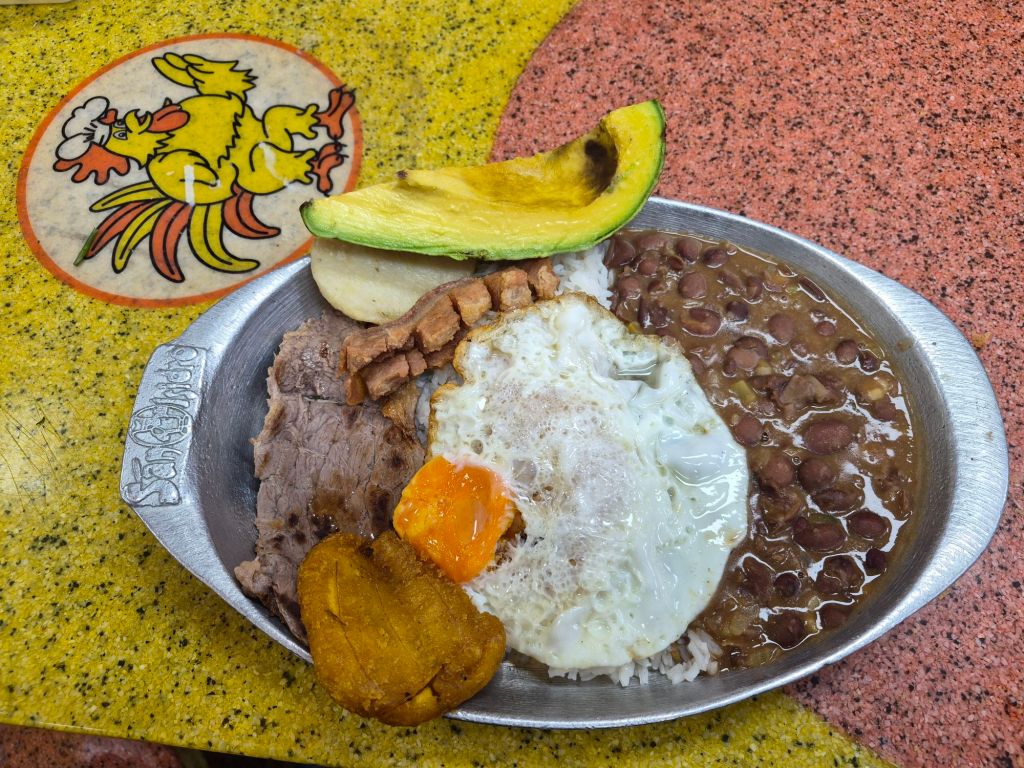
I was up at 7am, showered and dressed and fighting fit.  I sent a WApp to the original hotel, asked for a transfer to them and a taxi to take me there, which was immediately granted, but would only be after 12 noon.  I discovered that the bus station was within walking distance from the current hotel, so set out to buy a ticket to Armenia (a town in Colombia) for the following day.  Much to my surprise, the sun was shining, and, as usual, everything was working out perfectly.  I was starving by then and ordered a funny looking breakfast at a really sleezy place in the bus station, but “honger is die beste kok”, as we say in Afrikaans, so down it went. 

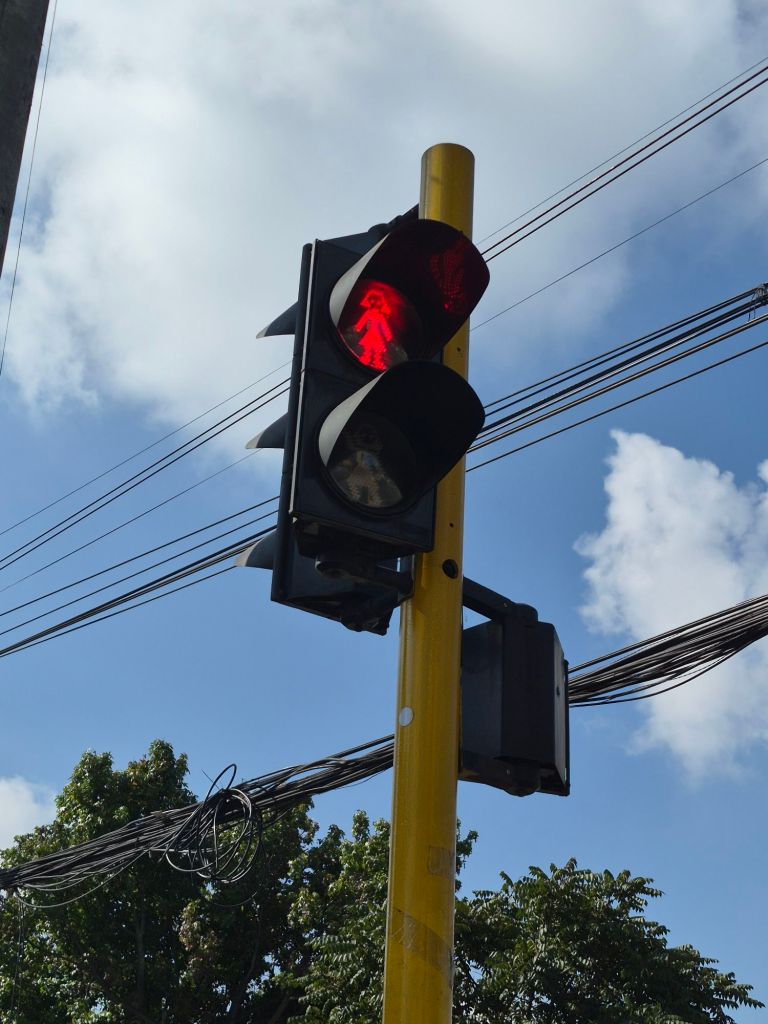
My first photo in Colombia – pedestrian crossing with a little woman, not a man!
The breakfast – plus they brought some sausage and a roll.  There was rice under the egg, and the crackling next to the avocado seems to be very traditional in Colombia.

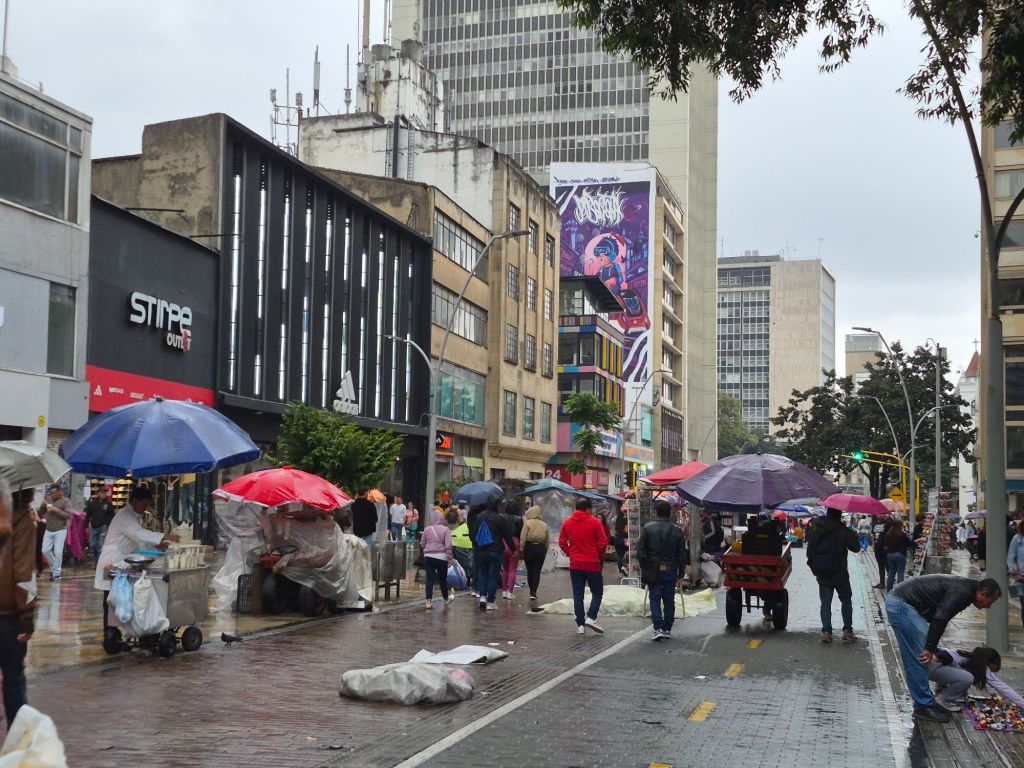
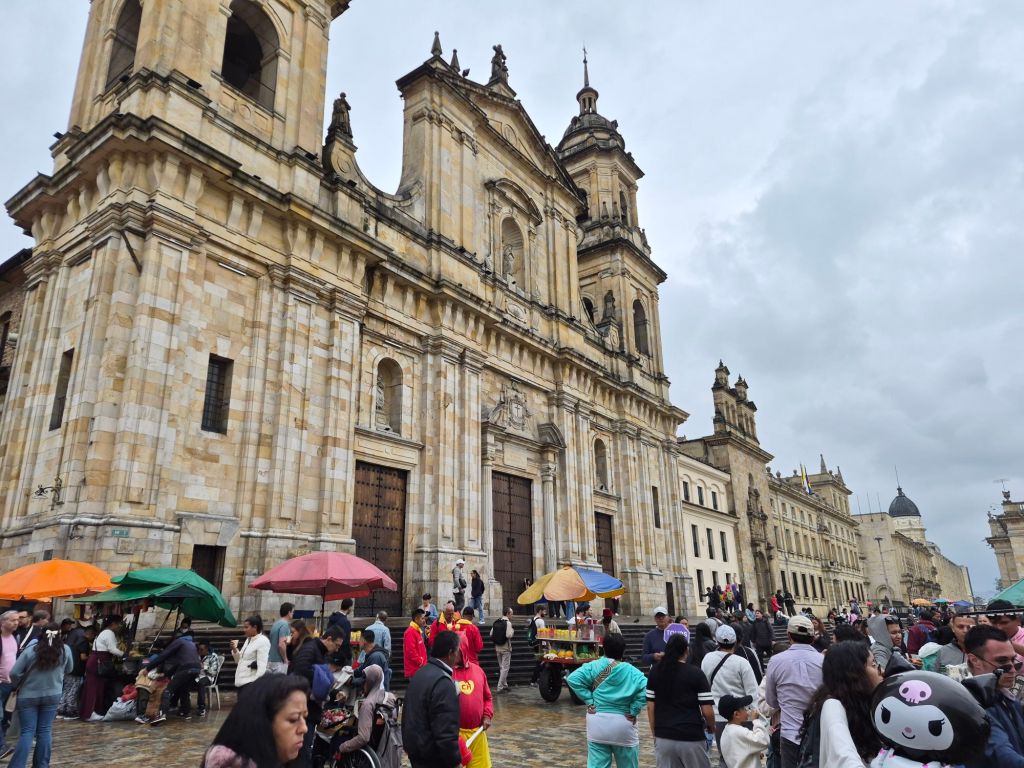
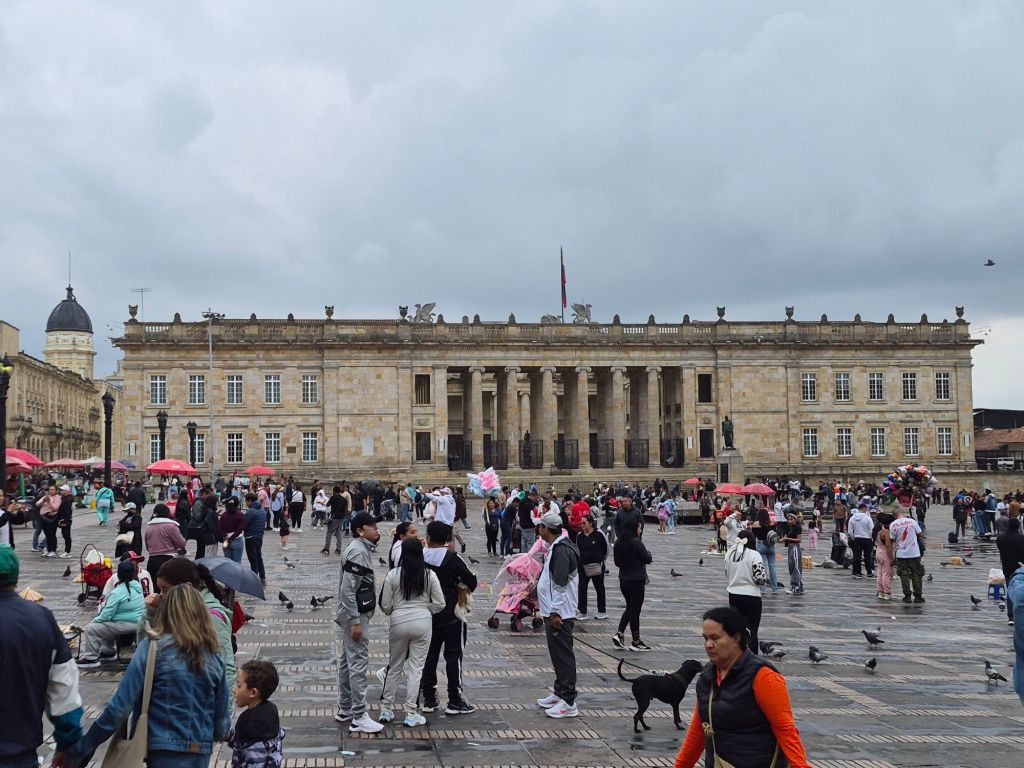
Hotel Artistico, where I had originally booked, has an old-world feel to it, right next to the historical centre, and after settling in, I took to the streets.  It was Sunday, and there were street markets everywhere.  All my woes of the previous night forgotten, I was walking around with a huge grin, enjoying the hustle and bustle, favourably impressed with Bogotá.  It started to rain, but umbrellas and covers came out, and everything carried on.  Angela, a friend of mine in South Africa who is Colombian, had given me some recommendations of things to do and places to visit, so I meandered along, passing the Plaza de Bolivar with its beautiful cathedral and other old buildings,  working my way to the Botero museum, which is free.  

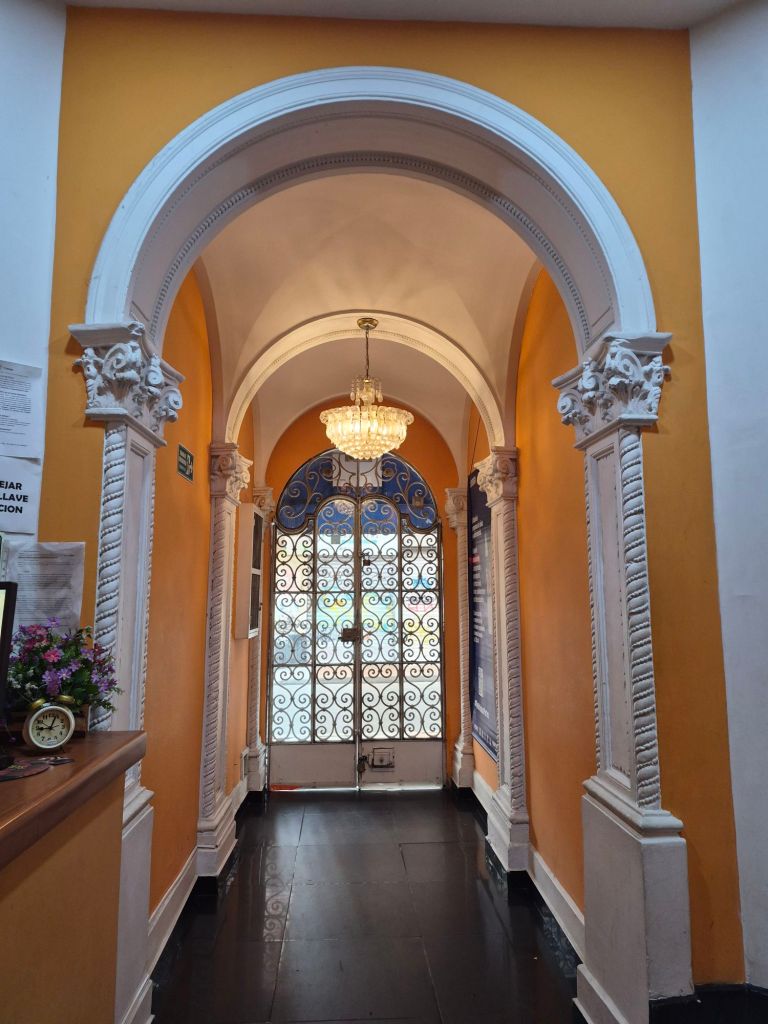
Artistico Hotel
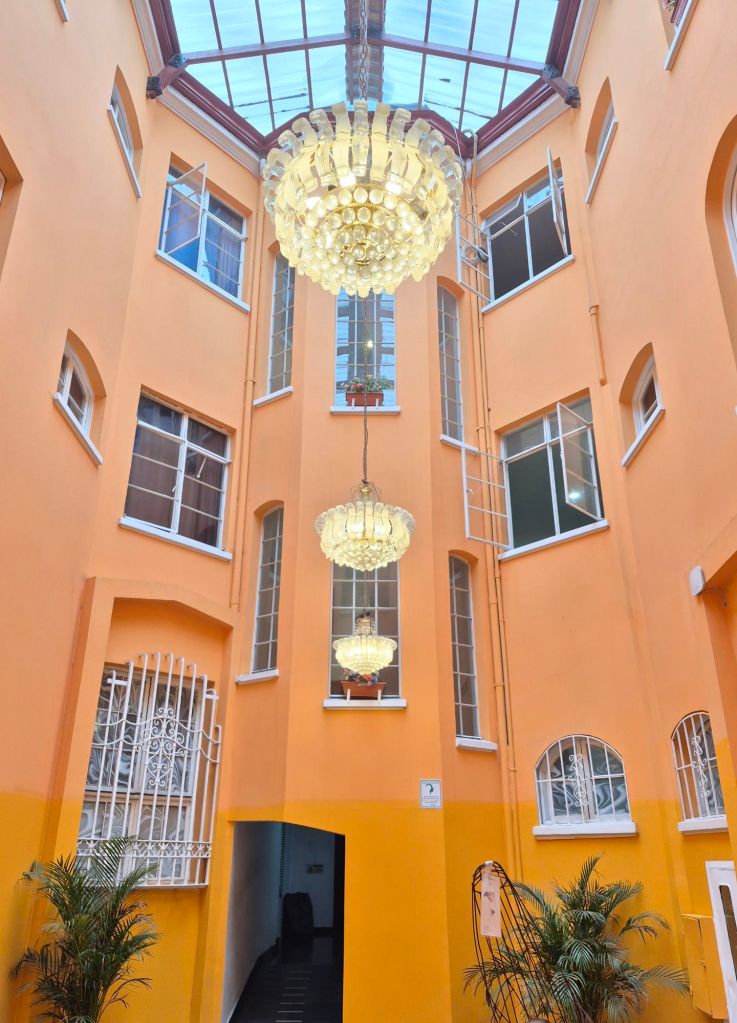
It has a courtyard, which is covered as it rains just about every afternoon
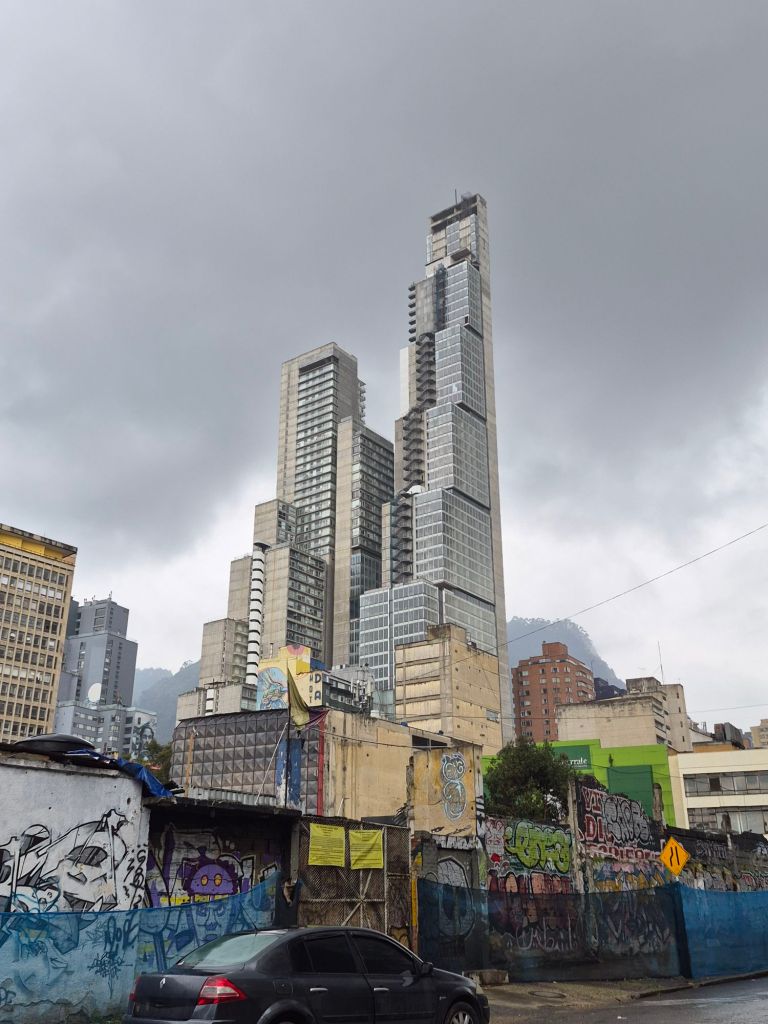
High rise buildings in Bogotá – note the graffiti in the street below
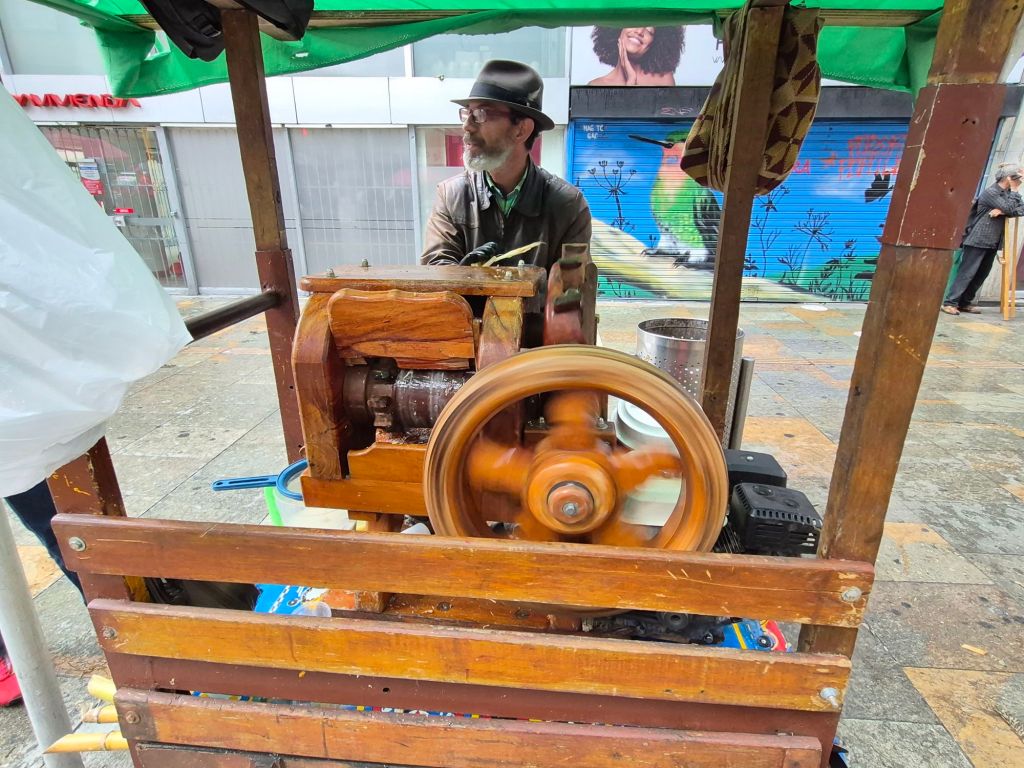
A machine that is used to extract syrup from sugarcane
Catedral de Primada de Colombia
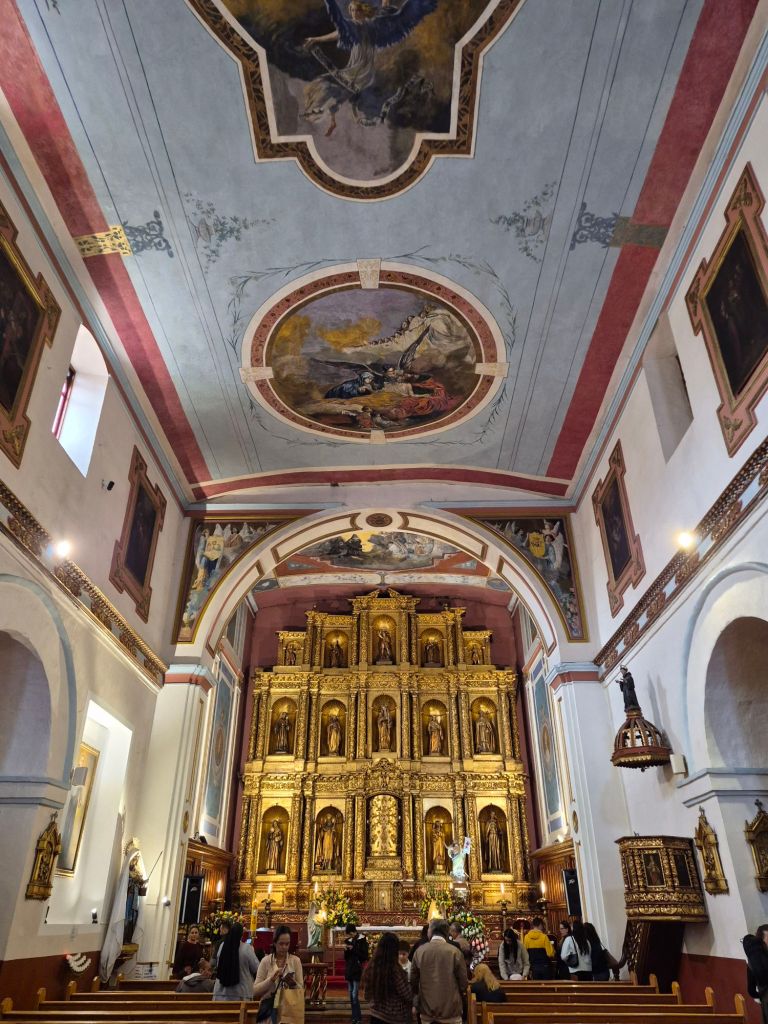
Inside the Catedral de Primada
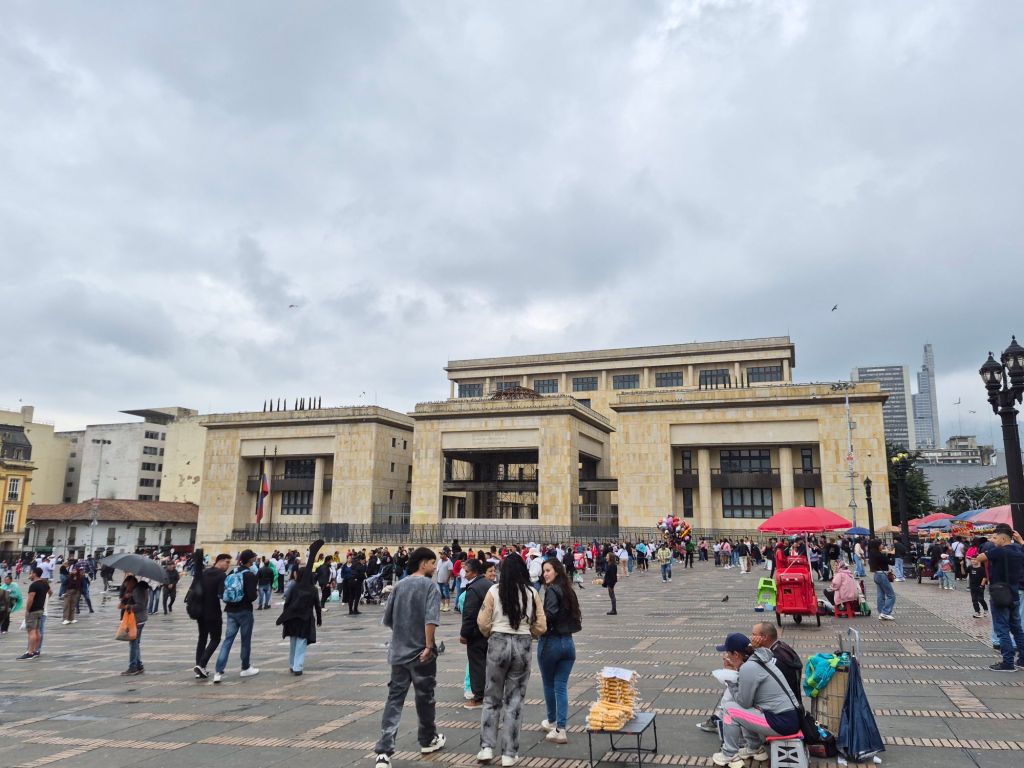
Plaza de Bolivar
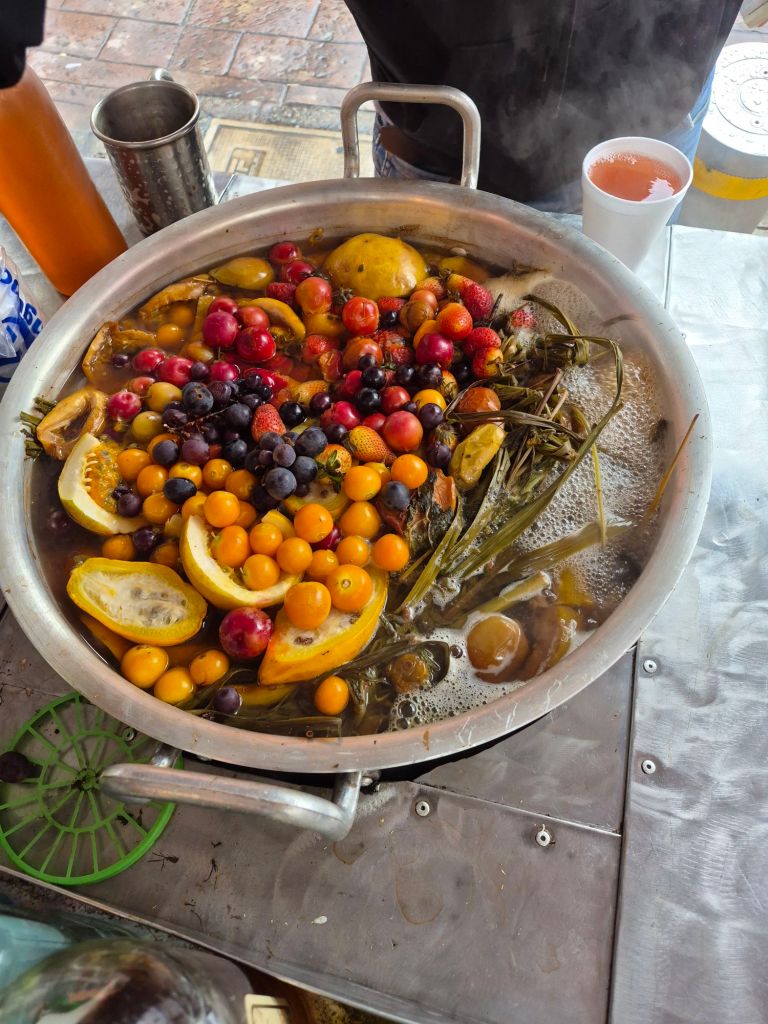
A fruit tea, with either syrup or alcohol added to it – I chose the latter, delicious!

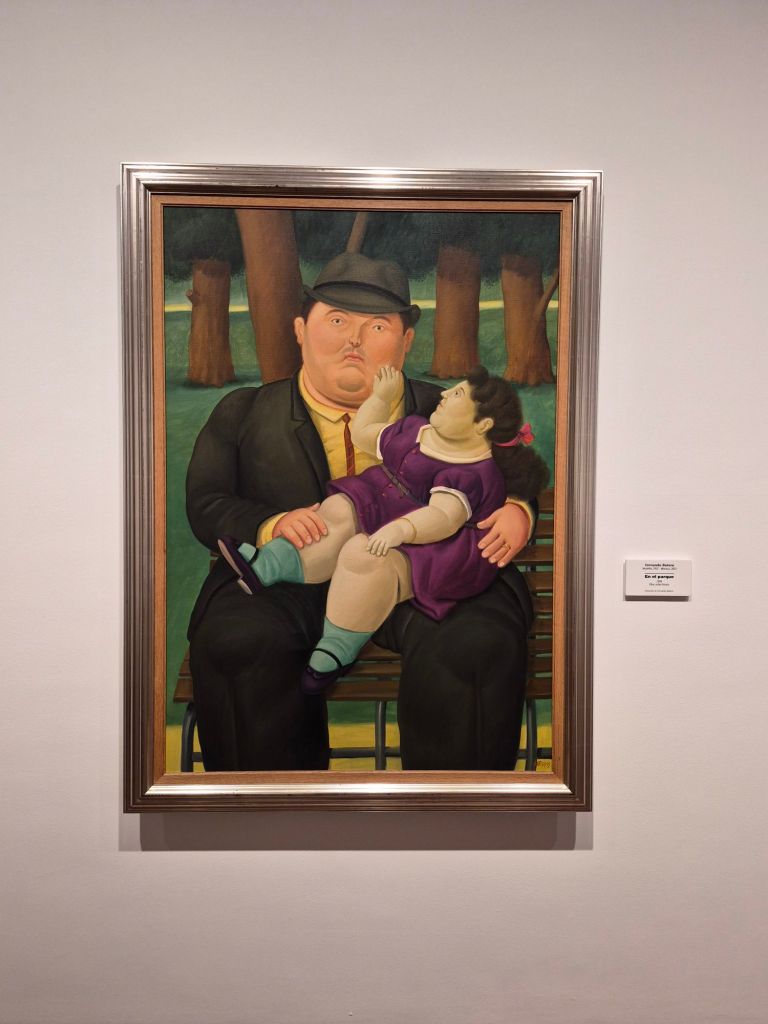
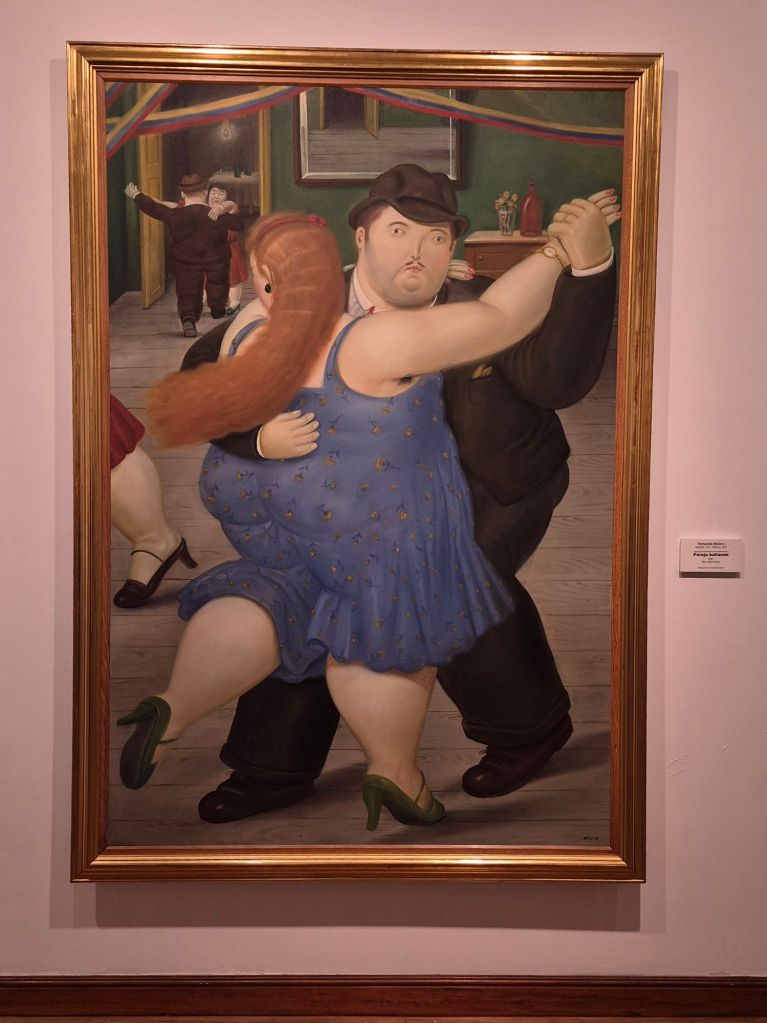
Fernando Botero Agulo was a Columbian artist and sculptor, who was born in 1932 and died in 2023 in Monaco.  He was considered the most recognized artist from Latin America in his lifetime, and his style became known as Boterism.  In 2000 he donated 123 of his own pieces and 85 artworks from his private collection to the Museo Botero in Bogotá.  His paintings have a way of making one smile – exaggerated bodies, small mouths, funny expressions, everyday occurrences from an ironic point of view. 

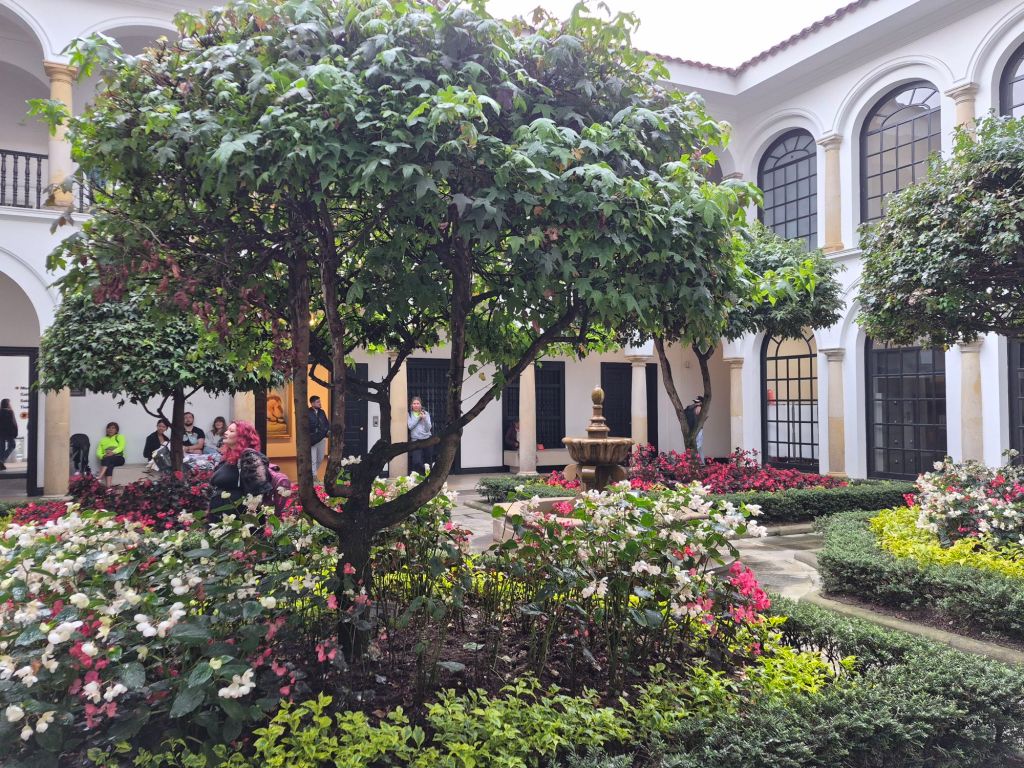
Colourful garden in the courtyard of the museum
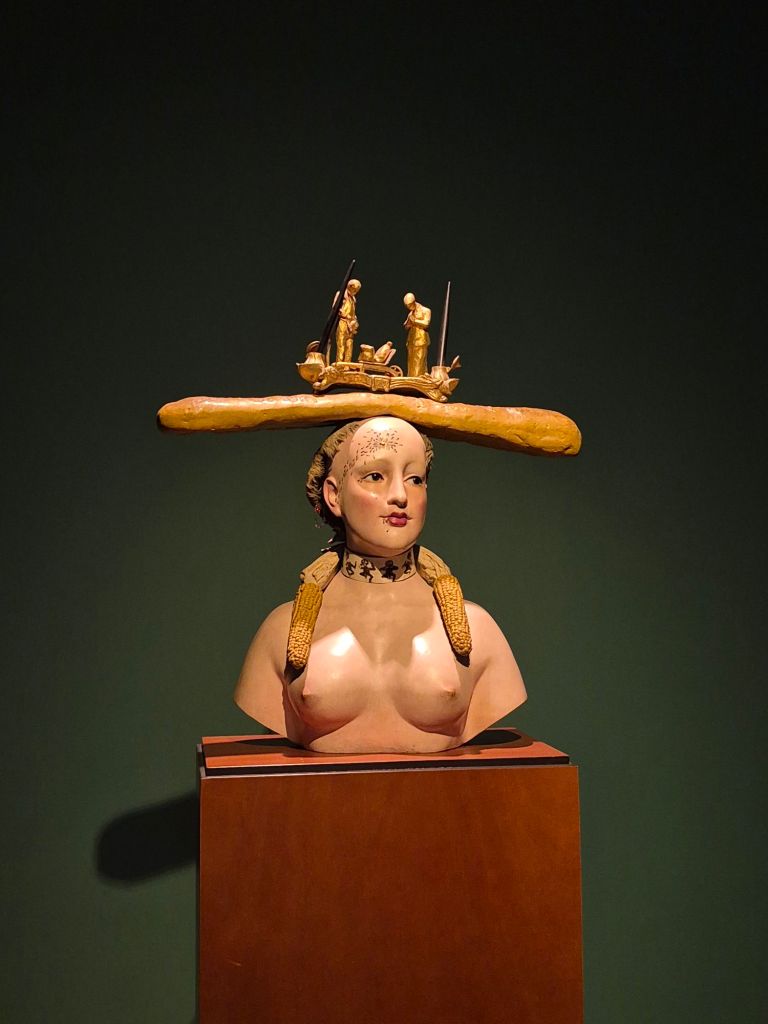
Salvador Dalí – one of Botero’s own collection
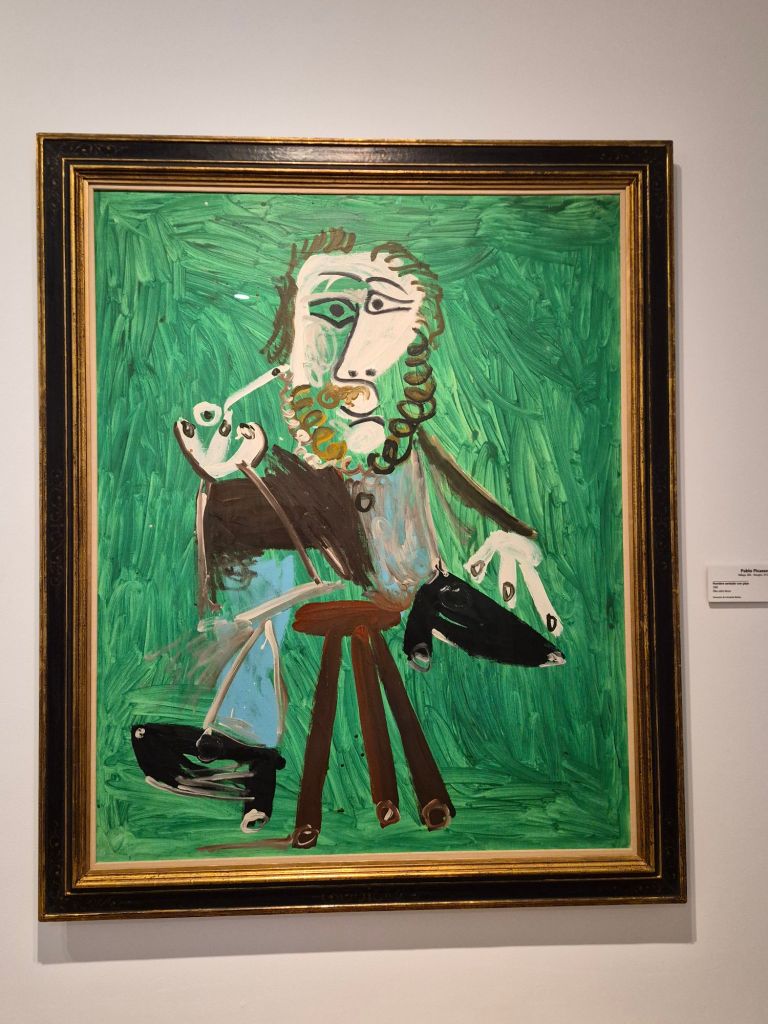
Pablo Picasso
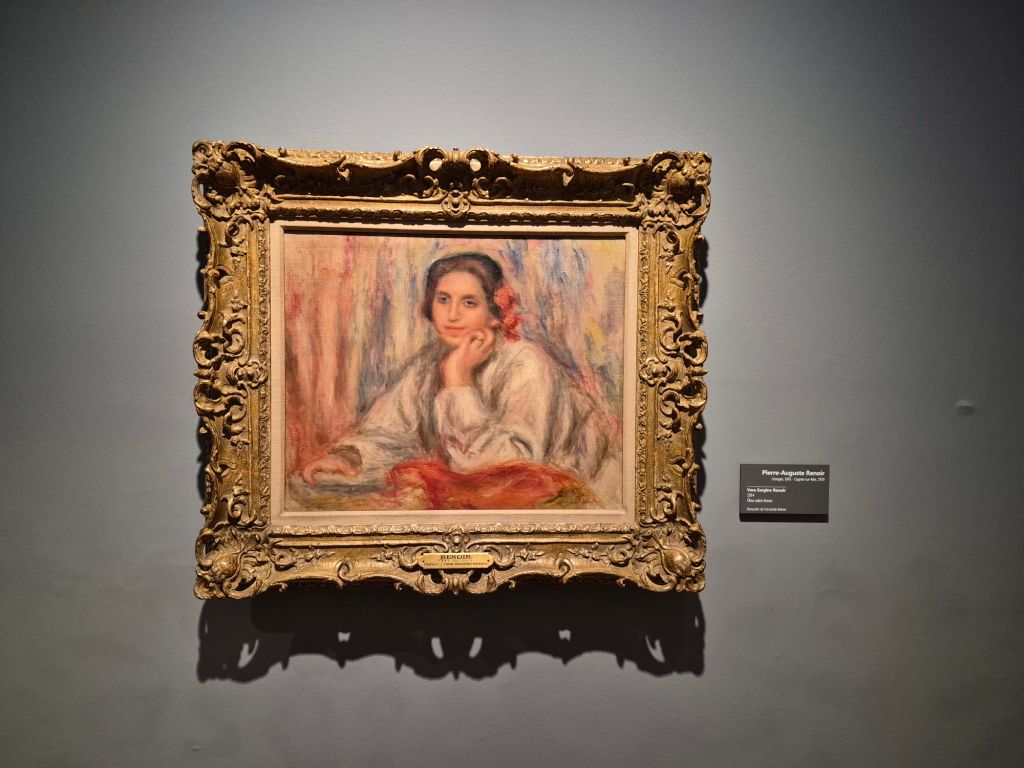
Renoir
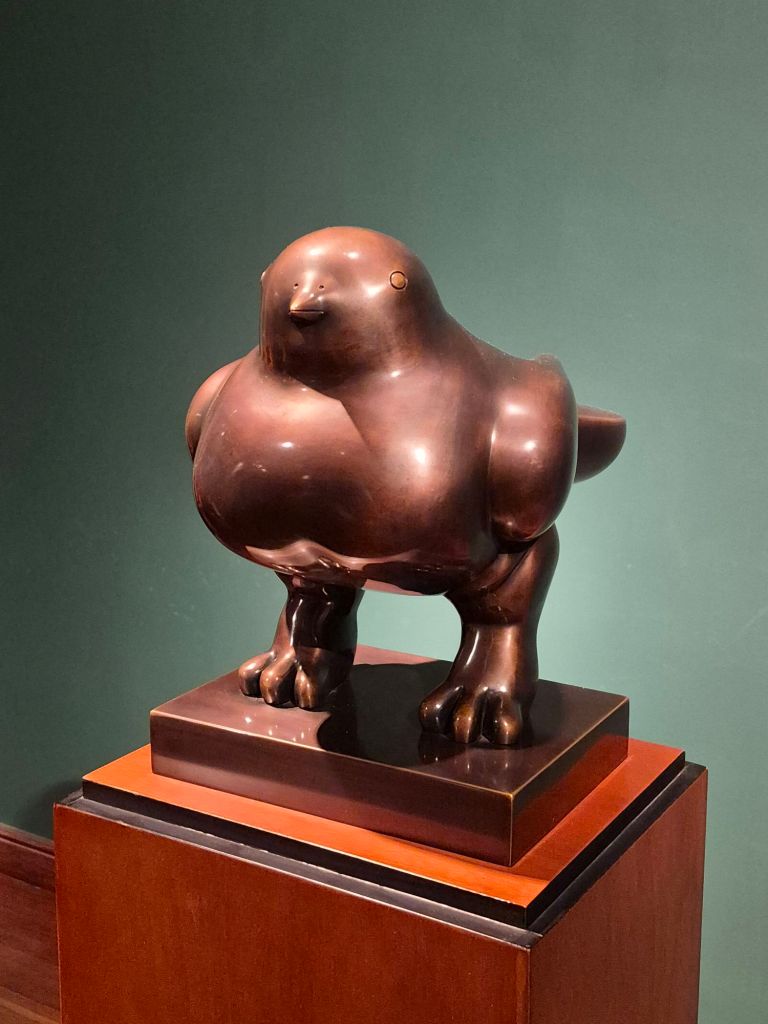
Pájaro (Bird) by Botero, all the photos from here on are of his work
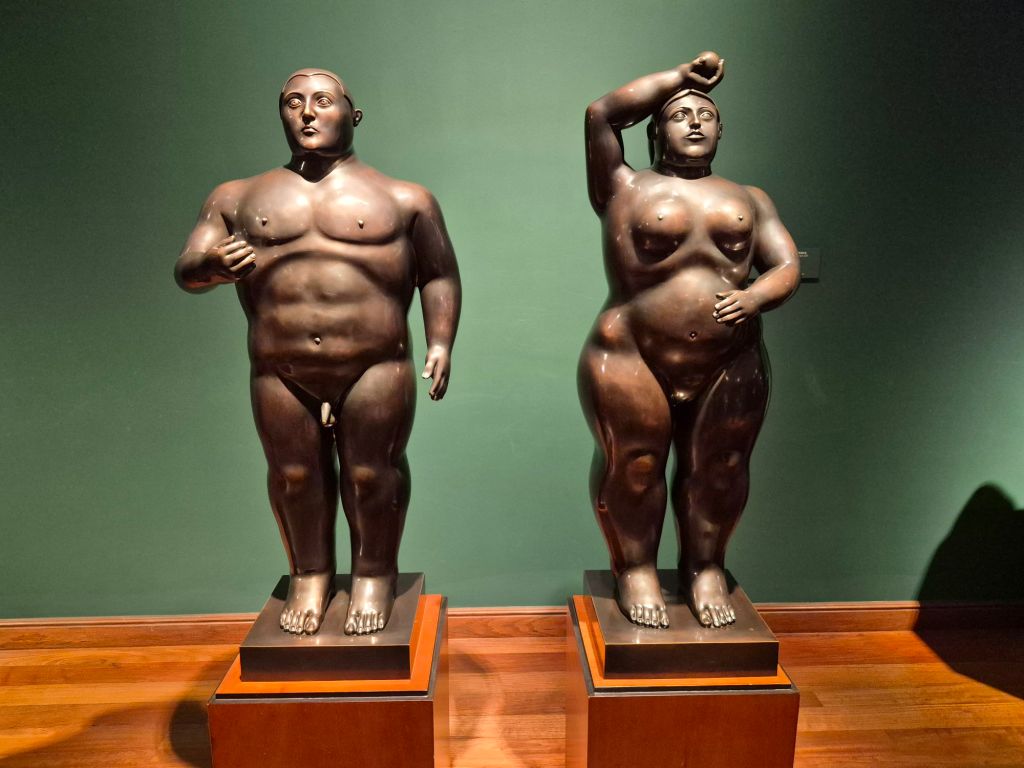
Adam and Eve
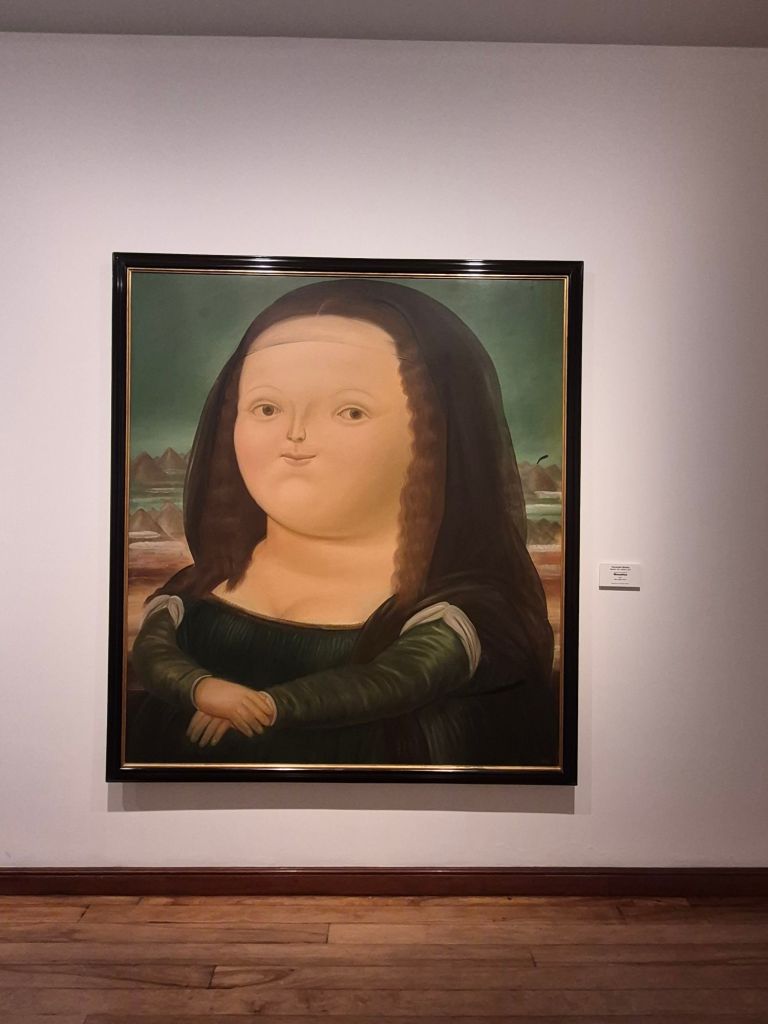
Mona Lisa
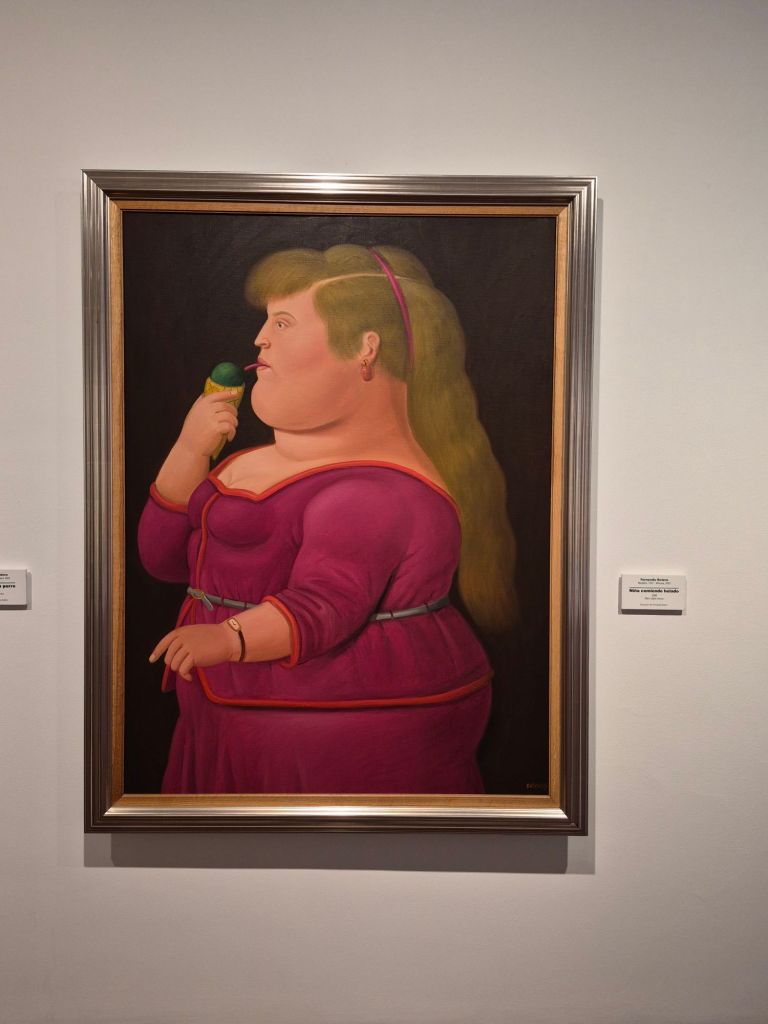
Girl eating an ice-cream
En el parque (In the park)
Couple dancing

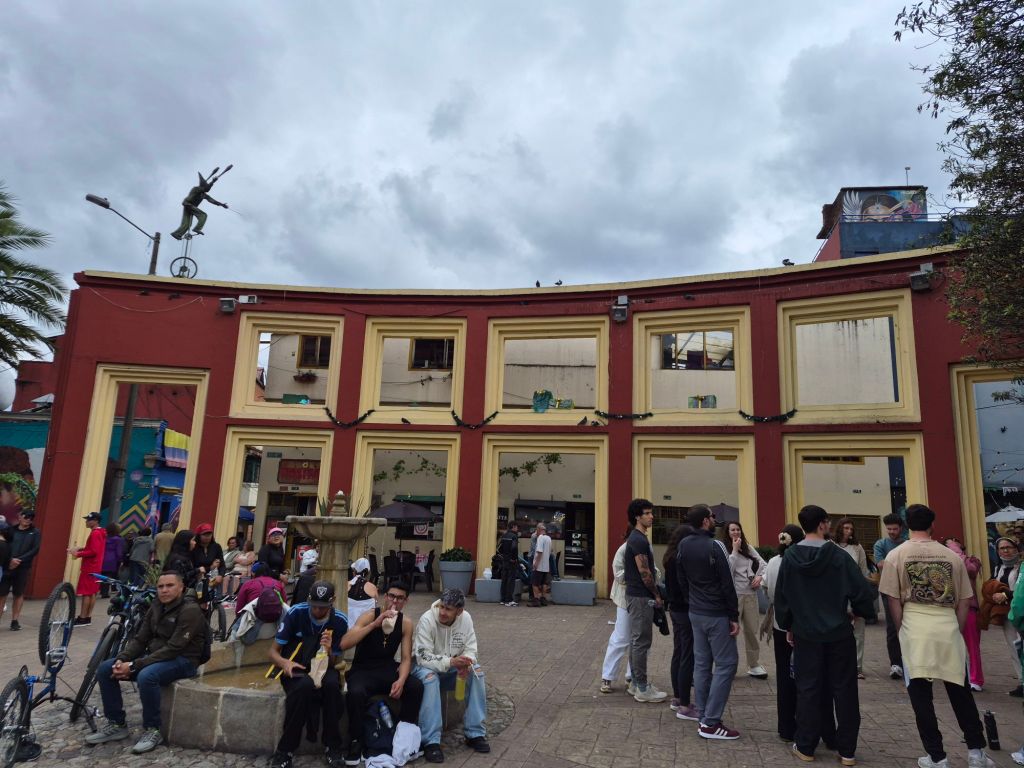
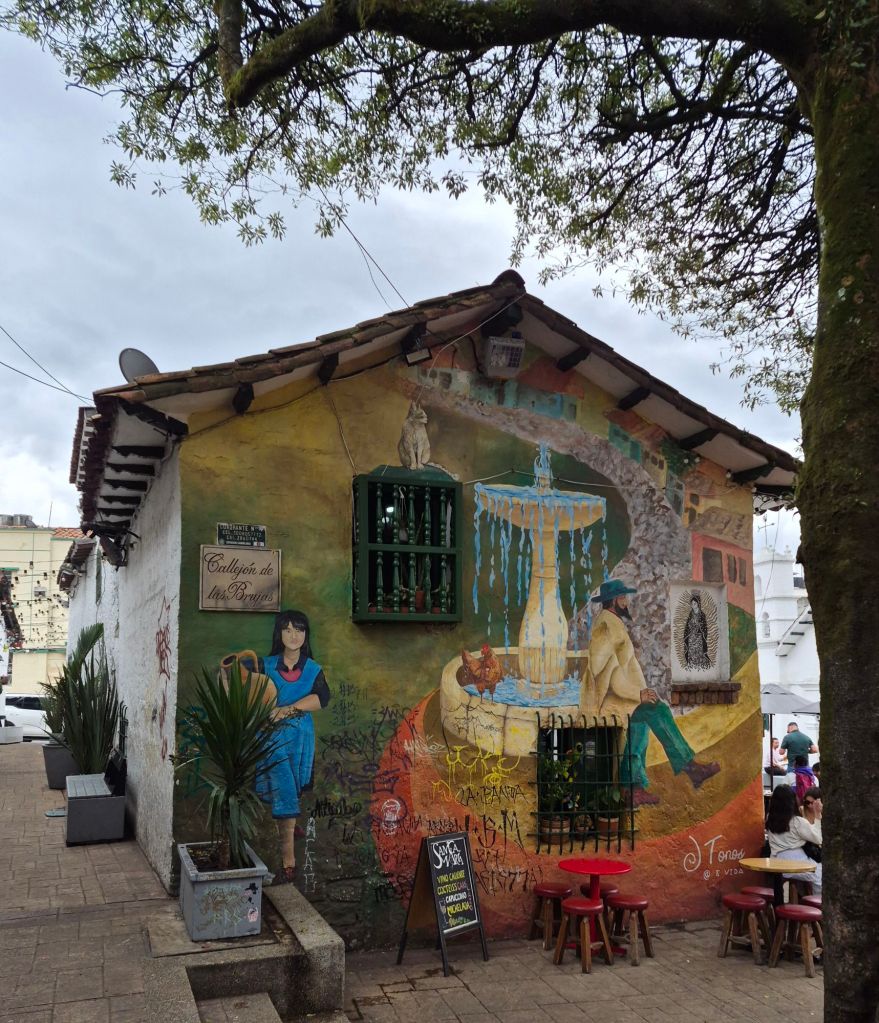
I walked further up the hill to Plazoleta Chorro de Quevedo, a plaza in the heart of the historical center, which is the place where the city was founded in 1538.  The plaza was rebuilt in 1969, based on some old images and models, and a new well and church were built.  Some streets around it are narrow and cobbled with quaint bars and restaurants,  and the graffiti is very artistic. 

Plazoleta Chorro de Quevedo
These two caught my attention, I just had to take a photo
Maybe I’ll climb the ladder next time and see what the bar looks like

The following day I caught the bus to Armenia, a 240km trip that took almost 7 hours, as it takes one and a half hours to get out of Bogotá.  The road winds over the Andes, a breathtaking and sometimes scary journey as the abysses are steep – but worth every minute.  I so wished I was in a car to be able to stop and enjoy the scenery. 

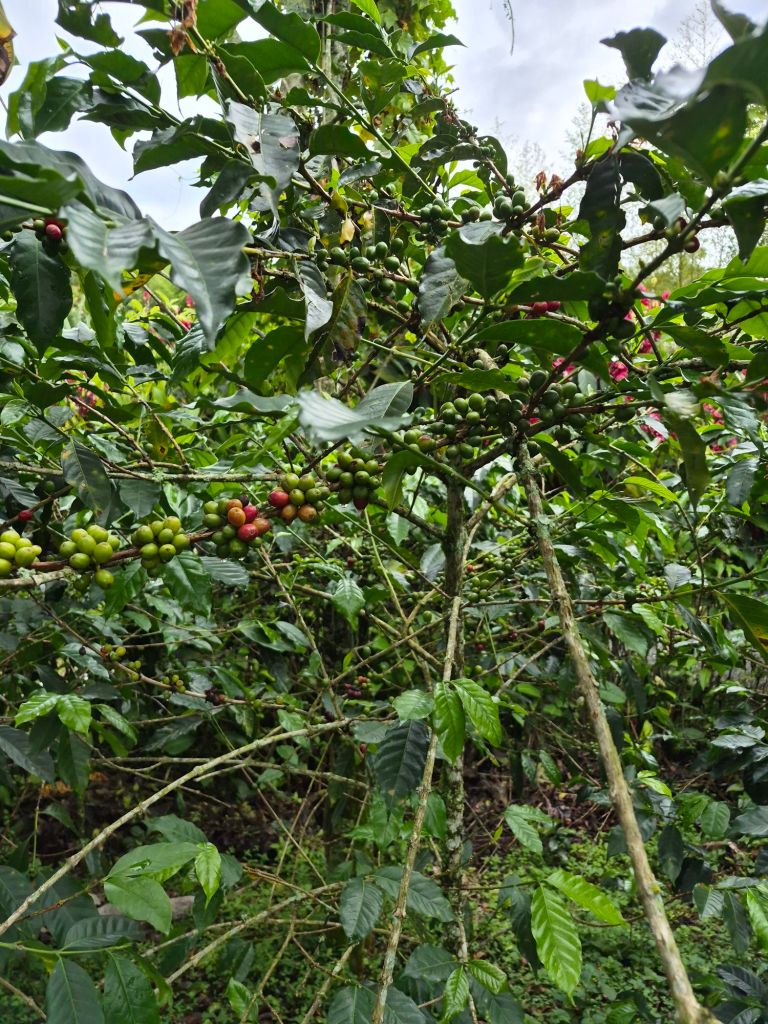
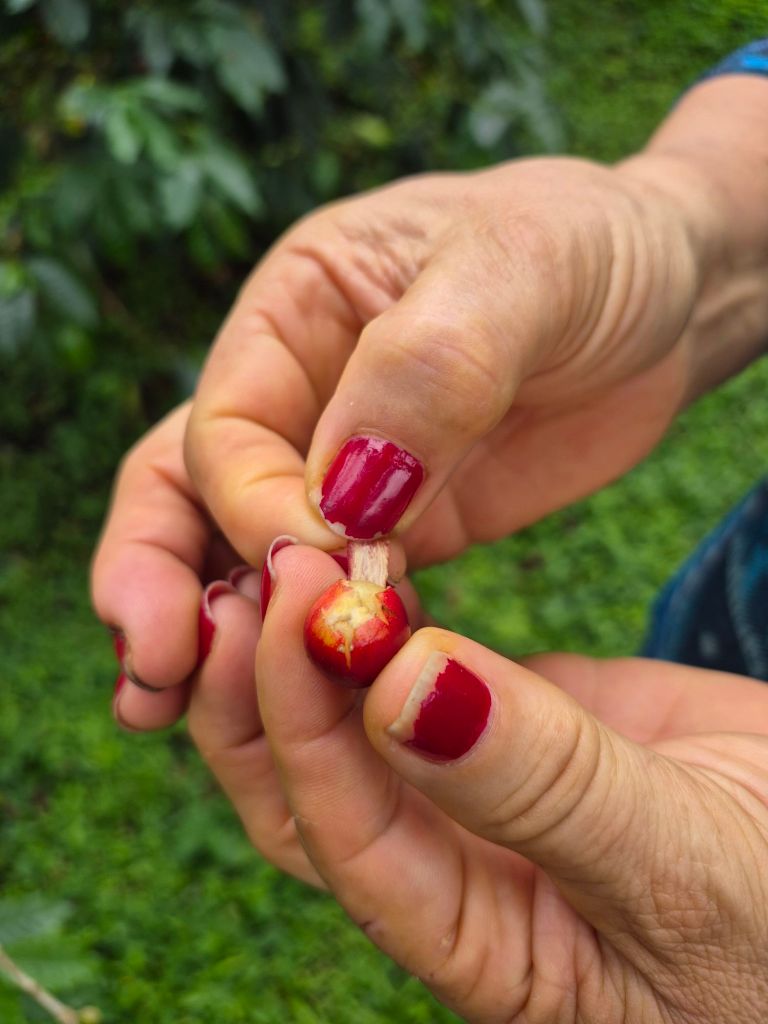
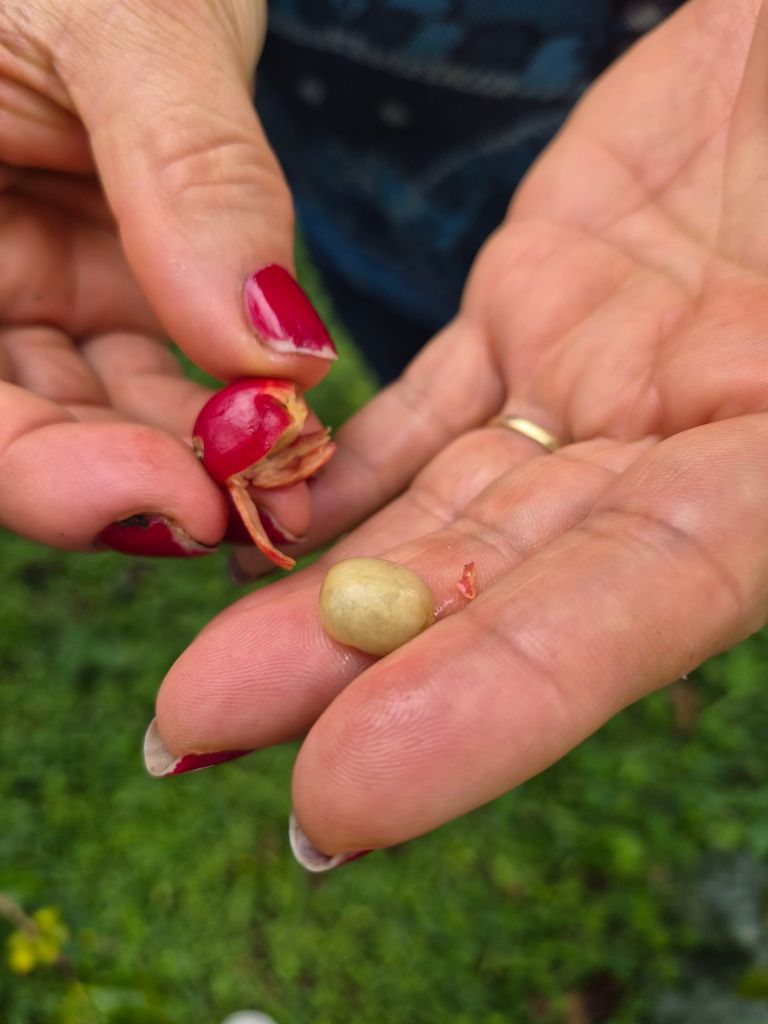
Rickus and his wife Xio picked me up from the bus station, and I spent the following two days with them and their two children, Alexis and Elen, at their beautiful home on the outskirts of Circasia (a smaller town 20 minutes from Armenia), being thoroughly spoilt.   Xio’s parents, Ruben and Amanda, live on the same property, and Amanda showed me around the huge garden the next morning, picking some coffee beans, explaining the process of cleaning and roasting. They have many fruit trees, such as bananas, oranges, tangerines, avocados, other citrus and even a little apple tree which Rickus grew from a seed – I told him it is much too hot and humid there for apple trees to grow,  but he is hopeful. 

Their home
The front garden
To the one side
The orchid is the national flower of Colombia
A heliconia (lobster-claw), a tropical plant that is  related to the strelizia
Coffee tree, they have many in their garden
A coffee bean
The outer skin is removed, the bean is dried, and then the thin membrane has to be removed before the bean is roasted

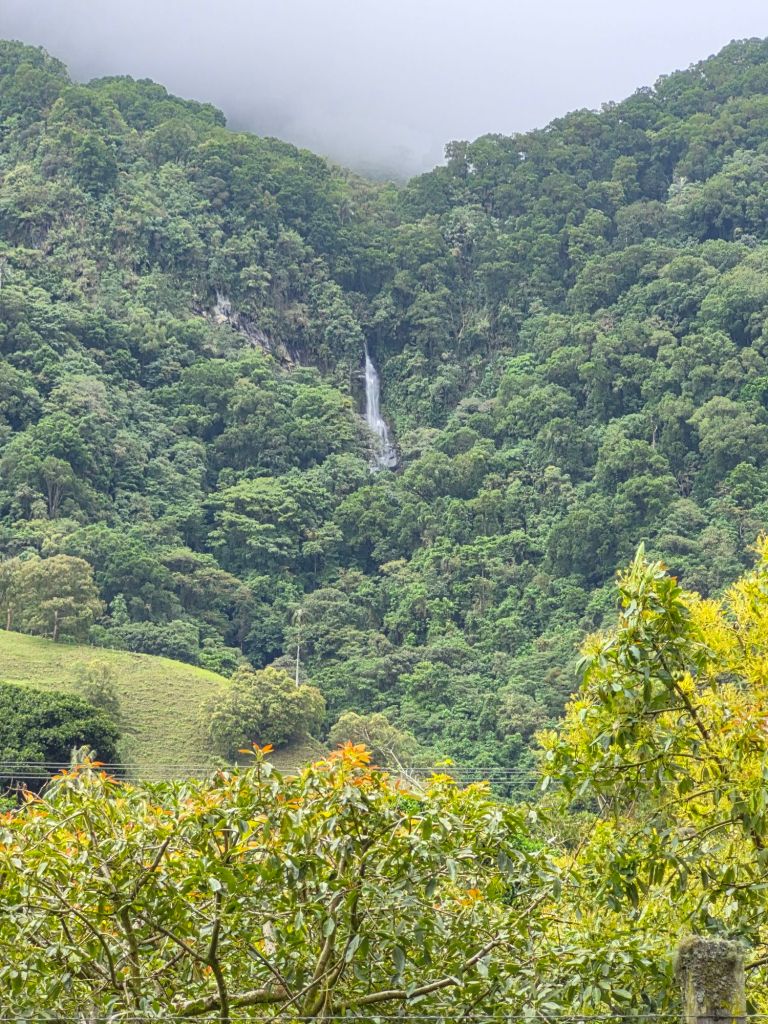
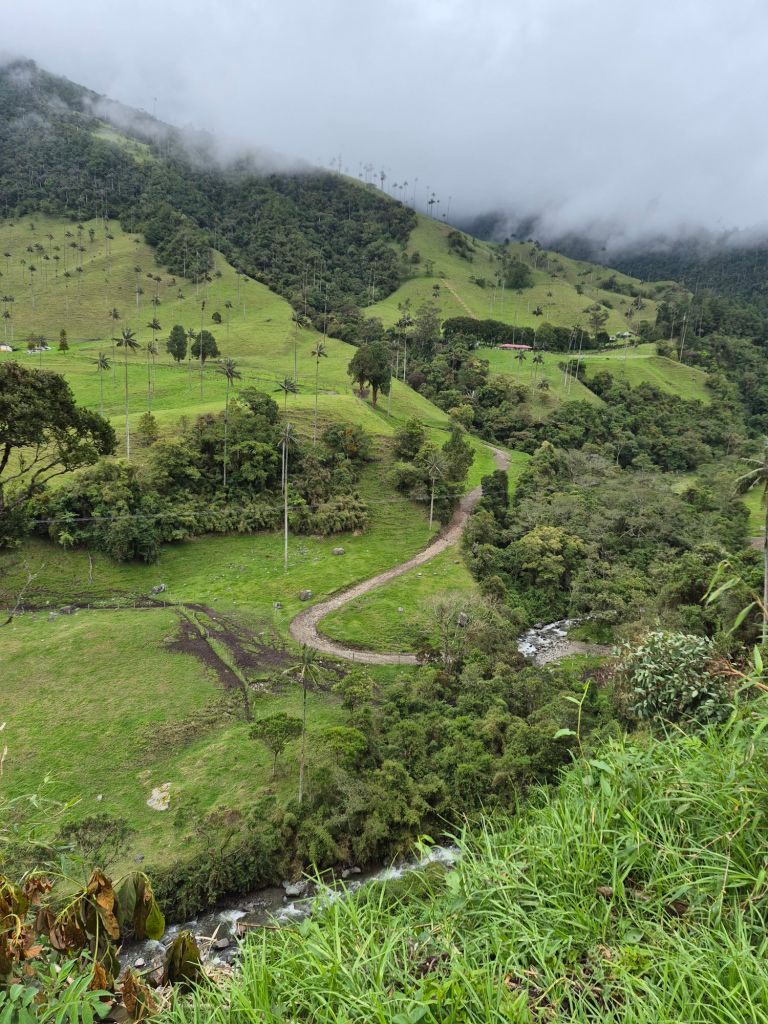
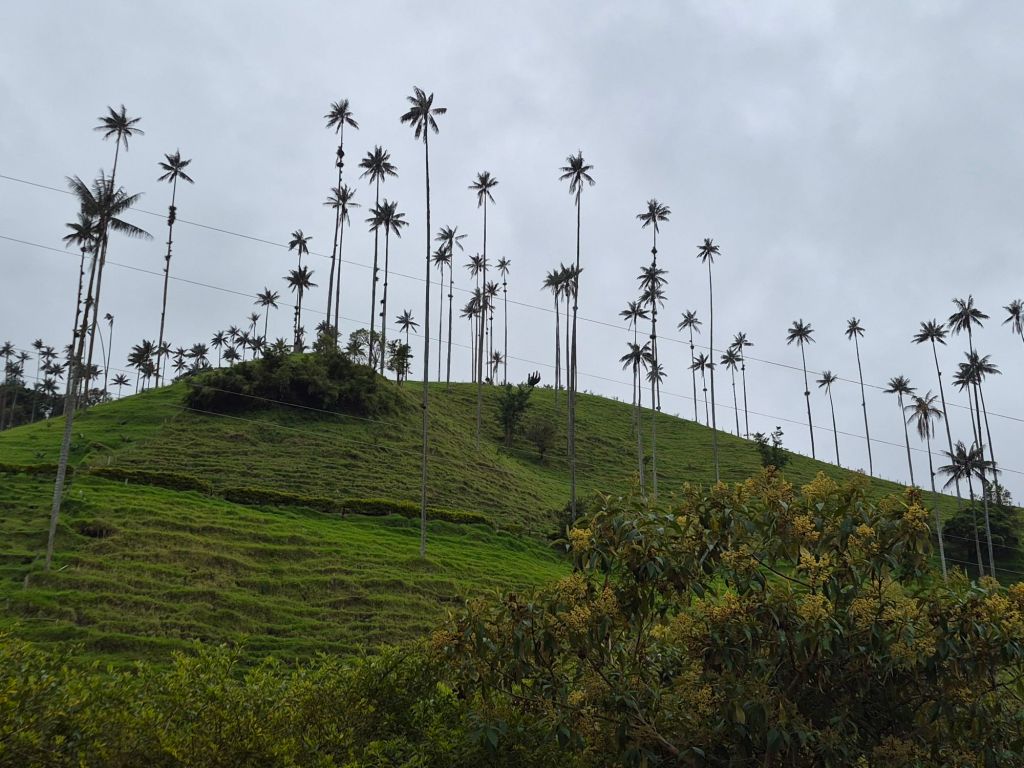
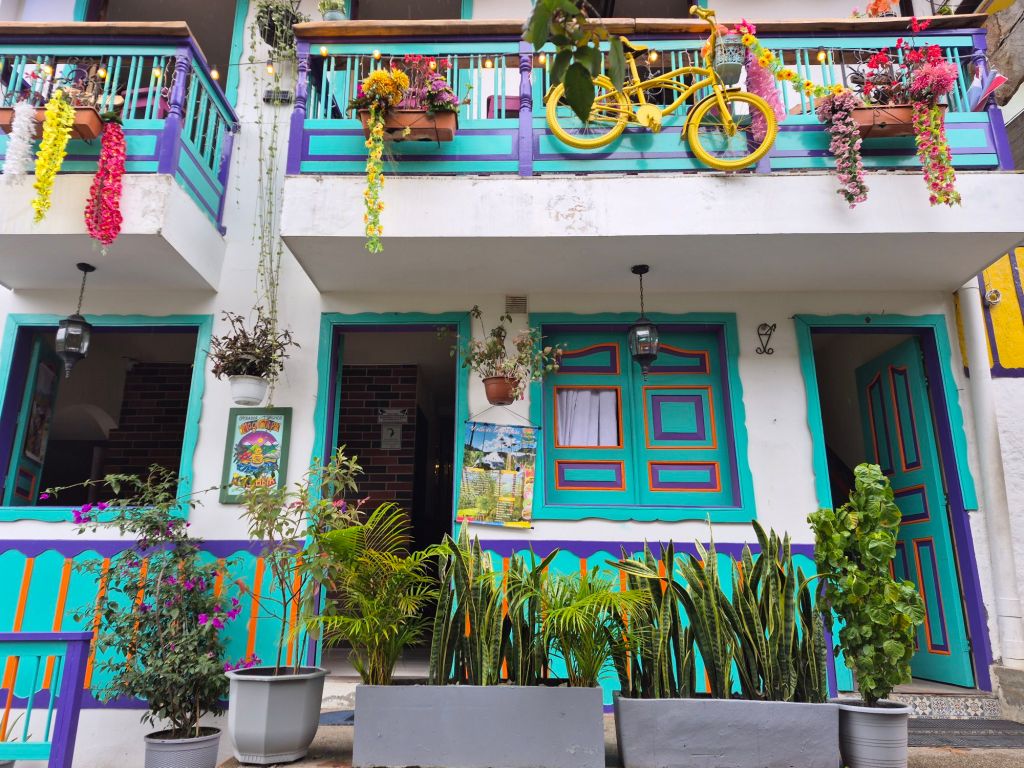
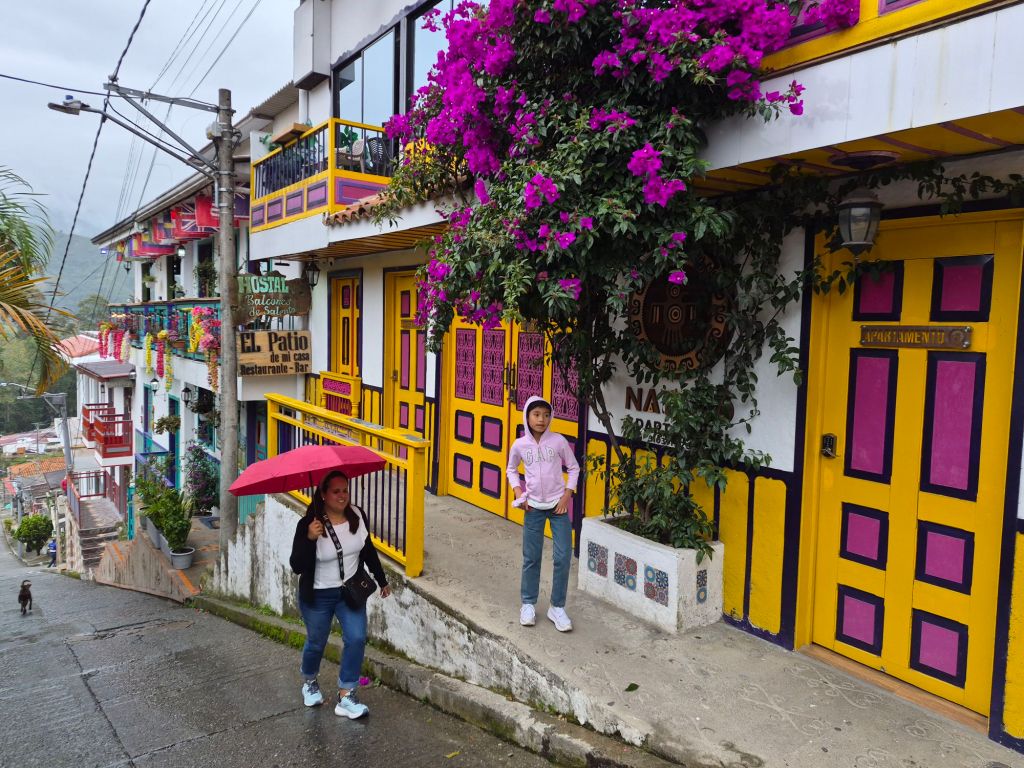
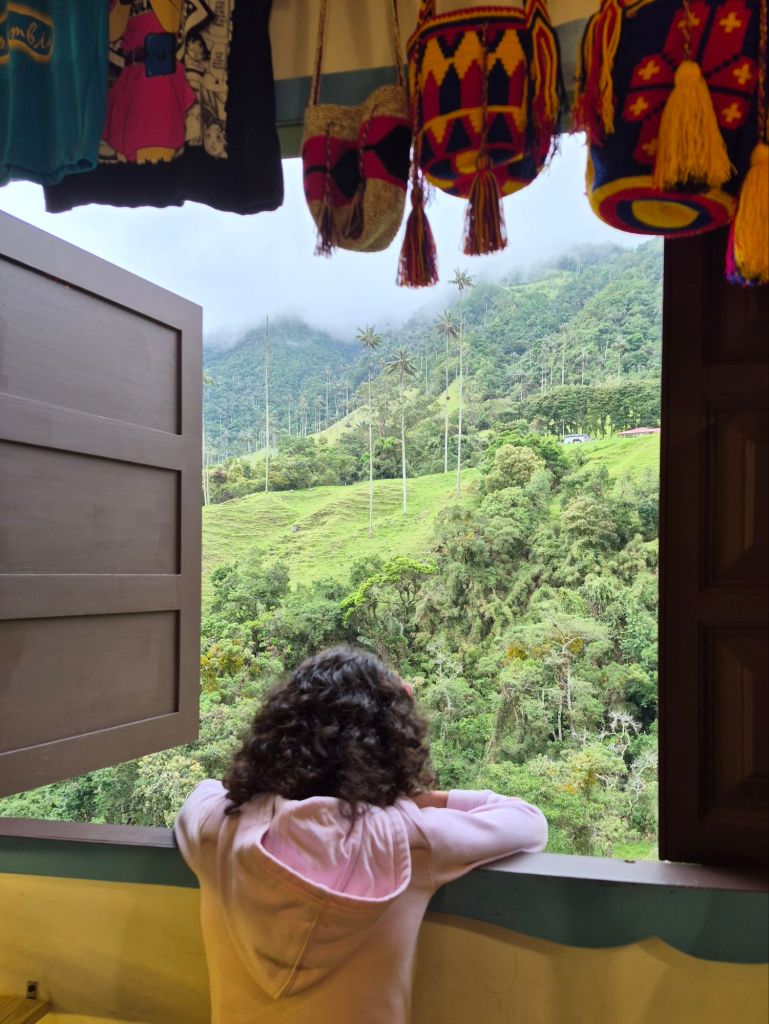
They took me to Solento later that morning, one of Colombia’s main tourist destinations, and we walked up the Valle de Cocora (Cocora Valley), where the very tall Quindío wax palms (Ceroxylon quindiuense) grow, the national tree of Colombia – a sight to behold.  We walked through the town, taking pictures and having lunch at a restaurant which was in an old house, beautifully restored.  I bought some coffee – it was the coffee region after all – which I now have to carry with me until December.  

The wax palms
Solento
Interesting interior of the church
The restaurant where we had lunch
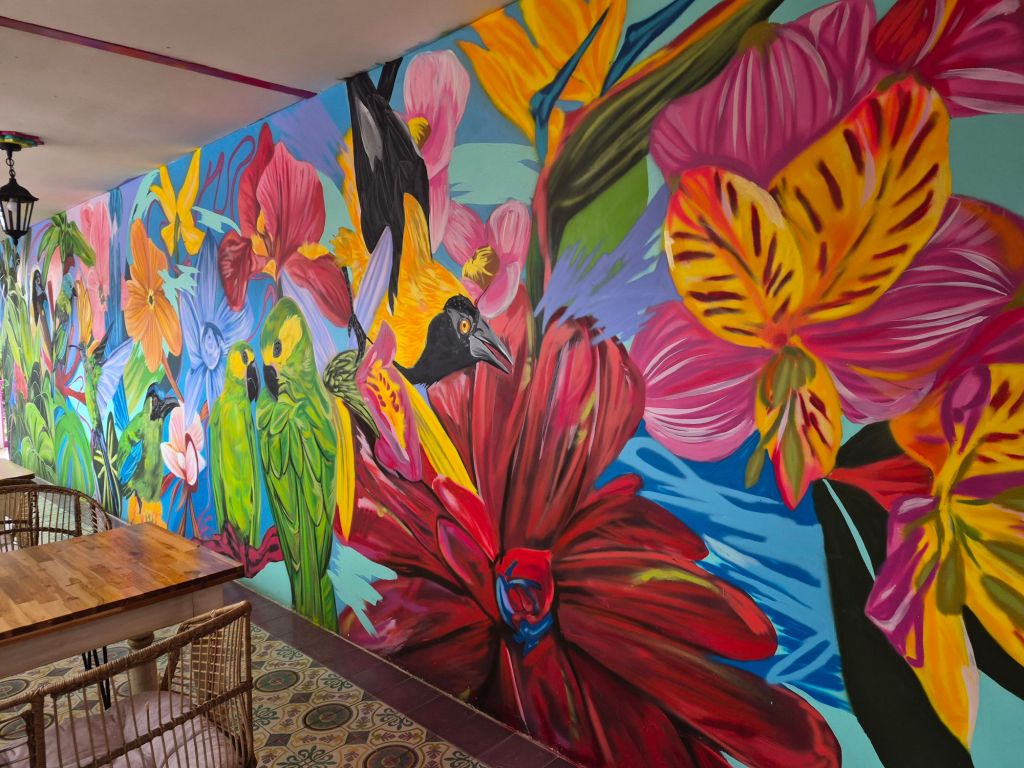
Mural at the restaurant
Traditional way of making ice-cream.  100 yrs ago, people went up in the mountsin, cut a block of ice which was put in water, with the ice-cream being made in a copper bowl in the icy water.

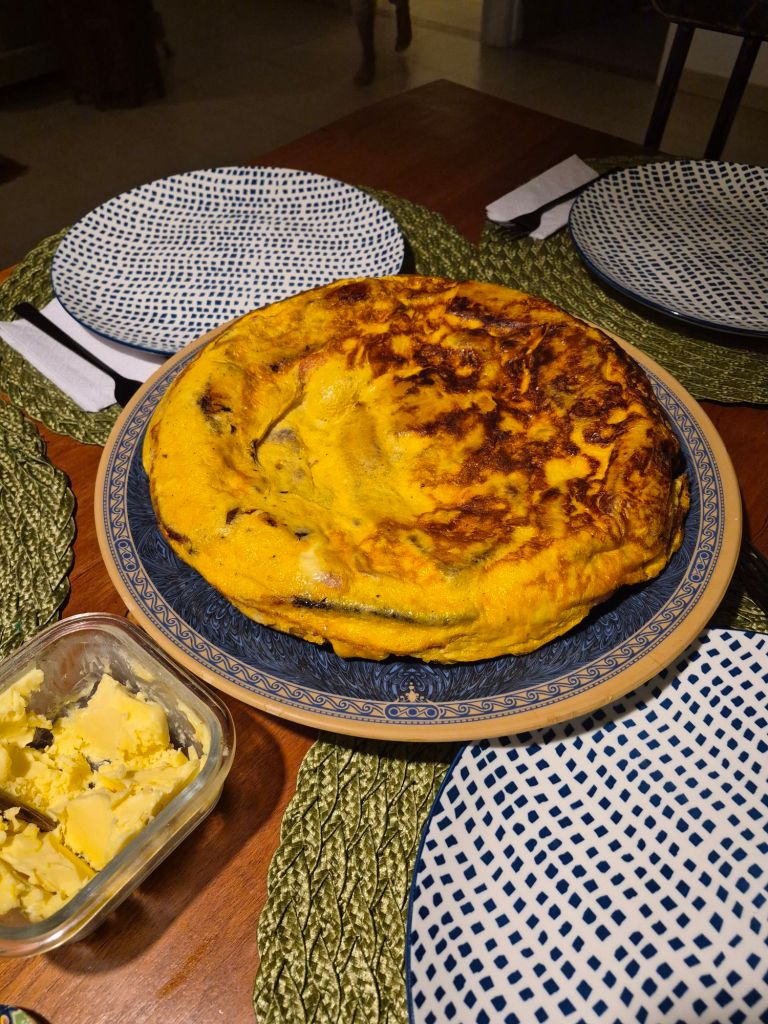
When we came back from Salento, Amanda had made a perfect tortilla with plantains from the garden.  Usually the tortillas are made with fried potato pieces, but the plantains give a different flavor and texture.   Plantains are a big type of banana that is used only for cooking.  The thin flat chips that are made from them are often served as a side dish instead of potato chips.  

A fitting meal to end off a wonderful day. 

The hospitality of Rickus, Xio and their family touched me deeply.  We had many open conversations and discissions about family, child rearing, religion and life in Colombia. There are certain parts of Colombia that are controlled by drug lords, and life can be difficult there, as it is a war zone.  There is to be an election in May, and a promising presidential candidate has said that if he wins, he will attack the drug lords and their industry.   Armenia and surrounds are in a very safe area, and as Amanda said, it is absolutely wonderful to live there.  Xio does home schooling with Alexis and Elen, and they both passed their grades the day I returned to Bogotá. 

Two happy children – congratulations on hard work!

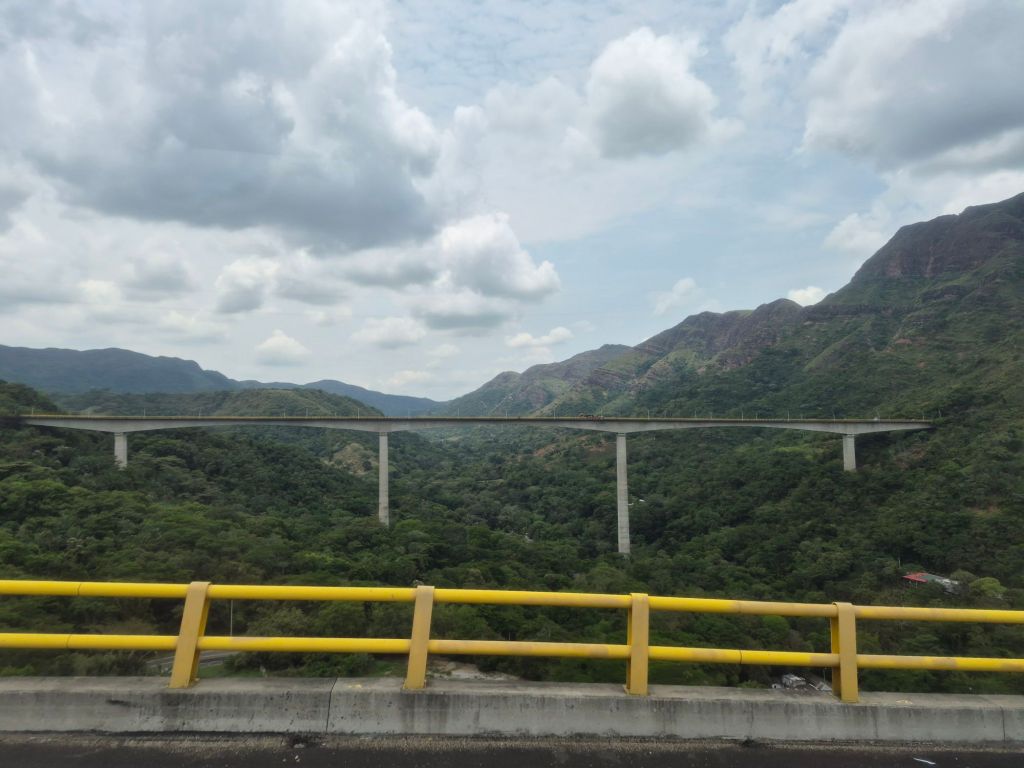
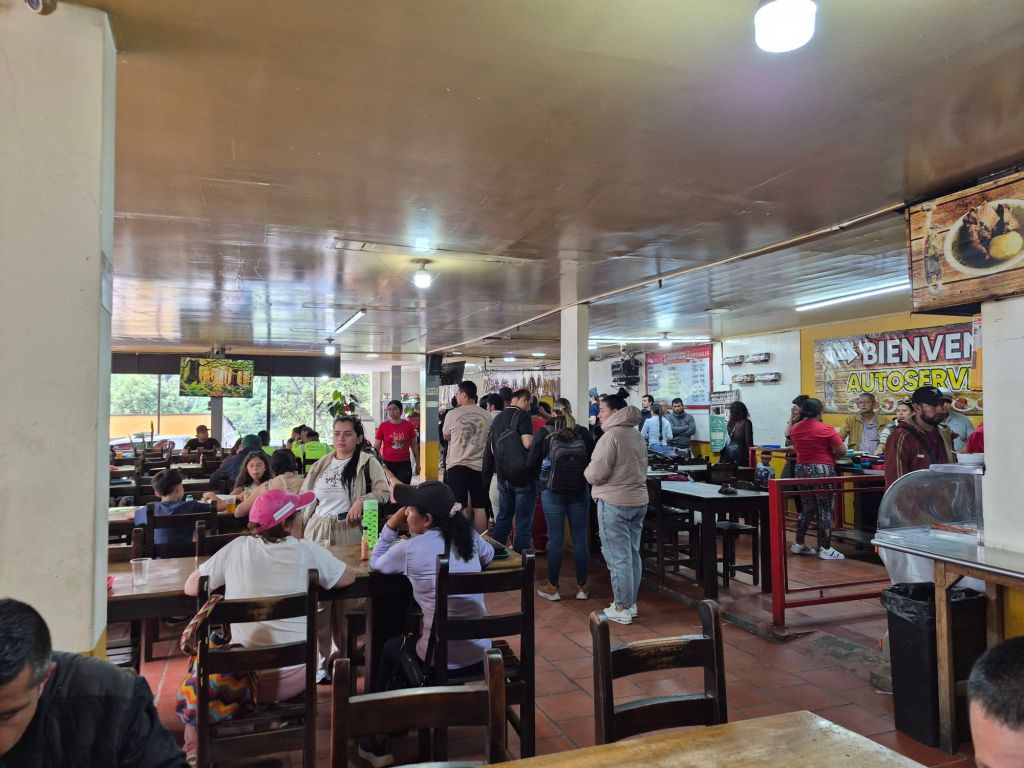
The road to Armenia is interesting in that for a certain stretch it is dual carriage, with the way there following the old, winding pass, and the way back going through tunnel after tunnel and many viaducts.  Naturally the travelling time back to Bogotá is faster, but not as scenic.  The bus stops at a restaurant next to the road, and evidently one can get a free meal, but the queue was long and I couldn’t figure out how to do it, so I just ate the delicious lunch that Xio had packed for me. 

View of Armenia
The old road below a viaduct
One of the viaducts
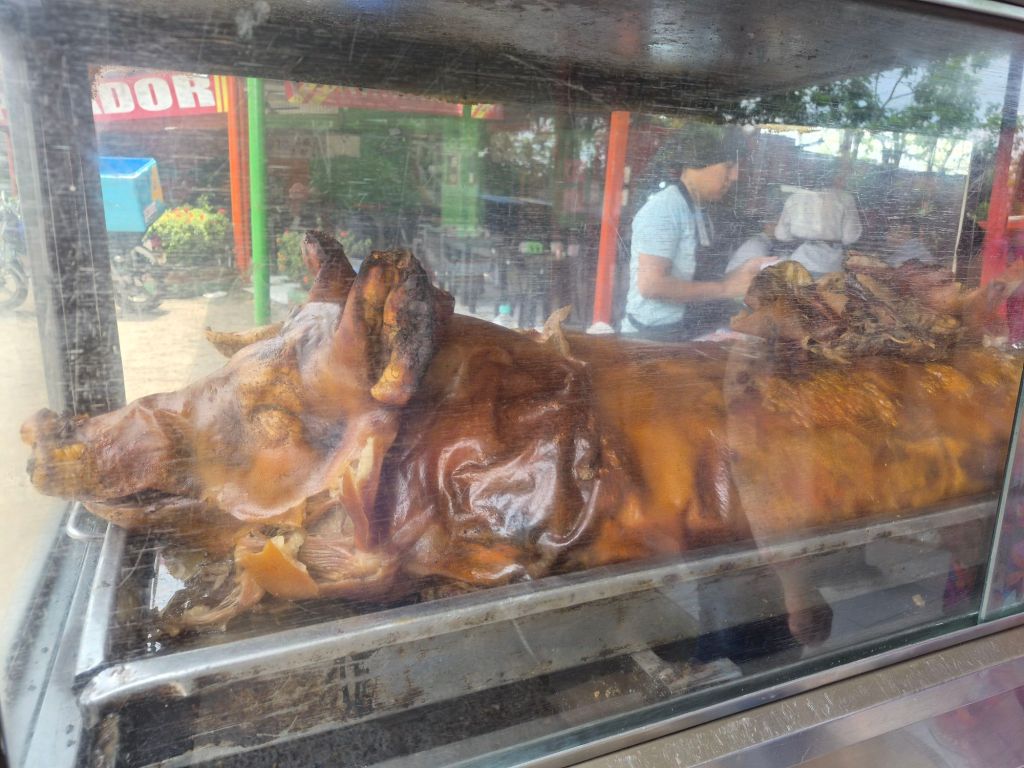
Roast pig was on the menu, I assume
Long queue

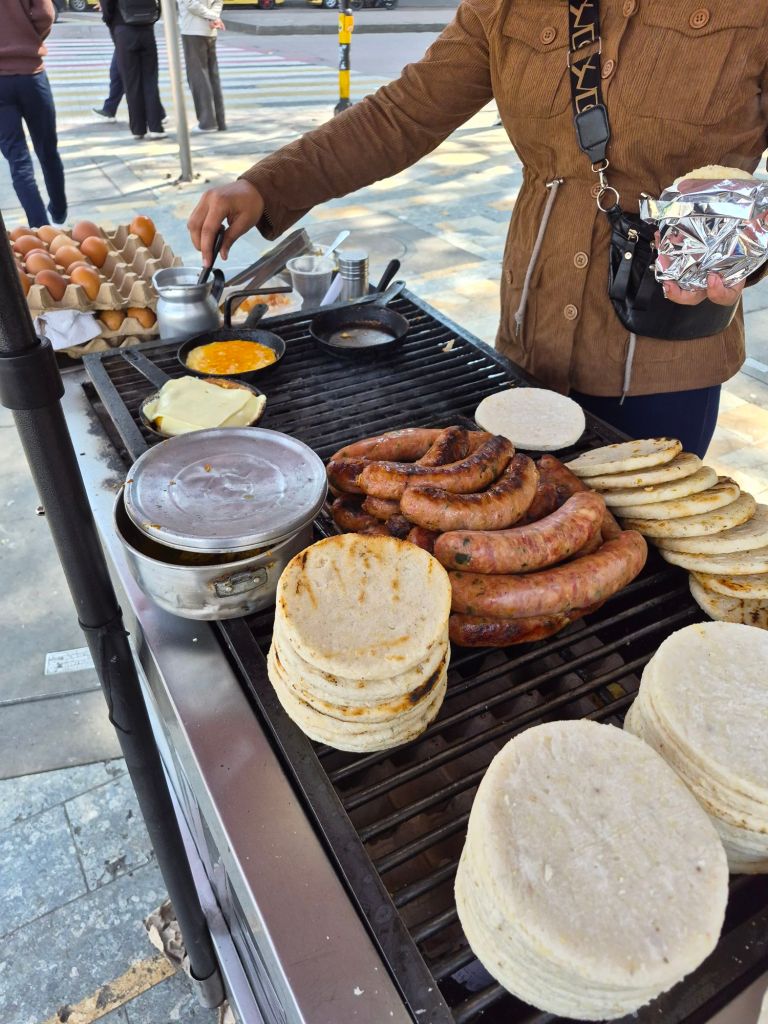
Back in Bogotá I stayed at the Hotel Artistico again, and discovered a small restaurant with good food around the corner, one block away.  I was a bit wary of going out after dark, but hunger made me brave and Rickus’ advice was to walk purposefully with chin held high – it worked, no threats at all.   The matronly woman who runs the restaurant, does everything – the cooking, serving, cleaning  and payments, all very homely.  The hamburger had fesh lettuce, tomatoes, cheese and a decent patty.  No eating utensils were provided, so the eating was a homely mess too.   One of my favourite meals has become the arepas de maiz (round, flat buns that are made from maize flour).  They are sliced open, like a pita, and filled with anything.  I first had them at Xio’s house, when she made them with a curry mince filling and cheese.  The breakfast ones on the market street are filled with egg and cheese, and served in a foil envelope that keeps it warm. 

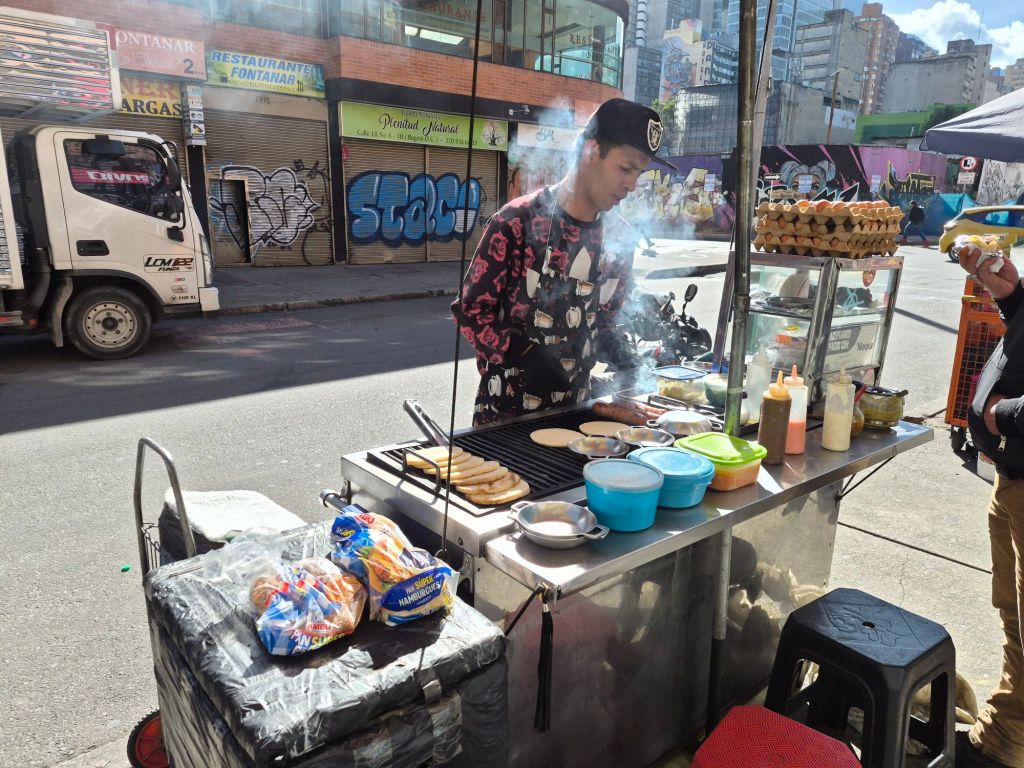
A street vendor selling arepas
The homely restaurant
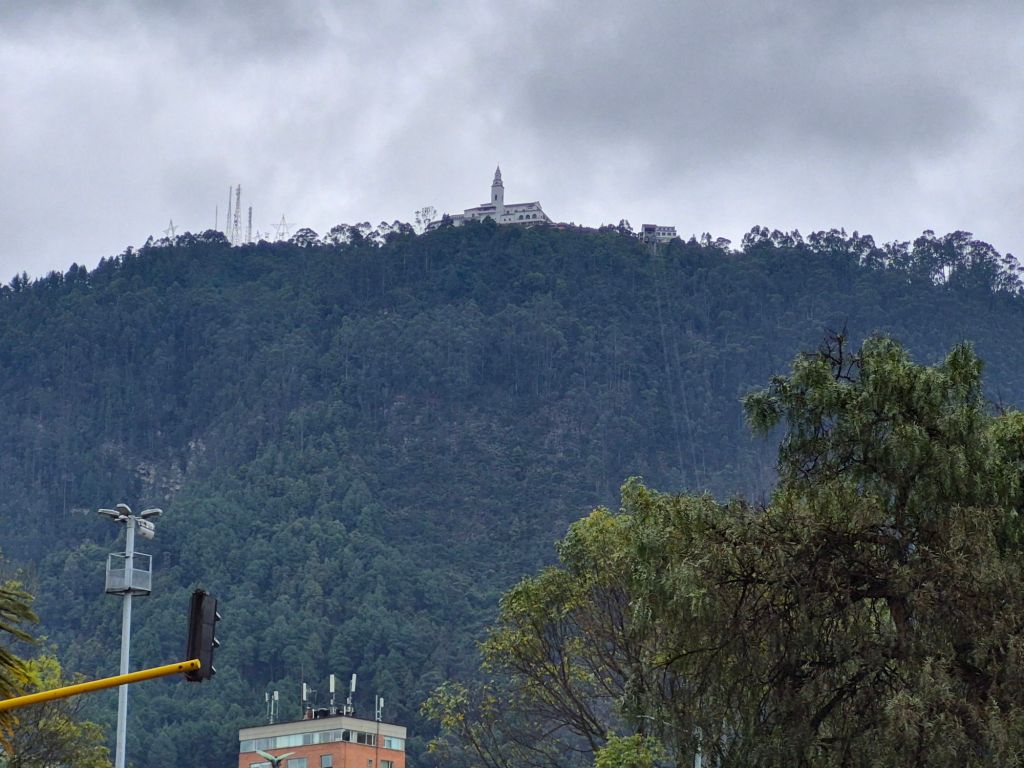
Monserrate, the high mountain overlooking Bogotá, with a church and a shrine.  I will visit it when I come back to Bogotá at the end of my Colombian trip. 

23 March 2026  Montevideo

I had a very relaxed and interesting week in Montevideo, a city that epitomises the Uruguay approach to life.  I’ll mainly post pictures, they depict what I experienced, but I cannot refrain from telling a story or two. 

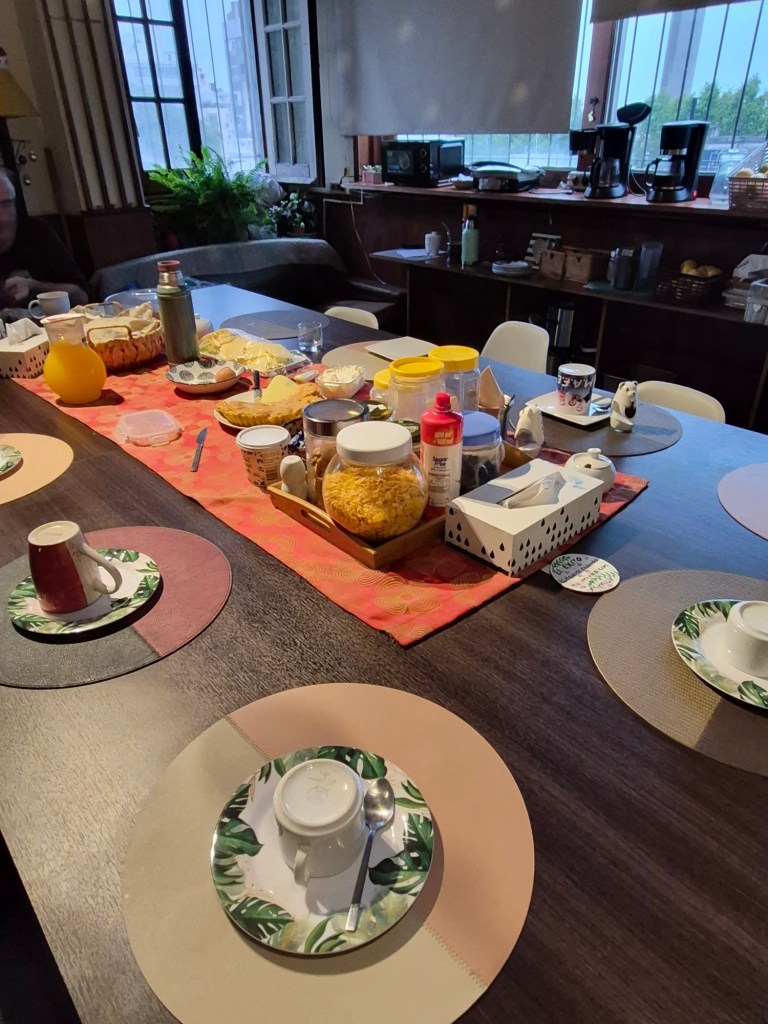
The first one is about my arrival.  The bus ride gave me the opportunity to re-establish my equilibrium, and the reception at Montevideo Hostel was extraordinary.  Annette, the owner, gave me the warmest welcome, inviting me to have breakfast even though it was already noon.  The spread (every day, available the whole day!) consisted of eggs, freshly baked flat buns, cheese, salami, fruit, tea, coffee, juice, yoghurt,  seeds, corn flakes, cake, and sometimes a special treat like aroz con leche (a rice and milk desert). 

Annette baked fresh flat buns every morning

I was shown to a 6-bed room, but we were only two in the room, making it more comfortable.  There was a locker to unpack my things into, and a little balcony just outside the room, which became my personal haven for the week. 

Note the little Persian carpet

I can strongly recommend this hostel.  Annette runs it like a home, and everybody is family – mostly young guys who work in Montevideo for a few months and live there, some even up to a year. 

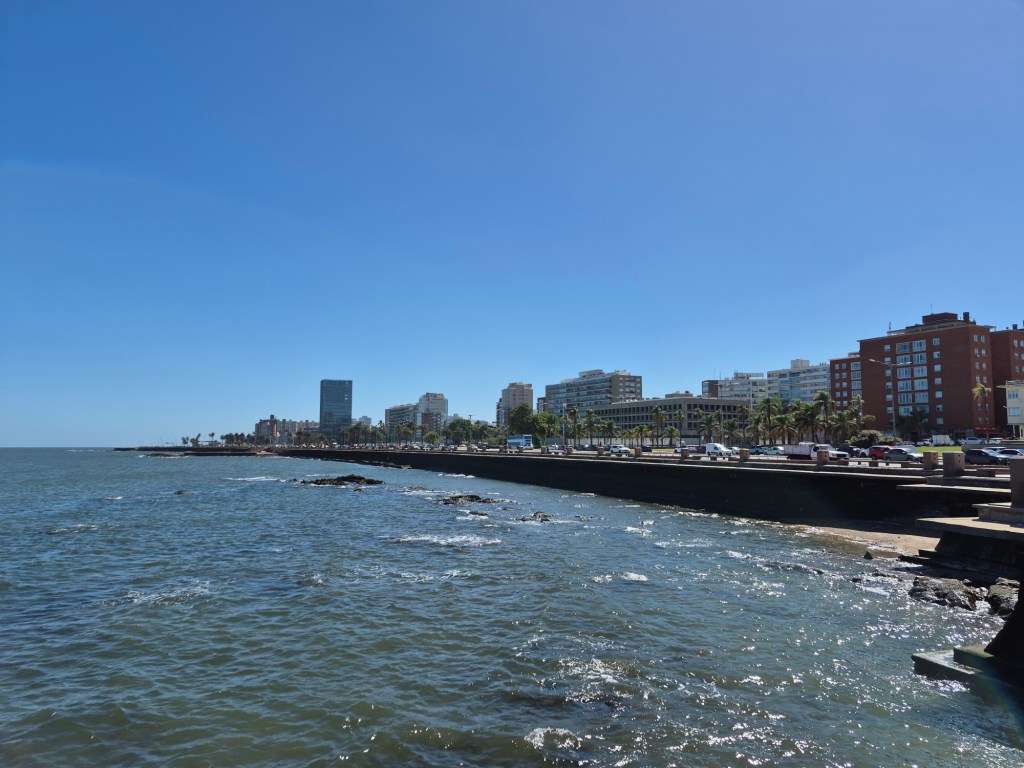
After a healthy ‘breakfast’, I set out on an exploratory walk, straight down to the sea through a rather rundown neighbourhood, deserted on a Saturday afternoon, and along the broad promenade which runs all along the sea for many kilometers, called the Rambla Sur (Southern Boardwalk).

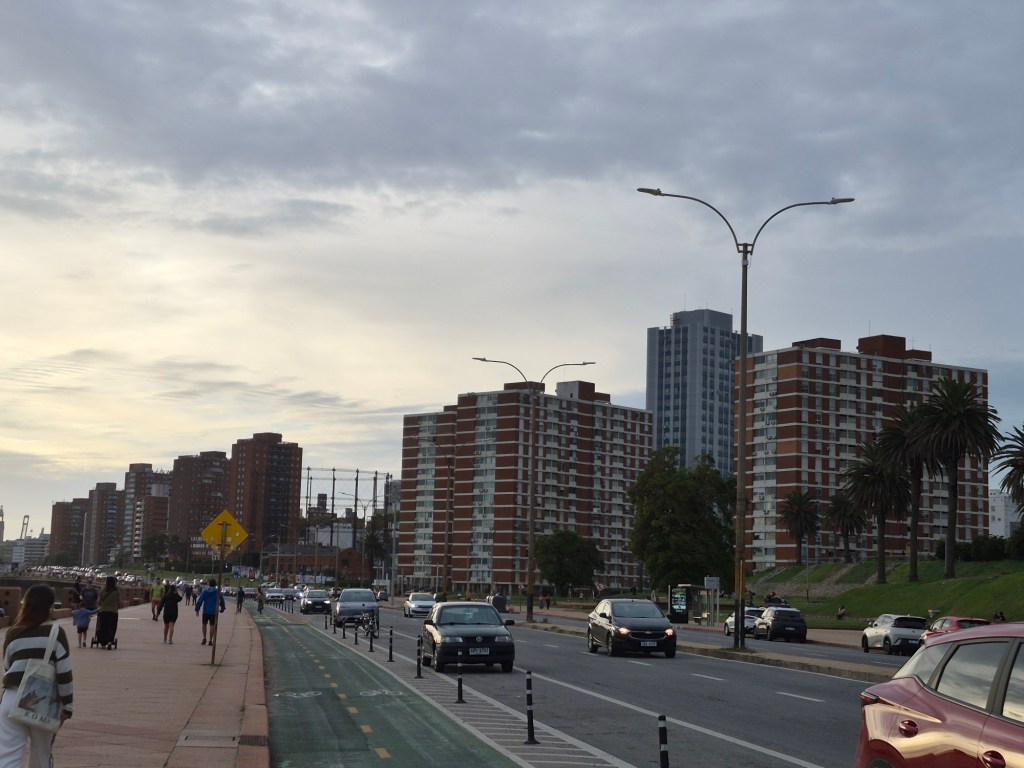
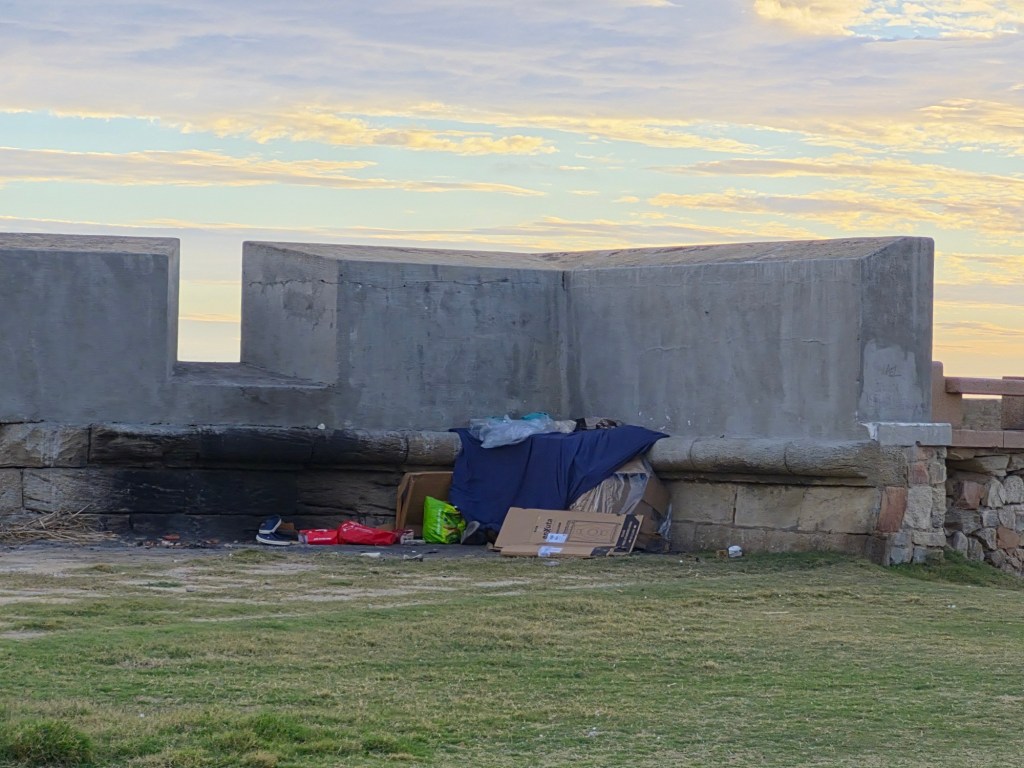
The further I walked, the more despondent I became.  Everything looked drab in comparison to Punta del Este, the sea was polluted and brown, the people looked different, there were beggars and homeless people lying in nooks, the high-rise buildings were facebrick and brown, and in general the buildings looked neglected.  “Montevideo is ugly,” were my thoughts, “how am I going to spend a week here?” 

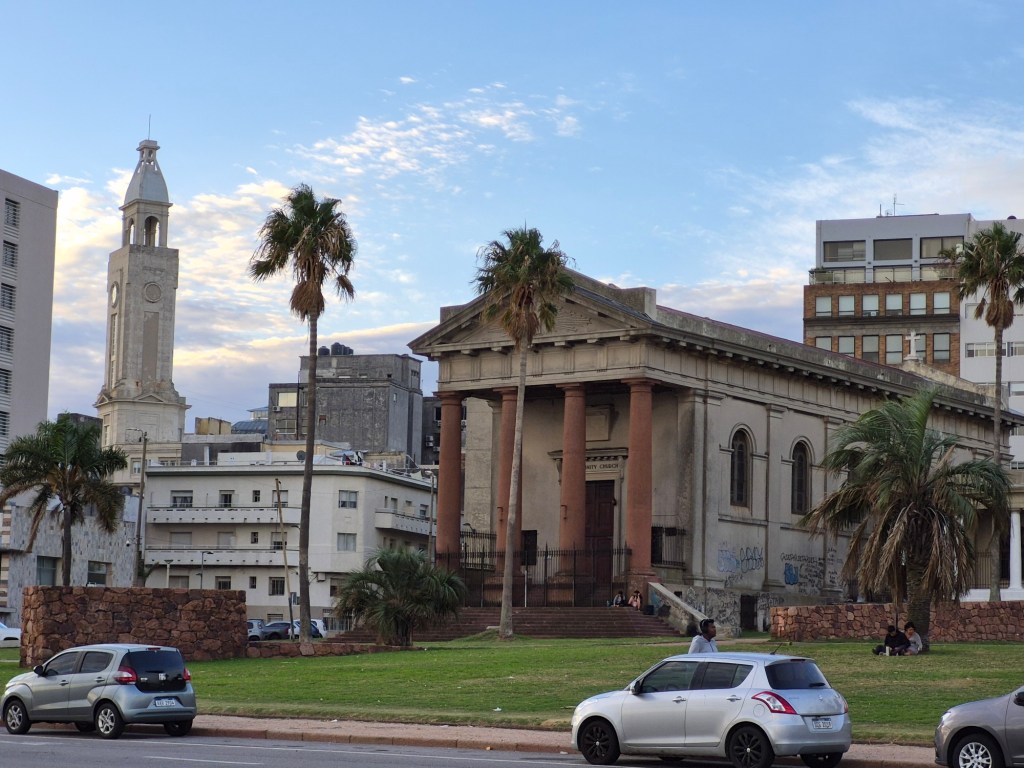
This church was in decay – dirty, broken windows, filth everywhere

I veered inland when I was opposite the old city, and then the magic started to happen.  Suddenly there were more people, coffee shops and restaurants, and as I started walking up Avenida 18 de Julio (the main street), there were plazas (squares) with interesting buildings, and as it was getting dark, lights in the street.  I was becoming more and more intrigued, and as I entered Plaza Juan Pedro Fabini, I was enthralled:  people were sitting in a circle on chairs, and elderly couples were dancing the tango – the real thing, not the staged tango dancers of Buenos Aires! 

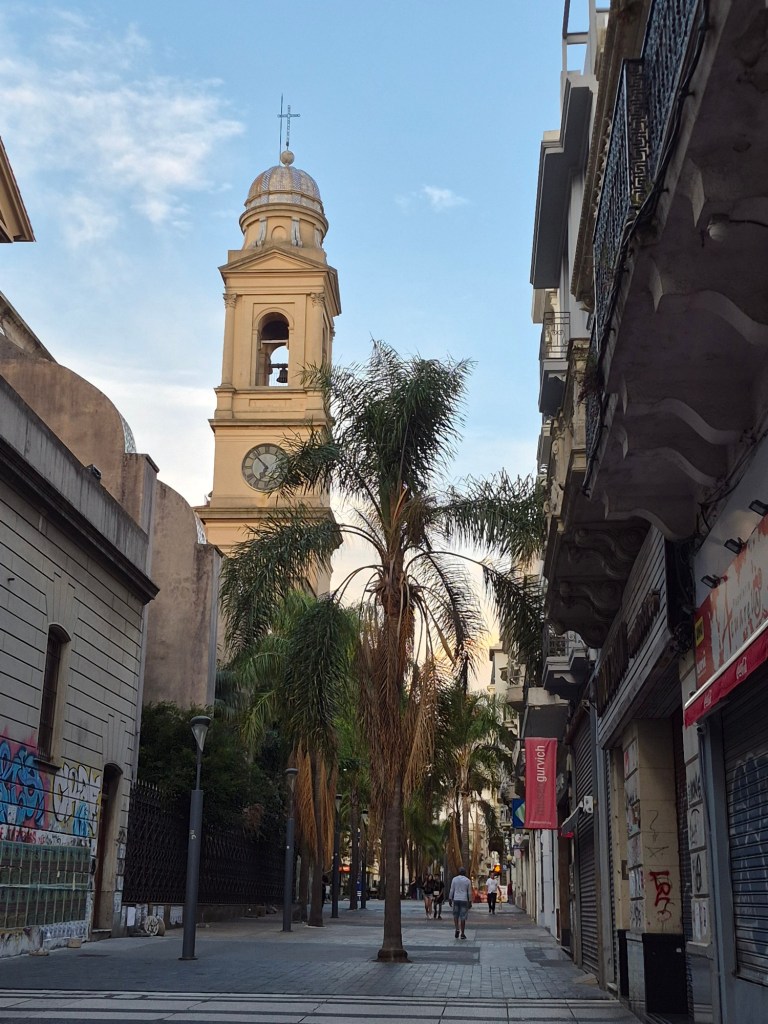
Bell tower of the cathedral
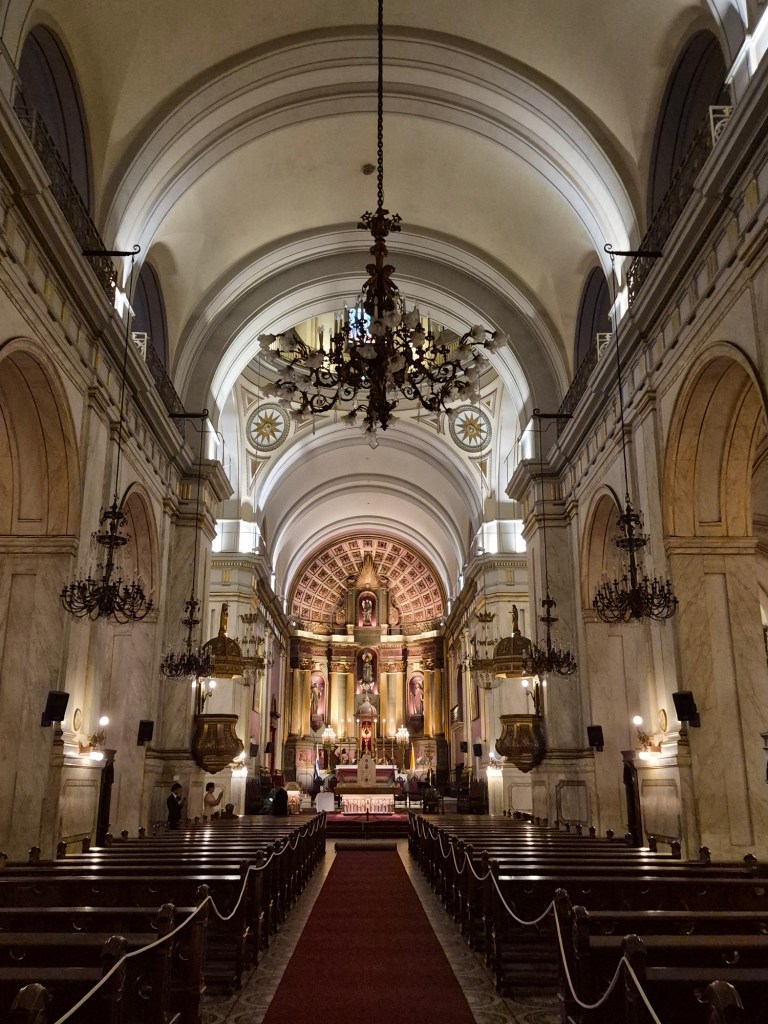
Cathedral in the Ciudad Vieja (old city), where I gave thanks for all I had previously prayed for.
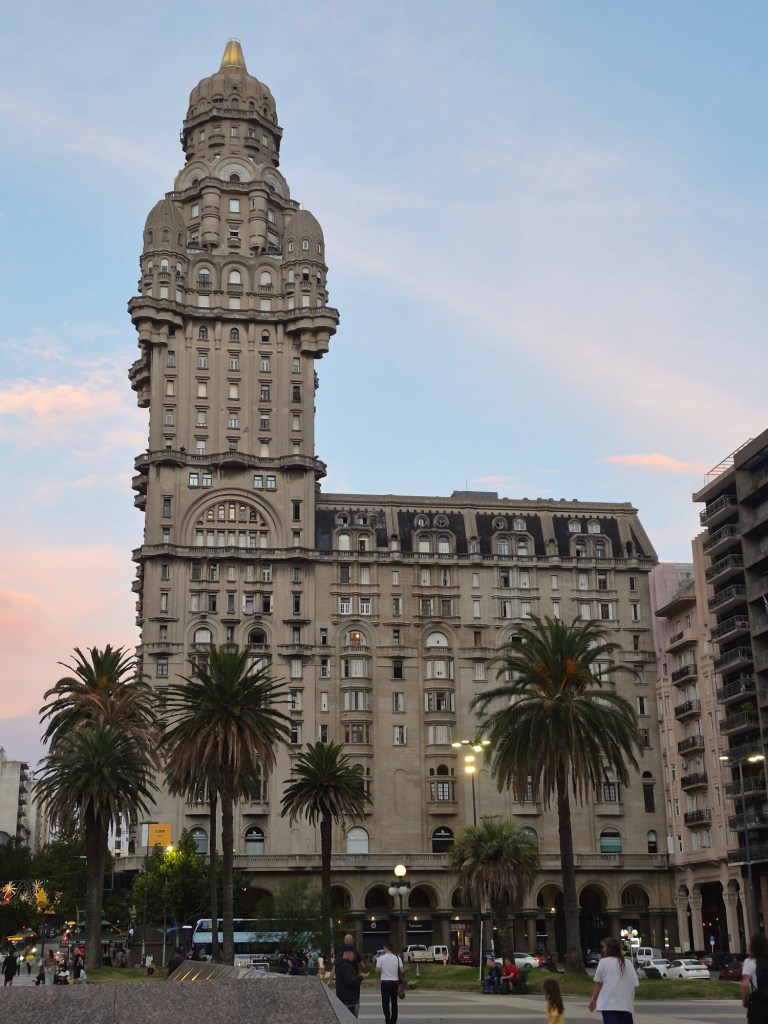
Palacio Salvo (Salvo Palace) on the corner of Avenida 18 de Julio (Avenue 18 July) and Plaza Independencia, built by an Italian architect Mario Palanti, who lived in Buenos Aires, in 1928.  It was once the tallest building in Latin America, and at its completion it was the tallest reinforced concrete structure in the world.  Palanti designed a similar one in Buenos Aires,  and his dream was to connect the two cities with a ‘Bridge of Light’ (there was supposed to be a lighthouse on top), but a miscalculation  prevented the two lights from reaching each other.  Since 1996 it is a National Historical Monument, has a museum on the lower floors, and offices and residential units higher up. 
Avenida 18 de Julio
Plaza de Cagancha

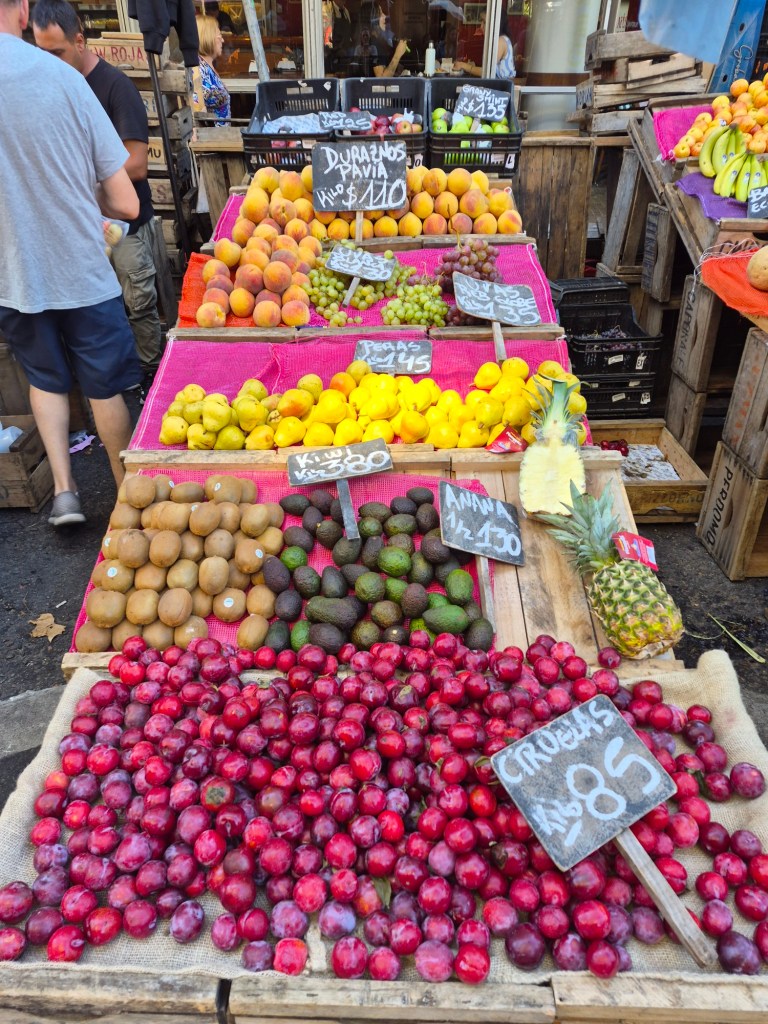
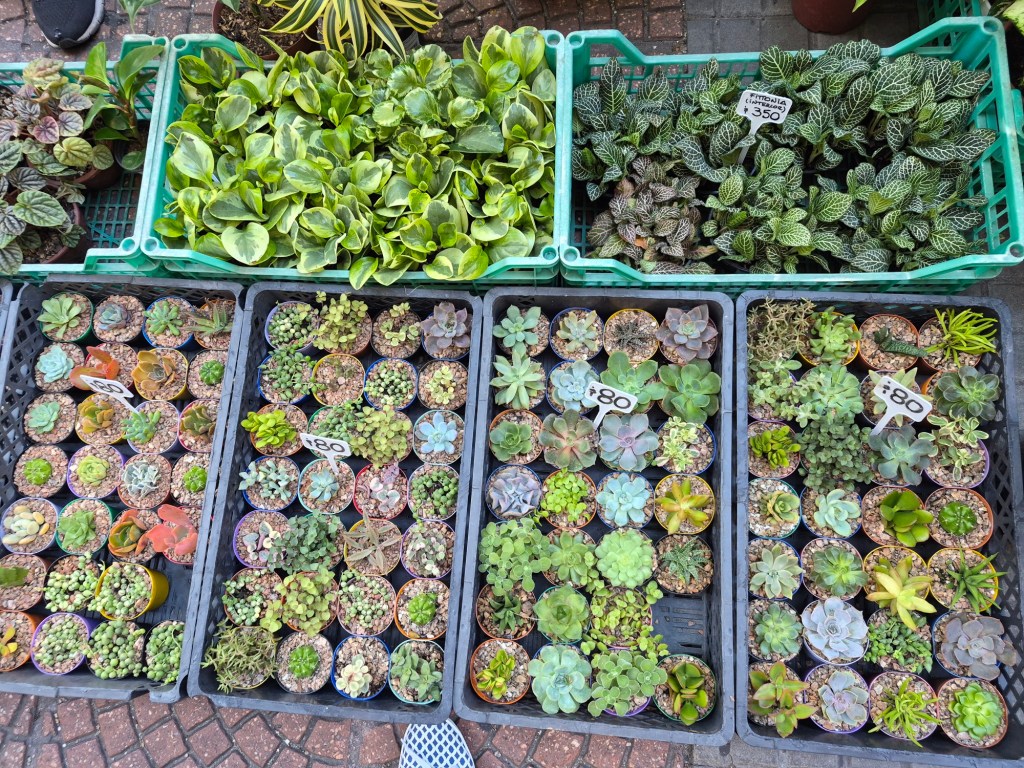
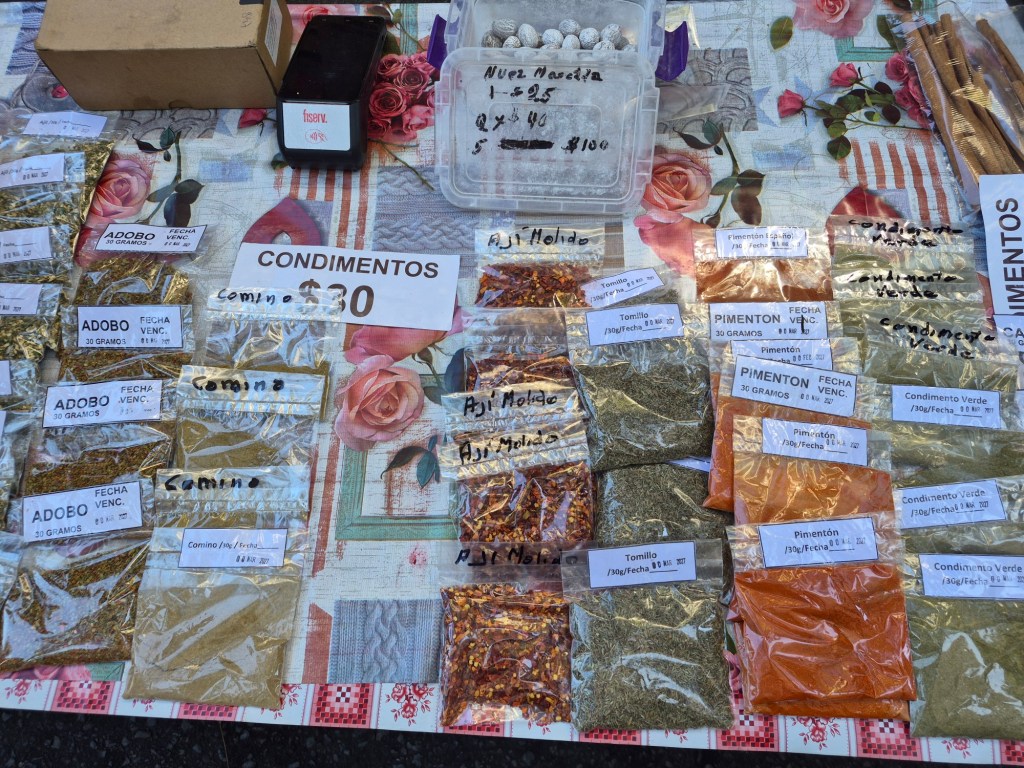
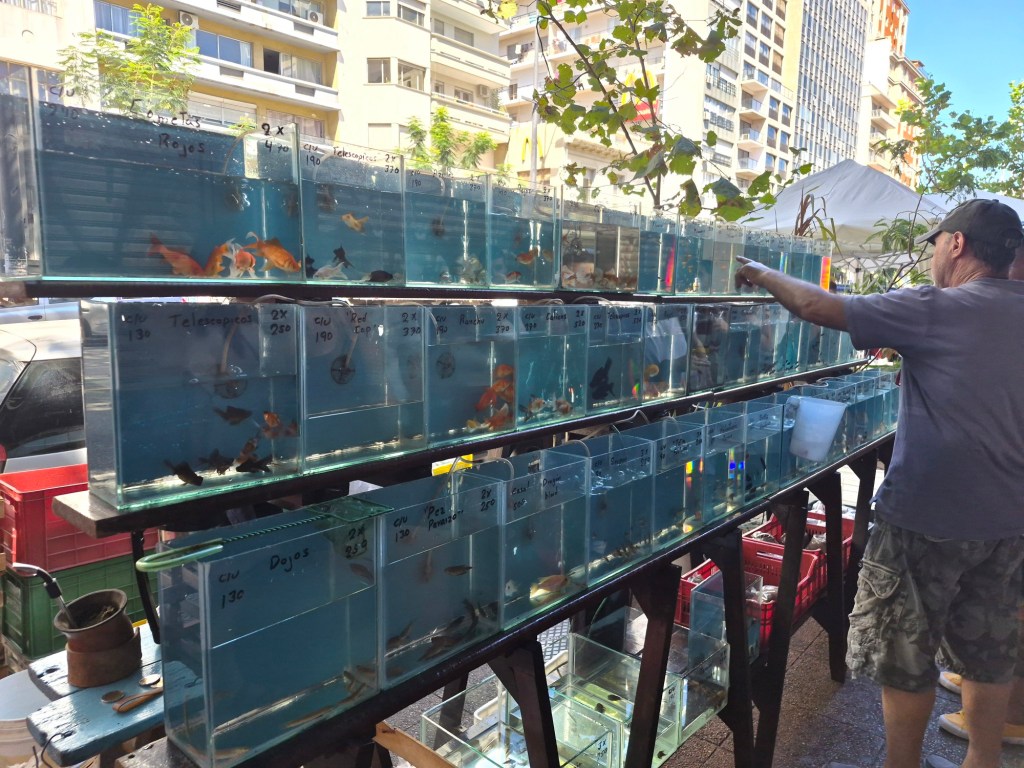
On Sunday I walked to the Feria de Tristan Narvaja market, a bustling street market that has spilled over into the adjoining streets.  I decided to buy myself a mate and bombisha, now all I need is the thermos.

Vendors advertising their goods
One can even buy pet fish

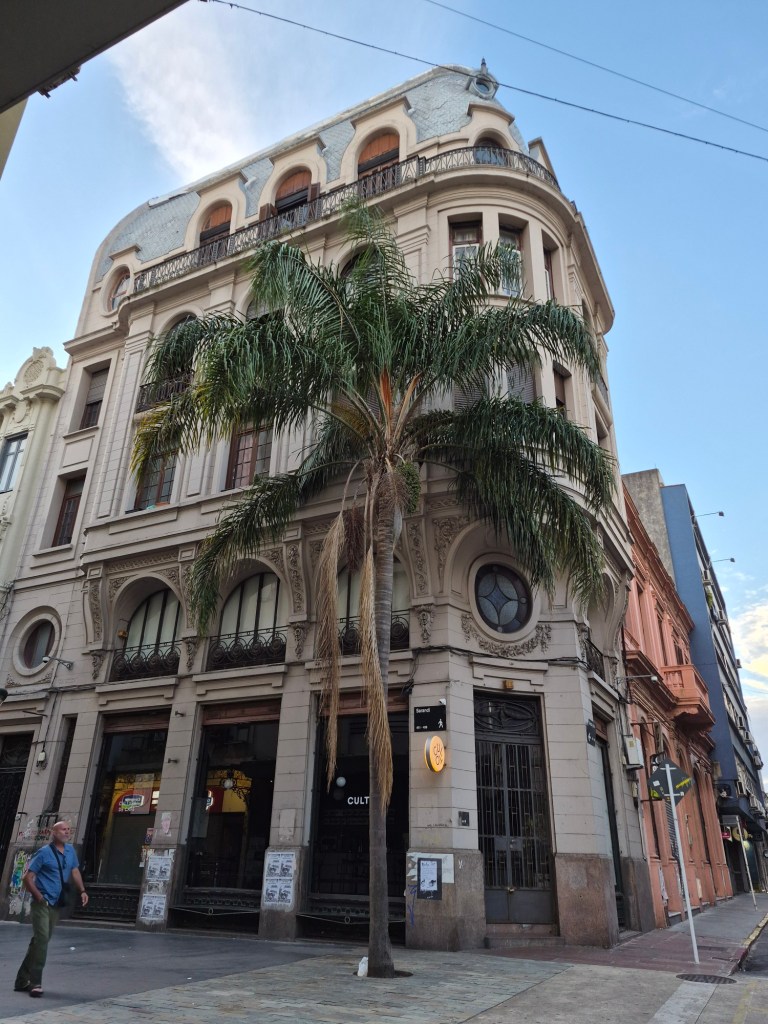
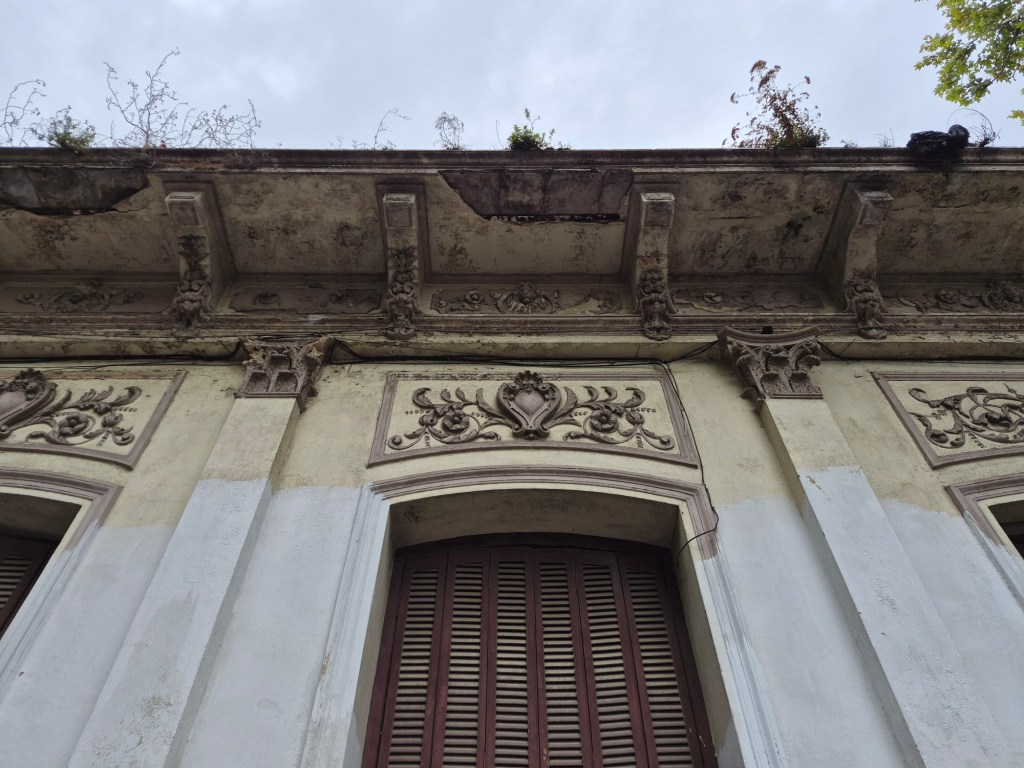
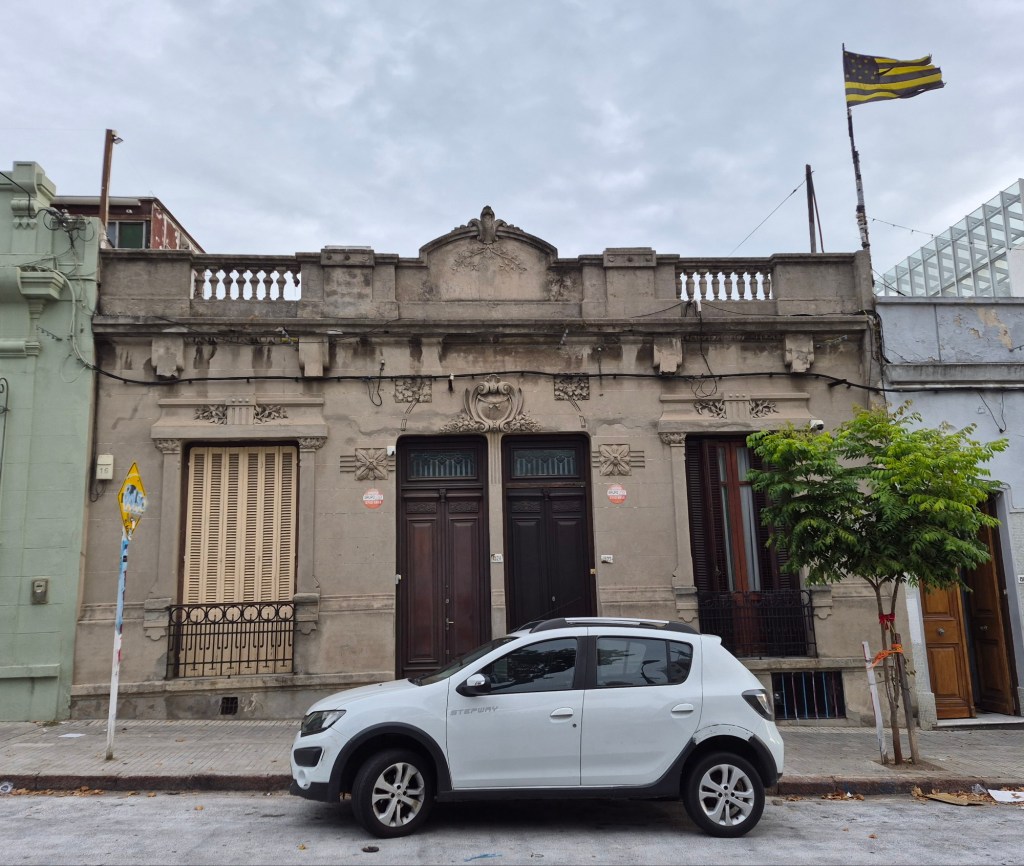
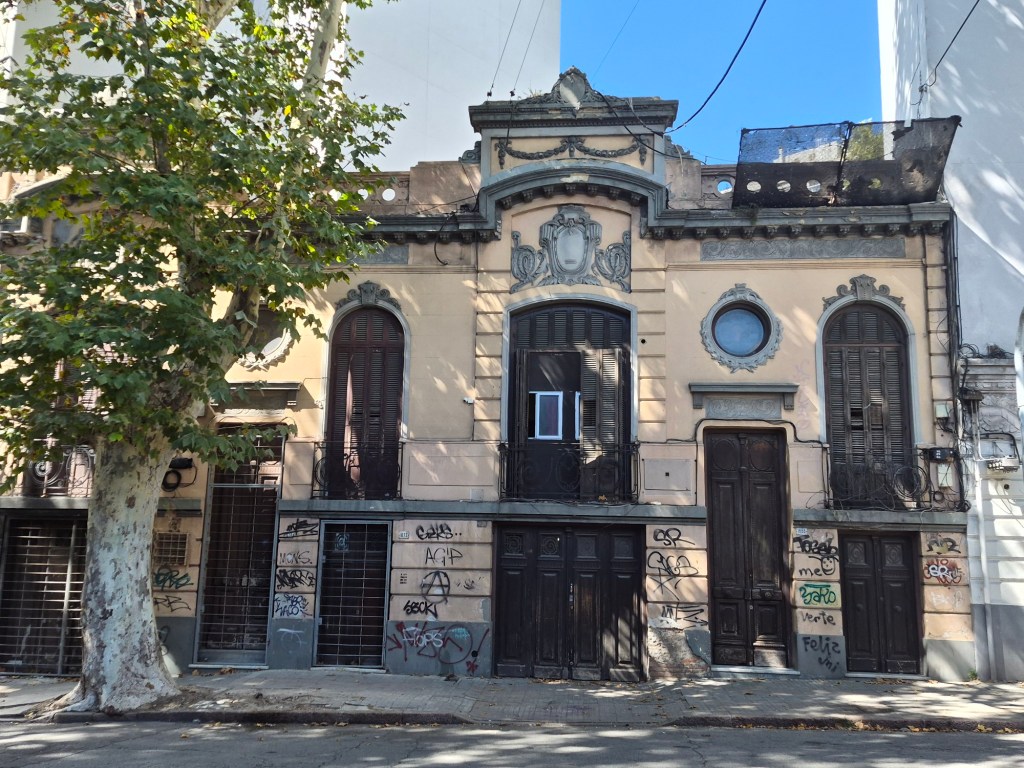
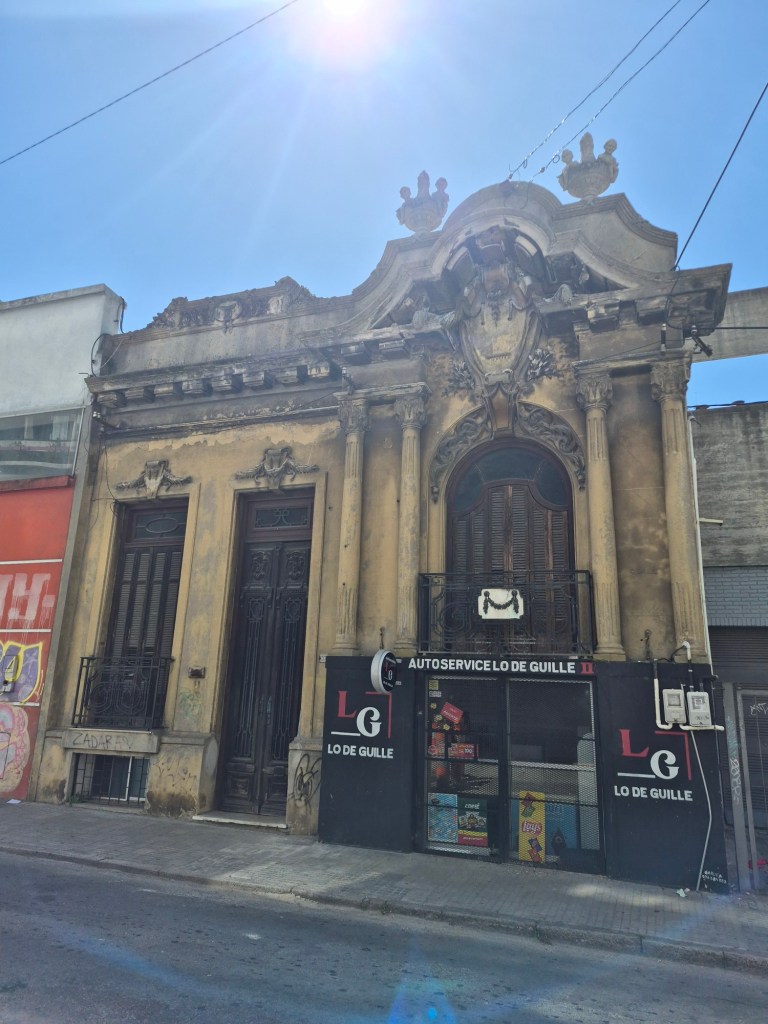
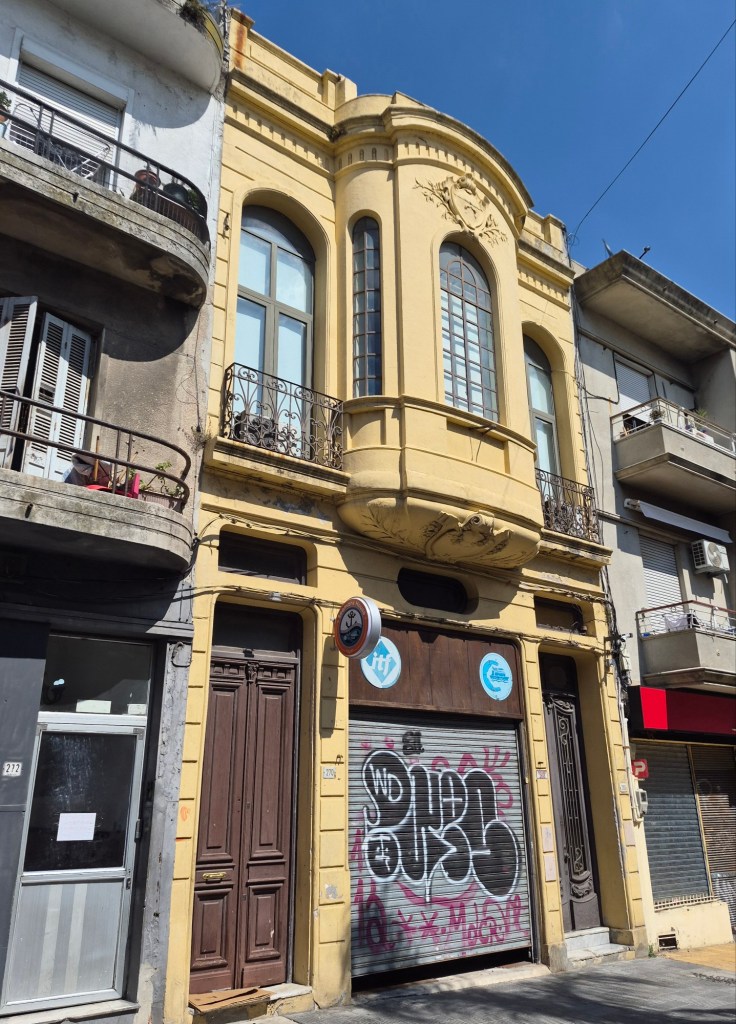
Much of Montevideo is in need of restoration – there are many striking buildings hidden in all the streets, which remind one of a thriving era of long ago. 

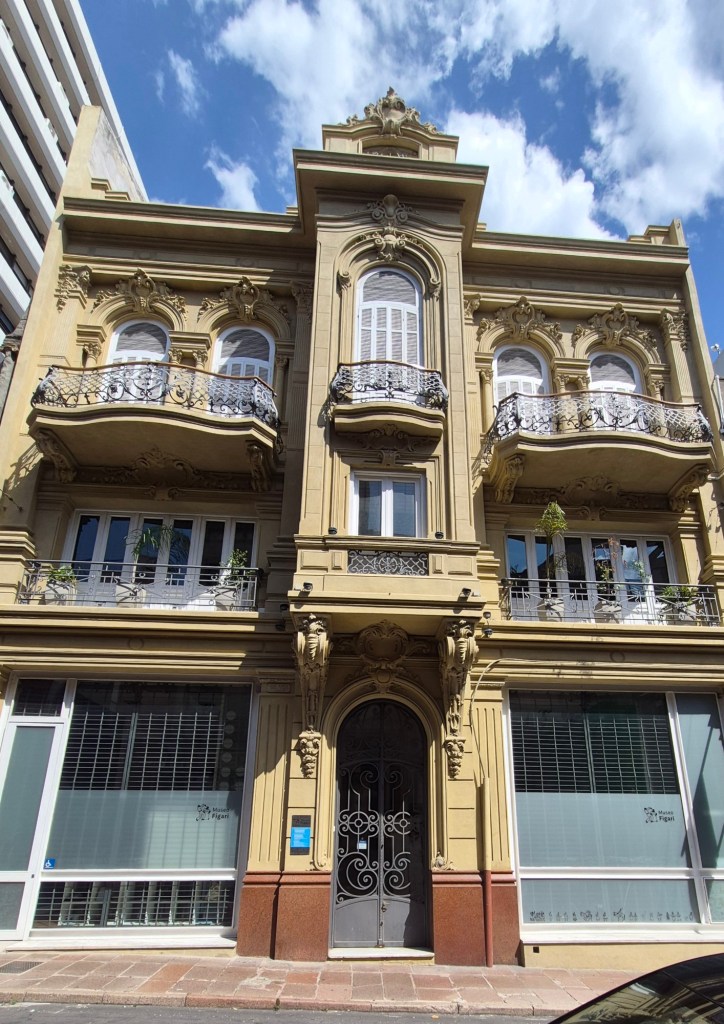
Some have been restored, marvellous

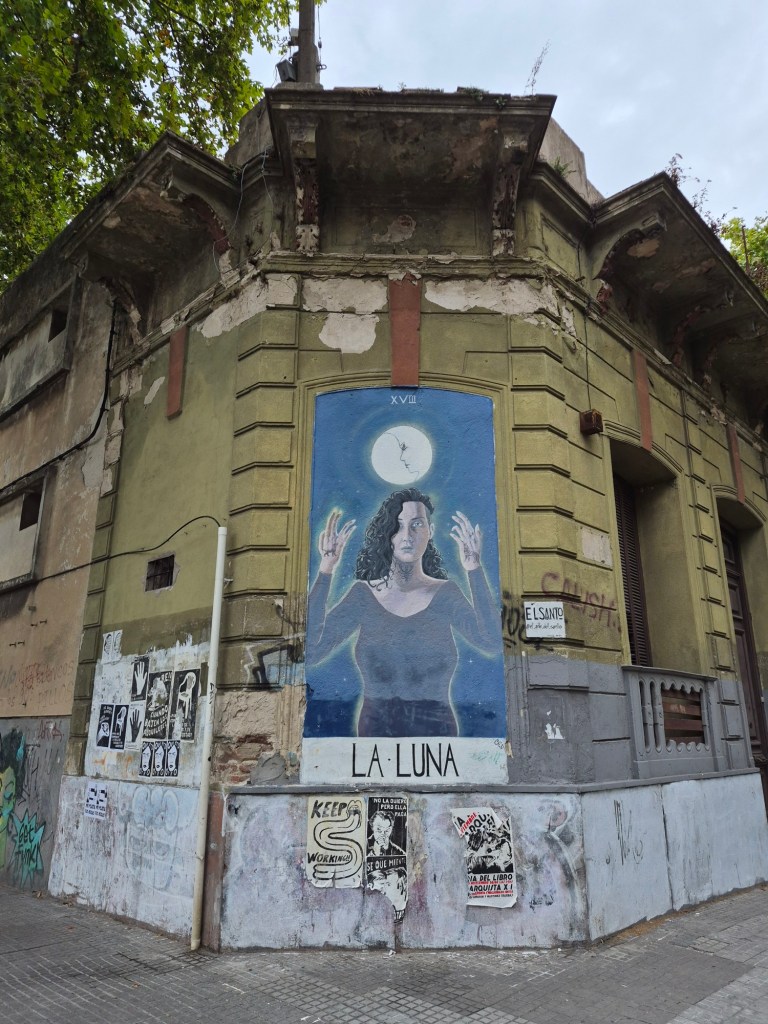
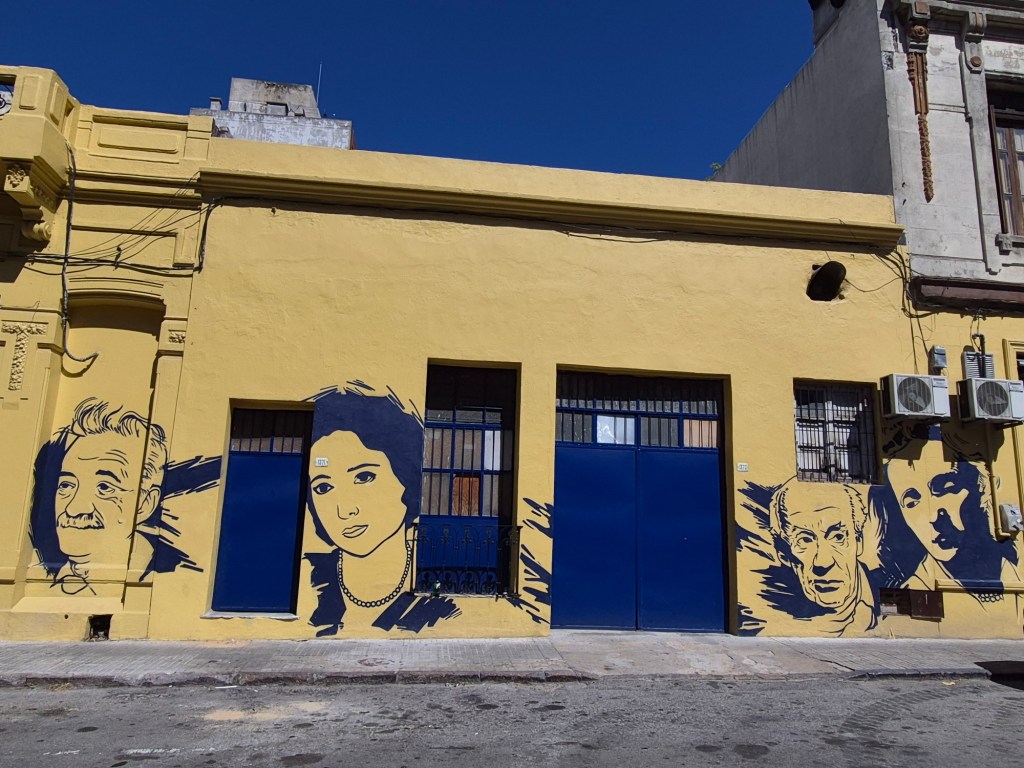
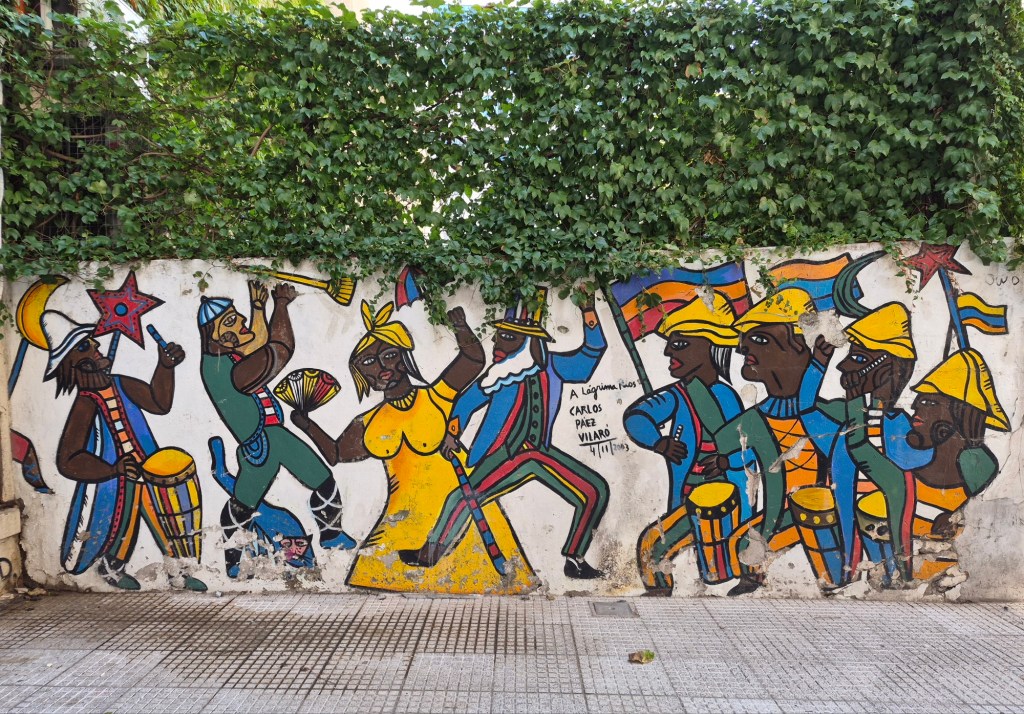
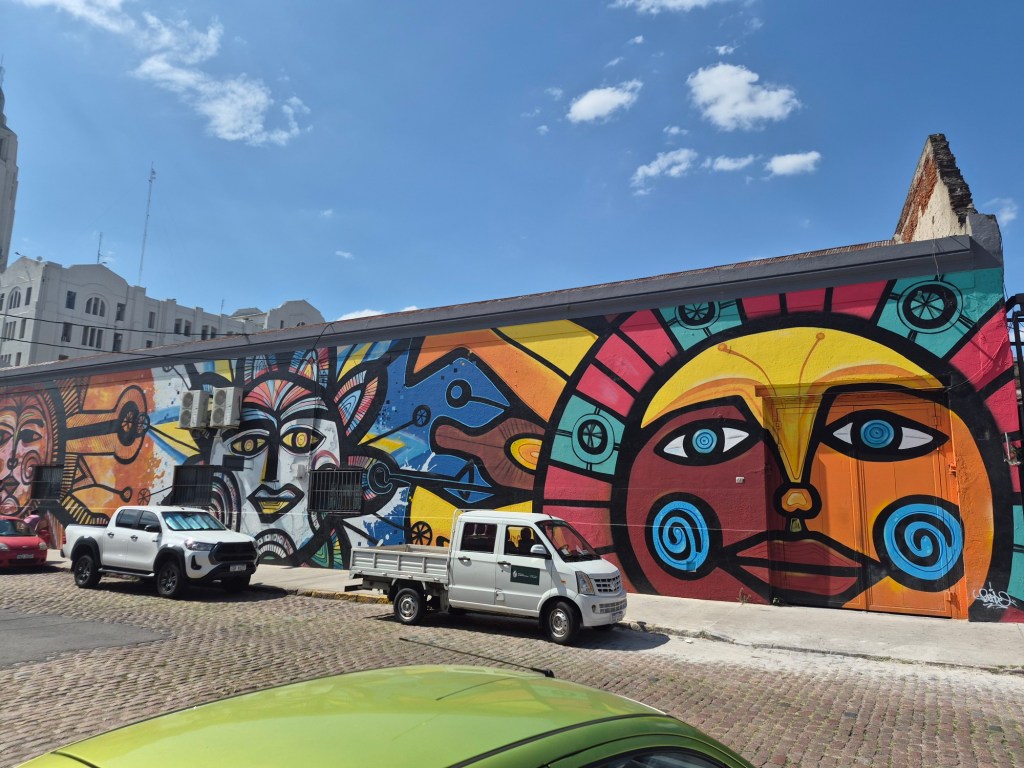
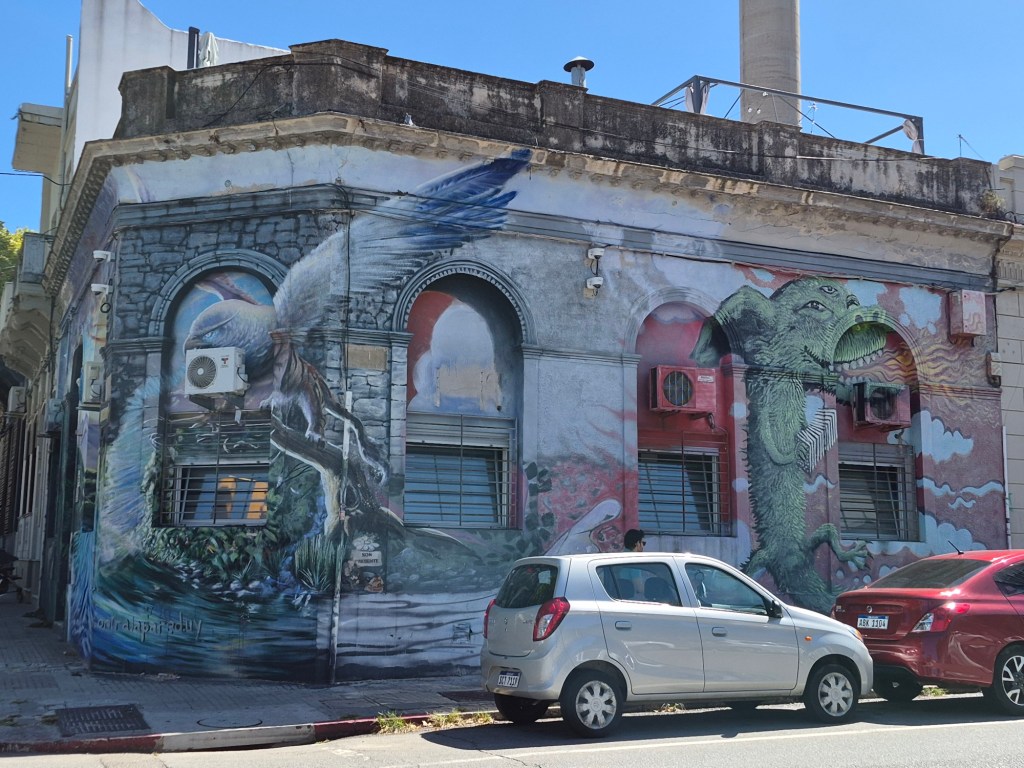
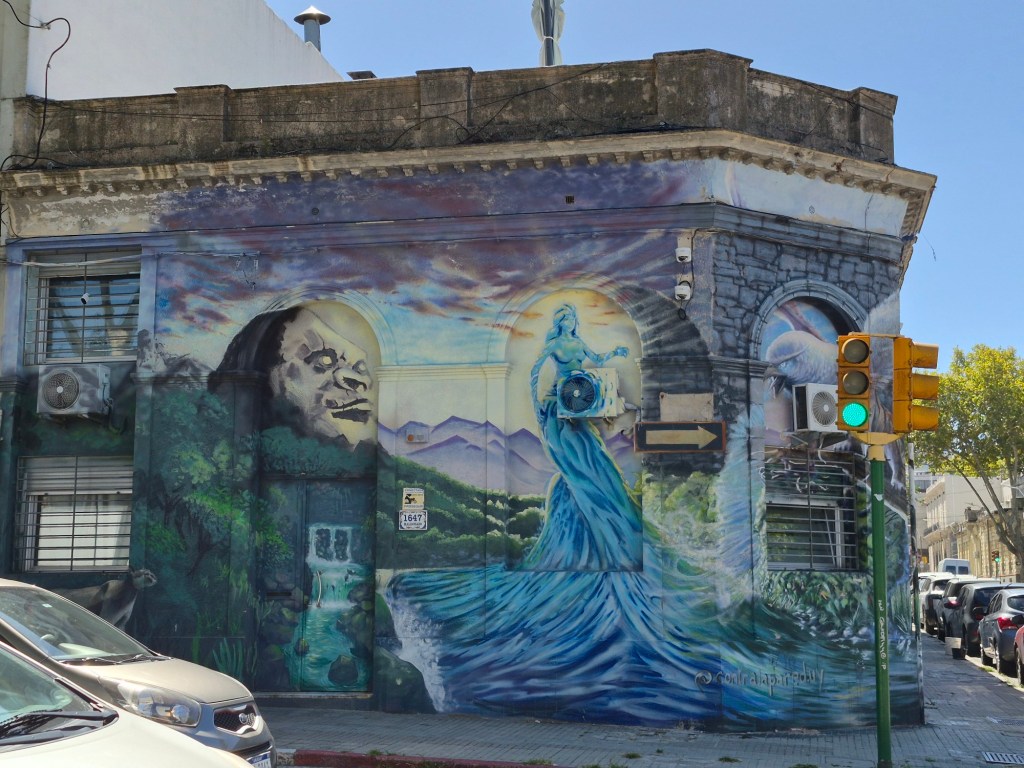
The murals never cease to amaze me:

The first one I saw on that first walk – my favourite, the moon.
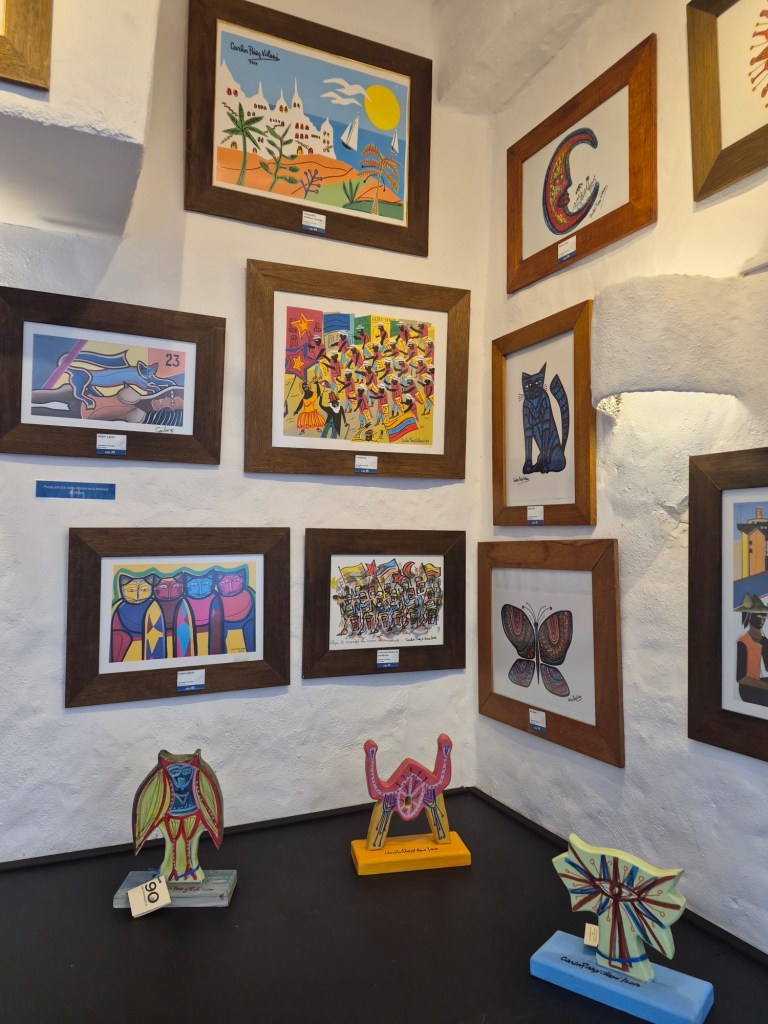
I was happy to see this one by Carlos Páez Viraló , the artist of Casapueblo in Punta del Este – a real mural by him.

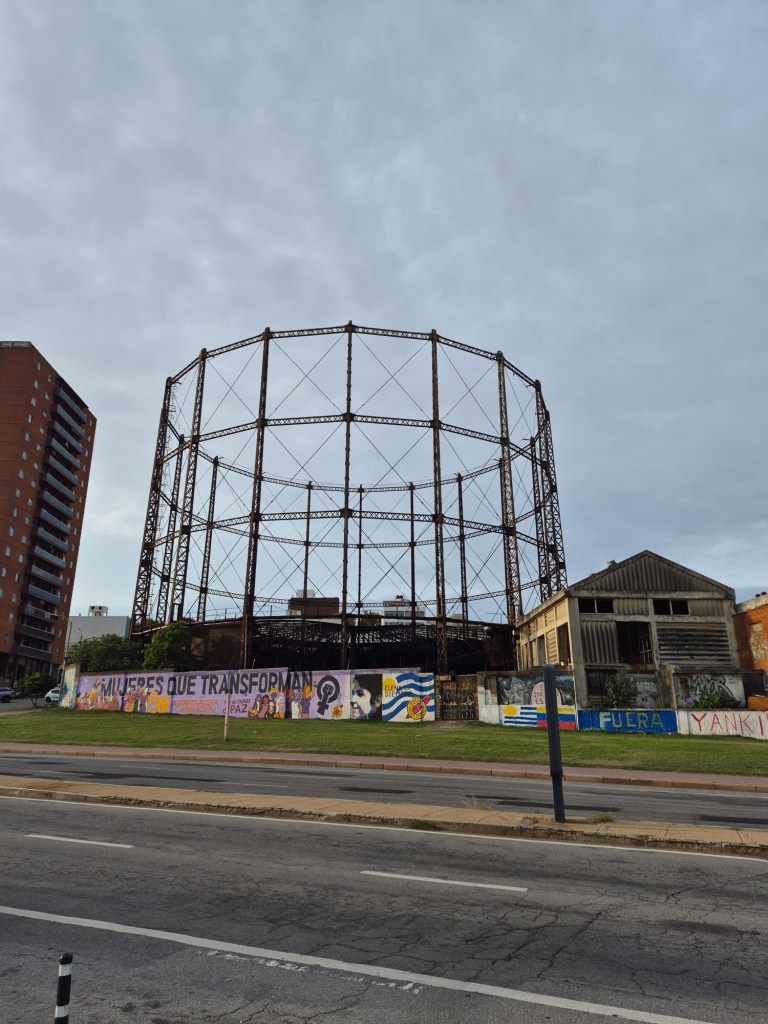
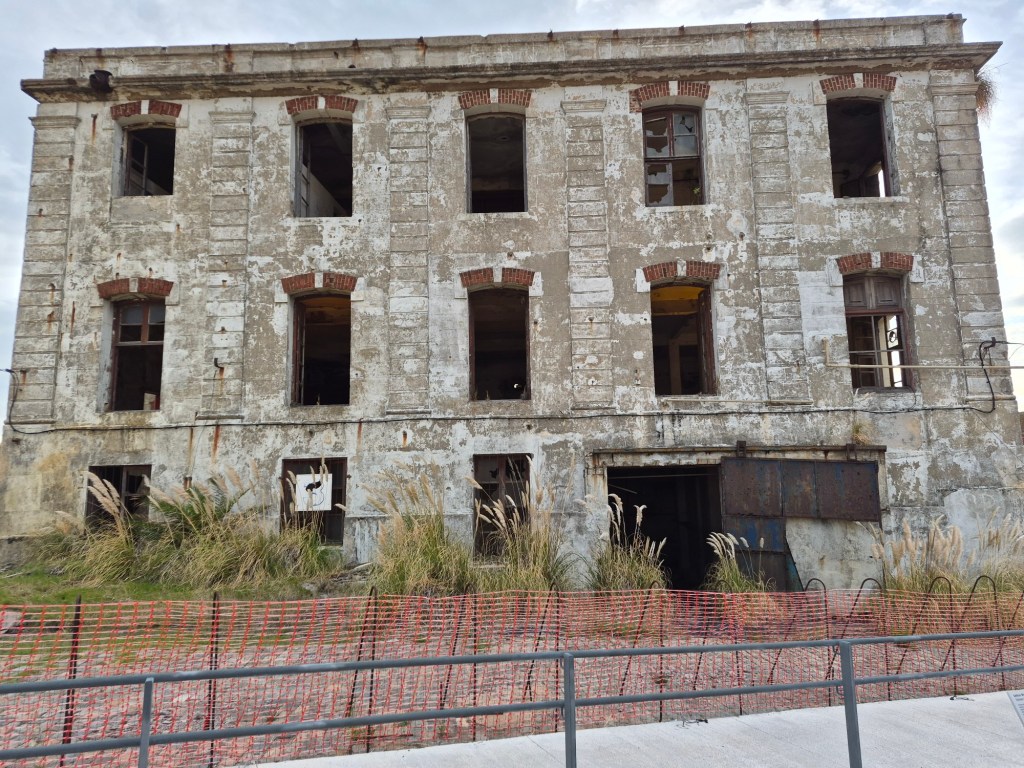
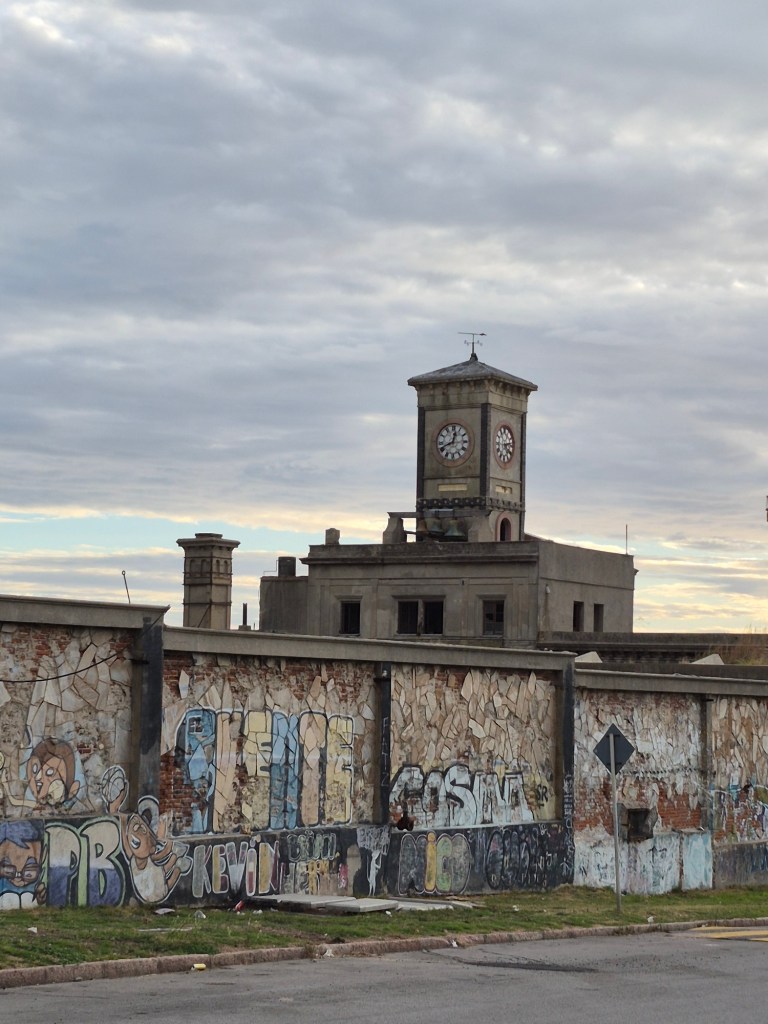
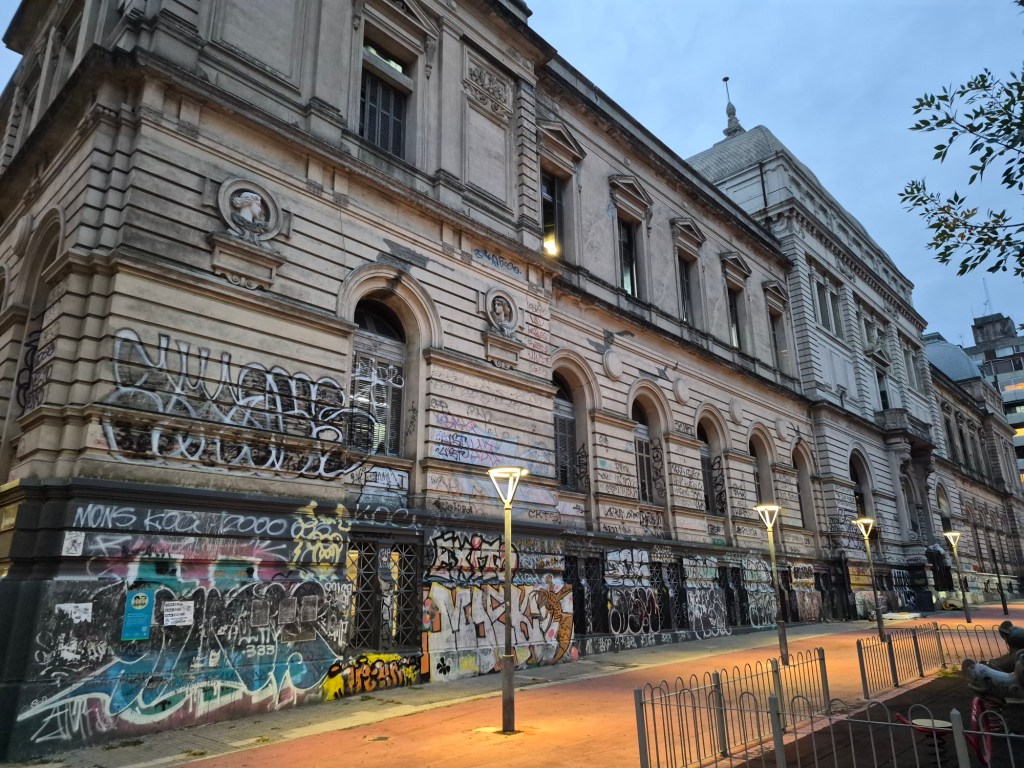
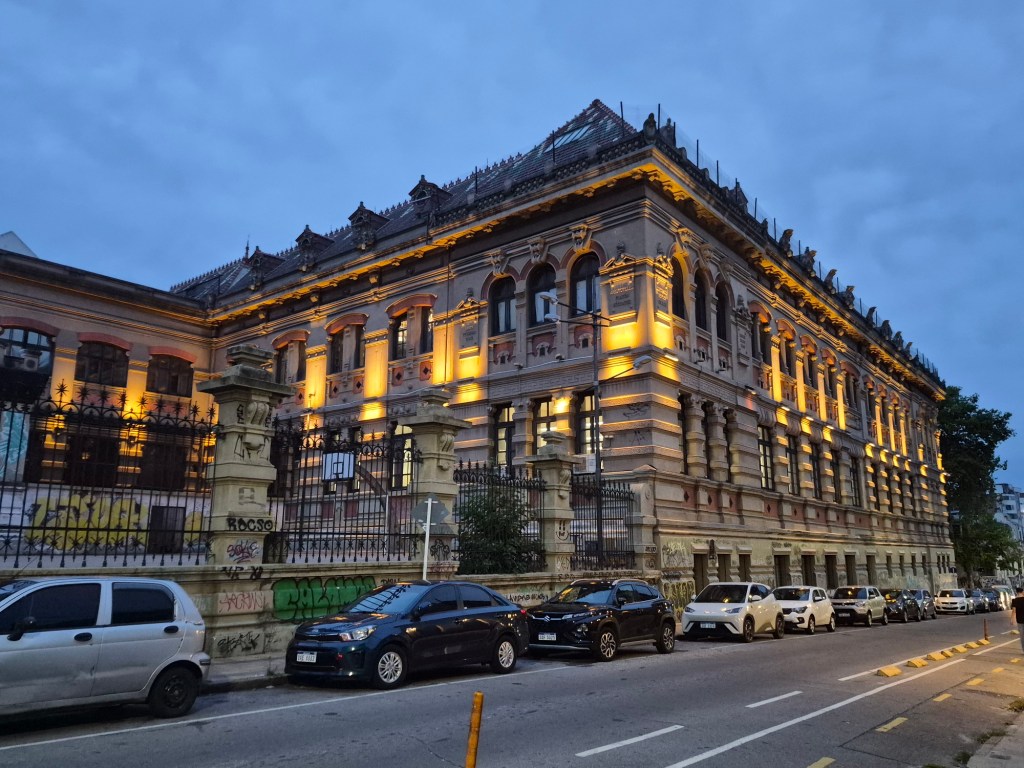
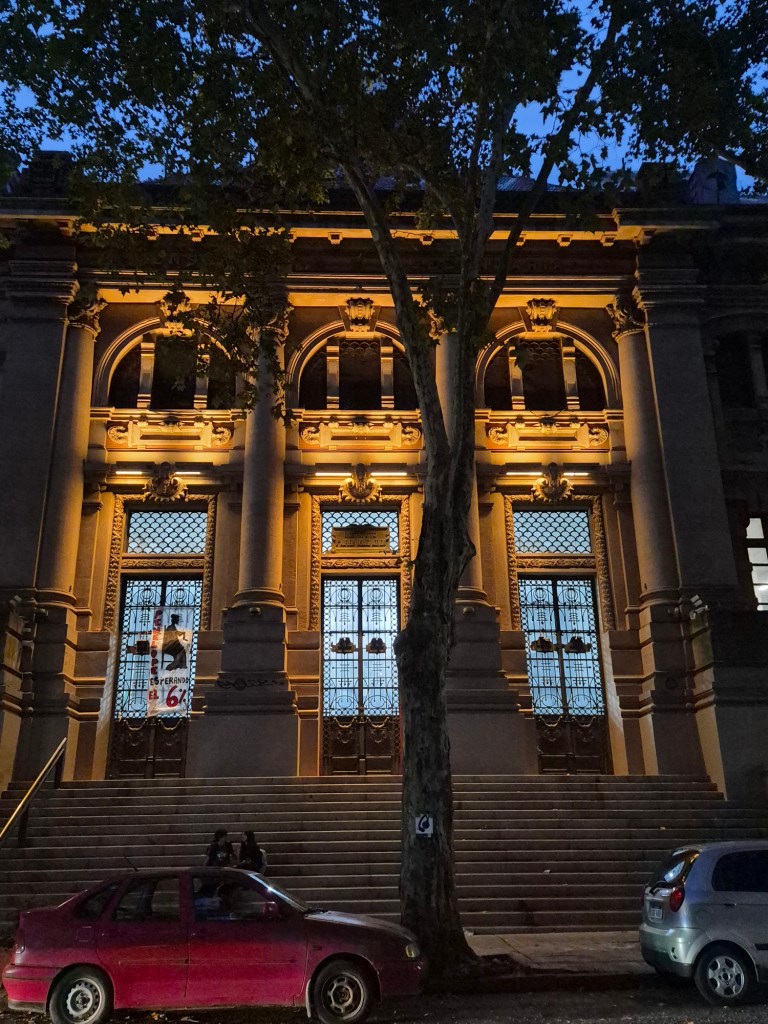
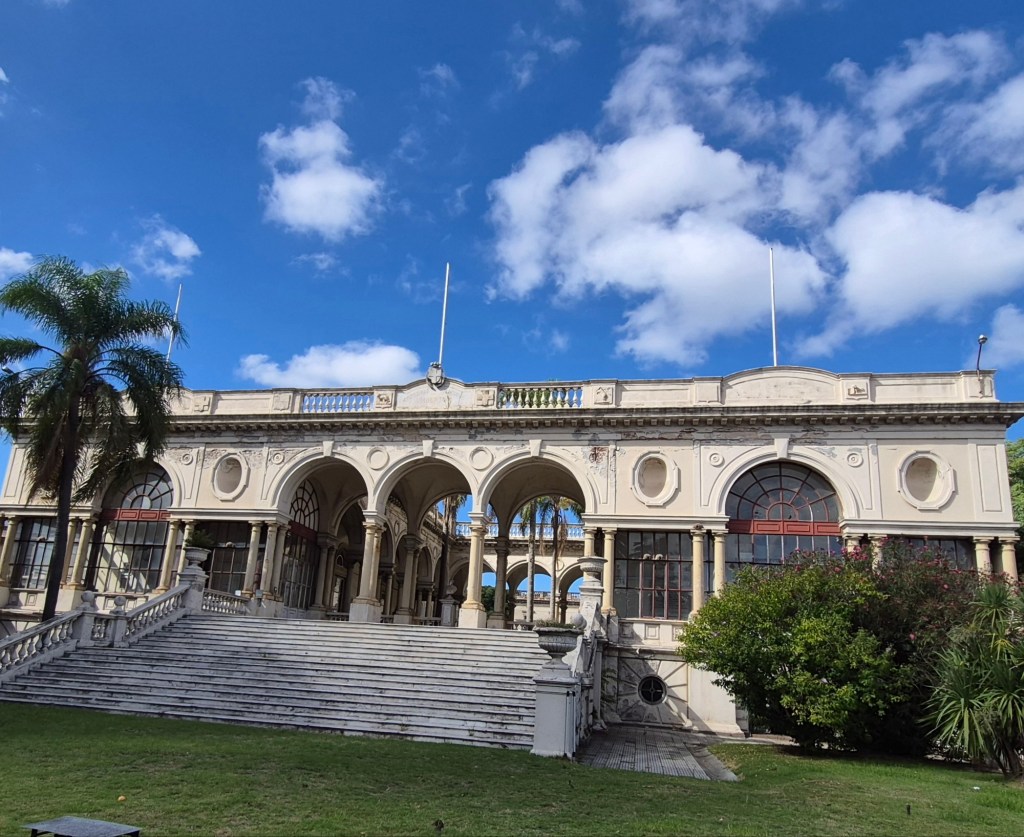
I spent most of my days exploring; I happened to walk past a well-known coffee shop, ruins of an old gas company, Montevideo University, and a derelict Italian hospital that still seems to be used, as I saw people going into the building. 

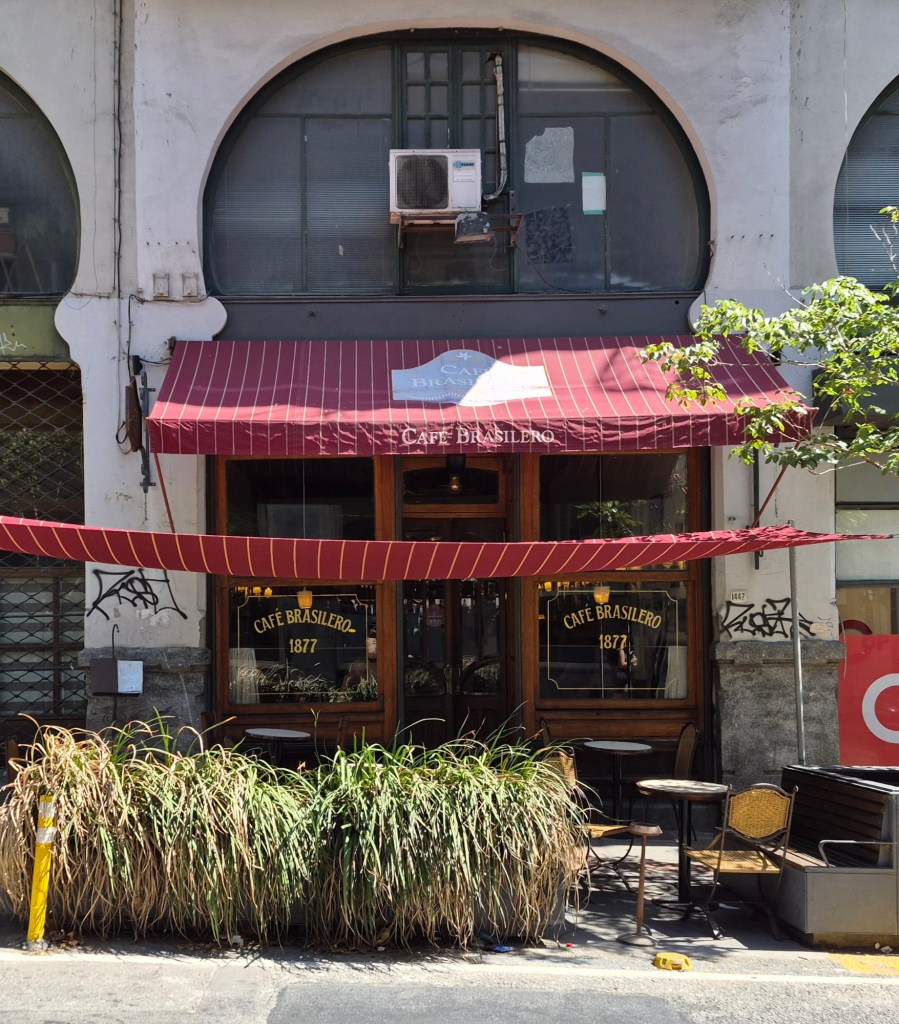
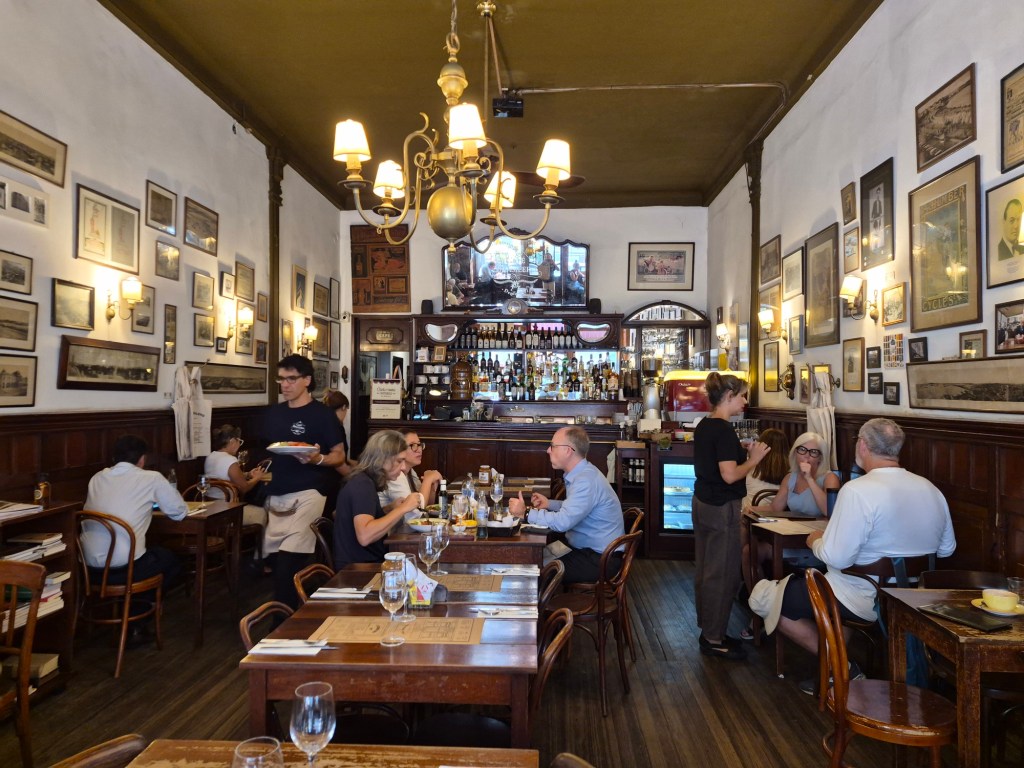
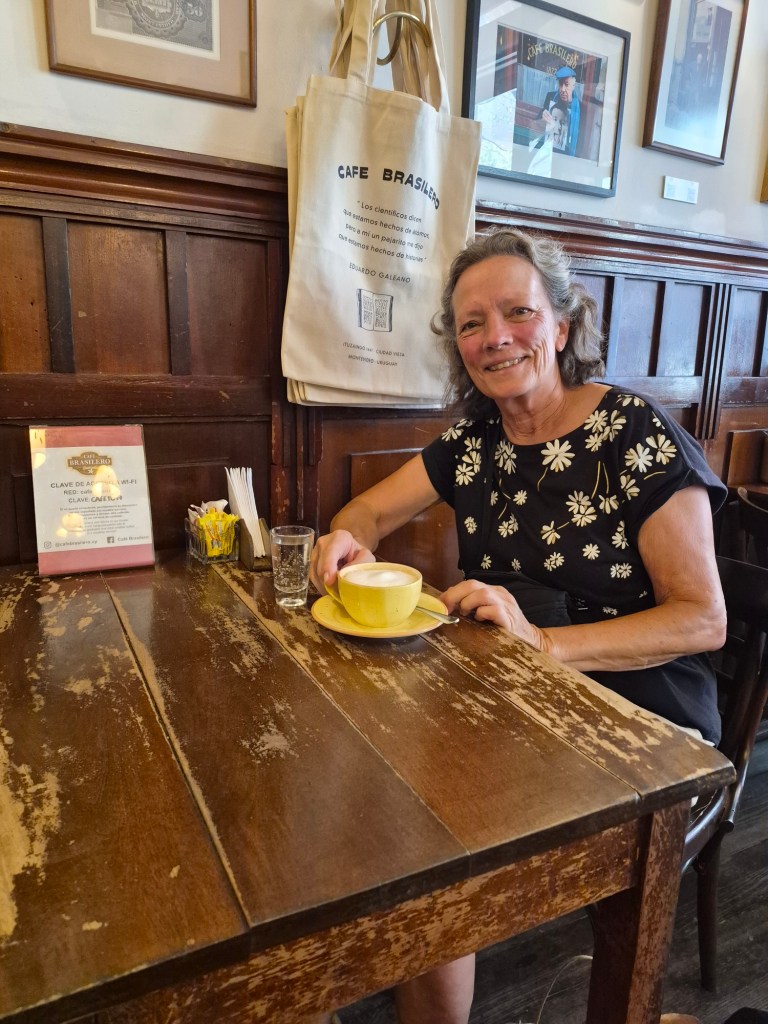
Cafe Brasilero, since 1877
Ruins of the gas company on the seafront
Clock tower of gas company
Montevideo University
Italian hospital
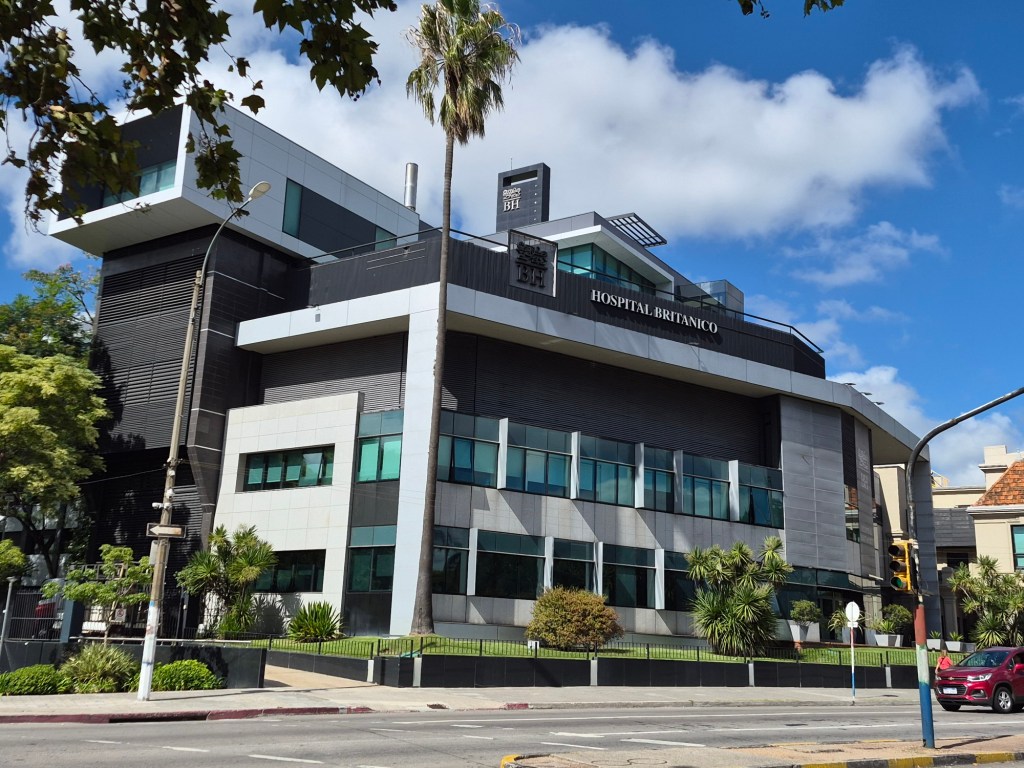
In stark contrast, the British Hospital just one block away.

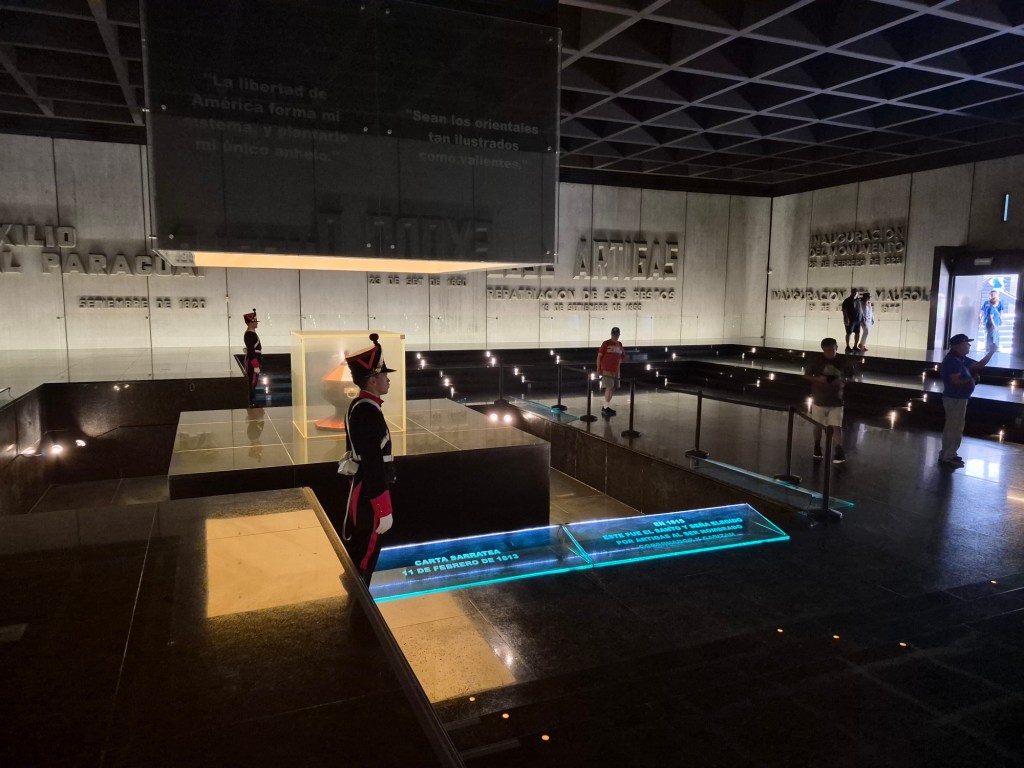
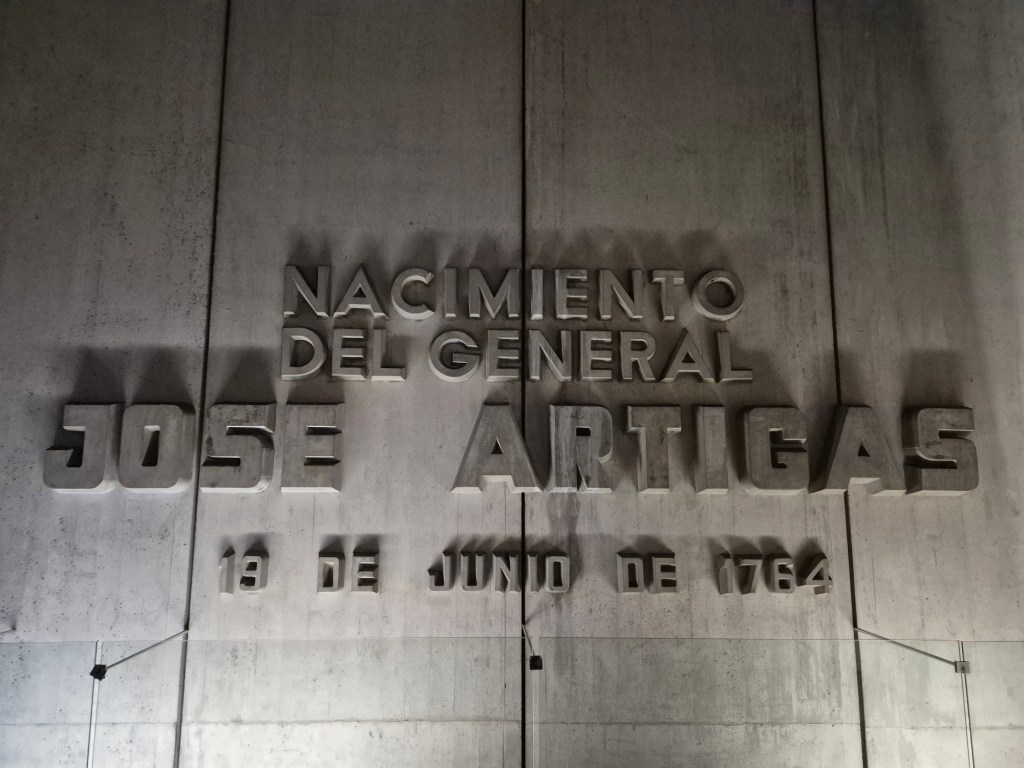
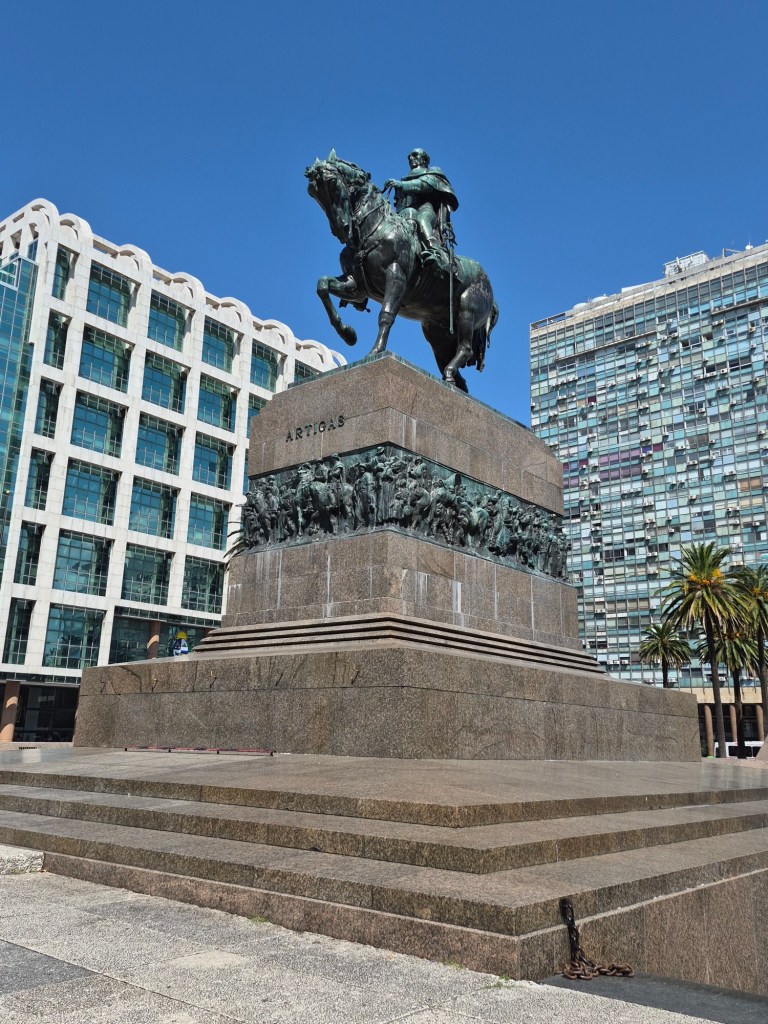
I followed a tourist group down some stairs on Plaza de Independencia (which I had previously assumed led to public toilets), and there was an underground museum depicting the history of the independence of Uruguay, heralding General Jose Artigas, a national hero and regarded as the father of Uruguayan nationhood. The mood in that dimly lit space was grave, hushed, almost pious. 

Those were real soldiers standing guard – I thought they were life-sized dolls and was just about to take a picture of one when I looked at the face and the eyes moved… In my defence, it was quite dark down there.
General Artigas – the stairs are to the right

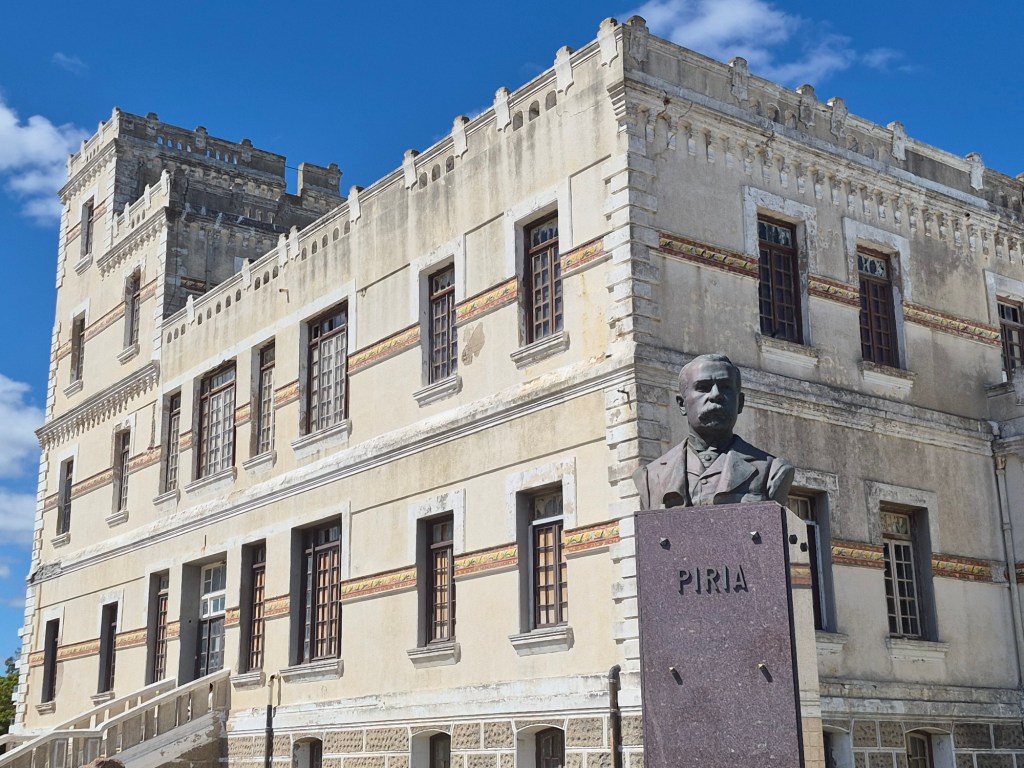
The last day in Montevideo I decided to take a bus to Piriapolis, a small coastal town east of Montevideo, as Annette’s husband had highly recommended it.  My main mission was to eat a steak, which I had attempted to do the previous day, but the restaurant I wanted to go to, where Maria (Workaway host)’s son was a chef, was only opening at 8pm and I was not prepared to walk home late at night. 

There was actually a man named Piria, after whom Piriapolis is named
Nice beach, but I forgot to take my bathing suit
It looks very appetising, but unfortunately it was tough and tasteless.

Annette’s husband speaks English, and we had a very interesting conversation about Uruguay when I asked him how the Iran-war is affecting the country. “Uruguay does not become involved in the issues of other countries,” he said.  “We always maintain a moderate stance, encouraging dialogue rather than violence.  We respect the fact that every country has the right to govern themselves, without interference.  Even in politics we are moderate – it does not make much difference if it is a left- or right-wing party in government, it is much the same.  As far as the possibility of an energy crisis, it should not impact too heavily, as 98% of our energy is generated by solar-, hydro- and wind-power.  In the past year, 60% of cars that were sold were electric, and there are charging points everywhere.  At the moment, there is no real impact,” he concluded.  One person’s opinion, but I experienced the moderation and respect he spoke about. 

I had also asked him about the possibility of seeing candombe, the traditional dance that was started by the African slaves and their descendants.  It was banned in 1955, but has  been revived, and they have a festival the whole of February, which I had missed.  I was recommended to attend a show at El Milongon, and I booked a ticket for the Thursday night:  $40 (US) if one just had wine, $80 including dinner.  I had been walking around the whole day, and was rather tired, so I cancelled it and stayed in the hostel. At about 9pm I was upstairs in the general area, when I heard drums, and one of the guys that is a regular at the hostel, said that there was a group of women who practiced candombe in the street below us every Thursday night.  I ran downstairs and lo and behold, there they were – my own private show, totally free!

Candombe

Some random photos:

Only one I ever saw, strange sight in Montevideo
Their flags are huge, both in Uruguay and Argentina!
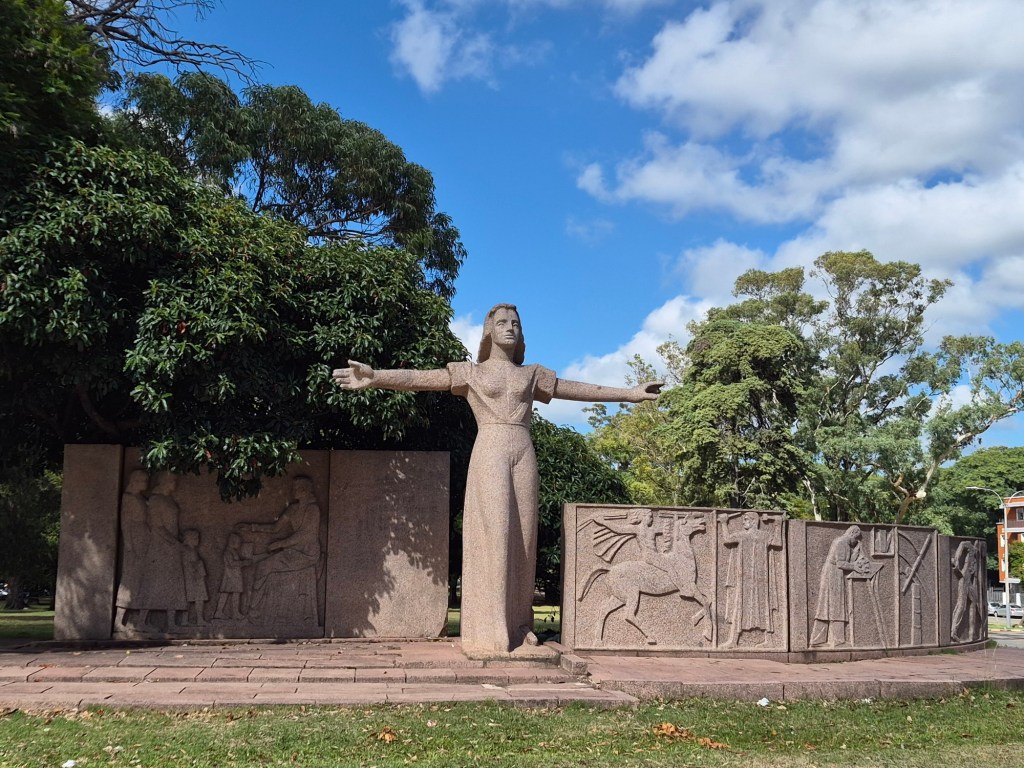
A statue that depicted the Uruguay mentality for me
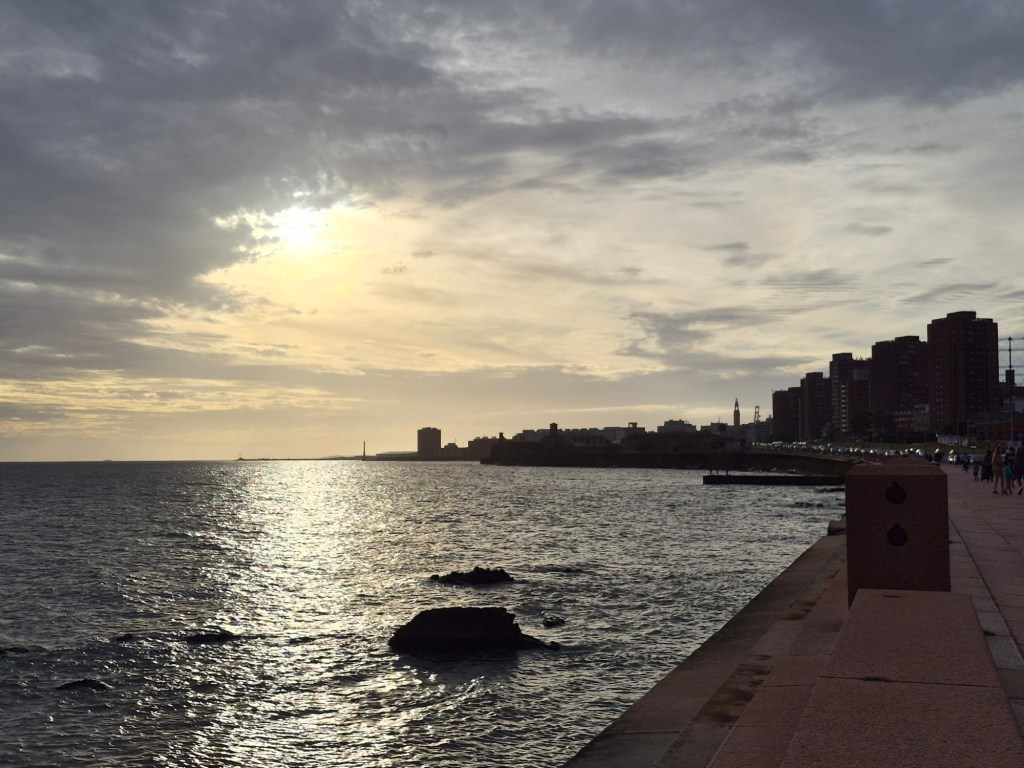
And a final sunset as seen from the promenade.

19 March 2026  Working

Truthfully?  A tough experience last week, on different levels.  And also a very enriching one, on different levels.  I am reading An Autobiography of a Yogi by Paramahansa Yogananda, and I was struck by the following:   “All thoughts vibrate eternally in the cosmos. … Thoughts are universally and not individually rooted; a truth cannot be created, but only perceived.  The erroneous thoughts of man result from imperfections in his discernment.” (P 112).  A gentle reminder to carefully consider my own thoughts and how I express them.  And to realise that my preconceived ideas and perceptions determine my reactions to situations – thus, all is personal. 

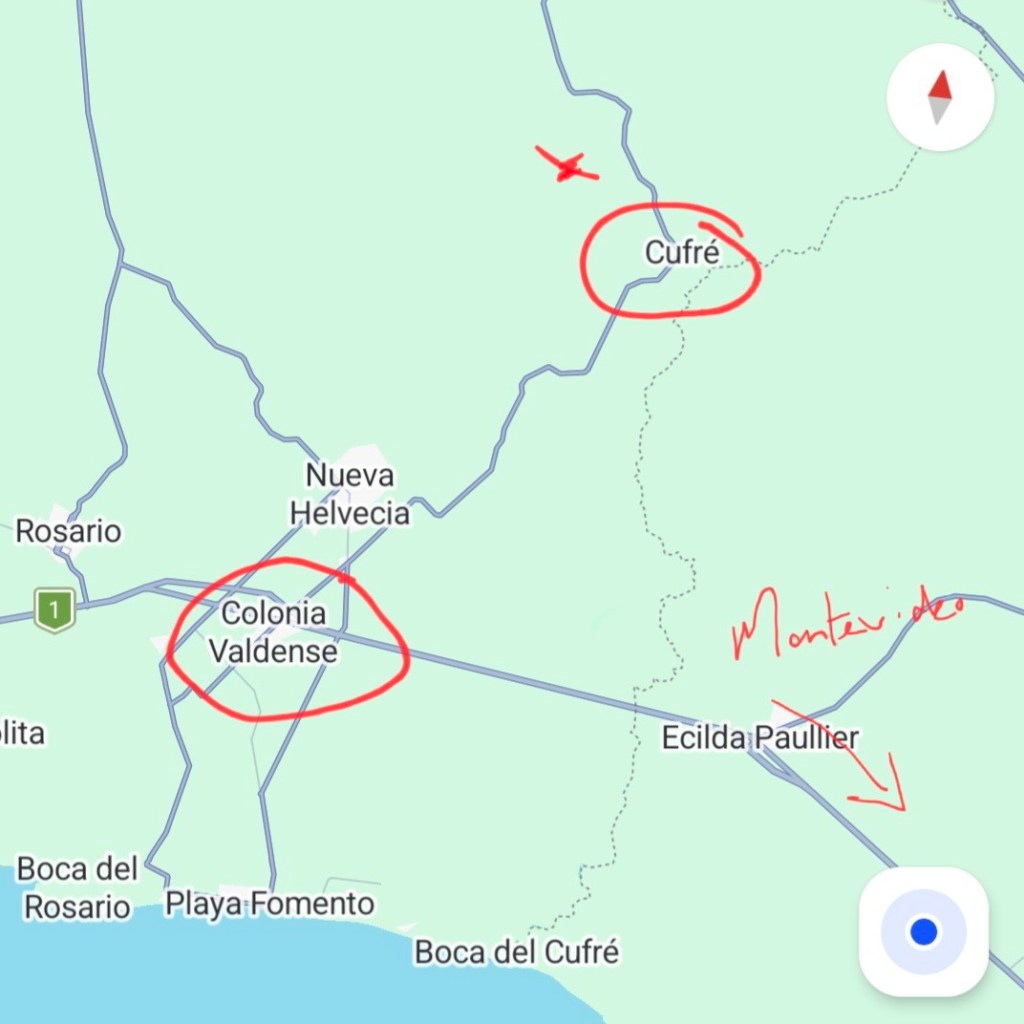
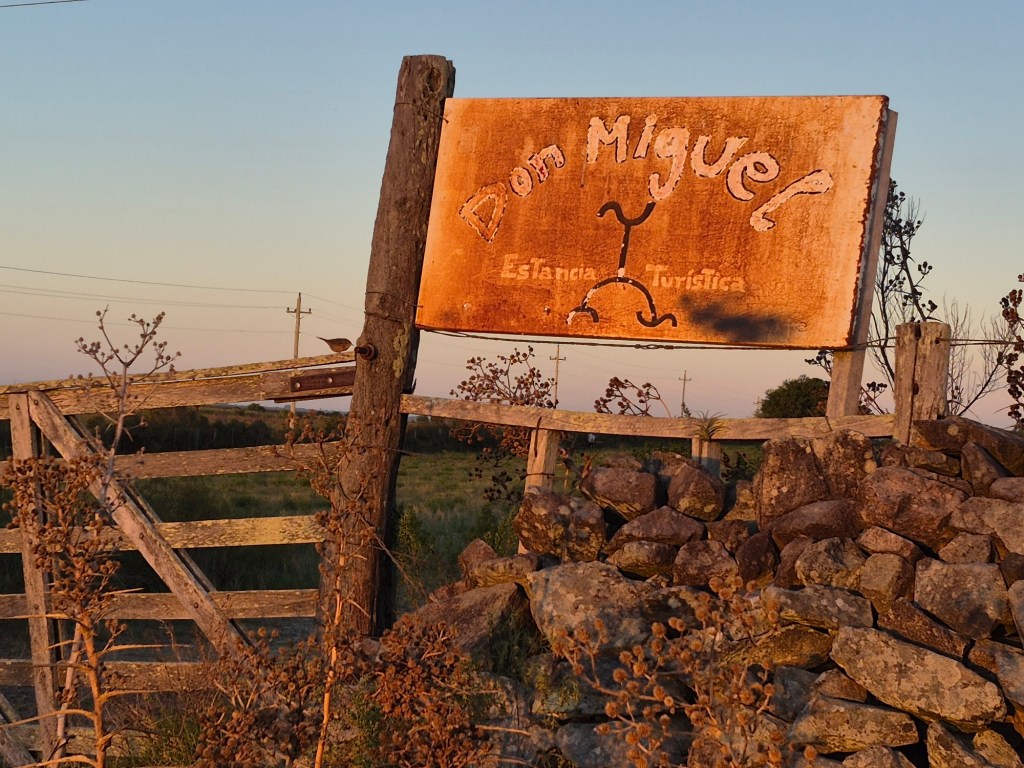
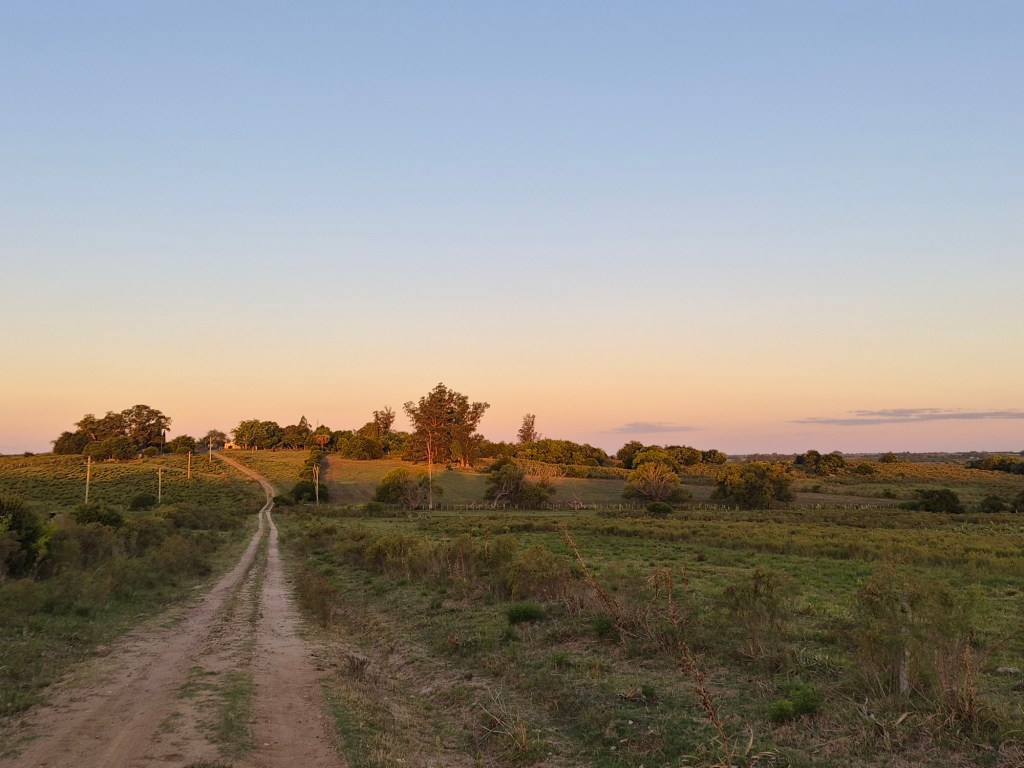
I had a Workaway commitment on a farm, Don Miguel, 7km out of Cufré, a very small town north of Colonia Valdense.   Maria and Hugo picked me up at 20h30 at the busstop in Colonia Valdense,  which is about halfway between Montevideo and Colonia del Sacramento.   I was an hour early and bought a sandwich in the little restaurant which serves as busstop, so I wasn’t aware that they had arrived until I got a WApp telling me they were waiting.  They were driving an old white combi with one seat removed, which enables Hugo to transport things I suppose, as he doesn’t have a truck.  We picked up their grandson, Sabino, on the way to the farm, which was about a 20-min drive.   I was shown to my room, which was in a long outbuilding, where the kitchen was also located.  I was told that breakfast would be in the kitchen just after 08h00, lunch would be there as well, and for supper I could help myself to anything that was available in the fridge or kitchen.  Google Translate was working overtime, but I understood most of the instructions. 

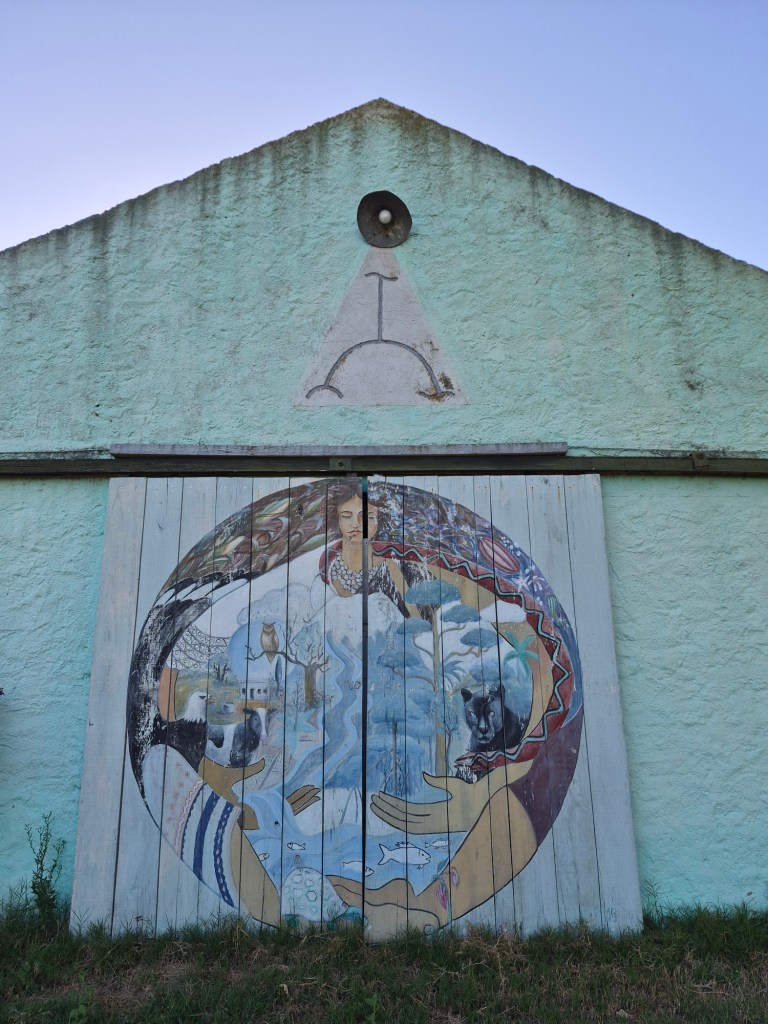
As one enters the farm through a gate, this beautiful mural welcomes you. It depicts Pacha Mama (world mother) embracing the indigenous culture of the Americas.  I was not aware of its significance, until Hugo told me it was done by a French artist Michele Dubaux, who uses the artistic name of Leo Arti, and who lives in a small town called 25 de Agosto, just north of Montevideo.   Since her arrival there in 2006, the town underwent a change as the walls of more than 40 homes were colourfully painted, reflecting the history and dreams of its inhabitants.  It is now referred to as Pueblo de Murales (Town of Murals).
The farm is near Cufré.  Colonia del Sacramente  to the west, Montevideo to the east
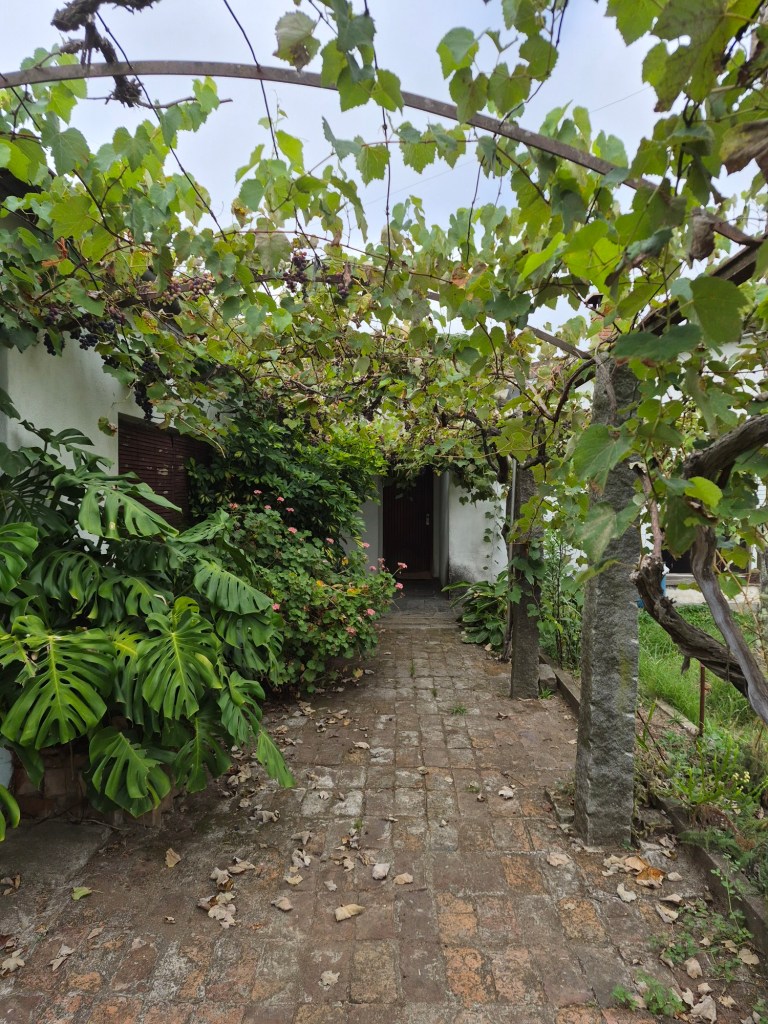
My room was at the closer end, the kitchen further along

The room was very basic with twin beds, and toilet and shower en suite.   I could unpack my things on the other bed as I was the only volunteer, and Maria brought me two sheets and a pillowcase – I found a blanket in a full cupboard in the room.  There was a gauze door to keep out mosquitoes,  but the windows in the room and bathroom didn’t have any. Fortunately I had a repellent.  

Breakfast the next morning was green tea, homemade bread, butter and homemade pumpkin jam (delicious), but Maria had fruit and yoghurt as she was on a special diet.  “Not for health reasons” she explained, looking at Hugo for support, “but because I am taking chlorine dioxyde, an alternative medicine for treating cancer.  I have been taking it for 8 months, and the cancer has shrunk to more than half its size.  It is the most inspirational thing that has ever  happened to me, and I am writing a book about it,” she concluded.   She was not allowed to have any gluten, sugar or acids, especially citrus fruits (high in vit C).  She was quite hesitant in telling me all this, as obviously it was a sensitive issue, but I was so inspired by her positive attitude that I asked her permission to write about it. 

I asked about the work they were expecting me to do, and Maria said that I had to clean the kitchen after breakfast, to always keep it clean, and after that I had to trim the hedge (in the photo of the outbuilding), remove some prickly plants and harvest some herbs (yellow nutsedge,  chuffa in Spanish).  I misunderstood about the chuffa.  When she demonstrated what she wanted me to do, she picked some, and some she pulled out by the roots, so I assumed it had to be the latter.  I washed them to remove the soil from their roots, which I was not supposed to do, but she was not too upset about that and told me to put them on a metal gauze frame to dry out.  I’m explaining in detail here, to illustrate the difficulty of not being able to communicate effectively, Maria’s strong sense of being in charge, and my eagerness to do things right.  That set the tone for the week. 

The kitchen, where everything happened, from cooking to working with the herbs, so the table had to be clean at all times.  The bucket on the chair was the milk that Hugo had milked that morning, and the eggs were from the hens.

When I’d done all that, I found Sabino in the kitchen making empanadas. and he invited me to try to make one.  He was very impressed with my first attempt, and we continued making all of them (which were for lunch and for supper), discussing politics in his broken English and my poor Spanish.    Lunch was always at a table under the trees, as the kitchen was too warm.  I had to set the table with plates, cutlery, glasses and freshly squeezed orange juice.  After lunch I cleared away everything, did the dishes and pots or pans that had been used for cooking, and swept the kitchen floor.   Feeling a little bit like cinderella, it occurred to me that that is what it must have felt like for the servants on our farm in South Arica, who were always cleaning up after us.  The big difference being that here I was eating with the family, and they never did – a humbling and shaming thought.

Empanadas – Sabino still had to coat them with beaten eggs
Entrance to the main house, which was private
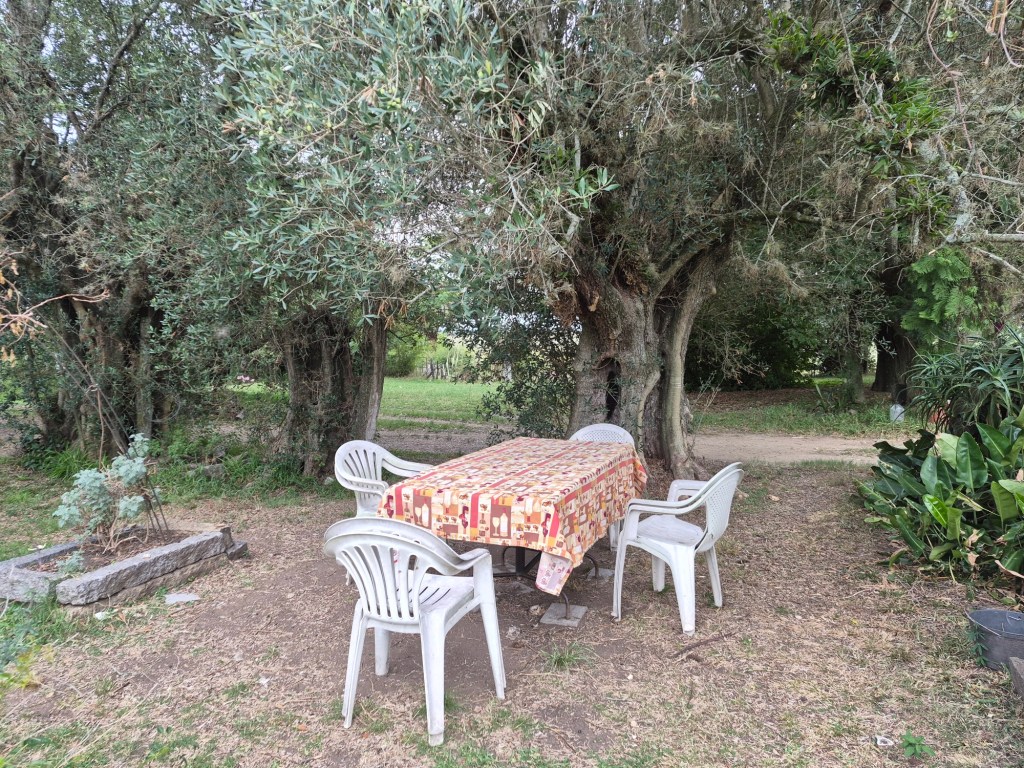
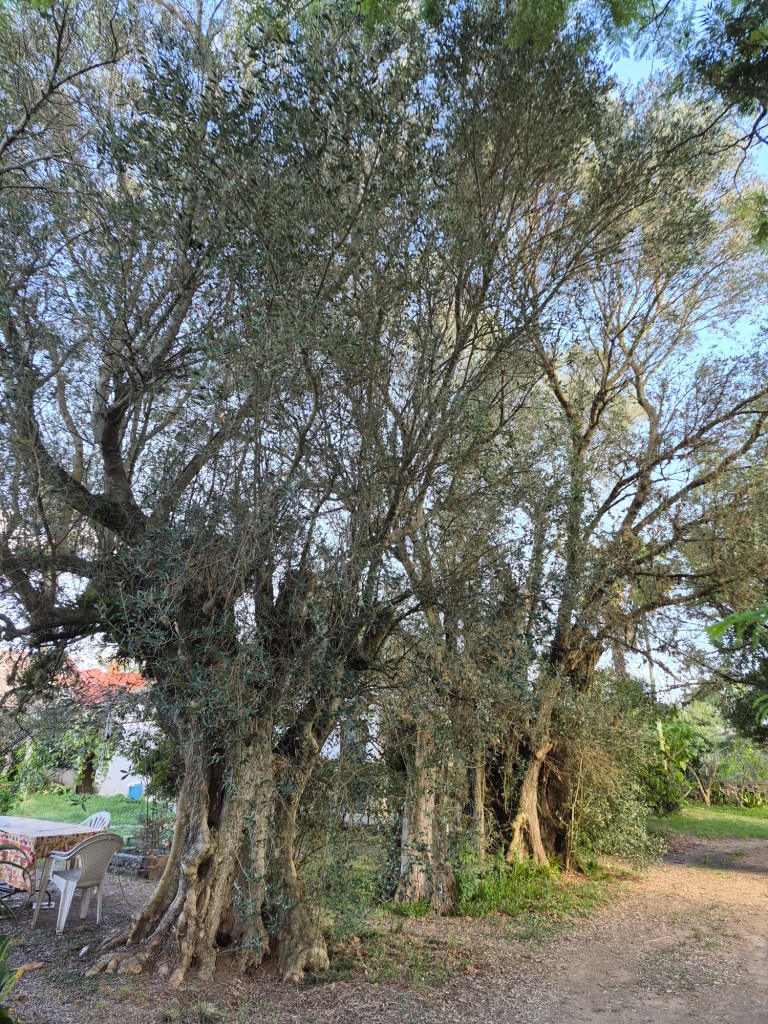
Lunch under the trees – the three olive trees behind the table are 126 years old and were planted by Hugo’s grandfather in 1900
The old olive trees

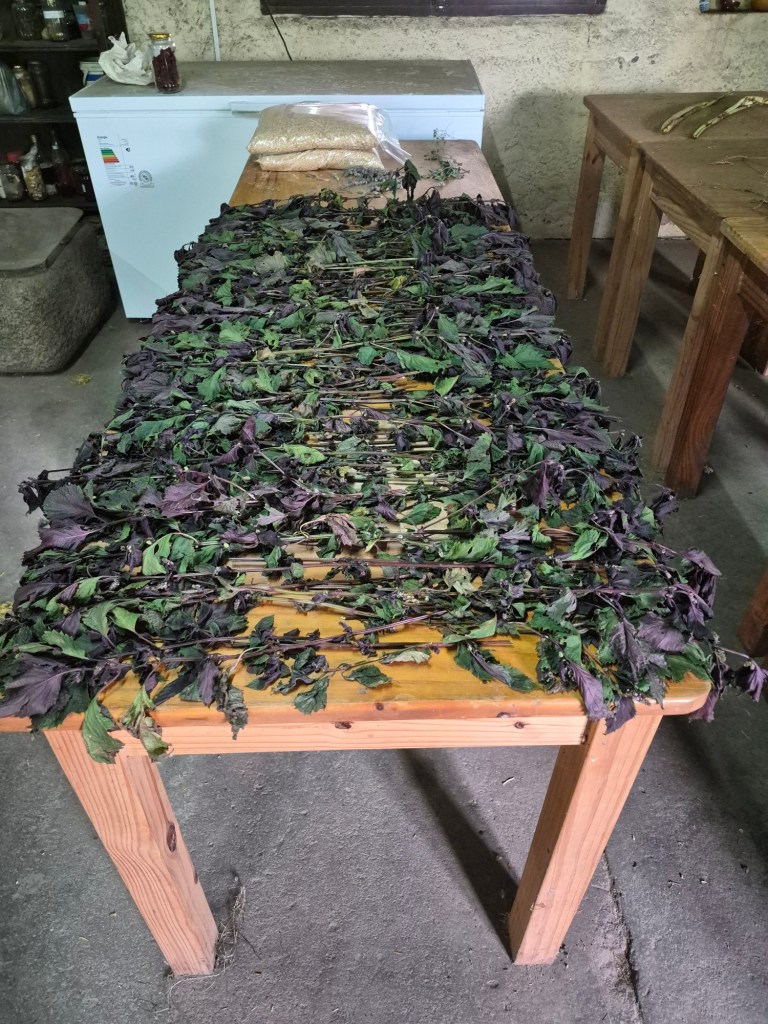
Workaway volunteer hours are normally 5 hours a day, so I assumed my work had been  done after cleaning up after lunch, but Maria always had some extra things I had to do in the afternoons, normally involving the herbs, which I was keen to learn about and I happily obliged.   One day I had to harvest purple basil, as it had to be cut in the heat of the day.  On another day I had to put stickers and her logo on packets, fill them with that specific herb, weigh them and seal them with an electric sealer.  As we worked, she explained the importance of having the right attitude and positive energy when handling herbs; that we had a chakra in the middle of our palms, and that the energy was transmitted in that way.   She also mentioned that not all volunteers were able to work with the herbs, which I took as a compliment.  She had studied medicinal herbs many years earlier, and was very intuitive and knowledgeable, explaining the properties of the herbs that we were packaging. 

The purple basil, spread out to dry
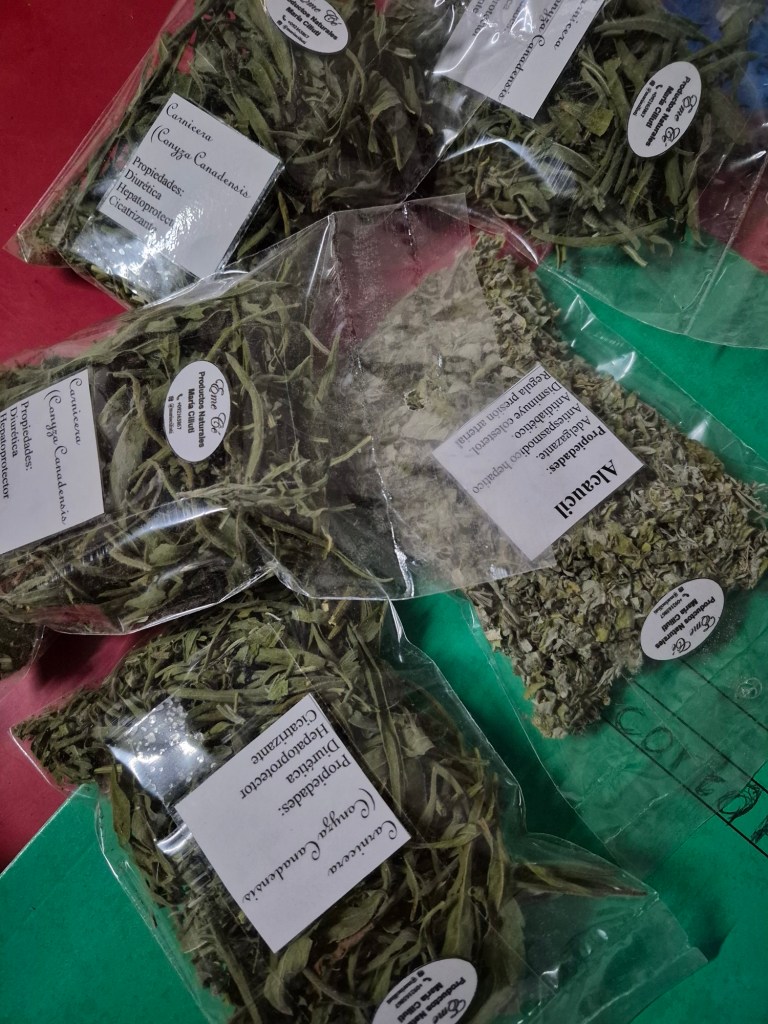
The herbs I packed:  artichoke (alcaucil) and horseweed (carnicera).  Here again, the artichoke had to be cut up in tiny pieces, and then she showed me how to remove the leaves from the horseweed twigs and left me to do it.  I assumed it had to be cut up as well, although I had a gut-feeling not to do it.  So I cut up half of it, just in case.  I should have listened to myself – but Maria was very kind about it, saying it was okay, we would just mix them, but I should’ve asked.  After that I double-checked everything. 
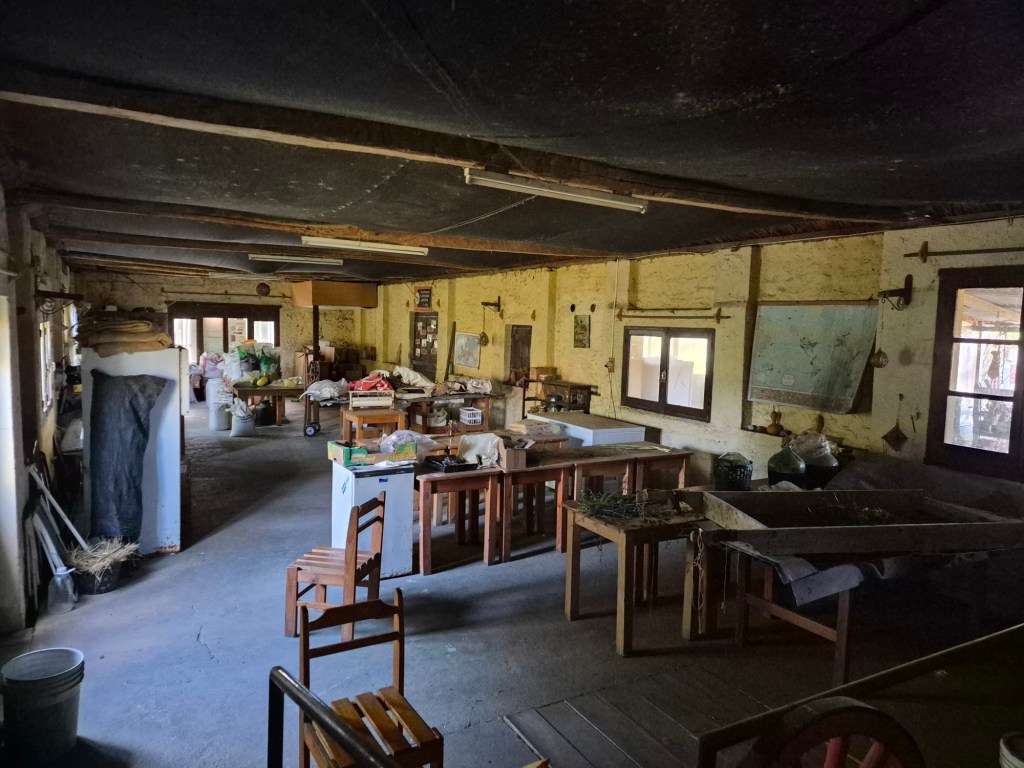
The big shed next to the kitchen, where all the herbs were dried and stored

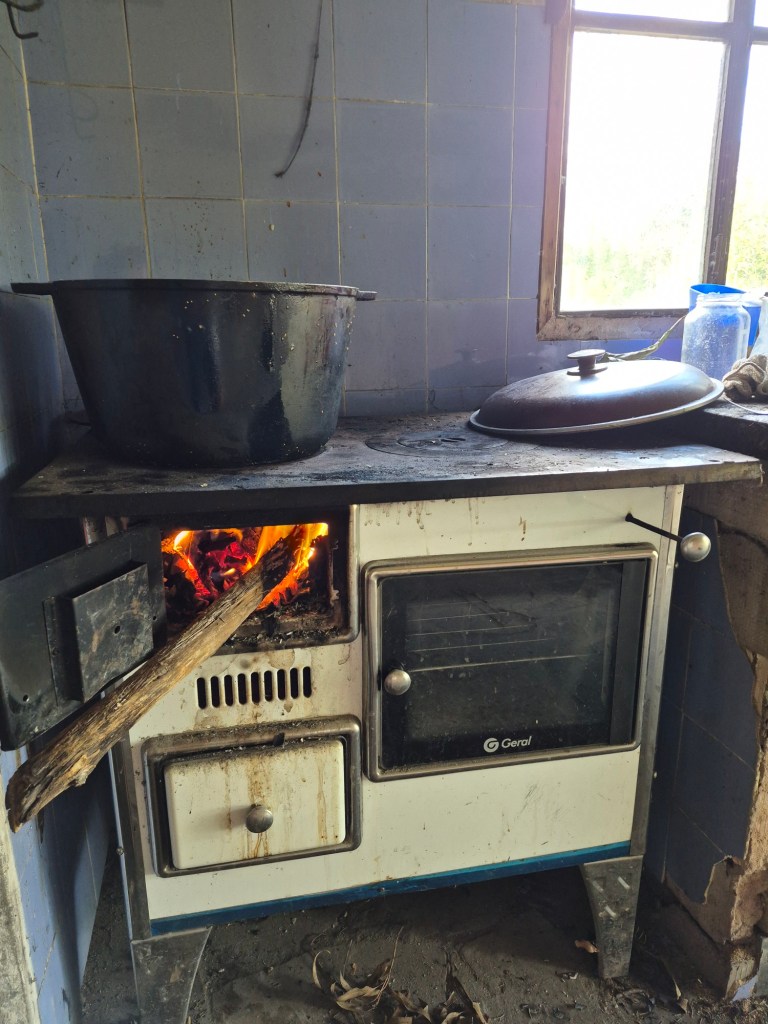
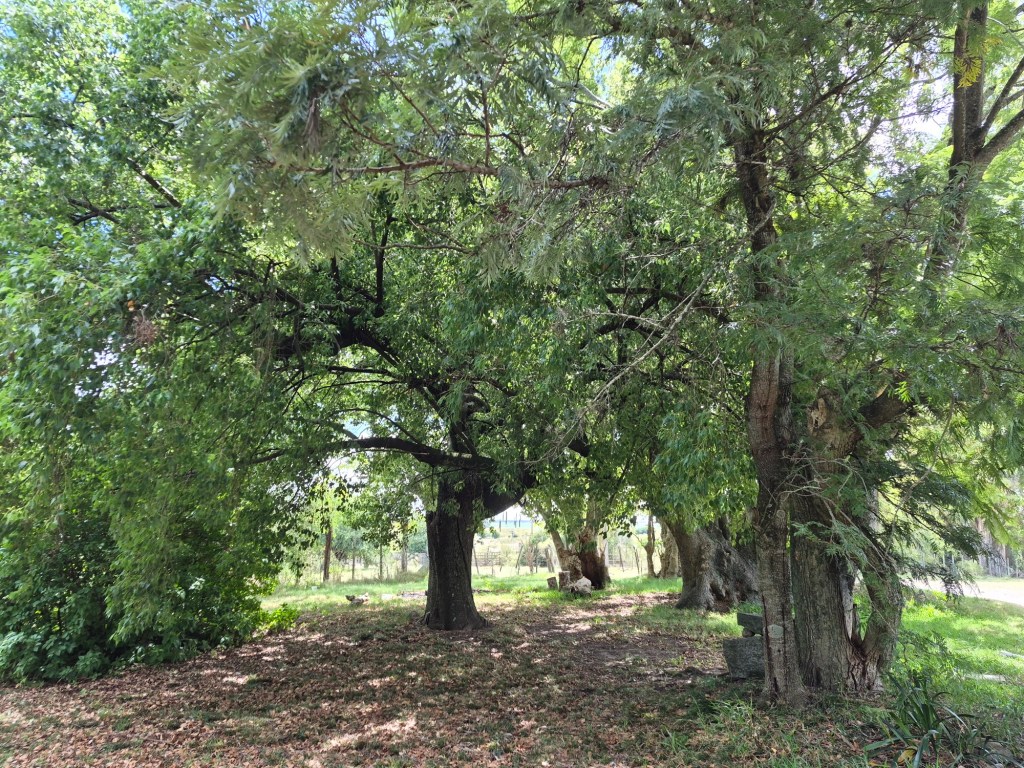
In the meantime, Maria was making fig jam and salsa sauce and boiling bones to extract gelatine that she bottled and sold.  This she did in her garage on a woodburning stove, sitting in front of it, continuously feeding the flames with pieces of wood.  One day she asked me to gather wood for the stove, using the wheelbarrow and finding wood any place around the house.   Quite an easy job, as there are many huge trees on the property and lots of dry wood lying around.  There are also a few huge ombu trees around the house, which I loved – beautiful from one angle, hollowed out on the other side.  Their fibrous material is of course no good as firewood.  

The woodburning stove
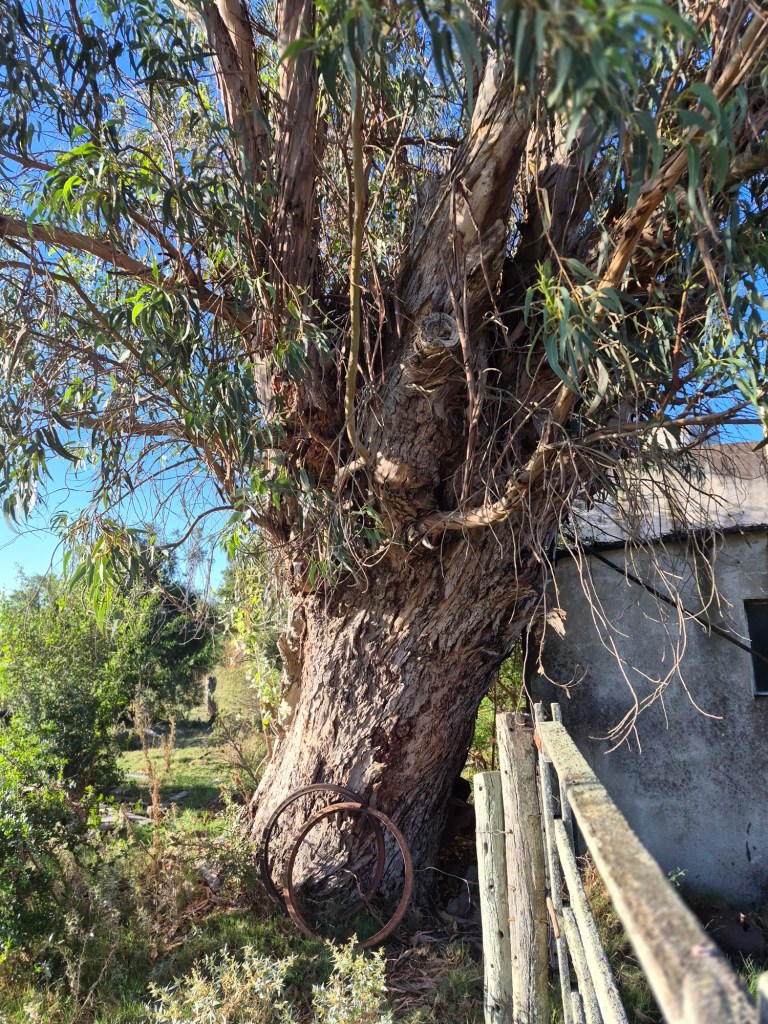
A huge old eucalyptus tree
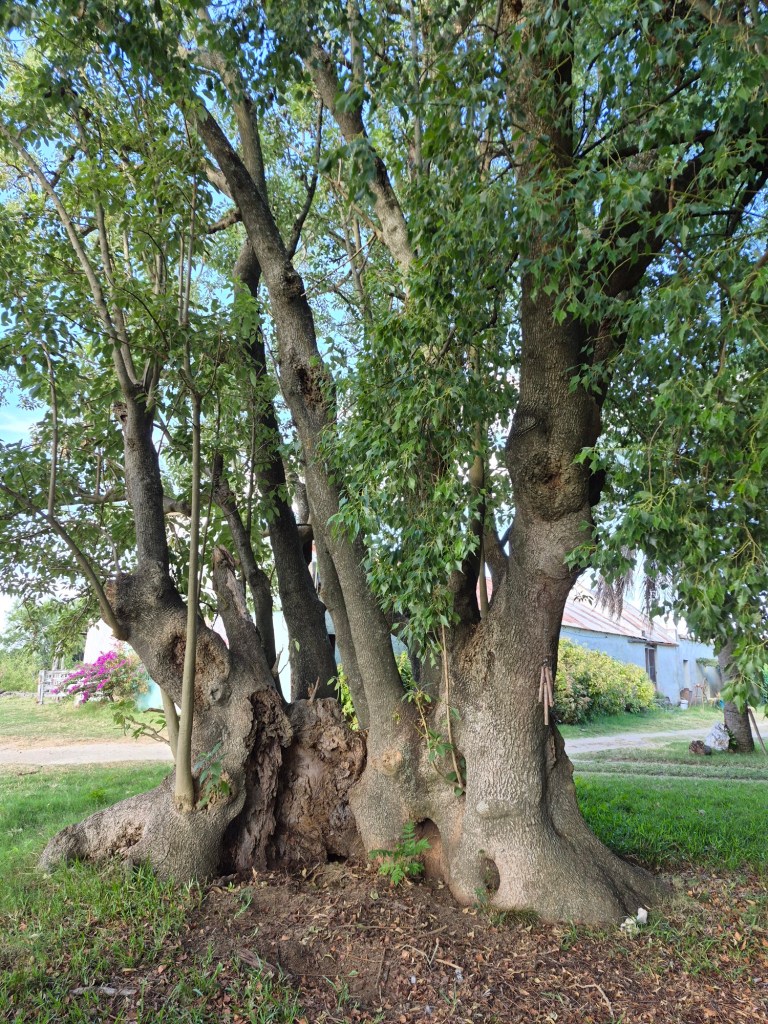
One of the Ombus

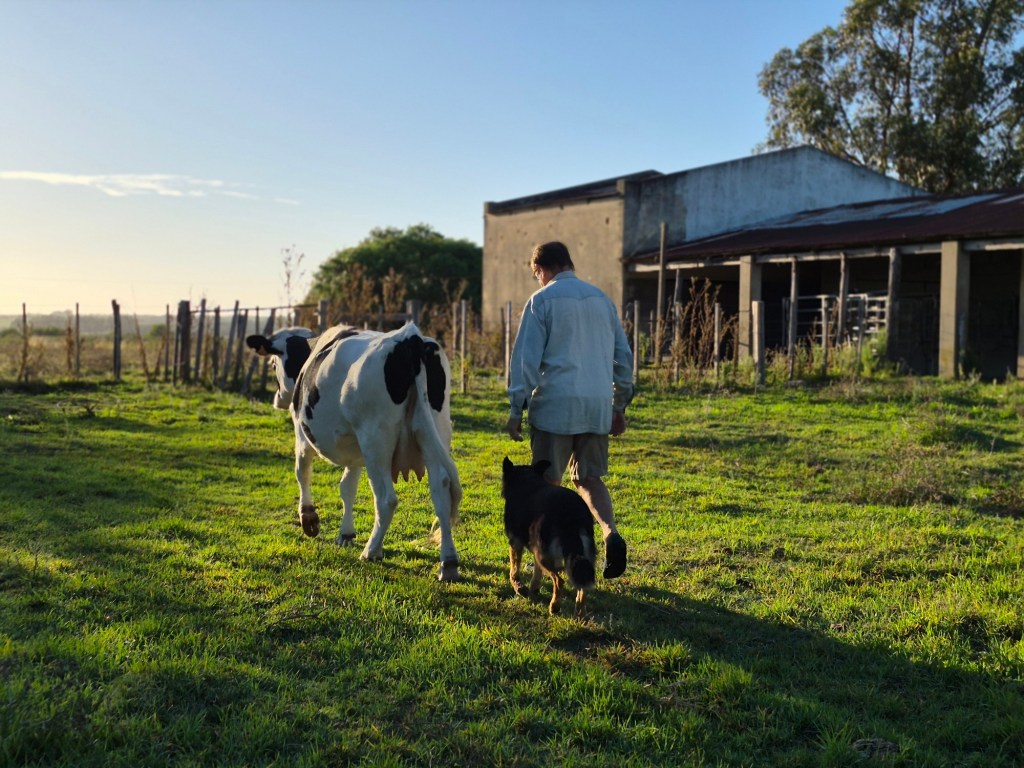
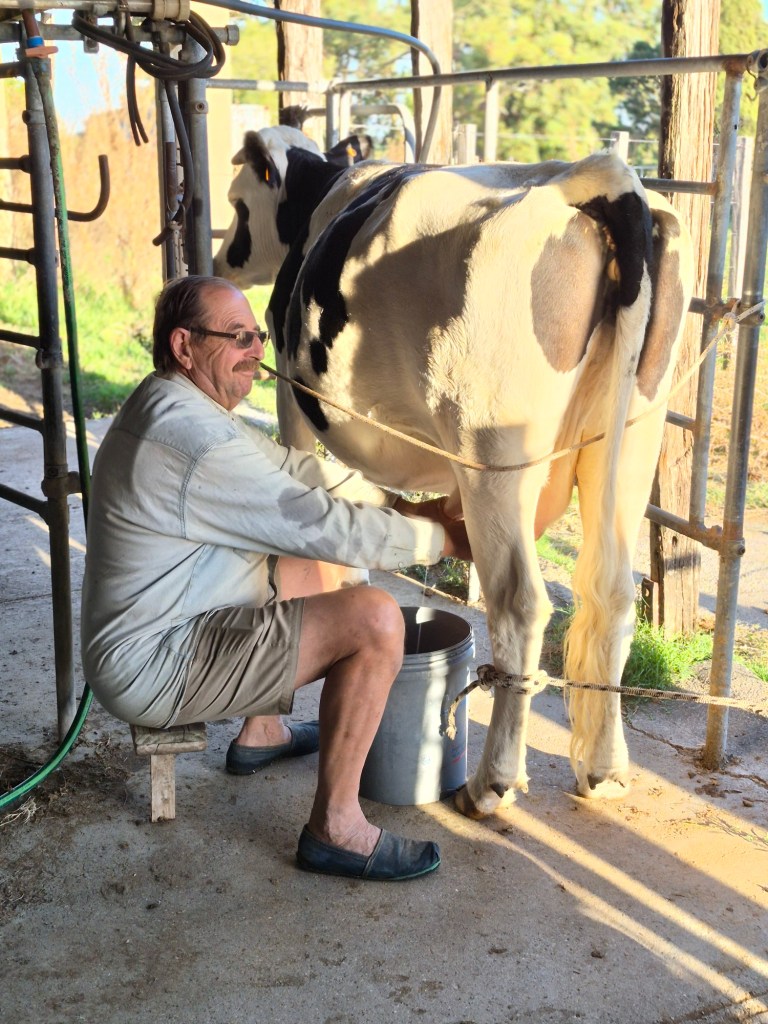
On the second morning I decided to help Hugo fetch the cow and watch him milk.   He asked me to try, but no matter how hard I squeezed those teats, I just couldn’t get the milk to come out.  It was a strange feeling, I could feel the milk going back up into the udder, instead of out.  Hugo was very encouraging, explaining how I had to curl my fingers from the top to the bottom, but to no avail.  We had quite a laugh, and eventually I just gave up.  After milking, we fetched the calf, which was almost full-grown, to drink.  Hugo walked into the camp, calling out as he searched for it, and eventually the calf appeared from the bushes a way off.  My mother used to call her tortoises on the farm in the same way. 

Hugo is just as entrepreneurial as Maria.  One day I saw him cleaning out one of the outside rooms, and later I heard a constant droning sound.  I investigated, and saw that he had a machine that was making rice flour from rice.  The following day he showed me that he also makes flour from pomace, the remains of grapes after the wine had been made.  Evidently it is an excellent antioxidant.  He gets the pomace from a bodega (wine farm) on the outskirts of Cufre. 

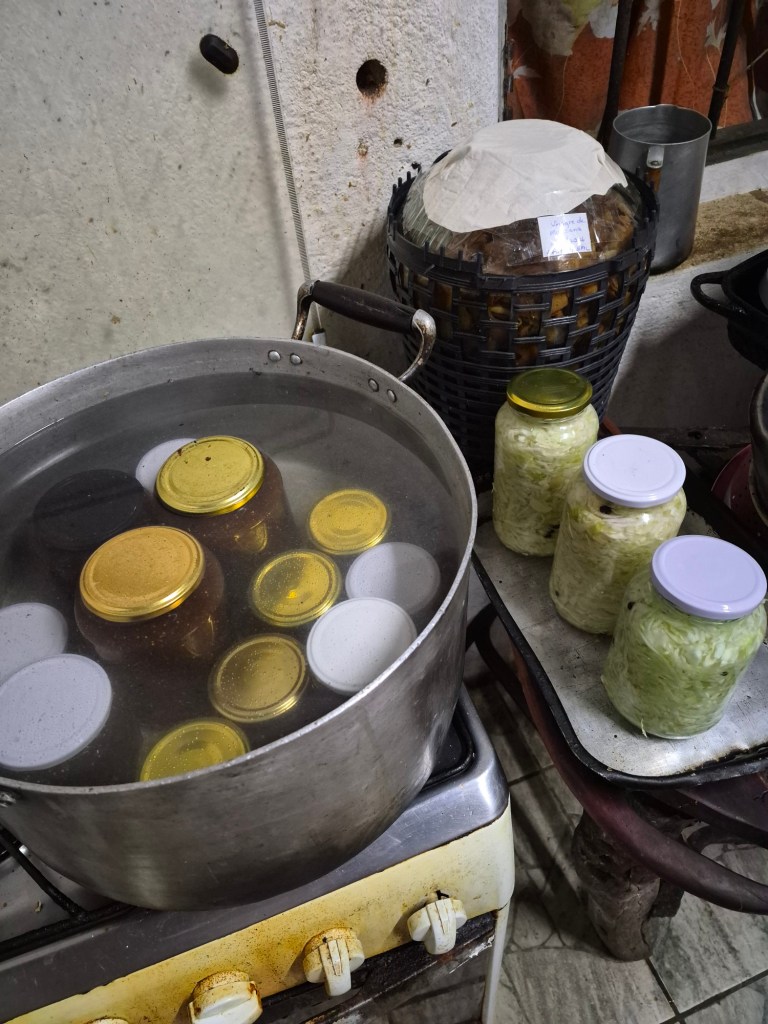
Another whole morning with Maria was spent making apple vinegar and cutting and salting cabbage, which gets bottled and is used as probiotic.  Maria also sterilized the jams and salsa she had bottled, which I then had to lable. 

Recipe for apple vinegar:                                   Add together in a glass container:
1 kilo apple or peel with core
1/2 kilo sugar
10 l of cold water, or less
Cover with taped down cloth (must breathe, and the taped down cloth keeps bugs out)
Leave for minimum of 6 months, strain and bottle.     

Recipe for salted cabbage:                     Remove the core of the cabbage and slice very thinly.  Add coarse salt, 2% of the weight of the cabbage.  Mix while crushing the cabbage with your hands until watery, leave 6hrs.  Put one clove of garlic cut lengthwise and a few cloves in the bottom of a glass jar.  Fill half the jar with the sliced cabbage, pressing it down very tightly.  Add more garlic and cloves, and fill up with tightly packed cabbage.  Add more garlic and a few cloves, and fill the jar with seawater.  Put lids on, but not screwed shut, the liquid should be allowed to escape.   Stand for 5 – 9 days. 

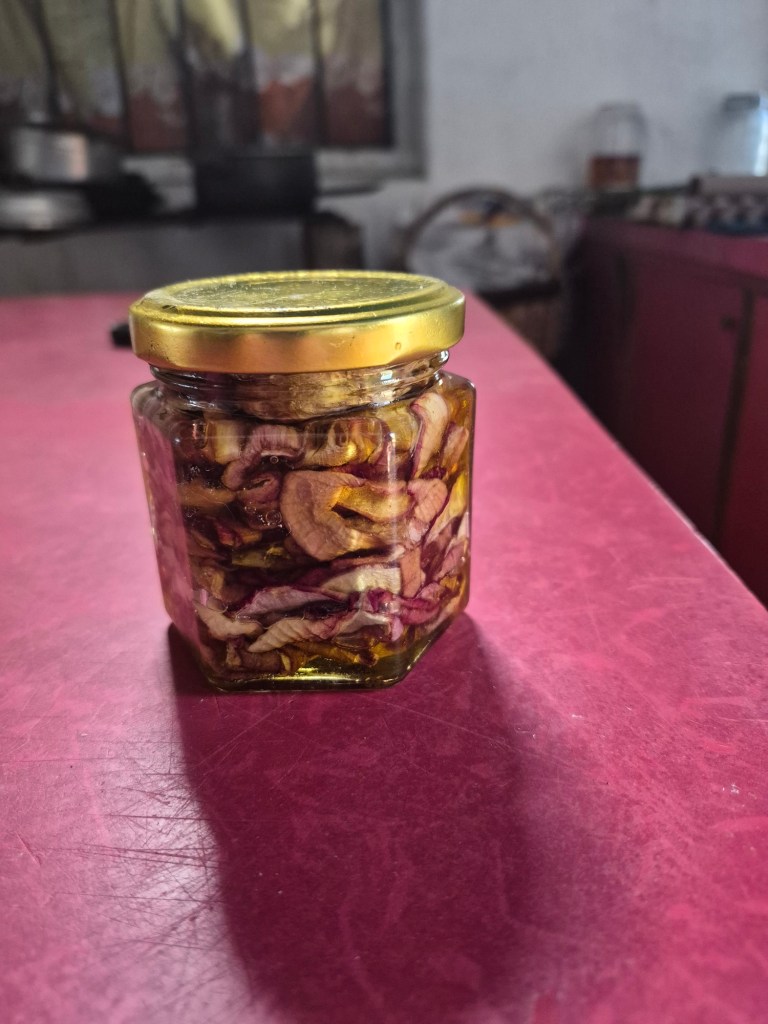
At some stage Sabino walked into the kitchen with a piece of a root of the Ceibo tree, which has medicinal properties.  Maria then showed me how she makes smoked olive oil (aceite de carbon) which she served on our pasta that afternoon for lunch.  She put a piece of the wood on the gas stove, let it burn until it was red when the flames were blown out, and dunked it in a cup of olive oil, immediately covering it with a saucer.  She did it twice to get more of the smoked flavour.  She had also come up with a recipe of salted, dried onions which she bottled using the smoked olive oil.  Evidently one can buy smoked olive oil, but it is very expensive.  It is absolutely delicious!

Salted dried onions in smoked olive oil
End of a productive morning – the apple vinegar, cabbage and sterilization process
Making smoked olive oil
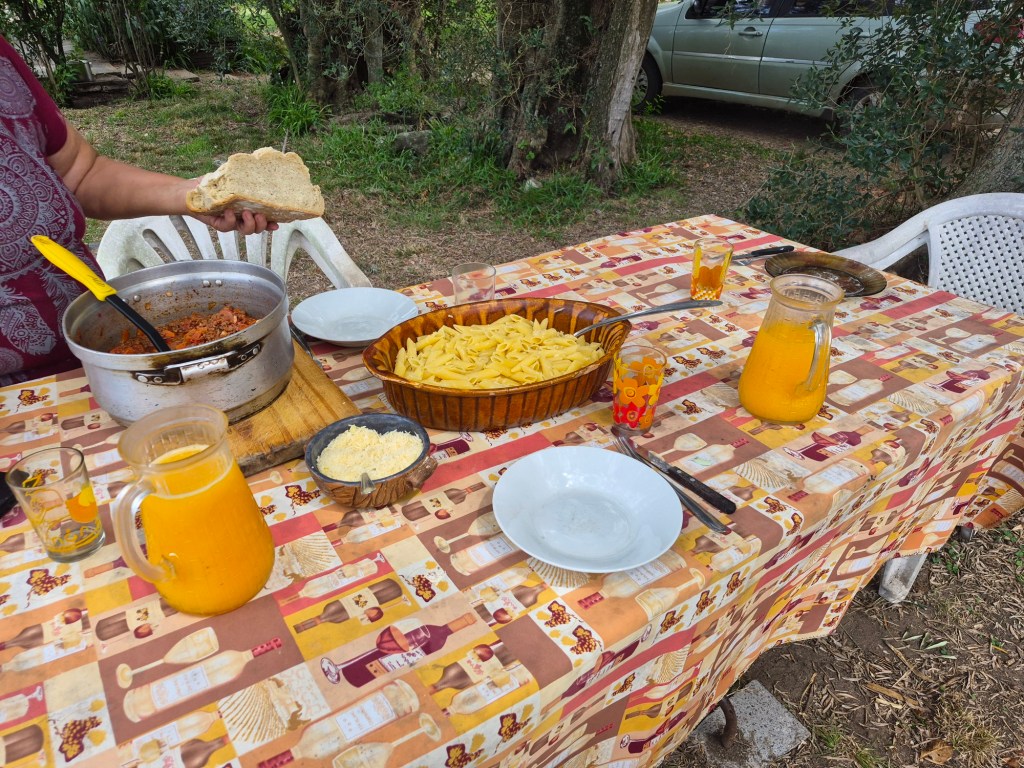
The pasta, bolognaise and parmesan lunch

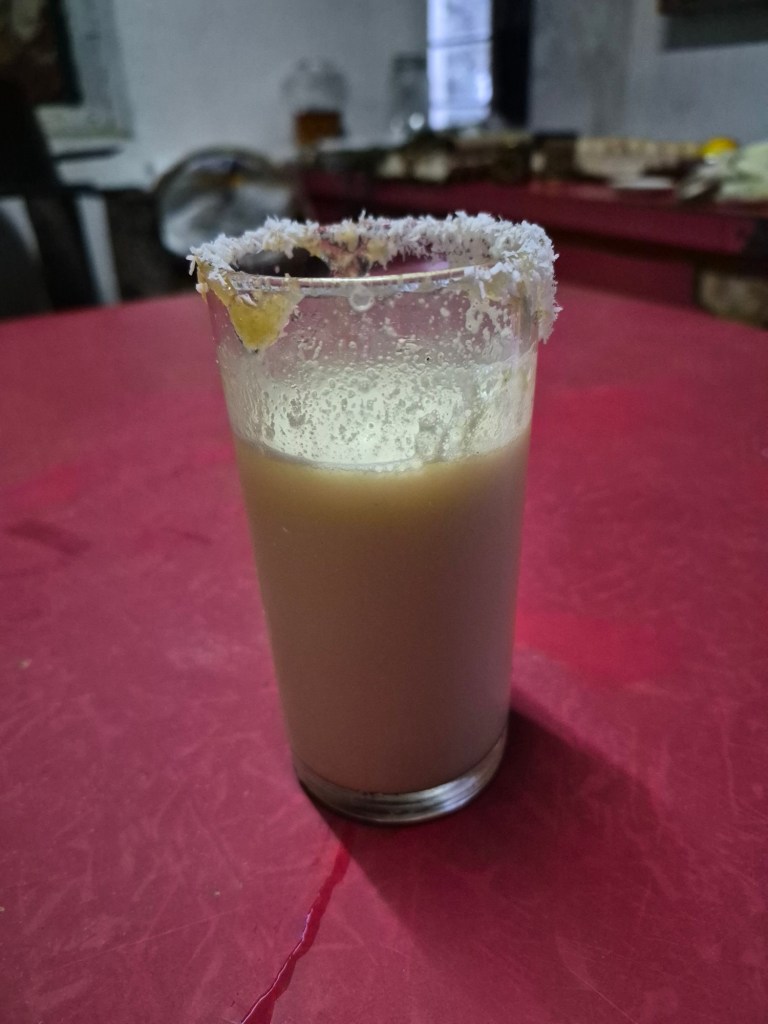
I had to cook lunch one afternoon – rice, steamed vegetables (which I was in trouble for, for cutting up in small pieces instead of big chunks) and steaks – and Maria kept the butternut seeds, explaining that she makes a very healthy seed drink that is good for deworming, is anti-inflamatory, and good for the prostrate gland too:

Seed drink
2 spoons of seeds (any squash, butternut, watermelon, cantelope)
1 spoon coconut
1 spoon honey
1 cup of water, 4 cubes of ice
Smooth in a processor, and pour through a  sieve, serve immediately. 

Served with honey and coconut around the rim

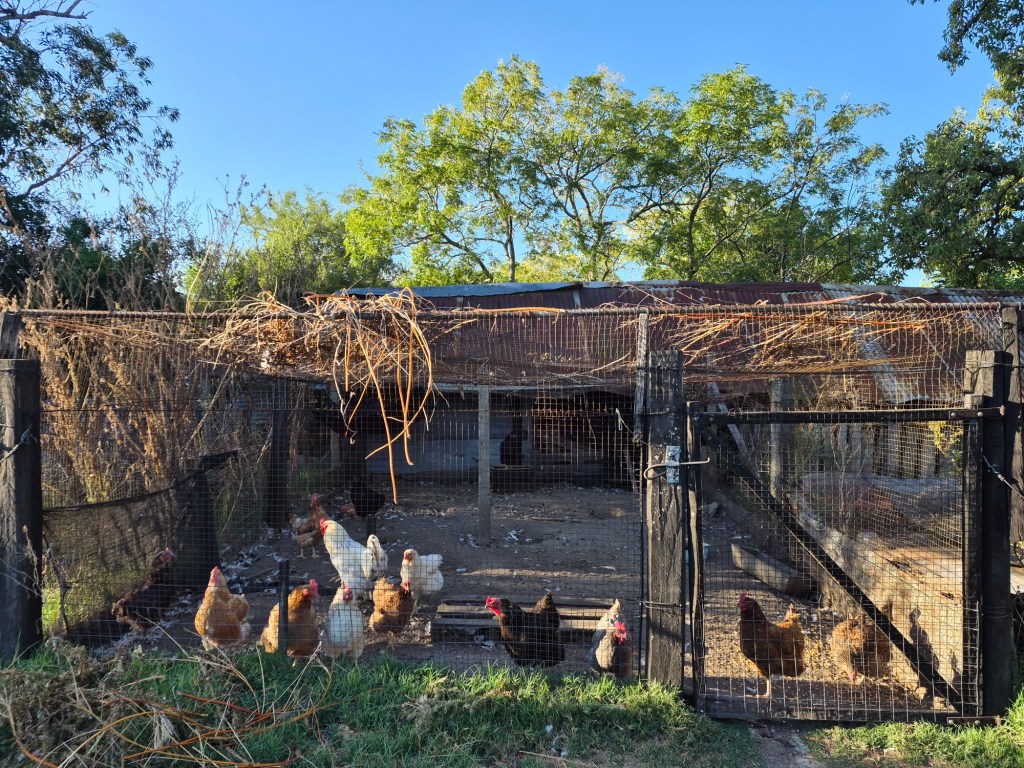
It was also my job to let the chickens out at 18h00, to collect any eggs they might have laid, and fill the water trough.  And to be sure that all 14 hens and the cock were safely back in the run before closing it later, as there were small foxes and other predators around that could’ve caught them.   The first night Maria and Hugo were not there, and thinking there were 14 chickens in total (I had not understood that there were 14 hens and one cock), I was happy that they were all safe and sound, having counted 14.  As I walked back to my room, a hen came sauntering by, totally confusing me.  The misunderstanding was cleared up the following day when they explained about the 14 + 1.  One hen had a long cloth string attached to her leg, and was being picked on by the other chickens.  When I asked Maria about it, she said she had been broody and had been tied up, and if I could catch her, I could untie the string.  That evening she had accidentally tied herself up around a pole in the chicken run, so it was easy to just pick her up and remove the string.   I am convinced the extra egg the following day was her feeling liberated and able to lay again. 

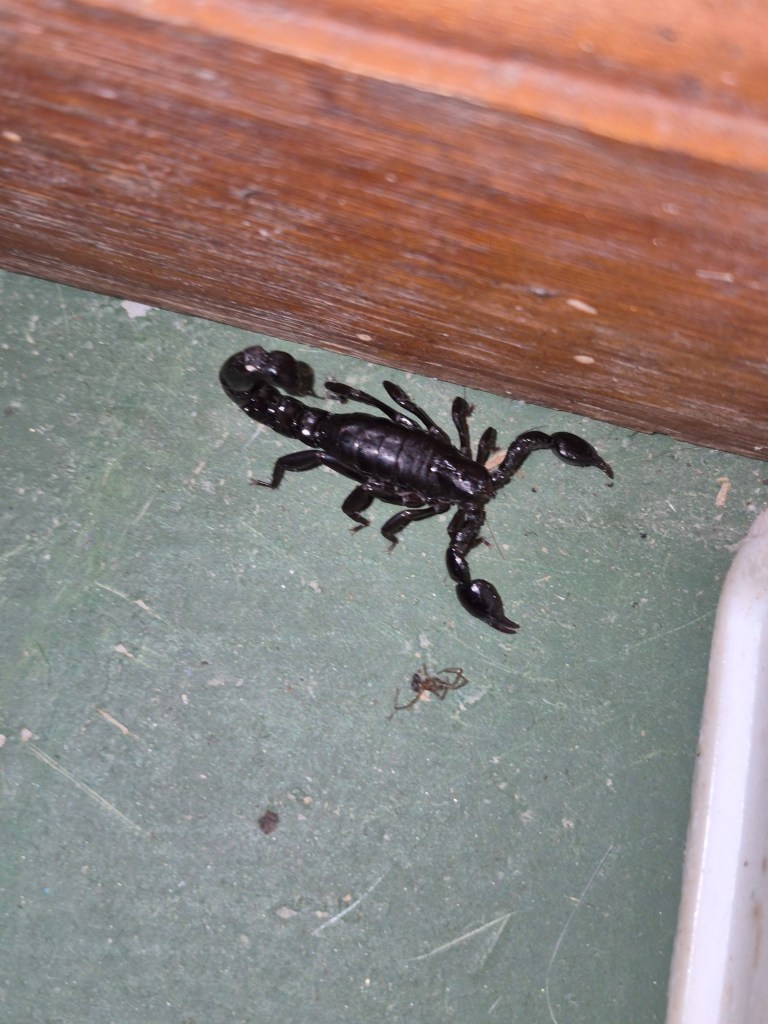
One night I discovered a little scorpion in my room, which kind of freaked me as it was under my phone which was lying on top of the adapter on the floor.  It made me decide to not extend my stay, which Maria and Hugo had asked me to do as their next volunteer had failed to reply to WApps.  I had been sharing some personal issues with Maria, and she had responded with positive energy and had offered to do reiki, which she was trained to do.  It had all become very intense, and I had felt my energy being drained to the point of exhaustion, so the scorpion was just what I needed to remind me that I should take charge of my situation and make sensible decisions.   My work had been done, it was time to move on. 

I think that is a dead ant lying close to it, so it wasn’t that big, but still, black signifies poisonous to me – a friend informed me otherwise, sending information that scorpions in Uruguay are not very dangerous…

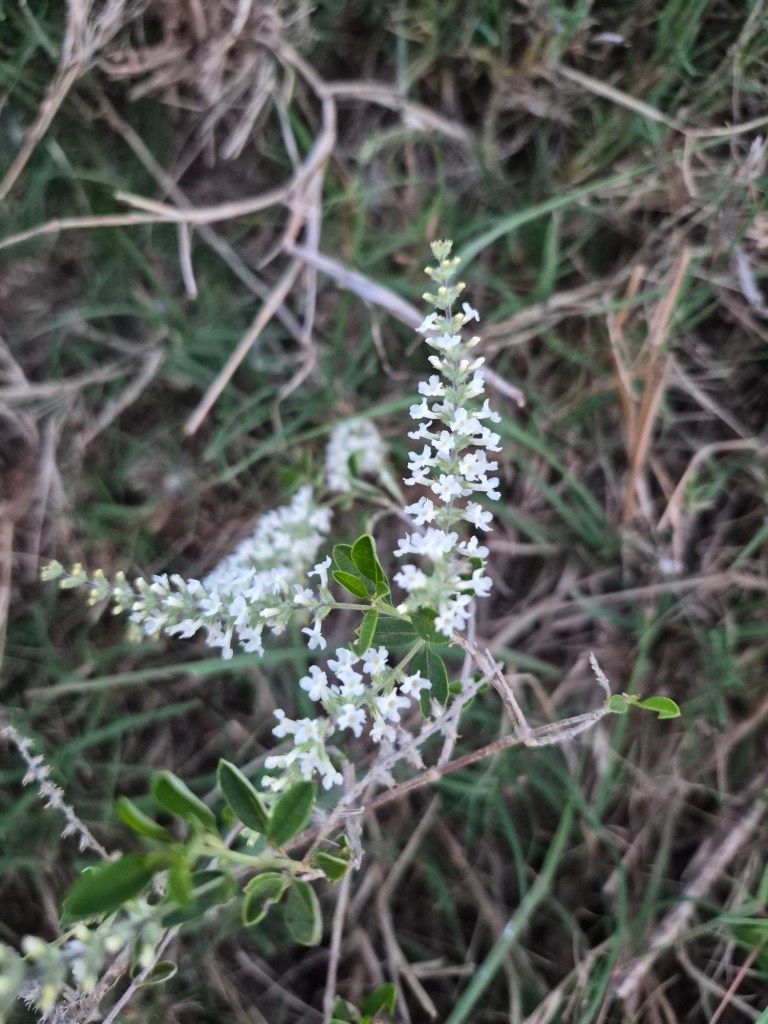
I would often go for a walk late afternoons, watching beautiful sunsets, taking pictures and picking and smelling a dainty flower along the way, that had the same calming effect as lavender.  Dante, one of the three dogs, always accompanied me with much gusto, reminding me of the joyous pleasure to be found in simplicity. 

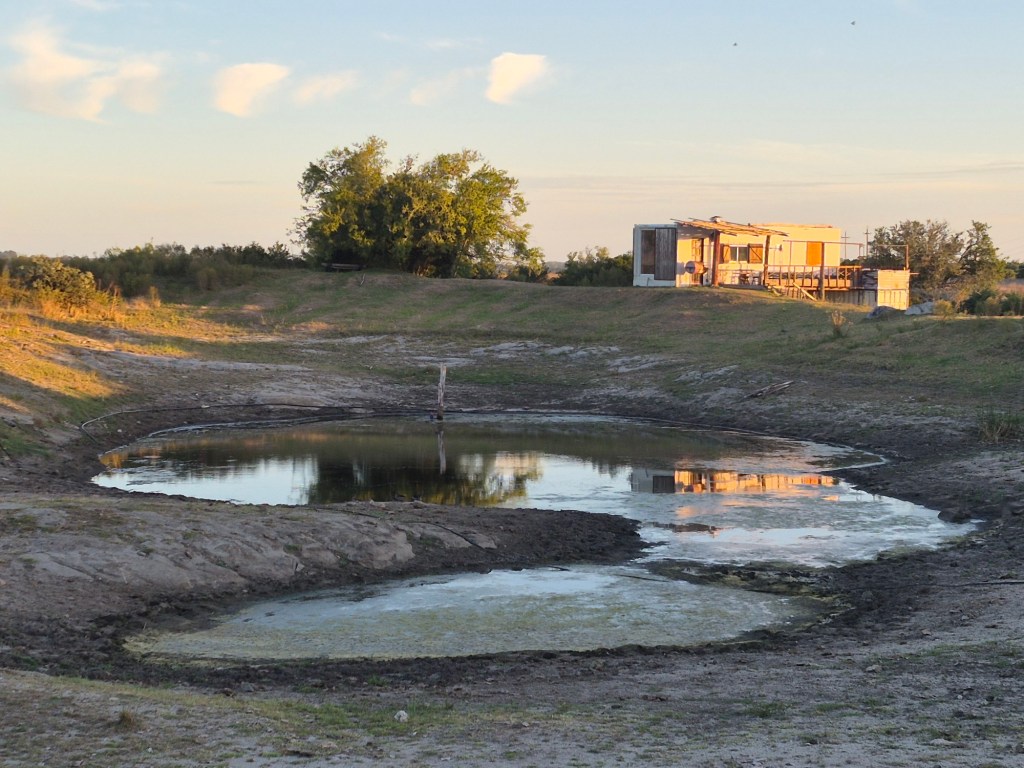
A cottage close to the main road that belongs to Hugo’s daughter and is rented out as holiday accommodation – it was dry, they needed rain.
The entrance to the farm, Don Miguel
The farm

14 March 2026  Contrast

Working and travelling are contrasting activities.  Travelling to me is about exploring, discovering, being attentive, walking, and sometimes interacting.  It is mostly personal, invigorating and exciting.  Working, on the other hand, means becoming involved, being open to forming relationships, sharing living- and life-spaces, learning about the culture and accepting that people do things differently.  It involves energy, sharing and participating, and being present.  Sometimes I can do it for longer periods of time, when there is an easy and comfortable flow of energy, and sometimes for shorter, when the intensity of the energy is draining.  The past week has been the latter.   More about that in the next blog, first a travel experience in Punta del Este.    

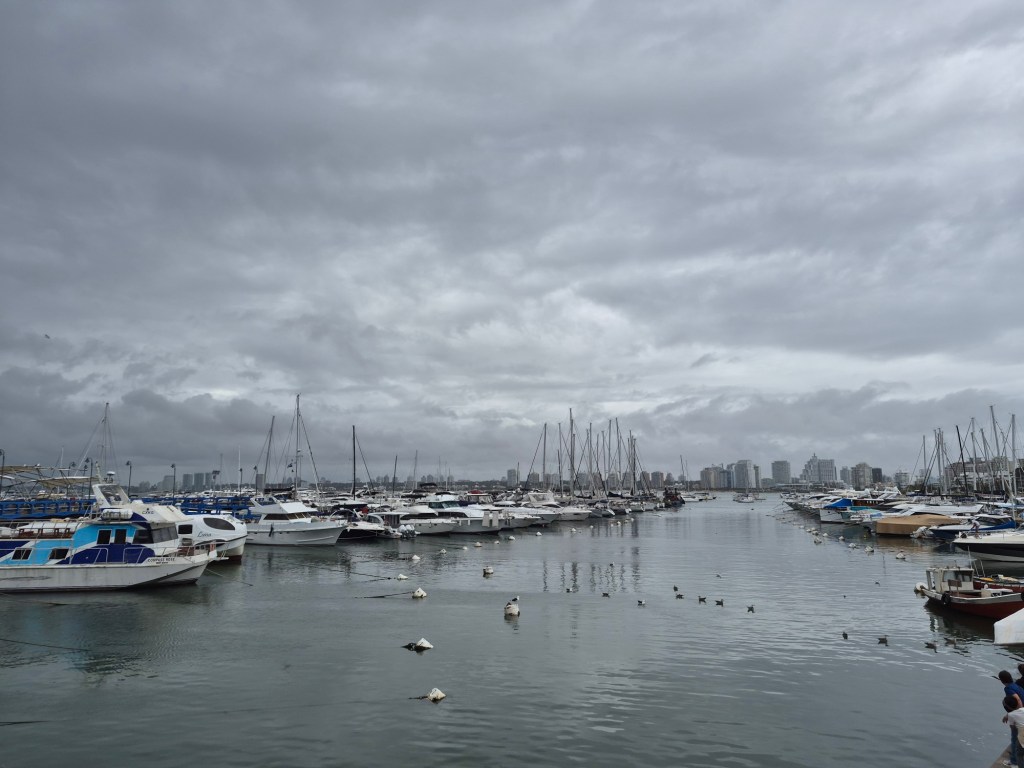
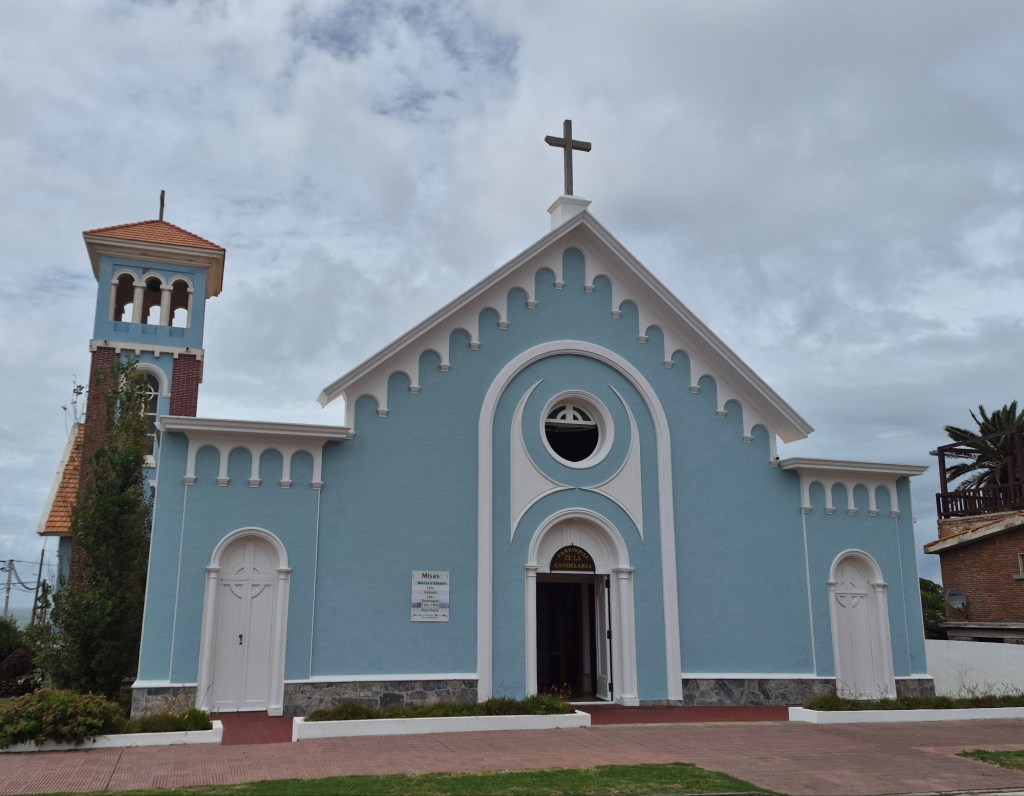
The morning I had to leave La Paloma, it had been raining and the clouds were threatening, so I was waiting in the kitchen area of the hostel to see what would happen.  I did not feel like pulling Suerte through the mud, and contemplating my options, I started chatting to two women who were having breakfast.  They, Susi and Manuela, were going to Punta del Este by car, and I promptly bummed a lift, offering to pay what the bus would have cost.  We had the most enjoyable trip, drinking mate and chatting the whole way, and they dropped me right in front of the hostel.  They are two best friends from Buenos Aires, who were on holiday for a week, and we shared life stories and philosophies as usual.  Susi and her partner (who was at home) have applied to adopt a baby, and I said a special prayer for them in a church in Punta del Este. 

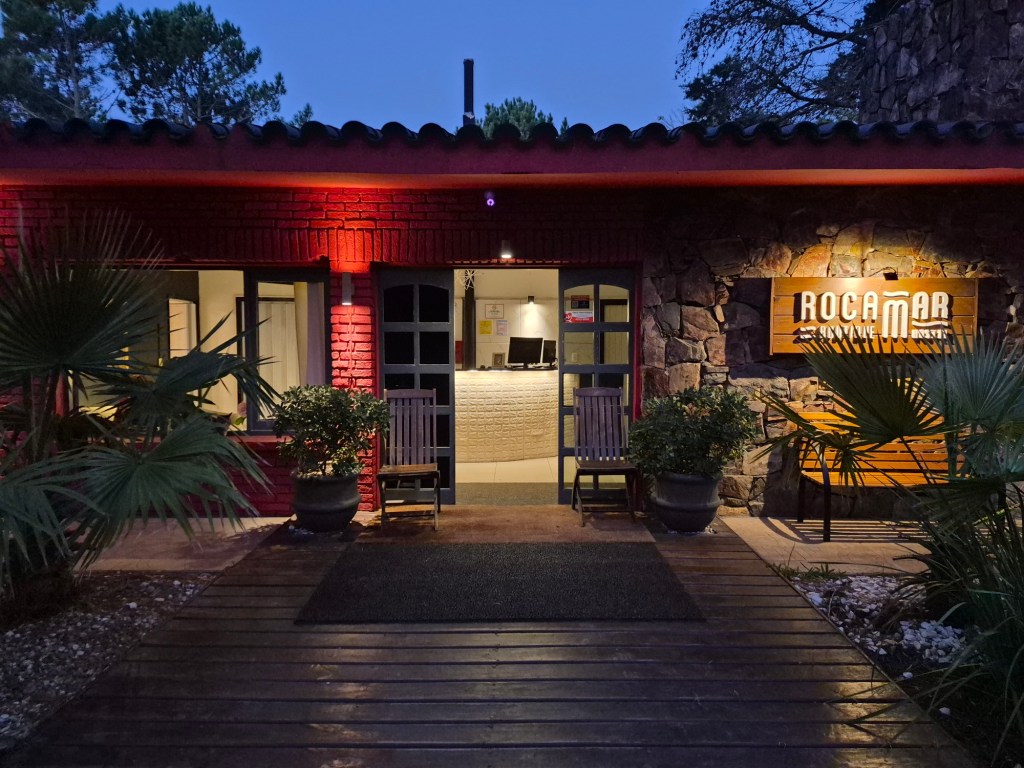
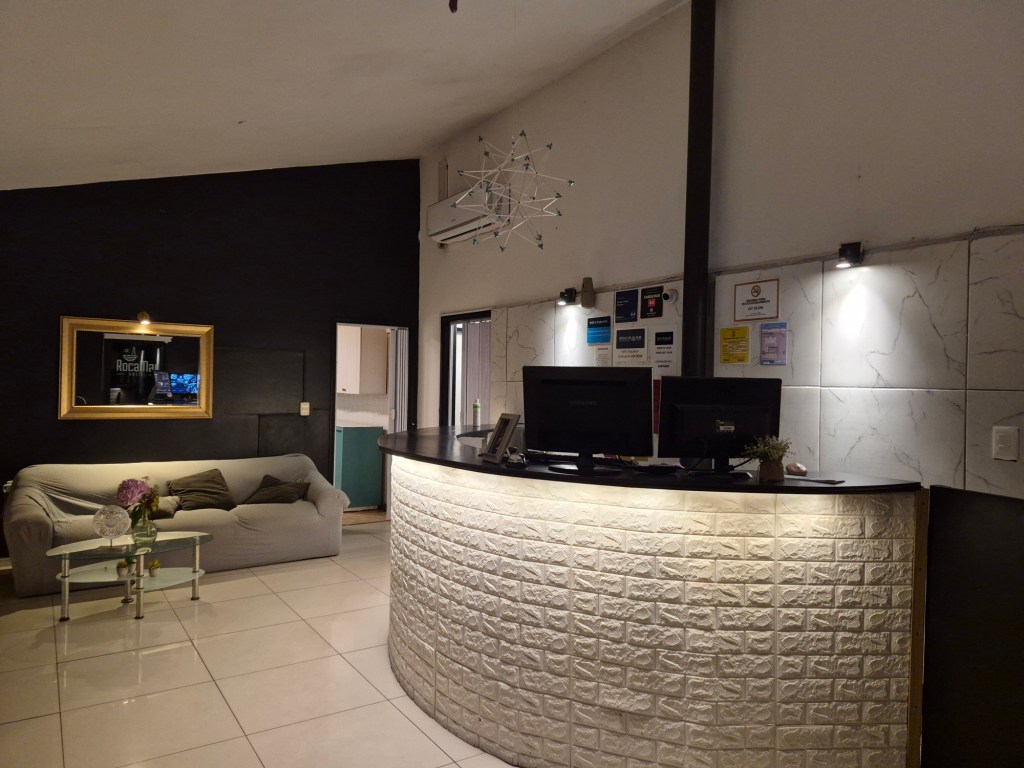
Roca Mar, the lovely hostel I stayed at in Punta del Este.  It is on the edge of a beautiful neighbourhood,  and within walking distance from the city centre
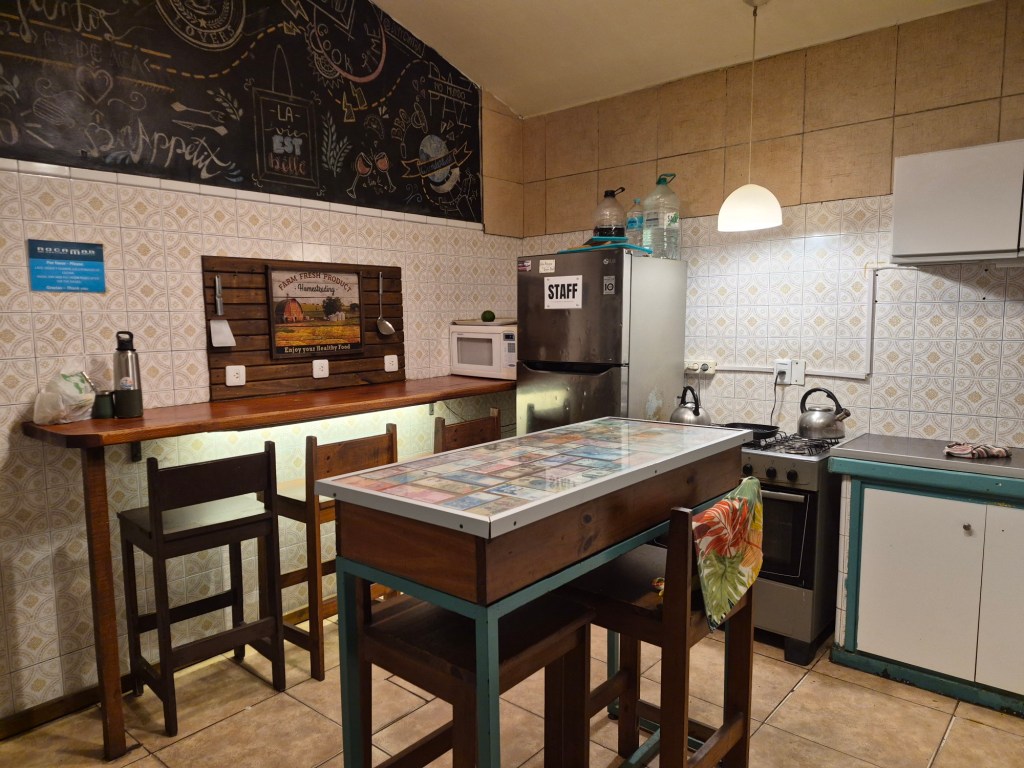
Clean kitchen!
Susi and Manuela

Punta del Este is something else.  I got quite a shock when I walked out of the hostel and was confronted by many 27-storey blocks of flats lining the waterfront street, as far as I could see.  A man I met walking toward the city center told me it is supposedly becoming the next Dubai, as investors are looking for places that are secure and safe. 

My Uruguay friend, Ale, had given me the names of two places to visit, but he owns a car, and I don’t, which meant I had to take a bus, and walk quite a bit.  The first, Casapueblo (House of the People), was a total surprise.   It is a huge, architecturally unorthodox house, built over 30 years by a world renowned artist Carlo Páez Viraló.  He knew many world leaders, travelled widely, painted with Pablo Picasso and represented the cause of Africans in his artwork.  The house started off as a wooden shed that he had built as his studio, which he later personally plastered and added on to, with the help of friends.  I watched a video about his life – truly inspirational. 

Getting there was not easy.  It is the first time ever that Maps.Me took me to the wrong place.  When the bus dropped me off, a lady showed me the way to walk, and after about 2 km through a posh neighbourhood and down a steep hill, I realised I was not going to find Casapueblo.  A woman standing next to her car was my salvation (at that stage it felt like salvation, not rescue), as she offered to take me to the place.  It turned out that she was a landscaper, who had done most of the gardens in that area, all very attractive. 

This house had a massive garden on the side,  so I was surprised at the modesty of the house
Compared to this monstrous one just down the road
An interesting design  – she had probably not landscaped the garden

Walking back was fun, as I followed a trail down a cliff overlooking the ocean, where I sat down and had my late lunch that I had packed for the day, not knowing what to expect. 

The second place Ale had told me about, was the Arboleto Lussich, one of the most important privately-owned forests and the largest arboretum in the world.  It was started in 1896 by Antonio Lussich, who was a sailor and collected seeds and trees from all over the world.  It covers 192 hectares with trails and lookout points to the east and west.  

Entrance building
Punta del Este to the east
Some tourists told me this was a tarantula, but I’m not sure.  It had just died, I think, as there was a stick nearby and some scratchmarks, as if someone had hurt it.  I was a bit scared of sitting down in the forest after seeing it. 
Cherry quavas – I ate and picked to take with me!
I was intrigued by how the oak trees grew – tall with thin trunks.
Even a giant strelitzia
Old greenhouse
Old aviary

Uraquay people are helpful and kind, without fuss or bother.  I experienced this again on the way to the forest.  I asked to be dropped at the same place as for Casapueblo (it was just easier), but as we approached the bus stop, I was standing next to the driver and mentioned to him the actual place I was going to.  He then told me to wait, took the following off-ramp from the highway, stopped and dropped me off 600m from where I had to be, shrugging off my thanks with a ‘con gusto’ (with pleasure).  I took the wrong bus going back, and ended up far out in the northern part of the city before realising it.  I just crossed the road and waited for the next bus back to town, getting off before the bus terminal, as the walk home was shorter from there.  I was dying for some coffee, and I’m quite ashamed to say, but there was a MacDonald’s and I couldn’t resist buying a take-away and a donut.   And then I walked through a beautiful neighbourhood, aptly named Beverley Hills, with huge trees, green and lush lawns and gardens, and charming houses.  

Across the street from MacDonald

The old town of Punta del Este is on southern point of the peninsula, with the harbour on the west side.  I walked around the point, the weather quite ominous with seriously threatening clouds, but thankfully it never rained.  I stopped at a hippy shop to buy a fridge magnet, and was somewhat overwhelmed by the owner who could speak English, had been in South Africa and was adamant to take me right to the back of the shop and show me some maps, explaining the points of interest.

Fishermen selling fresh fish
A shrine, close to the Southernmost point
Southernmost point of Uruguay where the Rio de la Plata meets the Atlantic Ocean
The lighthouse
The church where I prayed for a lot of things, especially for three friends back home who had had serious operations (all are doing well) , and a family issue. 
Very serene

And finally, the most photographed place in Punta del Este, ‘La Mano’ (The Hand).  The guy at the hippy shopped had asked me what my interpretation of it was, and wriggling my fingers upwards, I replied:  “Hello, here I am!”.  His reply:  “No, completely the opposite!  It is ‘Help me, I am drowning'”.  Well, that might be so, but I prefer my interpretation.

3 March 2026  Wild and weary

Inspiration has returned, in the form of an elderly couple who decided to pick up a hitchiker on a boring, lonely, desolate and windswept road.  Estela and Roberto, real angels, who then proceeded to take me with them on their yearly round-trip of the area north of La Paloma, where I’m now staying.  

What happened this morning, is that I decided to walk 9km to a lake, where there is a bird hide and supposedly a restaurant with local food.  The first 3km were through town, then on the beach for a few kilometers, veering off towards the lake for the last 4 or 5km.  The sun was at my back, and the wind was picking up, but also from behind, so the going was good.   The road parallel to the lake – which was visible in the distance – was straight, endless and boring, and the further I walked, the more I was asking myself:  “What are you doing, the lake is not what you expected it to be!”  Sometimes a car would pass, but there was no-one else in sight.  I eventually gave up and turned back, knowing I had to walk back 9km, against the howling wind and the sun in my face.  After about 2km, I decided that if a car passed, I would hike.  I was just about to sit down under the only tree next to the road, when a car approached, slowed down when they saw me hiking, and stopped!  Estela later said that they had passed me earlier and were wondering where on earth I was walking to.  When they saw me hiking, she turned to Roberto:  ” Shall we pick her up?”  And together they decided yes, in spite of not normally picking up hitchikers. 

That is the lake in the distance

Estela was fluent in English, so conversation was possible, me asking many questions about things I was curious about.  They were from Montevideo,  but every year they do a trip in this area.  “Every year we come to the lake, and I ask why we do it, because it is not nice.  But we do it every year!” I wholeheartedly agreed. 

They were going to La Padrera, which is a quaint town with rocks on the beach, and we got out to take pictures (same procedure as last year).   We drove through Arachania, and she regaled the story of their honeymoon there 55 years ago, in Aug, a very quiet and cold time of the year, and how they had nurtured an oil-covered penguin which then adopted them.  When they left, they wrote a notice which they left next to the penguin, explaining that it ate meat and needed to be cared for. 

The angels Roberto & Estela

In La Paloma, we stopped at the docks, of which I wasn’t even aware of, and Roberto pointed out a stall where one could eat fresh fish.  I will go there for lunch tomorrow, even if it means walking another 4km from where I live.  Roberto then kindly dropped me off at my doorstep, and I bade them a fond farewell, especially as Estela and I had shared similar perceptions of various things, amongst other, the pure joy of grandmotherhood. 

The La Paloma harbour

Now I have to backtrack, as I have not shared my experience of Barra de Valizas.  My friend from Uruguay, Ale, had told me about the ombu trees in Uruguay, and when I discovered that there is an ombu forest close to Barra de Valizas, I booked a place to stay (through Agoda this time, a steal at US$14, well knowing it could be risky) and took the bus there from Colonia.  Although it is off the main route, it is possible to go by bus. 

The blue dot is La Paloma, where I am now

The trip took longer than anticipated, and I arrived well after sunset.  It had rained that day, and I determinedly dragged Suerta along a wet dirt road in the dark, arriving at Luckyvalizas disheveled and uncertain.  I traipsed through a garden path toward a light, and found 4 people gathered around a table on a stoep, drinking mate of course.  A warm hug from the hostess, Maria, put my mind at ease, and I was shown to a bed in a large room with 4 beds, and a loft with 3 more beds.  It is also a camping site, so everything is outdoors – the toilet to one side, showers and basin to another, all very rustic but quaint in a way.  There were campers, but I was the only guest in the room – or so I thought, until I heard someone sneak up to the loft in the early hours of the morning.  It turned out to be Maria, who sleeps there too. 

Entrance to Luckyvalizas
The mosquito net was “fundamentalmente” according to Maria – I used it, but a little hole on the side provided ample entrance for bloodthirsty mossies
The stoep
Basin outside
Showers
Garden

Maria was very helpful the next morning in getting me set up for the visit to the ombu forest.  It required a short bus trip to the bridge at Puento Valizas, and waiting for Carlos, whom I had to pay $1000 (Uruguay pesos = R500), which was R1500 cheaper than what an advertised tour would have cost.  Me being me, I walked across the bridge and back, looking for Carlos.  A man was waiting next to the road, and thinking it was Carlos, I approached him. He knew Carlos, and pointed me back accross the bridge, where another lady said Carlos was in the forest and would be back in one hour.   It turned out that Carlos organises boat trips to the forest, which is privately owned and can only be reached by boat, and eventually we were about 15 people on the boat, steered by Alberto and a guide who could speak English. 

Ombu’s don’t have a uniform growth pattern, each grows as it wants to
Even if some branches fall over, they grow parallel to the ground
I thought this was a healthy ombu, until we walked around it
At the back it looked a bit different
This is the oldest ombu there, and it is healthy
Although it had openings big enough for people to walk through
When cancerous growths attack an ombu, they simply dry it out – this growth was quite porous
This is a coronilla tree, 500 yrs old.  They grow 1mm in diameter per year, the quide said. 

The ‘Monte de Ombúes’ (Ombu Forest) is the largest in the world, and stretches for 20km near the Laguna de Castillos. There is much to know about the ombu.  It is not a tree, as it does not have wood, but has fibrous material.  It is a herbaceous plant that can grow up to 14m.  It stores water in its large base, and is therefore resistant to fires.  It cannot be dated as it doesn’t have growth rings and they have different growth rates (we saw two 25yr old trees, one half the size of the other, one growing with just one branch, the other with 5 or 6 branches).   They provide a natural habitat for small animals because of the holes in their bases, as well as for bees.  The interactive role of the bees is obvious in that they then pollinate the trees.  There are two different approaches to propagation and preservation of the trees in that area.  On one side of the river, where the forest is on private ground, the owner allows cattle to graze, which eliminates competition from other indigenous trees and plants, especially the undergrowth.  Here the ombus are flourishing, and new plants are protected with a circle of dried branches that the owner places around each young ombu to protect it from the cattle.  On the other side of the river is a public park, where natural forest is allowed to grow unencumbered as no grazing is permitted.  The undergrowth is thick and dense, and the ombus are dying because they cannot compete with the other natural plants and trees.  

The sad ones that are dying

I caught a bus back to Barra de Valizas and bought some vegetables, mince and canned tomatoes to make spaghetti bolognaise.  I still had spaghetti in Suerta. 

Can you believe it, after all that effort one of the dogs managed to drag the dish with meat off the counter!  Fortunately I had eaten by then, but I was going to offer the rest of the food to Maria and the owner, Luciana.  We all stood around very dismayed and apologetic, but Carlos, a friend who was visiting Luciana, just calmly called the dogs to come and finish what they had started.

Luciana’s son caught crabs in the Valizas river, and he let me taste some – better than crayfish!

The hole in the body is where they kill it.  He was quick to explain:  “Animal does not suffer, it is dead very quickly.”
Barra de Valizas has some cute houses
No fear of tsunamis here
I loved the March lilies, they were everywhere

Cabo de Polonia is a resort south of Barra de Valizas,  which can only be reached by foot or with a 4×4 vehicle.  It is 9km from Barra de Valizas,  so I set out along the beach the following morning.  Along the way there is a rocky outcrop with a fabulous view of the area, and the resort itself is picturesque and people are very casual.  Two small islands off the coast have the 2nd largest breeding colony of seals and sea lions, and some were lying on the rocks near the lighthouse. 

I wonder if this is true
And off they fly…
I found the enjoyment of the onlookers most intriguing – we are truly spoilt in South Africa with all our wildlife
A well-deserved cerveza (beer) – the doggy-bag (too much to eat!) was a plastic container neatly wrapped with gladwrap
These trucks were the transport back to the bus station.  A random person set up his xylophone and entertained us while we were waiting. 

The next day was a beach- and laundry-day, and the following day I caught the bus to La Paloma, another relaxed holiday resort, although the people in Barra de Valizas regard it as a ‘city’.  I had told Luciana about Workaway and suggested that she should use volunteers to paint the buildings and sort out her garden, that she really had a gem.  I appreciated her WApp after I had left:   “Let’s keep in touch from time to time.  Have a safe journey of the soul these next few months, Meryl.” 

The hostel I am staying at in La Paloma, is great.  I am alone in a communal room as there are very few guests at the moment.  The 3-month school holiday is over, school started yesterday, 2nd of March.

 
La Paloma
Some birds I saw – Turkey Vultures (feeding on dead seals that wash out), a Southern Lapwing, and some Willets (thanks cousin Alan for identifying)

There are egg-shaped gelatinous things on the beach, some attached to the seaweed.  When they are dry, they look like thin ping-pong balls.  Some are still whole and are filled with a salty watery substance, and when I Googled them, I was appalled to see that I might have killed a few, or even thousands of snails when I broke it.  Thanks to my cousin Lynton (whose friend could supply the information) I now know that they are the eggs of pachycymbiola brasiliana, a species of sea snail.  Estela told me they are found everywhere and the snails are big, but I would not find any shells here on the beach. 

Dried out ones
I found this on the beach today, I am sure it is the shell of the snail

The difference between our beaches and these, are that there are no cricket- or beach ball games, and children don’t have beach toys. Everybody sits on chairs under umbrellas, or they lie on towels, just basking in the sun or drinking mate.  Much to my surprise, I found evidence that children do play on the beach, and quite creatively too.    

I loved the late afternoon sun on the houses – peace and tranquility

26 Febr 2026  A Glimpse into History

Buenos Aires skyline

There are two companies that have ferries going from Buenos Aires to Colonia del Sacramento, crossing the Rio de la Plata in just over two and a half hours.  The one is the Buquebus, and the other the Colonia Express.  I chose the latter as Mati had said it is slightly cheaper.  An uneventful crossing, with my first glimpse of Uruguay through the window of the walkway. 

First glimpse
My room for 3 days – in Uruguay I will only be able to afford hostels where one shares

Colonia del Sacramento has an interesting history.  The Portuguese established a post there in 1680 under the rule of Manual Lobo, who described the place as fertile with plenty of fresh water.  I understood the latter more clearly when I went for a swim in the (brown) sea, and discovered that it was fresh, not salty.  According to Wikipedia, Spain took possession of the town four times between 1680 and 1777, with it being returned to Portugal each time after a treaty or battle.  From 1817 to 1822 it belonged to the United Kingdom of Portugal, Brazil and the Algarves, and after that to Brazil.  In 1828 it finally became part of Uruguay when the latter became independent.  The old city, Barrio Histórico, has kept its character, with narrow cobbled streets that fit the irregular terrain plan, old houses and many little shops and restaurants.  I spent hours roaming around, discovering new places, taking  pictures and watching incredible sunsets, as the coastline faces West. 

These are the ruins of the Convento de San Francisco (St. Francis Convent) which was destroyed by a fire in the 1700s.  Behind the ruins is the lighthouse.
Brown ‘sea’
An old tower – many of the old places have been restored
The church, also rebuilt
Great bookshop – very expensive (as everything in Uruguay)
I was impressed with the lanes of tall plane trees in the newer section of town
A map of the old city
Ruins, and 1900s factory buildings.  An old dock was also here, see next photo.  Now a cultural center with art gallery and indoor- and outdoor theaters.
I found a door in the garden and steps going down, and came upon this – I assume that is where the boats came in to dock. 
How do you know someone is a tourist?  He is not clutching a thermo flask in the crook of his arm, or carrying a mate in his hand.  Locals drinking mate are everywhere, and sometimes they have a special basket in which to carry everything. 
While waiting for one of the sunsets, I strolled into a gallery. These artworks each have an accompanying poem. 
Remnants of the old city wall
This restaurant has a plaque outside, explaining  it was built in 1710, and Mamá Antula lived there in 1784 – I have no idea who she was.
Inside
Remnants of a bygone era

On my second day in Colonia, I walked the 5km along the beachfront to the Plaza de Toros, where there is a fully restored bullring.  It was built in 1910, and was only used for 2 years before bullfighting was banned in Uruguay.   It was restored and reopened in 2021 as a cultural and sports complex. 

Plaza de Toros
The entrance

The walk there was fun and interesting.  I was puzzled by the many new and modern blocks of flats and developments along the way, until I read that huge amounts of money is being spent on developing Colonia to the north and west, to attract especially Argentinians, as their economy is struggling. 

It was Saturday, which invariably means streetmarket
Interesting…
View towards the old city
An encouraging signpost:  ‘path of delights’

I was determined not to walk back as I was hot and tired, but wasn’t sure where to catch a bus back to my lodgings.   I asked at a cafe and was told the bus stop was just across the road.   I waited for 40 minutes, and would have waited longer if necessary.  The thing about the buses is that, not only are the explanations in Spanish (given by friendly and helpful people), they are often vague.  So one waits. And wonders, especially if three buses pass without stopping.  And then one waits some more. 

On the last evening I decided to treat myself to a pizza and beer, and as I was walking past all the many restaurants to choose from, I saw a crowd gathering in the street ahead.  Thinking it might be a march of sorts, I walked closer, only to discover it was a parade of old cars. 

My walk home that evening

23 Febr 2026  Back to BA

It was so easy to go back to Buenos Aires,  the route to ‘my’ apartment familiar to both me and Suerte, and a warm welcome by Mati, my Airbnb host.  Just a quick stop en route at the shop where I’d bought Suerte, to return the ring that I had found on the farm.  There was a different lady, and at first I had trouble explaining my mission, sweat pouring down my face, until she started using Google Translate and casually handed me a paper towel to wipe my face.  She sent the owner of the ring a WApp and photo, and I left it there.  Sad story for me is that I was hoping to find my little make-up bag there, but I must have lost it on the bus on the way to Azul.  Sad because (bear with me, these little things become important) of the sentimental value:  the bag I had bought in Vietnam in 2014, a nail clipper I had bought in London for £5 in 2006, a nail file I have been using for 30 years, a little mirror a friend gave me for my previous trip in 2019, and an eyebrow pencil-brush without which I look a little spooky.  Me being the eternal optimist, I gracefully accepted the loss and assumed it was time for change…

I spent 4 hours of the first morning back in BA applying for my online visa for Columbia, a marathon task which I started off enthusiastically,  but had to grind my teeth to complete.   I even managed to pay, reading and Google Translating instructions, so now I’m anxiously awaiting the approval.  All the while I was hearing loud explosions from outside, and Mati explained that there was a protest against new labour laws that the president was trying to pass. The explosions were rockets that were being fired off.  The previous week a similar protest had evidently ended with clashes between the police and protesters, and a few people had been injured.  I decided to take to the streets and see for myself. 

Plaza de Congresa, where protests are mostly held
Most protesters didn’t enter the Plaza, as there was a ‘stage’ in the street from where the propaganda was being broadcast, preventing them from moving forward – reminded me of the fighting in the street in the movie Les Misérables

The noise was overwhelming, with loud propaganda speeches, singing and cheering, but the atmosphere was peaceful, with police all hanging around, busy on their cellphones. Vendors were selling food, mate and beer was being drunk everywhere and men were urinating against the buildings in side streets.  Where could the women relieve themselves?  Relaxed chaos.  Most shops were closed though, with their metal shutters down.

Enthusiastic supporters
The aftermath, kind of messy.

I spent the last day in La Boca, a very touristy part of BA.  I walked there, through San Telmo, accidentally discovering the San Telmo market, a very old undercover marketplace.


Street in San Telmo
Always a park along the way
San Telmo marketplace
In the olden days horses walked along these lanes, then in the open air, now under cover.

On the way to La Boca, one passes the soccer stadium of the professional sports club, Club Atlético Boca Juniors, which was founded in 1905, and which team has won 60 professional titles, according to Wikipedia.  I overheard people talking about a serious match that was going to be played the following day, and the signs were everywhere as people were buying stuff and were all wearing the CABJ shirts. 

As I approached the tourist area, street art was becoming more plentiful and buildings more colourful.

A tourist posing – they were standing in queues to take photos, so I just photographed one of them.
Real people below, sculptured ones above
The sign on her head: “I am not disheveled,  it’s just that my hair has freedom of expression.”

The experience of La Boca was kind of sad though, compared to 7 years ago when I was last there.  Then it was packed with tourists, roadside tables full, tango dancers on the pavements and fun sculptures everywhere.  The impression I got now was that economically it was struggling with only a few small groups of tourists accompanied by a guide, empty tables, one couple doing the tango and very few sidewalk vendors.  I chatted to a fireman, who told me they were volunteers, not receiving financial support from the government, and they were asking for donations.  He warned me against moving away from the ‘tourists area’, as it was not safe. 

I managed to find one place where everyone was buying the traditional choripan (chorizo on a bun, with chimichurri sauce and salsa) on an open school playing court.  There were a few tables under umbrellas, but they were full.   I was standing to one side, trying to catch a bit of shade, battling to cope with sauce dripping everywhere, when a kind man brought me a paper plate.  After a while he reappeared with a table, and a few minutes later two chairs, and even an umbrella, carrying the heavy cement stand in one hand.    I gracefully accepted it all, only to realise he hadn’t done it for me, but was just setting up extra seating! 

‘My’ table was set up to the right.

Finally it was time to say farewell again toe Buenos Aires and Argentina, Uruguay was waiting.