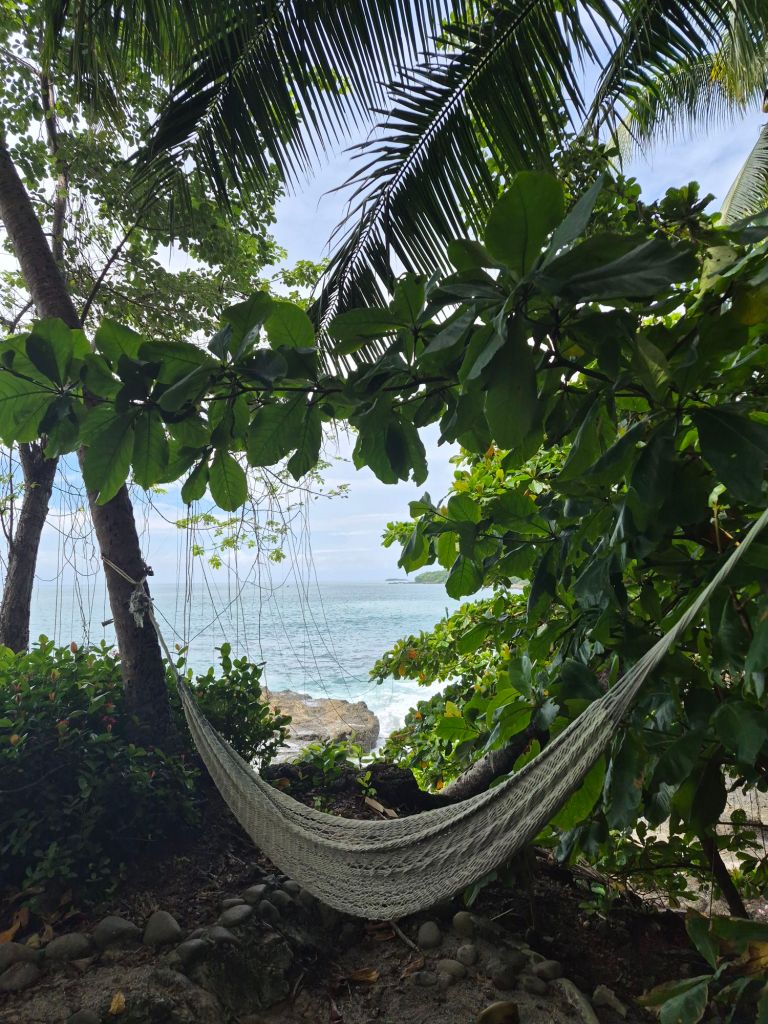
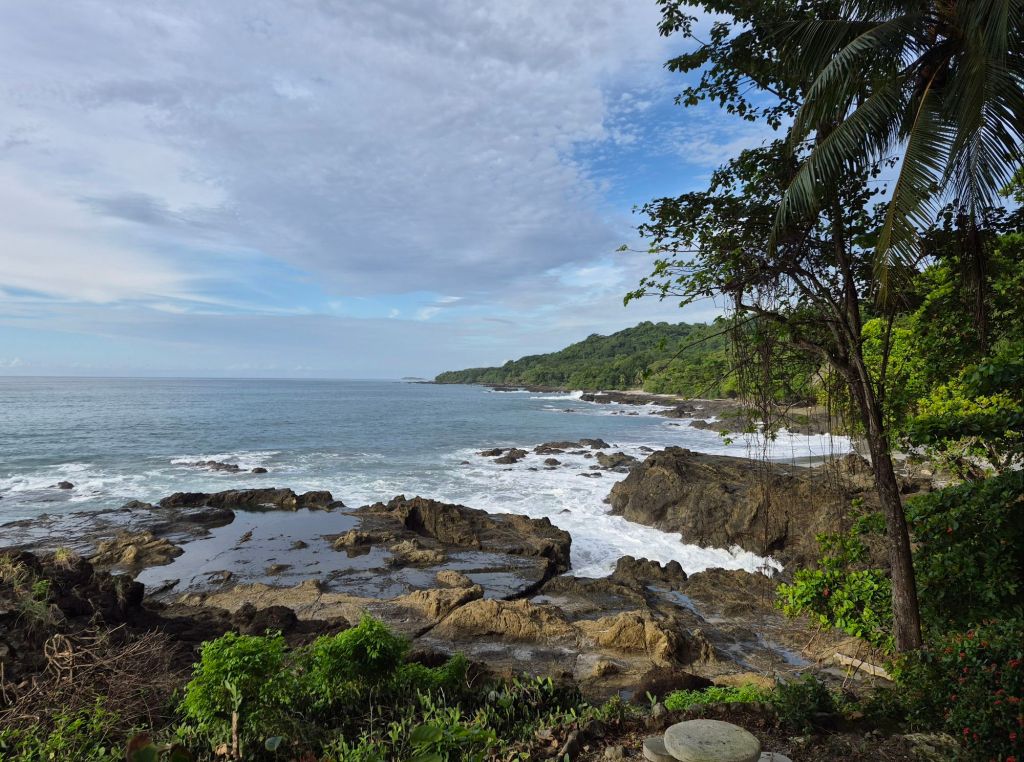
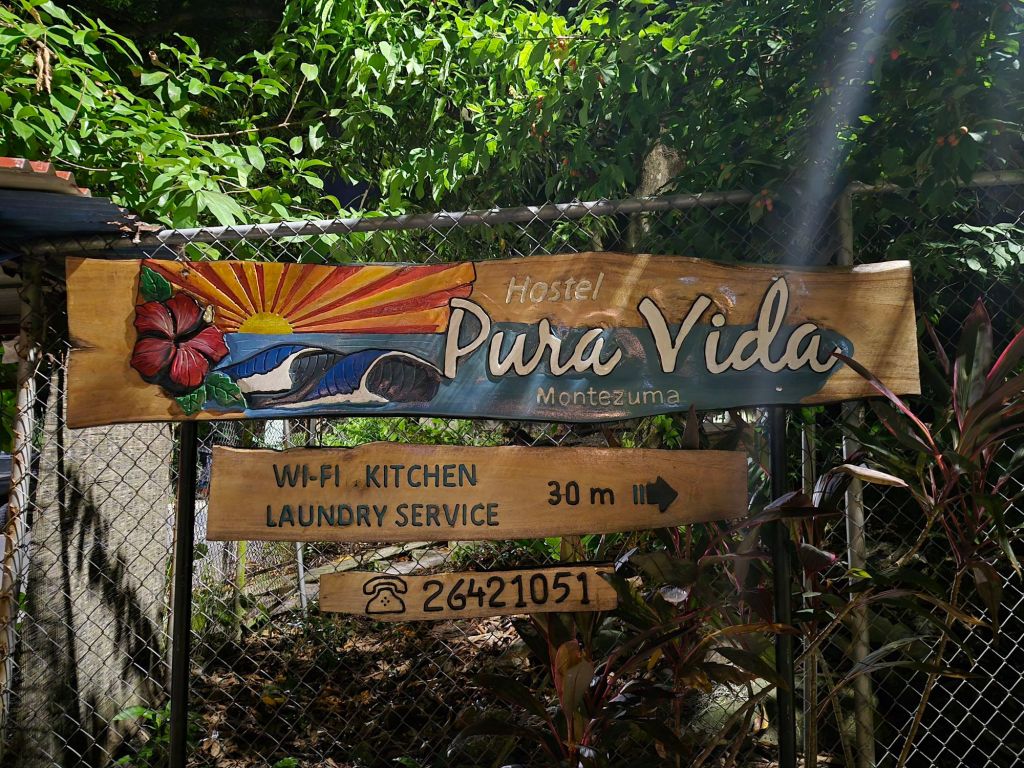
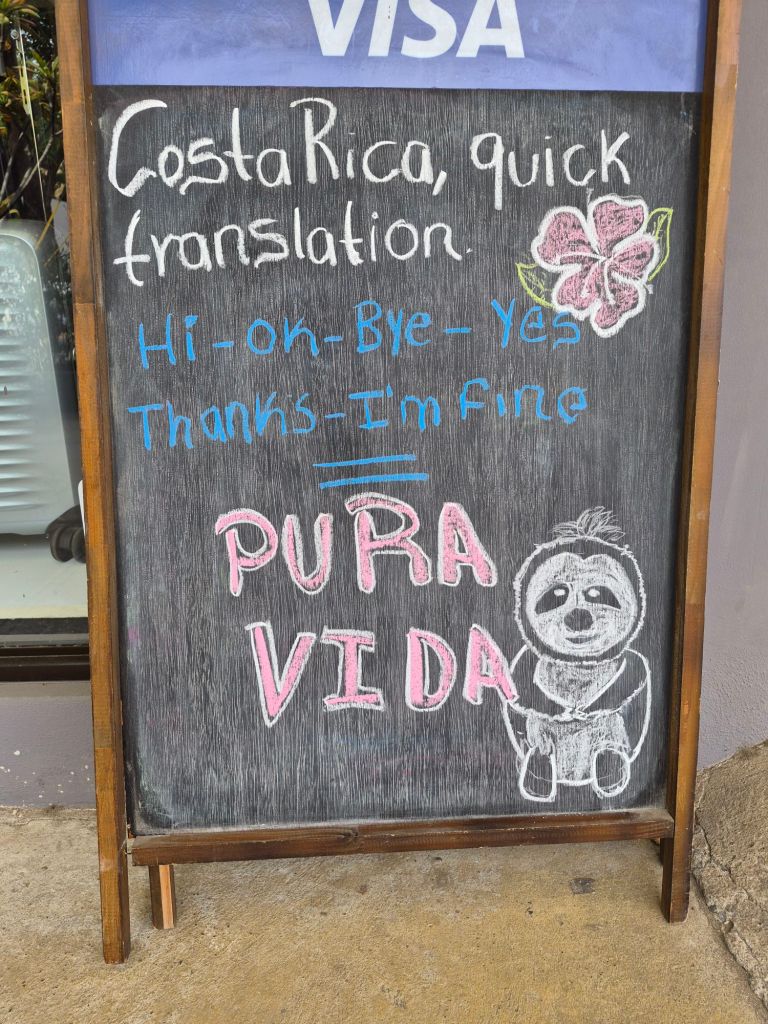
A friend sent me an article about the South African rugby player, Joe van Niekerk, who lived in the Costa Rican jungle for 7 years after retiring from professional sport in 2014, starting out on a whole new holistic lifestyle, as well as establishing a retreat. In the article he spoke about the expression ‘pura vida‘ (literally translated: pure life) used in Costa Rica, which attracted him to settle here. After almost 2 months in Costa Rica, I can vouch for the authenticity of the expression. It is freely and sometimes profusely used by locals, for everything. The usual greeting of “¿hola, cómo estás?” (“Hello, how are you?”) is most often replied to with “pura vida!”. Everything is pura vida – from food, to mood, to experience, to travels, to even the condition of some roads, which are “not pura vida“. It is a lifestyle and perspective which has become their culture, which shows how Costa Ricans cherish and enjoy the little things in life and how they accept the ups and downs of life without stress. It is evident in their interactions with the tourists, of which there are many, and with the expats, who often have a sense of entitlement and who do not always appreciate the depth of the meaning of pura vida and use it lightly, sometimes the only Spanish they speak. It is used as logo on anything and everything you can buy, and restaurants, hostels, and businesses often use “Pura Vida” as name. So now I’m chilling in a hammock at a hostel in Montezuma, with a view of a rocky coast, waves smashing against the rocks, with lovely tidal pools at low tide – pura vida .
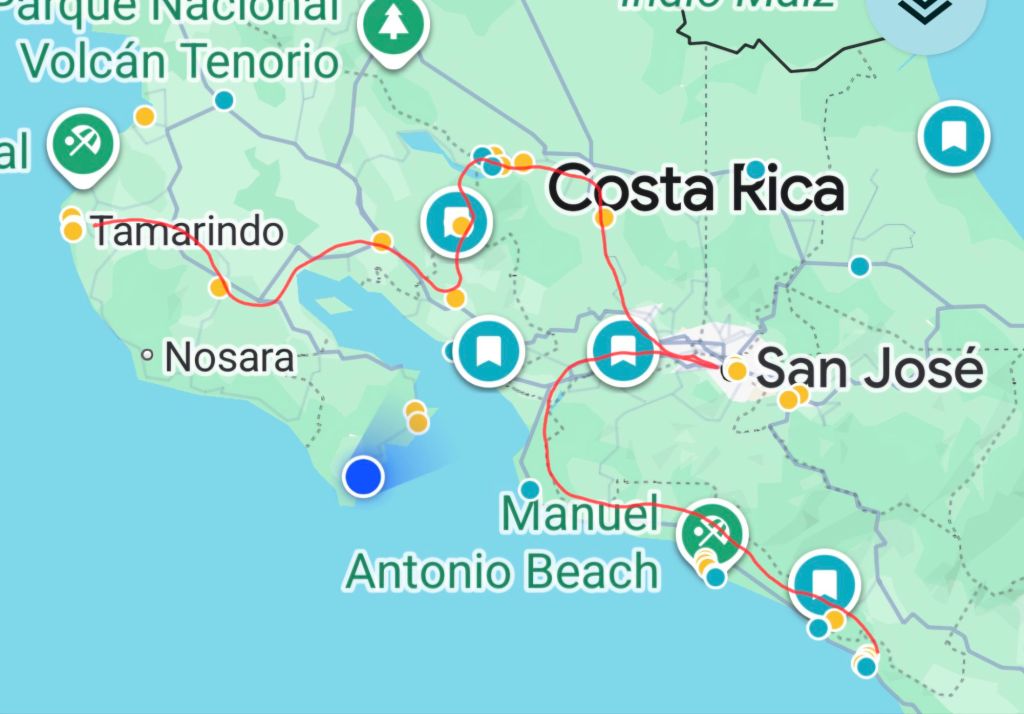
From Dominical to La Fortuna, which is inland, I took a local bus to San José, the capital, and two more buses from there. The whole trip took 12 hours, as entering and leaving San José takes more than an hour each time. We also had a long hold-up in a mountain pass, as the road was too narrow for the huge trucks to pass each other at some bends, and traffic was brought to a standstill. When we eventually emerged from the blockage, traffic was queued up for more than 3 km on the other side, mostly trucks. How they sorted out that mess, I do not know, I was just happy that we had managed to get through.
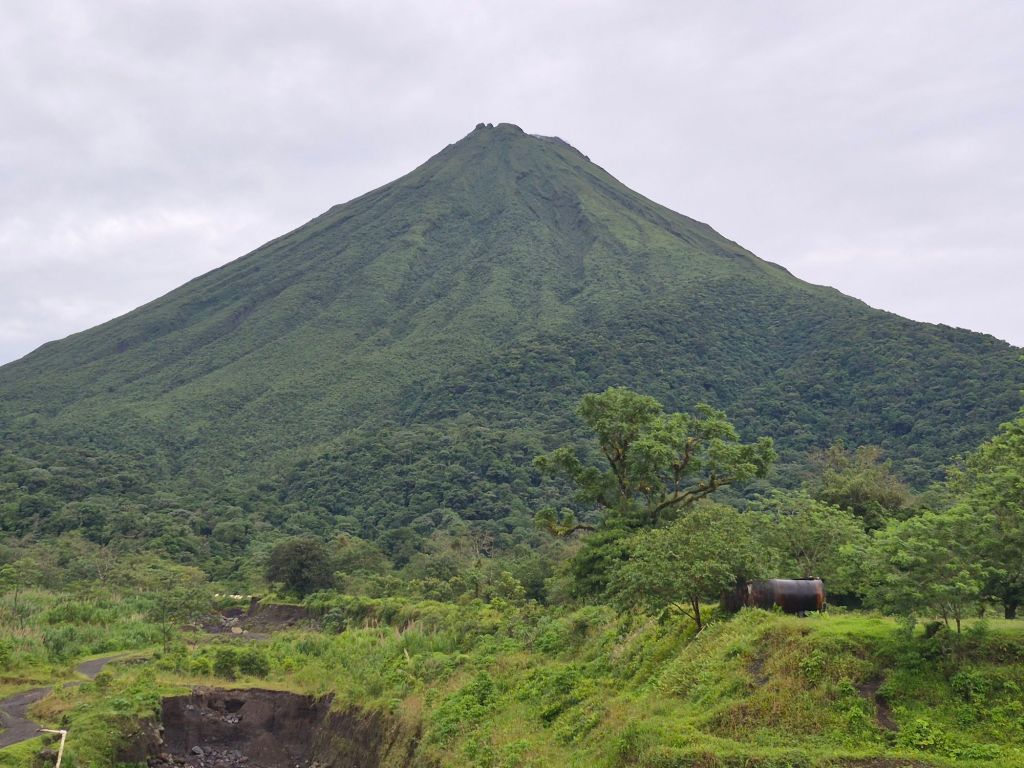
I had booked a very cheap hostel ($7) in La Fortuna and was nervous about what I might find, but Asha Hostel turned out to be great. The owner, Dnyan, explained: “I am a traveller myself, and I decided to build a hostel that was affordable for travellers, as things are so expensive in Costa Rica.” The location was perfect, not far from where the bus dropped me, a pizza takeaway right next door, a huge supermarket up the road, and the entrance to a sloth park 100m away. The main attraction of La Fortuna is Volcán Arenal, the dormant volcano which dominates the skyline. The last big eruption was in 1968, when 87 people died and three villages were buried in lava, rocks and ash. It was still very much active until 2010, when it entered a dormant phase. At this time of the year it has a permanent cloud covering, but I was lucky to see the top twice while I was there, both times unexpectedly as I walked up the street from the hostel and the clouds had lifted. The first time I just carried on walking out of town for 3km, getting close enough for my satisfaction. I had entered private property and spotted some dogs, so I took some pictures and left. There are tours that one can take, or walks in the national park around it, that give you the opportunity of walking on the lava ridges, but the cost involved was too high for my budget. As are all the excursions everywhere here in Costa Rica.
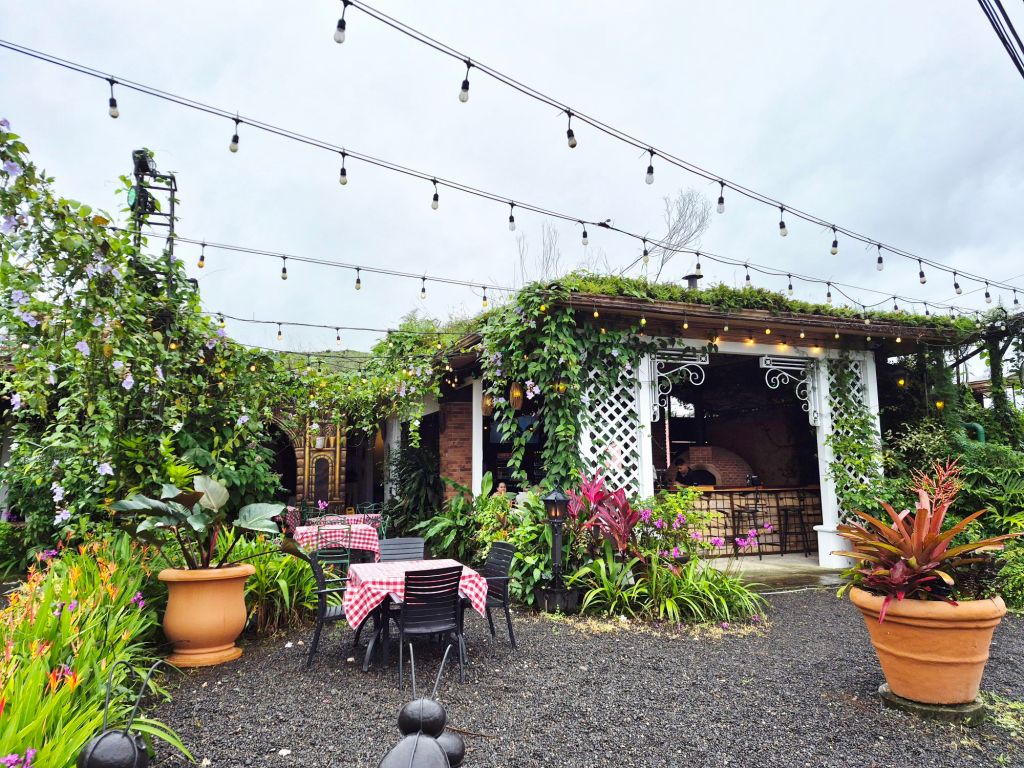
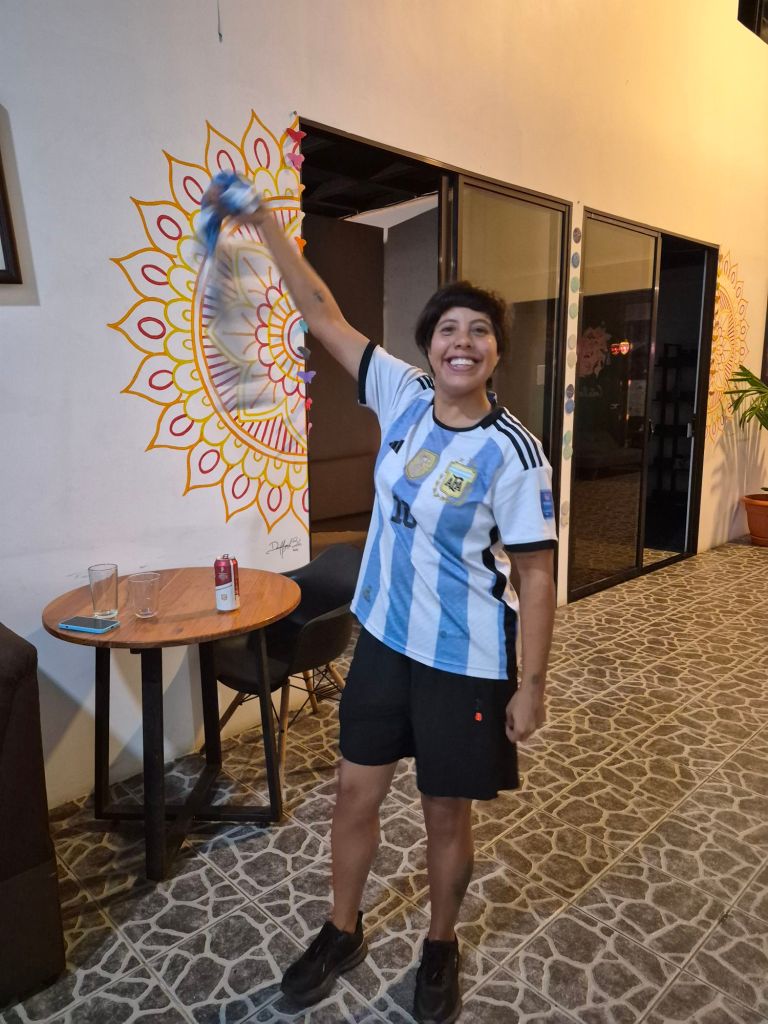
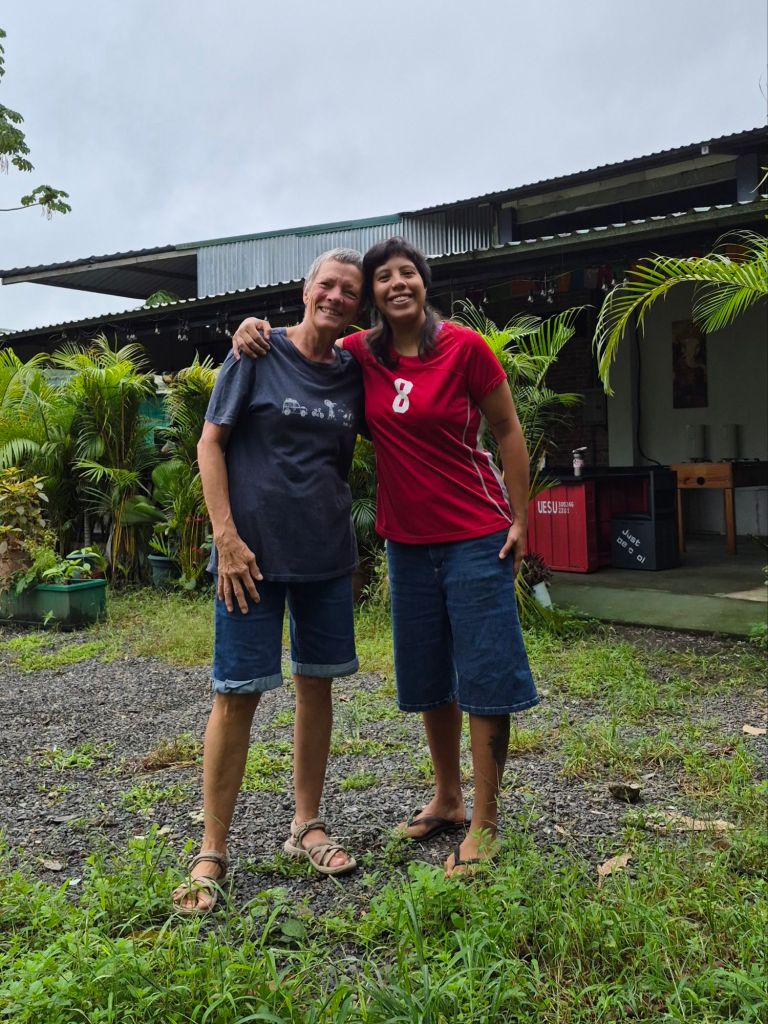
Emi, from Argentina, was working as a volunteer in Asha, and we watched the semi-final of the FIFA World cup at the hostel – both of us ecstatic when Argentina won. We became good friends, and she shared some insightful things about life in Argentina under the reign of Javier Milei, not very positive.
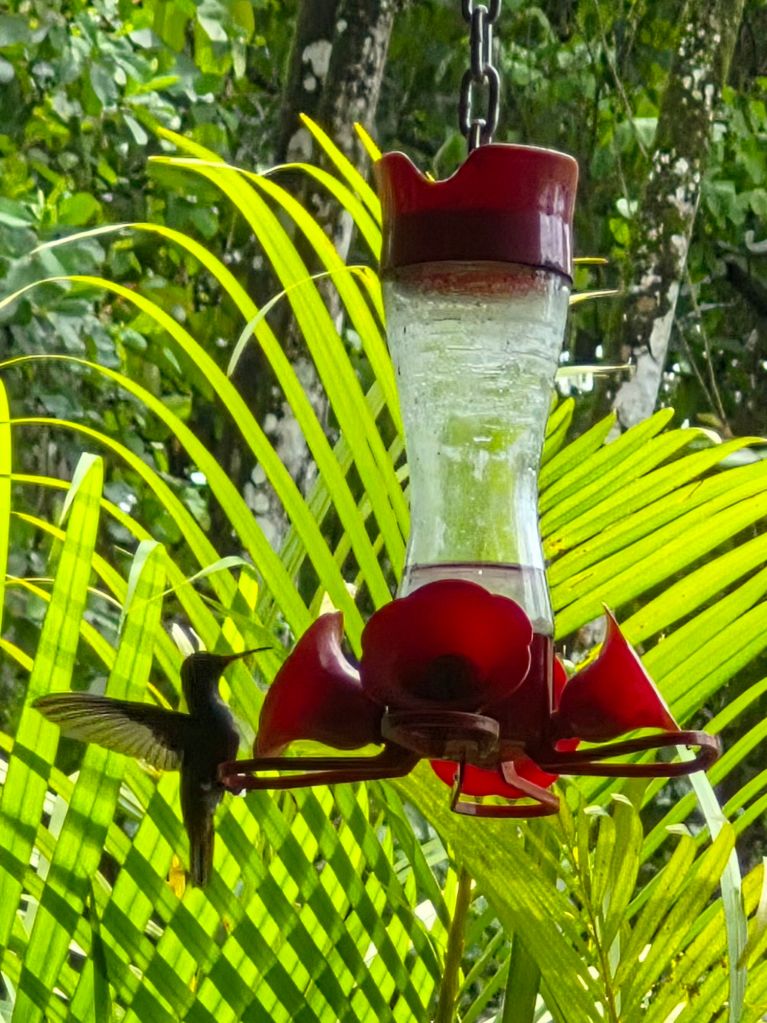
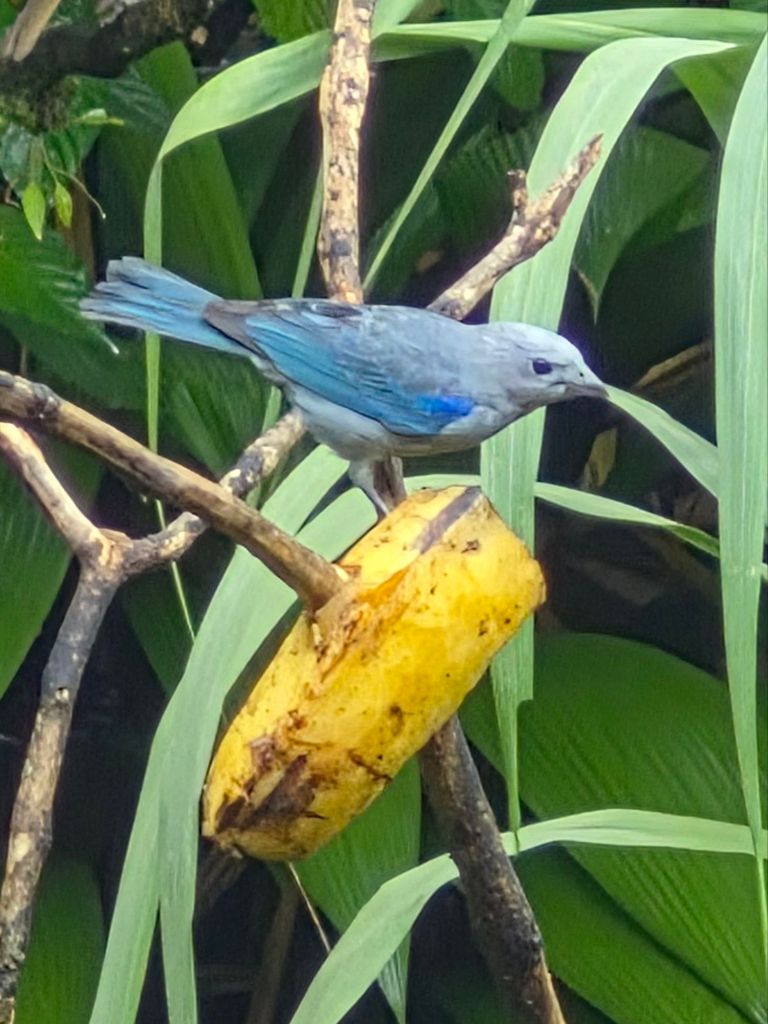
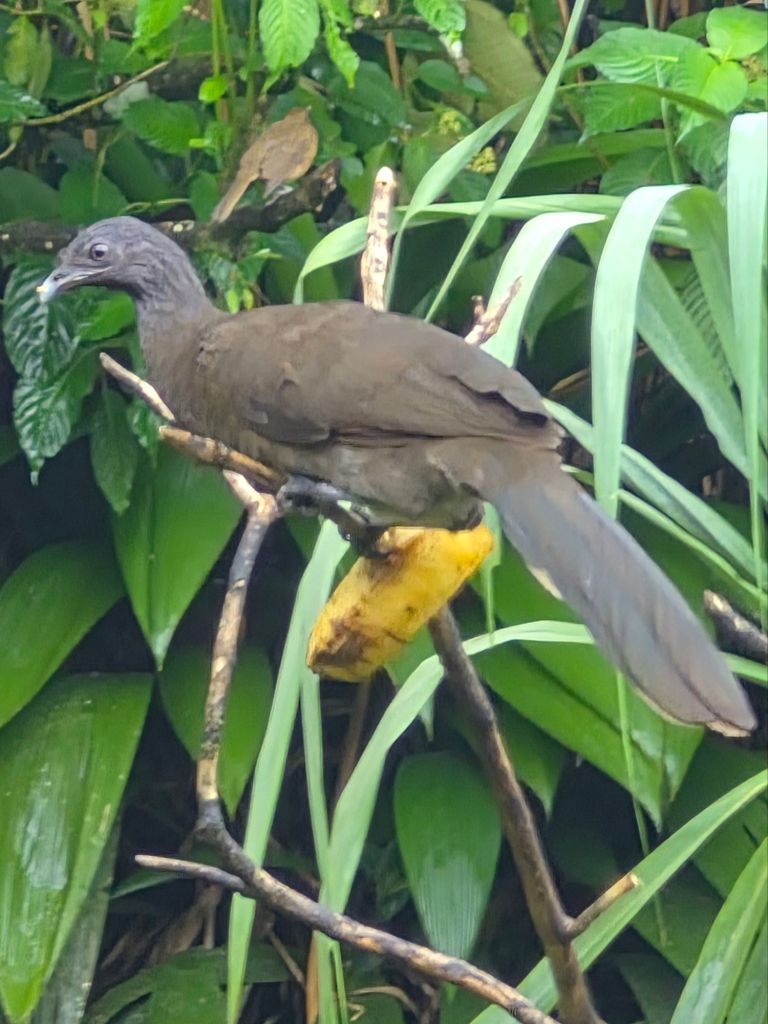
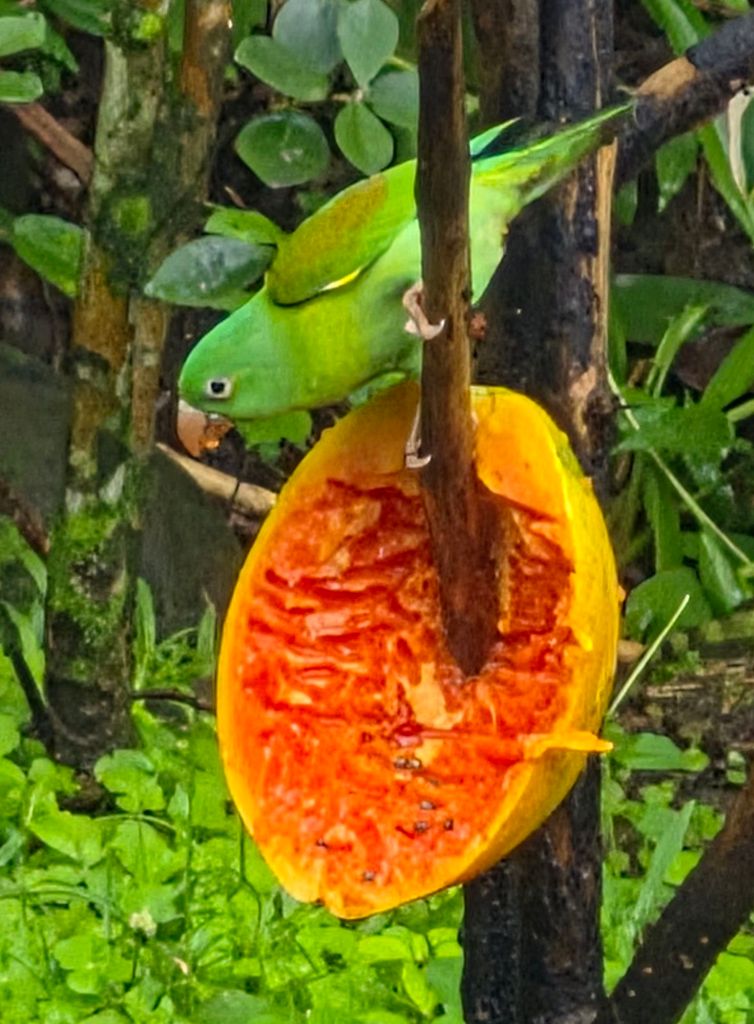
The Sloth Park had some papayas and bananas attached to trees at the entrance, where one could get a close-up view of birds. I don’t really like the idea of attracting birds with fruit, but it was good to be able to get some pictures.
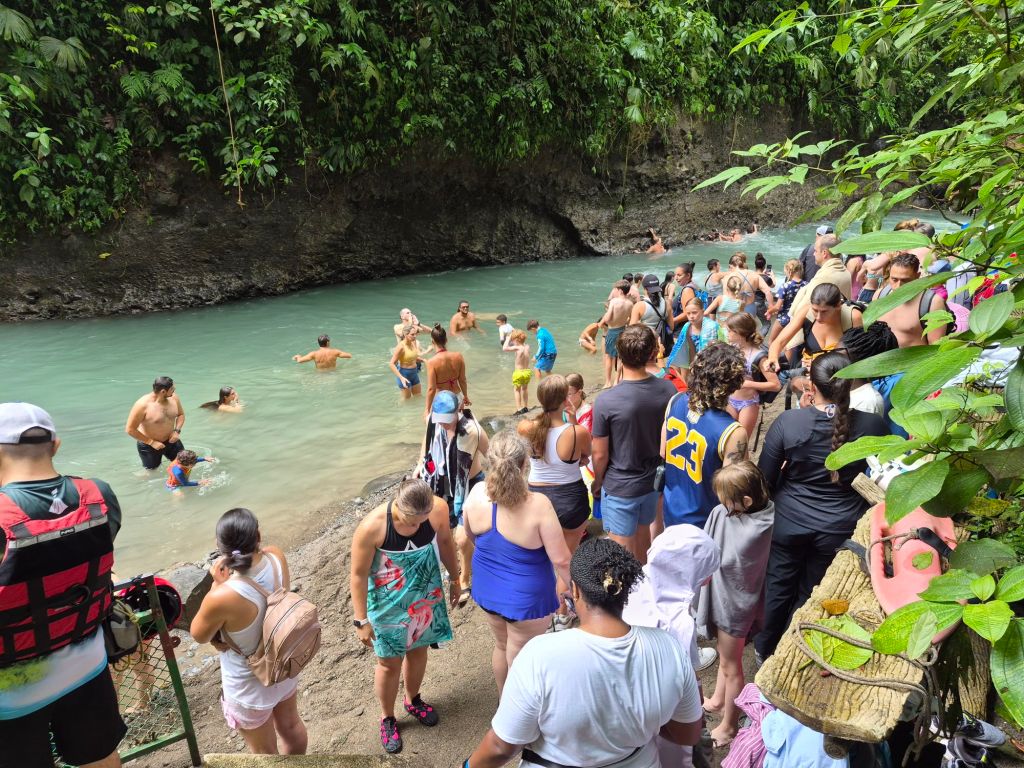
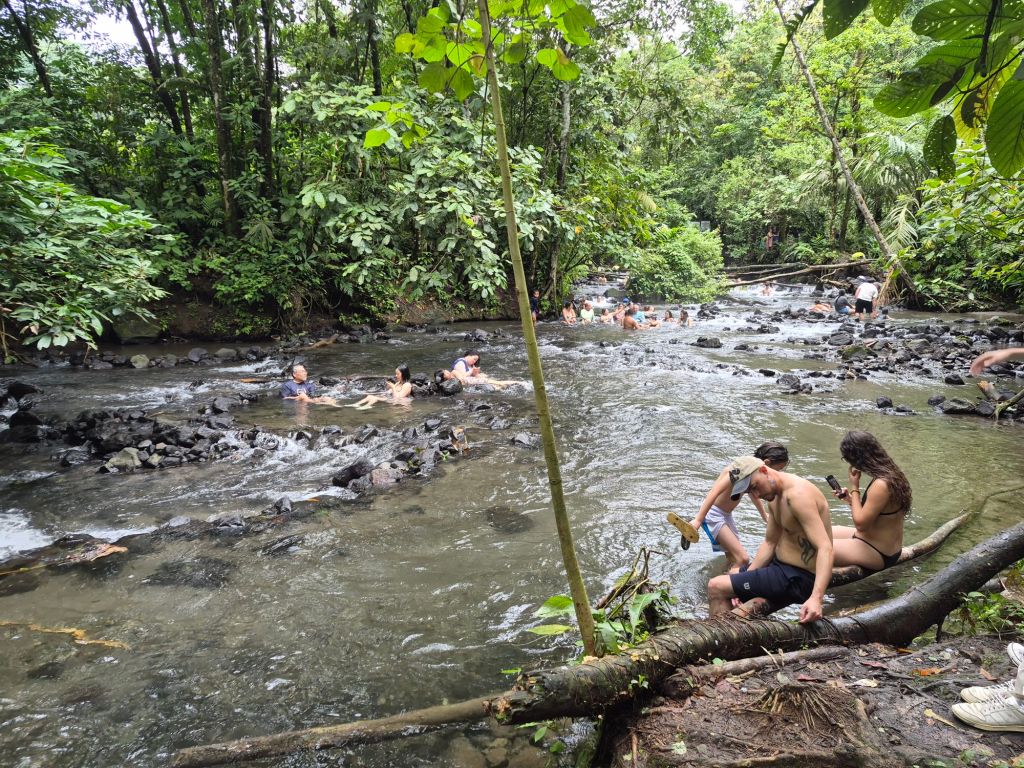
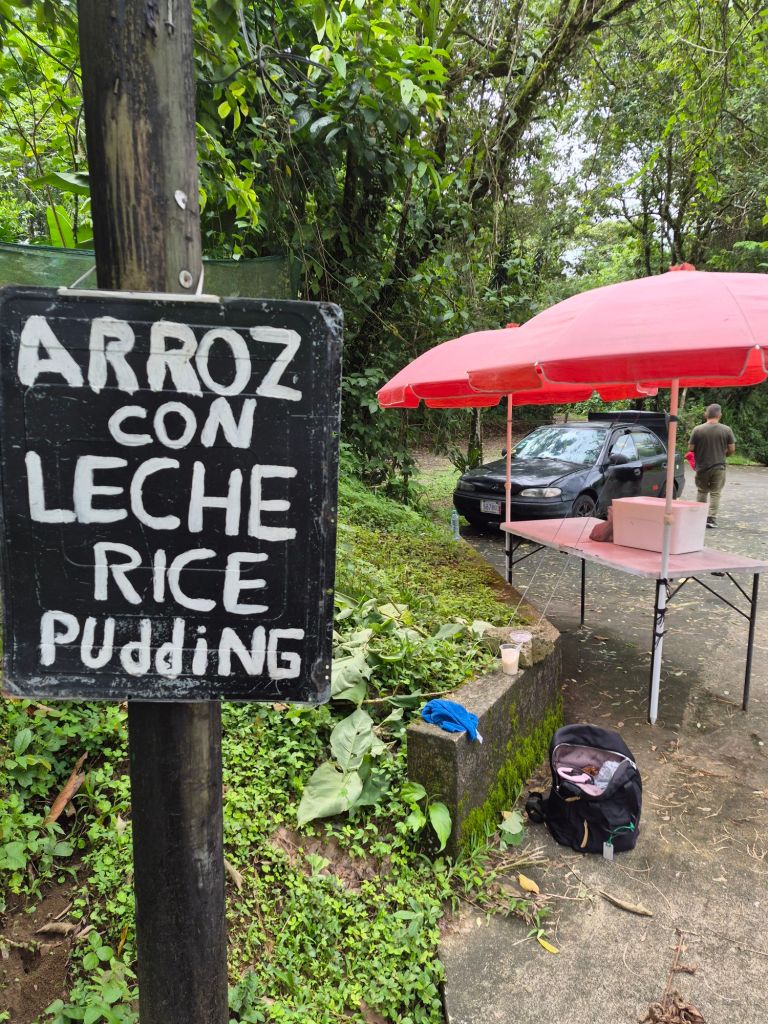
There are quite a few thermal springs close to La Fortuna, and one was a natural river which was accessible to the public, free of charge. It was quite an experience to be lounging in a hot river. I chose a spot where a cold little side-stream was running into the river, as the heat and humidity were a bit too much. I decided to walk the 10km back to town as it was mostly downhill, and I had seen a man selling arroz con leche (rice pudding) next to the road on the way to the thermal springs, which I wanted to buy – a good incentive to keep me going in the heat.
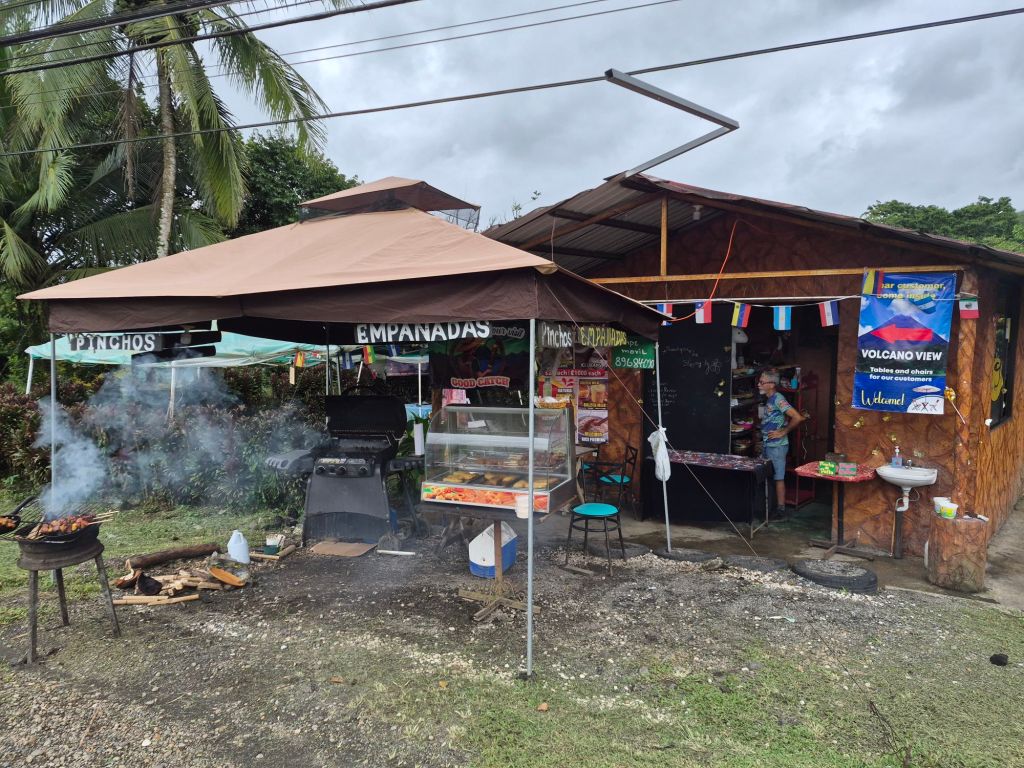
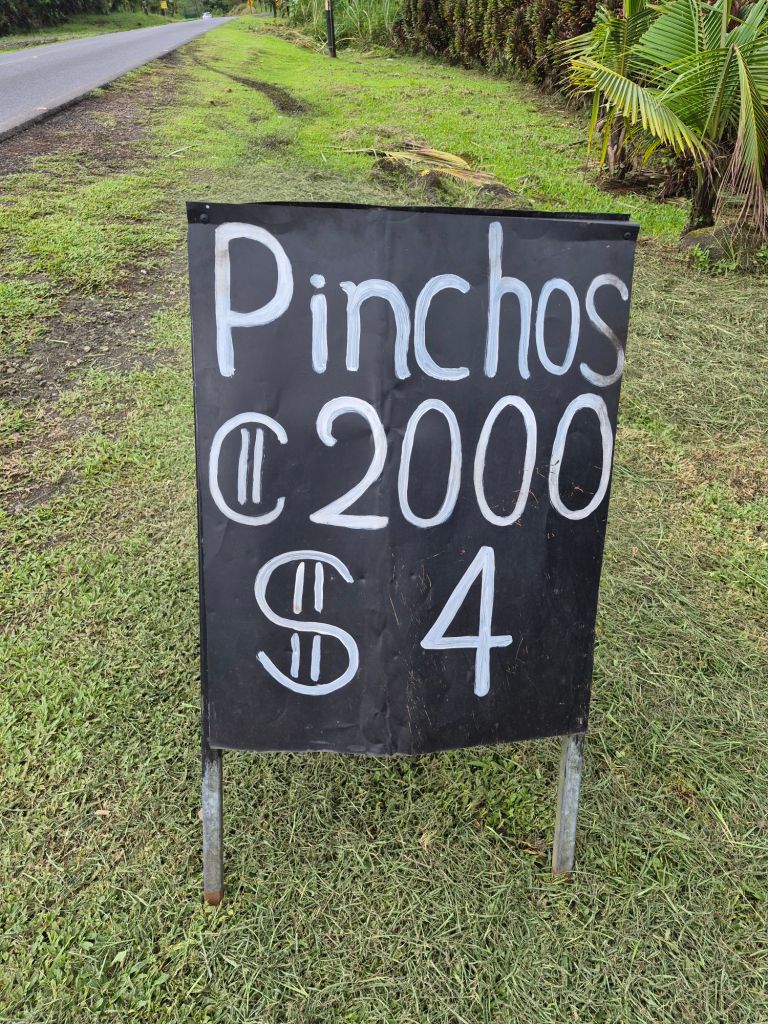
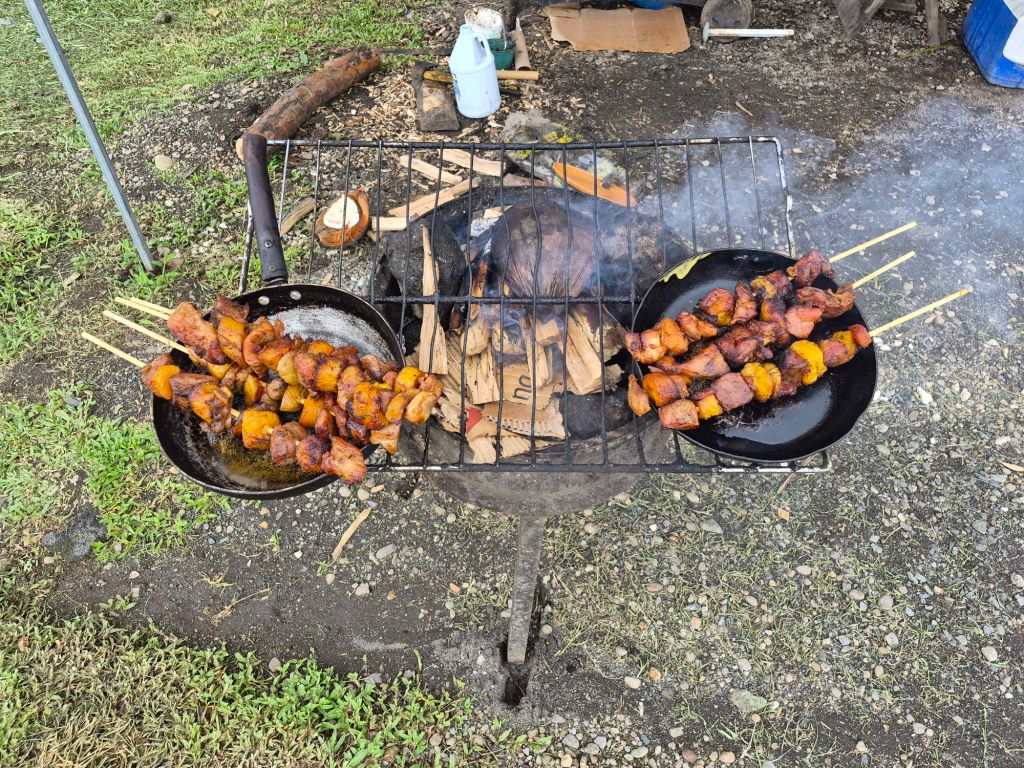
By now the weather had become threatening, and I was setting a good pace to get to the rice pudding before the rain started. As it came into view, I saw the man was packing up, but I rushed down the hill to catch him, and he kindly took them out again. “The rain is coming”, he said, and before I had finished eating, the first drops started to fall. I had my umbrella with me, but made the good decision to take shelter under a covering at an hotel entrance, as it was a torrential downpour. I waited for 15min, realized it was not a passing shower, and phoned an Uber.
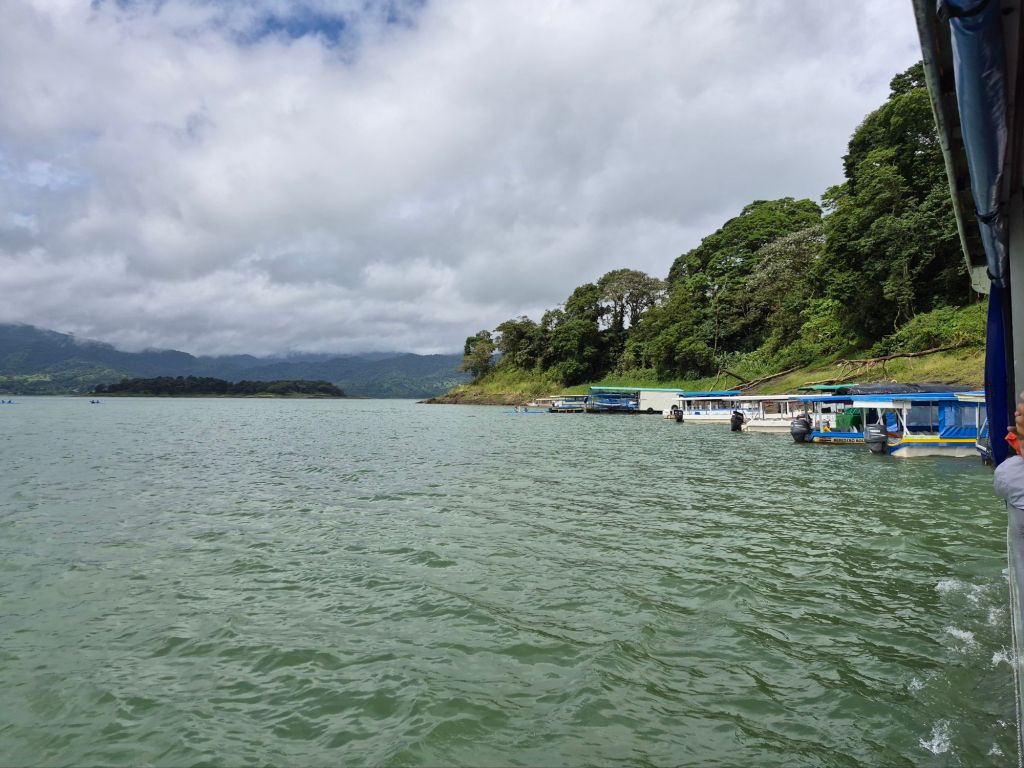
I had heard of the Jeep-Ferry-Jeep shuttle to get from La Fortuna to Monteverde, which I fancied as an option, as it would mean a trip on Lake Arenal. The shuttle was almost an hour late in picking me up, and 10km out of town, it suddenly turned around and went back to La Fortuna, picking up a forgotten person right next to my hostel. Nothing was said, everyone was very relaxed, and the ferry was waiting for us when we arrived – that is the Costa Rican way!
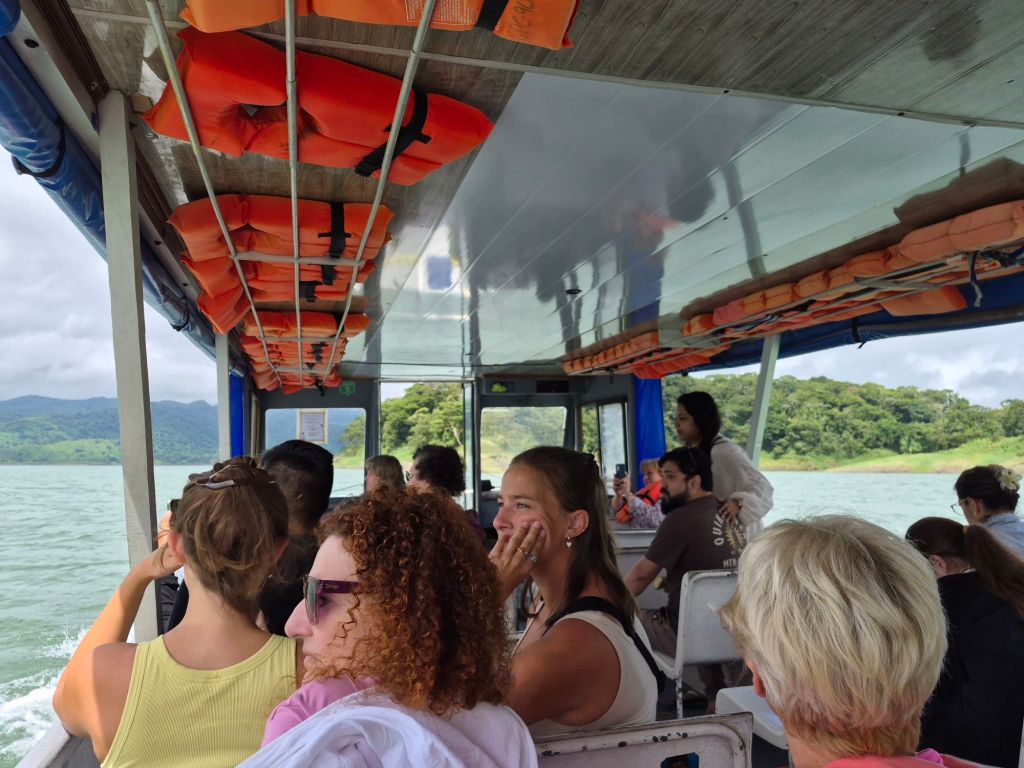
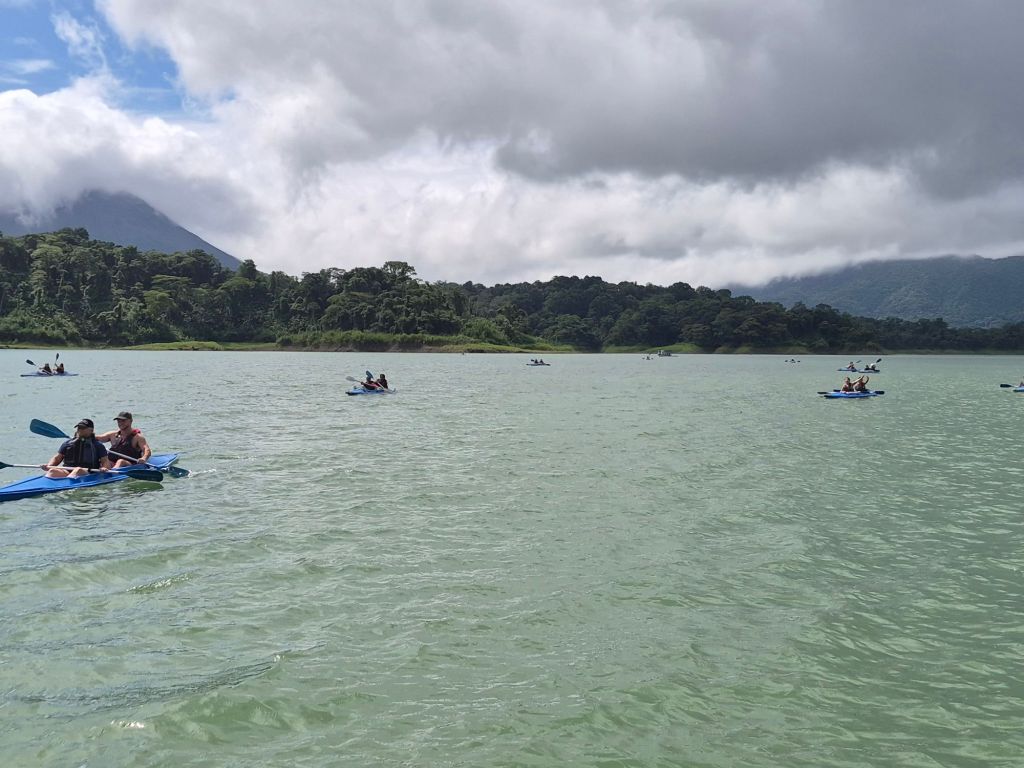
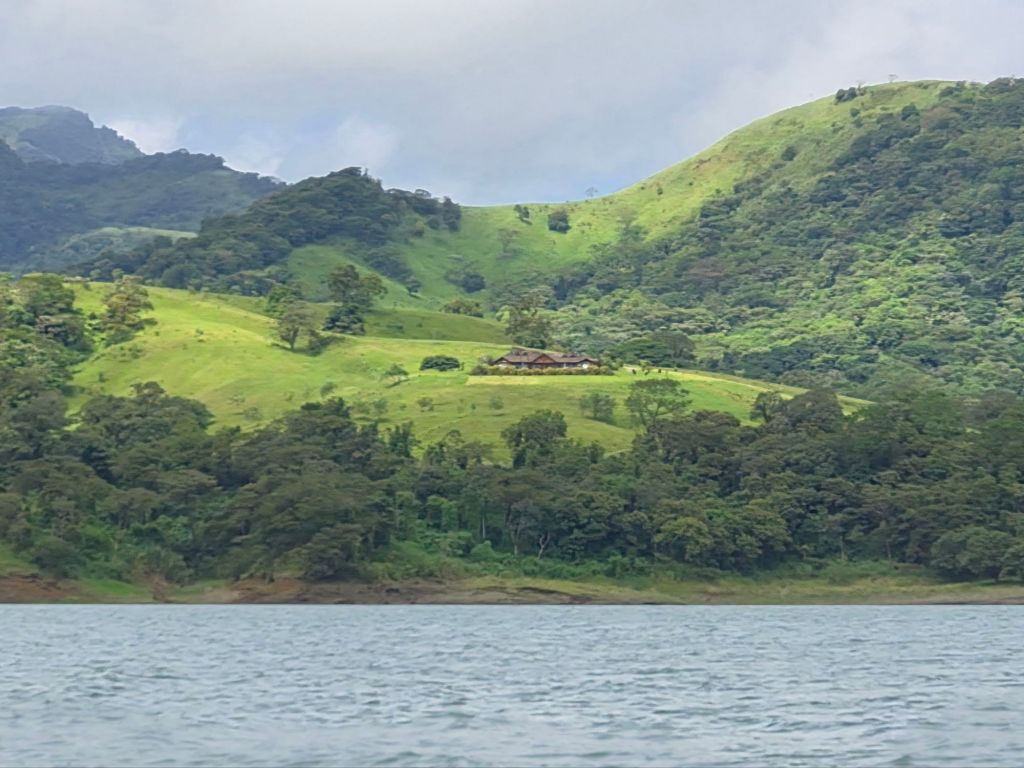
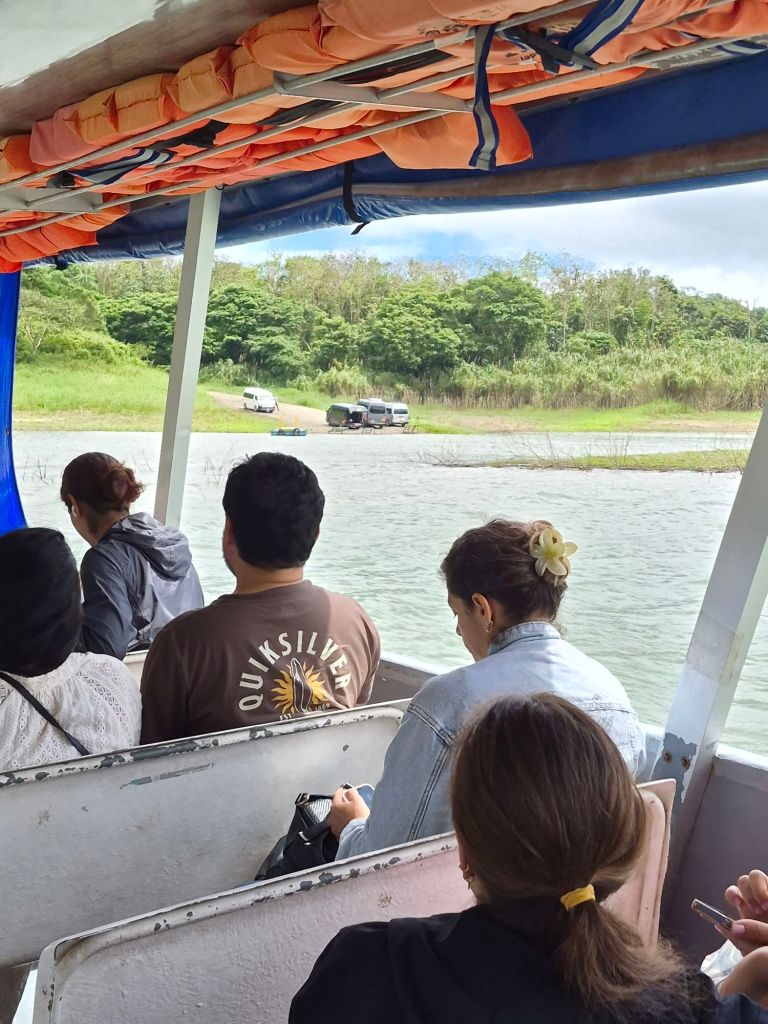
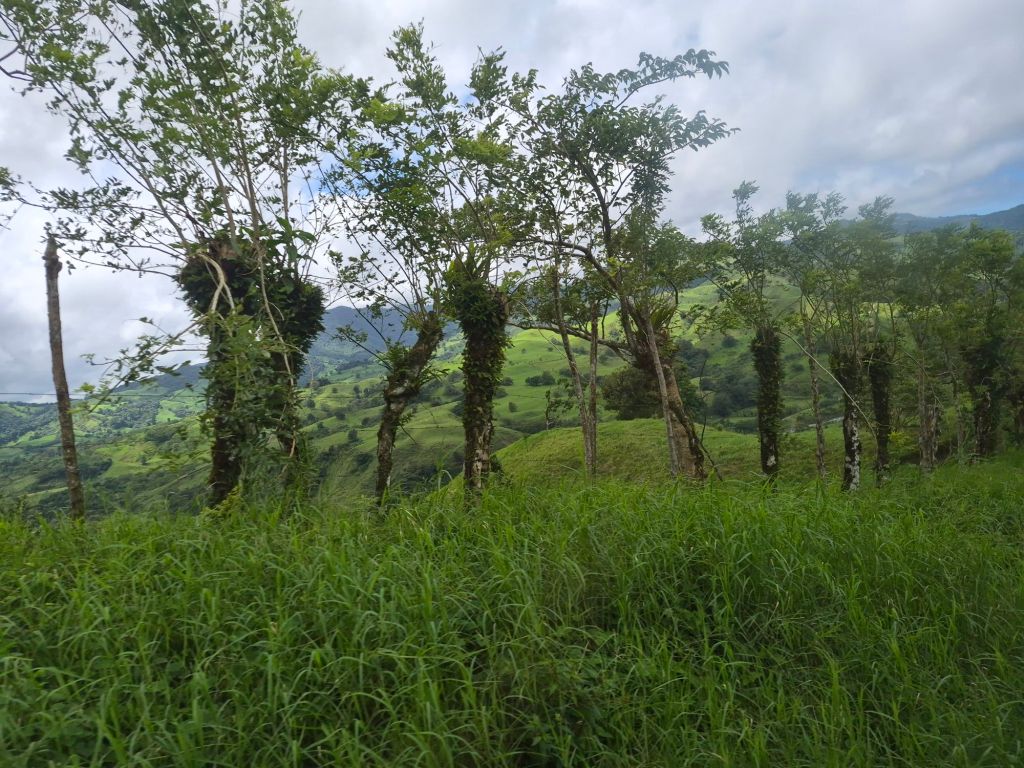
Our shuttle driver was full of fun, pointing out landmarks and explaining that we were crossing the mountains that were the divide between water running to the Pacific and Caribbean, and that the Pacific side tends to be drier. I was happy about the latter, as my clothes felt wet (from the damp in La Fortuna) when I opened my suitcase in Monteverde, which is high in the mountains and the coolest place I have been in Costa Rica.
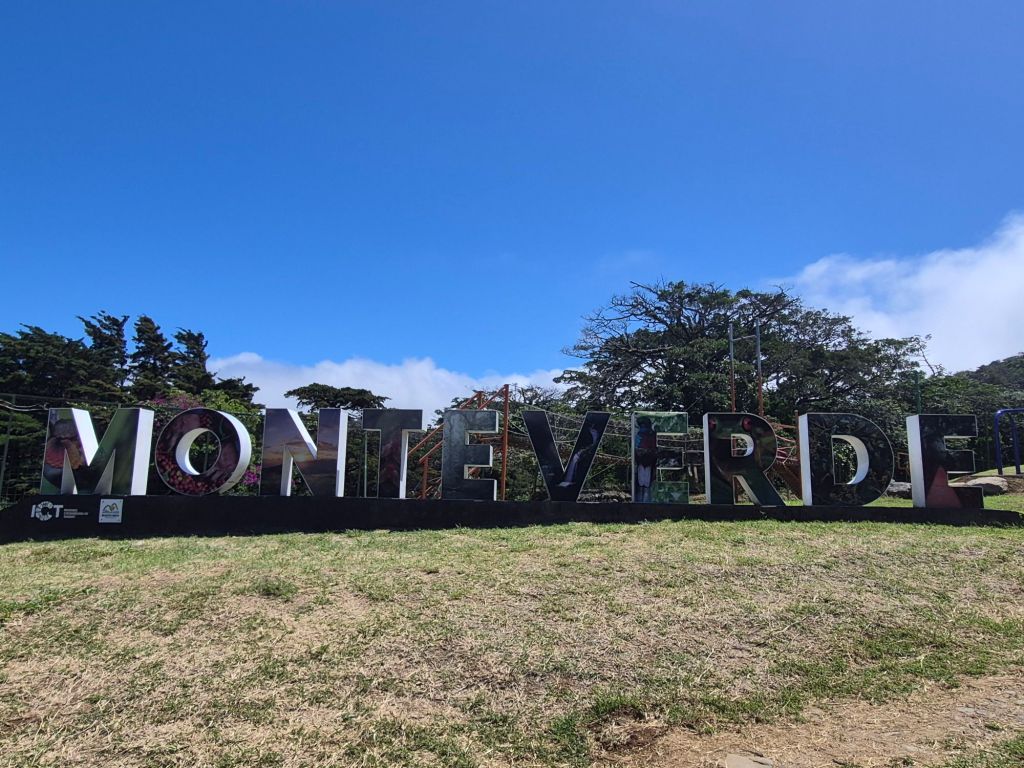
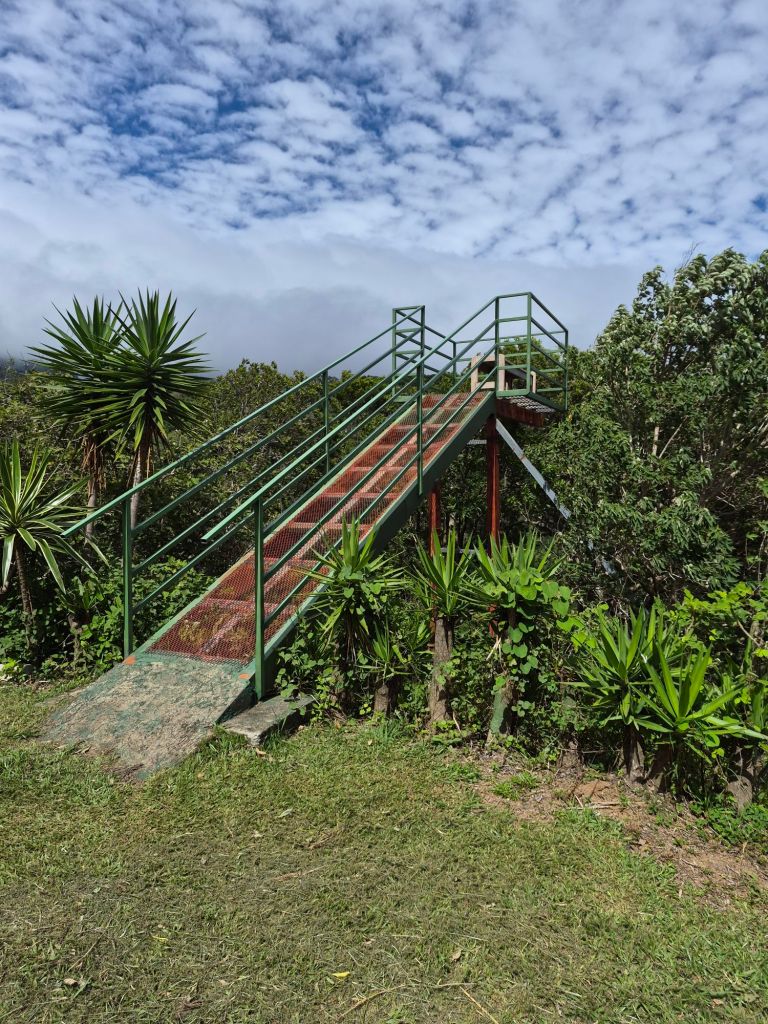
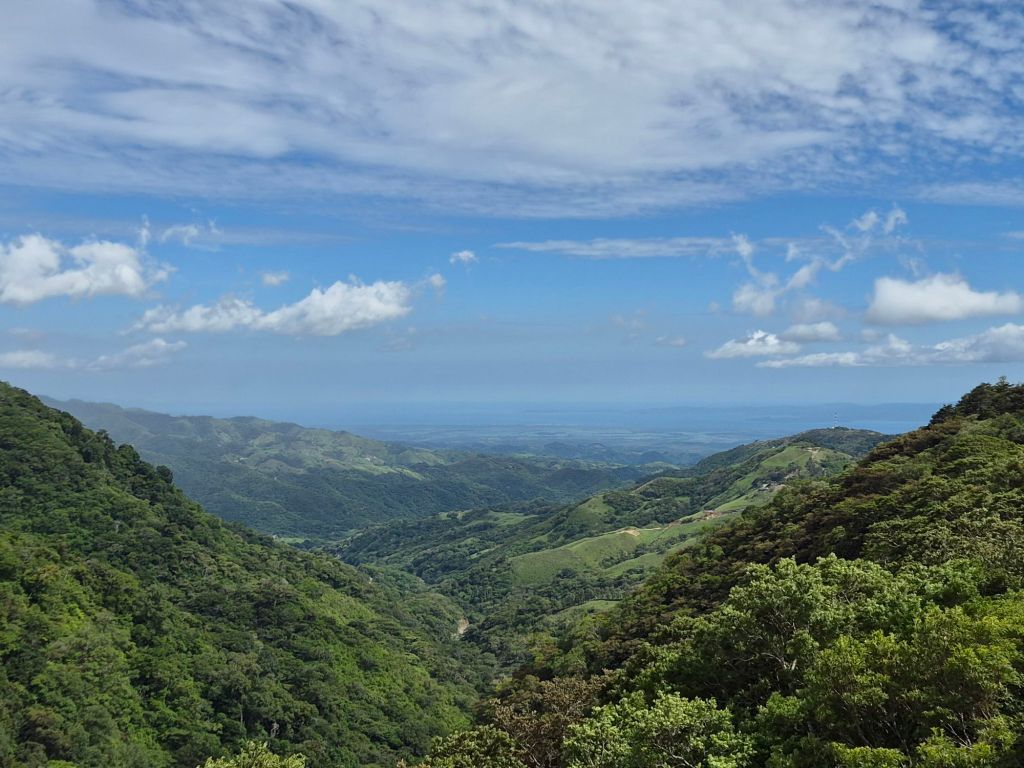
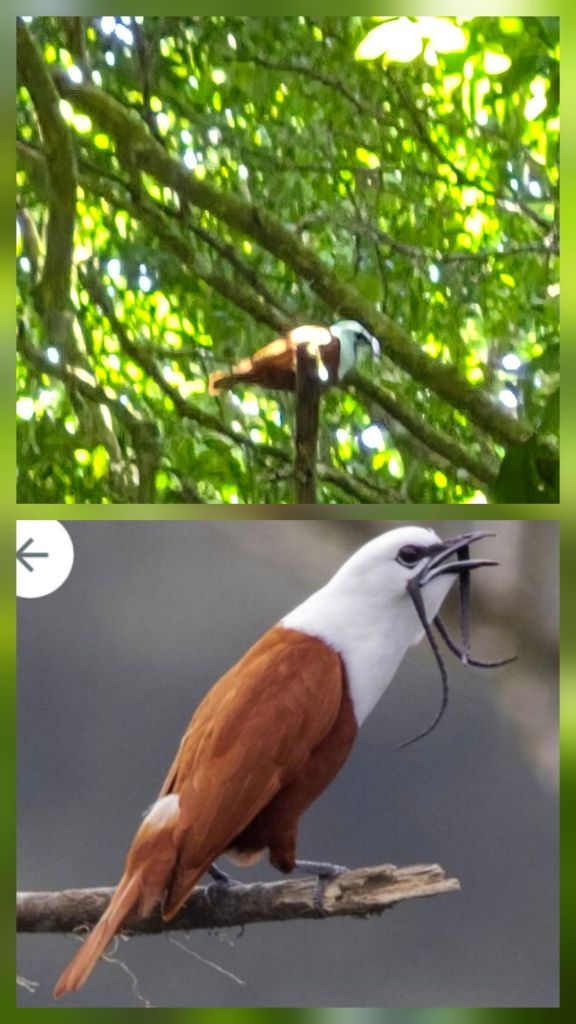
Tana, the woman I had become friends with in Uvita, had sent me some links of things to do in Monteverde, so I set out to find the Rachel and Dwight Crandell Memorial Reserve, which was named after the two pioneers of reforestation in Monteverde. After asking around, I eventually found the entrance through the Monteverde Institute, where there was a brochure with information. Rachel and Dwight started the Reserve together with the Institute to save the critically endangered ocotea montoverdensis (wild avocado, which grows in that area) and to create a habitat for the Three-wattled Bellbird, which was listed as vulnerable. I identified the bird-sound with the Merlin app, and was very excited to spot one. Their sound is varied, and I could hear them all over in the forest.
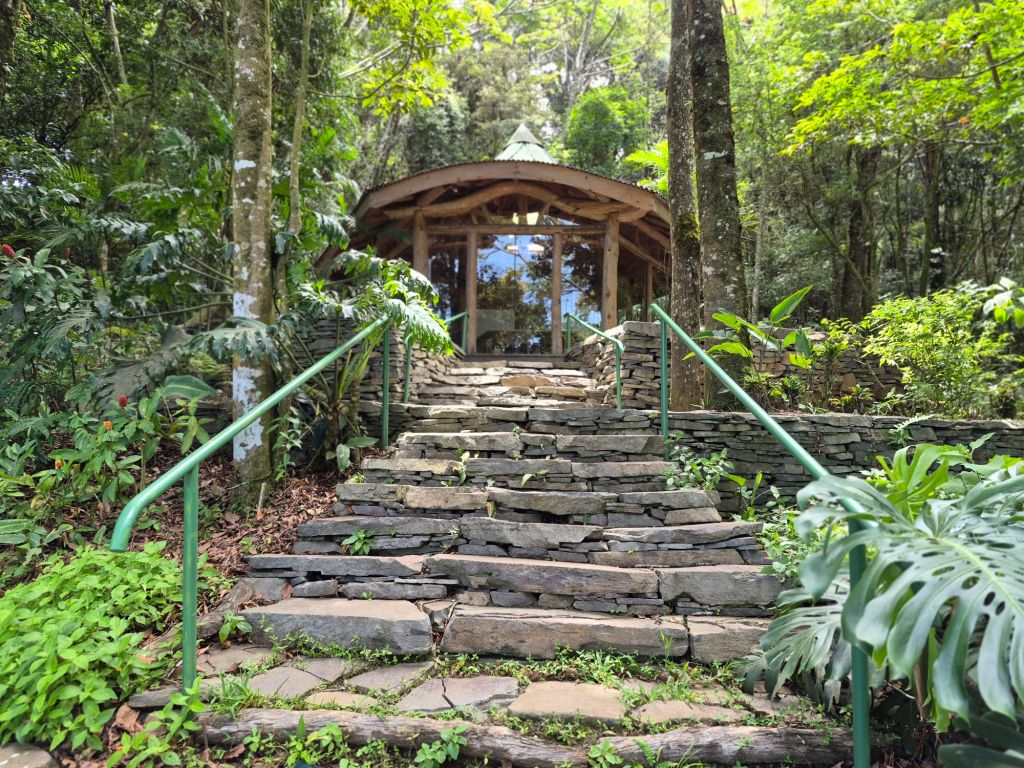
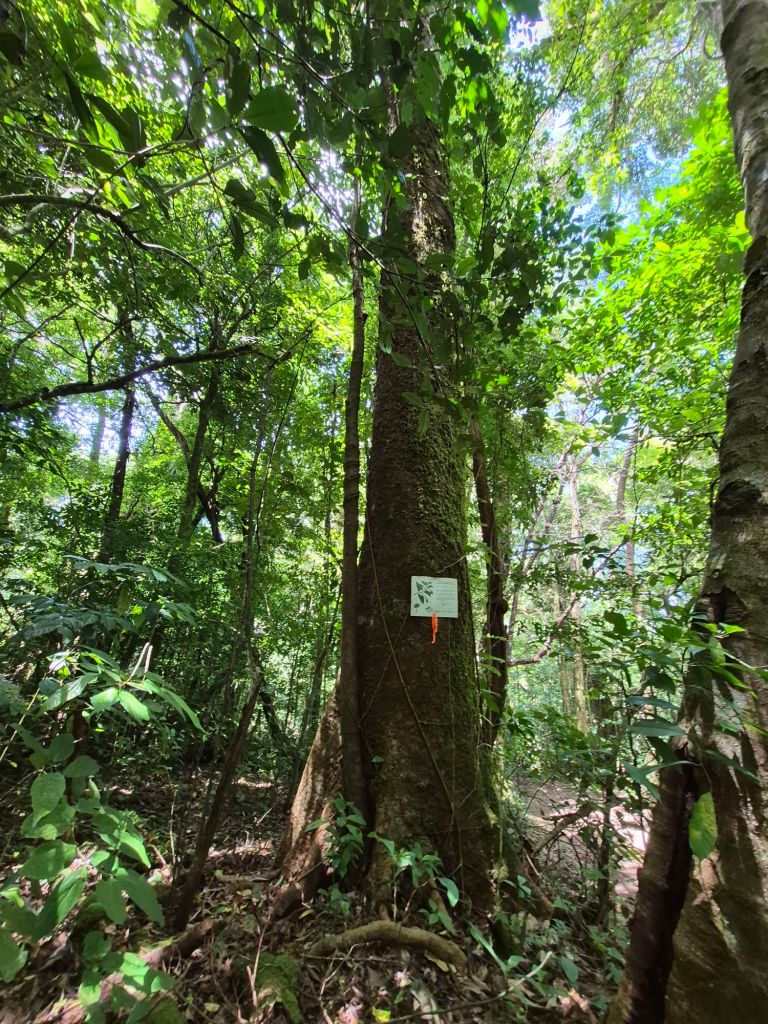
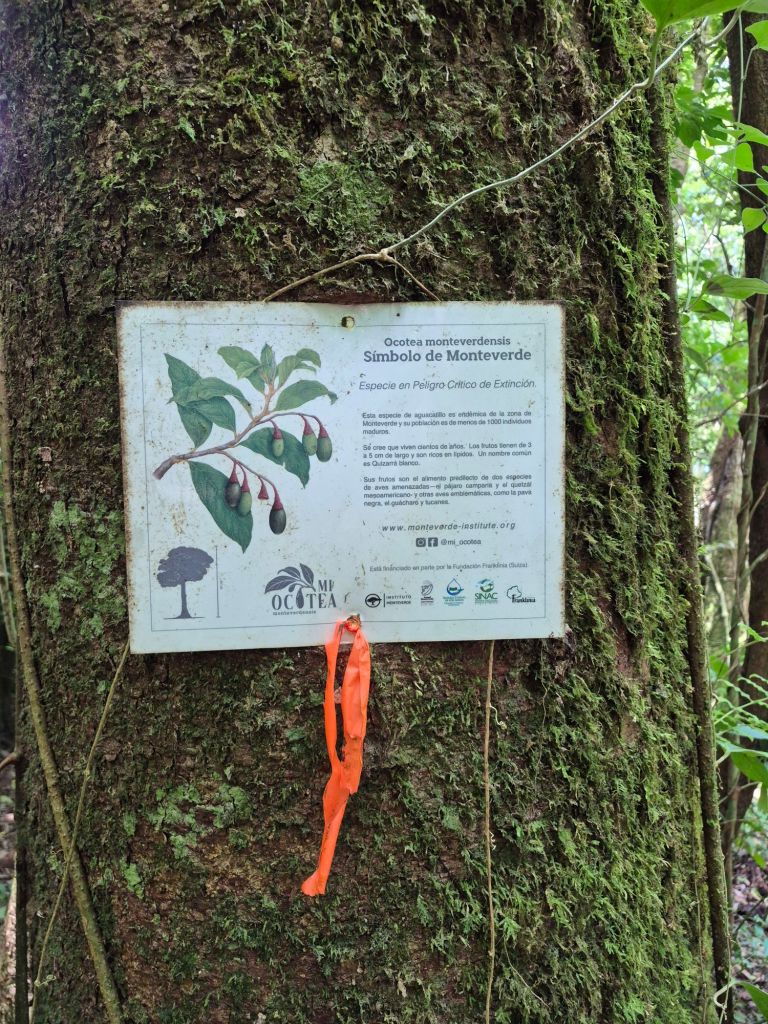
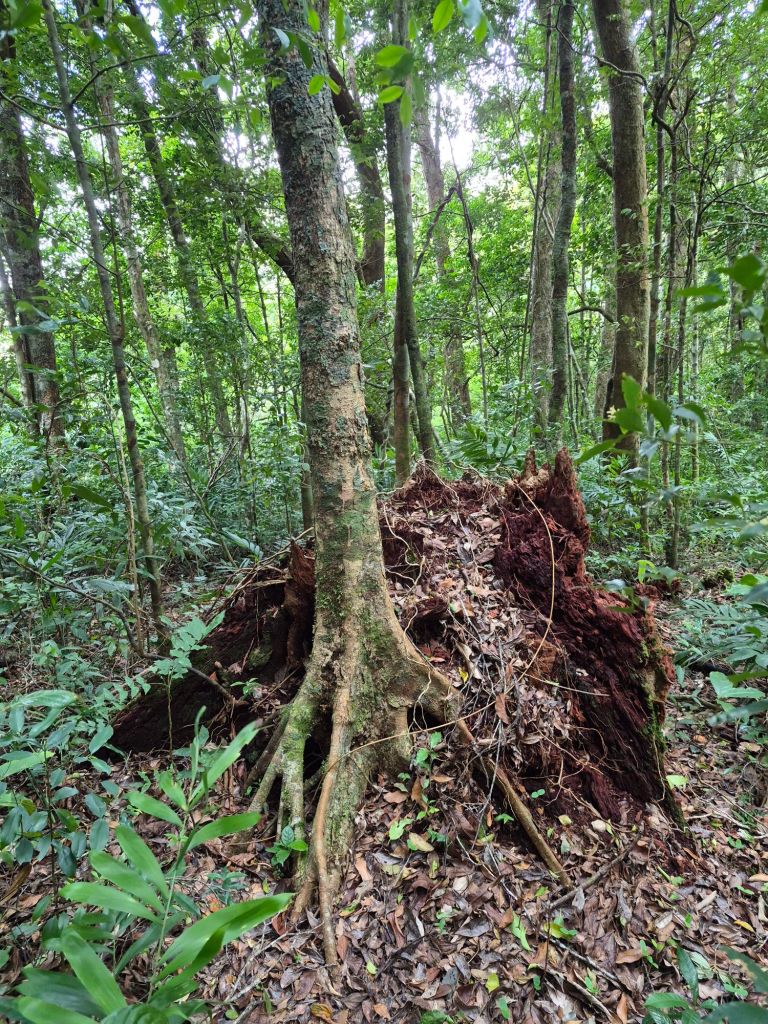
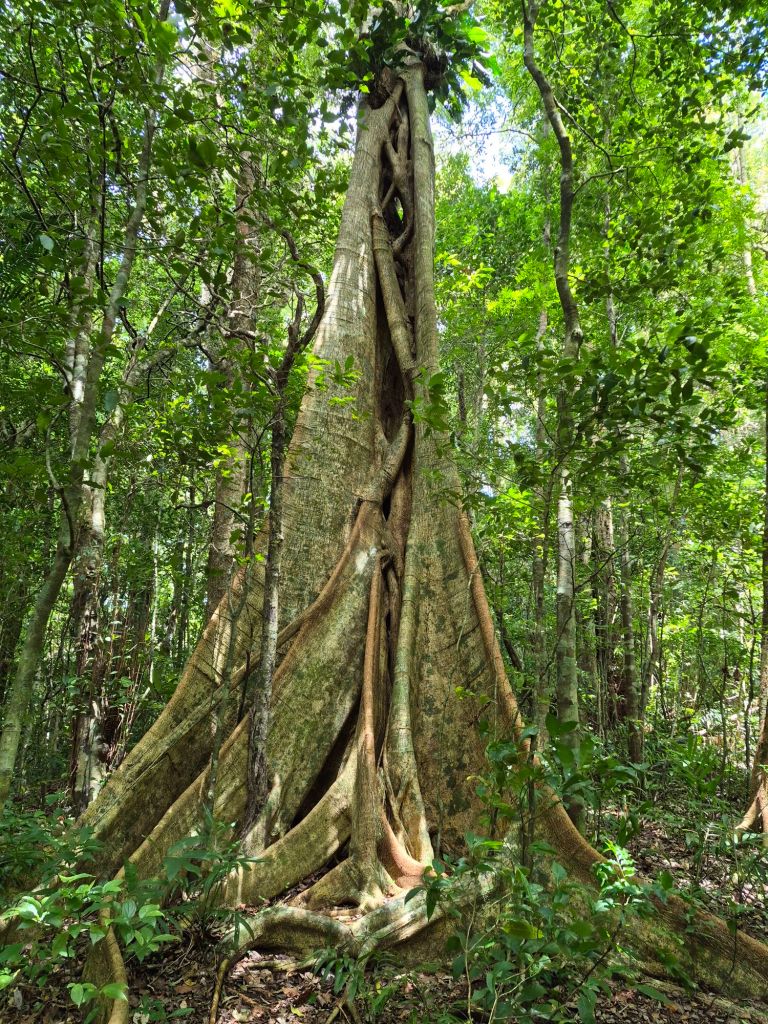
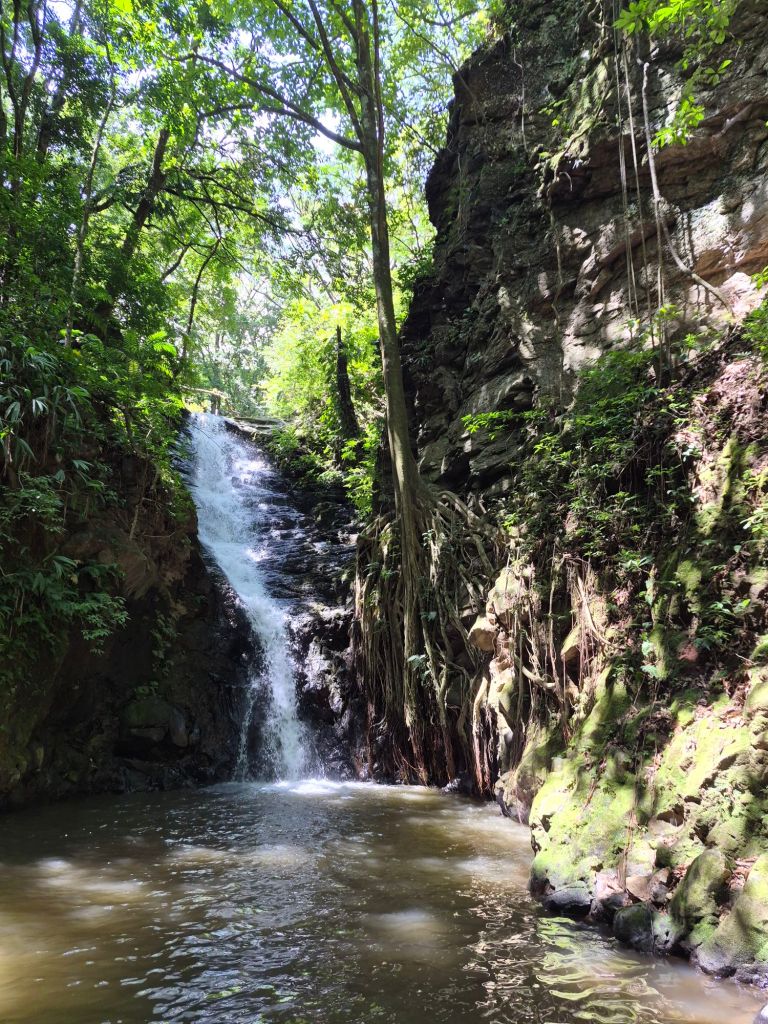
On the way back I stopped at the Monteverde Waterfall, a smallish fall with brown water. I was the only one there, changed into my bathing costume and waded in. Much to my surprise I could walk right up to the waterfall, it was so shallow, but still refreshing.
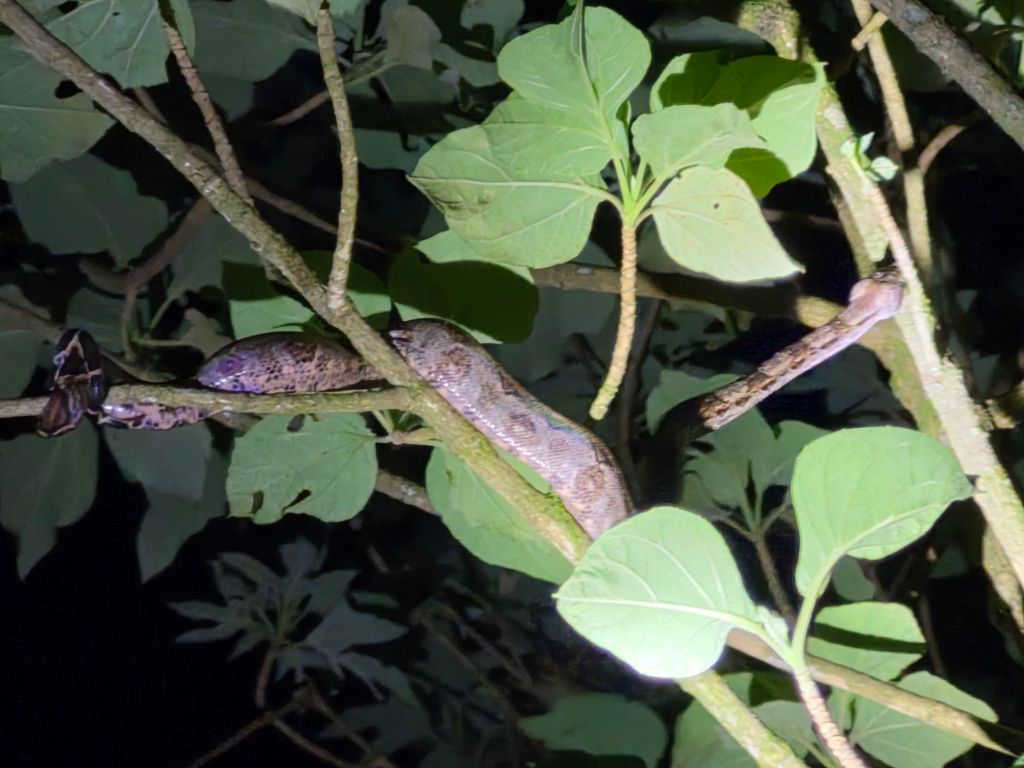
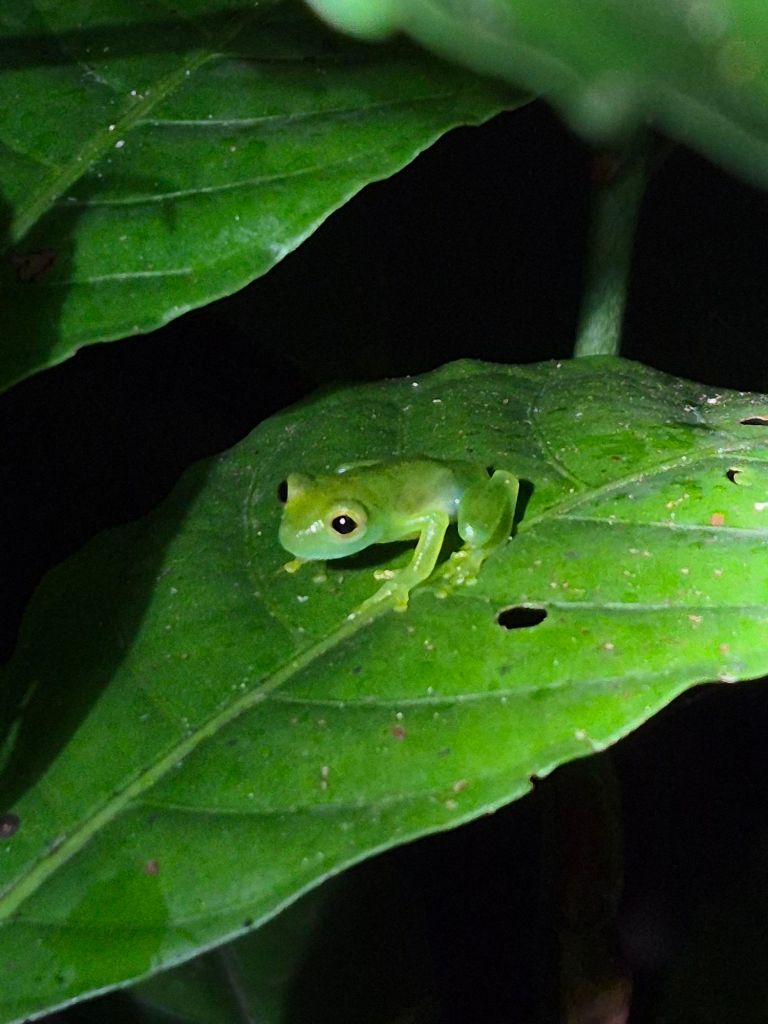
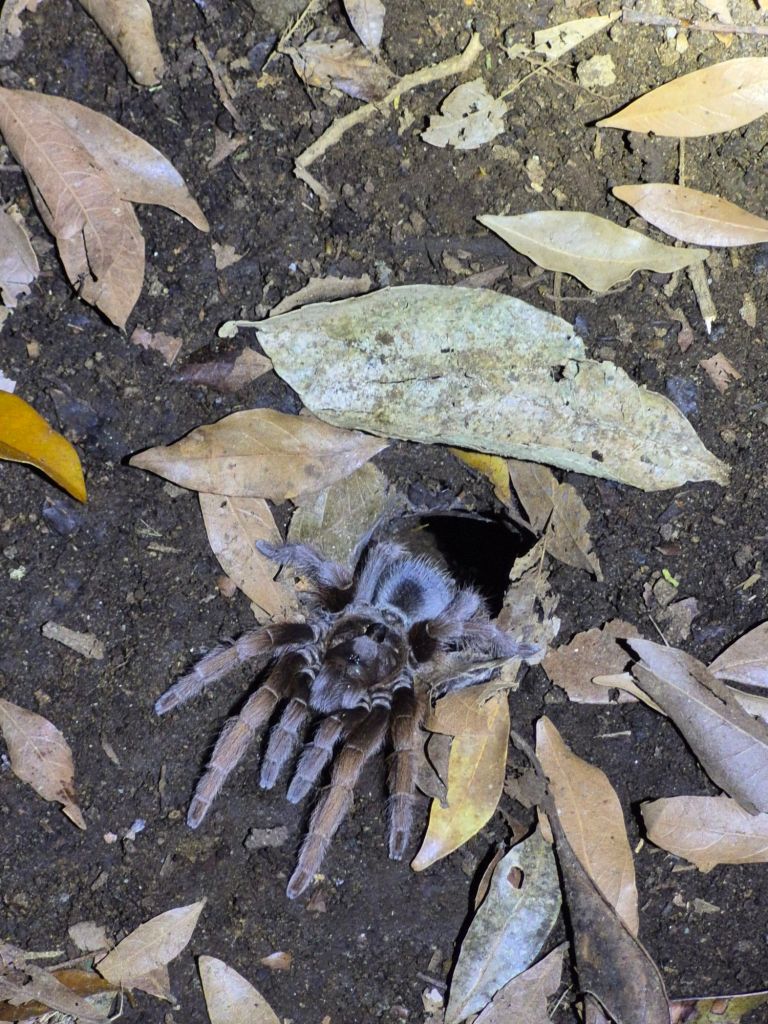
A Dutch guy had shown me photographs of his night excursion, and this prompted me to book one the following day. It was quite a circus, with about 6 guides, each with a group of 8 people, running around frantically in what felt like a maze to me. The paths were too well-trodden, each person had a torch, and we were at the same spot three times – the first time to see a snake, the second time to see some frogs and the third time to look at the stars. The guides were connected with walkie-talkies, and if one spotted something, the others would hurry their group over to that point, sometimes a bit late, as was the case with the kinkajou, which is a small tree-dwelling mammal related to the raccoon, nicknamed the honey bear – I only saw the tail disappearing. In spite of my critical attitude, I enjoyed the outing and was intrigued by the information the guide provided. For example: Only female tarantulas live in holes, the males wander about, and the female kills and eats the male after mating.
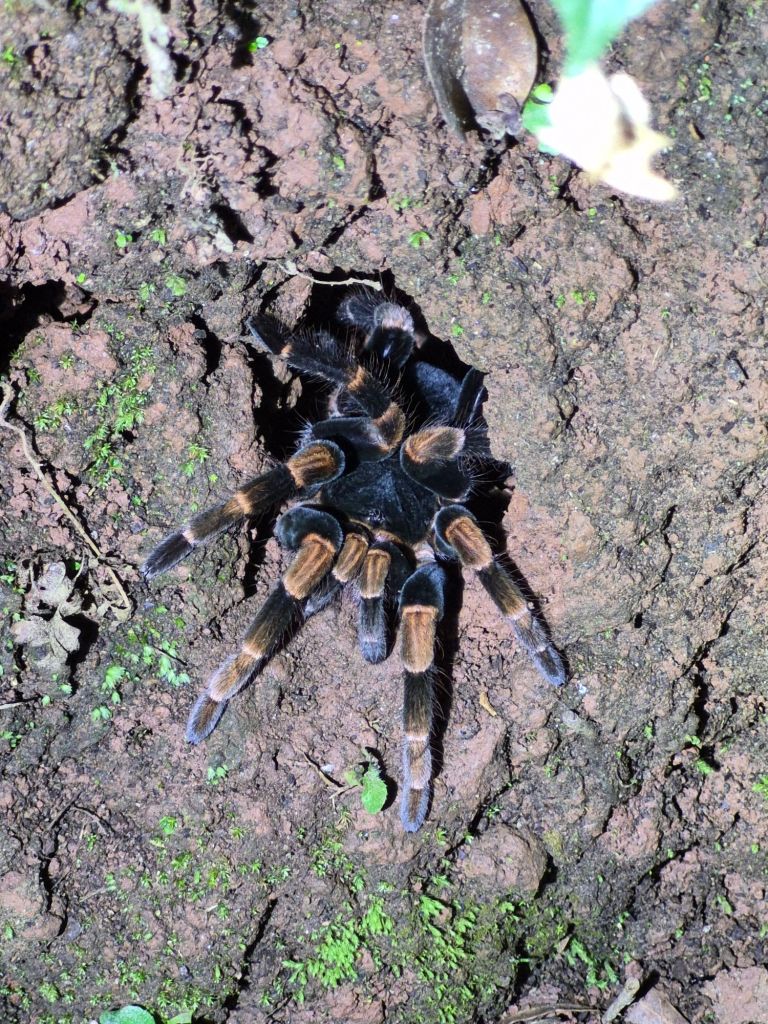
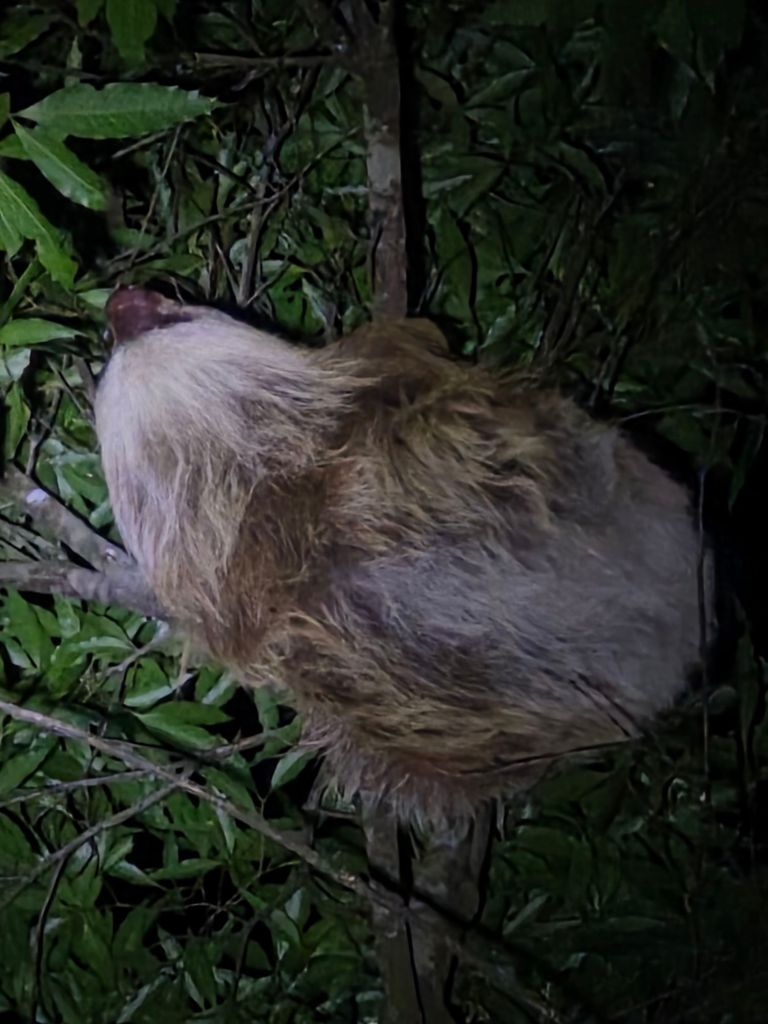
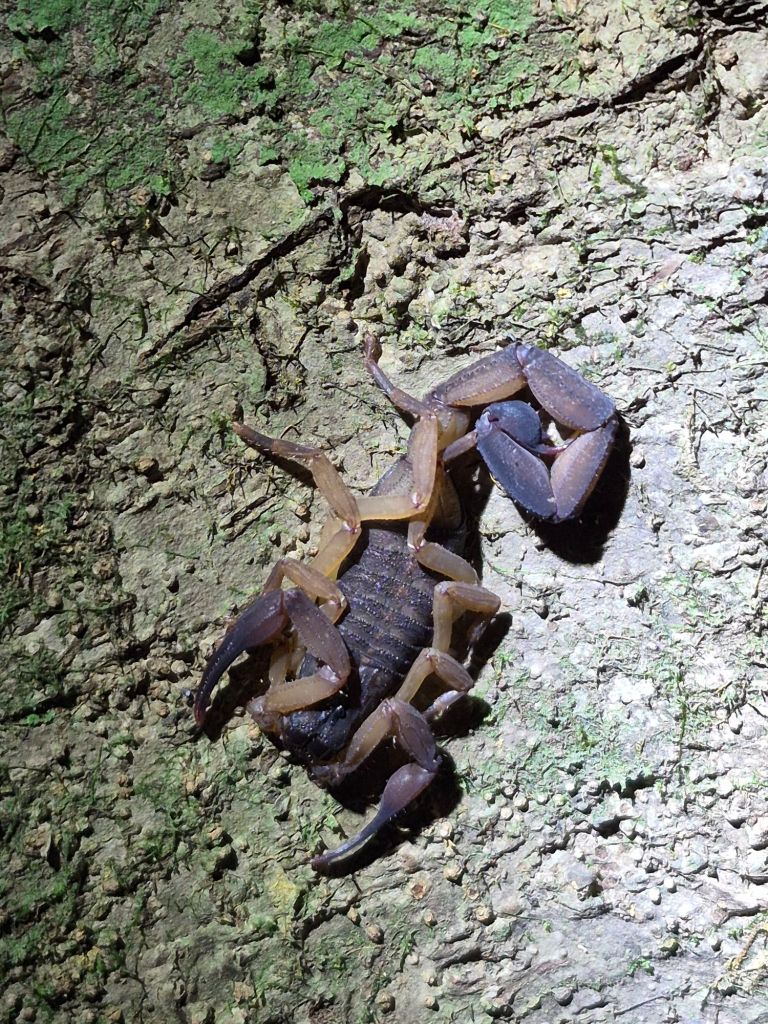
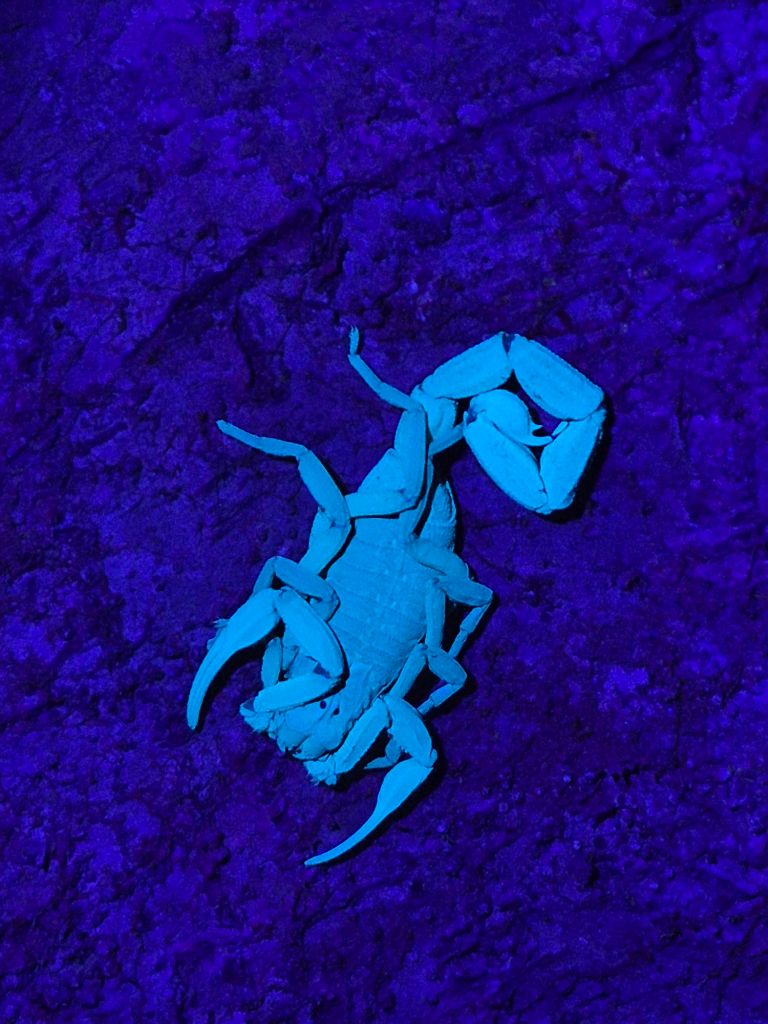
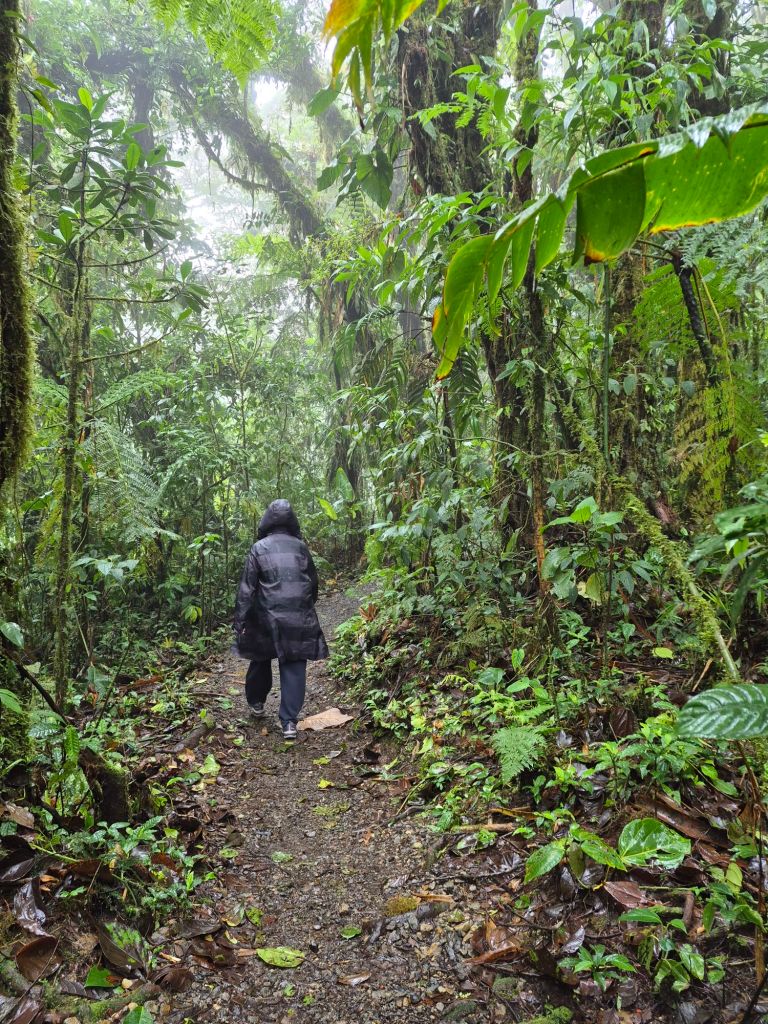
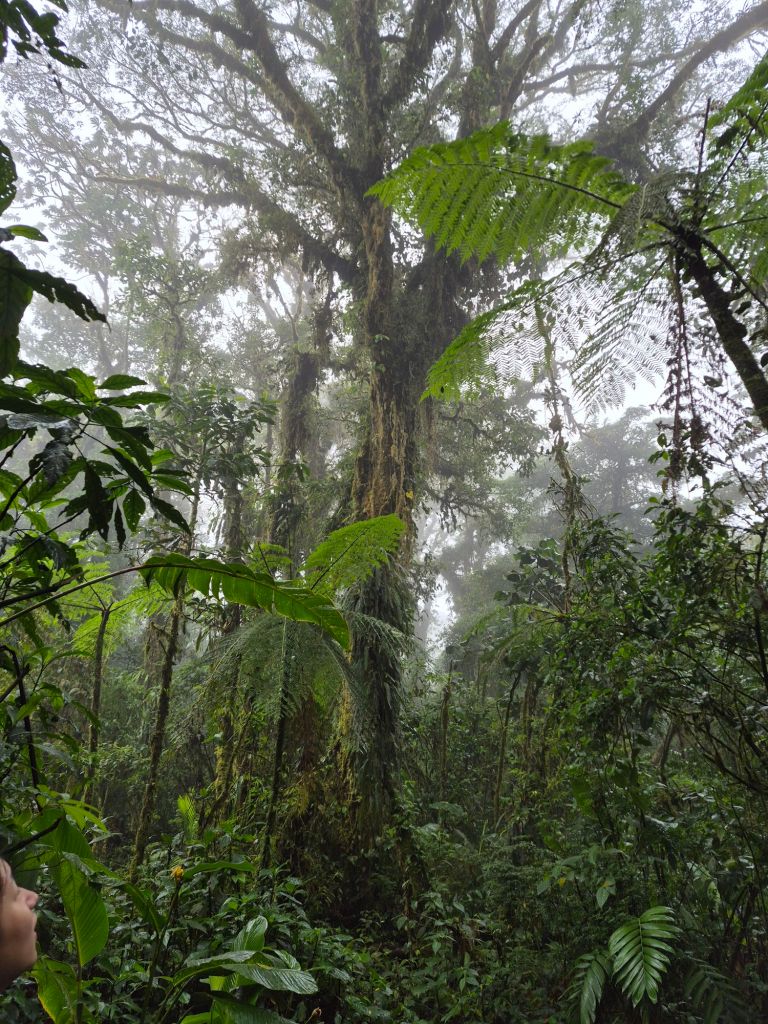
One of my roommates invited me to go to a cloud forest next to the popular Monteverde Cloud Forest, as it was cheaper and fewer people visited it. I wore my rain cape, but was wetter on the inside from sweating than on the outside from the thin mist one walks in. We didn’t see any animals and hardly any birds, but it was like walking in a fairy forest, moss covering all the trees.
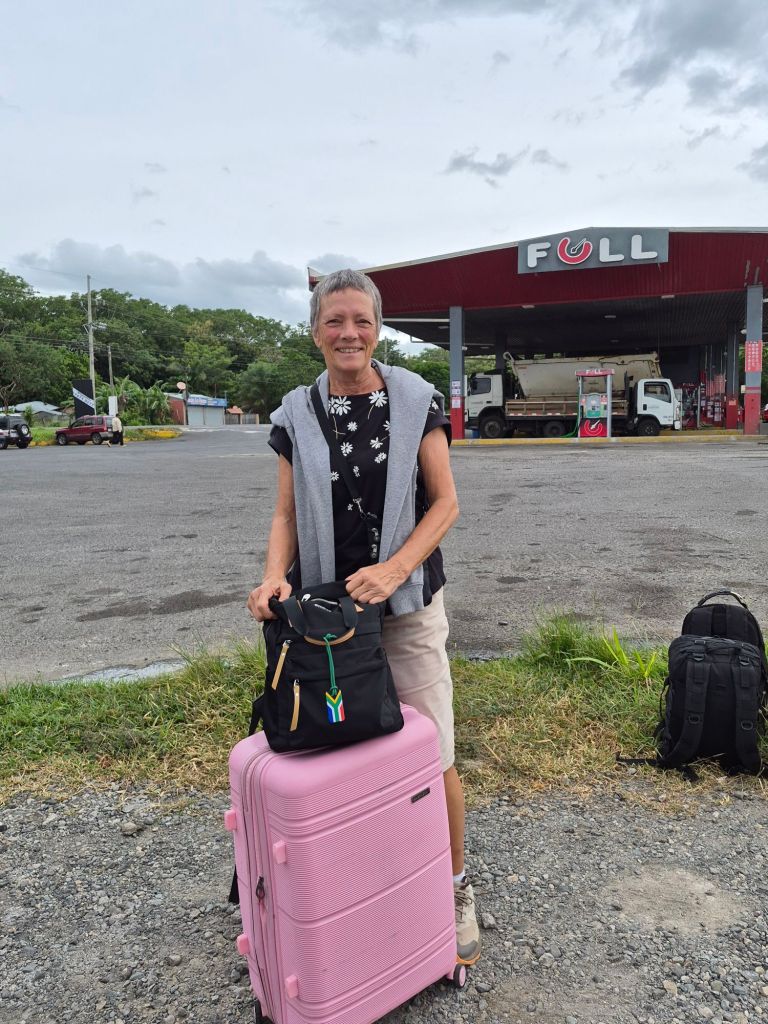
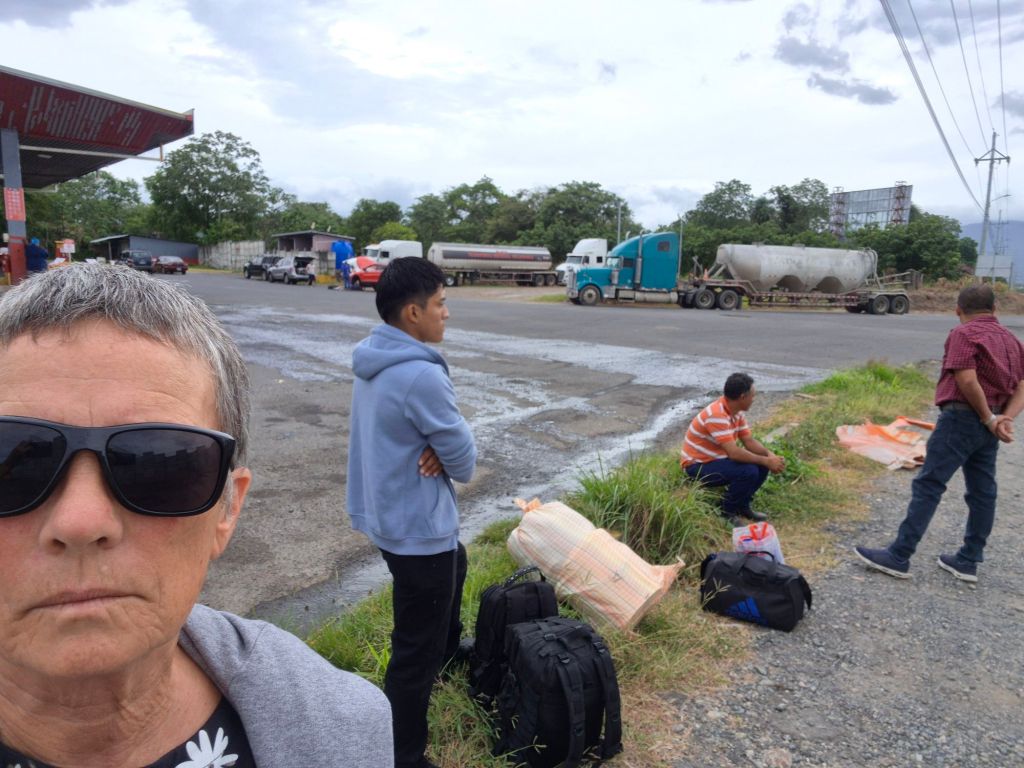
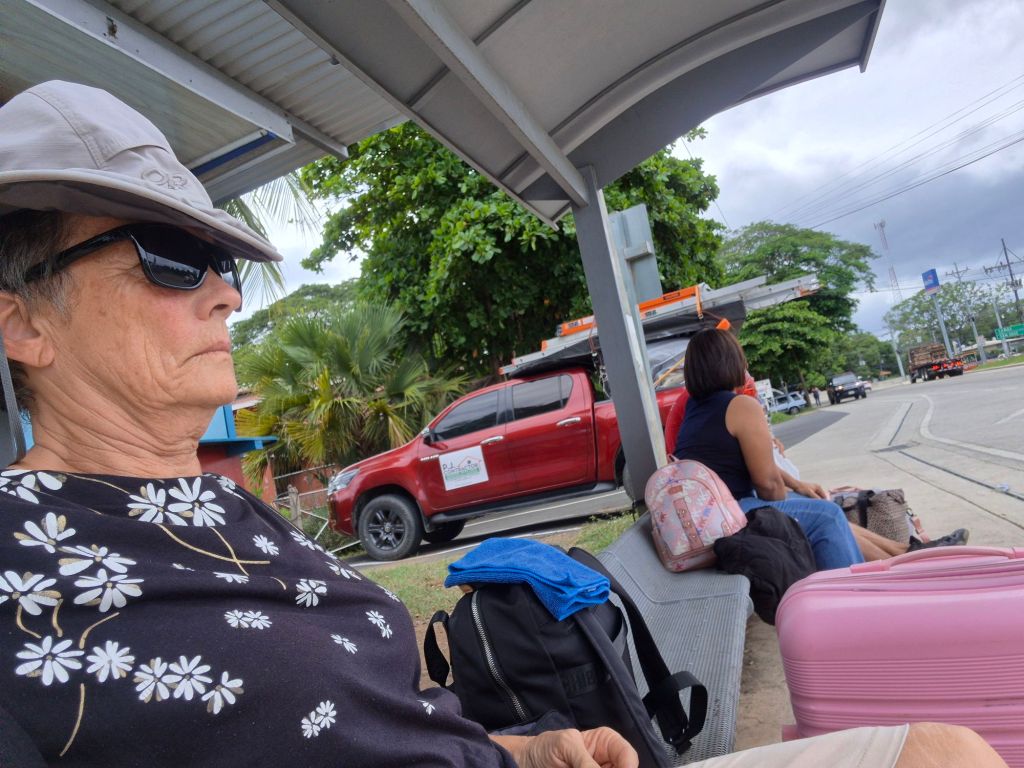
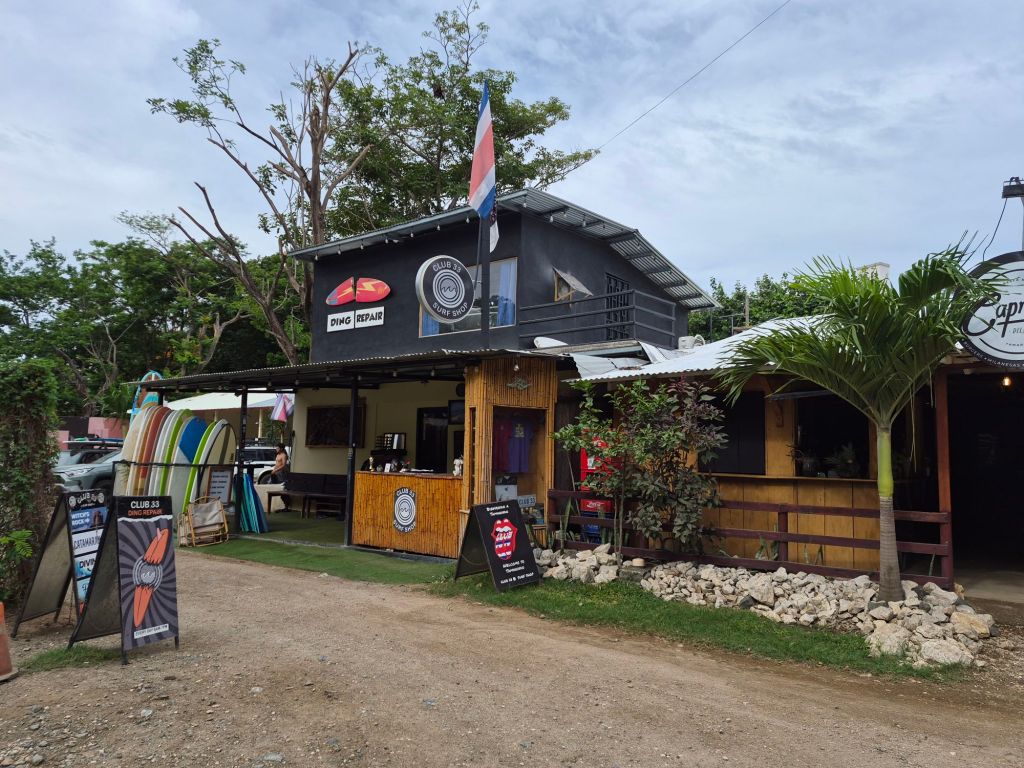
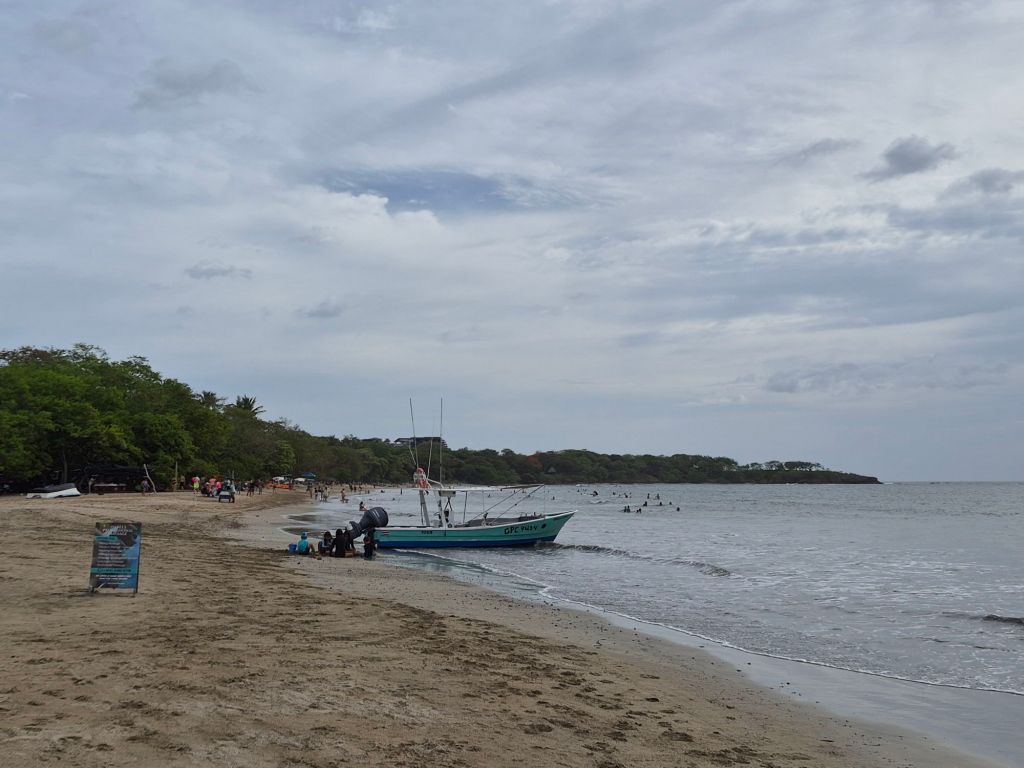
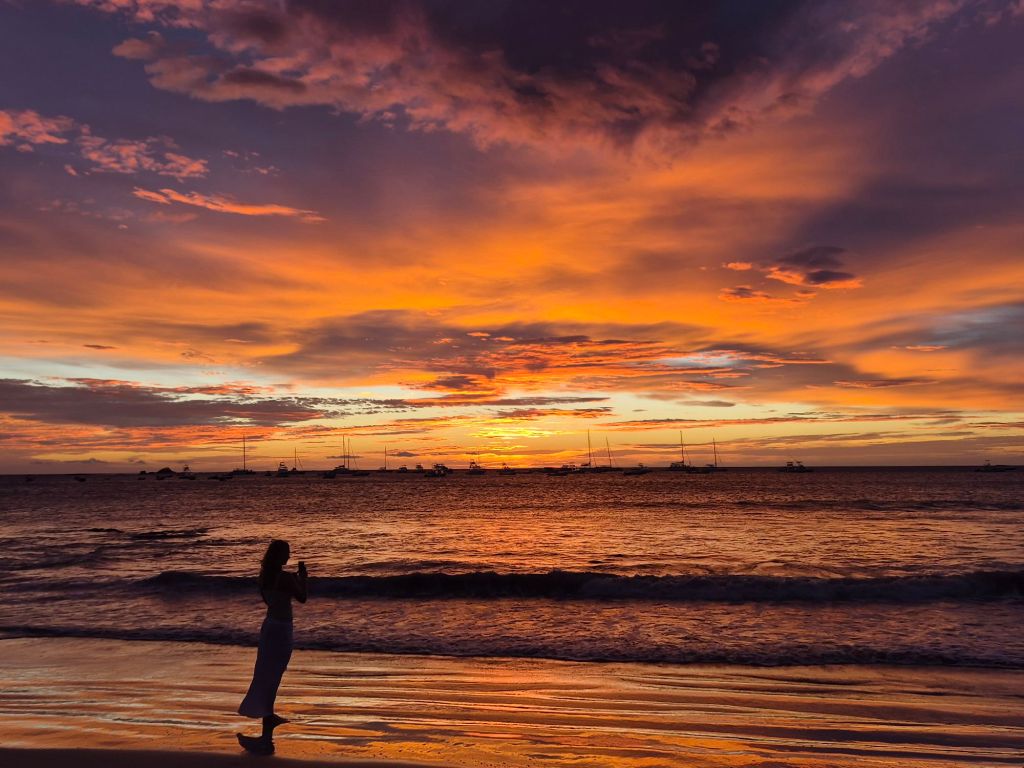
I love the mountains, but I was beginning to miss the sea, and my next destination was Tamarindo, on the Pacific, where I was hoping to see some nesting sea turtles. I was back to taking local buses again, it was just so much cheaper, and the receptionist at the hostel had stipulated the route I should take, involving five buses. The bus-drivers were very good at dropping me at the right place and directing me to the next bus, which I sometimes waited for for more than an hour, but even though it took much longer than a shuttle would have, it all worked out in the end.

 Mella Madness
Hi Meryl,
Really loving your newsletters and sincerely hope to see them in book form, when you’re ready and done traveling South America..one day!
Any idea of how long you’ll still be there? Any plans of returning to SA at some stage?
In the meantime please keep writing and keep us informed of your whereabouts.
Sending love and always protective prayers.
Almine.
Mobile: +27 76 4895744
LikeLiked by 1 person