Flying over the Andes was not at all what I expected it to be. When the pilot asked everyone to take their seats and fasten their safety belts as we were going to ‘fly over the Andes’, I looked out of the window, expecting to see towering mountain peaks (more than what I had seen up to that point). The cloud cover we had been flying over the previous 30min had disappeared, and I had been seeing some mountains before the announcement.
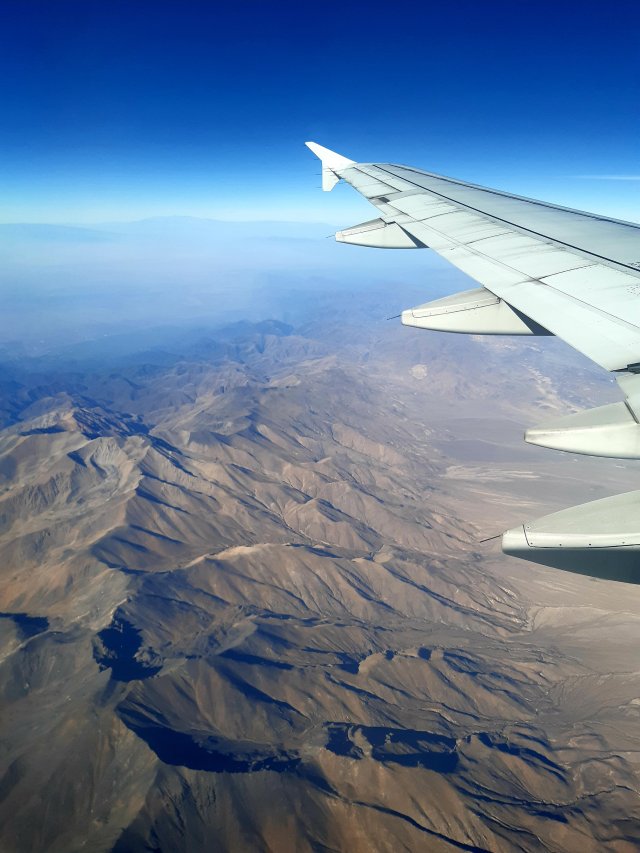
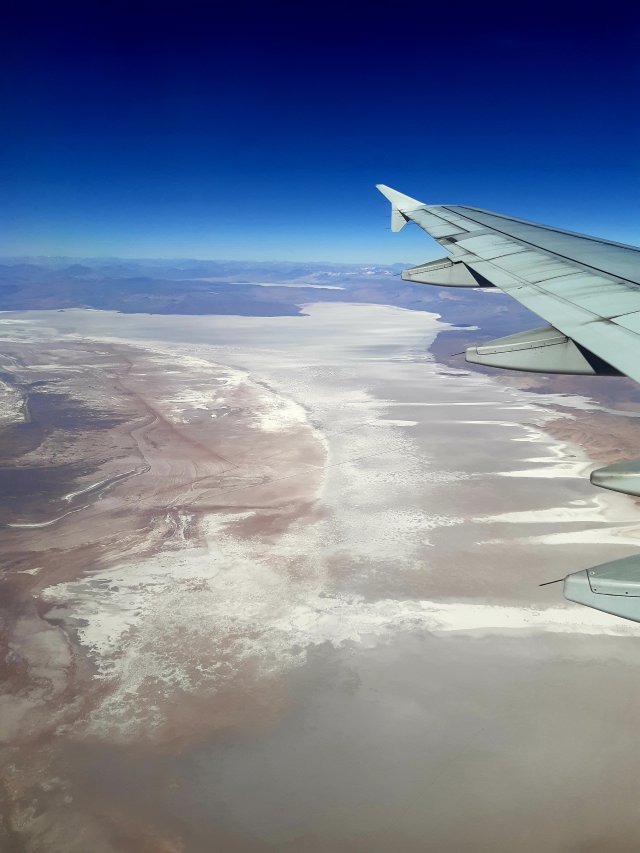
The scenery slowly changed to flat areas covered in salt pans, with very little snow on a few faraway peaks. There was hardly any turbulence, so the seatbelt instruction didn’t really make sense to me.
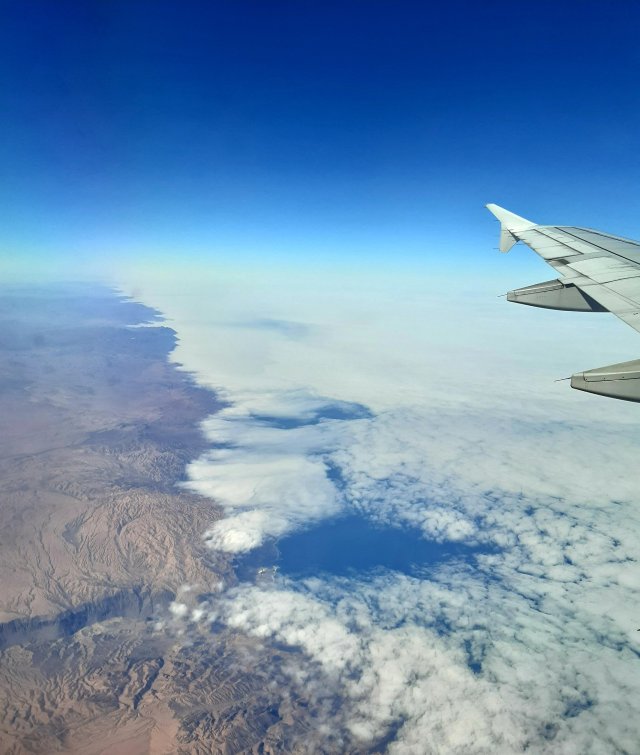
We flew for an hour and suddenly the sea was there, with a cloud cover, and only then did I realise how high the mountains had been. Thrilling!! It must have been somewhere in the northern part of Chile, because we still had another 2 hours of flying before we reached Lima.
Airports have a way of bullying one into rapid decision making. Or at least, that is how I experience it. I am usually unprepared – I don’t have the local money on me, I don’t know what kind of transport I’m going to use, I don’t know where my Airbnb location is and I don’t have WiFi. I need time to sit and think and plan these things, but the only time I’m given is when I go to the toilet before collecting Louise. You are rushed through the line at customs, you are rushed at the counter where you want to draw money, only to be told they only accept debit cards. You are hailed by at least 3 booths selling taxi tickets on your way out of customs clearance (where they’ve confiscated your apple you accidentally forgot in your rucksack). Once you’ve paid for the taxi, using your credit card, you are escorted to a taxi driver who swiftly walks you to the exit. By now you realise you’re holding your breath, you are sweating profusely and your head is spinning. ‘Stop!’, I feel like shouting, but the guy won’t understand me anyway. So I just stop at an ATM and quickly draw money, not having time to consider the amount and not having had time to do the conversion to rands, only having just found out what the currency and exchange rate is. (It is sol (plural soles), and S1 = R4,40 more or less.) One good thing is the taxi driver is very kind and polite, knows exactly where he is going, is not cheating me as I’ve already paid, and delivers me right to my doorstep. Phew, in one piece! (if not peace…)
Along the way I noticed differences – the buildings are more square and stark, no curves, balconies or overhangs. The people are different, darker and square-faced, a lot of them. And I realised I was missing Argentina… Gosh, can one become só attached to a country in 3 months!
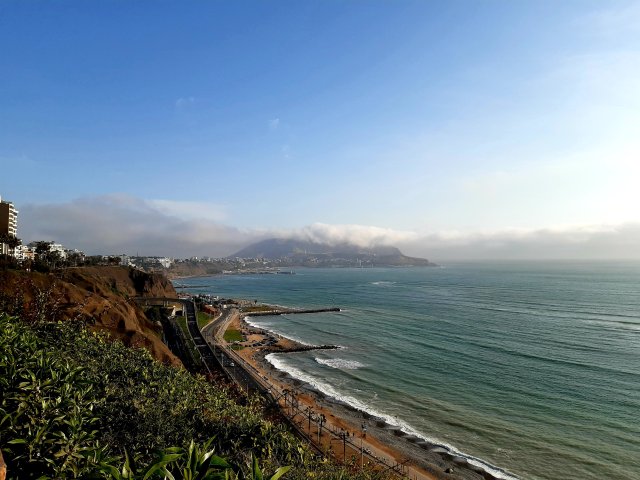
That was all 6 days ago. Lima has impressed me as a vibrant city – modern, yet aware of its history and preservation of historical buildings and cultural centers. There are lush green parks everywhere, good public transport and very busy streets (both vehicles and pedestrians). The most important square in Lima Centro, or Downtown as it is called, is the Plaza de Major de Lima, where the presidential palace, townhall, cathedral and bishop’s home are.


The area to the north of the square is the old Spanish quarter where the streets are narrow, houses and shops are colourful and many tourists wander in and out of artisan shops and restaurants.


I went on a city bus tour and we visited the Museo y Catacumbas del Convento de San Francisco de Asis, an 16th century old monastry and cathedral with catacombs under both of them. Creepy, all the skulls and bones, but the interior of the buildings are serene and beautiful. Taking pictures is prohibited in the monastry and catacombs, but I sneaked one of the library, an impressive room.


Lima is divided into several districts, each with their own local municipality. Two of the popular districts are Miraflores and Barranco, next to each other, both with a seafront, both with a lively nightlife in the parks and on the streets. I haven’t been out much at night, but the vibe in these two areas is such that one feels completely safe, and buses home are accessible and easy to catch.


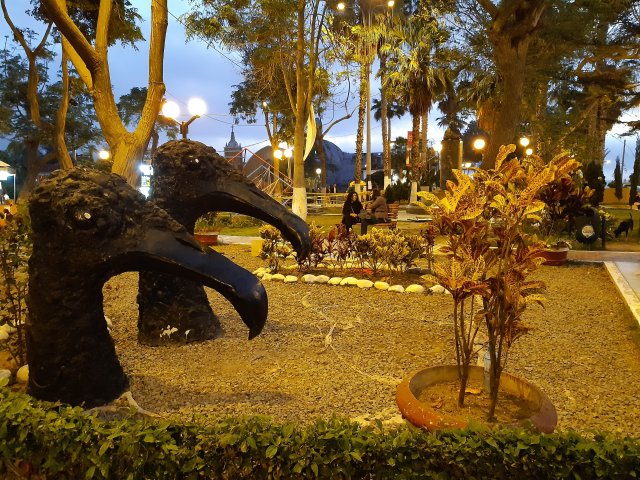
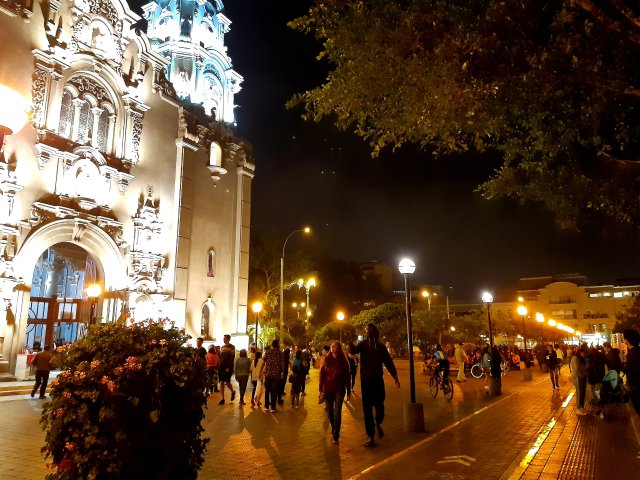
Last night the church on Kennedy square in Miraflores was open and a soloist was singing while communion was being served, hauntingly beautiful. I sat listening for a while, carried away.
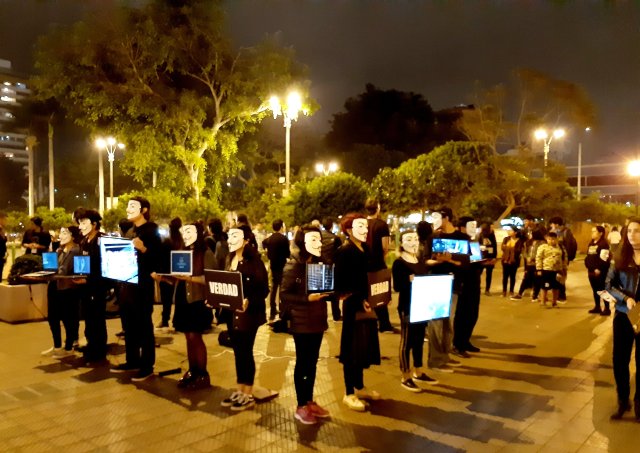
When I went outside, there was a demonstration against the way chickens are being slaughtered, with people holding computers showing the gruesome atrocities of the process. Funny, nobody would come close to the demonstrators, as if one could only watch these things from a distance.
Fifty meters further, in the park, locals were dancing their own version if the salsa or samba, with onlookers seated in a little amphitheater. There was an older man dancing so well and having such fun, that when he was left stranded without a partner, I went down the steps and asked him to dance, people cheering. I can’t do samba/salsa/whatever to save my life, but caught up in the rhythm and gaiety of the moment, I just danced away, doing my own thing. He thanked me genuinely and with so much enthusiasm that I almost believed him… But it was fun!
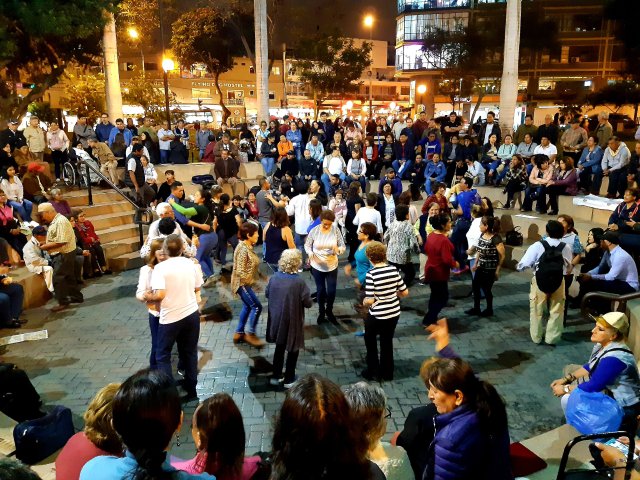
A great attraction in Lima is the Parque de la Reserva, the waterpark. There are 12 fountains, and in the evening they have a spectacular music and light show. Everybody seemed to be there the evening I went, creating a festive atmosphere. The next day was Halloween, a public holiday here, as they celebrate both Halloween and Criollo (Creole) music, so everybody probably wás there. Children and young people are allowed to play in certain fountains, and they were really making a game of it. I was shivering for their sakes, but they were clearly enjoying themselves.


I haven’t really indulged in local cuisine, but I discovered a Criollo restaurant just accross the street from where I stay that serves the most delicious fish soup. It is called sopa pesce (fish soup) but is more like a chowder, filled with chunks of fish, prawns herbs and other goodies, excellent, and very cheap!
Incidentally, I had a discussion with my hosts, a young and hard-working couple, about the meaning of Criollo, and they tried to explain to me that it is a way of doing things rather than a ‘something’. I investigated, and discovered the the word is used for people who are born of European parents, but not on the European continent. In Latin America, that would apply to Spain and Spanish. The people born in Spain are considered to be peninsulares, and during Spanish rule they were given preference in government and official positions. The Criollos, born here, were however the ones who led the countries to independence, and subsequently held official positions.
In Peru, specifically, criollo is often used as an adjective and describes a certain spirited way of life. Someone is muy criollo (very Creole) if they express these ways. The ways are the following:
- speak wittingly and persuasively on a wide range of topics
- turn a situation to one’s advantage
- be masculine (macho)
- exhibit national pride
- participate in fiestas and other sociable activities with certain gusto
I can vouch for that, much of this is what I have been experiencing here.
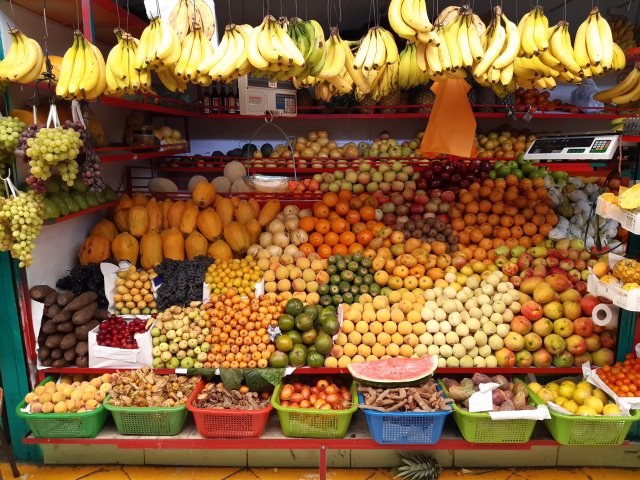
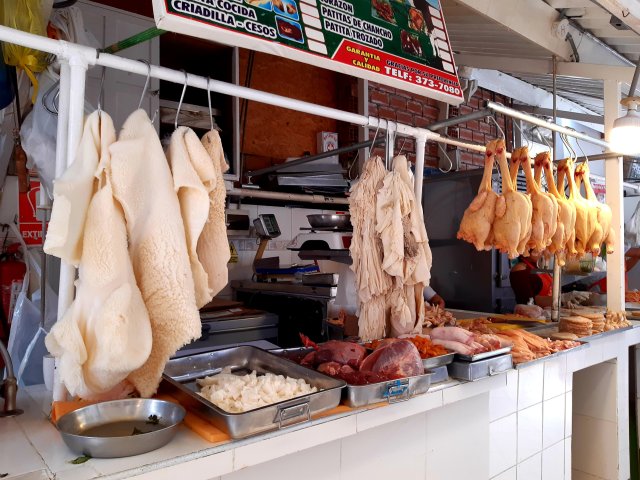
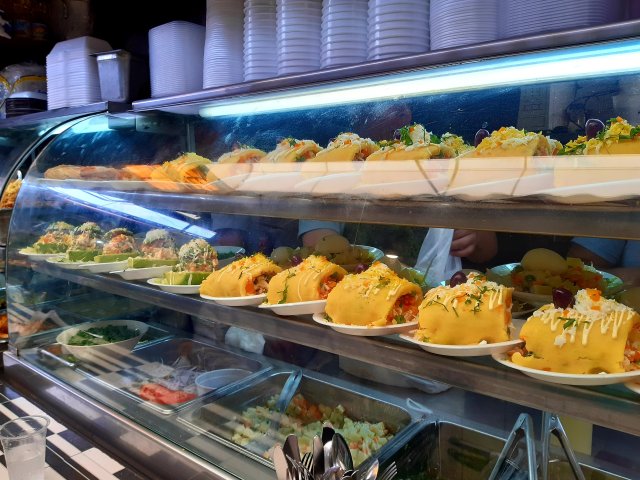
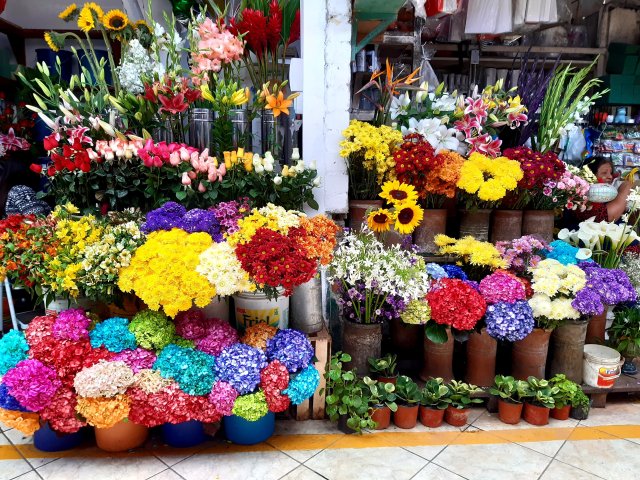
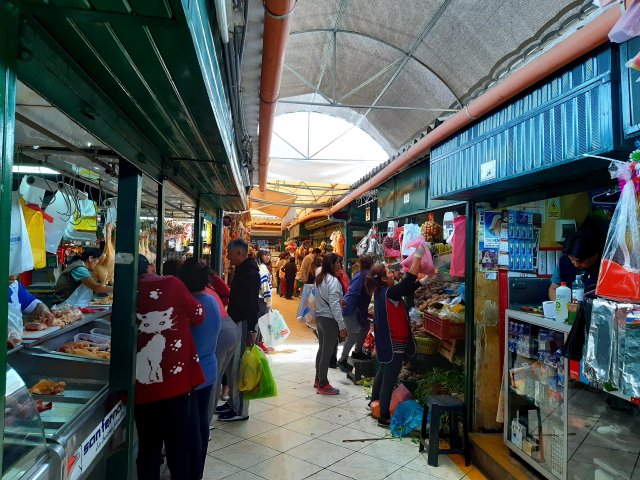
There is a wonderful undercover local market close to me, with mostly food stalls, but also flowers and general items. It is very colourful and crowded, I love it.
I was meant to fly back to South Africa today – I cannot believe the three months have passed so quickly. I had to change my ticket yesterday, which turned out to be a gruelling and intense experience. Originally I was told that I would have to pay $200 (USA) penalty if I changed the ticket, but because LATAM airways had delayed flights (twice) on my inbound flight, I could twice change my ticket without penalty. I used one before I left SA, but to try and persuade the man on the other end of the line that I had one change left, was a marathon task beyond my capabilities. (I had kept contact with Julian, the on-line guy who originally changed my ticket in SA, and had consulted him about the current change. He was the one who told me I had an extra change available, that was why I was so adamant about the penalty. He also told me there was a cheap flight available on the 6th April 2020 for only $39 extra.)
After an hour and a half of talking, waiting, explaining, waiting, giving information, waiting, trying again, waiting, ad infinitum, the guy at the call center eventually said he was going to a ‘specialised section’ and then he found what I had been saying all along. By that stage we were going to be cut off, and he insisted that I give him a phone number on which he could call me, which of course I didn’t have. I was using the call center phone at a LATAM office, and begged one of the assistants to allow me to use her cellphone, which she reluctantly did, telling me it was very much against the rules. Anyway, eventually a call came through, but it was a woman’s voice, and I nearly died – I thought I had to start the process all over again. Luckily not – she was just going to do the changed booking. After half an hour of more waiting, forcing myself to breathe, drinking water and wiping sweat off my brow, she proceeded to offer me a ticket for an extra $212! I almost died again – I had just saved a $200 penalty fee, I was not about to give it out on a new ticket. I gave her a firm ‘no’ and told her that Julian had said there was one available for $39. Another 15 minutes, with the owner of the phone constantly hovering close to me, and I got the $39 upgrade. I was completely light-headed and só relieved that I started crying once I got out of the office. The patience of the operators, the kindness of the cellphone lady and just the sheer tenacity of my own negotiations overwhelmed me. And of course the presence of an ever guiding and protective Hand.
I sommer treated myself to a coffee americano and a slice of lemon meringue pie. And promptly went to book a $200 ticket on the Peru Hop, an organisation that provides tours in Peru and Bolivia. I leave tomorrow at the crack of dawn, working my way to Cusco and eventually Quillabamba, where I’ll be doing the next Workaway volunteer job.
I’ll be back in Lima by middle December, hopefully more at ease, knowing now how things work, and not having to do ticket changes again.
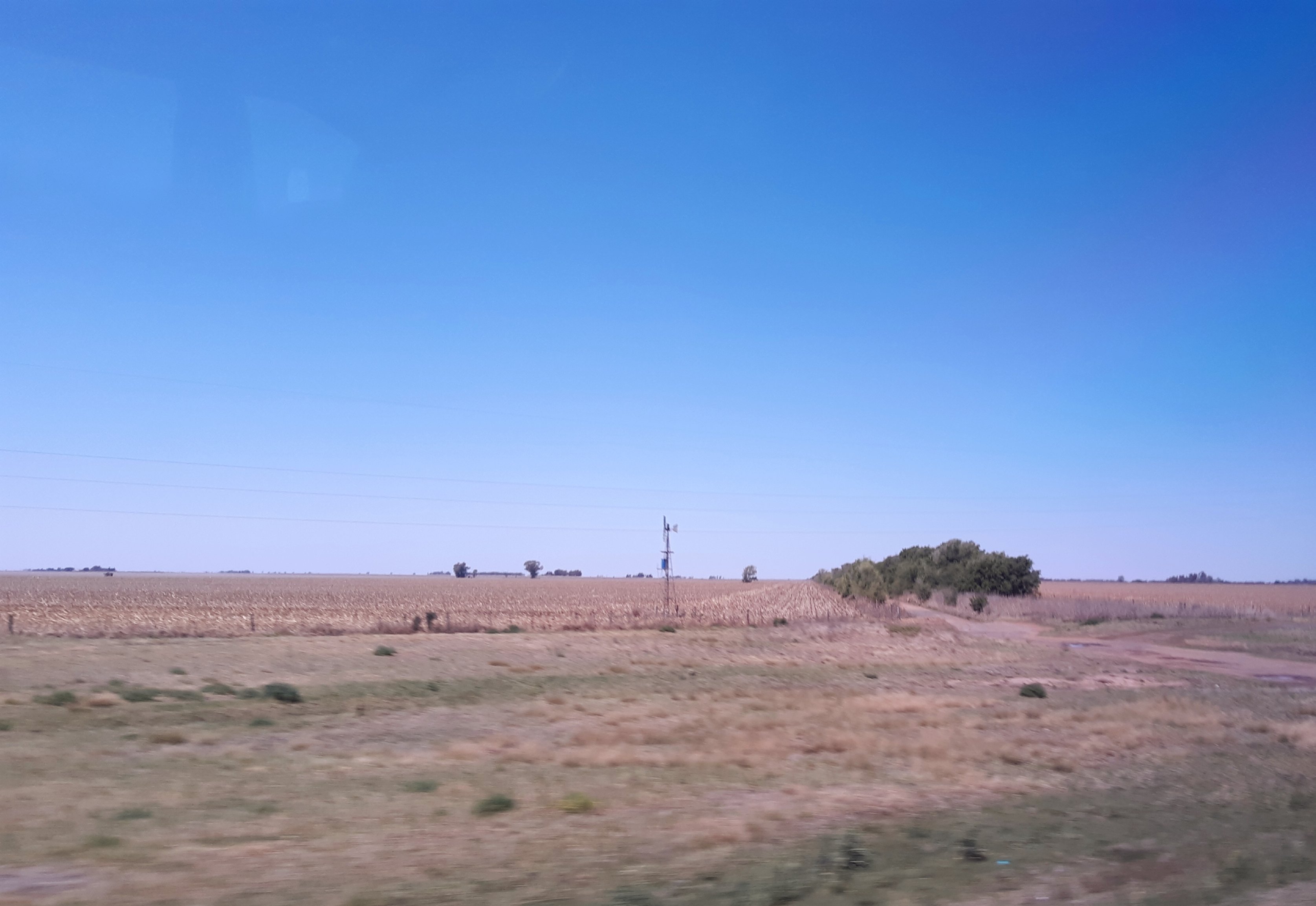
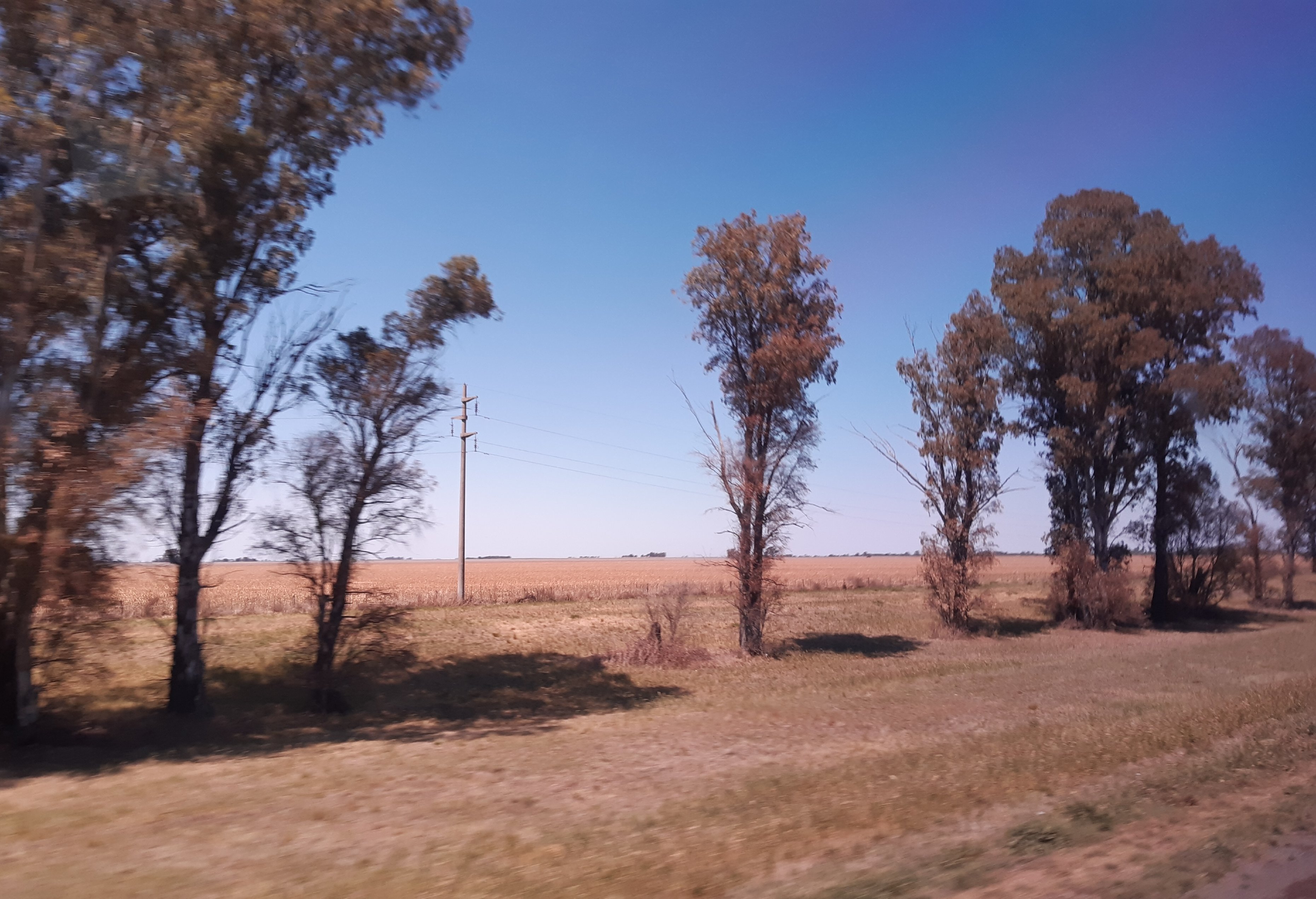 About 100km before Mendoza the first vineyards started appearing, bright green after the dreary landscape, in a valley which produces most of Argentina’s wine, noticably Malbec. Walking into Mendoza from the bus station was like entering a forest, lush and cool, the trees forming a canopy of foliage, the buildings dwarfed by their size. There are many wild mulberry trees with huge leaves, their fruit staining the pavement, but also plane and other trees. The air was filled with the sweet scent of the flowers of the syringa trees, and the pavements were smooth and wide – Louise (my pink suitcase) had a joyride!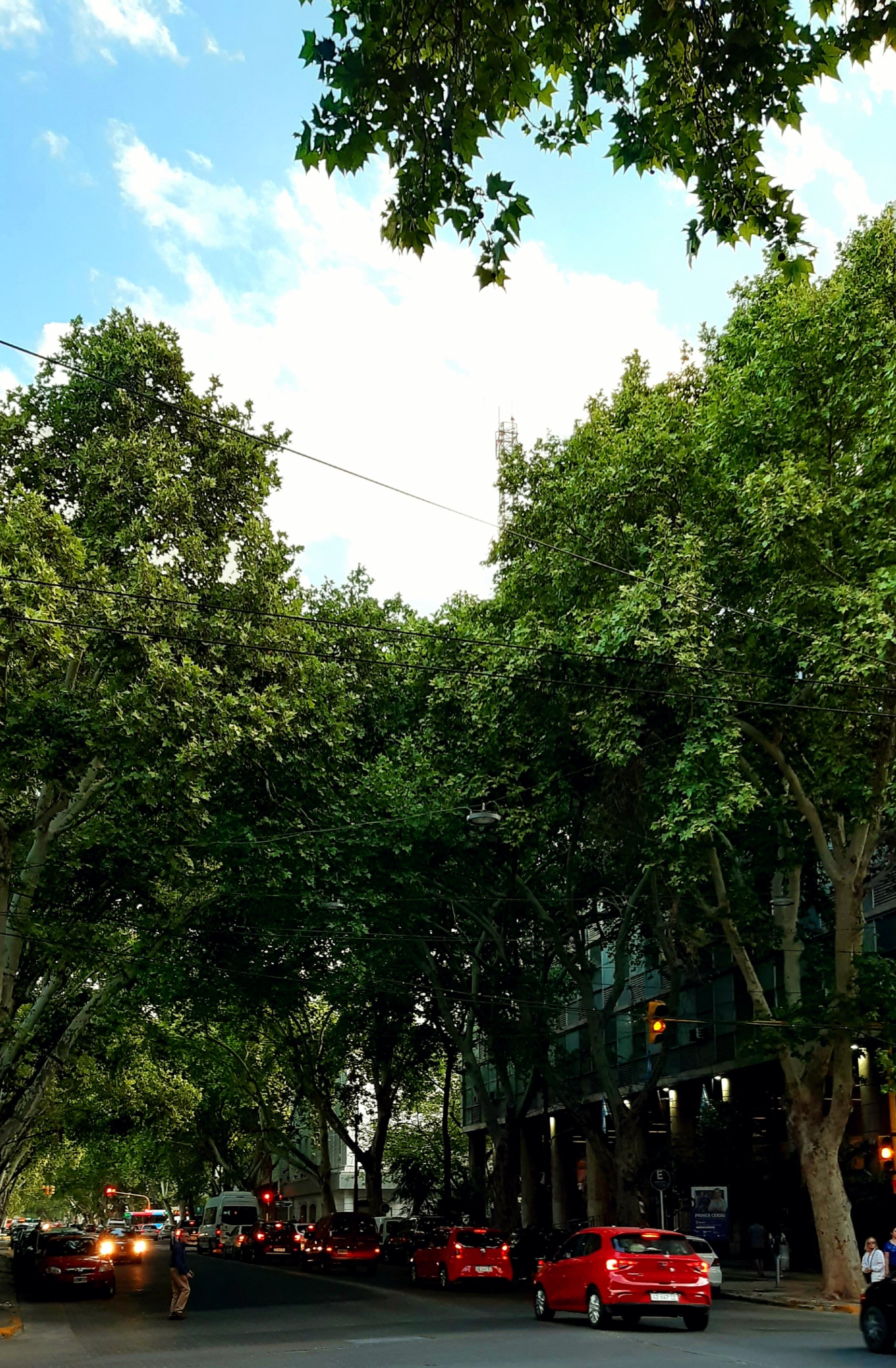
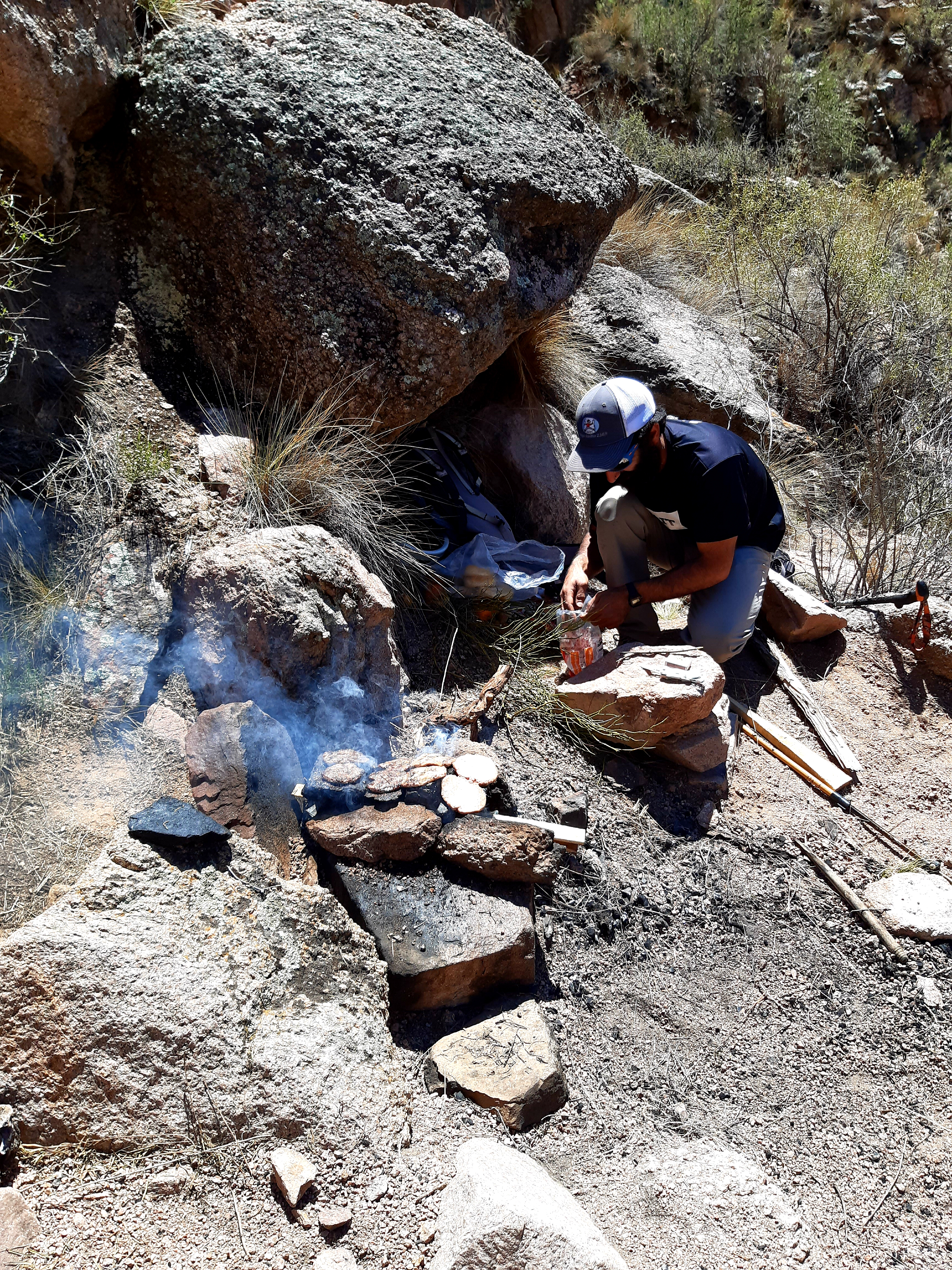
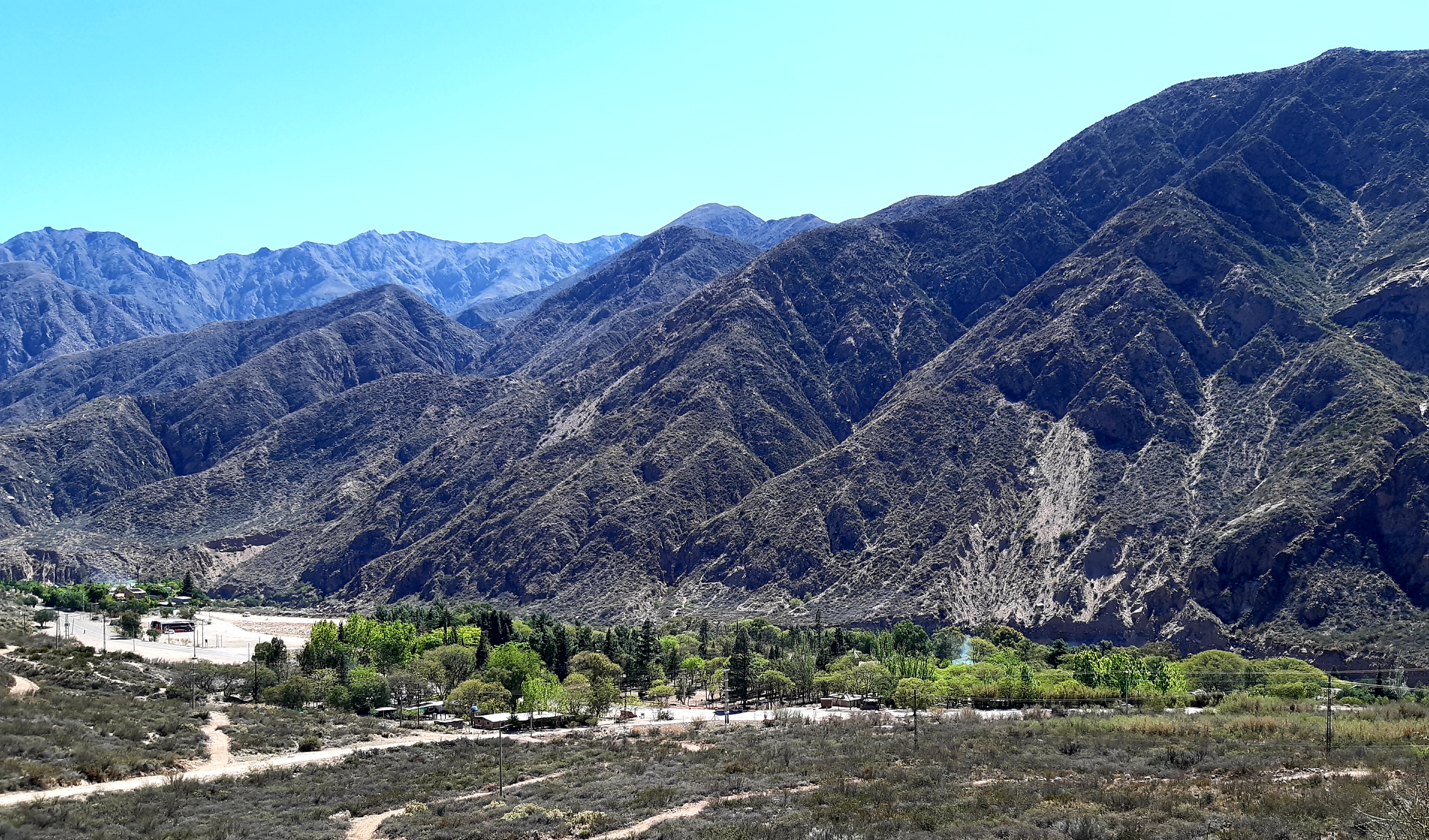 We found this guy cooking hamburger patties on the rocks, which, to judge by all the burnt out fires, happens there quite frequently. There were a group of children who were being shown how to do it as well.
 Then came the fun part: absailing down, 3 sections, the longest one about 70m. I loved it!


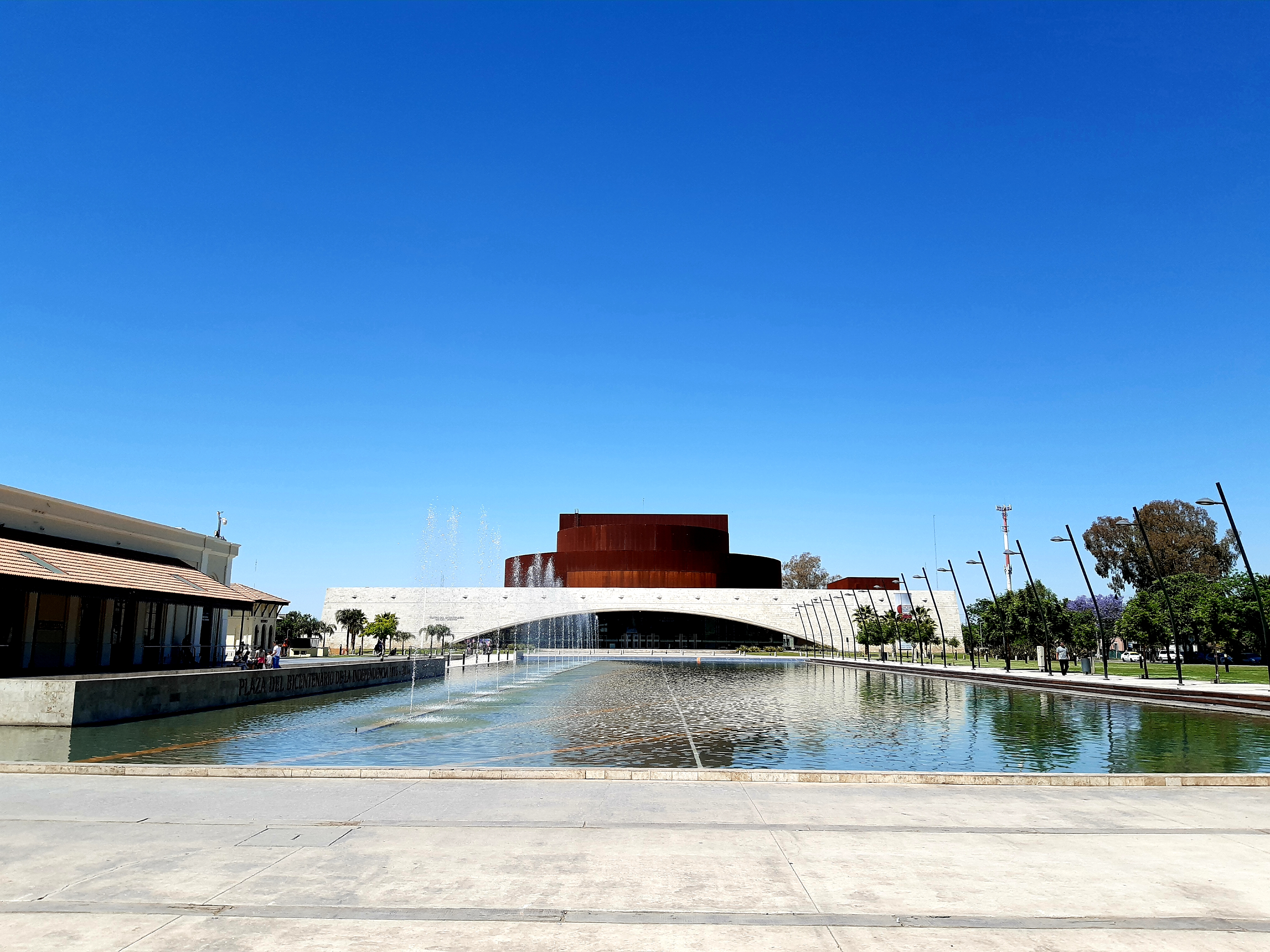
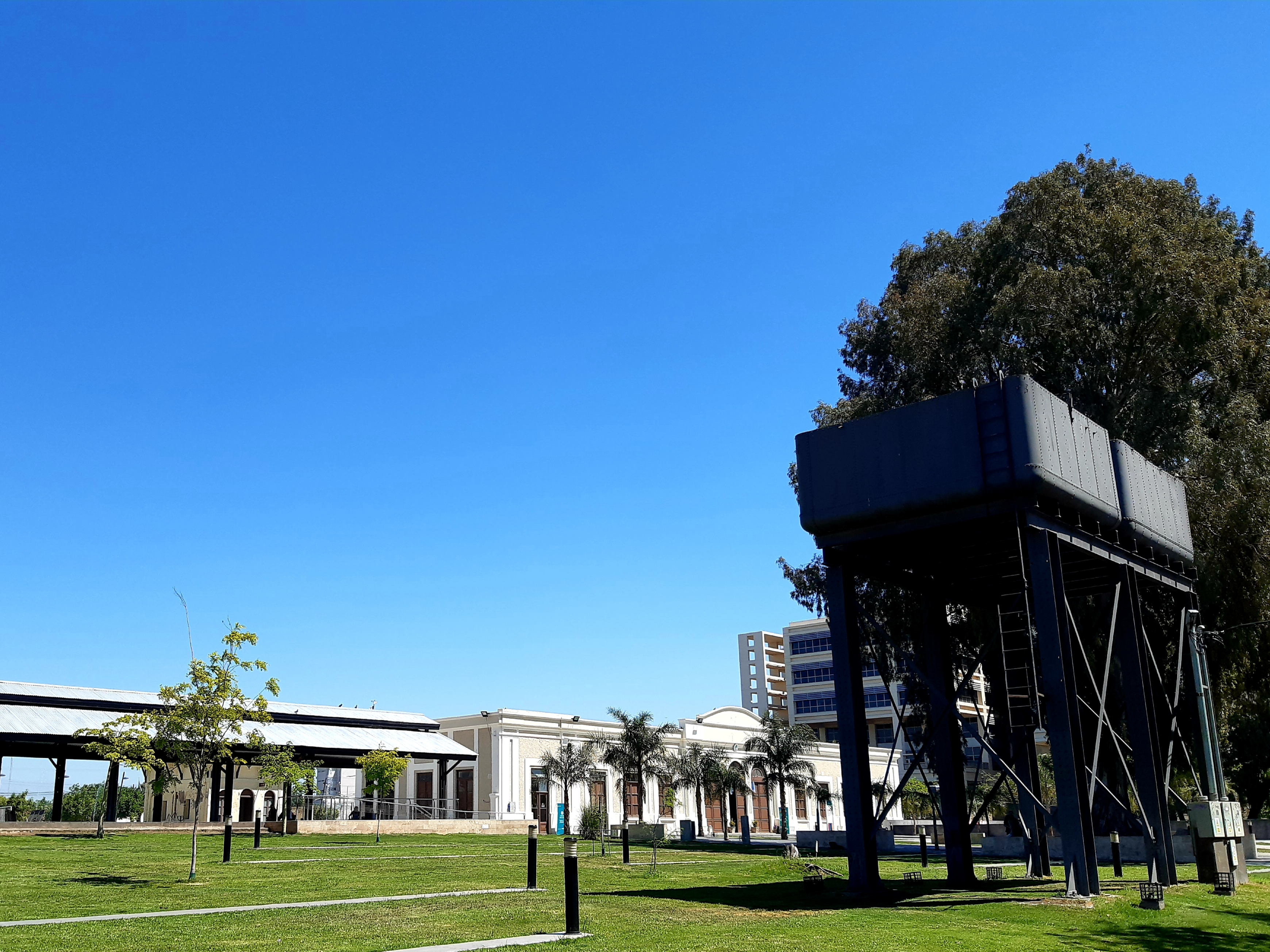 There are beautiful parks and ponds, and walking streets with shops, but I really have to choose better times of being in a city centre. Everything closes and people and cars disappear between 13:00 and 17:00, and then come back to life, reaching a peak around 20:00.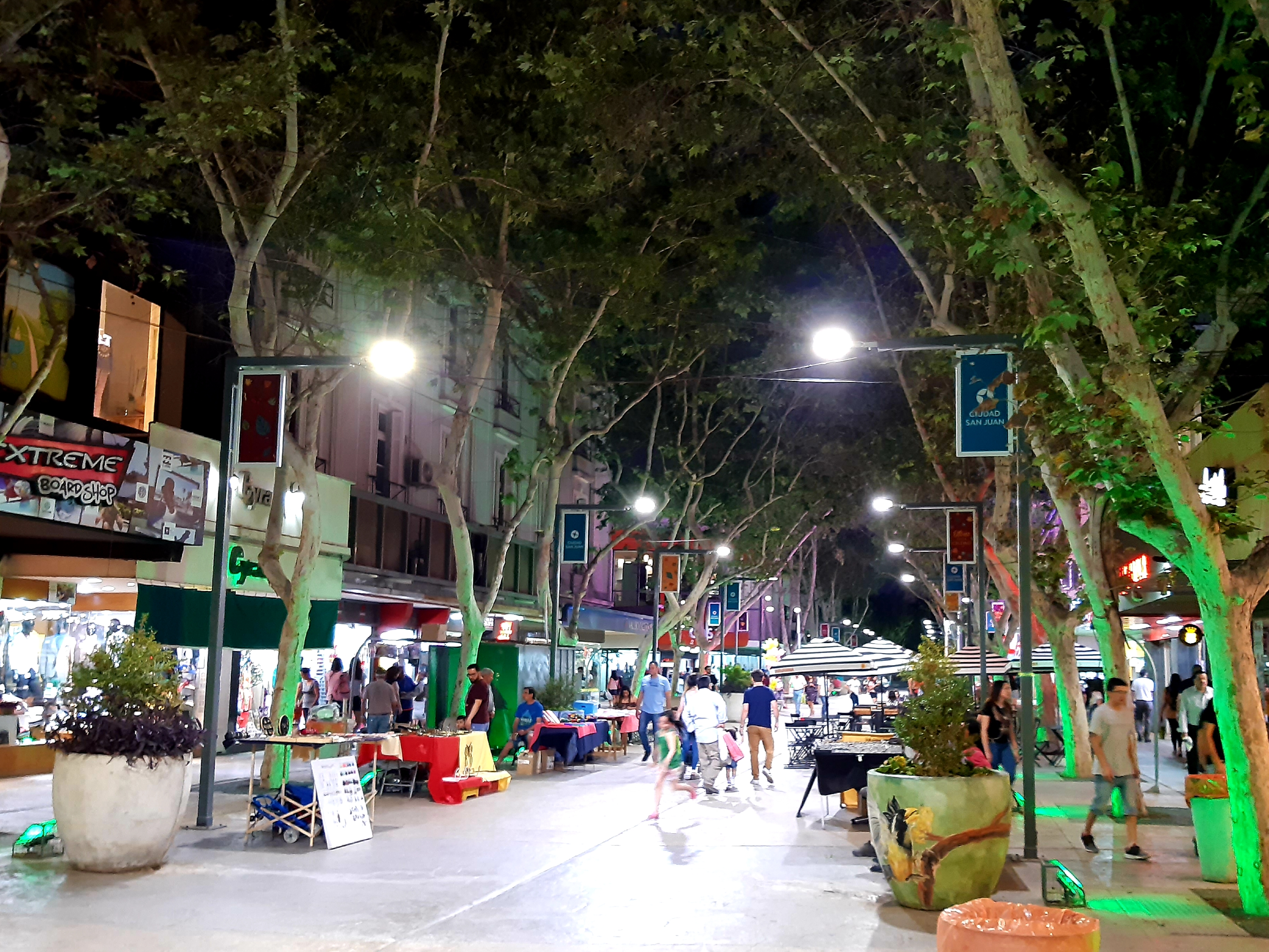
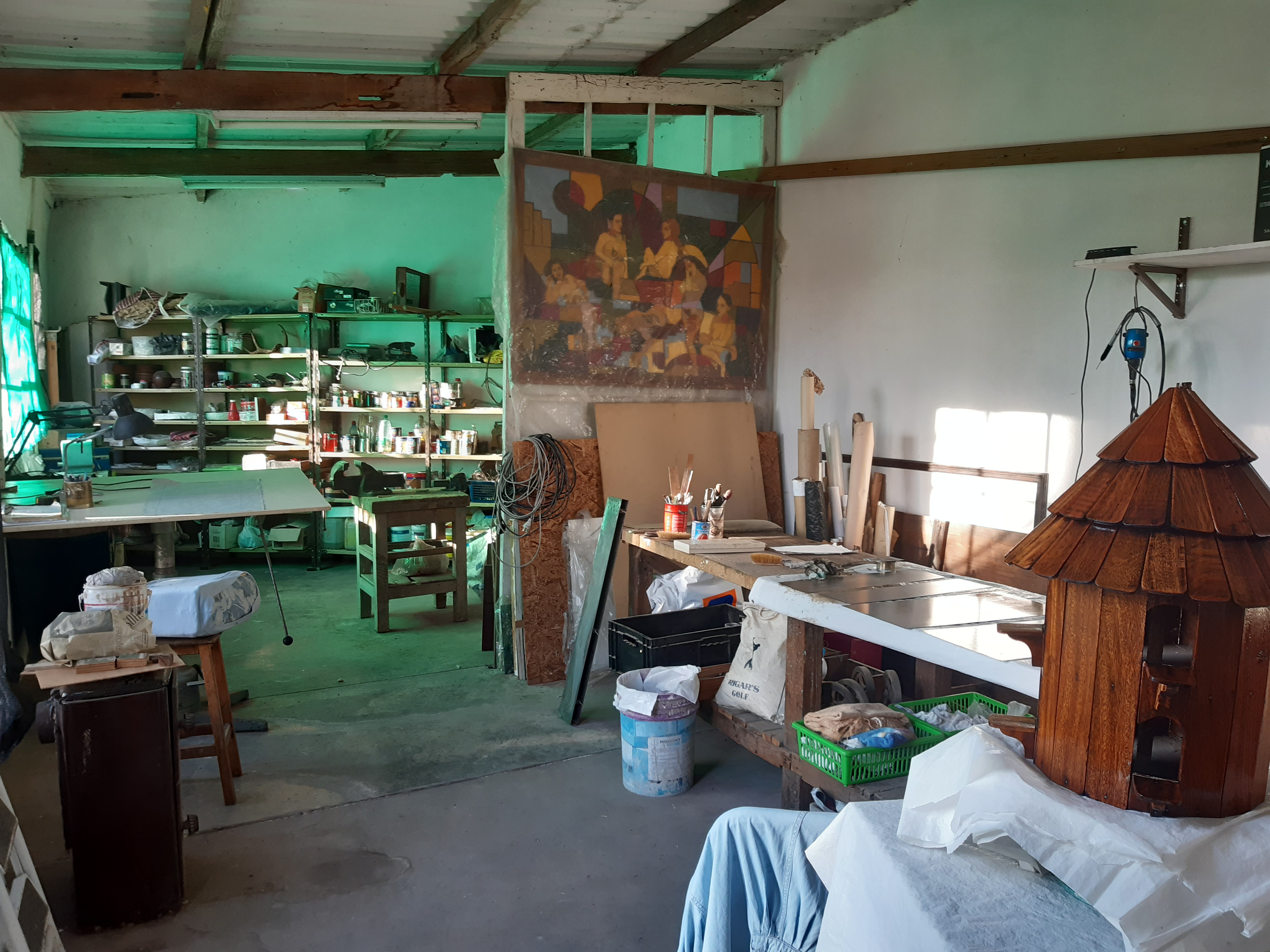
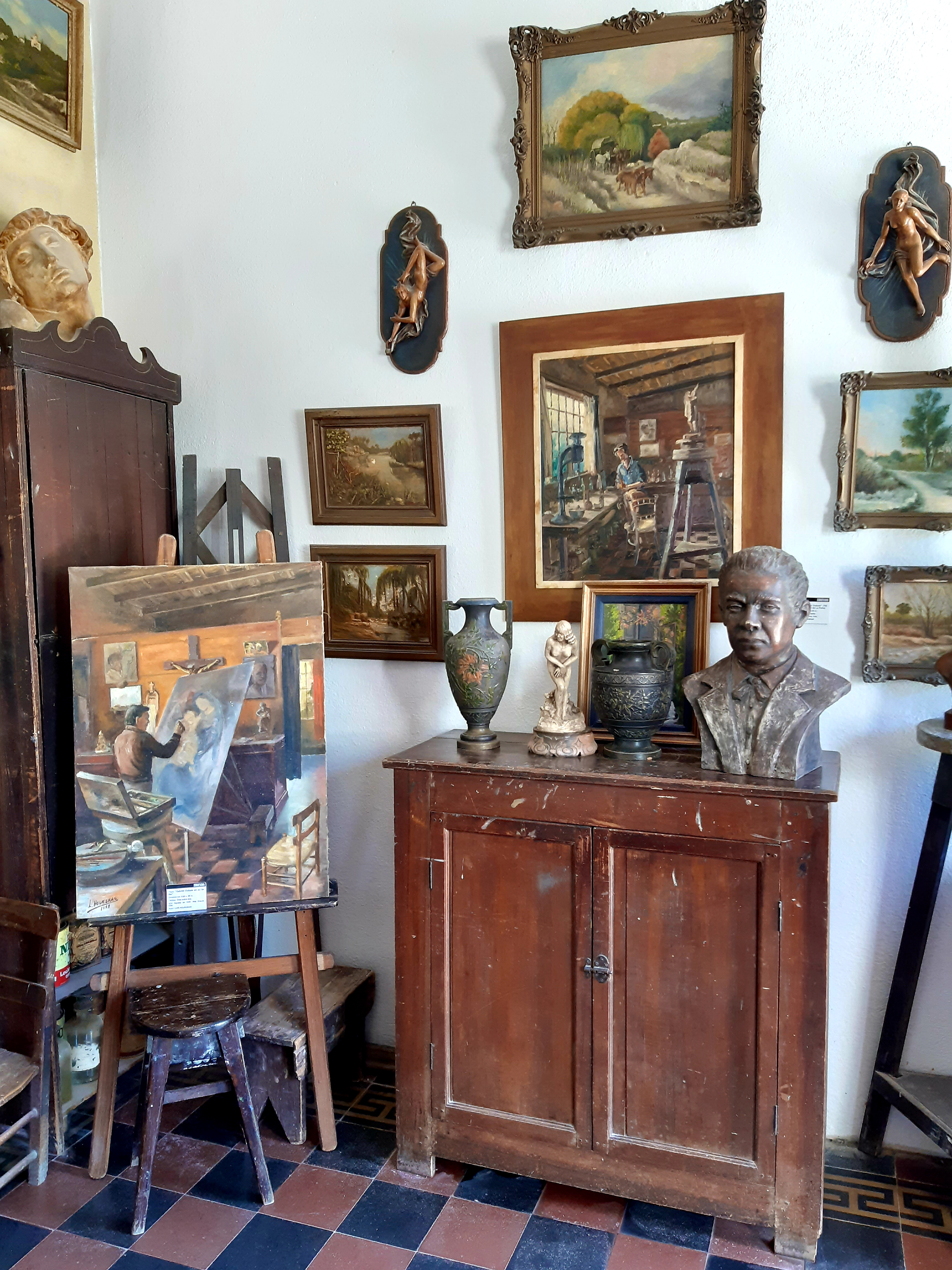 The painting in the middle is of Titi in the workshop, and it was a unique experience to be standing in the exact same workshop, everything kept as it was at the time of Gabriel’s death.
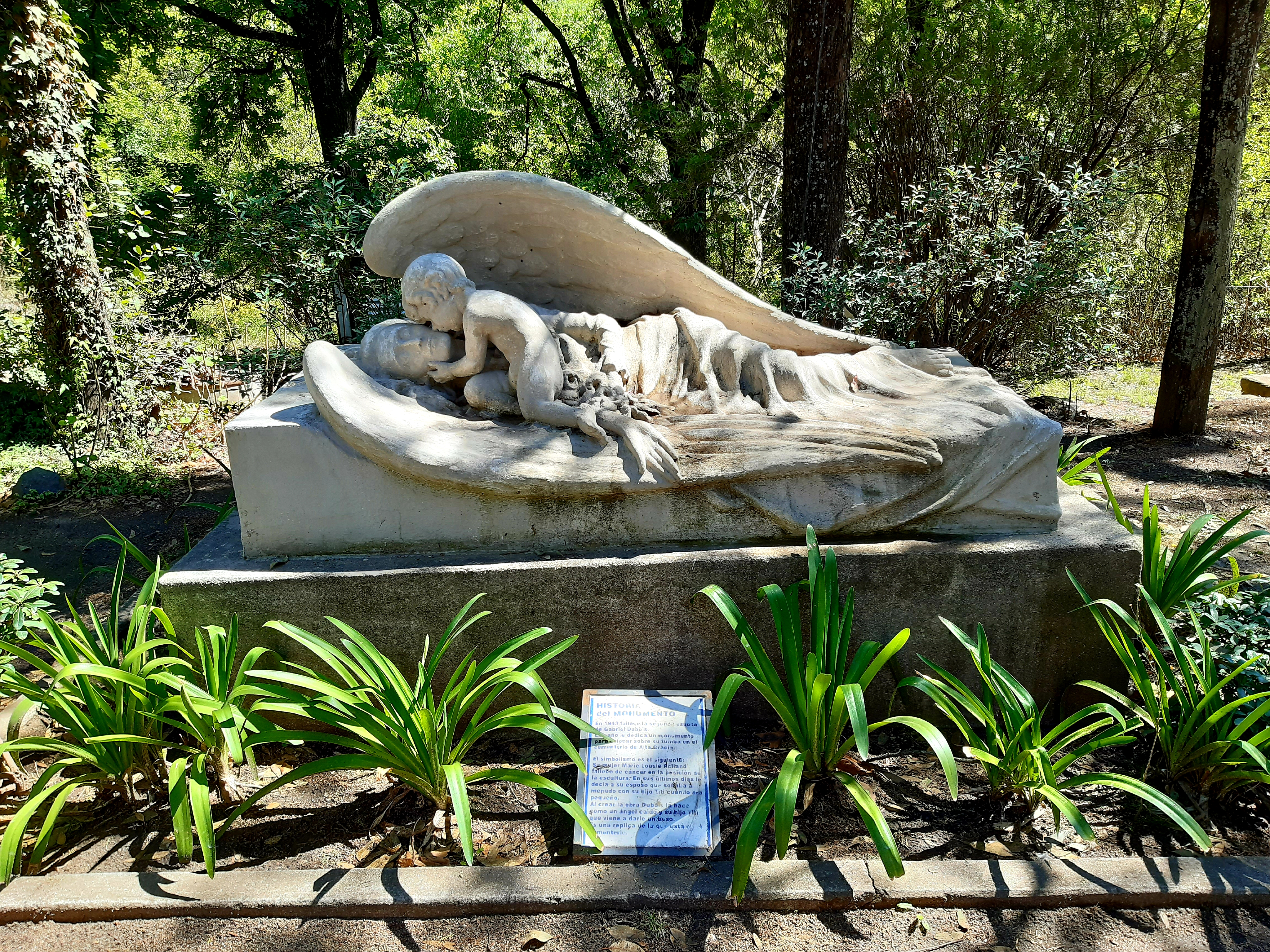 Gabriel then took in a woman to do the housekeeping, and her son, Luis Hourgas, became the only student he ever had. The house was often the gathering place for artists and intellectuals of the town, and one could easily imagine the conversations that took place there.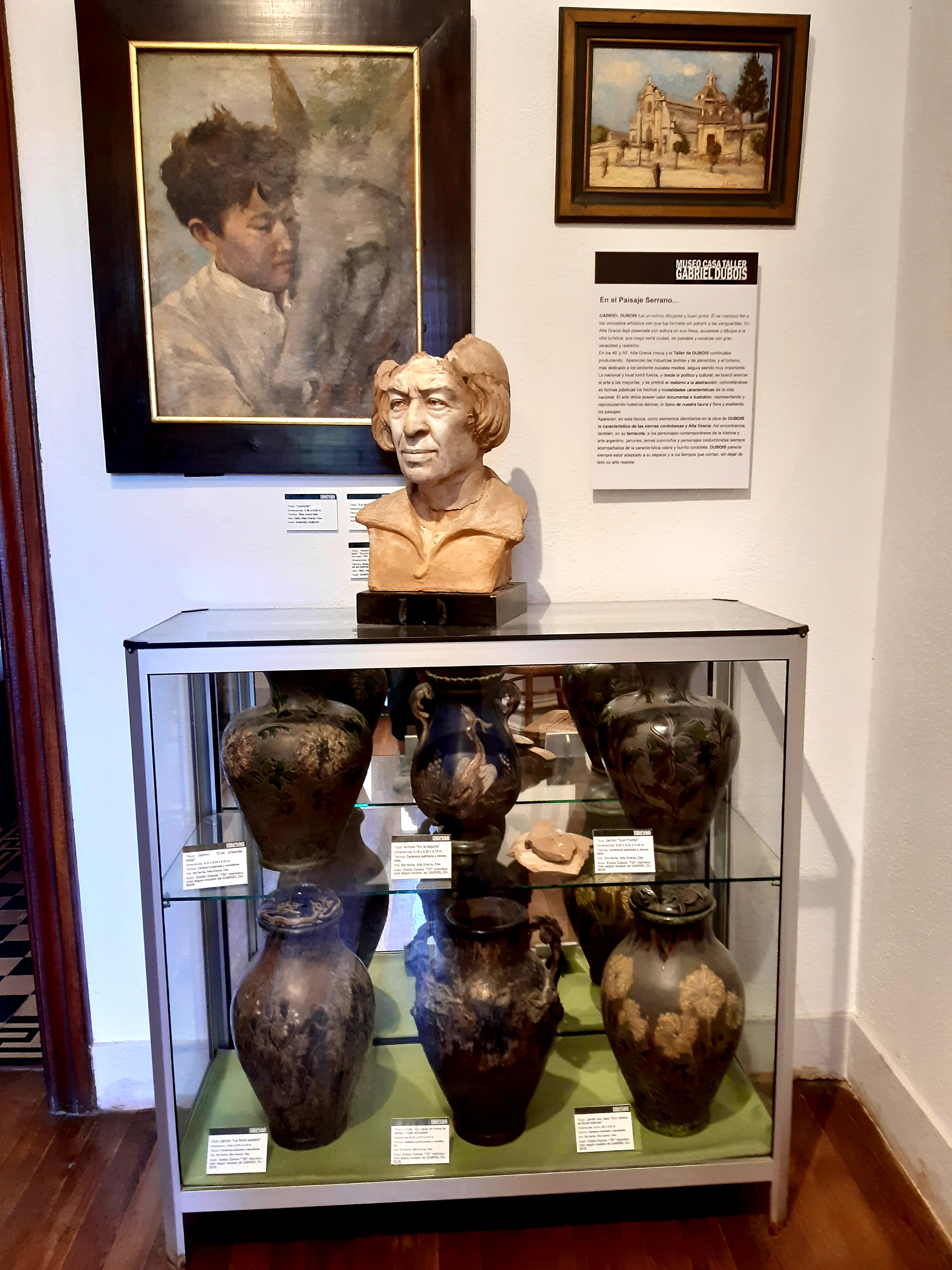
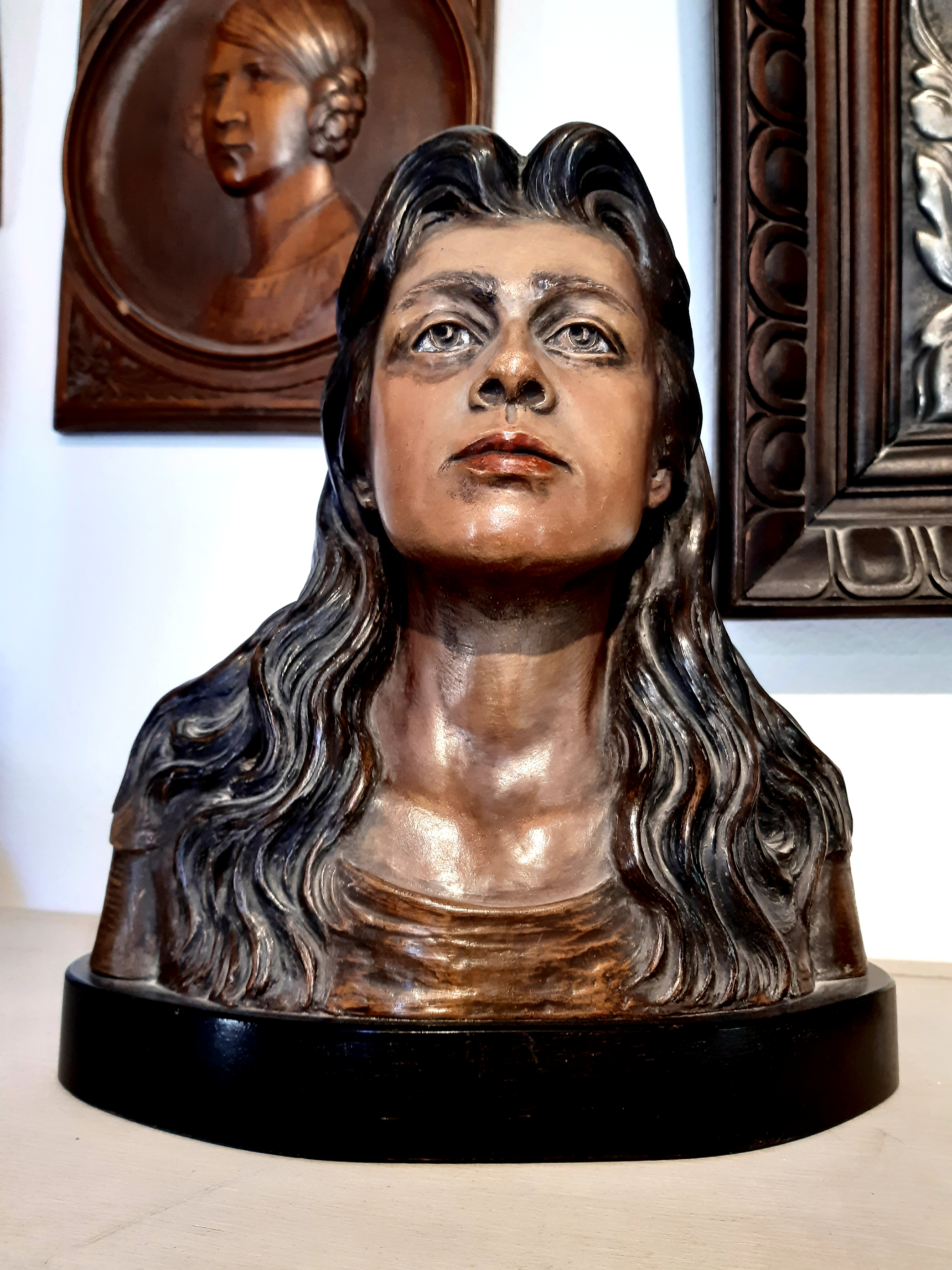
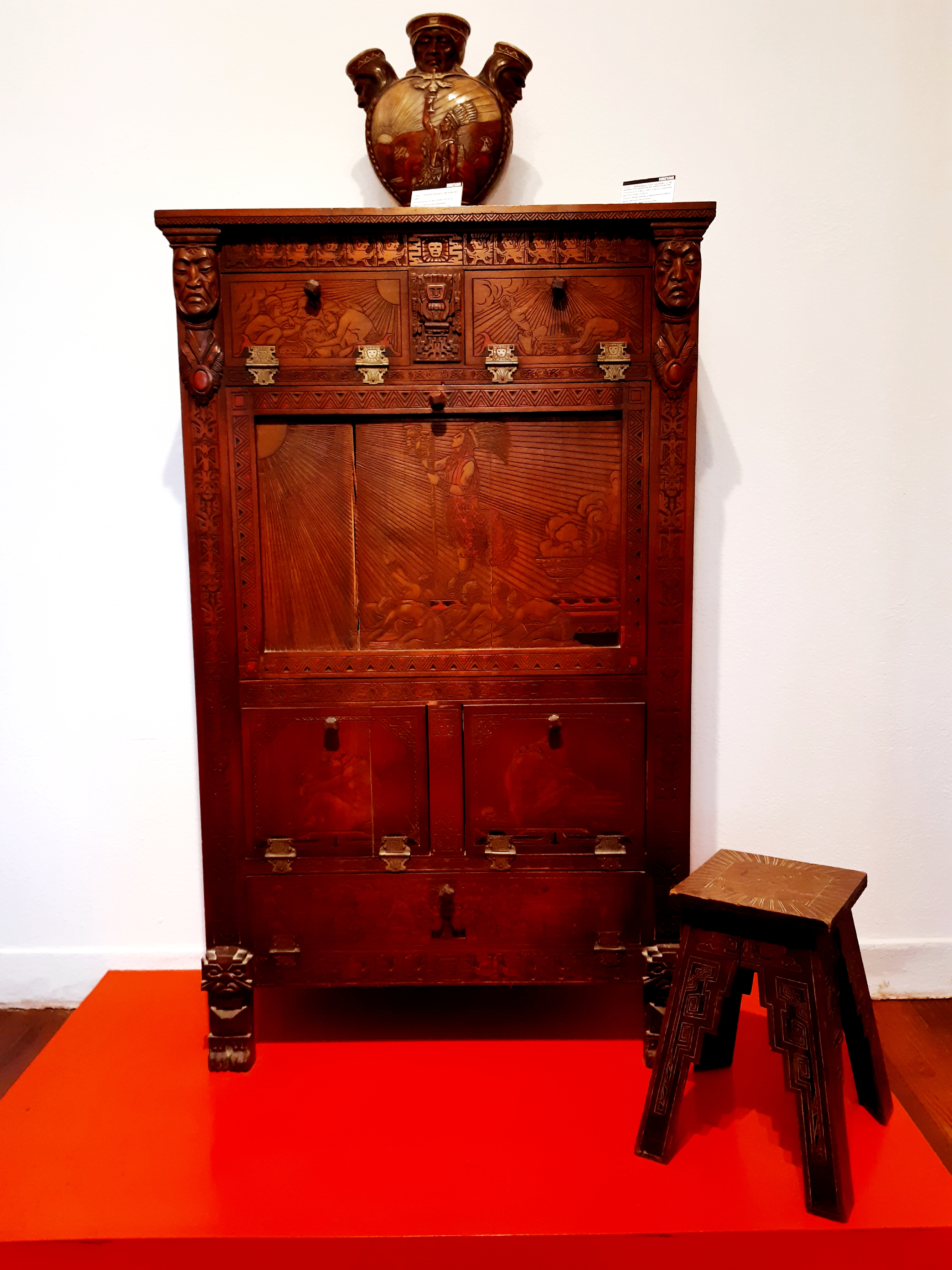
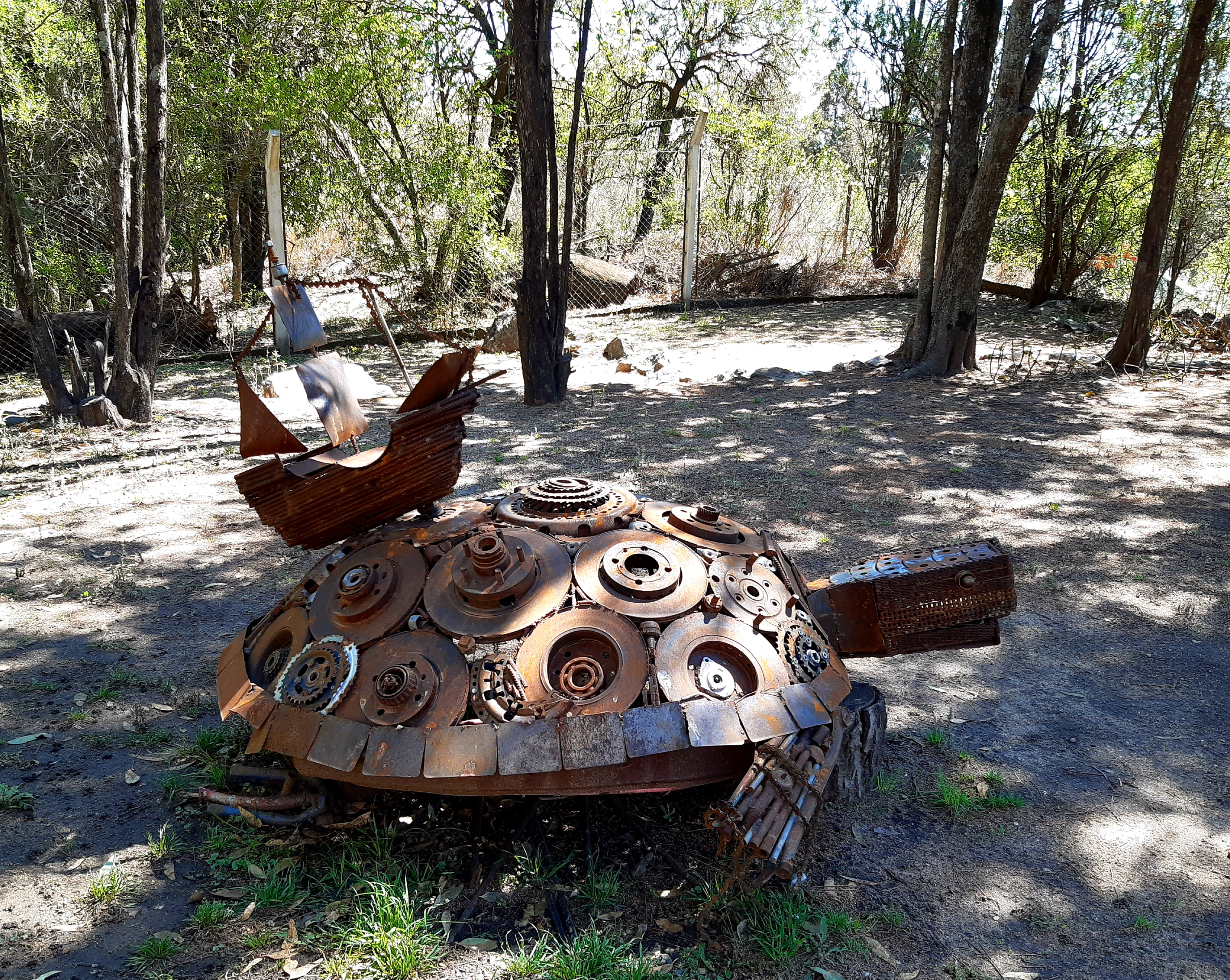
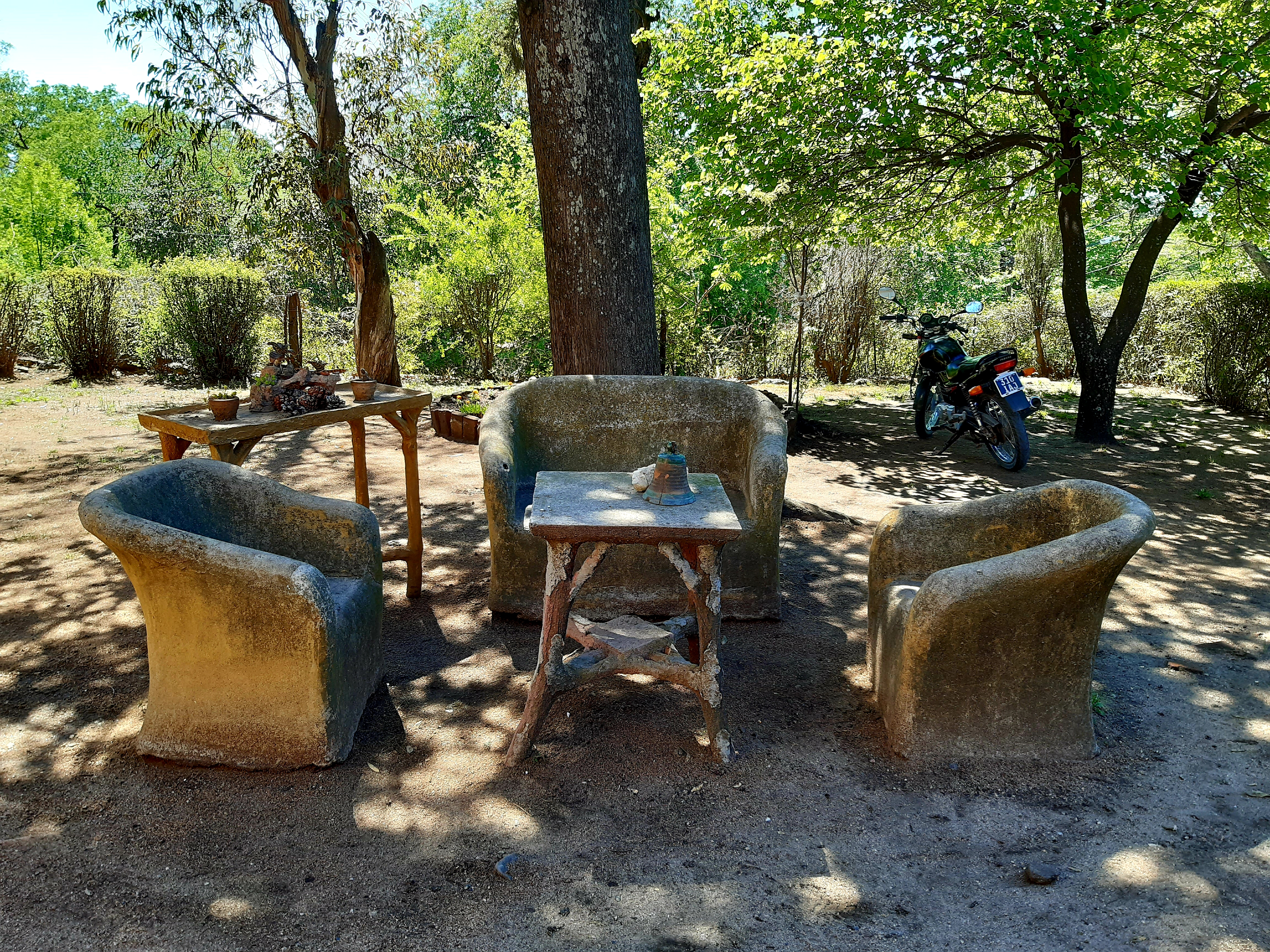
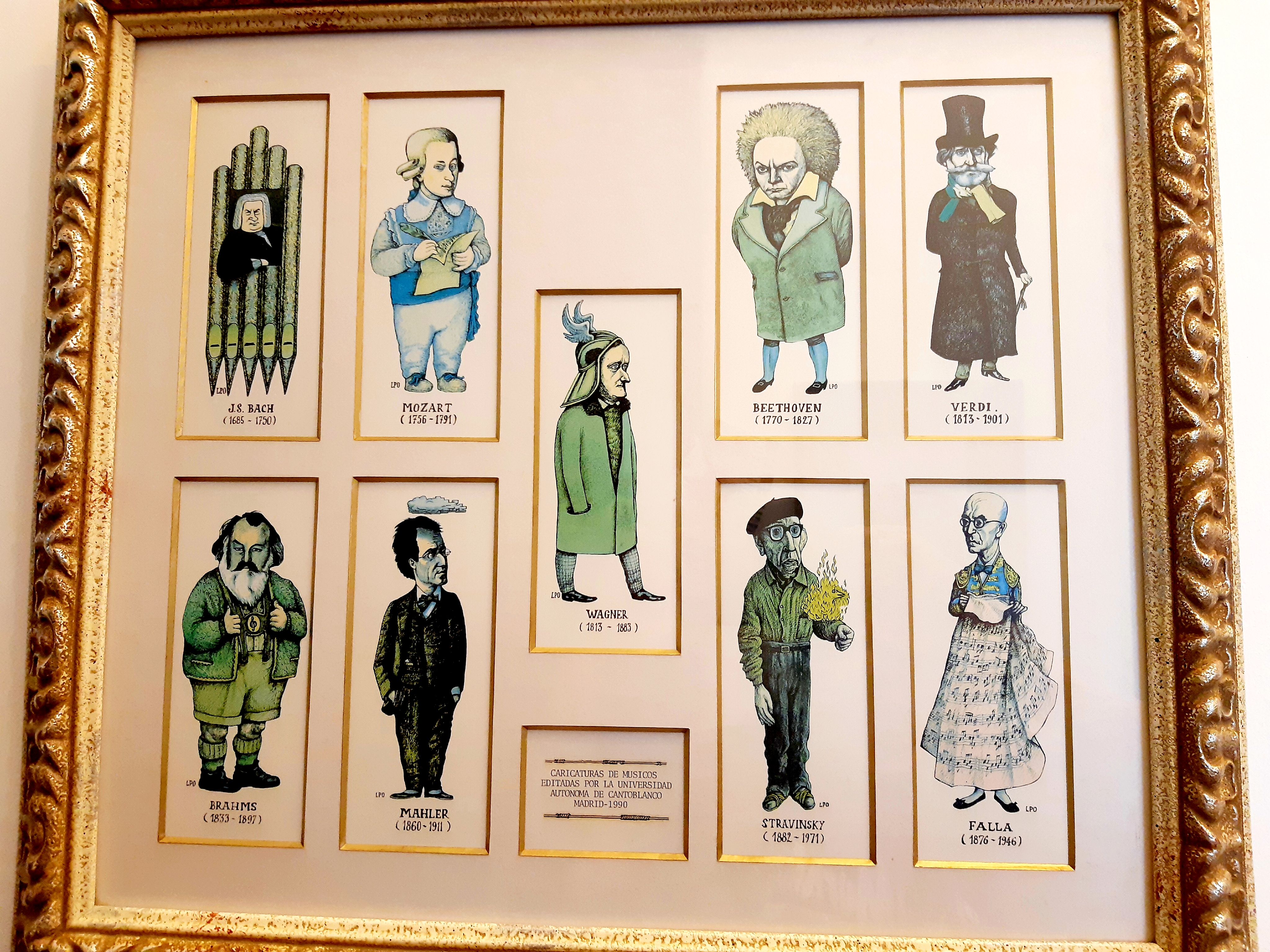
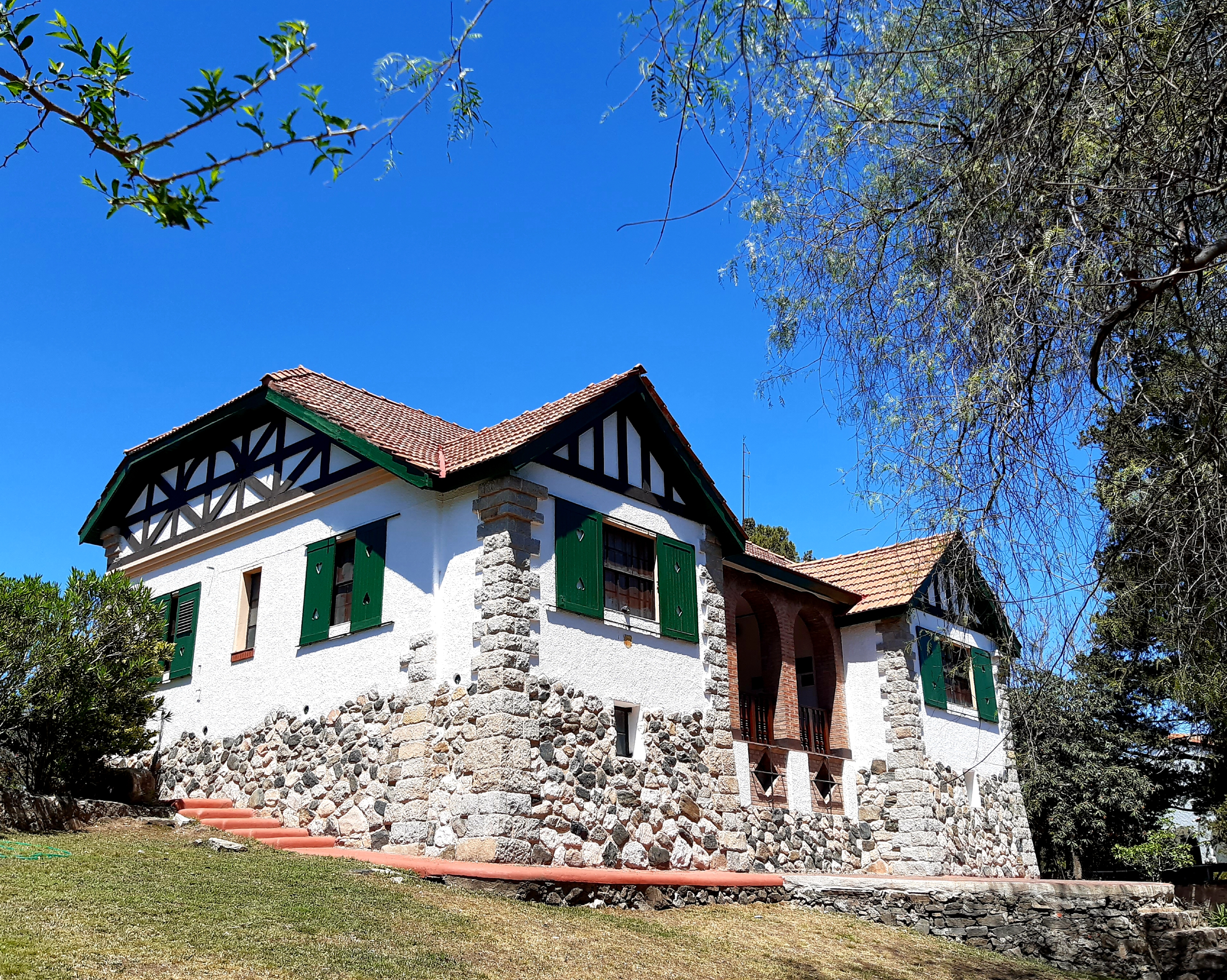 He had never married and his sister, also unmarried, took it upon her to care for him after their parent’s death in 1919. As one enters the house, one is enchanted by his music which fills the rooms. He had many well-known friends, such as Picasso, Dalí, Vázques Díaz and others, who had all made caricatures of him that hang in the passage. Picasso also made drawings of costumes used for one of his operas. Some fellow composers:
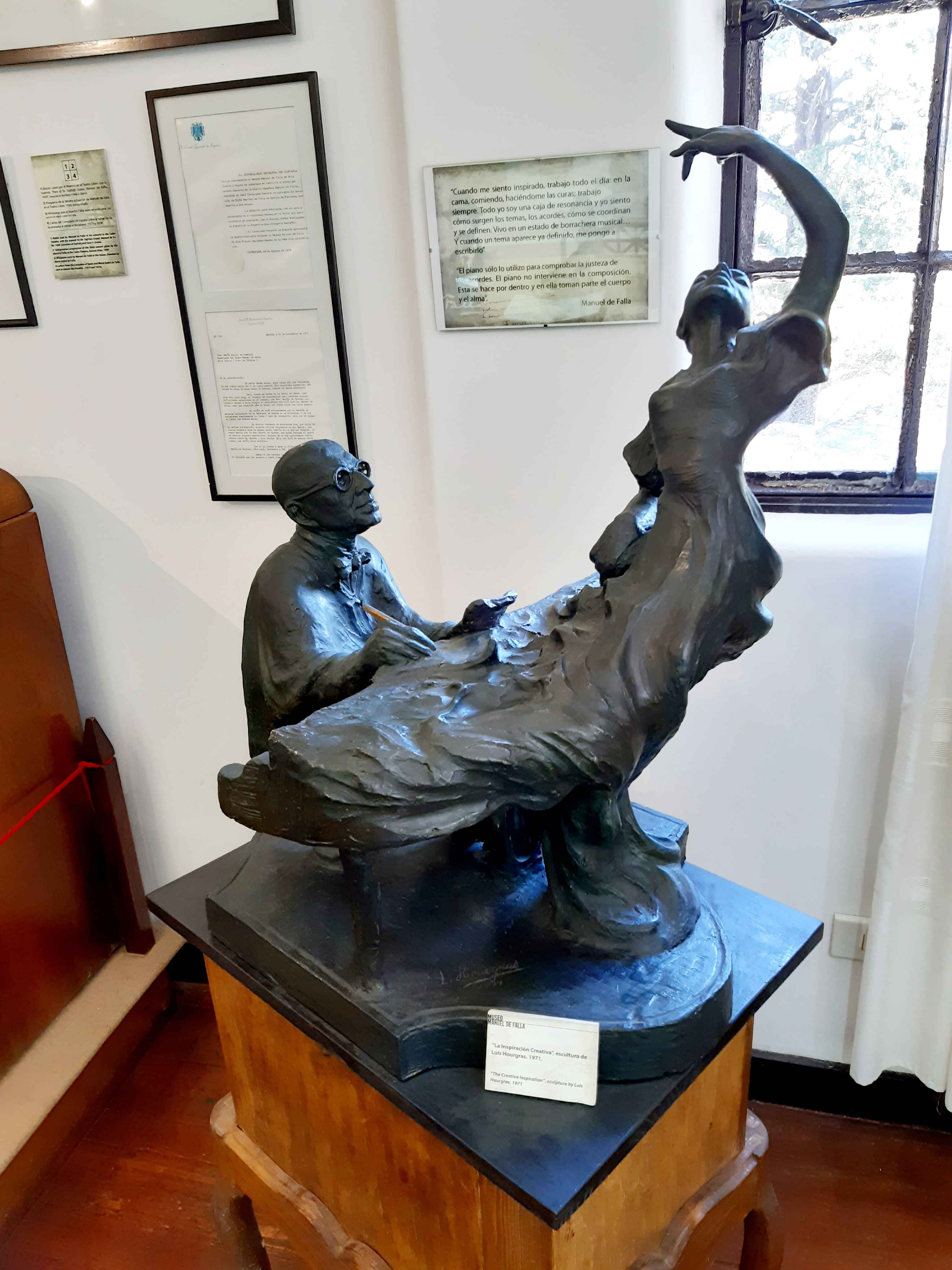
 This following sculpture of La Falle, ‘The Creative Inspiration’, was made by Luis Hourgas, the student of Gabriel Dubois – quite uncanny for me to have just heard of him.
 The elongated window seen in the photo was designed for La Falle to be able to see the mountains while he worked. He also had another window from which he could view the chapel on a hill that he and his sister often attended, his health and weather permitting.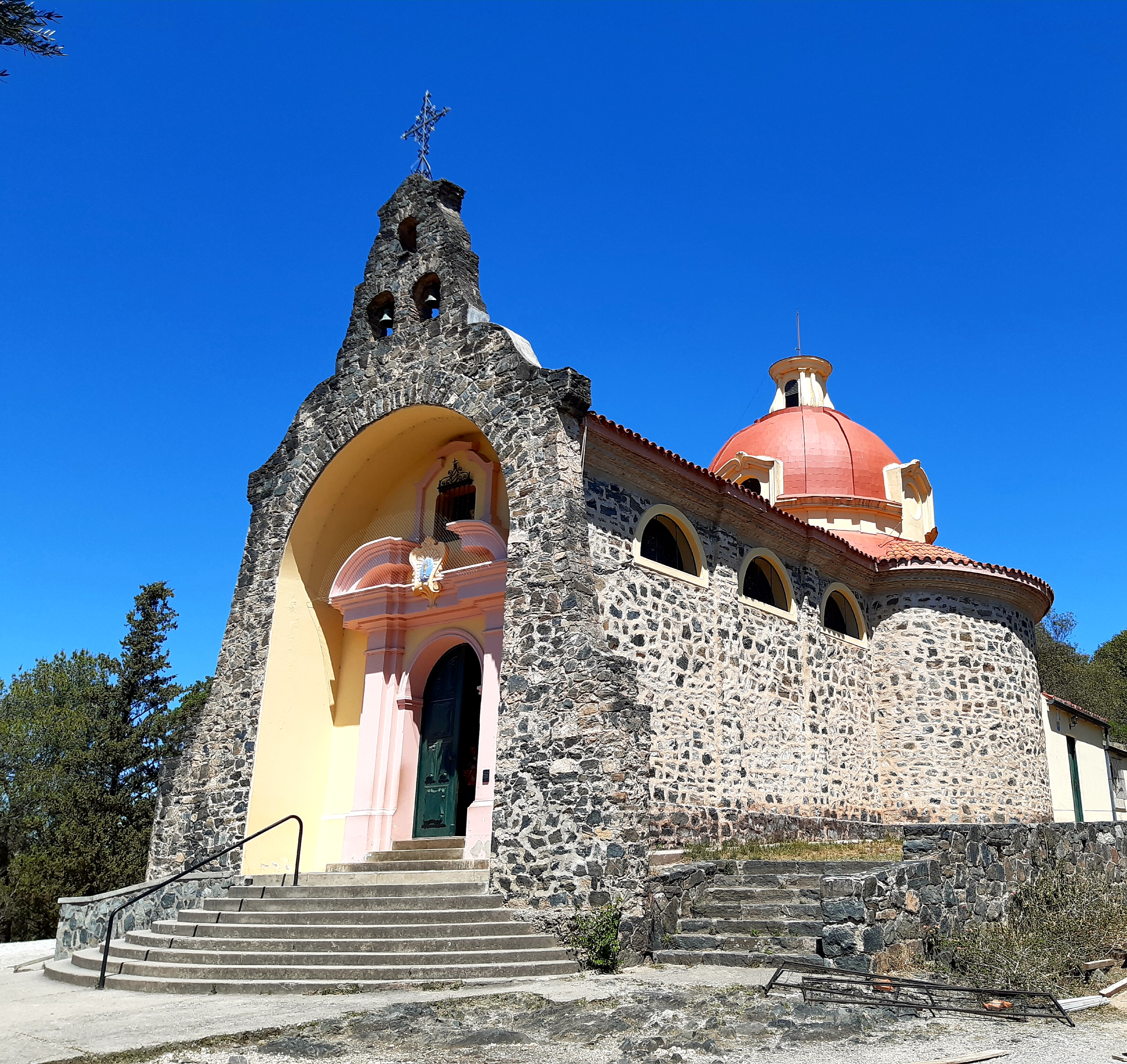
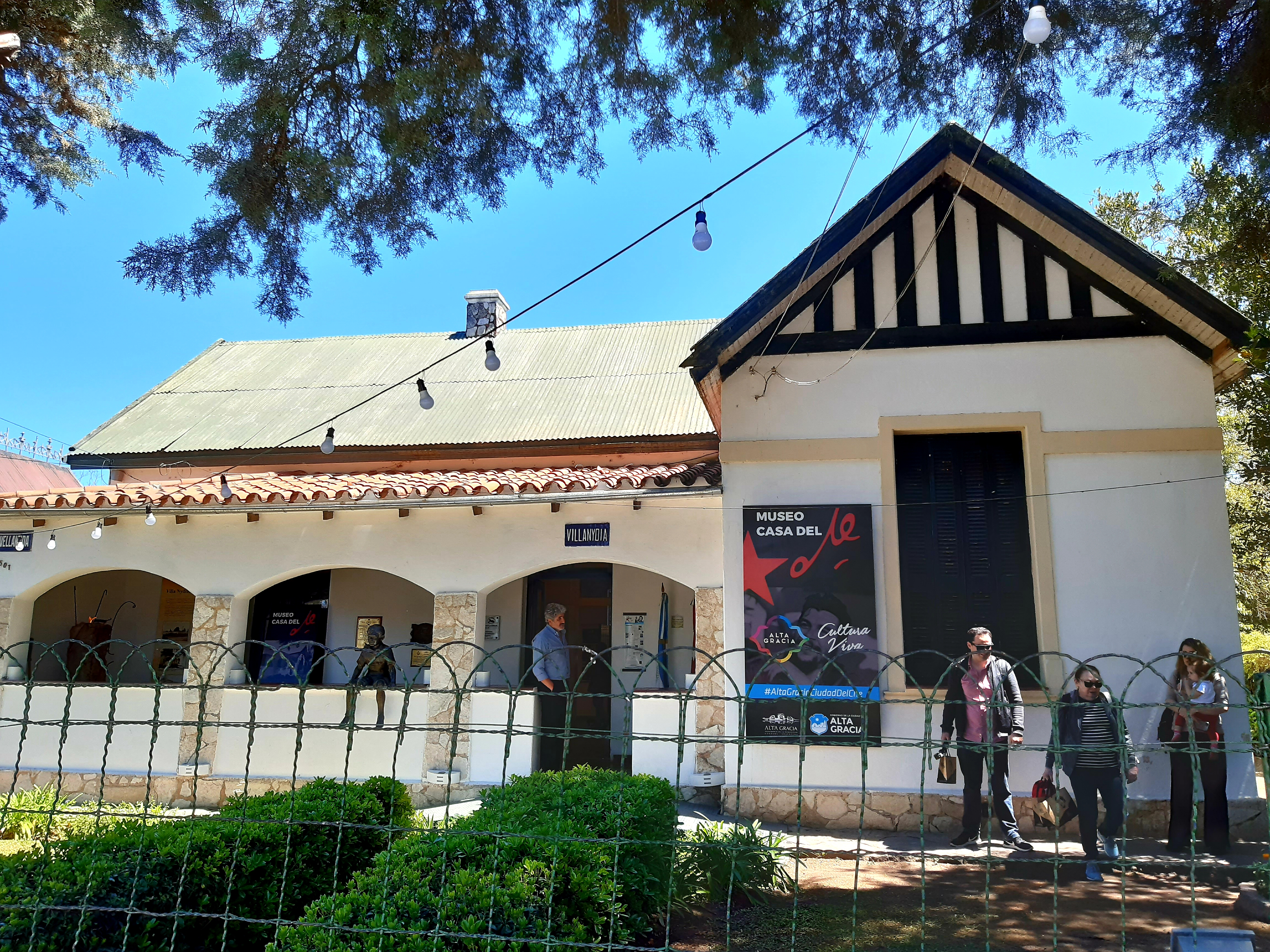
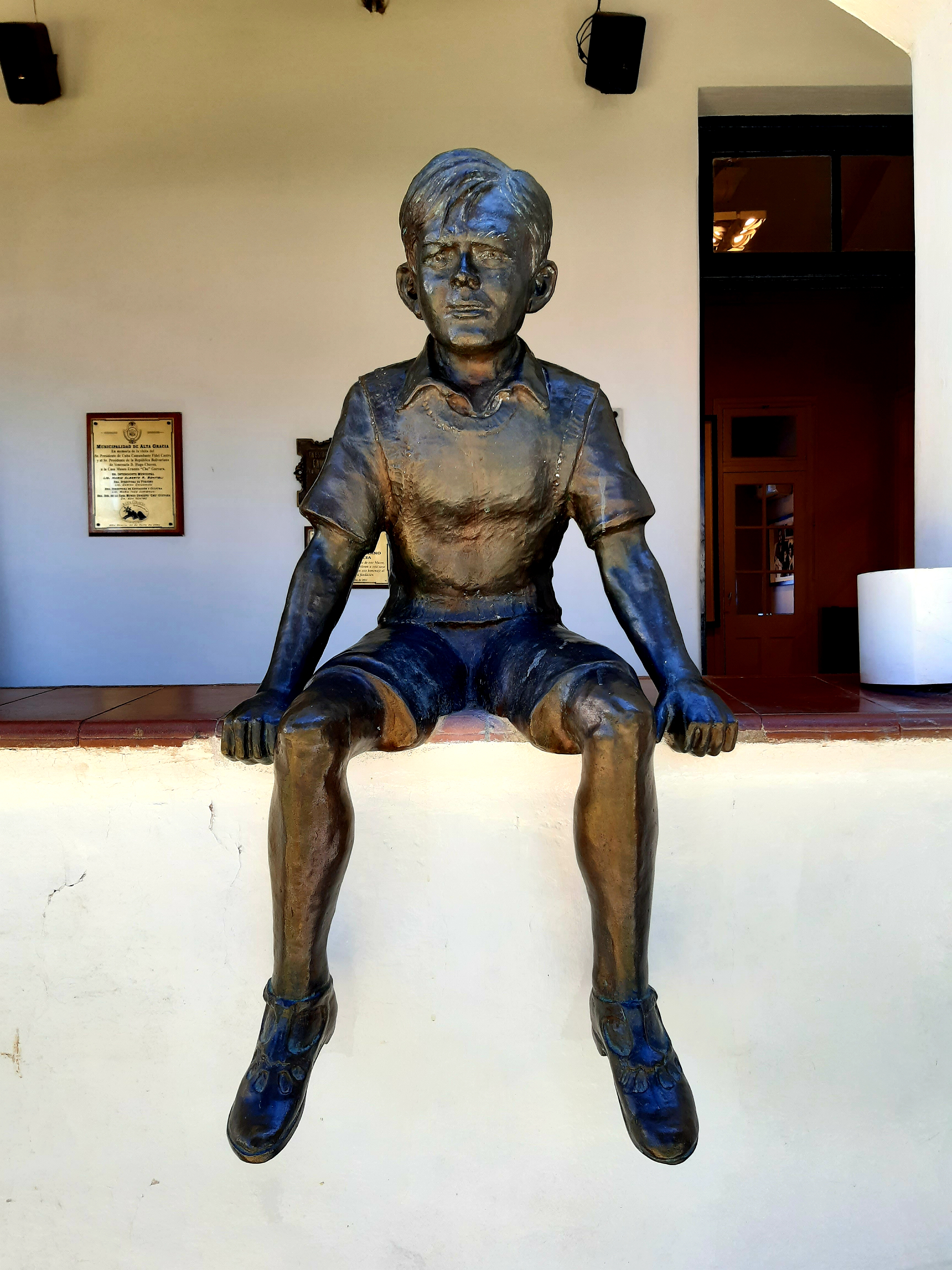 Che’s full name was Ernesto Guevara de la Serna, the last part being his mother’s surname. Despite his health problems, he led an active life taking part in different sports, thus ‘acquiring a spirit of discipline and self-control‘, alias the brochure. Evidently he was a playful and intelligent child, who shared many adventures with his friends. He was an avid reader of well-known authors from an early age, as can be seen from the children’s books lying on his desk in his bedroom.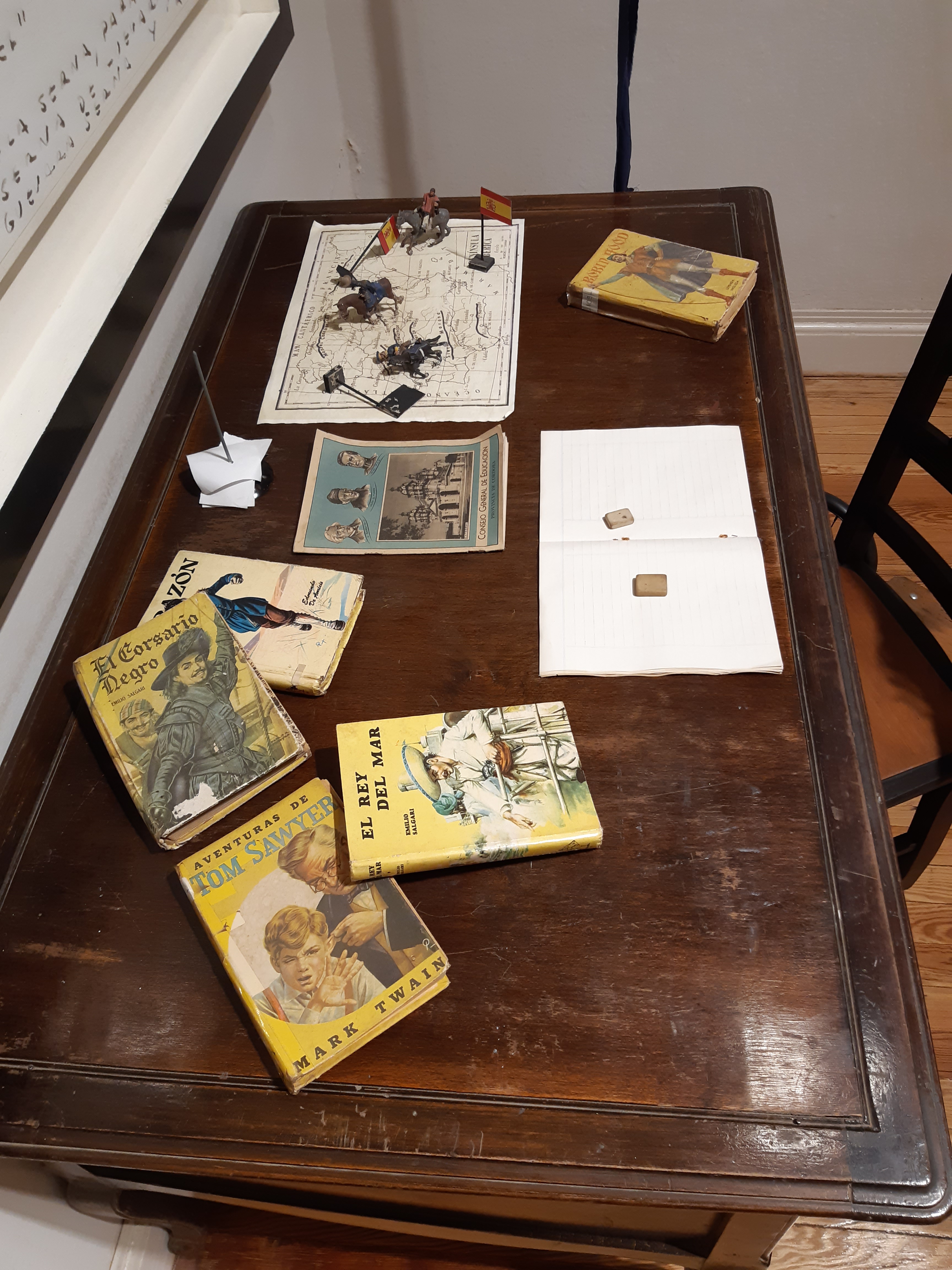
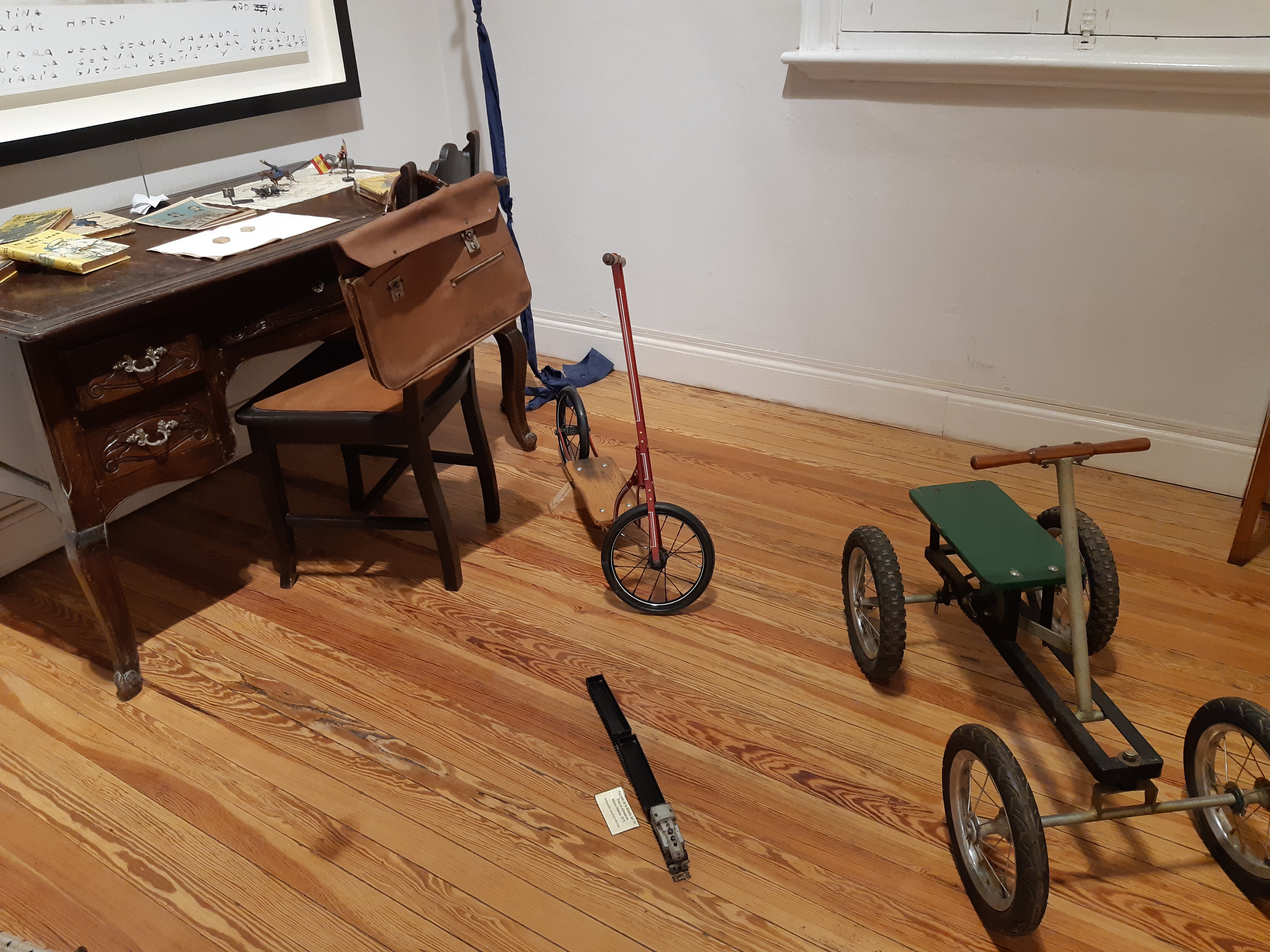 After school he went to study medicine in Buenos Aires, but interrupted his studies to do a 4 000km bicycle tour of northern Argentina, during which time he became aware of the social inequality in the country.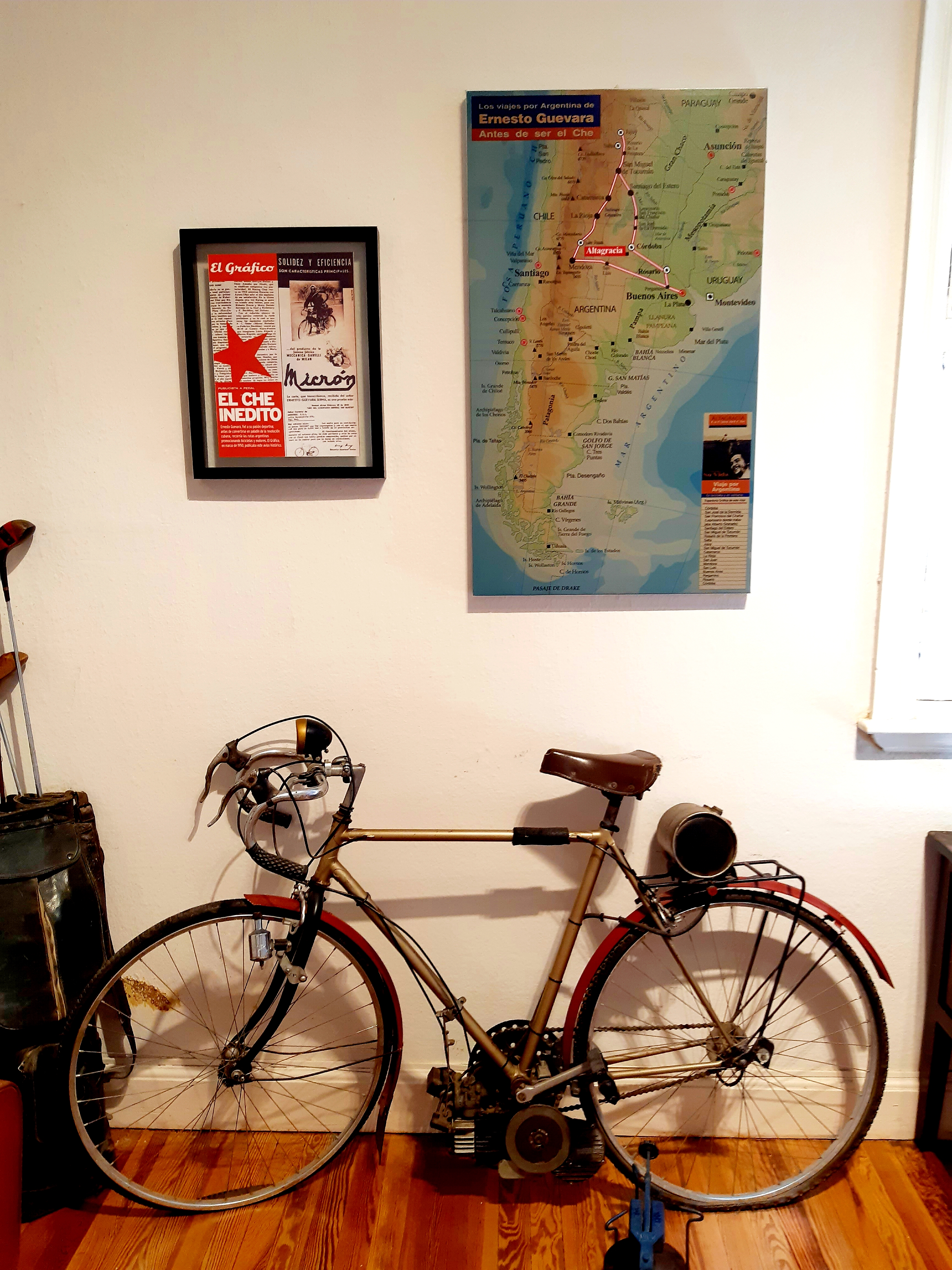
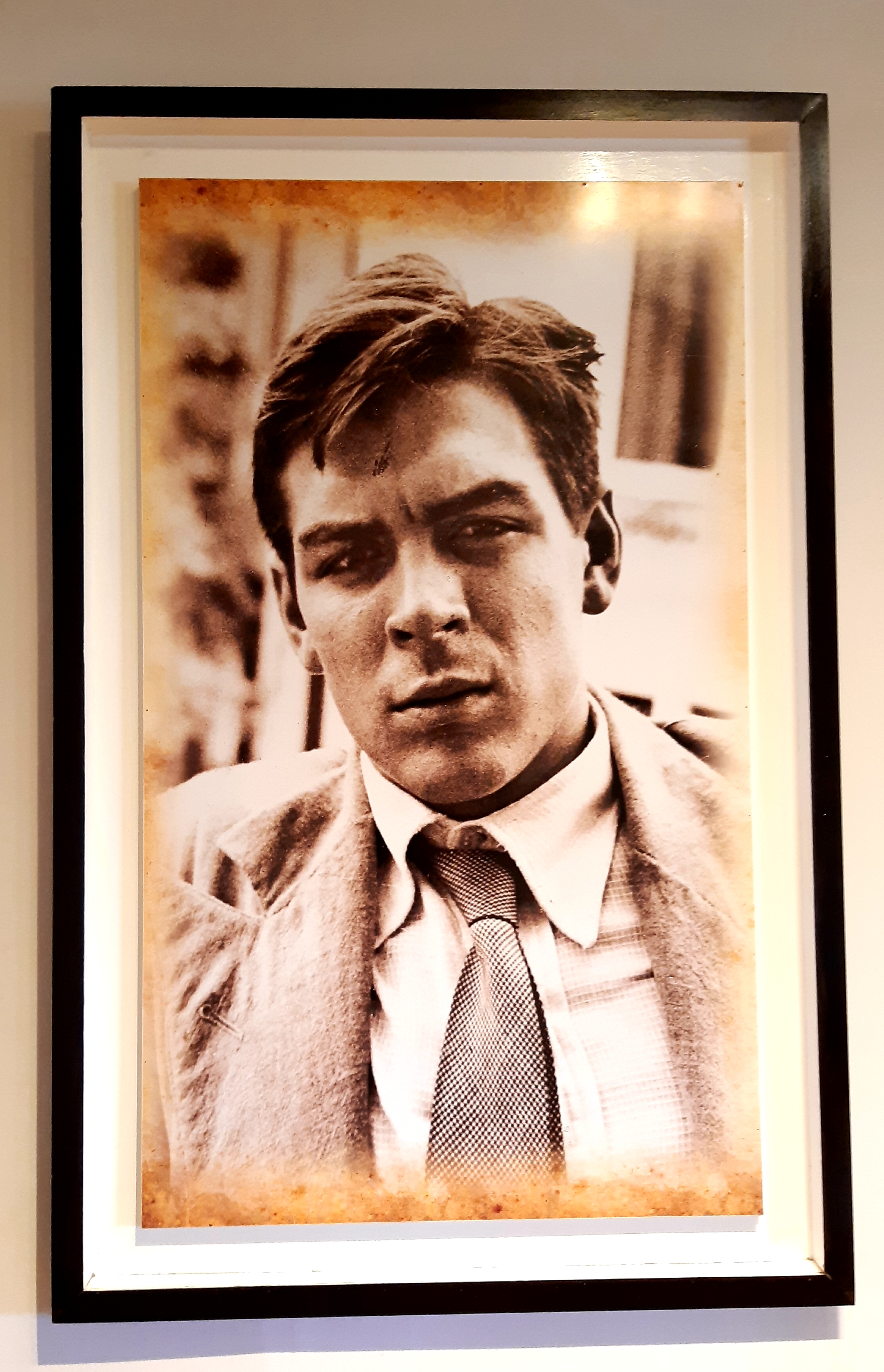 After returning to Buenos Aires, he embarked on a another tour, this time of Latin America, on a motorbike with a friend, Alberto Granado.
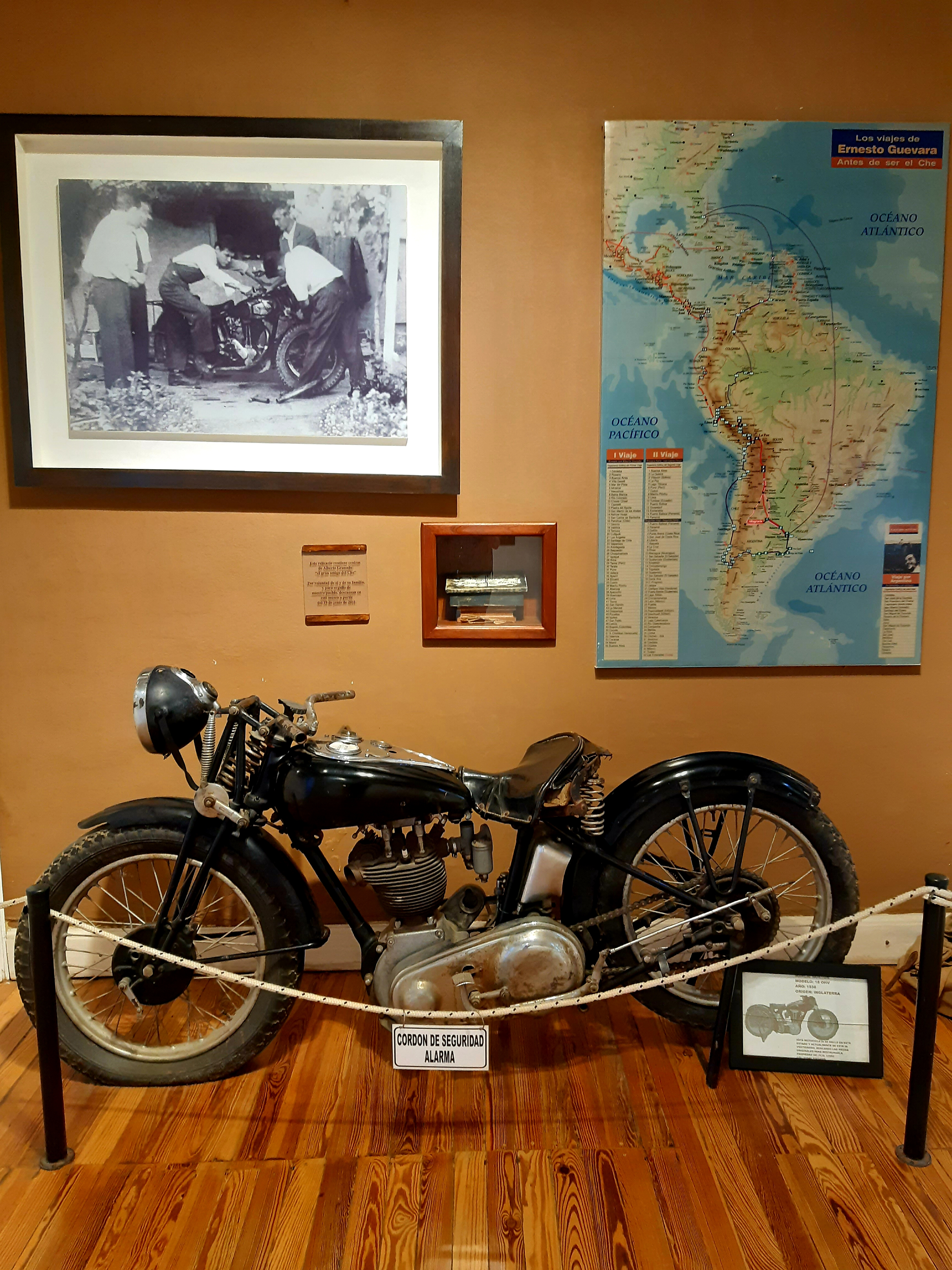 After reaching Venezuela, he returned to finish his medical studies, as he had promised his mother. This he did in less than a year, qualifying as physician at the age of 25. He and a childhood friend, Calica Ferrer, made a second trip through Latin America, travelling through Bolivia, Peru and Ecuador, where they parted ways. Ernesto went to Guatemala, where he met a Cuban Ñico López, who gave him the nickname Che, and a woman who became his first wife, Hilda Gadea. He left for Mexico, where in July 1955 he met Fidel Castro from Cuba, and enlisted as a field doctor in his future guerilla expedition.
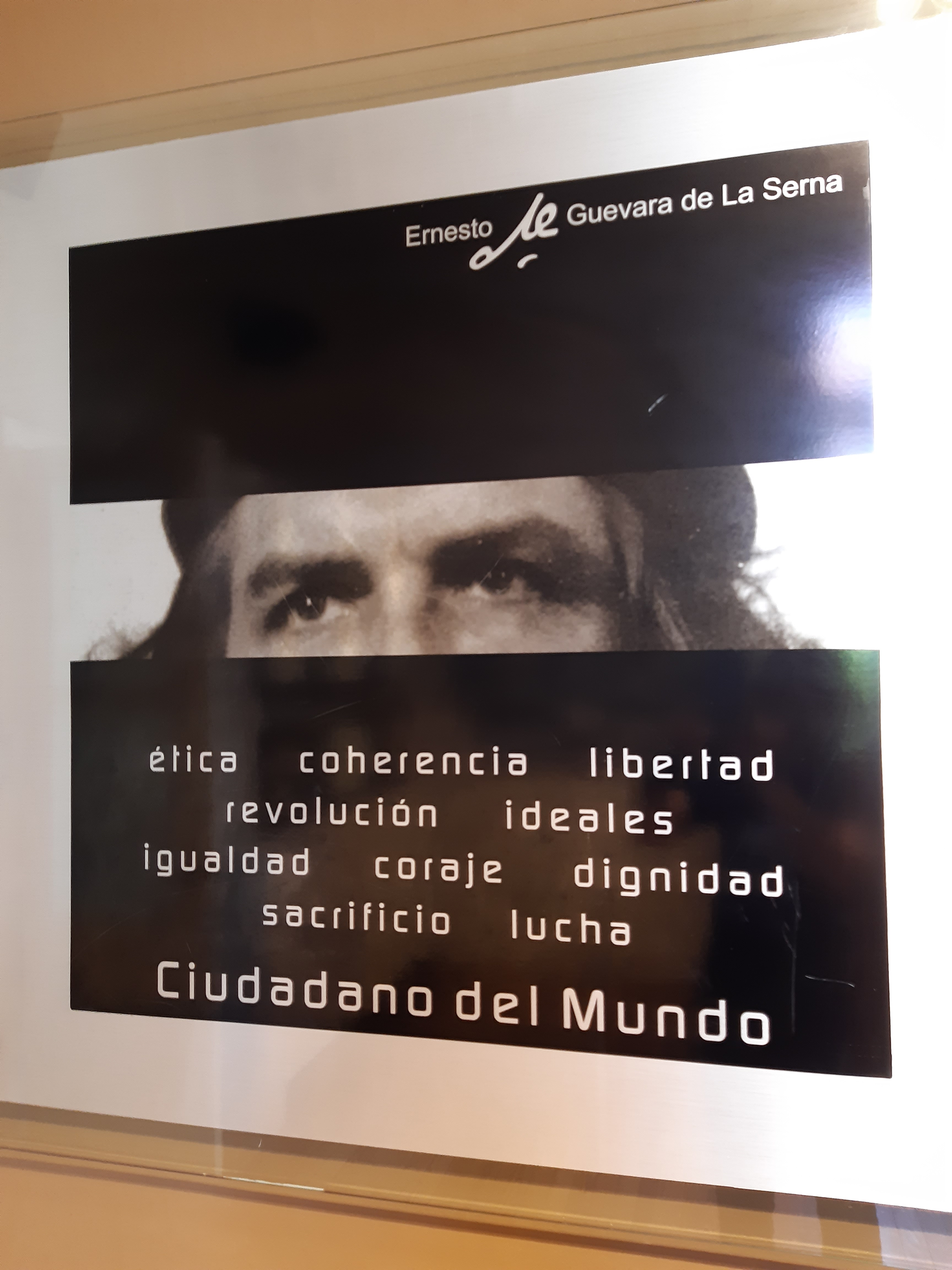 Che left Cuba in 1965 to join forces with guerrillas in the Congo, but left after 7 months, as their disorganization, mass desertions and tribal divisions led to failure. He went to Bolivia to lead the revolution in that country, but was wounded, captured and interrogated on the 8th October 1967, and shot dead on the 9th October. His body was only found 30 years later in a communal grave in Bolivia.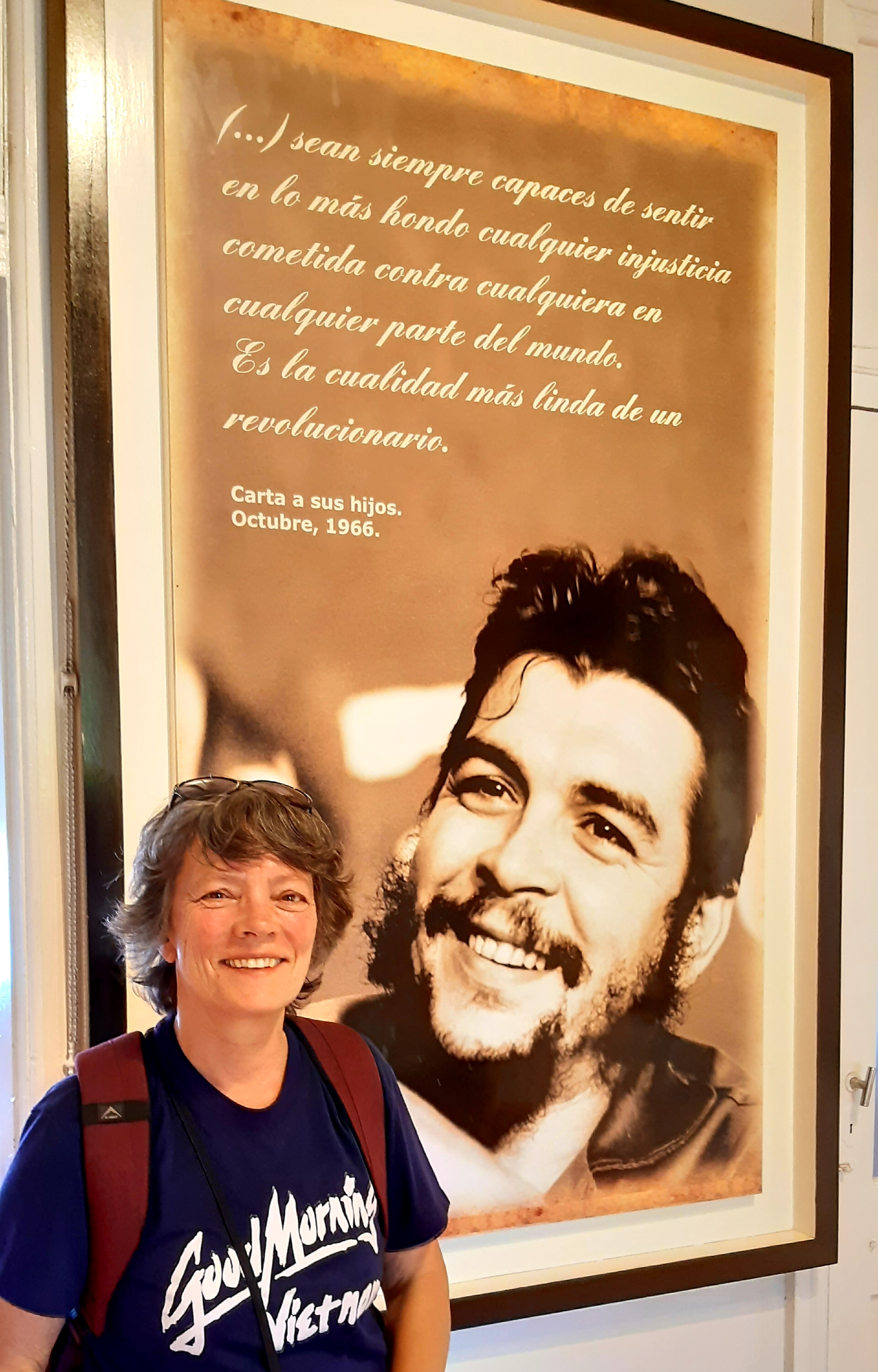

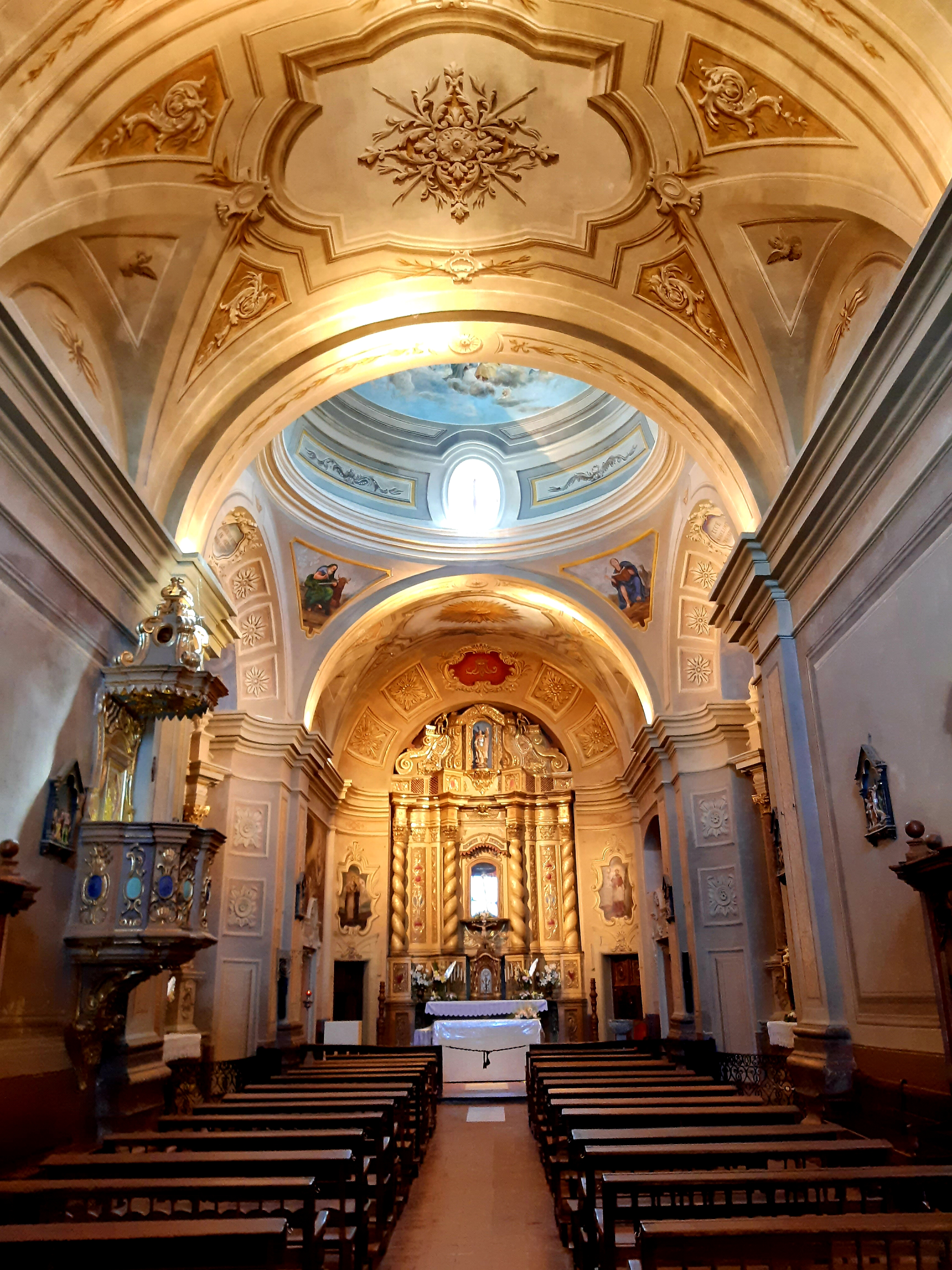
 The cathedral next to it was well worth a visit, as always.
 There is tranquil man-made lake where I had my sandwich, watching some dragonflies mating, one immediately afterwards being caught by a frantically hungry bird. Shocking, to say the least. I felt sorry for the other one, who was hovering around the death scene for a while, until it too was caught. Oh well, such is life in the animal kingdom.
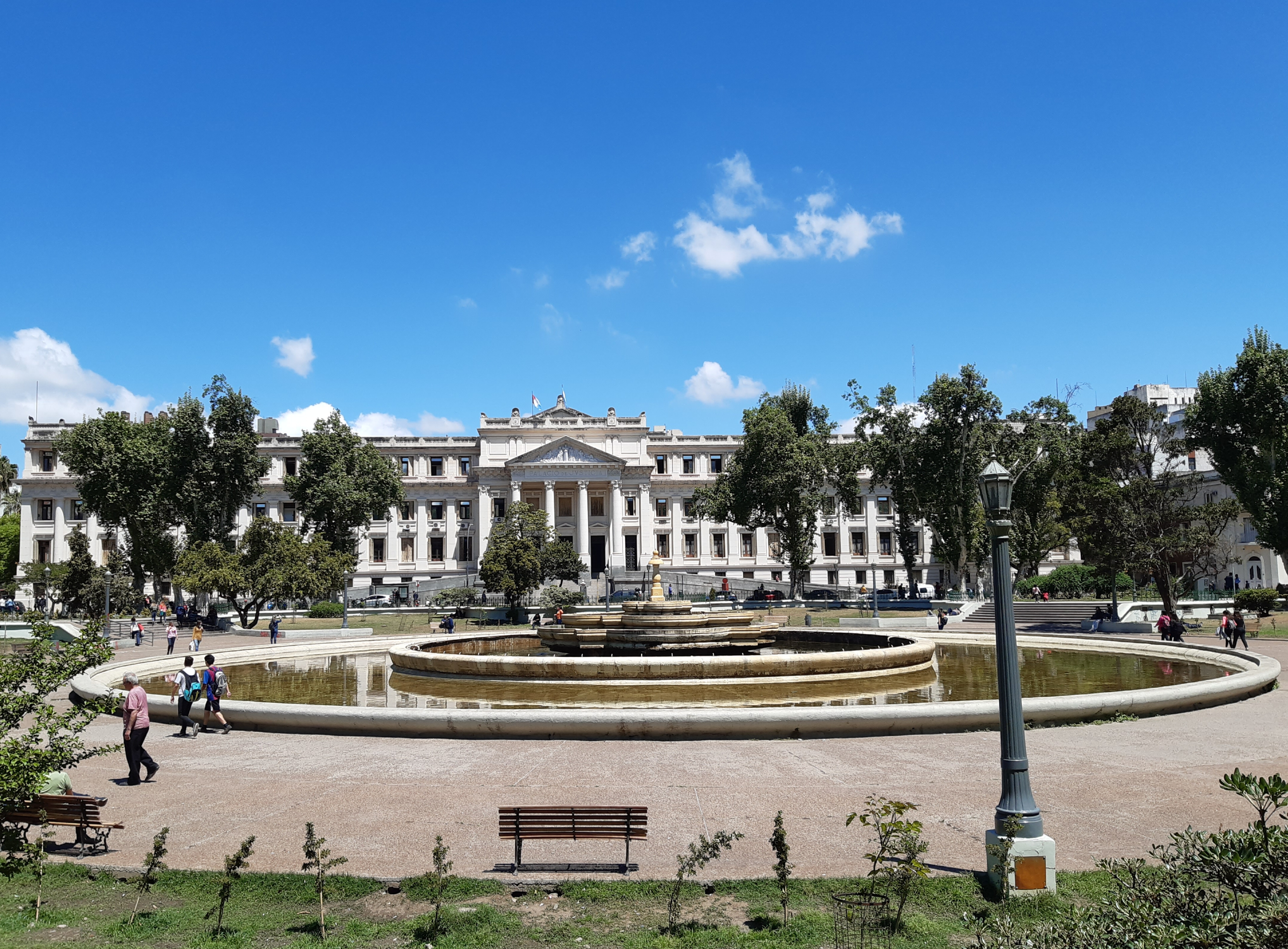
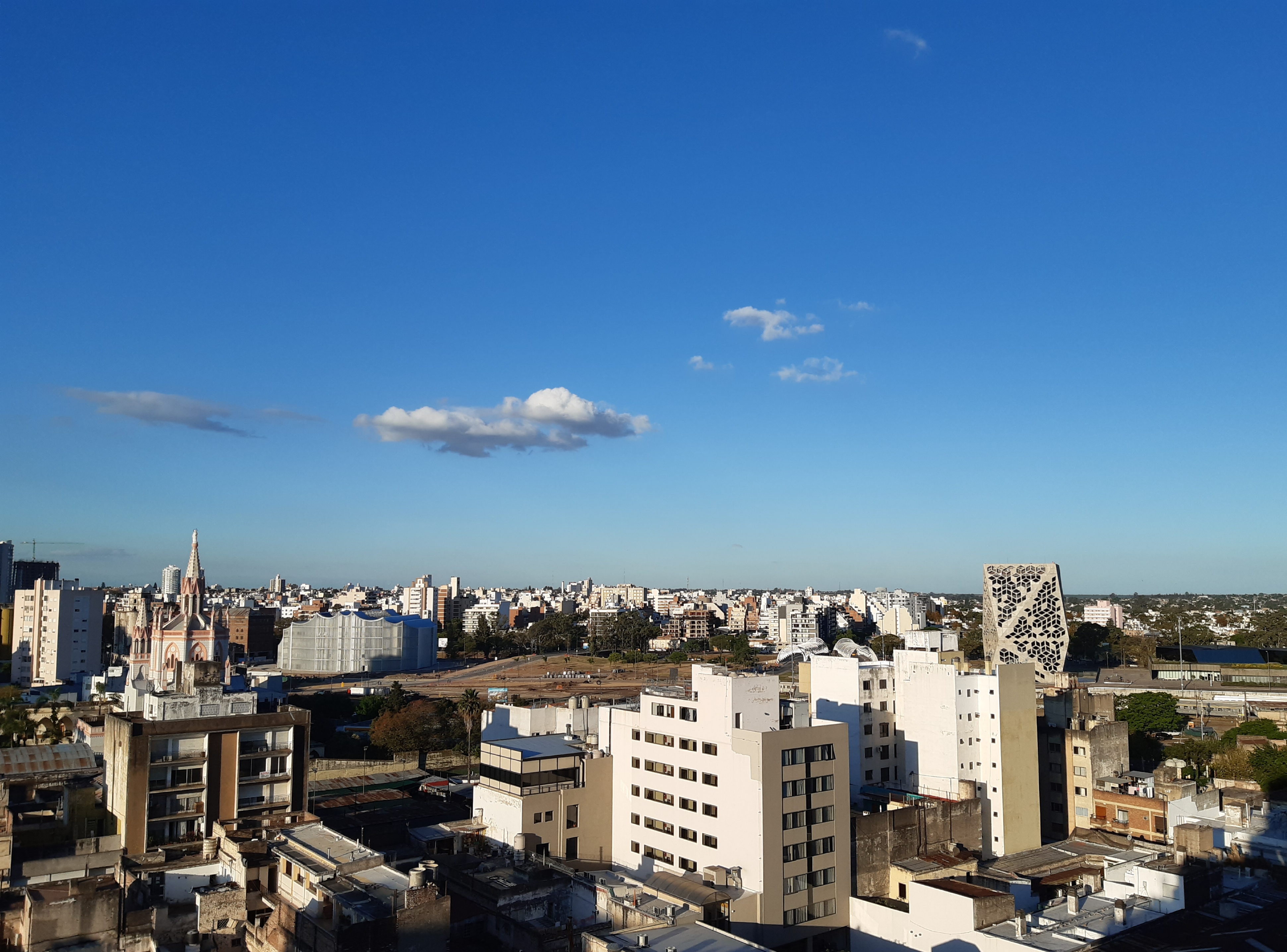 That strange big building on the right is part of a complex that was built for their bicentennial celebrations of in dependence on 9th July 2016. I’ve thought about that, the fact that Argentina has been independent for over 200 years, and South Africa only for 58 years – there’s hope for us!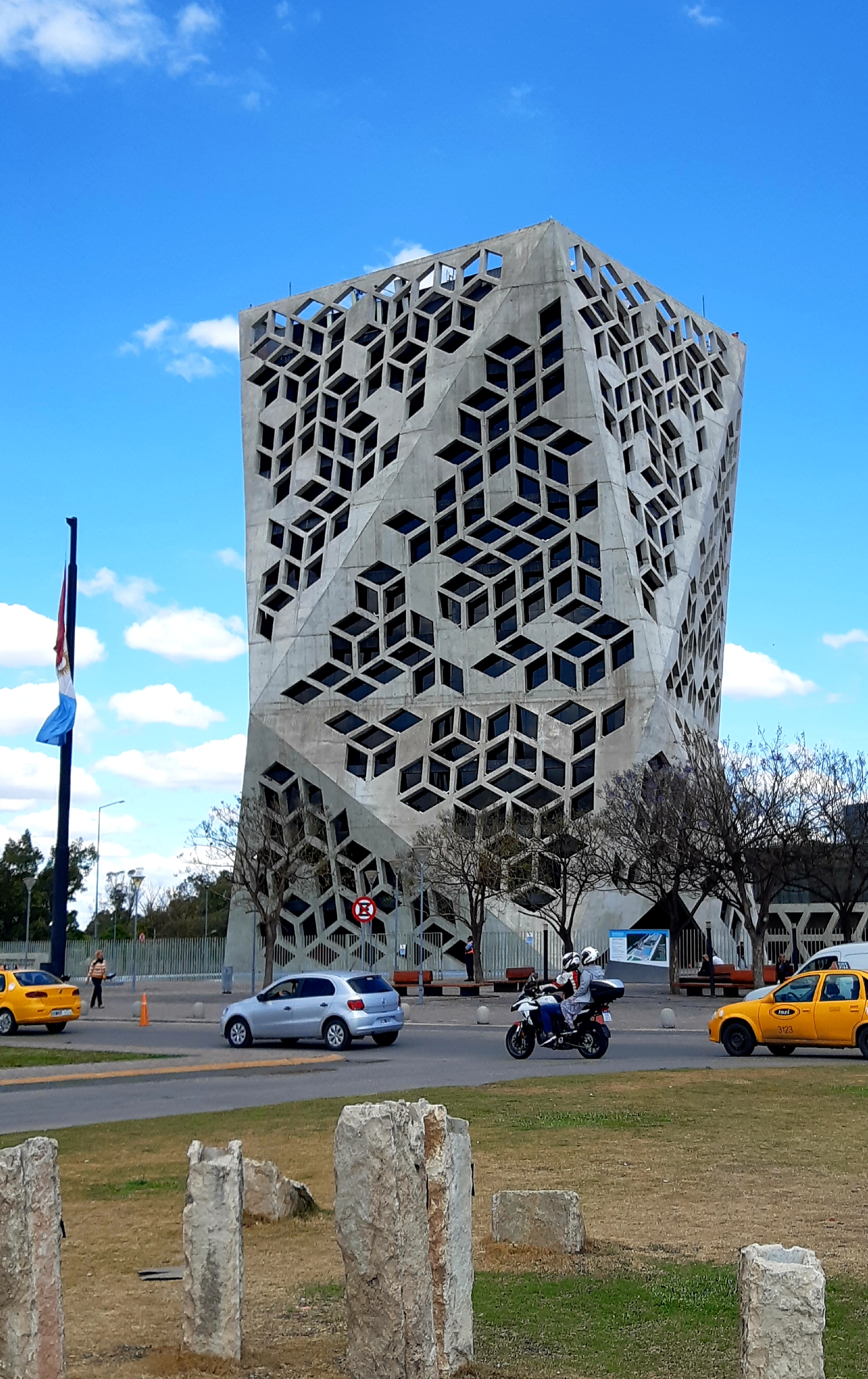
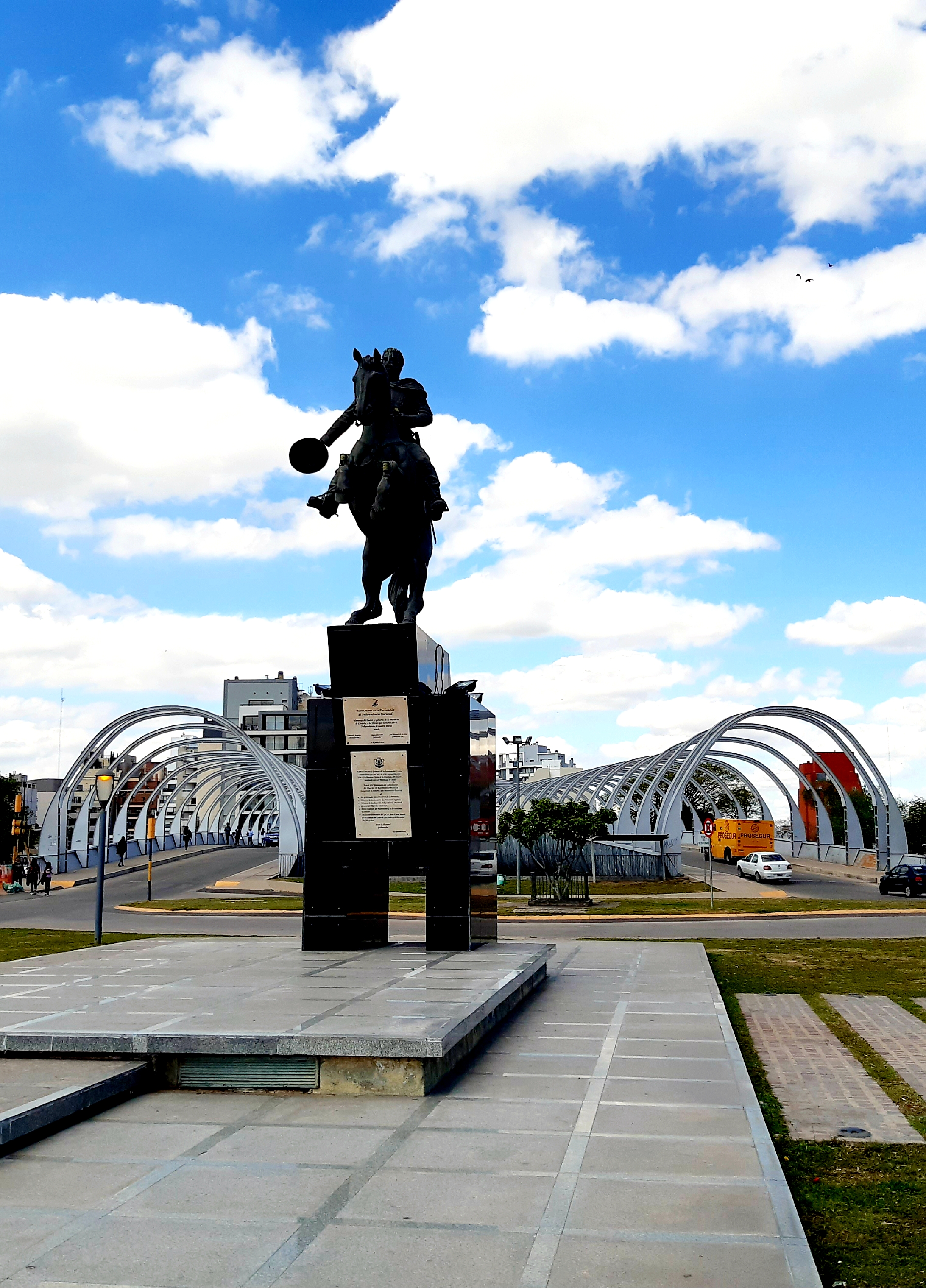 In 1810 Buenos Aires was the capital of the Viceroyalty of the Rio de la Plata, which included Argentina, Bolivia, Paraquay, Uruqauy and parts of Brazil. The war for independence was started with a week long revolution in Buenos Aires from 18 – 25th May 1810, on which day viceroy de Cisneros was removed from power and a local government, called the Primera Junta was estsblished. The problem was it had only representatives from Buenos Aires and when other cities of the Viceroyalty were invited to join, war broke out as they were opposed to what had happened in Buenos Aires. The War of Independence was from 1810 to 1818, with a formal Declaration of Independence being issued at the Congress of Tucumán on 9th July 2016. The Argentinian Civil Wars between the Federals (who had declared independence) and the Unitarians (who opposed it) lasted from 1814 to 1880, when peace was finally reached.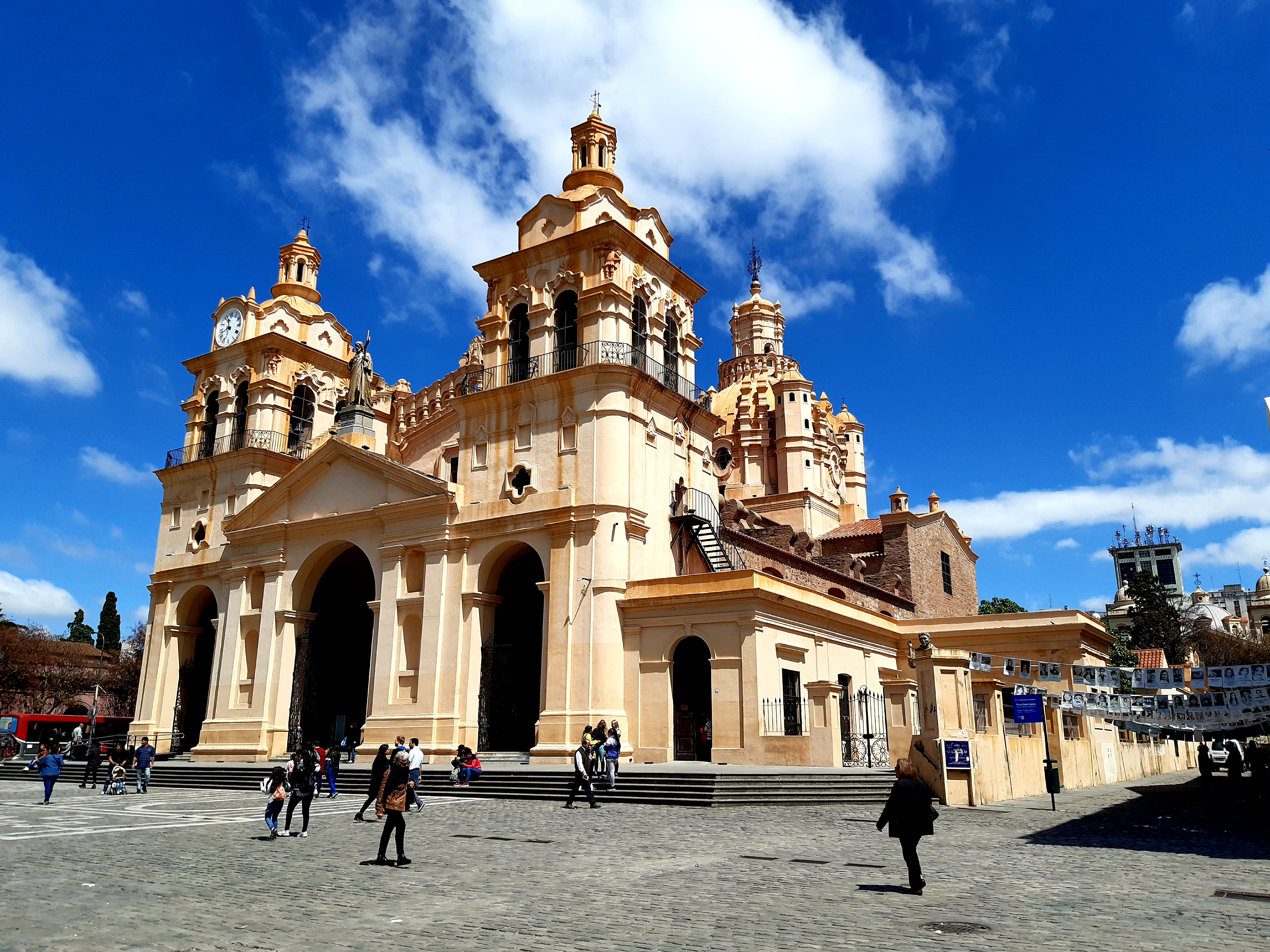
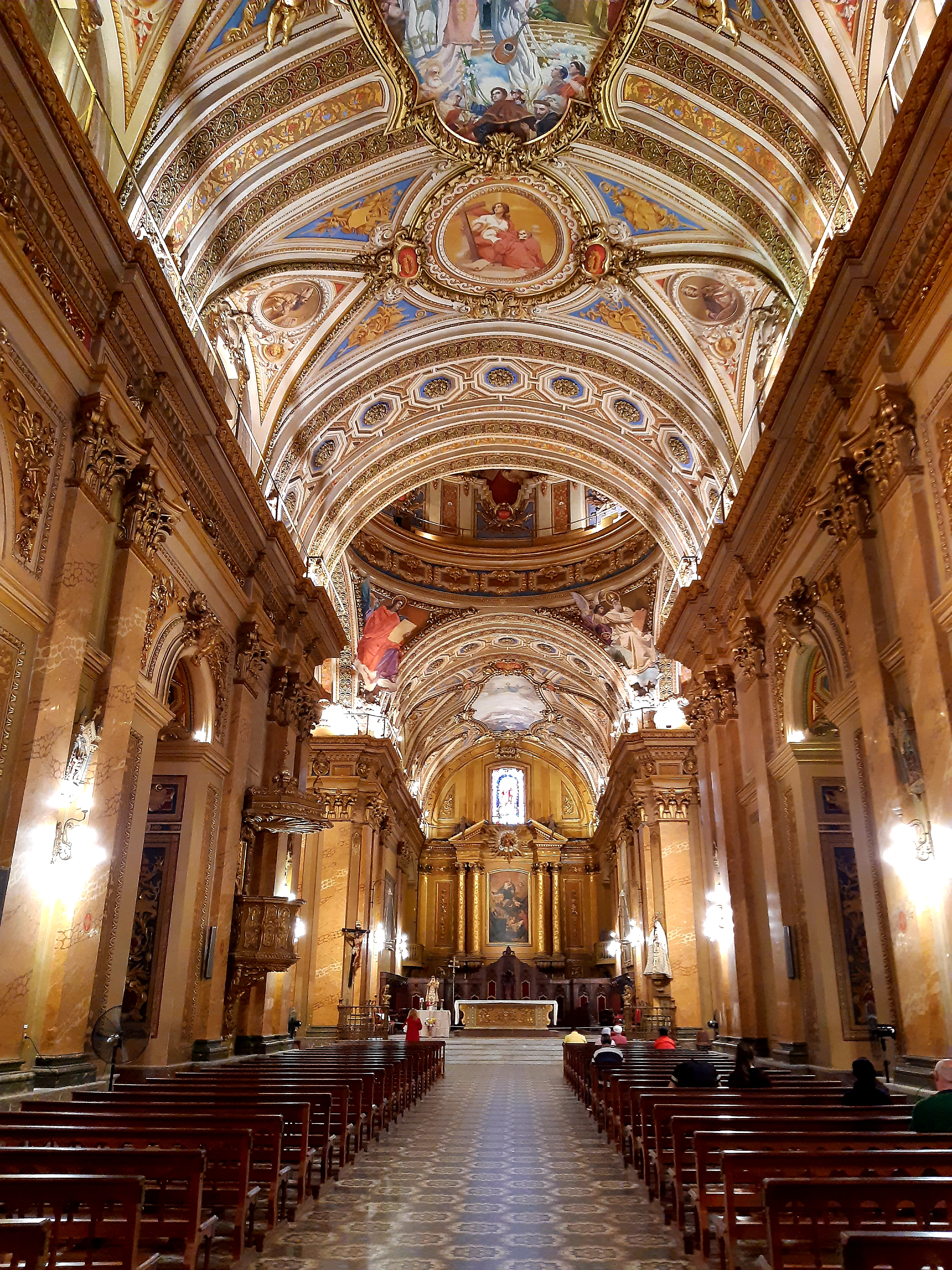
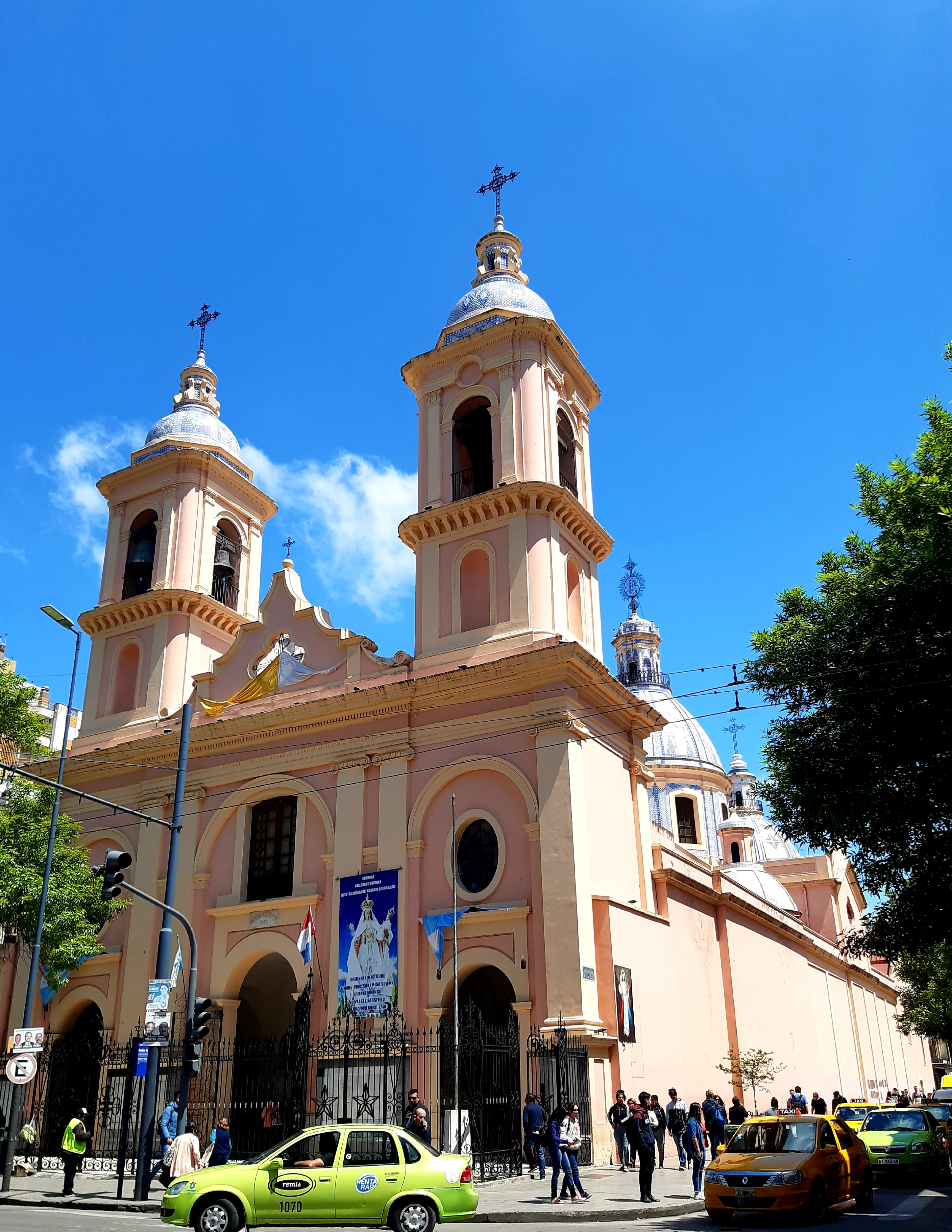
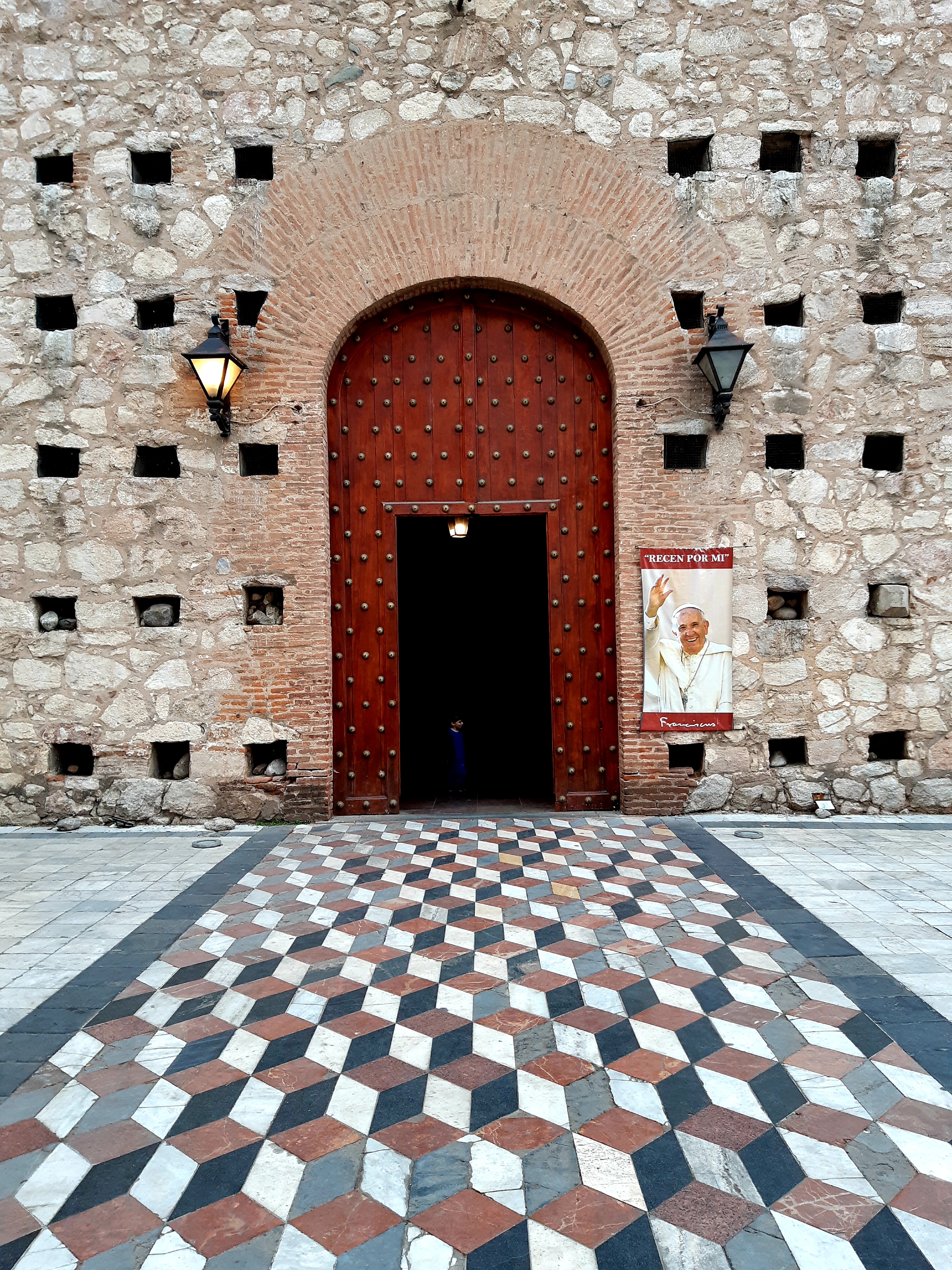
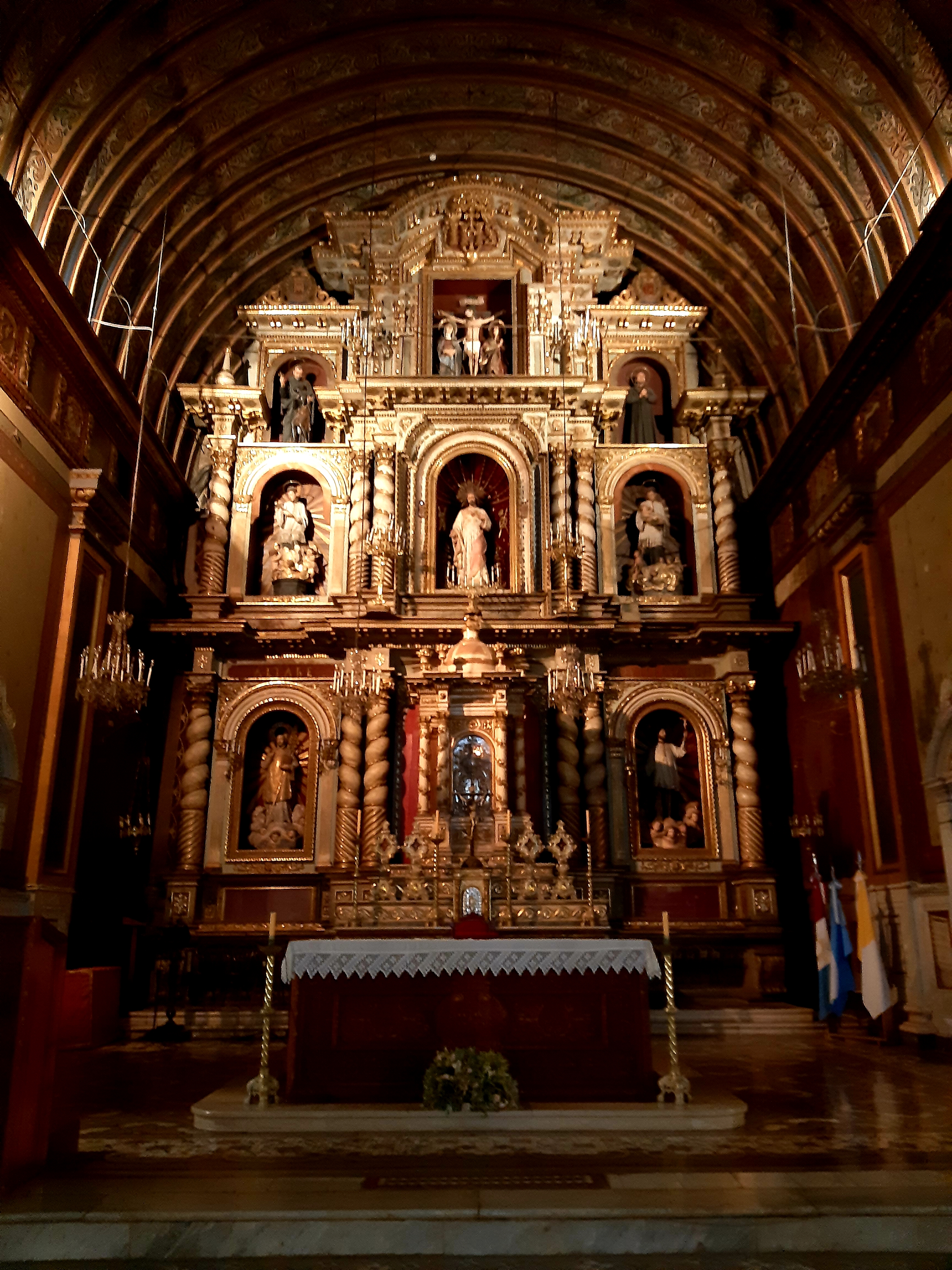
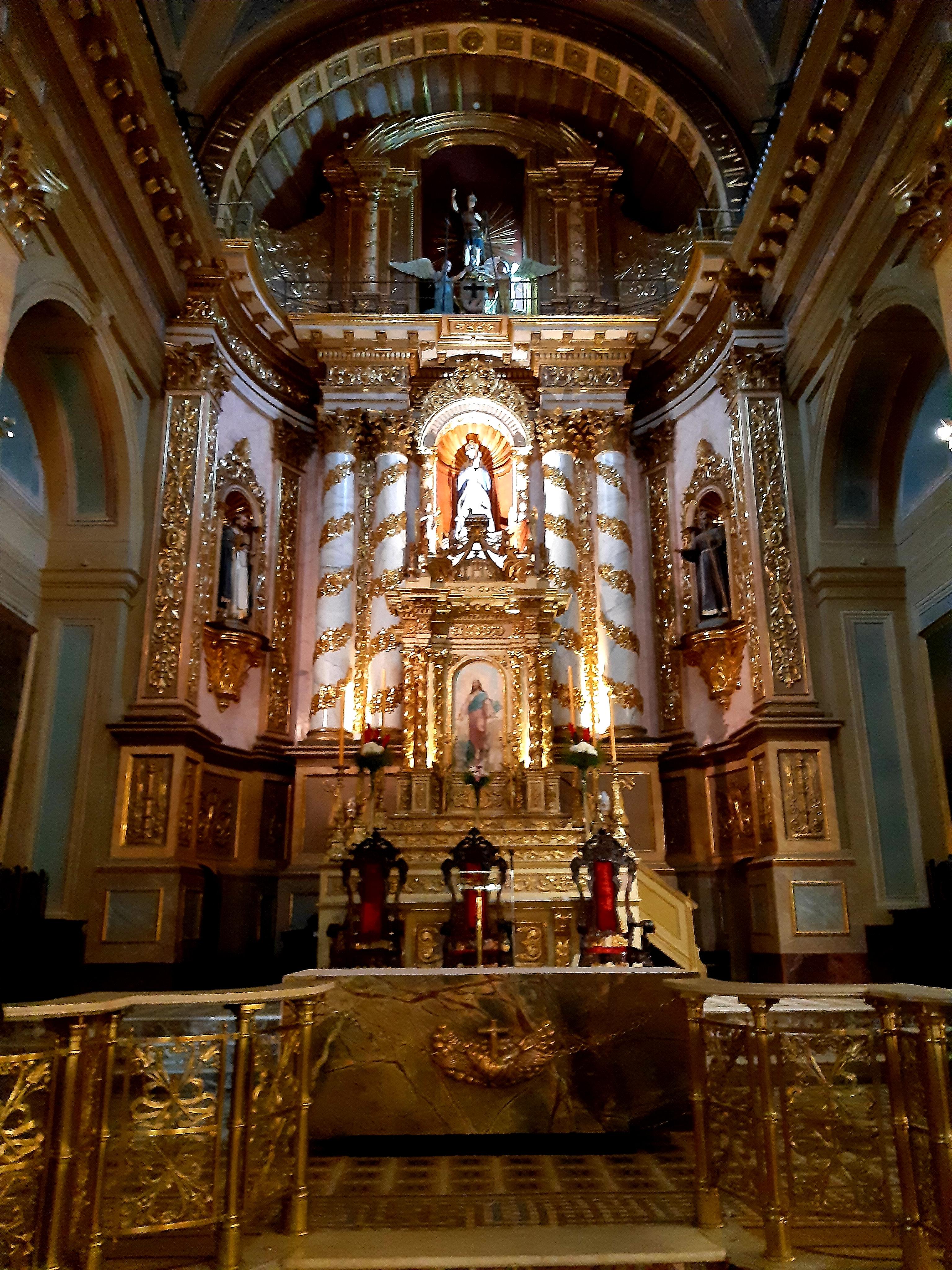 In 1583 land was given to the Jesuits in Córdoba and the complex that was developed is now called the Museo Histórico de la Universidad Nacional de Córdoba. From here they oversaw all their conversion activities across central and northwestern Argentina, as well as the farming they had started to help fund their projects. One main project was that of the National University of Córdoba, one of Latin America’s oldest universities. The Iglesia de la Compañia, which forms part of the museum complex, was built in 1640 and is the oldest surviving Jesuit temple. This complex, as well as the estancia (farm) built in Alta Gracia, a town 25km from Córdoba, was declared a World Heritage Site in 2000.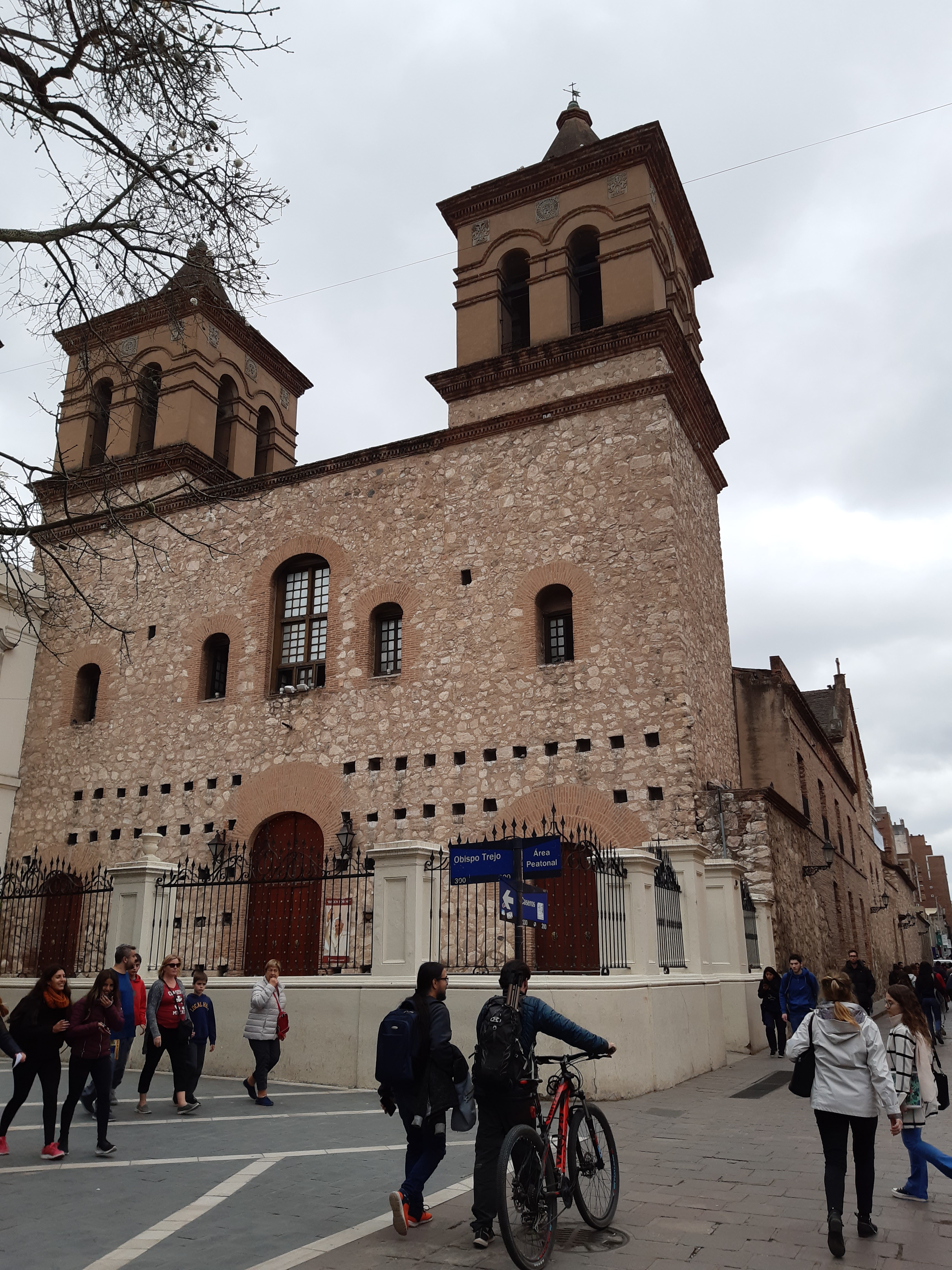
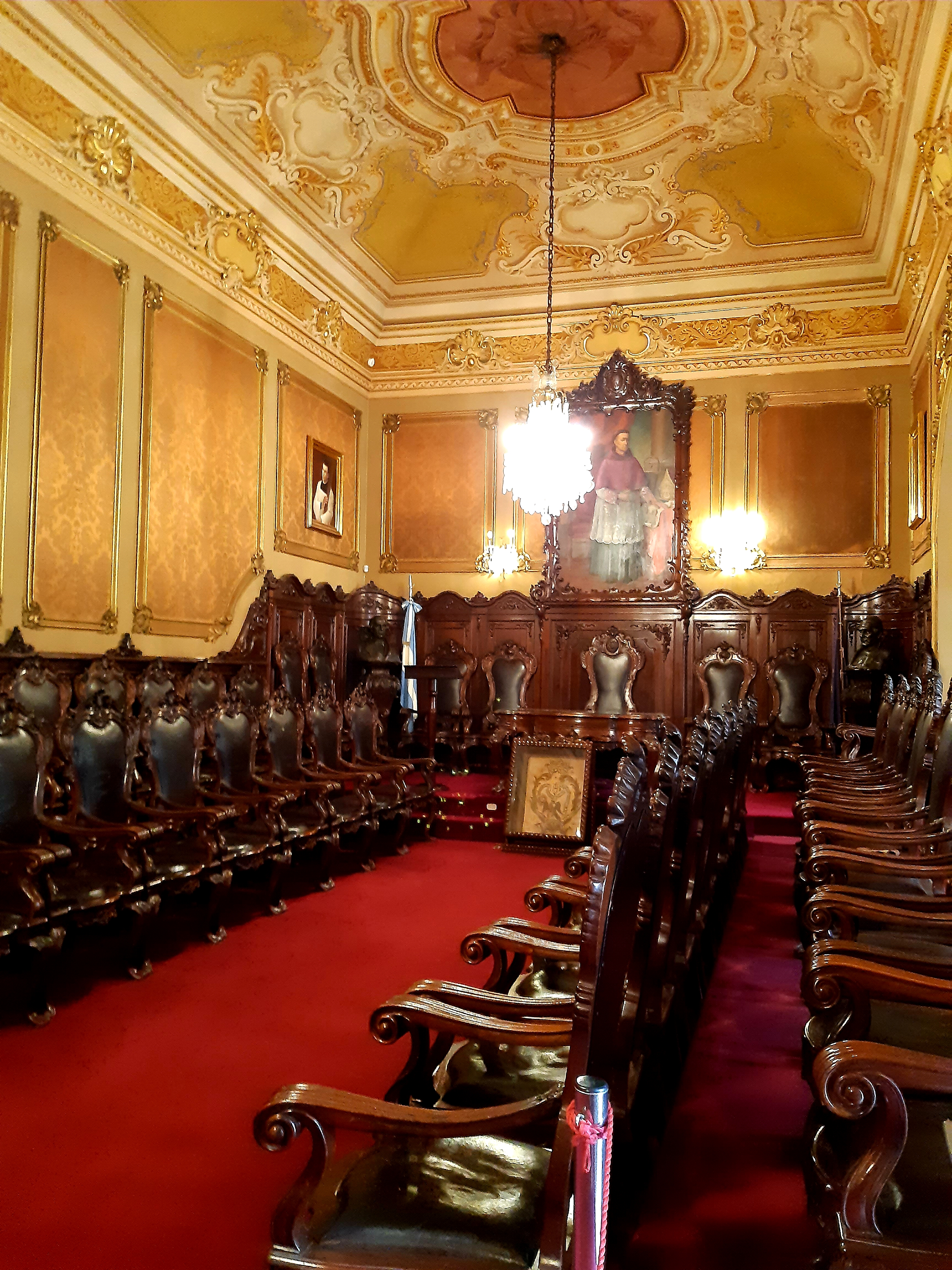
 The hall at the university that was used for presentation of dissertations is both impressive and intimidating. The student stood on a raised podium in the middle of the hall, with his godfather in a carved high chair below him:
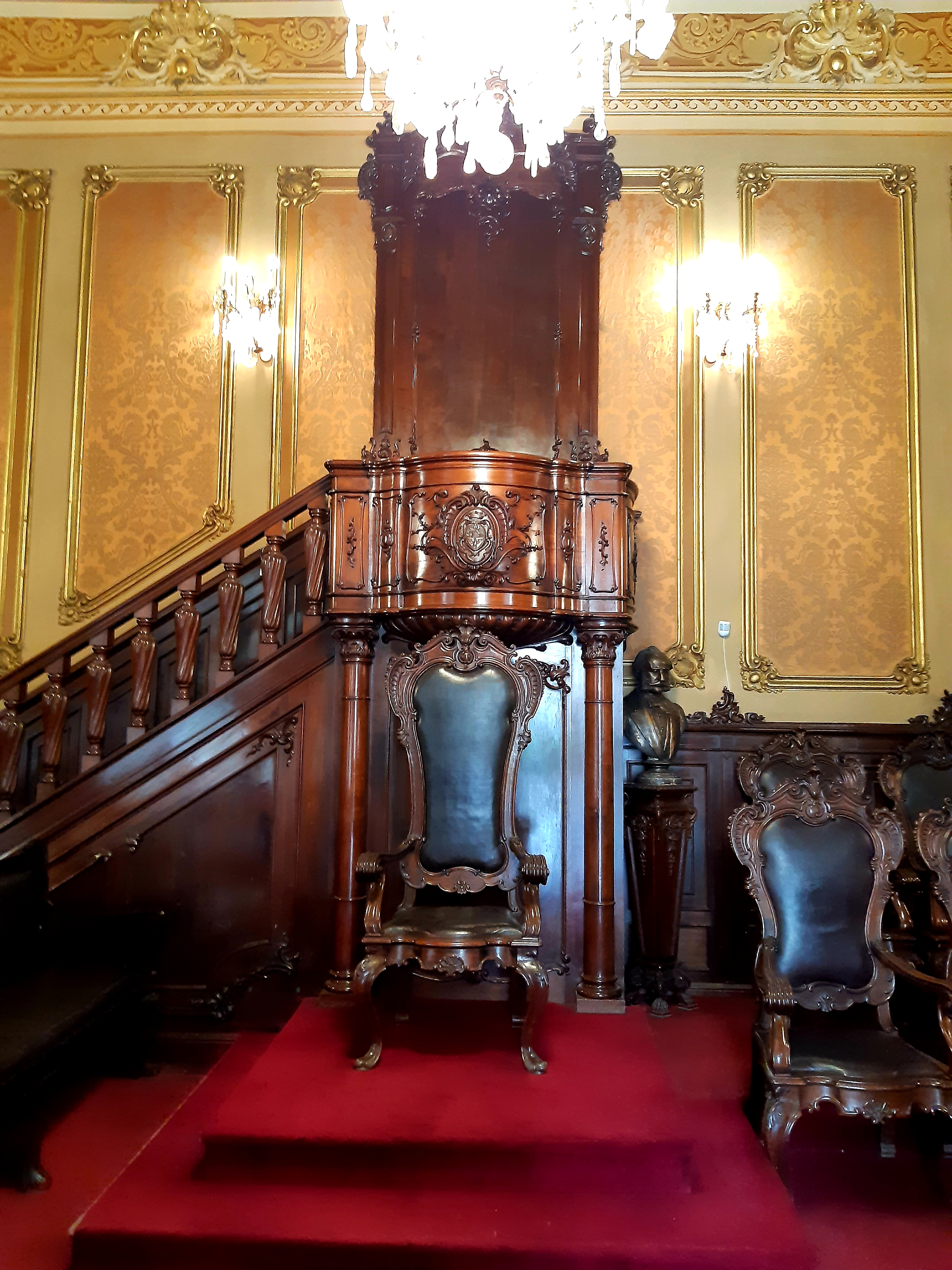 The family sat to the left:
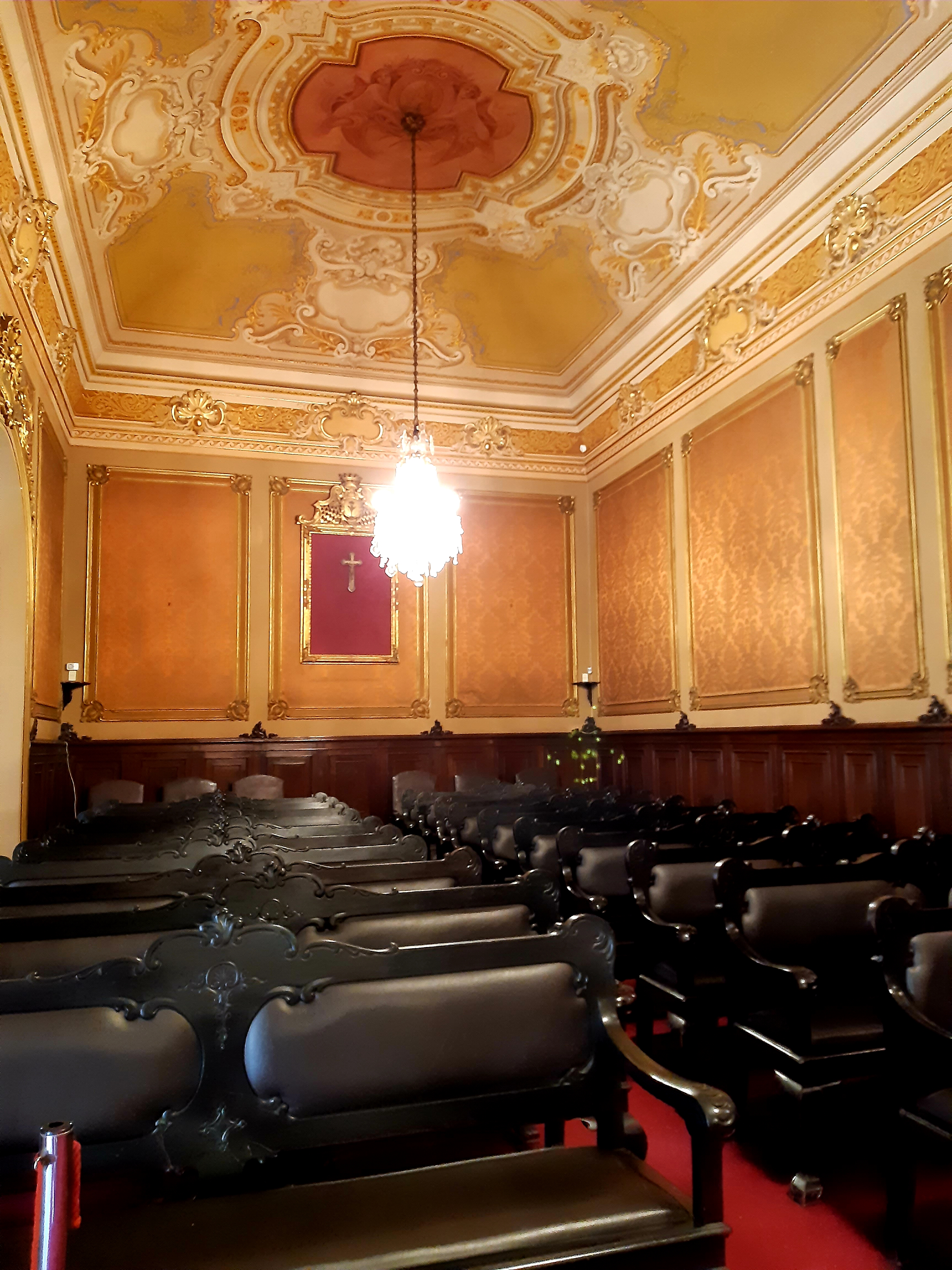 And the professors sat to the right:
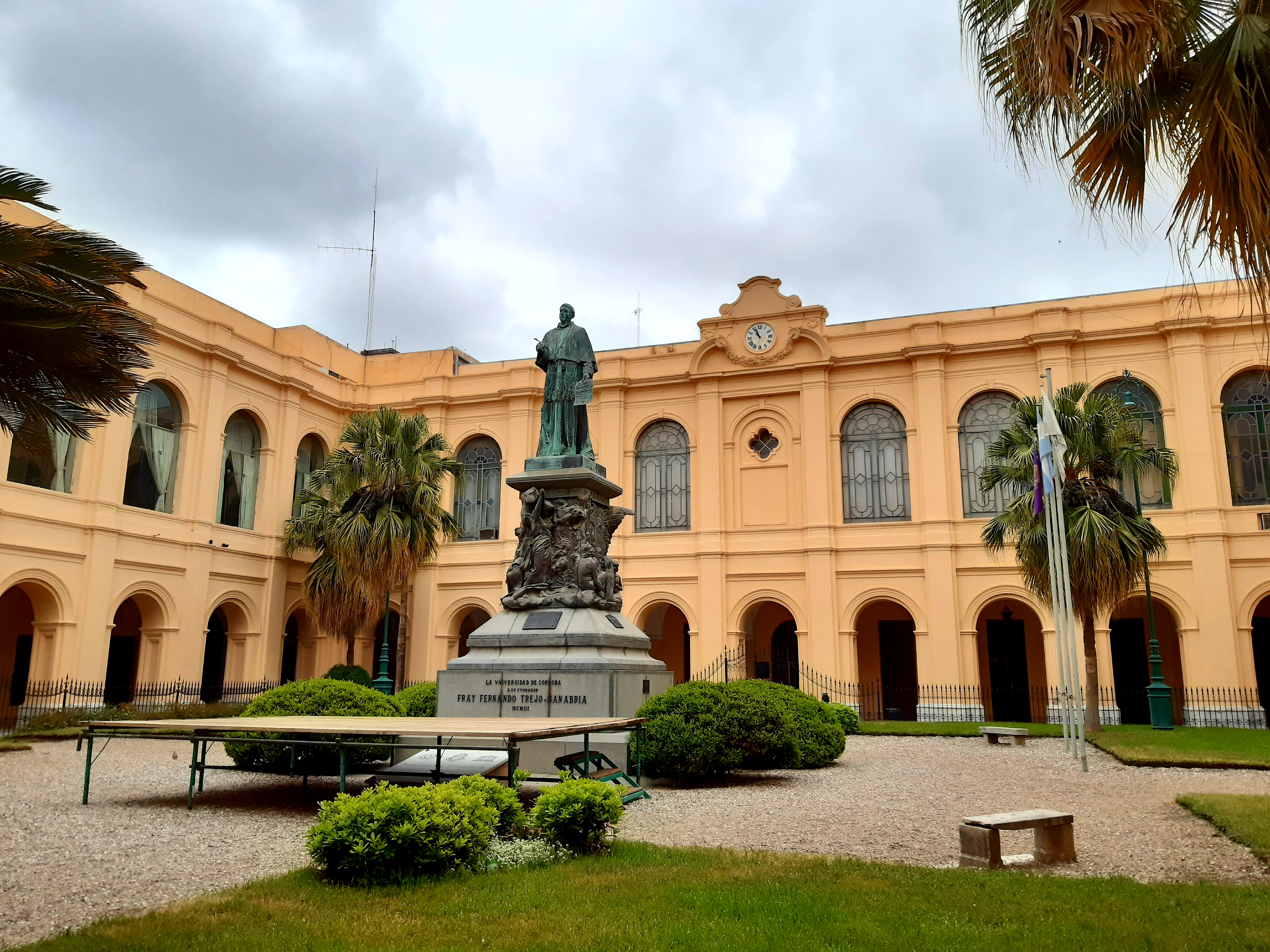
 One of the courtyards of the university:
 In 1989 a Jesuit crypt was unearthed and partially restored. This underground site was a novitiate where new Jesuits were trained, until they were expelled from the country in 1773.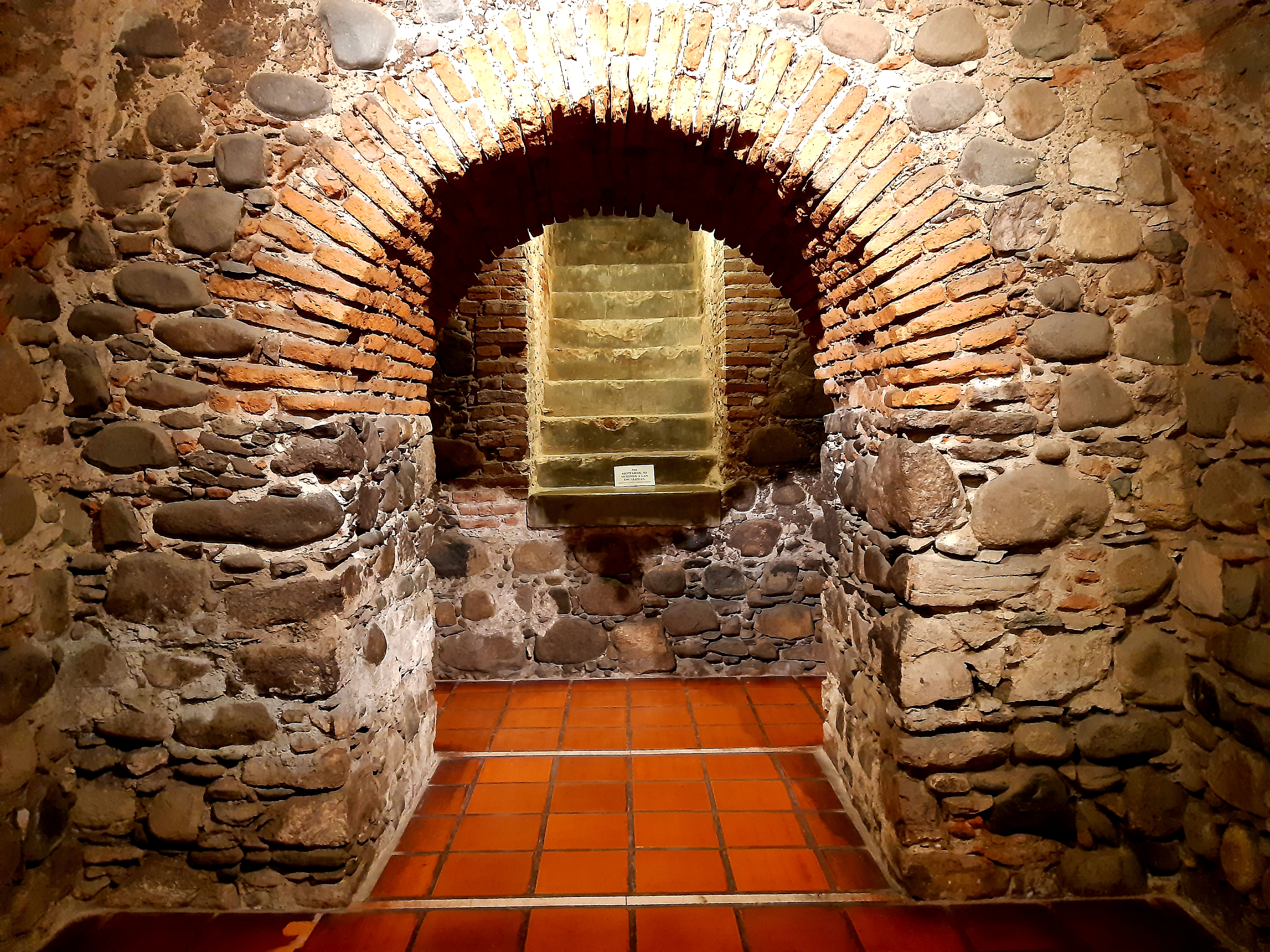
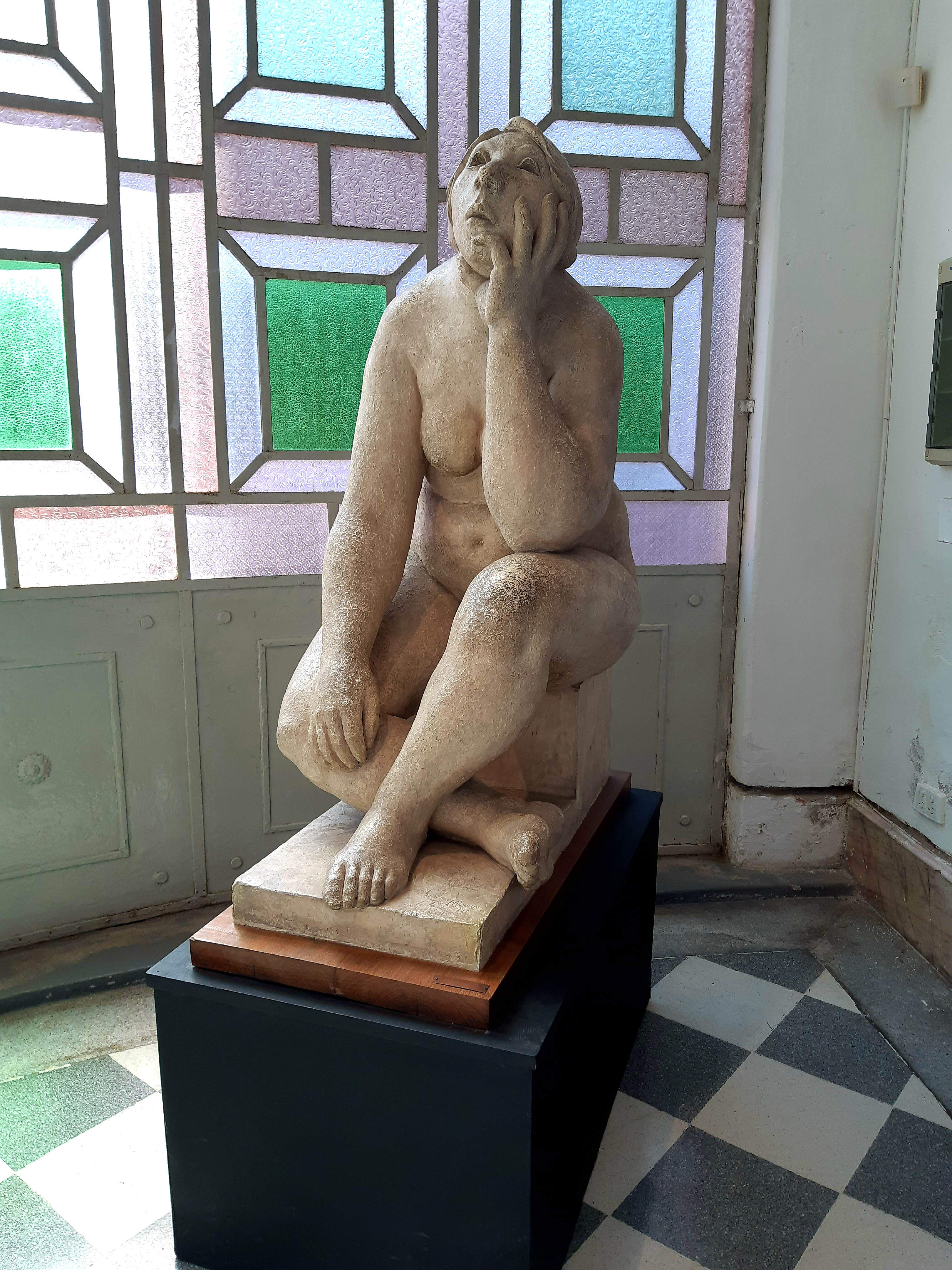
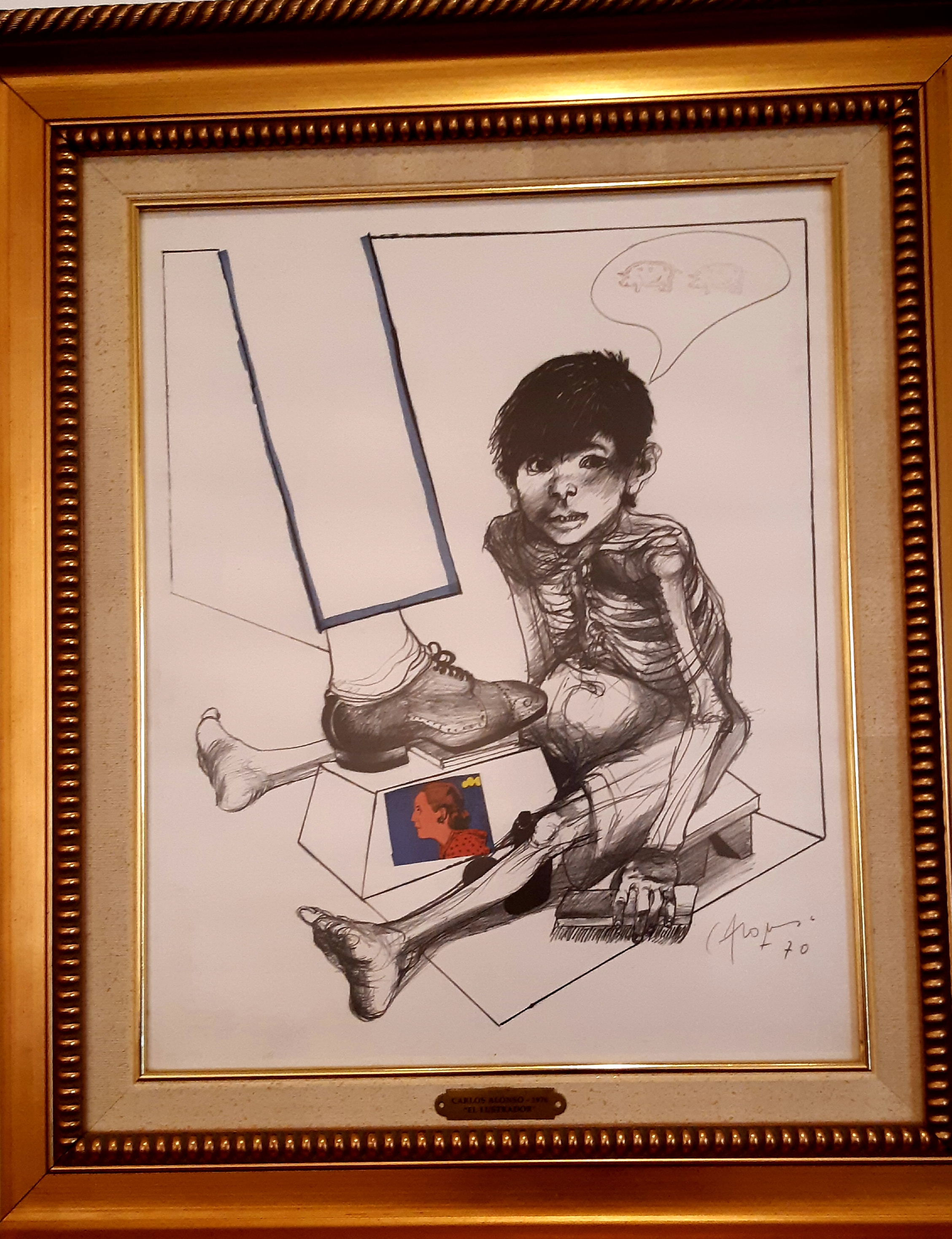
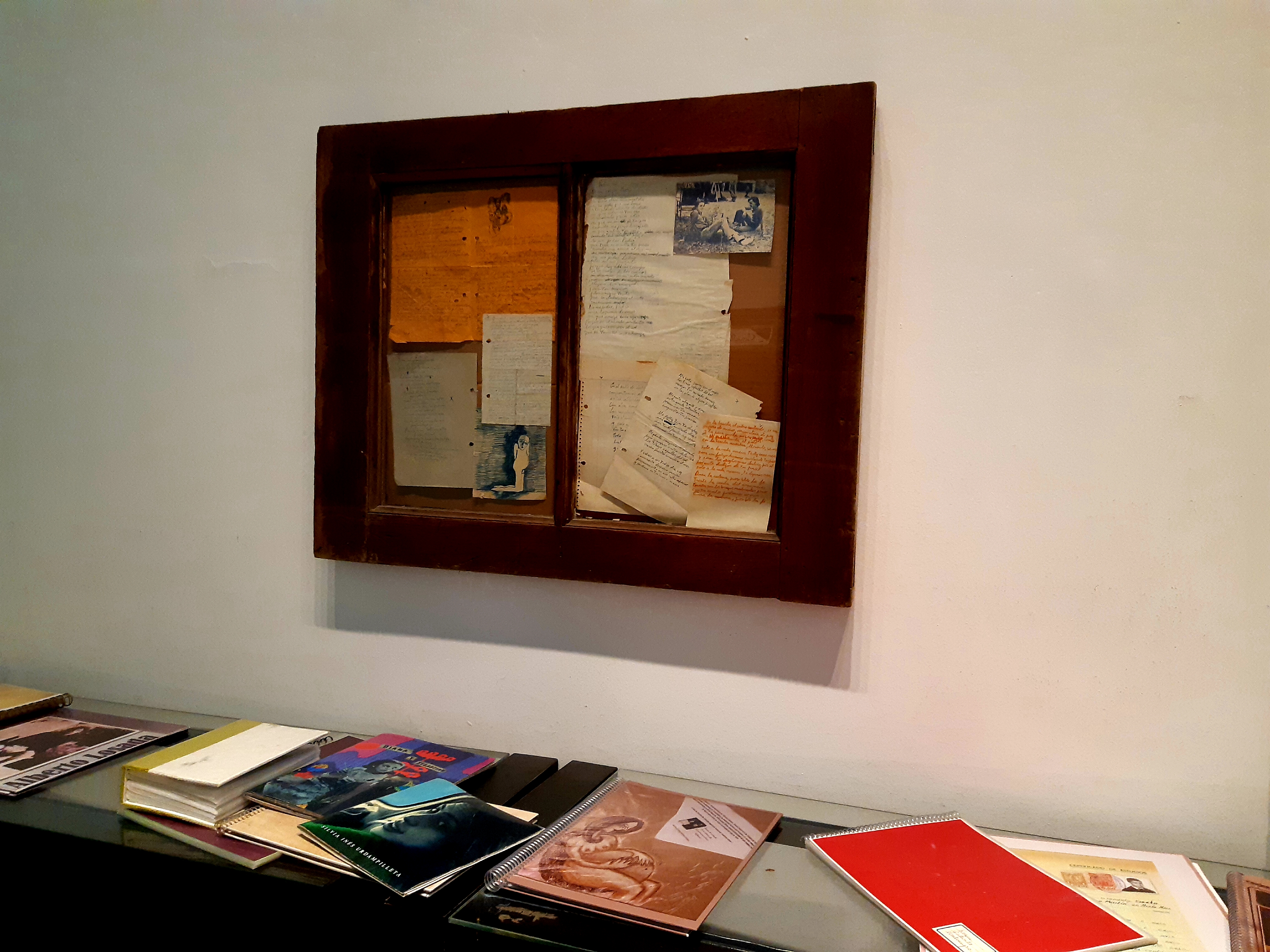
 I visited the Genaro Pérez museum, an art museum housed in an old mansion, with old and new works, most interesting. Some well-known Argentinian artists’ works are exhibited, such as E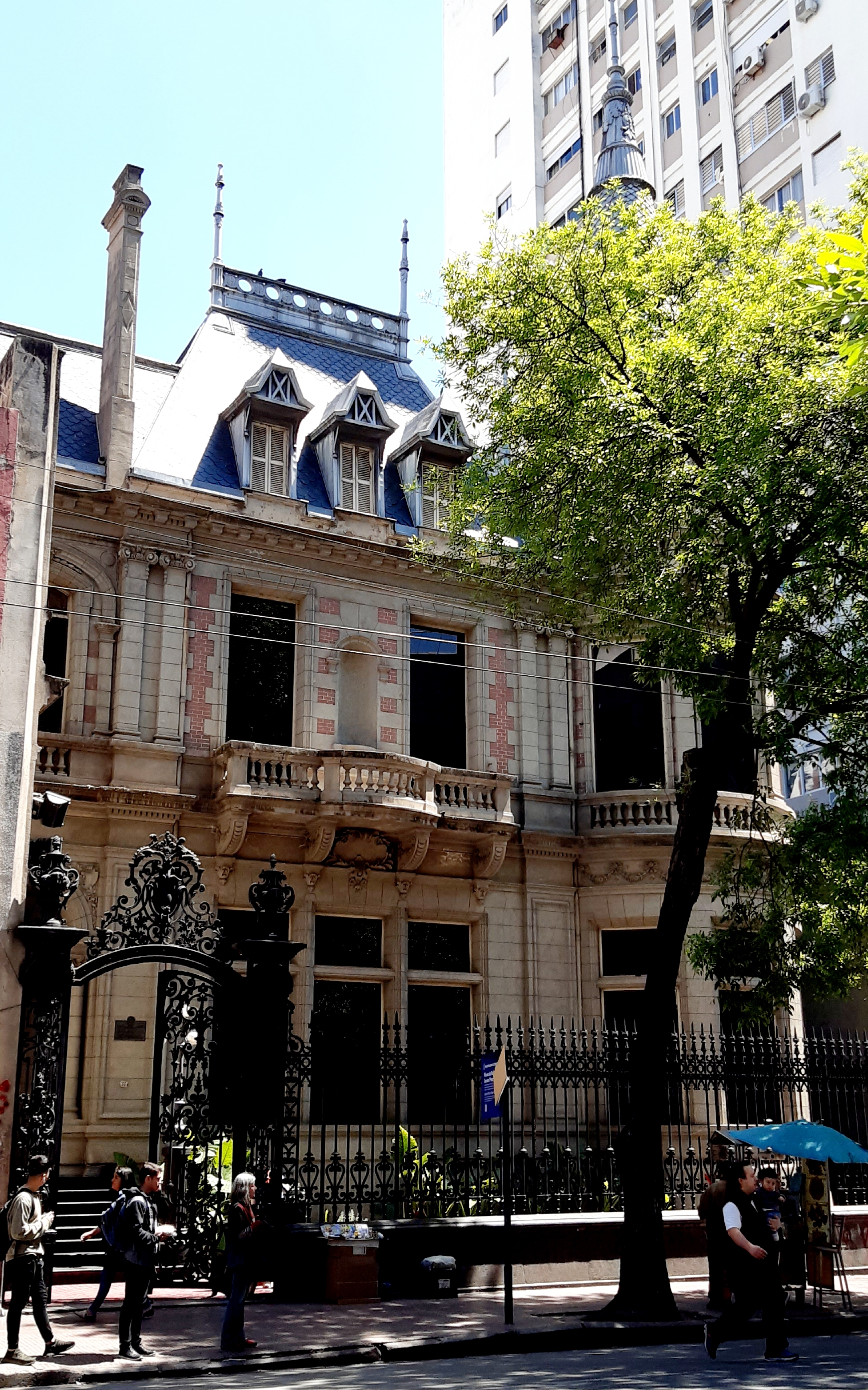
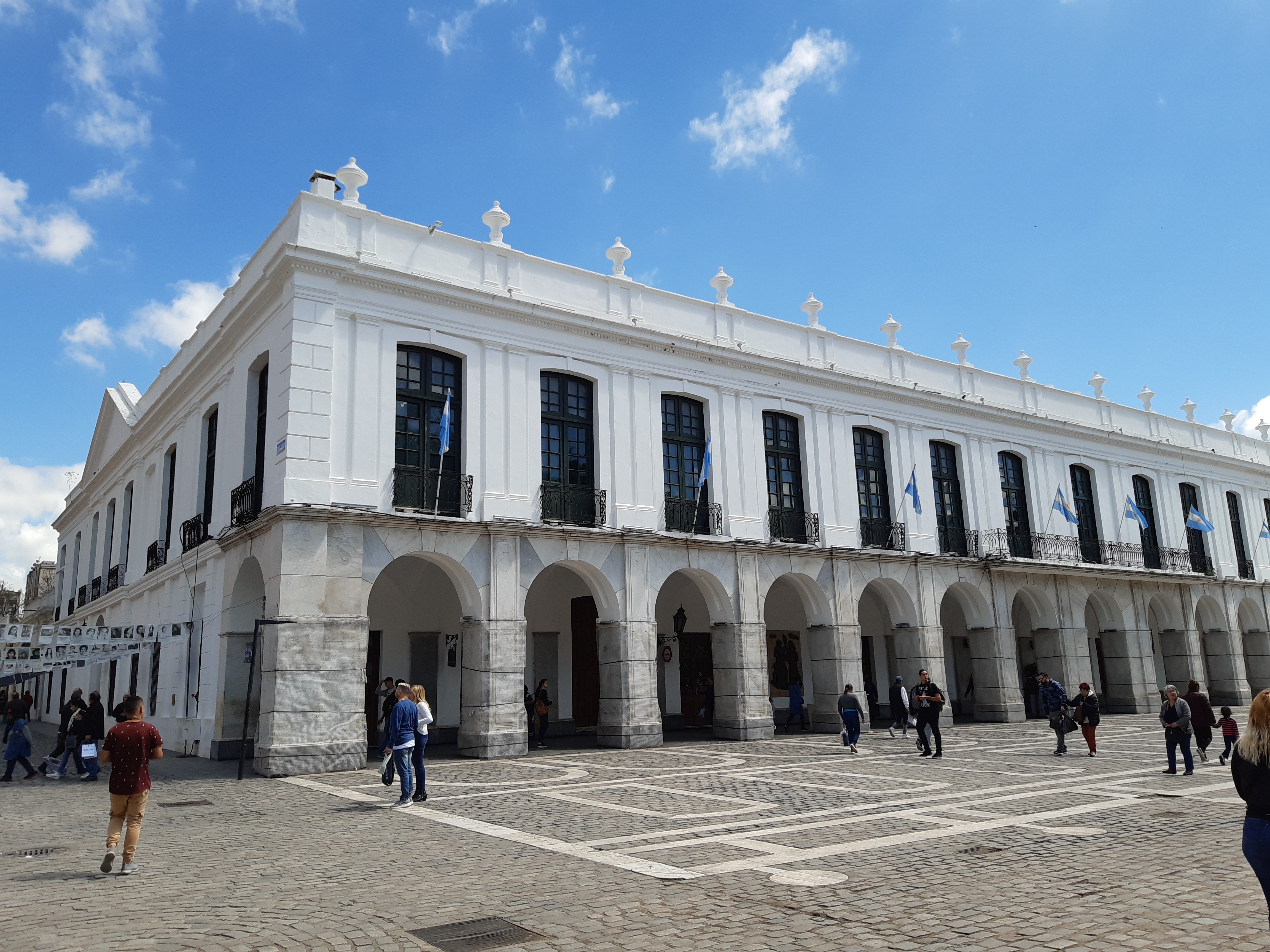
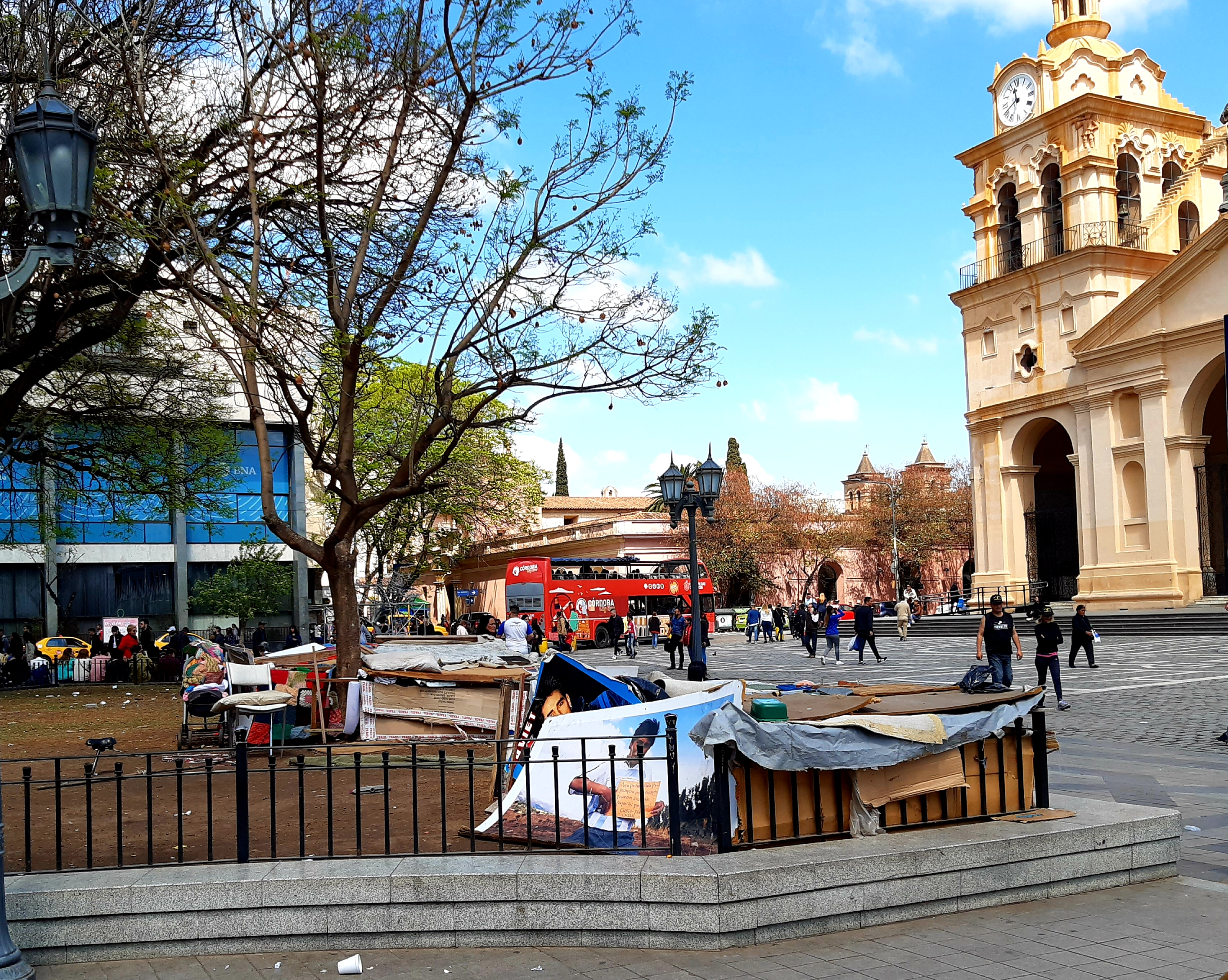



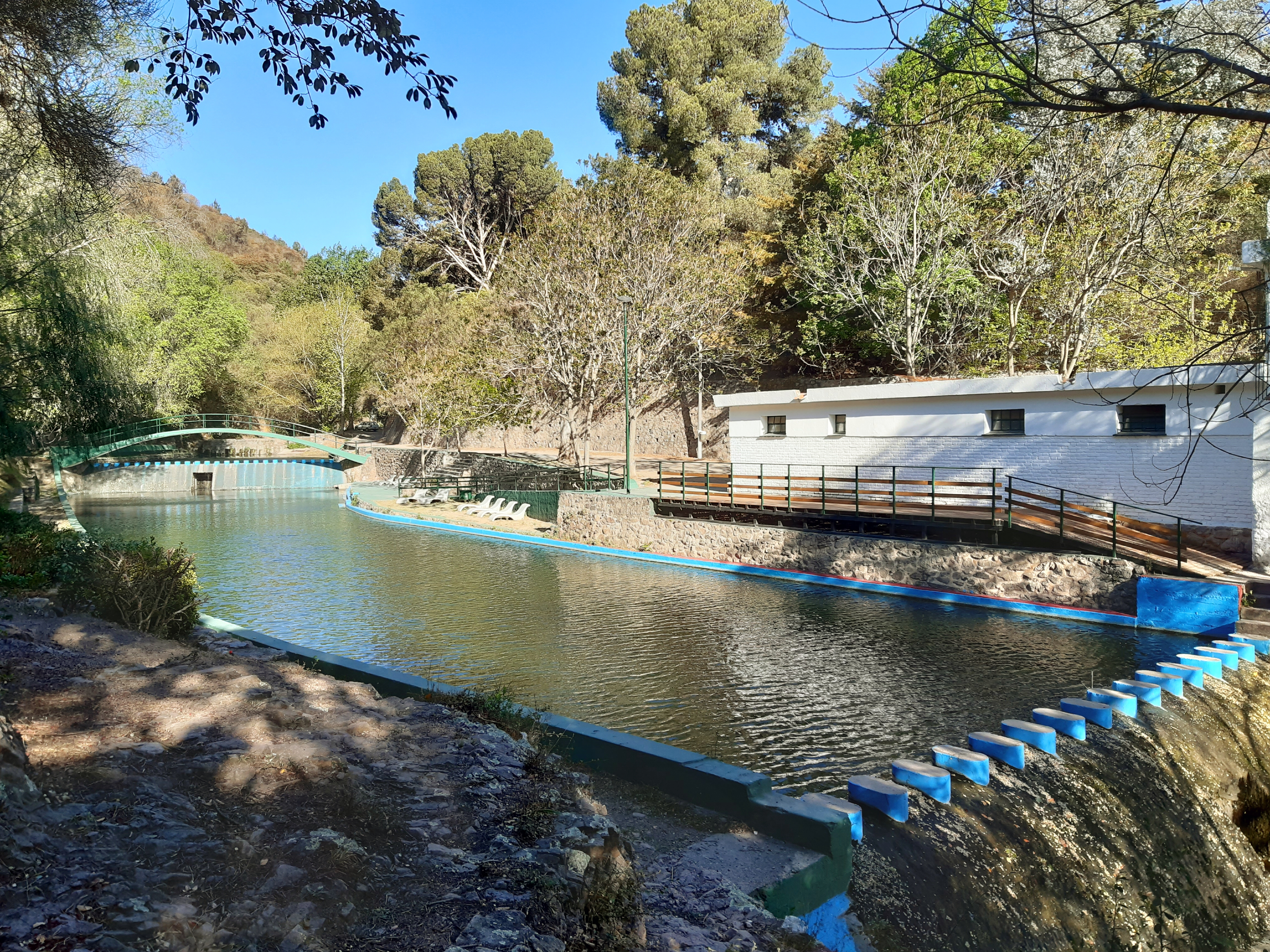

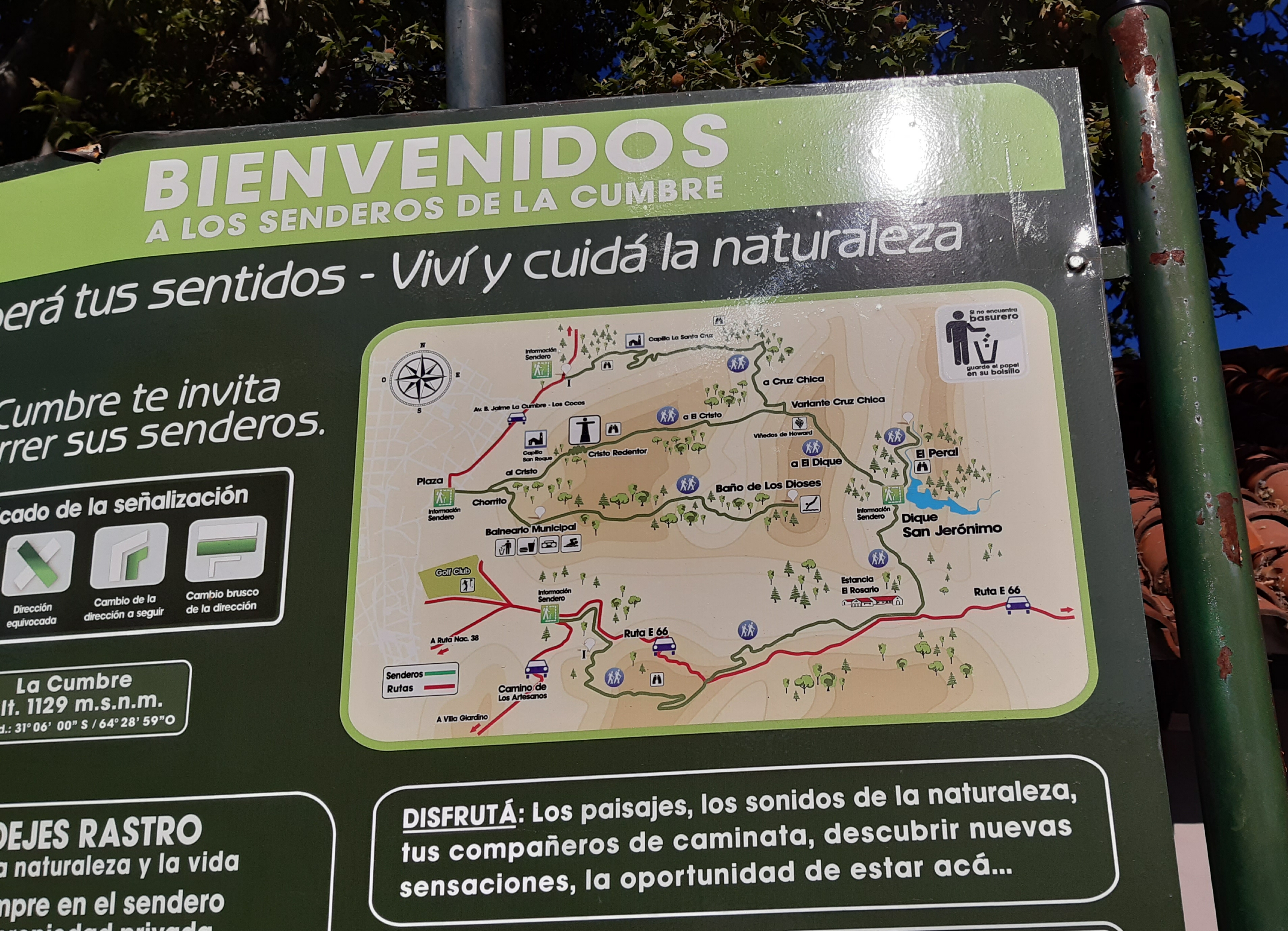
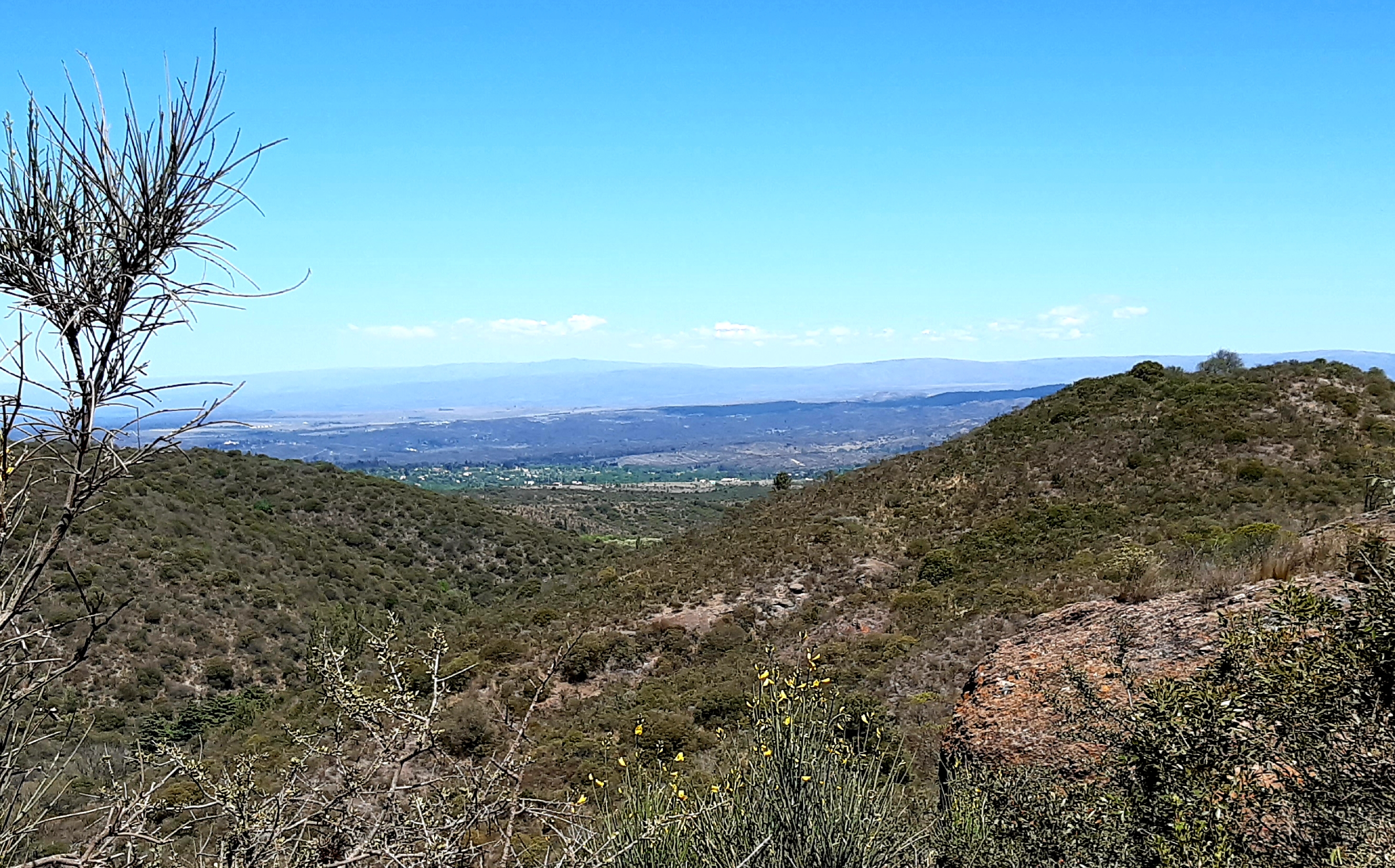 But good fortune was shining her light on me, as it just so happened that there was a shortcut back from exactly that point. 3km later I was at the foot of the mountains, and realised that my way was UP, 3km of mountain pass. I walked past an adventure farm, a cherry orchard
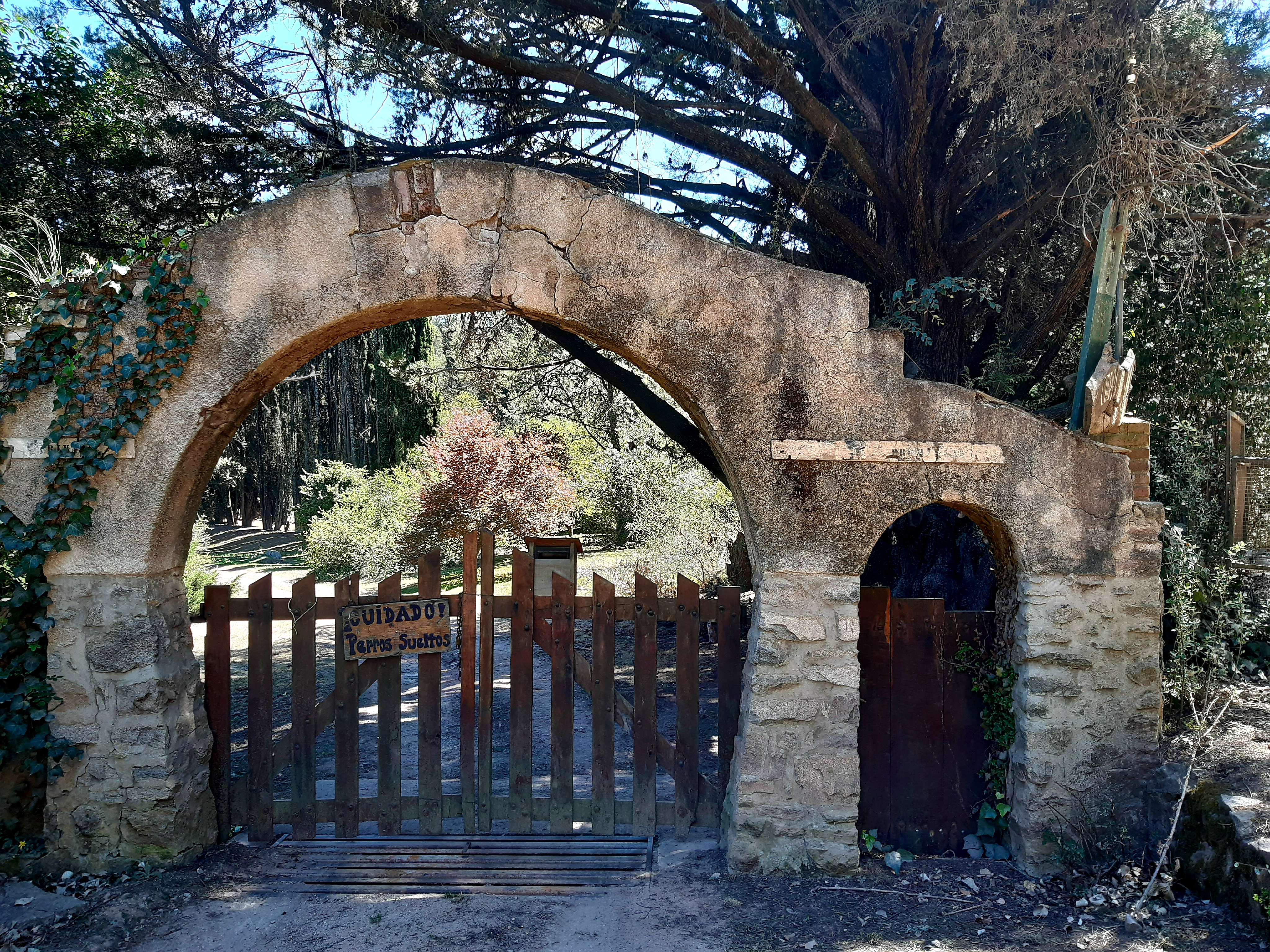 and berry farm, and I was just about to give up, when the welcome sight of water came into view. Dique, by the way, means dam, not lake…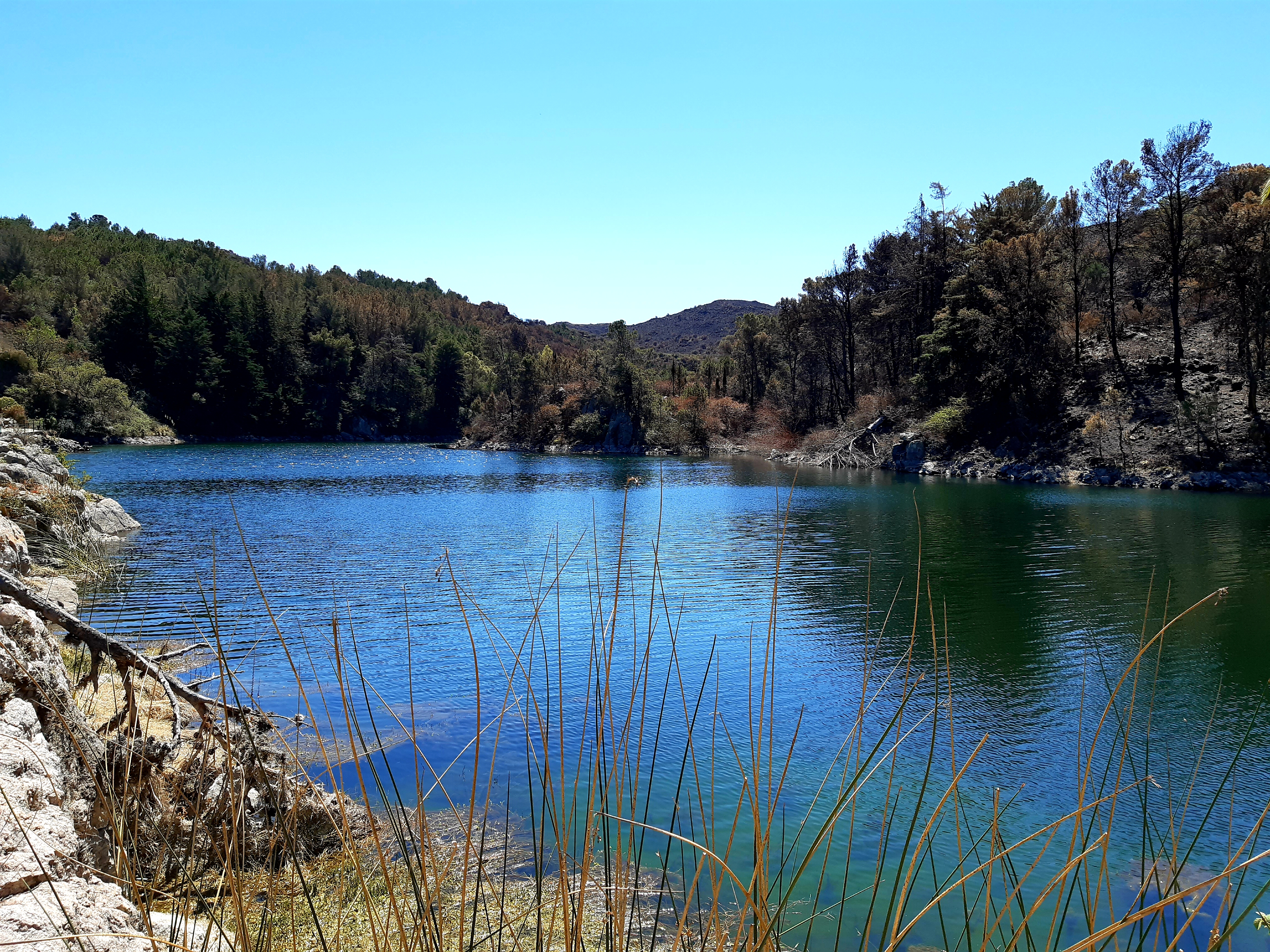
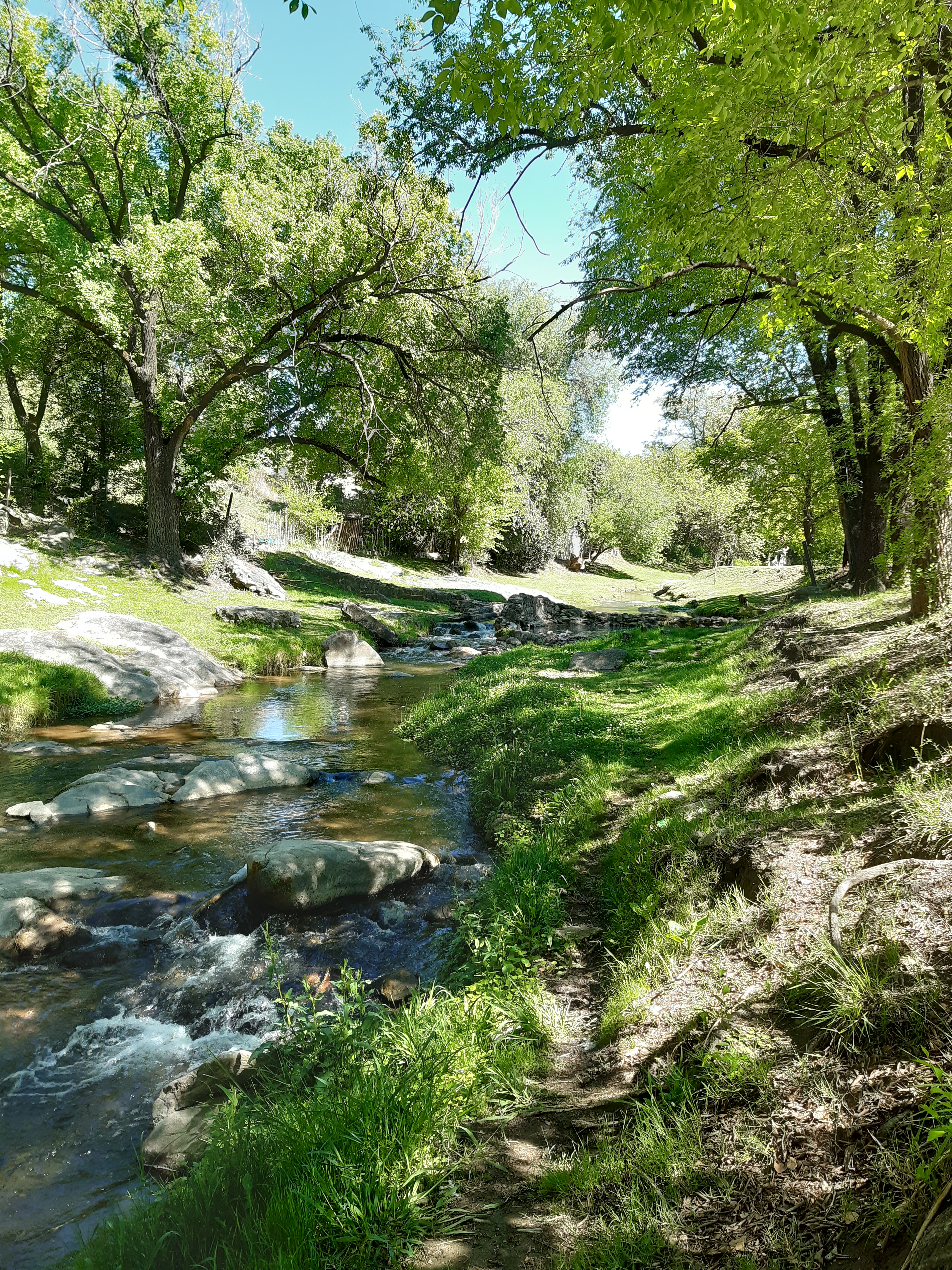
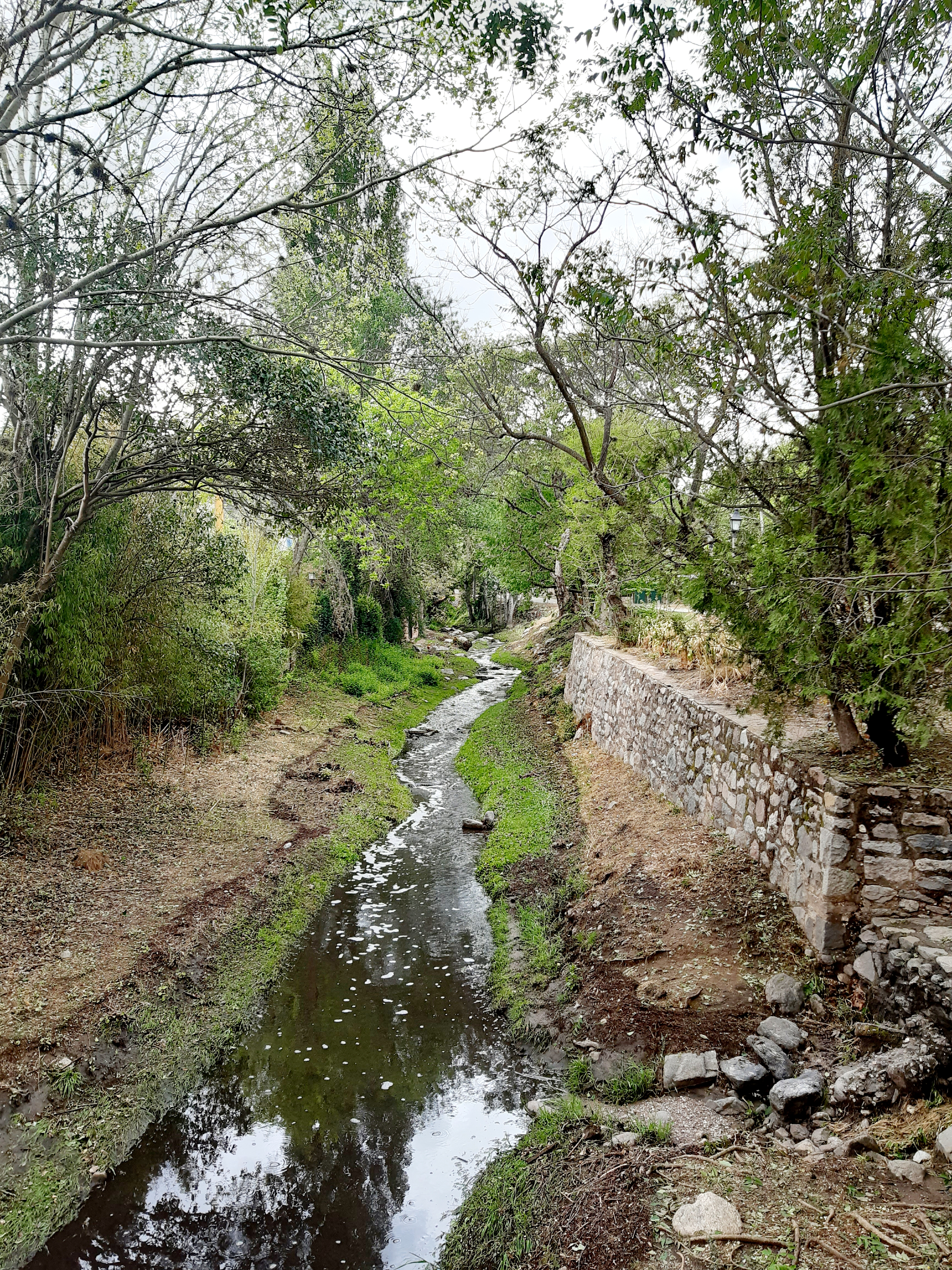
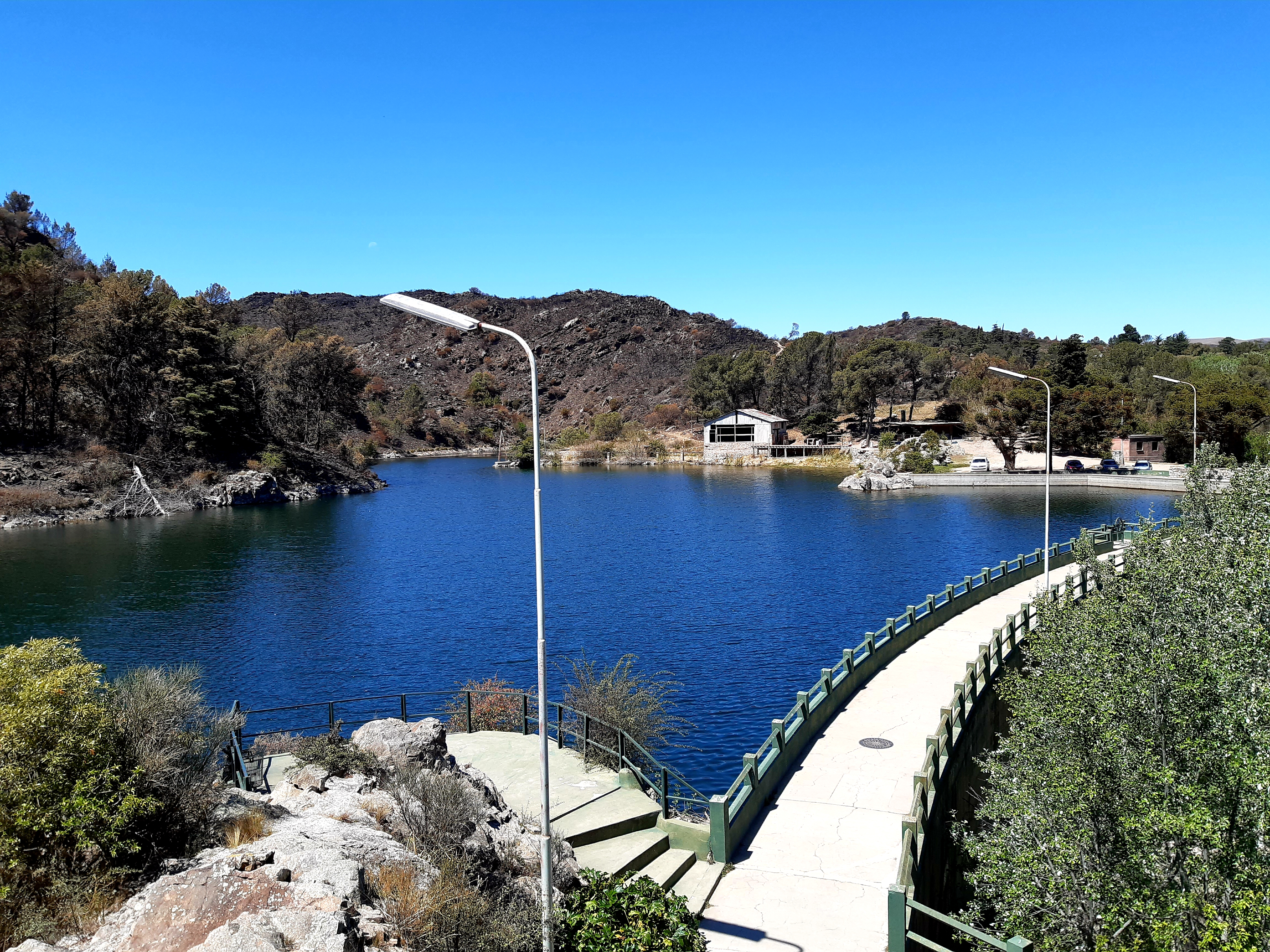 I walked a little way up the river that feeds into the dam, made me think of Jonkershoek, the babbling sound of water running over rocks and stones.
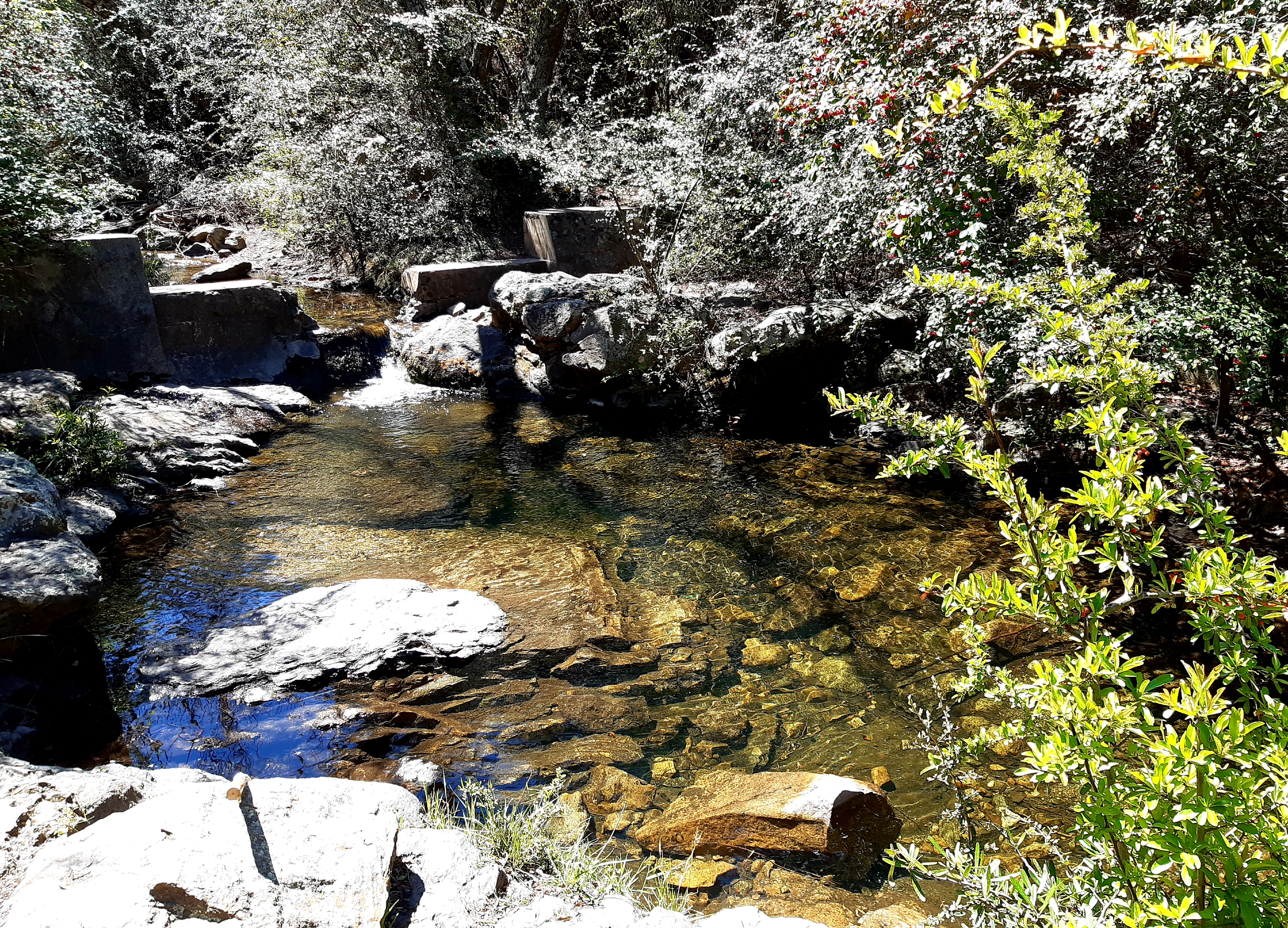 I had packed some rolls and fruit, and after a well-deserved lunch I headed home along a track that was clearly marked on the municipal map as well as on MAPS.ME. I should have realised something was wrong when I came to a place where a bridge used to be, but no longer was:
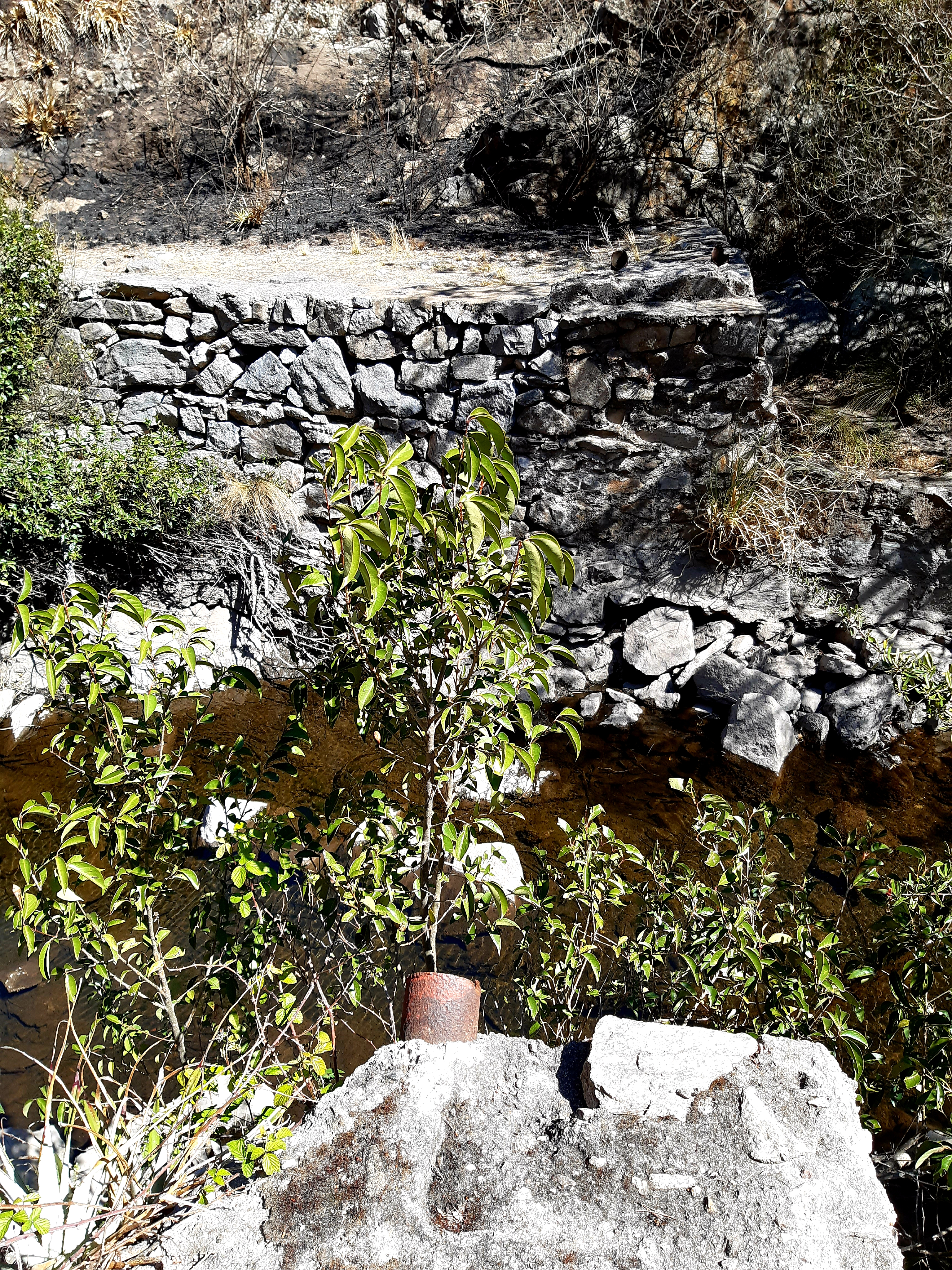 I saw that there was a path down the side, so other people had met with the same trouble. This process repeated itself several times, sometimes with missing bridges, and sometimes with overgrown plants or fallen trees. I was wondering if the track was going to take me back to town, when I saw some houses and a gate that said ‘no entry’. It was loosely fastened with a piece of wire, so I just opened it and went through.
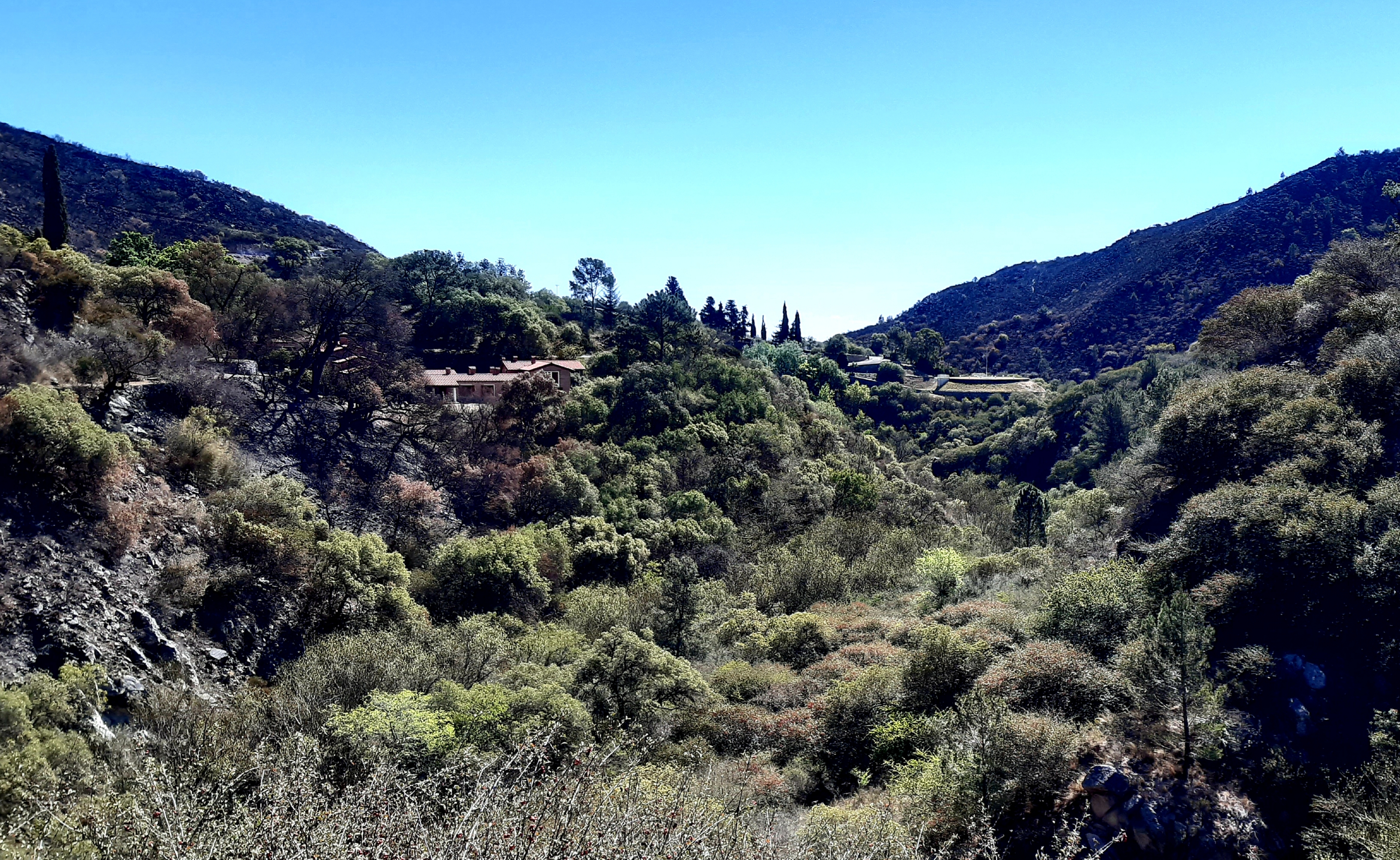 I heard voices and saw some people, so I got scared and decided to bundu bash up the side of the mountain that had been turned to charcoal by a fire the previous weekend. Easy to climb up, not many shrubs left, yet some black stalks often blocked my way. When I got to the top, there were of course more hills, and a dirt track in the distance. Not for me, so I decided to go down again and face whoever was at the first house, asking permission to pass. I was almost at the bottom when I realised that people were coming down the path, and I scurried to get onto the path before they got to me, so that they wouldn’t know I had been trespassing even more by climbing up the hill. I clumsily fell into the way of the leader of a group of about 25 youngsters, and scrambled to my feet, feeling as stupid as a naughty child, blustering half-Spanish excuses. The guy could speak English, and very kindly informed me that it was quite okay, I could follow the path past the house and follow the dirt track back to town. I thanked him sheepishly, and when I had passed all 25 youngsters with as much dignity as I could muster, I started looking at myself and realised that I was covered in soot from the burnt bushes. Black streaks covered my hands, arms, legs, clothes and I suppose my face too. I felt like the proverbial chimney sweep who had fallen into the fire-place in a cloud of soot. Moral of the story: never climb a burnt hill. Even my hat had black marks on it. Was I happy to see La Cumbre!
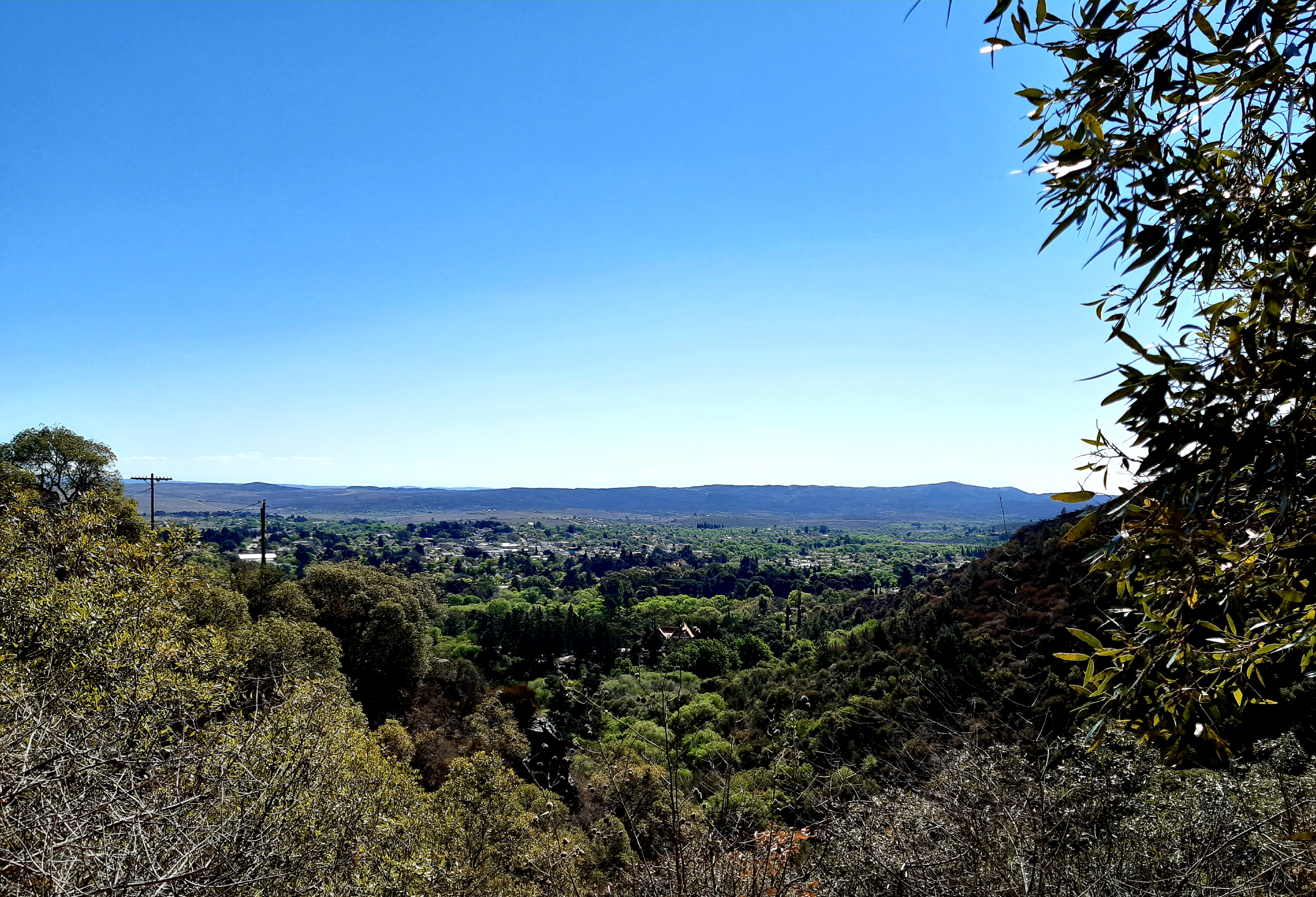 On Sunday Lucia told me that the sunsets at the flying club were quite spectacular, so I decided to walk there. She never mentioned the distance: 2km along the highway and then another 2km on a dirt track. All the way there I was thinking that it turns dark after sunset, and 4km is a long way to cover. A band was playing at the restaurant at the airfield and there was quite a jolly crowd gathered. Not many planes, but some kites and gliders.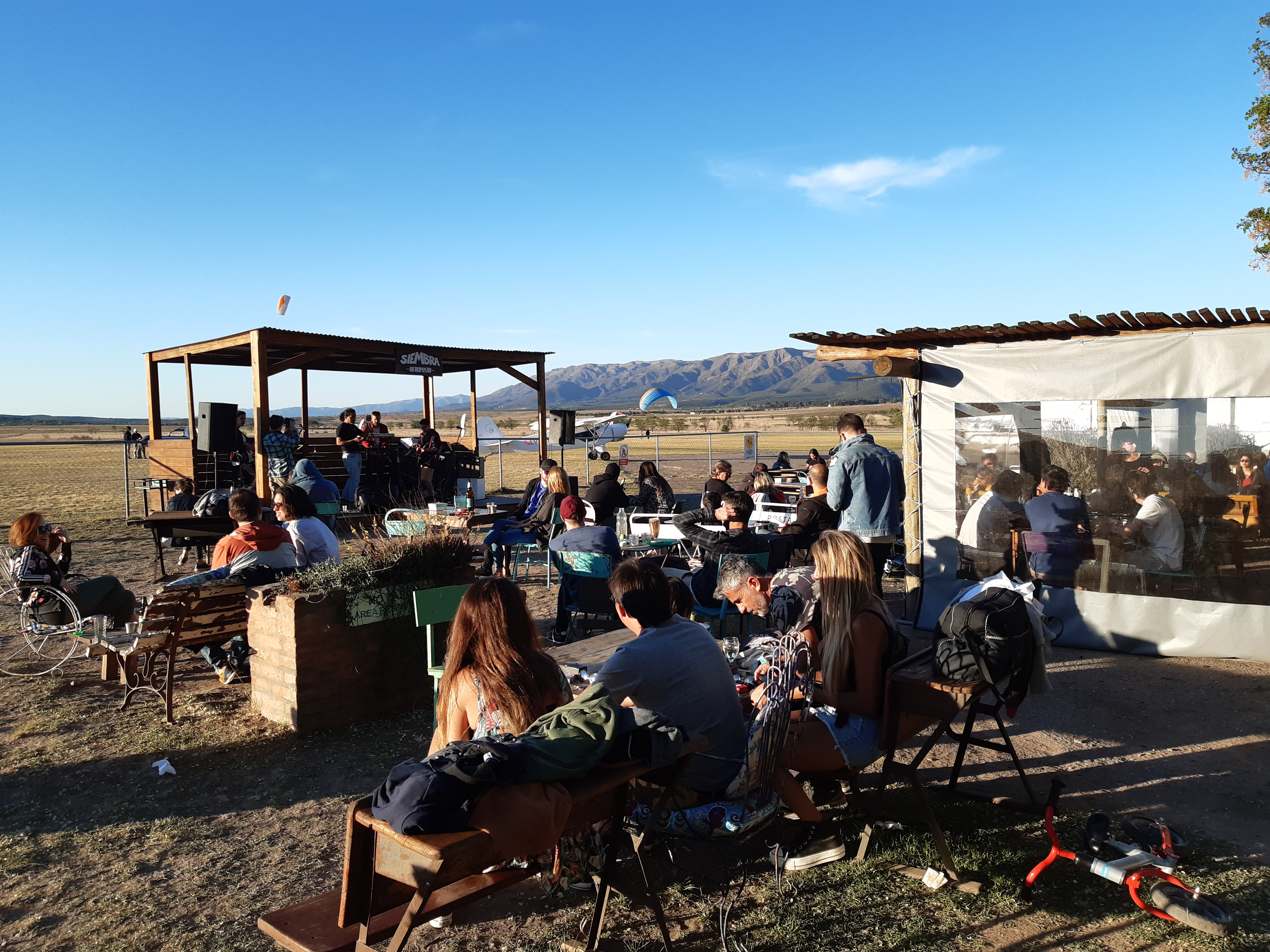
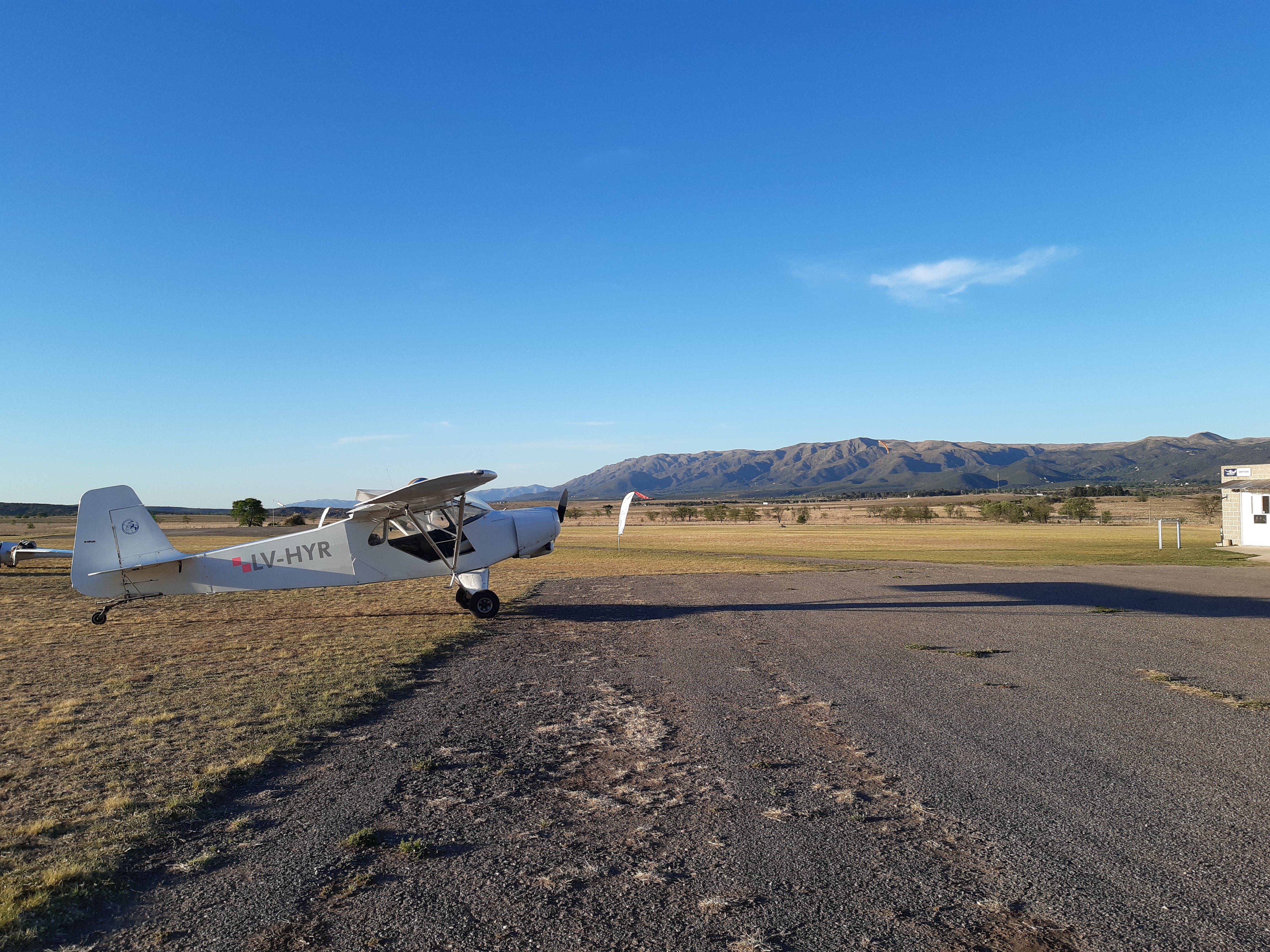
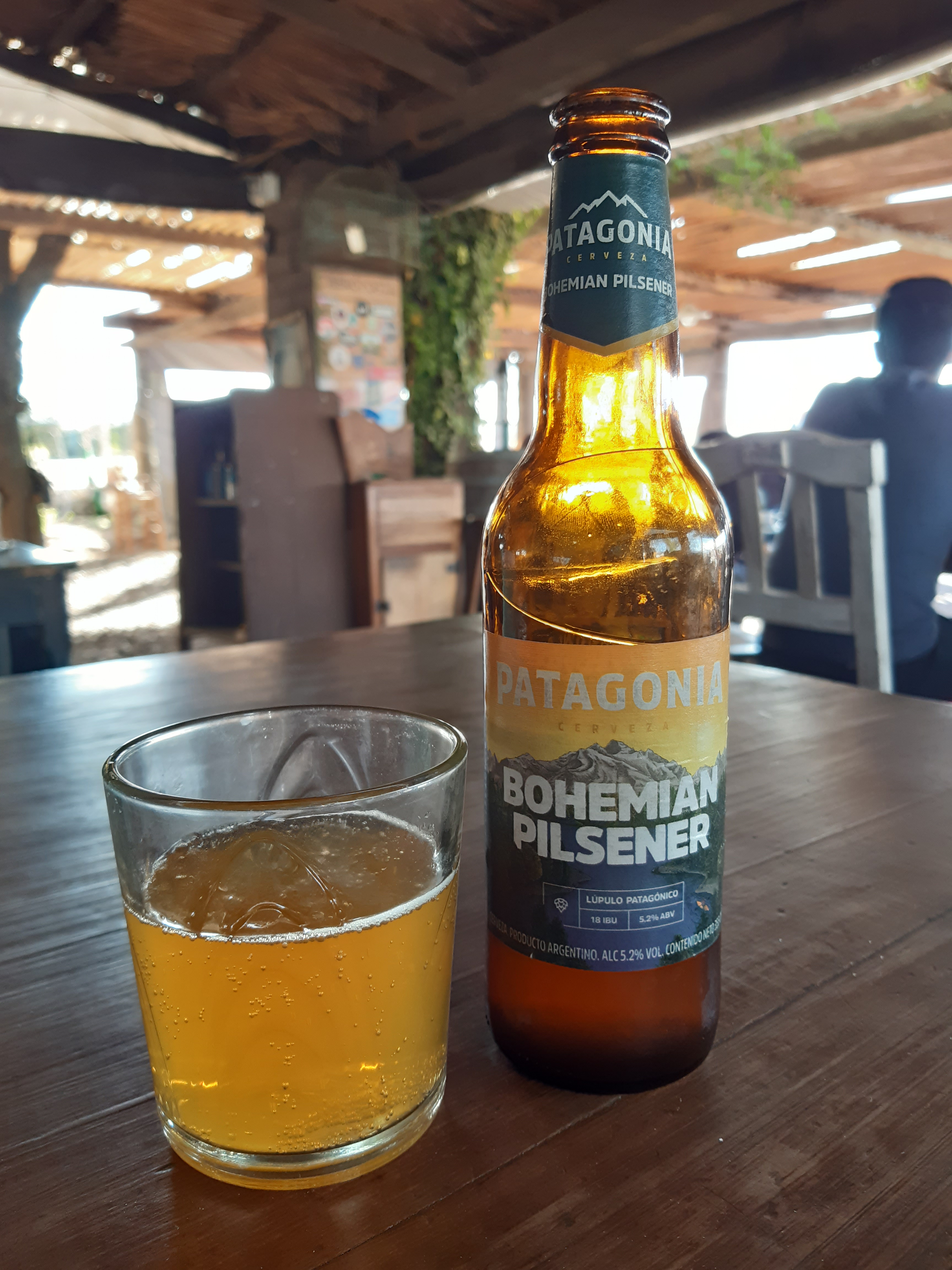 I had my beer and left early, to catch the light, and then I decided to hike. Just my luck: I was given a lift by a couple who were going back to Córdoba, so they dropped me at the intersection on the other side of town and I ended up walking 2km anyway. Sometimes I wonder at the picture I’m presenting: old woman walking along a highway/dirt track/mountain pass, alone, with a huge hat and rucksack. Life lesson?? Doubtful…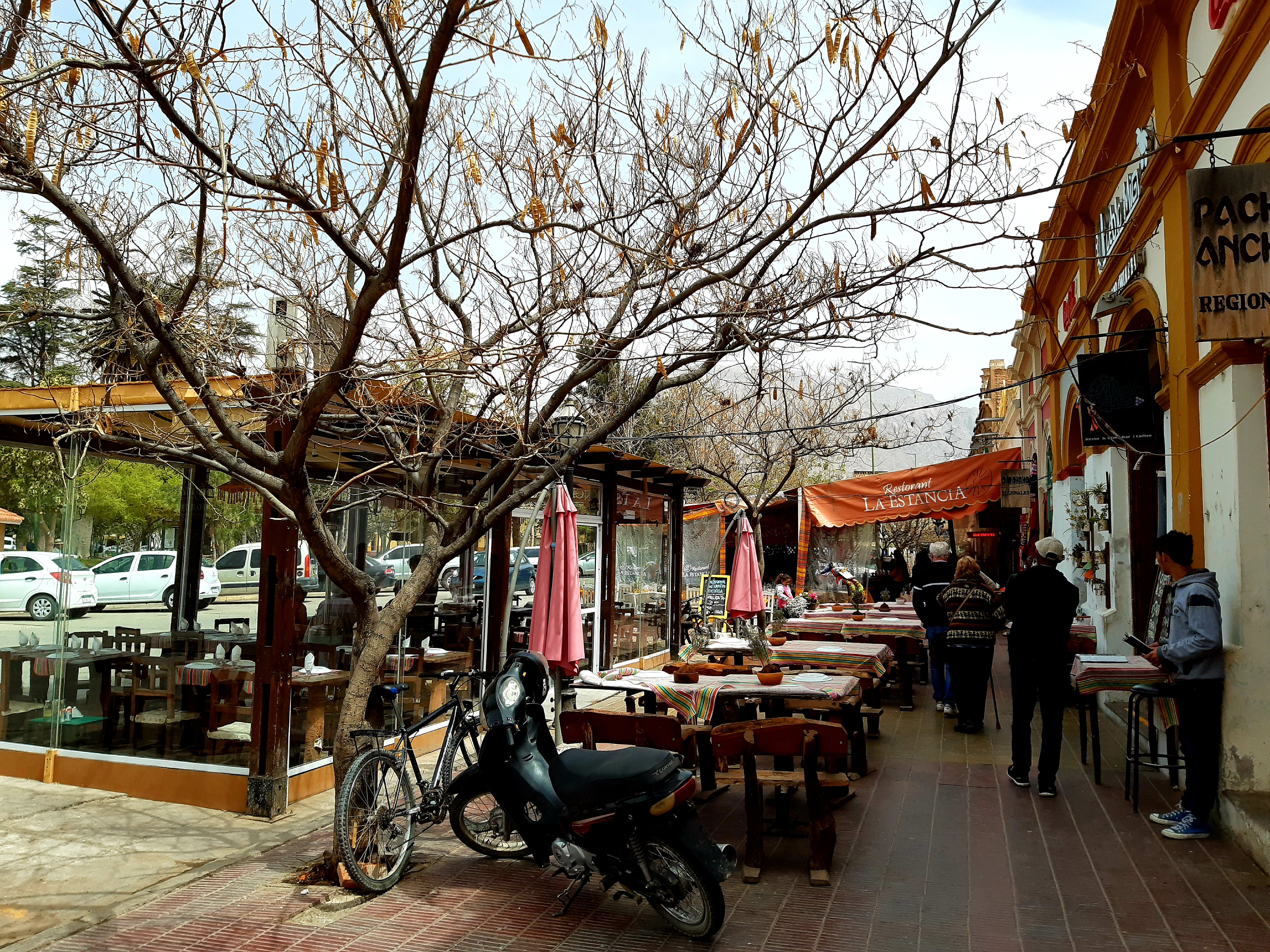
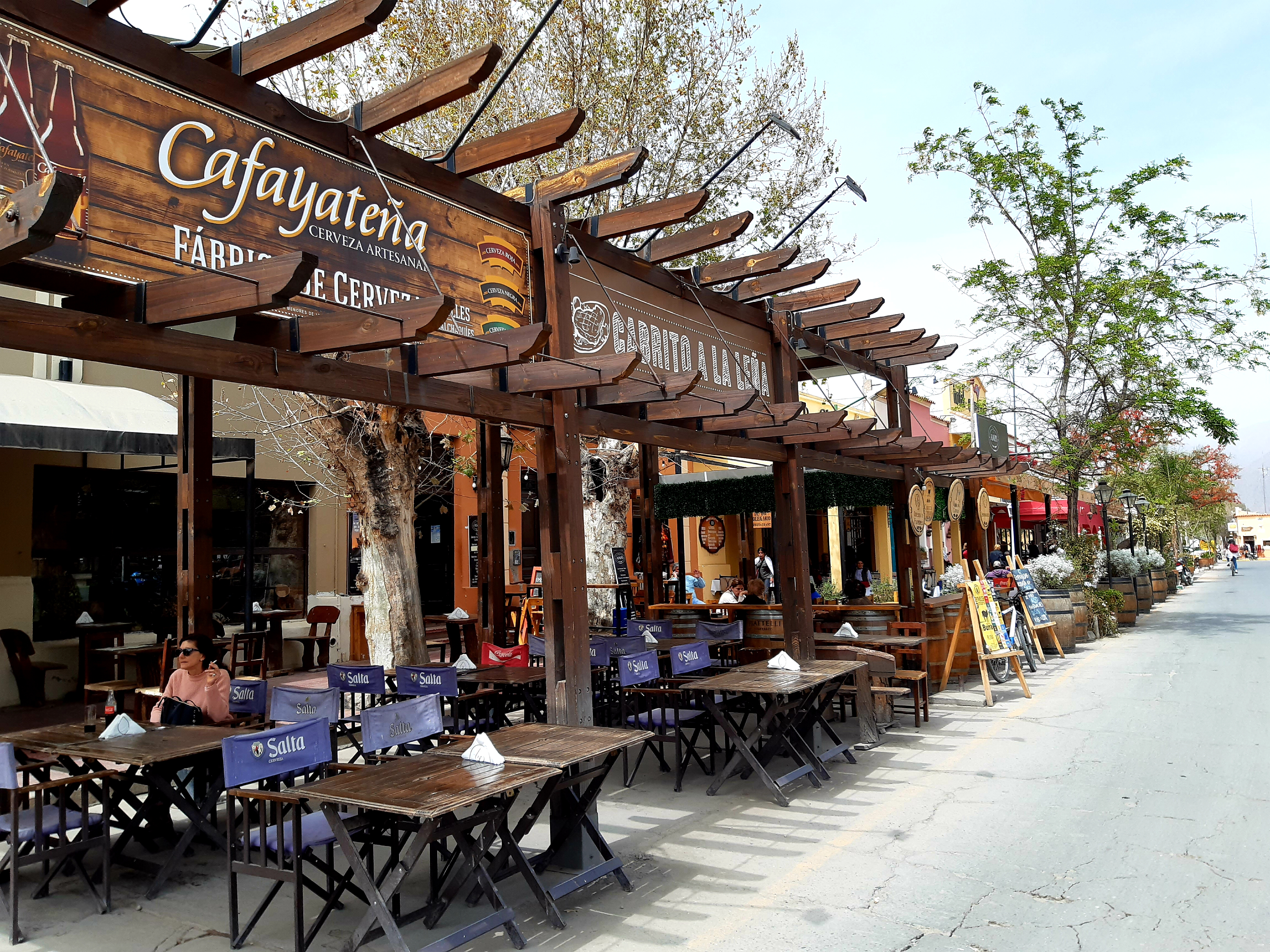
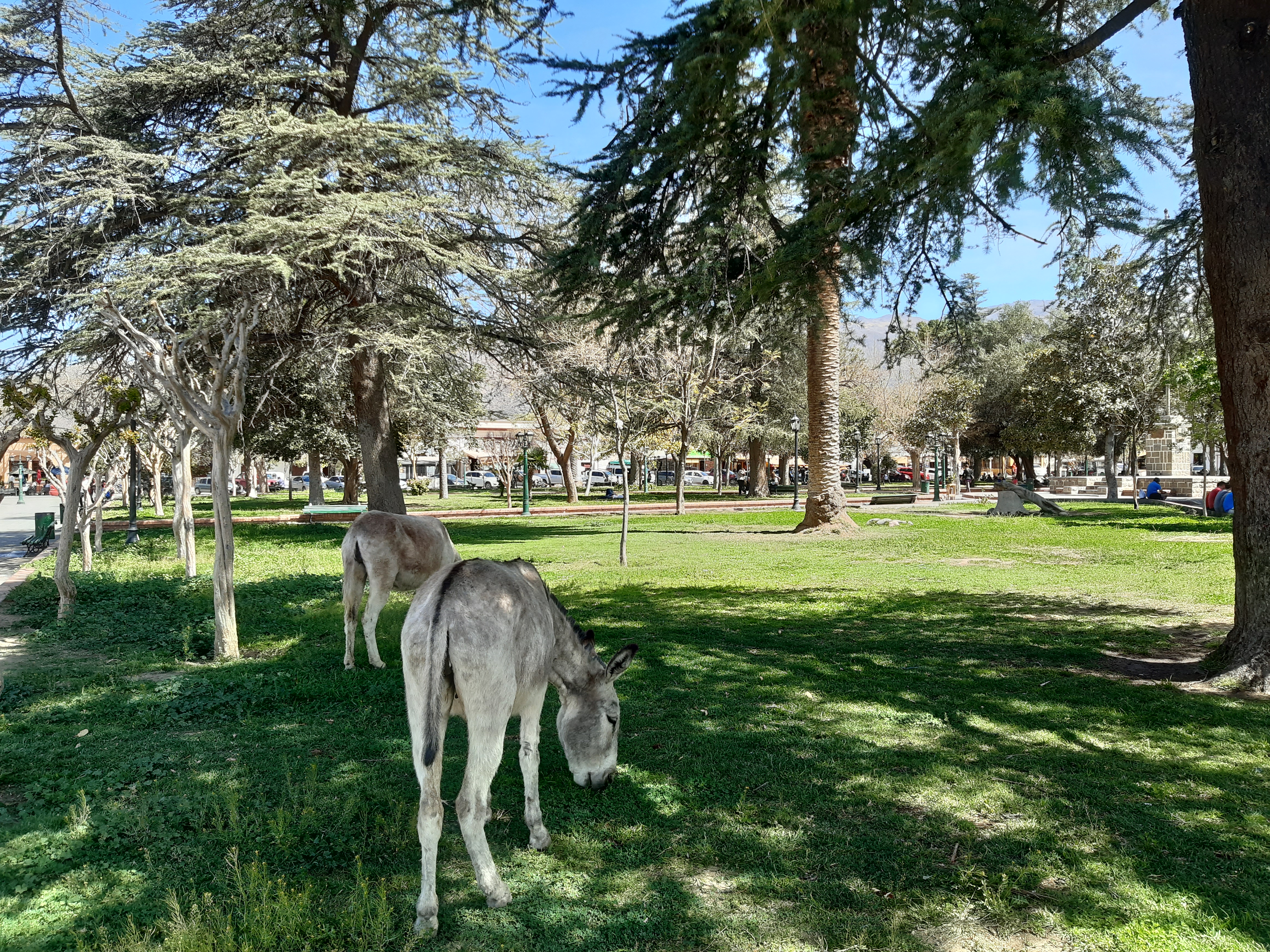 When Louise and I (for new readers: Louise is my ‘companion’, my very pink suitcase on wheels) arrived at the plaza last Sunday evening at about 21h30, I was dumbstruck. All the restaurants were brightly lit, sidewalk tables and chairs filled to capacity, loud live music everywhere and people, young and old, strolling around. I thought I’d landed in Paris! There had been a religious celebration that day, which accounted for the presence of so many people, but it has not been much different every other night. I have loved having a beer or glass of wine at one of the restaurants after my work shift at the hostel, reading my book or just watching people go by.
 I filled my days with long walks on different roads out of town, or exploring the town itself and doing some wine tasting at the different bodego’s (wineries).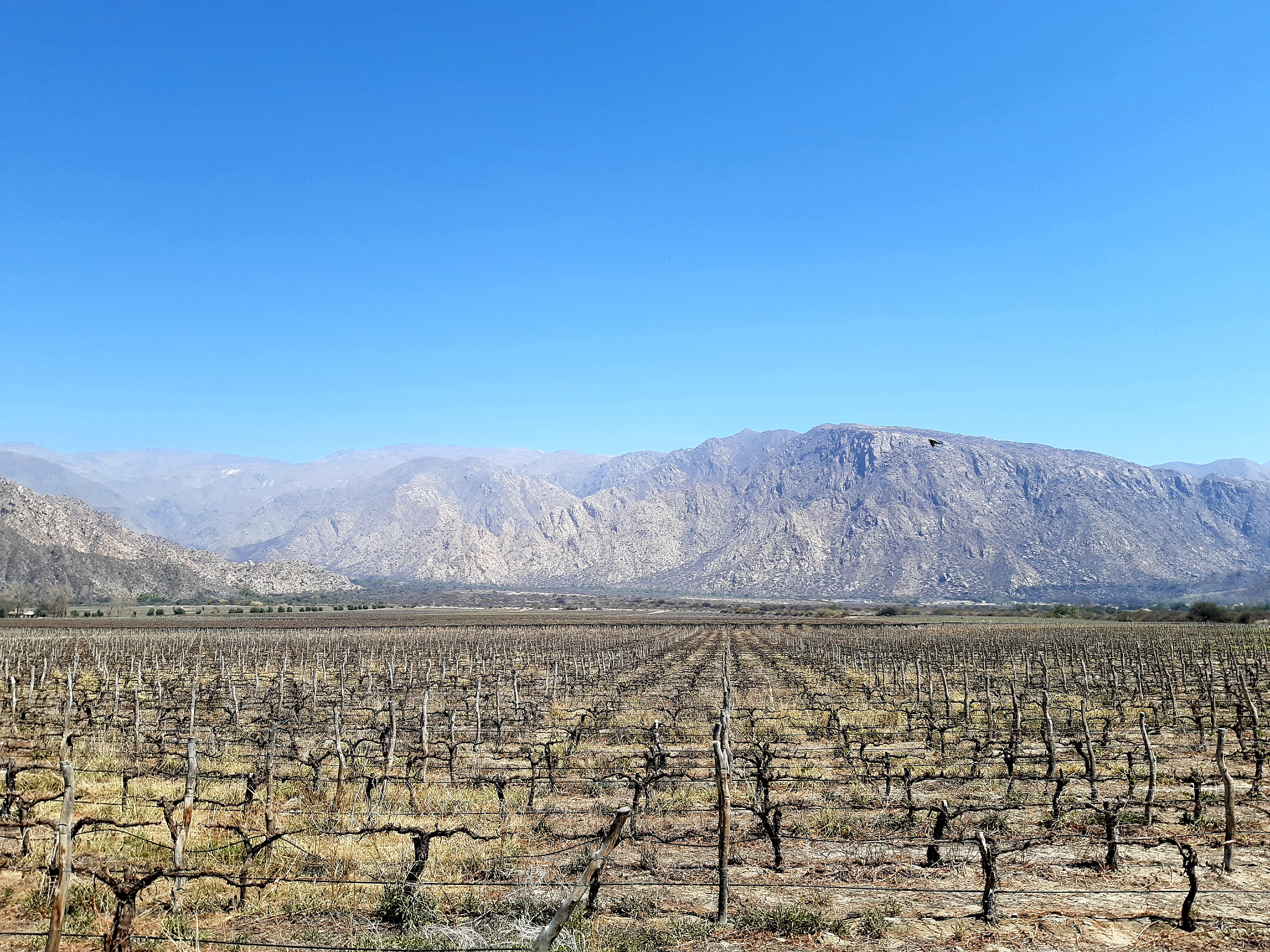
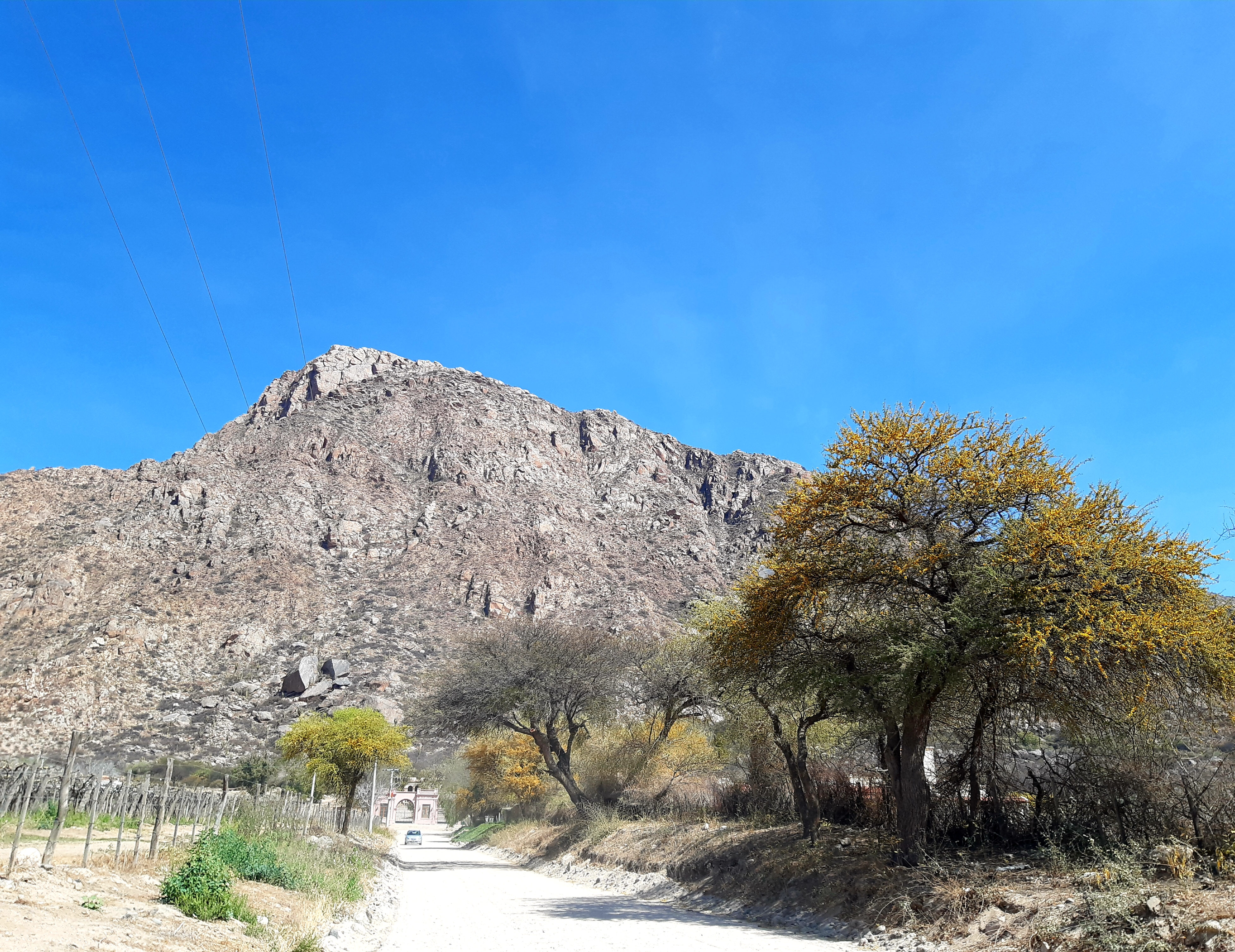
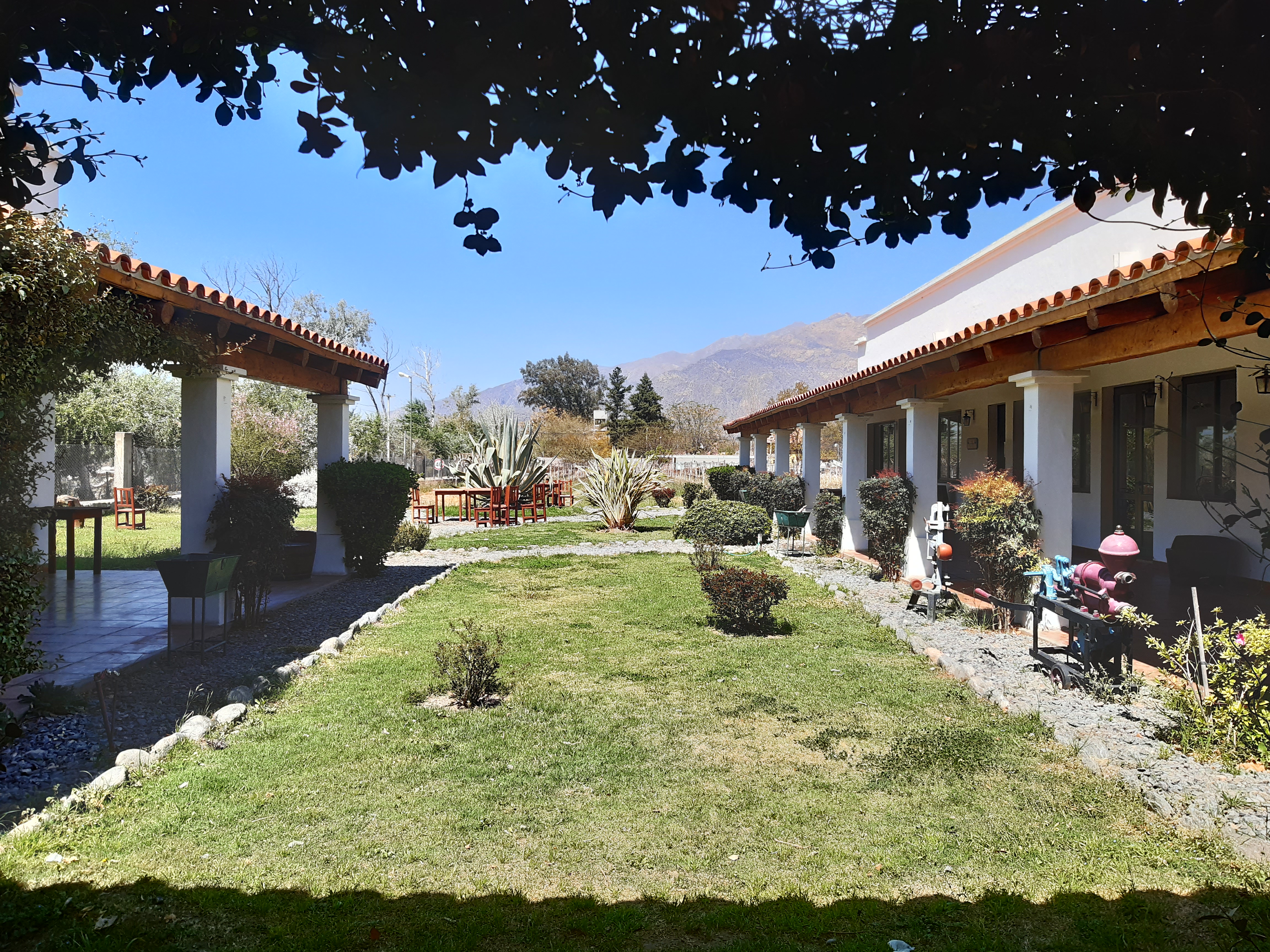
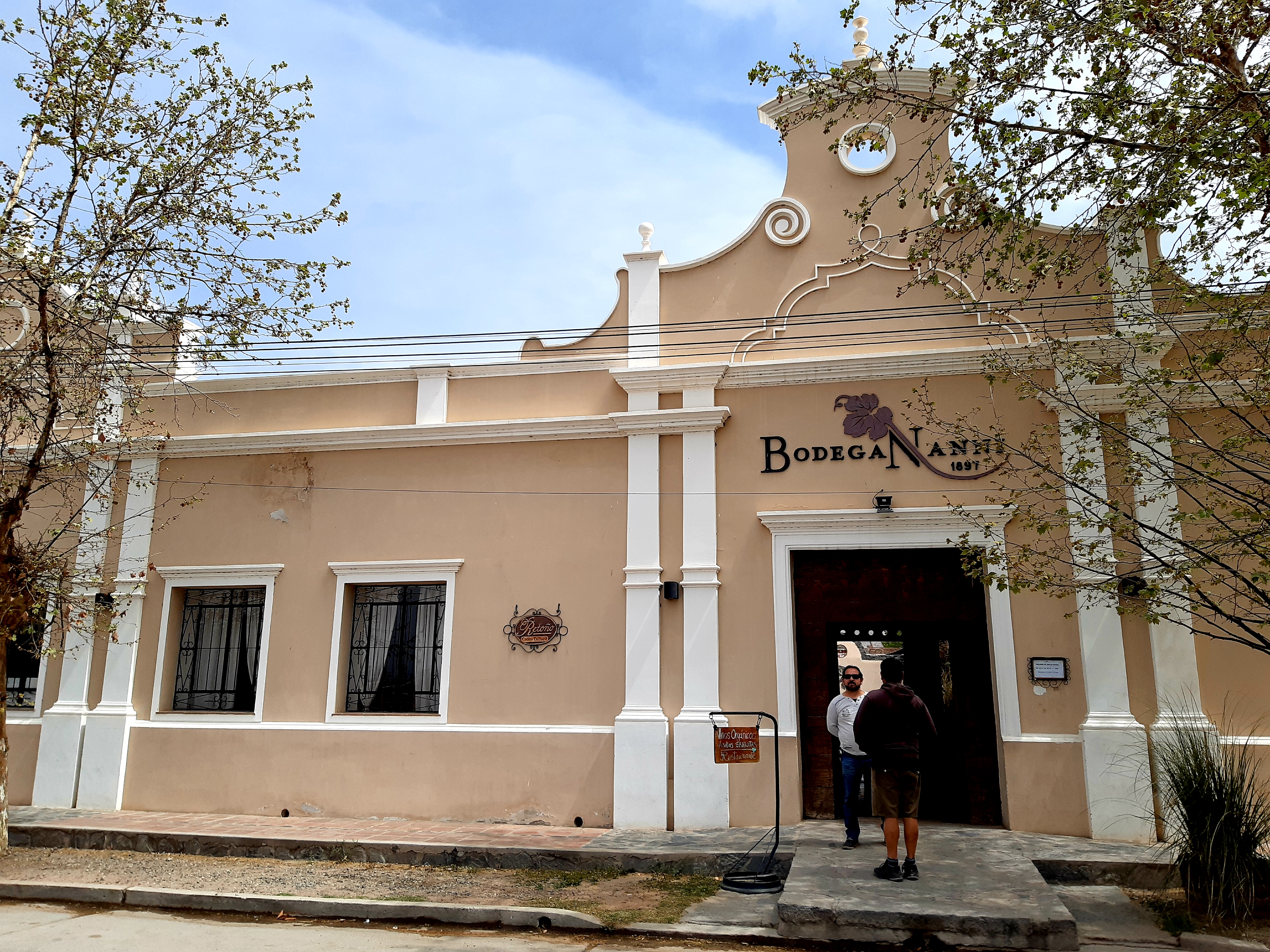
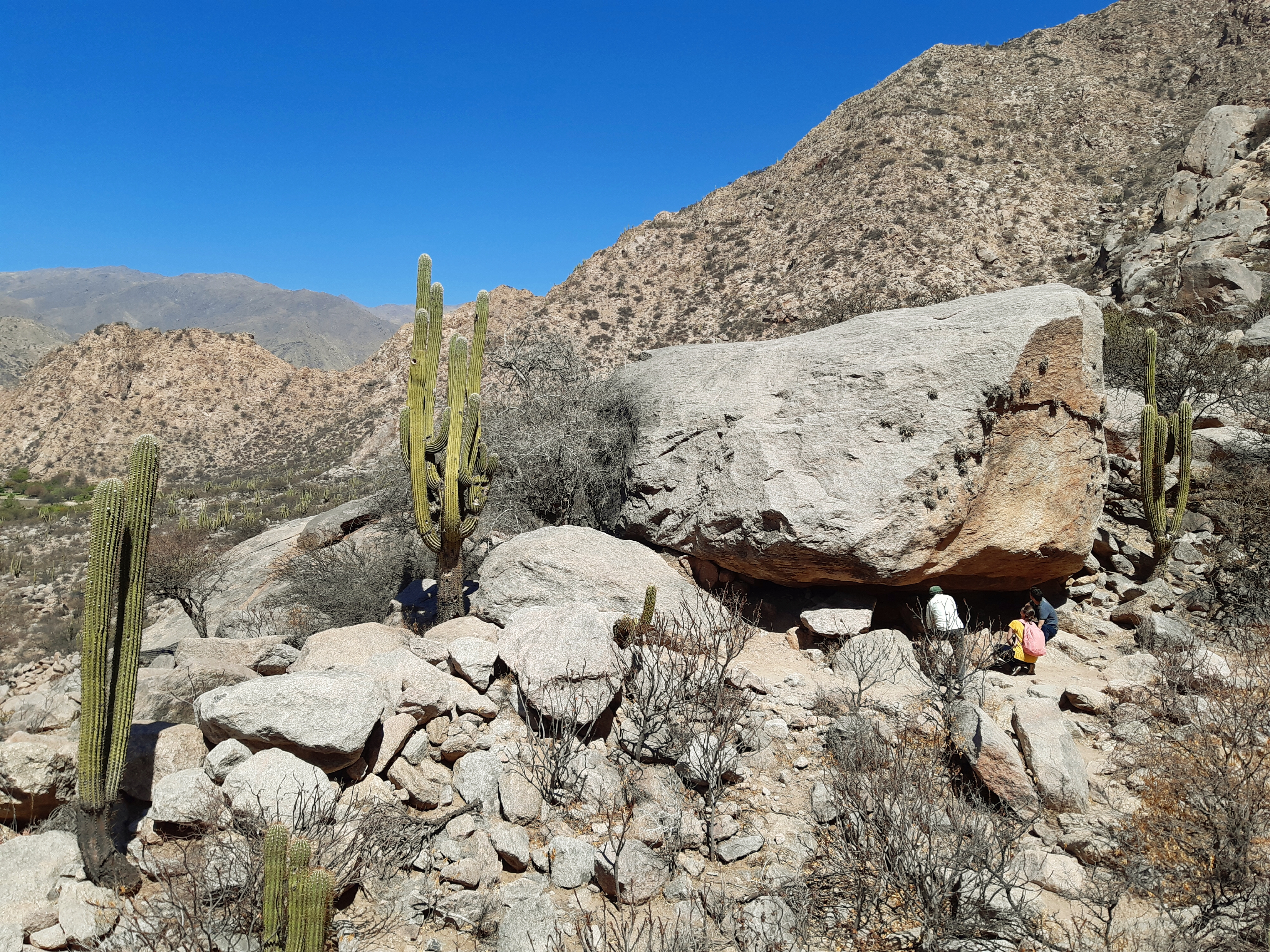
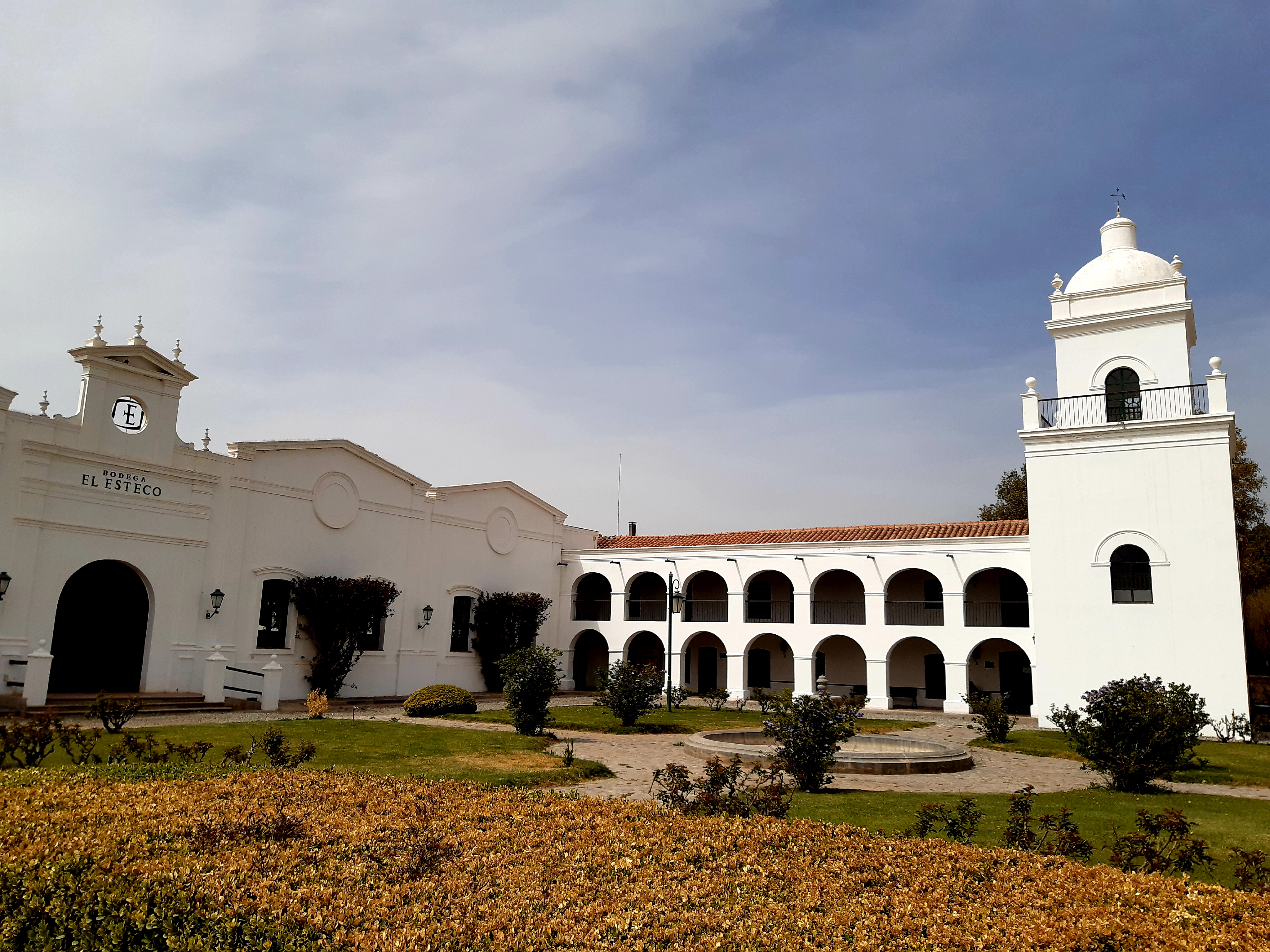 I joined up with some English speaking guests at the hostel to visit a site where there are 3000yr old rock paintings done by the original people of the area, the Diaguites, and later by Inca’s who travelled through, or settled as their empire extended beyond the Peruvian borders. (The Inca’s annexed the area during the 15th century imposing their language, religion, art and government on the Diaguites.)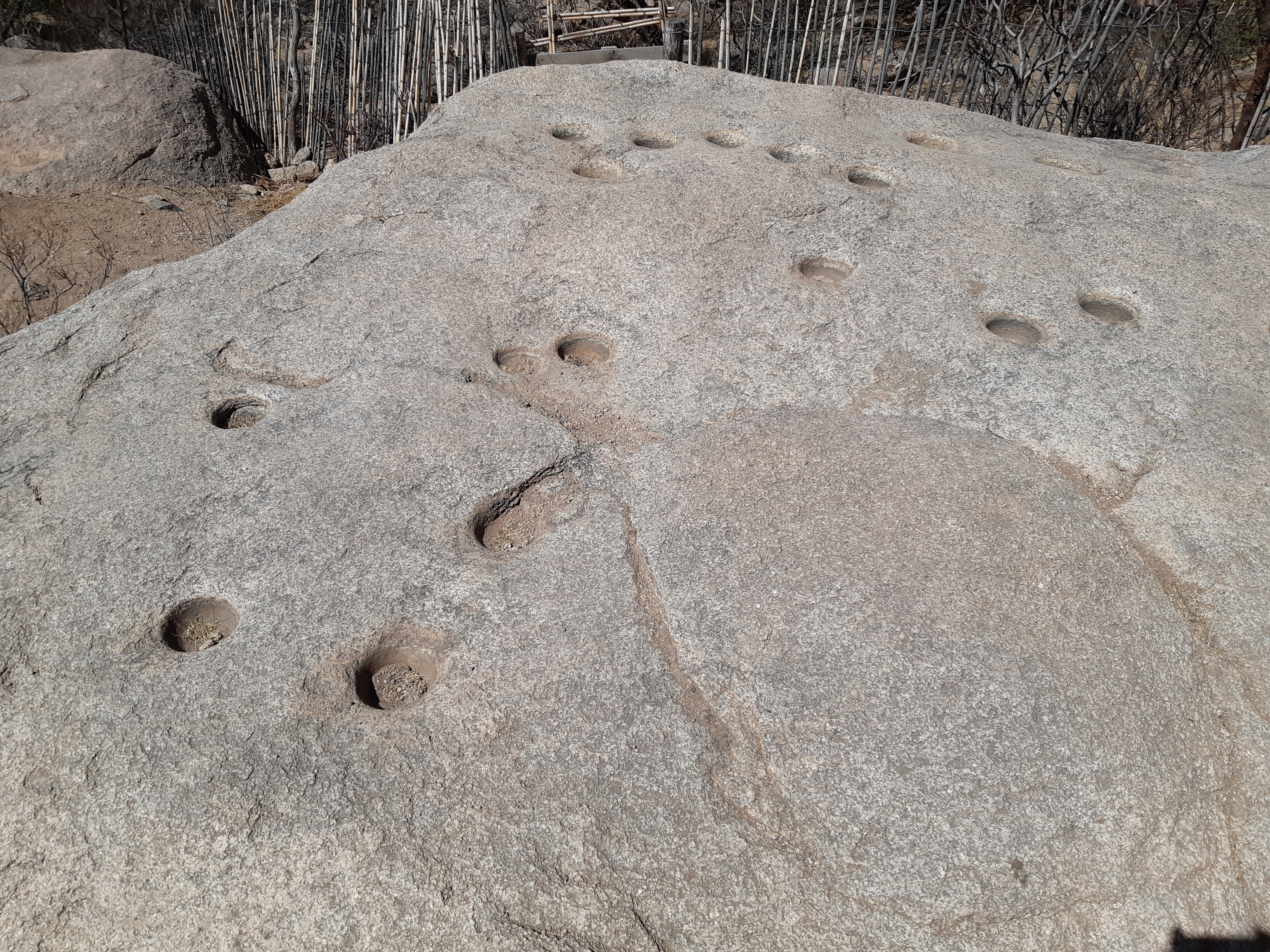
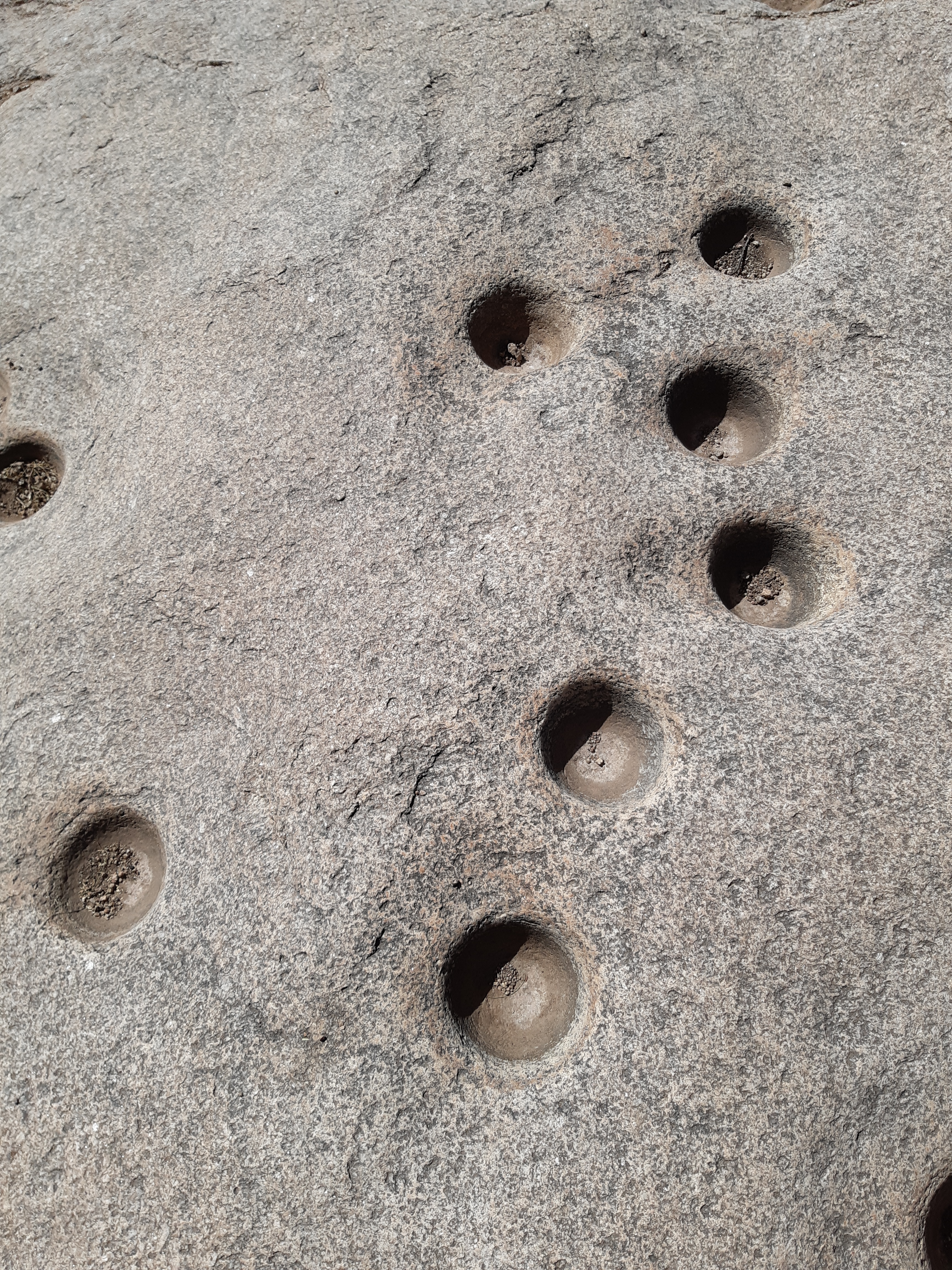 The rock paintings, which were often symbolic, were also used to inform the Inca’s when they should be on the move to be in time for the trade that occurred further south before the rainy season started. (Yes, that ís an ostrich – for a moment there I thought I was back in South Africa).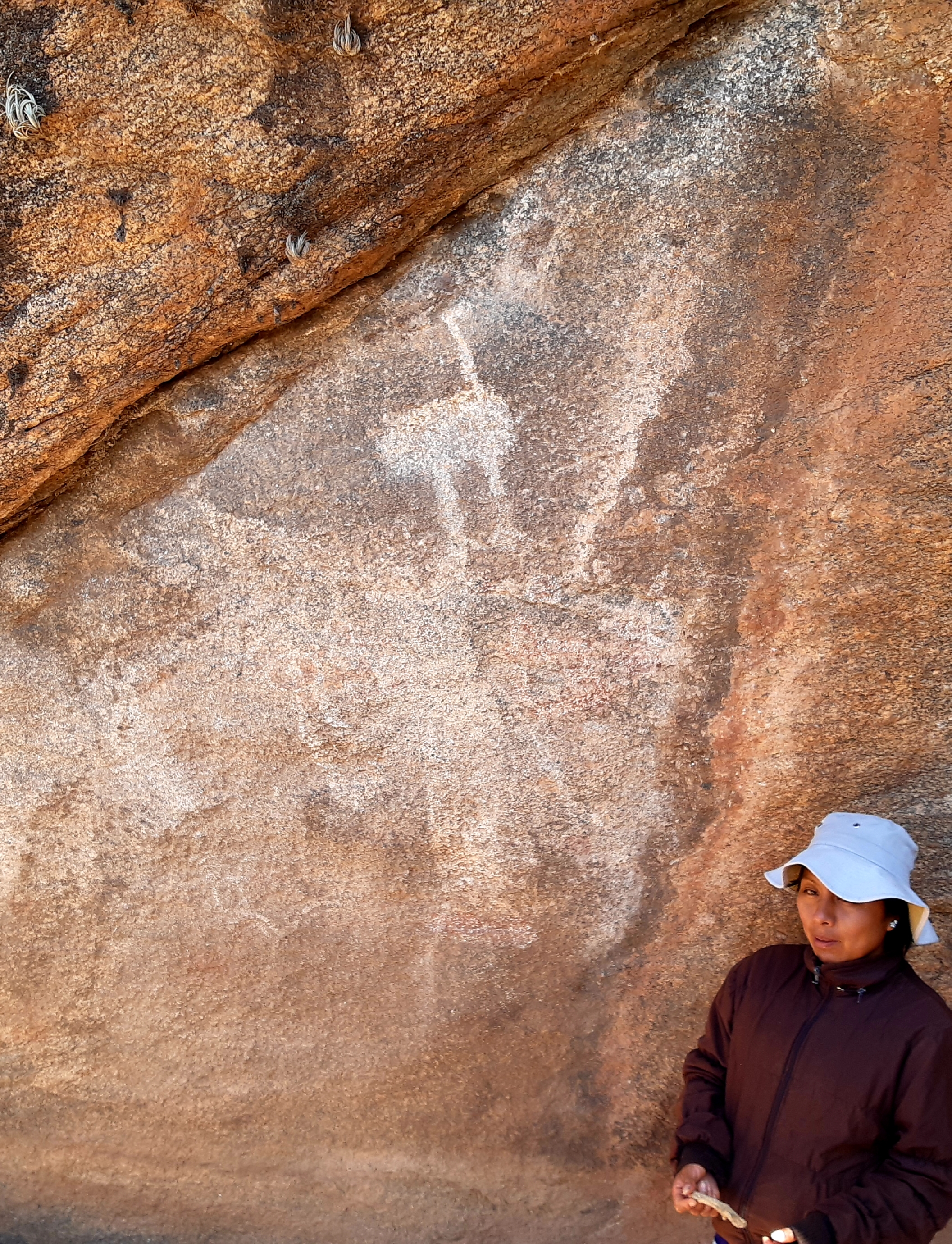

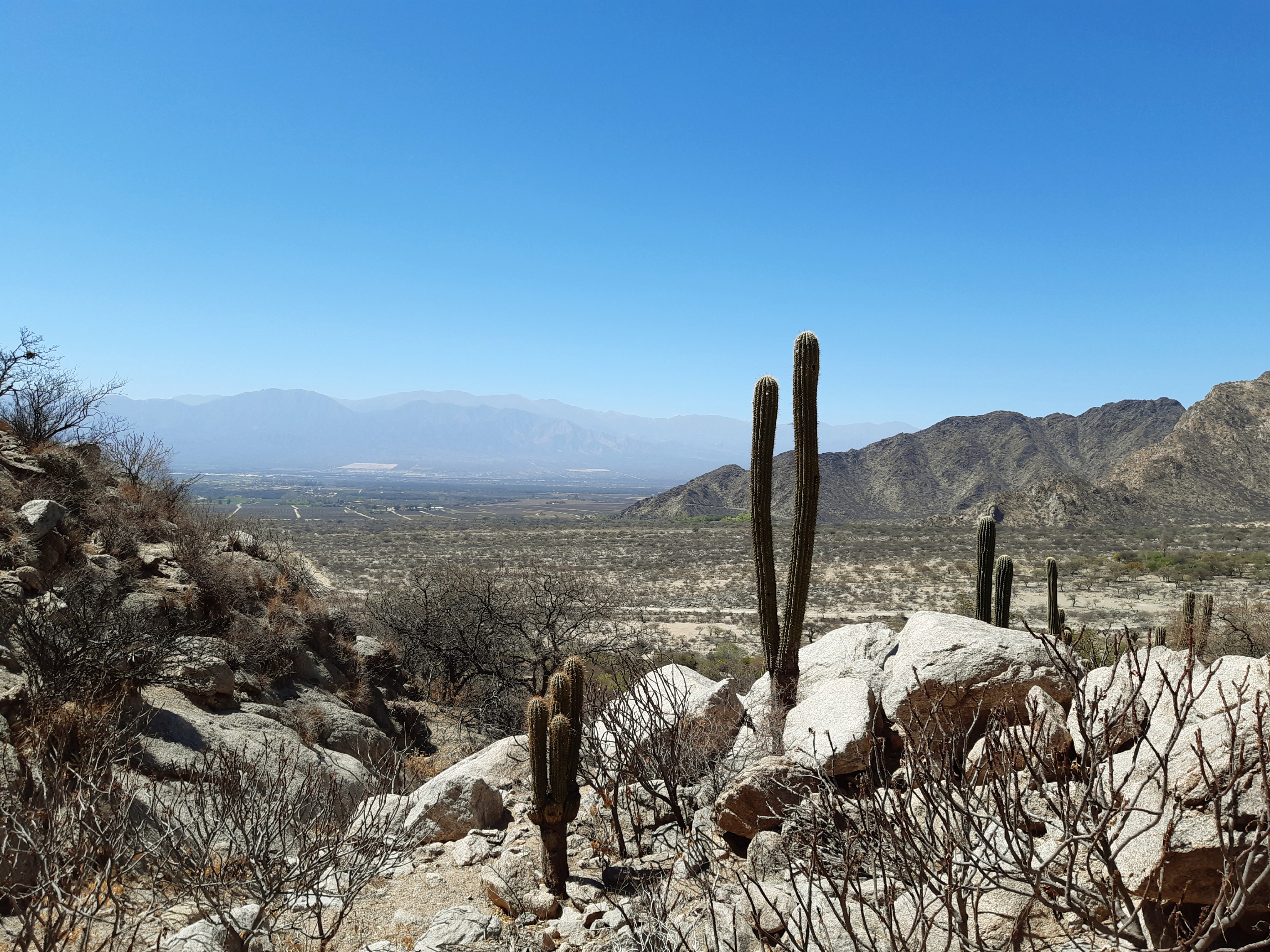 There is an excellent wine museum, partly in a new building, and partly in the Enchanted Winery, an old family owned winery that had been replaced with another new building. The walls are covered in poetry about the earth, water, sun, air and wine, reflecting the respectful and romantic approach that is maintained towards the cultivation of wine in this region. Vines were brought to the Calchaqui valley in 1556 by the Spanish Conquerors, who came from the north (Chili and Peru). Huge clay pots were used for the fermenting process and subsequent storage.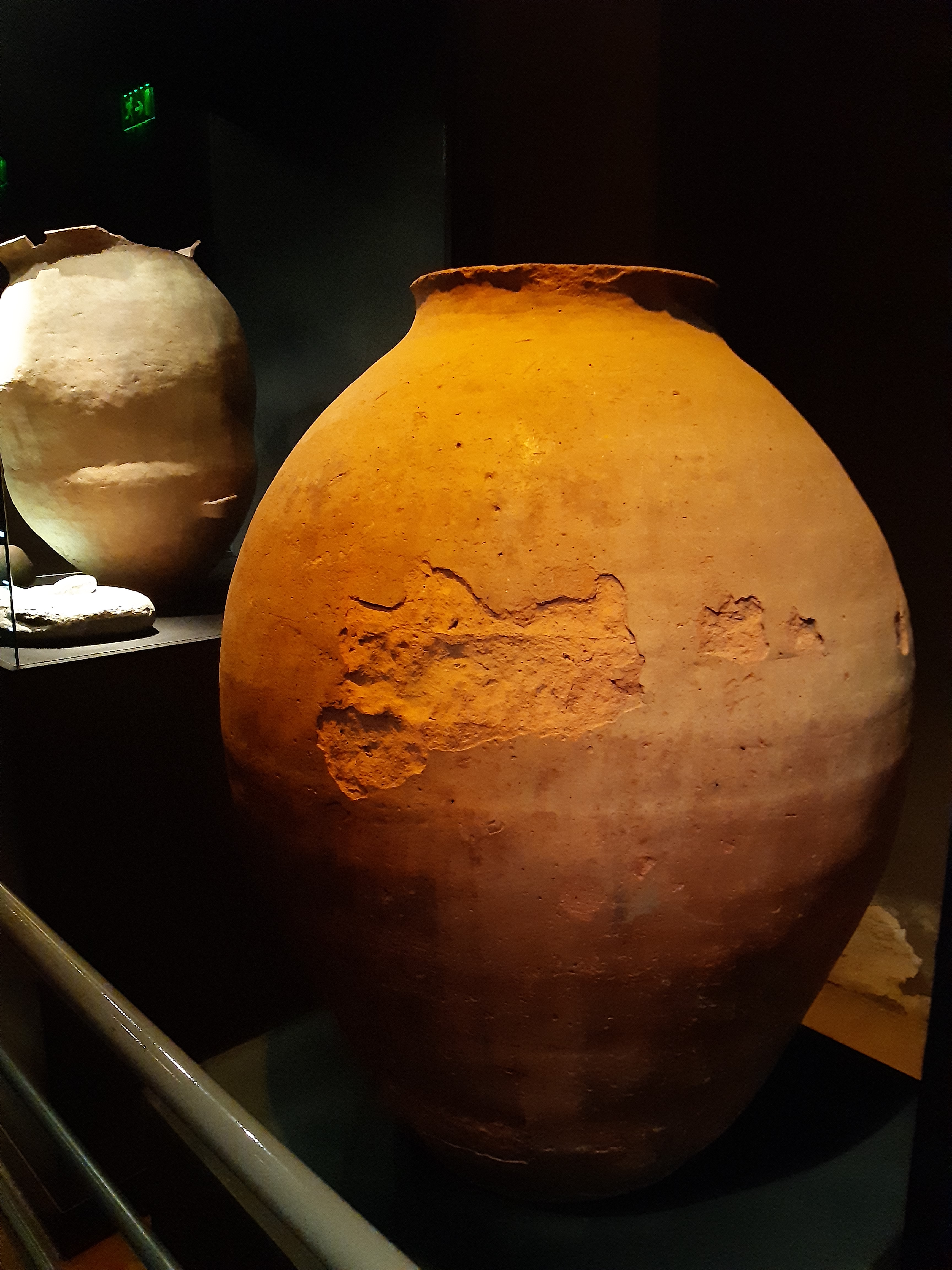
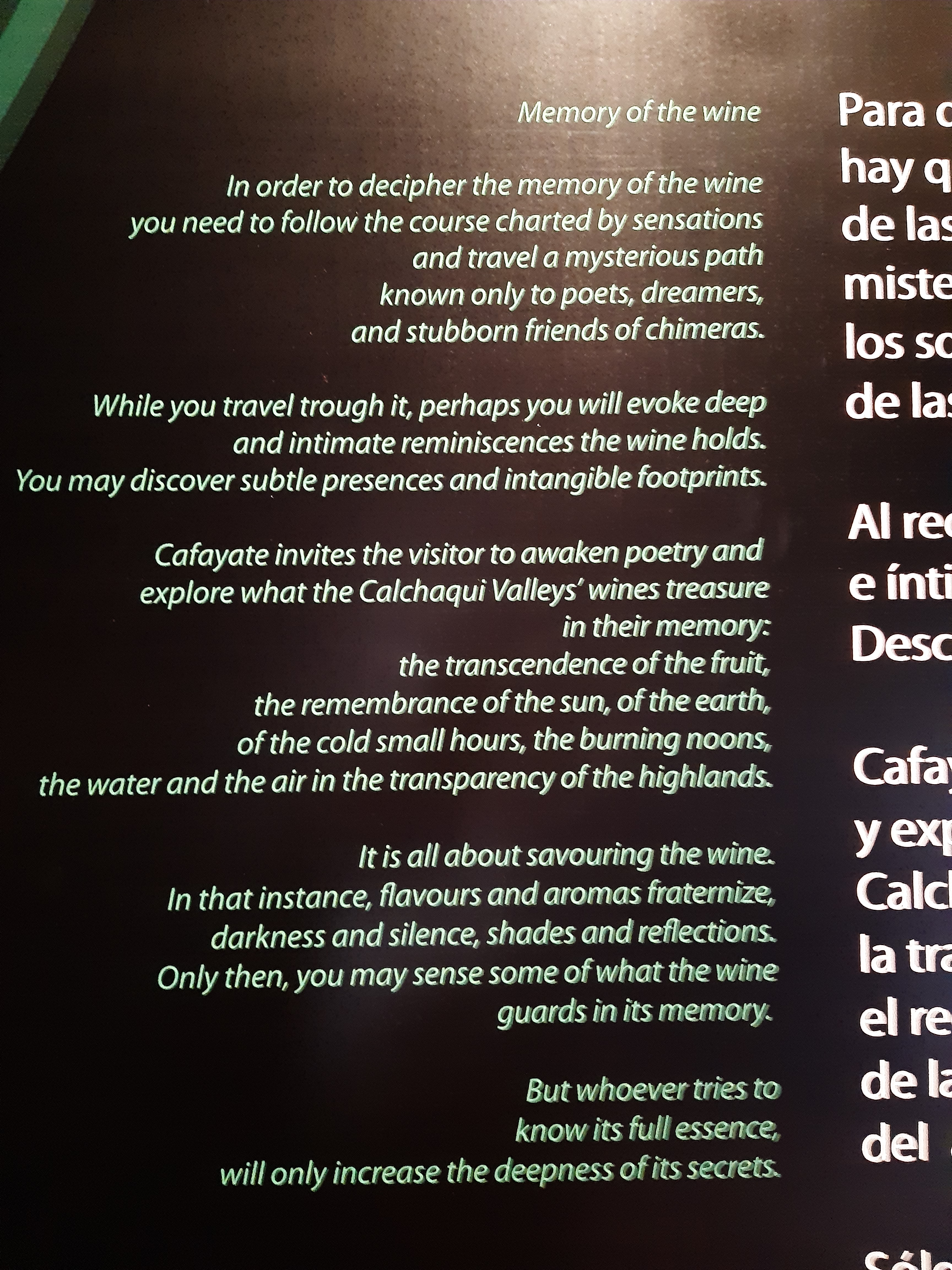 The above reminded me of a thought that I had had when living amongst the vineyards outside of Stellenbosch years ago. I was taking a walk in the vineyards one day, when something I had been thinking about made me laugh out loud. The grapes were full and ripe, just about ready to be picked, and it suddenly occurred to me that my laugh might be caught up and stored in the grapes, and some day, someone might be taking a sip of wine and suddenly laugh without reason – my laugh, stored as ‘memory’ in the juice of the grapes. Possible, why not?
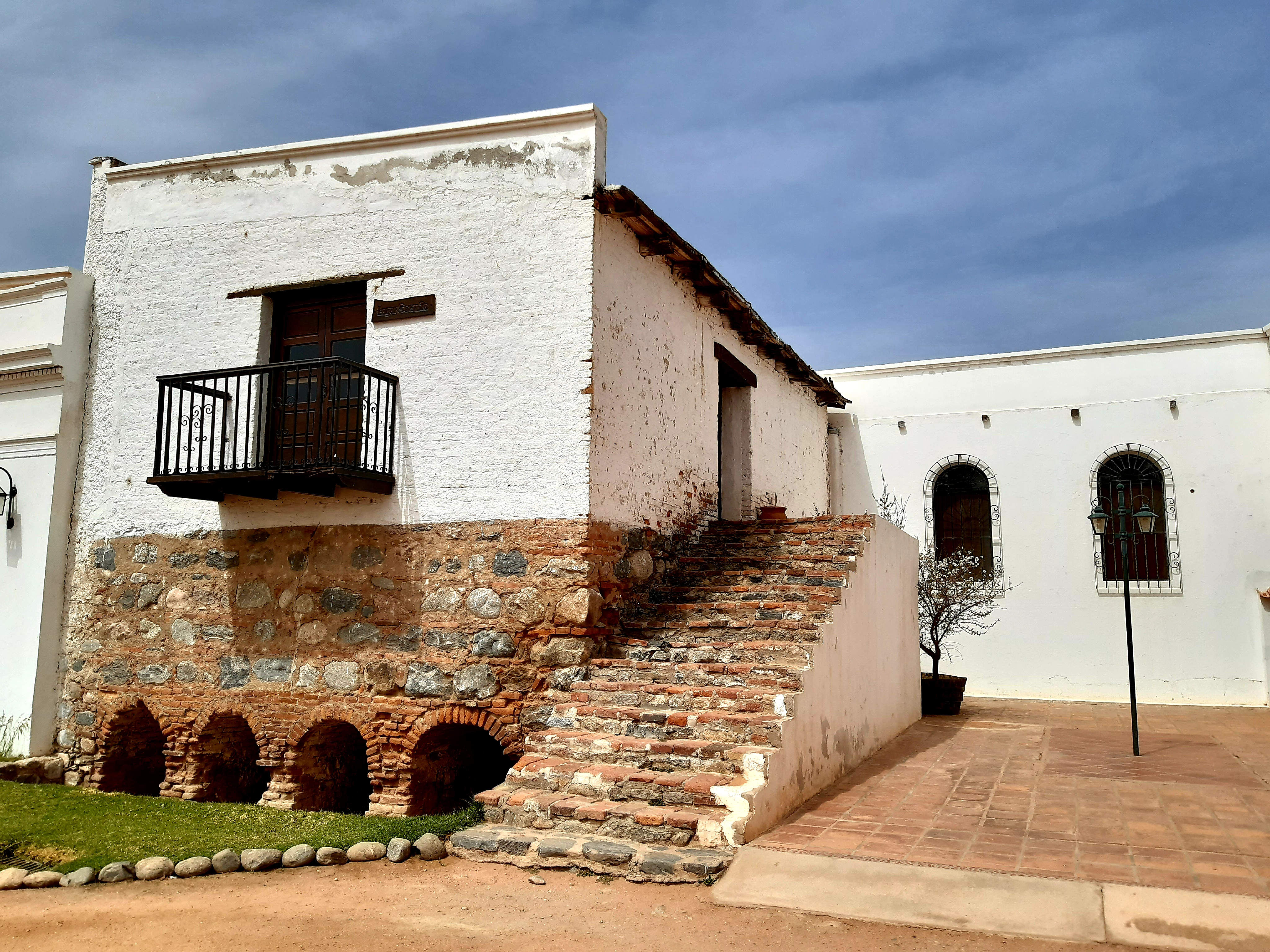
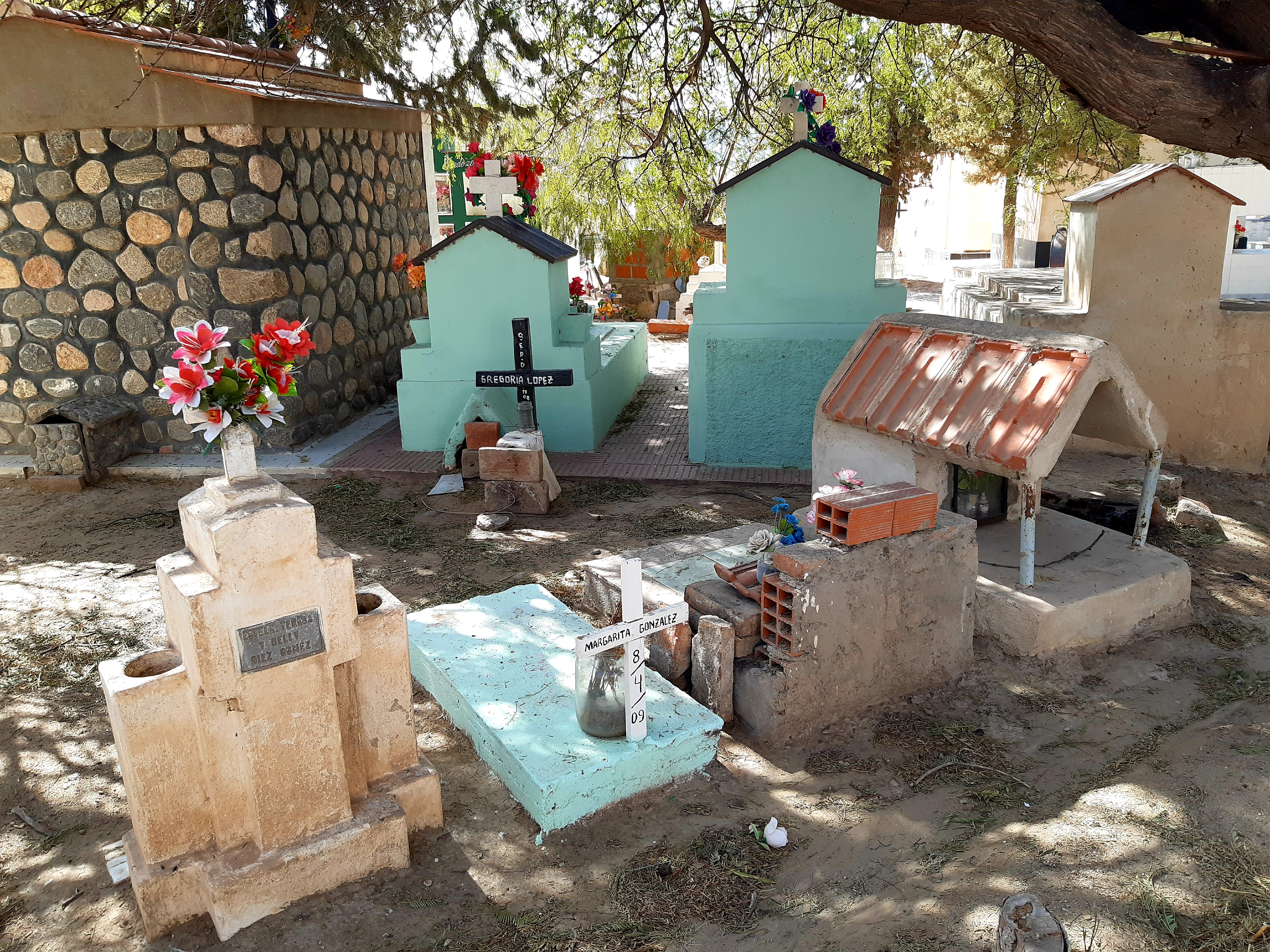
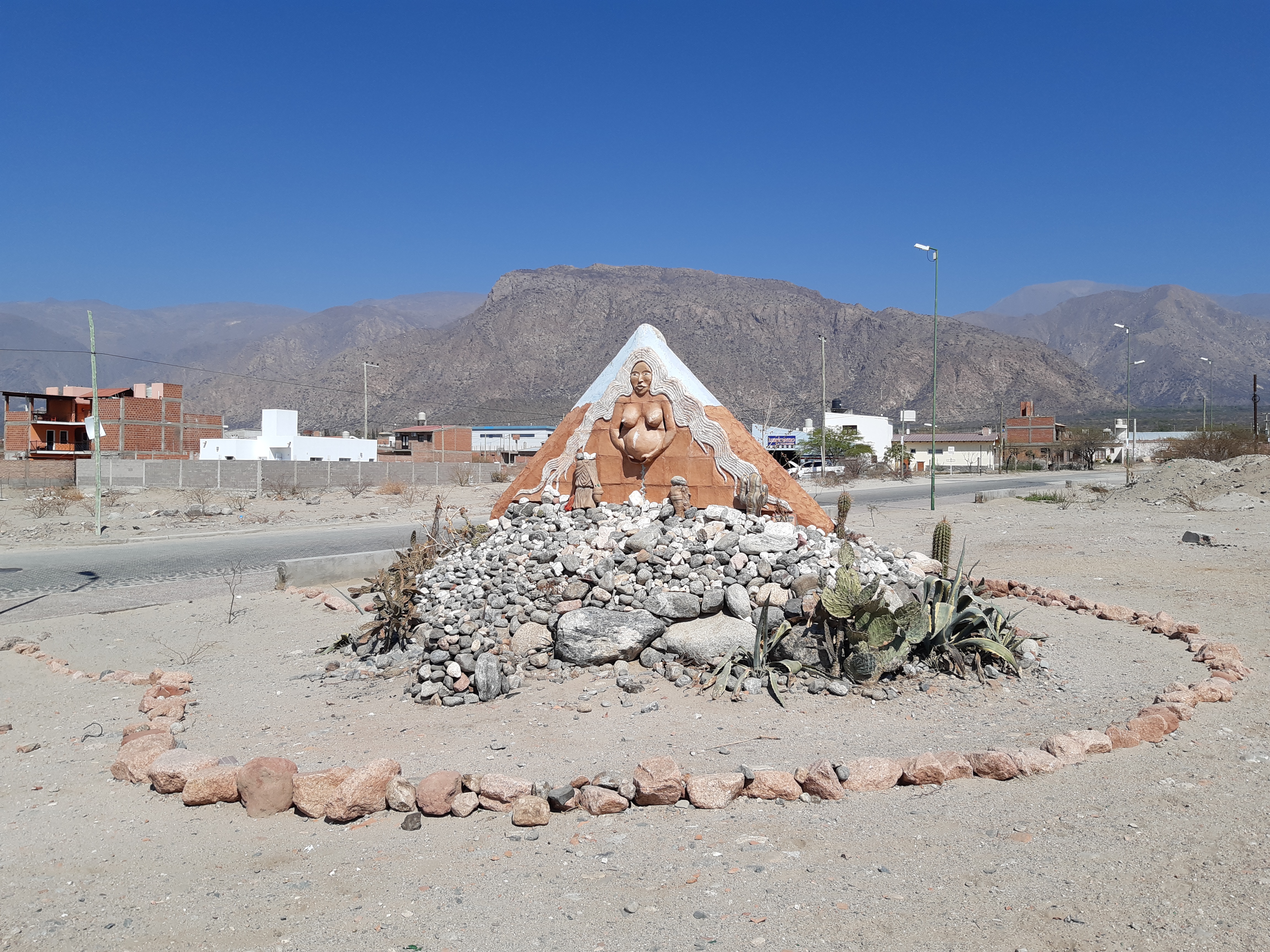 Here are some photo’s of other places and buildings of interest. I was astounded by the amount of graves of small children in the graveyard.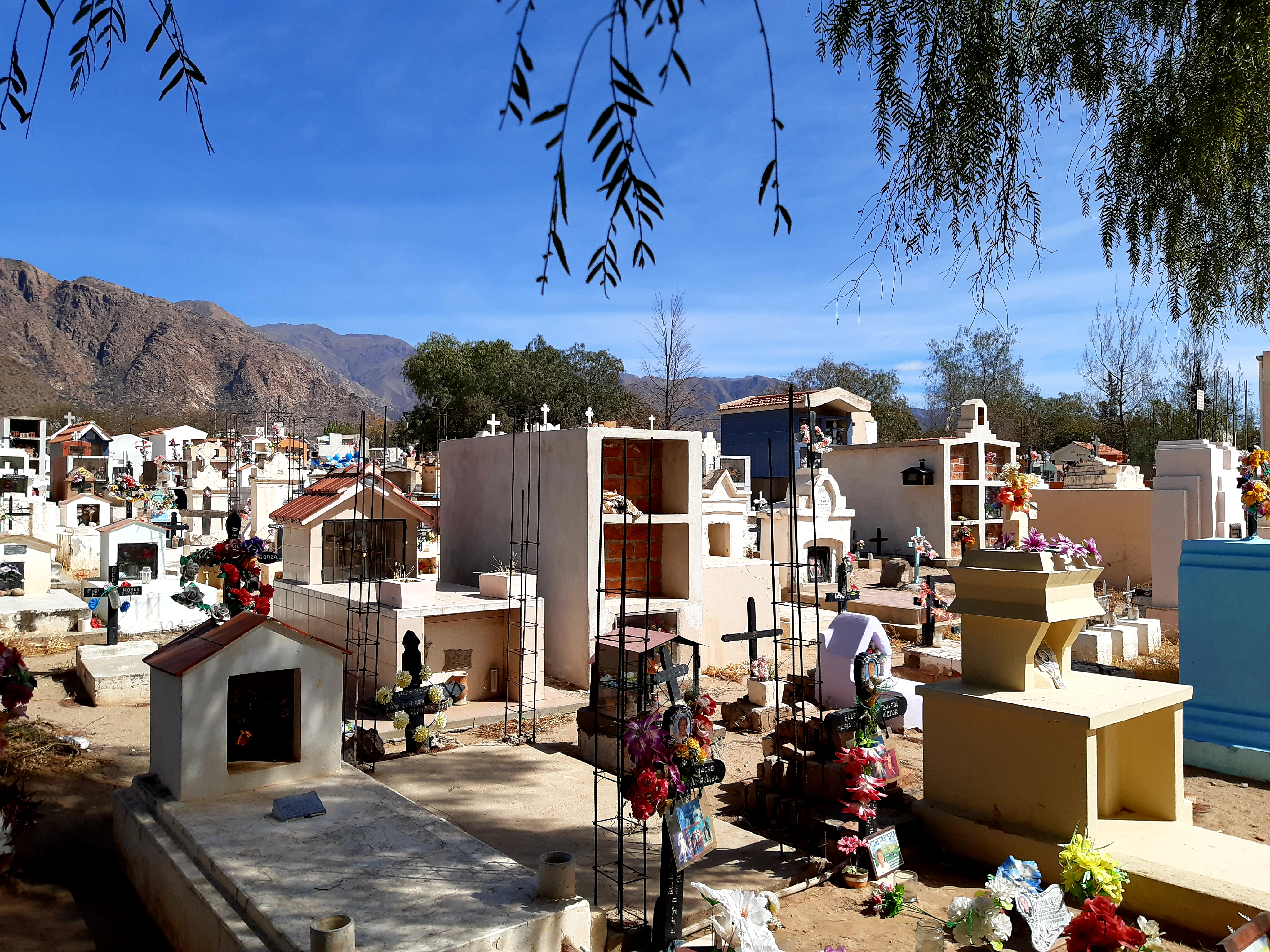
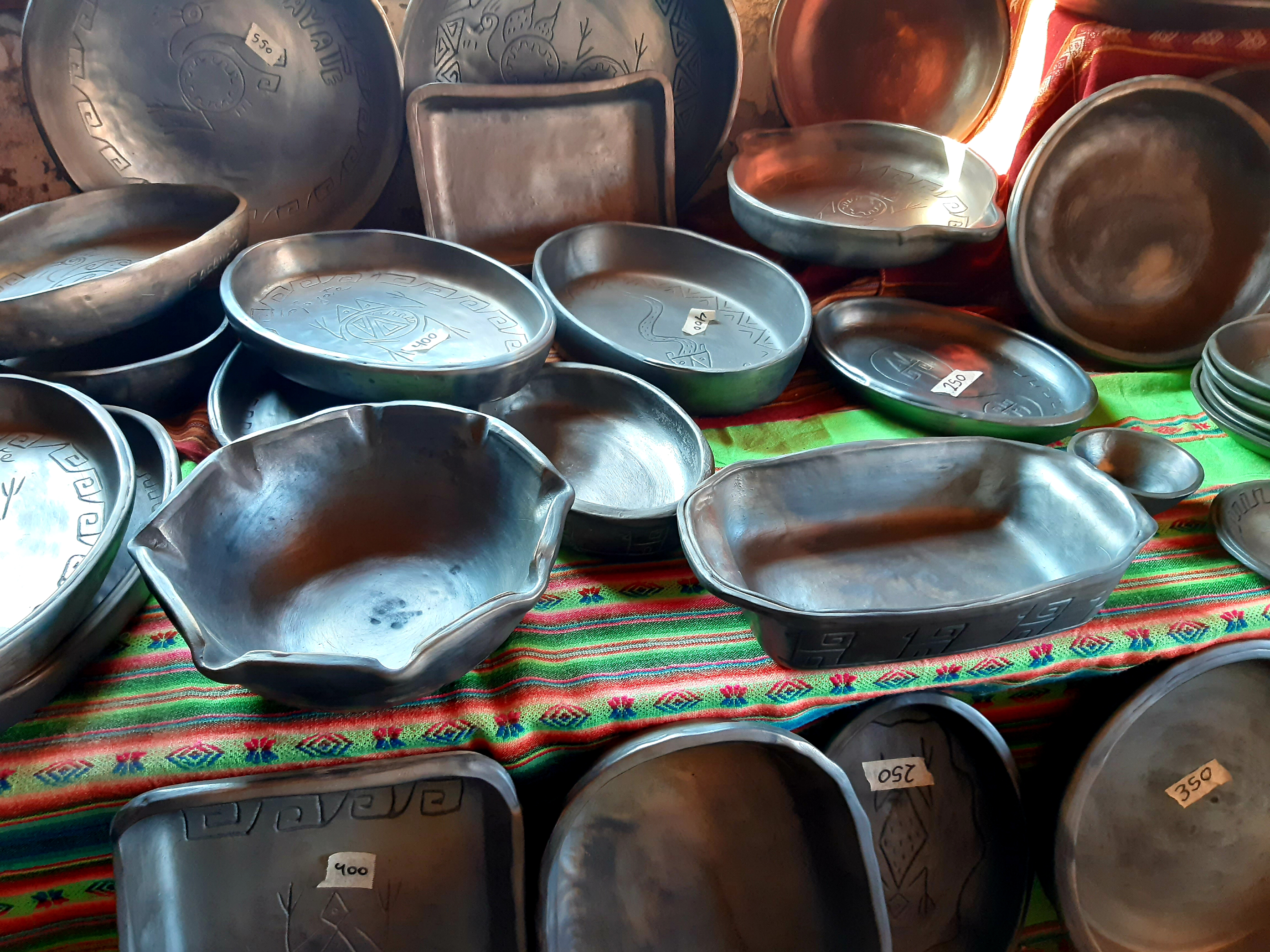
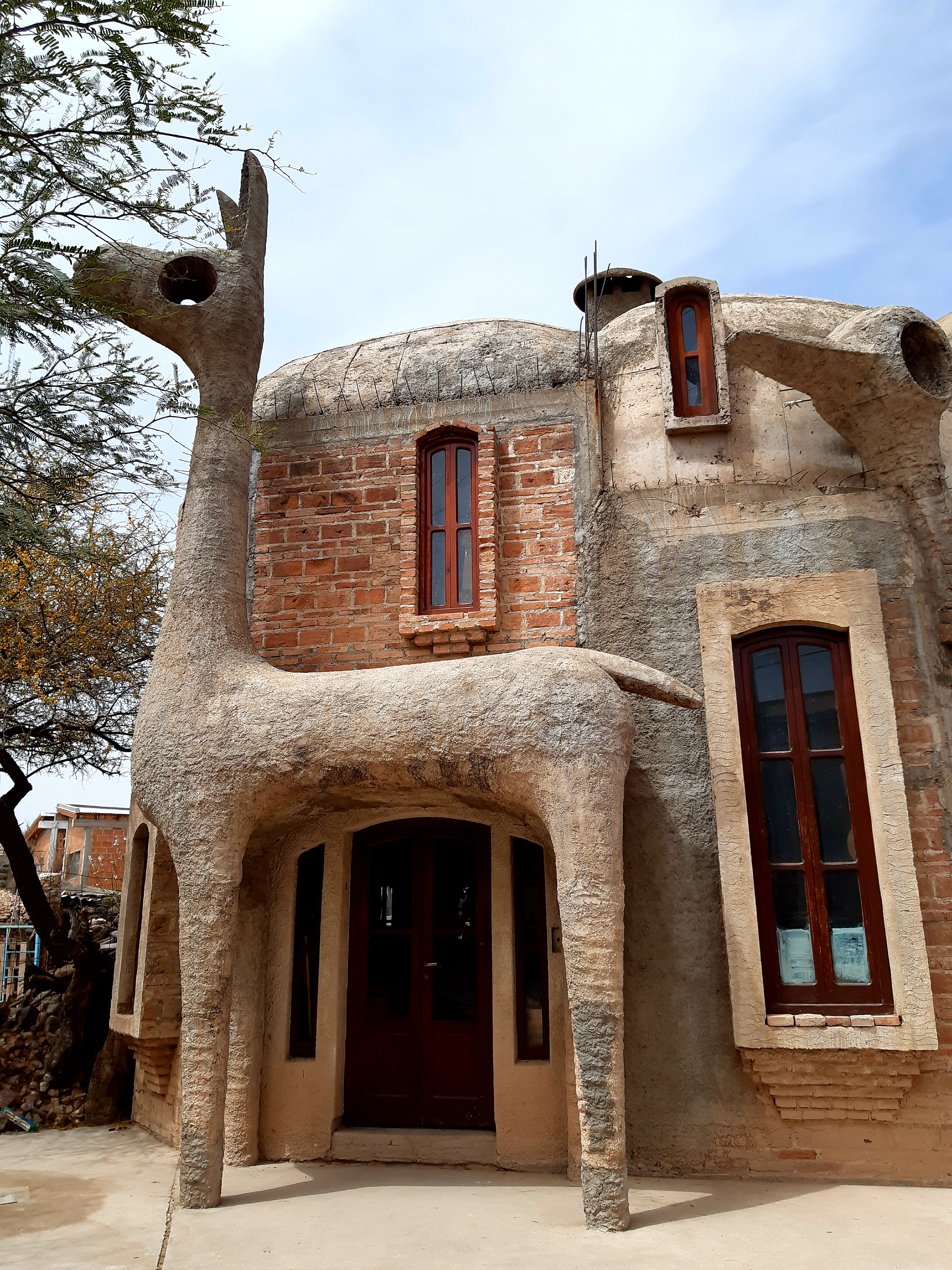 One of the artisan markets, with woven and knitted items made from llama wool: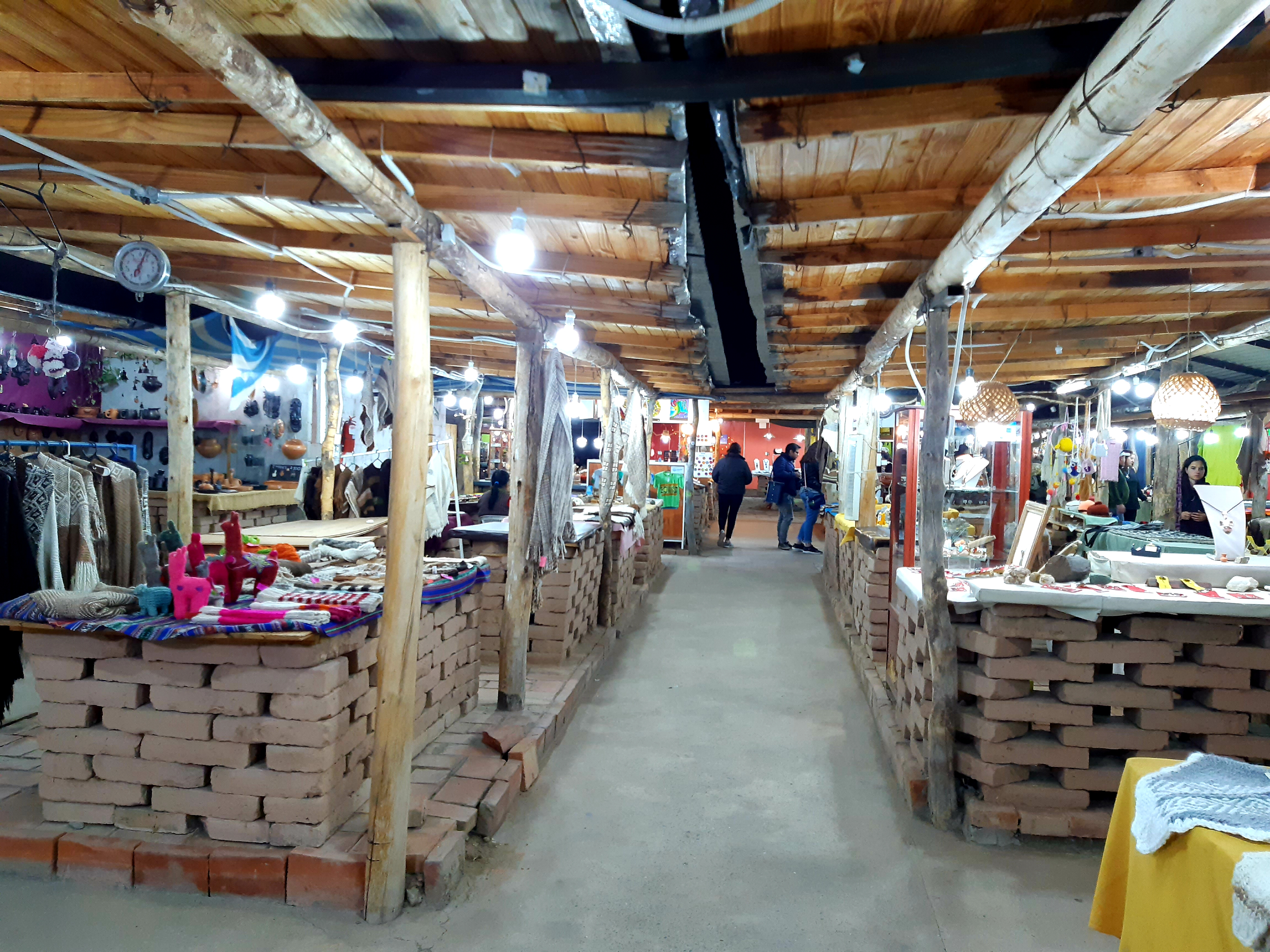
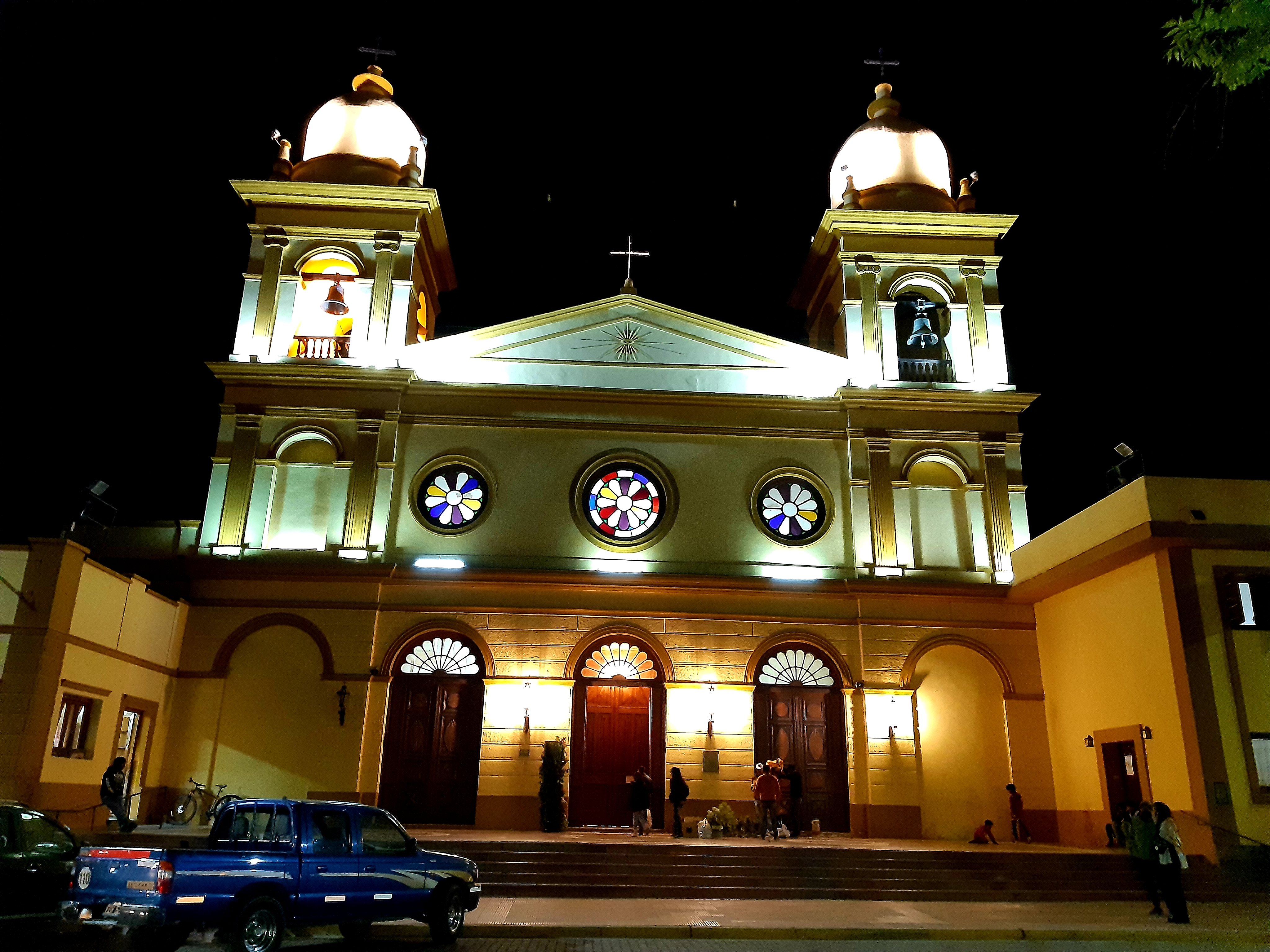 These old Ford and Chev bakkies (trucks) are everywhere, still very much in use: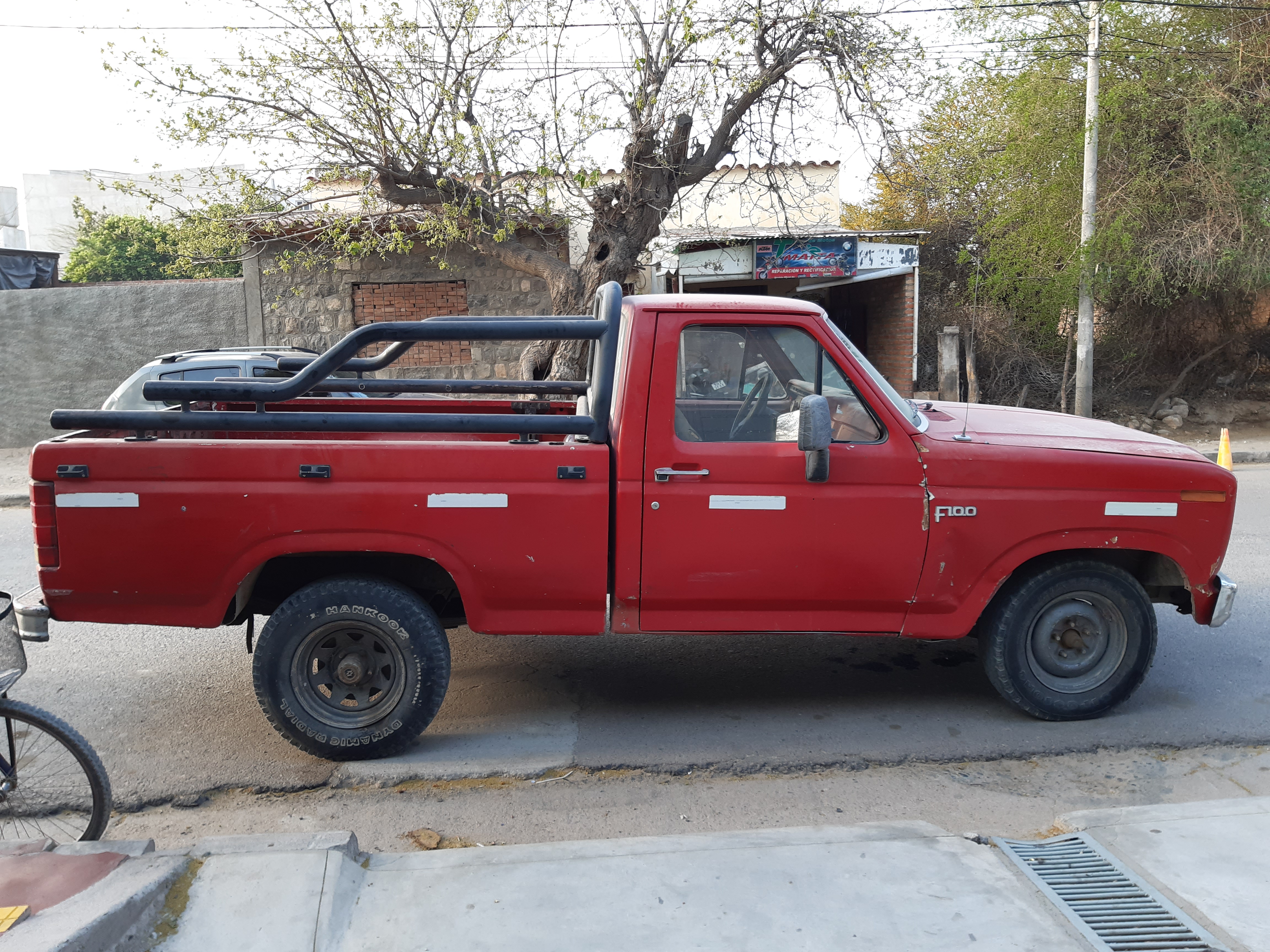
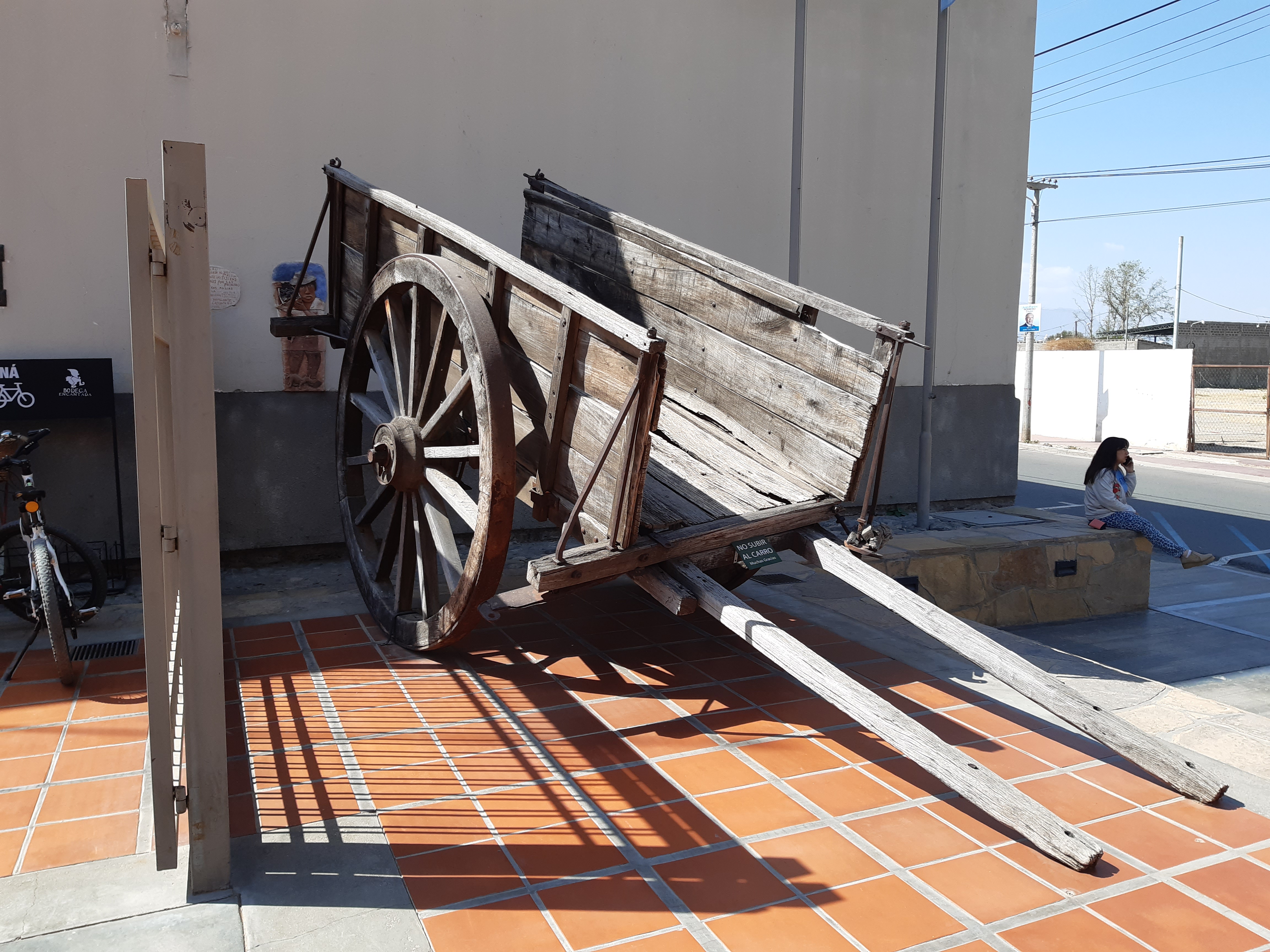 Obviously the above is nót a Ford or Chef – or maybe it was the forerunner??
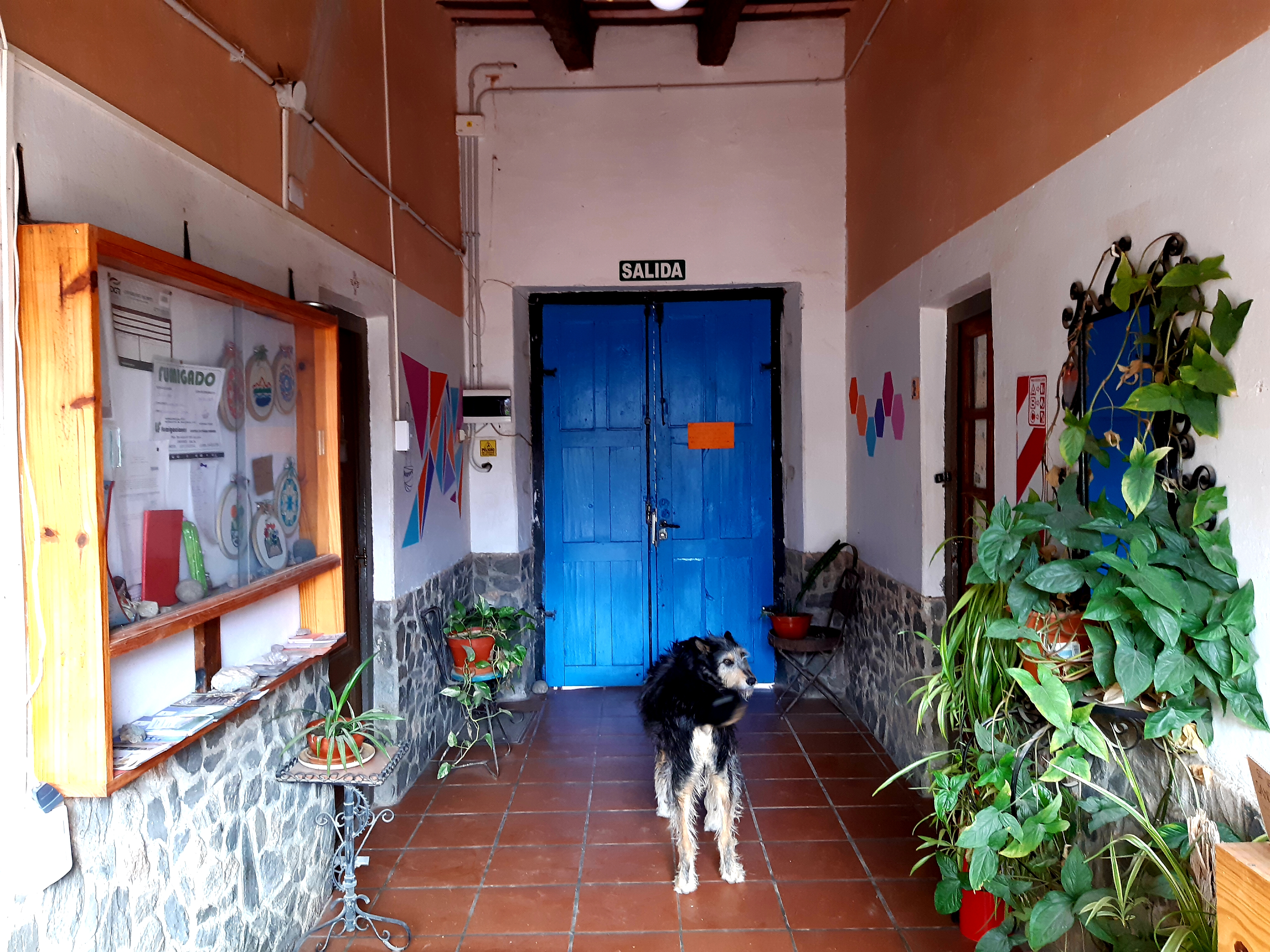
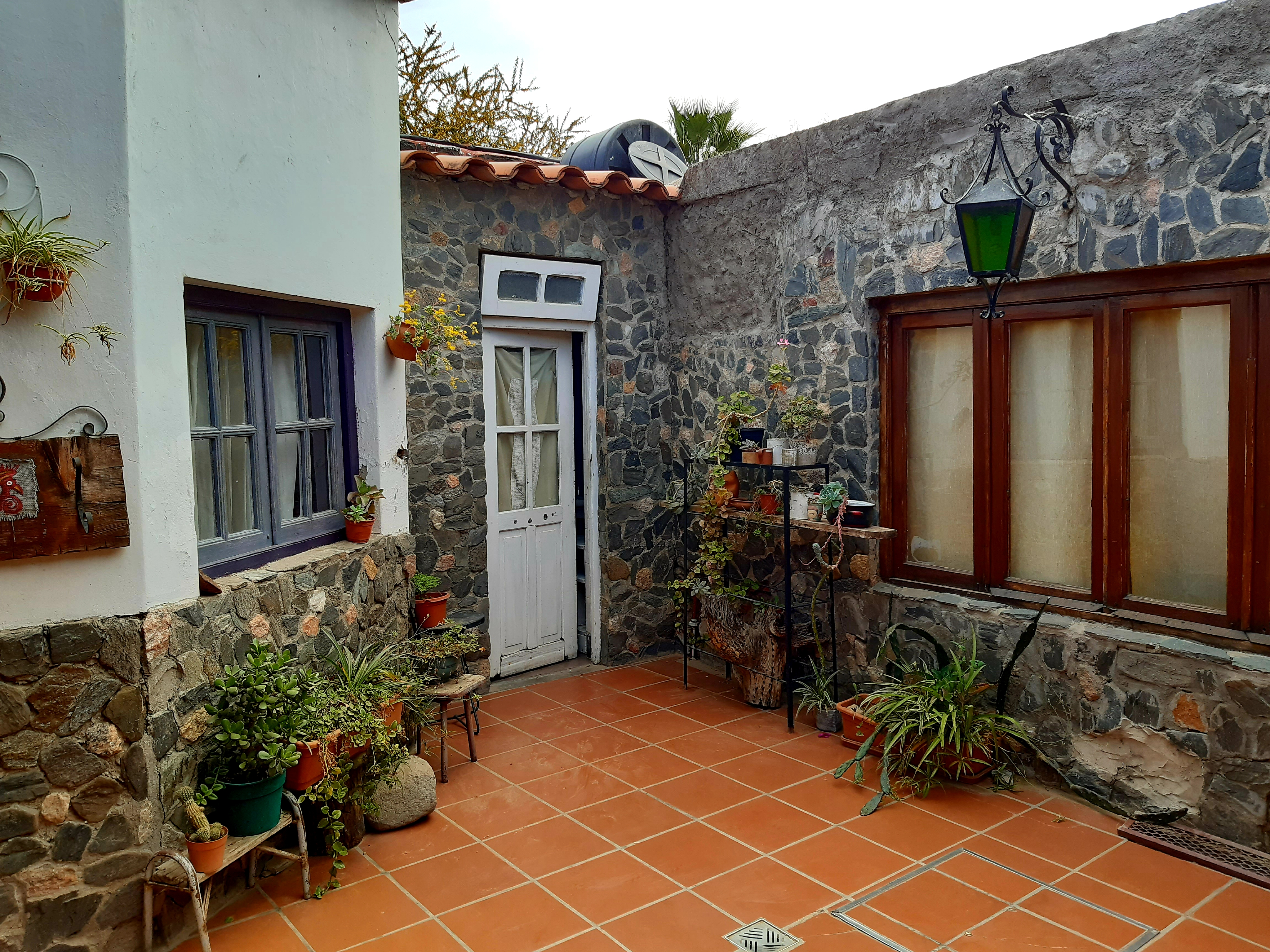 I have to share an emotional moment I had yesterday morning. I was leaving the hostel on a walk, when I literally stopped ‘to smell the roses’ – a deep crimson rose, of the kind that is deliciously fragrant. As I inhaled, I was jolted by immediate memories of my mother’s garden on our farm, Blaauwkrantz. So strong were these memories that tears welled up in my eyes, and I just could not pull myself away from that rose. I kept on pushing my nose into it, inhaling as if I could conjure up the real setting. It is said that smell is directly linked to the memory centre in the brain – well, I can most certainly vouch for that!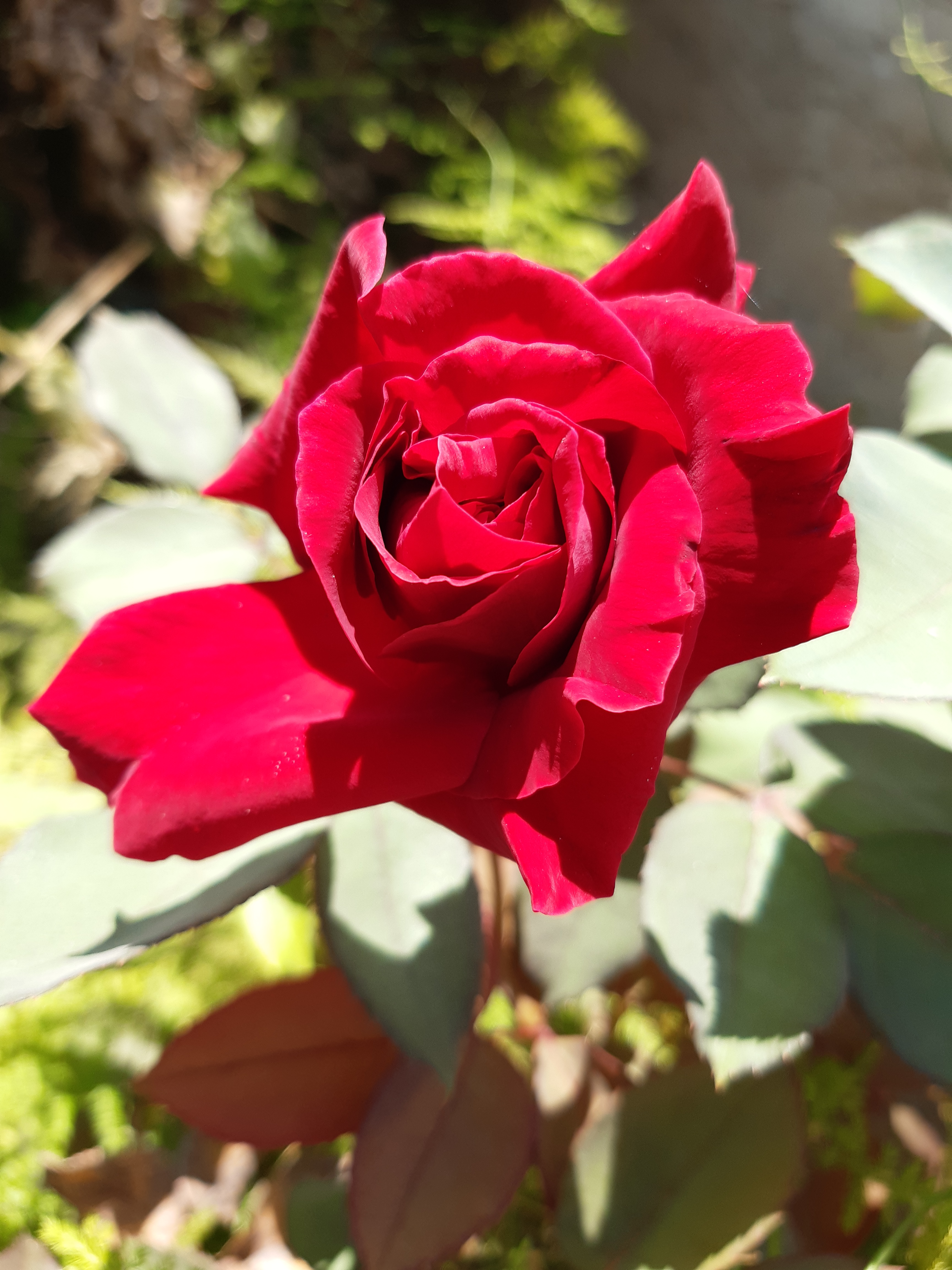
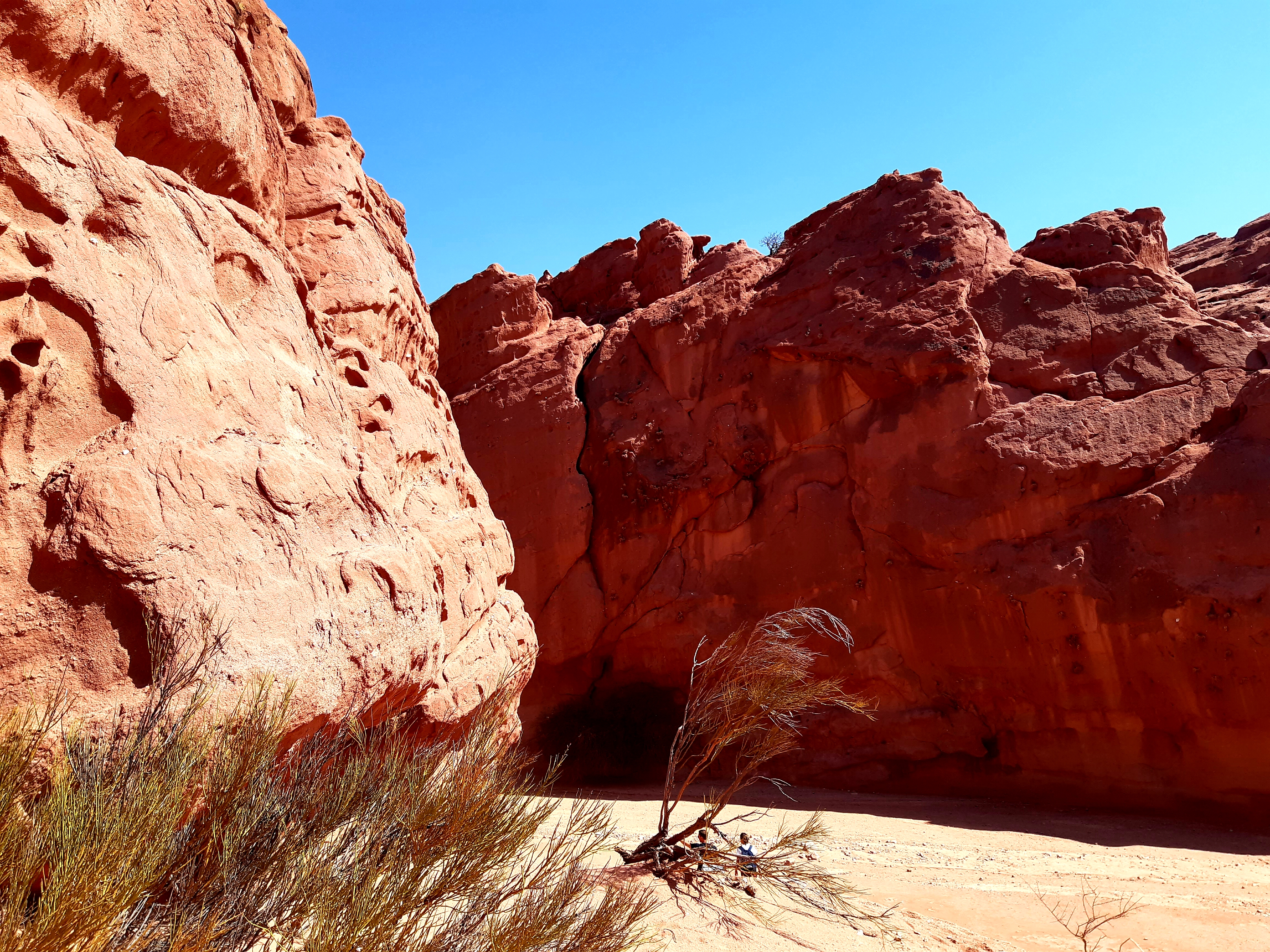
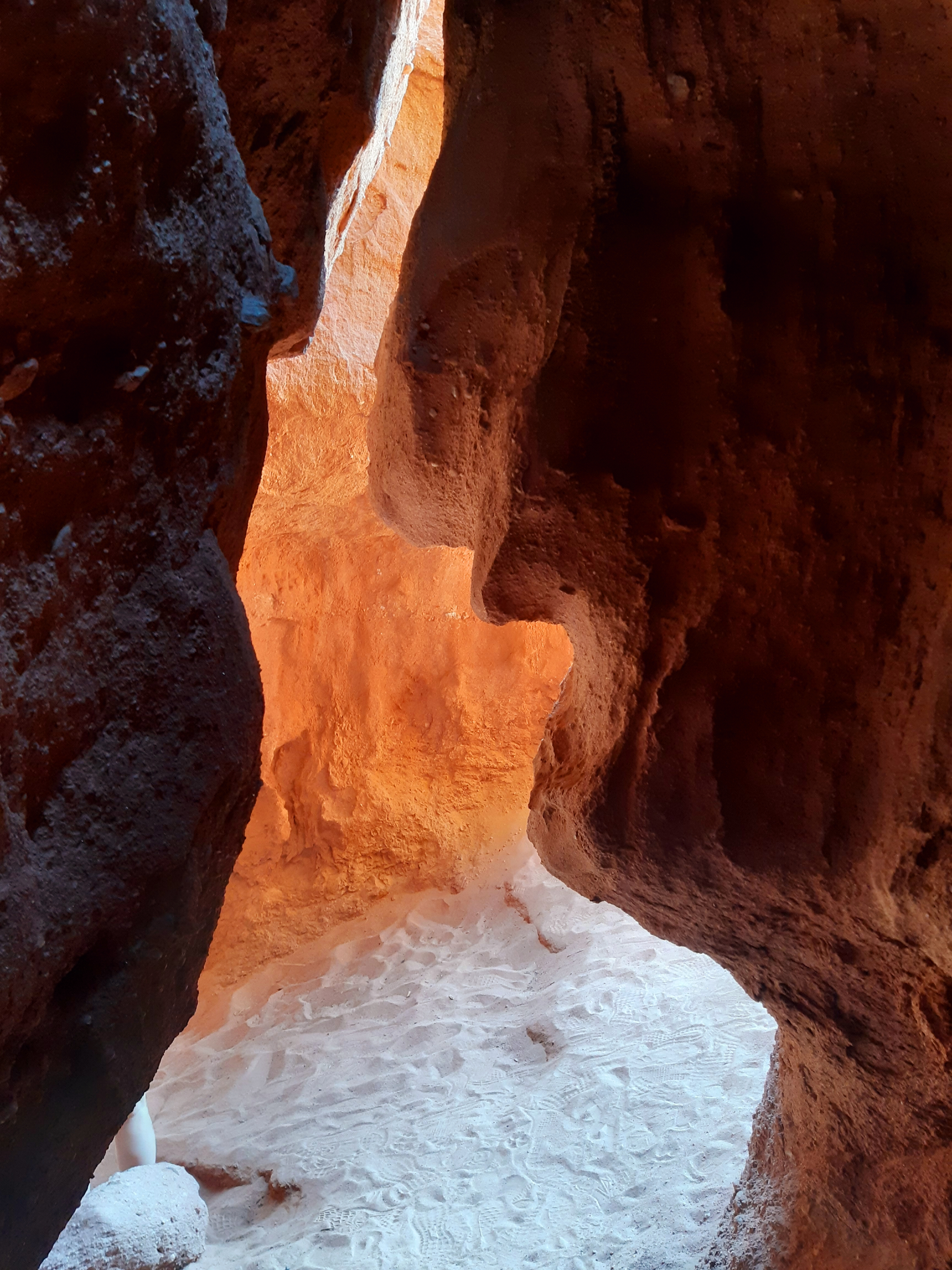
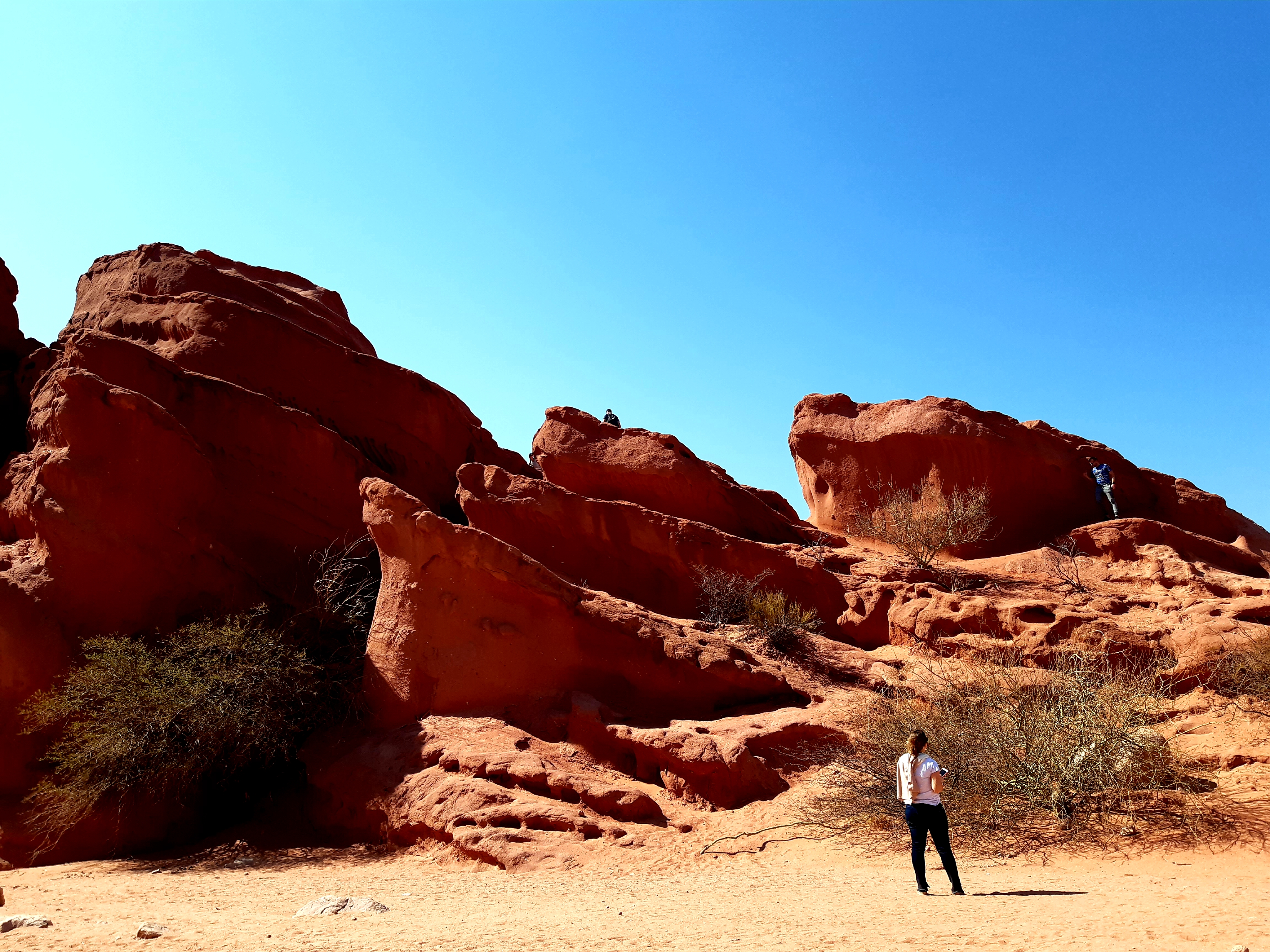 We had to walk about 500m to the following scene, where many colours were visible in the formations: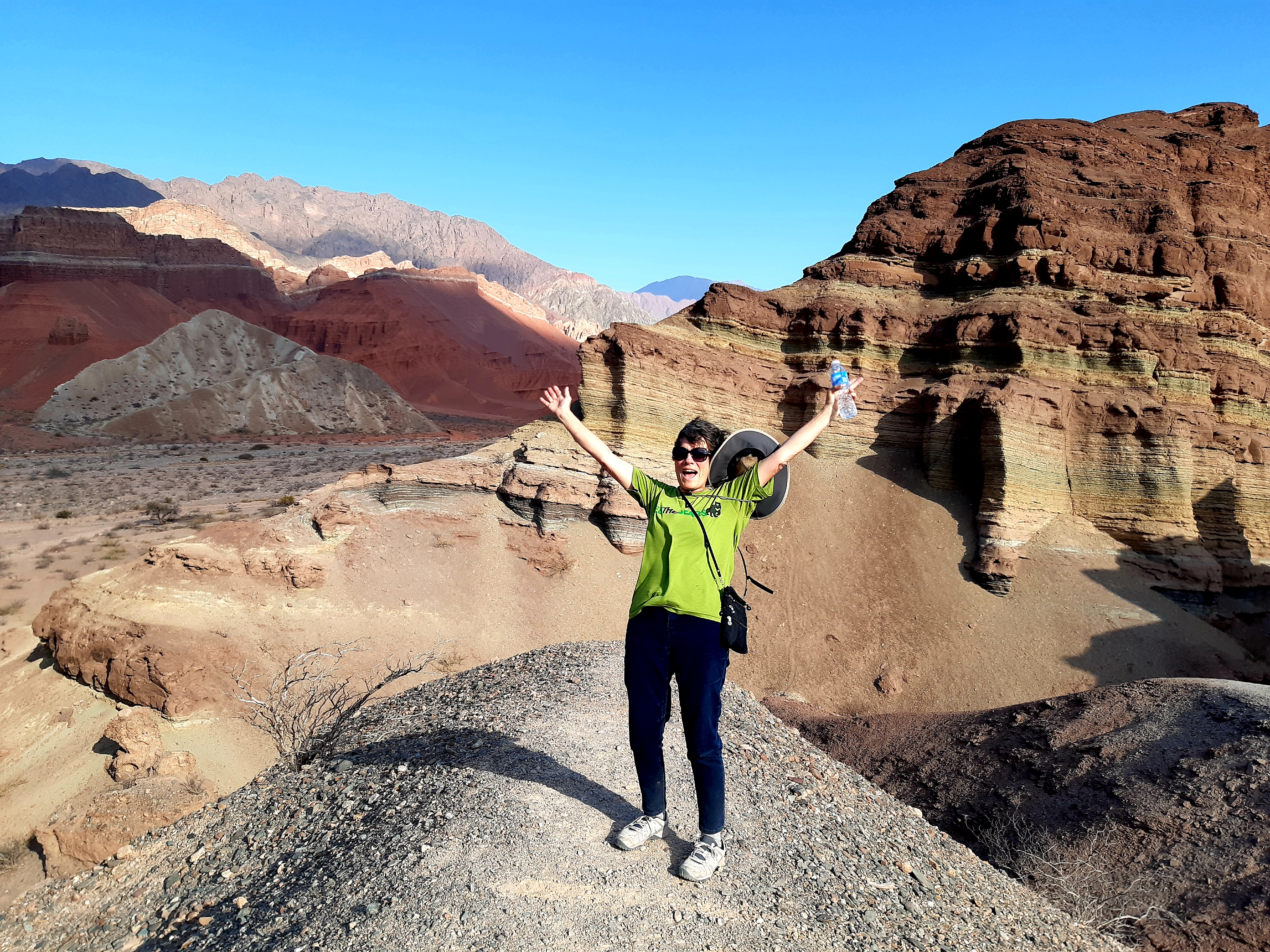
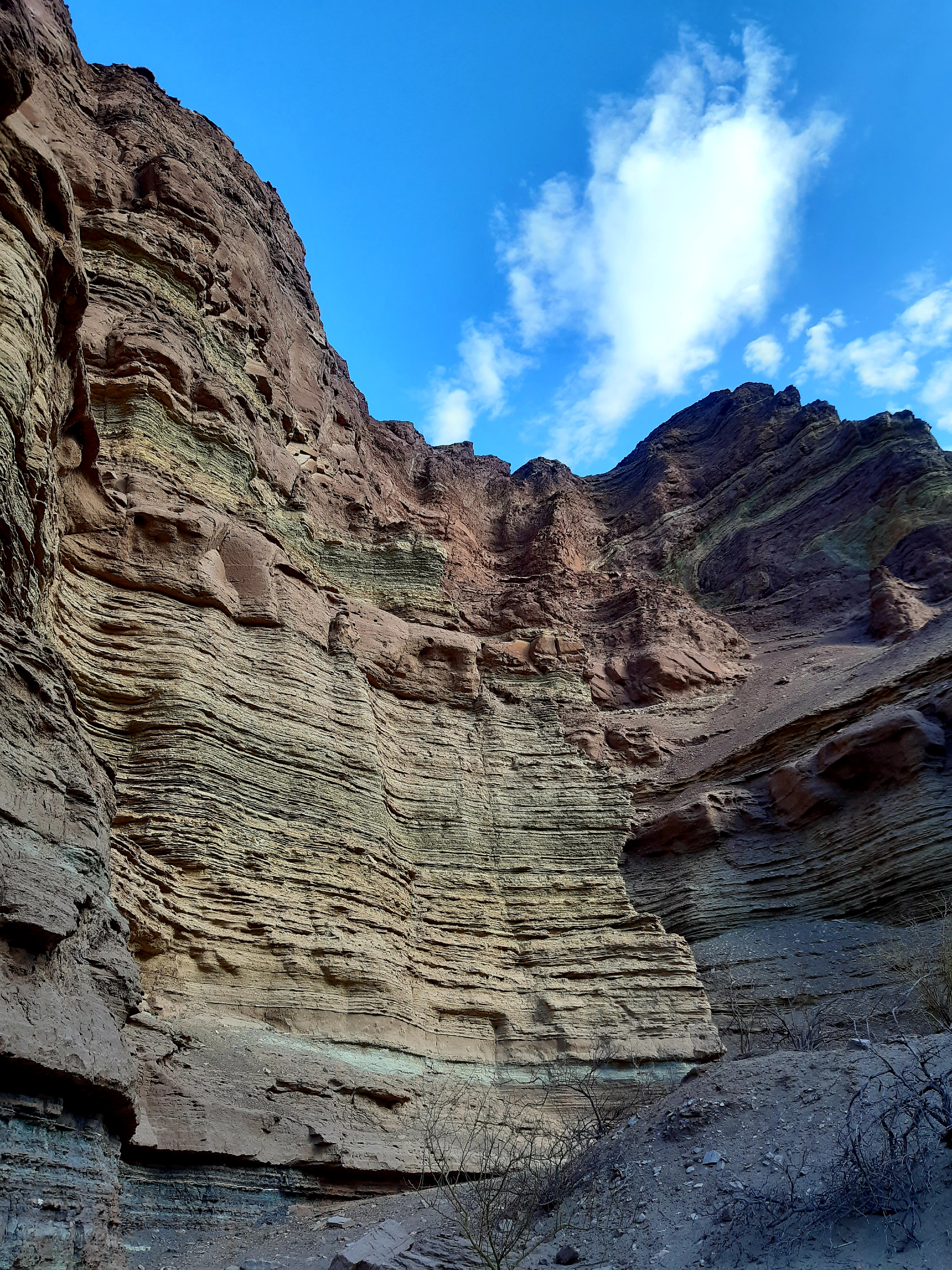
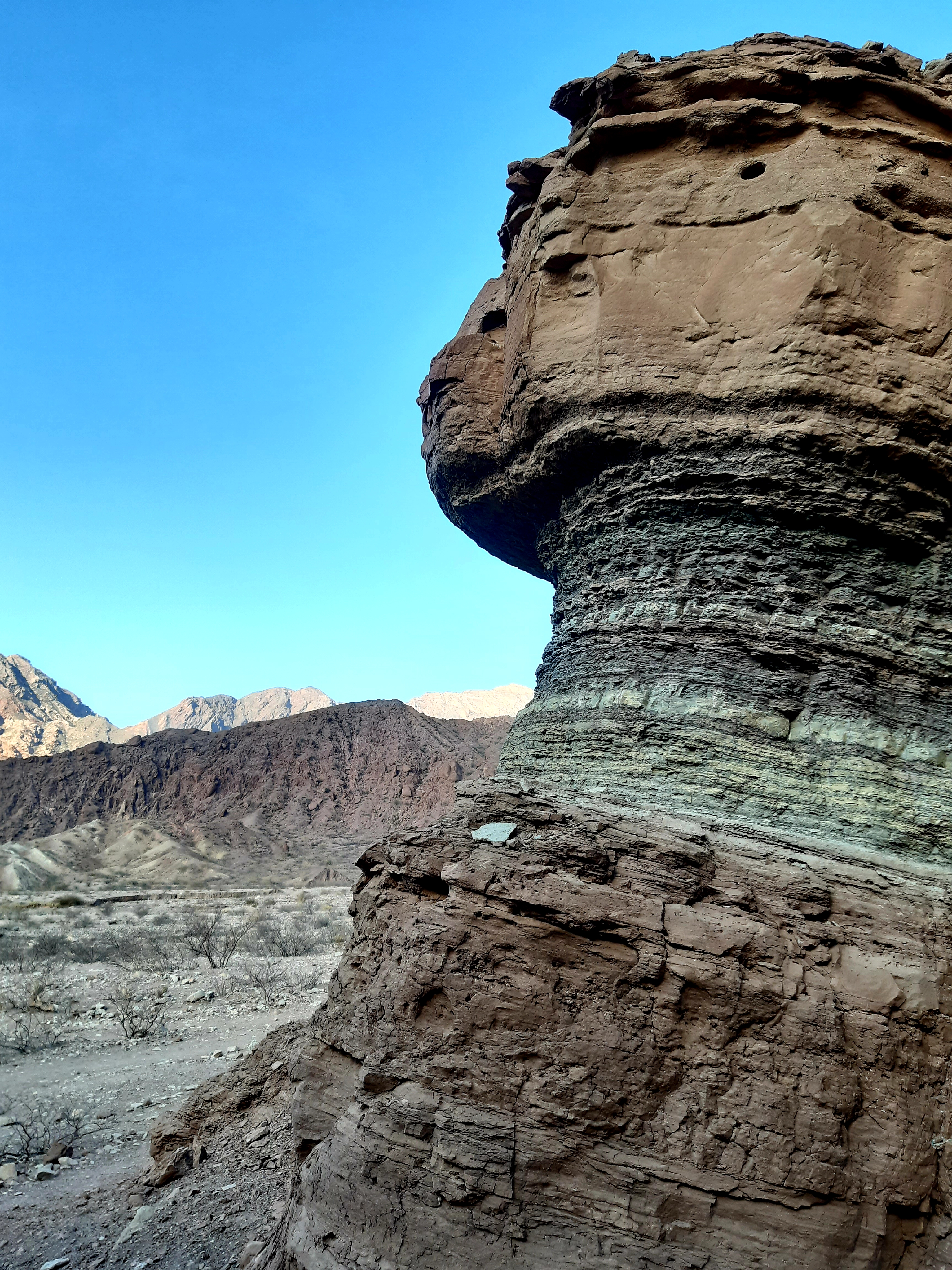
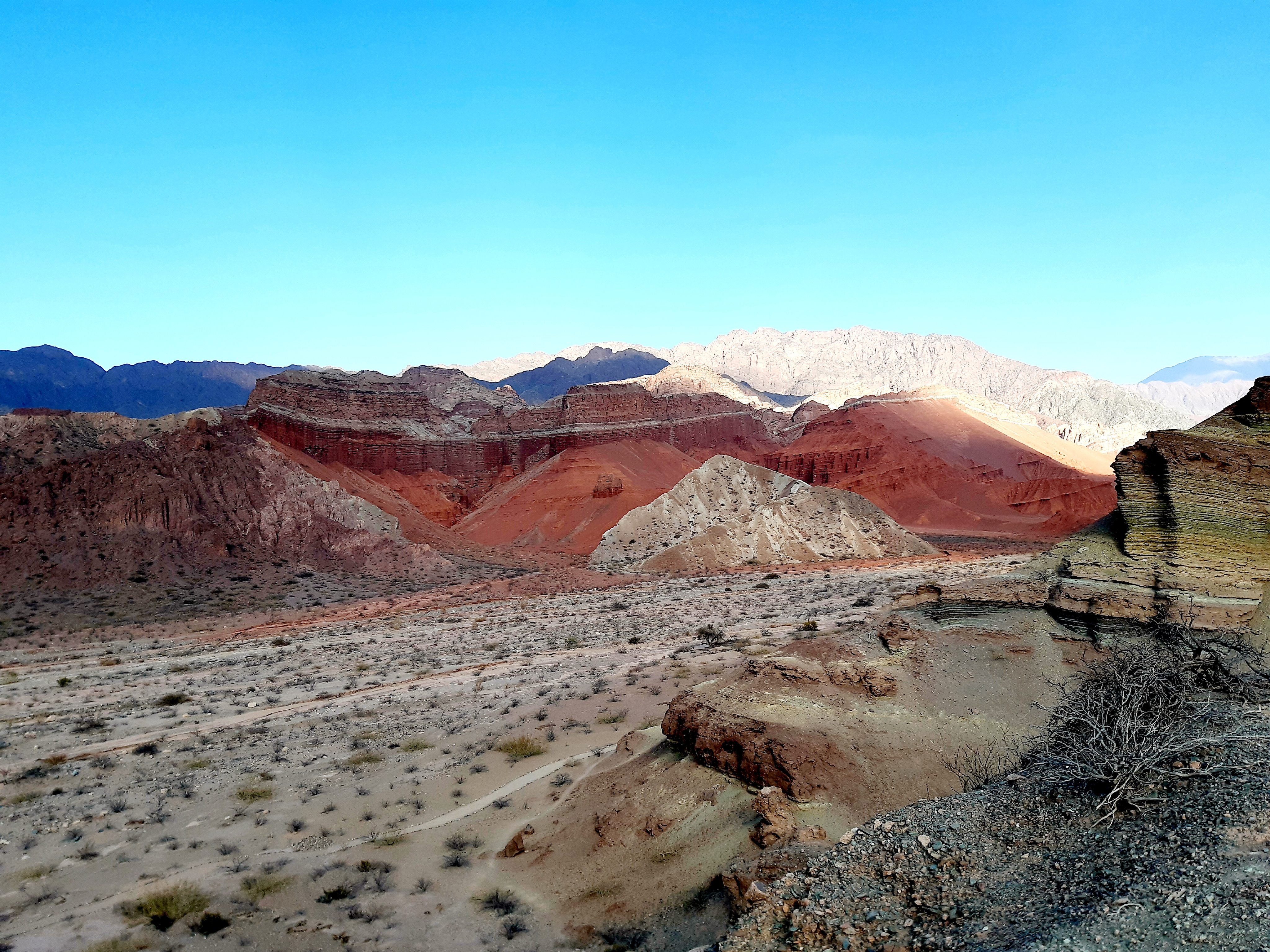 I was told that the red indicates the presence of iron, green is copper, brown is sinc, blue is cobult, yellow is sulphur and white could be salt or gypsum.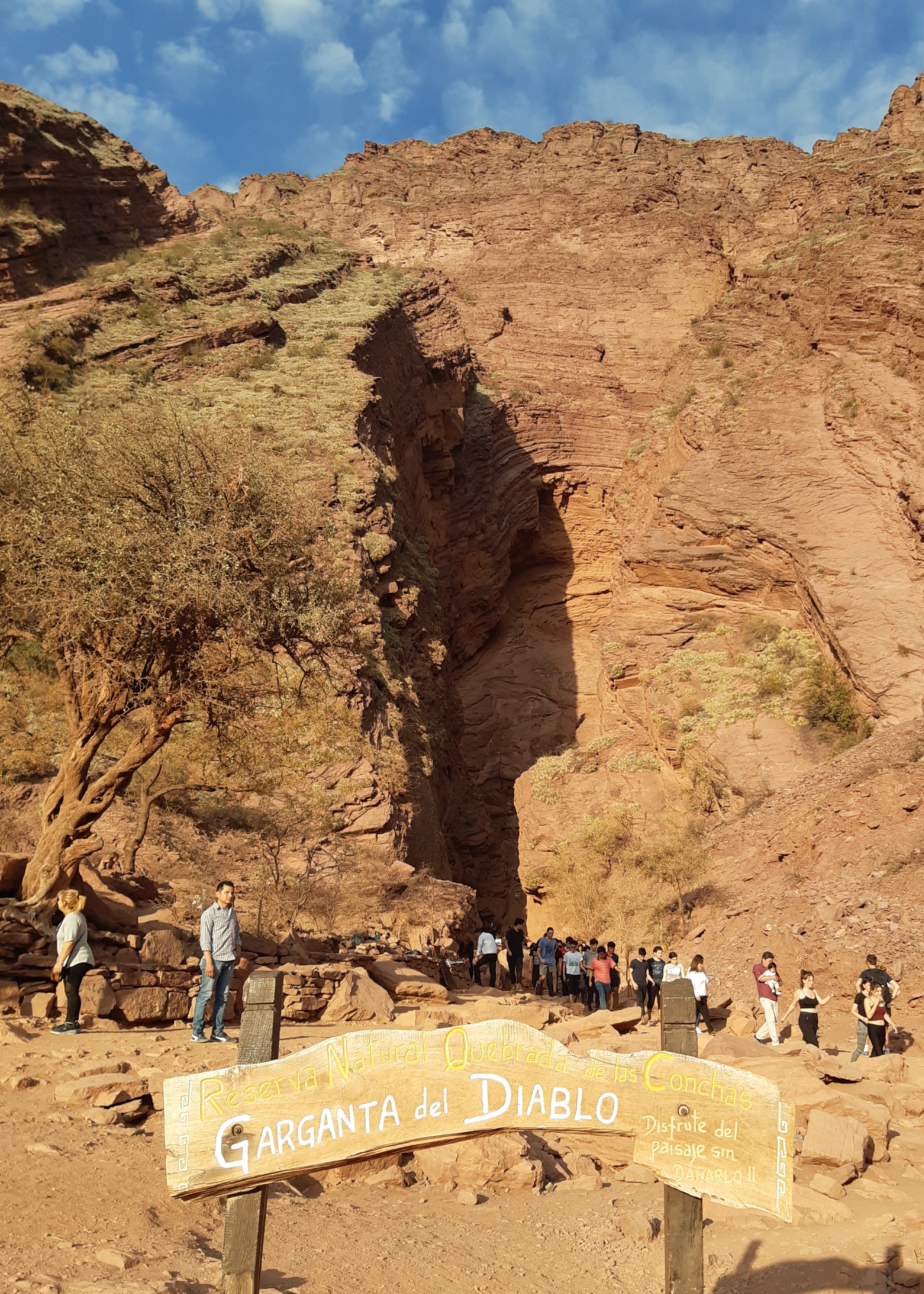
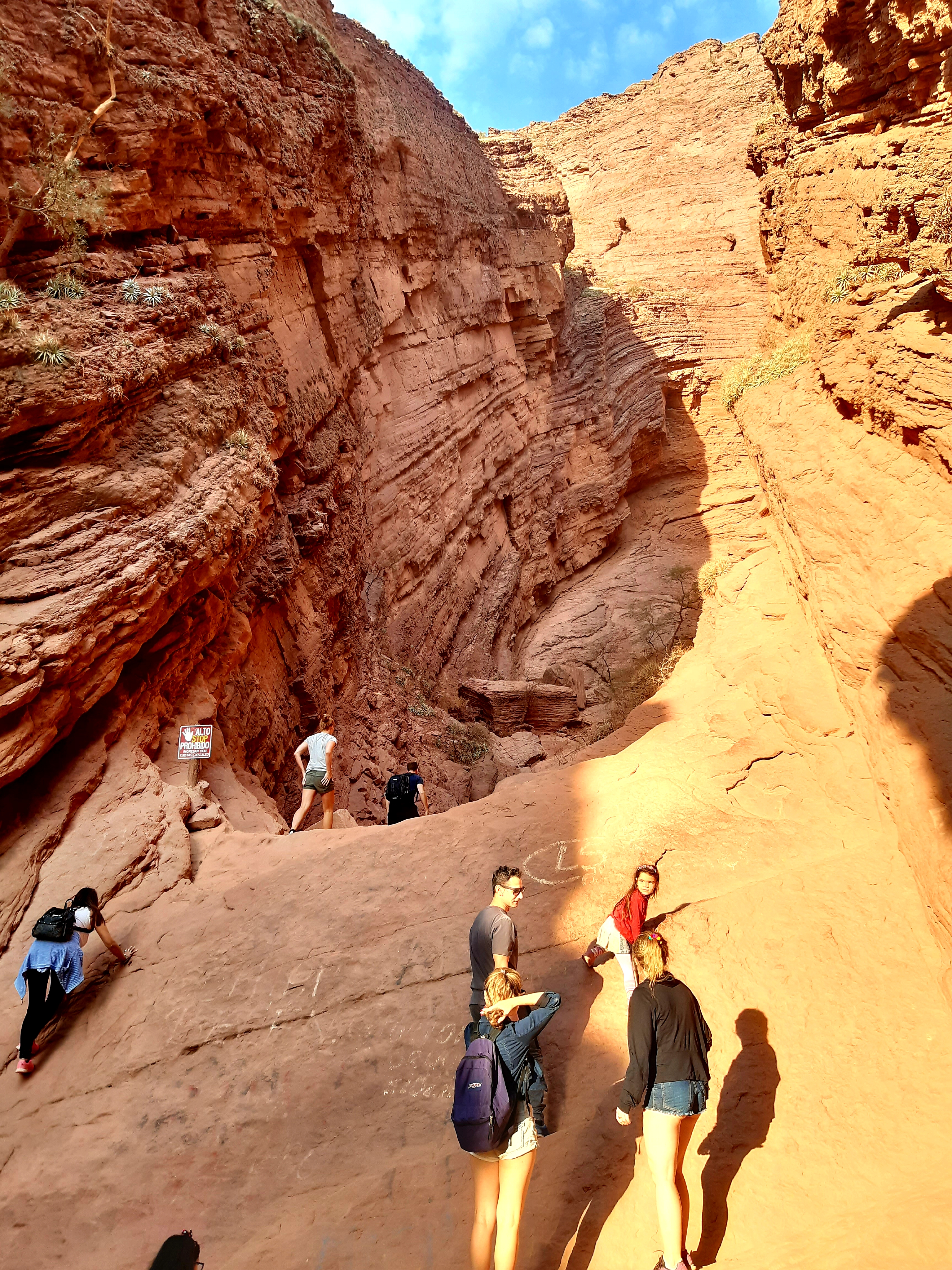
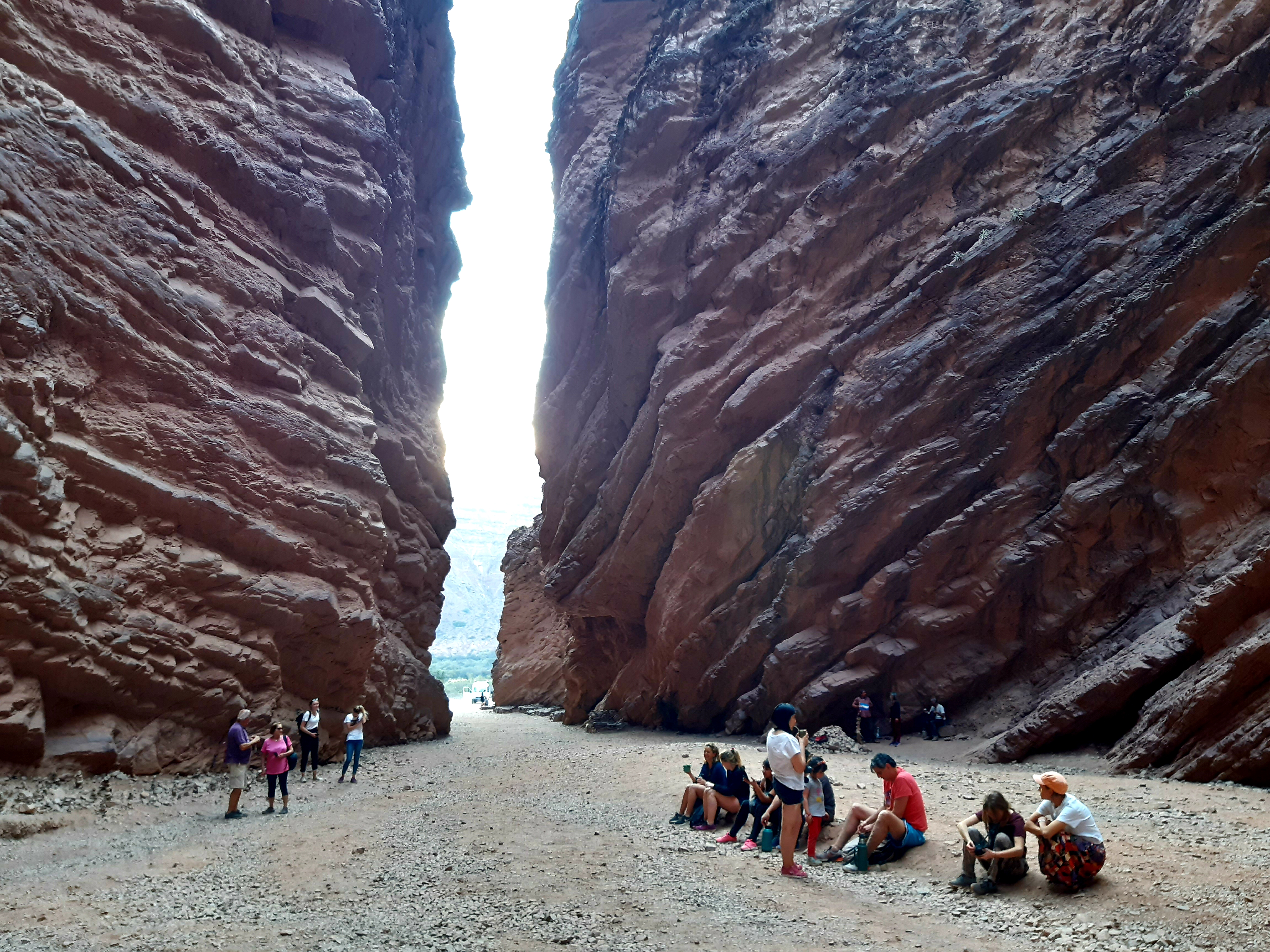
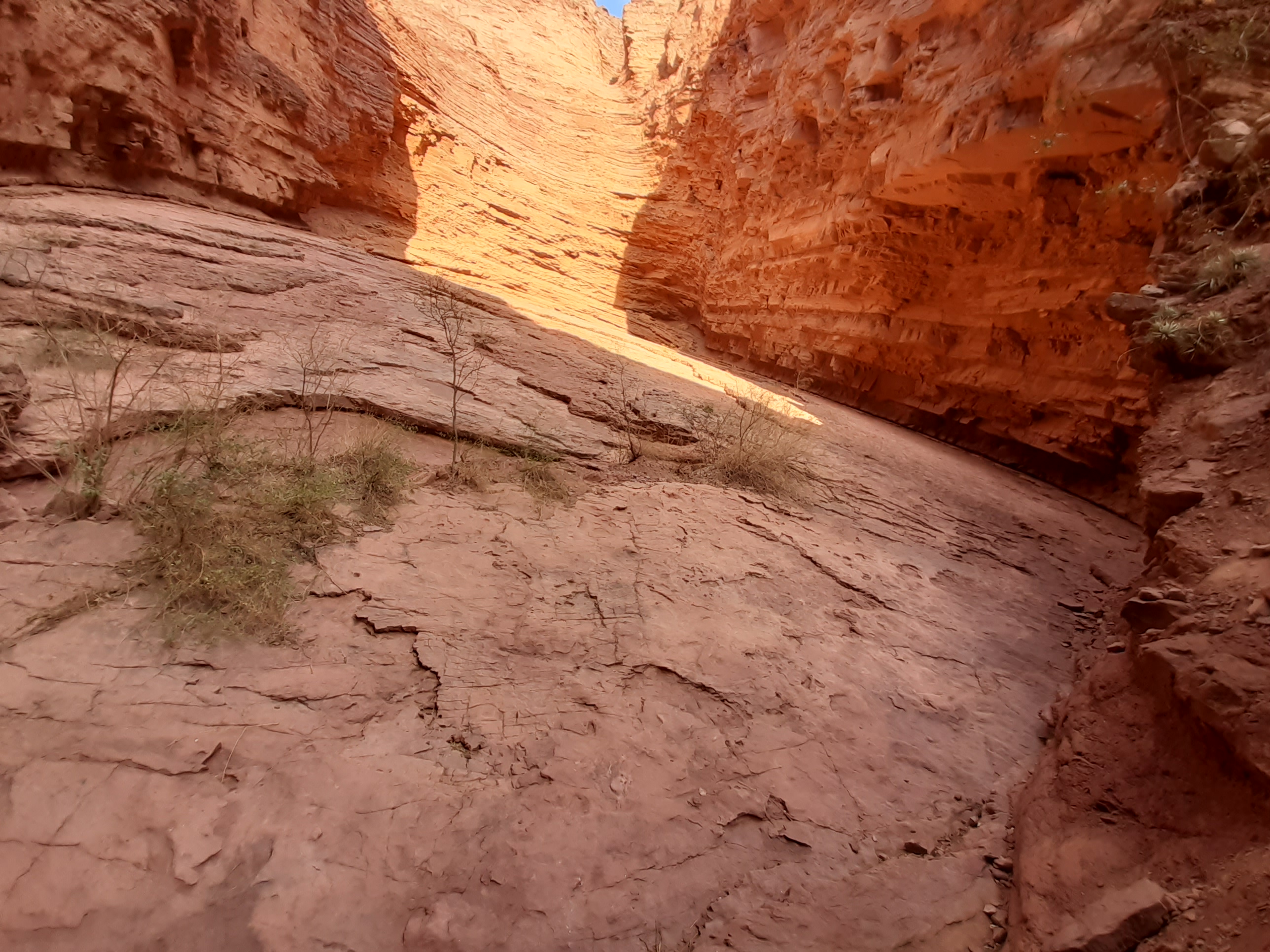 The site just before the Devil’s Throat is called the Amphitheatre, and has a marvelous acoustic. There was man playing a traditional flute, a beautiful haunting sound filling the huge space, sending shivers down one’s spine. It was our last stop, and quite a few of the tourists sat down in the ‘theatre’ and shared their mate (tea).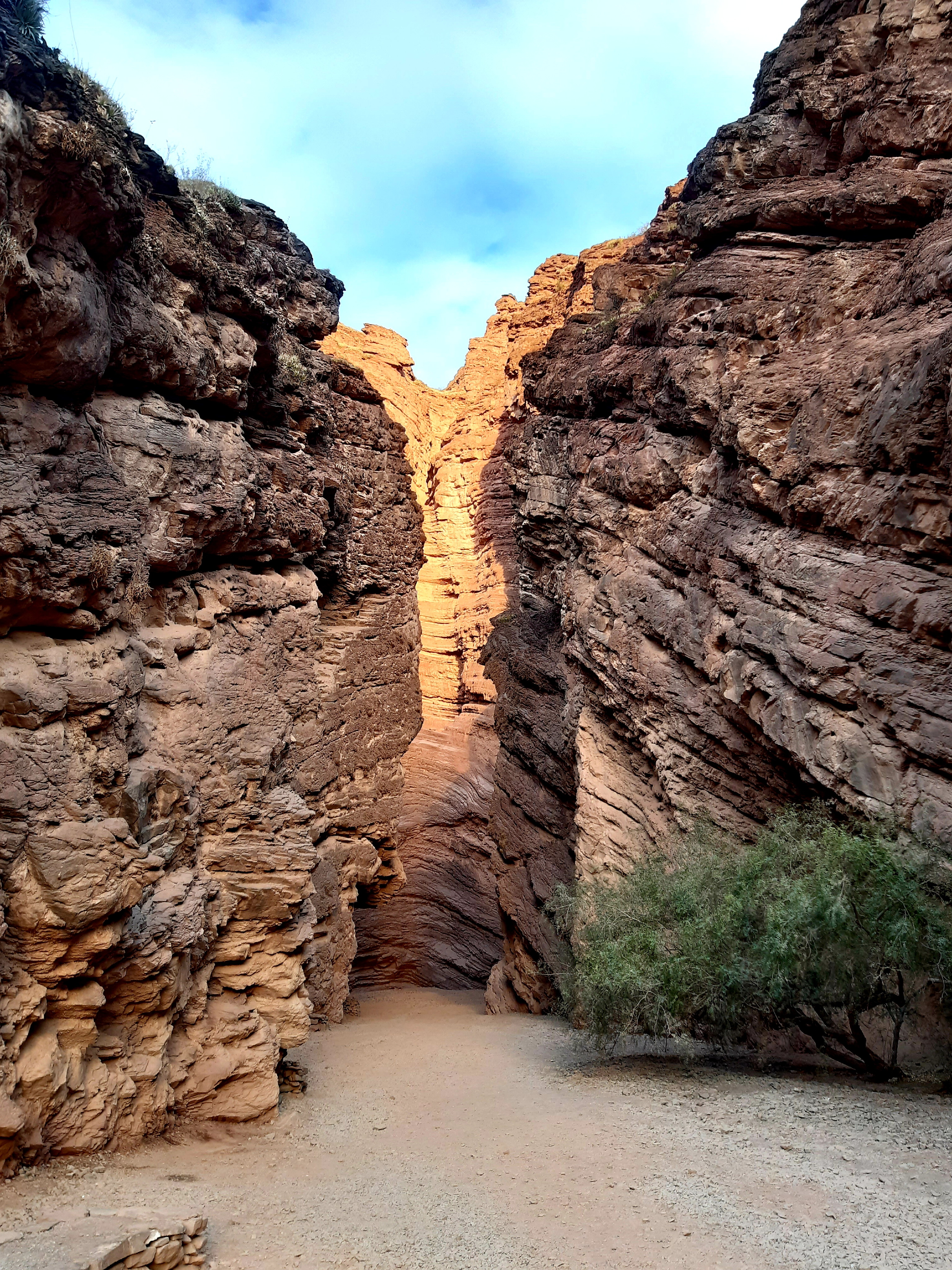

 Each bend in the road opens up another breathtaking view, and about half way through we stopped at an artisan shop for some wine tasting and ‘selfies with llamas’ – what people find amusing never ceases to amaze me. The wine was excellent though, I sampled the sweet torrentés, very fruity and aromatic.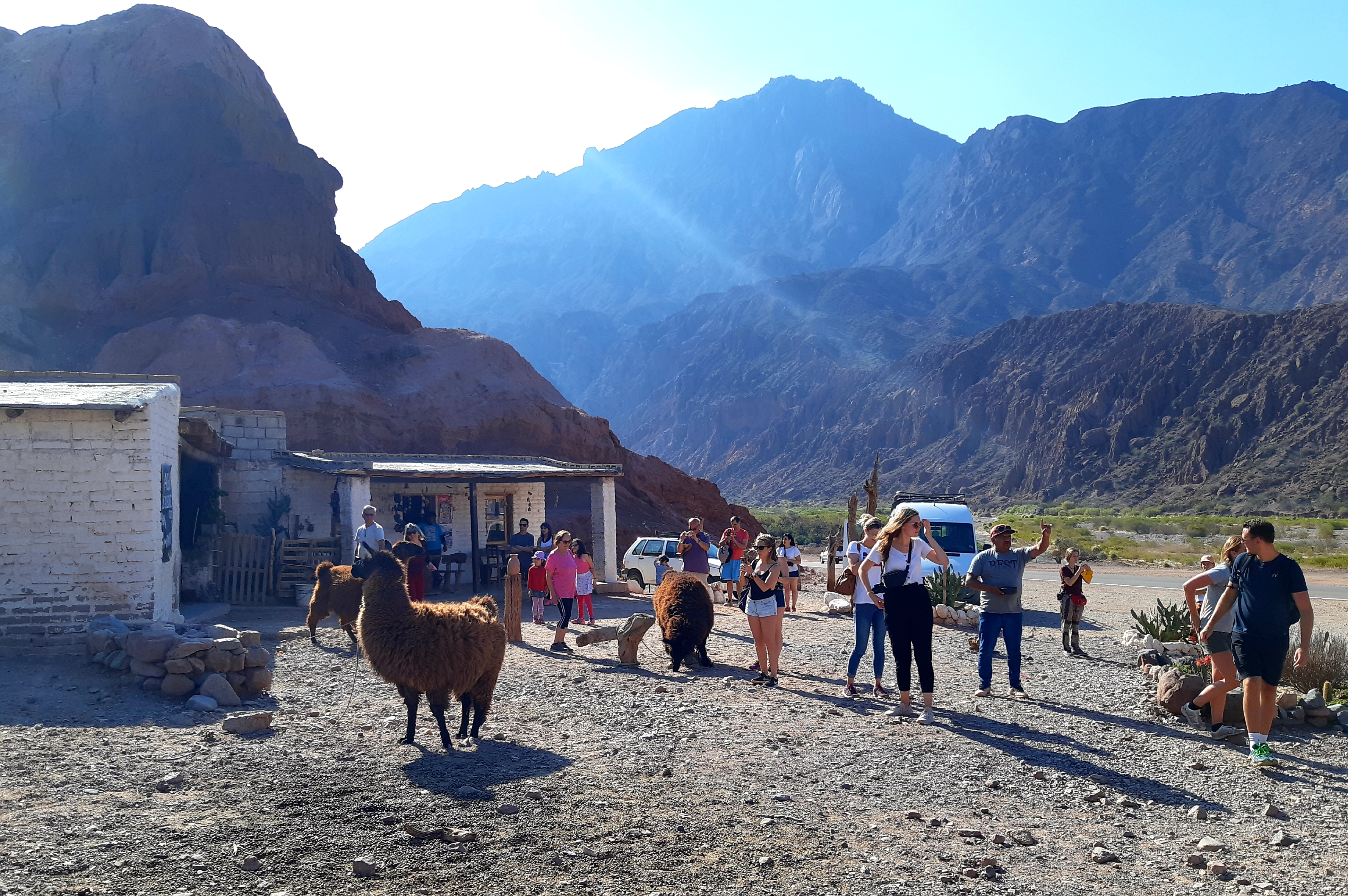
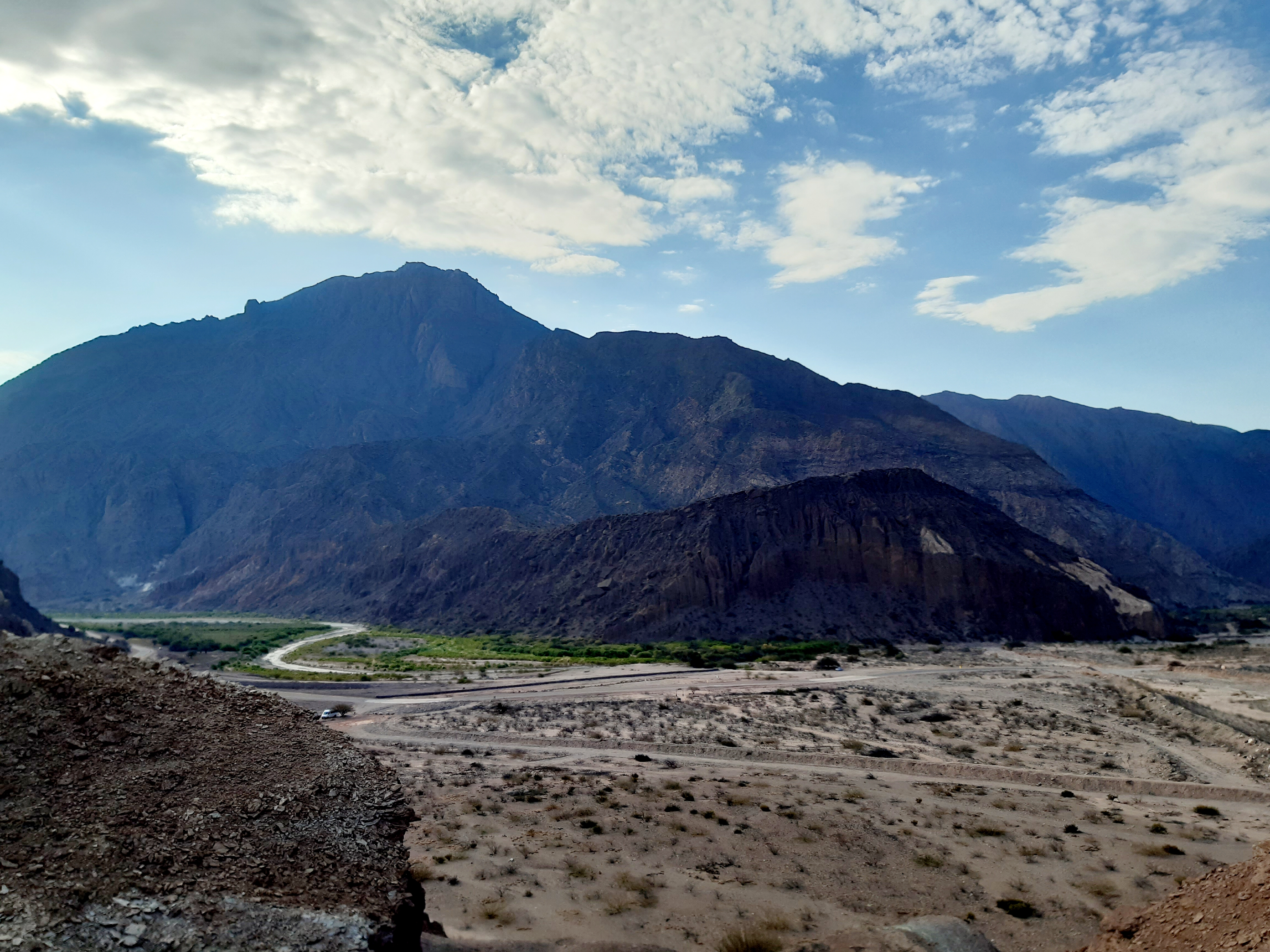
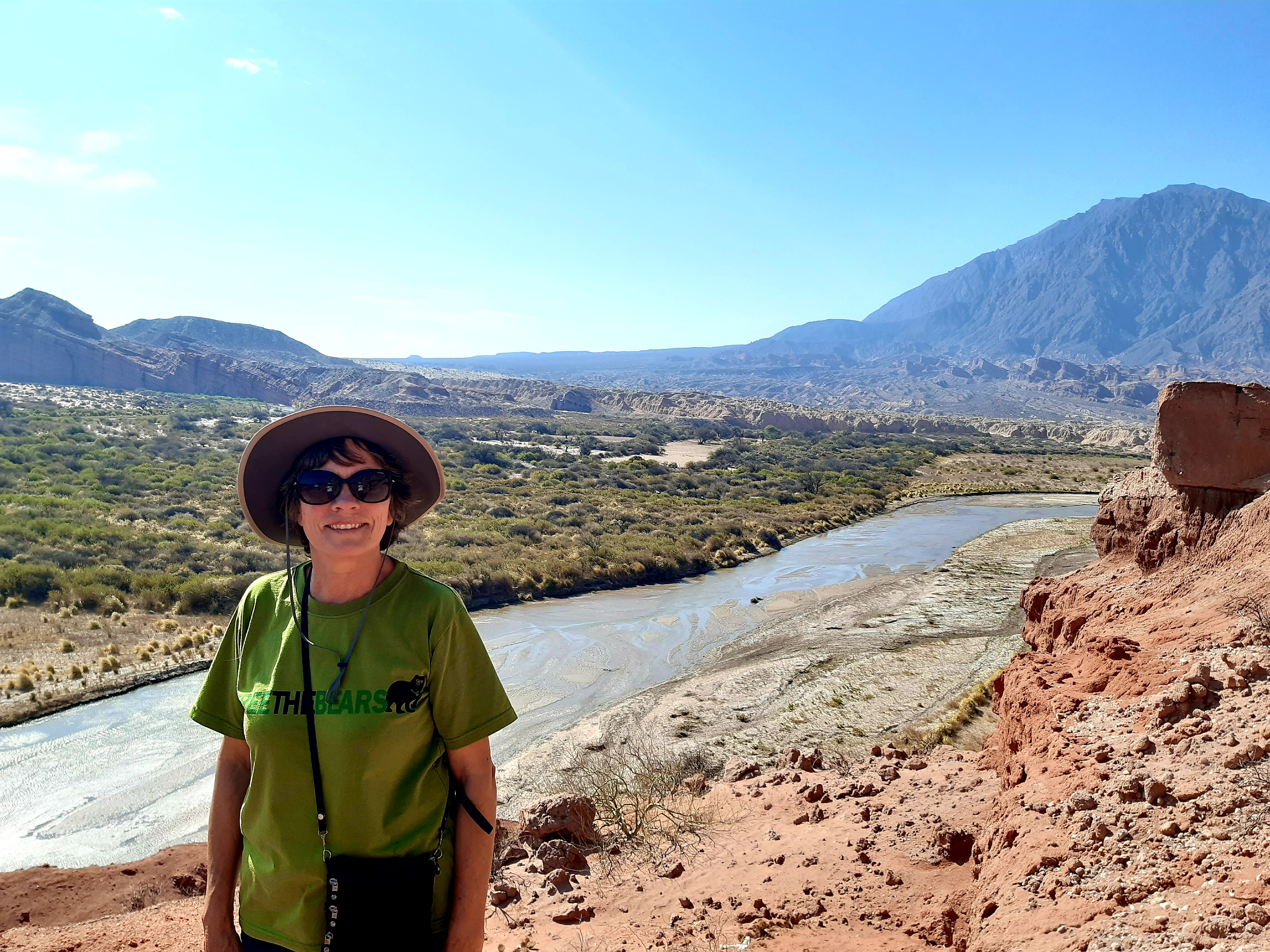
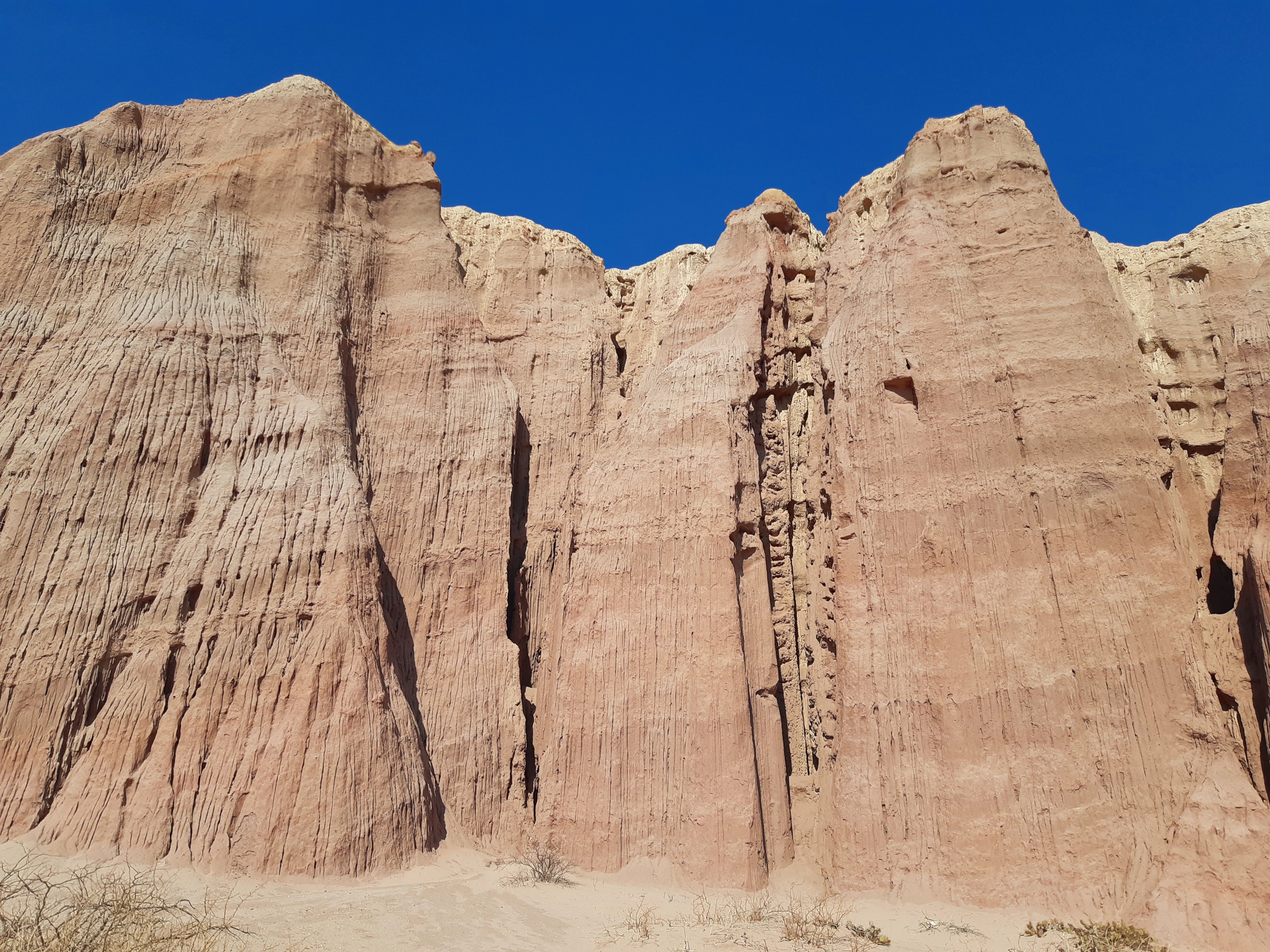
 Another soul enriching experience. I am so blessed. At one point, in a crevis in the green rocks, I spontaneously dropped to my knees, feeling deep and humble gratefulness and respect for Mother Earth, in all her glory. Pachamama came to mind, without me even quite understanding the meaning of the Inka earth/time goddess. It was just there.
 Mella Madness