

The mountain range, which forms part of the Andes, extends from Salta through the Quebrada de Humahuaca (mountainous gorge) and then through
the Bolivian Altiplano to Peru. The limestone formation is called Yacoraite, formed under the sea many years ago and eventually exposed through erosion.
Hornocul is reached by foot (12hrs), bicycle or car (my option). It is 25km from Humahuaca and the road goes up a winding pass that takes one past the ruins of a town that once acted as defence post. The whole gorge was part of the Inca trade route. It is arrid country, and I was surprised to see some cows grazing halfway up. They are cared for by people living in the virtually isolated town with the ruins.

Back in Hamuaca I was pleasantly surprised to find a religious parade filling the streets of the old town. There were quite a few bands playing, each with their own group of dancers, and the noise was deafening. I noticed that one man playing a massive bass drum was hitting away with one hand and closing his ear with the other!


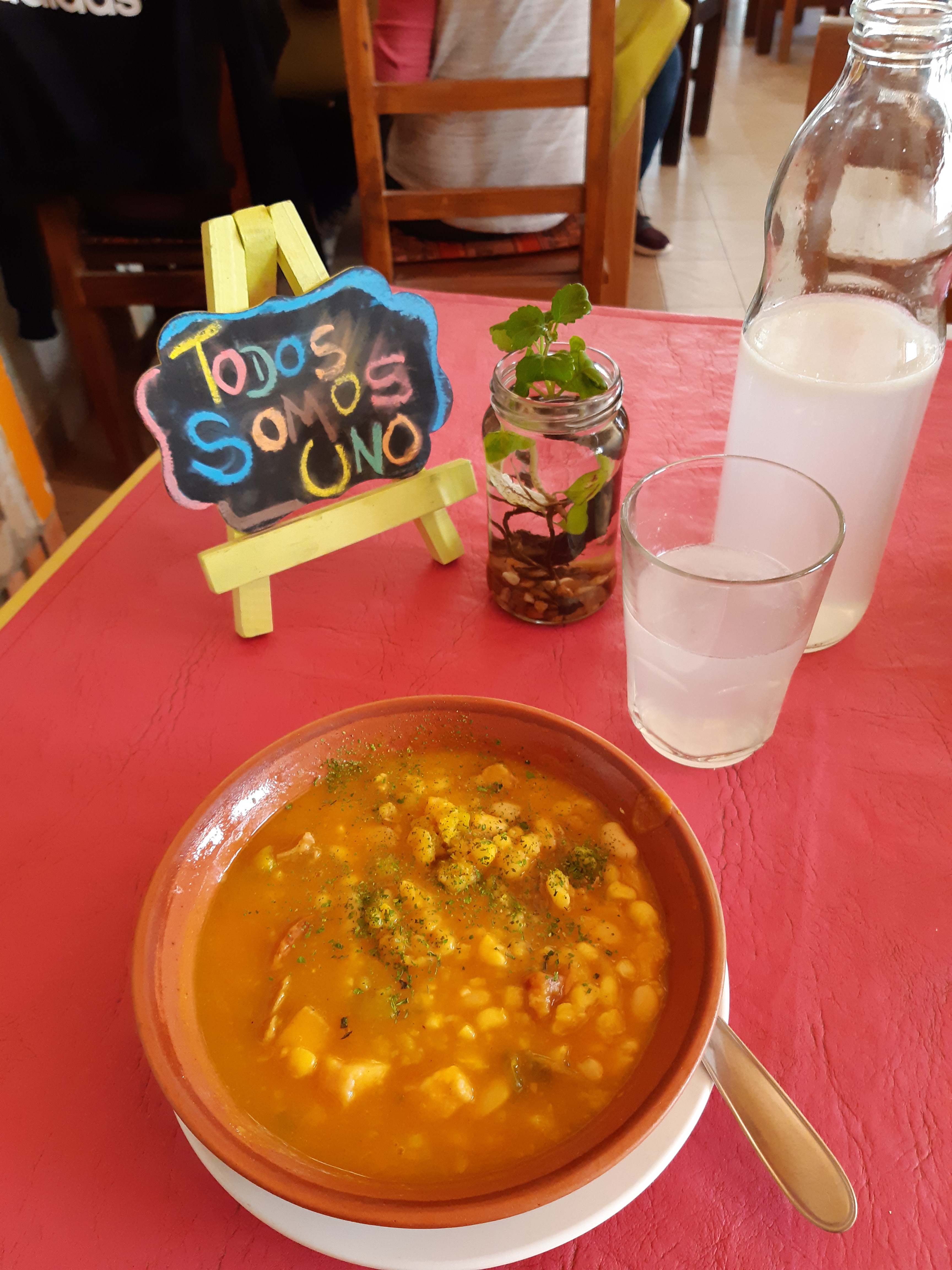
The local cuisine is different from other areas, with llama meat being popular. I had a dish called locra (made of corn, pumpkin, meat an sausage) at one of the many arty restaurants.
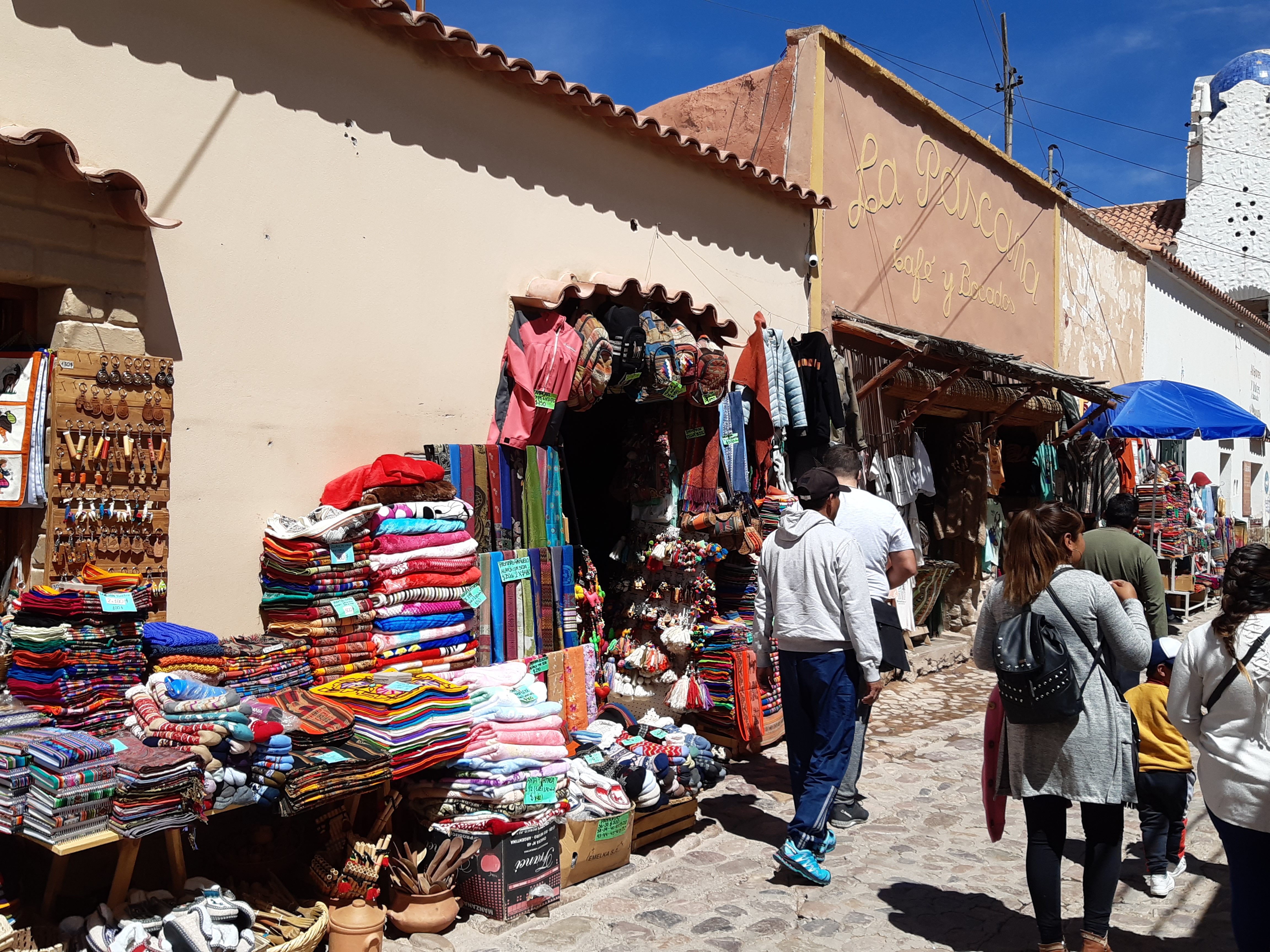
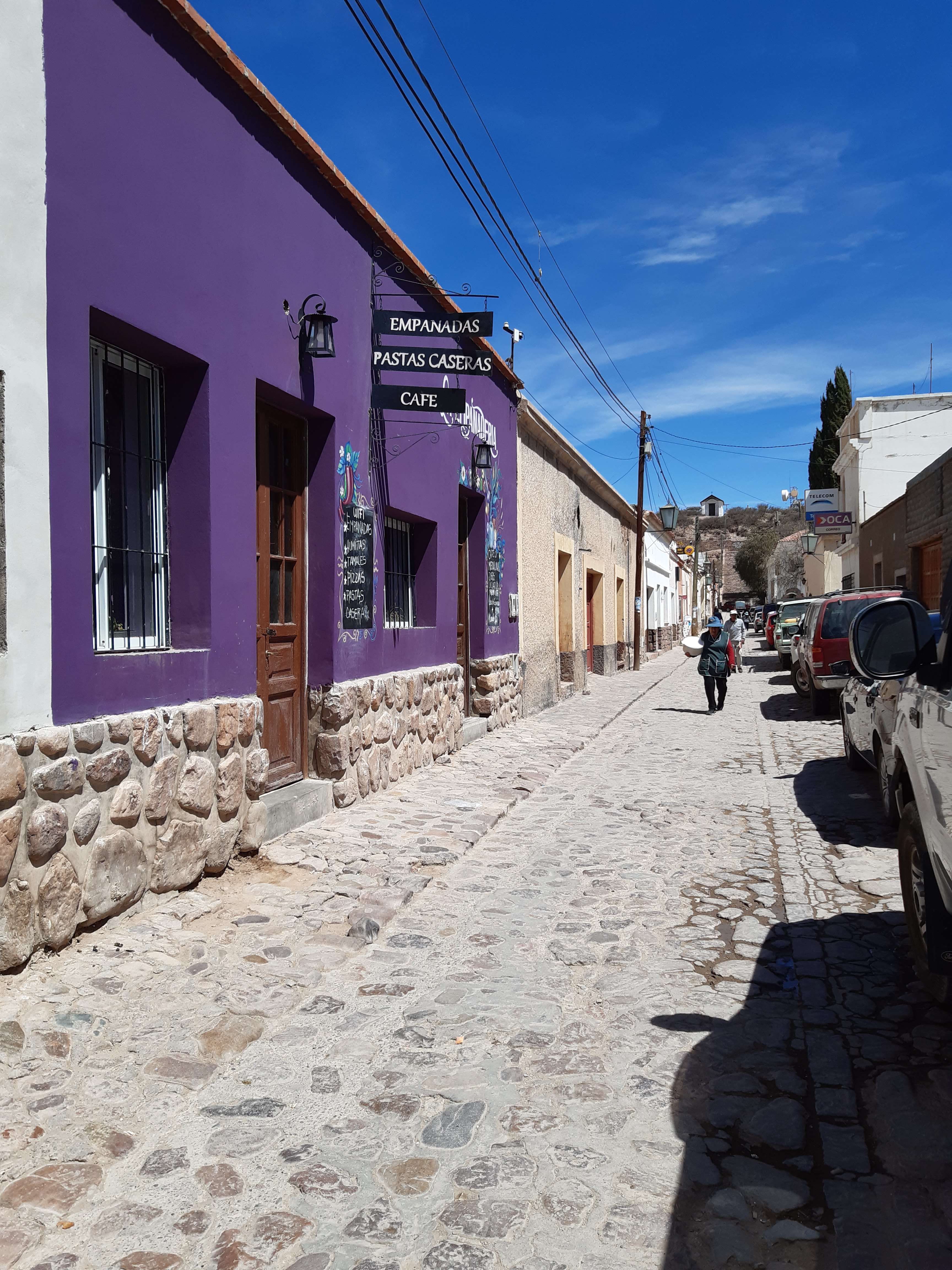
The narrow cobbled streets are quaint and filled with artisan shops, and as the cars park on the sidewalks, one literally has to squeeze in between them to avoid being hit by a passing car.
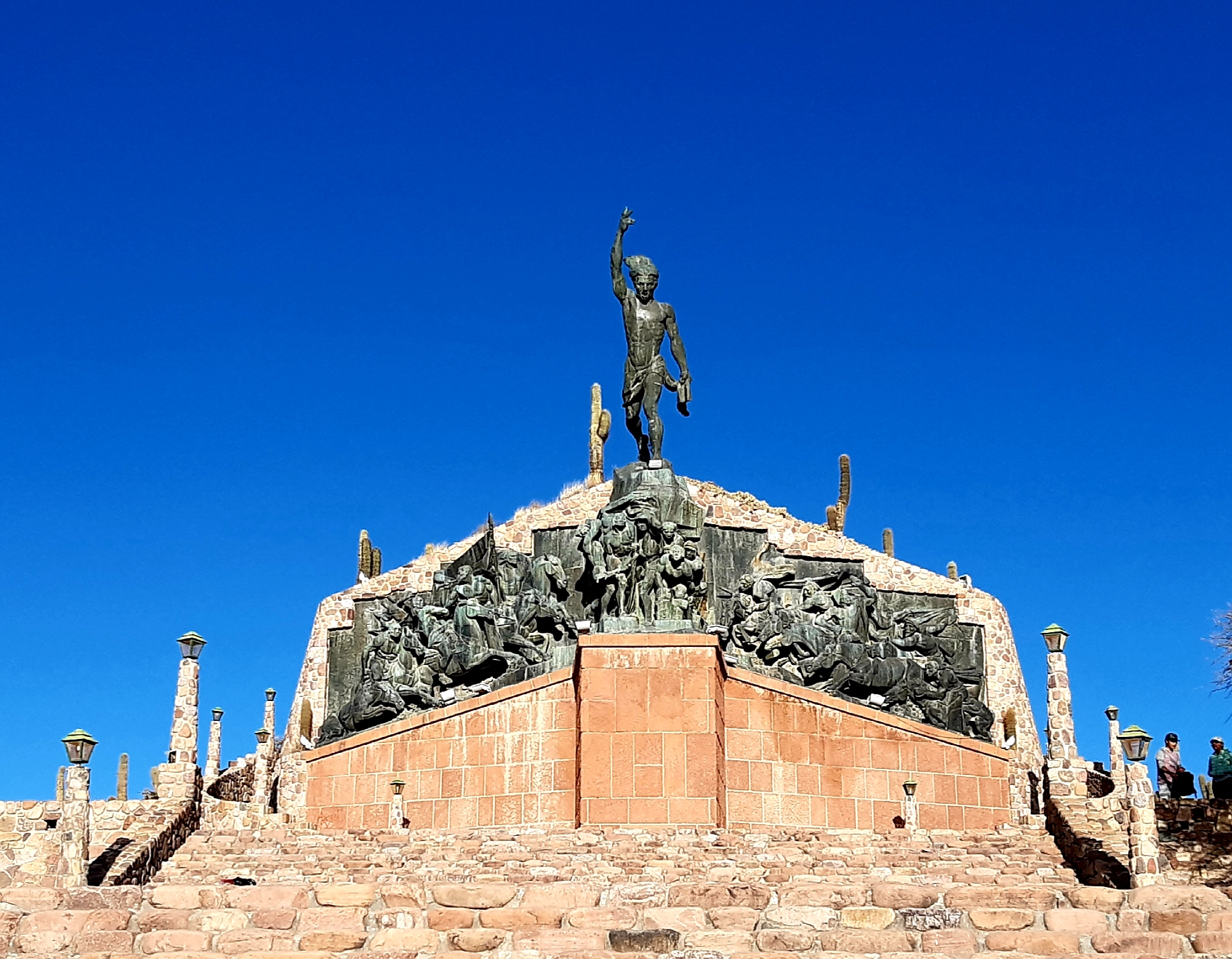
There is a massive bronze monument towering up the hill from the town square in front of the church. It was built in honor of the Army of Northern Argentina and the indigenous peoples who fought there during the country’s war for independence.
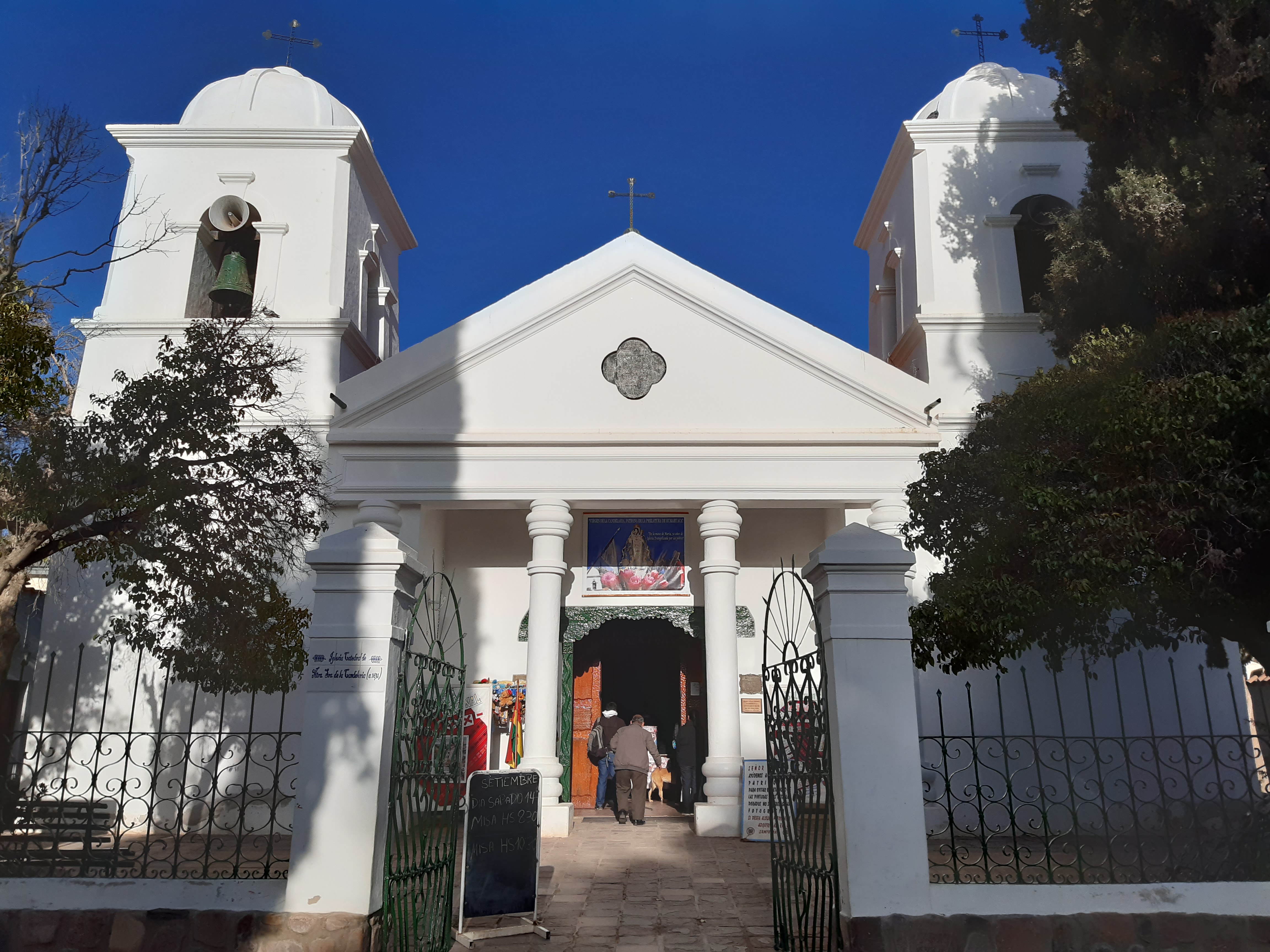
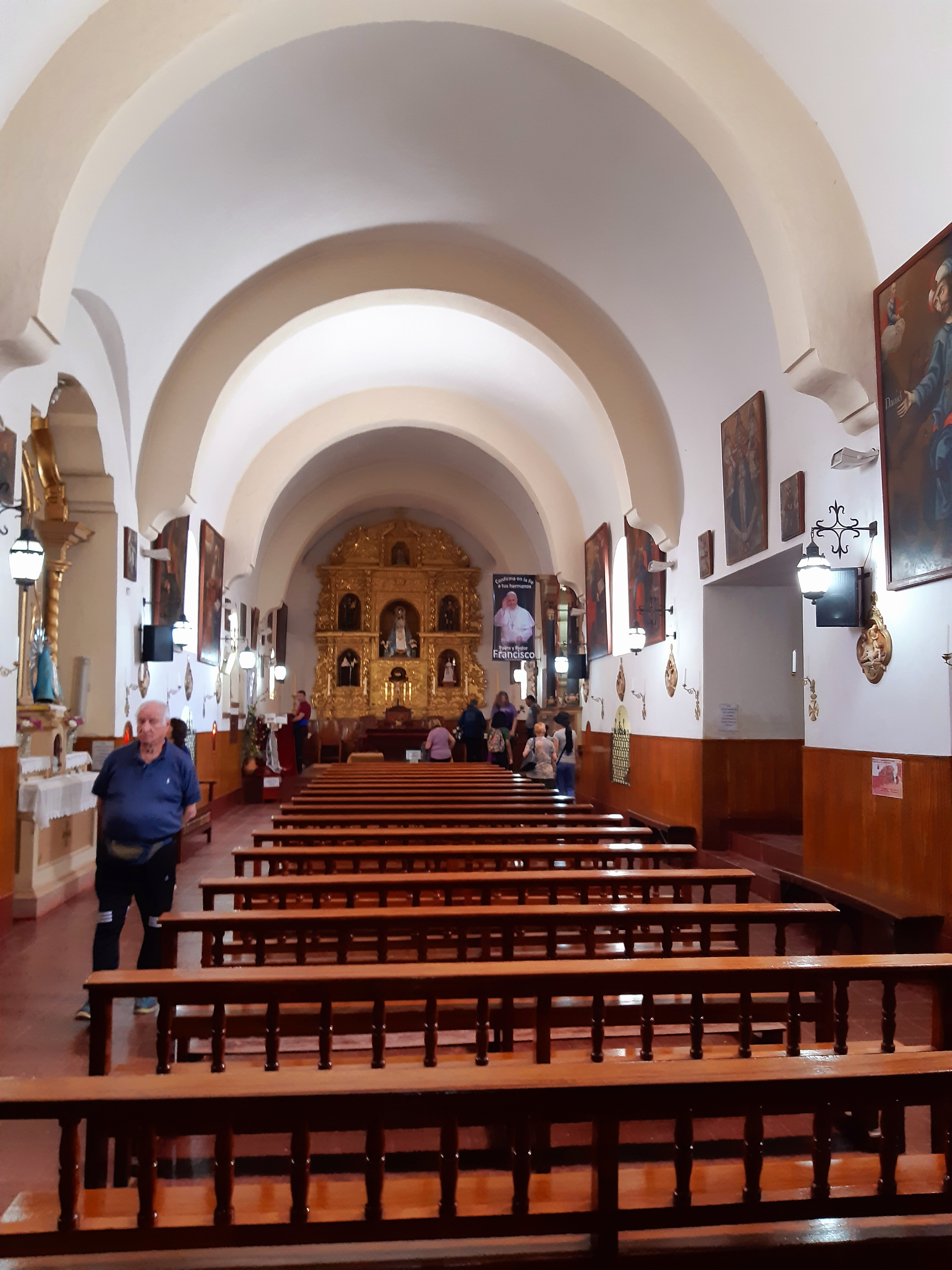
The Iglesia de la Candelaria y San Antonio is an historical monument and was built by the Jesuits toward the end of the 17th century. It was extensively renovated after it had been partially destroyed during an earthquake in 1873, and has impressive rococo alterpieces and other artworks. One is not allowed to take photo’s, which I was unaware of until a lady friendly but firmly pointed it out to me – too late.
And the murals in town, ever present:
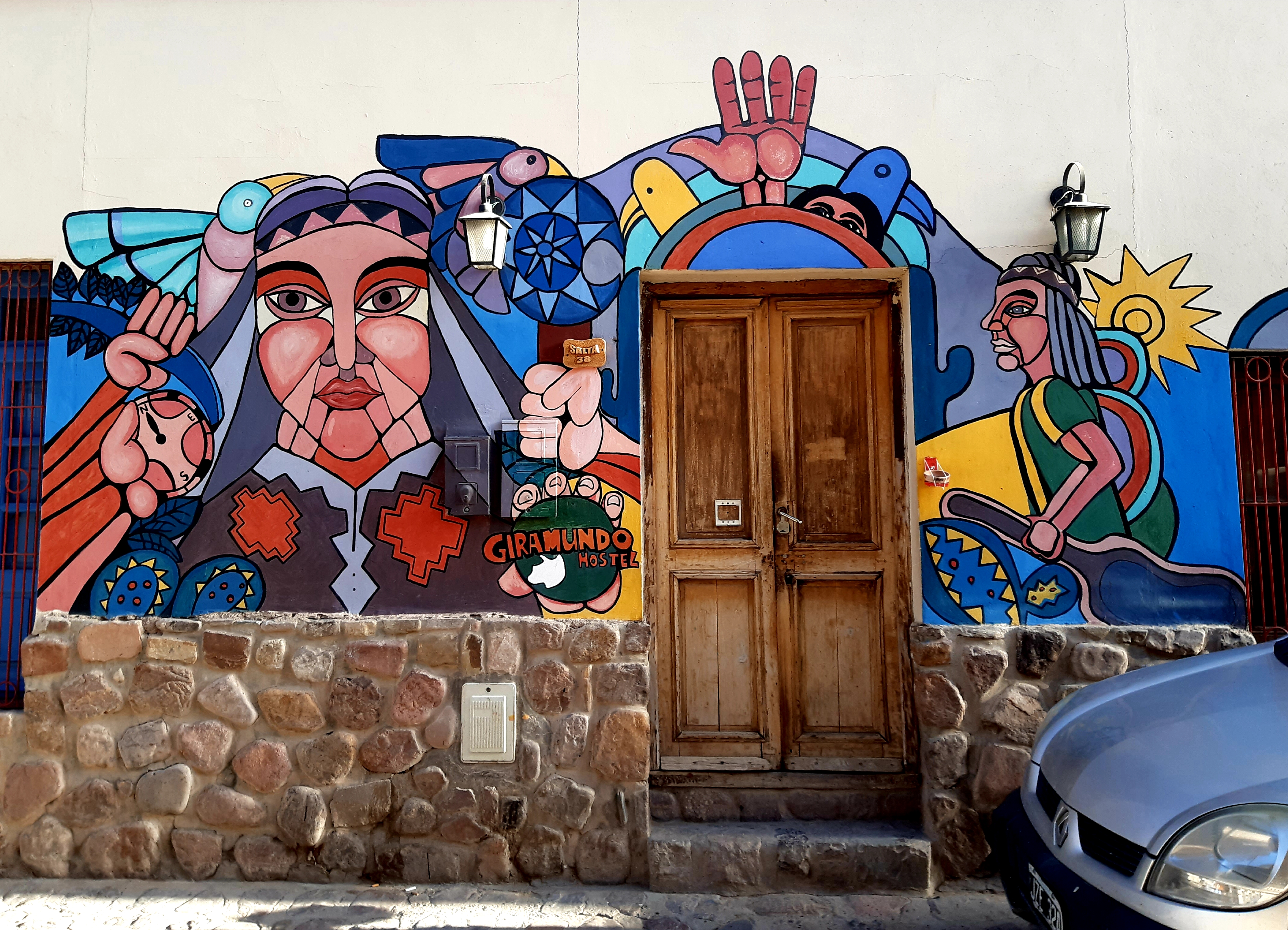
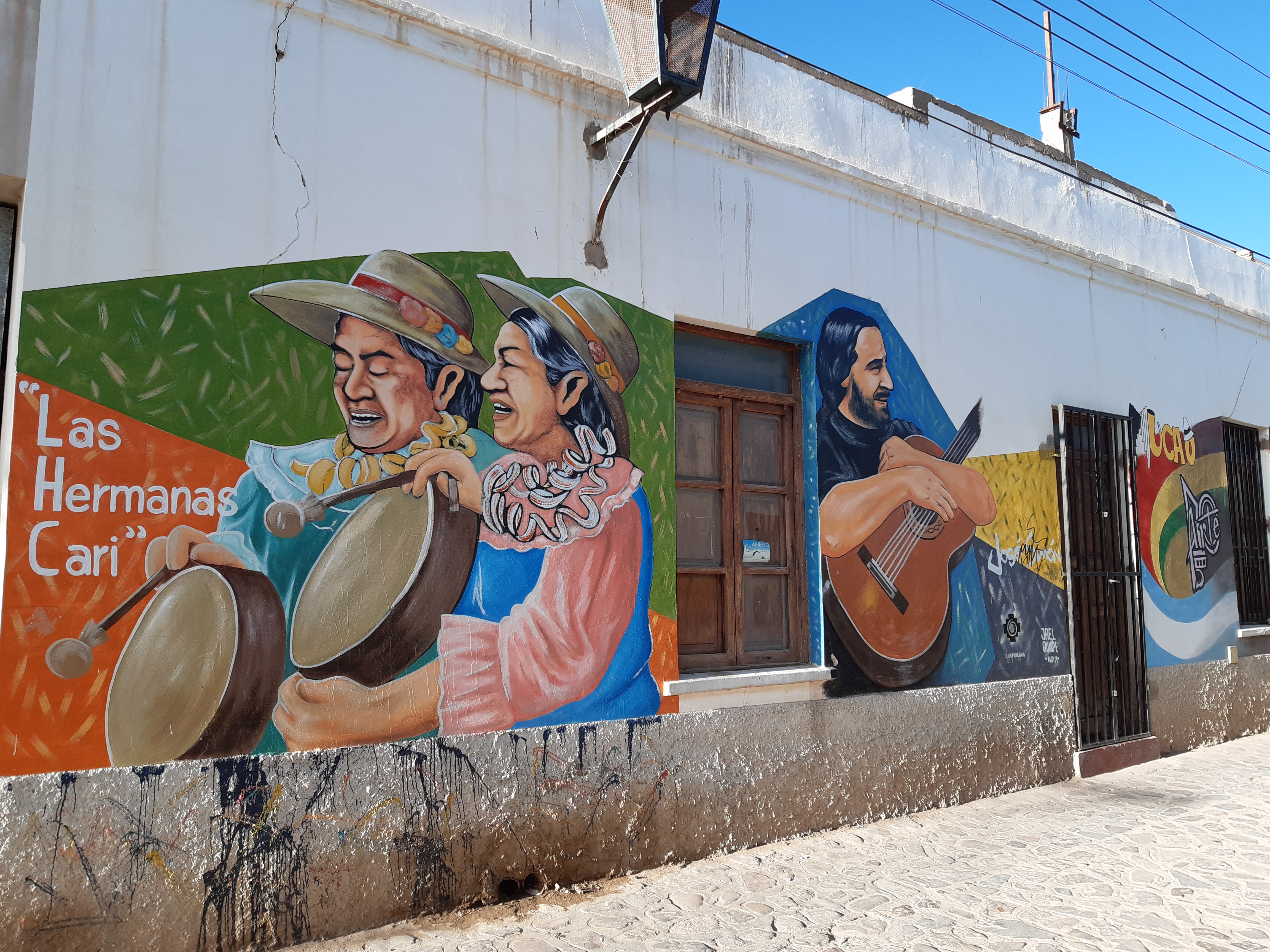
Humahuaca, the furthest point that I am venturing north in Argentina, and I have a kind of sadness at leaving this arrid rural simplicity which has reminded me of the Karoo in South Africa.


 Mella Madness
Baie leersaam. Groete en geniet. Andre
LikeLiked by 1 person
Dankie Andre, vir my ook ‘n leerervaring.
LikeLike