The first siting of the glacier from the bus was of the eastern side, that faces into Brazo Rico, the southern arm of Lagu Argentino into which the glacier moves.
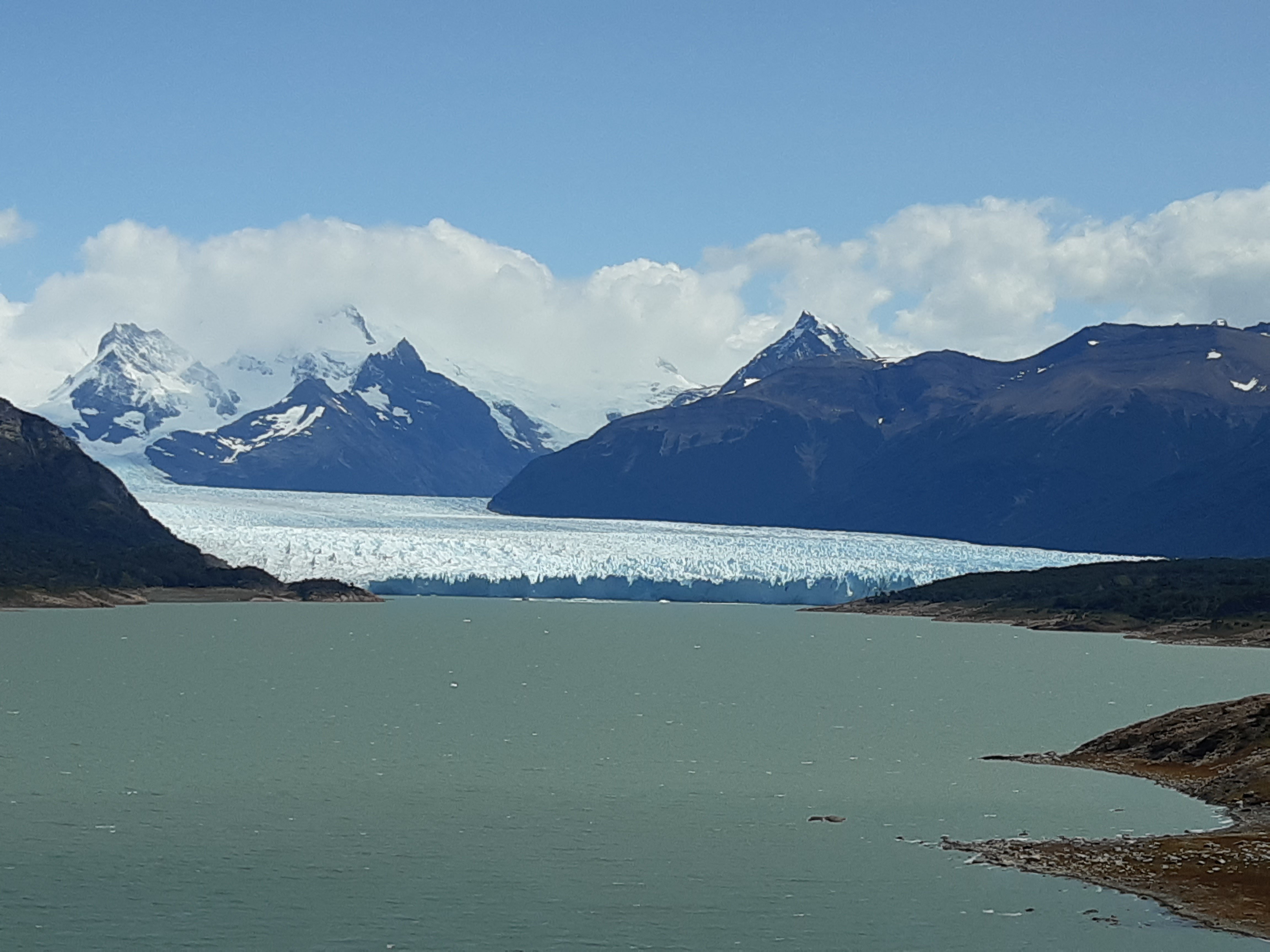
A panoramic view:
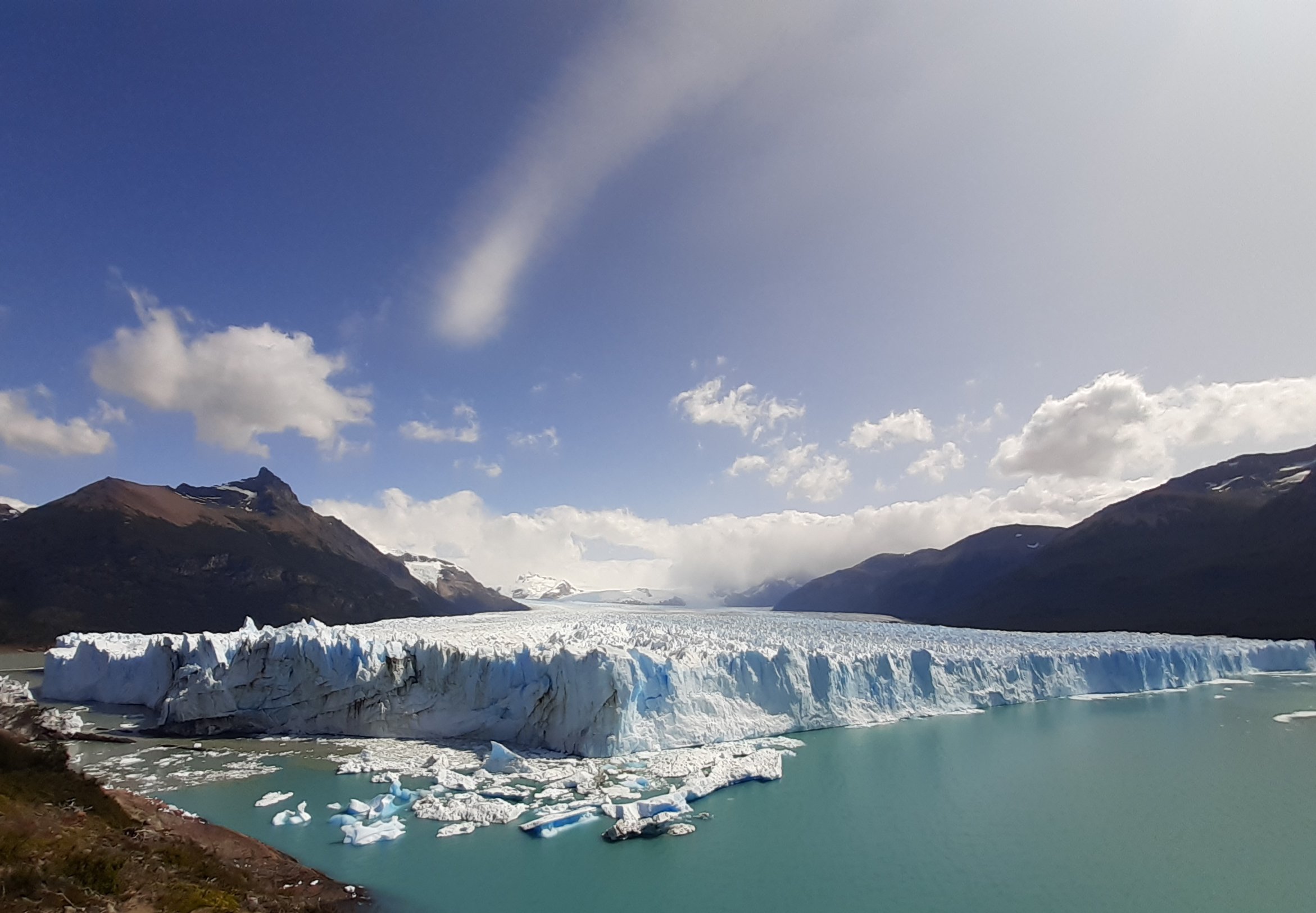
Perito Morena is the 3rd largest of the glaciers in the park, the largest being Upsala. It is 250sq km, with a width of 5km and length of 30km. It was first seen by a non-native in 1879, by the British captain of the Chilean Navy, Juan Thomas Rogers. It was eventually named after the 19th century Argentinian explorer Francisco Morena who had played an important role in the border dispute between Argentina and Chile. His nickname was ‘Perito’ which means ‘specialist’.
The northern side:

The eastern side:
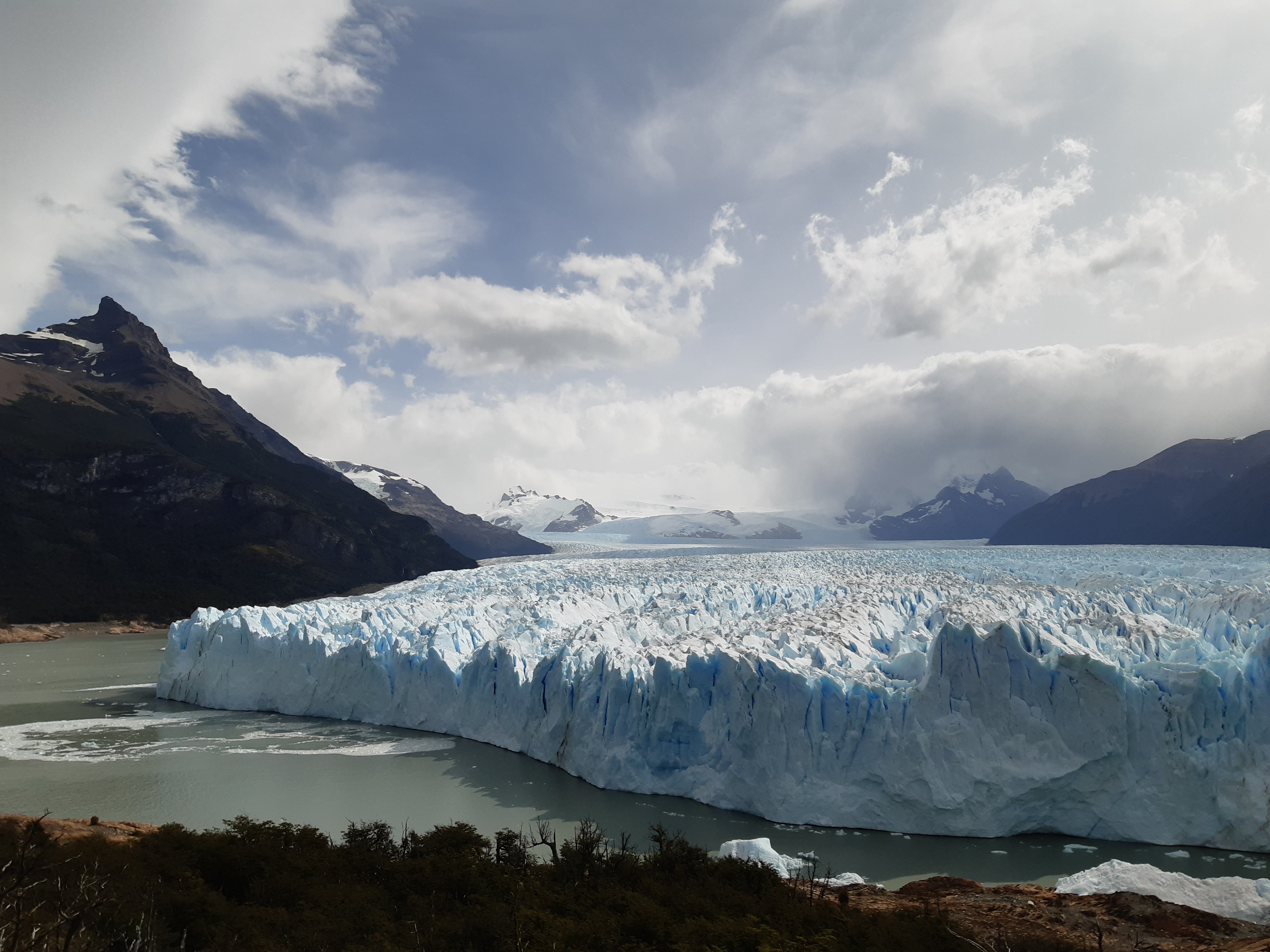
The terminus of the glacier (point), with a average height of 70m, and a total ice depth of 170m (the ice in the water is called ‘dead ice):
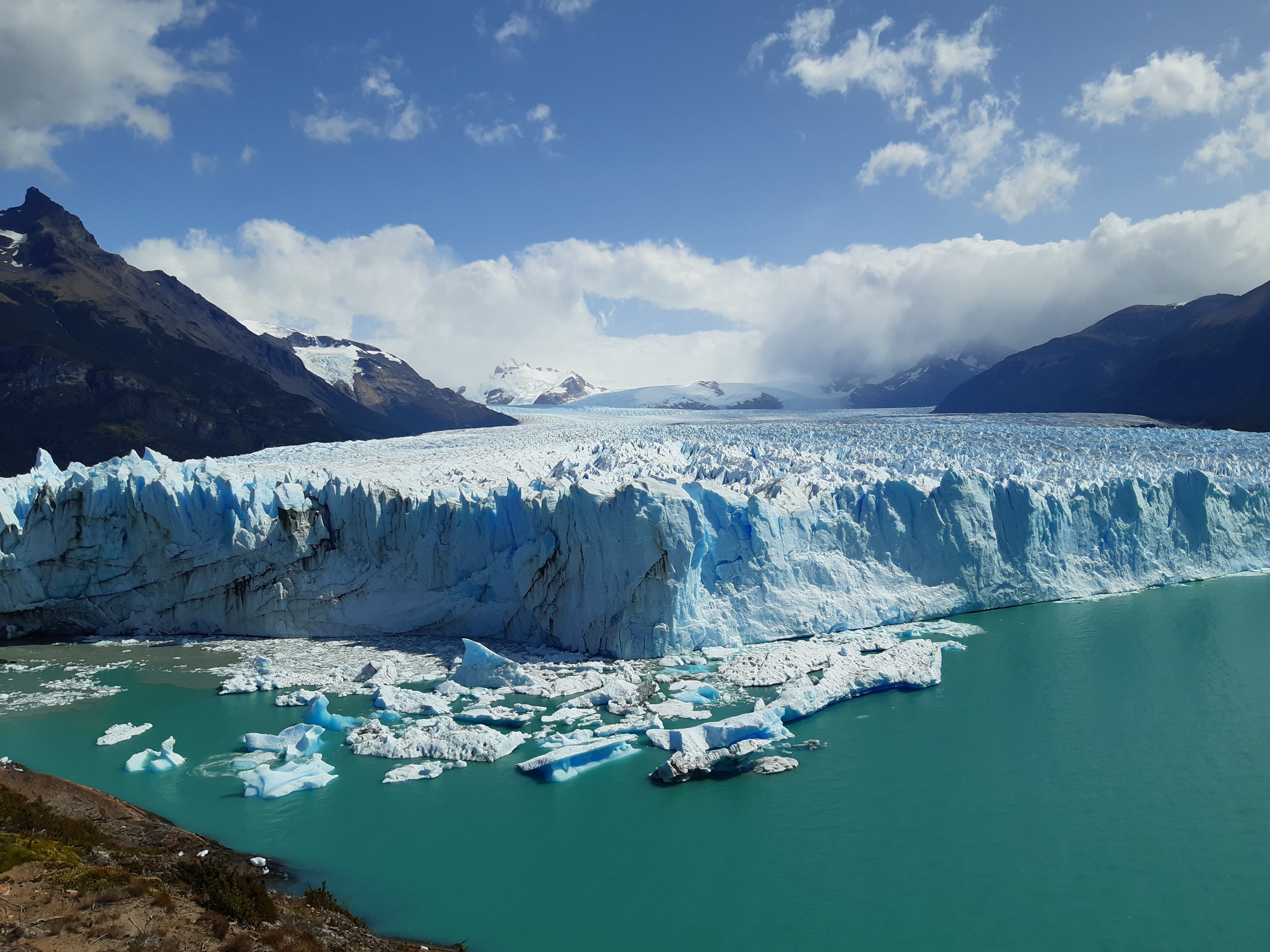
Perito Moreno is about 75km from El Calafate, and one of Argentina’s greatest attractions. It is easily reached by bus and there are a series of walkways for excellent viewing of this spectacular natural wonder. One gets so close to the terminus, one can feel the ice breathing cold air. I can only describe it as a majestic slumbering giant – perfectly still, yet alive. Every 10min or so chunks of ice, sometimes huge, would break off with a crack and thunderous roar and splash into the water, sending ripples lapping at the edge of the ice for minutes afterwards.
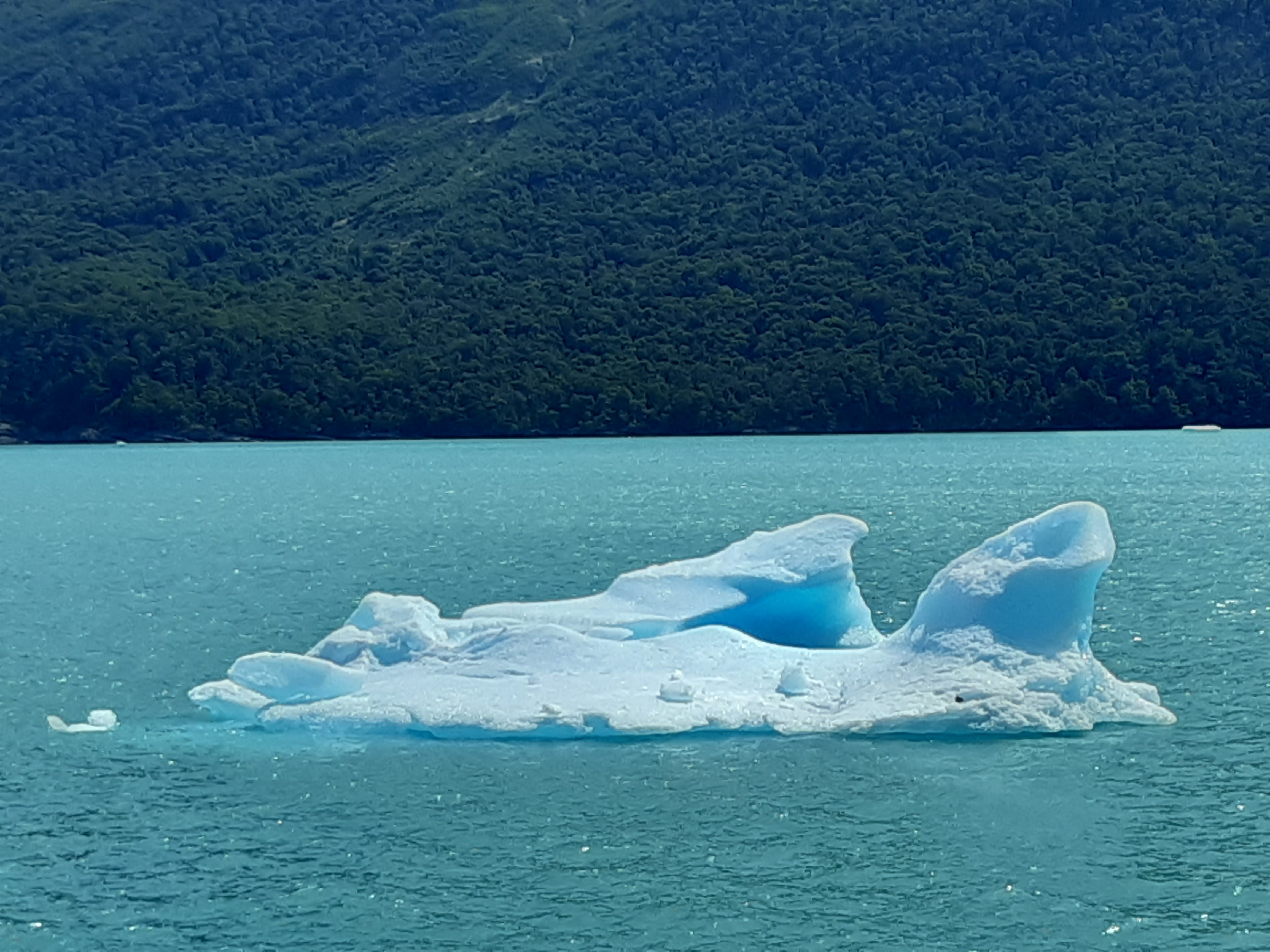
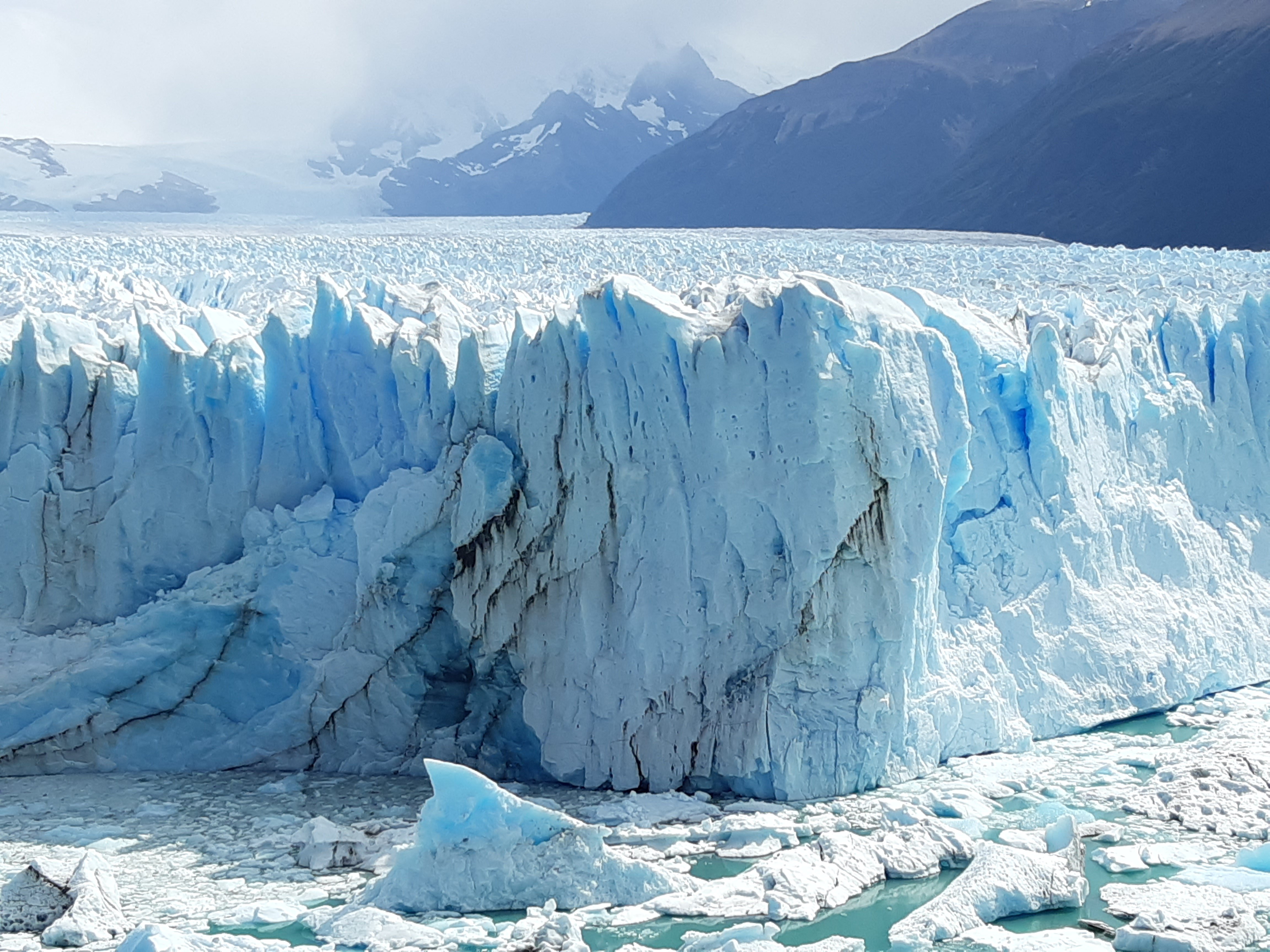
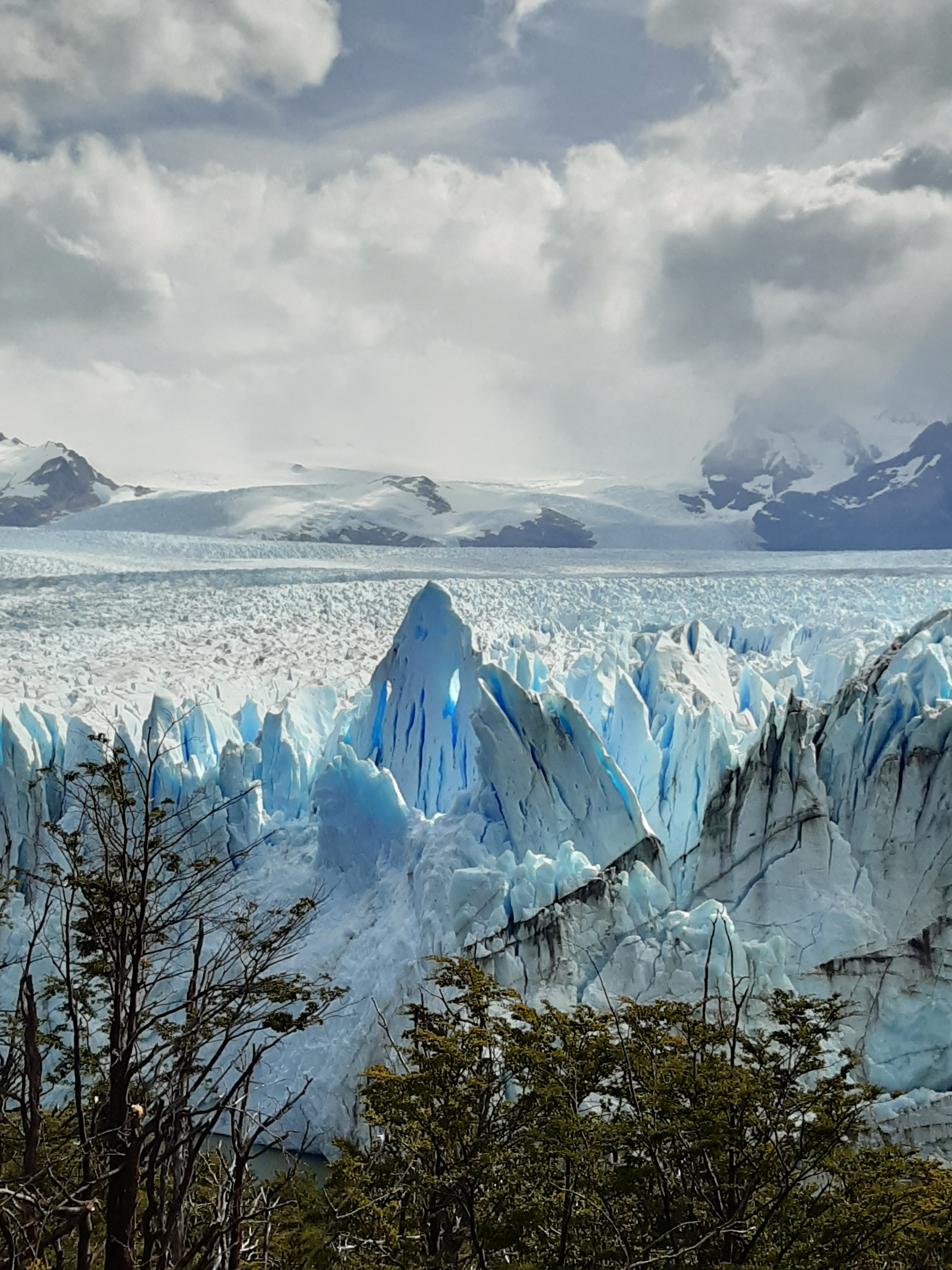
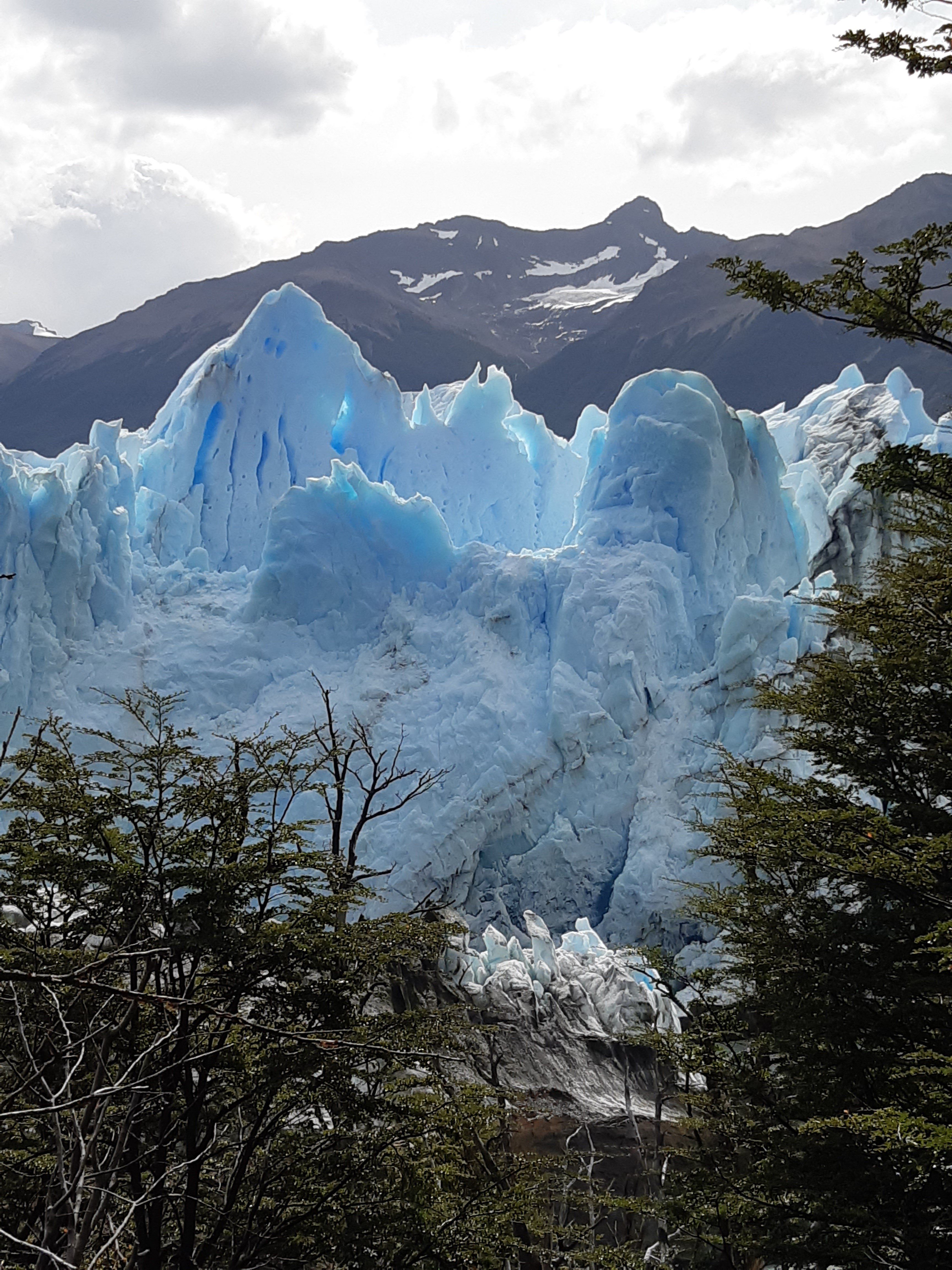
Most glaciers are receding due to global warming, but Perito Moreno, although thinning, is stationary in the sense that it is growing at the same rate as what it is receding. The water flow at the centre is 2m per day.
Occasionally the terminus closes the gap to land, and water build-up in Brazo Rico can reach 30m above the level of the northern arm. The pressure against the ice wall causes a huge rupture of the ice, an incident that can occur yearly, and not more than a decade in between. The first big rupture was in 1917, and in the last couple of years it has been a yearly occurrence.
The narrow gap between the glazier and the land:
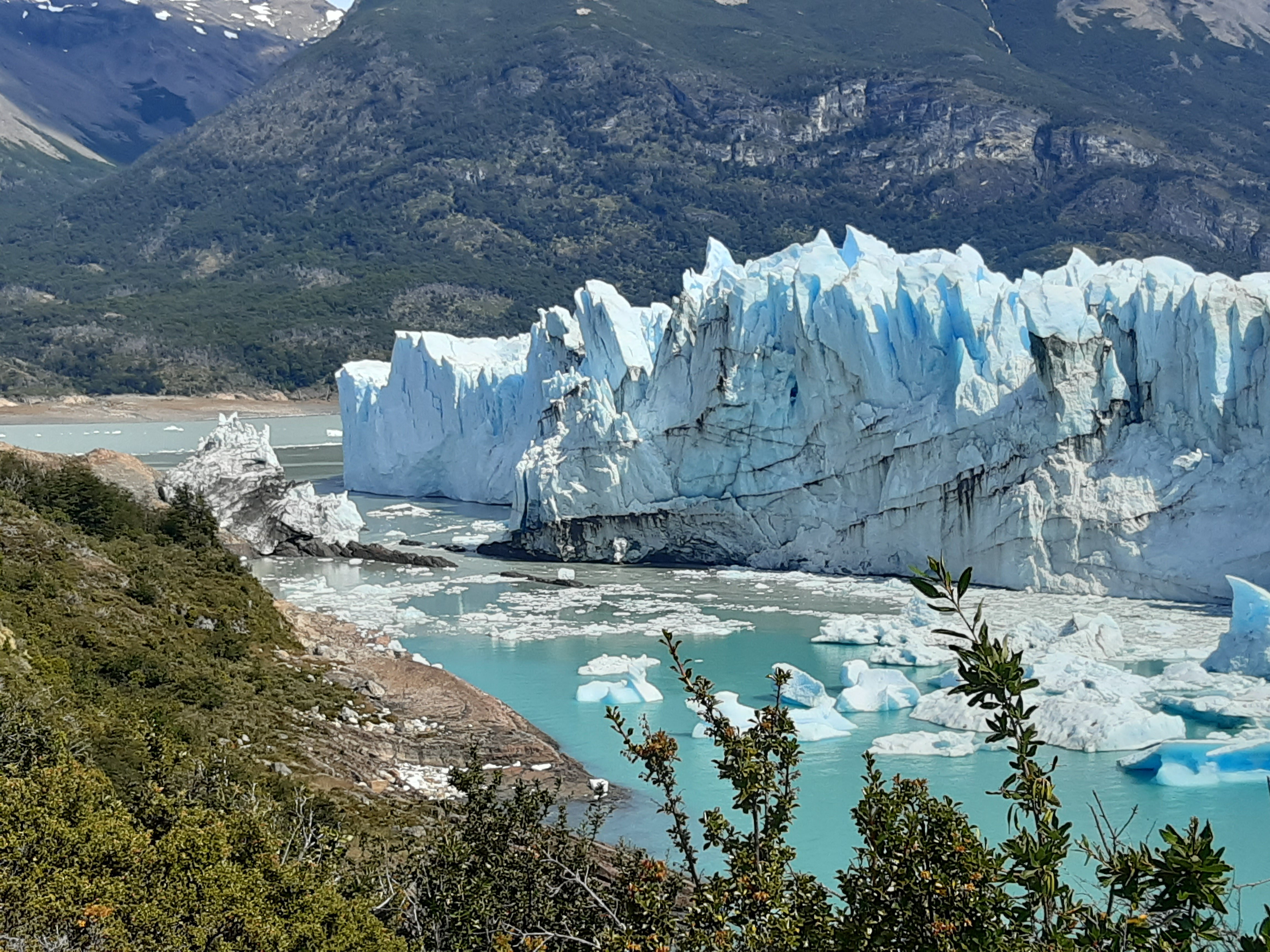
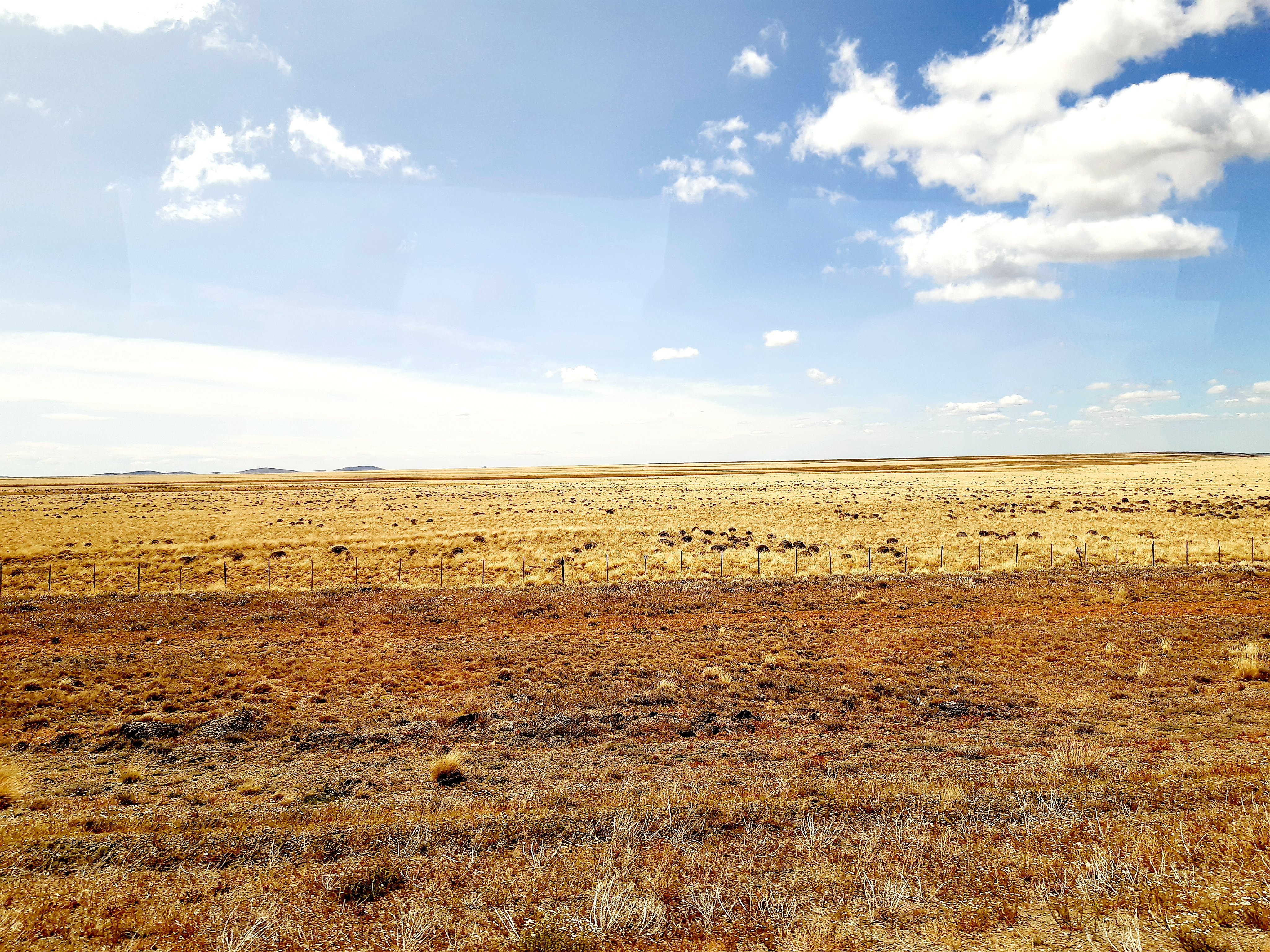
5 hours of just staring. Dumbstuck and in total awe. And yet it was not enough, I was reluctant to leave and kept on taking ‘one last picture’. Just ‘one more’, and ‘one more’…Let me back up a bit. The road from Puerto Santa Cruz on the east coast to El Calafate in the west went via Rio Gallegos and crossed the Patagonian steppe, vast and dry grasslands, with occasional farms appearing once we got down into the Santa Cruz river valley.

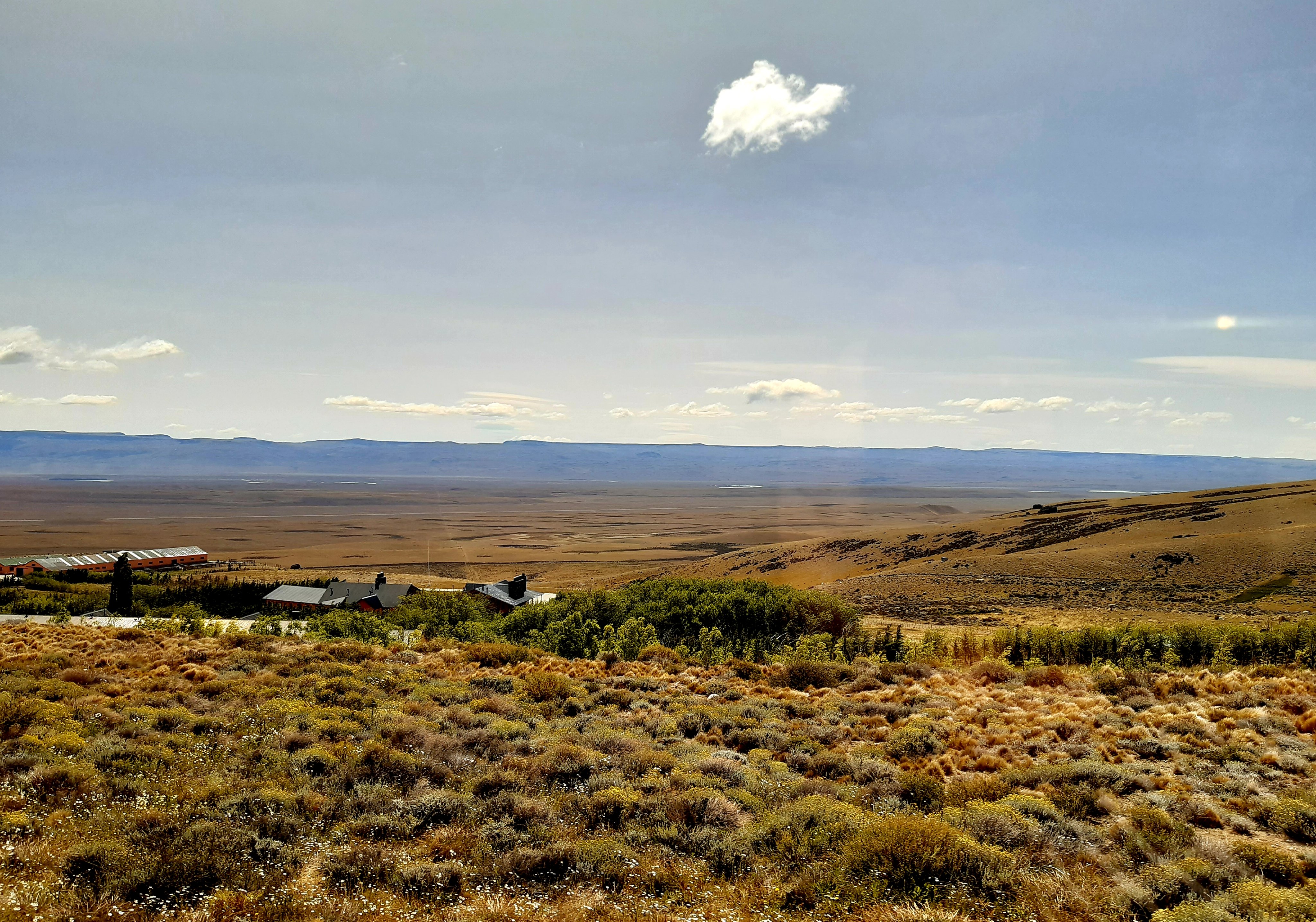
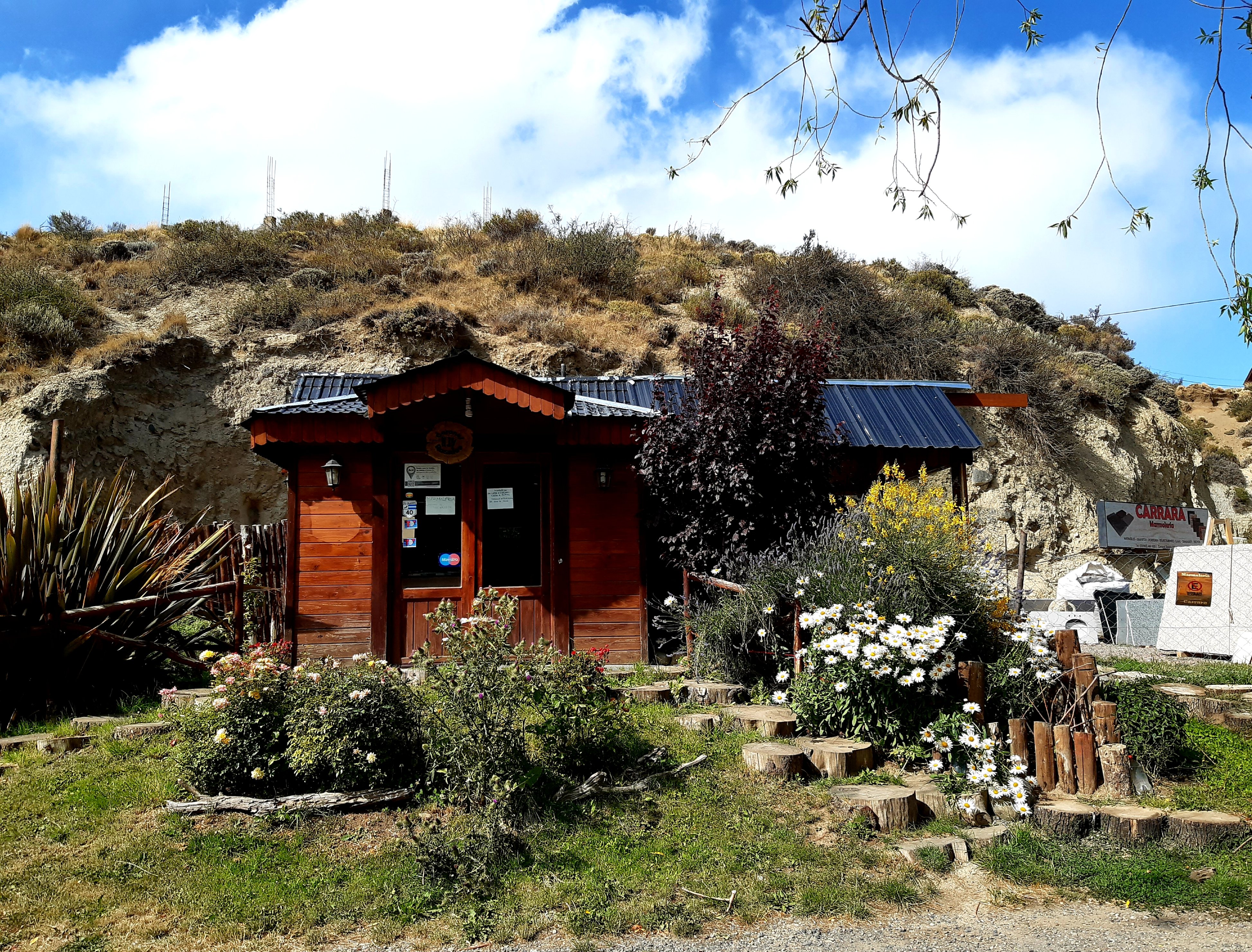
El Calafate, as can be imagined, is a very touristy town with quaint shops bars and restaurants, and of course, very expensive. I arrived at about midday, in a howling wind, and had to drag a reluctant Louise a couple of blocks into the wind, almost being swept off my feet. The last stretch was uphill, and I was completely out of breath when I reached the hostel. Sharing a room with 5 youngsters is partly a challenge (I become aware of my age) and partly invigorating (their energy is catching). Talk is mostly about travel experiences and itineraries, and connections are short and sweet.
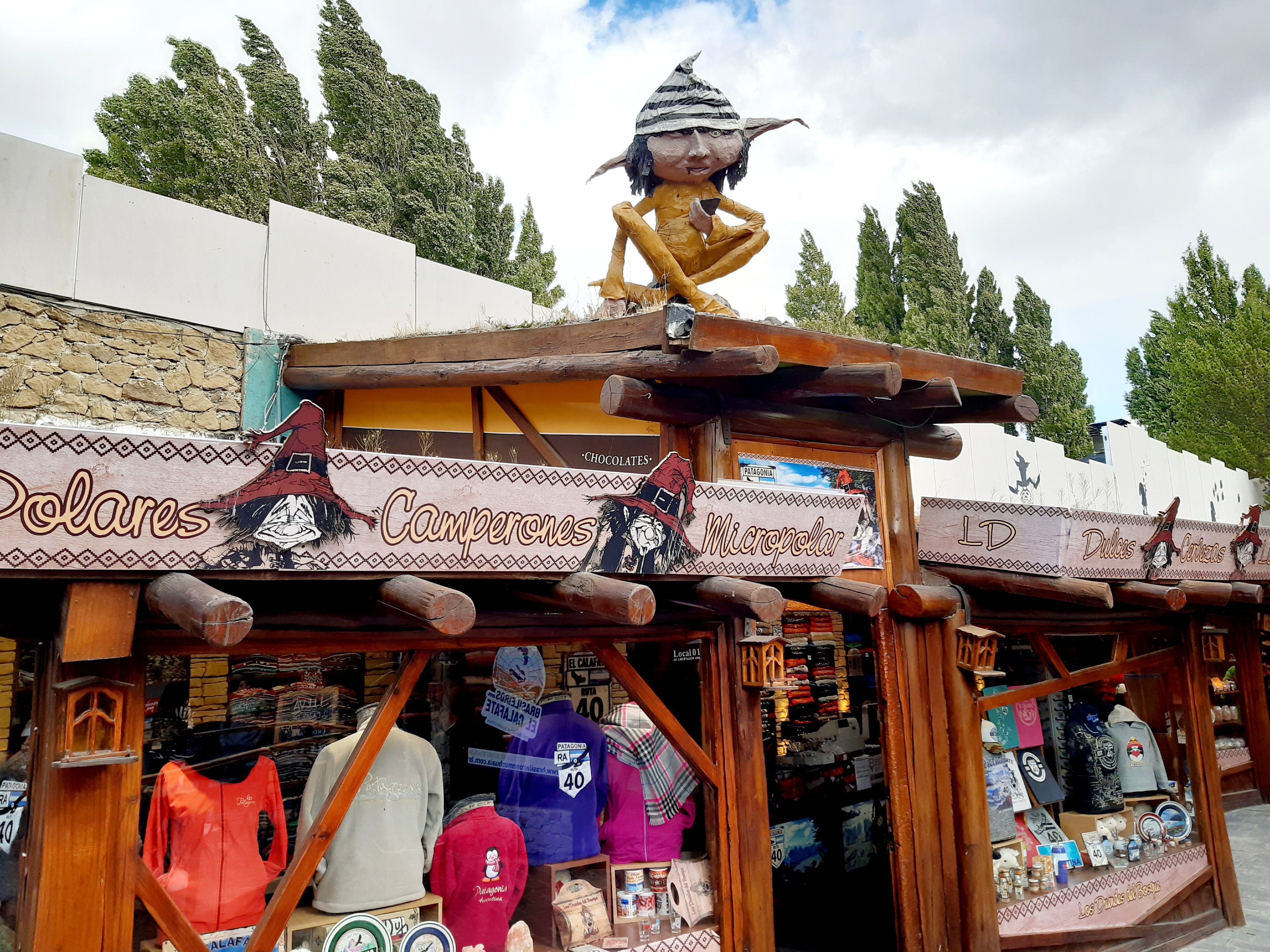
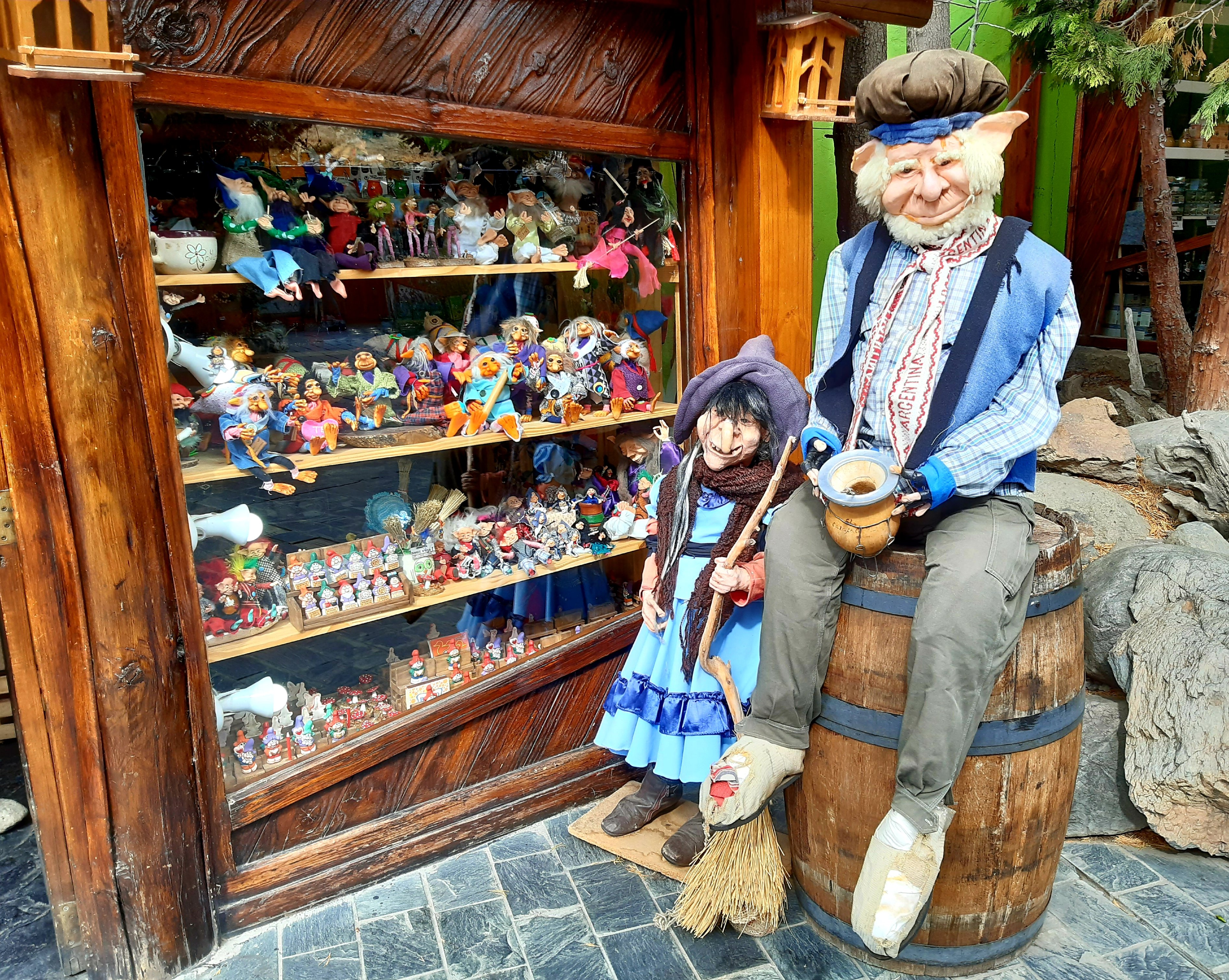
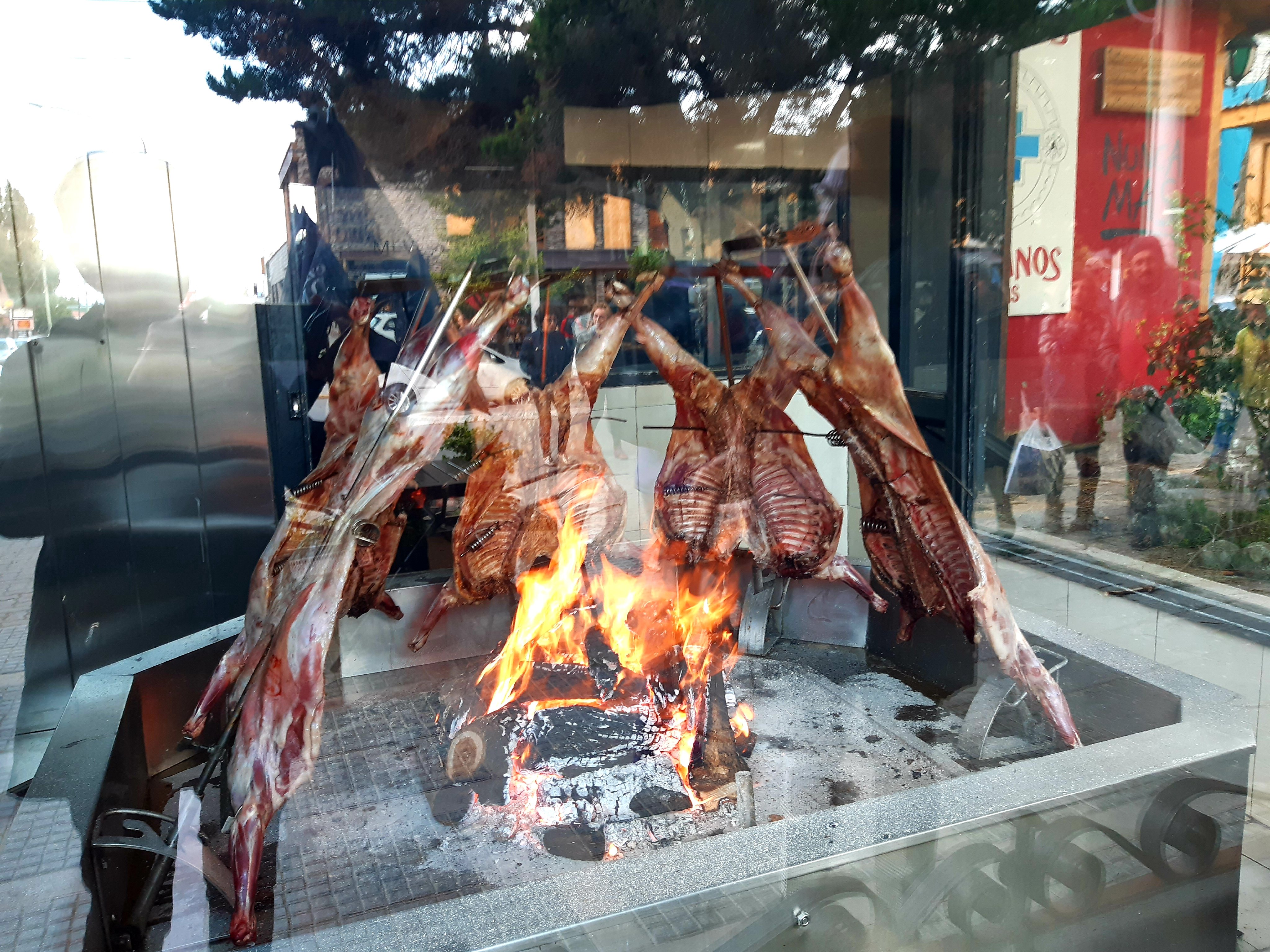
The restaurants do asado’s this way:
I had booked the trip to the glacier on arrival at the bus station, and had chosen a perfect day as the following day it was overcast, cold and rainy.
Booking bus tickets can be tricky. One can do it online, but often they require a printed ticket, so I try and buy a departure ticket on arrival (the terminals are often far from the centre of town). Recently I have been told that the ticket can be printed at the terminal just before departure – a bit late for thát bit of information to be of any use to me now. But I’m passing it on, maybe it can benefit someone else.
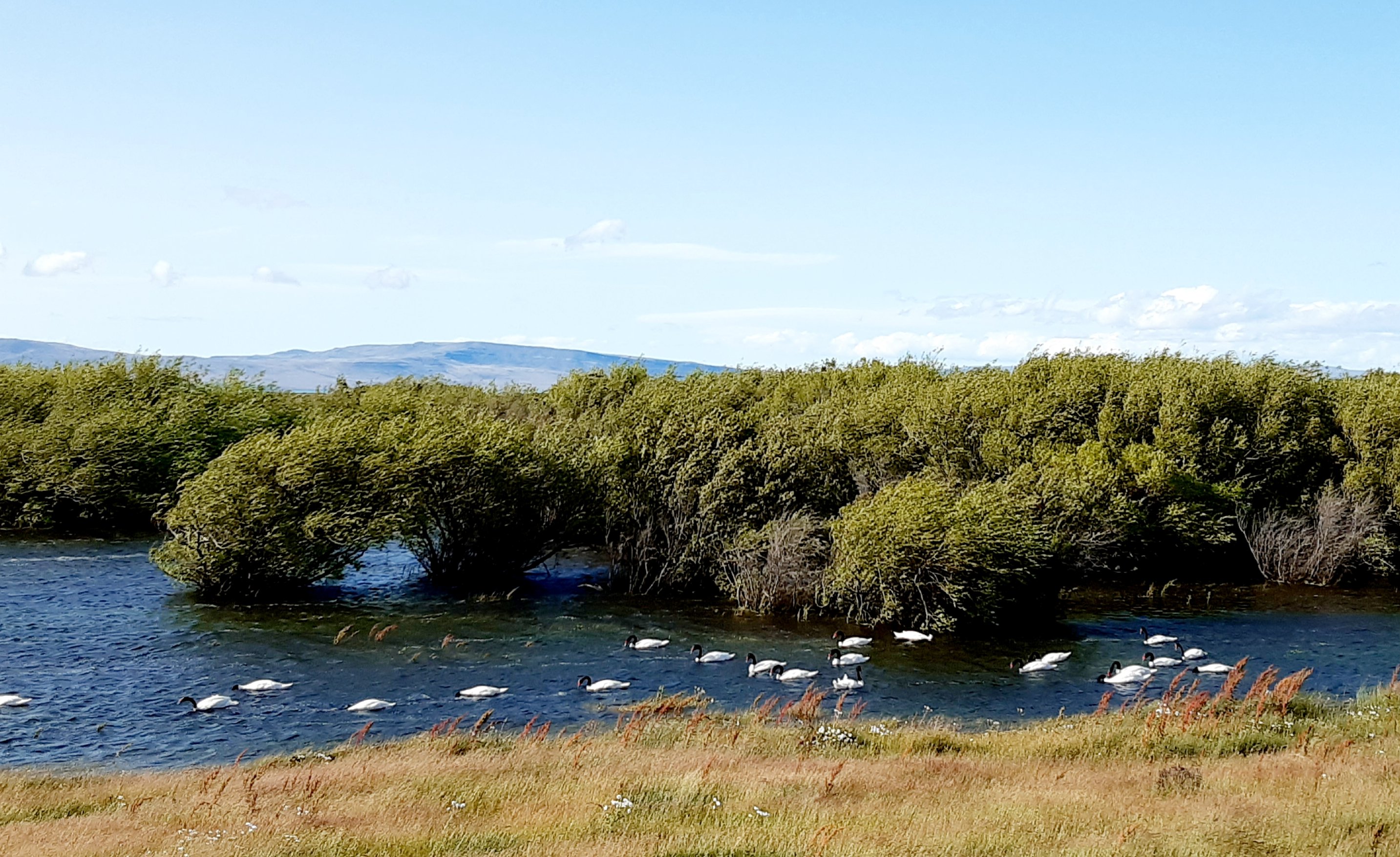
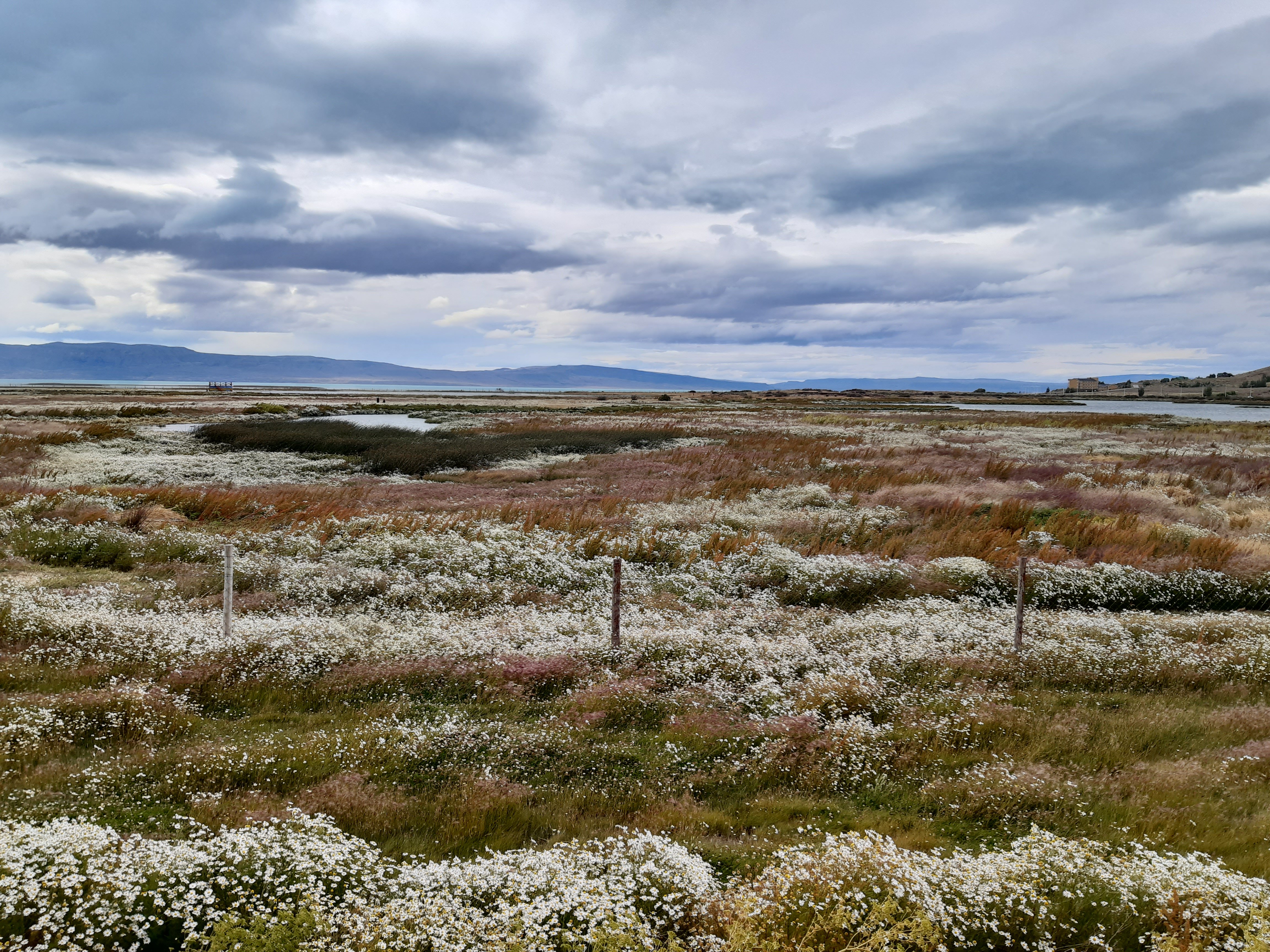
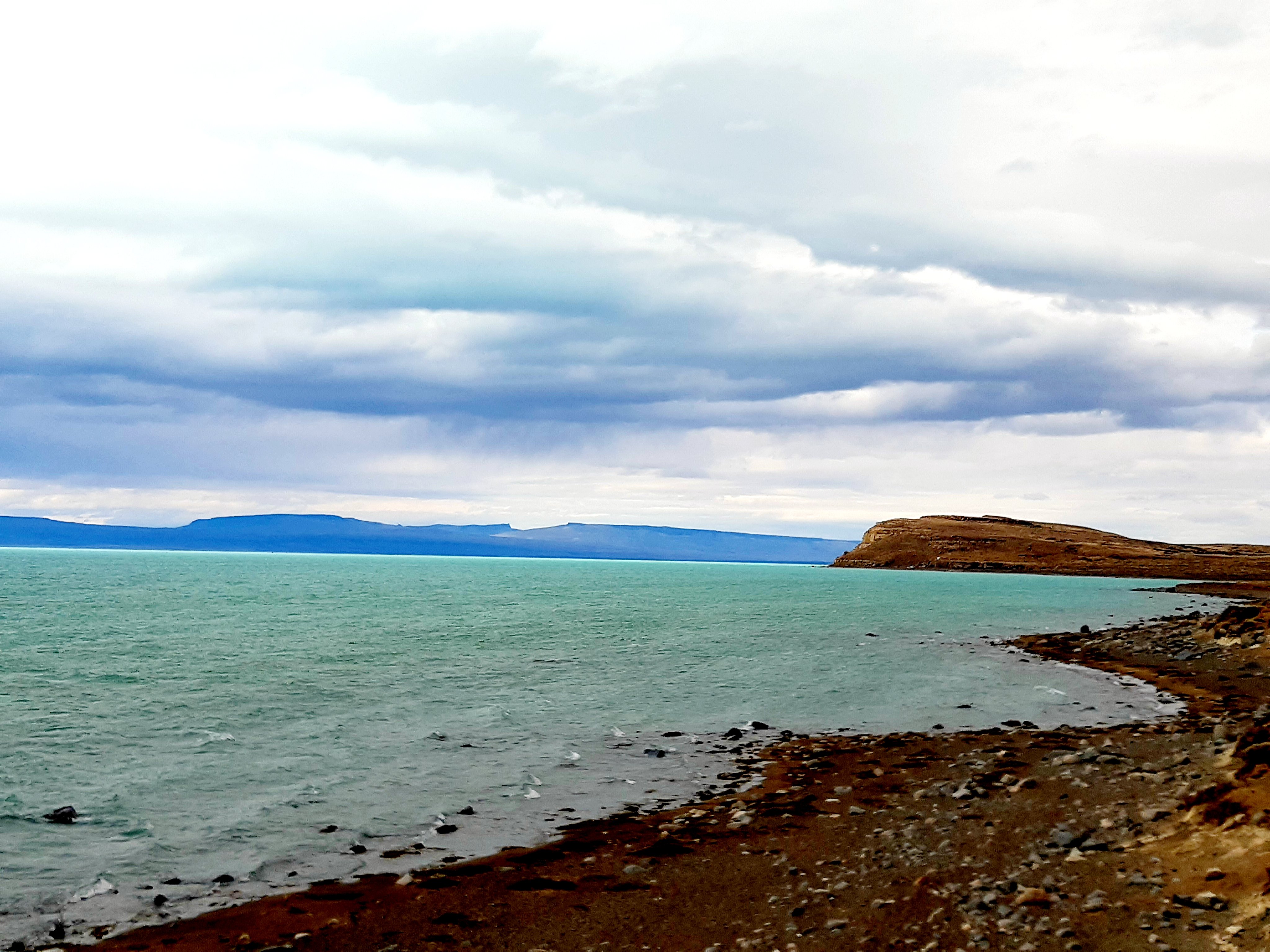
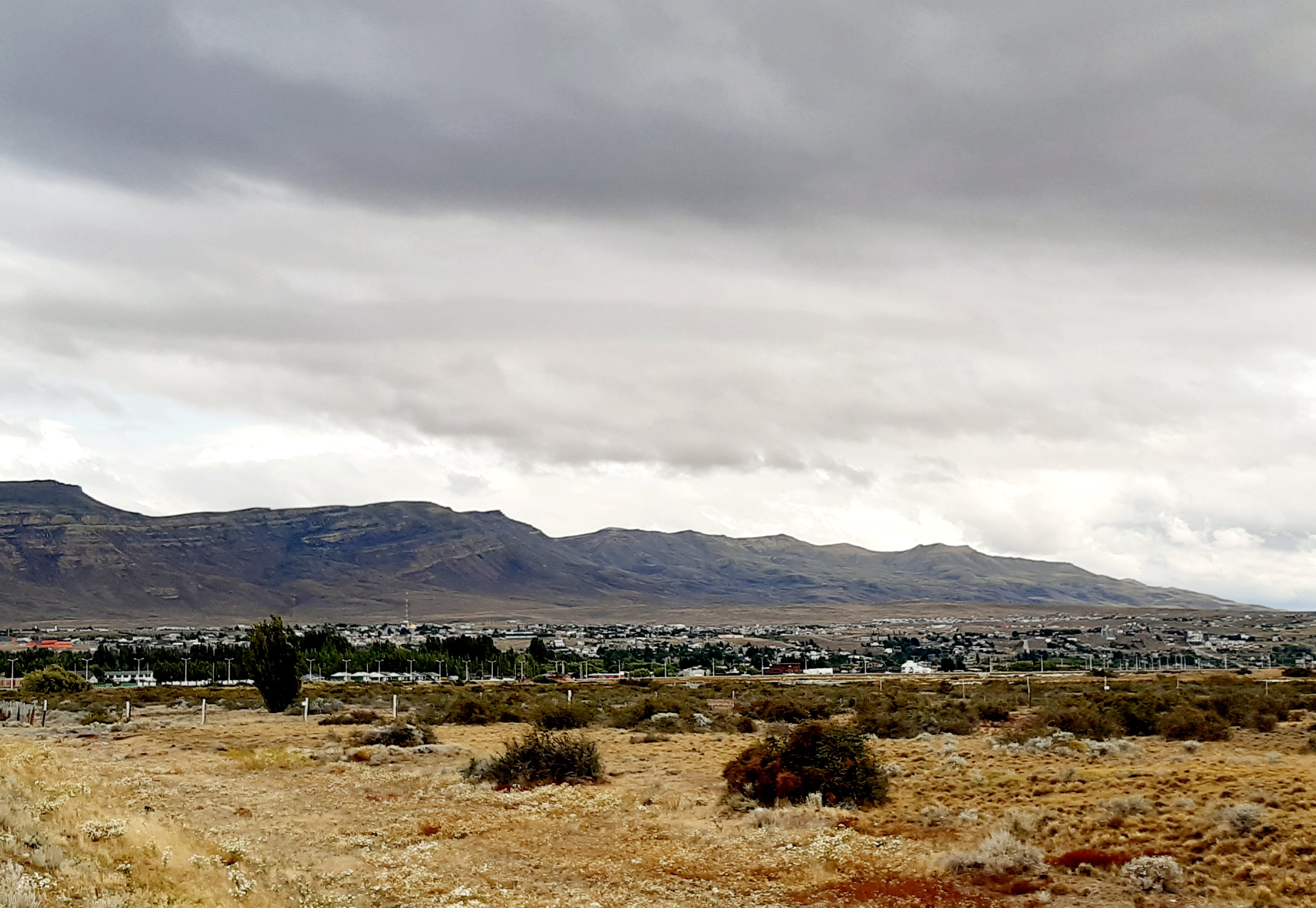
The last day in El Calafate I lazed about and then decided to go for walk in the afternoon. The receptionist at the hostel had told me of a nature reserve next to the lake, and a beach further on. The wind was still going full-force, so I chose a route to have it from behind, and just hoped I would find a shortcut to the hostel. Which I did. Saw some flamingos, swans with black heads, beautiful views of the Lagu Argentio and a view of the town:
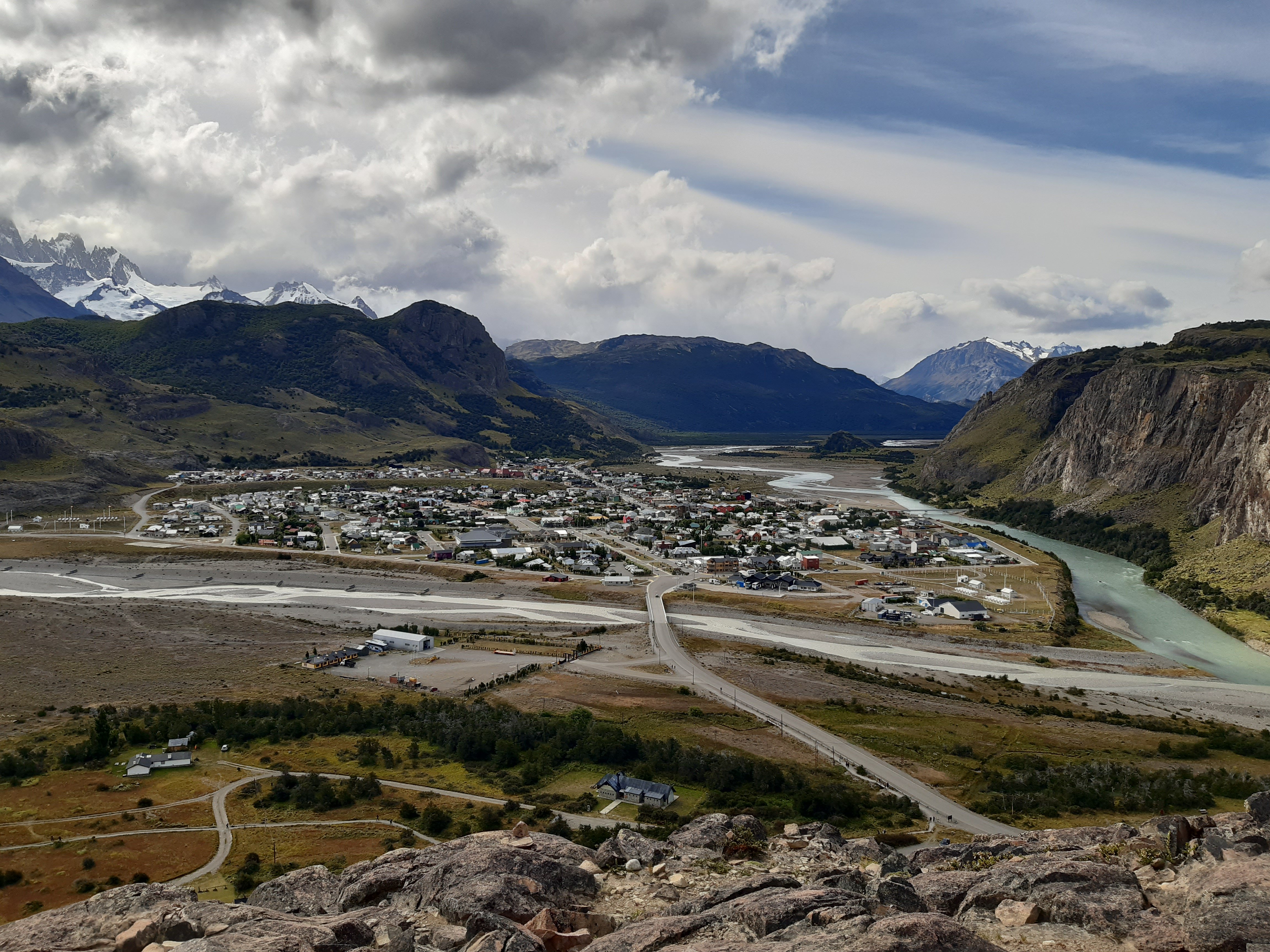
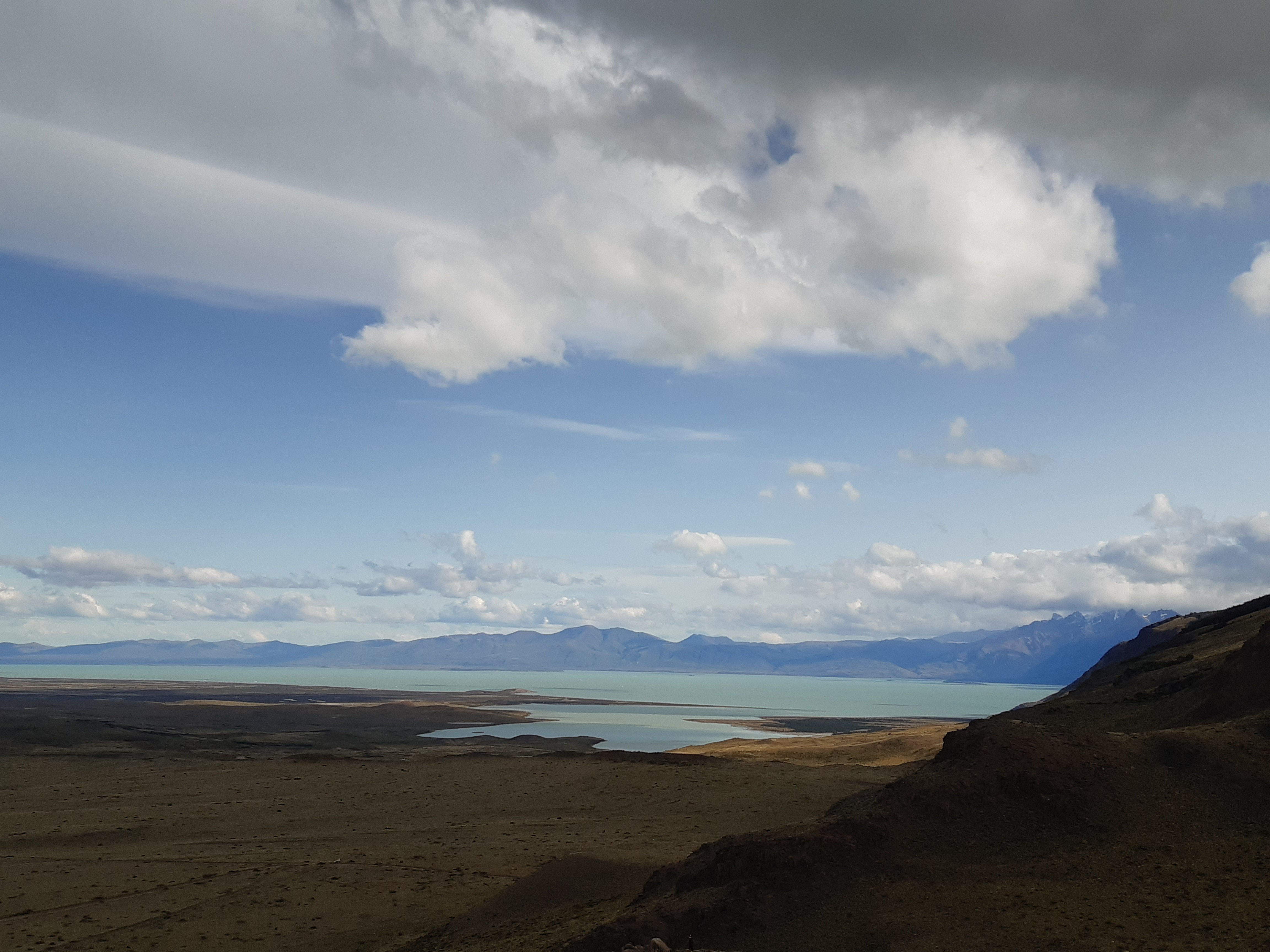
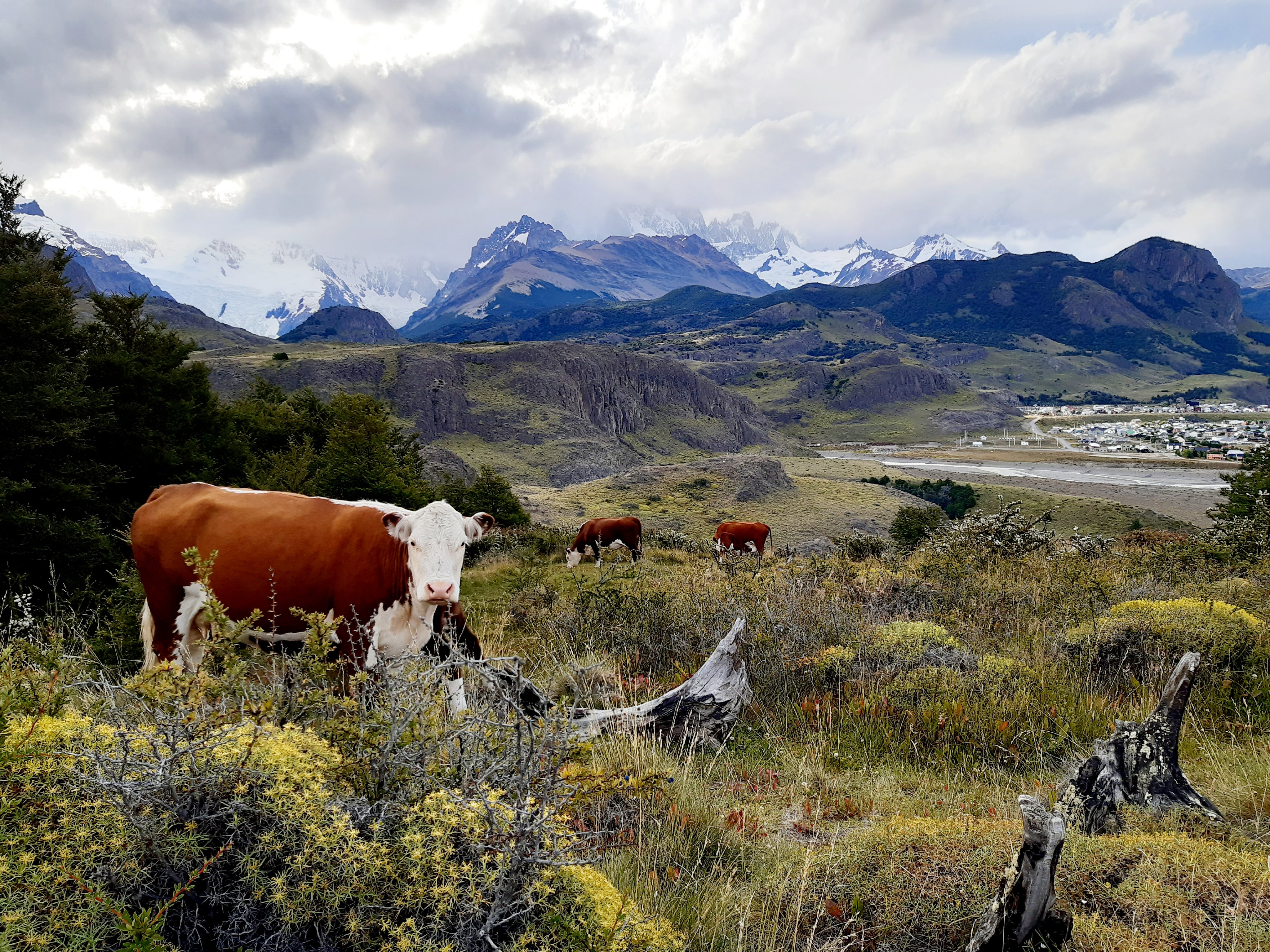
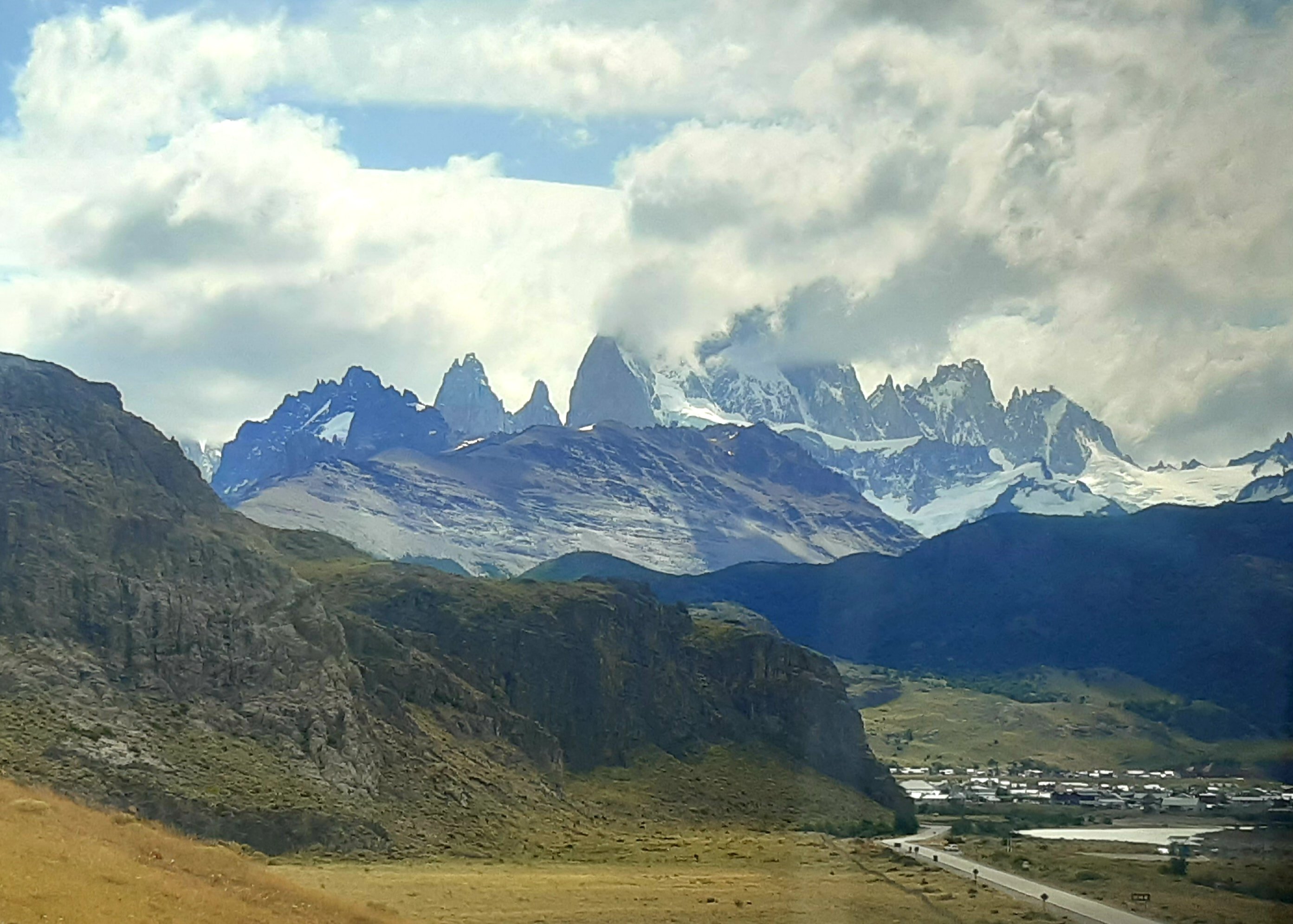
El Chalten, also known as the trekking (hiking) capital of Argentina, was my next destination. The 3-hour bus trip from El Calafate went north around the lakes with the snow-capped Andes as backdrop, lovely views. There are so many hiking trials in El Chalten, one could spend a month there and still not have done them all. The day I arrived I went up to a viewpoint above the town, and further accross to view Lagu Viedma, another big lake on the way to El Chalten.
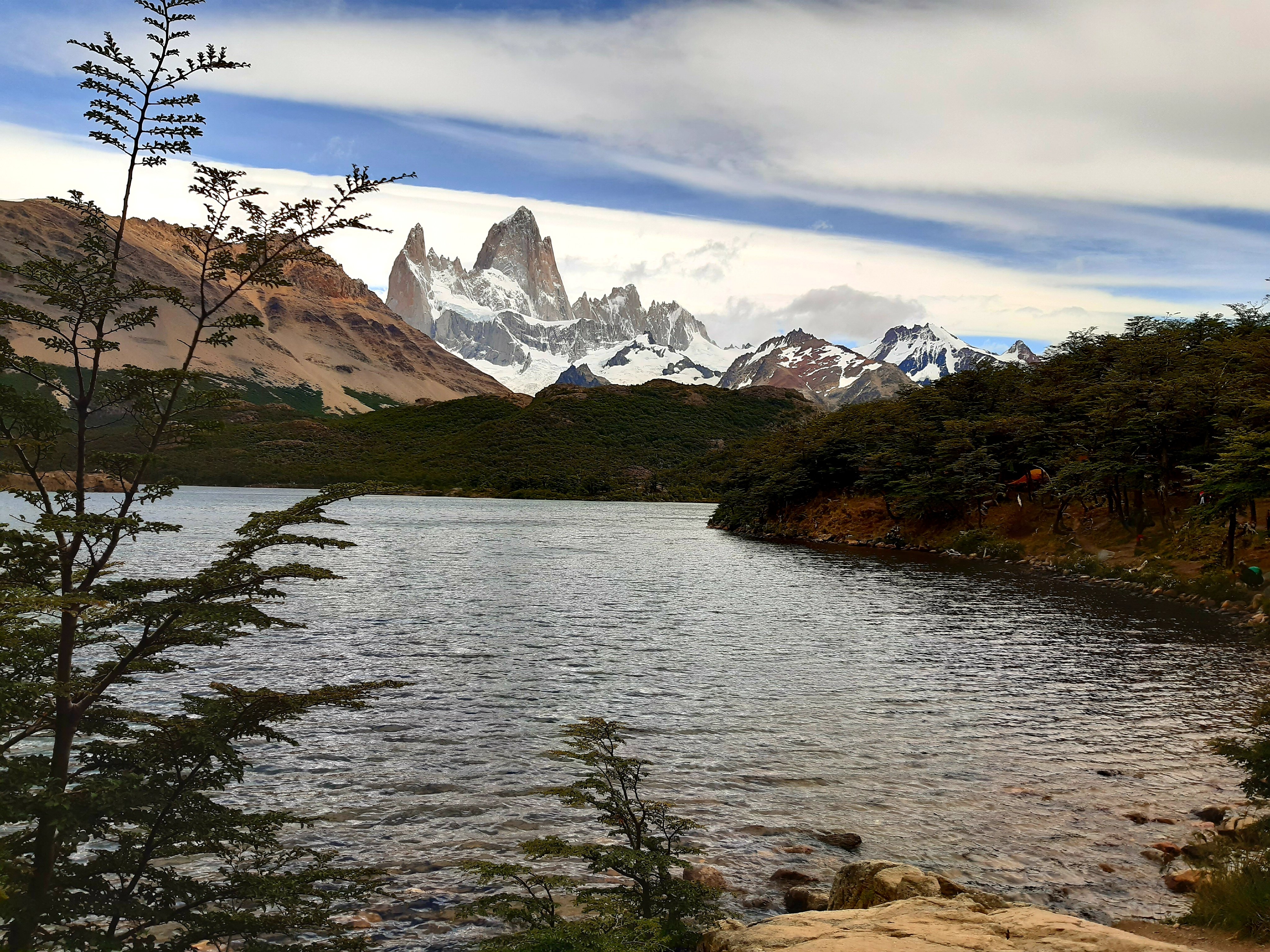
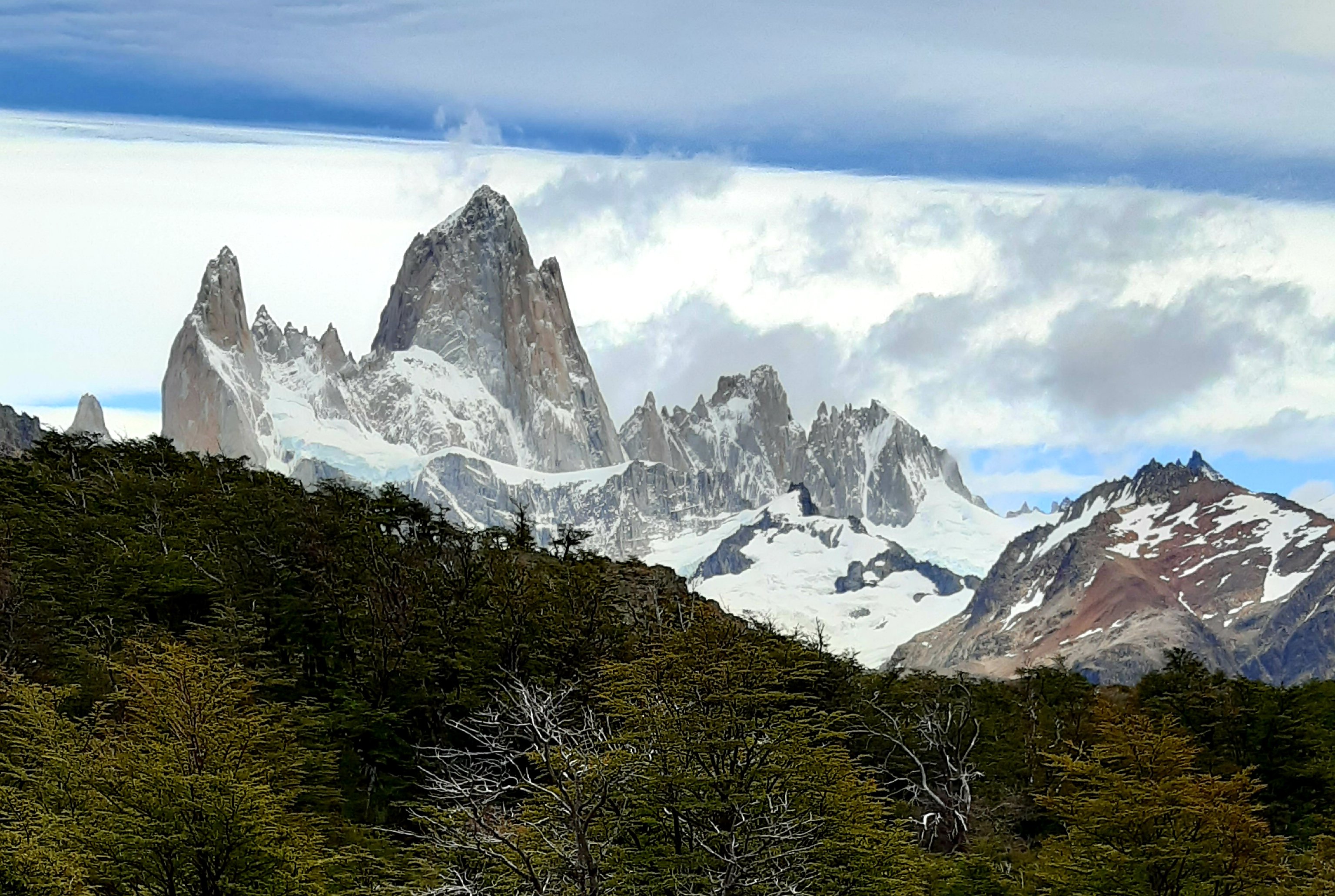
The two most popular hikes are the ones to the foot of Mount Fitz Roy (3402m) and Cerro Torre (3133m), the two highest peaks in the massif. Both have icy cold wind-swept lakes at their bases and at Lago Torre the Torre glacier sweeps down into the lagoon. I managed to hike 5km to Laguna Capri, which is halfway to Fitz Roy, before deciding that I would get hypothermia if I went much further, so I took many pictures and turned back.
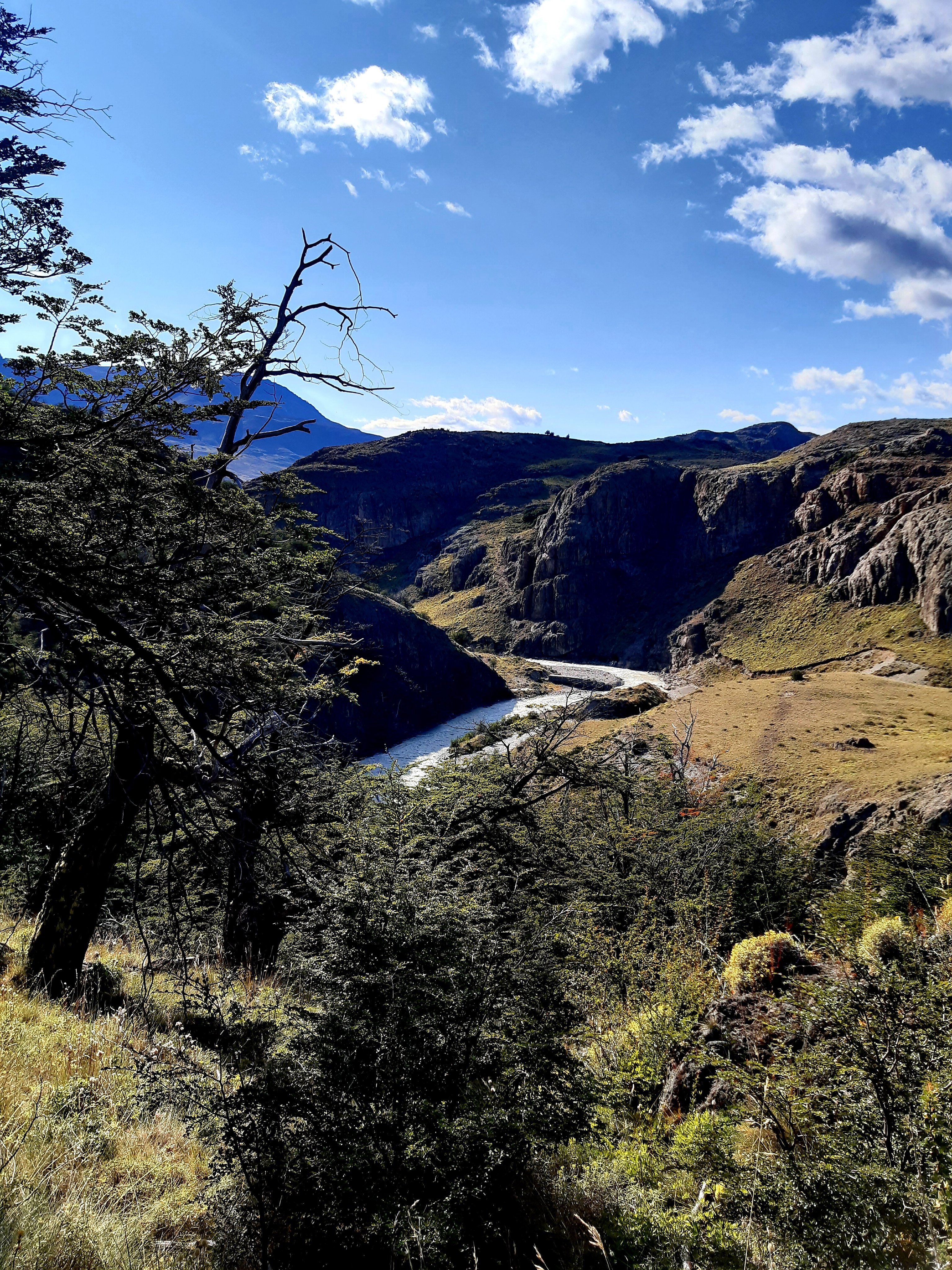
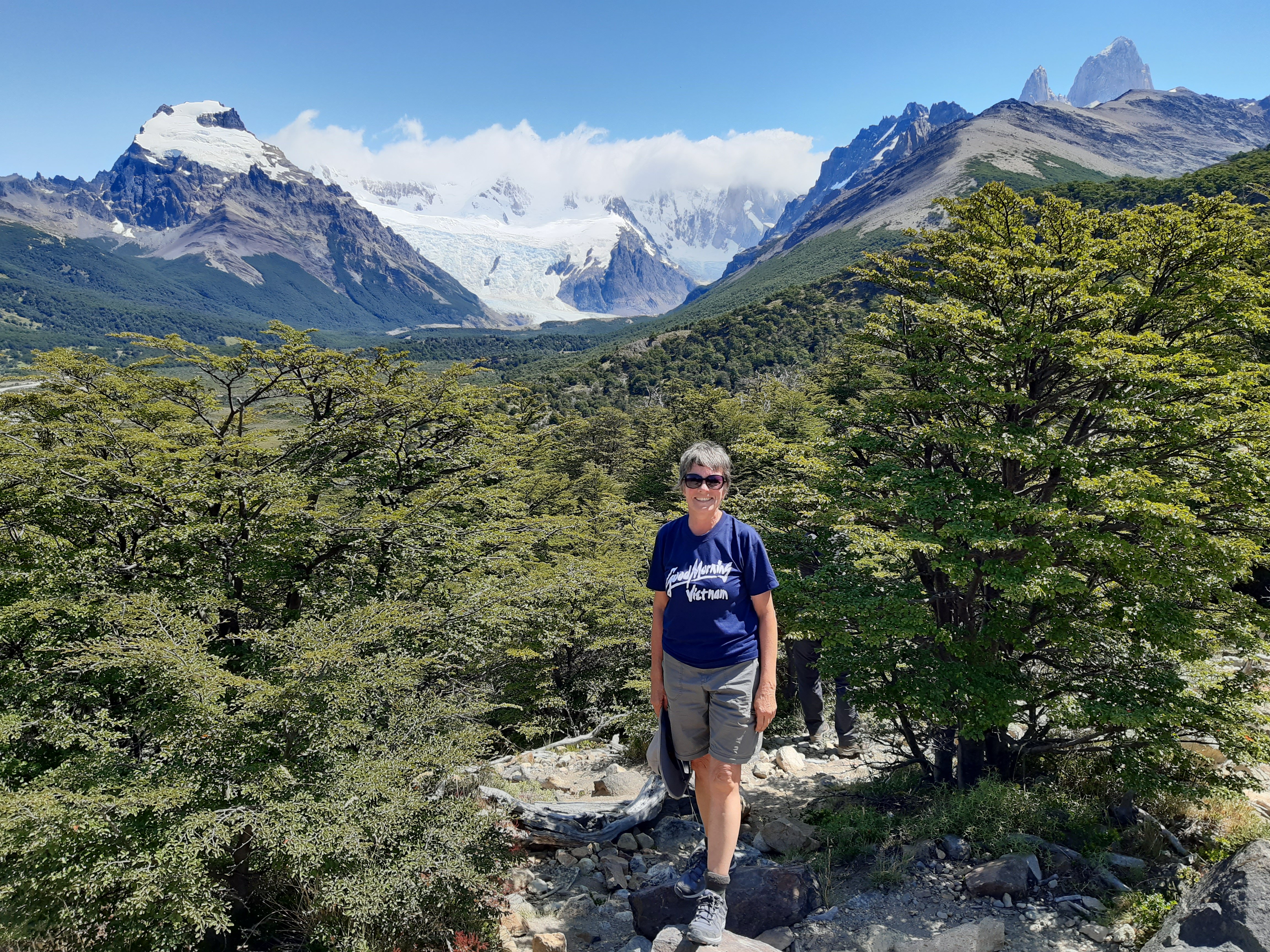
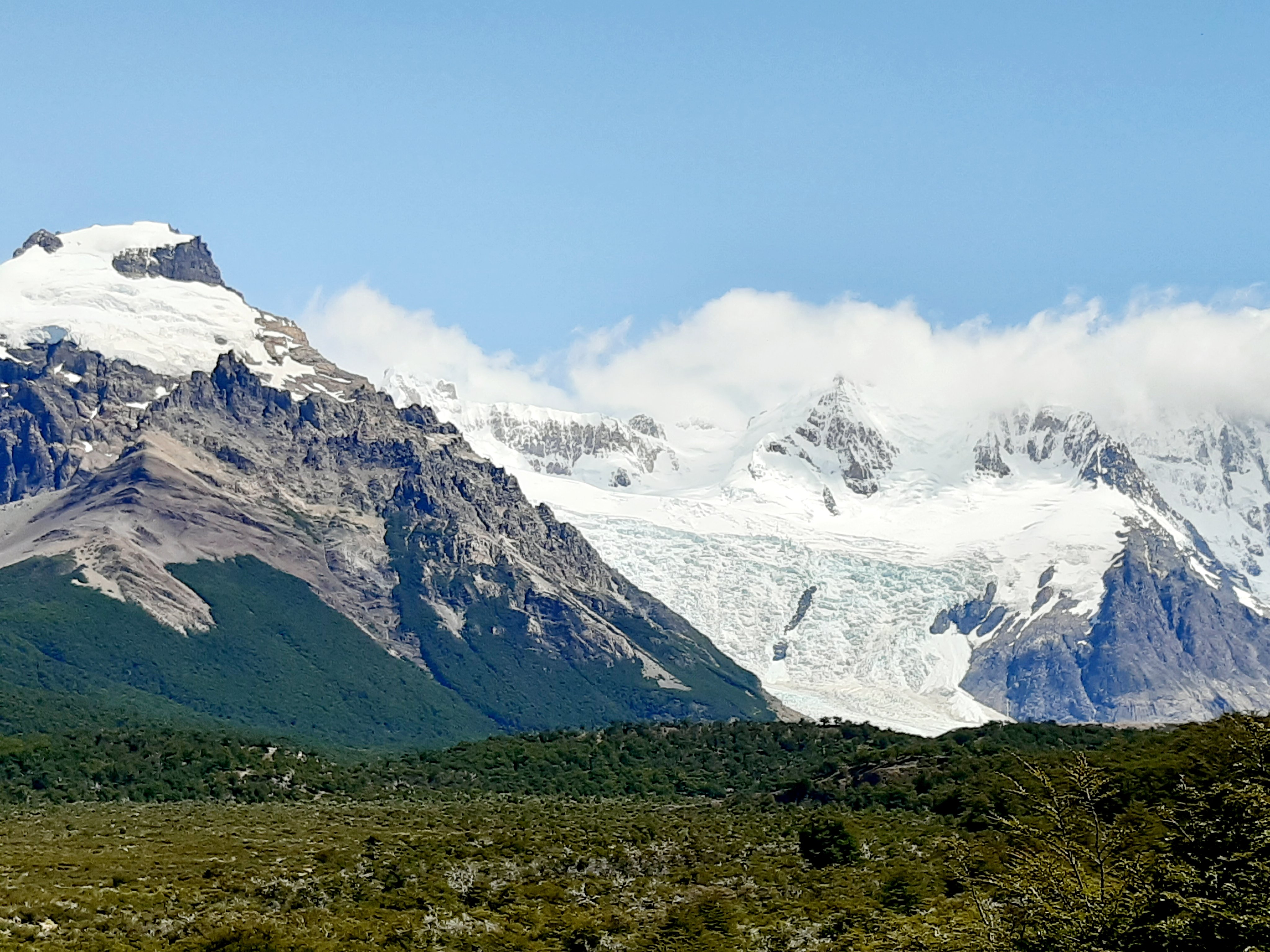
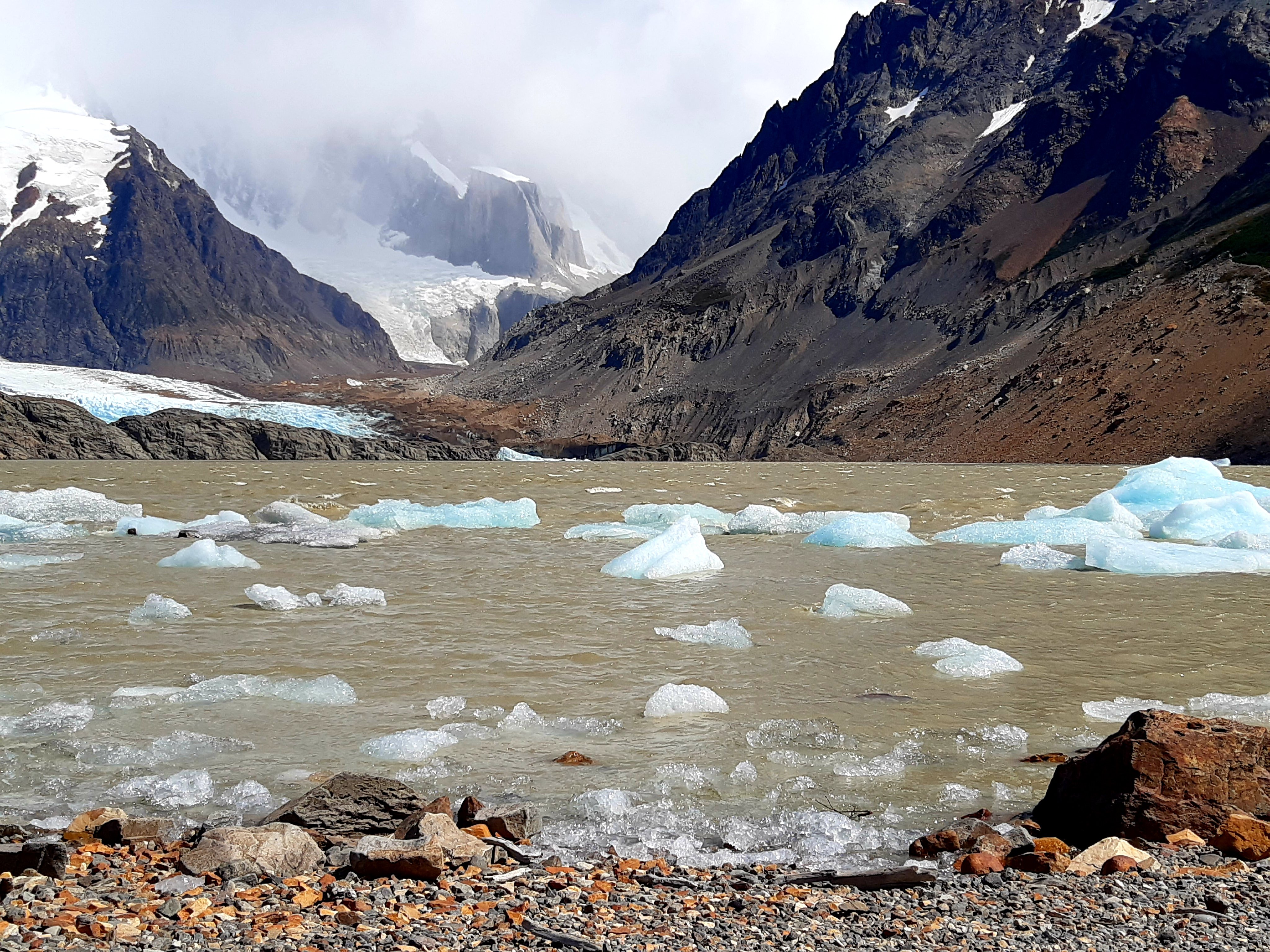
The following day my bus was leaving at 21h00, and the kind owner of the hostel allowed me to leave my luggage there, and also said that I could cook and use the shower later. That meant I didn’t have to sit around and wait, so I did the 10km hike to Lagu Torre, walking at times high above the Fitz Roy river, through forests and accross open fields, all sunny, warm and windless. And then I rounded a hill and got hit by the strong, freezing wind coming down from the mountains. Looking at the stone strewn barren landscape there one is impressed by the force of retreating glaciers and how they shaped the valleys. I didn’t spend much time at the lake with its brown muddy water and contrastig crystal blue ice blocks, but chose to eat my sandwich in the tranquil forest. The view of the glacier and surrounding mountain peaks was spectacular though.

 After all this excitement I headed further north on a night bus to a town called Los Antiquos, where I had a 3-week Workaway stint planned. More about that next time.
 One more photo of El Chalten, taken from the bus:
 Mella Madness