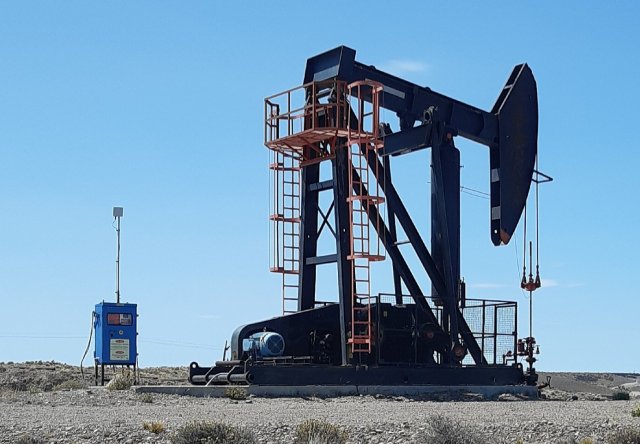
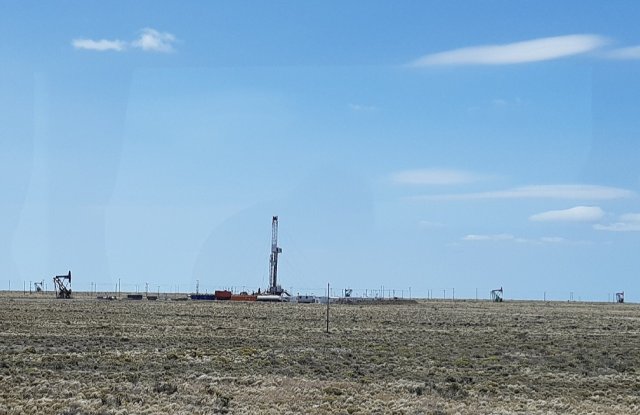
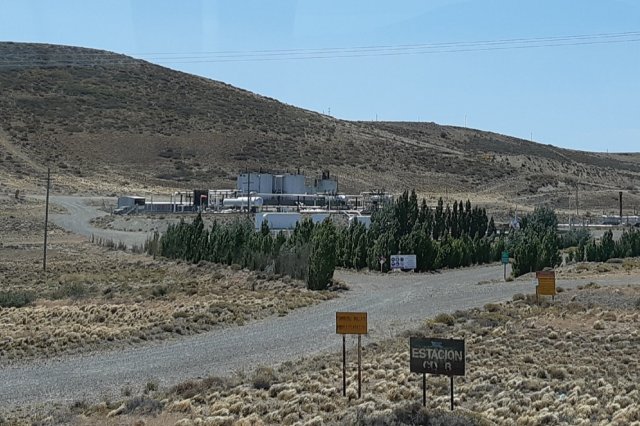
They call themselves Boer’s. I’ve known about them since I was a young girl, and always thought I would visit them if I went to Argentina. I found it very intriguing that people could just ‘up and go’ – whole families, to an unknown, vast, dry and isolated place. To start a 2500ha (625ha free, 1275ha for 150 pesos per year for 5 years) farm from scratch, with nothing closeby. I do believe they came accross some native inhabitants, but Sarmiento and Comodoro Rivadavia were hardly towns at that time. The irony is that around 1907 the govenment was drilling for water for the farmers and found oil instead. Now Comodoro Rivadavia and surrounding 200km is the biggest oil producing area in Argentina. The oil pumps are scattered along the road to Sarmiento, more than a thousand of them.
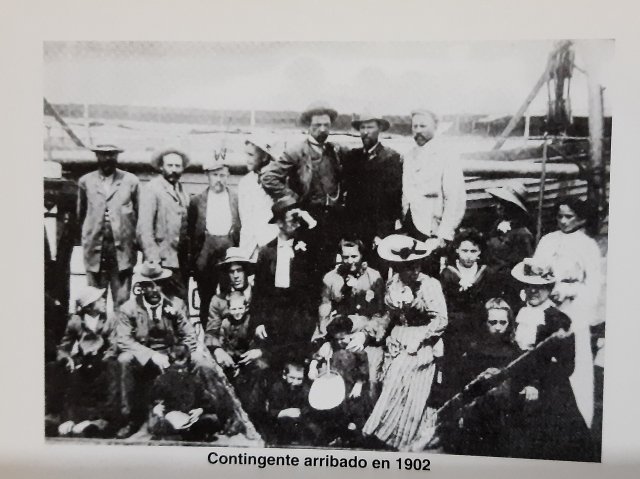
In 1902, after the Boer War, some 600 Afrikaners from the defeated Republics of Orange Free State and Transvaal, and some from the Cape Colony, decided to seek a new beginning in Patagonia, Argentina. They were farmers who had lost their farms in the war, or were not prepared to live under British rule. They sent two representatives to Comodoro Rivadavia to manage the establishment of the new colony, and later arrived on British cargo ships. They brought bullock carts with them and were given tents and mules by the government. Land was allocated to them by Julio Argentino Roca, the president at that time, and the minister of agriculture, Wenceslao Escalante.
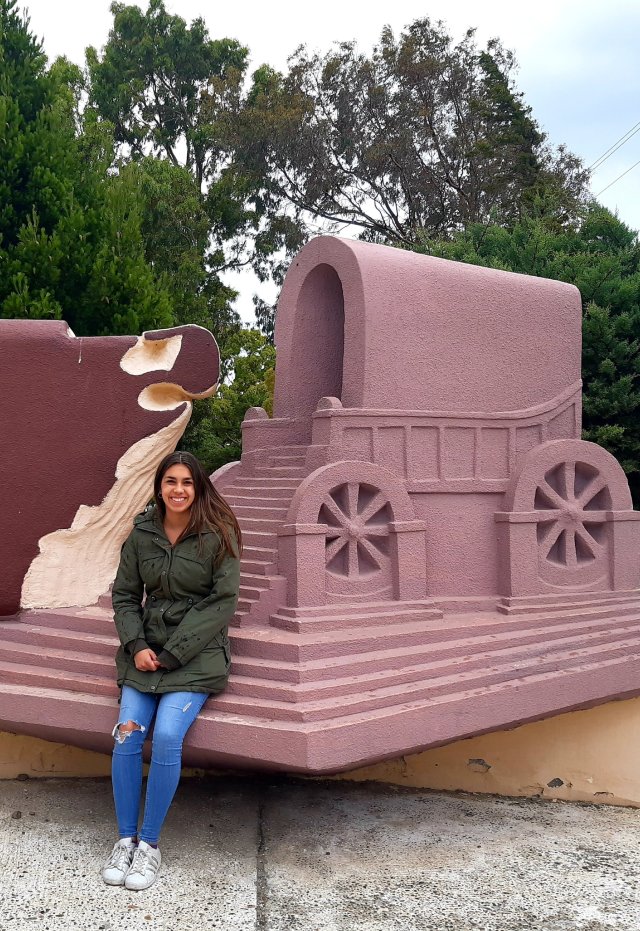
My decision to contact them almost did not come to fruition, as searches and messages on Facebook weeks beforehand elicited no reaction. I had read an article on them written by a research team at the University of Michigan, led by Dr Andries Coetzee. I contacted him, and he referred me to Facebook. Eventually I just decided to go to Comodoro Rivadavia, hoping to find someone at an address of the Facebook group Asociacion Cristiana de la Colectividad Sudafricana in Rada Tilly, close to Comodoro Rivadavia. I made an Airbnb reservation with two very kind men, arrived at 7am on Tuesday, and spent the whole morning on FB again. This time I left a comment on a group called the Kleinmond/Sarmiento Kulturele Uitruil Program and was contacted by both Gerard (from Kleinmond), and Carolina (from Sarmiento). Carolina (I’m not writing surnames) gave me the contact number of her niece, Romina, in Comodoro, who is a student in Buenos Aires, and who happened to be home on holiday. She speaks English, and we met for breakfast the following morning. What a delightful and enthusiastic person. She shared a lot of information about the local activities of their group (Asociacion Cristiana de la Colectividad Sudafricana) and showed me around town, amongst other the Boer’s monument. She had had an interview about the Afrikaners on national TV in Argentina, and mentioned that a question that was regularly asked was why they always only represented a certain aspect of South African culture, i e the Afrikaners. Her answer was simple: “We are descendants of only the Afrikaners”.
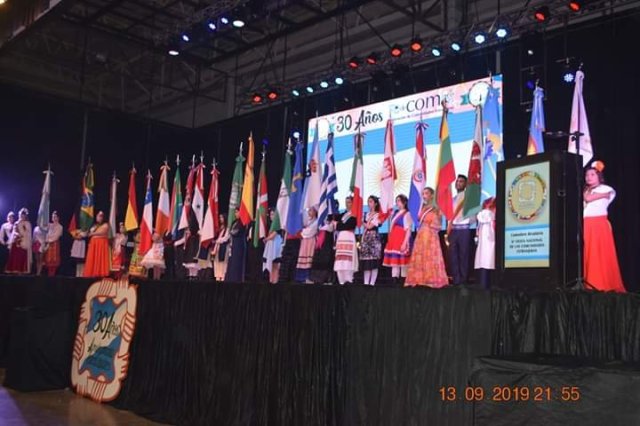
I was impressed by the acceptance and involvement of different countries and cultures in Comodoro Rivadavia. There are people of about 25 different countries living there, and whenever one country has a special day of celebration, representatives of all the other countries attend, wearing their national costumes and bearing flags of their countries.
Romina helped me to buy a bus ticket to Sarmiento the following day, and informed the Sarmiento group about my arrival. Carolina arranged for a gathering at Cristina’s house, including the ‘elder’, who still spoke Afrikaans. I was unable to do anything at all in Sarmiento on Thursday afternoon and Friday morning, as my whole being was in turmoil about meeting the Afrikaners, something that I had hardly anticipated as becoming a reality.
At 3pm I was waiting on the pavement outside my apartment, having changed into black jeans and a new T-shirt I had bought the previous day, when a twin-cab bakkie stopped and a young woman jumped out, in shorts, T-shirt and sneakers. We hugged, and she introduced me to her 4-year old son and 6-month old baby in the back seat.
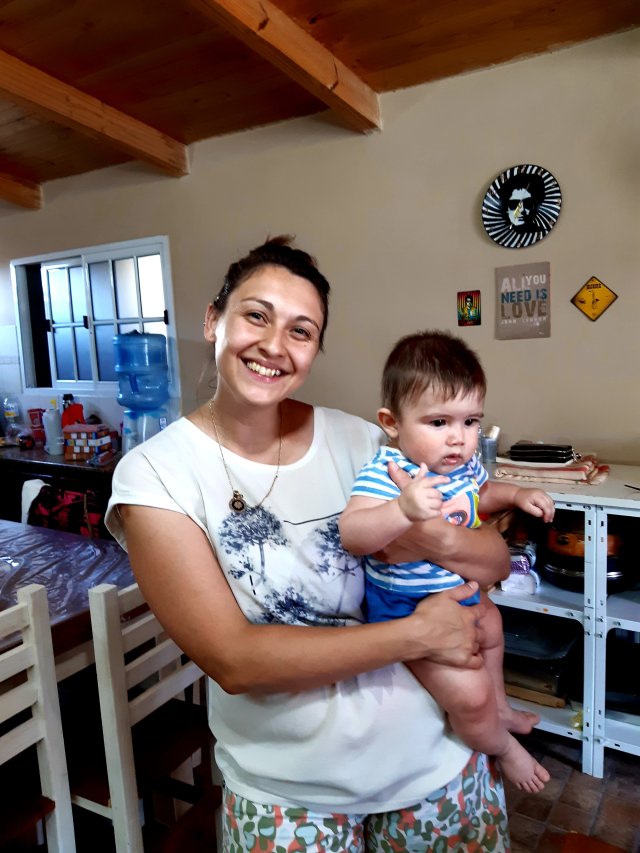
We were the first to arrive at Cristina’s house, and I was mightily surprised when she greeted me with a heavily accented ‘Hoe gaan dit?’. She told me she was 64 yrs (i e 2 years younger than me), which I couldn’t believe, as she looked about 40 yrs. As it turned out, she had gotten the numbers back-to-front, and it was supposed to be 46yrs, a common mistake when translating from Spanish. Phew, I was relieved…
The others started arriving, and every time a new person entered, I became more emotional. When Piet and his sister Nenna greeted me in perfect Afrikaans, I just doubled over and didn’t know what to do with the emotional impact. Five months in South America, never meeting any Afrikaans speaking people, and here I was being greeted by Argentinians in my language! That made them ‘my’ people, and I was privileged enough to meet them. And then Ricardo walked in, also speaking Afrikaans, and I réálly didn’t know how to cope with it all. By that time everybody was watching me, and we all shared this incredible feeling of connectedness through a common language and cultural bond só deep, one could only be filled with awe. When I mentioned that my maiden name was Snyman, Ricardo reckoned that we might be family, as he had Snyman family who had moved to Patagonia from Phillipstown in the old Cape Province.

Ricardo, Nenna, me and Piet:

Nenna had had 10 children, 2 of them in the photo (the one on the left is Cristina), with 2 of her many grandchildren.
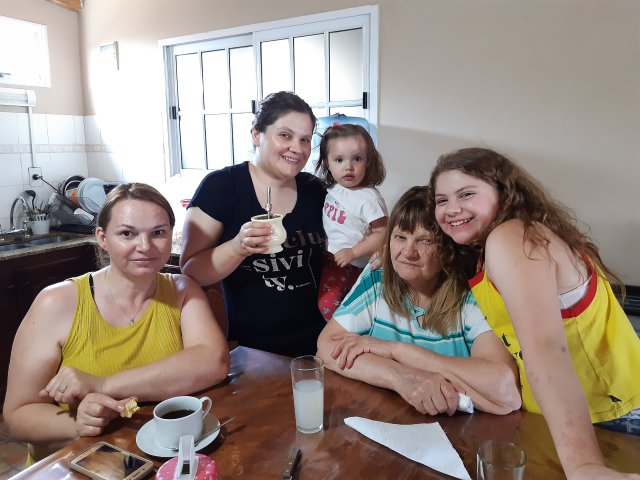
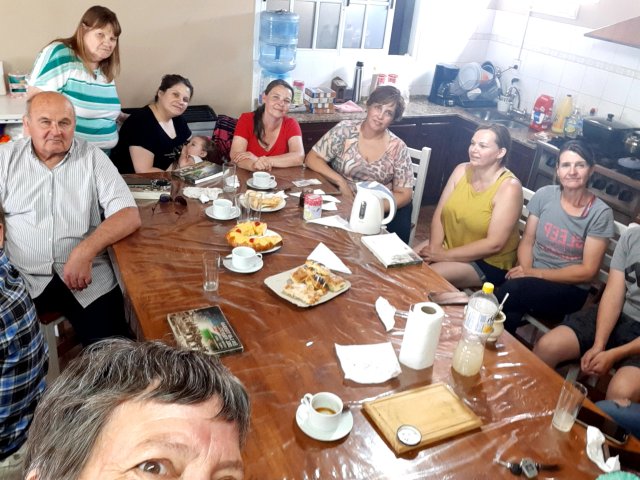
We talked for hours, about their lives, how things had changed, about South Africa, and about how they are attempting to keep the Afrikaner traditions alive by arranging get-togethers, Boeresports, teaching traditional dances (Volkspele) and getting the younger generation to learn Afrikaans. Their newly established Colectividad de Descendientes Sudafricanos Boer’s de Sarmiento, Chubut has a cultural connection with a group in Kleinmond, South Africa, and the first two girls from Sarmiento to take part in an exchange, had just arrived in Kleinmond that Monday. They are receiving Afrikaans lessons and are supposed to report back regarding the South African way of life.
As I listened to the stories of their lives, I was filled with respect for what they had managed to accomplish. My Karoo roots deepened my understanding of their trials and tribulations, as the area they were given to farm on, as well as the conditions (isolation, droughts, fluctuating wool prices) are very similar to where I grew up. What impressed me most though, is their attitude. They are relaxed, positive, extremely friendly and open. Ricardo, for example, has lost all his sheep as a result of the drought. A lake 200m from their farmhouse had dried up, and sand blown by the constant strong winds had completely covered their driveway, yard, trees and house. They recently built a new house, but cannot live there because of the sand in the air, so have moved to town. He tells all this without negativity, merely stating facts. Piet has lived on his farm his whole life, and in the past used to come to town once a year. It was common practice for the farmers in those early days to only visit town once a year, and even then the children were left on the farm. They told me that by the time the children started attending school, they could only speak Afrikaans, and were always bullied. Now the younger generation speak only Spanish, go to university, and are not really interested in farming. I was surprised at the size of the farms and flocks of sheep these days, much bigger and many more sheep than my father had on his two Karoo farms. They mentioned farms of many thousands of acres carrying over 100 000 sheep. All Merino’s.
When I was getting ready to leave, they surprised me by giving me a copy of the book that had been published in 2002 in commemoration of their 100 year’s existence in Patagonia. It was a limited edition, so a huge gift indeed. They all signed it, and I was só overwhelmed, I could hardly thank them. What an unbelievable privilege, to be welcomed and accepted into such a unique community!
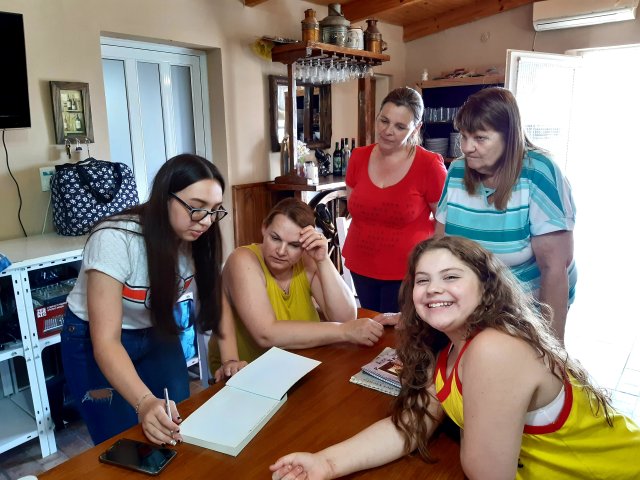

Carolina took me home, and I was met by my landlady, who insisted on making a phone call in my presence. I couldn’t understand why, until I heard a voice speaking to me in Afrikaans. One of her friends, Agustin, was an Afrikaner, living about 10 blocks away, and he badly wanted to meet me. It was past 7pm and I still had to buy my bus ticket and cook supper, but I walked to his house and visted for a while.
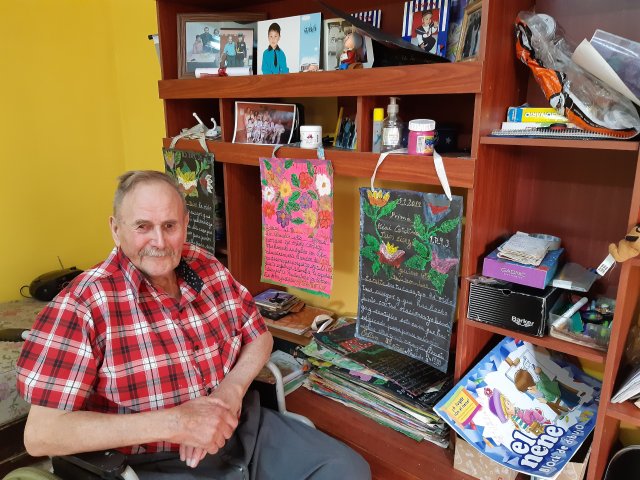
Agustin had broken his leg 10 years ago, and is still in a wheelchair in spite of many operations. He had sold his sheep before the drought had gotten too bad and moved to town. He is the oldest and only surviving of 5 children, and said that his father had employed a Meester (teacher) to teach the children on the farm. There were about 15 children in the farm-school, some from neighbouring farms.
I don’t know if I have managed to portray the full impact of this visit. I don’t even know if I fully understand it myself. All I know, is that it touched a part of my soul that has been harbouring an admiration and yearning all these years, and has culminated in a shared moment of connectedness and unity. As we were sitting around the table, talking, laughing, sharing, drinking coffee (and mate of course, cold this time, made with grapefruit juice), eating Argentinian treats, children playing around us, it felt so familiar, as if we were on our farm in the Karoo. Yet it was Argentina, a country I have come to understand and love, and it was Argentinians, yet Afrikaners. Maybe it’s ancestral, maybe it’s similar farming experiences, shared joys and adversity, maybe all of it put together. The experience, I can assure you, was intense.
Quite a few South Africans have been in touch with me since I posted some photo’s on Facebook, some of them mentioning family that had moved to Patagonia, but that had gone back to SA during the 1930’s, when about 300 of them returned. Thank you for sharing with me, it adds to the richness of the experience. Best of all is that Carolina is answering the comments left by people on FB – we are now all connected!!
 Mella Madness