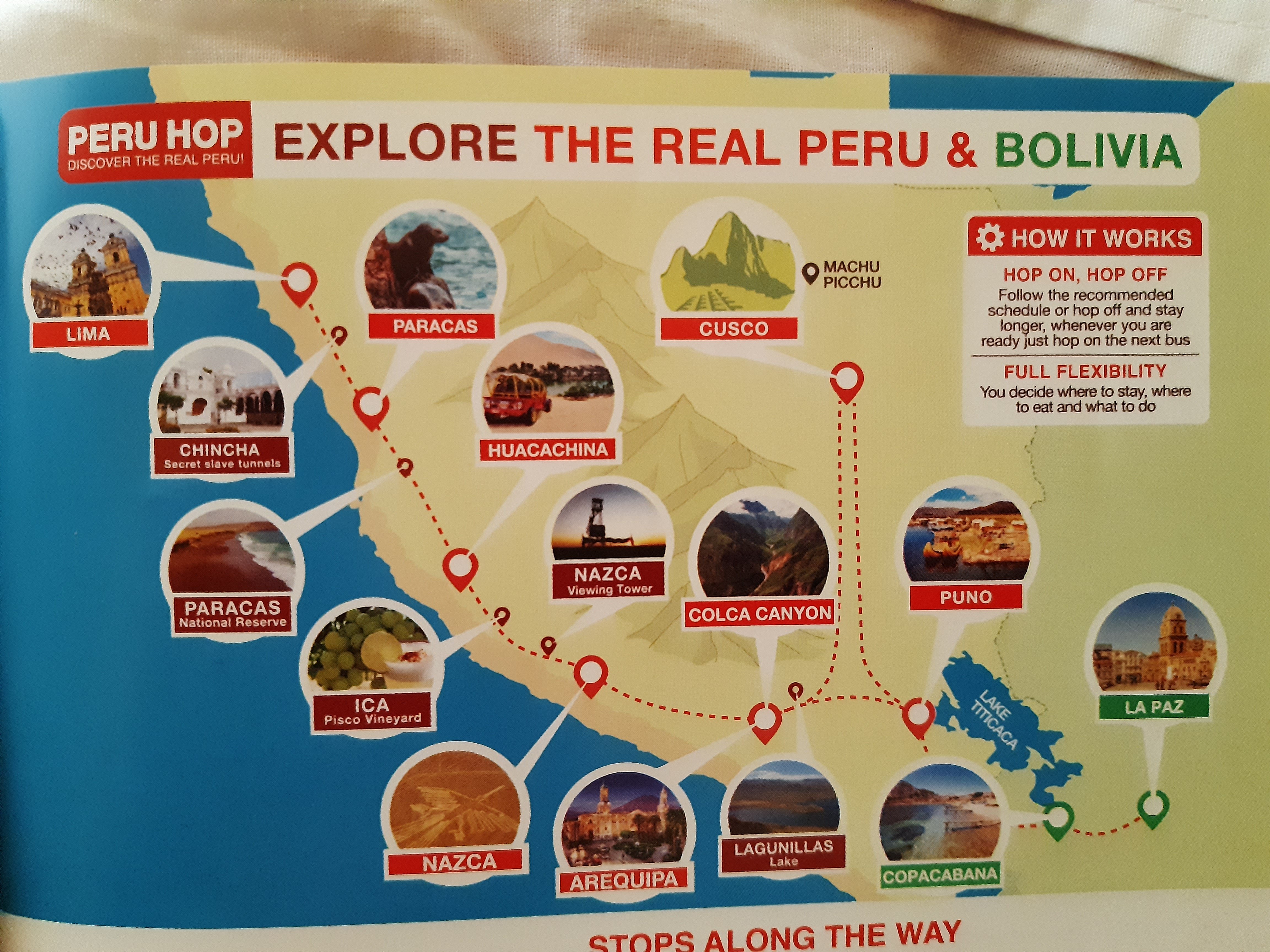
 Louise (my pink suitcase, for new readers) and I set off at 05:15 last Tuesday at a brisk pace to be at a pick-up point almost 2km from me. All went well and we left Lima just after 07:00. Deborah was our guide, a very friendly, concerned and efficient Peruvian lady.Our first stop was breakfast, and that was when I realised that I was part of the tourist-clan. Queuing for breakfast, watching a man riding his horse up-and-down and playing a game involving a guinea pig chosing a numbered box to win a prize…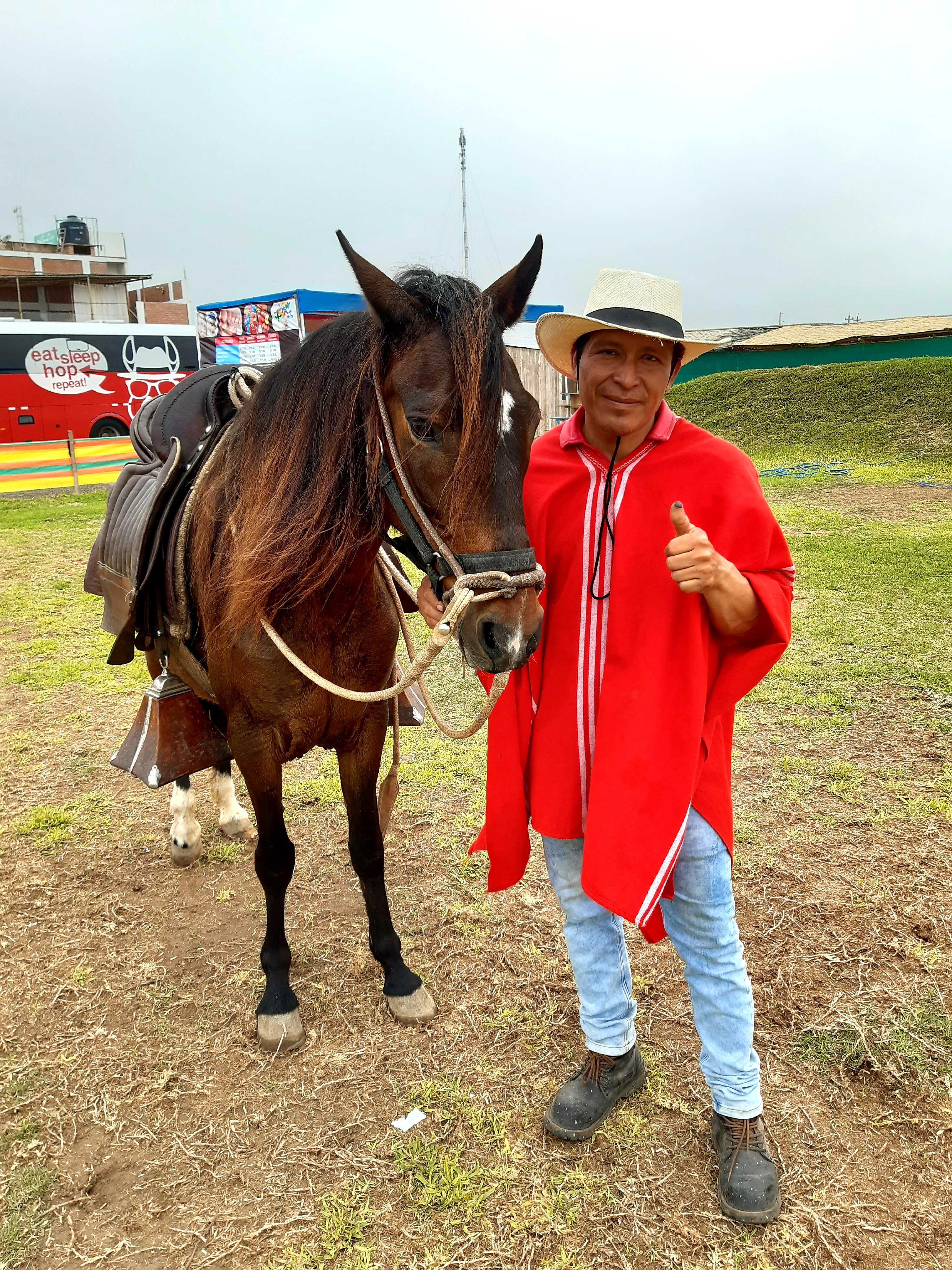
 They breed some guinea pigs there, it is a popular Peruvian dish, cuy al horno (fried whole, head, feet and all). I haven’t tried it, although I have had some other tasty dishes, such as palta a la reina (avo filled with chicken, potatoes and cheese), rocoto relleno (stuffed peppers), alpaka steak and alfajores (two biscuits with dulce de leche in between). Two other local dishes are lomo saltado (stirred fried meat & vegetables on chips, with a pyramid of rice) and ceviche (marinated raw fish).
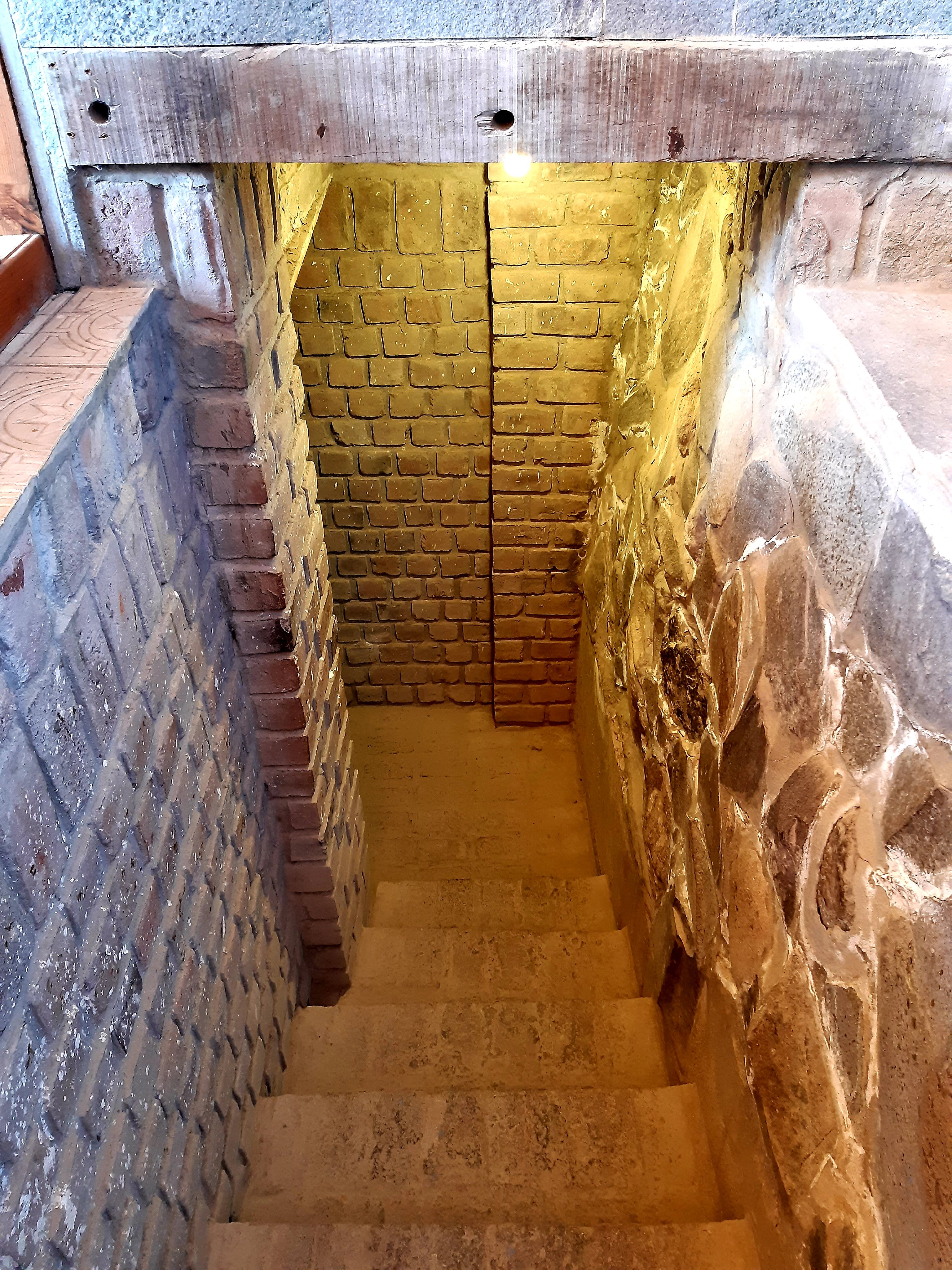
 On our way to Paracas, our first stopover for the night, we were shown the slave tunnels on Hacienda San Jose, a colonianal plantation founded in 1688. By 1811, two estates had been combined and over a thousand slaves were working there. Slavery was abolished in 1854. They eventually murdered the last owner on the steps of the manor house, and today it is a hotel. There are 17km of tunnels, starting from the courtyard of the house and having steps up into the master bedroom (one can only guess why), and running from one plantation to the next and even to the Pacific Ocean. It is thought that apart from servicing the household, slaves were smuggled in through the tunnels to avoid being taxed for them. There were rooms leading off the tunnels that were used to isolate the sick slaves coming in from the boats (leaving them there to die), to punish slaves, and to keep men that were strong and healthy to procreate. Well that is what we were told. Today there is a strong Afro-Peruvian culture in the Chincha area as a result of the fusion of the cultures, especially music, dancing and art.
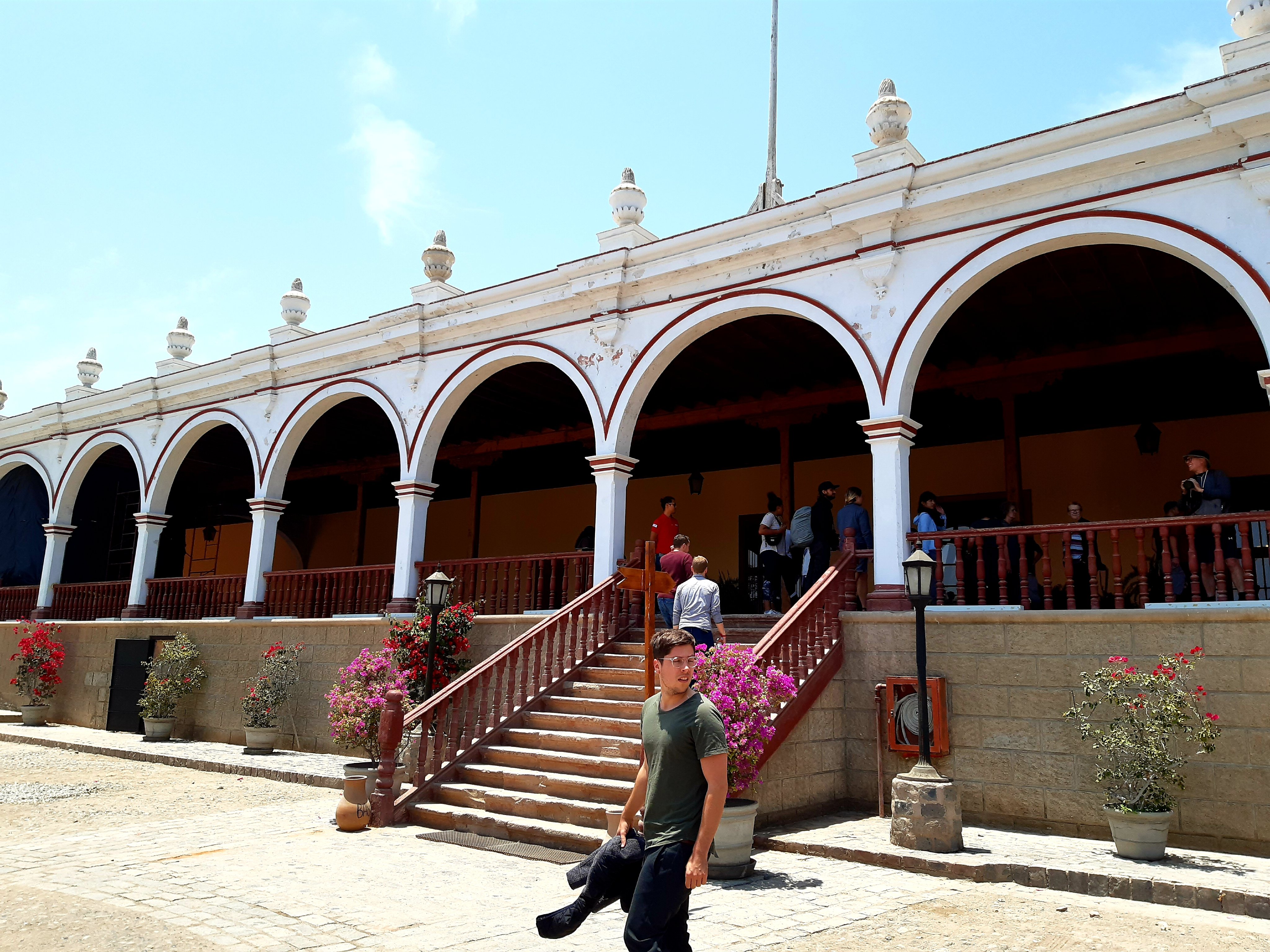
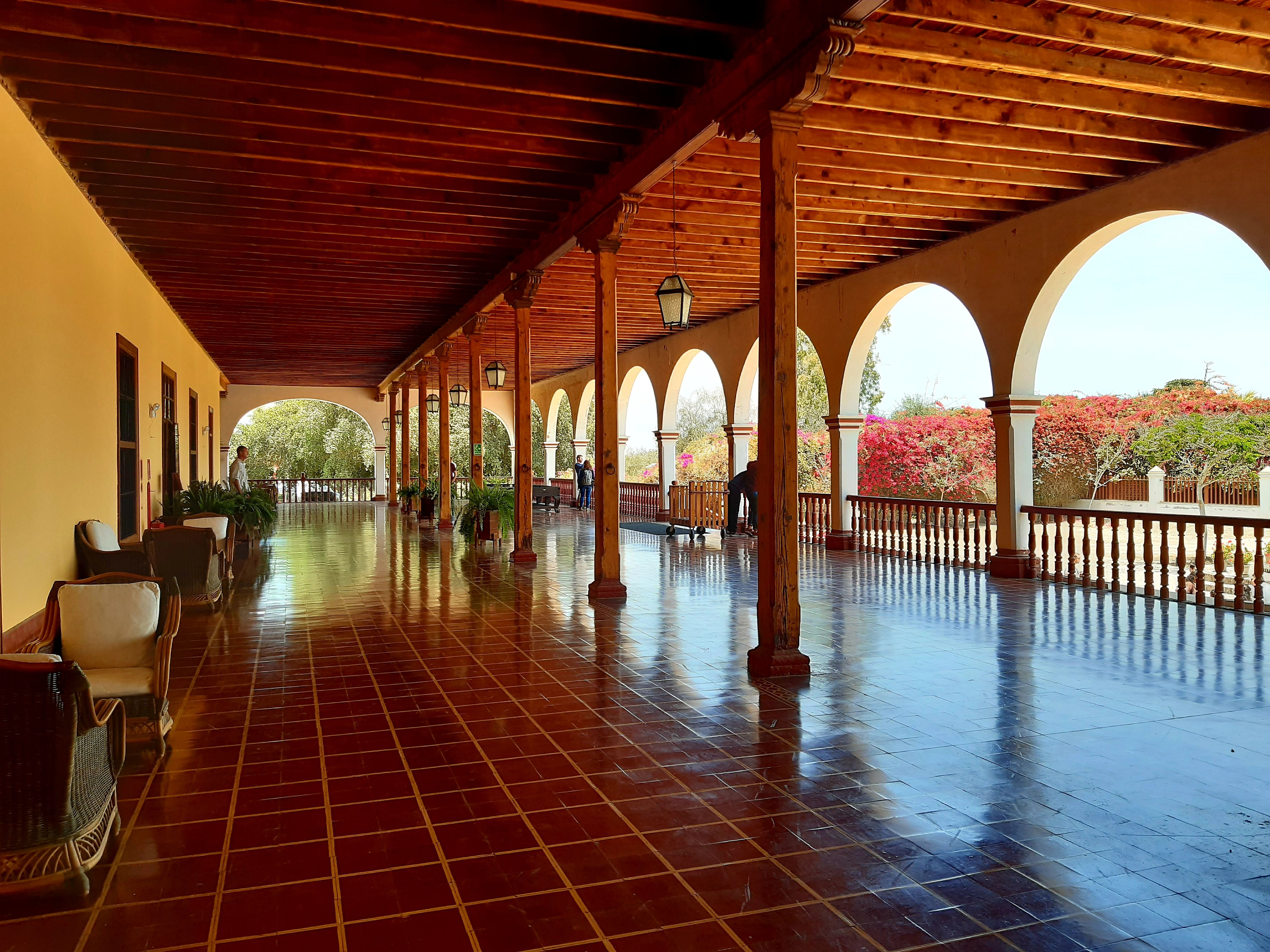
 Paracas is a holiday town for Peruvians, with bikes, quad bikes and kitesurfing activities, as well as boat trips to the Ballestos islands where there are sea lions, penquins, dolphins and whales (I didn’t do the trip as I had seen all the boats heading out to the island when I was flying over on my way to Lima. It just seemed too touristy and expensive.)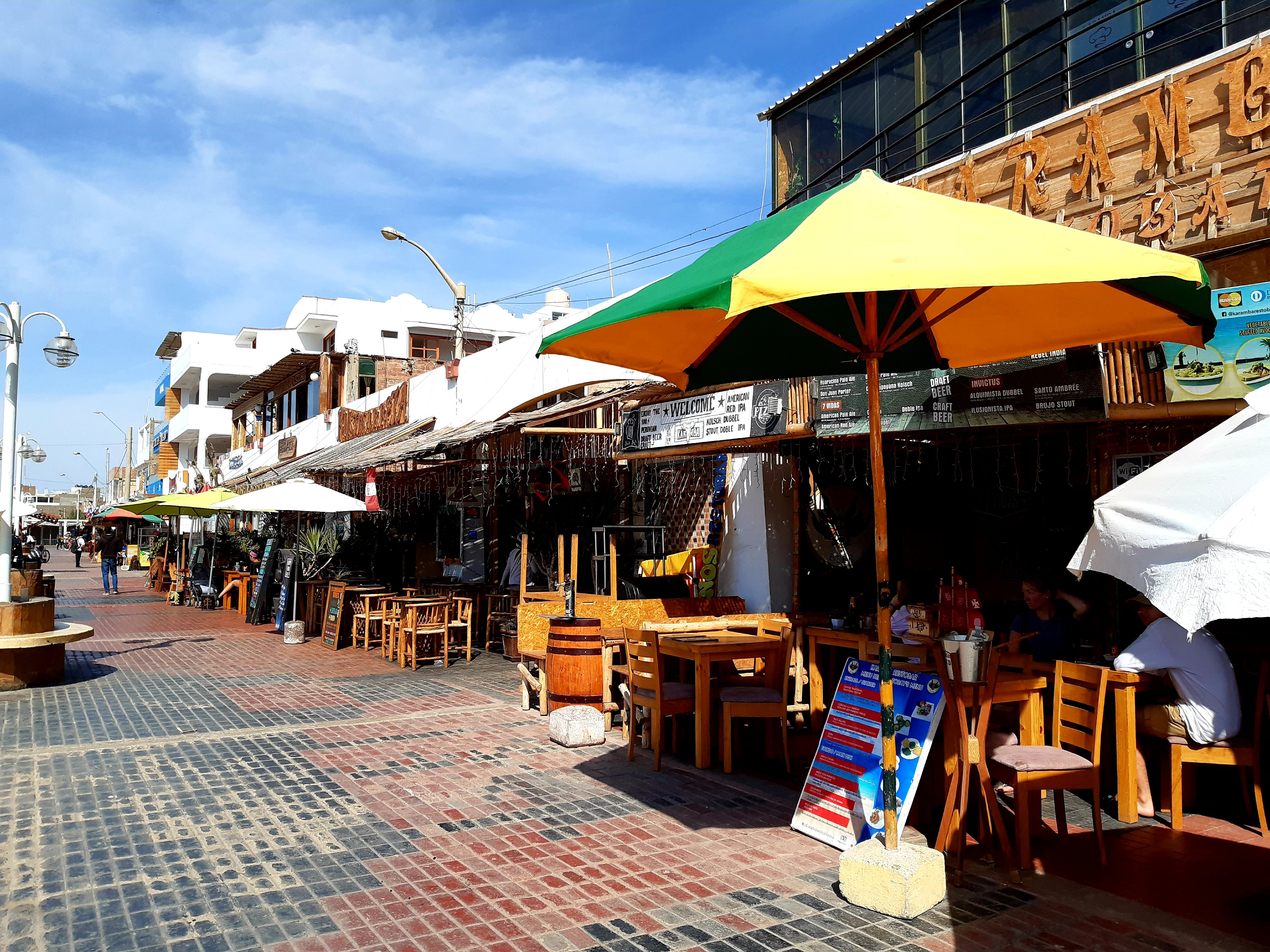
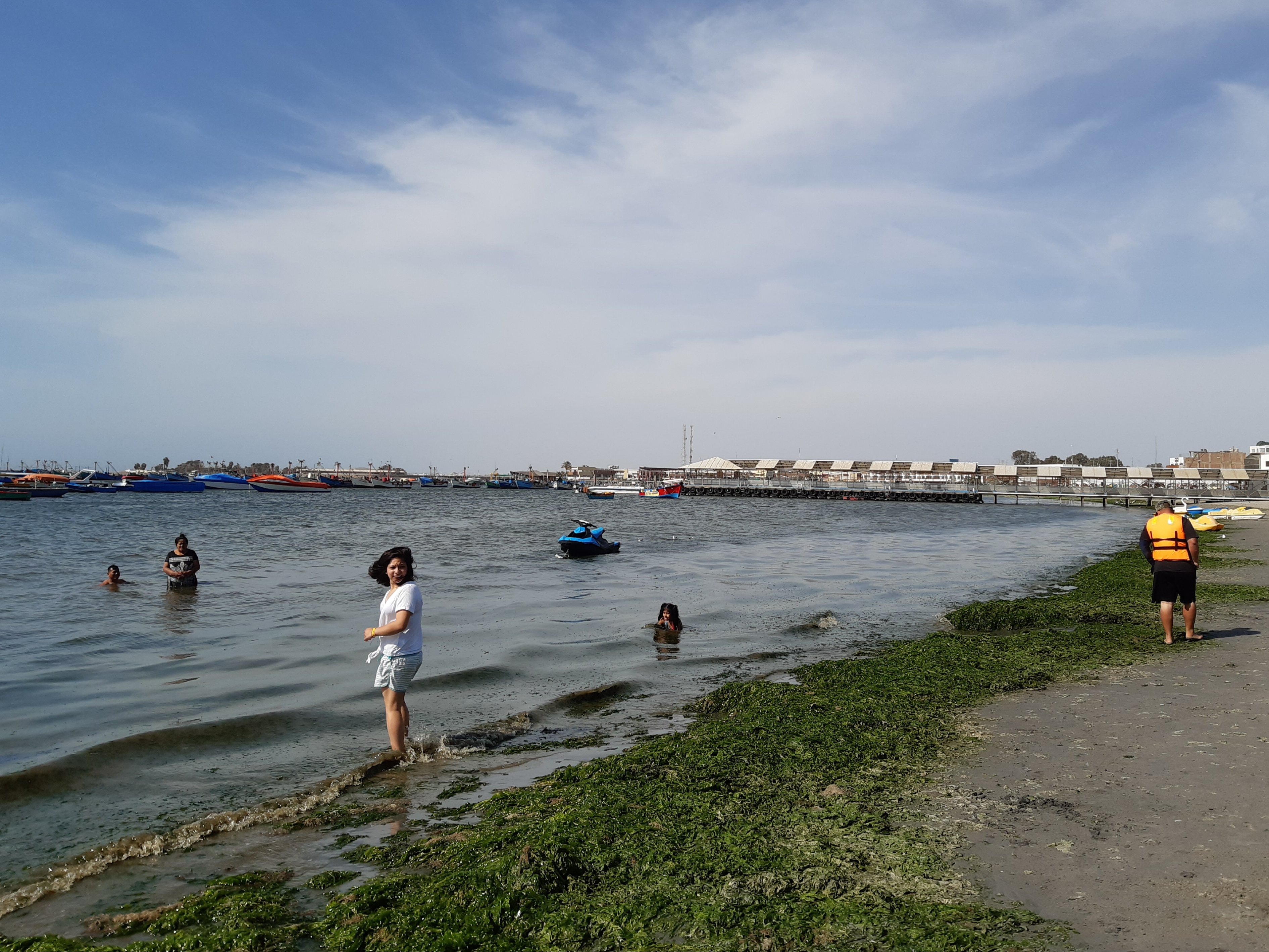 The sea in Paracas is very polluted, not just full of seagrass, and I was not enticed to swim but the locals clearly thought differently.
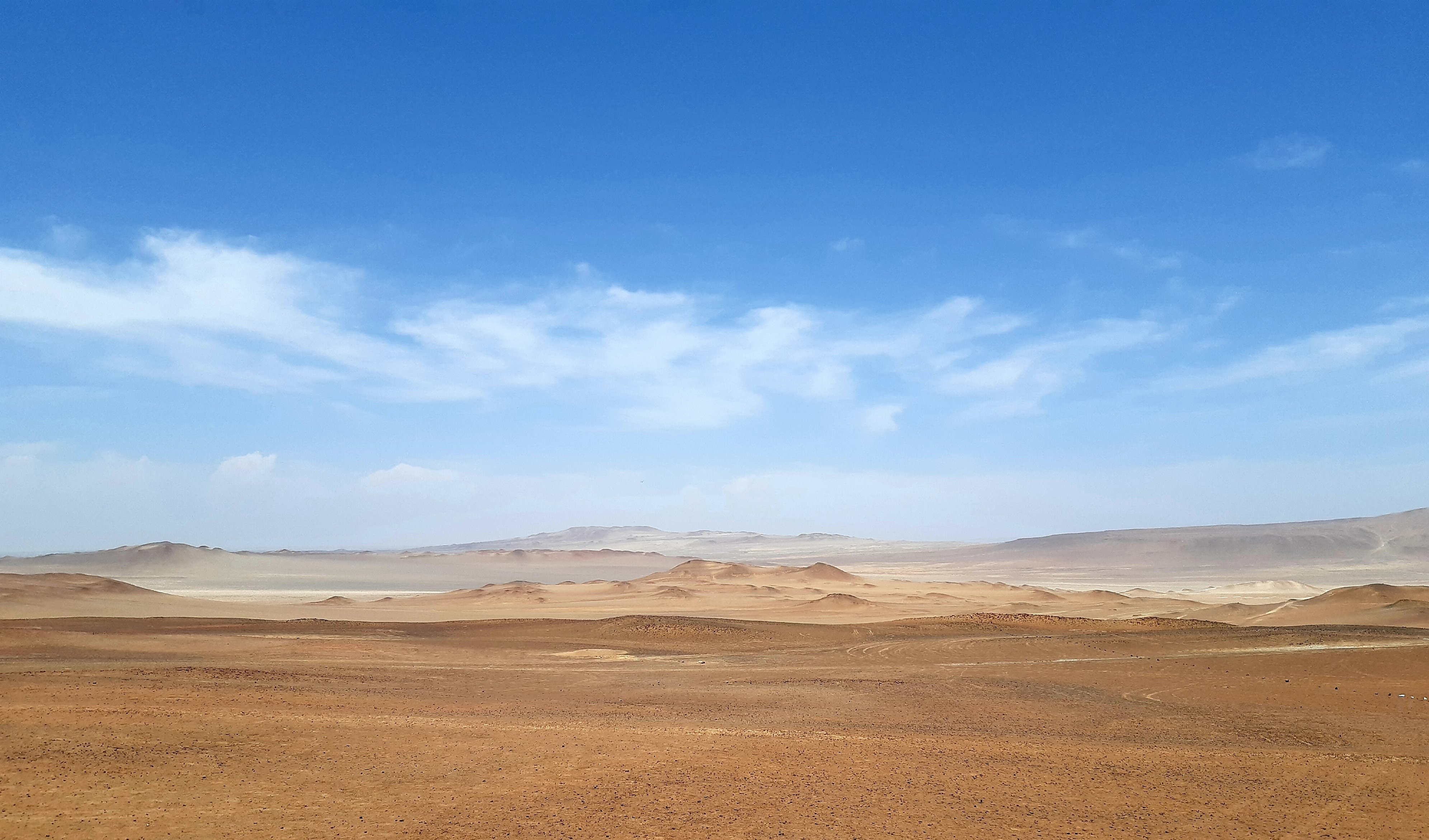
 The National Reserve to the west of the town is a square shaped desert peninsula with spectacular views from various lookout points. Camping is allowed close to the beaches, and according to Deborah, is very popular during summer. I was filled with awe – the desert and the ocean, together as one. I thought of what I often experience in the Namib Desert, of wanting to dissolve into the sand, becoming part of it. And which I do when I dive into the ocean, submerged in the water. Both simultaneously, almost too much!
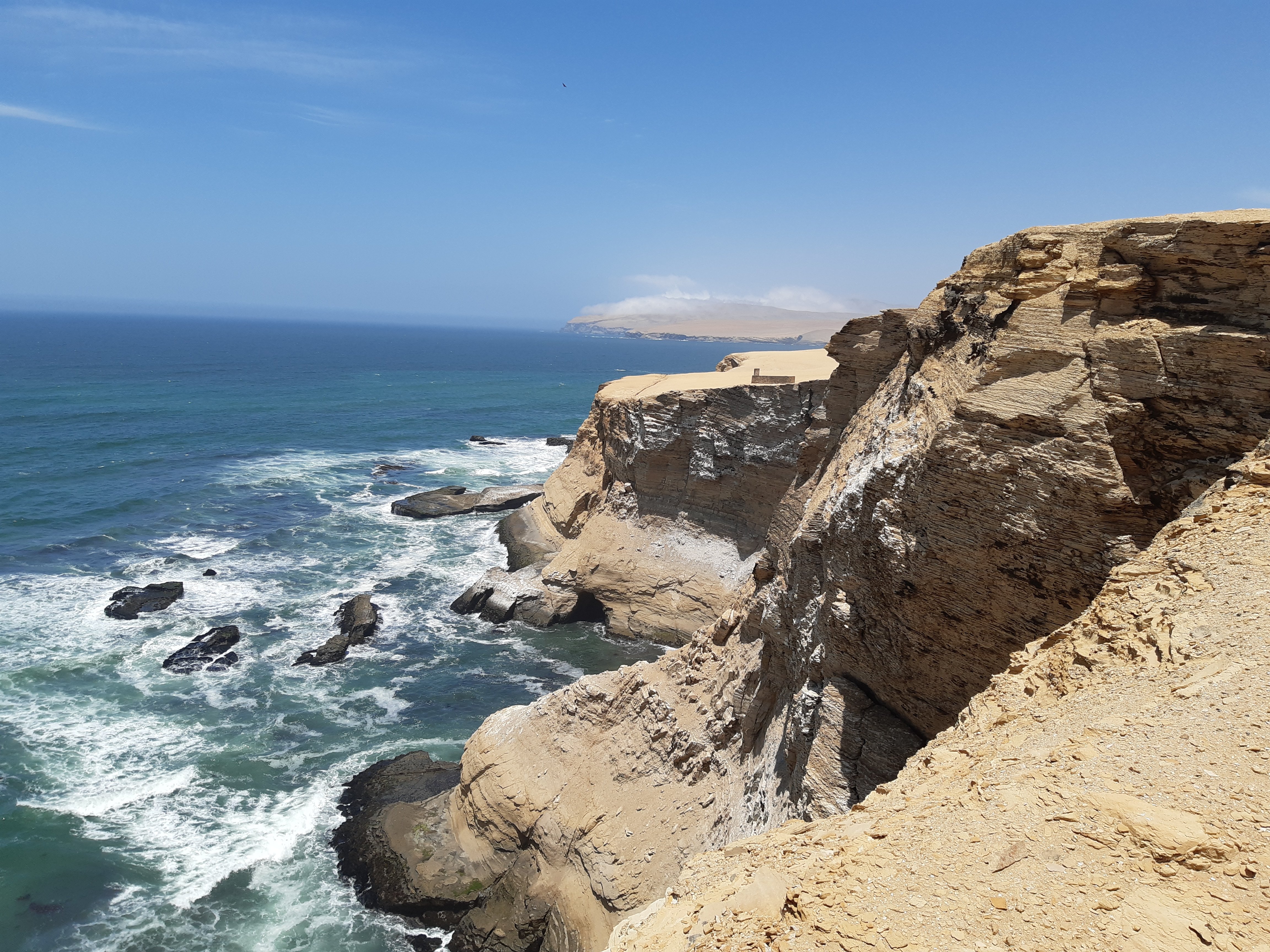
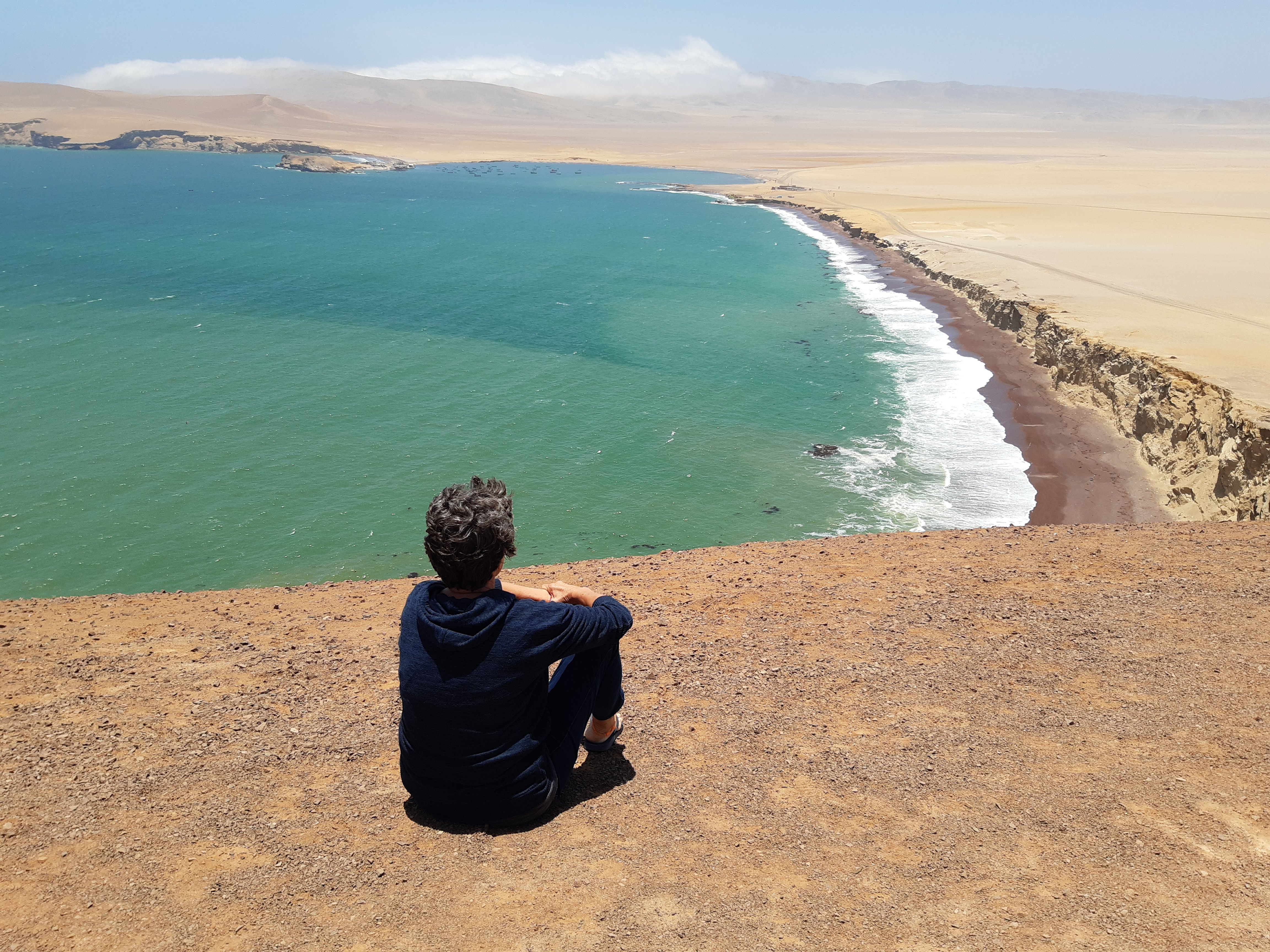 The above beach is called Playa Roja (red beach) as the small rust coloured stones that make up the beach are as a result of the waves pounding on the cliffs of Punto Santa Maria, picking up small amounts of the red rock which over time have been deposited by the receding tide to create the beach.
From there it was a few hours to Huacachina, a small oasis town surrounded by towering dunes. I was expecting it to be in the middle of the desert, but Ica, the fourth biggest city in Peru, is just on the other side of the dune.
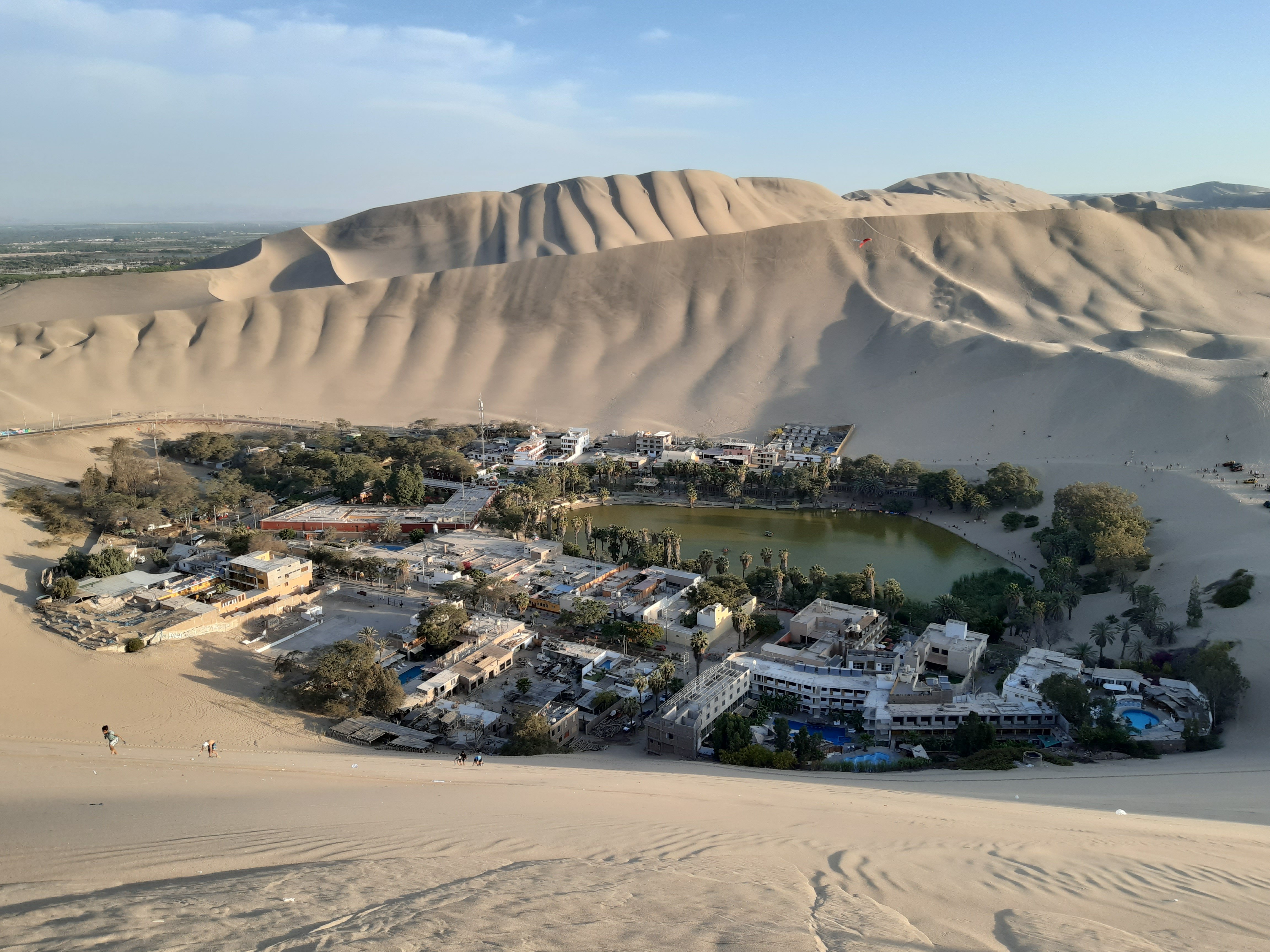
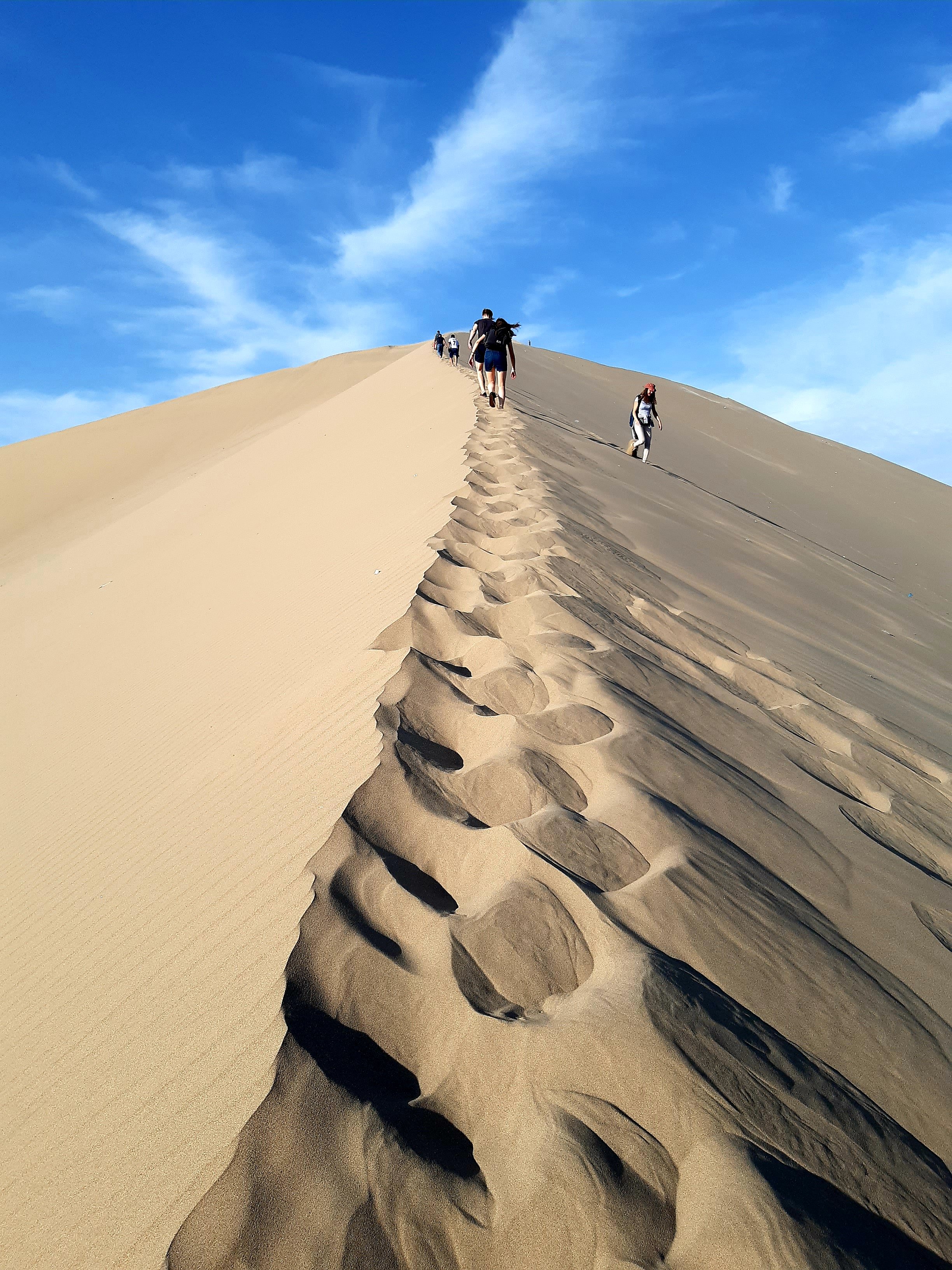
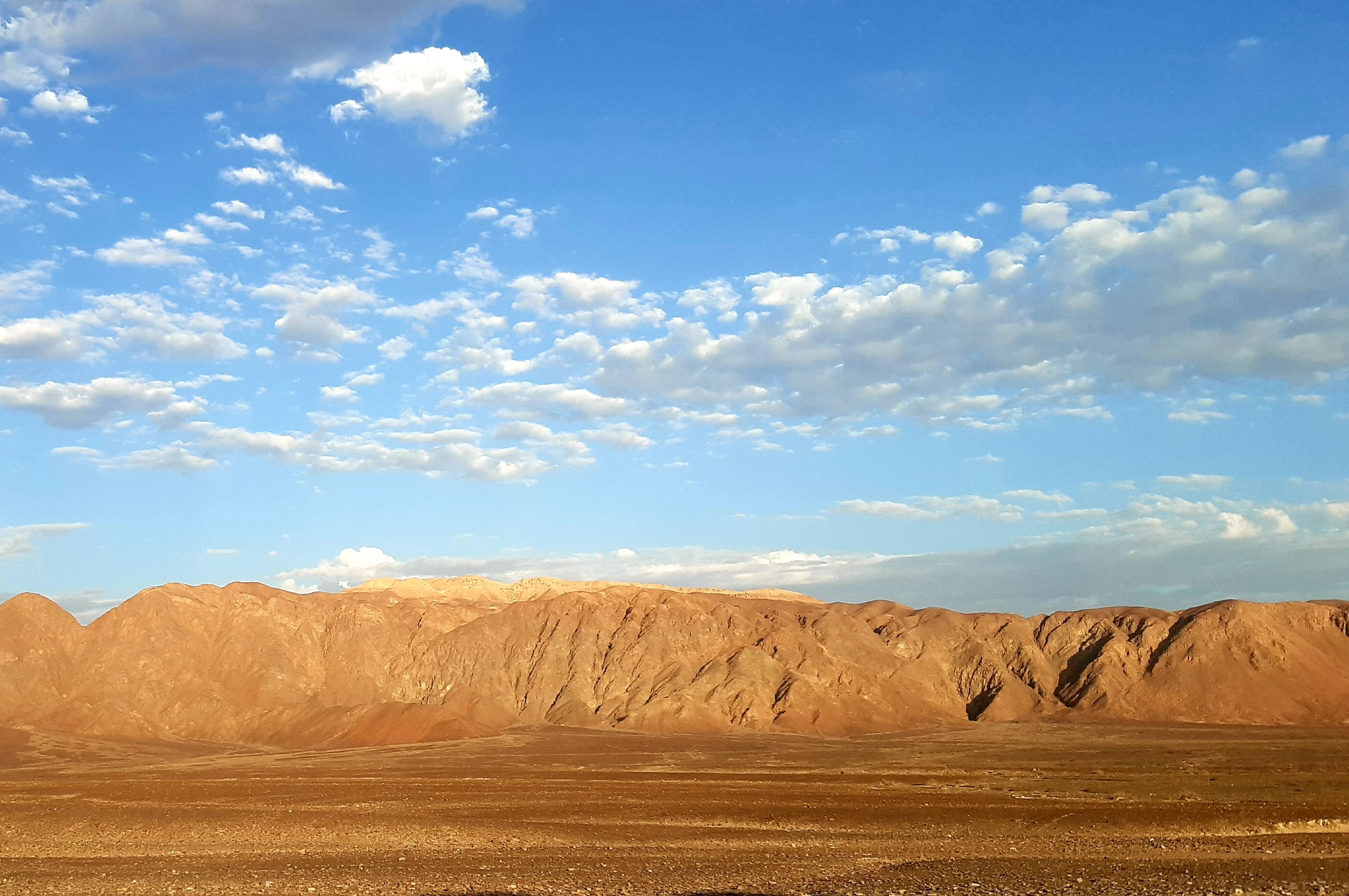
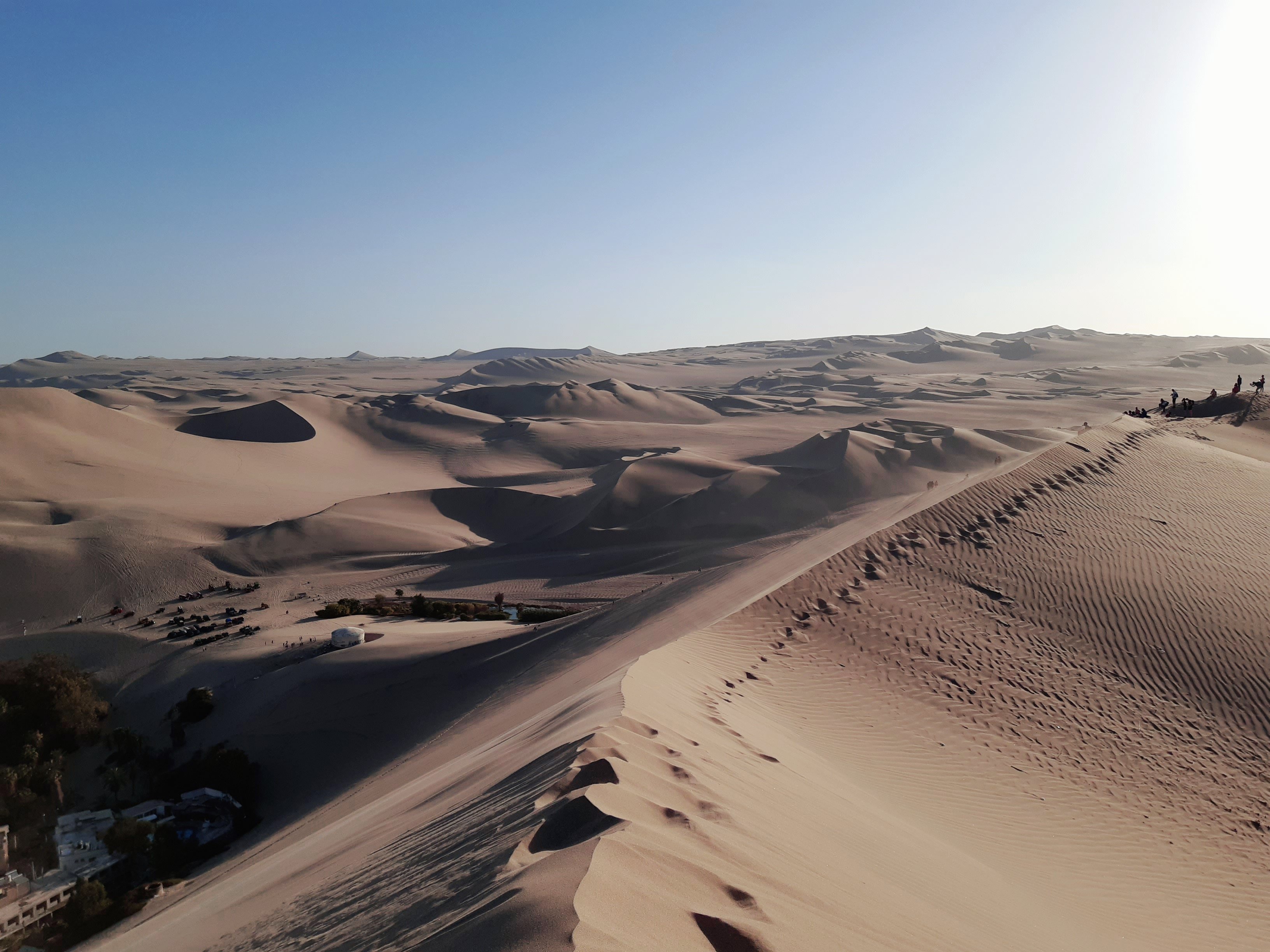 Ica, I must admit, is in the middle of the desert. I didn’t know that virtually the whole southwestern part of Peru is desert, both dunes and hard desert. I saw some of it when flying to Lima, but driving through it by bus makes one realise the vastness and barenness of it all. I couldn’t stop taking photo’s, most of which I had to delete later as they were either blurry or had light reflections or marks from dirty bus windows.
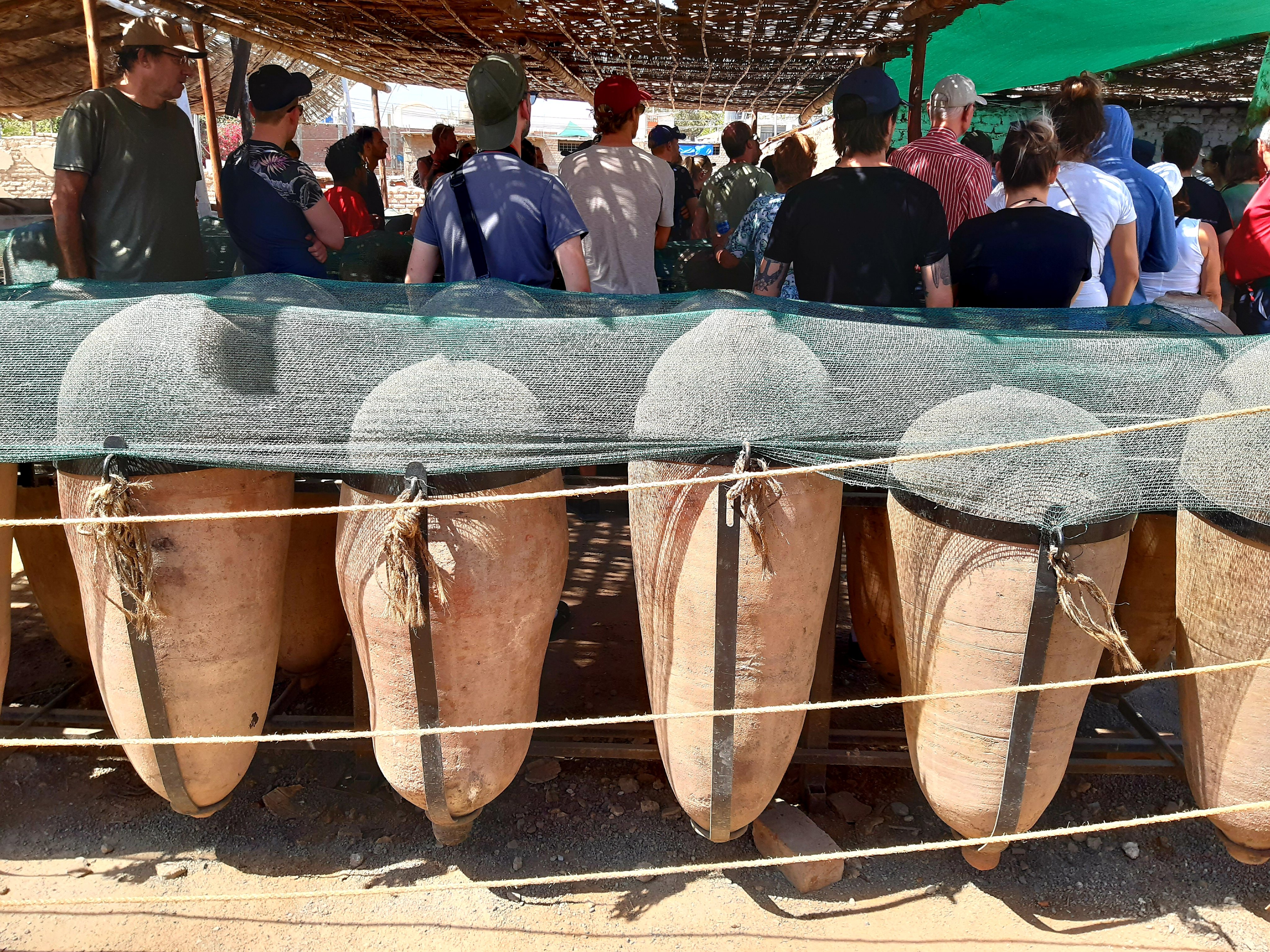
 Ica is known as the wine and pisco capital, where this Peruvian national drink is mostly made. Pisco is similar to our witblits, distilled from grape juice, with an alcohol content of 48%. It is served as pisco sour, a cocktail made up of pisco, egg white, syrup and lime juice. Delicious and could become addictive! We stopped at one of the oldest vineyards for a tour and wine and (pure) pisco tasting. The grapes have a high sugar content as the climate is hot and dry, and fermentation takes only two weeks. Peruvians like their wine sweet or semi-sweet, not dry at all. The methods used on that specific estancia are very traditional: they do not use a press, but trample the grapes and fermentation takes place in earthen jars.
 On our way to Araquipa, we passed Nasca and stopped to view some of the Nasca Lines from a tower next to the road. Some of these lines were formed over 2000 years ago, and there are different theories as to their existence, varying from indigenous people using them as places of worship, to an alien airport. Quite intriguing, as I was following our route on Maps.Me and could clearly see the geometrical lines crossing each other and the shapes that have been identified, such as the tree, lizard, hand, etc. This one is the tree:
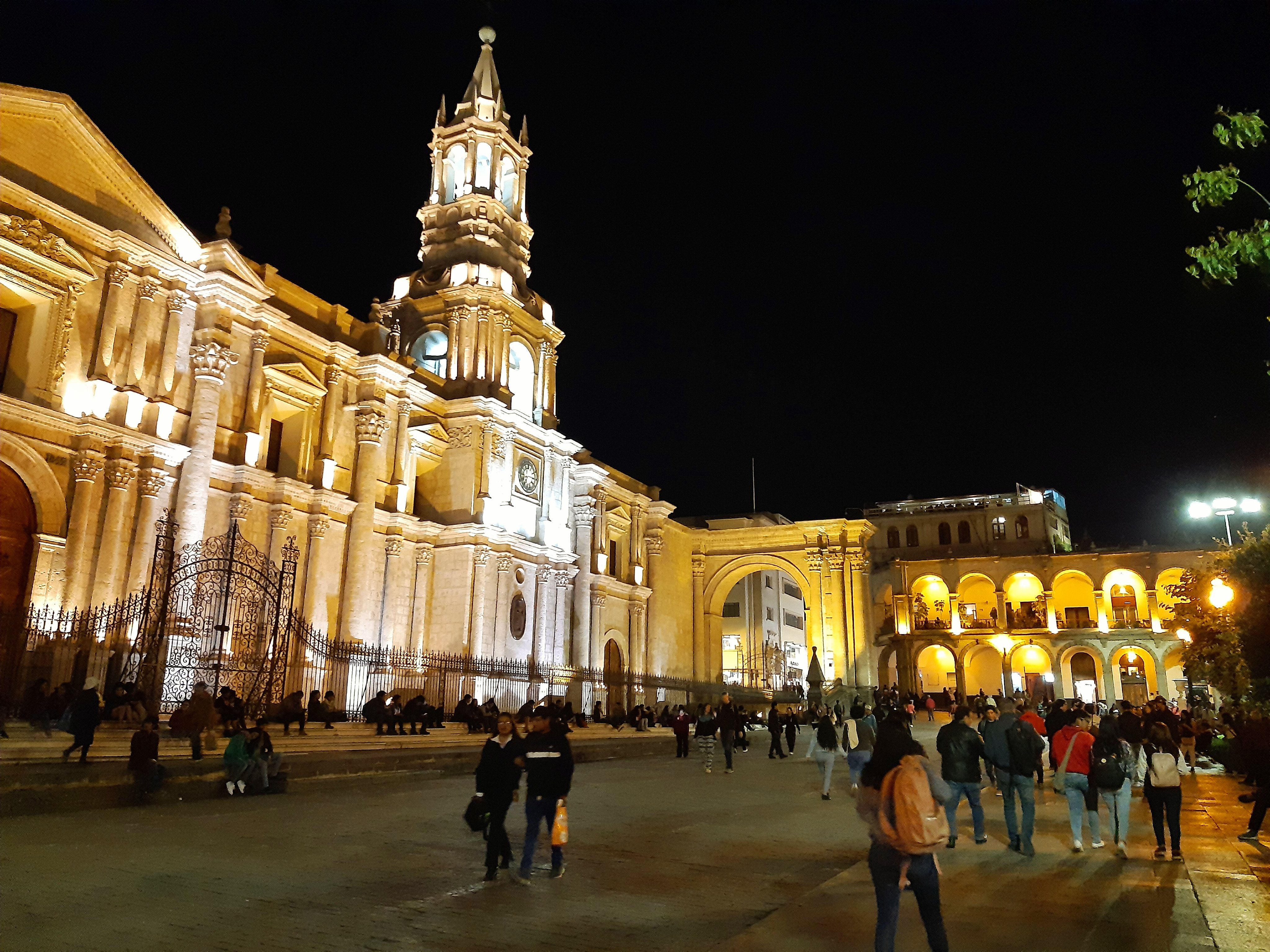
We arrived in Araquipa at 05:30, and I had to wait until 08:00 to book into my room that I had reserved through Airbnb, so I went to the main town square and had a very expensive breakfast in the only open restaurant. Plaza de Armas is one of the most beautiful squares I’ve seen, with many restaurants on the balconies of the old buildings surrounding the square.
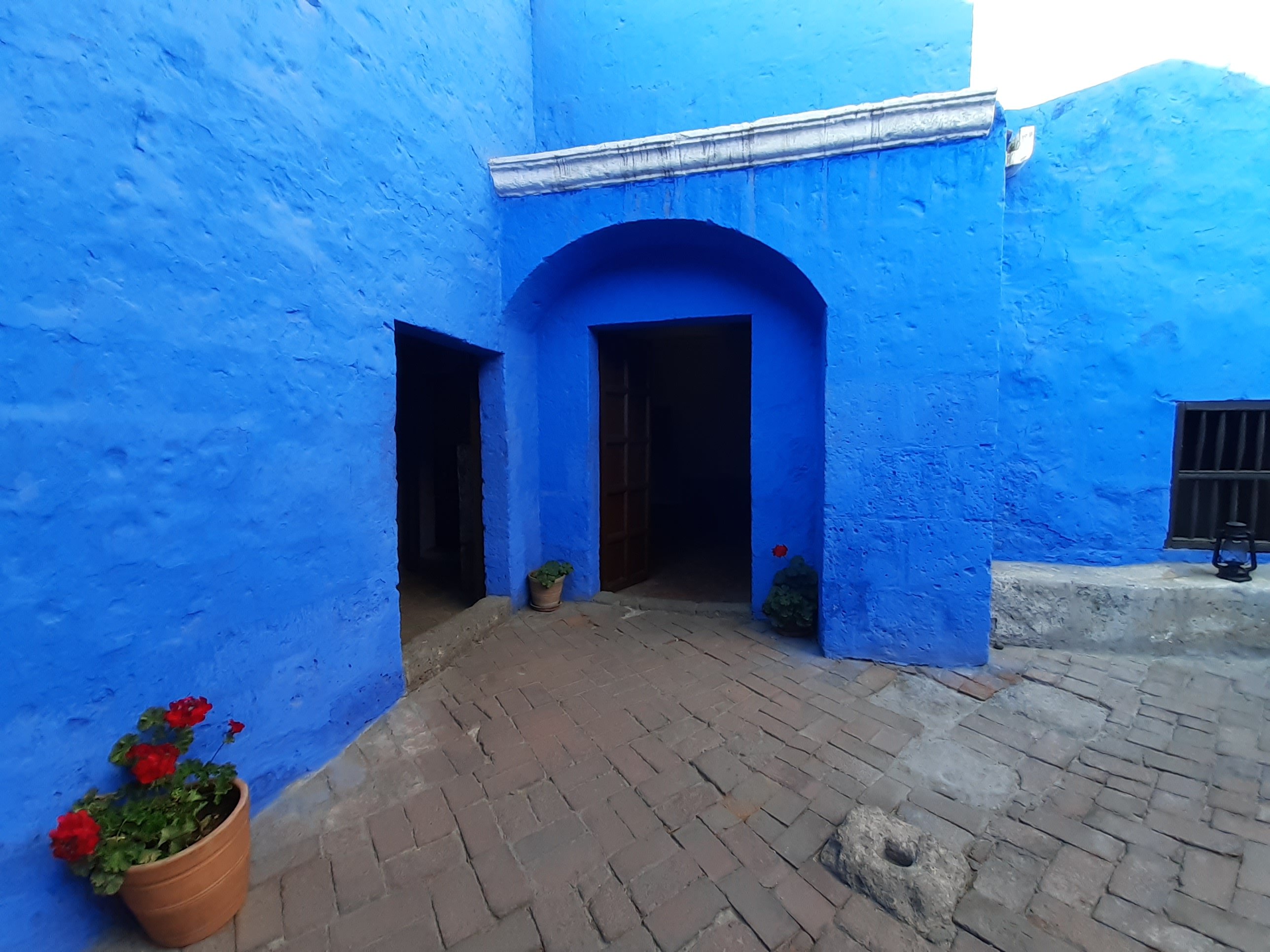
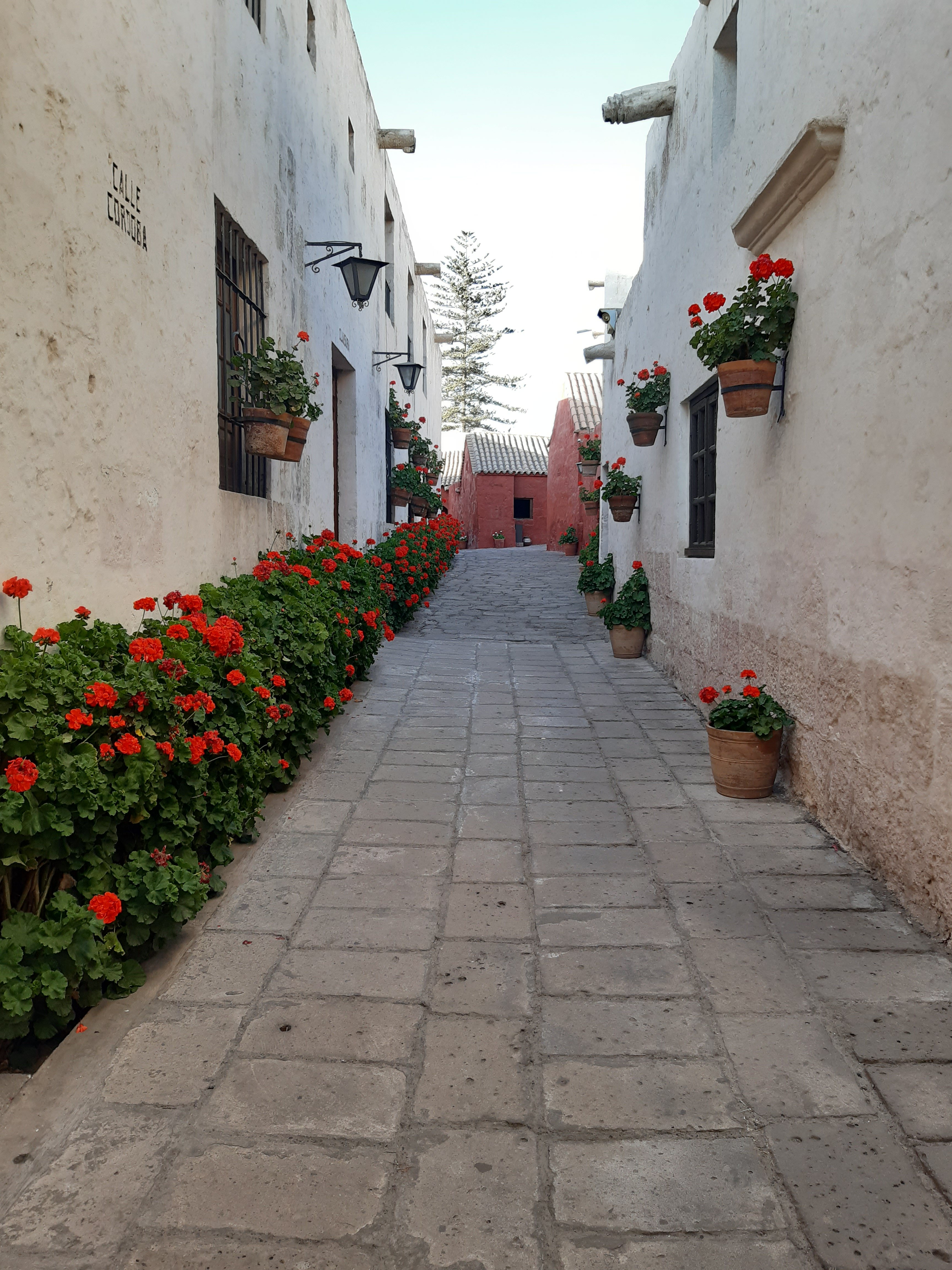
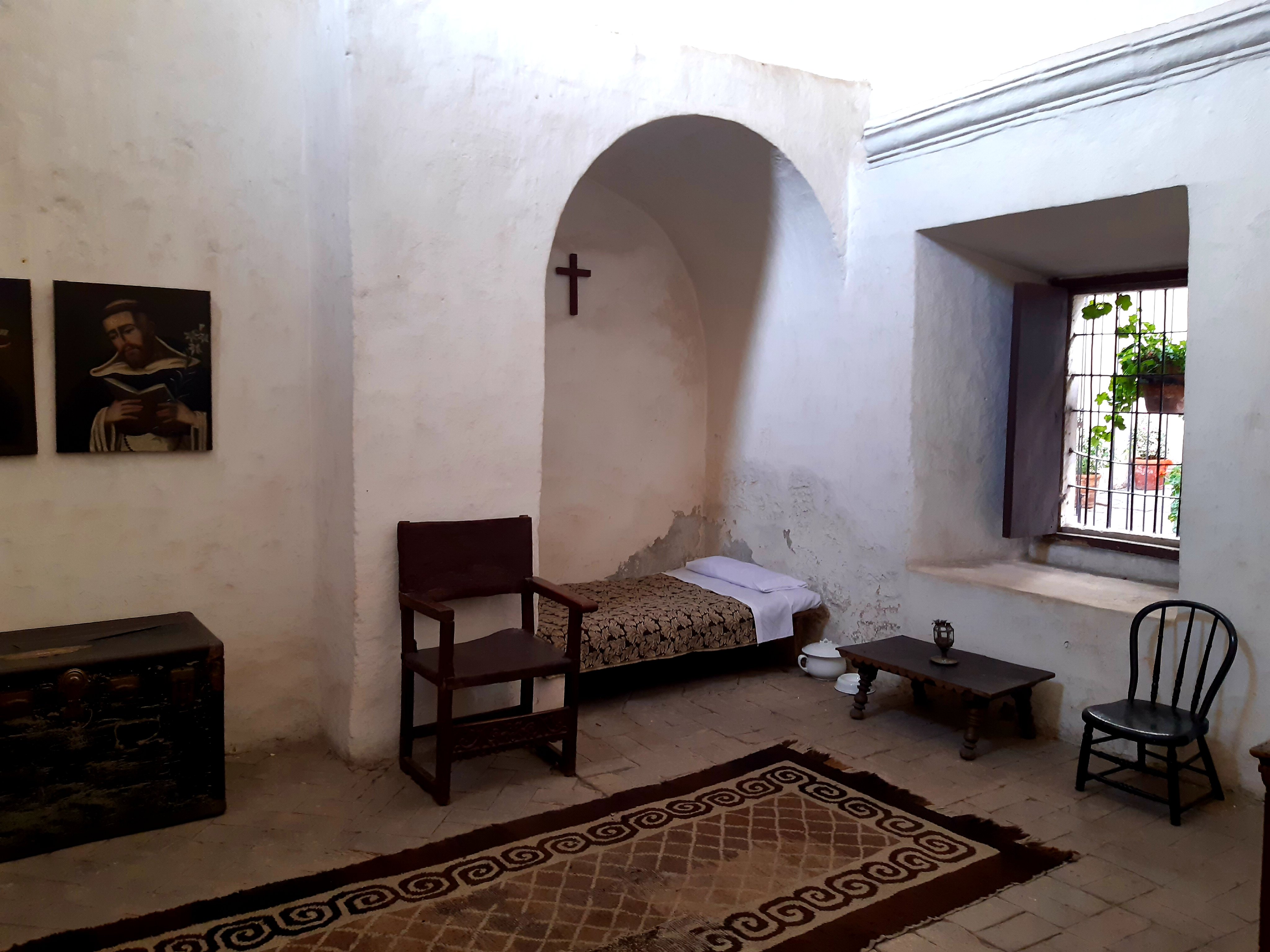
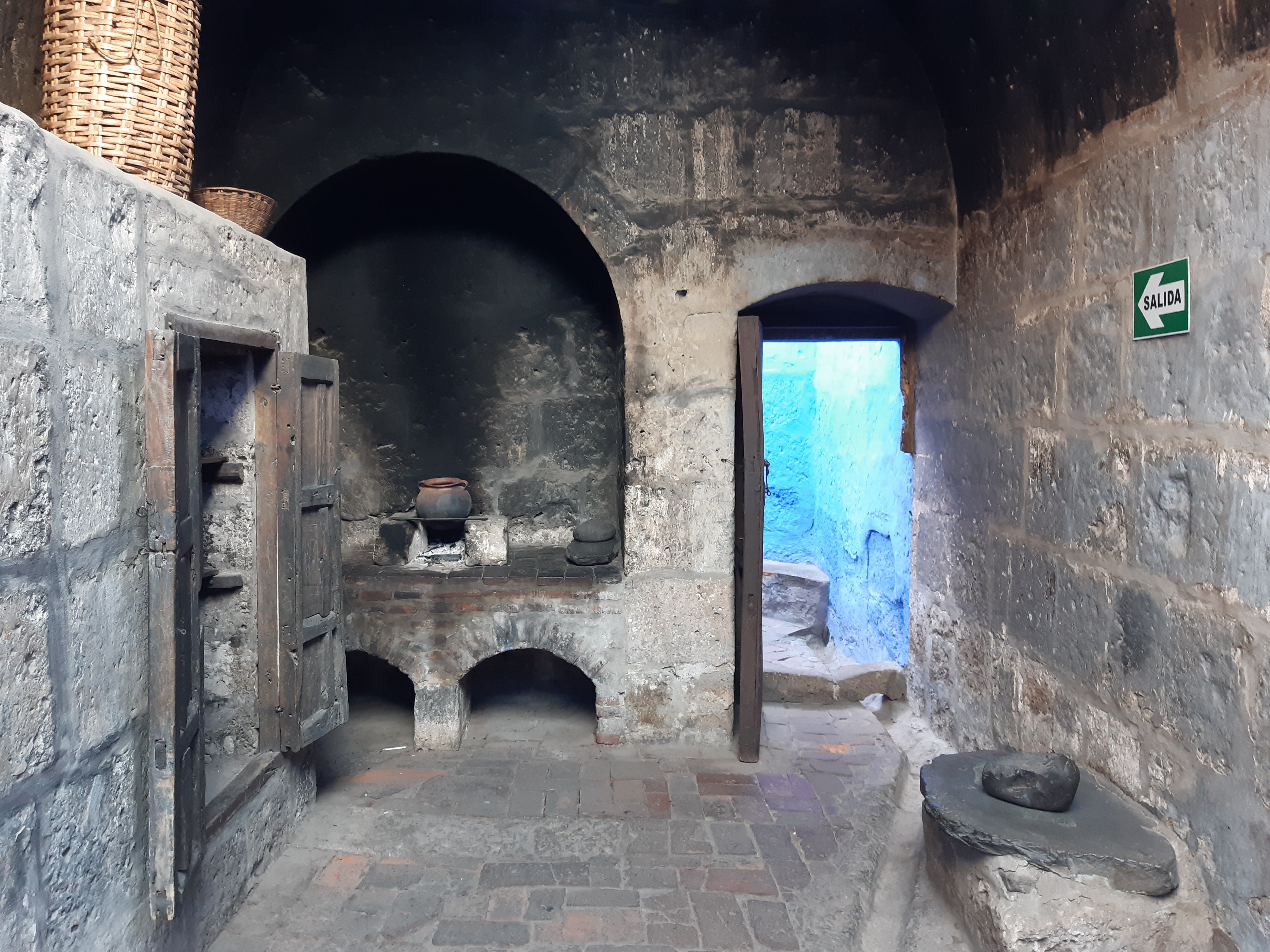
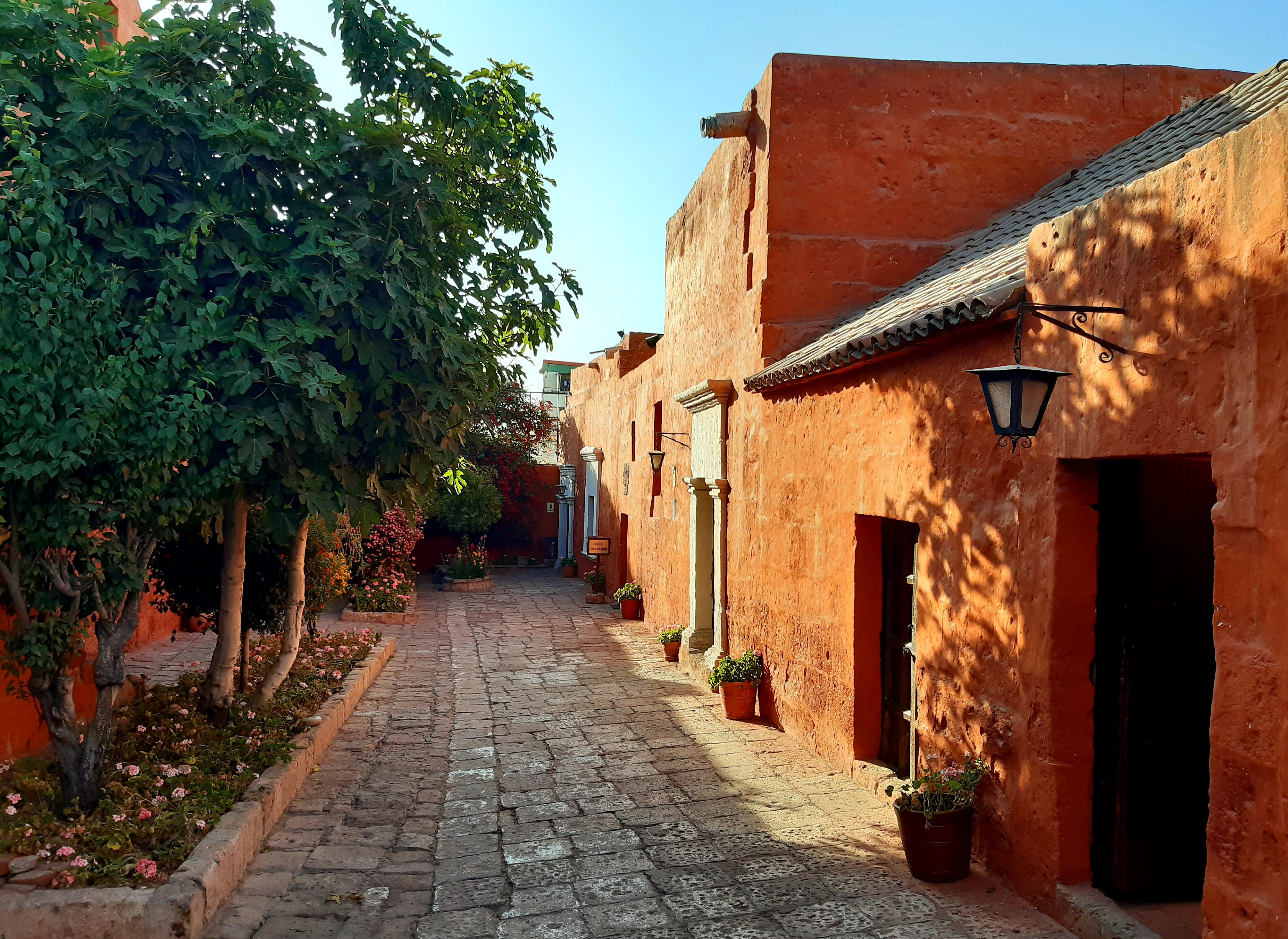
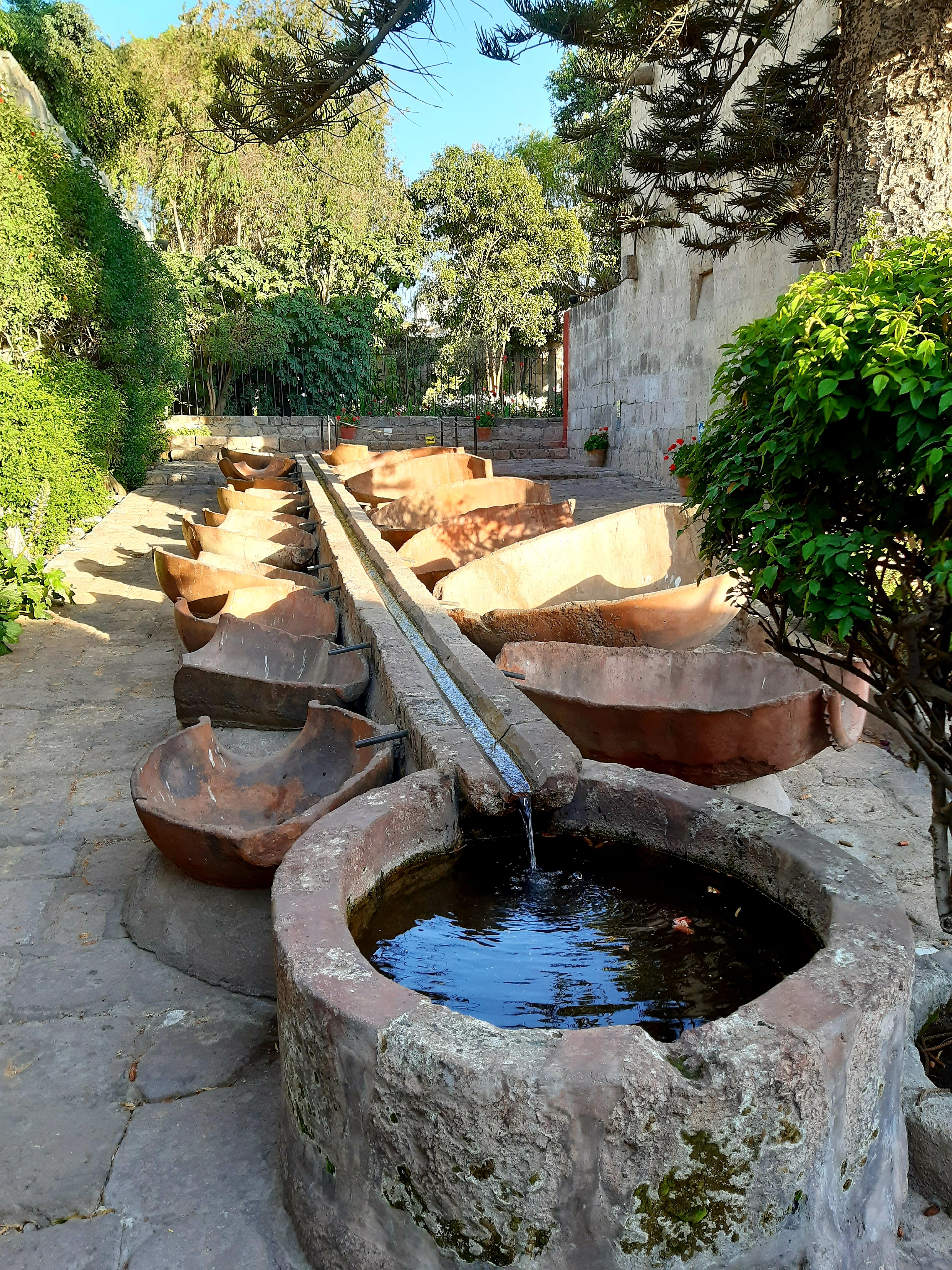
 Santa Catalina Monastry close the square is well worth a visit. Founded in 1579, it was only recently opened for public viewing and is known for its colourful architecture and intriguing past. The nuns had little ‘houses’, belonging to them which they could sell to other nuns, so it is like a town within the securing walls. There is a communal washing area for clothes and a huge undercover bathing area.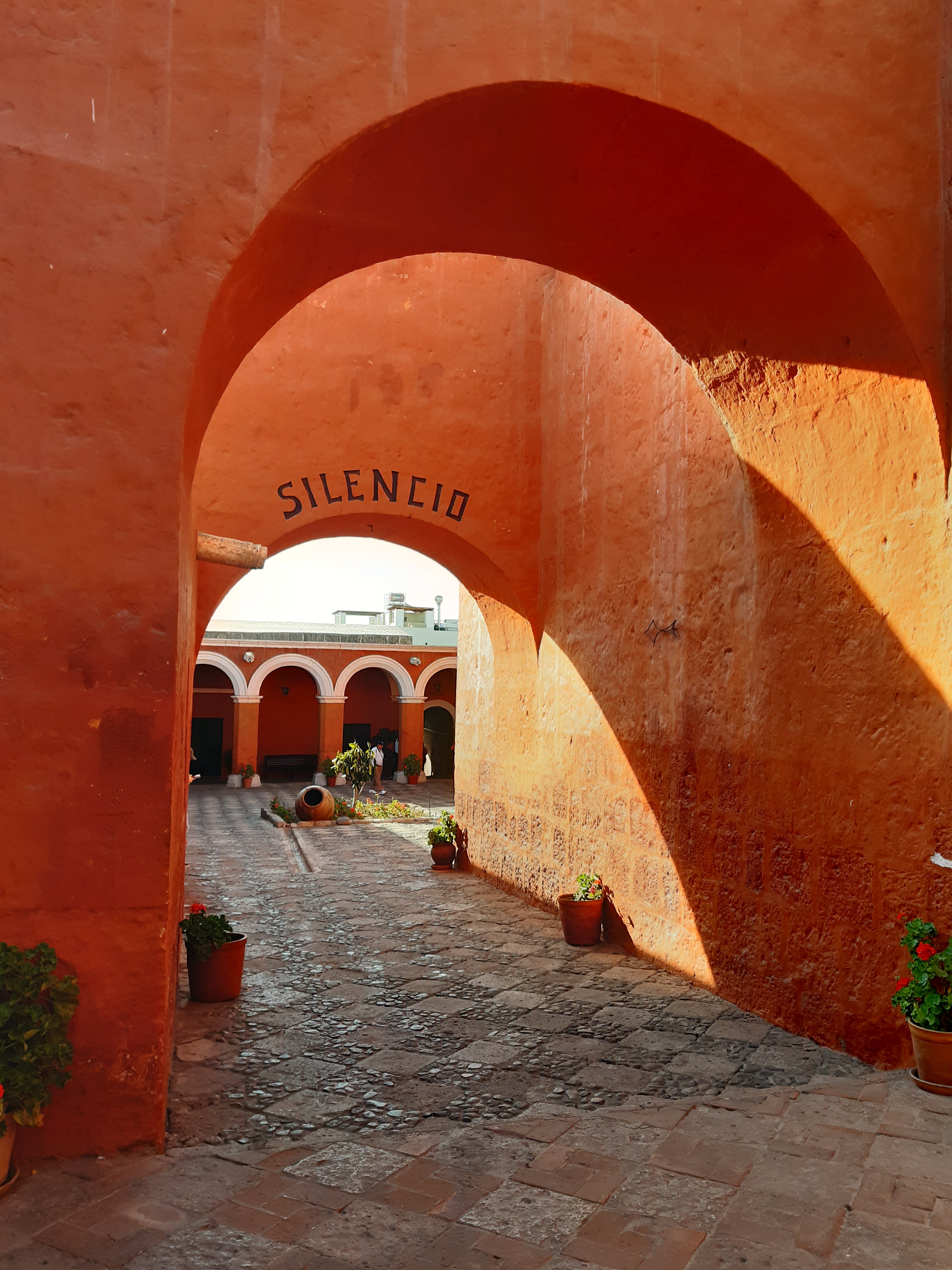
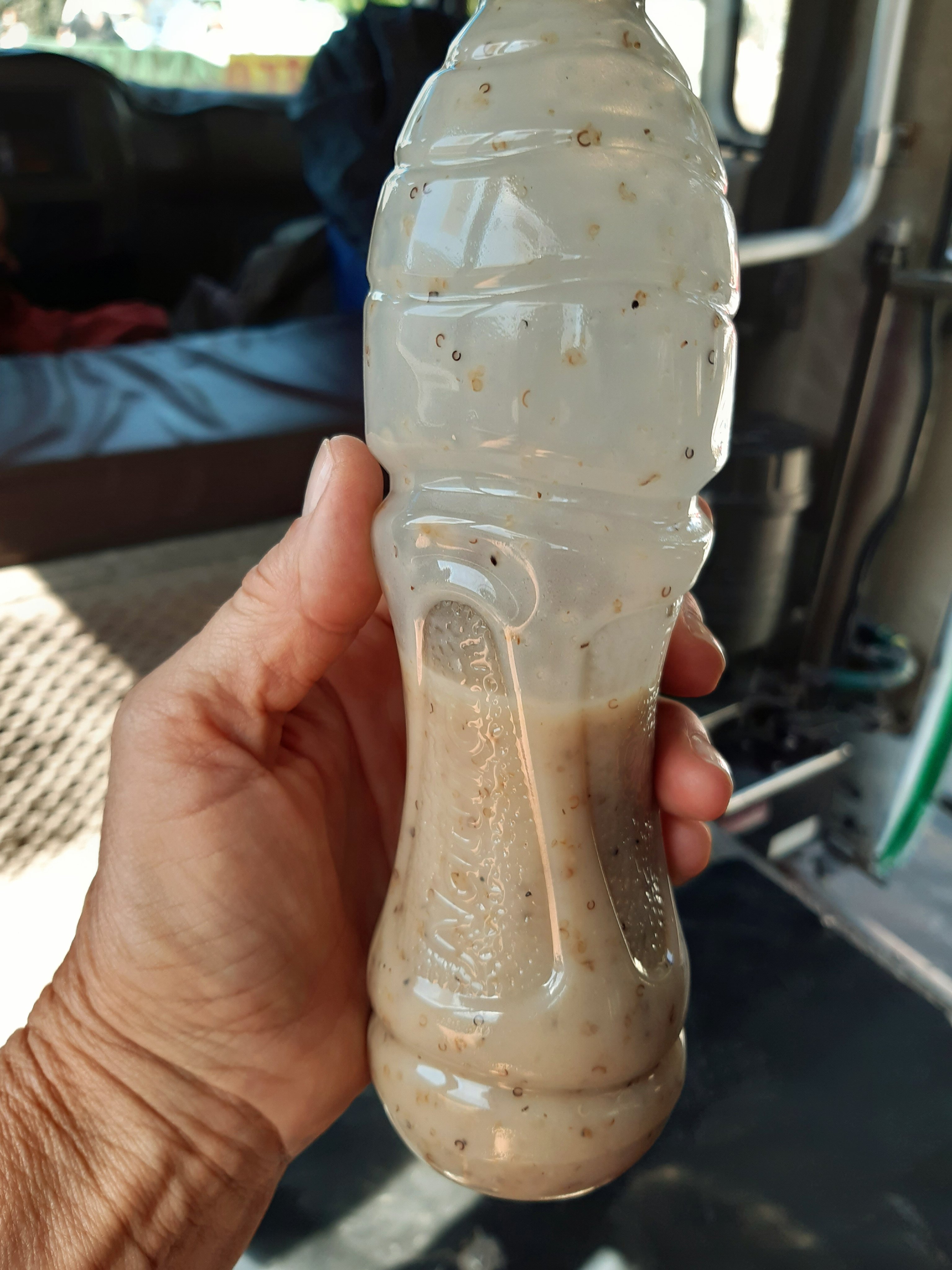
 I had booked a room through Airbnb, just to have some time away from the group and to be able to some exploring on my own. In this way one discovers many local things, such as kiwicha, which is sold as a nourishing drink full of proteins, minerals and other nutrients. Kiwicha was grown and used by the Incas, but the Spanish prohibited them from eating it during their rule, can you believe it!
 My host had given me some tips on what to explore, and I ended up taking a local bus where I saw a touching exchange of products between these two women – the one took a small bag of prickly pears from her big bag, handed it to the other one, who in exchange took out a huge piece of cake from hers and handed it to the first, both smiling shyly at each other. And yes, it is lucern in the blue plastic.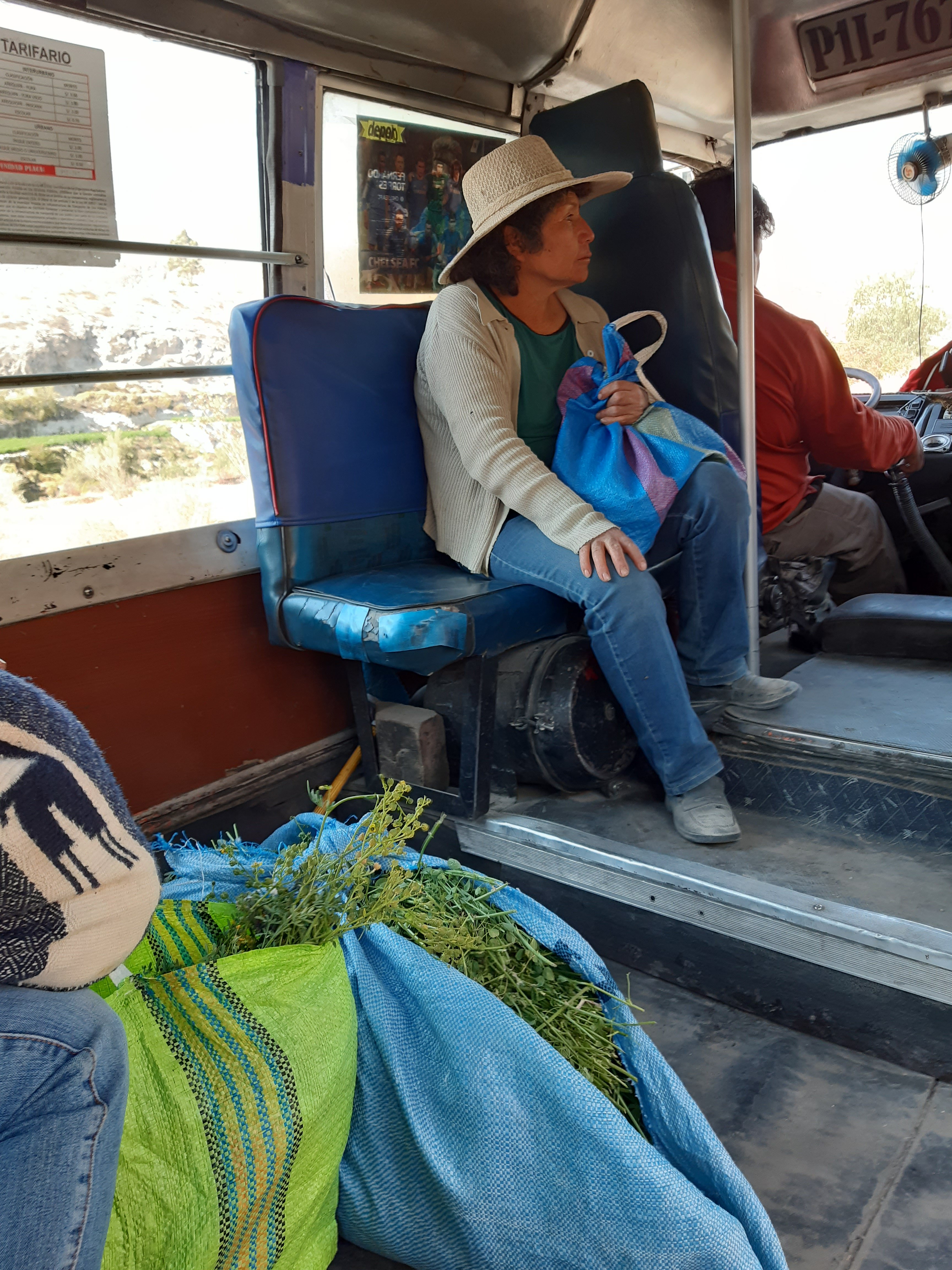
The bus dropped me in an isolated village, no-one in sight, and I ended up walking 5km through barren mountains to a waterfall deep in a ravine, having a refreshing swim and standing under the fall.

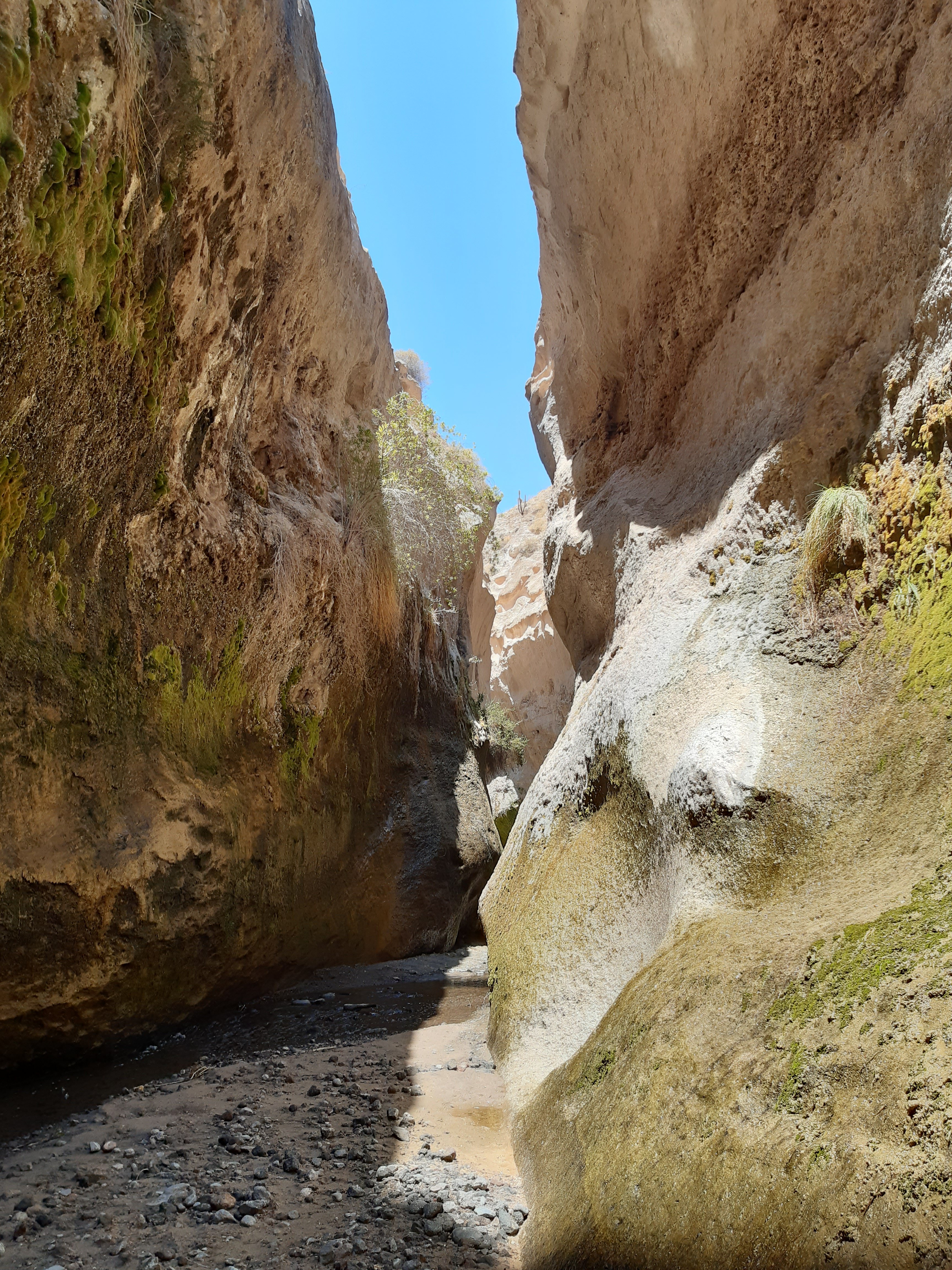
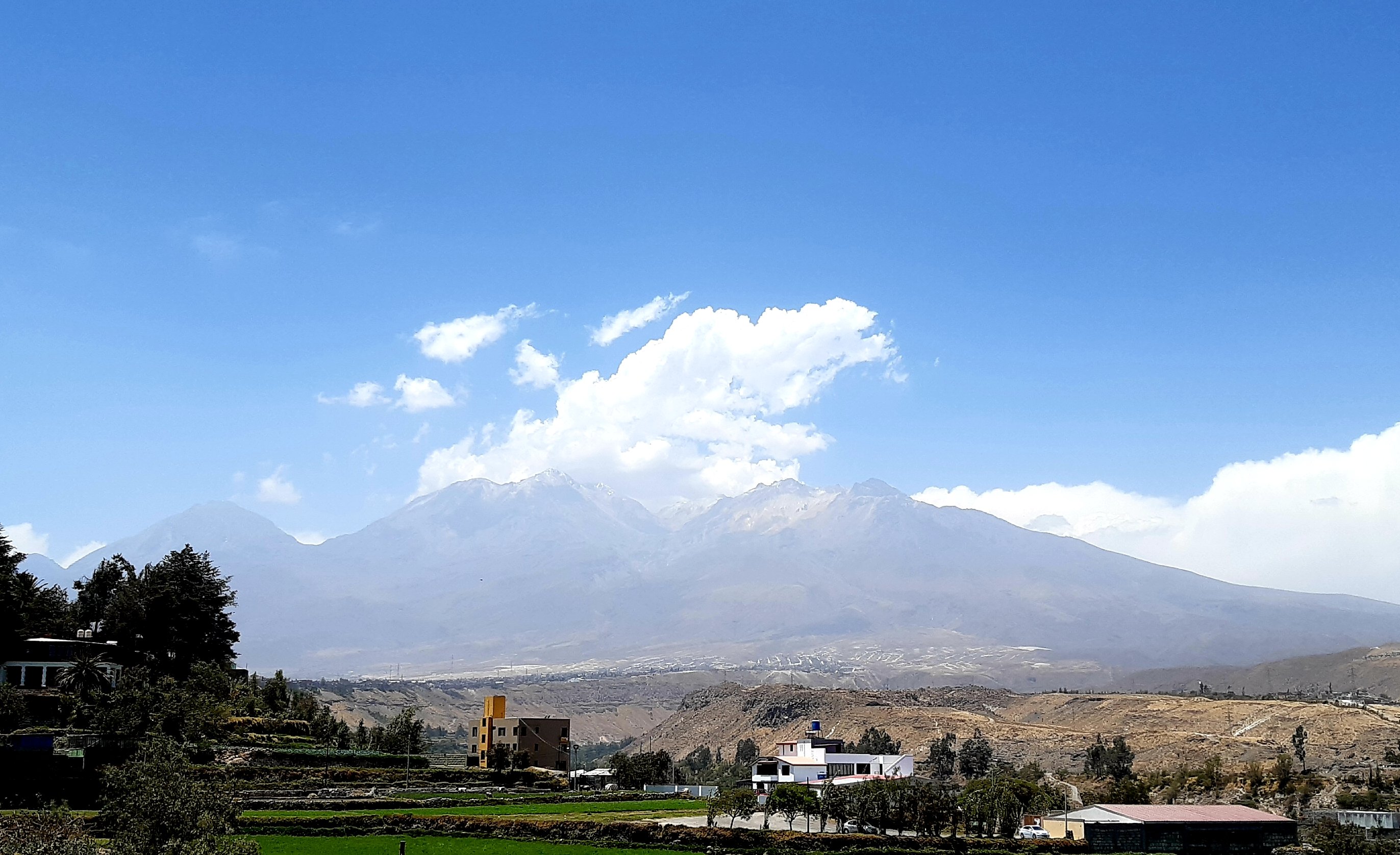
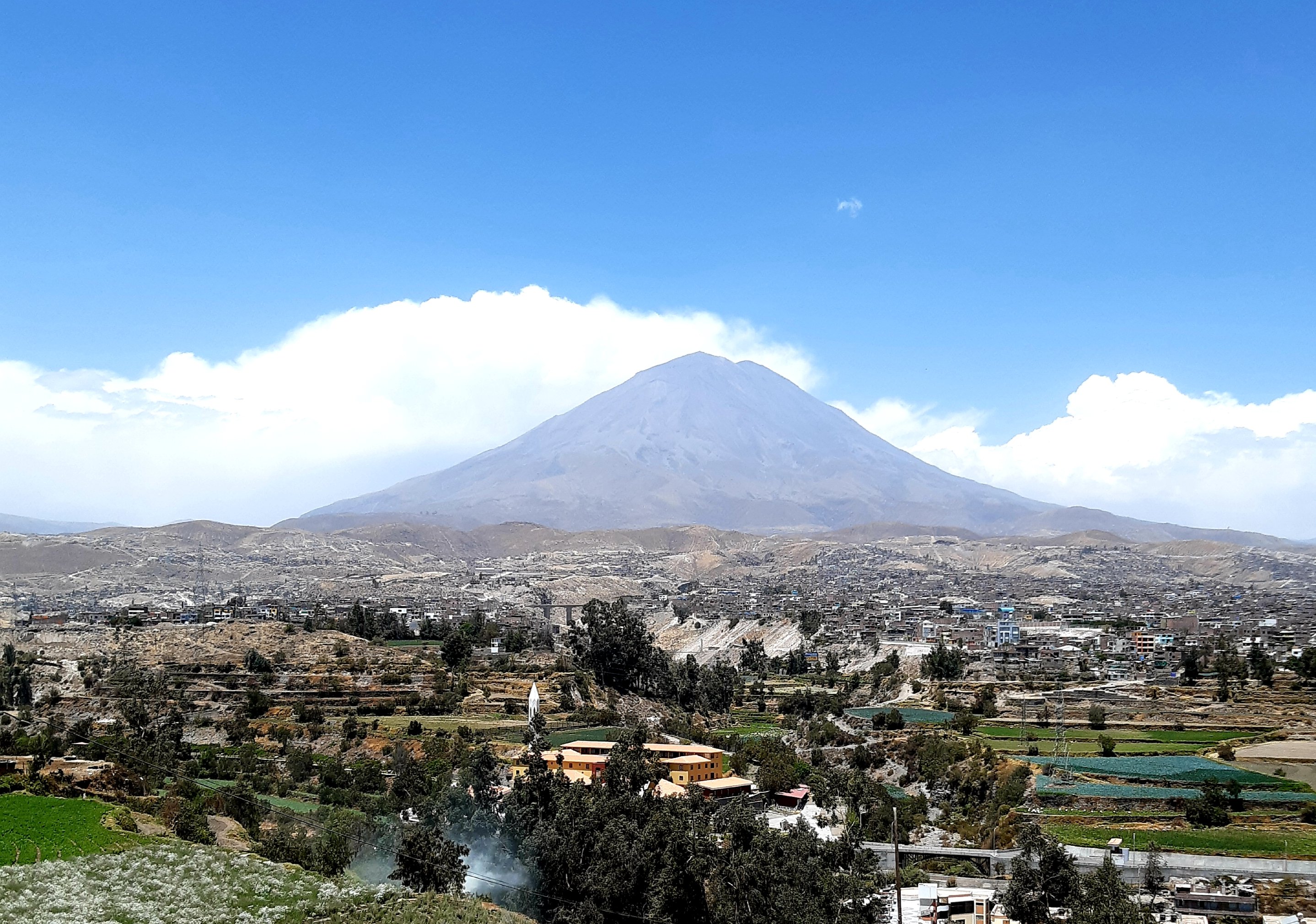
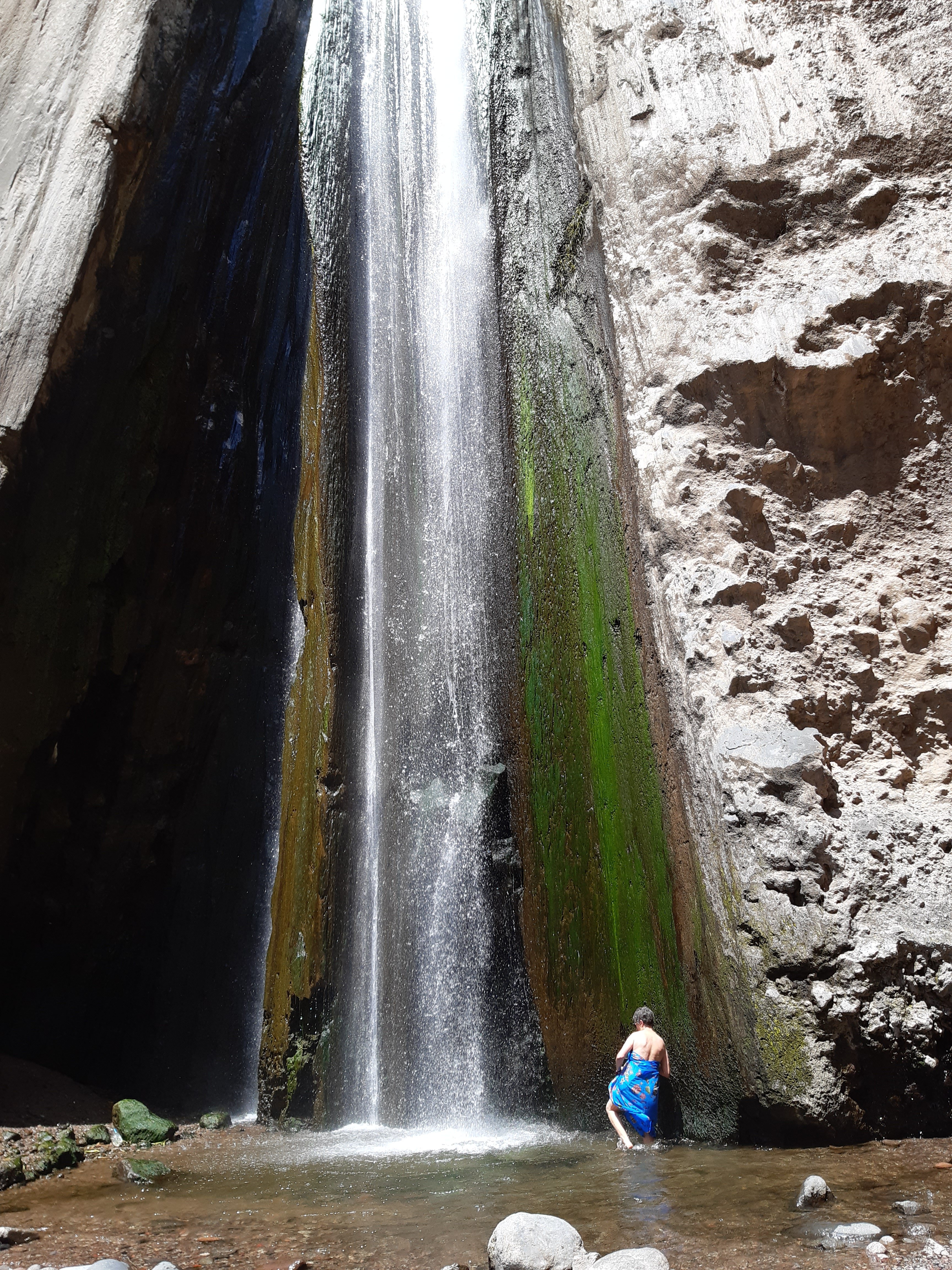 I bought their traditional rice-icecream from a vendor on my walk to a viewpoint from where I could see the two volcanoes, one of which I believe is still active.
 Our next stop was Puno, which lies next to Lake Titicaca, 3 800m above sea level. On our way there we stopped at another small lake, also very high, and I had my first experience of being affected by the high altitude. I felt very light-headed and had a headache, so went to sit in the bus. I was holding my head in my hands, eyes closed, when I had a halucinating flying experience, quite exciting! Altitude sickness is no joke, and although I have managed to avoid the full impact, I think lower altitudes suit me better.
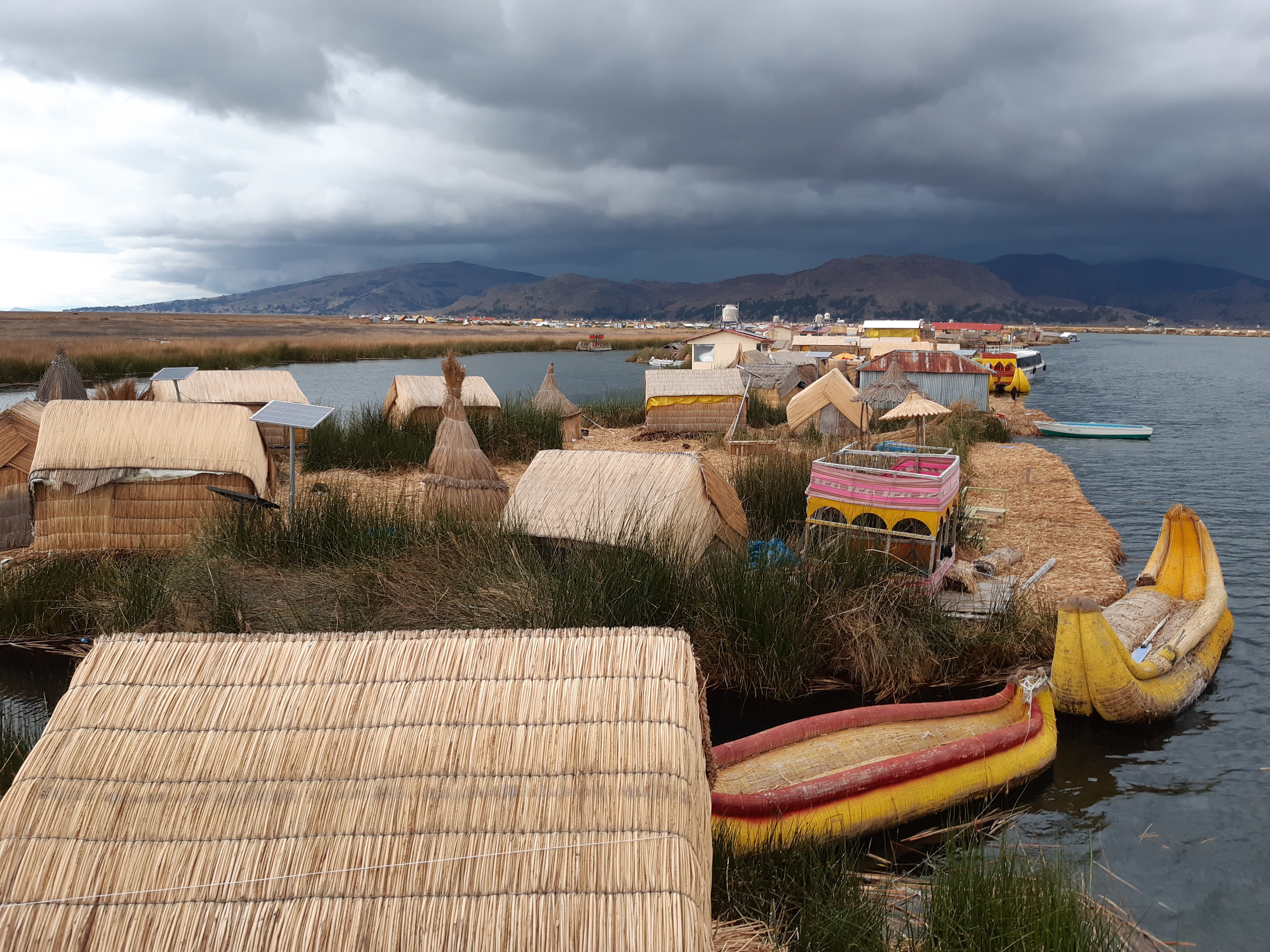
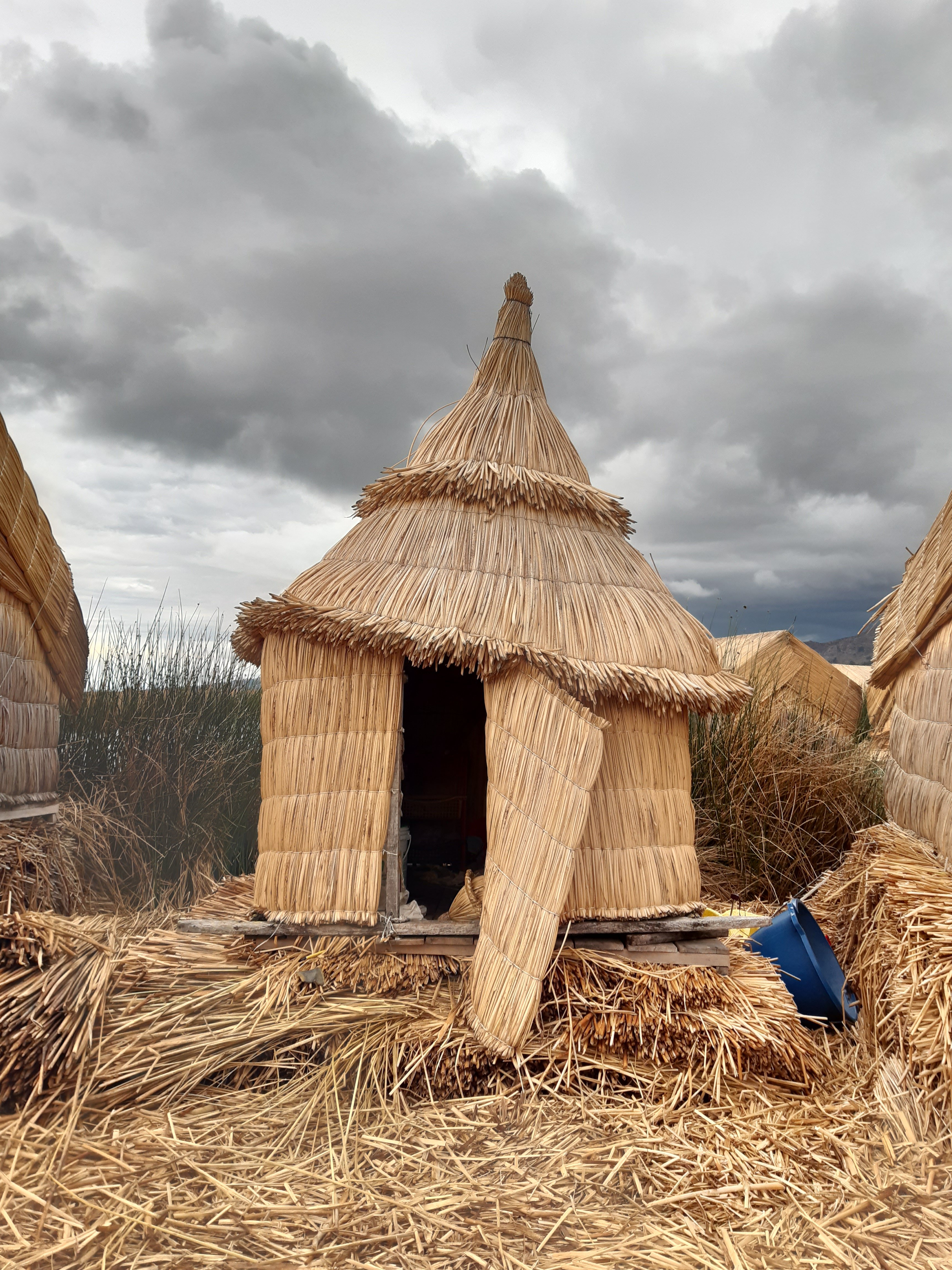
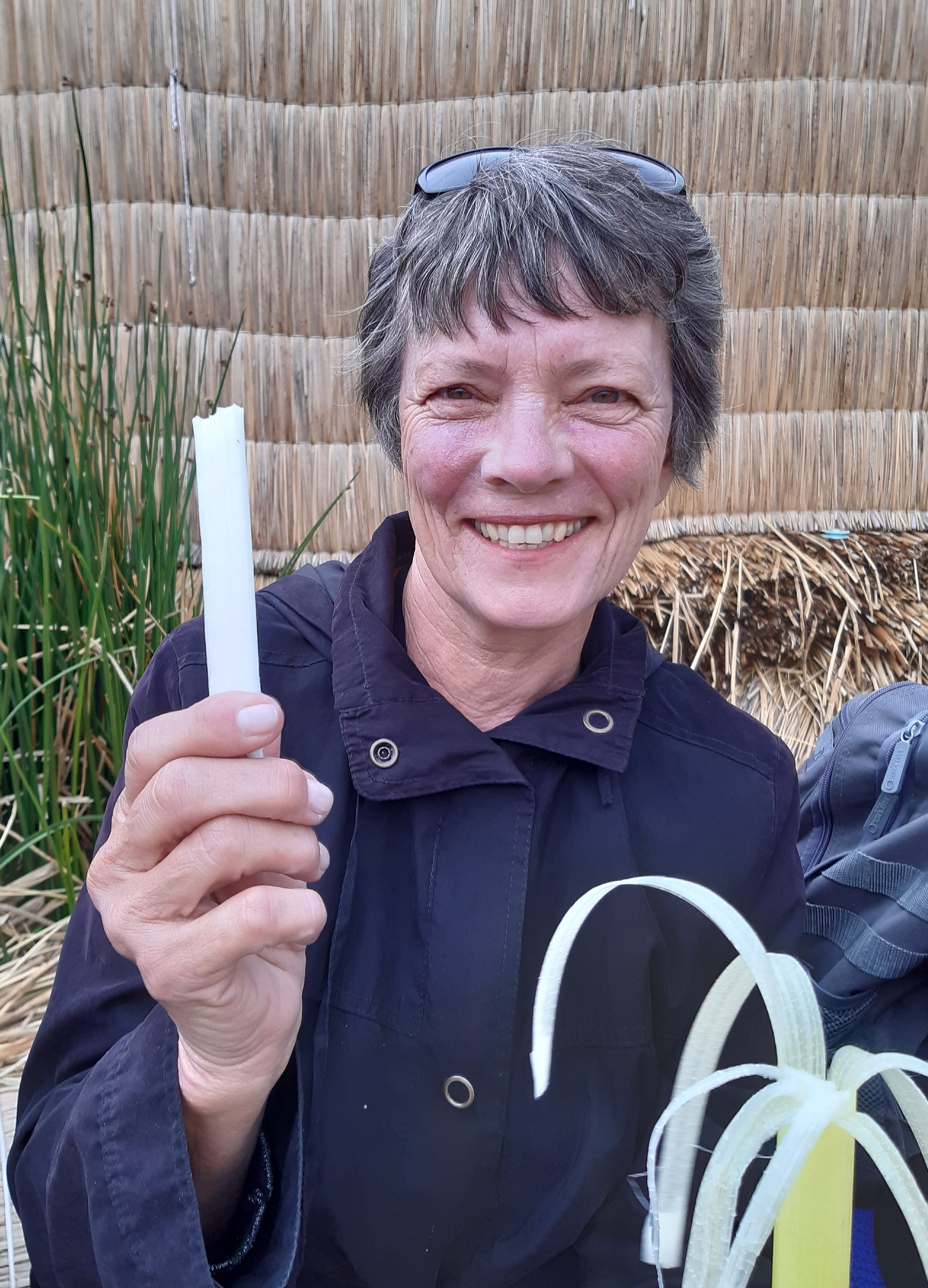
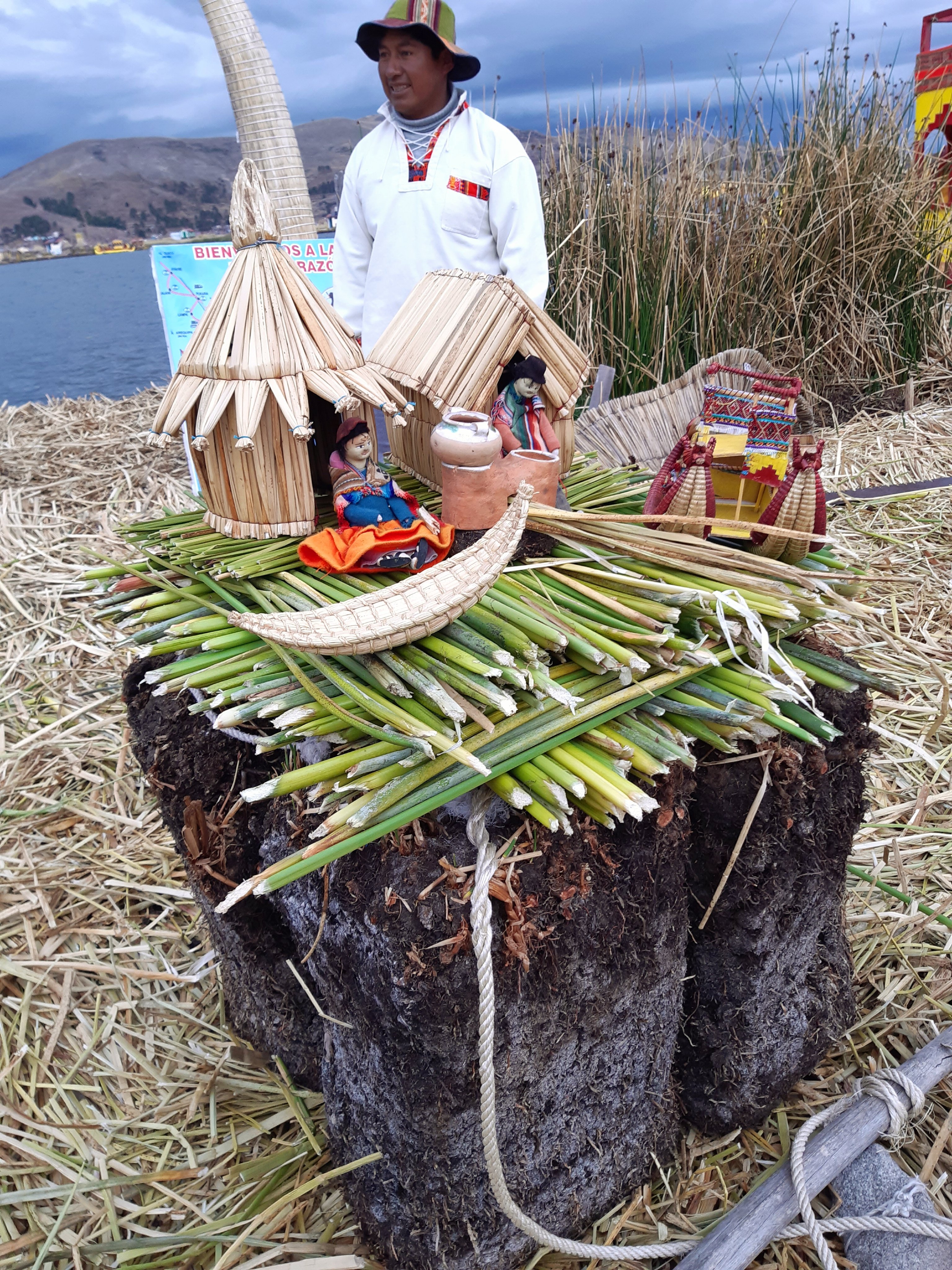
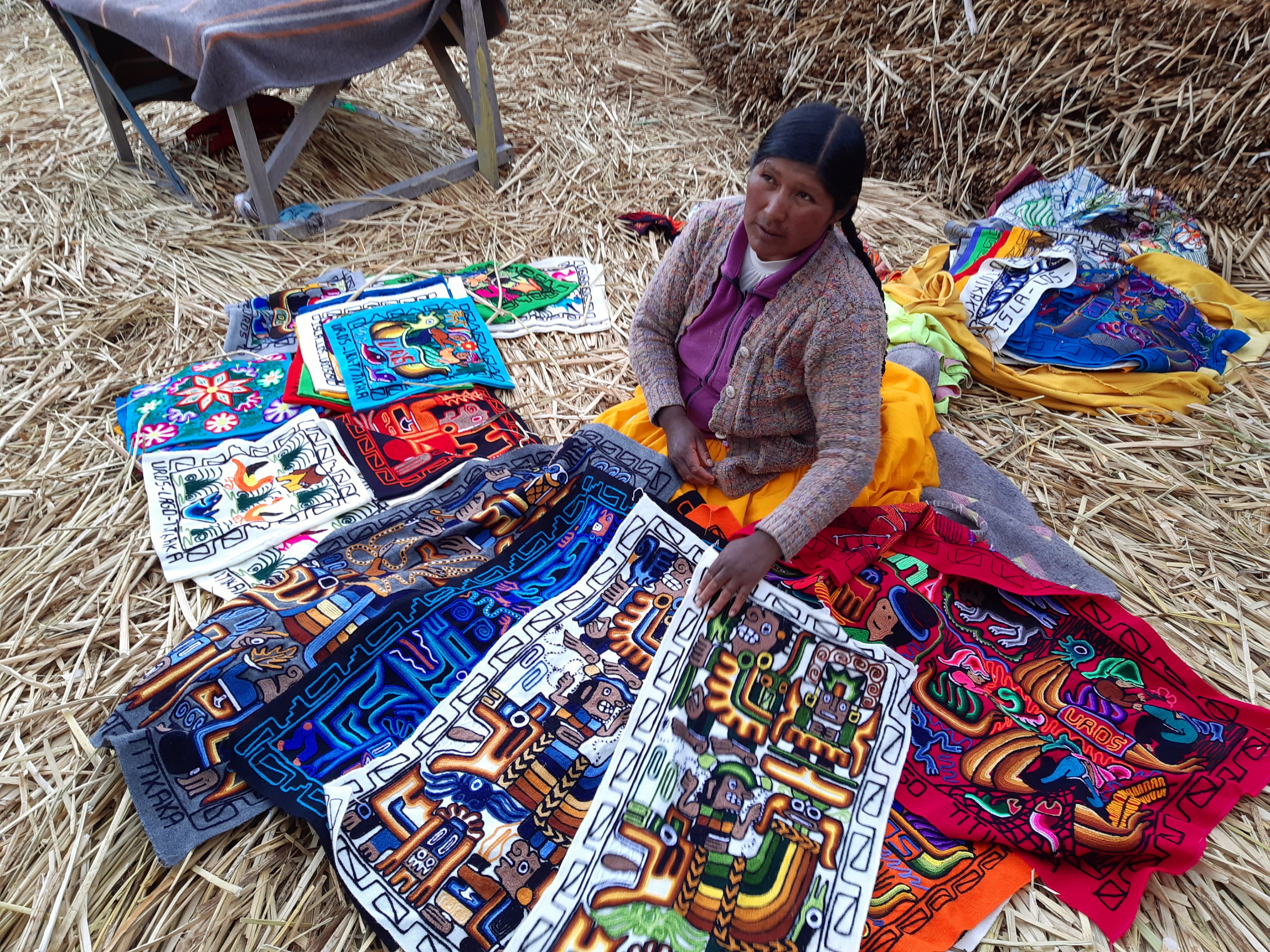
 Lake Titicaca is the location of the second chakra of the earth and therefore a very special place. I was rather taken aback by the decay, poverty and pollution – the part of the lake next to the city is só polluted, it smells like a sewage plant. We visited the man-made floating islands and were shown how the islands are made, and we were given ‘reed bananas’ to eat. The outer skin of the root of the reed is peeled back, and the juicy bit eaten. They use the reeds for everything: building the island, their houses and boats. These days they have synthetically constructed bathrooms with showers, hot water and chemical toilets, using solar panels to heat the water and produce electricity.
 I didn’t stay in Puna but took the overnight bus to Cusco, from where I leave tomorrow to go to Quillabamba. I have a volunteer job there for the next month, working at an institute that does art, music, dance and theatre therapy with children and young people.
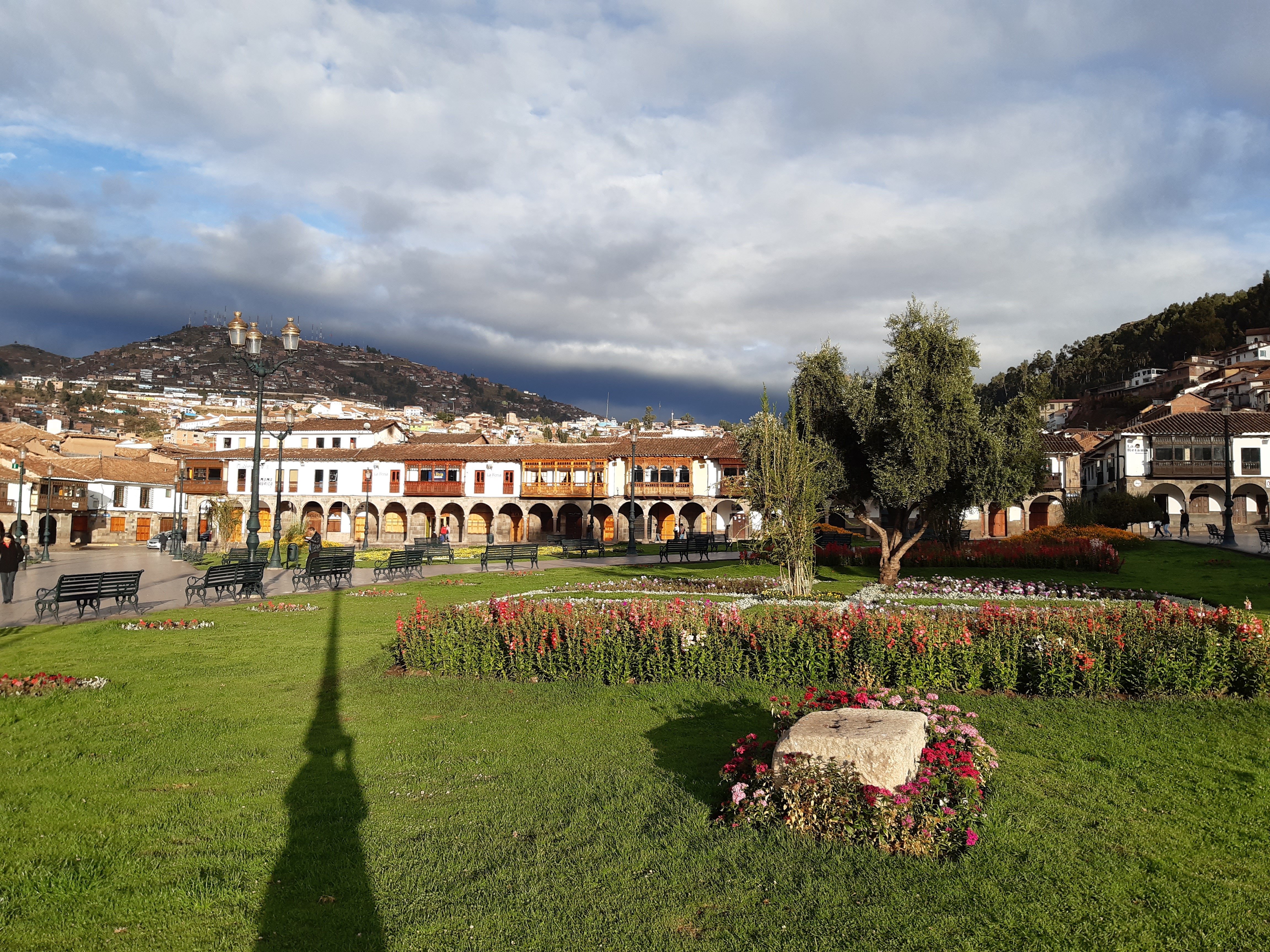
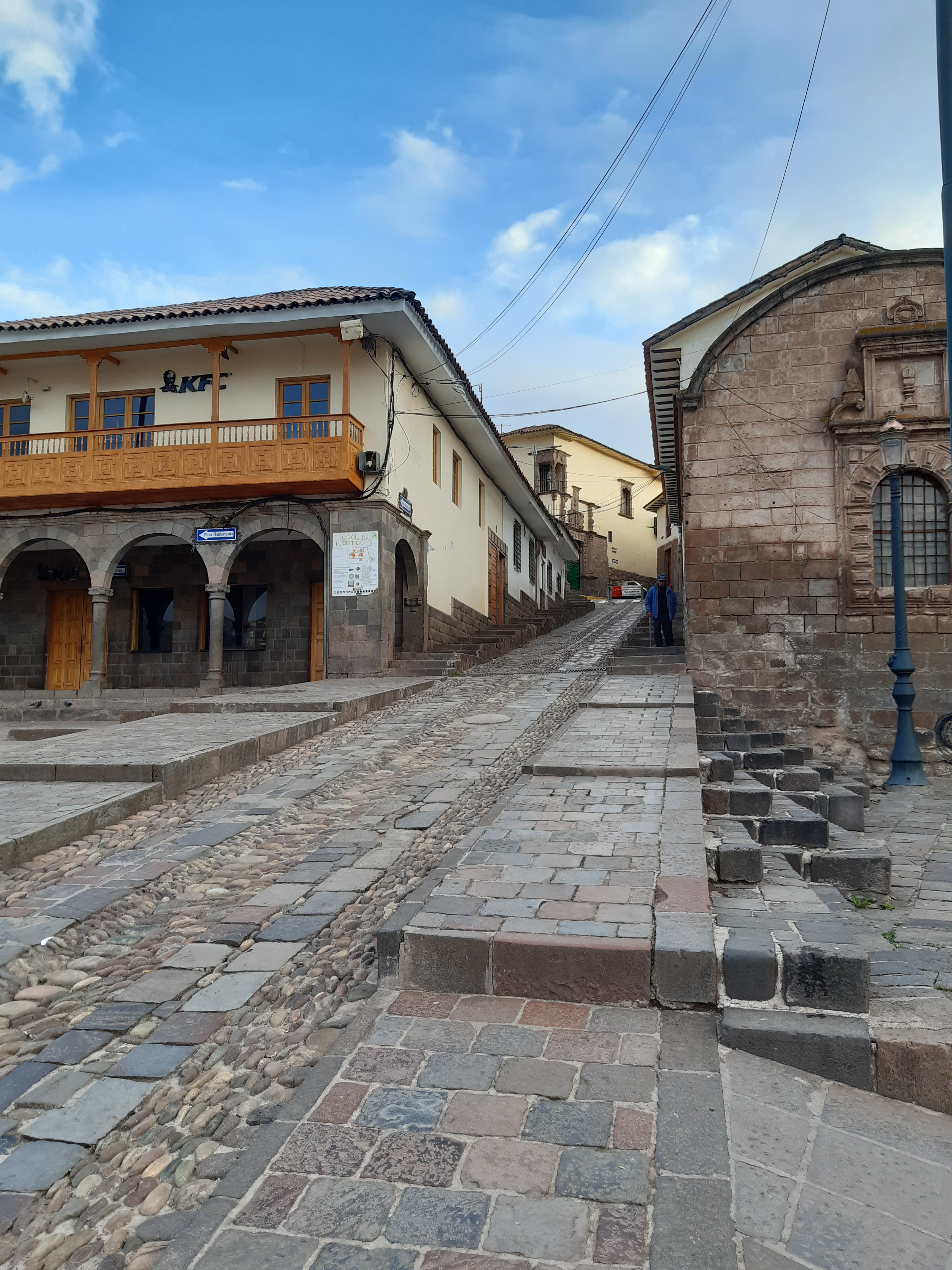
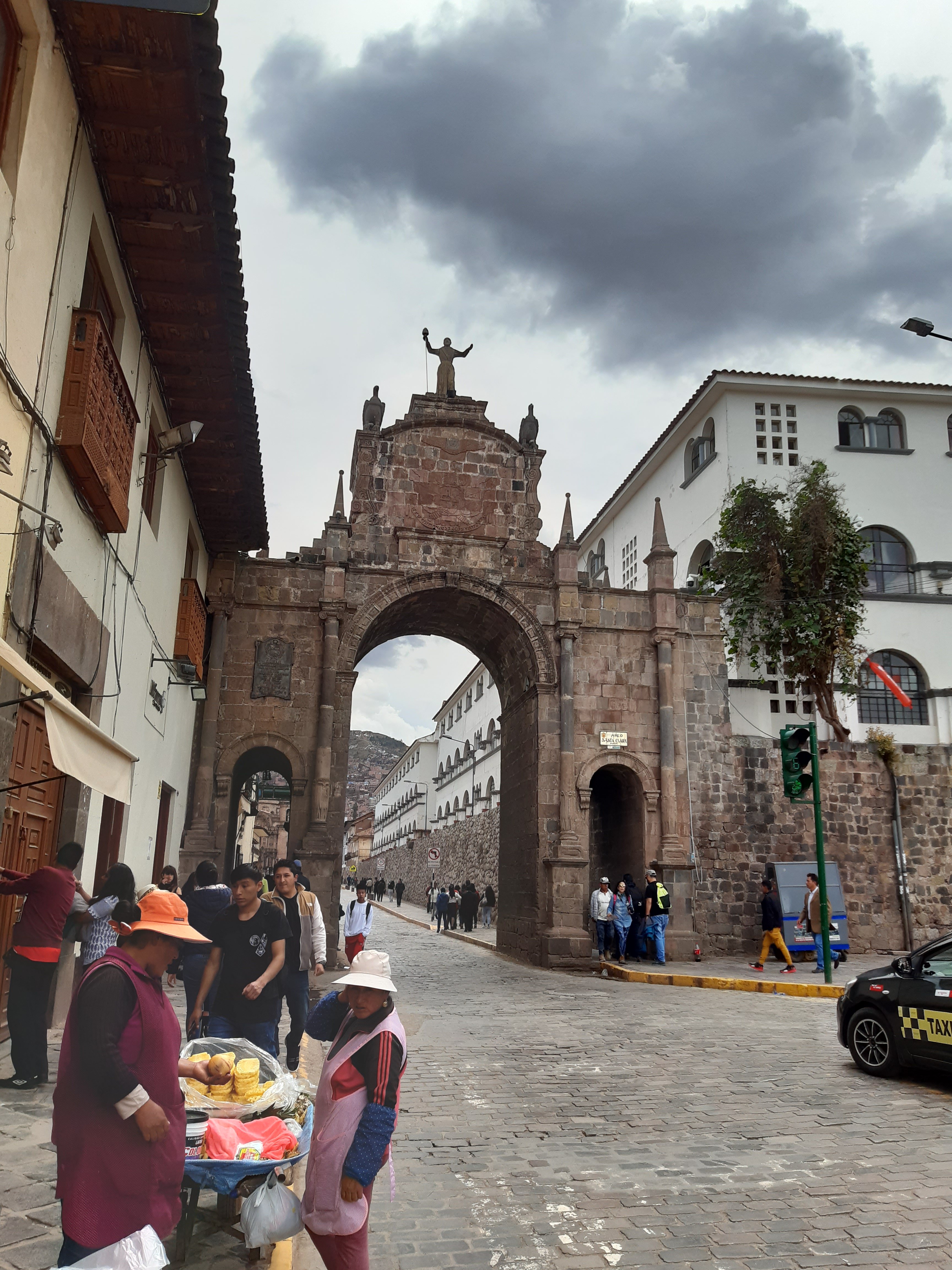
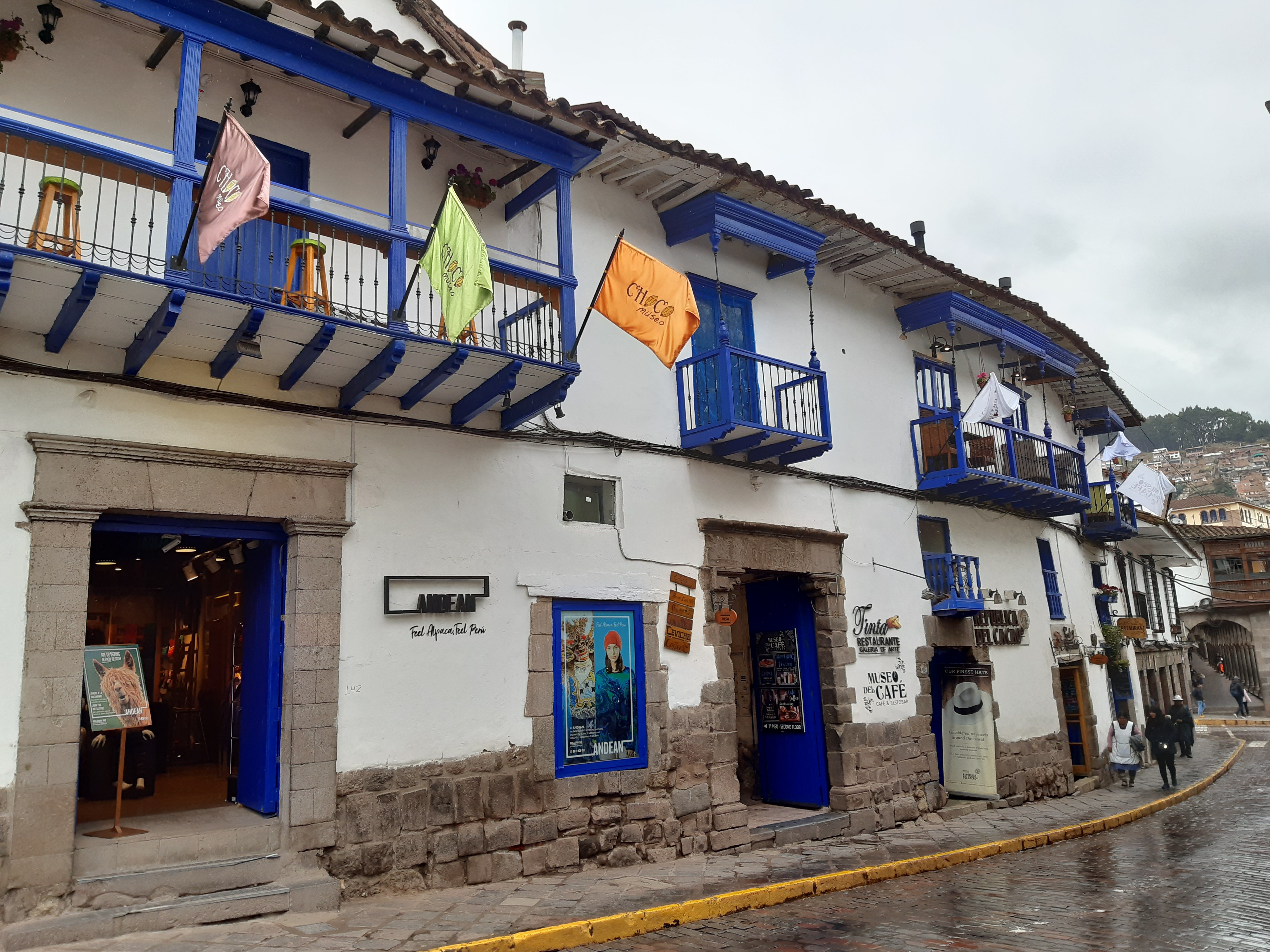
 Cusco has many beautiful old buildings, churches and narrow cobbled streets, and is full of tourists planning their Machu Picchu trips. I’ve just spent the day relaxing and walking around a bit, nurturing my altitude dizziness by drinking lots of tea made with coca leaves. I succumbed and bought some, after reading that the leaves themselves are not bad, it’s when chemicals are added and they are powdered that it becomes the drug cocaine. Locals chew the leaves a bit, move the wad to their cheeks and keep it there, occasionally chewing and spitting. It is said that it prevents altitude sickness – who am I to query such a strong belief and custom that has thrived for centuries. They also sell coca toffees and chocolates, which I haven’t tried.
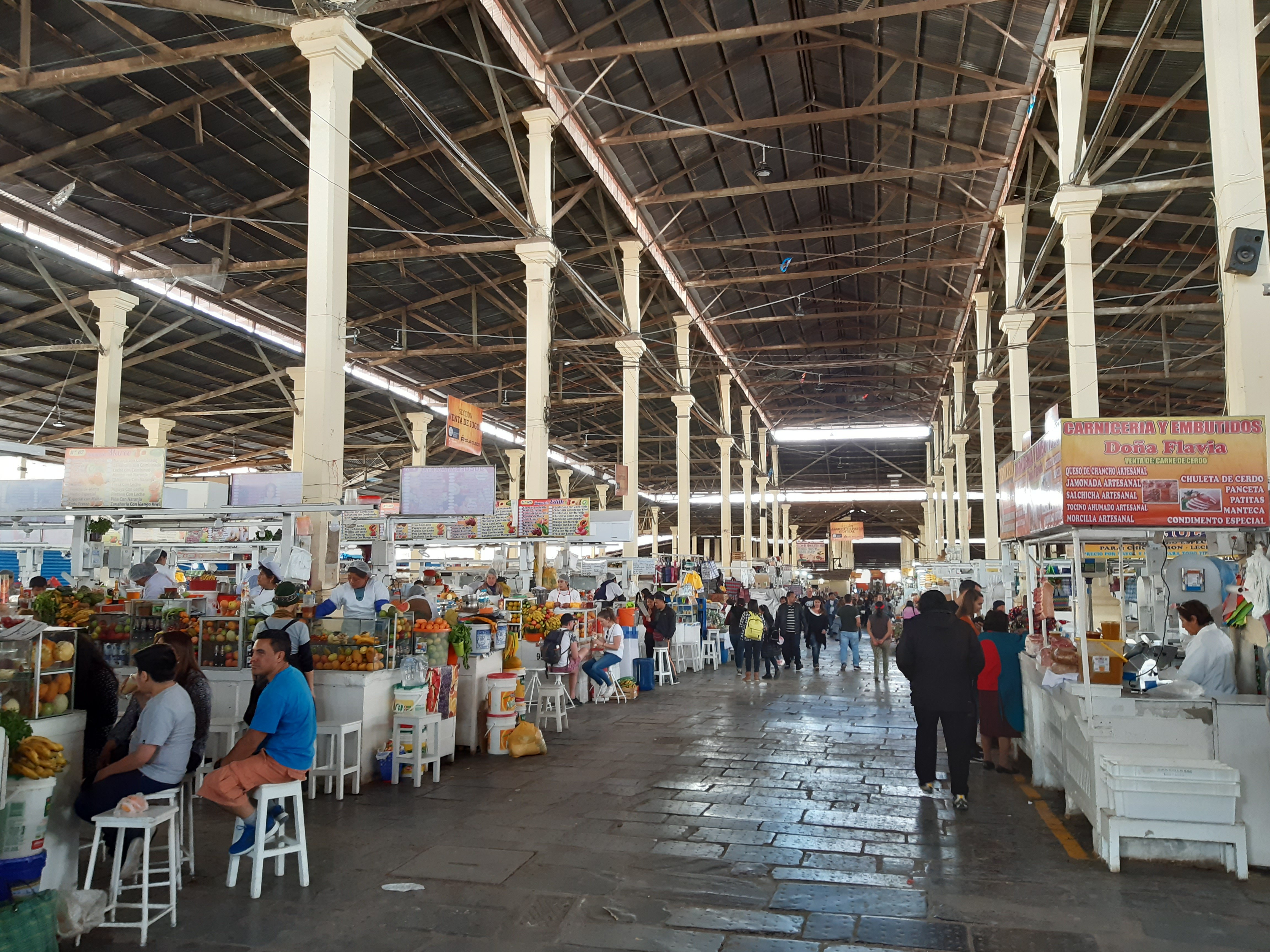
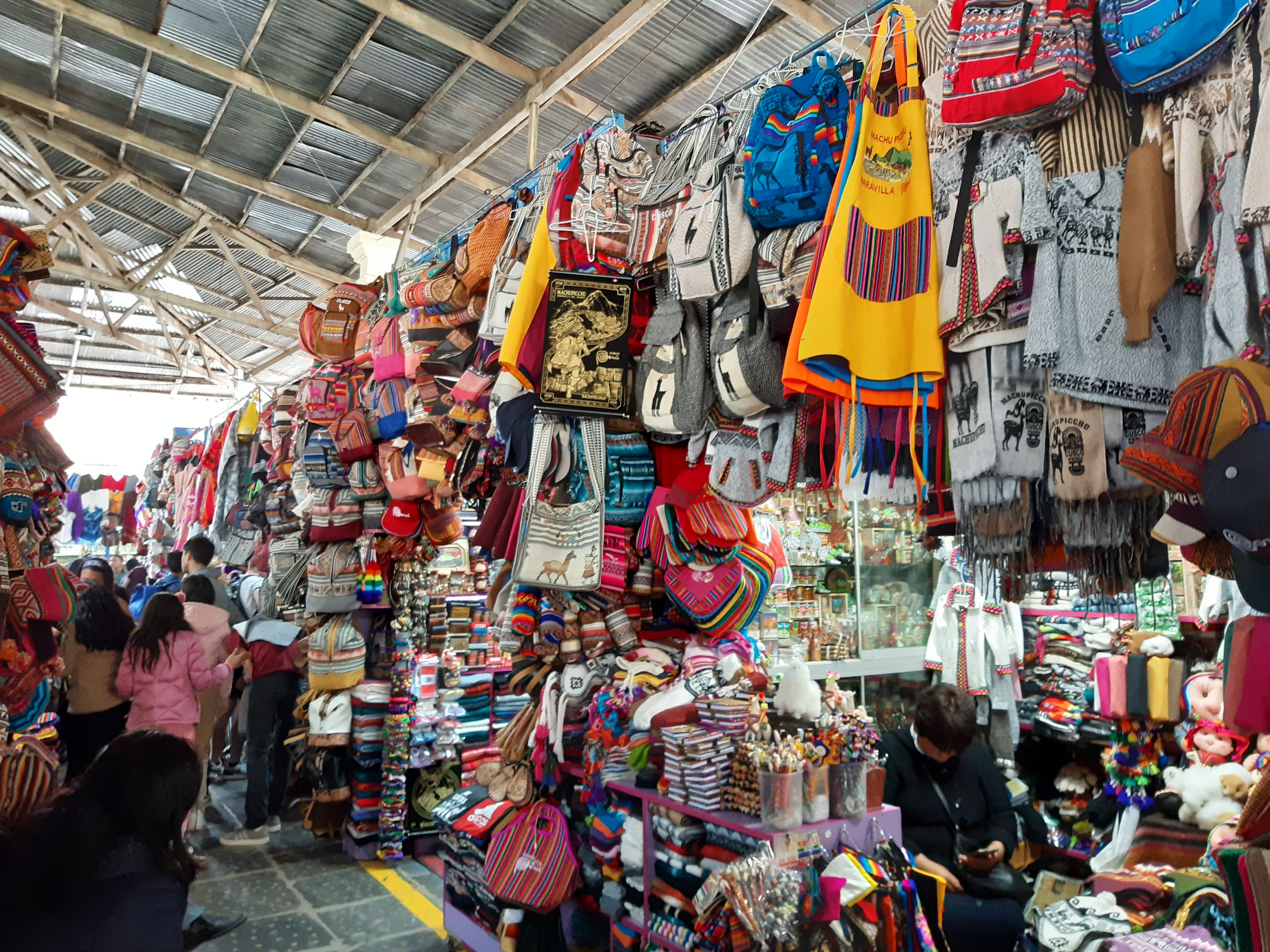
There are many artisan shops in all the cities, and people come to your table in restaurants to sell their products, but because of lack of space (Louise is bursting ar her sides as it is) and having many months of travelling ahead, I have not bought anything. There is also só much more that I have experienced, but this blog has become rather lengthy, so till next time (which I promise will be shorter), take care.
 Mella Madness